
It’s no secret that the Hollywood Comet loves musicals.
In 2010, I revealed I had seen 400 movie musicals over the course of eight years. Now that number is over 600. To celebrate and share this musical love, here is my weekly feature about musicals.
This week’s musical:
Playmates (1941) – Musical #375

Studio:
RKO Radio Pictures
Director:
David Butler
Starring:
As themselves: Kay Kyser, John Barrymore, Ginny Simms, Harry Babbitt, Ish Kabibble, Sully Mason,
In acting roles: Lupe Velez, May Robson, Patsy Kelly, Peter Lind Hayes, Hobart Cavanaugh, George Cleveland, Marie Windsor (uncredited), Leon Belasco (uncredited)
Plot:
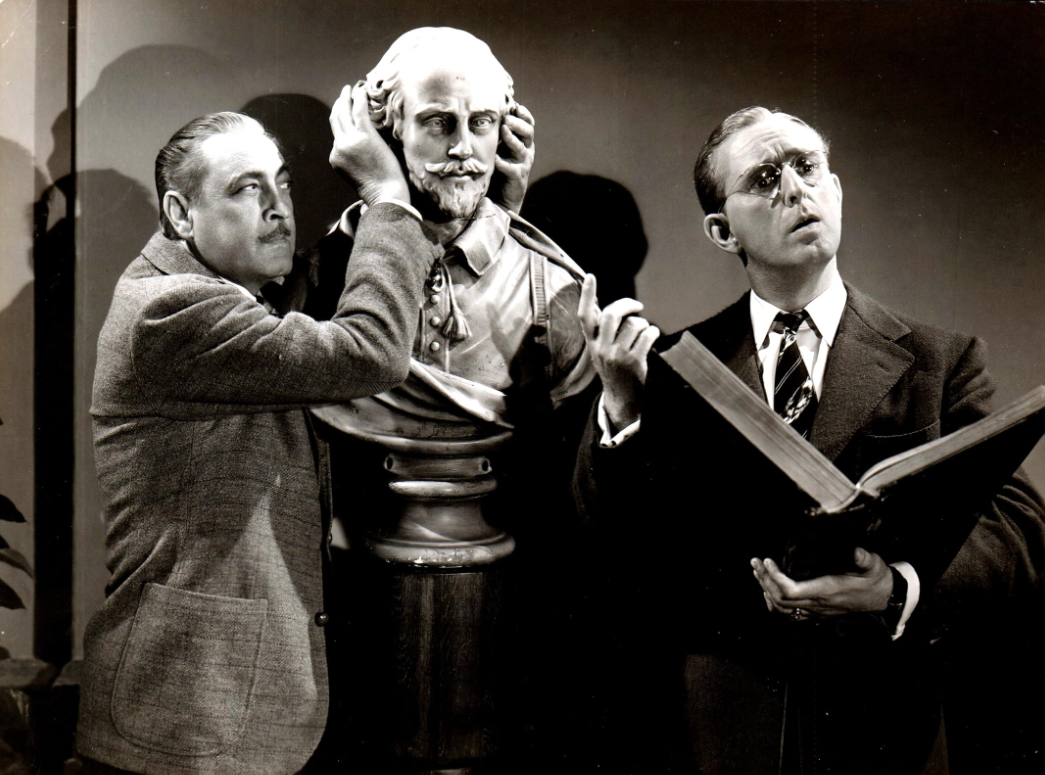
The agents of Kay Kyser (himself) and John Barrymore (himself) hatch a plan to connect the bandleader to the Shakespearean actor to help boost Barrymore’s career. The idea is that Kyser will recite Shakespeare with Barrymore, much to Barrymore’s chagrin.
Trivia:
• John Barrymore’s last film.
• The last time Ginny Simms appeared with Kay Kyser’s band before going solo.
• Dennis O’Keefe was originally considered to be cast in the film.
Highlights:
• The Shakespeare interpretation told with big band music.
• The autograph hound who mistakes John Barrymore for Adolph Menjou
• John Barrymore performing Hamlet’s silique
• Kay Kyser’s dream sequence, especially with May Robeson as Juliet and John Barrymore dancing to Ish Kabibble’s trumpet.
Notable Songs:
• “Thank Your Lucky Stars and Stripes” performed by Harry Babbitt, Sully Mason, Ginny Simms, M.A. Bogue, Kay Kyser and The Guardsmen, with the Kay Kyser Band
• “How Long Did I Dream?” performed by Ginny Simms and the Kay Kyser Band
• “Que Chica” performed by Harry Babbitt and Kay Kyster’s band
• “Humpty Dumpty Heart” performed by Harry Babbitt, Ginny Simms, The Guardsmen and Kay Kyser’s Band
• “Romeo Smith and Juliet Jones” performed Harry Babbitt, Sully Mason, Ginny Simms, M.A. Bogue, Peter Lind Hayes and The Guardsmen, with the Kay Kyser Band
My review:
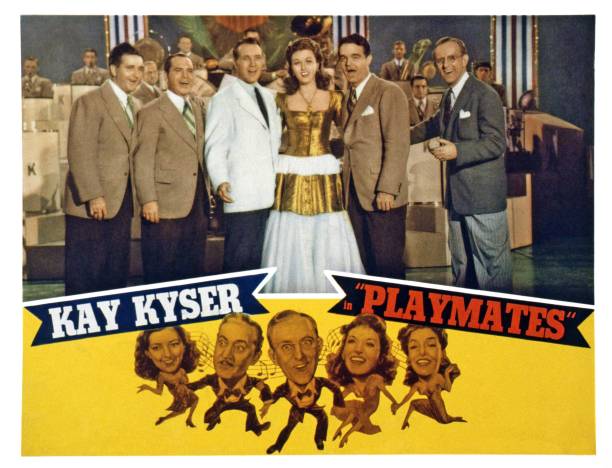
If you have followed me long enough, you know I love bandleader Kay Kyser and his Kollege of Musical Knowledge. I love his songs, that he’s from North Carolina, his comedic band, and how they made their way into films playing themselves.
In the films and music, Kay Kyser and his band act as themselves:
– Kyser brings his goofy sense of humor
– Harry Babbitt and Ginny Simms are usually the “straight” players singing sweetly.
– Ish Kabibble with his off-beat haircut and humor.
– Sully Mason and Harry Babbitt who both have great singing voices, but can make humorous voices if the song is needed.
Kyser is unique compared to other famous bandleaders of the 1940s, especially because he’s not as well known today. While famous bandleaders like Harry James and Tommy Dorsey often appeared in films to perform musical numbers with a few lines, none of them had entire stories built around them and played the leads in films like Kay Kyser. As a fan, it’s no wonder that I would love Kyser’s third narrative feature film, PLAYMATES (1941).
In the film, Kay Kyser’s agent, Peter Lindsay (Peter Lind Hayes), and John Barrymore’s agent, Lulu Monahan (Patsy Kelly), hatch a plan to connect Kay Kyser and John Barrymore in a performance stunt. Barrymore needs a financial backer for his radio show, and Kelly believes being connected to famous bandleader, Kay Kyser will help him secure it. The idea is that Kyser and Barrymore will perform Shakespeare together. Barrymore is not thrilled with the prospect of the North Carolina-born bandleader reciting prose along with him and tries to thwart the efforts. Along the way, lady bullfighter Carmen del Toro (Lupe Velez), who is there to see Barrymore, who she’s in love with.
There are several interesting features in the film. For starters, if there is any question of how big of a star Kay Kyser was, he received top billing over John Barrymore, who is considered one of the top stars of the 20th century.
There is also a technology highlight that I enjoyed seeing, and that has been the focus of other films. At the start of the film, you see women taking song requests, and they are doing this live at jukeboxes, where someone could call and request a song, just like the radio.
The film is filled with great Kay Kyser-tunes and closes with an innovative and fun Shakespeare big band number.
While I love Kay Kyser and his band in these films, PLAYMATES is a little sad, because it was John Barrymore’s final film and many jokes are made at his expense. Barrymore’s alcoholism, “has been” celebrity status, and age are used as comic relief.
“I’m dying and you’re telling jokes,” Barrymore tells Patsy Kelly at one point in the film.
This joke ended up being a bit on the nose. PLAYMATES was Barrymore’s final film — the film was released in Dec. 1941, and Barrymore died on May 26, 1942 at age 60.
While Lupe Velez is in the film, she doesn’t appear until 37 minutes into the film. Velez is truthfully under utilized in the film. While Velez too had several more films ahead of her, she died in 1944 at age 36.
A highlight of the film is May Robson, who I love in every film. In several Kyser films, she plays Kyser’s North Carolina grandma.
Overall, I find PLAYMATES to be great fun. I laughed at Kyser’s humor and enjoyed his music. However, the film feels bittersweet, knowing it’s Barrymore’s last film.
Check out the Comet Over Hollywood Facebook page, follow on X at @HollywoodComet, follow on Instagram or e-mail at cometoverhollywood@gmail.com
 Comet Over Hollywood