
It’s no secret that the Hollywood Comet loves musicals.
In 2010, I revealed I had seen 400 movie musicals over the course of eight years. Now that number is over 600. To celebrate and share this musical love, here is my weekly feature about musicals.
 This week’s musical:
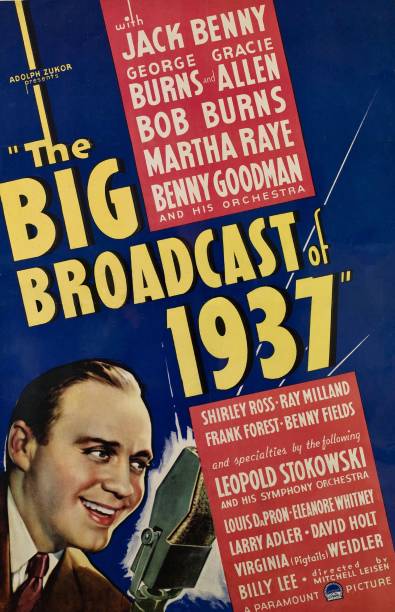
The Big Broadcast of 1937 (1936) – Musical #526
Studio:
Paramount Pictures
Director:
Mitchell Leisen
Starring:
Jack Benny, George Burns, Gracie Allen, Bob Burns, Martha Raye, Shirley Ross, Frank Forrest, Don Hulbert, Virginia Weidler (uncredited)
Themselves: Leopold Stokowski, Benny Goodman and His Orchestra, Benny Fields
Plot:
Jack Carson (Benny) produces a radio show and is working to get Mr. and Mrs. Platt (Burns and Allen) to sponsor the show with their golf ball product. In the midst of signing their sponsorship, Jack discovers radio deejay Gwen Holmes (Ross), who sings along to his star singer, Frank Rossman (Forrest), and ribs his singing. Jack is not too pleased, and hires Gwen to keep her off of the radio, and publicity man, Bob Miller (Milland), woos her. However, they find that Gwen actually is a great singer and she quickly rises to fame.
Trivia:
• One of four films in Paramount Pictures “The Big Broadcast” series of films. These included:
The Big Broadcast (1932)
The Big Broadcast of 1936 (1935)
The Big Broadcast of 1937 (1936)
The Big Broadcast of 1938 (1937)
• During the wedding scene, Gracie Allen says, “Aren’t I pretty?” The line was ad libbed but director Mitchell Leisen decided to leave it in the film, according to Turner Classic Movies host, Dave Karger.
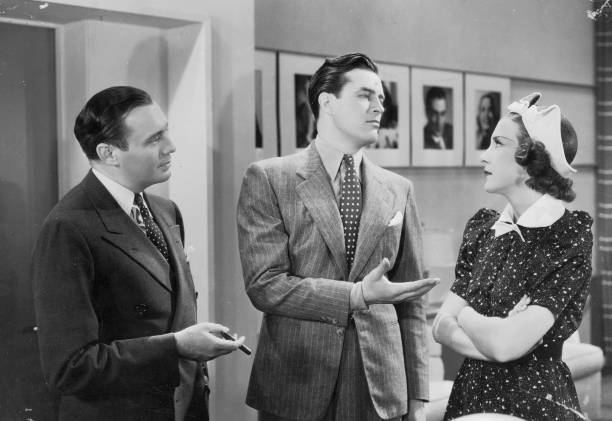
Jack Benny, Ray Milland, Shirley Ross
Highlights:
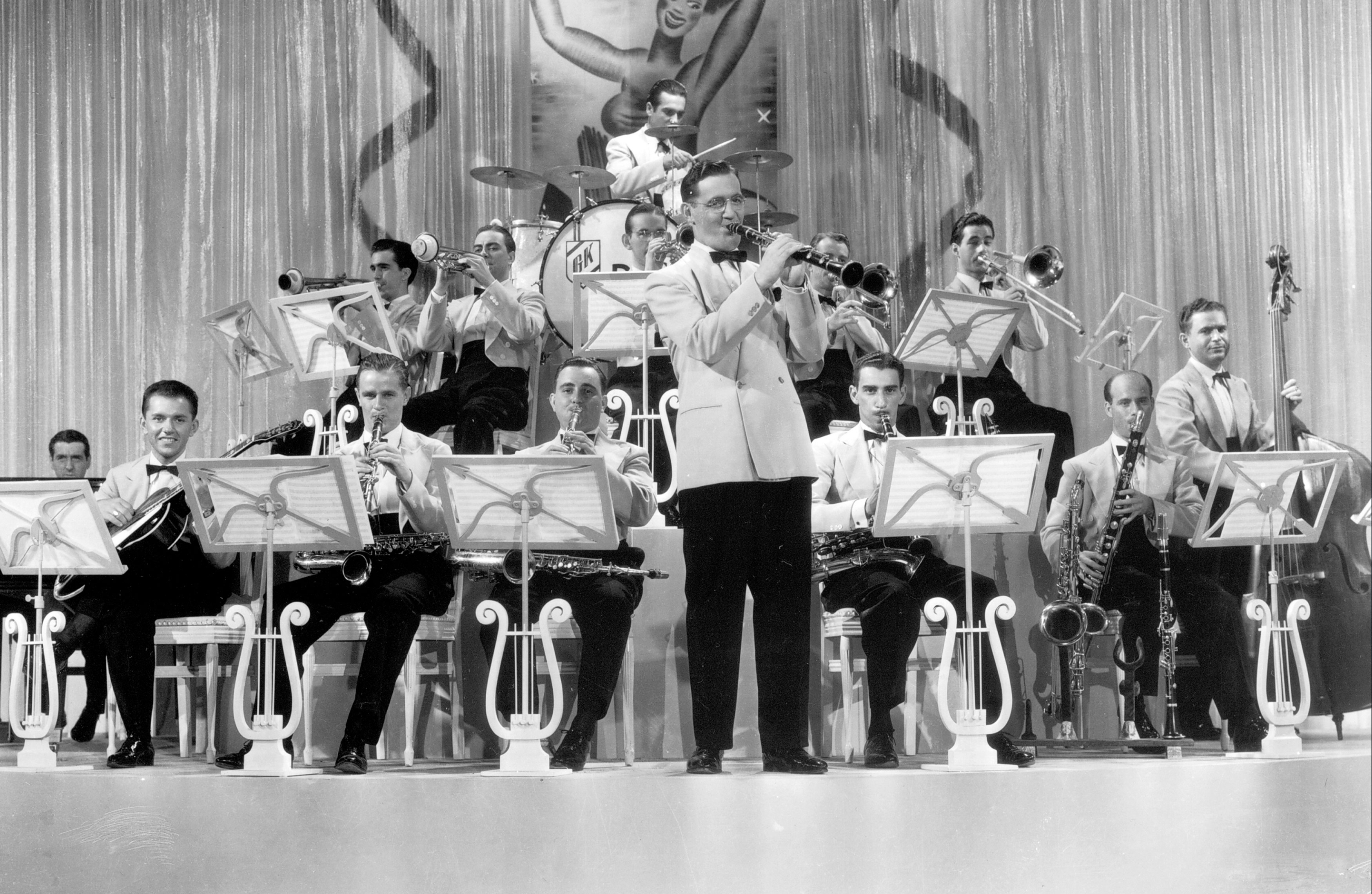
• Benny Goodman’s band, featuring Gene Krupa on drums, especially with the cuts and overlays as they played “Bugle Call Rag.”
• The ongoing joke of Bob Burns showing up and accidentally ending up on radio programs and talking and talking.
• Martha Raye’s secretary voice every time Jack Benny calls her over the office speaker.
Notable Songs:
• “La Bamba” performed by Frank Forrest
• “There’s Love in Your Eyes” performed by Benny Fields
• “Bugle Call Ray” performed by Benny Goodman and His Orchestra
• “I’m Talking Through My Heart” performed by Shirley Ross
• “Fugue in G Minor” conducted by Leopold Stokowski
My review:
During the Golden Age of Radio – from the 1930s through the 1940s – radio shows reigned supreme, so much so that they bled into feature films.
This week’s Musical Monday is an example of those films. THE BIG BROADCAST OF 1937 (1936) was part of a series of Paramount Pictures films that highlighted radio talent, but radio fans got to see their favorite performers on the big screen, including Jack Benny, Burns & Allen, and Bob Burns.
In the film, Jack Carson (Benny) produces a radio show and is working to get Mr. and Mrs. Platt (Burns and Allen) to sponsor the show with their golf ball product. In the midst of signing their sponsorship, Jack discovers radio deejay Gwen Holmes (Ross), who sings along to his star singer, Frank Rossman (Forrest), and ribs his singing. Jack is not too pleased, and hires Gwen to keep her off of the radio, and publicity man, Bob Miller (Milland), woos her. However, they find that Gwen actually is a great singer and she quickly rises to fame.
I find films like this fascinating, and they show just how important radio was to popular culture. It’s also interesting to compare film’s response to radio versus how the film industry responded to television in the 1950s. While television was a threat, radio was an entirely different form of entertainment, and in fact could compliment it. For example, several films were told in a truncated format on shows like the LUX RADIO THEATER. I love old time radio, if you can’t tell.
I loved how this film started, including a child (Don Hulbert) telling the audience to pipe down, because we were on the air. The film title and stars were then introduced, just like a radio program.
And as for the stars – what a cast! Jack Benny, Ray Milland, George Burns, Gracie Allen, Bob Burns and Martha Raye. Director Mitchell Leisen enjoyed working with comedians like this group, and often let them do what they wanted. One of Allens’ ad libbed lines made it into the film, when she says, “Don’t I look pretty?” in a wedding scene.
Though while this is an excellent cast, I expected a bit more humor from Jack Benny and George Burns and Gracie Allen, though Benny gets a few good lines. I discovered Bob Burns through old time radio, and I do enjoy his humor. Bob Burns had a plum running joke where he kept looking for Leopold Stowkowski, and in the process, would walk onto radio programs while they were on the air, eventually giving a lengthy dissertation about someone he knew back home.
It was a bit of an odd role for Ray Milland, though I enjoyed seeing him in this. But for me, there was a bit too much of singer Shirley Ross who was just fine, but that’s all. Fine. She sang well, but otherwise was a forgettable leading woman.
Martha Raye additionally had little to do, only singing one song at the end.
The songs in the film are adequate, but I’ll admit the dancing girls with puppets was pretty strange and I didn’t care for Benny Fields. The performances from jazz clarinetist Benny Goodman with his orchestra were the highlight. It was also drummer Gene Krupa’s first film appearance, as he was in Goodman’s band at this time.
In a modern review, Leonard Maltin called THE BIG BROADCAST OF 1937 almost unbearable. I personally thought the film was pretty fun, but I wanted more from our comedic stars, like Jack Benny, Bob Burns and George Burns & Gracie Allen.
However, any film tie to old time radio is a-okay in my book.
Other places you can follow Comet Over Hollywood:
- Letterboxd
- X at @HollywoodComet
- BlueSky
- Or e-mail us at cometoverhollywood@gmail.com
 Comet Over Hollywood