
It’s no secret that the Hollywood Comet loves musicals.
In 2010, I revealed I had seen 400 movie musicals over the course of eight years. Now that number is over 600. To celebrate and share this musical love, here is my weekly feature about musicals.
This week’s musical:
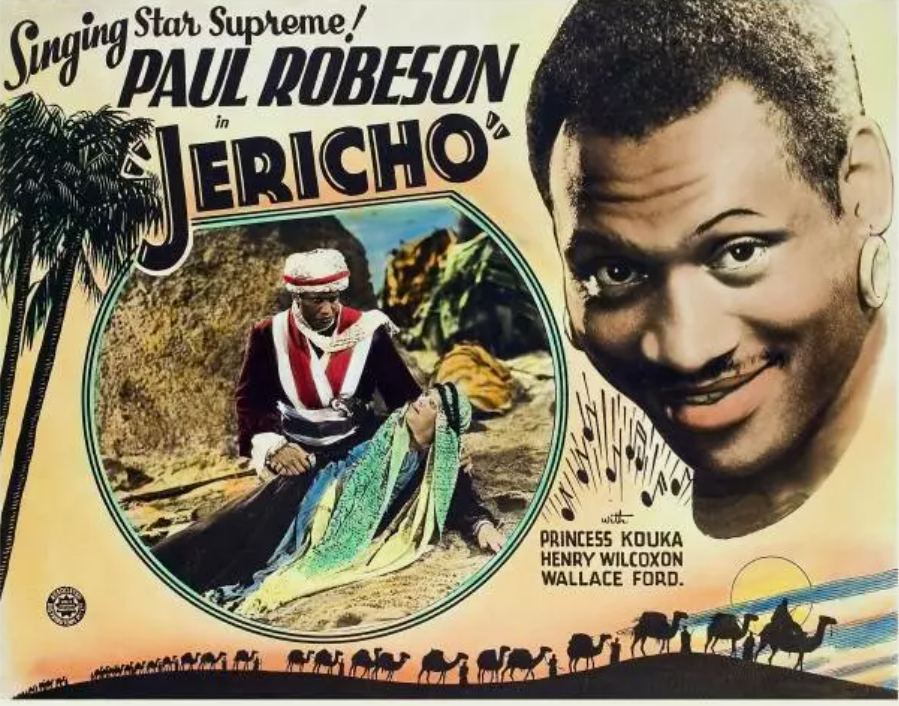
Jericho (1937) – Musical #804
Studio:
Capitol Films
Director:
Thornton Freeland
Starring:
Paul Robeson, Henry Wilcoxon, Wallace Ford, Kouka (billed as Princess Kouka), John Laurie, James Carew, Lawrene Brown, Rufus Fennell, Ike Hatch, Frank Cram, Frank Cochrane, George Barraud, Federick Cooper, Henry Aubin, Eugene Cozier, Charles Farrell, Peter Gawthorne, Danny Greene, Percy Parsons, Eslanda Robeson
Plot:
The story begins during World War I on a ship heading towards France. When the ship is torpedoed, Jericho Jackson (Robeson) is trying to save men who are trapped in the boiler room so that they don’t drown. When a superior orders Jericho to forget it and evacuate, Jericho pushes the man, killing him. Despite saving several men and the defense of his friend Capt. Mack (Wilcoxon), Jericho is Court Martialed and held for murder. Jericho escapes and Capt. Mack is blamed and jailed for his escape. On a boat with another deserter (Ford), Jericho ends up in North Africa, where he meets and leads the Tuareg people.
Trivia:
• In his contract, Paul Robeson had final say on the film. Originally, the film was supposed to end differently, but Robeson asked for it to end a different way, according to Turner Classic Movies host, Ben Maniewicz in his 2021 introduction of the film.
• Renamed “Dark Sands” for U.S. audiences
• Paul Robeson’s wife, Eslanda Robeson, appears in an uncredited role in the film.
• Filmed on location in Egypt and in the Sahara Desert.
Highlights:
• The tap dancer during the Christmas show
Notable Songs:
• “My Way” performed by Paul Robeson
• “Deep Desert” performed by Paul Robeson
My review:
In a time when Black actors were often cast as maids, porters and other servants, singer and actor Paul Robeson fought to play meaningful roles with dignity. In each of his films, he’s often helping others, leading people and helping everyone around him find their way.
JERICHO — or DARK SANDS as it was known in the states — is no exception.
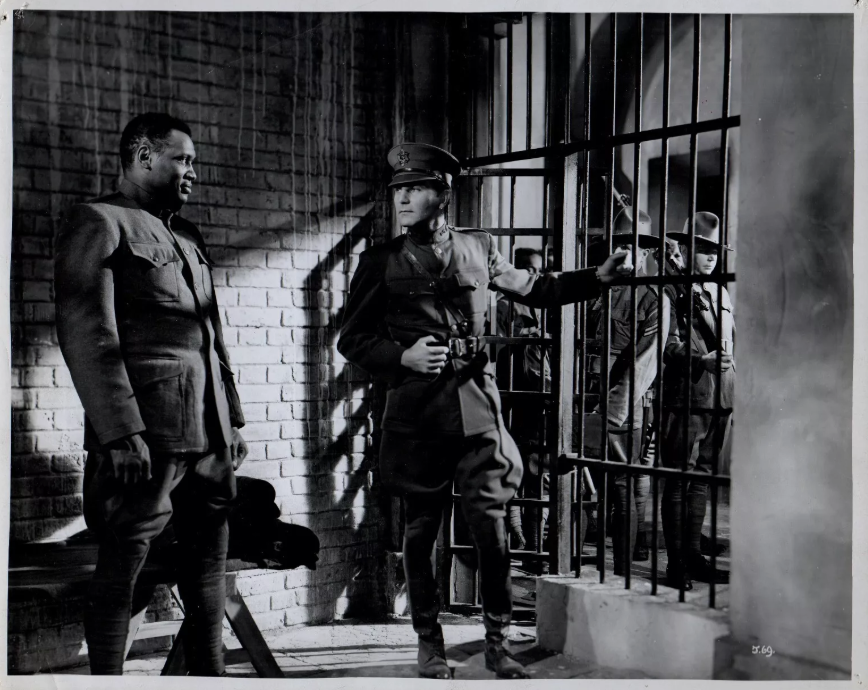
In JERICHO, the story begins during World War I on a ship heading towards France. When the ship is torpedoed, Jericho Jackson (Robeson) is trying to save men who are trapped in the boiler room so that they don’t drown. When a superior orders Jericho to forget it and evacuate, Jericho pushes the man, killing him. Despite saving several men and the defense of his friend Capt. Mack (Wilcoxon), Jericho is Court Martialed and held for murder.
On Christmas Eve, Jericho asks to join the singing of Christmas carols, but he also uses the opportunity to escape. Jericho gets on a boat off the coast of France, which is already inhabited by another war deserter, Mike Clancy (Wallace Ford), and as they sail, they end up in North Africa. Back in Europe, since it was Capt. Mack that gave permission to Jericho, he is blamed for the escape and jailed as punishment.
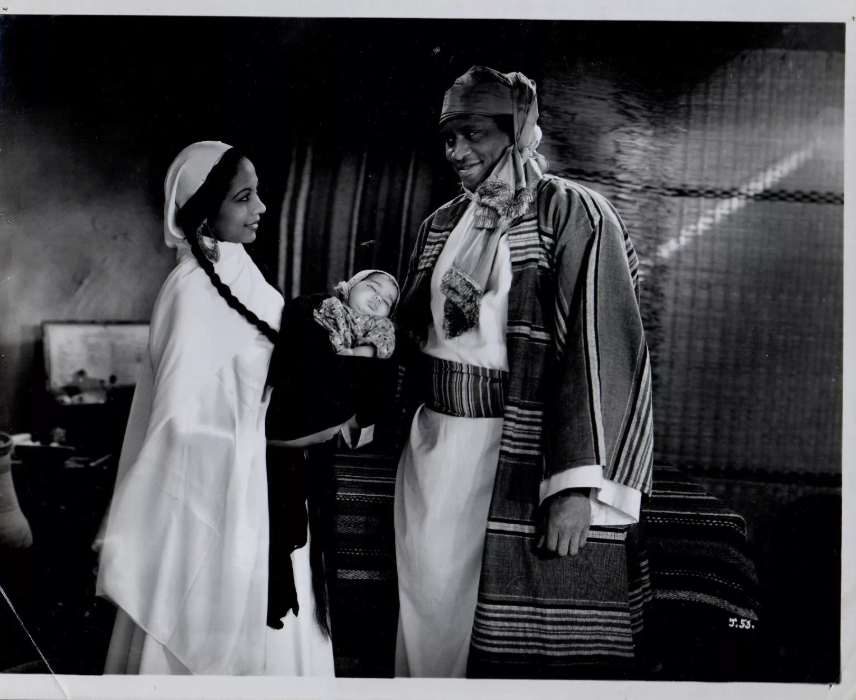
Jericho and Mike settle and create a life in North Africa, and Jericho proves himself a leader of the Tuareg people. However, once Capt. Mack is let out of jail in 1920 after World War I ends, he wants to find Jericho to clear himself.
In addition to THE PROUD VALLEY, this is said to be one of Paul Robeson’s favorite films.
At the time that JERICHO (1938) was released, Robeson wanted artistic control over his films, and he was afforded this here. For example, the original ending has both Paul Robeson and Henry Wilcoxin dying together, as Robeson goes with him to clear his name. However, Robeson didn’t care for this and the ending is changed.
Robeson’s character has dignity in the film. Despite being accused of a crime, before joining the Army to fight in World War I, he is educated and a doctor. He also helps calm soldiers around him as some are nervous going into battle.
“Later I came to understand that the (Black) artist could not view the matter simply in terms of his individual interests, and that he had a responsibility to his people who rightfully resented the traditional stereotyped portrayals … on stage and screen,” Robeson said in an interview.
This is perhaps the first time from this era that I’ve seen that has portrayed an all-Black troop of Army soldiers, which was interesting.
I watched this back-to-back with a film directed by Oscar Michaeux, who is important to film history, but still included stereotypes and tropes in his films. You won’t find that in JERICHO.
JERICHO is a great film and it has several twists and turns that I didn’t expect. I really enjoyed this, especially knowing that Robeson had a say in the plot and ending of the film.
Other places you can follow Comet Over Hollywood:
- Letterboxd
- X at @HollywoodComet
- BlueSky
- Or e-mail us at cometoverhollywood@gmail.com

