In 2025, I watched more than 350 films, which is about 100 fewer films than I usually watch in a year. There were several great movies I watched, but these are my favorite new-to-me film discoveries of the year.
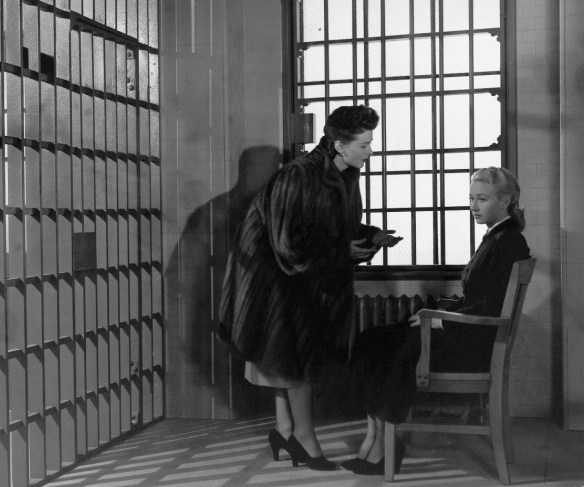
I, Jane Doe (1948)
Directed by John H. Auer
In the film, Ruth Hussey plays Eve Curtis, whose Stephen (John Carroll) is murdered at the start of the film. His murderer is Annette Dubois (Vera Ralston). While distraught at the loss of her husband, as Eve unravels Stephen’s infidelities and the lies he told Annette, everything was not as it seemed with her marriage.
This was the first film I watched of 2025, and I couldn’t have picked a better movie to kick off the year. I don’t want to spoil the plot, because this film certainly takes some unexpected turns that has an extremely satisfying outcome. I would file this under “feminist noir.”
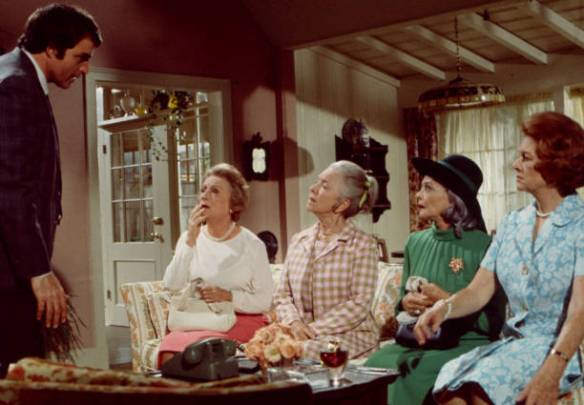
Do Not Fold, Spindle, or Mutilate (1971)
Directed by Ted Post
A quartet of elderly friends played by Helen Hayes, Myrna Loy, Mildred Natwick and Sylvia Sidney, decide to test out a new “computer dating” where you fill out a survey and a computer finds you a match. They make up a fictional girl and there are consequences for their fun when a would-be suitor (played by Vince Edwards) becomes obsessed with the fictional dream girl; resulting in a murder.
I watched this made-for-TV mystery/comedy twice this year because it was so much fun. The four actresses are hilarious together, especially as they get in over their head with a dangerous character. It made me smile so much, I almost considered watching it again!

The Night of the Generals (1967)
Directed by Anatole Litvak
The story travels between the years during World War II and current day (1967) as police try to solve the murder of a prostitute and connect it to murders during the war. The suspicion is on three German generals: General Tanz (Peter O’Toole), General Kahlenberge (Donald Pleasence) and General von Seidlitz-Gabler (Charles Grey).
When I started the film, it took me a minute to get into the pivot between wartime and post-war, but it’s an effective storytelling device. It has an incredible cast with Christopher Plummer as Field Marshall Rommel, Omar Sharif as a Major investigating the murders, and Tom Courtney who is a pawn in everyone’s game.
Sharif is so good in this, Courtney is incredible and underrated, but of course, it’s O’Toole who takes the cake as the unwell and sadistic general. What a movie.
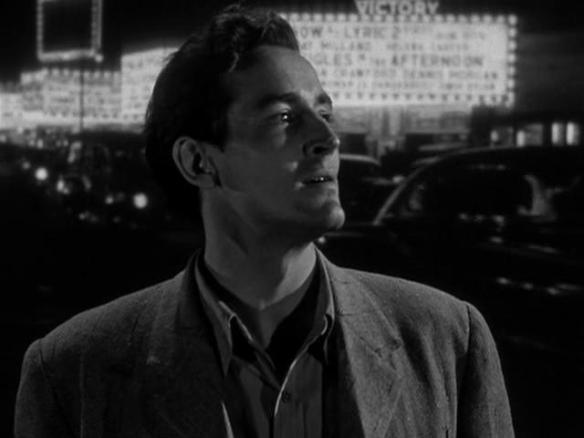
The Glass Wall (1953)
Directed by Maxwell Shane
Vittorio Gassman plays Peter, a Hungarian who has survived Nazi concentration camps, and has come to the United States for a new life and to escape the horrors of the war. However, when the ship arrives, Peter doesn’t have the correct papers and he is held on the ship to be deported back to Hungary. Desperate to start a new life, Peter escapes and searches for an Allied soldier who he helped hide from the Nazis, but the only thing he knows about him is his name is Tom and he plays the clarinet. Peter meets Maggie (Gloria Grahame) who tries to help him. He only has 24 hours to find Tom, or he will be barred from coming to the U.S. forever.
THE GLASS WALL is a stunning film. The film noir genre was a product of World War II and the topic of being a refugee is unique to most noir films I’ve seen. And rather than crime, murder or theft, it’s about someone who is seeking a better life. It has a surprising amount of heart as strangers help people around Peter help him. Vittorio Gassman gives an outstanding performance and it features excellent cinematography by Joseph F. Biroc – and it was filmed on location in New York City.
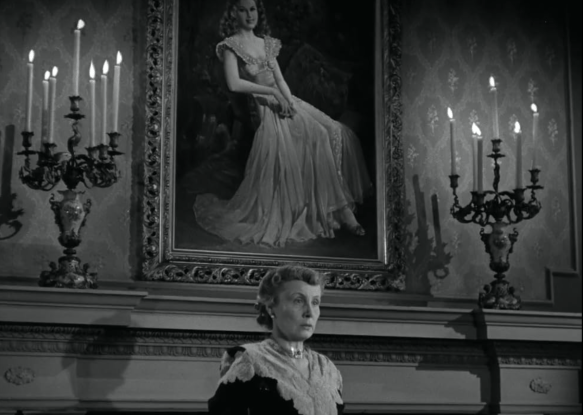
Strangers in the Night (1944)
Directed by Anthony Mann
Marine Sergeant, Johnny Meadows (William Terry) returns home from the war, eager to meet a young woman he has been writing to while fighting overseas. When he arrives at her home, he meets her strange mother, Mrs. Blake (Helene Thimig), but can’t get a straight answer on where her daughter is. A new physician in town, Dr. Leslie Ross (Virginia Grey), helps him get to the bottom of where the daughter is.
I don’t want to say too much about this film without spoiling it, but it’s a good one! Exciting, eerie and astonishing. The best part? It runs at a brisk 56 minutes. If you can watch an episode of “Stranger Things,” you certainly can make time for this.
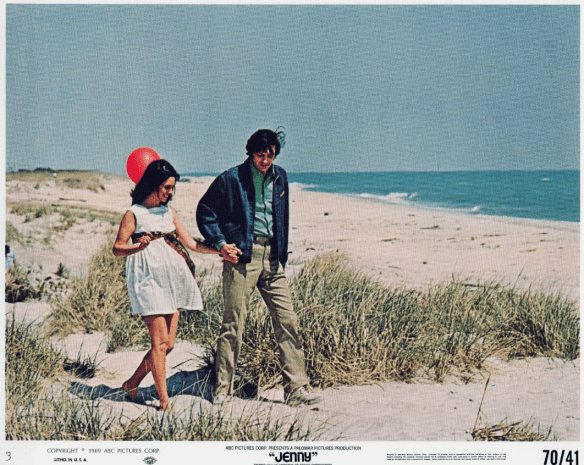
Jenny (1970)
Directed by George Bloomfield
Jenny (Marlo Thomas) is pregnant and unmarried–unthinkable for this time period. She meets Delano (Alan Alda) who is trying to avoid being drafted into the Vietnam War. Being married and having a baby helps keep men out of the military, and being married would help Jenny’s reputation. The two marry to help each other out, but Delano doesn’t change his lifestyle or break up with his girlfriend.
I thought this was really lovely film. It made me sad that Marlo Thomas didn’t make more feature films during this era of her career, because she’s really wonderful.
I loved that the character of Jenny is a mix of new age and extremely old fashioned. She loves classic films and old stars, but also is into “new age” stuff like astrology or listening to Kabuki music.
This is a really tender, sweet, and charming film that made me so sad at the end. The fantasy montage at the end is really lovely.
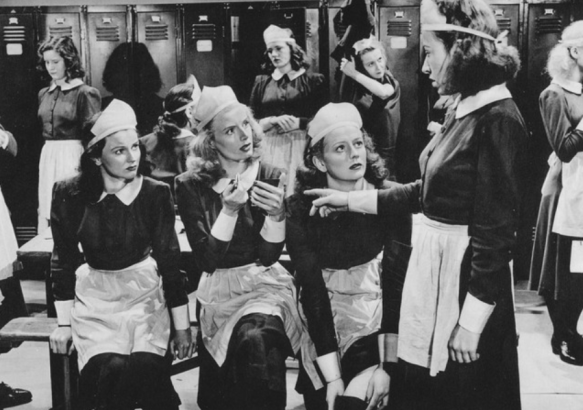
Love in Waiting (1948)
Directed by Douglas Peirce
Three young women (Peggy Evans, Elspet Gray, Patsy Drake) work as waitresses and balance their love lives. One of the young women, Golly (Evans), becomes romantic with the restaurant’s owner, Robert Clitheroe (David Tomlinson). This makes her the target of her manager, Miss Bell (Linda Gray), who also likes Robert. Amongst their lovelife drama, there is a workplace scandal over black market food trading.
I do love an English film! And this one is charming and adorable. I loved seeing Tomlinson–known best today as the father on MARY POPPINS – as a younger actor.
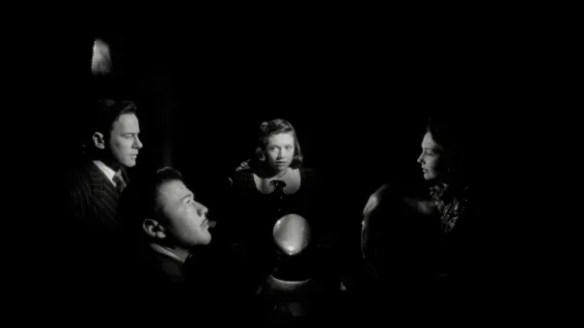
The Amazing Mr. X (1948)
Directed by Bernard Vorhaus
Christine Farber (Lynn Bari) will soon be married to Martin Abbott (Richard Carlson). But as the wedding dating approaches, she seems to be haunted by her deceased husband, Paul. Christine has a chance meeting with Alexis (Turhan Bey), a spiritualist who seems to know a great deal about Christine. As Christine turns to Alexis for counsel, her sister Janet (Cathy O’Donnell) and fiance Martin investigate, believing he’s not what he seems.
THE AMAZING MR. X is so much fun. It’s a bit spooky at parts, we have comedic relief from the nosey sister played by Cathy O’Donnell, and I’m always thrilled to see Richard Carlson in a movie. There are some unexpected twists that I won’t spoil here! The best part of all is that this movie is visually stunning, thanks to the outstanding cinematography of John Alton. He has such a way with shadows and darkness, especially in this film.
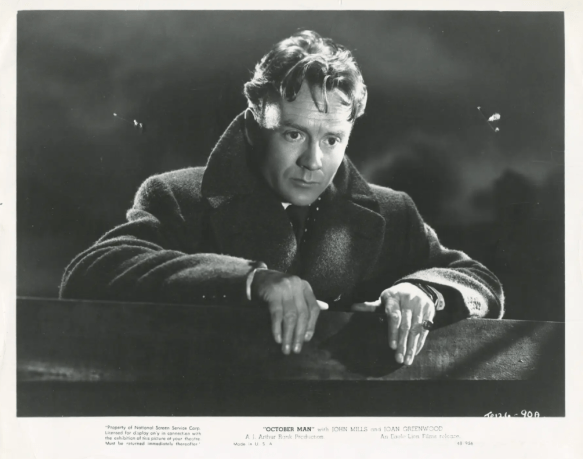
The October Man (1947)
Directed by Roy Ward Baker
After surviving a train accident, Jim Ackland (John Mills) receives additional care for a mental breakdown. A year after the accident, he tries to start a new life and finds a home in a boarding house. Jim befriends fellow boarding house resident, Molly (Kay Walsh). When Molly is killed, Jim is immediately under suspicion due to his time in the mental institution, and he works to clear his name.
I feel John Mills is an overlooked and underrated actor. And like almost everything he does, he’s excellent in this film. THE OCTOBER MAN is truly excellent. I love the mix of suspense, mystery and humor.
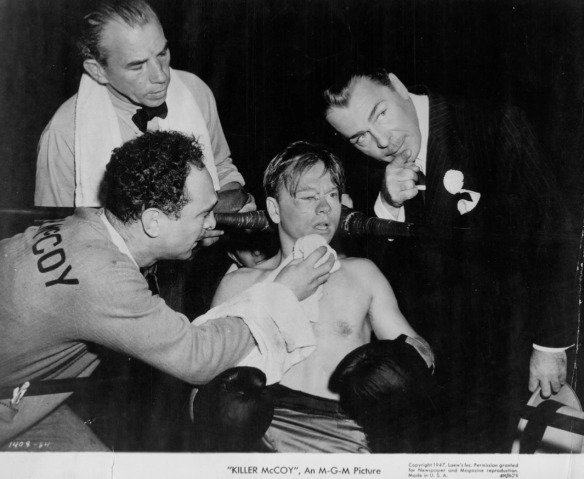
Killer McCoy (1947)
Directed by Roy Rowland
By pure accident, it’s discovered that Tommy McCoy (Mickey Rooney) is a skilled boxer. Tommy is built into a professional boxer and competes in lightweight matches. His former vaudeville performer father (James Dunn) drinks away most of Tommy’s earnings, and Tommy becomes entangled with gamblers (Brian Donlevy) who want him to “fix” fights.
When I saw this, I didn’t know what to expect going in and I loved it. This was made during a period that was nearing the end of Mickey Rooney’s time under contract at Metro-Goldwyn-Mayer. He was also getting too old to play teenage, Andy Hardy-like characters. I truly feel this is his third best performance while at MGM, the first two being THE HUMAN COMEDY and NATIONAL VELVET.

Nine Girls (1944)
Directed by Leigh Jason
A group of sorority girls and their faculty advisor (Ann Harding) are heading to a cabin in the woods for the weekend. It’s discovered that one of the girls is murdered, but the weather makes it impossible for the girls to return to town. Police officers Capt. Brooks (Willard Robertson) and Walter Cummings (William Demarest) make it out to investigate and question the girls.
I’m a sucker for an ensemble cast, especially of a group of actresses I love. For our students, we have a star-studded cast including: Anita Louise, Evelyn Keyes, Nina Foch, Jinx Falkenburg, Leslie Brooks, Lynn Merrick, Jeff Donnell, Shirley Mills and Marcia May Jones.
It’s an intriguing mystery, but more than anything it’s quite funny. There are some great zinger lines throughout. My only complaint is I wish I could have seen a better print of this one.
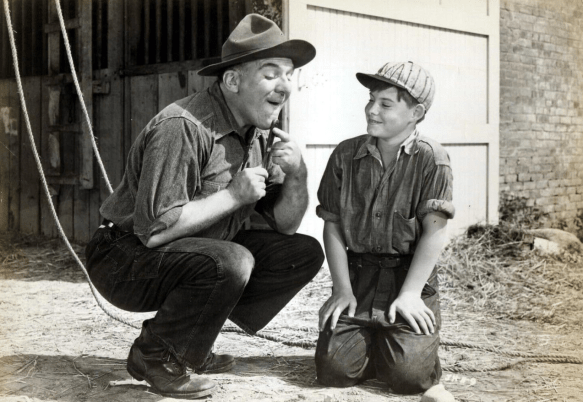
Johnny Holiday (1949)
Directed by Willis Goldbeck
Young boy Johnny Holiday (Allen Martin Jr.) is constantly getting in trouble with the law, largely thanks to the bad influence of teenager Eddie Dugan (Stanley Clements). After getting caught for an attempted robbery, Johnny is sent to a reform school farm. There he meets Sgt. Walker (William Bendix), who provides tough love to the boys. Though Johnny initially resists help, he eventually takes pride in the responsibility he gains on the farm … until Eddie is also sent to the same farm.
In a way, this film reminds me of BOYS TOWN (1938). It’s quite lovely and sweet. Allen Martin Jr, an actor I’m not familiar with, does a great job. But more than anything, I just love William Bendix. I hope he was that sweet and kind in real life. There is also a surprise appearance from Hoagie Carmichael.

Alive and Kicking (1958)
Directed by Cyril Frankel
Dora (Sybil Thorndike), Rose (Kathleen Harrison) and Mabel (Estelle Winwood) escape a nursing home when they learn they are soon to be sent to another nursing facility. They end up on an island in Ireland, where they soon meet MacDonagh (Stanley Holloway) who is about to move into three cottages. When MacDonagh mysteriously disappears, the three ladies pose as his nieces and stay in the home, while befriending villagers on the island.
ALIVE AND KICKING took a few unexpected turns, but what a delight this one was! Thorndike, Harrison and Winwood are hilarious together. A special shoutout to a very young Richard Harris who appears in this film.
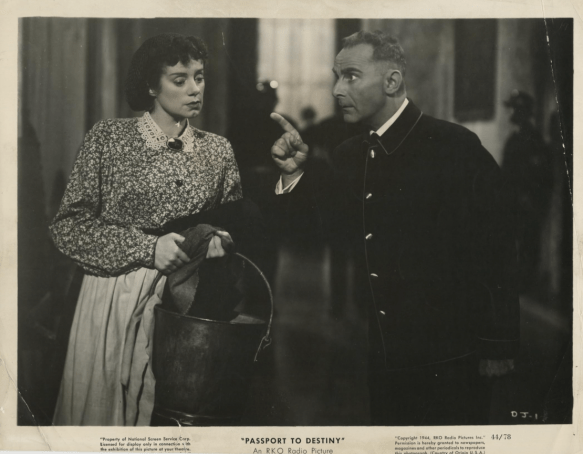
Passport to Destiny (1944)
Directed by Ray McCarey
Ella Muggins (Elsa Lanchester) believes a glass eye left by her deceased husband brings her secret powers and protection after she survives an air raid in London. Armed with this protection, she travels to Germany where she plans to assassinate Adolf Hitler.
I think PASSPORT TO DESTINY was the funniest film I saw this year. It’s hilarious and charming. For example, there’s a scene where Elsa Lanchester is flipping through the phone book trying to find Hitler. It’s a rare treat to see Elsa Lanchester in a starring role. What a gem this was!
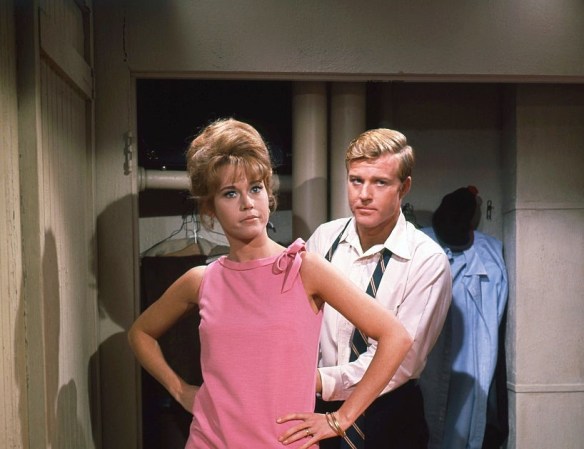
Barefoot in the Park (1967)
Directed by Gene Saks
Newlyweds Corie (Jane Fonda) and Paul Bratter (Robert Redford) adjust to life together in a less than desirable New York City apartment, an eccentric neighbor (Charles Boyer) and Corie’s mother (Mildred Natwick).
I’m not sure how I lived to age 37 and only just now saw BAREFOOT IN THE PARK. This was so much fun. Hilarious, excellent fashion, wonderful performances. I’m almost ashamed that I hadn’t seen it already! I’m also prepared to model my entire wardrobe after Jane Fonda’s look in this film.
Other places you can follow Comet Over Hollywood:
Love what you read? Share it:

 This week’s musical:
 Today when the term “Christmas movie” is thrown out, we have mental images of cozy holiday films, family dramas set during the Christmas season, or formulaic TV movies on Hallmark.
 Comet Over Hollywood