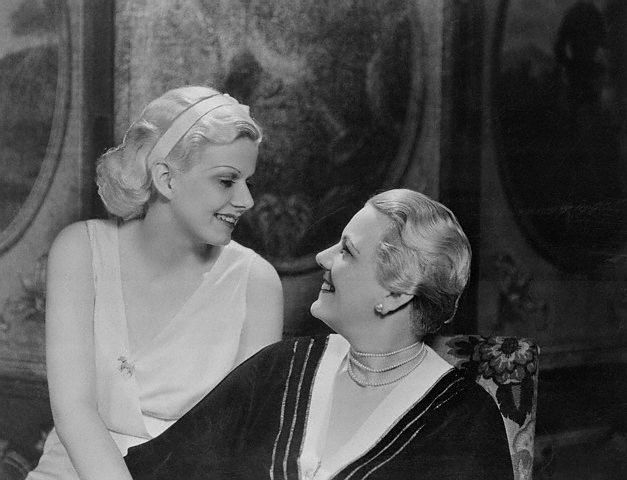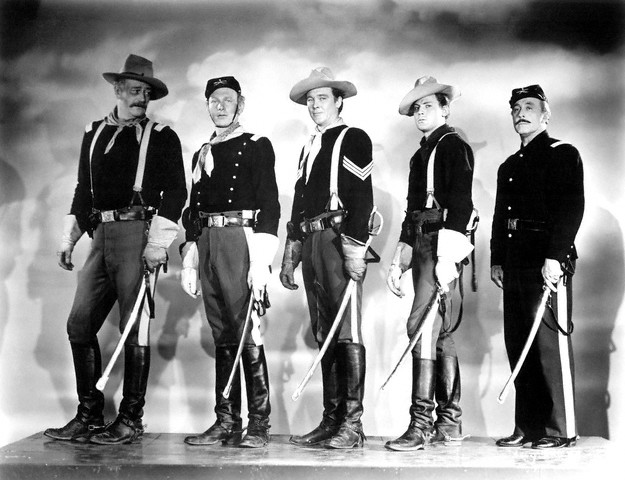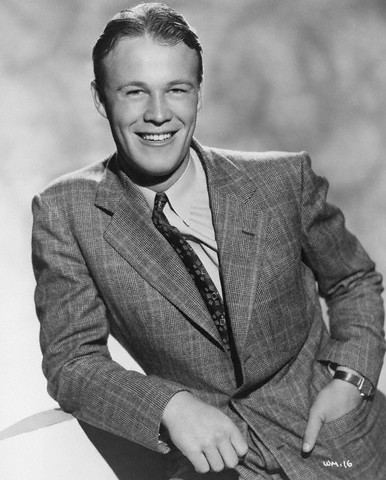
The forgotten Hollywood war hero: Wayne Morris

Warner Brothers star, Wayne Morris in he 1930s

Warner Brothers star, Wayne Morris in he 1930s

He can be seen playing alongside Bette Davis as a boxer in “Kid Galahad” (1937) or a cadet running amok at the Virginia Military Institute in “Brother Rat.”

Wayne Morris may not be a name you’re familiar with but you have most likely seen the husky, affable blond in Warner Brothers 1930s and 1940s films.

But you may not be familiar with Morris’ war time record.
We frequently hear about Hollywood actors such as James Stewart, Clark Gable and Mickey Rooney who enlisted and were decorated for their bravery during World War II.

However, Morris is rarely recognized for his service and was one of World War II’s first flying aces.

His interest in flying started in Hollywood.

While filming “Flying Angles” (1940) with Jane Wyman and Dennis Morgan, Morris learned how to fly a plane.
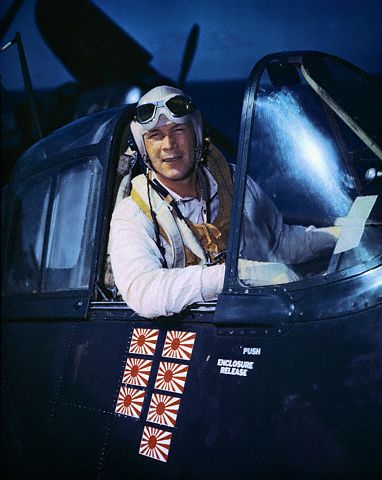
Morris in 1944 in his plane "Meatball." The decals show how many Japanese planes he shot down.

Morris in 1944 in his plane “Meatball.” The decals show how many Japanese planes he shot down.

Once World War II began, Morris joined the Naval Reserve and became a Naval flier in 1942 on the U.S.S. Essex. He put his career on hold to fight. The same year he was married to Olympic swimmer Patricia O’Rourke.

“Every time they showed a picture aboard the Essex, I was scared to death it would be one of mine,” Morris said. “That’s something I could never have lived down.”

Morris flew 57 missions-while some actors only flew 20 or less- and made seven kills, which qualified him as an ace.  He also helped sink five enemy ships.

He originally was told he was too big to fly fighter planes until he went to his uncle-in-law, Cdr. David McCampbell who wrote him a letter, allowing him to fly the VF-15, according to “McCampbell’s Heroes: the Story of the U.S. Navy’s Most Celebrated Carrier Fighter of the Pacific”, Edwin P. Hoyt.

Three of his planes were so badly damaged by enemy fire that they were deemed unfit to fly and were dumped in the ocean, according to IMDB.

“As to what a fellow thinks when he’s scared, I guess it’s the same with anyone. You get fleeting glimpses in your mind of your home, your wife, the baby you want to see,” Morris said. “You see so clearly all the mistakes you made. You want another chance to correct those mistakes. You wonder how you could have attached so much importance to ridiculous, meaningless things in your life. But before you get to thinking too much, you’re off into action and everything else is forgotten.”

For his duty, Morris was honored with four Distinguished Flying Crosses and two Air Medals.

When he returned to Hollywood after four year at war, his once promising career floundered and Warner Brothers did not allow him to act for a year.
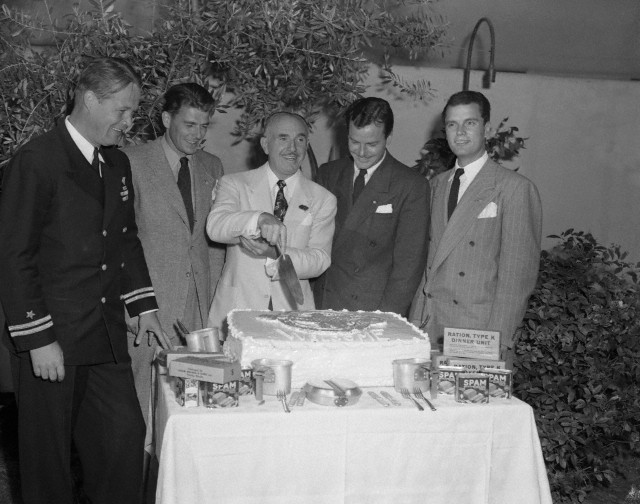
Jack Warner welcoming actors home from the war in 1945 including Wayne Morris, Ronald Reagan, Army Air Forces; Jack Warner; Gig Young, Coast Guard; and Harry Lewis, Army.

Jack Warner welcoming actors home from the war in 1945 including Wayne Morris, Ronald Reagan, Army Air Forces; Jack Warner; Gig Young, Coast Guard; and Harry Lewis, Army.

Morris’s most notable post-war films include “The Voice of the Turtle,” “John Loves Mary” and “Paths of Glory.” His career ended with several B-westerns.

At the age of 45, Morris passed away in 1959 from a massive heart attack.

But his service to his country was not forgotten. Morris is buried in Arlington Cemetery and was given full military honors at his funeral.

Morris with his wife Patricia and daughter Pamela in 1946.

Morris with his wife Patricia and daughter Pamela in 1946.

Though I am thankful for all men and women who serve our country, I wanted to recognize Wayne Morris.

For years I saw Wayne Morris in films and knew nothing about him except that I liked him. He is one of those character actors that can make a movie special.

Morris seemed like a regular guy. Before he started out in Hollywood, he played football at Los Angeles Junior College and worked as a forest ranger.

After I researched him and discovered his war record, I wanted to honor his service and his work in films.

Thank you to Wayne Morris and men and women in the military for serving our country.

Check out the Comet Over Hollywood Facebook page for the latest updates or follow on Twitter at @HollywoodComet. E-mail us at cometoverhollywood@gmail.com

Searching for ‘Rosebud:’ Child star searches for himself in autobiography

Dickie Moore with Pete the Pup in

Dickie Moore with Pete the Pup in “Our Gang” in 1930. Moore said he didn’t enjoy the Hal Roach series because he didn’t feel he fit in

Dick Moore was searching for his “Rosebud.”

In “Citizen Kane,” a sled with the word “Rosebud” was the key to Charles Foster Kane’s lost childhood.

For Moore, early memories were a slew of movie scenes with James Cagney, Barbara Stanwyck and Paul Muni. He was the breadwinner for his out of work parents and went to school at a studio with other acting children.

His childhood was far a normal childhood of peanut butter and jelly sandwiches and playing at recess.

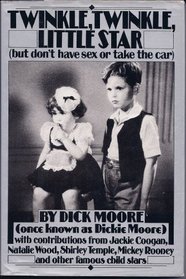
bookIn Dick Moore’s book, “Twinkle, Twinkle, Little Star (but don’t have sex or take the car),” Moore shares his memories of performing as child star Dickie Moore and interviews 31 child actors to see how their experiences compare to his.

Some of these actors include Stymie of Our Gang, Roddy McDowall, Jane Powell, Jane Withers, Jackie Coogan, Edith Fellows, Natalie Wood, Jackie Cooper, Shirley Temple, Baby Peggy (Diana Serra Cary) and Peggy Ann Garner.

“All of us shared common lives and times, huge responsibilities and salaries that shriveled fathers’ egos,” Moore wrote

Some children wanted to go into show business, like Jane Withers. Others were pushed by their mothers (or saber-tooth tigers of the Hollywood jungle, according to Diana Cary), like Natalie Wood who sat on a director’s lap and sing him a song while a movie was location in Santa Rosa. And some happened by accident.

Moore was one of those accidents. A friend of a friend of his mother’s was a casting director who happened to stop by the Moore home. The studio pursued Mrs. Moore for Dickie to be in pictures. She said no, but finally gave in since Dickie’s father was out of work.

Dickie was 11 months old in his first film and playing John Barrymore as a baby.

Once Moore started acting, his father had an even more difficult time finding work. Employers assumed he made enough money and other parents brought their children to see Mr. Moore at work, hoping he could put them in films. Mr. Temple had the same problem.

The book explores how each child got into films, their home life, the affect on non-acting siblings and birthday parties.

Most of the young actors’ parties were opportunities for publicity and magazine photographers to put their faces in magazines.

“Everyone was posing. The whole business of publicity made parties seem synthetic. If you have a party, it’s supposed to just be with people,” said actor Gene Reynolds. “But most of our parties were stunt to get pictures in magazines so where is the fun in that?”

Shirley Temple cutting the cake at her birthday party in 1935.

Shirley Temple cutting the cake at her birthday party in 1935.

Shirley Temple, the first child to carry a full weight picture on her own, would have three birthday parties each year: one with other child actors, one on set with the crew and one with her family.

“The parties were endless…Fox would have one for a large number of people I didn’t know, a lot of children I’d never seen in my life and would never seen again. And I was he hostess. It was kind of strange. I figured it was part of my job.”

Temple was also very isolated, as were many children. Moore’s parents allowed him freedom to play outside while others had no friends.
“Parents often discouraged their children from forming solid friendships because friends might tell each other about a part that was coming up and then, from the parents’ point of view, that wrong child would get the job,” Moore wrote.
Competition was high among child actors: Who could cry the best on cue, lying about ages to be younger and trying to look young, i.e. pigtails, short dresses.

Adult co-stars and their treatment to youngsters are discussed in the book. Marlene Dietrich was warm and friendly in “The Blue Angel,” Franchet Tone taught him how to play chess during “The Bride Wore Red” and Gary Cooper suggested what type of gun Moore should buy.

Moore with Barbara Stanwyck in

Moore with Barbara Stanwyck in “So Big”

But Moore’s favorite female adult star was Barbara Stanwyck was Moore’s favorite in “So Big.”

“Affectionate and demonstrative, she was easy to understand. She talked but didn’t fuss,” Moore wrote. “She was a direct and gracious woman, who seemed extremely interested in whatever interested me.”

Unanimously children liked working with Spencer Tracy because he would look right at you during a scene and listen to your lines.

Bobs Watson followed Tracy around during “Boys Town.”

“Often after a scene, he’d reach over and hug me and take me on his lap,” Watson said. “I felt like a little puppy. I would follow him around and stand close, hoping it would call me over and he often would.”

The two most disliked were W.C Fields and Wallace Beery.

“We did four long film together,” Jackie Cooper said about Beery. “They couldn’t find eight guys to carry his casket.”

Margaret O’Brien said he stole her lunch and Jane Powell said he would steal props off the set.

Two children got along with him: Darryl Hickman and Jackie Coogan.

Coogan’s father was a veteran in the business and it seems some of the tougher actors respected him because of this.

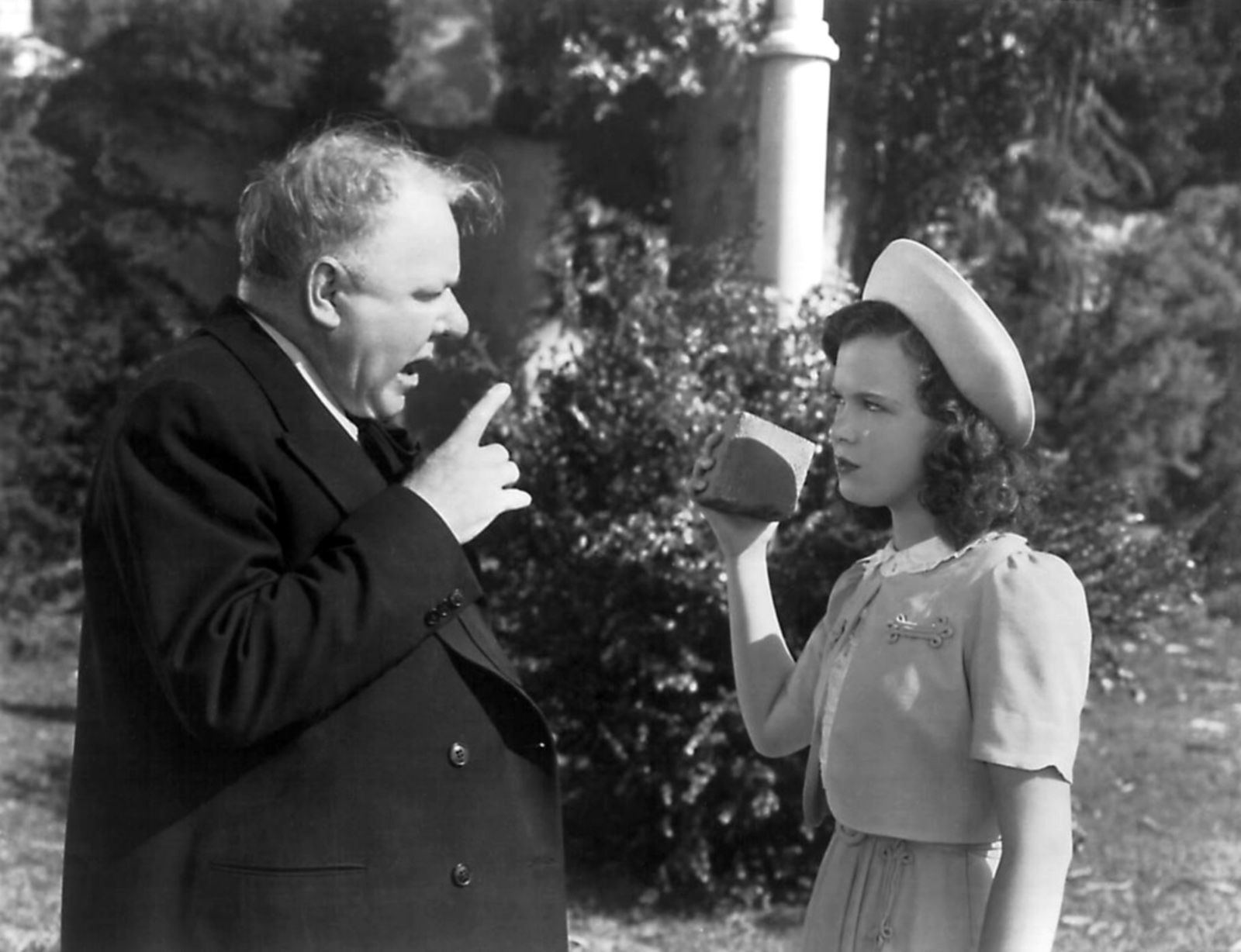
W.C. Fields and Gloria Jean in

W.C. Fields and Gloria Jean in “Never Give a Sucker an Even Break.”

Fields notoriously disliked children and was known for getting drunk while filming. But Gloria Jean got along with him, because she tried to look out for him.

While the book tells some humorous and heartwarming stories, there is an underlying sadness. It’s like reading Romeo and Juliet and knowing the lovers die at the end of the play.

You know that for many of the child stars, their career would come to an end.

Children such as Jackie Coogan and Baby Peggy faced financial problems when their family member squandered or stole the millions they had earned for their family.

The biggest fear for a child star is to age, as many faded away when they got older. Moore was in magazines and on ice cream lids (similar to baseball cards) until he had scarlet fever and was away from the screen for a year, taking him back to the bottom.

Baby Peggy (Diana Serra Cary) and her fan mail.

Baby Peggy (Diana Serra Cary) and her fan mail.

Baby Peggy felt she was a has-been at five.

Others like Jackie Cooper, Natalie Wood and Roddy McDowall went on to have a successful adult life.

But many child stars, even Jane Withers who loved acting, did not wish for their children to go into the business-they wanted them to have a normal childhood.

“They were wrong,” Roddy McDowall told Moore. “They were wrong to take us children and do that to our lives, to twist our environment in that way and then leave it for us to sort out.”

“Twinkle Twinkle Little Star..” is one of the best classic Hollywood books I have ever read about one of the most complicated and fascinating subjects.

If you can find it for a decent price, I highly suggest it.

This is part of my Children in Film blogathon. Read all of the entries here: https://cometoverhollywood.com/2013/05/24/children-in-films-blogathon-the-contributors/

Check out the Comet Over Hollywood Facebook page for the latest updates or follow on Twitter at @HollywoodComet.

“I didn’t care about the movies really. I was tall. I could talk. It was easy to do.” -Joseph Cotten

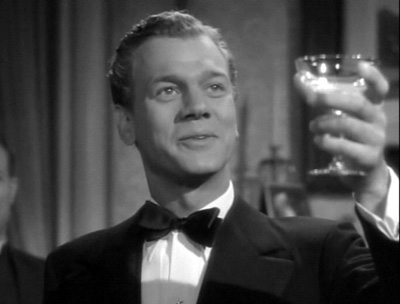
Joseph Cotten

Joseph Cotten

I have two huge classic Hollywood crushes, both highly underrated: Joseph Cotten and Joel McCrea.

But it is Cotten who we celebrate today at Comet, born on this day in 1905 in Virginia, making Mr. Cotten even more appealing to your southern writer.

But if his smooth voice, wavy hair and good looks aren’t enough for you, Cotten is a darn good actor.

He stars in two of my favorite films “Since You Went Away” (1944) and Alfred Hitchcock’s “Shadow of a Doubt” (1943) as well “Citizen Kane” (1940), which the American Film Institute has named the greatest film of all-time.

He was directed by Alfred Hitchcock and Orson Welles.

Some of his leading ladies include Bette Davis, Ingrid Bergman, Loretta Young, Claudette Colbert, Jennifer Jones, Ginger Rogers, Joan Fontaine and Barbara Stanwyck.

Before films, he performed in the stage version of “Philadelphia Story” with Katharine Hepburn.

Here are a few anecdotes from Cotten’s 1987 autobiography “Vanity Will Get You Somewhere.”

Orson Welles and Joseph Cotten in Citizen Kane

Orson Welles and Joseph Cotten in Citizen Kane

Citizen Kane (1940)

The film was originally set to open in Radio City Music Hall in February 1941, until Hearst stepped in, said Joseph Cotten, who played Jedediah Leland in the film.

“Of course I knew we’d been treading on thin ice with the obvious similarities between Kane and William Randolph Hearst. I also knew that Mr. Hearst was a powerful man. I was to discover just how powerful,” said Cotten. “The Radio City Music Hall turned down Citizen Kane because Louella Parsons, Hearst’s right hand, had threatened the theater.”

The executive producer, George Schaefer, was offered money to destroy the picture and the negative.

“The whole motion picture industry was threatened if they showed the movie,” Cotten said. “Hearst’s newspapers would bring skeletons out of the closets, and there were many.”

Schaefer refused to be bullied and was able to get bookings for the film in a couple of independent movie houses, Cotten said.

“Although people who sneaked in to see the picture raved about it, none of our names were mentioned in the Hearst newspapers or mentioned in Louella Parson’s column,” he said. “What I found personally rather baffling, after Kane, I made several movies in which my name was above the title but Hearst’s newspapers always managed to review these pictures without mentioning my name. It was quite a feat to tell the entire story of a film and leave out the leading man.”

 Shadow of a Doubt (1943)

Cotten told Hitchcock that he was nervous to play a murderer and wasn’t sure how they behaved, he wrote in his autobiography.

“Uncle Charlie (Cotten’s character) feels no guilt at all. To him, the elimination of his widows is a dedication, an important sociological contribution to civilization,” Hitchcock told him.  (67)

As Uncle Charlie in “Shadow of a Doubt”:

Her’s to Hold (1943)

While Cotten filmed “Her’s to Hold” with Deanna Durbin, a misunderstanding occurred.

Cotten was out late and had an early morning call for a radio show. He left a message with his wife Lenore that he would be staying in his dressing room (69).

Cotten and Durbin in a scene in "Her's to Hold" with Murray Alper in the background.

Cotten and Durbin in a scene in “Her’s to Hold” with Murray Alper in the background.

When he left his dressing room that morning, he found a security guard waiting outside who greeted him good morning. When Cotten met Durbin that morning in the commissary, he found out she had also stayed overnight in her bungalow.

Hedda Hopper got a hold of the story.

“The item that appeared in Hedda’s column was not the personal kind of reference that one would clip for a scrapbook, or care to preserve in any of those elaborate, leather-bound gift journals inscribed ‘Golden Memories,’” Cotten wrote (71).

After the incident, he called Hopper up and said if his name was mentioned again, he would kick her in the behind. She did and he did.

“The Kick was not a boot that would have carried a football over the crossbar, but neither was it a token tap,” he wrote. “…the contact was positive enough to disturb the flower garden on top of the outrageous hats she was renowned for.”

Since You Went Away (1944)

Cotten on the set of Since You Went Away with Jones. The two starred in four films together. He remained friends with Jones and Selznick.

Cotten on the set of Since You Went Away with Jones. The two starred in four films together. He remained friends with Jones and Selznick.

“Claudette (Colbert) was one of the most complete, humorous, hard-working and delightfully, almost shockingly, honest creatures I’ve ever worked with, Cotten said in his autobiography.

During the filming, Robert Walker and Jennifer Jones were going through a divorce and it was rumored Jones would marry David O. Selznick after the divorce was final.

“Claudette and I, each thinking that we were sitting on a powder keg, remained silent. The picture was not in any way affected by their romance.

The only person on our set who behaved in a rather furtive and giggly fashion was young Shirley Temple. Years later she told me that she had a schoolgirl crush on me.” (56)

Cotten said Temple had tried to convince the director to let her kiss him in the film. But in the movie, it was Jones’s character who had the crush on Cotten.

“The poor girl had to gaze at me adoringly non-stop,” he said.

Niagara (1953)

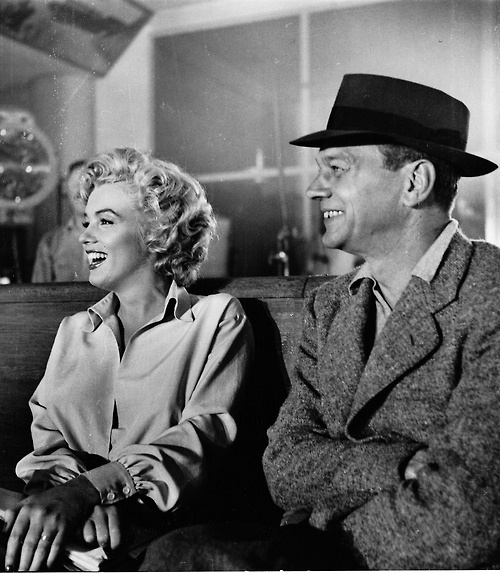
Cotten and Monroe on the set of Niagara

Cotten and Monroe on the set of Niagara

“I enjoyed her company. I enjoyed working with her,” Cotten said about working with Marilyn Monroe in her first starring role (110).

He said she had an appetite for laughter and was aware of her sense of humor describing her as a “pretty clown.”

Cotten recalls hearing about her death and receiving a phone call from the Associated Press for a comment.

“At first I was sure it had to be an accident. Such buoyancy of spirit, such sparkling anticipation, such a happy and comic attitude would deny support to any theory,” he wrote. “But she had such moments of fear and insecurity….As to all the other furtive theories-cover-up, murder, etc. – I have no knowledge or interest in such sordidness. I knew and acted with Marilyn Monroe. I am proud of having that privilege.”

Medina and Cotten in 1962

Medina and Cotten in 1962

Cotten was married to his first wife from 1931 to 1960 when she passed away from leukemia.

He married Patricia Medina from 1960 until his death in 1994. Cotten said she was the most beautiful woman in the world.

“If Helen of Troy’s face launched a thousand ships, Patricia’s could launch a million,” he said. “She is possibly the only truly beautiful woman ever to exist who is not disliked by one single person.”

“We are ordinary, extraordinarily lucky people,” Cotten wrote. “For that, all I can say is ‘Amen.’”

Happy birthday, Joseph Cotten, one of the best actors of classic film.

Happy birthday, Jo

Happy birthday, Jo

Check out the Comet Over Hollywood Facebook page for the latest updates or follow on Twitter at @HollywoodComet.

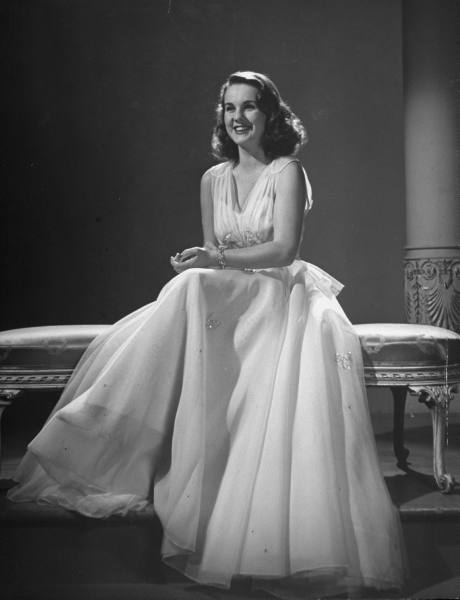
For the Love of Deanna: Remembering Deanna Durbin

Deanna Durbin in "I'll Be Yours" (1947)

Deanna Durbin in “I’ll Be Yours” (1947)

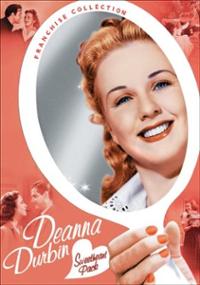
The first time saw Deanna Durbin was on the front of a DVD case.

The DVDs that introduced me to Deanna

The DVDs that introduced me to Deanna

I was 14 and gazed at this pretty, young lady happily looking back at me on the front of the “Deanna Durbin: Sweetheart Pack.”

Though I had no idea who Durbin was, I bought the DVDs.

The first film I watched was “Three Smart Girls” (1936) and immediately fell in love with Durbin’s smile, singing voice and charm.

Through the years, I’ve tried to watch as many musicals as possible- now up to 470 movie musicals-and Durbin’s films have been some of my favorite.

Debuting in films at age 15, Durbin’s popularity pulled Universal Studios out of bankruptcy, won her a Juvenile Oscar in 1938 and made her one of the top paid women in the United States.

Her popularity was world wide with fans such as Winston Churchill and Anne Frank. She influenced fashion in “Nice Girl” (1941) with a white organdy, ruffled dress, according to USA Today.

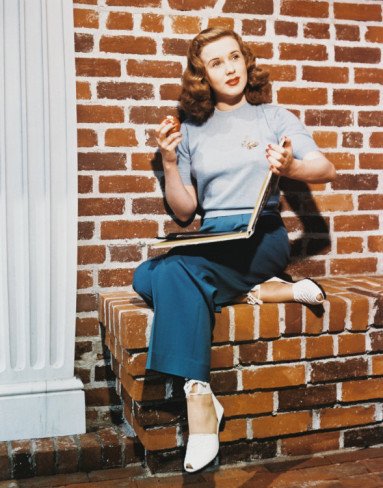
LIFE photo of Durbin

1938 LIFE magazine photo of Durbin

She was considered for the role of Dorthy in “Wizard of Oz” (1939) (as was Shirley Temple) and to be the voice of Snow White in the 1937 Walt Disney cartoon. However her voice was considered too mature at 14.

Similar to fellow child star Shirley Temple, Durbin had dolls and other merchandise created in her likeness. Today, it’s difficult to find a Deanna Durbin doll under $200.

After her first on-screen kiss with Robert Stack in “First Love” (1939) she transitioned into teen and adult roles with leading men such as Joseph Cotton, Gene Kelly and Tom Drake.

But after 21 films and at the height of her popularity, Durbin left films and lived the remainder of her life in France.

“I hated being in a fishbowl,” she was quoted as saying in her New York Times obituary.

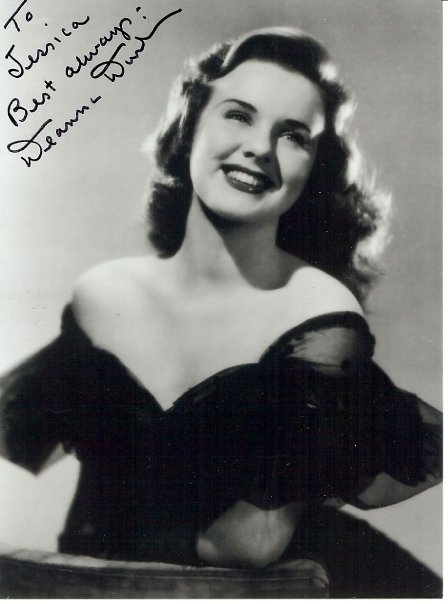
Long after she had left films, her influence and sunny disposition continued to spread, this time to fans like myself. Durbin quickly became one of my favorite movie stars and singers as I worked my way through her films. In 2005, she was kind enough to respond to a fan letter with an autograph and even paying for postage from France.

Durbin in color

Durbin in color

My favorite Deanna Durbin films include “The Amazing Mrs. Holliday” (1943) where she plays a missionary caring for World War II orphans, and “It Started With Eve” (1941). Though Durbin has great chemistry with “Eve” leading man Robert Cummings, she has even more impressive chemistry with Charles Laughton. The rumba scene with Laughton is one of my favorite comedic scenes of the English actor.

My favorite songs of Durbin’s include “Amapola” and “Les Filles de Cadiz.”

It was announced Tuesday that Durbin passed away at the age of 91.

Though she is gone, she will forever be singing in our hearts.

Rest in peace, Deanna.

Autograph she sent to me in 2005

Autograph she sent to me in 2005

Check out the Comet Over Hollywood Facebook page for the latest updates.

“Now it’s time to say goodbye”: Remembering Annette Funicello

Just thinking about her makes me smile.

annette funicello 2

Annette Funicello

Annette Funicello has always been a source of happiness in my household. Her films, the Annette mystery book series, her music- she has always been a favorite of the Pickens’ family.

Though I didn’t grow up in the 1960s, I grew up with Annette. My mom was a huge fan so I was introduced to “The Shaggy Dog” (1959) and “Babes in Toyland” (1961) at a young age.

“I had Annette books, coloring books and paper dolls growing up,” my mom, Lisa Pickens, said. “I really liked her a lot. Since she was only in movies while she was young, we didn’t see her age. There was something special about Annette.”

Annette was an original Mousketeer on the Mickey Mouse Club. She autographed a photo for me in 2008

Annette was an original Mousketeer on the Mickey Mouse Club. She autographed a photo for me in 2008

Even in the past two years, summer afternoons were spent downloading her songs on iTunes and watching old Mickey Mouse Club episodes and the Annette series. In the serial Annette was a “country cousin” who moves to the city to live with her wealthy aunt and uncle.

“Throughout all the years we were friends she never changed from that sweet person who cared so much about others,” said Mousketeeer Sharon Baird, on the Official Disney Fan Club. “She always had time for everyone; family, friends and fans alike. It’s no wonder she was America’s sweetheart.”

In the 1950s, Annette Funicello stood out as a Mousketeer on the Mickey Mouse Club. Her background was Italian and she looked different than the other, Anglo-Saxon children.

She even suggested that she change her last name to “something more American,” but Walt Disney disagreed, saying her own name made her more unique, according to IMDB.

And her uniqueness is what made her the most popular of the original Mousketeers.

“The Disney studio wasn’t like other studios. It was just like home – it always had a small-town, family atmosphere,” she said.
Along with The Mickey Mouse Club, Annette starred in Disney films such as “The Misadventures of Merlin Jones” (1964) and “Babes in Toyland.”

Her fame brought her to recording career, with records like “Hawiaannette,” “Itallianette” and “Danceannette,” but Miss Funicello didn’t think she could sing.

“The Sherman Brothers wrote a song for me for the Annette series called ‘How Will I Know My Love,’” she said in an interview. “They told me we have to put this on a single. People are writing us like crazy wanting to buy it. I told them I don’t sing. And they said, ‘Well I’m signing you to a recording contact, young lady.’ And I said yes sir, and that’s what started my singing career.”

Composer Tutti Camarata was the one who created “The Annette Sound.” This is where she would sing the song once. She then would listen to the song with headphones, while trying to sing along as exact as she could, she said.

“It gave me that larger sound that I needed, because my voice is very small with a range of about of three notes,” she laughed. “It worked. I think my favorite song was ‘Pineapple Princess.’ I was lucky enough to have five songs that made the Top 10.”

Stevie Wonder, early in his career, with Annette Funicello and Frankie Avalon in "Muscle Beach"

Stevie Wonder, early in his career, with Annette Funicello and Frankie Avalon in “Muscle Beach”

Annette was also one of the first performers to sing with the Beach Boys as they were growing in fame.

“I really shouldn’t put down my singing career, because I’m so appreciative of everything that came my way,” she said.

In interviews and in her autobiography “A Dream is a Wish Your Heart Makes,” Annette seems like somebody you would run in to at the store. Annette was sweet and down to Earth, making her more relatable for her fans.

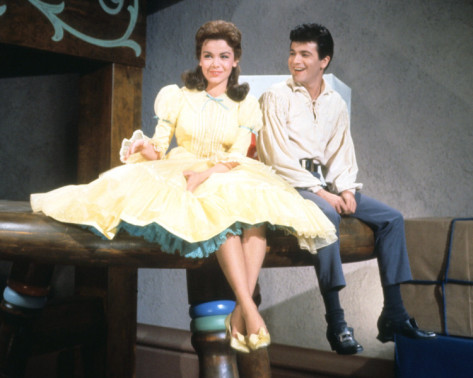
With Tommy Sands in "Babes in Toyland"

With Tommy Sands in “Babes in Toyland”

Even while she was in movies, her father still worked at a gas station, and Annette wasn’t allowed to date until she was 16, according to her New York Times obituary.

In real life, she stayed friends with fellow teen stars Frankie Avalon, Shelley Fabres and fellow Mousketeers Doreen Tracey and Cheryl Holdridge, who passed away in 2009. She was good friends with Jimmy Dodd from the Mickey Mouse Club until his death in 1964.

While she was 21-years-old and still under contract at Disney, she was approached about roles in beach films. Walt Disney approved Annette doing the films as long as she didn’t show her belly button in bathing suits, according to the New York Times.

These films included the silly, but fun, “Beach Blanket Bingo” (1965) and “Beach Party (1963).

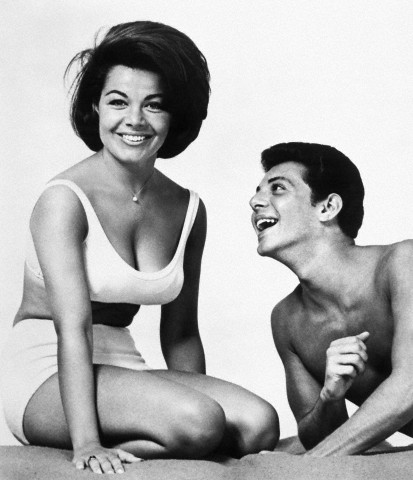
Annette Funicello and Frankie Avalon in "Beach Party"

Annette Funicello and Frankie Avalon in “Beach Party”

Annette retired from films, only making a few appearances, after she married her first husband in 1965 to raise her family.

“She was always there for car pools, Hot Dog Day and the P.T.A,” her daughter said in 1994.

After they divorced, she remarried in 1986 to Glen Holt. They remained married until she passed away.

Annette returned for a few appearances in the 1980s including “Back to the Beach” (1987) with Frankie Avalon, and an appearance on the TV Show “Full House” where Michelle pronounced her last name as “Funny-Jello.”

It was in 1987, she learned she had Multiple Sclerosis and established the Annette Funicello Research Fund for Neurological Diseases.

Miss Funicello passed away today at the age of 70, and the world seems a little dimmer.

“Everyone who knew Annette, loved and respected her,” said Walt Disney’s daughter Diane Miller.  “She was one of the loveliest people I’ve ever known, and was always so kind to everyone. She was also the consummate professional and had such great loyalty to my father. Annette will always be very special to me.”

Rest in peace, Annette. You will always remain in our hearts as you chant “Meeska-Mooska-Mouseketeer” and surf the beaches of California.

Check out the Comet Over Hollywood Facebook page for the latest updates.

Day and MacRae: A forgotten screen team

Doris Day.

The sunny blond who can brighten a day with a smile.

On her birthday, I wanted to remember one of my favorite leading men who starred in five films with her.

But I don’t mean Rock Hudson.

Day and Hudson joined in the late 1950s to create one of Hollywood’s most memorable screen teams.

The two starred in three films together: “Pillow Talk” (1959), “Lover Come Back” (1961) and “Send Me No Flowers” (1964).

But before Rock entered into the picture, Day was teamed five times with another tall, dark and handsome actor-but this one could sing.

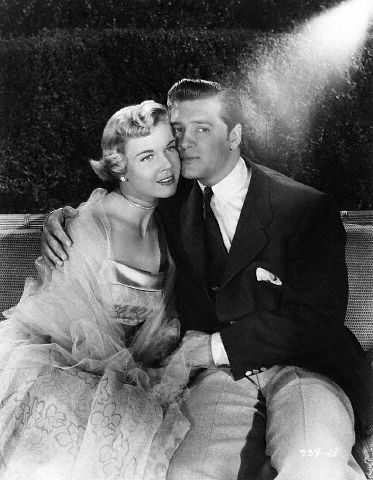
Doris Day and Gordon MacRae in "On Moonlight Bay"

Doris Day and Gordon MacRae in “On Moonlight Bay”

Gordon MacRae starred in five films with Day while she was under contract at Warner Brothers. Day was under contract at Warner from 1948 to 1955 and made 17 pictures, according to her autobiography, “Doris Day: Her Own Story.” (111)

“With pictures assigned to me one after the other, I found myself performing with the same Warner Brothers actors over and over again,” she wrote. “Three pictures with Jack Carson, five with Gordon MacRae, two with Ronald Reagen, four with Gene Nelson. A major studio was really a big repertory company that constantly shuffled its employees around so as to keep them busy as much of the time as possible.” (111)

"Tea for Two" (1950)

“Tea for Two” (1950)

Her first movie with MacRae was “Tea for Two” (1950).

“It was my first movie with Gordon MacRae and Gene Nelson, two cheerful, amusing young men,” she wrote.

Tea for Two” is based off the play “No, No Nanette.” Day, as Nanette, bets her uncle $25,000, played by S.Z. “Cuddles” Sakall, that she can say to no to everything for 48 hours. If she wins, she can back her boyfriend’s Broadway show.

Of course there are misunderstandings along the way and affect her romance with MacRae.

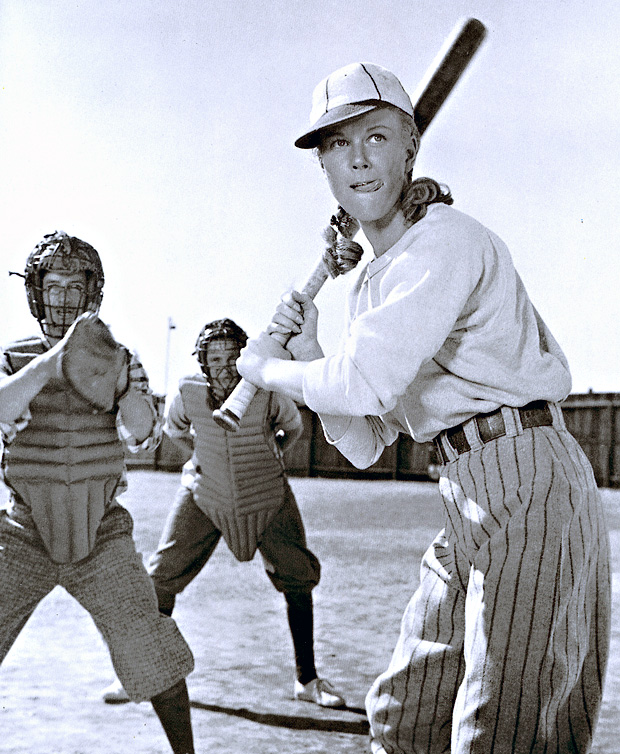
Doris Day plays a tom boy in "On Moonlight Bay" before she goes on her first date with McCrae

Doris Day plays a tom boy in “On Moonlight Bay” before she goes on her first date with McCrae

“In those Warner Brothers years, the pictures I enjoyed the most (not the scripts but the fun I had making them) were the nostalgic musicals-Tea for Two, Lullaby of Broadway, On Moonlight Bay, I’ll See You in My Dreams, By the Light of the Silvery Moon, Calamity Jane,” she wrote. “I liked the old songs, and the good old times that those films captured. I guess I’m really an old-fashioned girl at heart.” (117)

Of those films Day listed, Tea for Two, On Moonlight Bay and By the Light of the Silvery Moon also starred MacRae as her singing boyfriend. Other films they were in together included  “West Point Story” and “Starlift.”

Prior to his films with Day, MacRae starred in a few forgettable films and two June Haver vehicles. “Tea for Two” was his sixth film. Their last film “By the Light of the Silver Moon” (1953) was followed by “Oklahoma!” (1955)-the film he is remembered for today.
My favorite Day-MacRae films are “On Moonlight Bay” (1951) and “By the Light of the Silvery Moon” (1953).

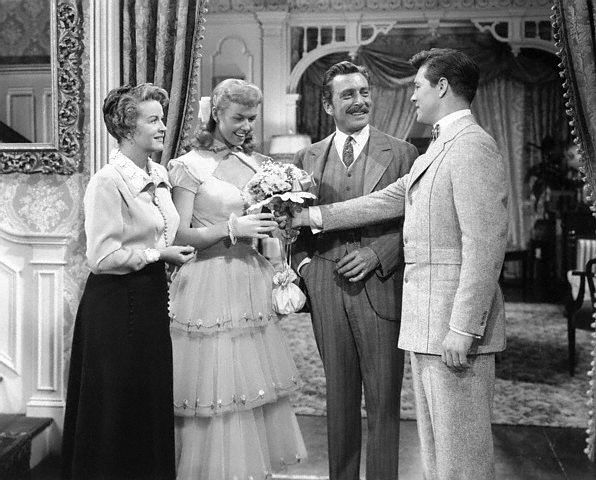
Rosemary DeCamp, Doris Day, Leon Ames, Gordon MacRae in "On Moonlight Bay"

Rosemary DeCamp, Doris Day, Leon Ames, Gordon MacRae in “On Moonlight Bay”

The two films are a series based on the Booth Tarkington “Penrod” stories but revolve around the sister Marjorie, played by Day. Set at the early 1900s, Day is a tomboy and starts going on dates with Bill, played by MacRae. At first Bill has big, philosophical ideas, saying marriage is stupid.

The first film ends with Bill going to fight in World War I. The second movie picks up when he returns and follows the dilemma of when the two will get married.

The movies are heartwarming and include antics by Day’s little brother Wesley, played by Billy Grey, and her parents, played by Leon Ames and Rosemary DeCamp.

Though Day and MacRae are not remembered as a great screen team today, I feel they had great chemistry and their voices blended well in musicals.

MacRae’s personal life may have been stormy in his later years, but he had a sunny, boy next door characteristic that worked well with Day’s persona.

Happy birthday to my favorite actress since I was in eighth grade and who consistently puts a smile on my face.

Check out the Comet Over Hollywood Facebook page for the latest updates.

You Stepped Out of a Dream: Fashions of Lana Turner

Nightclubs would play “You Stepped Out of a Dream” as she entered.

Men adored her, including actor William Powell, and showered her with gifts.

Though Lana rarely wore low cut dresses, this fuchsia gown was a favorite.

Though Lana rarely wore low cut dresses, this fuchsia gown was a favorite.

Lana Turner’s glamor, beauty and style made her one of the top film stars from the 1940s through the early 1960s.

Her fashionable presence and perfection of her appearance has left a lasting impression on classic Hollywood fans.

Before Comet has looked at Turner’s beauty regimens such as moisturizing with Nivea or exfoliating with Boraxo soap once a week.

Today we are looking at how Miss Turner dressed.

“She had a presence, style and beauty,” said her daughter Cheryl Crane in her book LANA: The Memories, the Myths, the Movies. “But she was approachable, rather than  film goddesses like Greta Garbo.” (56)

Her clothes and jewelry were her star persona that she used as a shield and felt vulnerable without them, Crane said.

“Her appearance, whether for screen, at home or in public, was always ‘camera ready,’” Crane wrote. “Make up on, hair done-no matter the time or place.” (82)

“I would rather lose a good earring than be caught without make up,” Turner said.

Turner togs:

Crane describes her mother’s lifestyle and interests in the book in detail-including her clothing.

Turner’s closet in her 1950s home was the length of half of their home complete with a platform for fittings, climate controlled closets for furs, jewelry vaults and revolving closets.

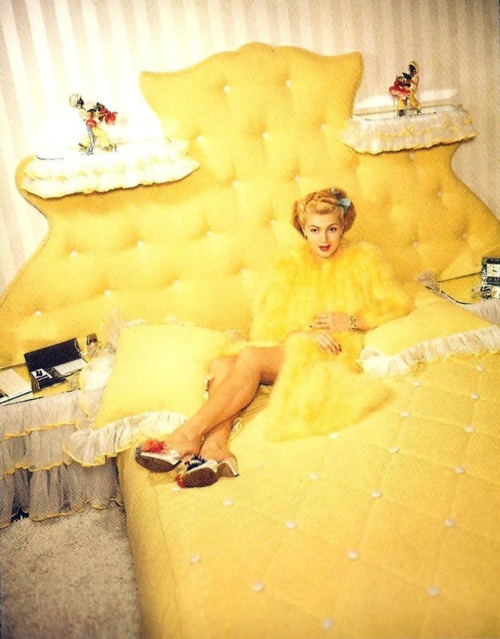
When it came to evening dresses, Turner liked form fitting gowns but rarely wore low cut dresses. She preferred wearing all white or all black for a dramatic look that complimented her skin tone and hair. (95) She also liked clean, bright colors such as yellow.

All white and black ensembles were looked dramatic with her coloring

All white and black ensembles were looked dramatic with her coloring

Lana also liked clean, bright colors such as yellow. Here she is in 1942. (182)

Lana also liked clean, bright colors such as yellow. Here she is in 1942. (182)

For professional performances Lana never wore clothing off the rack so that she wouldn’t be copied by department stores. Her casual clothing was tailored as well.

Her favorite designers were Jean Louis and Nolan Miller, later in life.

“More than often she would look at the latest issue of Harper’s Bizarre or Vogue and then put her dressmaker to work on a vision of the styles she liked,” Crane wrote. “Mother’s perfectionism caused trouble during fittings. It was not unheard of for a dressmaker to walk out because she was so detail oriented.” (96)

Lana locks:

When Lana started in Hollywood, her hair was a reddish brown. It was eventually died blond, which it stayed for most of her career. In other films like “Green Dolphin Street” (1947) and “Betrayed” (1954) her hair was brown.

Various Lana Turner hairstyles in the 1940s and 1950s

Various Lana Turner hairstyles in the 1940s and 1950s

Turner’s hairdresser, Helen Young, experimented with up-dos and wove jewels and flowers into her hair, Crane wrote (88).

“It (her hair) was long one moment, short the next,” Crane wrote. “Mother was constantly changing her hair. It was very easy to style.”

Along with jewels, Lana often adorned her head with hats- from flowered pieces to feathers, veils and Spanish influenced mantillas.

“Mom had a face that allowed her to wear any hat,” Crane wrote. (100)

hats

Lana Turner in various hat styles in the 1930s and 1940s.

Finishing touches:

“No dress, however startling, can stand alone,” Lana said.

She coordinated jewelry with outfits and preferred colored jewels to diamonds. (104)

“Even when wearing sweats she had jewelry,” Crane wrote.

Her shoes were by Ferragamo that were designed to match gowns. (96)

When Lana liked a style of shoes, she bought it in ever color. At one point she had 698 shoes. (99)

Fashion copycats and admirers:

On the nightclub scene in a white evening gown in the 1940s.

On the nightclub scene in a white evening gown in the 1940s.

It wasn’t just men who admired Lana.

Though Ginger Rogers wrote in her autobiography that Eva Peron copied her style in the 1930s, Cheryl Crane wrote that Peron was fascinated with Lana.

“Eva Peron copied fashions and a number of unique hairstyles for which mother was known for,” Crane said. (177)

The fascination made it awkward for Turner when she visited Argentina in 1946.

“Customs seized all of her jewelry and held her up for hours,” she wrote. “She learned that every piece was photographed to be copied later.”

Another notable person fascinated with Lana was artist Salvador Dali-but he was only obsessed with the corners of her eyes, which he wanted to paint. (177)

A legend

Though Lana Turner is one of the most beautiful women in the classic age of Hollywood, she didn’t think so.

“It’s interesting that mother never thought of herself as beautiful,” Crane wrote. “To her, the great beauties were brunettes.”

Regardless of Turner’s personal opinion of herself, her fashion and beauty made her a one of Hollywood’s ethereal and beautiful stars.

Source:

“Lana: The Memories, the Myths, the Movies” by Cheryl Crane

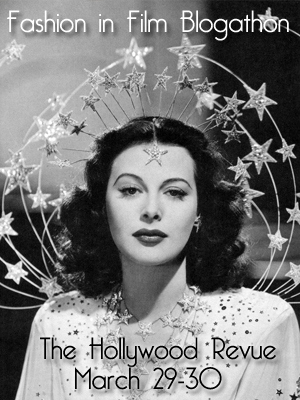
This is part of Fashion in Film blogathon by Hollywood Revue Blog.

Fashion in Film blogathon hosted by our friends at Hollywood Revue Blog

Fashion in Film blogathon hosted by our friends at Hollywood Revue Blog

Check out the Comet Over Hollywood Facebook page 

Metropolitan Opera singer dies at age 99

Actress, opera singer Rise Stevens in 1941

Actress, opera singer Rise Stevens in 1941

A Kennedy Center Honoree, 351 performances at the Metropolitan Opera House and handful of Hollywood films.

Opera singer and actress Risë Stevens had an impressive resume, including a 62 year marriage.

The singer who performed “Carmen” 124 times passed away March 20 at the age of 99.

Stevens with Barry Fitzgerald and Bing Crosby in Going My Way, 1944

Stevens with Barry Fitzgerald and Bing Crosby in Going My Way, 1944

She is best known in the opera world for being a successful operatic singer on the stage. However, classic film fans will recognize her from her role in the Bing Crosby film “Going My Way” (1944).

In the film, Stevens plays an old girlfriend of Crosby, who is now a Catholic priest, Father O’Malley. After he turned to life as a priest Stevens becomes a successful singer and performs selections from “Carmen” in the movie. Stevens helps save the church from financial troubles by performing a piece of music written by Father O’Malley, “Going My Way.”

“I probably would never have reached that vast public had I not done films,” said Stevens. “At least, I won a lot of people over to opera.”

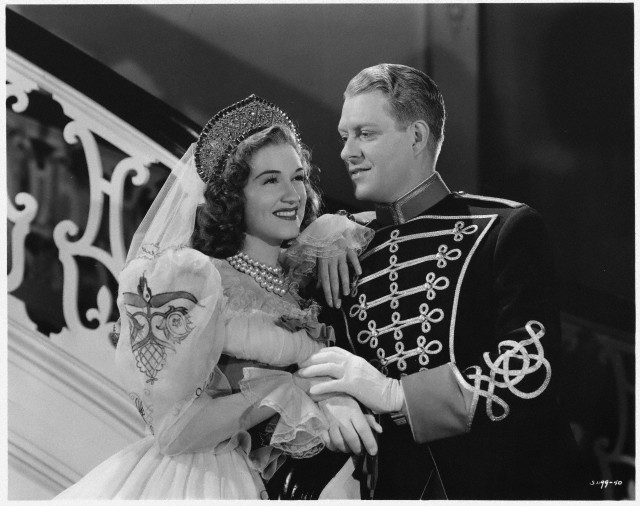
Stevens’s first film was in 1941 with fellow opera singer, Nelson Eddy in “The Chocolate Soldier.”

Rise Stevens and Nelson Eddy in The Chocolate Soldier, 1941

Rise Stevens and Nelson Eddy in The Chocolate Soldier, 1941

“He really could have had an operatic career, but he just made too much money, too soft and too easy,” she said.

But her career is much vaster than a few Hollywood films.

Stevens performed with the Metropolitan Opera from 1938 until 1961, leaving the opera while she still had her voice, according to her obituary in the Miami Herald.

“It always bothered me, these great singers when I heard them again and again, remembering how magnificent they sounded once and no more,” she said.

Born in New York, she sang on the “Children’s Hour” radio show when she was a little girl. She later studied at Julliard. When she was invited to perform with the Metropolitan Opera, she declined. She said she wasn’t ready and made her formal debut in Europe, according to her New York Times obituary.

“I had a good career,” she is quoted in her Miami Herald obituary. “Now the joy is in watching the young musicians grow, mature, and perhaps become successes.”

Rest in peace to one of America’s best singers: Rise Stevens.

Check out the Comet Over Hollywood Facebook page 

“She didn’t want to be famous, she wanted to be happy”: Remembering Jean Harlow

**Above quote said by Clark Gable.

Today, Comet is remembering Jean Harlow on her 102 birthday, one of the most beautiful women to grace Hollywood.

“In the first sitting, I fell in love with Jean Harlow,” said photographer Charles Sinclair Bull. “She had the most beautiful and seductive body I ever photographed.”

Harlow paved the way for platinum blondes of the 1950s such as Mamie Van Doren and Marilyn Monroe. She died at the age of 26 in June 1937 of uremic poisoning brought on by acute nephritis.

“She was a square shooter if there ever was one,” Spencer Tracy said.

Harlow off the movie screen

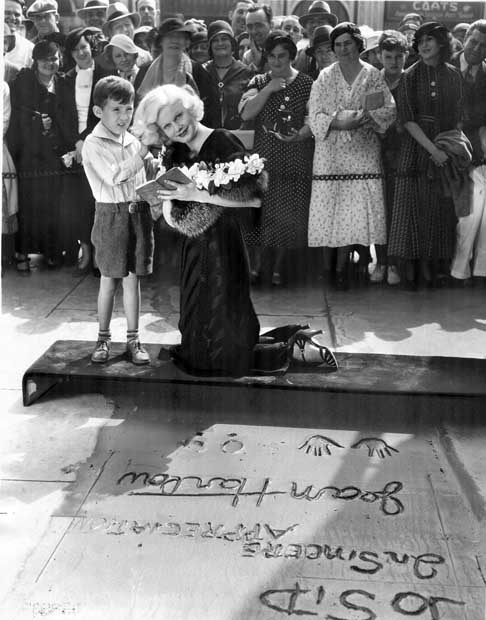
Harlow with a young fan outside of Grauman's Chinese Theater in 1933.

Harlow with a young fan outside of Grauman’s Chinese Theater in 1933.

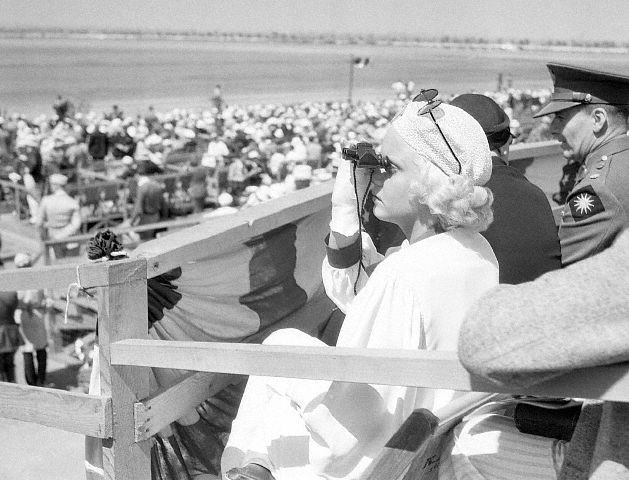
Watching the National Air Races of Los Angeles Municipal Airport in 1933. She raised the flag tobegin the races.

Watching the National Air Races of Los Angeles Municipal Airport in 1933. She raised the flag tobegin the races.

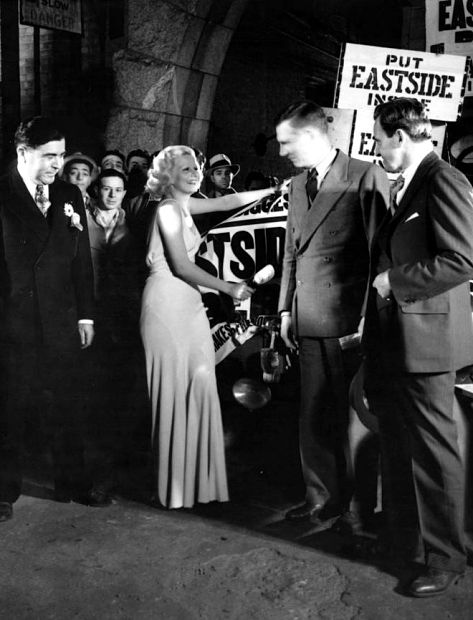
Celebrating the end of Prohibition, Harlow christens a truck load of beer in 1933. Pictured with Walter Huston.

Celebrating the end of Prohibition, Harlow christens a truck load of beer in 1933. Pictured with Walter Huston.

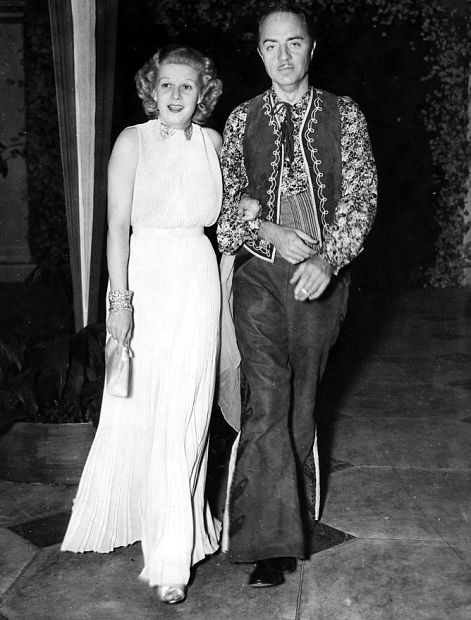
Harlow with fiance William Powell at William Randolph Hearst's birthday party in 1936

Harlow with fiance William Powell at William Randolph Hearst’s birthday party in 1936

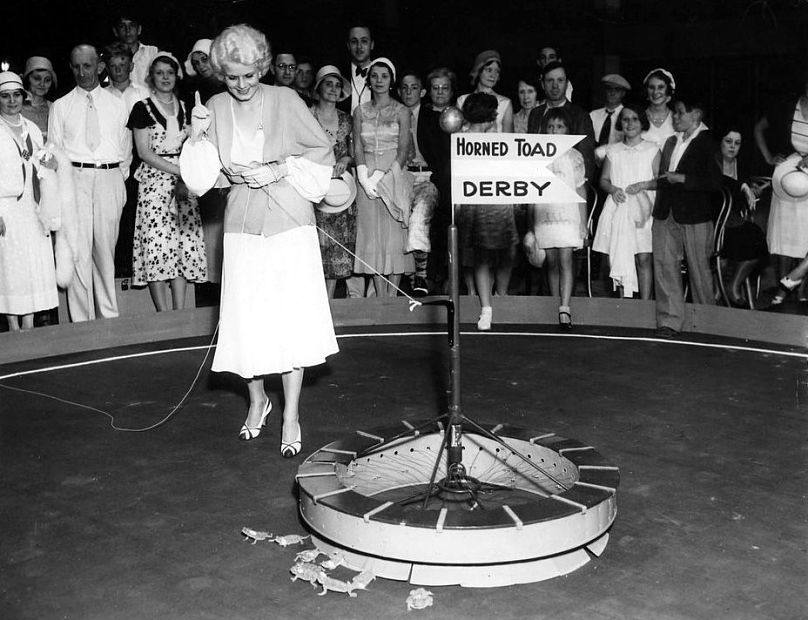
Harlow lets out toads for a Horned Toad Derby in 1931.

Harlow lets out toads for a Horned Toad Derby in 1931.

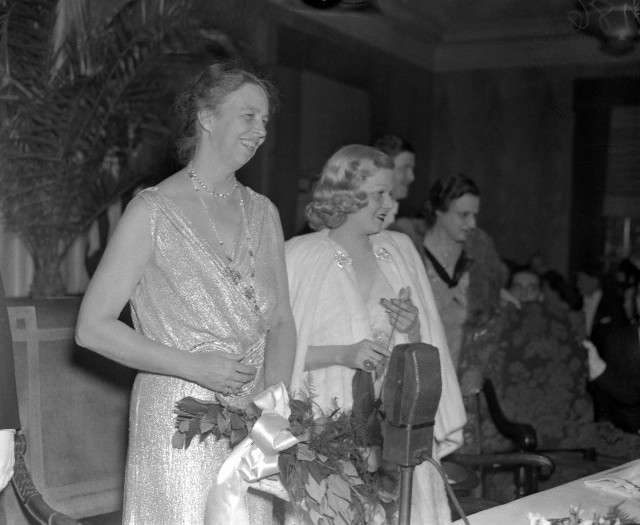
Harlow with First Lady Eleanor Roosevelt in 1937, celebrating the 55 birthday of President Roosevelt. She was also helping raise funds for infantile paralysis.

Harlow with First Lady Eleanor Roosevelt in 1937, celebrating the 55 birthday of President Roosevelt. She was also helping raise funds for infantile paralysis.


 Harlow Fashion

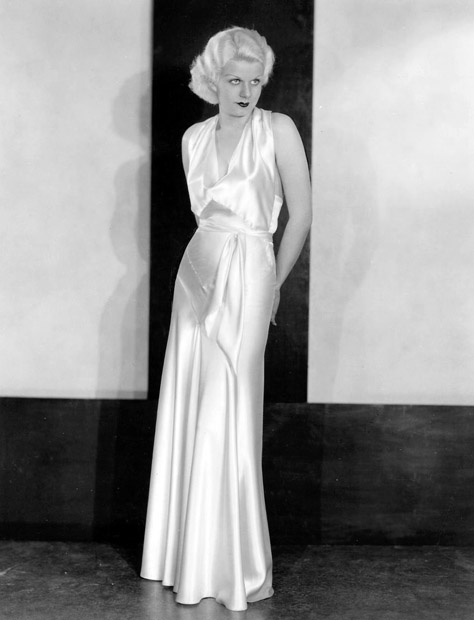
Harlow was well known for slinky, white satin gowns. In April 2012, Time listed her as one of the top 100 fashion icons of all time.

Harlow

Harlow in her signature style of a slinky gown

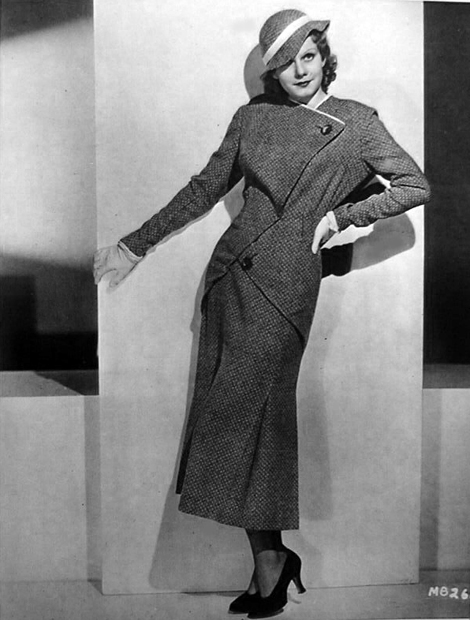
Harlow in a suit designed by Adrian, who shares a birthday with her

Harlow in a suit designed by Adrian, who shares a birthday with her

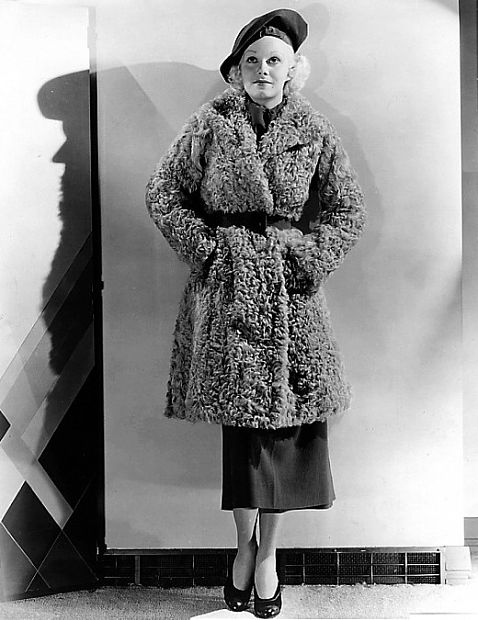
Harlow in fur

Harlow in fur

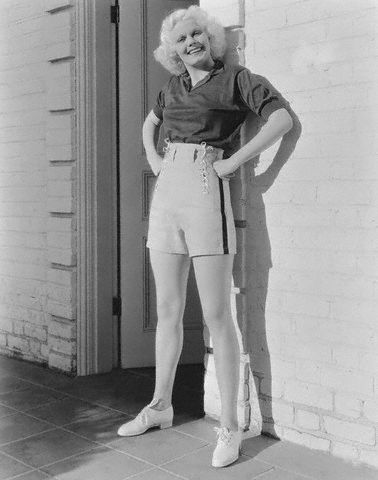
Harlow in shorts

Harlow in shorts

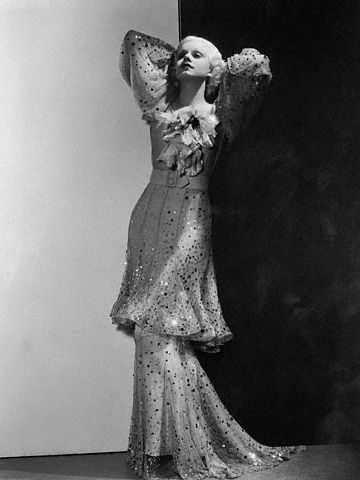
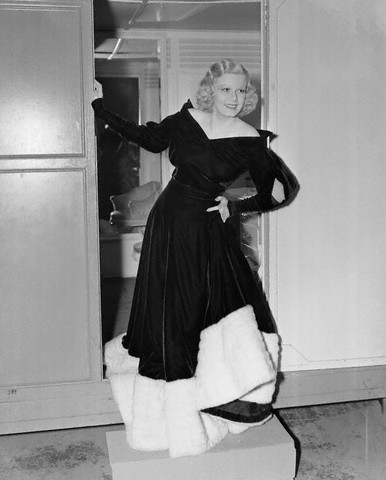
Harlow in 1933. A gold and sequined gown with an Oriental influence

Harlow in 1933. A gold and sequined gown with an Oriental influence

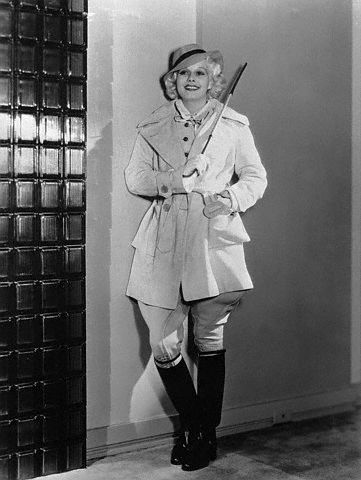
Harlow in 1933 in riding clohes

Harlow in 1933 in riding clothes

Harlow on set of film "Personal Property" in 1937

Harlow on set of film “Personal Property” in 1937

Harlow and furry friends 

It’s said Harlow was a lover of animals. On the day Rin Tin Tin died in 1932, jut a month shy of 14, Rinty was no longer strong enough to go to his master’s side. Harlow, who lived across the street, came over and cradled his head in her lap as he died. Years before Lee Duncan had given her one of Rinty’s first puppies.

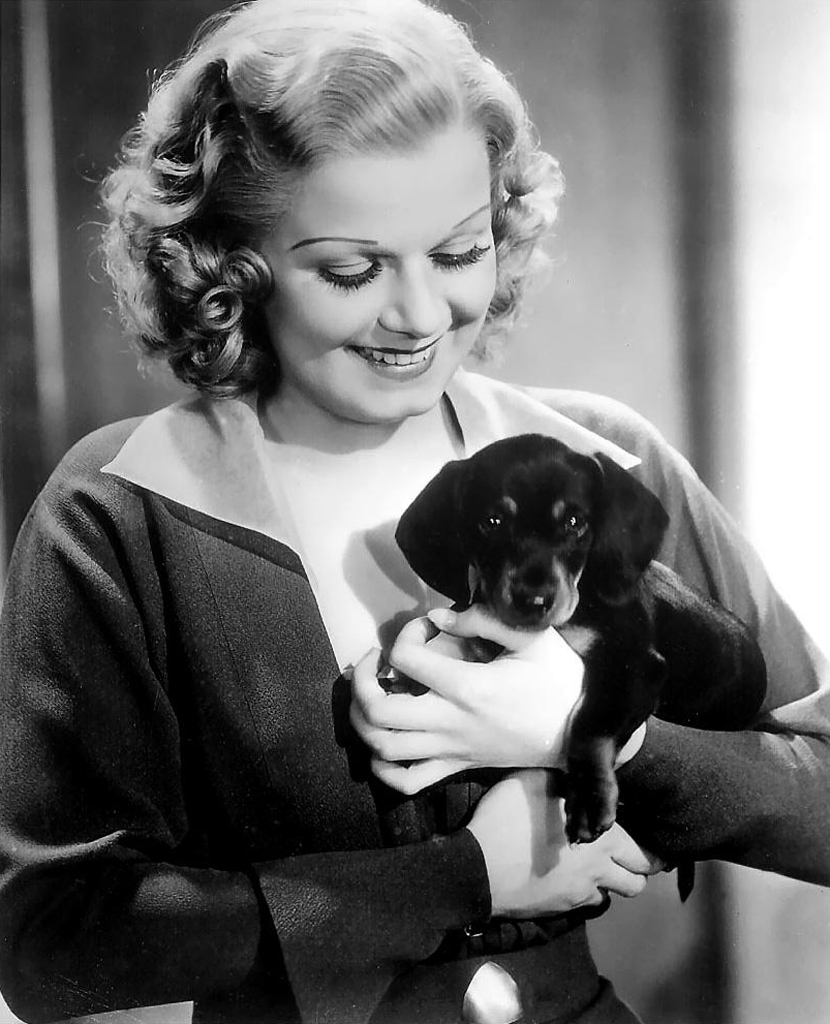
Harlow and her dachshund Nosey

Harlow and her dachshund Nosey

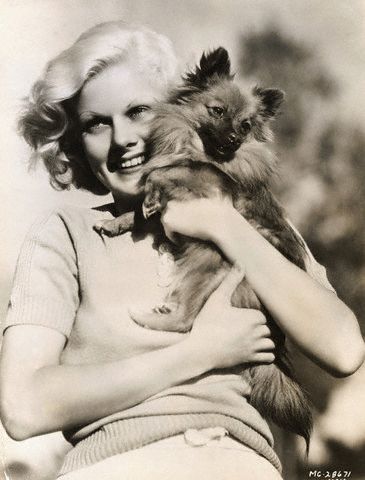
Jean Harlow hugging her Pomeranian, Oscar

Jean Harlow hugging her Pomeranian, Oscar

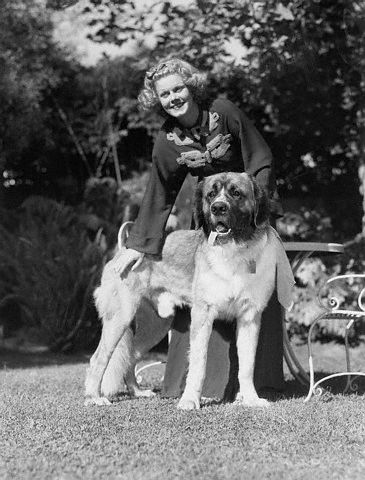
Harlow in 1936 with her dog

Harlow in 1936 with her dog

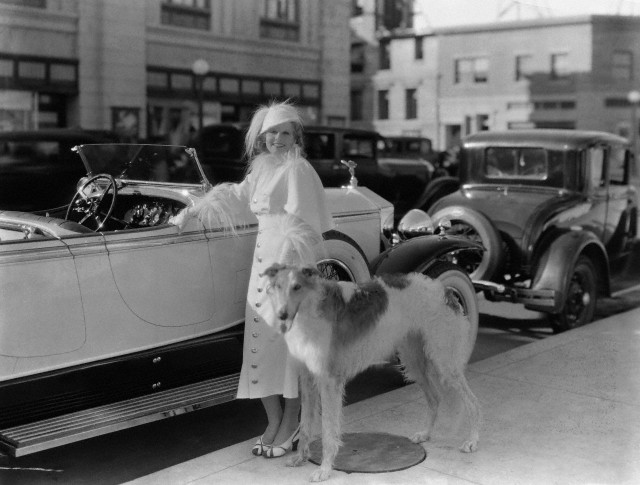
Jean Harlow in 1932 with a Borzoi

Jean Harlow in 1932 with a Borzoi

Harlow in her mother

When Harlow died, her mother estate was left to her mother which worth roughly $1 million.

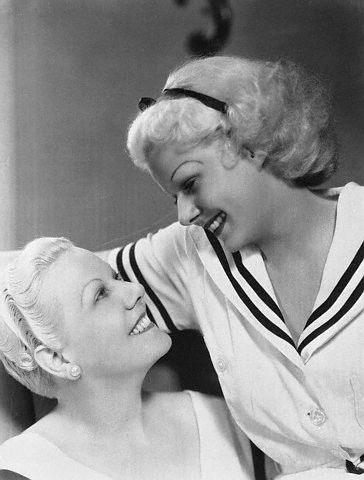
Jean Harlow with her mother

Jean Harlow with her mother

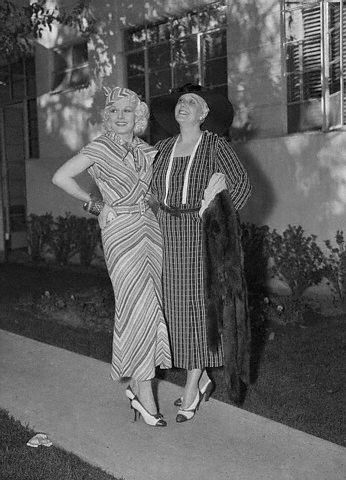
Harlow and Jean Bello in 1935

Harlow and Jean Bello in 1935

Harlow and her mother in 1932

Harlow and her mother in 1932

Check out the Comet Over Hollywood Facebook page 

His father called him Dobe: Remembering Harry Carey, Jr.

The heavens gained several stars this year as classic film stars passed away in 2012.

Since Comet Over Hollywood did not give several of them the full attention they deserved, the first month of 2013 will be dedicated to some of the notable celebrities who left us. This is the last of Comet’s 2012 rememberances.

Harry Carey, Jr.

Harry Carey, Jr.

He could be seen frequently along side John Wayne, and his father nicknamed him Dobe for his red hair that resembled adobe soil.

Along with actors Paul Fix, Ward Bond and Mildred Natwick, Harry Carey, Jr. was a staple in John Ford westerns.

Following in the footsteps of his character actor father, Harry Carey, Carey Jr. usually seemed to play a baby faced innocent in westerns.

Coming from the acting family, Carey, Jr. appeared with his father in “Red River” and with his mother, Olive Carey in “The Searchers” and “Two Rode Together.

Three of his first movies starred John Wayne: “Red River” (1948), “3 Godfathers” (1949) and “She Wore a Yellow Ribbon” (1949).

But Carey, Jr. wasn’t just a character actor in John Ford’s films but also was close friends with Ford and John Wayne.

“I loved Duke and he loved me,” Carey said in an interview with in 2009 for the book Duke, We’re Glad We Knew You. “The thing is, I don’t think he ever forgave me for being the son of Harry Carey. Harry Carey was his absolute hero.”

 John Wayne, Harry Carey Jr., Ben Johnson, John Agar and George O'Brien on the set of "She Wore a Yellow Ribbon".

John Wayne, Harry Carey Jr., Ben Johnson, John Agar and George O’Brien on the set of “She Wore a Yellow Ribbon”.

TCM Greatest Classic Film Collection: Legends – John Ford (She Wore a Yellow Ribbon / Three Godfathers / Cheyenne Autumn / Wagon Master)

Carey, Jr. even married within the John Ford stock company, marrying Paul Fix’s daughter, Marilyn from 1944 until his death at the age of 91 on Dec. 27, 2012.

Though Carey, Jr. usually didn’t have  a large role, he always added something special to his films, whether it be a comedic moment or an emotional scene.

Out of all of the John Ford stock players, he was one of my favorites.

“My journey has been that of a character actor,” the New York Times quoted from Carey’s autobiography. “I’ve worked with the great and the not-so-great. But mostly I’ve worked with men and women who loved their profession, and who like me, had kids to raise and houses to pay for.”

Check out the Comet Over Hollywood Facebook page