Sessue Hayakawa: Actor and Mazda

Several people in their 20’s who ride in my car ask “Who is Sessue Hayakawa?”

No, it’s not because they recently watched “The Cheat” (1915), but because that is the name of my 2008 Mazda 3.

My car, named for actor Sessue Hayakawa. It lives outside of the Tribune office for 80% of its time.

When I got my car in October, the car needed a Japanese name that was either World War II or old Hollywood related.

Names like Tokyo Rose and Kamakazi didn’t fit and Anna Mae Wong is Chinese, so the great Sessue Hayakawa, who was born on June 10, 1889, seemed like a good name for my new sedan.

Though several of movie goers mainly know Hayakawa from his most famous role in “Bridge Over the River Kwai;” Hayakawa’s roles in the late 1940s to the early 1960s marked a comeback for the actor.

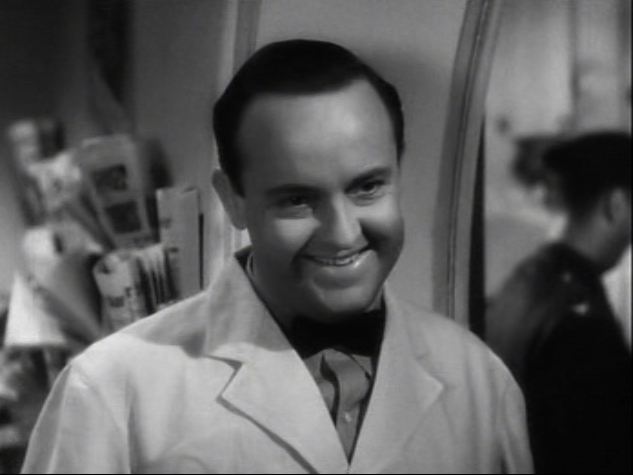
Hayakawa during silent film stardom in “His Birthright” (1918)

Born in Japan to wealthy parents, Hayakawa was the first Asian-American film star in the United States; starting his acting career in 1914.

He became a celebrity after playing an Asian who has an affair with a white aristocrat woman in Cecil B. DeMille’s “The Cheat” (1915). After this film Hayakawa was one of the highest paid actors in Hollywood.

However, by the 1920s, Hayakawa’s career started to decline as Anti-Asian sentiments began to rise in the United States.

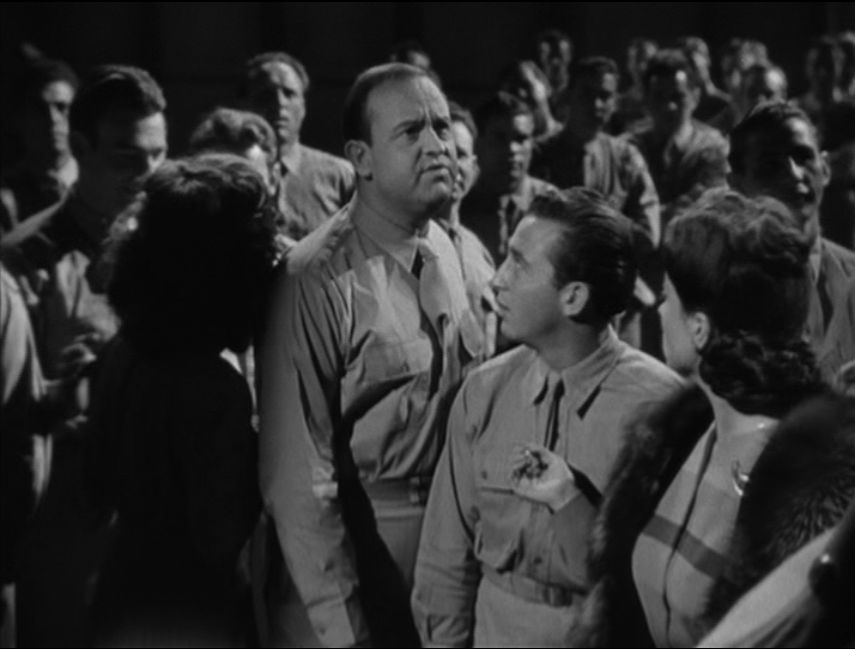
Hayakawa and Alec Guiness in “Bridge Over the River Kwai.” Hayakawa was nominated for Best Supporting Actor.

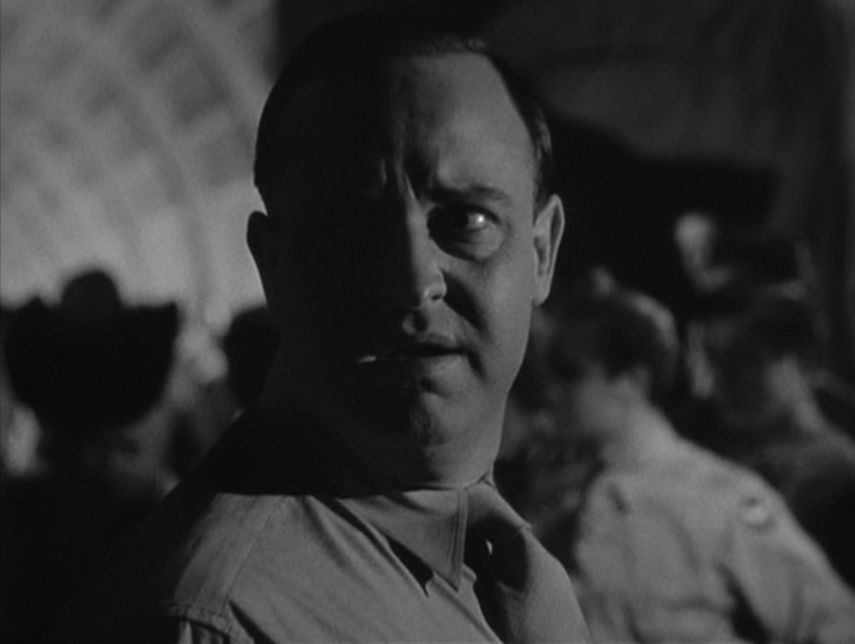
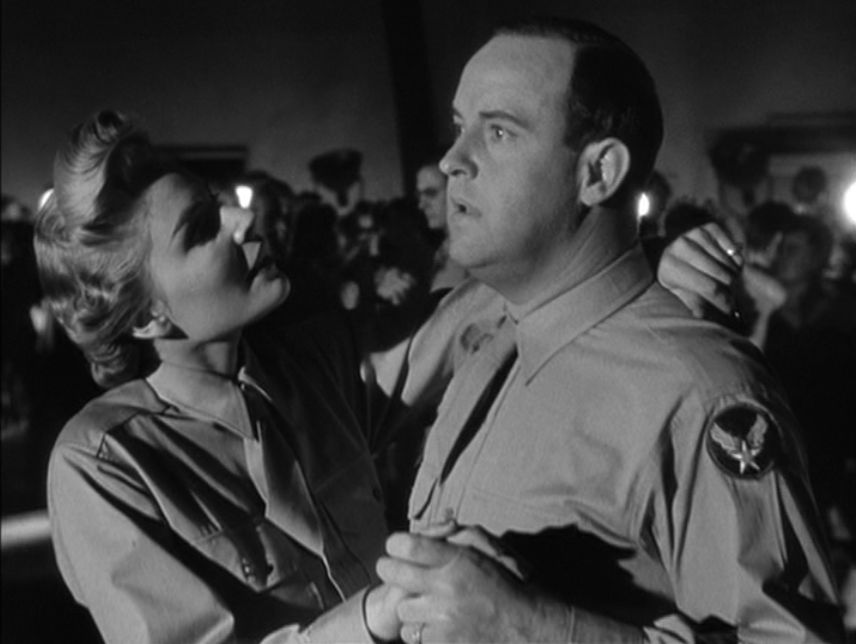
He was in a handful of films from 1932 to 1947, but made a comeback in Hollywood after World War II. Most of his roles were as a Japanese officer in post-war World War II films such as “Three Came Home” (1950) and “Bridge Over the River Kwai” (1957).

From a pirate in “Swiss Family Robinson” (1960) to romancing the silent era’s leading actresses, Hayakawa could do it all. Though his early, prolific career may be forgotten by most, he still left his mark on contemporary film.

Though the name might be a mouthful, I hope to teach passengers in Sessue the Mazda a little bit of film history while they are along for the ride.

Check out the Comet Over Hollywood Facebook page for the latest updates.

Classic film in music videos: Material Girl by Madonna

This is June’s edition of Comet Over Hollywood’s classic film references in music videos.

In honor of Marilyn Monroe’s 86th birthday on Friday, June 1,  Comet is spotlighting a Madonna’s 1985 music video “Material Girl.” I remember seeing this music video when I was little and loving the glamour, and Madonna’s wardrobe.

Madonna and Marilyn

It wasn’t until much later that I realized she was recreating Monroe’s “Diamonds Are a Girl’s Best Friend” musical number from the 1953 film “Gentlemen Prefer Blondes.”

Madonna was a fan of Marilyn Monroe and wanted to pay homage to her in the music video:

“My favorite scene in all of Monroe’s movies is when she does that dance sequence for ‘Diamonds Are a Girl’s Best Friend’. And when it came time to do the video for the song [Material Girl], I said, I can just redo that whole scene and it will be perfect,” Madonna said in 1987 to the New York Daily News.  “Marilyn was made into something not human in a way, and I can relate to that. Her sexuality was something everyone was obsessed with and that I can relate to. There were certain things about her vulnerability that I’m curious about and attracted to.”

Madonna-

Trivia:
-When Marilyn is singing “No no no,” singer Marnie Nixon was dubbing her.
-You can see George Chakiris, who later won Best Supporting Actor for “West Side Story,” as a back-up singer.
-Jessica Pickens (me) is not a Marilyn Monroe fan.

Who hasn’t tried to look like Marilyn? Here is a link I came across with other actresses who dressed up as Marilyn Monroe. Pretty interesting, most of them are terrible.

My apologies for not having classic film references in April or May, guys.  McCrea in May contest winners will be announced soon!

Check out the Comet Over Hollywood Facebook page for the latest updates.

Get a LIFE: Collecting America’s best magazine.

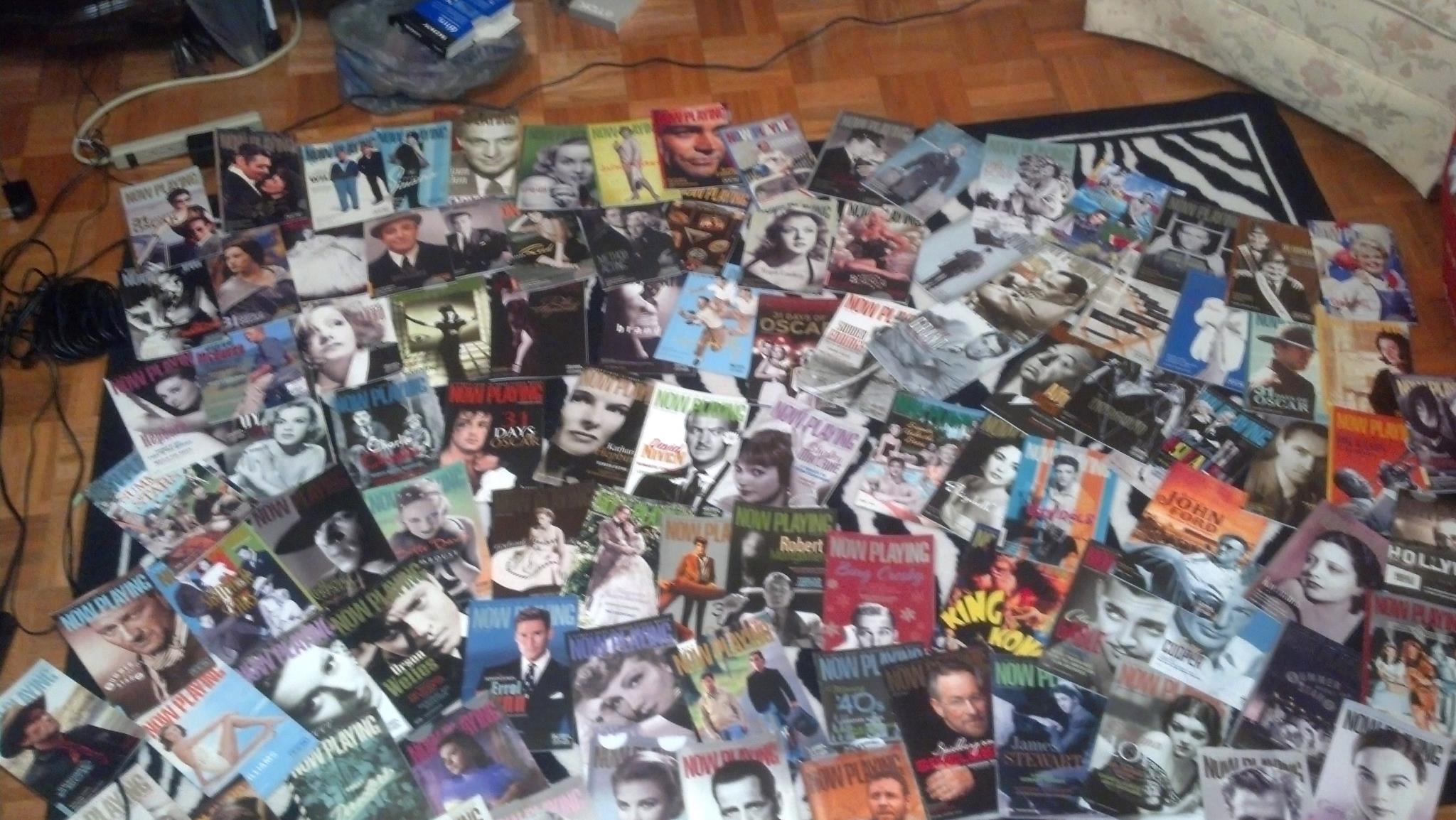
30 LIFE magazines I’ve collected so far, including the first Nov. 23, 1936, issue.

I’ve collected a lot of things during my lifetime.

My parents started a stamp collection for me when I was little, snipping colorful stamps off envelopes of flowers, places and famous people; that’s how I first learned who Grace Kelly was.

Then in high school I started writing to living film stars and collecting their autographs. To date, I have 30 signed photographs from stars like Deanna Durbin, Paul Newman and Joan Fontaine.

But most recently, I’ve decided to mix my love of history, American culture and film by collecting the best American magazine ever published: LIFE.

Jean Harlow 1937

Published weekly starting in November 1936 to December 1972, over 1,800 issues of LIFE magazine was printed. It may be crazy that I want to collect the majority of these magazines, but let me explain how LIFE is special compared to other gossip rags.

From its first issue in November 23, 1936, there is an emphasis on film and entertainment with a four page feature on film and stage actress Helen Hayes. But outside of the footlight parade world are photographs of a mangled car that was hit by a train in Wisconsin, a man hit on the head with a blackjack in Philadelphia and a Louisiana couple holding a baby a bulldog carried to their doorstep.

LIFE didn’t just focus on celebrity like People or ridiculous ways to catch a man like Cosmopolitan. The focus of the magazine was much more broad and encompassing of all topics.

Prior to 1936, LIFE was a humorous magazine until Henry Luce obtained the name rights and turned LIFE into a photojournalism magazine. The magazine showed Americans what life was like around the world outside of what they were used to: a Wyoming winter, Metropolitan Opera ballet dancers or Greek soldiers.

Gene Tierney 1941

Some of the most famous film stars originated in LIFE such as Rita Hayworth picnicking on the beach, Marilyn Monroe jumping and looking backwards and old Clark Gable’s portrait during his last film in 1961.

But other than stars, LIFE wasn’t afraid to show horrors and realism such as a dead soldier on the beach of Normandy or somebody injured after a car accident; photos that today would be considered too sensitive.

Each decade went through different transitions:

-Pre-War: Featured several movie stars but also focus on life around the world with pictures of Wyoming winters and Greek soldiers.  During this time period the United States was suffering from economic struggles in the Great Depressions and the magazine offered escapism.

-World War II era: The magazine changed again with the start of World War II featuring soldiers, airplanes, factory workers, and General MacArthur on the cover of the magazines- evoking patriotism as well as a look at what was going on in the European and Pacific theaters.

-1950s to early-1960s: Covers focused on glamour, sophistication, and fun.  Fashion, the English royal family, Marilyn Monroe and UCLA homecomings were some of the covers-all typical of happy-go-lucky consumerism post-war America.

-Mid-1960s to 1972: Covers interpret rapid world changes and the anger during Vietnam era. The covers feature political figures, threatened orangutans in the Rain Forest and Apollo 11 footprints on the moon.

From reading about the making of “Gone with the Wind” to a German shepherd dog nursing tiger cubs, LIFE had it all. No magazine will ever again give American readers the variety that LIFE offered.

To date I have 30 LIFE magazines, so I have a ways to go. But it will be an interesting journey through our past, regardless of how long it takes.

Check out the Comet Over Hollywood Facebook page 

McCrea in May contest at Comet

Comet Over Hollywood is hosting it’s first ever contest in celebration of Turner Classic Movies finally honoring Joel McCrea as May’s Star of the Month.

As my biggest heartthrob and favorite actor, I had to do something for Mr. McCrea, as well as thank all of you for your support of Comet.

I am giving away three Joel McCrea comedies on DVD: 

Jean Arthur realizes a strange man (Joel McCrea) is staying in her apartment with the permission of border, Charles Coburn in "More the Merrier" (1943).

-The More the Merrier (1943): The World War 2 housing shortage comedy also starring Jean Arthur and Charles Coburn.

Joel McCrea and Claudette Colbert in "Palm Beach Story" (1942).

-The Palm Beach Story (1942): McCrea’s wife Claudette Colbert divorces him in order to earn McCrea money from a millionaire in this Preston Sturges comedy. The movie also stars Mary Astor and Rudy Vallee.

Screenwriter Joel McCrea lives as a hobo to see the other side in "Sullivans Travels" (1941).

-Sullivan’s Travels (1941): McCrea is a screen play writer tired of writing fluffy comedies. He travels as a hobo for inspiration for a serious script; getting into trouble and risking his life. The film also stars Veronica Lake.

The contest will be open from Tuesday, May 1, 2012, to Thursday, May 31, 2012. There will be three winners-each receiving one of these DVDs-announced in June.

To enter send the answers to the following questions to cometoverhollywood@gmail.com:

1. What actress was married to Joel McCrea for 57 years?

2. What film did McCrea say was his personal favorite film he made?

3. What is the name of McCrea’s actor son? Name a movie he was in.

4. What actor did McCrea say he always received “leftover scripts” from, including his famous role in Hitchcock’s “Foreign Correspondent”?

5. What was the name of the movie where Joel McCrea played James Kildare (starting off the Lew Ayres series)?

Good luck everyone and spread the word! Remember, email your answers to cometoverhollywood@gmail.com.

Check out the Comet Over Hollywood Facebook page 

Actress beauty tip #22: Actress jewelry

This is the twenty-second installment of the monthly classic actress beauty tips that I have read about and tested.

Like March’s beauty tip, April is going to focus on fashion trends from films. For the time being I’ve run out of regiments to test, but I’m still digging around for some.

While watching a movie, of course you notice the fabulous gowns, minks, hats and suits your favorite actresses wear. But you can’t deny that jewelry plays a large part of the outfit too.

Even Carole Lombard’s belt is a jewelry accessory. (From No Man of Her Own, 1932)

The website Hollywood Collection which sells replica costume jewelry that stars from Claudette Colbert to Marilyn Monroe supposedly wore on screen and in their personal life.

I’ve been shopping from Hollywood Collection since 2005, and loved everything I bought from there. I have the:
-Diamond ring Vivien Leigh wears in “Deep Blue Sea”
-Bette Davis’s sunset sapphire ring.
-Carole Lombard’s canary earrings from “To Be or Not To Be”
-Carole Lombard’s deco onyx ring that she wore to the “Gone with the Wind” premiere.
-Jean Harlow’s antique diamond ring.
-Betty Grable’s diamond earrings.
-Esther Williams champagne diamond ring from “Easy to Wed.”

Editor’s note and update Aug. 5, 2021: Several of these items may be discontinued now.

Carole Lombard onyx ring

I love the style of the jewelry. Though none of it real, it’s all flashy and gets attention. However, I do wish the rings ran in half sizes. I buy a size 5 ring and still have to wear a ring guard so it fits properly.

The jewelry is beautiful, but I balk at paying $80+ for a cubic zirconia ring, bracelet or earrings. My only main complaint is how much the prices have raised over the years. For example, I think I remember the Lombard canary earrings being about $45 when we got them. Another would be this Paulette Goddard bracelet that I’ve always admired. I never got it because it was $80 and now it’s even higher.

To review: I understand companies hurting, but the raise in prices has really turned me off. The jewelry is beautiful and I still wear it on a regular basis as part of my every day wardrobe. However, the prices have gotten too high for my tastes, and haven’t bought from the website in a year or two.

Check out the Comet Over Hollywood Facebook page 

‘Apocalypse Now’ ruins film adaptation plans for SC professor

Winthrop University professor Haney Howell checks his e-mail every Sunday night around 12 a.m. to make sure students’ scripts for the student television show, Winthrop Close-Up, are submitted. He reads them over and sends the scripts back with corrections and feedbacks.

“Don’t forget an Anchor Lead in.” or  “This could be written smoother.” with e-mails signed “Get it done.”

However on May 5, 2012, Howell will be leaving Winthrop with graduating under-grads; retiring after teaching broadcast for over 20 years.

But before teaching students how to properly write a television script, Howell was the journalist one dreams of being one day. Howell’s career in broadcast spans from working as a disc jockey in the mountains of Tennessee as a teenager, evacuating from Cambodia and Saigon, and bringing live coverage from the Vietnam War.

Howell has shared conversations with Robert Osborne on New York bus rides and was friends with journalist, Ed Bradley. He even had a brush with Hollywood.

Shooting a story in Cambodia, 1973. Photo Courtesy of Haney Howell

“It all started at a dinner party in New York,” said Howell. “We were telling stories about the Vietnam war. Filmographer Jules Fisher was looking for a Vietnam movie and wanted the stories written down.”

After writing and negotiating, Columbia Studios flew Howell to Hollywood with a $25,000 contract.

 “They put me in the Beverly-Wilshire Hotel with my room overlooking Rodeo Drive,” he said. “Imagine that happening to a country boy from Tennessee.”

Howell ate in exclusive hotel restaurants and was given an inside tour of Hollywood homes inside Larry Gelbart’s Bentley.

Howell spent three days with “Bonnie and Clyde” director Arthur Penn and “MASH” screenwriter Larry Gelbart. The trio spent their time reading, writing and fleshing out the story under a working film title of “Hotel Royale.”

“The writing experience was incredible,” Howell said. “All of my expenses were on Columbia.”

But the Hollywood dream ended.

“The movie project died six months after ‘Apocalypse Now’ came out,” Howell said. “Francis Ford Coppola had a lot of problems with the movie; it went way over budget and it was too early for a Vietnam movie.”

The weekly Viet Cong news conference at Camp Davis on Tan Son Nuet in Saigon. Photo courtesy of Haney Howell

After the movie project ended, Howell adapted the screenplay into a book “Roadrunner,” which was published in 1980. His contact with Columbia allowed novelization rights of the story.

“I took the $25,000 and finished the book,” he said. “I was in a farm house in Normandy, France where we cranked out a chapter a day.”

Howell published “Roadrunners” with Jim Morrison. Morrison, a Green Beret,  wrote “Operation Dumbo Drop” in 1989, which later was adapted into 1995 film. “Roadrunners” is based off Howell’s experiences in Cambodia in the summer of 1973.  The novel is about soldier on the hunt for a gun and ends up getting his girlfriend killed in the process.

“I made ‘Roadrunners’ a novel because I can say its made up, even though its really an autobiography,” Howell said. “You can combine characters in a novel, because I met so many colorful people.”

Howell knew he wanted to write a book ever since he took a creative writing course at Midwestern University.

“I was told there were only two differences between being a published writer: there are the 60 million people trying to get published and you are the six million who have,” he said. “I love seeing my name on the binding on my shelf.”

Haney Howell and I at a Mass Communication banquet on April 6, 2012.

   I am proud to say I was a student of Haney Howell, and can call him a mentor and friend. Congratulations on your retirement, you will always be someone I admire. 

Check out the Comet Over Hollywood Facebook page 

My brush with Mary Pickford at Winthrop University

Here is a little post in honor Mary Pickford’s 120th birthday on Sunday, April 8, and the tearing down of historic Pickford Studios earlier this week.

Mary Pickford was Hollywood’s first American sweetheart.  Usually playing little girl roles with long curls and big eyes, though she was in her 20s or 30s. For example, when Pickford played an orphan in “Rebecca of Sunnybrooke Farms” (1917) she was 25.

Silent star sweetheart, Mary Pickford

Pickford was Hollywood royalty, marrying top silent star, Douglas Fairbanks, Sr. and then married star of “Wings” Charles Buddy Rogers.

All of this build up of an important star leads to how she fits into my college career. During my senior year of college I took a media ethics class and I wrote a paper on white actors who played ethnic roles in classic film.

I sniffed around Winthrop University’s library and picked up a few autobiographies and biographies. I picked up Mary Pickford’s 1954 autobiography “Sunshine and Shadow” about her film career, thinking of her role as a Mexican-Indian in “Ramona” (1910).

I opened the book and found this:

Mary Pickford's autograph inside a library book at Winthrop University.

Winthrop University’s copy of “Sunshine and Shadows” is AUTOGRAPHED…and it’s down in the basement with other old books that are rarely checked out.

When I found that I ran out screaming to my roommates-though none of them knew who Mary Pickford was-and called my mom. I doubled checked it with other autographs online and it seems to match.

I plotted on how to get the book out of the library, even thought about claiming it was a lost book, which would be a $100 fine. I figured for that price, I could find it on Ebay.  I even asked if I could buy it from the library, but they said no. I don’t know if they realize they have an autographed book from one of Hollywood’s top silent stars.

Happy birthday Mary Pickford! I enjoyed my brush with you at my alma mater.

Check out the Comet Over Hollywood Facebook page 


Classic film in music videos: Wind it Up by Gwen Stefani

This is March’s edition of Comet Over Hollywood’s classic film references in music videos.

Lead singer of No Doubt, Gwen Stefani made two solo albums after the band’s split- Love.Angel.Music.Baby (2004) and Sweet Escape (2006). Personally, I was a big fan of both and disappointed Gwen hasn’t made another, but that’s beside the point.

“Wind it Up” is the first single released from the Sweet Escape album and it loops part of the Rogers and Hammerstein song “Lonely Goatherd” throughout the song.

Still from the 1965 film "Sound of Music" starring Julie Andrews, Christopher Plummer and Eleanor Parker.

In the music video Stefani recreates several scenes from the 1965 film version of “Sound of Music” including:
-Dressing up in a (rather short) nun costume
-Dancers in blond wigs and plaid uniforms dressed to look like the Von Trap children
-Recreating the “My Favorite Things” scene by singing in bed to the dancing Von Trap children
-Gwen looks at curtains and makes them into outfits, like Maria does in “Sound of Music”
-Playing a giant key like a guitar, much like the “Do Re Mi” scene

What do you think?

Before the video was released in 2007, Gwen Stefani got Julie Andrews’ approval to recreate her iconic role in the video.

“She actually called and asked if I would mind if she used it,” Julie Andrews said in 2007.  “She does a lot of good yodelling. She’s great. She yodels better than I do. It’s a wonderful video too.”

Check back in April for the next classic film reference in music videos.

Contest info coming soon!

Check out the Comet Over Hollywood Facebook page for the latest updates.

Gone Too Soon: Virginia Weidler

Young Virginia Weidler

Young Virginia Weidler

Virginia Weidler was a better child actress than Shirley Temple.

There I said it, and you may call me blasphemous if you would like, but let me explain.

Historically, Shirley Temple is more important. She made filmgoers happy during an economically difficult time. Even President Franklin Roosevelt was quoted as saying America couldn’t have gotten through the Depression if it hadn’t been for Shirley Temple.

But aside from that, what does Shirley have besides being adorable with dimples, giggles and curls?

While 1930s and 1940s child stars like Shirley Temple, Sybil Jason and Juanita Quigley (or Baby Jane) were merely cute, Virginia Weidler was a bona fide actress at a young age.

Actresses like Jason acted with Warner Brothers’ top star Kay Frances but merely as Frances’s daughter with minimal screen time. Shirley Temple also acted with big named stars such as Alice Faye or Randolph Scott, but they were generally window dressing for a Temple extravaganza.

Weidler held her own (and arguably stole the scene) in films with top celebrities like Joan Crawford and Norma Shearer in “The Women” (1939); Katherine Hepburn, Cary Grant and James Stewart in “The Philadelphia Story” (1940) and even as Warren Williams’s sidekick in “The Lone Wolf Spy Hunt” (1939).

Stealing a scene in “Philadelphia Story” (1940)

Take “The Women” (1939): Virginia Weidler (as Little Mary) is staying with her father and new stepmother Joan Crawford (Crystal Allen). Crawford is in the tub and wants Weidler to help her scrub her back. Weidler shows her disdain and isn’t as obedient like most children of her era would have been expected to be.  Later Crawford shoos her out of the bathroom when she gets a phone call. Weidler quips, “I don’t understand grownups on the telephone. They all sound silly.”

In another scene Weidler’s mother, Norma Shearer (as Mary Haines) says:

Mary Haines: I’ll be doing the cooking so you know what father will get.

Little Mary Haines: I know – indigestion.

Weidler’s comedic comebacks in her films are as quick and sophisticated as adult lines.

Several child actors of the time only played small roles as sons and daughters or predominately in children’s movies, such as the Andy Hardy series.

Lovely teenage Virginia Weidler

While some of Weidler’s later films were teen fluff like “Babes on Broadway” (1941), “The Youngest Profession” (1943) and “Born to Sing” (1942), Weidler’s early films were more serious. She even acted alongside The Great Profile, John Barrymore, in one of his last films, “The Great Man Votes” (1939).

Though Weidler grew up to be a lovely young woman, her film career ended with musical “Best Foot Forward” (1943) at the age of 16. According to IMDB, her career was partially shortened when budding teen beauty Shirley Temple was signed to MGM, where Weidler was under contract.

In 1947, Weidler married naval officer Lionel Krisel and she retired from show business.

“[When asked about her career in later years,] Virginia would always change the subject as quickly as possible without being rude. She never watched her old movies or replied to requests for interviews. Although she was never one to criticize, I think our boys got the impression that their mother didn’t think very much of the motion picture industry,” said her husband.

Weidler suffered from a heart ailment for many years and died of a heart attack in 1968 when she was only 41 years old.

Though she had long since been retired from films, her snappy comebacks and wisecracking characters will always be remembered with film greats including Claudette Colbert, Bette Davis and Myrna Loy.

Check out the Comet Over Hollywood Facebook page for the latest updates.

Actress beauty tip #21: Fashion copied from films

This is the twenty-first installment of the monthly classic actress beauty tips that I have read about and tested.

First, I would like to apologize for not posting a beauty tip in February-it’s the only month I’ve missed a beauty tip and I don’t plan on making it a habit.

March’s beauty tip is going to focus on fashion I have copied from films. For the time being I’ve run out of regiments to test, but I’m still digging around for some.

However, fashion, hairstyles and jewelry are just as important to a film star’s beauty as how she washes her hair or face.

As many of you know, “West Side Story” (1961) is one one of my all-time favorite films. The music, the colors, the sadness, all make the movie perfect, but another thing that has drawn me to the movie are the beautiful outfits.

Who can forget the purple dress Anita wears to the dance and the white dress Maria feels makes her look like a baby? But my favorite three are the yellow dress Maria wears while singing “I Feel Pretty,” the blue dress Maria wears as she waits for Tony after the rumble and the orange dress we get a brief glimpse of Anita wearing in the dress shop when she catches Maria and Tony together.

Anita warning Maria she must be home in 15 minutes-both wearing two of my favorite outfits in "West Side Story."

I buy several vintage clothing items on Ebay that reminds me of classic films: peasant blouses, fiesta skirts, silky formals, pinafore dresses, flashy earrings.

But I rarely find anything in a contemporary clothing store that reminded me of an outfit I’ve seen in a movie. The only other time I’ve seen something similar to a film outfit was a white dress in Dress Barn that made me think of “Cat on a Hot Tin Roof.”

Then one day I was in TJMaxx and sticking out of the rack I saw a sleeveless orange dress. I immediately thought of Anita in “West Side Story” and bought it.

Bought this dress at TJMaxx because it reminded me of my favorite movie.

To review: Fashion is important to me, but particularly if it reminds me of something I’ve seen in a movie. The best places to find movie like clothing is on ebay or stores like vintagevixen.com, but sometimes you can get lucky!

UNRELATED REMINDER! Comet’s Gone Too Soon blogathon is on the 9 and 10th. Follow this link for more details and a list of who bloggers are covering- https://cometoverhollywood.com/2012/02/03/upcoming-comet-blogathon-gone-too-soon/ Further updates will come this week.

Check out the Comet Over Hollywood Facebook page for the latest updates.