Musical Monday: The Girls on the Beach (1965)

It’s no secret that the Hollywood Comet loves musicals.
In 2010, I revealed I had seen 400 movie musicals over the course of eight years. Now that number is over 500. To celebrate and share this musical love, here is my weekly feature about musicals.

the-girls-on-the-beach-movie-poster-1965-1020209597This week’s musical:
“Girls on the Beach” (1965)– Musical #519

Studio:
Paramount Pictures

Director:
William Witney

Starring:
Noreen Corcoran, Aron Kincaid, Lana Wood, Gail Gilmore, Martin West, Linda Marshall, Steven Rogers, Sheila Bromley, Lori Saunders
Themselves: The Beach Boys, Lesley Gore, The Crickets

Plot:
Sorority sisters try to save their sorority house when they realize their nest egg has been spent by their house mother. In order to raise the money, they try a number of money making schemes from cake baking, newspaper puzzle contests, beauty contests and baby sitting. Three surfer boys trying to get in with the girls tell them that they are personal friends of the Beatles to perform at their benefit concert. The girls advertise The Beatles are coming, but when they learn they aren’t coming, they have to dress up like the Fab Four.

Trivia:
-The only beach film that the Beach Boys appearing, according to Risky Business: Rock in Film by R. Serge Denisoff, William D. Romanowski.
-Originally was going to be titled “Beach Girls,” according to Hollywood Surf and Beach Movies: The First Wave by Thomas Lisanti.
-The film was shot in three weeks, according to Lisanti.
-The Beach Boys wrote “Girls on the Beach” and “Little Honda” specifically for this film.
-Actors didn’t receive residuals for this film for several years, because the film was still listed under its working title of Beach Girls rather than Girls on the Beach, according to Lisanti.

Sorority sisters plot money making schemes in

Sorority sisters plot money making schemes in “Girls on the Beach.”

Highlights:
-The female stars dressing up as the Beatles, though it’s goofy.

Notable Songs:
-“The Girls on the Beach” performed by the Beach Boys
-“Leave Me Alone” performed by Lesley Gore
-“Little Honda” performed by the Beach Boys
-“Lonely Sea” performed by the Beach Boys
-“We Want To Marry a Beatle” performed by the female leads

My review:
By the same writers of “Beach Ball,” comes “Girls on the Beach”– one of many beach films made in the 1960s trying to copy the success of the Frankie and Annette American International Picture films.

Compared to some of the other copycat beach films, this one is fun. It has everything that makes up the beach film formula: pretty girls in bikinis, popular musical performances in the day, and scenes on the beach.

Noreen Corcoran as a blonde.

Noreen Corcoran as a blonde.

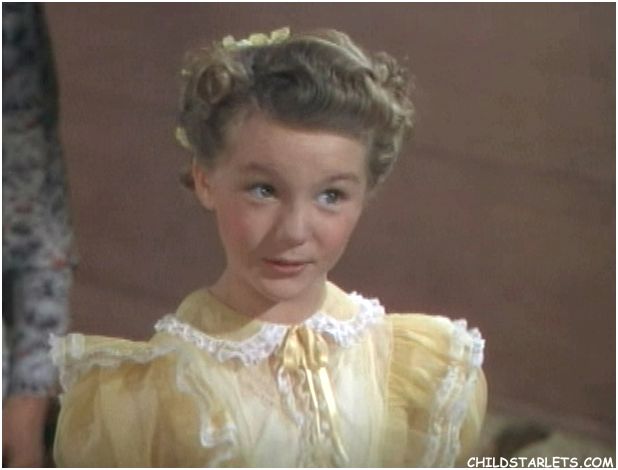
It’s fun to see teenage Noreen Corcoran, former child star and sister of Kevin Corcoran, as the lead in a grown up role after watching her as a little girl in so many other films. However, Noreen’s hair was bleached for the role and she didn’t feel comfortable or like herself. Though Noreen proved to be a capable teenage actress, this was one of her last roles.

The sorority girls’ money making schemes are fairly entertaining and funny such as Lori Saunders doing a snake dance at a beauty contest or one girl making a cake using chemistry and it continuously explodes.

However there are some  silly moments. The worst part was when the girls realized The Beatles aren’t coming and dress up as the Beatles. However, every time the Beatles are mentioned, people say “yeh yeh yeh,” referencing the song “She Loves You.”
Apparently they couldn’t get any rights to Beatles music and all they did was say “yeh yeh yeh” and “woooo.”

Once the girls are found out, they start seeing a terrible song called “We Want to Marry a Beatle.”

Though this film has a simple premise, it is pretty entertaining and cute.

Check out the Comet Over Hollywood Facebook page, follow on Twitter at @HollywoodComet or e-mail at cometoverhollywood@gmail.com

Review: “Gidget Goes Hawaiian” (1961)

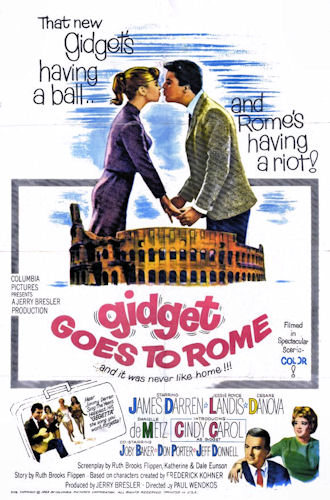
gidget-goes-hawaiian-movie-poster-1961-1010681749Gidget Goes Hawaiian” (1961) is the worst of the Gidget feature films. And even though it’s ridiculous and has some stupid

The success of the 1959 “Gidget” film was followed by two feature films, three made-for-TV movies and two television shows.

As previously mentioned, I adore the film “Gidget” (1959) that spawned a beach culture craze. However, the film that followed two years later is abysmal.

In the film, Moondoggie/Jeff Matthews (James Darren) returns from college. He and Gidget spend a carefree summer together, and Moondoggie gives Gidget his fraternity pin. All is bliss until Gidget’s parents (Jeff Donnell, Carl Reiner) surprise her with a trip to Hawaii. Rather than being overjoyed, Gidget is outraged, because she will have to leave Moondoggie, who only has two weeks of summer vacation left. In a tizzy, she runs to tell him the bad news. Rather than being angry with her, Moondoggie is happy that she has the opportunity to go on this trip. Naturally Gidget assumes that this means he doesn’t love her, so she flies off the handle, gives him back his fraternity pin and decides she wants to go to Hawaii.

Continue reading

Musical Monday: Honolulu (1939)

It’s no secret that the Hollywood Comet loves musicals.
In 2010, I revealed I had seen 400 movie musicals over the course of eight years. Now that number is over 500. To celebrate and share this musical love, here is my weekly feature about musicals.

Honolulu_(1939)This week’s musical:
Honolulu” (1939)– Musical #172

Studio:
Metro-Goldwyn-Mayer

Director:
Edward Buzzell

Starring:
Eleanor Powell, Robert Young, George Burns, Gracie Allen, Rita Johnson, Willie Fung, Eddie ‘Rochester’ Anderson, Sig Ruman, Ruth Hussey, Phillip Terry
As Themselves: The Pied Pipers, Jo Stafford, The King’s Men, Andy Iona’s Orchestra

Plot:
Popular Hollywood star Brooks Mason (Young) has a lookalike George Smith (Young). To get a rest from his fans, Mason sends Smith to New York for a personal appearance tour and heads to Smith’s Hawaiian plantation for a rest, meeting dancer Dorothy March (Powell) on the way. Complications arise when Mason meets Smith’s girl Cecila (Johnson).

Trivia:
-George Burns and Gracie Allen’s last film appearance together. After this movie, George Burns wouldn’t appear again on screen until 1952.
-Eleanor Powell’s “Hola E Pae” number was re-edited and put in “I Dood It” (1943).
-Eleanor Powell’s tap dance number “I Got a Pair of New Shoes” was cut from the film and can be found here.
-From an April 26, 1939, “Hollywood Shots” column: “There’s a good reason why Eleanor Powell calls Honolulu her favorite films: its the only one that ever gave her a foot bruise costing her at least one toenail.”

Robert Young plays a double role in

Robert Young plays a double role in “Honolulu”(1939)

Highlights:
-Eleanor Powell’s hula routine with a native tap dance routine
-Robert Young plays a double role
-Costume party featuring Bing Crosby impersonator and Gracie Allen as Mae West

Notable Songs:
-“Honolulu” performed by Gracie Allen, The Pied Pipers
-“The Leader Doesn’t Like Music” performed by Gracie Allen, The King’s Men
-“Hawaiian Medley” performed by The King’s Men, danced by Eleanor Powell
-“Hola E Pae” performed by Andy Iona’s Orchestra, danced by Eleanor Powell

My review:
“Honolulu” is not your usual MGM glittery musical, but it’s a lot of fun. Primarily, the movie is a comedy of lookalikes/mistaken identity with Robert Young. Eleanor Powell is merely a tap dancing backdrop.

Robert Young and Eleanor Powell in

Robert Young and Eleanor Powell in “Honolulu” (1939)

Since Powell does not sing, any songs are performed by Gracie Allen. The one that’s the most fun is “The Leader Doesn’t Like Music” as she is dressed like Mae West for a costume party and her backup singers are dressed like the Marx Brothers.

Married comedians Gracie Allen and George Burns have very little screen time together in their last film together.

The most notable dance number is the amazing hula/tap number that Eleanor Powell does. She starts off barefoot and in a grass skirt doing an impressive Hawaiian dance and then switches into tap shoes to mix tap dancing and hula steps. It’s truly the highlight of the film.

Gracie Allen even does a little tap dancing with Eleanor Powell at the start of the film.

The unfortunate part of this film is Eleanor Powell’s dance in blackface. This is off putting and takes away from Powell’s fantastic dancing, however, it was meant to be a tribute to Bill Robinson. Robinson was a close friend of Powell’s. She was not interested in tap dancing but knew it was the best form of dance to break into the business, and Bill Robinson served as her mentor. Robinson, along with Pearl Bailey, was also a godparent to her son Peter Ford. The two often performed together.

“Honolulu comes from the magical year of 1939 which hailed so many top notch films. It isn’t on the same level of “Mr. Smith Goes to Washington” or “Ninotchka,” but it does still hold a certain level of charm and glitter typical of other 1939 lower budget films.

While “Honolulu” isn’t the most inspiring MGM musical, it’s still a good slice of fun with some amazing tap dancing numbers.

Check out the Comet Over Hollywood Facebook page, follow on Twitter at @HollywoodComet or e-mail at cometoverhollywood@gmail.com

Gidget: Bringing the Surf Culture to Mainstream

When I first started getting interested in classic films, my mom would get excited about movies she wanted to introduce to me. “Gidget” (1959) was one that she could hardly wait to show me.

Views of Sandra Dee in some of my favorite swimsuits and dresses from "Gidget."

Views of Sandra Dee in some of my favorite swimsuits and dresses from “Gidget.”

Sitting there on a Sunday night at age 14, I fell in love with this film. It’s an explosion of color on the gorgeous backdrop of Malibu beach. It features awesome surfing shots and has excellent cast filled with one-liners that are real gems. It’s the perfect fun-in-the-sun Southern California travelogue. To date, it also has one of my favorite film wardrobes.

The movie was pivotal in my film love and got me further entrenched in 1960s pop culture. I read up on famous surfers, researched surfer lingo, listened to the Beach Boys, plastered 1960s surf images around my room and hunted for bathing suits that gave off a 1960s vibe. Of course, I wanted to learn how to surf, which has still never happened since I live four hours away from the beach on the east coast.

Continue reading

Musical Monday: Bathing Beauty (1944)

It’s no secret that the Hollywood Comet loves musicals.
In 2010, I revealed I had seen 400 movie musicals over the course of eight years. Now that number is over 500. To celebrate and share this musical love, here is my weekly feature about musicals.

This week’s musical:
Bathing Beauty” (1944)– Musical #61

bathing

Studio:
Metro-Goldwyn-Mayer

Director:
George Sidney

Starring:
Esther Williams, Red Skelton, Basil Rathbone, Bill Goodwin, Jean Porter, Janis Paige, Donald Meek, Margaret Dumont, Nana Bryant
As themselves: Harry James, Lina Romay, Xavier Cugat, Helen Forrest, Ethel Smith, Carlos Ramirez

Plot:
George Adams (Rathbone) is unhappy when his star songwriter Steve Elliot (Skelton) says he’s leaving the business to marry pretty swim instructor, Caroline Brooks (Williams). George creates a misunderstanding between the two that sends Caroline back to the all-girls college where she teaches. Determined to win her back, Steve finds a loophole in the charter and enrolls.

Trivia:

-Esther Williams’ first starring role.

Red Skelton's comedic ballet

Red Skelton’s comedic ballet routine which was created by Buster Keaton.

-Skelton’s ballet routine was created by Buster Keaton, according to Gehring’s book.

-Originally titled “Mr. Co-Ed” with Red Skelton as the defined lead. Once Esther Williams was brought on the project, Skelton was knocked to secondary lead, though he has more screen time, according to Red Skelton: The Mask Behind the Mask by Wes Gehring.

-When Esther Williams did her first swimming number (the first in the movie and the first of it’s kind on screen), director George Sidney told her to do what she wanted because he knew nothing about swimming, according to Williams’ autobiography “The Million Dollar Mermaid: An Autobiography .”

-The finale swimming number with Williams, Harry James and Xavier Cugat was choreographed by John Murray Anderson, who choreographed Billy Rose’s aquacades, according to Williams’ book.

-The skit where Red Skelton pretends to be a girl waking up and getting ready in the morning was created by his first wife, Edna Stillwell, according to Gehring’s book.

-This film was shown in combat areas overseas during World War II.

-The pool used at the beginning was the Lakeside Country Club in San Fernando Valley.

-Janis Paige’s first film.

Red Skelton and Esther Williams in

Red Skelton and Esther Williams in “Bathing Beauty.”

Highlights:
-Xavier Cugat’s musical performances with Lina Romay singing.
-Every swimming scene with Esther Williams
-Red Skelton’s skit of woman waking up and getting ready.
-Red Skelton dancing in a tutu

Notable songs:
-“Te quiero dijiste” performed by Carlos Ramirez
-“Bim, Bam, Bum” performed by Xavier Cugat and Lina Romay
-“Tico-tico no fubá” performed by Ethel Smith
-“Alma llanera” performed by Lina Romay and Xavier Cugat
-“I Cried for You” performed by Helen Forrest and Harry James
-“Loch Lomond” performed by Harry James, Jean Porter, Ethel Smith, Janis Paige and other co-eds

My review:
This film is true escapism, particularly good for the World War II era.

Esther Williams in the finale of

Esther Williams in the finale of “Bathing Beauty.”

“I think the reason the movie did so well was that it was exactly the right kind of breezy summer entertainment for war-weary public,” Esther Williams wrote in her autobiography.

While “Bathing Beauty”‘s plot line is a little silly, this movie is such a joy.

It’s vibrant Technicolor, humorous scenes with Red Skelton, Esther Williams looking beautiful and cool in the pool, and top musical performances from Harry James, Helen Forrest, Carlos Ramirez, Xavier Cugat and Lina Romay.

This movie is notable for several reasons:
-It catapulted Esther Williams’ career of swimming musicals- a genre never before seen on films- that were top in the box office for 10 years following. This new type of genre is a great example of how MGM tried to bring novelties to the screen and seem new, fresh and innovative.
“We didn’t know it, but we were about to invent synchronized swimming as it had never been before seen on film,” she wrote.
-You get a glimpse of who the top performers in music were: Harry James and Xavier Cugat. While MGM often tried to seem cultured while bringing in opera stars such as Laurietz Melchoir, they often brought in the most popular names in music.
-South American themed musical numbers- here with Xavier Cugat, Lina Romay, Carlos Ramirez- were commonplace in 1940s films, and this is a great example of that theme.

But while this musical landed Esther williams on top, it is also a little sad for Red Skelton, who had been in films for a few years but still was not on top. Skelton started in films with hopes of becoming a serious comic but was often misplaced in his roles.

However, in “Bathing Beauty” Skelton has more screen time than Williams and pulls out all the stops with his hilarious scenes, he received very little recognition in the film columns. All of the critics were enamored with Esther Williams and gave little mention to Skelton, according to Gehring’s book.

“Audiences apparently care more about what the heroine is wearing than if Skelton gets her in the in,” the New York Herald Tribune came to his defence.

Regardless, Skelton gives a great performance and Williams is a breath of fresh air…or maybe a cool dive in a pool.

While things are steamy outside, cool off with this film indoors and soak in the Technicolor, rather than get a sunburn.

Check out the Comet Over Hollywood Facebook page, follow on Twitter at @HollywoodComet or e-mail at cometoverhollywood@gmail.com
Musical Monday: “Let Freedom Ring” (1939)

It’s no secret that the Hollywood Comet loves musicals.
In 2010, I revealed I had seen 400 movie musicals over the course of eight years. Now that number is over 500. To celebrate and share this musical love, here is my weekly feature about musicals.

This week’s musical:
Let Freedom Ring” (1939)– Musical #354

let freedom ring

Studio:
Metro-Goldwyn-Mayer

Director:
Jack Conway

Starring:
Nelson Eddy, Virginia Bruce, Victor McLaglen, Lionel Barrymore, Edward Arnold, Guy Kibbee, Charles Butterworth, Gabby Hayes

Plot:
Steve Logan (Eddy) returns to his home back west after graduating from Harvard. Now a lawyer, he finds his town full of corruption being lead by Jim Knox (Arnold). Logan sets out to save his friends and family by disguising himself as “The Wasp” and uses the power of the press to break down Knox.

Trivia:
-Script by Ben Hecht

Nelson Eddy and Virginia Bruce in "Let Freedom Ring."

Nelson Eddy and Virginia Bruce in “Let Freedom Ring.”

Notable songs:
-Dusty Road performed by Nelson Eddy
-Love Serenade performed by Nelson Eddy
-Ten Thousand Cattle Straying performed by Nelson Eddy
-When Irish Eyes Are Smiling performed by Nelson Eddy
-America, My Country ‘Tis of Thee performed by Nelson Eddy and Virginia Bruce

My review:
“Let Freedom Ring,” is more of a western than a musical. Though Nelson Eddy sings three or four songs during the film, his beautiful voice isn’t the focus of the film.
Coming from the great year of 1939, this movie isn’t as well known as it’s contemporaries. However, this little western sparkles just as bright and continues to show that there was something in the water that year that made the majority of the films coming out of Hollywood great.
Along with some lovely songs performed by Eddy, we also have the treat of an excellent supporting cast of character actors. Guy Kibbee, Edward Arnold, Victor McLaglen, Charles Butterworth, Gabby Hayes. What more could you ask for than that?!
McLaglen and Butterworth have several particularly funny scenes.
Virginia Bruce also does well in the film, but unfortunately has very little screen time. Lionel Barrymore is also a treat (as always), but similarly has little screen time. In the film, Eddy actually seemed to have more energy and be less wooden without his frequent co-star Jeannette MacDonald.
This film is interesting if you think about what is going on around the world at this time. Much of Europe was being invaded by Germany and preparing for war. While the United States had not yet joined World War II, it was still at the forefront of their minds.
Nelson Eddy’s character gives several speeches, particularly about not being oppressed by tyranny. I’m fairly certain his lines were written with the European situation in mind.
Whether you are a fan of westerns or musicals, this little film is one you should catch. With great songs, humorous moments and rousing speeches, it’s a fun way to spend 90 minutes.

Nelson Eddy in "Let Freedom Ring."

Nelson Eddy in “Let Freedom Ring.”

Check out the Comet Over Hollywood Facebook page, follow on Twitter at @HollywoodComet or e-mail at cometoverhollywood@gmail.com
Actress Beauty Tip #36: Oatmeal face mask

This is the thirty-sixth installment of my classic actress beauty tips that I have read about and tested.

Syndicated beauty columnist Lydia Lane interviewed actresses from 1938 to 1980. Along with sharing the beauty secrets of actresses like Greer Garson, Jan Sterling and Anne Baxter, Lane also took questions from her readers.

In an Aug. 14, 1960, column, Elizabeth Bennett of Nashville, Tenn. wrote:
“I went to school with Mary Healy, and her complexion is just as pretty now as it was then. I don’t know her well enough to ask what she does. But could you find out?”

Actress Mary Healy

Actress Mary Healy

Beauty columnist Lydia Lane writes back:
“Mary says, ‘I don’t wear make-up when I’m not working, and I’m always very careful about getting my pores thoroughly clean. And I still use the same facial that my lovely grandmother recommended. I make a paste of dry oatmeal and water. When it is the consistency to spread, I smooth it on my face and lie down for 10 minutes while it dries. Then I wash it off with warm water and splash with cold.”

Oatmeal naturally contains cleansing features, particularly good for sensitive skin, that reduces redness and inflammation. It’s used as an addition to a beauty regiment, not a substitute, according to “Natural Beauty at Home” by Janice Cox.

Actress, singer Mary Healy acted in the late 1930s through the early 1960s, but she wasn’t in many “A-list” films. The most notable is “The 5,000 Fingers of Dr. T” (1953), based off the Dr. Seus book. She was most notable for her comedy team with her acting husband Peter Lind Hayes. The two starred on  “Peter Loves Mary” (1960-61), the “Peter Lind Hayes Show,” variety shows and radio shows in the 1940s. Hayes and Healy were married from 1940 until his death in 1998. Healy passed away in Feb. 2015.

When I read about Miss Healy’s beauty tip, I thought, “Well that sounds easy enough to test and try for Comet’s readers.”

Boy was I wrong. There was no “spreading” when it came to this oatmeal mask. I was caking breakfast food on my face ended up being a difficult mess that left me looking like I came straight from Davey Jones locker, with barnacles growing on my face like a Universal sci-fi monster.

In search of the perfect oatmeal to water ratio, and it seems one doesn’t exist that makes it easily spreadable. I sought out other oatmeal mask recipes on various beauty websites and home beauty ritual books. Most oatmeal mask recipes include other ingredients such as honey, yogurt, olive oil or milk. However, I wanted to stick to water and dry oatmeal as Miss Healy did.

I tried various mixtures:

  • First I tried uncooked instant oatmeal. This was no good. I added too much water and it added up too soupy, regardless of how I tried to remedy it. I was even squeezing water out of the oatmeal to no avail.
  • Next I read using cooked oatmeal was the way to go. But again, the water to oatmeal ratio was never quite right. It was either too runny and it dripped right off my face or it was so sticky that it stuck to my hands more than my face.
  • The best mixture was 1/2 water and 1/4 oatmeal, but that was still much to thick and sticky to spread as easily as Miss Healy describes.
  • I also tried using the cooked oatmeal as a scrub rather than a mask. This worked quite well. I had been experiencing some peeling that day and it was fixed by this.

Finally it occurred to that I hadn’t actually tried followed Mary Healy’s instructions except when I tried using instant oatmeal. I filled a bowl with dry, uncooked oatmeal and slowly added water until the oatmeal was merely damp and paste-like. Once I finally did this correctly, this was the best mixture.

But regardless of the mixture, this is not an easy thing to spread on your face. You end up clumping lukewarm oatmeal on your face, with bits follow back into your hand,on your sink or on the floor with your cat looking quizzically at you and trying to eat it. Or that’s at least what my cat Tallulah did. Needless to say, it’s a big mess.

To review: While the scrub and masks would leave my face feeling soft, I did not see any other major change. I had several blemishes at the time of use, and this did not seem to help with redness or inflammation as others said. But regardless of any skin improvements, this is really too much of a frustrating mess to incorporate into a beauty regiment.

Check out the Comet Over Hollywood Facebook page, follow on Twitter at @HollywoodComet or e-mail at cometoverhollywood@gmail.com
Musical Monday: Beach Ball (1965)

It’s no secret that the Hollywood Comet loves musicals. In 2010, I revealed I had seen 400 movie musicals over the course of eight years. Now that number is over 500. To celebrate and share this musical love, here is my weekly feature about musicals. beach-ball-1965-poster

This week’s musical: “Beach Ball” –Musical #517

Studio: Paramount Pictures

Director: Lennie Weinrib

Starring: Chris Noel, Edd Byrnes, Aron Kincaid, James Wellman, Robert Logan, Mikki Jamison, Don Edmonds, Brenda Benet, Gail Gilmore, Anna Lavele Themselves: The Four Seasons, The Supremes, The Righteous Brothers, The Hondells, The Walker Brothers, The Nashville Teens

Plot: The band the Wigglers is trying to keep their instruments from being repossessed. In order to pay for them, Dick (Byrnes) tries to get an ethnic music studies grant from the college he dropped out of from grant committee member Susan (Noel). When Susan finds out she has been had, she tears up the check. But then feeling some remorse, Susan and the other pretty committee members shed their studious looks, going undercover as pretty beach bunnies to help them get the grant.

The

The “Wigglers” can’t afford their instruments and are trying to earn money to keep them.

Trivia:
-Chris Noel’s first starring role.
-Chris Noel said she did not care for Edd Byrnes because he was “egotistical” and kept putting his tongue in her mouth during the kissing scenes, which she didn’t care for, according to the book “Fantasy Femmes of Sixties Cinema” by Tom Lisanti.

Notable Songs:
-Come to the Beach Ball with Me performed by the Supremes
-Surfer Boy performed by the Supremes -Dawn (Go Away) performed by the Four Seasons
-Baby, What You Want Me to Do performed by The Righteous Brothers

My Review:
With the success of Frankie Avalon and Annette Funicello beach films, other studios tried to follow American International Pictures’ lead and make similar teenage beach movies. Paramount Pictures’ attempt is “Beach Ball,” which is one of the better carbon copy beach films. It’s very similar to “Beach Blanket Bingo,” complete with car racing, sky diving, musical acts and surfing. However, what sets “Beach Ball” apart from any of the other beach films is it’s fantastic music line-up which includes Frankie Valli and the Four Seasons, the Righteous Brothers and The Supremes. While The Supremes sing the title song for “Dr. Goldfoot and the Bikini Machine,” this is their only beach film appearance. All of the beach films are pretty silly and a little tiresome at times, but they somehow are charming and suck you in. If you are looking for beach films outside of the American International Pictures films, give “Beach Ball” a try. It’s not award winning, but you will definitely hear some great music.

The undercover grant committee.

The undercover grant committee.

Check out the Comet Over Hollywood Facebook page, follow on Twitter at @HollywoodComet or e-mail at cometoverhollywood@gmail.com

Father’s Day with Comet’s Dad

Father’s Day from Comet Over Hollywood! This year, we have a few words from my dad.

As we did on Mother’s Day, I have a video of telling about his film love and introducing his children to classic films–particularly “West Side Story” (1961) to me:

Father’s Day from the Comet Archives:
My dad, the practical movie watcher
What Fathered Comet’s Interested?

Check out the Comet Over Hollywood Facebook page, follow on Twitter at @HollywoodComet or e-mail at cometoverhollywood@gmail.com
A Familiar Face: Character actor John Ridgely

Character actor John Ridgely

Character actor John Ridgely

They are the highlights of most of our favorite films; coming in with the most striking lines and comedic moments.

A character actor is often the best part of the film. Not the star and a little lower than the secondary lead, a character actor has something distinct that they carry from film to film; whether it’s a funny voice, a physical appearance or personality trait. Think S.Z. “Cuddles” Sakall’s chubby cheeks, Joyce Compton’s southern drawl or Una O’Connor’s fussy Irish habits.
But there are character actors who are just below these sidekick-like roles. The audience recognizes their face but may not know their name. These actors usually perform a role in the film that helps move the plot along, even if it is something as simple as being a police officer arresting the bad guy or a hotel clerk checking the lead actors into a hotel.

This role describes the versatile “every man” actor, John Ridgely (sometimes spelled Ridgeley). Born John Huntington Rea in Illinois, Ridgely was a graduate of Stanford University with plans to go into an industrial career. After performing in plays with the Pasadena Playhouse, Ridgely entered films in the 1930s.

If you have watched a Warner Brother’s film made between 1935 and 1948, chances are you have spotted Ridgley. The tall, dark haired vaguely attractive actor appeared in 145 feature films. His roles ranged from police officers, doctors, heavies, truck drivers, salesmen, orchestra leaders, part of a double date, cab drivers, hotel clerks, coroners and reporters.

John Ridgely as a hotel clerk in

John Ridgely as a hotel clerk in “Nancy Drew-Reporter.”

Some of his films include The Big Sleep (1946), Arsenic and Old Lace (1944), “They Died With Their Boots On (1941), The Letter (1940) and Dark Victory (1939), humorously listed as Man Making Crack About Judith.

Actress Lauren Bacall’s first screen test was with Ridgely for the film “To Have and Have Not” (1944), performing the famous “put your lips together and blow” scene. The scene was written without any real intention of keeping it in the film, but after seeing the screen test, director Howard Hawks changed his mind, according to Bacall’s autobiography “By Myself.”

But Ridgely received top billing in the 1943 World War II film “Air Force;” co-starring with John Garfield, Arthur Kennedy, Gig Young and Harry Carey.

John Ridgley had top billing in

John Ridgley had top billing in “Air Force.”

For his first (and last) time in a lead role, Ridgely does an excellent job. In the Feb. 4, 1943, New York Times film review, critic Bosely Crowther called Ridgely’s performance “refreshingly direct.”

“Mr. Hawks very wisely recruited a cast with no outstanding star, thus assuring himself the privilege of giving everyone a chance. And his actors have responded handsomely,” Crowther wrote.

Two years later, Ridgely acted with John Garfield in “Pride of the Marines” (1945). Though the role is not as large as “Air Force,” Ridgely has a sufficient amount of screen time as a next door neighbor and friend of Garfield and his wife, played by Eleanor Parker.

But regardless how much screen time he received in films, Ridgley garnered media attention, as most film stars in the classic era did. This included:

  • April 10, 1943: A humorous newspaper story in an April 10, 1943, article where Ridgely gave a few kids a ride. The kids asked to be let out of the car when they found out he was an actor.
  • July 20, 1943: “Theater Gossip” John Garfield and John Ridgley announced to be acting with Cary Grant in “Destination Tokyo.” The two Johns are both noted for just coming from the film “Air Force.”
  • Nov. 11, 1943:The Evening Independent, “Playhouse Film Provides Thrills, Flynn Stars in Hudson Bay Story of Nazi Spies”: Ridgley is noted for acting in the upcoming Errol Flynn film, “Northern Pursuit.”
  • Feb. 11, 1944: “Sign on Windshield Almost Ruins Actor,” an article tells how Ridgely almost was in a car accident due to his surprise of seeing an old woman driving a 1903 Baker Electric.
  • Oct. 27, 1944: “The Evening Independent” under “Theater Gossip”: John Ridgley is noted for playing a “heavy” in the upcoming film, “The Big Sleep.” “Assignment of Ridgely was announced at the same time it was disclosed Regis Toomey was signed for an important role as a fast talking muscle man…Ridgely portrayed a meteorologist in Destination Tokyo and a confused husband in The Doughgirls.”
  • April 6, 1945: Ridgely is mentioned in the sub-head of a review on “God is My Co-Pilot” starring Dennis Morgan.
  • May 27, 1951: article mentions Ridgely was celebrating his 19th anniversary in film and his next upcoming project, playing a doctor in the “The Blue Veil.”
Arthur Kennedy, Gig Young, John Ridgely and Charles Drake in

Arthur Kennedy, Gig Young, John Ridgely and Charles Drake in “Air Force.”

Ridgely left the industry in 1953 and died in Manhattan in 1968 of heart failure. Conflicting reports say he is buried in New York while other says Forest Lawn in Hollywood. Ridgley was married to Virginia Robinson and had a son, John Ridgely Rea.

While he wasn’t a huge star, Ridgely was still considered important enough to be noted by the press. Regardless of the role, Ridgely always adds something to the film and it’s fun to pick him out in his various roles.

Check out the Comet Over Hollywood Facebook page, follow on Twitter at @HollywoodComet or e-mail at cometoverhollywood@gmail.com