
Classic film stars are known for their impeccable style and flawless looks. But like everyone else, they didn’t always look perfect.
One thing that I am very aware of with movie stars and on daily life is a bad dye job. Here are a few actresses that suffered from bad hair color changes in films or changed their look that helped state their career.
Some of these hair color made and broke careers.

Cyd Charisse in “Band Wagon” and “Two Weeks in Another Town”
Through the main part of Cyd Charisse’s career, she was brunette. The dark hair opening up Hispanic roles like in “Sombrero” and “Fiesta” or as a Native American in “The Wild North.” However, as her career began to wind down in the 1960s Cyd started styling her hair with blonde highlights that she wore until her death, a style that didn’t look bad on her. However, Cyd Charisse did not look good with red hair in “Two Weeks In Another Town (1962). I think it’s safe to assume though, that more people look at Cyd’s legs rather than her hair.

Doris Day in “Romance on the High Seas” and “It’s a Great Feeling”
Doris Day is known for her sunny demeanor and blond locks. But in the comedy “It’s a Great Feeling” (1949), we get to see what brunette Doris would’ve looked like. In the film Doris is desperately trying to land a job as an actress. To trick a producer she dresses up like a French woman with a brown wig and sings “At the Cafe Rendezvous.” Later she is brunette again wearing the above outfit in a dream sequence singing “There is Nothing Rougher Than Love.” I don’t think Doris looks bad as a brunette, but I prefer her as a blonde.

Dorothy Malone
In my opinion, Dorothy Malone looked prettiest with her natural brown color, however her career didn’t take off until she dyed her hair blonde in 1956 for “Written on the Wind” and started playing bad girl roles in movies. Prior to this she played small or forgettable parts in movies like “Janie Gets Married” (1946), “One Sunday Afternoon” (1948) or -the role that got her noticed-the sexy library in “The Big Sleep.”

Eleanor Parker
Eleanor Parker is another example of role types changing with hair colors. A natural red-head, Parker started her career playing in war-time comedies and romances in the 1940s, such as “The Very Thought of You” (1944), “Never Say Goodbye” (1947) and “Pride of the Marines” (1945). She was beautiful, fresh-faced, sweet and gave heartfelt performances. With the dawn of the 1950s, Parker’s roles started to change- with prison drama “Caged!” (1950) catapulting her into disturbed women and bad girl characters. Her hair was dyed blonde in a few films, particularly ones that she was up to no good. Movies like “Detective Story” (1951), “Lizzie” (1957) and “The Man with the Golden Arm” (1955) showed a different side of Parker. Though she still made some lighter films, they weren’t the same heartwarming movies from the 1940s. In my opinion, red-hair Eleanor Parker is much prettier than blonde Parker, which really washes her out.

Jane Russell
Jane Russell was a natural brunette but went red in “The Revolt of Mamie Stover” (1956) and blonde in “Fuzzy Pink Nightgown” (1957). She’s perfect with her natural color, but red doesn’t look that bad. However, Russell’s blonde hair is about as bad as the film she had it in.

Jeanne Crain
Jeanne Crain is another sweet 1940s sweetheart with natural brown locks who starred in light, family comedies like “State Fair” (1945), “Margie” (1946) or “Cheaper By the Dozen” (1950). However, younger actresses like Terry Moore and Jean Peters were signed to 20th Century Fox and replaced actresses like Crain and Betty Grable, according to Glamour Girls of the Silver Screen. In 1953, Crain dyed her hair red, hoping to appear sexier and get sexy, young roles to help boost her career. But this didn’t work out for her. She continued acting in films until the 1960s, but nothing overly notable. Her only sexy role was in “Gentlemen Marry Brunettes” (1955) with Jane Russell. I really hated when Jeanne Crain dyed her hair red. I think it looks horrible.

Jennifer Jones
Through all of her career, Jennifer Jones had brown hair. But in the quirky film, “Beat the Devil” (1953), Jones sported a blonde hair-do. It looked pretty bad, and I’m not sure why they decided Jones needed to blonde in this film. However, her character is very flighty and talkative so it may have been a way to enhance that persona.
Joan Bennett
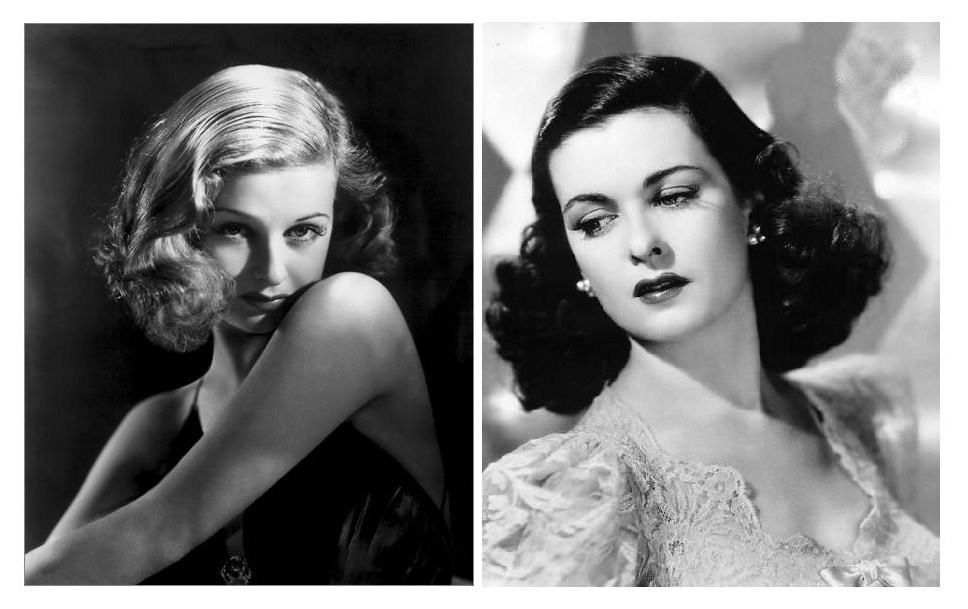
Joan Bennett started off her career as a natural honey blonde. Bennett starred in several forgettable films, until “Trade Winds” (1938) with Frederic March. In the film, Bennett kills a man, dyes her hair brown and flees the county. Dying her hair in this film changed her career for the better and she was a brunette for the rest of her life, according to TCM’s host Robert Osborne. At the time Bennett dyed her hair, actress Hedy Lamarr was emerging as a success in “Algiers” (1938). Several comparisons were made about the two actresses’ appearance, and they were publicized as rivals, according to Hedy Lamarr’s autobiography “Ecstasy and Me: My Life As A Woman.” To make matters even more interesting, Lamarr also married Bennett’s ex-husband Gene Markey. Personally I think Bennett looks better as a blond, brunette made her look harsh and older.

Linda Darnell
Linda Darnell is a natural brunette, usually cast in Spanish roles such as in “My Darling Clementine” (1946) or “Blood & Sand” (1941). But in 1947, Darnell went red for the film adaptation of the spicy novel “Forever Amber.” The film was supposed to help Darnell’s career and was the most expensive 20th Century Fox film at the time. The film was successful in the box office, but did not get very good reviews-not reviving Darnell’s career. Though Darnell doesn’t look bad with reddish hair, she certainly looks her best as a brunette.

Olivia De Havilland
Academy Award-winning actress Olivia de Havilland went platinum blonde for her role in “Not As A Stranger” (1955). In the medical drama she plays Swedish nurse Kristina Hedvigson, and de Havilland’s accent in the film is just as bad as her hair.

Rita Hayworth
Famous for her flaming red-hair, Rita Hayworth is of Spanish decent and has naturally dark hair. When she signed to a studio, studio heads decided her hair-line was too low and performed electrolysis for years to raise it, and dyed her hair red. The hair color transformation made her famous, but another hair color change wasn’t so popular. Hayworth’s husband Orson Welles decided she needed to cut her hair short and dye it platinum blonde. Welles wrote the screen play and directed “The Lady From Shanghai” (1948) and wanted his wife to play the wicked lead woman; thinking no one would believe her in the role with red hair. The film bombed, because of Hayworth’s blond hair. I think Hayworth is beautiful with any hair color, but looks the best as a red-head, hands down.

Ginger Rogers
Like Hayworth, the hair color Ginger Rogers is most famous for, isn’t her own. Through the 1930s until her death, Roger’s usually had blonde hair. Her natural hair color is actually auburn, which you can see in some of her very early films likes those with Joe E. Brown, according to Ginger Rogers’ autobiography. In the 1940s, Ginger Rogers decided to change her look and wore her hair brown in a few films such as “Primrose Path” (1940), “Kitty Foyle” (1940) and “TTom; Dick & Harry” (1941). Rogers is one of the few people who can pull off both brunette and blond hair. I’m really not sure which I like better.
Who knew hair color could be so important?
What do you think? How do you feel about these actresses’ hair colors? What are some other actresses who changed the color of their feathers and either looked great, bad or changed their career?
Check out the Comet Over Hollywood Facebook page








 Comet Over Hollywood