From song to screen: “Ode to Billy Joe” (1976)

On the third of June, Billie Joe McAllister committed suicide by jumping off the Tallahatchie Bridge.
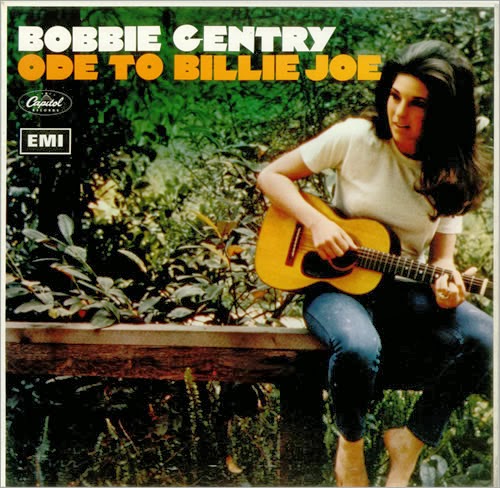
Bobbie Gentry, Ode to Billie JoeBobbie Gentry’s 1967 hit song “Ode to Billie Joe” chronicles a family sitting around the dinner table and casually discussing the death of a local boy-not considering the feelings of the narrator who was dating Billie Joe.

One line in Gentry’s song discusses the narrator and Billie Joe throwing something off the bridge generated the most questions from fans: “What did she and Billie Joe throw off the bridge?”

Fans speculated LSD, a baby, a ring, flowers or a draft card were tossed into the muddy Mississippi waters.

“People are trying to read social comment into the song. I wrote it as a comment on human nature, not on society,” Gentry said in a 1967 Associated Press interview. “I don’t know what was thrown off the Tallahatchie Bridge. The act itself was more symbolic than anything.”

But in 1976, a movie based on the song gave an answer to what was thrown off the bridge and why Billy Joe McAllister committed suicide: a homosexual experience.

“What the song didn’t tell you, the movie will” it advertised.

Set in 1953, the film version of “Ode to Billy Joe” (the spelling of Billy differs in the song and film) stars Glynnis O’Connor as Bobbie Lee Hartley, the 15-year old narrator, and Robby Benson as Billy Joe McAllister.

Fifteen-year-old Bobbie Lee is an adolescent young woman eager for gentlemen affections. In her frustrated state, she reads torrid romance magazines and says ridiculous lines such as, “I’m a body too with desires,” “Nothing has passed my lips except Pepsi Cola” and “I’m 15, and going on 34 – B cup.”

ode to billy joeBilly Joe confesses his love for Bobbie Lee, but her father says she is too young to date.

The budding romance is mainly a game of cat and mouse of Bobbie Lee pretending she doesn’t like Billy Joe.

One night, the town holds a jamboree with a make shift whorehouse in the back. Billy Joe is drunk and confused about it all and is missing for two days after the jamboree.

The reason for Billy Joe’s disappearance is the same reason as his suicide: at the jamboree he has sexual relations with a man. The man turns out to be his boss at the sawmill Dewey Barksdale, played by James Best.

Billy Joe shows up in tears, ashamed of what he did saying it is sin against nature and a sin against God.

“I don’t know how I want to be with you and do that,” he tells Bobbie Lee.

During their discussion, Billy Joe throws something off the bridge- Bobbie Lee’s childhood doll, Benjamin.

After Billy Joe’s death, the town is filled with rumors that Bobbie Lee is pregnant with his baby, though the two never had sex.

Bobbie Lee melodramatically decides to leave town and pretend that she has the baby and will return when the rumors die down. She meets Barksdale on the bridge, who is on his way to confess what he has done. Bobbie Lee gives a speech, saying telling the truth won’t do Barksdale or Billy Joe, any good.

“Billy Joe’s already on his way to becoming a legend. He made a desirable girl pregnant and then jumped off the bridge. We ought to leave him with that,” Bobbie Lee said.

The film ends with Barksdale carrying Bobbie Lee’s bag to the bus stop.

Gentry received movie offers after the song came out in 1967, but she held out for 10 years, she said in a 1976 article in the Nashua Telegraph written by Vernon Scott.

“I waited because I was afraid it would become an exploitation picture to capitalize off the record,” Gentry was quoted. “I didn’t want it done cheaply.”

“Ode to Billie Joe” was originally a short story written by Gentry, and then condensed into a song, she said in the 1976 interview.

Gentry wrote a song for Max Baer, Jr.’s film “Macon County Line.” Baer produced “Macon County Line” and directed “Ode to Billy Joe.” He is known for his role as Jethro on the TV show “The Beverly Hillbillies.”  She liked Baer’s work and she brought “Ode to Billie Joe” to him as a film idea, the Nashua Telegraph article said.

In the contract, Gentry had approval of characters and plot development. She also re-recorded the hit song for the film.

Robby Benson and Glynnis O'Connor in "Ode to Billy Joe" (1976)

Robby Benson and Glynnis O’Connor in “Ode to Billy Joe” (1976)

“Now that I know why Billy Joe McAllister jumped off the Tallahatchie Bridge, I almost wish I didn’t,” film critic Roger Ebert wrote in his July 7, 1976 film review. “Bobbie Gentry’s famous song, on which “Ode to Billy Joe” is based, found much of its haunting effect in its refusal to reveal why Billy Joe killed himself. His death was seen as sad, and long ago, and unnecessary, and the singer recalled it as a key event in an unhappy time. Gentry didn’t need to explain because she evoked.”

Ebert gave the movie 2.5 out of 3 stars in 1976, saying the dialogue is attractive, but that the movie goes astray after Billy Joe kills himself.

Personally, I found the dialogue hokey with several pointless scenes. “Did they really just say that?” was a reoccurring thought as I watched the hour and forty-five minute film.

The film doesn’t play scenes that are lyric-by-lyric of the song. This is probably a good thing. There isn’t a dinner table scene when Billy Joe’s death is discussed and Billy Joe doesn’t put a frog down Bobbie Lee’s back at the Carroll County picture show.

However, there is a preacher watching as the doll is thrown off the bridge, and Bobbie Lee’s father says, “Seems like nothin’ ever comes to no good up on Choctaw Ridge.” This is said after an incident where some drunk Alabamians try to push his truck off the Tallahatchie Bridge.

While I may not have enjoyed this film, I do understand the message that was trying to be portrayed- Billy Joe’s senseless suicide because of societal beliefs. Billy Joe’s confusion, guilt and shame that leads him to kill himself is a relevant issue for 1953, 1976 and most likely today. Though as Gentry originally said, her song was not a social commentary.

Along with the ridiculous script and disliking Robby Benson, my main issue with the film is giving a reason to Billy Joe’s death.

The original purpose of the song is “unconscious cruelty”- the nonchalant way the narrator’s family discusses Billy Joe’s suicide, Gentry said in an interview when the song was released.

Even though Gentry agreed to the film, I feel giving a reason to the suicide takes away from the mournful tune of “Ode to Billie Joe.”

Check out the Comet Over Hollywood Facebook page, follow on Twitter at @HollywoodComet or e-mail at cometoverhollywood@gmail.com

Interview and review: “Vivien Leigh: An Intimate Portrait”

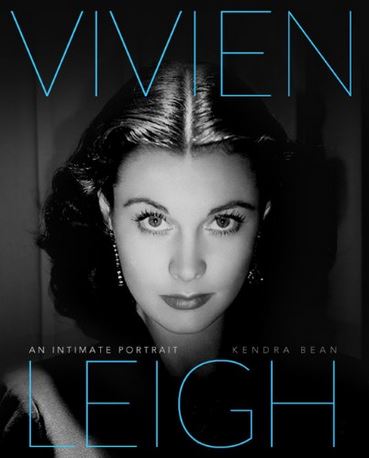
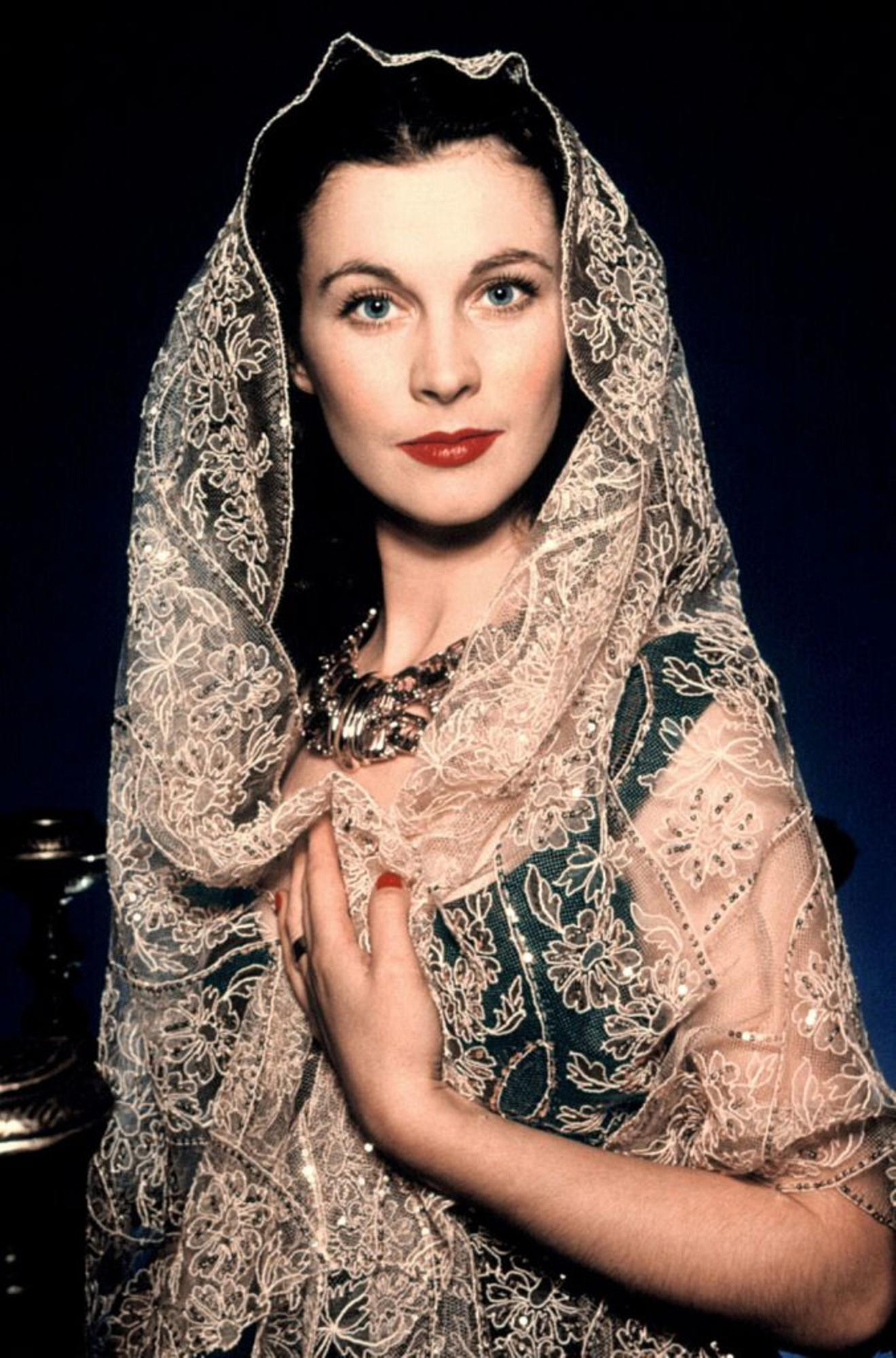
vivien leigh book coverAfter 75 years, her fresh portrayal as Scarlett O’Hara is one of the most memorable screen performances of all time.

Last November, the “Gone with the Wind” actress celebrated her 100th birthday. And to help celebrate, film historian Kendra Bean published a biography on Vivien Leigh, “Vivien Leigh: An Intimate Portrait.” Bean’s book is also the first book written about Leigh in 25 years.

Leigh won two Academy Awards for Best Actress during her short, 18 film career for playing two iconic Southern belles: O’Hara in “Gone with the Wind” (1939) and Blanche DuBois in “A Streetcar Named Desire” (1951)

“An Intimate Portrait” tenderly chronicles Leigh’s life, from her childhood in India through her marriage and divorce to Laurence Olivier to Leigh’s early death at age 51. The book is well-researched, unbiased, beautiful and heartbreaking.

Through her writing, Bean shows her passion for the subject and allows the reader to connect with the English actress. Leigh feels relatable and human compared to the unreachable and ethereal portrait that usually seems to be painted of the mysterious beauty.

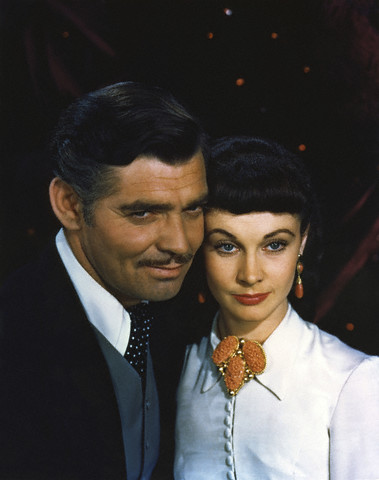
A publicity photo of Clark Gable and Vivien Leigh for "Gone with the Wind" (1939). This photo also appears in Bean's book.

A publicity photo of Clark Gable and Vivien Leigh for “Gone with the Wind” (1939). This photo also appears in Bean’s book.

Reading the page-turning biography is almost like reading “Romeo and Juliet.” Similar to the Shakespeare story that ends in tragedy, you are aware of the impending heartbreak in Leigh’s life. While reading about her successful career and marriage to Laurence Olivier, most readers know the whole time of her heartbreaking divorce, bouts with depression, tuberculosis and Leigh’s early death.

Bean chronicles these events sensitively and through extensive research, quoting interviews throughout the book. She is also the first author to delve into Laurence Olivier’s files. The 272 page book is also filled with gorgeous and rare photos of Leigh.

Bean started her Leigh and Olivier research on her website, VivandLarry.com, before moving from California to England to do more in-depth studying of Leigh’s life and romance with Olivier.

In December, she was kind enough to answer several interview questions for Comet Over Hollywood: 

Comet Over Hollywood: When did your love for Vivien Leigh begin? What started it?
Kendra Bean: I saw Gone With the Wind as a teenager and began reading everything I could get my hands on that would tell me more about the film, including biographies of the stars. The more I read about Vivien, the more interesting she became in my eyes. That’s really what started it. Having a website and online community centered on her and Laurence Olivier has definitely helped keep my interest alive over the years.

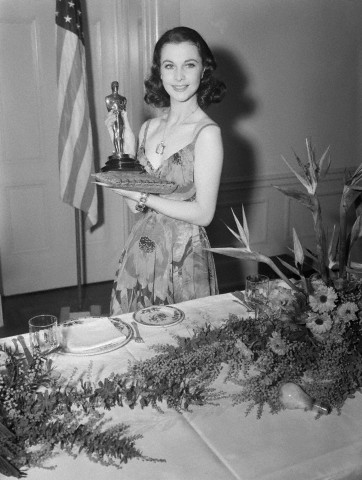
Vivien Leigh proudly holds her Best Actress Oscar on March 2. 1940. She was recognized for her portrayal of Scarlett O'Hara in Gone With the Wind.

Vivien Leigh proudly holds her Best Actress Oscar on March 2. 1940. She was recognized for her portrayal of Scarlett O’Hara in Gone With the Wind.

COH: I have always understood that you moved to England to better study Olivier and Leigh. Is that correct? How difficult of a decision was that? What was that transition like to study something you love?
KB: That was only part of the reason. I actually moved to London for graduate school. I did my BA in Film and Media Studies back in California and then spent the next four years working. But I knew I wanted to be a film historian and to do that, I felt I needed to get a further degree. I wasn’t really satisfied with what I was doing back home, and just felt like I needed a change if I was ever going to actually pursue these interests. I always wanted to live in London for at least a year, so I applied to the Film Studies graduate program at King’s College London. Luckily, they accepted me and offered a couple of scholarships, so off I went!
It was a big change, but I knew some people here already and knew my way around the city. I also made some great friends through the program who I still keep in touch with today. I think the most difficult period was the transition from graduation to whatever was going to happen next. I was determined to make this book project work, but the process of actually getting a publisher was a long one. It was a very stressful period because being on a visa kind of limits things. There were several times when I thought I might well have to move back to the US and that the book would never happen.

COH: You have been working on the book for five years. What all goes into the research that you had to do?
KB: There were two parts to my research: constructing the book and getting it published. Because it’s a coffee table book, a good deal of the process involved locating, sourcing, and licensing photographs (I don’t think a lot of people realize what a lengthy and involved process that is). I also spent a good deal of time in various archives in the UK and in Los Angeles looking for interesting information (fellow fans/research assistants sent me information from New York and Australia, as well), reading through various biographies, tracking down and interviewing people who knew and worked with Vivien, and seeking permission from various estates to quote from letters.
When I first started this project, I had no idea how to get a book published. So, I also had to do a fair bit of research into the actual publication process: how to get an agent, possible marketing angles, crafting a proposal, etc. It was a lot of work, but very much worth it in the end!

COH: What was a misconception you had that came to light during your research?
KB: I think there have been a lot of misconceptions about Vivien’s battle with manic depression (bipolar disorder) and her relationship with Laurence Olivier, in general. One major grey area has always been the infamous 1953 incident, when Vivien had nervous breakdown whilst filming Elephant Walk in 1953. She was flown back to England, legally sectioned, and committed to a mental asylum. The picture I had in my mind from reading previous Leigh biographies was something akin to Frances Farmer getting hauled off to the state institution.
There were also a lot of rumors surrounding this event, including the suggestion that Olivier was having a long affair with actor Danny Kaye and that this set Vivien off. I found no evidence to support any of that. Rather, there was plenty to support the fact that Vivien had been headed toward a mental health crisis for a long time and previous attempts at intervention in 1951/52 were refused by her. Although this was not surprising given the stigma surrounding mental illness in the 1950s, it was still sad to learn that there’s a chance that this particular incident might have been avoided. I was given access to some files pertaining to this incident that hadn’t been by previous biographers (of Leigh or Olivier). What emerged was a clearer picture not only of the harrowing experience that Vivien went through, but also how that experience affected those closest to her – particularly Olivier. It was a very stressful and frightening time for all involved.
Today it seems fashionable to focus on their interpersonal problems; specifically how horrible Olivier was to Vivien. Through moderating vivandlarry.com and the accompanying Facebook page over the years, it seems to me that there’s a tendency to view their relationship in black and white terms. In fact, it was very complicated. How could it not be? They were together for nearly 25 years and she remained obsessed with him for the rest of her life. Their marriage did turn very sour in the 1950s but before that, and I think sometimes during that period, there was actually a lot of love, respect, and camaraderie between them. That notion was reinforced when going through Olivier’s papers, and those of other people who knew them.

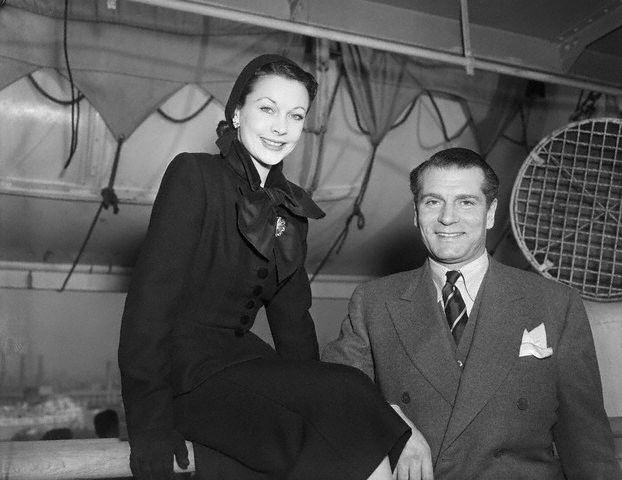
Arriving in New York by boat in 1951.

Arriving in New York by boat in 1951.

COH: Why is it important to study actors like Leigh and Olivier and their relationship?
KB: Because they both made significant contributions to 20th century popular culture. They considered themselves artists and their work deserves to be remembered and reappraised. Unfortunately, their stage work was very ephemeral but luckily their films still remain to be enjoyed and discussed by fans and casual viewers alike. On top of that, they lead interesting lives.

COH: Was there anything you learned that didn’t make it into the book and why?
KB: One of the main tasks of an author is to decide what is important and what isn’t for the story he or she wants to tell. Coffee table books require even more editorializing than standard biographies because they rely just as much – sometimes even more – on visuals as they do text. A couple of examples of things that were left out of Vivien Leigh: An Intimate Portrait: I was told some stories during interviews that I felt were interesting but they ended up being more about the interviewee than Vivien, or I didn’t feel they added anything thematically that hadn’t been said already, so they were left out. I also didn’t spend much time talking about the films she made for Alexander Korda in the 1930s, instead opting to cut to the meat of her fame, which really took off with Gone With the Wind. I did write an essay about these films for the Vivien Leigh Anniversary Collection released in November by Cohen Films though, and that’s something I would definitely expand upon in a full biography.
leighOne of the challenges in writing a biography of a famous figure is that many materials are still in copyright and permission is required to publish them if they fall outside of fair use. This meant that, unfortunately, there were some letters and photos that I very much wanted to use, but couldn’t.

COH: Recently you have given several speeches and interviews. What has been your proudest moment since the book has been published?
KB: I think my proudest moment was actually getting the book published. It was such a long and often emotional journey and there were several instances where I worried it wouldn’t come to fruition.
I’m grateful for the opportunities that have arisen from being published. It’s been such a wonderful learning experience and I’ve met some very passionate and intelligent people because of it. I never thought I’d get to curate an exhibit at a major museum, for example, but Terence Pepper (who edited some of my favorite photo retrospectives) asked me to help curate the “Starring Vivien Leigh: A Centenary Celebration” exhibit that’s currently on at the National Portrait Gallery. I also gave my first-ever big lecture to a sold out audience at the NPG. Public speaking has always been one of my worst fears, but this went really well and has given me confidence for the lecture I’m giving at the V&A in February.

COH: Do you see another book in your future?
KB: Yes! Watch this space!

Check out the Comet Over Hollywood Facebook page, follow on Twitter at @HollywoodComet or e-mail at cometoverhollywood@gmail.com
I love to sing-a, about the moon-a and the June-a

ilovetosinga3.0

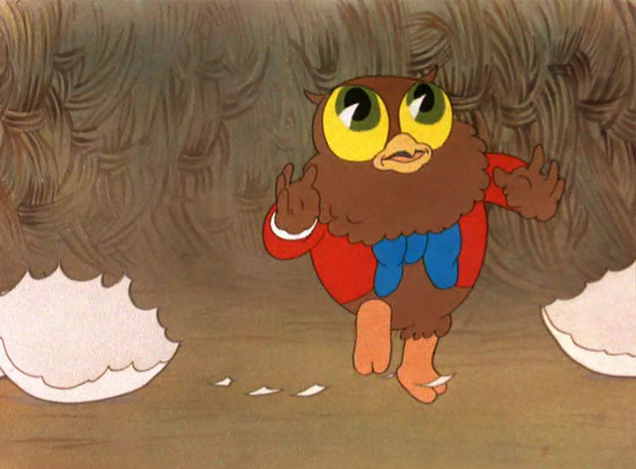
Owl Jolson loves to sing-a.

You may see me dancing around the office, shaking my finger and singing the tune from this Warner Brothers cartoon.

The 1936 cartoon “I Love to Singa” is one of those cartoons I saw as a child that has always stuck with me.

Every night before bed, I watched Warner Brother and MGM cartoons on Cartoon Network and TBS while I was growing up.

One of my favorite was the Merrie Melodies cartoon directed by Tex Avery that features Owl Jolson. This was Avery’s ninth animated short.

In the cartoon, Mama Owl is sitting on her eggs as Papa Owl paces. They are waiting on their new children to be born in their home inside a tree.

ilovetosinga2.02

Owl Jolson’s brothers are already classically trained!

When they hatch: one owl pops out singing “Chi mi frena in tal momento” from the opera Lucia di Lammermoor,  another is playing “Traumerei” on the violin and a third is playing Mendelssohn’s “Spring Song” on the flute.

Yet when the fourth owl hatches, he’s dancing and singing “I love to singa, ‘bout the moon-a and the June-a and the spring-a.”

Papa Owl covers his ears and calls him a crooner and a jazz singer.

To correct his son’s love for contemporary music, Papa tries to teach him the classics and we see Owl Jolson unhappily singing “Drink to Me Only with Thine Eyes.”

Owl Jolson runs away from home and is on a radio talent show hosted by Jack Bunny-a spoof of Jack Benny.

When his family hears little Owl on the radio, they rush down to the station, encourage his jazz music and he wins the talent show.

Picture 4

Jack Bunny holds an amateur hour contest.

“I Love to Singa” is a small tribute to Al Jolson’s film “The Jazz Singer” (1927). The song comes from the Jolson film “The Singing Kid” (1936).

The voice of Owl Jolson is child actor Tommy Bond who played Butch in the “Our Gang” series.

The cartoon demonstrates Tex Avery’s talents while paying homage to an early sound film.

One of my favorite parts of the eight minute cartoon is when all the different animals are trying out for the talent show, and all are so bad they fall through a trap door.

Owl Jolson's family accepts his love for jazz.

Owl Jolson’s family accepts his love for jazz.

My other favorite is when all the little owls hatch, already equipped with instruments and excellent musical prowess! Mama owl must be quite talented!

There isn’t one thing I don’t love about “I Love to Singa.” The title song is catchy, the jokes are witty and the name “Owl Jolson”-spoofing Al Jolson’s name- doesn’t fail to make me chuckle.

Check out the Comet Over Hollywood Facebook page, follow on Twitter at @HollywoodComet or e-mail at cometoverhollywood@gmail.com
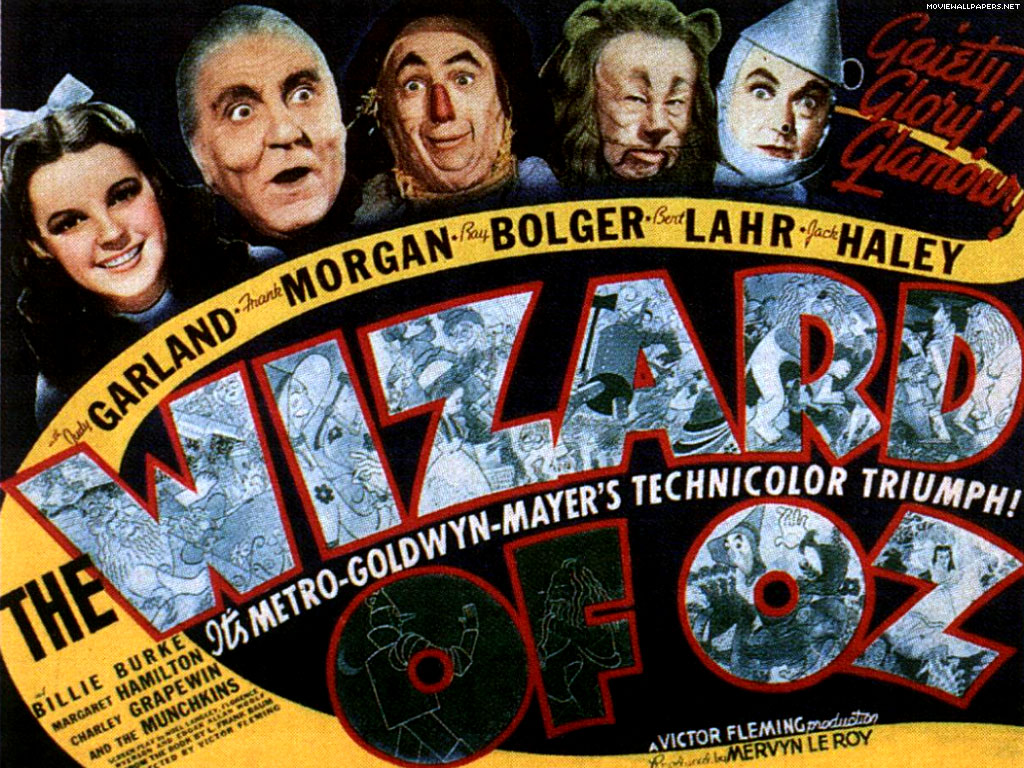
“The Wizard of Oz” in 3D: Was it necessary?

My parents introduced “The Wizard of Oz” to me when I was a baby.

My sisters and I all have dressed up as Dorothy for Halloween or a book character day at least once.
We also have Dorothy Barbies, dolls and my mom owns “The Wizard of Oz” collectors decorative plates.

Needless to say, the Pickens family are fans of the film.

I grew up with “The Wizard of Oz” just as my parents did when it was shown yearly on television.

wizard of oz2

“The Wizard of Oz” was what taught me about the state of Kansas and what a cyclone was.
Like most movies, the information and lessons it taught me molded my young mind.

When I heard the 1939 film starring Judy Garland as Dorothy was going to be released in 3D and IMAX, I had mixed emotions.
1. I wanted to see the film on the big screen, because I never had before.
2. I don’t like 3D and avoid it at all costs. Why did they feel the conversion was necessary?

Though I wasn’t pleased with the thought of 3D or paying $17 for a movie ticket, I couldn’t pass up watching a classic film in a movie theater- something that doesn’t happen much in my area.

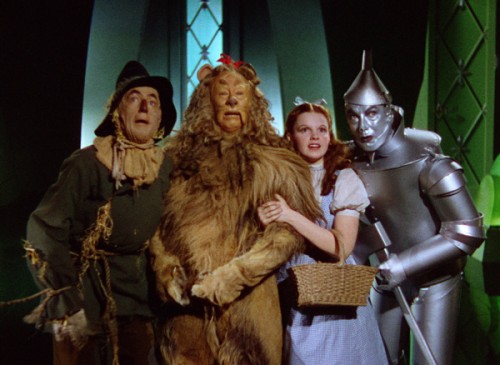
Ray Bolger as the Scarecrow, Bert Lahr as the Cowardly Lion, Judy Garland as Dorothy and Jack Haley as the Tin Man in "The Wizard of Oz"

Ray Bolger as the Scarecrow, Bert Lahr as the Cowardly Lion, Judy Garland as Dorothy and Jack Haley as the Tin Man in “The Wizard of Oz”

Tuesday evening I made the 50 minute drive to Charlotte, NC to see the “Wizard of Oz.”

The Technicolor was lush, I laughed at the supporting characters, cried at the end of the movie and I enjoyed myself. It had been years since I watched “The Wizard of Oz” from start to finish. I forgot how funny the jokes are and how visually beautiful it is.

Having the opportunity to see a classic film on the big screen is a special experience. Even if you have seen the movie before, you pick up on jokes and subtle movements and expressions better than you can on your television. You are also forced to pay attention to the film, because it is just you and the screen.

But the big question is, was the 3D necessary or distracting?

The 3D wasn’t obtrusive or dramatic. Many scenes looked similar to if you were watching a 2D version of the film. The times it stood out the most were when the Wicked Witch (played by Margaret Hamilton) pointed at the camera or when Glenda the Good Witch (played by Billie Burke) gestured with her silver wand.

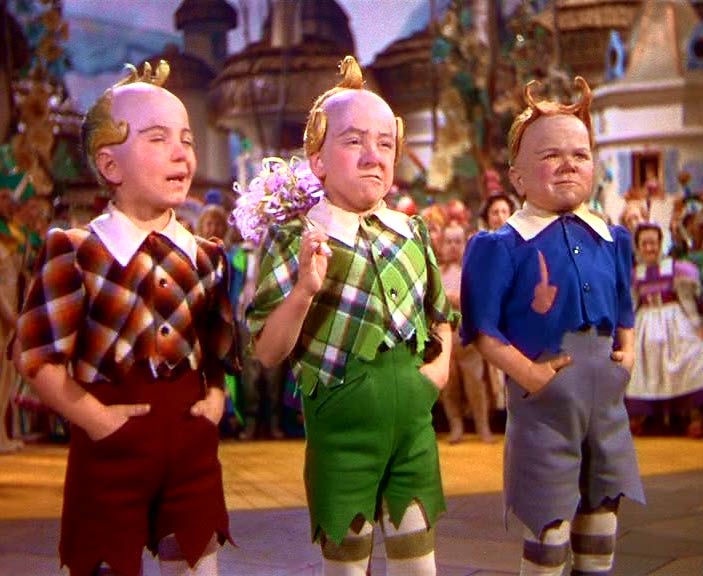
The Lollipop Guild

The Lollipop Guild

The 3D mostly was used for depth. Dorothy sat a little further out from her surroundings as she sang “Somewhere Over the Rainbow” and the Lollipop Guild stood out as well. These scenes weren’t bothersome, but there just wasn’t much purpose to it.

The only other 3D film I have watched in a theater the John Wayne film “Hondo” (1953) at the Turner Classic Film Festival. While the 3D wasn’t used excessively in “Hondo,” it’s use was more dramatic. Native Americans rode on horses towards the screen and arrows looked like they were coming at you.
There was nothing that dramatic in “The Wizard of Oz,” not even a flying monkey looking like it was going to share your seat.

There were a few times I felt 3D made things a bit blurry (or maybe it’s my bad eye sight) like when the Scarecrow (Ray Bolger), Dorothy (Garland), the Cowardly Lion (Bert Lahr) and the Tin Man (Jack Haley) ran through the poppy field. Another area I felt was a bit blurry was when Dorothy opened the door to Oz-taking the film for sepia tone to Technicolor.

In general, I’m not a fan of colorization of black and white films such as “It’s A Wonderful Life” (1946) or “Rebecca of Sunnybrook Farm” (1938). I feel that modifying a film from 2D to 3D falls under the same distasteful category as colorization. All of these tactics are to bring in younger audiences. But why change art? If a younger audience doesn’t like the “Mona Lisa” would we paint a smile on her?

“3D falls into the category of digital ‘remixing,’ colorizing and other changes,” said my broadcast journalism professor, Haney Howell. “The director shot the movie from his perspective, not that of some geek who thinks he can make it better.”

Buddy Ebsen was originally cast as the Tin Man but was allergic to the makeup. His big break came in the from of the 1960s TV show, "The Beverly Hillbillies."

Buddy Ebsen was originally cast as the Tin Man but was allergic to the makeup. His big break came in the from of the 1960s TV show, “The Beverly Hillbillies.”

From 1938 to 1939, the script of “The Wizard of Oz” had several rewrites and stars were recast in the film. Shirley Temple was originally considered for the role of Dorothy. Buddy Ebsen was going to be the Tin Man but was allergic to the silver face paint, and Jack Haley was cast instead. Margaret Hamilton, who played the Wicked Witch of the West, received third degree burns on her hands and face during her firey exit with the Munchkins.

A lot of blood, sweat and tears went into the director’s vision of “The Wizard of Oz.” Modifying the film from 2D to 3D is going against artistic wishes.

When it was announced “Wizard of Oz” was going to be in 3D, it was said, “If 3D was around in 1939, this is how it would have been shot.” Which is a ridiculous response.

Filmmakers have had 3D capabilities of some sort since the 1920s and 1930s. MGM even made a short film in 1935 called “Audioscopiks” testings 3-D. Then 3D film fell briefly into the mainstream from 1952 to 1954. Hollywood was using 3D to pull movie goers away from their television screens and back into theaters.
So saying “If 3D was around” is a fairly ignorant response.

But to answer the $64 question of “Was 3D necessary?”: No, probably not. But so far, since “The Wizard of Oz” was released last Friday, it has made roughly $3 million. It has served the purpose the money making purpose it was supposed to.

Regardless, I really enjoyed seeing “The Wizard of Oz” for the first time on the big screenscreen.

But as Dorothy says, “If I ever go looking for my heart’s desire again, I won’t look any further than my own backyard. Because if it isn’t there, I never really lost it to begin with.”

The popularity of “The Wizard of Oz” has remained for over 75 years, so why look any further to improve on it when it isn’t needed.

sepia dorothy

Check out the Comet Over Hollywood Facebook page, follow on Twitter at @HollywoodComet or e-mail at cometoverhollywood@gmail.com
Hot off the presses: Unethical reporters in classic films

A man is killed and sent C.O.D. to a Hollywood actress.

Rather than call the police, the actress calls her reporter friend to help her out.

The reporter investigates the case like he’s a detective.

He sneaks in houses searching for clues and finds jewels that can be used as evidence. The reporter then puts the diamonds in an ice cube tray to hide them from police.

Reporter George Brent investigates a murder in "A Corpse Came C.O.D."

Reporter George Brent investigates a murder in “The Corpse Came C.O.D.”

As these events occurred in “The Corpse Came C.O.D.” (1947) starring George Brent and Joan Blondell, my dad turns to me and asks, “I hope you don’t do these things at work.”

Later when Brent gets in a fist fight with a bad guy my dad asks, “Is there anyone at the Star that would be able to do that?”

As a reporter who loves classic movies, I go out of my way to watch films where the hero plays a reporter.

However, if I researched my stories using the same methods that reporters used in films, I would most likely get fired.

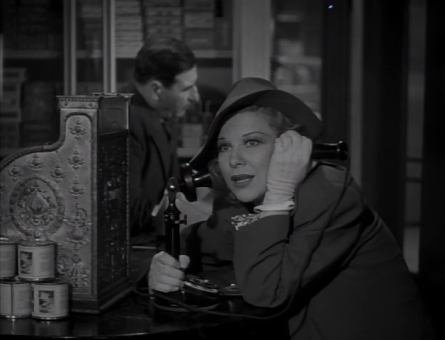
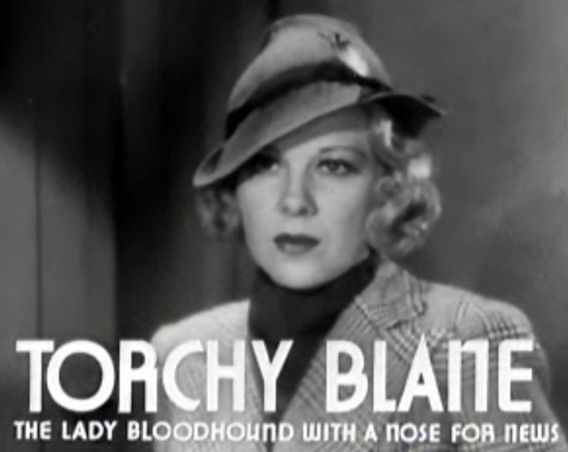
Glenda Farrell stars as Torchy Blane, a troublesome and wise-cracking reporter in 1930s films. Blane comically gets her information by hiding in trashcans and bugging rooms, techniques not used by contemporary reporters.

Glenda Farrell stars as Torchy Blane, a troublesome and wise-cracking reporter in 1930s films. Blane comically gets her information by hiding in trashcans and bugging rooms, techniques not used by contemporary reporters.

In classic films, reporters are often solving crimes like a police officer and often receive information by unethical means. At the Shelby Star, we do a lot of research on our stories, but I doubt we will ever solve a crime.

In the 1930s Torchy Blane film series, Torchy is constantly at odds with her detective boyfriend Steve McBride for being where she shouldn’t be.

The nine films follow the wise-cracking female reporter, played by Glenda Farrell, Lola Lane and Jane Wyman.

Torchy can be seen eavesdropping, bugging rooms, hiding in trash cans and following bad guys to get the scoop on a story.

If I hid in a trashcan to find out the latest secrets of Cleveland County, North Carolina, not only would that be breaking media laws, I would also smell pretty bad.

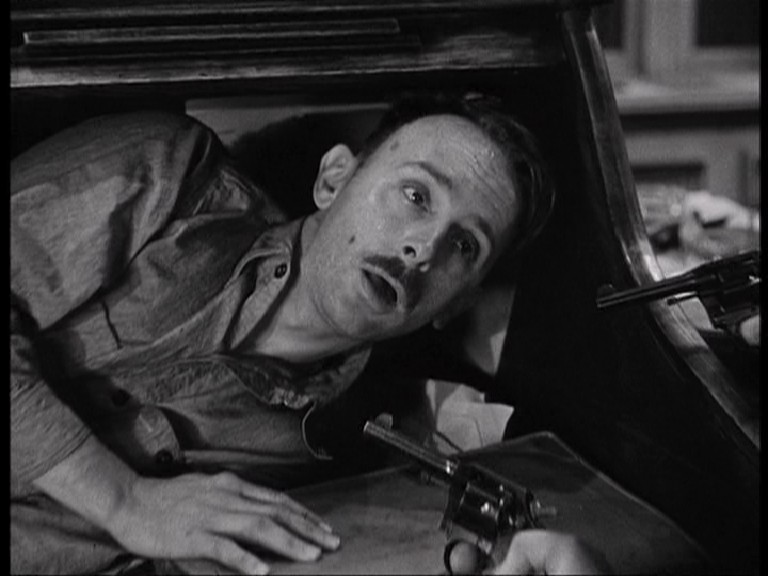
John Qualen hides in a desk in "His Girl Friday."

John Qualen hides in a desk in “His Girl Friday.”

In “His Girl Friday” (1940), reporter Hildy Johnson, played by Rosalind Russell, hides an accused murdered in her rolltop desk to get the scoop on a story. Unfortunately, I don’t have a rolltop desk at work, but even if I did, I’m not sure how the sheriff would feel if I stored suspects in my desk.

In another George Brent film “You Can’t Escape Forever” (1942), managing editor, Brent will get hunches by tugging on his ear like he’s communicating with somebody via Morse code.

Then Brent will come up with a fantastic hunch that he will print in the paper, which usually ends up being true.

If reporters worked solely on hunches without fact checking, the paper would be full of corrections that had to be run, rather than news stories.

In “The Philadelphia Story” (1940) reporters James Stewart and Ruth Hussey pose as family friends at the wedding of Katharine Hepburn. The two are tabloid writers there to get information on the story.

Getting information under false pretenses is unethical by today’s standards and would most likely leave you with a lawsuit.

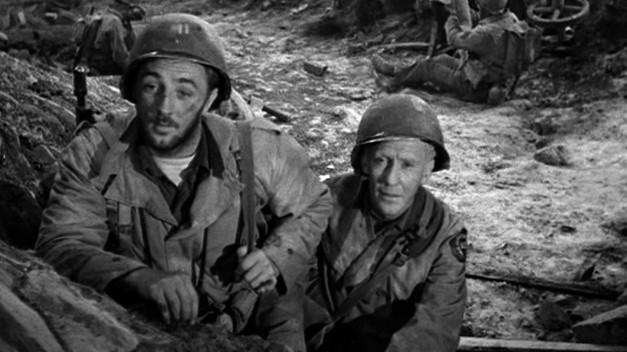
Though there are several comedic representations of newspapers, there are films that represent journalism in a truer light, such as “The Story of G.I. Joe” (1945) about war journalist Ernie Pyle or “Citizen Kane” (1940) about the power of journalism.

Robert Mitchum and Burgess Meredith (as Ernie Pyle) in World War II film "The Story of G.I. Joe" about reporting on the front lines.

Robert Mitchum and Burgess Meredith (as Ernie Pyle) in World War II film “The Story of G.I. Joe” about reporting on the front lines.

As someone who works in newspapers, I don’t take offense to the unethical journalism in the 1930s and 1940s films, because I know most of it is there for comedic relief.

It doesn’t make me stop watching the films; you just have to take it all with a grain of salt, as you would with any movie.

Clearly newspapers have changed a great deal from the 1930s to today.  However, it does make me wonder how media laws and ethics have changed in the past 75 years.

So for my father: No dad, we don’t do any of that at the Star.

This is part of the Breaking News: Journalism in Classic Films blogathon co-hosted by myself and Lindsay at Lindsay’s Movie Musings. Read all of the wonderful contributions here! 

MBDCIKA EC019

Check out the Comet Over Hollywood Facebook page, follow on Twitter at @HollywoodComet or e-mail at cometoverhollywood@gmail.com
Before Lois Lane there was Torchy Blane

by torchy blane

She’s a fast-talking blond who breaks every rule of reporting.
As a journalist, I should be appalled by Torchy Blane, but I really want to be her. She is the perfect mix of my profession and classic film love.

From 1937 to 1939, Torchy Blane solved crimes and caused trouble for her police detective boyfriend in nine films.

Glenda Farrell as Torchy Blane- my role model.

Glenda Farrell as Torchy Blane- my role model.

She also was part of the inspiration for Superman’s reporter girlfriend Lois Lane.
In a 1988 Time magazine article, creators of the Superman comics Joe Shuster and Jerry Siegel credited Glenda Farrell’s performance as Torchy Blane with their creation of Lois Lane.

“My wife Joanne was Joe’s original art model for Superman’s girlfriend in the 1930s,” Siegel is quoted from the interview in the book The Women of Warner Brothers. “Our heroine was, of course, a working girl whose priority was grabbing big scoops. What inspired me in the creation was Glenda Farrell, the movie star who portrayed Torchy Blane. Because of the name Lola Lane, who also played Torchy, appealed to me, I called my character Lois Lane.”

Produced by Warner Brothers Studios, the Torchy Blane series was one of many Hollywood B-movie series of the 1930s and 1940s, others include Maisie, Dr. Kildare, Boston Blackie, The Falcon and the Lone Wolf.

Actress Glenda Farrell played Torchy in seven of the films while Jane Wyman and Lola Lane each played the role once.
Torchy Blane titles include:
Torchy Blane…Playing with Dynamite (1939)
Torchy Runs for Mayor (1939)
Torchy Blane in Chinatown (1939)
Torchy Gets Her Man (1938)
Torchy Blane in Panama (1938)
Blondes at Work (1938)
The Adventurous Blonde (1937)
Fly Away Baby (1937)
Smart Blonde (1937)

Though the other actresses play the part well, Farrell left the lasting impression. Her comedic timing, brassiness and nonchalant attitude brings Torchy to life. Her performances were complete with 400 word speeches given in 40 seconds as she talked her out of trouble.

In many of the films, Torchy is causing more trouble than she is writing stories and meeting deadlines.

Each film has a mystery to solve, and before Torchy’s detective boyfriend Steve McBride can take fingerprints, Torchy is one step ahead.

Her job is really more of an amateur detective than a reporter.
“Maybe you know who bumped him off,” Steve says in “Smart Blonde” (1937).
“Not off hand, but with a little time and something to eat, maybe I can help you,” says Torchy.

Our heroine usually solves the crime, leaving the police force and her detective boyfriend looking slightly foolish.

Torchy does some of her own sleuthing

Torchy does some of her own sleuthing

In today’s world of journalism, Torchy’s means of sleuthing and reporting are ethically questionable:
-Hiding in a trashcan to eavesdrop
-Bugging rooms with microphones
-Snooping through rooms
-Talking with questionable sources

It’s amazing she even has a job at a publication.

At the end of each film, Steve McBride promises a steak dinner and marriage but at the start of the next film, there have yet to be any wedding bells.

Though the films were made for low budget entertainment, the New York Times in the 1930s gave the movies poor reviews, dubbing Torchy a “demon reporter.” They also wrote “we have a murder mystery solved by an endless succession of door-opening and shuttings, taxi-hailings, jumping in and out of automobiles and riding up and down elevators,” quoted in Howard Good’s book “Girl Reporter: Gender, Journalism and Movies.”

It’s possible that the Times mainly scoffed because the main character was a female star reporter, Good wrote.

Torchy and her detective boyfriend Steve McBride played by Barton MacLane.

Torchy and her detective boyfriend Steve McBride played by Barton MacLane.

Dressed in professional suits, Farrell modeled Torchy after female reporters she knew and tried to make her believable.

“Before I undertook Torchy, I determined to create a real human being, not an exaggerated comedy type,” she said in a 1969 Times interview, quoted in the book The Women of Warner Brothers. “I met those newswomen who visited Hollywood. They were generally young, intelligent, refined and attractive. By making Torchy true to life, I tried to make a character practically unique in movies.”

Reporters could argue that Torchy Blane scripts are not representative of the newspaper industry.

However, as a contemporary female reporter, I love Torchy. I even asked my editors if I could change my byline to Torchy Pickens…but was denied.

Her sass, beauty and energy is endearing, even if she breaks every media law there is.

This is part of the Summer Under the Stars blogathon by ScribeHard and Sittin’ on a Backyard Fence. 

Check out the Comet Over Hollywood Facebook page, follow on Twitter at @HollywoodComet or e-mail at cometoverhollywood@gmail.com
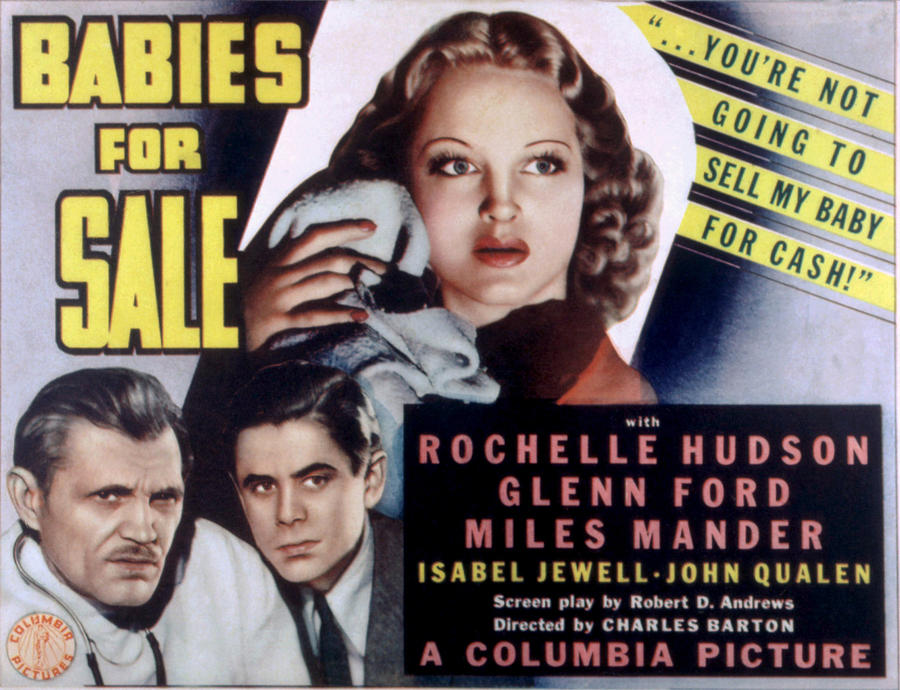
“Babies for Sale” (1940)

“Babies for Sale.”

Few film titles have made me chuckle  as much as this 1940 B-movie did.

babies for sale

But the movie starring Glenn Ford and Rochelle Hudson is not a comedy but a crime drama about organizations posing as charitable adoption agencies who are actually selling babies for thousands of dollars.

The film prefaces with:

“Producers of the film are sympathetic with the 95-percent of the charitable organizations dealing with adopted children. These institutions are honest and worthy of all support. This picture is presented as a warning to all parents and to all who plan to adopt children. That some unsupervised private institutions do exist where babies are sold for cash. Where helpless mothers are victimized and where foster parents may find lifelong tragedy instead of happiness. This is a story of one such institution and victims.
What happens in this story could happen to you?”

What’s it about?

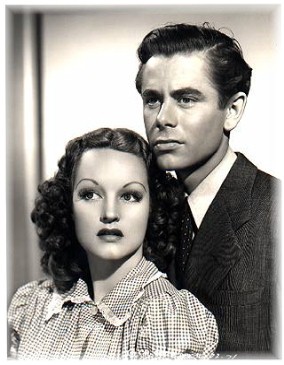
Rochelle Hudson and Glenn Ford, Columbia Pictures Studios tried to make the two actors a screen team.

Rochelle Hudson and Glenn Ford, Columbia Pictures Studios tried to make the two actors a screen team.

Ford as Steve Burton is a reporter who gets the scoop from Dr. John Gaines (Joe De Stefani) about fake adoption agencies. Gaines tells Burton that families pay anywhere from $50 to $10,000 for a child. Single women who go to these agencies to have their babies have to work there and earn $1,000 to get their baby.

After writing the story that uses phrases such as “Selling babies by the pound” and “Thousands of babies sold for cash,” Burton faces backlash and the editor is going to retract the story. Believing what he did is right; Burton quits but doesn’t give up investigating the case.

Then the audience gets a look inside one of these agencies.

Mr. and Mrs. Howard Anderson (character actor John Qualen and Helen Brown) are facing Dr. Rankin, the owner of the adoption agency. The couple’s child has defects and will never be well. Rankin says the baby was perfectly fine when he gave them the baby they paid $10,000 for—Basically making it sound like he sold the couple a car. Desolate Mrs. Anderson runs in front of a train with the baby after they leave.

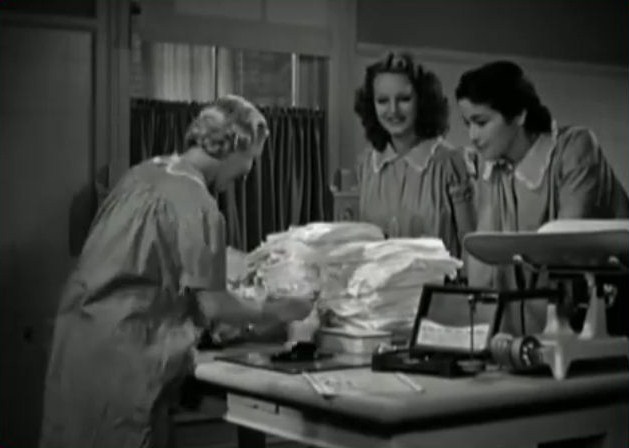
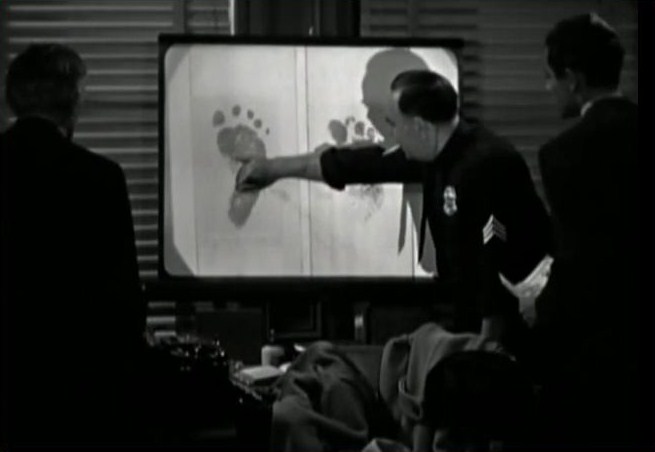
Pregnant women earning their keep to pay for their babies once they are born. (Comet Over Hollywood/ Screen cap by Jessica P.)

Pregnant women earning their keep to pay for their babies once they are born. (Comet Over Hollywood/ Screen cap by Jessica P.)

We meet pregnant Ruth Williams (Rochelle Hudson) whose husband died in an automobile accident.

Ruth has to work at the agency while she is pregnant to pay for her child once it’s born. During this time, Rankin tries to convince Ruth to give up her baby.

“We have to make sacrifices for the ones we love,” he tells her.

“I won’t give away my baby!” she demands.

Once her baby is born, Rankin tells Ruth that it was a stillborn, but she knows he adopted it to another family.

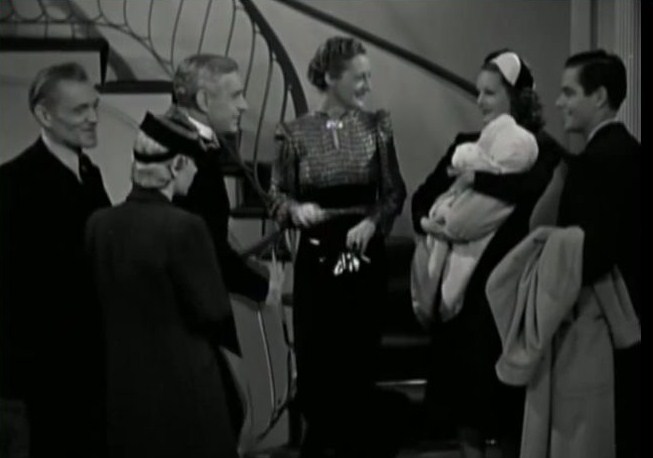
With the help of Burton, Ruth finds her baby through the use of baby foot prints taken after birth. They find Ruth’s baby with a friendly wealthy family who help put Rankin out of business.

The back story

Ex-reporter Burton helps Ruth get her baby back. (Comet Over Hollywood/ Screen cap by Jessica P.)

Ex-reporter Burton helps Ruth get her baby back. (Comet Over Hollywood/ Screen cap by Jessica P.)

“Babies for Sale” was recently shown for the first time on Turner Classic Movies while the channel was celebrating the career of actor Glenn Ford. Ford was 24 and “Babies” was his fifth film.

It was Ford’s third film with Rochelle Hudson- who also starred in “Imitation of Life” (1934)- and Columbia Pictures was working to make the two a screen team but it never panned out, said TCM Primetime Host Robert Osborne.

Studious also worked to make Ford and Evelyn Keyes a screen team, starring in six films together, but their screen chemistry didn’t explode either. It wasn’t until Ford starred with Rita Hayworth in “Gilda” (1946) that he found his match.

Many of Ford’s early films were similar to “Babies for Sale,” with crime and corruption. “Babies” wasn’t made to be a box office sensation but to be shown during a double feature, Osborne said.

Also early in his career, Bruce Bennett can be spotted as a police officer.

What I thought
Though the title made me laugh, “Babies for Sale” is an entertaining movie. B-movies get a bad rap for being inexpensive, but they are some of my favorite films. The plot line are sensational using lines like “The mother had no right to keep her baby,” and the story can be told in just a little over an hour.

Ford showed potential even early in his career giving a solid performance and coming off as very likeable.

Next time you come across it, give it –and other B-movies- a chance. It will be a pleasant way to spend 65 minutes.

Ruth gets her baby back from a friendly, wealth family. (Comet Over Hollywood/Screen cap by Jessica P.)

Ruth gets her baby back from a friendly, wealth family. (Comet Over Hollywood/Screen cap by Jessica P.)

Check out the Comet Over Hollywood Facebook page and follow on Twitter at @HollywoodComet. E-mail at cometoverhollywood@gmail.com

Doris Day: From Hollywood party to leading role

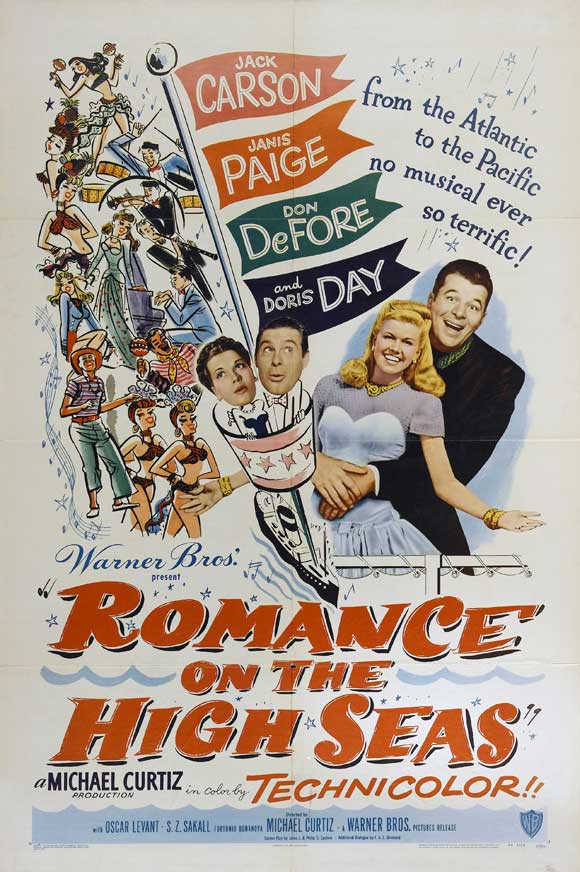
romance on the high seasGeorgia Garrett is a fast talking, cigarette smoking, flirtatious night club singer–and she is the character played by Doris Day in her very first film “Romance on the High Seas” (1948).

While other actresses worked their way up to stardom through bit parts and uncredited roles, Day starred in her first movie.

And she continued starring in all 41 of her films from 1948 to 1968.

In the film, newly married Elvira Kent (Janis Paige) and Michael Kent (Don DeFore) worry that the other spouse is having an affair.

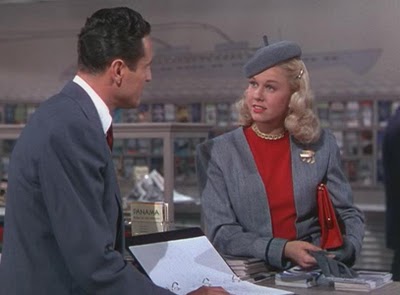
Georgia, a broke singer in a sleazy nightclub, frequents the travel agency and plans trips she never goes on and gets passport photos taken each time. Elvira meets Georgia in the travel agency while booking her trip to South America.

“But you have already had seven passport photos taken,” one travel agent says.

“But never as a blond,” Georgia coyly says.

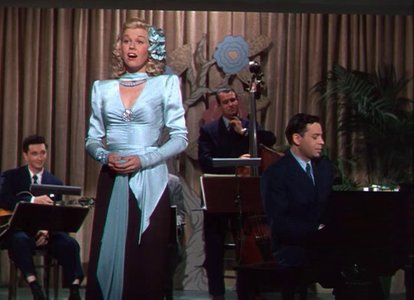
Day as Georgia Garrett in the travel agency

Day as Georgia Garrett in the travel agency

On their third wedding anniversary, the Kents have to cancel a third anniversary trip due to business.  Michael tells Elvira to go without him.

Suspecting that Michael is going to fool around with his pretty new secretary, Elvira sends Georgia on the cruise in her place so she can stay behind and spy on her husband.

Also afraid that his wife is going to fool around on the cruise without him, Michael sends private detective Peter Virgil (Jack Carson) on the cruise to look after his wife.

Paige as Elvira instructing Day as Garrett

Paige as Elvira instructing Day as Garrett

Georgia, while posing as Elvira Kent, falls for Peter, and Peter thinks he is going to lose his job.

Romance on the High Seas” isn’t Doris Day’s most well-known film, but it’s my favorite.

While in the 1950s and 1960s Day was known for her squeaky clean, virginal persona, but her character in “Romance” has some sass.

Day started her career as a girl singer in 1939 for big band leaders such as Les Brown and Bob Crosby, brother of Bing Crosby.

By 1945, she had her first hit with “Sentimental Journey” which resonated with soldiers fighting over seas. More hits followed such as “My Dreams are Getting Better all the Time.”

“In a sense, ‘Sentimental Journey’ became the serviceman’s theme song,” Day wrote in her autobiography, “Doris Day: Her Own Story.

Before heading back East after a visit to Los Angeles, Day was convinced to attend a party at the home of Jule Styne, an American songwriter.

When everyone started performing songs at the party, Day began to get uneasy.

Day as a nightclub singer singing "I'm in Love"

Day as a nightclub singer singing “I’m in Love”

“These people loved singing for each other but I am painfully shy at parties, and particularly shy about performing impromptu,” she wrote.

Day was also going through a divorce at the time with child actress Virginia Weidler’s older brother, George.

She was asked to sing and was convinced to sing the chorus of “Embraceable You.”

The Gershwin tune landed Day her first film role, as the star of a musical comedy.

Styne wrote the score to the Warner Brothers film “Romance on the High Seas.” Judy Garland was originally slated to play Georgia Garrett, but the deal fell through.

Then Betty Hutton was set for the film, but she got pregnant and couldn’t be in the film, according to Day’s autobiography.

“Acting in films had never so much crossed my mind. I was a singer…” she wrote. “They kept telling me how lucky I was to be testing for the lead in a major musical and how many girls would die to be in my shoes, but I was sitting glumly looking out the window, only half listening.”

Her look was made to resemble Betty Hutton and she was encouraged to sing in Hutton’s signature energetic style during the test.

“But when we shot the scene, I did it my own way,” she wrote. “I instinctively understood something then that was to sustain with me through all the years that followed-to thine own self be true. Don’t imitate.”

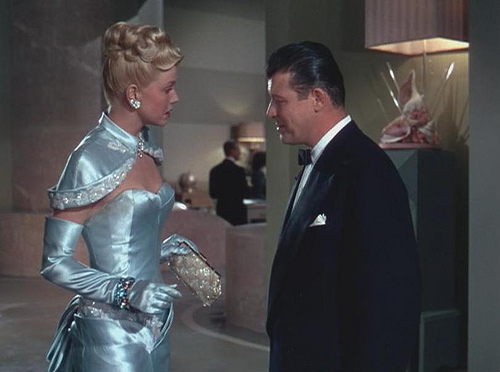
Jack Carson and Doris Day meet on board the ship

Jack Carson and Doris Day meet on board the ship

Through being herself, Day gives a hilarious performance in the sparklingly musical, comedy which included one of her top hit songs, “It’s Magic.”

After the film became a hit, Day’s option was picked up for more Warner films. However, she wasn’t pleased with the movie. She dressed very casually and didn’t like the ultra glamorous look she had in the film.

Though Day wasn’t pleased with her first film appearance, “Romance on the High Seas” is my favorite Doris Day film—and I have seen all but two of her movies.

Along with the main cast of Jack Carson, Day, Don DeFore and Janis Paige—the movie has top notch character actors. Supporting actors include S.Z. “Cuddles” Sakall, Oscar Levant and Eric Blore.

Paige and Day would later star with each other again in “Please Don’t Eat the Daisies” (1960). Carson starred with Day in her next two films “It’s a Great Feeling” (1949) and “My Dream Is Yours” (1949).

“Romance on the High Seas” has it all: glamorous wardrobes, sparkling color, hilarious jokes and quality songs written by Sammy Kahn and Jules Styne.

Though Day is best known for her bedroom farce films such as “Pillow Talk” (1959) with Universal, her early Warner Brothers films are some of her best.

Fresh faced films, sunny and shining with Day’s smile.

This is part of the Summer Under the Stars blogathon. Check here for other posts on Doris Day.

Check out the Comet Over Hollywood Facebook page for the latest updates.

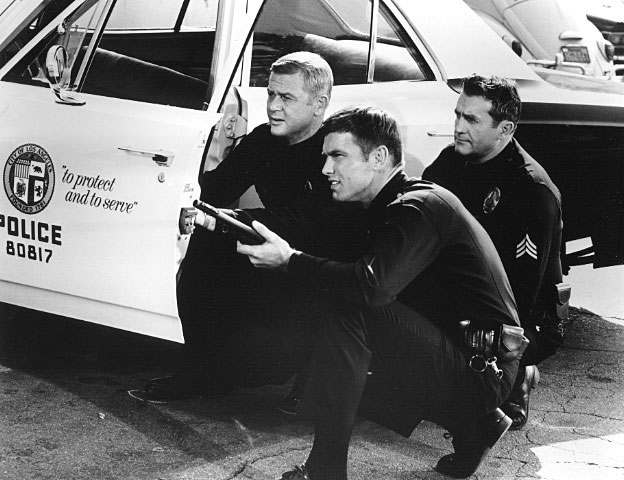
1-Adam-12…1-Adam-12

During a time when law enforcement and the military weren’t popular in the United States, Officers Pete Malloy and Jim Reed patrolled the streets of Los Angeles.

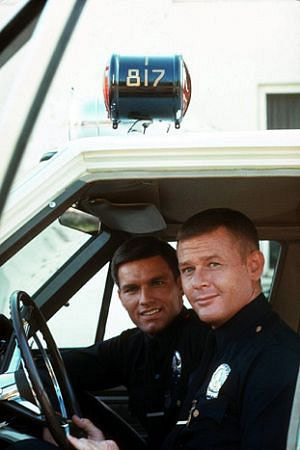
Kent McCord as Jim Reed and Martin Milner as Pete Malloy in "Adam-12" (Source: KentMcCord.com)

Kent McCord as Jim Reed and Martin Milner as Pete Malloy in “Adam-12” (Source: KentMcCord.com)

From September 1968 to May 1975, the two officers arrested murderers, lectured motorcyclists and helped women in childbirth in the television show “Adam-12” starring Martin Milner (Malloy) and Kent McCord (Reed).
Produced by Jack Webb, who also created “Dragnet” and “Emergency,” the show portrays the professionalism of police officers and police departments. Webb made the shows so accurate that some police academies used the shows for training, according to IMDB.
To keep the accuracy, Reed’s badge was even changed from “Policeman” to “Police Officer,” according to Adam12Code3.com.
Pop culture
Adam-12 ” shows the military style of the police force while showing that Reed and Malloy were young, contemporary and had lives outside the force.
For example, Malloy was set up on blind dates and Reed and his wife have a baby. On their day’s off, Malloy can be seen driving muscle cars and both wear loud, floral shirts-fashionable at the time.
The show conveyed realistic issues relevant to the late-1960s and 1970s:
-Marijuana use and addiction to pills, heroin and other drugs
-Teenagers running away from home to travel to San Francisco
-Disrespect for law enforcement with use of terms such as “down with the pigs”
Guest stars
Popular celebrities of the time and old Hollywood stars frequently showed up on Adam-12, making the show an extra treat for current day pop culture fans. Some of these included:
-Child star Margaret O’Brien as a the mother to a delinquent child-Season Three, Episode 12

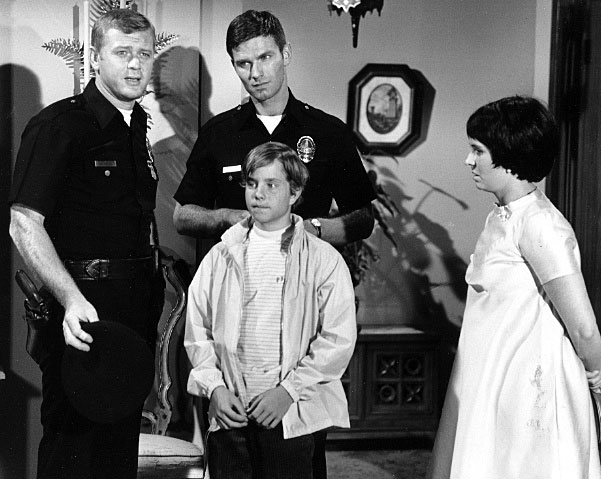
Child actress Margaret O'Brien plays mother to child delinquent Buddy Foster (brother of Jodie Foster) in the 1970 episode "Sign of the Twins" (Source: KentMcCord.com)

Child actress Margaret O’Brien plays mother to child delinquent Buddy Foster (brother of Jodie Foster) in the 1970 episode “Sign of the Twins” (Source: KentMcCord.com)

-Actor John Kerr as a priest- Season Two, episode 8
Leave it to Beaver actor Tony Dow as a ex-Marine who’s car is stolen by a girl-Season Three, episode 5
-Monkees singer Mickey Dolenz as a police hating motorcyclist- Season Five, episode 1

The Cross Over
Since Webb produced “Dragnet,” “Adam-12” and “Emergency” and all were set in Los Angeles—the shows overlap throughout the years.
Emergency” started in 1972, when “Adam-12” was in its fifth season. On “Emergency,” you will occasionally see the officers drop by Rampart Hospital, the hospital “Emergency!” paramedics report to, in episodes.

Milner and McCord with Julie London as Dixie McCall-an "Emergency!" character

Milner and McCord with Julie London as Dixie McCall-an “Emergency!” character

In season 5, episode 4 of “Adam-12” called “Lost and Found,” the police officers take a young boy to Rampart Hospital. There they run into “Emergency!” characters such as Nurse Dixie McCall (Julie London), Paramedic Roy DeSoto (Kevin Tighe), Paramedic Johnny Gage (Randolph Mantooth) and Dr. Kelly Brackett (Robert Fuller).
Supporting actors of “Adam-12” also can be seen in “Emergency!” Bing Crosby’s son, Gary Crosby plays a police officer in “Adam-12” and a paramedic in “Emergency!” In both shows, Crosby’s character is a bit of a show off, taking credit he doesn’t deserve.
Actor Marco Lopez can be seen as an officer in “Adam-12,” but has a larger role in “Emergency!” as Firefighter Marco Lopez.

What’s so special about Adam-12?
“Adam-12” was certainly not the only police show on television during the late 1960s and early 1970s. Others included:
-“The FBI” (1965 to 1974) starring Stephen Brooks and Efrem Zimbalist, Jr. telling different F.B.I. cases.
-“Hawaii Five-0” (1968 to 1980) starring Jack Lord and James McArthur about a detective who is the head of the special state police task force
-“Ironside” (1967 to 1975) starring Raymond Burr who is a paraplegic detective
– “Mannix” (1967 to 1975) starring Mike Connors who plays a private investigator
-“The Mod Squad” (1968 to 1973) starring Michael Cole, Clarence Williams III, Peggy Lipton, Tige Andrews who play “hippie” undercover cops.
Most of the crime shows on television during this time seemed to focus on daring detectives or spies, a popular topic due to the Cold War and films such as James Bond.
However, Adam-12 is one of the few TV series that showed the honest day-to-day approach of the men in blue. Reed and Malloy patrolled the streets, chased criminals through alleyways and sometimes found time to stop and eat a hamburger.

Milner, McCord and Bill Boyet. (Source: KentMcCord.com)

Milner, McCord and Bill Boyet. (Source: KentMcCord.com)

The television show doesn’t present their job in a glamorous but as a realistic and necessary job.
When “pig” was a popular term for police officers, Webb tried to present the police force fair. And on top of that, Reed and Malloy were attractive and pretty darn cool.
In my opinion, “Adam-12” is one of the best police shows ever made. It doesn’t clog the plot with pointless drama but keeps on target with the topic of officers keeping law and order.

This post is part of the MeTV blogathon. Check out more classic TV posts here.

metv

Check out the Comet Over Hollywood Facebook page for the latest updates or follow on Twitter at @HollywoodComet.

An education from “The Philadelphia Story”

The Philadelphia Story” taught me what a hangover was when I was nine.

And who knew what yare meant before Katharine Hepburn used the word?

My fourth grade education was enhanced when I learned the meaning of those words the first time I saw “The Philadelphia Story” (1940) in 1998.

Katharine Hepburn as Tracy Lord with too many men after her

Katharine Hepburn as Tracy Lord with too many men after her

My dad was out of town one summer evening and my mother, sister and I picked a movie to watch. We loved it.

“Why did she shield her eyes from the sun like that?” I asked my mom. She explained the consequences people face the next morning after drinking too much.

For years after, I even tried to imitate Hepburn’s silly little laugh she does in the film.

I had forgotten not only about my new vocabulary words the first time I saw the film but many of the charming scenes in “The Philadelphia Story” until I saw it last night for the first time on the big screen.

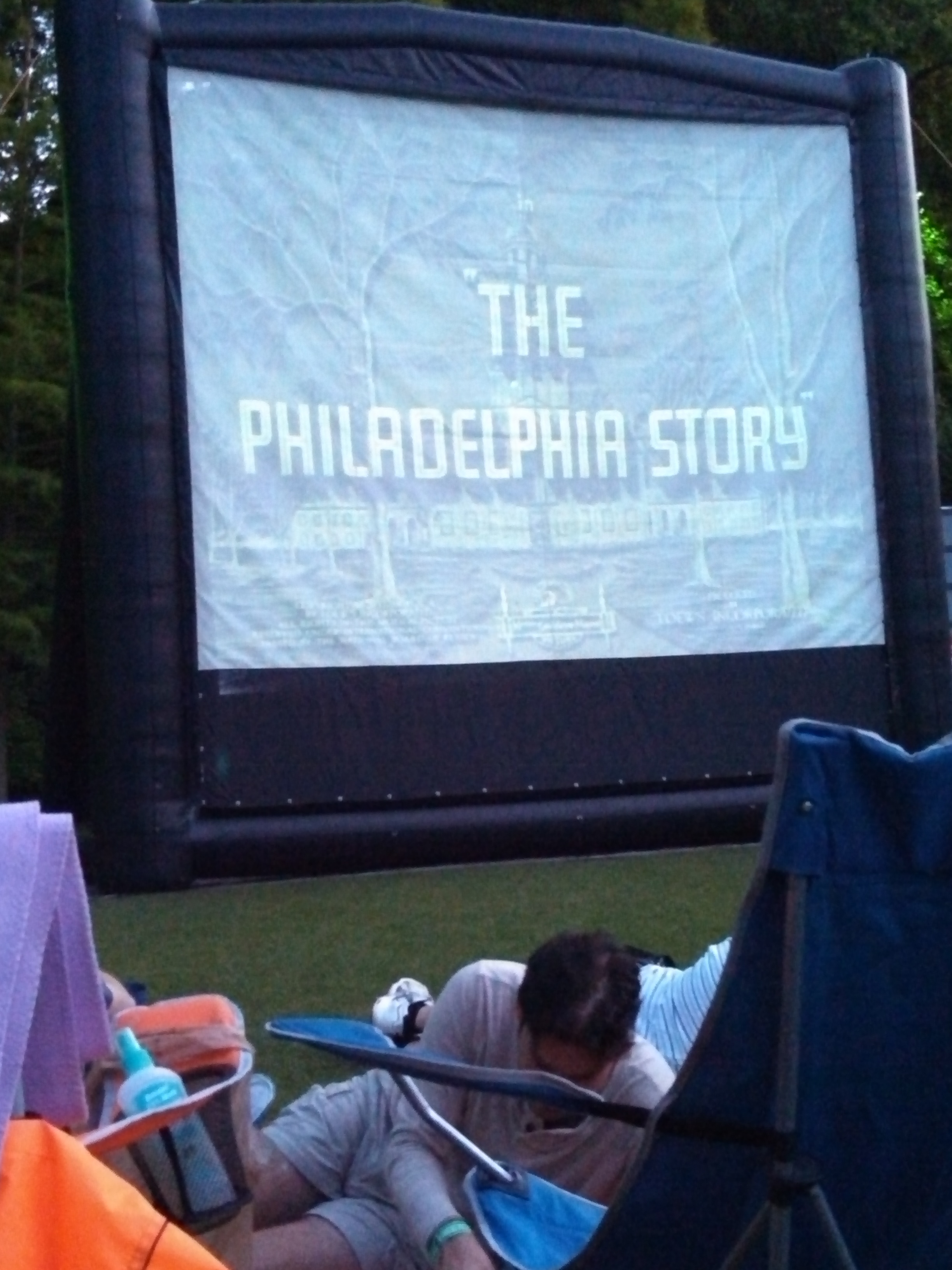
Moonlight Movies at Falls Park in Greenville, SC

Moonlight Movies at Falls Park in Greenville, SC

I drove an hour to my hometown of Greenville, SC where outdoor classic films are shown every week in May at the Reedy River Falls Park.

Classic film screenings are a treat for me. Where I live, viewing movies on the big screen is rare.

It had been several years since I had seen this movie. Though I knew it was good- boasting a cast of Katharine Hepburn, Cary Grant, James Stewart, Ruth Hussey, Virginia Weidler and Roland Young-I forgot how wonderful it really was.

The leads are perfect in nearly every film but Virginia Weidler steals the show.

On paper, the film sound dizzy: A divorced woman is remarrying, the ex-husband pops back in the picture and then a reporter-who already has a girlfriend-becomes a potential romantic partner. It’s a love pentagon.

But somehow the story works when it’s acted out.

The only time it doesn’t work is in the horrible Grace Kelly remake, “High Society.”

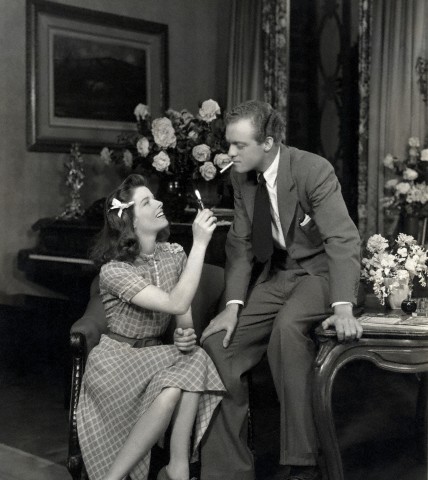
The script of The Philadelphia Story was written specifically for Katharine Hepburn who originated the role on Broadway and reprised her role as Tracy Lord on screen. The film helped rid Hepburn of her box office poison status. 

Katharine Hepburn with Van Heflin in the stage version of The Philadelphia story

Katharine Hepburn with Van Heflin in the stage version of The Philadelphia story

In the play, Joseph Cotten played C. K. Dexter Haven (played by Cary Grant in the film version) and Macaulay Connor was played by Van Heflin (played by James Stewart). While watching the movie last night I couldn’t help picture those two performing those roles.

I have only been to one other Moonlight Movie series in Greenville back in 2011 to see Strangers on a Train. It wasn’t a pleasant experience due to people talking and continuously getting up and down during the film.

However, last night was much more relaxing and everyone was respectful of the movie.

The only disappointing thing is no one applauded when the film started or when actors entered their first scene like at the Turner Classic Film Festival, however I heard several people around me say they had never seen the movie again.

Revisiting “The Philadelphia Story” was fun and I reminded me how great a movie it was. I’m discovering seeing movies on the big screen is a very special experience.

After all-they were made to be seen that way.

Check out the Comet Over Hollywood Facebook page for the latest updates or follow on Twitter at @HollywoodComet.