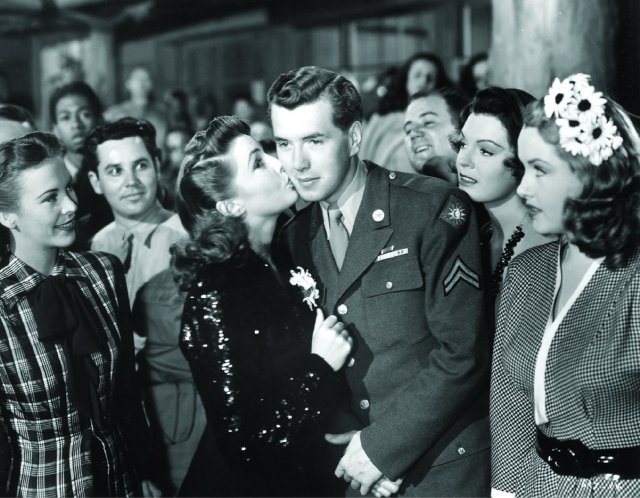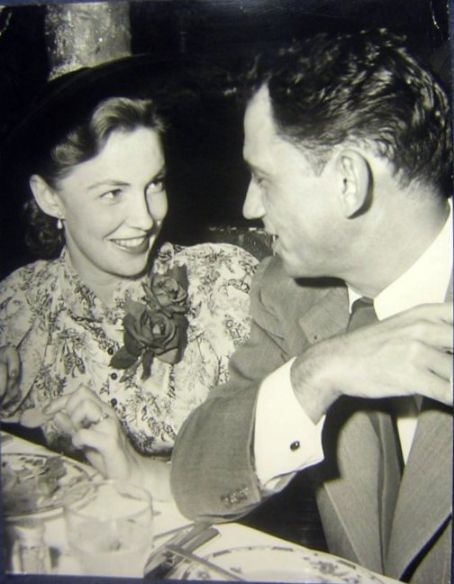
“My hope that women will not be afraid”: Classic Actresses who had Breast Cancer

Image

To go along with some monthly health observances, Comet Over Hollywood is recognizing actors who battled diseases and often, kept it a secret from their public and exhibited strength by continuing to practice their craft. Others helped create awareness or spearheaded organizations for research, such as Yul Brynner. For October 2015’s Breast Cancer Awareness Month, Comet is recognizing actresses who were diagnosed with breast cancer.

PicMonkey Collage

Today, breast cancer survivors are proud and openly share their stories. Some wear pink t-shirts saying they are a survivor, write memoirs or are interviewed by the news to help spread awareness to other women to pay attention to their bodies.

But for actresses of the Golden Era, this wasn’t the case. Many of their obituaries simply note they had endured a “long illness.” Newspapers said Judy Holliday was in the hospital for a bronchial illness and one obituary for Rosalind Russell said she died from stomach cancer. This was largely because of the stigma that surrounded this particular form of cancer.

Continue reading

“A Colorful Life”: Remembering Joan Leslie

Image

Actress Joan Leslie in the 1940s

Actress Joan Leslie in the 1940s

With her shining smile, bright eyes and fresh face, actress Joan Leslie had an innocent girl-next-door appeal. But during her career at Warner Brothers during the 1940s, Joan Leslie held her own in top films with major actors such as Ida Lupino, Humphrey Bogart and James Cagney.

She was a full-fledged star by age 17. And it all began on the stage when she was nine years old.

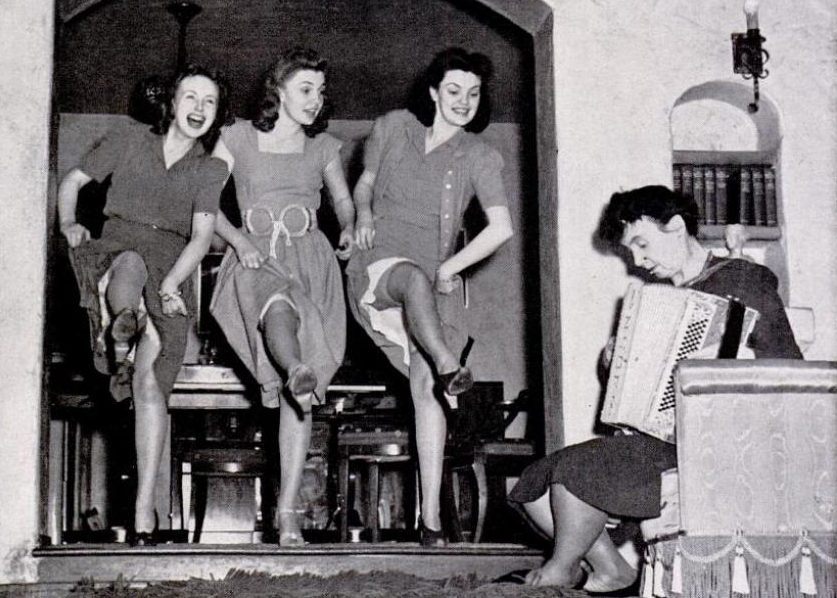
Joan Leslie—then Joan Brodel—was part of a sister act, with her sisters Mary and Betty, known as the Three Brodels. The sisters traveled the United States and Canada; singing, dancing, doing impressions and playing instruments, according to a 1999 interview in the book “Movies Were Always Magical” by Leo Verswijver.

Joan played the accordion and did an impression of actress Greta Garbo.

While performing in New York, an MGM scout saw Joan and signed her to play a small role in the Greta Garbo film “Camille” (1936). In film, Joan, 11, played Robert Taylor’s little sister. She had one line, welcoming him home as he arrived at her first communion.

As she continued to get small, uncredited roles in films such as “Nancy Drew—Reporter” (1938), “Susan And God” (1940) and “Foreign Correspondent” (1940), Joan changed her last name from Brodel to Leslie so she wouldn’t be confused with actress Joan Blondell.

Pictured with her sisters and mother in for a LIFE magazine photo spread.

Pictured with her sisters and mother in for a LIFE magazine photo spread.

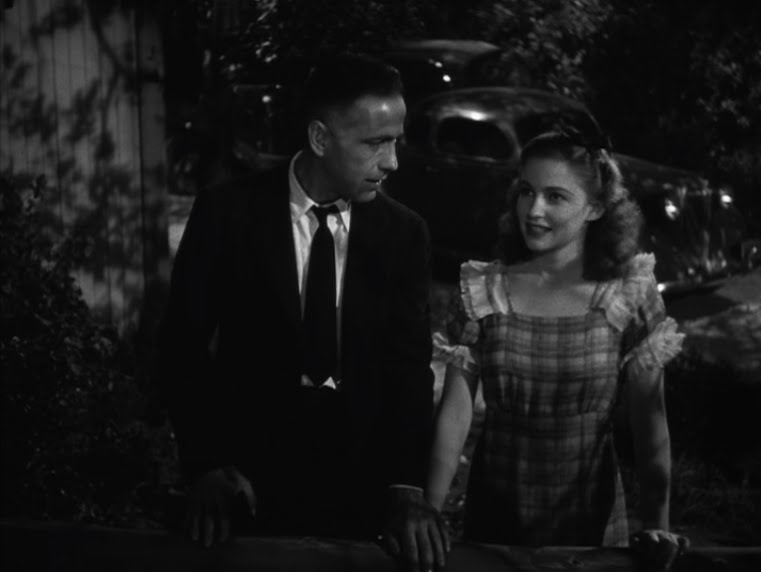
But her big break came at age 15. Joan got the role of Velma, a young girl with a club foot, in the Howard Hawks directed film “High Sierra” (1940) starring Humphrey Bogart and Ida Lupino. In the film, Bogart is a criminal on the run, and when he meets Velma, he wants to help her get an operation for her foot.

At age 15, Joan Leslie with Humphrey Bogart in

At age 15, Joan Leslie with Humphrey Bogart in “High Sierra”

“That was such a good role,” Leslie said in the Verswijver interview. “And I was only 15! I wish I had more such roles when I was older.”

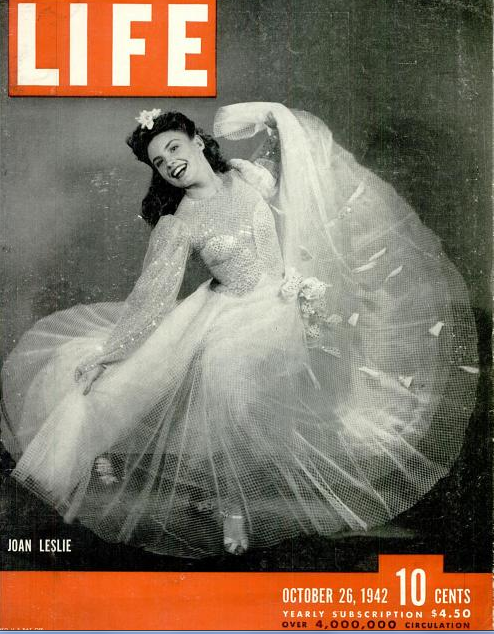
By age 17, Joan Leslie was on the cover of the Oct. 26, 1942, issue of LIFE magazine. “Joan Leslie: girlish and unassuming, at age 17 she shines brightly as a full-fledged movie star able to sing, dance and act,” the magazine headline said.

Joan Leslie on the cover of Life, Oct. 1942.

Joan Leslie on the cover of Life, Oct. 1942.

By this time, Leslie had starred with Bogart a second time in “Thieves Fall Out” (1941). Still in her teens, she played the love interest to top stars such as Gary Cooper in “Sergeant York” (1941) and James Cagney in “Yankee Doodle Dandy” (1942).

“When you talk about working with the best, I’ll always remember Jimmy Cagney. What a creative, dynamic person he was,” she said in the 1999 interview.

Both Cooper and Cagney received Academy Awards for Best Actor for their respective roles.

“I never was nominated but I don’t feel I did anything up to that caliber,” she said.

In most of her roles that followed at Warner Brothers, Joan Leslie exuded a persona that was the young, innocent, sweet girl-next-door.

“I was merely being myself in the 1940s, that’s what it really was,” she said.

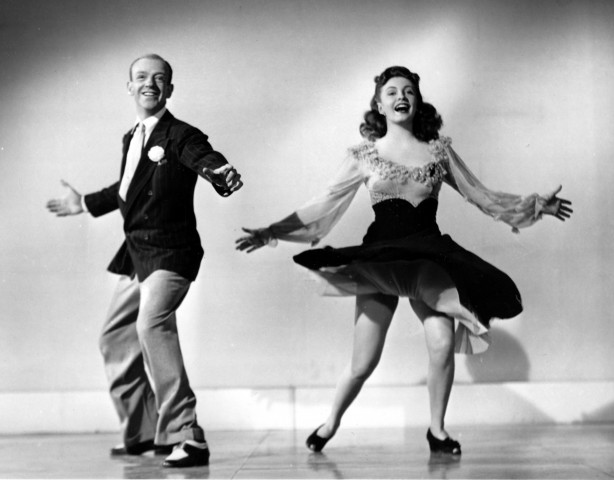
However, Joan Leslie always proved to be versatile. She could go from comedies with Eddie Albert, such as “The Great Mr. Nobody” (1940) to the hard hitting drama “The Hard Way” (1942), playing the younger sister Ida Lupino is pushing to make a star. At age 18, Joan was also the youngest of any of Fred Astaire’s dance partners in the 1943 film, “The Sky’s The Limit.”

Publicity photo of Fred Astaire and Joan Leslie in

Publicity photo of Fred Astaire and Joan Leslie in “Sky’s the Limit.”

However, because she was so much younger than her peers such as Cagney, Olivia de Havilland, Henry Fonda and Bogart, she said she never felt like she was a “chum” to any of these stars, but was also never scared or in awe while working with them.

“People were very nice to me…” she said. “They were getting the quality from me that they wanted: young, innocent and sweet girl next door. It was during the war (World War II) and that’s what they wanted to project on the screen.”

Like many other actresses, Joan Leslie danced at the Hollywood Canteen during World War II with the soldiers. Art imitated life as she starred in the film “Hollywood Canteen” (1944) as herself. In the film a soldier, played by Robert Hutton, wins a date with Joan Leslie and the two end up falling in love.

Joan Leslie and Robert Hutton in the film

Joan Leslie and Robert Hutton in the film “The Hollywood Canteen” (1944)

In 1946, Joan Leslie was voted No. 1 in a Future Star poll, but becoming quality roles were scarce for her. This largely was because she sued Warner Brothers for control of her contract, believing after the age 21 she should be able to pick better parts. Warner lowered her billing in some of her films and blackballed her name with other studios.

“I always liked to play a certain kind of part as a certain kind of person and I don’t find that very much anymore. The business has changed so much,” she said in 1999.

Joan Leslie with her husband William Caldwell, MD.

Joan Leslie with her husband William Caldwell, MD.

However, once Joan Leslie married obstetrician William Caldwell, MD, in 1950, her interest in Hollywood started to fade. When the two had twin girls, Patricia and Ellen, Joan stopped making films and concentrated on her role as a mother.

“When I married, that would be the most important thing in my life,” she said. “When you had a colorful life as an actress, it’s not easy to say that and to mean it as well. My husband respects me for what I have accomplished in my career.”

After her career, she was involved with parish work, the Los Angeles Public Library’s after-school reading program, and the advisory board of the Damon Runyan Cancer Fund, according to her obituary.

Dr. Caldwell passed away in 2000 and Miss Leslie passed away at age 90 on Oct. 12, 2015.

“I had a very colorful life, she said. “There’s nothing quite like it.”

Check out the Comet Over Hollywood Facebook page, follow on Twitter at @HollywoodComet or e-mail at cometoverhollywood@gmail.com

“It was my father’s success”: An interview with the real “Gidget”

 Comet Over Hollywood has reviewed the three “Gidget” feature films this summer. To wrap up the series, Comet interviewed Kathy Kohner Zuckerman, the real Gidget whose summer story inspired her screenwriter father to write a book. The conversation was delightful. Ms. Zuckerman was down-to-Earth and it felt like talking and laughing with an old friend. 

(r) Kathy Kohner in 1957 in the photo that was used on the book cover. (L) Kohner Zuckerman pictured in 2014 at Duke's, where she works.

(r) Kathy Kohner in 1957 in the photo that was used on the book cover. (L) Kohner Zuckerman pictured in 2014 at Duke’s, where she works.

It was a different world for Kathy Kohner as she walked on the film set of “Gidget” in 1959.

“It was hard to understand that they were making a movie about me,” said Kathy Kohner Zuckerman, the real “Gidget,” in a phone interview with Comet Over Hollywood on Tuesday, Aug. 25. “They weren’t even filming at Malibu.”

The 1959 “Gidget” film that starred Sandra Dee, James Darren and Cliff Robertson spawned two more feature films, two television shows and several made-for-TV movies. And it all began with a 15-year-old girl telling her father that she wanted to write a story about her summer.

Continue reading

A Familiar Face: Character actor John Ridgely

Character actor John Ridgely

Character actor John Ridgely

They are the highlights of most of our favorite films; coming in with the most striking lines and comedic moments.

A character actor is often the best part of the film. Not the star and a little lower than the secondary lead, a character actor has something distinct that they carry from film to film; whether it’s a funny voice, a physical appearance or personality trait. Think S.Z. “Cuddles” Sakall’s chubby cheeks, Joyce Compton’s southern drawl or Una O’Connor’s fussy Irish habits.

But there are character actors who are just below these sidekick-like roles. The audience recognizes their face but may not know their name. These actors usually perform a role in the film that helps move the plot along, even if it is something as simple as being a police officer arresting the bad guy or a hotel clerk checking the lead actors into a hotel.

This role describes the versatile “every man” actor, John Ridgely (sometimes spelled Ridgeley). Born John Huntington Rea in Illinois, Ridgely was a graduate of Stanford University with plans to go into an industrial career. After performing in plays with the Pasadena Playhouse, Ridgely entered films in the 1930s.

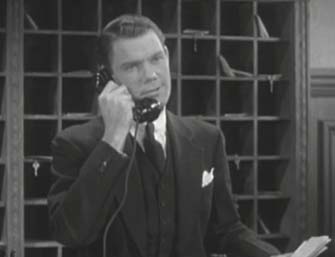
If you have watched a Warner Brother’s film made between 1935 and 1948, chances are you have spotted Ridgley. The tall, dark haired vaguely attractive actor appeared in 145 feature films. His roles ranged from police officers, doctors, heavies, truck drivers, salesmen, orchestra leaders, part of a double date, cab drivers, hotel clerks, coroners and reporters.

John Ridgely as a hotel clerk in

John Ridgely as a hotel clerk in “Nancy Drew-Reporter.”

Some of his films include The Big Sleep (1946), Arsenic and Old Lace (1944), “They Died With Their Boots On (1941), The Letter (1940) and Dark Victory (1939), humorously listed as Man Making Crack About Judith.

Actress Lauren Bacall’s first screen test was with Ridgely for the film “To Have and Have Not” (1944), performing the famous “put your lips together and blow” scene. The scene was written without any real intention of keeping it in the film, but after seeing the screen test, director Howard Hawks changed his mind, according to Bacall’s autobiography “By Myself.”

But Ridgely received top billing in the 1943 World War II film “Air Force;” co-starring with John Garfield, Arthur Kennedy, Gig Young and Harry Carey.

John Ridgley had top billing in

John Ridgley had top billing in “Air Force.”

For his first (and last) time in a lead role, Ridgely does an excellent job. In the Feb. 4, 1943, New York Times film review, critic Bosely Crowther called Ridgely’s performance “refreshingly direct.”

“Mr. Hawks very wisely recruited a cast with no outstanding star, thus assuring himself the privilege of giving everyone a chance. And his actors have responded handsomely,” Crowther wrote.

Two years later, Ridgely acted with John Garfield in “Pride of the Marines” (1945). Though the role is not as large as “Air Force,” Ridgely has a sufficient amount of screen time as a next door neighbor and friend of Garfield and his wife, played by Eleanor Parker.

But regardless how much screen time he received in films, Ridgley garnered media attention, as most film stars in the classic era did. This included:

  • April 10, 1943: A humorous newspaper story in an April 10, 1943, article where Ridgely gave a few kids a ride. The kids asked to be let out of the car when they found out he was an actor.
  • July 20, 1943: “Theater Gossip” John Garfield and John Ridgley announced to be acting with Cary Grant in “Destination Tokyo.” The two Johns are both noted for just coming from the film “Air Force.”
  • Nov. 11, 1943:The Evening Independent, “Playhouse Film Provides Thrills, Flynn Stars in Hudson Bay Story of Nazi Spies”: Ridgley is noted for acting in the upcoming Errol Flynn film, “Northern Pursuit.”
  • Feb. 11, 1944: “Sign on Windshield Almost Ruins Actor,” an article tells how Ridgely almost was in a car accident due to his surprise of seeing an old woman driving a 1903 Baker Electric.
  • Oct. 27, 1944: “The Evening Independent” under “Theater Gossip”: John Ridgley is noted for playing a “heavy” in the upcoming film, “The Big Sleep.” “Assignment of Ridgely was announced at the same time it was disclosed Regis Toomey was signed for an important role as a fast talking muscle man…Ridgely portrayed a meteorologist in Destination Tokyo and a confused husband in The Doughgirls.”
  • April 6, 1945: Ridgely is mentioned in the sub-head of a review on “God is My Co-Pilot” starring Dennis Morgan.
  • May 27, 1951: article mentions Ridgely was celebrating his 19th anniversary in film and his next upcoming project, playing a doctor in the “The Blue Veil.”
Arthur Kennedy, Gig Young, John Ridgely and Charles Drake in

Arthur Kennedy, Gig Young, John Ridgely and Charles Drake in “Air Force.”

Ridgely left the industry in 1953 and died in Manhattan in 1968 of heart failure. Conflicting reports say he is buried in New York while other says Forest Lawn in Hollywood. Ridgley was married to Virginia Robinson and had a son, John Ridgely Rea.

While he wasn’t a huge star, Ridgely was still considered important enough to be noted by the press. Regardless of the role, Ridgely always adds something to the film and it’s fun to pick him out in his various roles.

Check out the Comet Over Hollywood Facebook page, follow on Twitter at @HollywoodComet or e-mail at cometoverhollywood@gmail.com

Col. Maggie Raye: A One Woman USO

martha rayeDuring world wars and conflicts, celebrity USO shows travel to military bases and overseas to raise morale for the men and women fighting for freedom.

One film star who is the most associated with entertaining troops is Bob Hope, who entertained during World War II, the Korean War and Vietnam. Hope would bring celebrities with him such as Ann-Margret or Connie Stevens to bring the familiarity of home to them in a foreign land.

But there is one star who isn’t mentioned as much for her morale raising service as Hope: Martha Raye.

Nicknamed Colonel Maggie by soldiers, Raye was so revered by veterans that she received special permission to be buried with the U.S. Army Special Forces cemetery on Fort Bragg Army base in North Carolina.
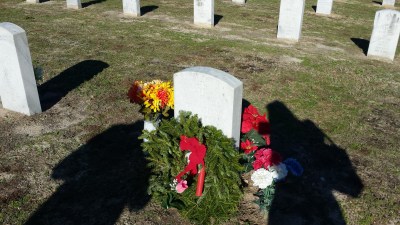
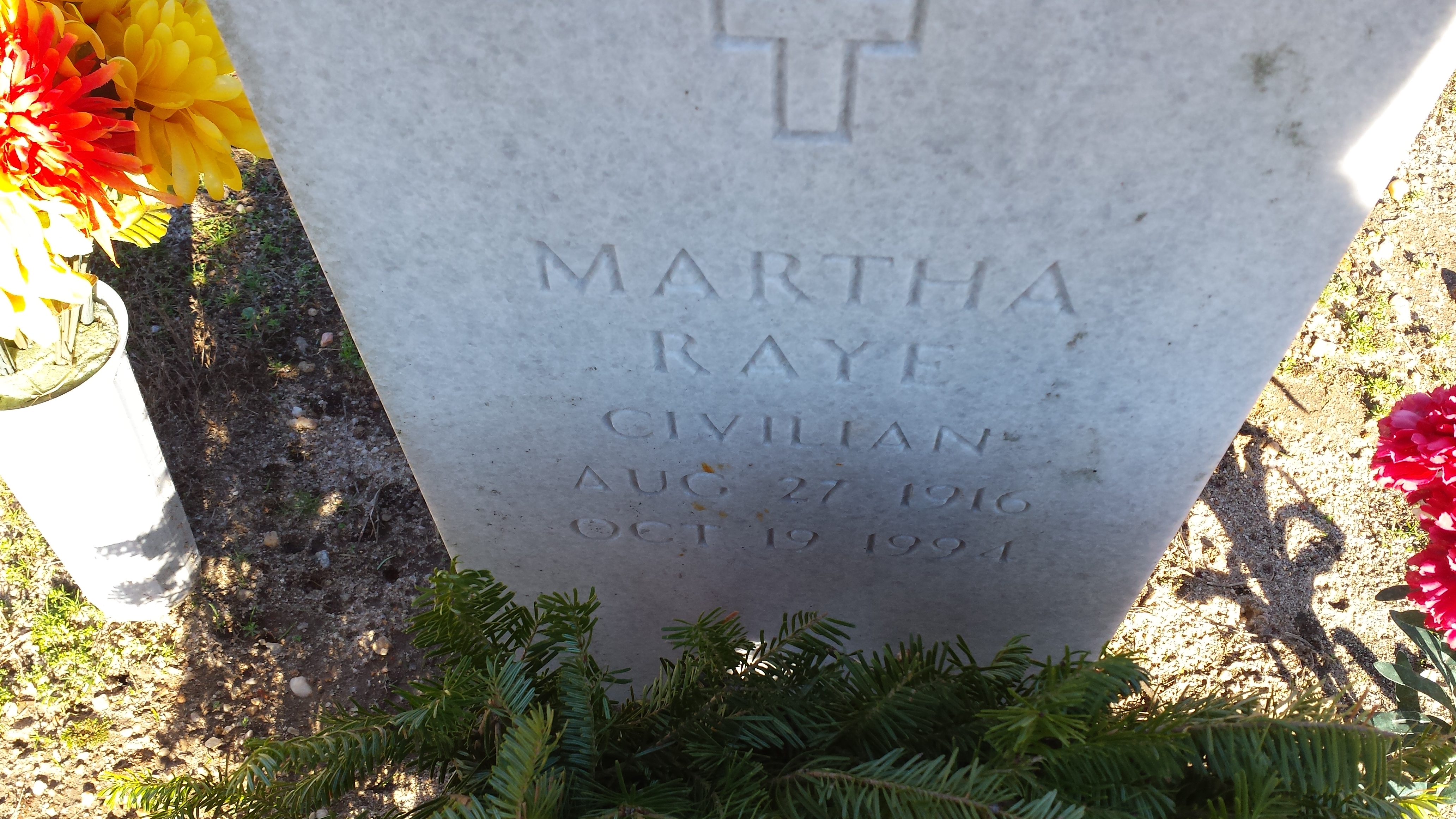
Martha Raye's headstone at Fort Bragg. I visited Raye's grave in December. (Comet Over Hollywood/Jessica P)

Martha Raye’s headstone at Fort Bragg. I visited Raye’s grave in December. (Comet Over Hollywood/Jessica P)

World War II
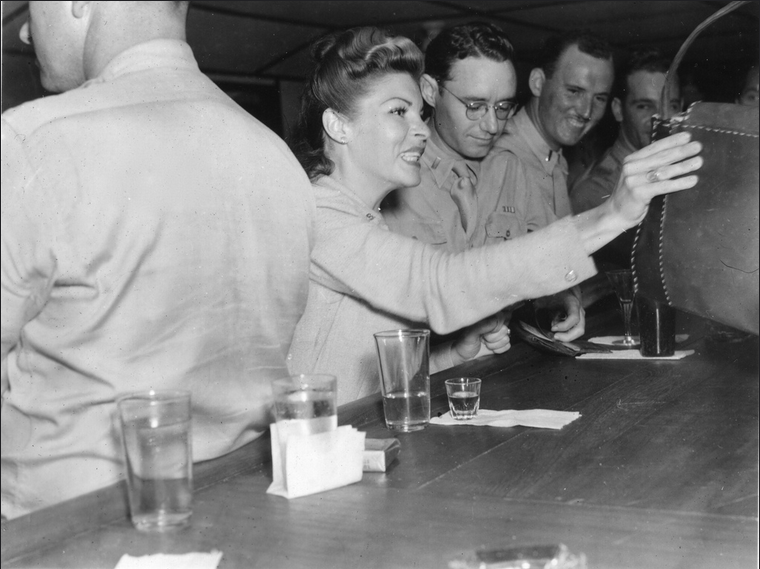
Her patriotic endeavors began when she traveled overseas during World War II on Oct. 31, 1942. Raye traveled with actresses Carole Landis, Kay Francis and dancer Mitzi Mayfair to entertain troops in England, Scotland, Northern Ireland and North Africa. The adventures of the four actresses was later written as a book by Carole Landis called “Four Jills in a Jeep” and was made into a musical film by 20th Century Fox.

Raye, known for her large mouth and jazzy songs, was the comic relief of the group. Landis was the sex appeal and Francis brought class and glamour.

While in England, the actresses only had one show canceled. When they arrived at a base, they learned half of the squadron’s bombardiers were lost that day. They ate with the men and helped toast to those who had died, according to “Take It from the Big Mouth: The Life of Martha Raye” by Jean Maddern Pitrone.
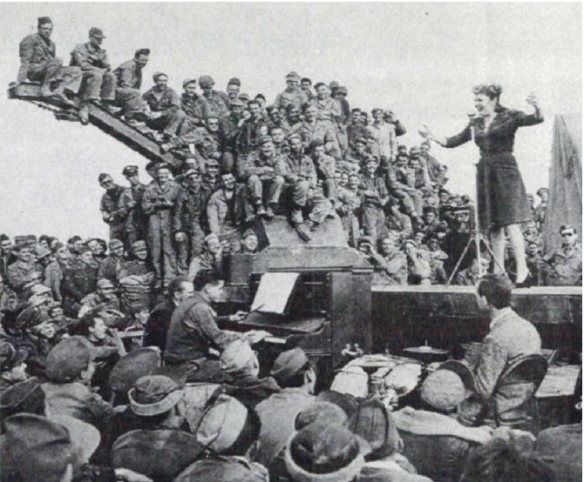
Martha Raye performing in Africa in 1943.

Martha Raye performing in Africa in 1943.

While traveling to North Africa in a B-17, two German planes began to attack. After the firing stopped, the actresses learned their tail gunner was killed, according to Pitrone.

When Landis, Francis and Mayfair returned to the states, Raye stayed behind to continue entertaining the troops. She helped carry wounded men, worked with medics, and traveled by jeep to the front lines; performing four shows. Each show was at least an hour and a half long, Pitrone wrote.

Conditions were rugged in Africa: Raye came down with yellow fever and lost 22 pounds, and then was in a trench for three days with 200 soldiers while Germans bombed the area, according to Pitrone.

“It was chummy,” Raye said in a May 15, 1943, United Press newspaper article, “Martha Raye Now a Captain.”

Raye returned home with a rank of honorary captain in March 1943 after four and a half months overseas.
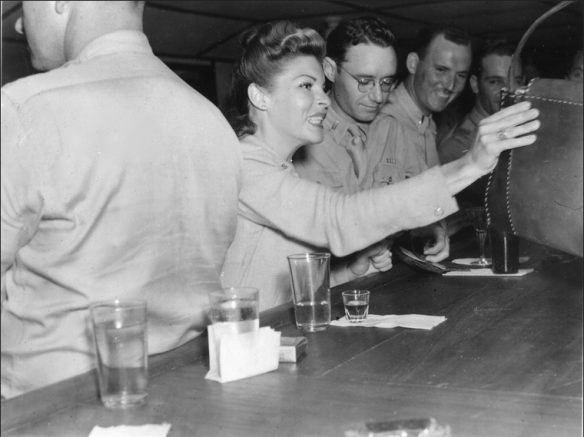
Martha Raye with soldiers in Africa.

Martha Raye with soldiers in Africa.

“Their only complaint was that they didn’t get enough letters from home. That’s what they want most,” Raye told the newspapers, encouraging families to write, according to the United Press.

Her plan was to travel to the South Pacific, but doctors told her that she needed rest after her bought with yellow fever. Instead, she planned a six week American military base tour, which ended on the second day when she collapsed from fatigue. In 1944, she discovered she was unable to go on any USO tours, because she was pregnant, Pitrone said.

Korea and Vietnam
Raye traveled to Korea in the summer of 1952 to entertain troops, but it only lasted a few weeks due to illness.
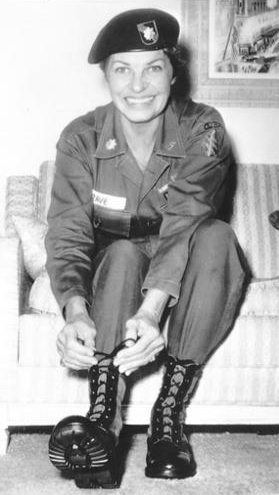
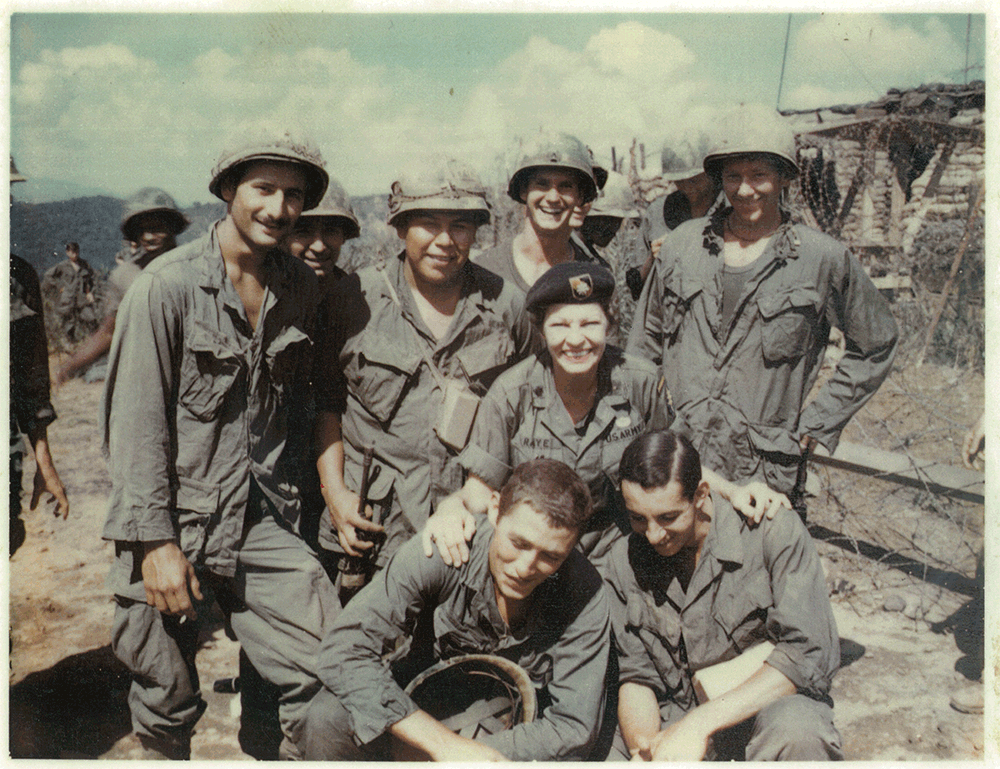
Martha Raye in Vietnam in her signature Green Beret and combat boots.

Martha Raye in Vietnam in her signature Green Beret and combat boots.

She was most active during Vietnam; traveling overseas eight times from 1965 to 1972 for six month to a year per tour. She was in Vietnam so often that a blind soldier recognized her by her perfume.

“She spent more time in Vietnam than the average soldier. She virtually gave up her career, family and everything,” said Mildred Fortin, quoted in a July 6, 1993, Daily Gazette article, “Area veterans take on mission to honor Martha Raye.” Fortin was a Vietnam veteran and co-founder of Medals for Martha Raye, an organization that wanted Raye to receive the Medal of Freedom, the highest military recognition a civilian can receive.

Raye would go into risky areas for the soldiers, leaving the larger, safe bases and travel into the jungle to perform for as few as 25 soldiers, according to her 1994 obituary. In 1967, she was the first woman in the Green Berets with five qualified jumps, according to an Aug. 1, 1979, article by Vernon Scott.

“She came, regardless of danger,” said retired Master Sgt. Tom Squire in her obituary. “She talked, drank, told jokes, played cards. A lot of times when the regular Army didn’t know what was going on or understand, she would just go.”

In each base, she posted her home address and phone number, encouraging the soldiers to stay in touch. And when she would return home, she sent their letters to their family, called wives, and would tell reporters how the soldiers were discouraged and disillusioned by the lack of support they were receiving from Americans, according to Pitrone’s book.

“I think the way they’re being treated by a minority of idiots back home is just disgraceful,” Raye said in an Aug. 27, 1970, article before she went on her sixth tour. “What I do isn’t for sympathy or pity. It’s just trying to help in a small way. Our servicemen give so much and ask for so little.”
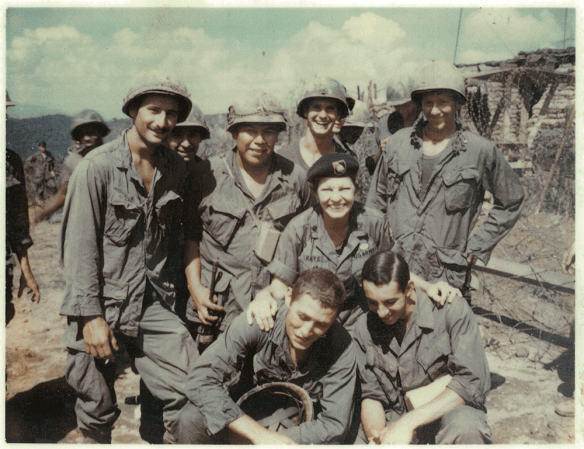
Martha Raye with soldiers in Vietnam.

Martha Raye with soldiers in Vietnam.

Along with singing and entertaining, Raye would help as a nurse. Raye told people she was became a registered nurse in 1936 and worked at a hospital while also acting at Paramount. However, it seems she never was a registered nurse but was once a nurses’ aid.

The soldiers thought so highly over her, they once threw her a birthday party. Fortin said Raye was the mother that the boys were missing- sister, girlfriend or nurse.

“We had no idea who would be coming to Ham Long on Christmas morning (1971),” said Army Col. John B. Haseman. “You can imagine our surprise and delight when this wonderful lady, clad in her trademark jungle fatigues and Green Beret jumped out of the helicopter… I will never forget what she did for us, and I know there are thousands of other soldiers who can tell you a similar story.”

During Vietnam, the Army made her an honorary member of the Green Berets’ Special Forces and she was given an honorary rank of Army Lt. Col. The Marines made her a full Colonel. In 1969, she was awarded the Jean Hersholt Humanitarian Award for her work with the military, and in 1993, she was recognized with the Presidential Medal of Freedom.

Even long after World War II or Vietnam, military personnel would check in with Raye. One World War II veteran who was with her in North Africa wrote into Ann Landers in 1991 asking if she was okay after seeing her in a wheelchair on TV.

“I was privileged to be Martha’s Jeep driver during the North African Campaign when she entertained the troops of the 2nd Armored Division,” he wrote. “She tripped while performing and hurt her ankle but refused to get it checked out by a doctor until she put on a show for 20,000 soldiers.”

At her Fort Bragg funeral in October 1994, the Honor Guard from the 7th Special Forces Group Airborne served as pallbearers, the 82nd Airborne Division band performed and 300 soldiers and civilians were there to honor her.

“She was Florence Nightingale and Dear Abby,” said Bob Hope. “And she was the only singer who could be heard over the artillery fire.”
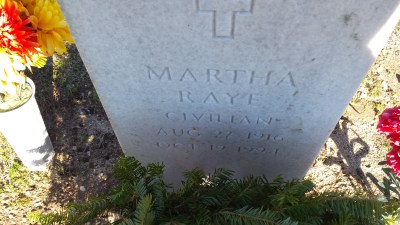
Closer view of Raye's grave at Fort Bragg (Comet Over Hollywood/Jessica P)

Closer view of Raye’s grave at Fort Bragg (Comet Over Hollywood/Jessica P)

Check out the Comet Over Hollywood Facebook page, follow on Twitter at @HollywoodComet or e-mail at cometoverhollywood@gmail.com

From Citizen Kane to Paul Masson: Orson Welles the constant perfectionist

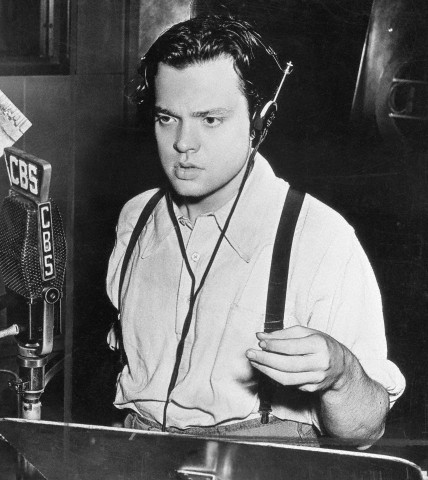
Orson Welles in 1938 on CBS radio

Orson Welles in 1938 on CBS radio

Orson Welles was a media renaissance man.

As an actor, director, writer and producer, he experimented with several entertainment art forms. His work such as making the United States believe they were under alien attack to making a critical film about one of the most powerful men in America made Welles a controversial figure.

From acting on the radio, stage and films which included Citizen Kane, Touch of Evil, The Third Man and The Lady from Shanghai, Welles gained the reputation for being eccentric and difficult to work with.

In order to continue funding his projects, Welles had to take on lower brow jobs, including the Paul Masson wine commercials he is famously and humorously known for.

While there are hilarious anecdotes and outtakes came from these commercials, it’s not surprising that someone so immersed in all forms of arts and entertainment would be argumentative about comparing cheap wine to the text of “Gone with the Wind.”

Because he was involved in so many high level productions,he had a high standard of other media, down to the script for Paul Masson wine commercials and the text for a frozen peas advertisement.

Welles wasn’t cynical about doing the advertisements; he was reworking the text as he did with advertisements in the 1930s to help improve it, according to “What Ever Happened to Orson Welles?” by Joseph McBride.

In the 1930s and 1940s, Welles promoted Pan American Airlines and Lady Esther cosmetics on the radio.

Welles in a printed Paul Masson advertisement.

Welles in a printed Paul Masson advertisement.

Starting in 1978, Welles was hired as the Paul Masson spokesman. Masson later dropped him from the ads. “My Lunches with Orson” by Peter Biskind’s sites the reason for Welles telling a talk show host that he lost weight because he cut out snacks and wine.

“I’ve worked for advertising agencies all my life,” Welles is quoted in Biskind’s book. “In the old days in radio, you worked for them, because they were the boss, not the network. And I have never seen more seedier, about-to-be-fired sad sacks than were responsible for those Paul Masson ads. The agency hated me, because I kept trying to improve the copy.”

Paul Masson’s slogan at the time was “Paul Masson, we sell no wine before its time.” Each add compared the wine to a higher art form that also took several years to create, such as a Beethoven symphony.

In one such instance, a commercial was comparing Masson to a Stradivarius violin, which took three years to carve.

“Come on gentleman,” Welles is quoted in “Orson Welles: A Biography,” by Barbara Learning. “You have a nice, pleasant cheap little wine here. You haven’t got the presumption to compare it to a Stradivarius violin.”

In a famous incident, Welles was hired by Findus Frozen Food in 1970 and was recording a voiceover for a frozen peas ad. During the recording, Welles argued about the text, lost his temper and finally walked out (Read the transcript below). However, though Welles sounds like a prima dona in the session, the technicians said he was very kind to them during the recording, according to “VO: Tales and Techniques of a Voice Over Actor” by Harlan Hogan.

Welles didn’t just try to change the text, but he also sent instructions on how he would like to be photographed. He arrived for a Masson commercial shoot with his makeup already applied on his own.

He also sent instructions to the cameramen: he liked the brooding look he had when the camera was positioned slightly above his eyes so he had to look up a bit at it, and he liked the hard light three-quarters on the left side, according to Learning’s book.

While this sounds like star behavior, his requests aren’t surprising since he is familiar with filming and lighting. However, the camera men would have Welles’ requests set up for when he arrived. Once he was satisfied, the director would quietly change it to how he wanted it, according to Learning’s book.

Through the years, these advertisements have made Welles the butt of jokes and were the lighter, more humorous side of his career. As the constant professional and perfectionist, Welles viewed the piddly commercials the same as he would one of his own films: he wanted it to be well made. Welles didn’t want to appear out of character with the persona that he had crafted since the 1930s.

Transcript of the frozen peas ads (Source: VO by Harlan Hogan):

Orson Welles: “We know a remote farm in Lincolnshire, where Mrs. Buckley lives. Every July, peas grow there.” Do you really mean that?

Director 1: Uh, yes, so in other words, I—I—I’d start half a second later.

Welles: Don’t you think you really want to say “July” over the snow? Isn’t that the fun of it?

D 1: It’s—if—if you can (laughs) if you can make it almost when that shot disappears, it’ll make more—

Welles: I think it’s so nice that—that you see a snow-covered field and say “every July peas grow there”. “We know a remote farm in Lincolnshire, where Mrs. Buckley lives. Every July, peas grow there.” We aren’t even in the fields, you see? (pause) We’re talking about them growing and she’s picked them. (clears throat) What?

D 1: …in July.

Welles: I don’t understand you, then. When must—what must be over for “July”?

D 1: Uh, when we get out of that snowy field—

Welles: Well, I was out! We were onto a can of peas, a big dish of peas when I said “in July”.

D 1: Oh, I’m sorry, Orson.

Welles: Yes, always. I’m always—past that!

D 1: You are?

Welles: Yes! Wh—that’s about where I say “in July”.

Director 2: Can you emphasize a bit “in”? “In July.”

Welles: Why? That doesn’t make any sense. Sorry. There’s no known way of saying an English sentence in which you begin a sentence with “in” and emphasize it. Get me a jury and show me how you can say “in July” and I’ll go down on you. That’s just idiotic, if you’ll forgive me by saying so.

D 2: (indistinct chatter)

Welles: That’s just stupid. “In July”? I’d love to know how you emphasize “in” in “in July”. Impossible! Meaningless!

D 1: I think all they were thinking about was that they didn’t want to—

Welles: He isn’t thinking.

D 1: Orson, can we just do one last time—

Welles: Yeah.

D 1: …and it was my fault. I should—I said “in July”. If you could leave “every July”—

Welles: You didn’t say it. He said it.

D 1: …I said “every July”.

Welles: Your friend. “Every July”?

D 1: …so after this shot…

Welles: No, you don’t really mean “every July”?

D 1: …it is, but it’s…

Welles: But that’s—that’s bad copy. It’s in July. Of course it’s every July! There’s too much directing around here.

Check out the Comet Over Hollywood Facebook page, follow on Twitter at @HollywoodComet or e-mail at cometoverhollywood@gmail.com


Yul Brynner spearheaded cancer awareness, prevention

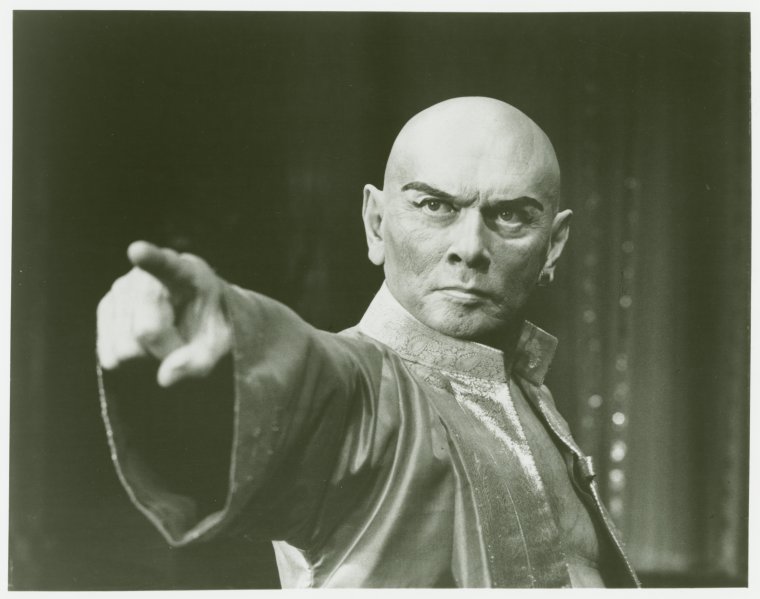
Yul Brynner (1)Known for his mysterious, intense looks and bald head, actor Yul Brynner is famous for his film roles in “The Magnificent Seven,” “Anastasia,” “The Ten Commandments” and “The King and I” as the King of Siam.

But Brynner also played a role in cancer awareness. This week is Oral, Head and Neck Cancer Awareness Week (April 12-18, 2015); an event that Brynner’s own illness helped play a role in.

Brynner and oncologist George Sisson, MD, formed the Yul Brynner Head and Neck Cancer Foundation in 1984 in Chicago. Renamed in 2001 as the Head and Neck Cancer Alliance and based in Charleston, SC, the organization’s mission continues to be educating people on the side effects of tobacco and its connection to cancers of the head, neck and mouth.

While the King of Siam is one of the roles Brynner is best known for, it was also one of his favorites. Aside from the 1956 film version, Brynner performed the role on stage 4,625 times up until three months before his death in 1985, according to his Los Angeles Times obituary.

OHANCAW_logoBrynner began reprising the role of the King in 1977. He first appeared on stage in the role in 1951. His daughter Victoria called his returning to Broadway for “The King and I” a “God send,” in the documentary “The Hollywood Collection: Yul Brynner- The Man Who Was King,” because he hadn’t been in a good place in his career.

“He was getting to play again a role that had been his for years,” Victoria said.

In 1983, while Brynner was still playing the King, he learned he had lung cancer. One source, the Encyclopedia of Cancer and Society by Graham Colditz, said Brynner saw a doctor because his throat felt hoarse and that is how he was connected with Sisson. The 2006 biography “Yul Brynner” by Michelangelo Capua said Brynner found a lump on his neck while putting on his makeup. Brynner was diagnosed with inoperable lung cancer in September 1983 by three oncologists.

Brynner tried to keep his illness quiet from the public; only telling close friends and family members, according to Capua’s book. Brynner started smoking as a kid and smoked five packs of cigarettes a day, according to his Los Angeles Times obituary.

“I recall very clearly the night that he called me. He said, ‘I don’t have very good news and that he had three months to live,’” Victoria said. “From then on it was a battle to defy this disease. He kept on doing the King and I. It gave him structure: something to do every day, something to fight for. It gave him two and a half years that we really hadn’t hoped for.”

Brynner underwent radiation treatment, because the side effects were less severe than chemotherapy, according to Capua’s biography.

“Having been ill has opened my eyes suddenly to the fact that, the gypsies have a wonderful phrase for it: ‘Your future is getting shorter.’ There are things I want to do beyond sharpening and honing this role further,” Brynner said in a 1984 New York Times interview. “At the same time, the illness has changed the King for me. Some lines come as a surprise suddenly: ‘Every day, my Lord in heaven show the way’ and ‘Every day I try to live for one more day.’ This describes completely how I do the show and how I survived the illness.”
Yul Brynner during the 1985 "King and I" revival.

Yul Brynner during the 1985 “King and I” revival.

While still performing, the play was renamed “The King and I: Farewell Tour,” and Brynner would visit cancer patients in hospitals. He spoke with a 10-year-old boy who was bald due to his radiation therapy, and told the child, “See, I’m a star and I’m bald. It’s not so bad being bald,” according to Capua’s biography.

Brynner’s last performance in the “King and I” was June 30, 1985.

Before his death, Brynner was interviewed on Good Morning America (GMA) where he told the reporter that he wanted to film a commercial before his death warning people about the dangers of smoking. Part of this interview was edited into a PSA for the American Cancer Foundation.

“If I could take back that smoking, we wouldn’t be talking about any cancer,” Brynner said on GMA. “I smoked a lot since I was a kid just to appear macho, because I didn’t have brains enough. Something else makes you macho. I really wanted to make a commercial when I realized I was so sick.”

The commercial aired posthumously.

“Now that I’m gone, I tell you: Don’t smoke, whatever you do, just don’t smoke,” Brynner said.

He died on Oct. 10, 1985, at age 65 at New York Hospital- Cornell Medical Center.

“There was an idea that you go to bed not knowing if you have a tomorrow and you must be thankful for every tomorrow and make the most of it,” Brynner told the New York Times in 1984. “I couldn’t see myself going to bed and waiting to see what would happen with my illness. I preferred to play to 2,000 or 3,000 people and standing ovations. The choice is quite simple.”

Check out the Comet Over Hollywood Facebook page, follow on Twitter at @HollywoodComet or e-mail at cometoverhollywood@gmail.com

Fact or Fiction: The curse James Dean’s Porsche 550 Spyder

The moody young star took the cinema by storm.

Actor James Dean won over audiences as misunderstood teens in the films “East of Eden” (1955) and “Rebel Without a Cause” (1955).

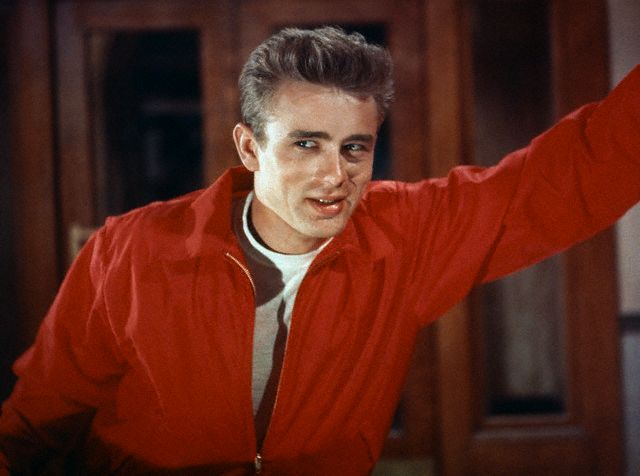
Actor James Dean in a publicity still for "Rebel Without a Cause."

Actor James Dean in a publicity still for “Rebel Without a Cause.”

But after only a short time in the spotlight, Dean was dead at age 24; killed in a car accident on Sept. 30, 1955, in his brand new 1955 Porsche 550 Spyder, nicknamed “The Little Bastard.”

Dean had just finished up filming his third and final film, “Giant,” the epic based on Edna Ferber’s book and co-starring Elizabeth Taylor and Rock Hudson.

Dean purchased the Spyder on September 21 for $6,900 from Competition Motors in Hollywood and traded in his Speedster 356. The Porsche included an entirely hand-built, air-cooled engine, according to “James Dean” by George Perry.

Several of his friends, including actress Ursula Andress, refused to ride in the car. When Dean drove the Porsche on the Warner Brothers studio lot on September 23, director George Stevens told Dean driving on the studio lot was too dangerous.

“You can never drive this car on the lot again. You’re gonna kill a carpenter or an actor or somebody,” Perry quoted Stevens. It was the last time Stevens saw Dean.

Dean the morning of his fatal crash.

Dean the morning of his fatal crash.

Actor Alec Guiness also is said to have told Dean on September 23 that he would be dead within a week if he continued to drive the Porsche.

Dean only owned the “Little Bastard” for a little over a week before his death.

The Porche 550 was the first purpose-built race car produced by Porsche. Dean bought the 55th of 90 Spyders made from the factory, according to “History’s Greatest Automotive Mysteries, Myths, and Rumors Revealed” by Matt Stone.

Dean decided to race the Spyder in Salinas. Originally the car was going to be towed by a Ford station wagon, but in a last minute decision, Dean decided to drive the Porsche convertible to Salinas, Perry wrote.

The wrecked remains of James Dean's Porsche 550 Spyder at the site of the accident. The 24-year-old film star was killed on the evening of September 30th when his car collided with a college student's automobile at an intersection 28 miles east of Paso Robles, California.

The wrecked remains of James Dean’s Porsche 550 Spyder at the site of the accident. The 24-year-old film star was killed on the evening of September 30th when his car collided with a college student’s automobile at an intersection 28 miles east of Paso Robles, California.

At 5:45 p.m. on Sept. 30, Dean collided with a Ford coupe driven by college student Donald Turnupseed at an intersection 28 miles east of Paso Robles, Calif.

The cast of “Giant” was gathered to watch the dailies of their filming when Stevens received the call about Dean’s death. Actress Elizabeth Taylor threw up in her dressing room and was so grief stricken that she had to be hospitalized, Perry wrote.

Dean’s Porsche flipped and he sustained a broken neck along with external and internal injuries, according to the inquest on Oct. 11, 1955.

Police at the scene said speed was not involved and it was impossible for Dean to avoid the crash, according to Perry’s book.

Since Sept. 1955, many rumors have surfaced of the supposed “cursed” wrecked remains of Dean’s Porsche 550 Spyder.

Car designer George Barris is said to have purchased the remains of “The Little Bastard” for $2,500. Barris is the source of several of the “curses.”

“Everything that car has touched has turned to tragedy,” Barris is quoted in Stone’s book. “

Some of the curse stories include:

-After the totaled Porche was purchased, Barris said the vehicle slipped off the trailer and broke a mechanic’s leg.

-Barris said he sold parts from the Porsche to Beverly Hills doctor Troy McHenry and Burbank doctor William Eschrid. The two men were racing against one another in separate vehicles that both had parts from the Porsche 550. McHenry lost control of the car, hit a tree and was killed. Eschrid, who was driving with Dean’s engine, was also injured in a wreck during the race.
This story seems to be true based on an Oct. 24, 1956, article in the Spokane Daily Chronicle. After the accident, Eschrid is quoted as saying he is not superstitious about using Dean’s engine and parts.

-Barris had two tires from the 550 and sold them. The tires apparently both blew out simultaneously causing the new tire owner’s car to run off the road.

-Barris kept the Porsche and two people tried to steal parts. Barris said one of the suspect’s arms was torn open trying to steal the steering wheel and the other was injured trying to remove the bloodstained tartan seat.

-In 1959, the “Little Bastard” was put on display by the California Highway Patrol for a safety exhibit. Supposedly, the patrol garage that housed the Porsche caught on fire, according to “The Death of James Dean” by Warren Newton Beath.

-Again, supposedly the Porsche Spyder was being transported when the driver of the truck lost control. The driver apparently fell out of the truck and was crushed by the Porsche when it fell off the back. The car also fell off vehicles during other transports.

Then, in 1960, the 1955 Porsche Spyder “disappeared into thin air” after an exhibit in Miami, according to Barris in his 1974 book “Cars of the Stars.”

While the various curses are interesting, I’m inclined to think that many of them are made up stories. The only one that is true and has credible documentation is the death and injuries of McHenry and Eschrid.

However, the mystery and myths that still revolve around James Dean even today show his effect on pop culture and influence in film history.

What do you think? Do you believe the curse? Comment below.

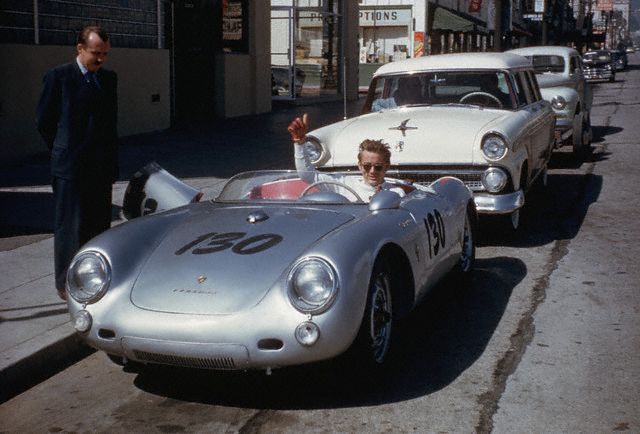
Actor James Dean gives a thumbs-up sign from his Porsche 550 Spyder, the Little Bastard, while parked on Vine Street in Hollywood. Dean, who had taken up racing the year before, owned the car only nine days when he lost his life in a fatal highway accident while driving the Porsche to a Salinas race.

Actor James Dean gives a thumbs-up sign from his Porsche 550 Spyder, the Little Bastard, while parked on Vine Street in Hollywood. Dean, who had taken up racing the year before, owned the car only nine days when he lost his life in a fatal highway accident while driving the Porsche to a Salinas race.

Check out the Comet Over Hollywood Facebook page, follow on Twitter at@HollywoodComet or e-mail at cometoverhollywood@gmail.com

The First Lady of Baseball: Laraine Day

She was a perfect mix of sophistication and fresh-faced beauty.

Laraine Day was an All-American girl next door, who played Nurse Mary Lamont in the “Doctor Kildare” film series while under contract to Metro-Goldwyn-Mayer.

Day co-starred with top Hollywood stars such as John Wayne, Cary Grant, Lana Turner and was directed once by Alfred Hitchcock.

Day and Durocher smitten on the set of "Tycoon" in 1947.

Day and Durocher smitten on the set of “Tycoon” in 1947.

The sweet-as-pie actress married the baseball infielder and manager, Leo Durocher. Nicknamed “Leo the Lip,” Durocher was a controversial figure in the sport, known for being outspoken.

During their marriage, Day became known as “The First Lady of Baseball.”

Durocher’s professional baseball career began in 1925 playing with the New York Yankees and continued on with the Cincinnati Reds from 1930 to 1933, St. Louis Cardinals from 1933 to 1937 and the Brooklyn Dodgers from 1938 to 1941, 1943 and 1945.

Durocher managed the Brooklyn Dodgers, New York Giants, Chicago Cubs, Houston Astros and Taiheiyo Club Lions.

Durocher was the manager of the New York Giants from 1948 to 1955 while he was married to Day.

Day served almost as a mascot and public relations manager for the team. She was friends with the ballplayers, their wives and the sportswriters and their wives. She was said to have polished the rough Durocher.

Day even hosted a “Day with the Giants,” which was a 15 minute television broadcast before each Giants home game. She also wrote the books about the teams called “Day with the Giants” (1952) and “The America We Love,” though the books are also said to be ghostwritten.

While they were married, she would watch nearly 77 games each year.

Day cheers for the Giants in 1948.

Day cheers for the Giants in 1948.

“It’s making a nervous wreck out of me. I don’t feel like an average fan,” she said in a 1954 Associated Press interview. “Winning and losing affects our lives. It’s our future.”

She even adjusted her film career around his career, only making one movie per year and doing the occasional television show.

During the season, Day would go to spring training and attend every home game but stayed home with the children when the team went on the road, according to the article.

“Before I married Leo, I wanted to win an Academy Award,” she said. “Now all I want is for us to win a pennant. My work is secondary.”

But before meeting Durocher, Day wasn’t a baseball fan. She didn’t even know who he was.

Day, then married to musician Ray Hendricks, met Durocher at the Stork Club in 1944.

Everyone applauded when he entered and Day asked a friend who he was. The friend told her Durocher played for the Brooklyn Dodgers and Day apparently asked, “What’s a Dodger?,” according to the book “The Victory Season: The End of World War II and the Birth of Baseball’s Golden Age” by  Robert Weintraub.

“I didn’t know who he was, but I certainly did dislike him,” she said in a 1954 Associated Press interview, “Laraine Day Now No. One Fan of Giants.”

But the ice melted two years later when Day met Durocher on a flight. She was on her way to Minneapolis and was delayed in Chicago. So was Durocher. By the time their flight left, Day was smitten, according to the book by Weintraub.

Durocher was a well-known ladies man, being seen on occasion with actresses Betty Hutton, Linda Darnell and Copacabana show girl Edna Ryan.

Hollywood’s nice girl started an affair with the rough baseball player, and eventually filed for divorce with Hendricks in 1946. She was granted an interlocutory divorce from Hendricks on Jan.  20, 1947, meaning she had to wait one year before remarrying, according to Weintraub.

However, on January 21, 1947, Day traveled to Mexico where she received a second divorce decree and joined Durocher in Texas to be married.

Leo Durocher and Laraine Day

Leo Durocher and Laraine Day

Day and Durocher were then surrounded by gossip and scandal, with Day being called an adulterer and bigamist.

It was deemed the Mexican divorce was not legal and her Texas marriage was illegal.

A year later, in February 1948, the two remarried and the Associated Press reported “Laraine Day, Leo Durocher to Wed Again.” Durocher was 42 and Day was 27, the Associated Press reported in the Feb. 14, 1948 article.

In 1955, Day found herself in another “scandal,” while she found herself in an unintentionally groundbreaking photo.

Center fielder Willie Mays played for Giants while Durocher was manager, and Day adored the ballplayer.

April 1955 Sports Illustrated cover with Willie Mays, Laraine Day and Leo Durocher. The cover sparked controversy in 1955.

April 1955 Sports Illustrated cover with Willie Mays, Laraine Day and Leo Durocher. The cover sparked controversy in 1955.

“While I interviewed many ballplayers, the favorite of all is Willie Mays, who suffers tortures in the air and yet wins the heart of everybody,” Day is quoted in “Willie Mays: The Life, The Legend” by James S. Hirsch.

Mays, Day and Durocher were featured on the April 11, 1955, cover of “Sports Illustrated.” Day stands between the two men with her hands on both of their shoulders.

But in 1955, it was an outrage that a white woman would have her hand on a black man’s shoulder.

Letters were sent to the magazine, now only a year old, from outraged readers and others asking to cancel their subscriptions, according to Hirsch’s book.

After 13 years of marriage, Durocher and Day divorced in 1960.

After their divorce, Day said she was done with baseball, according her New York Times obituary.

“When our relationship was over, so was my relationship with baseball,” the obituary quoted Day.

However, Day did return to baseball once more in 1994.

Durocher, who passed away in 1991, was posthumously inducted into the Baseball Hall of Fame in Cooperstown, NY.

Day attended the ceremony in 1994 on her former husband’s behalf.

Check out the Comet Over Hollywood Facebook page, follow on Twitter at @HollywoodComet or e-mail at cometoverhollywood@gmail.com

Actress takes break from screen for war effort

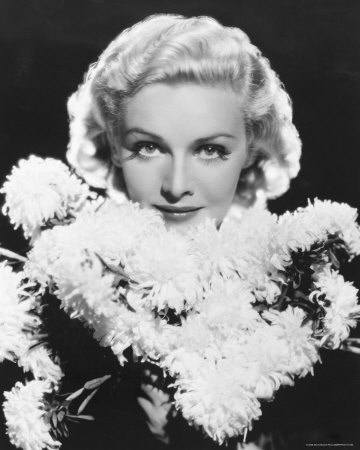
Publicity photo of Madeleine Carroll from the 1930s.

Publicity photo of Madeleine Carroll from the 1930s.

She went from being one of the highest paid actresses in Hollywood at $250,000 a year to working for the Red Cross at $125 a month.

After starring in two Alfred Hitchcock films and the star studded “Prisoner of Zenda” (1937), English actress Madeleine Carroll left films for six years.

Carroll said she had a new career: helping win the war.

Before the bombing of Pearl Harbor in the United States, Carroll’s sister Marguerite Guigette Carroll was killed on Oct. 7, 1940, in a German air raid in London.

“My younger sister learned how to be a very excellent typist but was killed at her typewriter by a direct hit from a German bomb in London’s Blitz,” Carroll said in a 1949 Rotary Club speech. “It seems to me that had the generation previous to hers been more interested in encouraging good neighborliness between countries, there is a chance my sister might be alive today.”

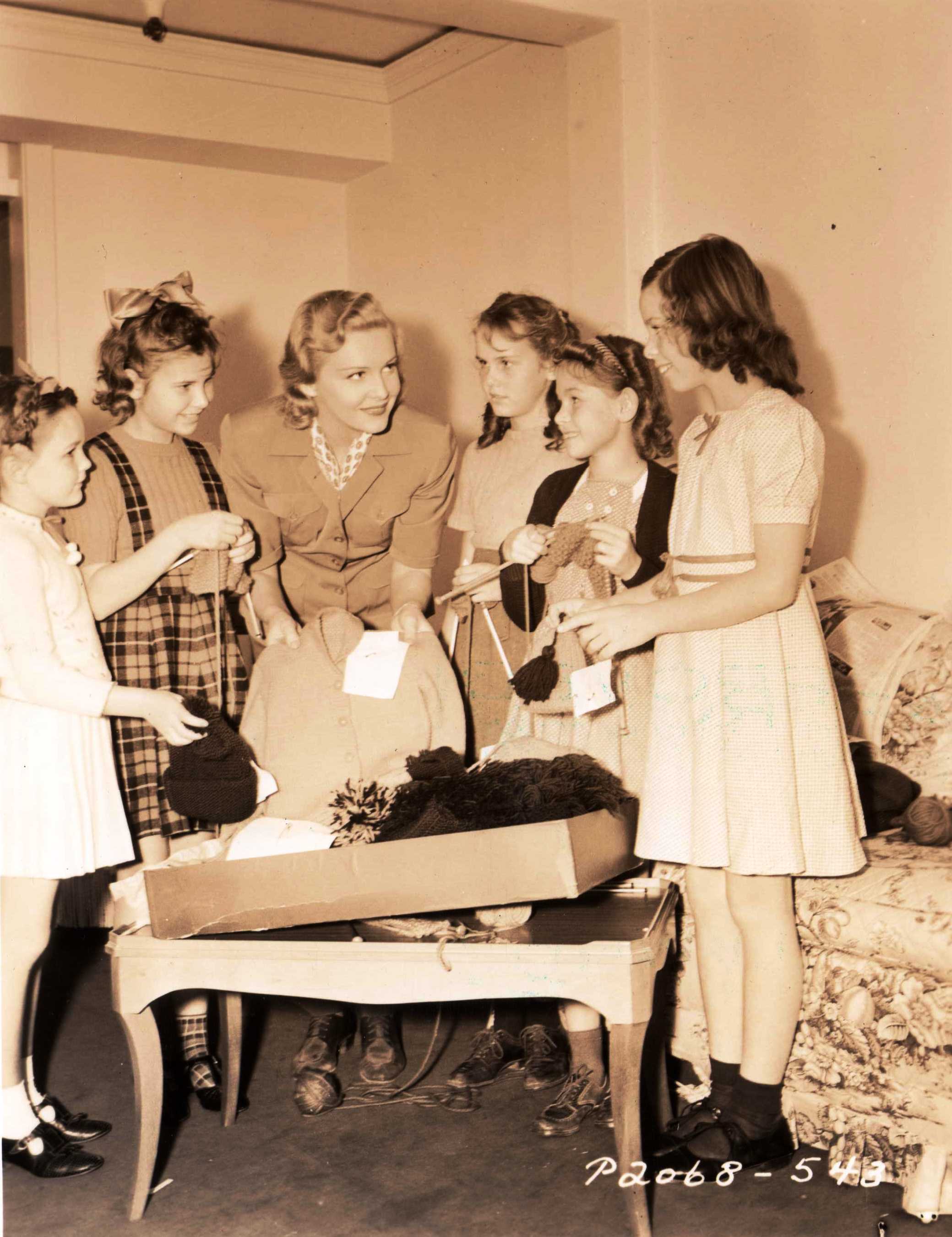
But before her sister was killed, Carroll turned over her French chateau for children removed from Paris and other French cities. She also started holding benefits in Hollywood to send money to Europe, according to a Jan. 21, 1940, article in the Pittsburgh Press.

In 1942, Carroll married newcomer actor Sterling Hayden. Hayden felt his place was fighting in the war and after two roles in Hollywood he enlisted in the Marines.

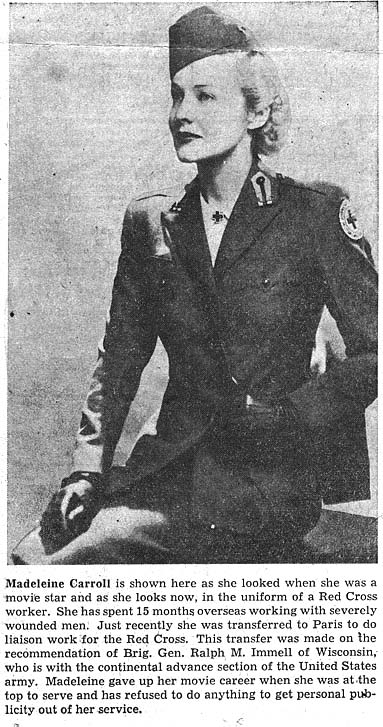
Madeleine Carroll training at the American University in Washington for service in the Red Cross in 1943.

Madeleine Carroll training at the American University in Washington for service in the Red Cross in 1943.

“I’m the proudest woman in the world because my husband will be a buck private in the Marines,” Carroll was quoted in an Oct. 23, 1942, article in the Milwaukee Journal, “Madeleine Carroll Shelves film career for duration” by Sheliah Graham.  “I want to participate in the best of my ability to winning the war. We both feel that glamour has no place during this difficult period.”

Carroll and Hayden even changed their names, because they felt their star status could be detrimental to their new wartime careers. The two became Sterling and Madeleine Hamilton, according to a June 1943 article in the St. Petersburg Times, “Two Film Stars Change Their Names.”

Carroll’s first job in war work was in the newly formed US Seaman’s Service in New York as the director of entertainment, which was like the USO for Merchant Marines.

“I chose this work because while a great deal is done for the boys in the Army and the Navy, people are inclined to forget the boys not in uniform who risk and lose their lives on the ships taking food and supplies to the allied soldiers,” Carroll was quoted in the 1942 Milwaukee Journal article. “We want to raise enough money to open clubs and recuperation centers in all the big cities and American ports…we want to take care of the merchant seaman who are maimed, or otherwise ill, after the war as well as during.”

After spending 18 months with the US Seaman’s Service, Carroll worked over seas with the Red Cross.

She worked with the American Red Cross at the 61st station Army hospital in Foggia, Italy, where she hoped to be assigned as a staff aid in an evacuation hospital.

“I’m grateful to be in the Red Cross, because none of the girls stare or act like I’m a celebrity,” Carroll said in a March 20, 1944, Associated Press brief in the St. Petersburg Times.

Madeleine Carroll looking after war orphans in her French Chateau

Madeleine Carroll looking after war orphans in her French Chateau

Along with working in the hospital, Carroll worked on the hospital train for four months taking wounded men to ships that took them home, according to a May 9, 1945, Milwaukee Journal article.

Each train carried 300 to 400 men with three bunks on each side holding a wounded man. Carroll estimated working with 25,000 military men, the article described.

She recalled a time when a man with a leg injury helped on the train by shining a lantern on a man in a lower bunk with a chest injury so bad that his ribs were exposed, according to the 1945 article.

Carroll was not trained as a nurse, but tried to keep the men’s morale up with cookies, music or comforting them.

madeleine3“I never have known a man too wounded to eat a cookie,” she said.

“How nice it is to be served by Princess Flavia,” one soldier said, reaching his arm out to her, referencing her role in “Prisoner of Zenda.”

After V-E Day, Carroll helped unwed mothers in France, according to a Nov. 14, 1945, Milwaukee Journal article, “Madeleine Carroll caring for war babies born in France out of wedlock.”

Carroll received letters from girls worried about bringing up a baby on their own with an unknown father. She met girls with babies at her door step in France.

At the time the article was published, Carroll helped 40 mothers. Carroll helped with hospital bills, background checks on potential parents and adopting out the children, according to the article.

In each article written between 1942 and 1946, Carroll was credited as “the former actress” or “retired star.”

Several times she was quoted as saying she was incredibly happy and never wanted to return to films.

Hayden and Carroll divorced in 1946, and they both eventually returned to Hollywood, both making their first film back in 1947.

While Hayden’s career took off in the 1950s, with films like “Asphalt Jungle,” Carroll made three more films and made four television appearances. She retired from acting in 1955 and lived the remainder of her life out of the public eye.

Even while helping with the war effort, whenever a soldier would ask her “Are you really Madeleine Carroll,” she replied “Don’t let them kid you.”

Check out the Comet Over Hollywood Facebook page, follow on Twitter at @HollywoodComet or e-mail at cometoverhollywood@gmail.com