Guilty Film Pleasures: A Summer Place (1959)

Troy Donahue and Sandra Dee in “A Summer Place” (1959)

I have three main guilty pleasures: ridiculous, flashy clothes; Krispy Kreme doughnuts and trashy classic films.

I love pre-code 1930s films because of their quick witted lines, snappy pace and how down trodden women somehow pull themselves out of horrible situations-whether  they are adjusting to life after Sing Sing or secretly bringing up an illegitimate child.

During the 1940s and early 1950s, not many movies were as delightfully dirty as these pre-code films. There were a few salacious films, but viewers have to sometimes read between the lines to pick up on scandal.

 But then the late 1950s happened. Actors like Connie Stevens, Sandra Dee, Tab Hunter and Troy Donahue emerged and were perfect to play teens that constantly got into trouble.

“Susan Slade”, “Parrish”, “Rome Adventure” are just a few deliciously trashy films that came out during the late 1950s and late 1960s.

However, one of my all time favorite trashy 1950s films is “A Summer Place” (1959).

Family dinner at Pine Island. Cut the awkwardness with a knife.

The film revolves around two families: the Hunters and the Jorgenson’s.

Sylvia and Bart Hunter (played by Dorothy McGuire and Arthur Kennedy) own a summer resort on Pine Island in Maine. They live there year round with their son Johnny (Troy Donahue). The Pine Island home was owned by Bart’s family, but once he took over it fell into shambles. Bart is an alcoholic but Sylvia sticks by him in the interest of their son.

This particular summer Ken Jorgensen (Richard Egan) returns to Pine Island with his wife and daughter (Constance Ford and Sandra Dee). Ken was a lifeguard at Pine Island when he, Bart and Sylvia were teenagers. We soon find out that Ken and Sylvia were romantically involved during those summers but she married Bart because he was wealthier.

Ken and Sylvia start to secretly meet and rekindle their romance…and their children begin to follow this suite.

 Midnight meetings in the boat house, nosey old women, divorce on the grounds of adultery and teen pregnancy are sprinkled throughout the film.

This may sound like a run-of-the-mill 1950s trash fest, but there are so many things that make it very special:

•Troy Donahue: Troy was a big star in the 1950s but he wasn’t running on much more than his looks. His emotions usually run from A to A. But I do feel that in “Summer Place” we get the special treat more emotion from Troy, including a tear running down his face.

•Beulah Bondi: She doesn’t have a large role but she is wonderful as the busy body, but understanding aunt of Bart. My favorite line of her’s is when she first sees Sandra Dee, “Hardly proper to be so pretty. Seems all the nice girls I know have bad skin, are too fat, too thin or have thick ankles.”

•I love Constance Ford’s role as Helen Jorgenson. She does a wonderful job making you hate her. I love how she does ridiculous things like trying to strap down her daughter with a bra and de-sexing clothes. At one point Richard Egan gives a powerful speech about Helen and her prejudices. During the film’s screening at Radio City Music Hall, the audience gave a standing ovation at this part of the film, according to IMDB.

•There are so many great scenes.

            -Molly’s bra floating in the water after her dad throws it out the window.

            -Johnny awkwardly holding up Molly’s skirt after she is cut by a thorn.

            -Helen examining Molly to make sure she is still a “good girl” after having to spend the night on the beach with Johnny due to a boating accident.

            -Molly telling Johnny the plot of “King Kong” right before he um…deflowers her.

            -And my favorite part: Helen pushing Molly into a plastic Christmas tree. While still on the floor Molly looks up and says, “Merry Christmas Mama.”
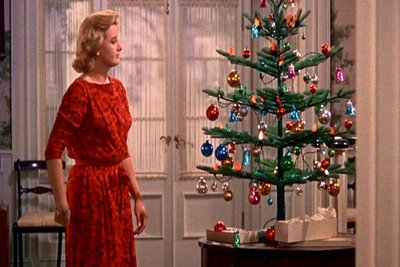
Wait for it….

 “Summer Place” is also a special movie to me, because I have had the good fortune to be able to read the book written by Sloan Wilson the film was based off. It is a great read and one of my favorites and gives more insight of why the different characters are why they are.

The book explains that Helen and Ken married out of loneliness. After being jilted by Sylvia, Ken worked to be rich and successful to spite her. Helen’s father is Ken’s business partner and goes home with him for dinner where he meets Helen. They are both lonely and decide to get married. Helen is very sheltered and taught by her parents that sex is dirty-it’s a wonder Molly was ever born.

We learn that Sylvia liked Bart and was more of a tease to Ken. She married Bart because her recently wealthy father had gone bankrupt. The night they were engaged, Bart’s grandfather found out they had also lost all of their money too. Not only do Bart and Sylvia have a son, Johnny, they also have a daughter in the book.

Bart is an alcoholic because he has an inferiority complex. He is one of the idle rich who has little purpose in life. He marries a woman who he knows doesn’t love him which only makes matters worse. The book describes the only time Bart felt he had any purpose in life was when he was a commander of a ship during World War II. After the war, his alcoholism increased.

Lastly, in the film Molly wants Johnny to protect and help her when she finds out she is pregnant. In the book, Molly is more pissed than anything. She likes him still but is mad about the situation. At the end when the two stay on Pine Island together to start their life, you get the feeling that Johnny loves Molly more than she loves him.
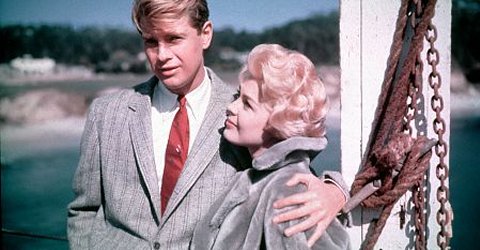
Excited about their life of unplanned parenting!

Before I watched this movie to review, my dad had never had the pleasure of seeing it. I would like to leave you with some of his reactions I wrote down during the movie:

– “Whatever you do that woman shoots dogs, I wouldn’t trust her!” –Referring to Dorothy McGuire’s role in “Old Yeller”

-“My god, a bunch of crabby people!”-referring to the people in the Pine Island resort

-“Now I know why they don’t sleep together, surprised they have any kids!” (after Mr. and Mrs. Jorgenson fight about sex and race)

-“They’re going to do a pelvic exam?? Oh my god!”

– “Probably mom’s out hanging from her heels spying in a tree.”-While Molly and Johnny meet

-Dad making Psycho music noises about mother waiting for Molly to come home.

-Movie: “Frank Llyod Wright designed our house.” Dad: “That’s exactly what I was thinking!” (seriously)

-“I may never like that music again. It gets on my nerves after awhile”-referring to the ‘Summer Place’ theme

Check out the Comet Over Hollywood Facebook page, follow on Twitter at @HollywoodComet or e-mail us at cometoverhollywood@gmail.com

Strangers on a Train under the stars

Favorite part of the movie

In the past year I’ve read several posts about other bloggers going to screenings of classic films.

Angela at ‘Hollywood Revue” went to see “White Christmas” during the holidays and I thought it sounded so nice when everyone sang along at the end of the movie. Let me tell you, if I had been there I would have cried.  Marsha at ‘A Person in the Dark’ recently saw a screening of “Daisy Kenyon” featuring a speaker who was a personal friend of Joan Crawford’s.

Unfortunately, local movie theaters where I live don’t show classic films. The only classic films I know of shown in the Greenville, S.C. area are Moonlight Movies at the Peace Center.  At the end of May and the beginning of September, the Peace Center shows films every Wednesday for four weeks.  I have never been able to go until now, because I was away at school.

This week they showed “Strangers on a Train” (1951) starring Robert Walker, Farley Granger and Ruth Roman. I didn’t want to miss it  one of my favorite Alfred Hitchcock movies.

The film is about two strangers who meet on a train. Walker tries to convince Granger to swap murders of people they they don’t care for. Granger doesn’t take Walker serious until his wife, Miriam, ends up dead.

Moonlight Movies is kind of a “cool rich person in Greenville” thing to do, rather than a gathering of a lot of classic film lovers like some movie screenings.  There were several talking  (including the ones who came 30 minutes late and sat right in front of us) and some old drunk people behind us.

Regardless of the distractions, seeing the “Strangers on a Train” again confirmed a few things:

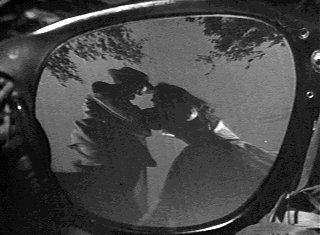
Glasses shot

-Robert Walker is really a wonderful actor. I think of him as the shy, sweet and awkward boy in “Since You Went Away.”  Seeing him in “Strangers on a Train” where he is insane is such a juxtaposition.  Walker does SUCH a good job in this movie. I hate that his life ended shortly after.

-Miriam’s murder, which we only witness through the reflection of her glasses, is one of my all time favorite film scenes and demonstrates Hitchcock’s mastery of camera.

-At one point Ruth Roman and Farely Granger are walking through a museum and then stop and turn around. In one shot they are walking through a real museum and the next standing in front of a screen that is showing a film of a museum, making it look like they are there.

At the end of the film everyone clapped and I asked my sister and her boyfriend what their reactions to the film were (they aren’t avid classic film watchers). Here were their responses:

Sister: “There shouldn’t be drinking at the films and there should be an age limit for who attends.” -not really what I was looking for

Sister’s boyfriend: “I wanted them to use the sister with glasses as a decoy to catch the bad guy.”

Overall, it was a relatively nice experience. I would like to go to a screening in a movie house one day, but this is a good start.

Here are a few photos from the evening:

Before the movie started before it got dark. It was pretty crowded. (Downtown Greenville at the Peace Center Amphitheater)

Sitting in my little chair, excited for the movie to start.

My sister and her boyfriend that I dragged along.

The movie is starting!

Check out the Comet Over Hollywood Facebook page  or follow on Twitter at @HollywoodComet. 

Actress Beauty Tip #16: Marlene Mascara

Marlene Dietrich with her intense eyes and high cheek bones

This is the sixteenth installment of the monthly classic actress beauty tips that I have read about and tested.

Marlene Dietrich is known for her glamour: her golden hair, prominent cheek bones, fashion forward style and perfect legs.

Dietrich also had striking eyes. Beneath drawn on thin eyebrows, her bedroom eyes could seduce or intimidate.

Dietrich’s eyes were sunken in and very big. To help create the illusion of large eyes she never wore liner or mascara on her bottom lashes.

Dietrich also kept her bottom lashes clean, because she said it would cast a shadow on her lower eyes.

I’m not sure about casting a shadow, but I have always had an issue with eyeliner and mascara rubbing off under my eye leaving dark residue- a partially resolved with waterproof eyeliner.

Like Marlene I have blonde hair and lashes. Without mascara and eyeliner, I look like a ghost.

This morning, I put my make-up on like usual, very black mascara and brown eyeliner on my top lids, but left the bottom clean.

The photo below shows the bottom lashes clean and then how I usually wear my make up-liner and mascara on bottom lid.

Left: Clean bottom lash Right: Mascara and eyeliner on bottom lash (Sorry for not better photos. It was 7 a.m.)

To review:  While the clean lashes didn’t look terrible, it’s not something I’m going to start sporting. It gave me a different look but almost looked incomplete to me. This is one of those tips that works differently for different people.  Darker lashes would work well, but people with very light lashes like myself might not feel comfortable with it.

Check back from October for an exciting beauty tip! I’m already shopping for the item I’m testing 🙂

Check out the Comet Over Hollywood Facebook page  or follow on Twitter at @jnpickens. 

Take me out to the ball game: Athlete Biopics

Biographical films have been a popular film genre since the 1920s. There are films about actors that you may have never heard of, scientists who did great things and musicians who died young.

It is no secret Hollywood took creative liberties with the lives of famous people in their films. To quote George M. Cohen after seeing “Yankee Doodle Dandy” (1942), “It was a good movie. Who was it about?”

Life stories were changed to make a most interesting film, but also to protect individuals who were still living when the film was made.

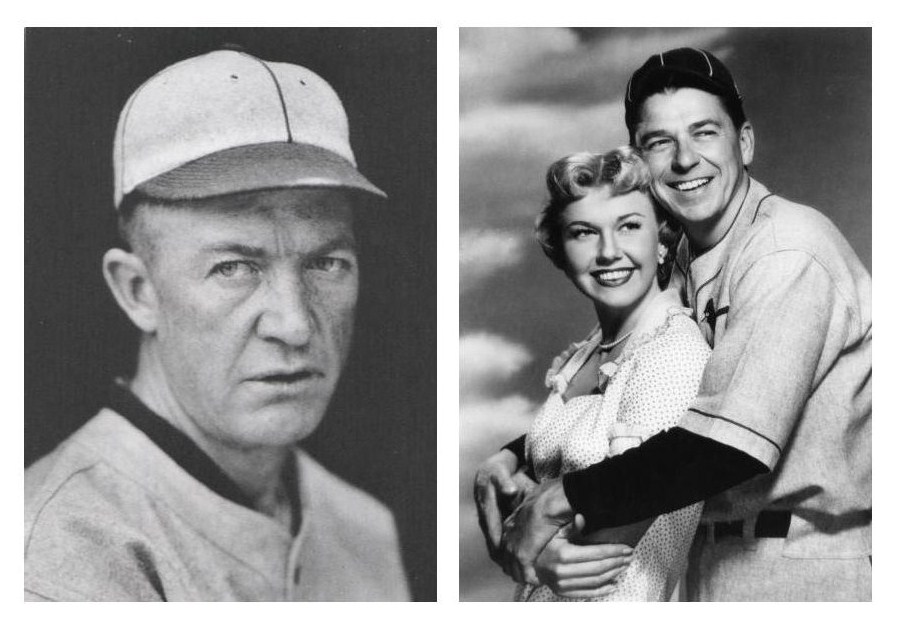
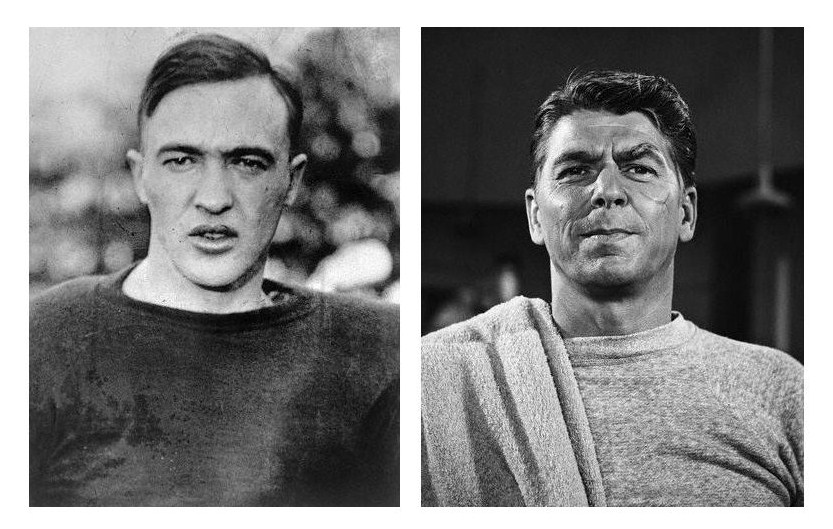
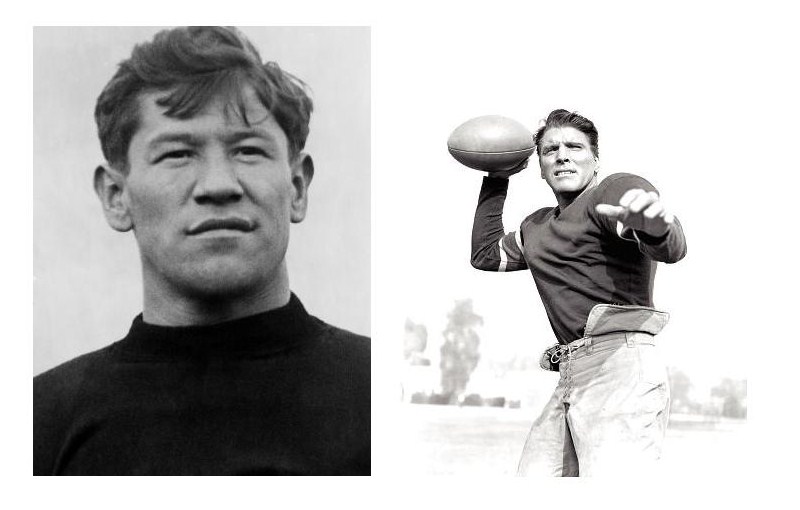
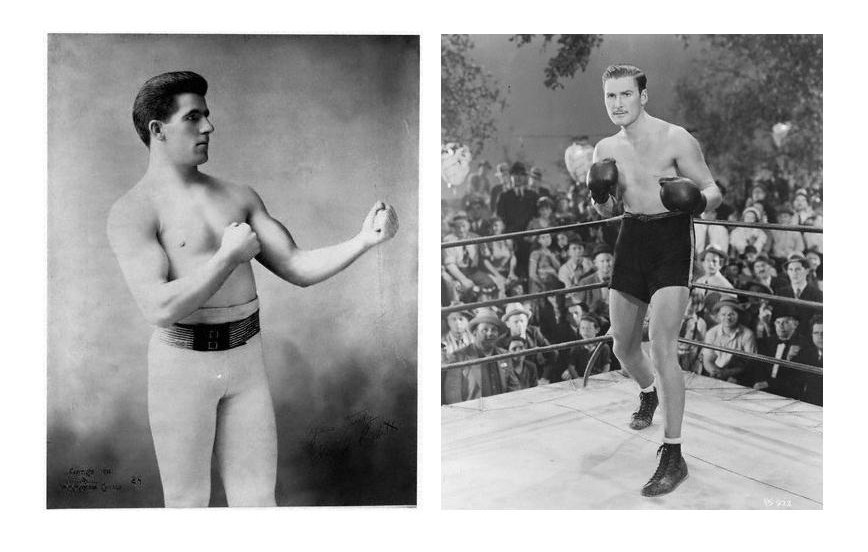
Along with the fabricated biographical information, I have also wondered how similar actor and the person they are portraying look alike.

I am starting a series of posts that will compare the appearances of the actor and the role they are playing. I thought it would be fun and interesting.

I’ll be dividing these up by categories (i.e. presidents, actors, writers), making athletes my first one.

Baseball:

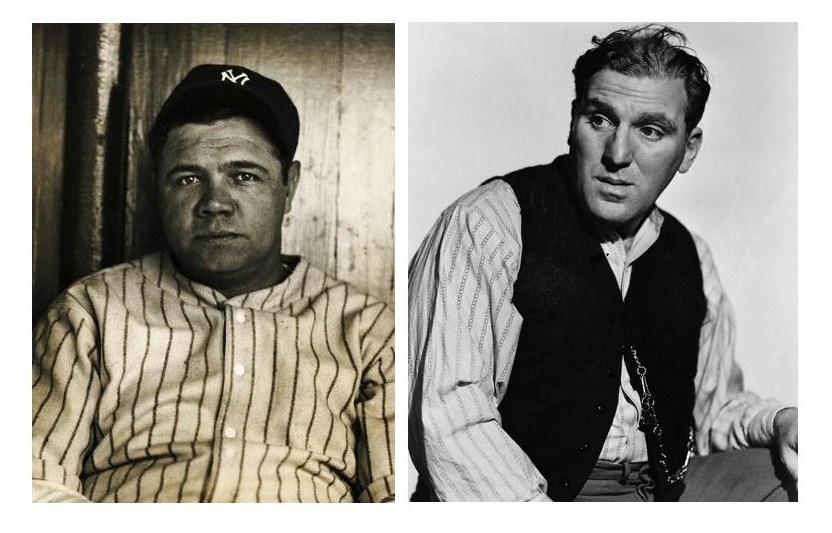
Babe Ruth and William Benedix

The Babe Ruth Story (1948): I haven’t seen this movie, but I have heard it’s not very good. William Benedix plays Babe Ruth. Benedix is great as a comedian or a bad guy, but I have a hard time picturing him in a biography. Appearance: They both have that “big oaf” look, but don’t look very much alike.

Lou Gehrig and Gary Cooper

“Pride of the Yankees” (1942):  This is one of my all time favorite movies. I love Teresa Wright, who plays Gehrig’s wife, and Gary Cooper does a wonderful job in the film. Very touching and sweet. Appearance: Cooper looks fairly similar to Gehrig. This is probably one of the best “look-a-likes” as far as biopics go.

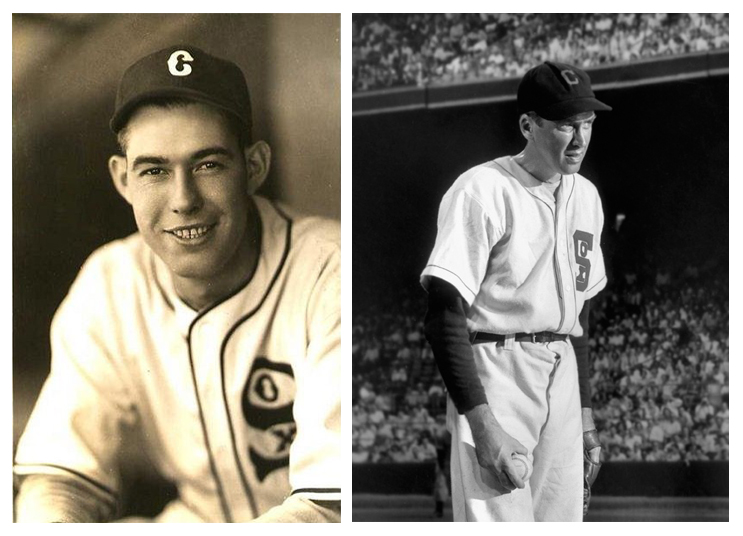
Monty Stratton and James Stewart

“The Stratton Story” (1949): This film stars June Allyson and James Stewart as a husband and wife. Stewart is baseball player Monty Stratton who loses his leg during a hunting accident.  The film follows his struggle to attempt to play baseball again with his prosthetic leg. Appearance: Other than the fact that both men are skinny, I don’t think they look very much alike.

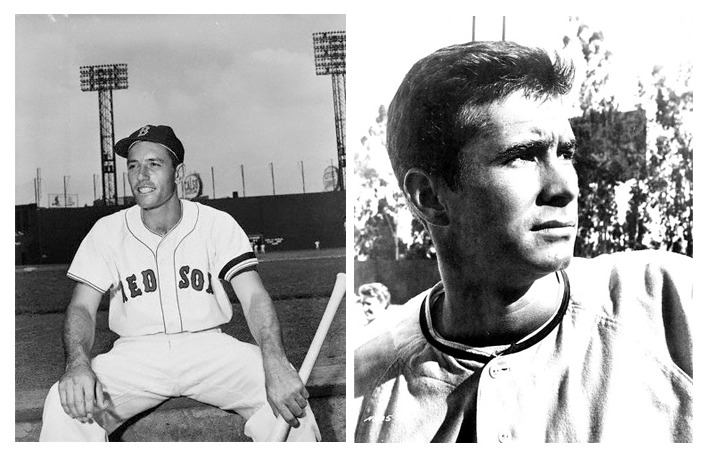
Jim Piersall and Anthony Perkins

“Fear Strikes Out” (1957): Perkins plays Jim Piersall (still living) who has a nervous breakdown while trying to please his father (Karl Malden). I don’t think these two look alike at all. Appearance: Piersall is the attractive, fresh all-American guy while Perkins is much more dark and brooding.

Grover Cleveland Alexander and Ronald Reagan

“The Winning Team” (1952): The film starts off happy as Aimee (Doris Day) and Grover Cleveland Alexander (Ronald Reagan) get married.   Just as Grover is rising to the top as a pitcher, he suffers an eye injury which impairs his vision. Grover is bitter and turns to alcohol which makes him unreliable.  Appearance: I don’t think  Alexander and Reagan look anything alike. Alexander has harsh, rough features and you can tell he went through a tough time. Reagan has clean looks. I think Grover Cleveland looks more like Harry Carey, Sr.

**I know I left out “The Jackie Robinson Story” (1950), but he played himself so no look-a-like comparison.

Football:

Knute Rockne and Pat O’Brien

“Knute Rockne: All American” (1940): My family isn’t fans of Notre Dame football. But Knute Rockne is the only reason I might be, because I really like this movie. The film covers the life of the football player and coach. Rockne is known as “America’s most renowned football coach” and also popularized the forward pass.  However, it drives me crazy when they pronounce his name as ‘K-nute’ in the movie instead of ‘Newt.’ Appearance: Along with Gehrig and Cooper, Rockne and O’Brien look very similar as well. Rockne has a rougher look, but they have similar facial features. It appears O’Brien was given a false nose for the role.

George Gipp and Ronald Reagan

“Knute Rockne: All American” (1940): Also from “Knute Rockne,” Ronald Reagan plays George “Gipper” Gipp. Gipp is known today as one of the most versatile athletes playing halfback, quarterback and punter.  Gipp died at age 25 in 1920 of either pneumonia or strep throat (the cause is debated).  His death spawned the famous quote by Knute Rockne, “Win just one for the Gipper.” Appearance: Ronald Reagan does a great job in the film, but looks nothing like the Gipper. Gipp was much bigger and had very broad features. I can’t think of a 1940s actor that he looked like.

Jim Thorpe and Burt Lancaster

“Jim Thorpe-All American” (1951): Burt Lancaster plays Jim Thorpe, early 1900s football player of American Indian ancestry. Thorpe was All-American in 1911 and 1912 at Carlisle University. He was in the 1912 Olympics for decathlon and pentathlon and was awarded two gold medals that were taken away. Appearance: Thorpe and Lancaster don’t really look alike, but they have similar facial shapes. Thorpe is bigger while Lancaster is thinner and most likely shorter.

Boxing:

“Gentleman” James J. Corbett and Errol Flynn

“Gentleman Jim” (1942): This is an overlooked film of Errol Flynn’s which I think is quite good. Flynn plays James Corbett who is a crude, bare knuckled boxer in San Francisco.  In the late 1800s, boxing isn’t considered a “gentlemanly” sport so the gentlemen of the area sponsor Corbett at an exclusive sports club to change the sport’s image. Corbett is best known for defeating John L. Sullivan (played by Ward Bond).  In between the fancy footwork, Corbett finds time to romance Alexis Smith (who plays Victoria Ware) and make wise cracks with Jack Carson (playing Walter Lowrie). Appearance: Corbett and Flynn look nothing alike. Flynn is thinner and has a more debonair look. Corbett is handsome, but in a rugged sort of way.

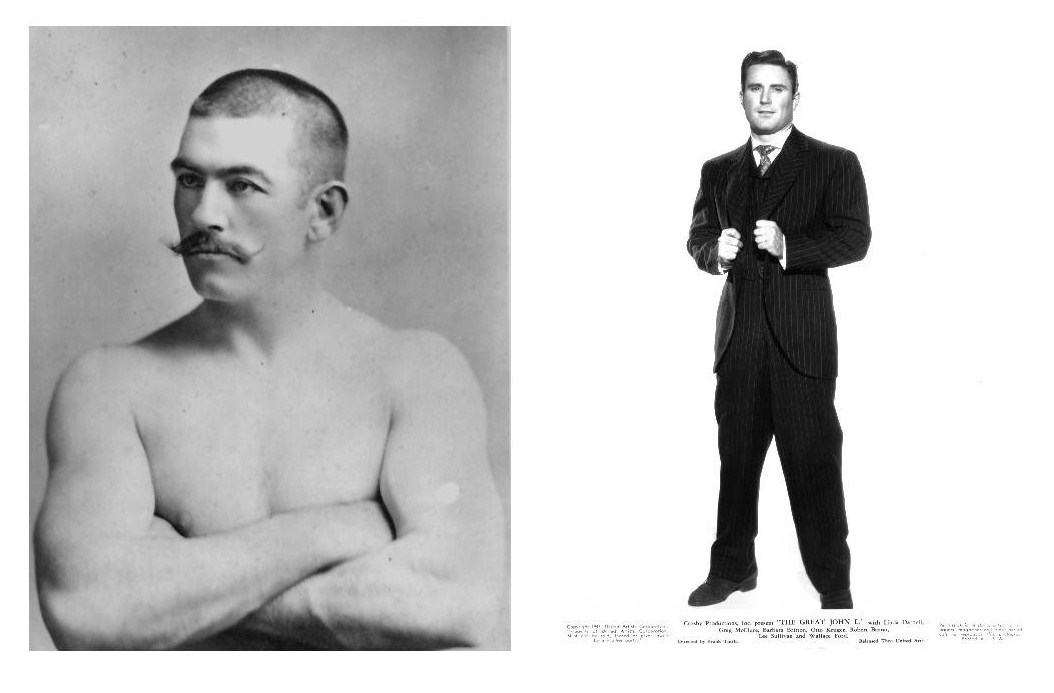
John L. Sullivan and Greg McClure” 

“The Great John L.” (1945): I’ve never seen this movie, but I couldn’t talk about boxing films and not mention John L. Sullivan.  Sullivan is one of the most famous boxers and was the first heavyweight champion of gloved boxing in 1881 and 1882. The film about his life stars Greg McClure in the title role, Linda Darnell and Otto Kruger. Appearance: These two men couldn’t look any different. Sullivan looks gruff, mean and like someone I wouldn’t want to meet in a dark alley.  I think McClure looks more like boxer Jack Dempsey, heavy weight champion of the world in 1919 and 1926.

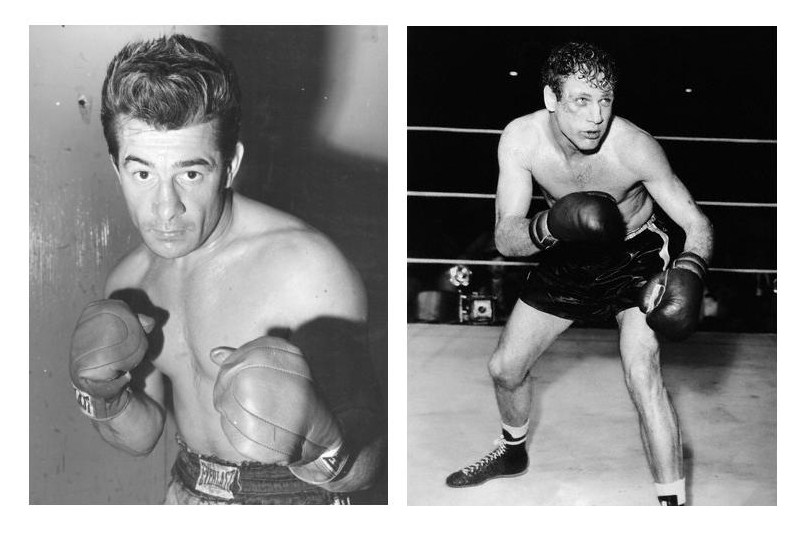
Rocky Graziano and Paul Newman

“Somebody Up There Likes Me” (1956): I’m not much for dark, angsty, brooding 1950s films, but I was pleasantly surprised by this film. Instead of being a downer, it ended up being rather uplifting. Newman plays Graziano who can’t seem to stay out of trouble. Constantly arrested and goes AWOL from the Army. He meets his wife Norma, played by Pier Angeli, and starts his career boxing which helps straighten out his life. Appearance: Graziano and Newman don’t look much alike. Graziano has a much thinner face while Newman’s is more chiseled.

That’s all for sports! Stay tuned for more biopic comparisons!

Check out the Comet Over Hollywood Facebook page .

Classic Movies in Music Videos: Thriller by Michael Jackson

We have another installment of music videos that feature either classic movie stars, movies or reference classic movies.

I’m not sure how during I forgot about “Thriller” relating to classic film.  This one is so obvious and I forgot about it until my sister and I were listening to Michael Jackson’s greatest hits in the car.

Vincent Price, known for his horror roles in the 1960s, talks in the middle of the song around 6:30 in the video.

You can see Vincent Price’s name on the movie marque and movie posters of his films around the movie theater at the beginning of the video.

Vincent Price in the horror film "The Bat" (1959)

Price started in Hollywood in the late 1930s and can be seen in “Elizabeth and Essex” (1939) and “Song of Bernadette” (1943). Audiences started to notice him more in film noir movies like “Laura” (1944) and “His Kind of Woman” (1951) as the suspicious man who started out likable but ends up being bad.

But Price made his mark when he starred in “The House of Wax” (1953) and “House on Haunted Hill” (1959). Price found his niche in horror movies and continued to capitalize off of creepy characters until his last on screen film appearance in “Edward Scissor Hand” (1991).

Check out the Comet Over Hollywood Facebook page .

You can’t get a role with a gun: the story behind “Annie Get Your Gun”

I had always read that “Annie Get Your Gun” was a horrible experience for actress, singer Betty Hutton.

Actors and stage workers were cold towards her, she wasn’t invited to the movie premiere and MGM wasn’t the warm home she found at Paramount.

For years, I read this treatment was attributed to the fact that Betty Hutton quickly stepped in to the role when Judy Garland was unable to make the film. MGM workers resented that someone was kicking their Judy out of a highly coveted musical biography about the sharp shooter Annie Oakley.

Howard Keel, Betty Hutton, Louis Calhern and Keenan Wynn singing “No Business Like Show Business.”

About a month ago, I read and reviewed Betty Hutton’s autobiography “Backstage, You Can Have.” I found that the story about “Annie Get Your Gun” wasn’t as cut and dry as “Judy was kicked out, they were mean to Betty.”  Betty Hutton might have also helped a little in digging her grave.

When the Irving Berlin musical first hit Broadway stages in 1946, Betty knew she wanted to play the part.

 “In May (of 1946), the same month we were finishing up work on “The Perils Of Pauline,” a new musical opened…The show was called “Annie Get Your Gun” and it starred Ethel Merman in the title role. I went to New York to see it, and fell deeply in love with the role of Annie Oakley. This was a part I just had to play in the hotly anticipated movie version” (Hutton 209).

 Betty begged Paramount to buy film rights. Paramount was giving her weak films like “Dream Girl” and she felt that Annie Oakley would have helped bolster her career. However, Arthur Freed at MGM paid Irving Berlin $650,000 for the play and planned on MGM’s top star Judy Garland to play the role.

Judy Garland dressed for the “I’m an Indian Too” number.

“I was heartbroken,” Hutton said. Besides Hutton, Ginger Rogers also campaigned for the role and was told Annie Oakley doesn’t wear silk stockings and high heels.

 However, when MGM began filming “Annie Get Your Gun” it was full of disasters:

•New star Howard Keel fell off his horse and broke his ankle.

•Frank Morgan, playing Colonel Buffalo Bill, had a heart attack and died and was replaced by Louis Calhern

•Busby Berkley started out being the director and was fired and replaced by Charles Walters who was then replaced by George Sidney

•Judy Garland didn’t want to do the movie at all.

 Garland felt that she wasn’t right for the role. The video below shows Judy Garland in a few shots they filmed with her as Annie. She looks unsure and not very well. Judy started not showing up to the set, her contract was suspended.

Garland was not unhappy that Betty Hutton took her place; in fact she later told Betty Hutton that she did a good job and was pleased that Hutton got the part.

 “Years, later while we (Judy and Betty) were both working in Las Vegas, Judy and I became very good friends. She told me then she had never wanted the picture and it wasn’t right for her. She admitted the part was right for me, and after all was said and done, she was happy I got it” (Hutton 229).

 The problem was how Hutton handled getting the part. She let everyone know how much she had wanted it.

Hutton told the Associated Press, “I’m so excited I can’t sleep. For four years I’ve been trying to do Annie. I haven’t been happy with the pictures I’ve had since Buddy DeSylva left Paramount and I pleaded them to buy it. I really bawled them out when they let MGM get it.”

 Not only did this comment not make Hutton very endearing to MGM players, but also didn’t help her floundering relationship with Paramount. Hutton was already at odds with Paramount as she let fame go to her head. In her autobiography Hutton said she wasn’t as uncaring as the comment made her sound, she was just excited (228).

 After reading Betty Hutton’s autobiography, comments like these are what helped end her career. Hutton said herself that she couldn’t shut up and always put her foot in her mouth with the press. This was certainly one of those times.

 It was difficult for Hutton to come into an unfamiliar studio. She had found a family at Paramount and described MGM as much more formal-cast members addressed her as Miss Hutton rather than Betty.  While Betty may have found this off-puting, I believe this was simply out of respect for her.

Betty Hutton is hilarious in her version of “I’m an Indian Too”

Though MGM was unfamiliar, it didn’t stop Betty from trying to work under her terms.

 Betty admits that it was “probably too much Hutton, too fast.”  She wanted to be applauded when she did something good like she was at Paramount and insisted on having air conditioning on the set (231 Hutton).  I personally, think these are mighty large demands to make for a studio that isn’t your own. I would have been peeved too if I was part of the cast.

 Betty was a force of nature and gave her all in performances. Louis Calhern, who played Colonel Buffalo Bill, told Keel, “She’s upstaging the hell out of you.” Keel brushed it off saying he was new and that the camera would come around to him once in a while, according to Howard Keel’s book “Only Make Believe: My Life in Show Business (119). At one point, Betty got upset because she said Keel was upstaging her and they redid the scene 35 times until it was how she liked it.

 Regardless though, Howard Keel said he thought Betty Hutton was sweet and they got along okay. He admitted however, that the rest of the cast wasn’t happy with her.

 However, Hutton apparently thought differently and was also sort of bratty in her recount of the situation:

 “Here he was in his very first film role. Was this greenhorn attempting to call the shots? ‘Annie Get Your Gun’ is Annie’s story, not that of Howard Keel’s character, Frank Butler. If the story had been reversed, I would have gladly handed Howard the burdensome responsibility of carrying the film as I had. Keel Proved to be my primary adversary during the shooting of the film. There was much bad blood between us” (Hutton 232).

 It’s funny that Hutton’s most memorable role was one of her unhappiest experiences as a film star. Though, as much as I love her, I think some of the unhappiness was caused by Betty.

 After “Annie Get Your Gun,” Hutton made three more feature films and a handful of television appearances. Her difficult behavior and use of pills ended her career.

 It’s almost ironic how Hutton’s career ended for one of the main reasons Judy Garland was fired from the film: pills. Unfortunately, while Judy was still revered and loved at the time of her death in 1968, Hutton was largely forgotten by the early 1960s.

Addendum: Comet Over Hollywood has received a large number of search results on Wednesday, Dec. 30, 2015, asking who dubbed Betty Hutton in “Annie Get Your Gun.” I want to share that Miss Hutton did her own singing and was never dubbed in any of her films. Hutton was a singer who got her start as a singer for Vincent Lopez’s orchestra. 

Sources:

“Backstage, You Can Have: My Own Story” by Betty Hutton

“Only Make Believe: My Life in Show Business” by Howard Keel

Check out the Comet Over Hollywood Facebook page  or follow on Twitter at @HollywoodComet.

Actress Beauty Tip #15: Bette Davis Eyes

Young Bette Davis

This is the fifteenth installment of our monthly classic actress beauty tips that I have read about and tested.

Bette Davis is known for her eyes. There is a cheesy song that emulates them, people reference them all the time.

I came across a beauty regiment of Bette’s that I’ve always wanted to try that Miss Davis used to keep her eyes striking and bright.

I think we’ve all seen advertisements, television shows or movies where people lie around with cucumber slices on their eyes. I have always wondered, “What does this do? Is there any purpose?”

Bette Davis would put cucumber slices on her eyes at night and would sleep with petroleum jelly under her eyes. This was to help reduce swelling and dark circles under the eyes.

I have relaxed for 10 minutes before bed over the past week with cucumbers on my eyes.  I made sure I had washed off my make up before I did this so the cucumber would touch clean skin.

It gives sort of an odd sensation. The cucumber gave a cool and fresh sensation.

It is very relaxing sitting with your eyes closed for a few minutes. The skin around my eyes felt softer, but I’m not sure if it actually reduced puffiness or dark circles.

10 minutes with the cucumbers. Watch out for your pets!

I’ve been sleeping with petroleum jelly under my eyes for about a month and could tell a slight difference. Under my eyes seemed a little clearer.

To review: I could tell a small difference from the cucumbers but not large enough to do it every night.  Honestly, I think the only real way to get rid of dark circles is getting sleep.  However, if you are looking for a good way to relax this is perfect.

Check out the Comet Over Hollywood Facebook page for the latest updates.

What happened to Carole Landis?

My sophomore year of high school I had one of the best teacher’s I’ve ever had during my student career.

Her name was Leslie Pierce and she taught honors English. We read a lot of really boring books like “The Scarlett Letter” and “Ethan Frome” but she somehow made them exciting and described them like a daytime soap opera.

I remember Ms. Pierce drooling over Robert Redford in the “Great Gatsby” and Daniel Day-Lewis in “The Crucible,” turning the TV around during the steamy parts of the film “Ethan Frome” and playing us a silly rap of “The Raven.”

Her motto was “Carpe Diem”-seize the day. She would have her students stand on their desks like they did in “The Dead Poets Society.”  Ms. Pierce once was a dancer and excitedly talked to me when I wore my “Oklahoma” shirt after seeing the play at the Peace Center.  There were also humorous stories told about jackrabbits pelting her car as she drove through Indiana and the time she thought it would be a good idea to cut her eyelashes.

She was a crazy, intelligent, fun and interesting woman who genuinely loved English and her students. And in October 2005, Ms. Pierce killed herself. I found out during marching band practice and just pretended to play my clarinet because I was crying so much.

Ms. Pierce didn’t show up to school one day and the assistant principal and school police officer went to her home and found her. It came as a great shock as teachers and students, including myself, were inconsolable. I still tear up when I think about it and other times I swear I see her when I’m at the store or downtown.

I tell this story because Ms. Pierce seemed like a wacky, happy person but her death showed you never know what’s going on inside a person. And I’d like to draw a parallel to actress Carole Landis.

Carole Landis

Miss Landis was a vibrant, beautiful young star in the late 1930s and 1940s, starring in films like “Moon Over Miami” with Betty Grable and “Four Jills in a Jeep,” a film based off a book she wrote.  Landis was friendly, well-liked and traveled overseas during World War II.

Landis was found dead at on July 5, 1948. It was been ruled suicide by overdose of sleeping pills, but her family isn’t convinced.

Carole Landis was discovered in her apartment after a big Fourth of July party followed by an intimate dinner with Rex Harrison.

Rex Harrison and Carole Landis had been involved in a widely known extra-marital affair. At the time, Harrison was married to actress Lilli Palmer. Landis and Harrison had broken up and recently gotten back together around the time of the party.

On the Official Carole Landis website, run by her great-niece, the Landis family is convinced that Rex Harrison murdered her to avoid scandal surrounding the affair they’d been having.

“Aunt Carole’s death has haunted my family for 62 years and knowing Rex Harrison never paid for what he did only makes it worse. We may never know the truth about her death but we do know that the official version just doesn’t make sense.”

Here are a few reasons the Landis family suspects murder:

Landis selling war bonds

•Carole was happy and friendly. This means she couldn’t have depression like people say.

•Carole was dating actor Turhan Bey after her affair with Rex Harrison ended. They say Harrison was the one who came back to her to rekindle the romance.

•Harrison couldn’t/wouldn’t divorce his wife for Carole Landis.

•The Landis family doesn’t think Carole would have a large, expensive Fourth of July party if she was planning on killing herself. Carole was quoted as saying that she had never been happier.

•Carole had made a few suicide attempts in the past but the website describes them as “attention-grabbing” for publicity and family. These suicide attempts were supposedly Carole’s version of a temper tantrum.

• Rex Harrison was the last person with Carole and the first one to find her body.

• Rex Harrison apparently lied to and paid the police and told them he was just friends with Carole.

• Newspaper clippings in years following her death wrote about new evidence, but police dismissed it and Carole’s police record is missing.

• Esther Williams said Lilli Palmer, Rex’s wife, “lied” in her autobiography about the event.

The problem with all of these explanations is that we never know what someone is experiencing. Just because Carole seemed happy, doesn’t mean she was. There is another side to almost all of the explanations: 

•Saying Carole was happy and friendly to her friends doesn’t mean she wasn’t inwardly depressed. Look at my description of Ms. Pierce.

•Actor Turhan Bey was a lady’s man and dated everyone. Singling him out as Landis’s boyfriend is silly, particularly during studio era Hollywood when actors and actresses were frequently set up on dates for premieres or publicity (i.e. June Allyson and Van Johnson, Tab Hunter and Natalie Wood).

• Claiming that a divorce would ruin Harrison’s career is an interesting speculation, granted that many actors were married and divorced frequently in Hollywood. Harrison did eventually divorce his wife Lilli Palmer in 1957 to marry Kay Kendall.

•Dismissing suicide attempts as “attention grabbers” is ridiculous. These were a cry for help and a warning sign.

• In regards to the Fourth of July part, it’s possible that she spent so much money on a party with her friends because it was her way of saying goodbye. Carole may have “never been happier” because she knew she was ending her troubles.

• As far as Rex Harrison lying, being the first to find Carole and her police record missing, I don’t know. There may be explanations to this either way. It’s possible her studio bought the police record to avoid scandal. In quotes by Esther Williams below, Harrison’s lies were constructed by studio publicity agents and he was most likely told to say these things.

•Esther Williams did discuss the incident in her autobiography “The Million Dollar Mermaid: An Autobiography” but she doesn’t exactly say that Lilli lied. Williams discusses being at Palmer’s house waiting for Rex to come home to discuss business with him. The two women talked until 2 a.m. but he never returned so Williams went home:

“His (Rex Harrison) affair with Carole Landis was the worst-kept secret in Hollywood. The gossip columnists referred to them as the ‘English star whose name begins with an H and the local glamour girl whose name begins with L.’ Glamour girl was putting it mildly-Landis was not exactly a paragon of virtue….At the age of twenty-nine she was already a waning starlet who was separated from her fourth husband….

 The following morning the scandal broke-Miss L was dead. Carole Landis had committed suicide by taking an overdose of sleeping pills. The newspapers conjectured that she became despond because Rex Harrison had told her their affair was over. There was some factual underpinning for this speculation-Rex was leaving Hollywood for New York to appear as Henry VII in the new play “Anne of the Thousand Days”….

 Lilli knew, as I did, that Rex must have been with Carole the night of the suicide…Lilli knew that her husband had been having an affair, but she kept her head high through the maelstrom that followed…She answered questions from the press and stood by him through the coroner’s inquest…The two of them denied that there was any romantic relationship with Landis at all. Rex and Carole were just ‘good friends’…” (164-165).

Williams tells how the studio created an alibi for Harrison and Palmer the weekend Landis died and Palmer does discuss this in her autobiography “Change Lobsters and Dance.”  Studios were very powerful during that era and could quickly cover something up if they felt the need to.

Note published in a July 6, 1948 newspaper.

Carole Landis also left a note, apologizing to her mother, which was published in the newspaper.

Before reading this website, I had never heard claims Landis was murdered. Robert Osborne has even said that Landis committed suicide as did LIFE magazine.

If you look at the website, it discusses the special relationship she had with her sisters and mother, shows pictures of her grand niece wearing Landis’s jewelry and short bios of Landis’s relatives dead and living.

Maybe I would also take the murder claim more seriously if I didn’t wonder if the family or other parties were trying to somehow capitalize off Carole Landis with their grief.

I also feel the family might not fully accept suicide as a possibility because of the stigma, particularly during the 1940s.

However, the only two people who know the truth are dead. Though while people still doubt it, the evidence points to Carole Landis taking her own life.

I understand missing a loved one, but I think it is time to let Carole Landis rest. Why not remember the joy she brought to film audiences and servicemen?

We never truly know what people are going through. If you or someone you know needs help, please call the National Suicide Prevention hotline at 1-800-273-8255. It’s free and available 24/7.

Check out the Comet Over Hollywood Facebook page  or follow on Twitter at @HollywoodComet. 

Classic Movies in Music Videos: “Llyod, I’m Ready to Be Heartbroken” by Camera Obscura

Here we have another installment of music videos that feature either classic movie stars, movies or reference classic movies.

This month’s music video is “Lloyd, I’m Ready to Be Heartbroken” by Camera Obscura from their 2006 album “Let’s Get Out of This Country.”

The video is of a very 1960s looking couple dancing around the city. During part of the video, we see June Allyson and Ray MacDonald dancing around to “Till the Clouds Roll By” from the 1946 film of the same name.

I have to admit, the video also makes me think of a GAP commercial, but it’s still fun.

Check out the Comet Over Hollywood Facebook page .

There’s No Business Like Show Business: book review of Betty Hutton’s autobiography

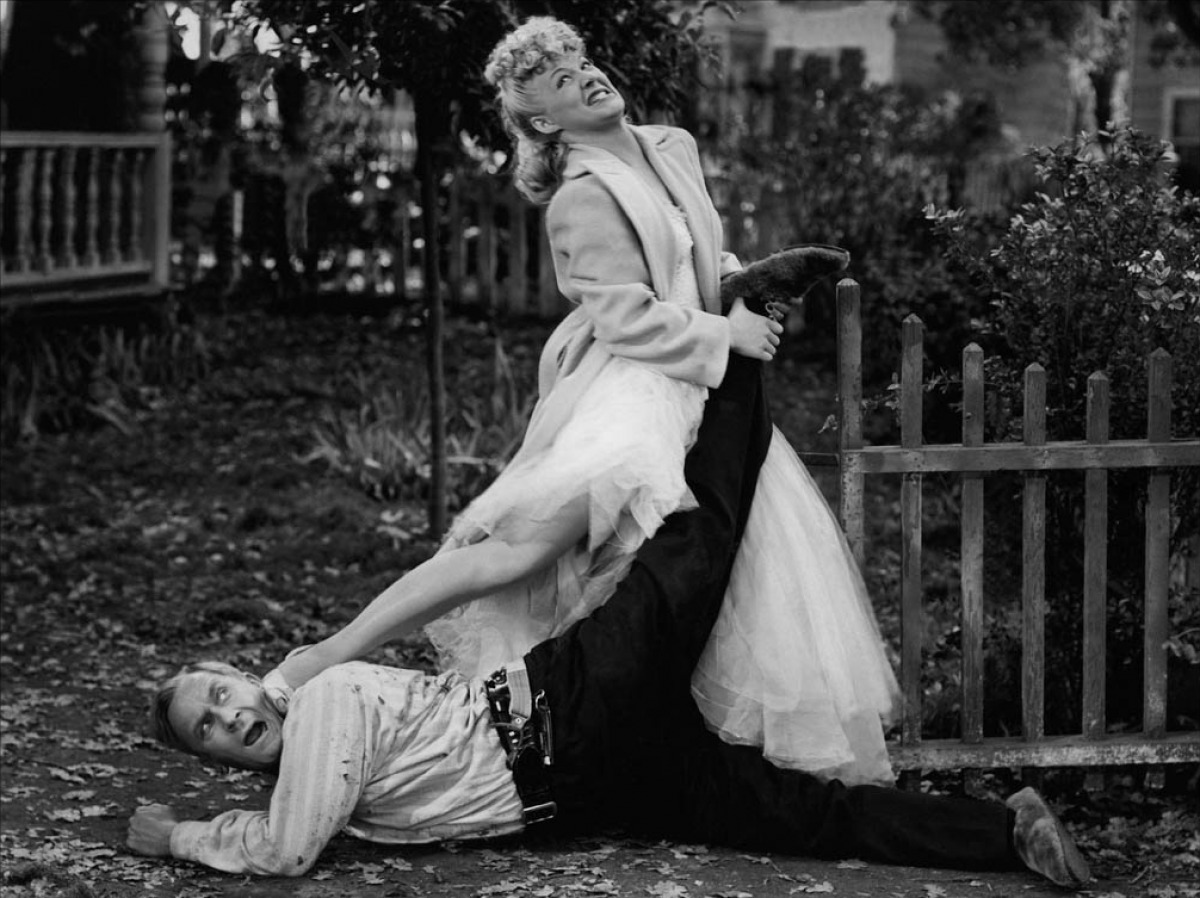
The zany Betty Hutton we love performing her role as Trudy Kockenlocker in “Miracle of Morgan’s Creek” (1944) dragging William Demarest.

Bob Hope called her a “Vitamin pill with legs.”

Betty Hutton was one of the top stars at Paramount studios from the 1940s until the early 1950s. She was famous for her boundless energy and shouting style of singing.

“They all knew Betty didn’t just get up and sing a song,” she said in her autobiography. “I sang, I danced, and I climbed the walls. The only thing they didn’t know is how far I’d carry it once I got up there.”

She worked hard to climb to stardom and her fame rose quickly. However, it fell just as fast.  Hutton was only in 20 movies from 1942 to 1957.

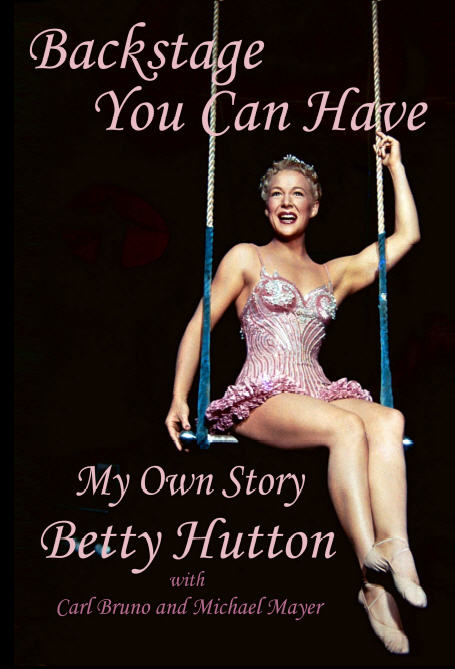
Hutton’s autobiography published in 2009.

Hutton describes this rise and fall in her autobiography Backstage, You Can Have: My Own Story, a book that was published posthumously in 2009, two years after her death in 2007.

The autobiography covers Betty’s unconventional childhood with her bootlegging mother in Lansing, Michigan and her rise to fame as the energetic girl singer for Vincent Lopez’s jazz band.  Hutton’s career jump started on Broadway with the second female lead in “Panama Hattie” starring Ethel Merman. Her Broadway career was brief though. Hutton was frustrated when Merman cut some of her show stopping songs, and was promised by songwriter Buddy DeSylva that he would make her a Paramount star. He stayed true to his words.

Hutton starred in several successful yet forgotten films, but she is best remembered for her roles in “Annie Get Your Gun” (1950) and “The Greatest Show on Earth” (1954). Unfortunately, when Hutton was at the top, she was also nearing the end-about to fall off her stardom pedestal. In the early 1950s, Hutton frustrated the press; upset the Paramount bosses and got involved in pills, all of which contributed to the end of a promising career.

“It was somewhere around the time we were shooting the film in Florida, that I took my first pill,” Hutton said. “I had just dissolved my marriage with Teddy. That coupled with the stress of working on the movie (Greatest Show on Earth), was getting to me. In addition, I was not at the weight I wished I had for the film. I don’t remember how I came upon my first Dexamil, but it was in Miami, and I took it to increase my energy level and reduce my desire to eat.”

By the 1960s, Hutton’s life as a movie star was long gone. She filed for bankruptcy, her daughters moved out and her pill addiction worsened.

“One morning I packed what I had left in the way of personal belongings in a paper bag, and headed out the door of my hotel room for the final time,” Hutton said.  “My room rent was already way overdue, and I had no means of raising the necessary money to pay the bill.”

This scene is the last we hear from Miss Hutton. She writes a note to the readers saying she is not sure if she wants to continue writing the book. Writing the book proved to be happy and painful, she said.

The rest of the book is written by Carl Bruno, who helped care for Betty off and on from the early 1970s until her death in 2007. Bruno’s partner was a Lutheran minister, Gene Arnaiz, who tried to help Hutton and allowed her to live with them in California. From 1974 until 1996, Hutton lived either in Rhode Island with Catholic priest, Father Maguire, or in California with Carl and Gene.

“Father was a Godly man, but he was a mortal all the same,” Bruno said. “There were times when Betty became too much for him…When Father felt it necessary, he would ship Betty back to the boys in California…Likewise, Carl and Gene would tire of her after a time, and back she would go to her austere lifestyle in the Rhode Island rectory.”

Betty Hutton died in 2007 in California of colon cancer while living with Carl Bruno and Michael Mayer.

My thoughts on the book:

Doing her own trapeze stunts in “The Greatest Show on Earth” (1954), Betty’s last big film role.

What you see on the screen seems to be what you get with Betty Hutton. She had the same fiery, go get ‘em, energetic outlook when she talks about her career as her characters had in her films.  As Betty described her childhood, as she was fighting for her family and trying to make her way into show business, you wanted to fight along with her. I would put down the book and feel like I could face anything; Betty’s attitude is that infectious.

This autobiography is entertaining but depressing at the same time. At one point Hutton had me crying as she talked about visiting the boys overseas during World War II, and then laughing a few sentences later with the line, “We all know it’s common knowledge that movie stars don’t poop.”

Sometimes while reading I got frustrated with Betty. It was like watching a movie saying, “Oh no, don’t do that.” Quotes she said to newspapers, difficulty she gave the Paramount studio heads and the use of pills were painful to read about. I think the biggest thing that upset me in the book is when she turned down the role of Ado Annie in “Oklahoma” to do the TV spectacular “Satins and Spurs.” She later regretted turning down the role when she saw Rogers and Hammerstein were personally overseeing the film. I think that really could have jumpstarted her career. I also feel if pills hadn’t been in the picture, things would have been very different for Betty Hutton.

I have always heard about Betty’s bad relationship with her children and how they disowned her but that didn’t come up a lot in the book. Though she loved her children, Betty said she never should have tried to maintain both a career and her family.

I still enjoyed the book once Betty stopped writing and the remainder of her story was filled in by Bruno and Mayer, but I was a bit disappointed. I knew Father Maguire and the Catholic faith meant a lot to Betty and I was hoping to hear more about it in her own words rather than it being skimmed over that she lived with him.

Betty teaching daughter Lindsay how to swim in 1947.

Bruno and Mayer seemed to care about Betty, but some of the things they wrote seemed more “Oh woe is us; we had to put up with so much.” True, they did, but the book wasn’t about their trials it was about Betty. I also felt like they added a lot of asinine details that weren’t needed and could be potentially embarrassing for Betty. For an example, there was a brief anecdote about Betty goofing off in a long red wig and falling and breaking her glasses or that morphine made Betty throw up at the hospital. Neither story added anything to the story nor was there a point.

The book did clear up one thing that confused me during the time of Betty’s death in 2007. I remember when I saw Betty had died on Turner Classic Movies’ website; I looked around on the internet to find more news sources about it but could find nothing. Apparently, it was Betty’s wish not to tell the press about her death until she was buried. She thought that reporters would be hounding her until her death.

When Betty died, Bruno called family, friends and Robert Osborne, who Betty respected. The TCM website put up that Betty had died and their schedule change to honor her. The press and fans wanted confirmation of Betty’s death. Bruno and Mayer seemed miffed at TCM for this, but I wonder if they made Betty’s wishes clear. I feel like if they had, Osborne wouldn’t have put anything on the website.

Overall, the book was very good, but be prepared to feel hyped up at the beginning and pretty low at the end. Betty Hutton was one of the most energetic, talented film stars we know. It’s a shame that her life took such a turn.

Hutton, Betty, Carl Bruno, Michael Mayer. Backstage, You Can Have. Betty Hutton Estate: 2009.

Check out the Comet Over Hollywood Facebook page for the latest updates.