Musical Monday: General Electric Theater presents “A Child is Born” (1955)

It’s no secret that the Hollywood Comet loves musicals.
In 2010, I revealed I had seen 400 movie musicals over the course of eight years. Now that number is over 500. To celebrate and share this musical love, here is my weekly feature about musicals.
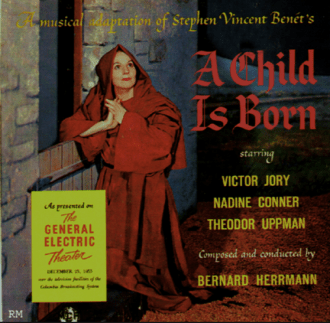
Album cover for the 1955 version of "A Child is Born"

Album cover for the 1955 version of “A Child is Born”

This week’s musical:
General Electric Theater presents “A Child is Born” (1955) – Musical #557

Studio:
CBS Television Network

Director:
Don Medford

Starring:
Nadine Conner, Robert Middleton, Harve Presnell, Marian Seldes, Nyra Monsour, Ross Elliott, Roger Wagner Chorale
Themselves as Hosts: Ronald Reagan, Nancy Reagan, Patti Reagan

Plot:
An operatic retelling of the Nativity story. The story is in the point of view of the Innkeeper (Middleton) and his wife (Connor). The wife is restless, still mourning the death of her baby, and feels something new is coming to the world. Roman soldiers take every room in the inn so when Joseph (Elliott) comes to the door, the Innkeeper and his wife allow them to stay in the stable when they see that Mary is pregnant.
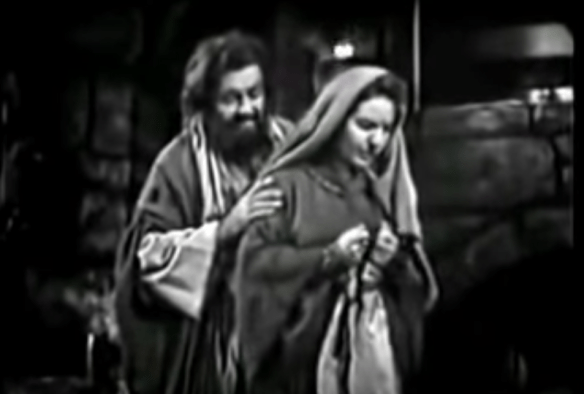
The Innkeeper (Middleton) and his wife (Conner)

The Innkeeper (Middleton) and his wife (Conner)

Trivia:
-“A Child is Born” was Broadcast live for the first time on the General Electric Theater on Dec. 25, 1955. The show was Broadcast live again the following year on Dec. 23, 1956. The 1955 version starred Victor Jory and Theodore Uppman, as Dismas the thief. In the 1956 version, Victor Jory is not in the play and Harve Presnell plays Dismas the thief.

-The score was composed and conducted by Bernard Herrmann. This was Bernard Herrmann’s last project of 1955.

-The adaptation of the Nativity story was written by Stephen Vincent Benet and originally was performed on the radio program “Cavalcade of America.” The 1942 performance starred husband-and-wife actors Alfred Lunt and Lynn Fontanne.

-This short opera aired on the General Electric Theater, which showcased a story, play or musical every week. The show ran from 1953 to 1962.
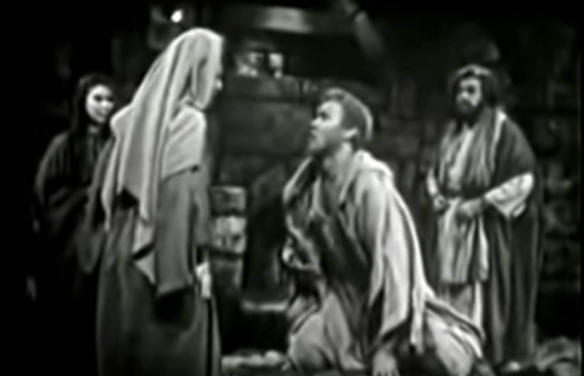
Harve Presnell as a thief

Harve Presnell as a thief

Highlight:
-Bernard Herrmann’s score

Notable songs:
-Shot like an opera so not really one song.

My review:
“A Child is Born” is a very solemn television operetta, which consists of more singing than dialogue.

This Nativity story is tells of the Innkeeper and his wife. That being said, we do not see the Virgin Mary or baby Jesus. We only see Joseph knocking on the door of the inn and the audience watches the shepherds and wise men come to visit the child through a window of the inn.
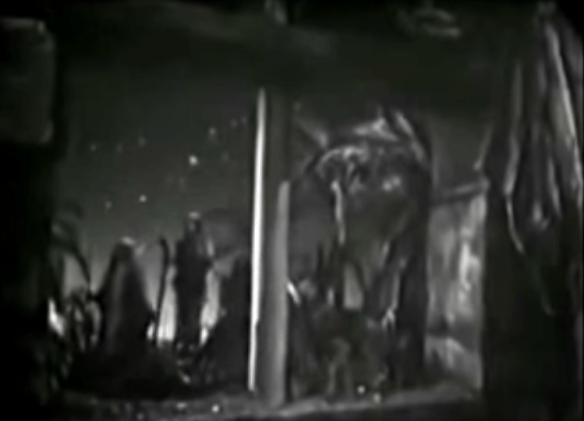
Shepherds and wise men visiting the Christ child.

Shepherds and wise men visiting the Christ child.

I sought this 30 minute opera out not only because it is a musical related to Christmas, but because the music was composed and conducted for the “General Electric Theater” TV episode by Academy Award winning composer Bernard Herrmann. The music in this play is beautiful and solemn. For me, Herrmann’s score is the best part of “A Child is Born.”

Metropolitan Opera singer Nadine Conner carries 85 percent of the singing throughout the film. Conner has a lovely voice, but admittedly, it’s a little tiring to hear the same person’s singing voice continuously throughout the piece without any other singers. The Innkeeper, played by Robert Middleton, does not sing, nor do the two servant girls, played by Marian Seldes and Nyra Monsour.

Harve Presnell, in only his second film or TV appearance, comes in at the last 10 minutes of the film along with the Roger Wagoner Chorale. Presnell and the Chorale sing beautifully, but I wish their songs had come in earlier to break some monotony. Presnell plays a thief, who is moved not to steal when he sees the Christ Child.

Critics and audiences weren’t complimentary of this operetta when it was Broadcast live in 1955. One complaint was that the set never changes and shows only one room of the inn. Audiences also felt that the play wasn’t inspiring as it should have been. Critics also said Herrmann’s music was “not distinguished,” according to Bruce Kimmel’s liner notes for the “Child is Born” album.

I’m inclined to agree that I certainly didn’t feel moved by this story of the Nativity, like I thought I would have. I mainly felt tired after the 30 minutes. Part of this had to do with Nadine Conner’s constant singing. Another reason was the two servant girls over acting and shouting.

However, I disagree that Herrmann’s music was “not distinguished.” His score was the highlight the brief TV show, and if I felt moved, it was because of his music.

It’s curious to me that if “A Child was Born” was unpopular in 1955, why it was Broadcast again in 1956.

It proved to be confusing while searching for 1955 version vs. the 1956 version. The only version I could find online was the 1956 version, though many people seem to think there isn’t a difference. However, Victor Jory was in the original cast, and is even billed on the front of the record, and he is not in the version I watched.

Check out the Comet Over Hollywood Facebook page, follow on Twitter at @HollywoodComet or e-mail at cometoverhollywood@gmail.com
Festival explores radio, film career of composer Bernard Herrmann

Film composer Bernard Herrmann is mostly known for a film that he originally disliked.

“When we left the screening of ‘Psycho,’ he said, ‘Wasn’t that the biggest piece of crap you’ve ever seen?’” said the film composer’s eldest daughter, Dorothy Herrmann. “Daddy had no use for Psycho until it became a cult classic.”

However, those shrieking, staccato violins that played during a rather violent shower scene is may be what he’s best known for.

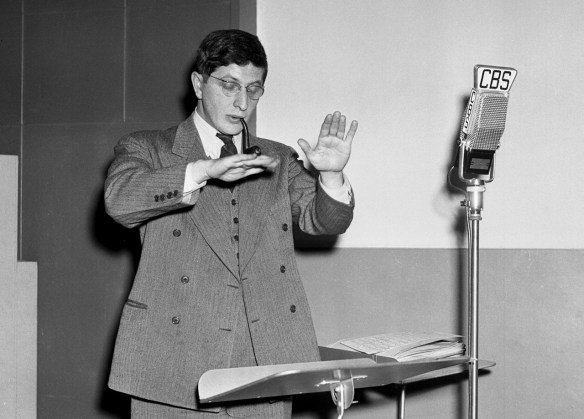
Rehearsal of The Free Company radio drama with conductor Bernard Herrmann. Image dated April 6, 1941. Copyright © 1941 CBS Broadcasting Inc. All Rights Reserved. Credit: CBS Photo Archive.

Rehearsal of The Free Company radio drama with conductor Bernard Herrmann. Image dated April 6, 1941. Copyright © 1941 CBS Broadcasting Inc. All Rights Reserved. Credit: CBS Photo Archive.

Dorothy Herrmann spoke last weekend during a Bernard Herrmann festival—from April 15 through April 17—in Washington, D.C. The PostClassical Ensemble, Georgetown University, AFI Silver and the National Gallery of Art co-hosted one of few festivals that celebrates the composer’s life and career in film, radio and symphony.

Along with the weekend celebration, AFI Silver screened films scored by Herrmann throughout the month including “Hangover Square,” “Vertigo” and “The Bride Wore Black.”

Along with myself, fans and Herrmann’s family traveled from Kentucky, New York, Mississippi, North Carolina, California and Pennsylvania, to pay tribute to the composer. During the weekend festival, Herrmann historians and musicologists delved into the composer’s work.

Continue reading

Why Bernard Herrmann left the Academy

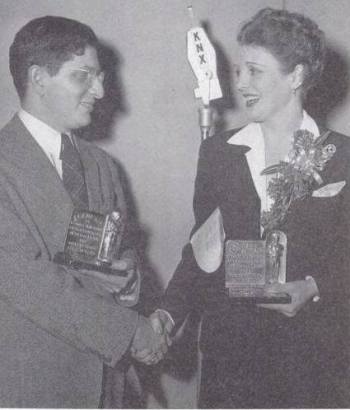
Actress Mary Astor presents Bernard Herrmann with the Academy Award for Best Score for "All That Money Can Buy."

Actress Mary Astor presents Bernard Herrmann with the Academy Award for Best Score for “All That Money Can Buy.”

Bernard Herrmann is a name most avid film lovers know.

Even someone with little film knowledge is aware of his Psycho (1960) score.

You might hear film historian Robert Osborne mention his scores in an introduction to a film on Turner Classic Movies, or read an article where a musician discusses Herrmann’s influence on their album. But for someone highly revered today, Herrmann didn’t feel well respected by his contemporaries during a radio and film music career that spanned from 1934 to 1975.

Bernard Herrmann came to Hollywood in 1940 with a bang. In a time when the flowery and lilting film scores of composers like Max Steiner and Erich Wolfgang Korngold were king, Herrmann provided something different.

His first two films—Orson Welles’s Citizen Kane (1941) and William Dieterle’s All That Money Can Buy/The Devil and Daniel Webster (1941)—yielded Academy Award nominations for Best Score. Herrmann won his first and only Oscar for All That Money Can Buy.

Some of Herrmann’s film scores included Jane Eyre (1943), The Ghost and Mrs. Muir (1947), his personal favorite; and The Day the Earth Stood Still (1951) but they also were overlooked by the Academy.

His third Academy Award nomination was for the 1946 film Anna and the King of Siam. For this film, Herrmann did extensive research on Siamese scales and melodic phrases to capture the geographic tone of the film, according to “A Heart at Fire’s Center: The Life and Music of Bernard Herrmann” by Steven Smith.

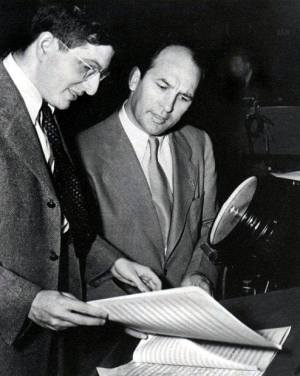
Bernard Herrmann with director William Dieterle looking over the Academy Award winning "All That Money Can Buy" score.

Bernard Herrmann with director William Dieterle looking over the Academy Award winning “All That Money Can Buy” score.

But the Academy Award for Best Score that year went to Hugo Friedhofer score for the post-World War II drama Best Years of Our Lives. It was 29 years before Herrmann was nominated again for an Academy Award, and then it would be posthumously.

Some of Herrmann’s most famous scores include those he created when he teamed with director Alfred Hitchcock for Vertigo, Psycho and North by Northwest. This proved to be Herrmann’s greatest artistic collaboration. However, none of those were every recognized by the Academy of Motion Picture Arts and Sciences. Hitchcock himself was nominated five times, but never received an Academy Award for Best Director. The only Academy Award Hitchcock received was the Irving G. Thalberg Memorial Award in 1968.

While he worked as a film music composer, Herrmann perceived himself as a failure, because he never felt he reached his full potential by being a world-class symphony conductor. Film music was low-brow to Herrmann. However, he did see the value in film music.

“Movies need the cement of music: I’ve never seen a movie better without it,” he said. “Music is as important as photography.”

As his career advanced into the 1960s, Herrmann started to distance himself from Hollywood. Herrmann and Hitchcock had a disagreement and parted ways, never to work together again. More films were calling for pop standard-like film scores to sell records, and Herrmann wasn’t willing to lower his artistic standards to make a buck.

“If I were starting my career now, I’d have no career in films,” Herrmann said. “I don’t like the new look in film scores. They have nothing to do with the movie.”

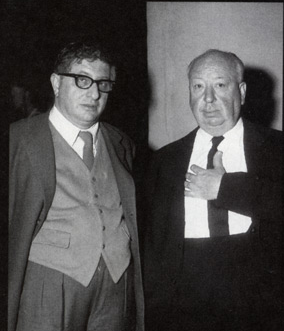
Composer Bernard Herrmann with director Alfred Hitchcock, one of his top artistic collaborators who he later had a falling out with.

Composer Bernard Herrmann with director Alfred Hitchcock, one of his top artistic collaborators who he later had a falling out with.

All of these changes moved Herrmann to resign from the Academy of Motion Picture Arts and Sciences in 1967, because he “did not approve of music being listed as a technical credit,” according to Smith’s book.

“There’s no point to belonging to an organization in which one is judged by one’s inferiors—not one’s peers,” Herrmann was quoted in the Los Angeles Times. “It was Tolstoy who said ‘Eagles fly alone and sparrows fly in flocks.’ But I’m afraid we eagles of the world are being pushed into sanctuaries.”

Herrmann experienced a career resurgence in the 1970s, when new directors like Brain De Palma and Martin Scorsese sought him out. He passed away on Christmas Eve in 1975 after completing recording for Taxi Driver.

In 1977, Bernard Herrmann was posthumously nominated for Academy Award for Best Score for the films Taxi Driver and Obsession. Jerry Goldsmith won the award for The Omen.

“I remember Charles Ives (composer and Bernard Herrmann’s friend) saying ‘Prizes are for boys, and I’m a grown-up,” said Bernard Herrmann’s daughter, Dorothy in Smith’s book. “I believe Daddy had that same attitude.”

Dorothy said many years later when her father came across his Academy Award, he looked surprised “as if he had forgotten he had even won it.”

Listing of Herrmann’s Academy Award nominations: 

Year Award Film
1942 Nominated for Best Music, Scoring of a Dramatic Picture Citizen Kane (1941)
1942 Won for Best Music, Scoring of a Dramatic Picture All That Money Can Buy (1941)
1947 Nominated for Best Music, Scoring of a Dramatic or Comedy Picture Anna and the King of Siam (1946)
1977 Nominated for Best Music, Original Score Taxi Driver (1976)
1977 Nominated for Best Music, Original Score Obsession (1976)

To learn more about Bernard Herrmann, follow the upcoming documentary Lives of Bernard Herrmann on Twitter and Facebook

Comet Over Hollywood is taking part in the 31 Days of Oscar event

Check out the Comet Over Hollywood Facebook page, follow on Twitter at @HollywoodComet or e-mail at cometoverhollywood@gmail.com
Musical Monday: Shower of Stars presents A Christmas Carol (1954)

It’s no secret that the Hollywood Comet loves musicals.
In 2010, I revealed I had seen 400 movie musicals over the course of eight years. Now that number is over 500. To celebrate and share this musical love, here is my weekly feature about musicals.

This week’s musical:
“Shower of Stars” presents “A Christmas Carol” –Musical #537

Fredric March as Ebenezer Scrooge and Christopher Cook as Tiny Tim in a 1954 TV adaptation of "A Christmas Carol"

Fredric March as Ebenezer Scrooge and Christopher Cook as Tiny Tim in a 1954 TV adaptation of “A Christmas Carol”

Studio:
CBS Television Network

Director:
Ralph Levy

Starring:
Fredric March, Basil Rathbone, Bob Sweeney, Christopher Cook, Craig Hill, Queenie Leonard
Themselves as hosts: William Lundigan, Mary Costa

Basil Rathbone as Jacob Marley

Basil Rathbone as Jacob Marley

Plot:
Set in 1840 London, this is a retelling of Charles Dickens’ novel, “A Christmas Carol.” Miserly Ebenezer Scrooge (March) is warned by the ghost of his friend Marley (Rathbone) that he need to change his ways or he will end up chained to his sins. On Christmas Eve night, Scrooge is visited by ghosts to show him his past, present and future life to convince him to change.  Continue reading

Classic films in music videos: “Gimme Some More” by Busta Rhymes

This is June’s edition of Comet Over Hollywood’s film references in music videos.

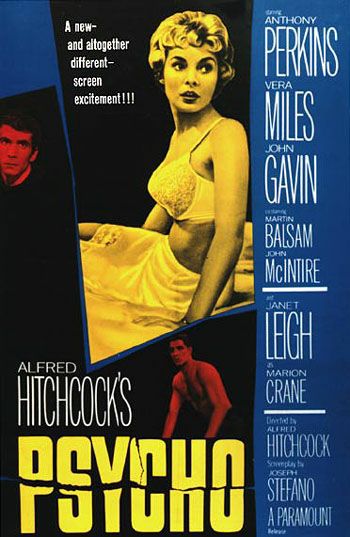
Psycho_(1960)Composer Bernard Herrmann’s music is constantly sampled in contemporary pop culture; from commercials to spoofs on TV.

Several popular music artists have incorporated Herrmann’s music into their songs or music videos. For example, Lady Gaga used part of the “Vertigo” score in her 2011 “Born this Way” music video, which Comet Over Hollywood highlighted in 2013.

Another popular artist who sampled Herrmann’s work is American rapper and producer Busta Rhymes.

In his 1998 single “Gimme Some More” from the album E.L.E., Rhymes uses a part of the opening sequence from Alfred Hitchcock’s 1960 film “Psycho,” composed by Herrmann. This song reached number one on the U.S. Billboard R&B/Hip Hop charts in 1999.

The sample of the opening score is used as throughout the song as the main beat.

Below is the song and the opening credits from Psycho for comparison: 

Love Bernard Herrmann? Our friends are making a documentary about Herrmann called “Lives of Bernard Herrmann.” Check them out on Facebook and Twitter.

Check out the Comet Over Hollywood Facebook page, follow on Twitter at @HollywoodComet or e-mail at cometoverhollywood@gmail.com
Classic films in music videos: Born this Way by Lady Gaga

This is March’s edition of Comet Over Hollywood’s classic film references in music videos.

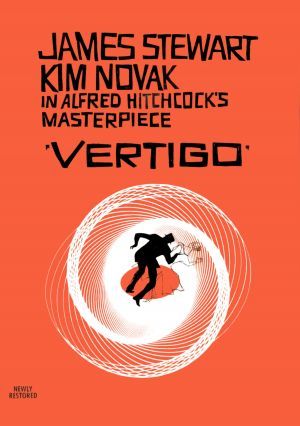
Vertigo (1958)

Vertigo (1958)

Last March, Kim Novak was up in arms when “The Artist” (2011) used a portion of Bernard Herrmann’s score from the Alfred Hitchcock film “Vertigo” (1958).

It’s surprising that she wasn’t equally upset after Lady Gaga used Herrmann’s prelude to the film “Vertigo” in her music video “Born This Way.”

Born This Way” was the first single released from the same name album “Born This Way.” Both the video and single debuted in February 2011.

The five minute video begins with Lady Gaga speaking over the “Vertigo” dream like music, calling the video and song “the manifesto of Mother Monster.”

Born this Way video:

Vertigo theme:

As referenced in a 2010 Comet Over Hollywood post, Lady Gaga has referenced Alfred Hitchcock in other songs such as “Bad Romance” with the lines:

““I want your psycho, Your vertigo stick, Want you in my rear window, Baby you’re sick””

Gaga also references Kim Novak in the single “So Happy I Could Die” from the album The Fame Monster with the line “I am that Lavender Blonde.”

In her early days of acting, Kim Novak was publicized as the Lavender Blonde or the Lavender Girl at Columbia studios. They tinted her blonde hair with lavender highlights, frequently dressed her in shades of purple and forced her to decorate her apartment in the color, according to the book “Leading Ladies: The 50 Most Unforgettable Actresses of the Studio Era.”

Check out the Comet Over Hollywood Facebook page for the latest updates.