You can’t get a role with a gun: the story behind “Annie Get Your Gun”

I had always read that “Annie Get Your Gun” was a horrible experience for actress, singer Betty Hutton.

Actors and stage workers were cold towards her, she wasn’t invited to the movie premiere and MGM wasn’t the warm home she found at Paramount.

For years, I read this treatment was attributed to the fact that Betty Hutton quickly stepped in to the role when Judy Garland was unable to make the film. MGM workers resented that someone was kicking their Judy out of a highly coveted musical biography about the sharp shooter Annie Oakley.

Howard Keel, Betty Hutton, Louis Calhern and Keenan Wynn singing “No Business Like Show Business.”

About a month ago, I read and reviewed Betty Hutton’s autobiography “Backstage, You Can Have.” I found that the story about “Annie Get Your Gun” wasn’t as cut and dry as “Judy was kicked out, they were mean to Betty.”  Betty Hutton might have also helped a little in digging her grave.

When the Irving Berlin musical first hit Broadway stages in 1946, Betty knew she wanted to play the part.

 “In May (of 1946), the same month we were finishing up work on “The Perils Of Pauline,” a new musical opened…The show was called “Annie Get Your Gun” and it starred Ethel Merman in the title role. I went to New York to see it, and fell deeply in love with the role of Annie Oakley. This was a part I just had to play in the hotly anticipated movie version” (Hutton 209).

 Betty begged Paramount to buy film rights. Paramount was giving her weak films like “Dream Girl” and she felt that Annie Oakley would have helped bolster her career. However, Arthur Freed at MGM paid Irving Berlin $650,000 for the play and planned on MGM’s top star Judy Garland to play the role.

Judy Garland dressed for the “I’m an Indian Too” number.

“I was heartbroken,” Hutton said. Besides Hutton, Ginger Rogers also campaigned for the role and was told Annie Oakley doesn’t wear silk stockings and high heels.

 However, when MGM began filming “Annie Get Your Gun” it was full of disasters:

•New star Howard Keel fell off his horse and broke his ankle.

•Frank Morgan, playing Colonel Buffalo Bill, had a heart attack and died and was replaced by Louis Calhern

•Busby Berkley started out being the director and was fired and replaced by Charles Walters who was then replaced by George Sidney

•Judy Garland didn’t want to do the movie at all.

 Garland felt that she wasn’t right for the role. The video below shows Judy Garland in a few shots they filmed with her as Annie. She looks unsure and not very well. Judy started not showing up to the set, her contract was suspended.

Garland was not unhappy that Betty Hutton took her place; in fact she later told Betty Hutton that she did a good job and was pleased that Hutton got the part.

 “Years, later while we (Judy and Betty) were both working in Las Vegas, Judy and I became very good friends. She told me then she had never wanted the picture and it wasn’t right for her. She admitted the part was right for me, and after all was said and done, she was happy I got it” (Hutton 229).

 The problem was how Hutton handled getting the part. She let everyone know how much she had wanted it.

Hutton told the Associated Press, “I’m so excited I can’t sleep. For four years I’ve been trying to do Annie. I haven’t been happy with the pictures I’ve had since Buddy DeSylva left Paramount and I pleaded them to buy it. I really bawled them out when they let MGM get it.”

 Not only did this comment not make Hutton very endearing to MGM players, but also didn’t help her floundering relationship with Paramount. Hutton was already at odds with Paramount as she let fame go to her head. In her autobiography Hutton said she wasn’t as uncaring as the comment made her sound, she was just excited (228).

 After reading Betty Hutton’s autobiography, comments like these are what helped end her career. Hutton said herself that she couldn’t shut up and always put her foot in her mouth with the press. This was certainly one of those times.

 It was difficult for Hutton to come into an unfamiliar studio. She had found a family at Paramount and described MGM as much more formal-cast members addressed her as Miss Hutton rather than Betty.  While Betty may have found this off-puting, I believe this was simply out of respect for her.

Betty Hutton is hilarious in her version of “I’m an Indian Too”

Though MGM was unfamiliar, it didn’t stop Betty from trying to work under her terms.

 Betty admits that it was “probably too much Hutton, too fast.”  She wanted to be applauded when she did something good like she was at Paramount and insisted on having air conditioning on the set (231 Hutton).  I personally, think these are mighty large demands to make for a studio that isn’t your own. I would have been peeved too if I was part of the cast.

 Betty was a force of nature and gave her all in performances. Louis Calhern, who played Colonel Buffalo Bill, told Keel, “She’s upstaging the hell out of you.” Keel brushed it off saying he was new and that the camera would come around to him once in a while, according to Howard Keel’s book “Only Make Believe: My Life in Show Business (119). At one point, Betty got upset because she said Keel was upstaging her and they redid the scene 35 times until it was how she liked it.

 Regardless though, Howard Keel said he thought Betty Hutton was sweet and they got along okay. He admitted however, that the rest of the cast wasn’t happy with her.

 However, Hutton apparently thought differently and was also sort of bratty in her recount of the situation:

 “Here he was in his very first film role. Was this greenhorn attempting to call the shots? ‘Annie Get Your Gun’ is Annie’s story, not that of Howard Keel’s character, Frank Butler. If the story had been reversed, I would have gladly handed Howard the burdensome responsibility of carrying the film as I had. Keel Proved to be my primary adversary during the shooting of the film. There was much bad blood between us” (Hutton 232).

 It’s funny that Hutton’s most memorable role was one of her unhappiest experiences as a film star. Though, as much as I love her, I think some of the unhappiness was caused by Betty.

 After “Annie Get Your Gun,” Hutton made three more feature films and a handful of television appearances. Her difficult behavior and use of pills ended her career.

 It’s almost ironic how Hutton’s career ended for one of the main reasons Judy Garland was fired from the film: pills. Unfortunately, while Judy was still revered and loved at the time of her death in 1968, Hutton was largely forgotten by the early 1960s.

Addendum: Comet Over Hollywood has received a large number of search results on Wednesday, Dec. 30, 2015, asking who dubbed Betty Hutton in “Annie Get Your Gun.” I want to share that Miss Hutton did her own singing and was never dubbed in any of her films. Hutton was a singer who got her start as a singer for Vincent Lopez’s orchestra. 

Sources:

“Backstage, You Can Have: My Own Story” by Betty Hutton

“Only Make Believe: My Life in Show Business” by Howard Keel

Check out the Comet Over Hollywood Facebook page  or follow on Twitter at @HollywoodComet.
Jack Carson is the Easter bunny this year…

Since Easter is tomorrow, I wanted to do a post today and tomorrow. Today’s will be contemporary Easter in films complete with dying eggs, Easter bunnies and large bonnets. Tomorrow’s post will focus on the religious and Biblical aspect of the holiday.

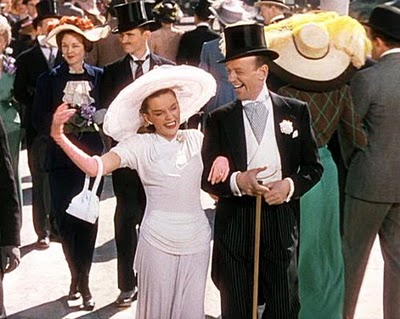
Judy Garland and Fred Astaire posing for the photographers in “Easter Parade”

Easter Parade (1948): Who saw that coming?  This is probably the only feature film that isn’t set in Biblical times that prominately features Easter throughout the movie.  Though the movie really isn’t about Easter and its importance, it begins and ends with the holiday and the prominance of being featured in the newspaper while walking in the “Easter parade” in one’s Sunday best.  The actual film is about show business and how back stabbing dance partners can be when you are trying to hit it big with the Ziegfeld Follies.
This is a great favorite at my house. It has a wonderful cast, several funny scenes and one of the best musical soundtracks you can find. Below is a clip from the beginning of the movie featuring the songs “Happy Easter” and “Drum Crazy.” Unfortunately, Youtube didn’t have the famous “Easter Parade” scene at the end.

My Dream Is Yours  (1949): You may think: What? Isn’t this a Lee Bowman-Jack Carson-Doris Day remake of “Twenty Million Sweethearts”? Why yes, yes it is, but there is a VERY humorous scene where Doris Day’s son, Freddie has a dream the night before Easter. Doris and her soon to be boyfriend Jack Carson are dressed up like Easter bunnies and singing and dancing with Bugs Bunny. I really like this movie, Doris looks beautiful and the plot is a bit more serious than “Twenty Million Sweethearts.”  However,  singing like Easter rabbits is a bit silly. Before the dream, Freddie and Doris also dye Easter eggs, and that’s about all there is to the Easter references.

Other than those two films, there aren’t many films that focus a significant amount of time on Easter in contemporary time. I searched Easter as a keyword on IMDB, other films that feature the holiday are:
What Price Hollywood (1932): In this “A Star Is Born” take off, I think Constance Bennett’s husband either tries to commit suicide or dies on Easter, but I don’t remember clearly.
Holiday Inn (1942): This should come as no surprise. Bing sings Irving Berlin’s “Easter Parade” song in the film that features every other holiday under the sun.
Peyton Place (1957): I think Allison goes to pick up Selena for Easter service, and Selena’s step-father was trying to make a move on her.

It’s disheartening that Easter is in so few films. I know Lent isn’t as exciting a holiday season as Advent, but Easter is a much more important holiday than Christmas. We will explore this more tomorrow in the Biblical representation of Easter in films.

Stay tuned for tomorrow!

Check out the Comet Over Hollywood Facebook page 

Boola boola and rah rah rah: College in the movies

A typical day at Winthrop…not. (From “Good News

After a fast Christmas break, I have moved back into my Winthrop University dorm for the last time.  In honor of my last semester as a college “co-ed”  here is a blog with different representations of college in classic film and judge at how realistic the films portray college.

*I’d like to point out that all of these are classic films, so don’t be disappointed that I didn’t review “National Lampoon’s Animal House” or “Accepted.”


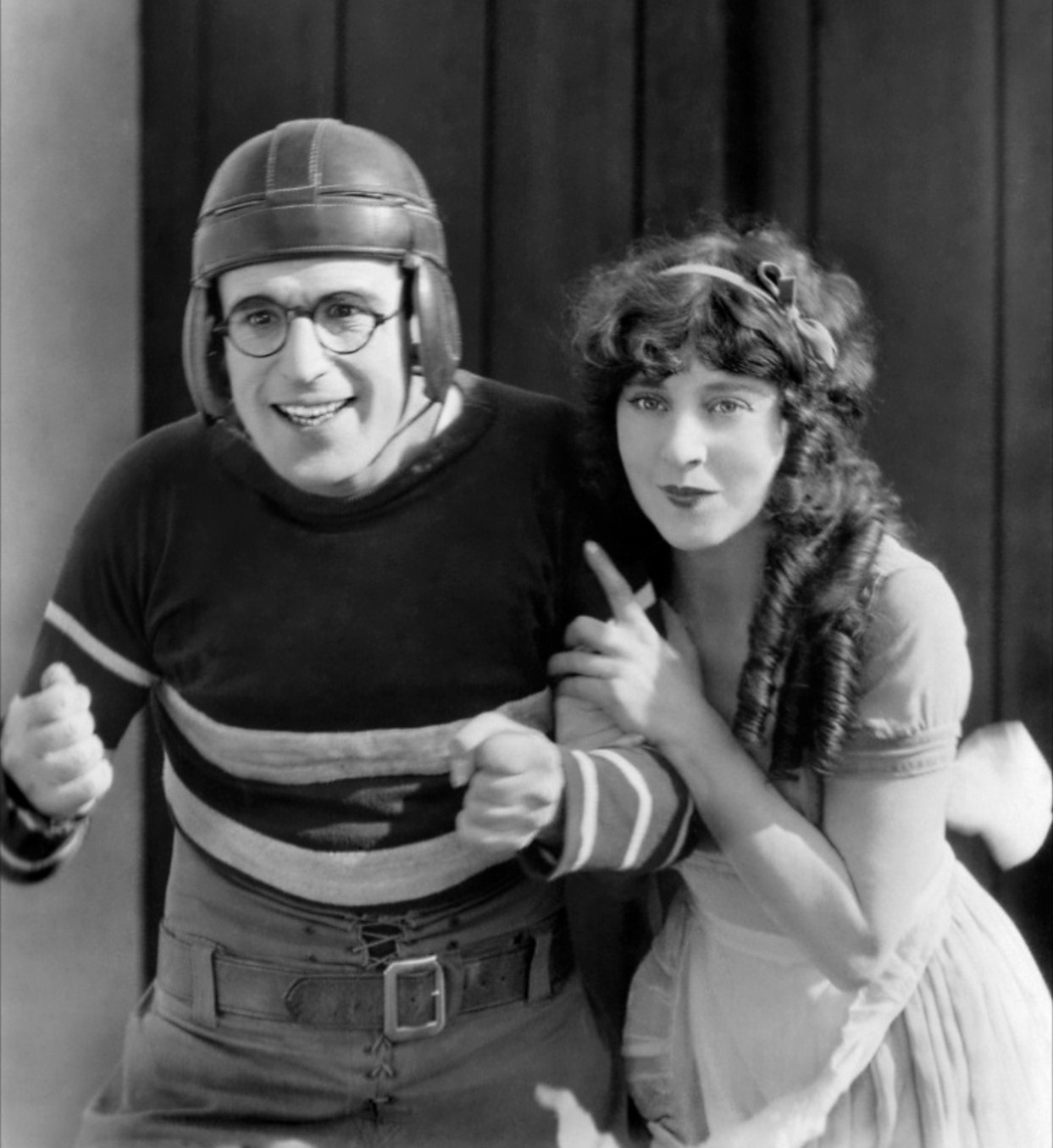
Harold Lloyd and Jobyna Ralston in “The Freshman”

•The Freshman (1925)-

Harold Lloyd is very excited about going to college after seeing a movie about a popular campus. Lloyd’s only purpose at college is to be the big man on campus. He achieves this by doing a silly dance before he shakes people’s hands and fumbling around the football field. However, he just makes a fool of himself. To review: I’m not a huge fan of Harold Lloyd actually (I am loyal to Buster Keaton), but this is actually one of my favorite silent movies. It’s heartbreaking to see how people make fun of him but also hilarious at the same time. I really don’t know what college life was like in the 1920s, but in my college experiences there is not one BIG popular person. I will say, I am on a fairly small campus of 6,500 people so there are notable figures but no one person who I would say is the most popular.

Pigskin Parade (1936)- Winston and Bessie Winters (Jack Haley and Patsy Kelly) are college coaches trying to have a winning season. Things are going rough until hillbilly Amos (Stuart Erwin) and his sister Sairy (Judy Garland)-also a redneck- come to campus.  Amos can throw a winning football pass after throwing melons on the farm. To review: Its been a long time since I’ve seen this movie but I remember it being pretty excruciating. Between Judy’s country accent and the Yacht Boys singing, it was pretty obnoxious.


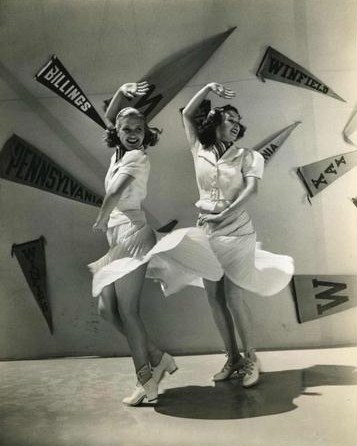
Rosemary and Priscilla Lane publicity shot for “Variety Show”

•Varsity Show (1937)-

Priscilla and Rosemary Lane (as Betty and Barbara) and friends are trying to put on a show on Winfield Campus, but the faculty doesn’t like swing music. They pull in former student and Broadway star Chuck Day (Dick Powell), to help with the show, but his last performances have laid eggs. To review: I love Priscilla Lane and Dick Powell, and its fun to see them in a movie together. However, this is another stereotypical song and dance college musical. I’m not sure I’ve ever seen in college put on as big of a show as they do in this movie.

Vivacious Lady (1938)-Francey (Ginger Rogers) marries college chemistry professor Peter (James Stewart). The marriage is a secret from his family because he is already engaged and his father (Charles Coburn)  is the college president. Stewart and Rogers go to extreme measures to stay together, including Rogers becoming a student at the college. To review: This is one of my favorite movies. Rogers and Stewart have wonderful chemistry and there are several funny moments. I did think most of the college students in Stewart’s class looked a lot older than college students though.

Bathing Beauty (1944)- Caroline (Esther Williams) goes back to her old job as a teacher at a girls’ college after a misunderstanding with her boyfriend Steve (Red Skelton). Steve tries to win Caroline back by finding a loophole in the rules and enrolling in the school. Comedic moments ensue with Red in a tutu and Harry James jazzing up music class. To review: I love this movie. Esther is beautiful in Technicolor. Xavier Cugat and Lina Romay spice it up with Latin rhythm along with other musical talents like Ethel Smith and Harry James. I know that James and Cugat don’t come and jazz up “I’ll Take the High Road” in music class in college, but it certainly does make college look fun. I also love the ever pert and fun Jean Porter in this movie. She really seems like the quintessential college/high school young lady of the 1940s to me.

Susan Peters is a co-ed with “Young Ideas”

Young Ideas(1943)- Romance author Josephine Evans(Mary Astor) marries college professor Mike (Herbert Marshall) and cancels her book tour.  Astor’s children, Susan (Susan Peters) and Jeff (Elliot Reed), oppose of the marriage, especially since it may mean their mother’s book career is over. Susan and Jeff enroll in college and do whatever they can to break up the marriage. To review: This is a classic, fun MGM movie from the 1940s. I love Herbert Marshall and he was really funny in this movie. Susan Peters and Elliot Reed were pretty bratty but Richard Carleson gave a nice balance to it. This movie seemed the most of what college might have been like-though I do wonder if freshman really wore little beanies.

•Andy Hardy’s Blonde Trouble (1944)- Andy Hardy (Mickey Rooney) goes to college and is surrounded by beautiful girls-his dream. Two twin blondes trick him and he falls for the icy Kay Wilson (Bonita Granville). Hardy competes with professor Dr. Standish (Herbert Marshall) for Kay’s attention. To review: I don’t like the Andy Hardy movies as much when he goes to college. However, the way college was represented seemed to be pretty realistic.

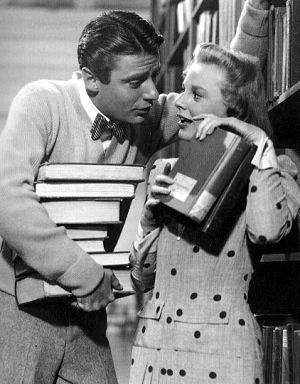
Peter Lawford and June Allyson in “Good News”

Good News (1947)- In the 1920s, co-ed librarian June Allyson isn’t exactly what you would call a vamp. Allyson falls for popular, football star Peter Lawford but he is interested in modern woman, Patricia Marshall.  Several songs are fit in during the pursuit of love, including a great number involving “The Varsity Drag.” To review: Once again, I wonder if in the 1920s, schools were so small to have one person who is the most popular? The movie is fun and colorful, but it seems more a vehicle for Joan McCracken and Patricia Marshall-neither who did much else in movies. I wish June Allyson was in the movie more, because she was the whole reason I watched it.

Apartment For Peggy (1948)- Peggy (Jeanne Crain) and Jason (William Holden) are married, and Jason is going to college as a chemistry major using the G.I. Bill.  Professor Henry Barnes (Edmund Gwenn), a professor at the college, has decided he has lived long enough and wants to commit suicide. The couple lives in a trailer, but needs more room because Peggy is expecting. The professor agrees to let the couple rent out his attic as an apartment and his views on life begin to change. To review: This is a really fun and cute movie. It is very light hearted but let me warn you for some sad parts. I think the college aspect is pretty realistic when put in perspective of post-war men using G.I. Bill to go to college and their wives and their struggles.

Mr. Belvedere Goes to College(1949)- Clifton Webb as Mr. Belvedere decides to enroll in college since his highest level of education is from the fifth grade.  Though he is older than all the students, Belvedere is considered a freshman and has to deal with ritual hazing. During all of this he makes friends with Tom Drake and beautiful Shirley Temple who has a secret. To review: The movie is very funny, and Clifton Webb gives a droll perfomance as always. Other than the hazing, I thought this seemed pretty similar to a real college. It was pretty large and it didn’t seem like there was that one person in charge.


Other college films:
College (1927)- Starring Buster Keaton
College Swing (1938)- Starring Bob Hope, Gracie Allen and Martha Raye
Dancing Co-Ed (1939)-Starring Lana Turner, Ann Rutherford,  and Artie Shaw
These Glamour Girls (1939)- Starring Lana Turner, Lew Ayres and Anita Louise
Second Chorus (1940)- Starring Fred Astaire, Paulette Goddard, Burgess Meredith and Artie Shaw
The Feminine Touch (1941)- Starring Rosalind Russell and Ray Milland
The Male Animal (1942)- Starring Henry Fonda, Olivia de Havilland and Joan Leslie
The Falcon and The Co-Ed (1943)- Starring Tom Conway
Mother Is A Freshman (1949)- Starring Van Johnson and Loretta Young
HIGH TIME (1960)- Starring Bing Crosby, Tuesday Weld and Richard Beymer
Joy in the Morning (1965)- Starring Richard Chamberlin and Yvette Mimeux

Check out the Comet Over Hollywood Facebook page 

Island of misfit Christmas movies


Stanyck, Bondi, MacMurray, Patterson and Holloway in “Remember the Night”: My favorite Christmas movie

Tis the season for Christmas posts. For these last five days before Christmas, I’m going to try to post several posts. Probably not every day, but at least throughout the week.

This post deals with two things my family and I love combined together: Christmas and movies.

For at least the past 22 years, it’s a Christmas family tradition for us to watch “Rudolph The Red-Nosed Reindeer” (1964), “A Charlie Brown Christmas” (1965) and “A Garfield Christmas” (1987) on Christmas Eve or Christmas Day.

Of course we also watch classic holiday films such as “The Bishop’s Wife” (1947), “Miracle on 34th Street” (1947), “White Christmas” (1954), “Christmas in Connecticut” (1945) and “It’s A Wonderful Life” (1946); just to name a few.

But instead of doing a worn out review of all of these wonderful classic films, I want to highlight some holiday films that are sometimes forgotten by the general public:


Rogers and Niven celebrating the New Year in “Bachelor Mother”

Bachelor Mother (1939):

I always forget this is a Christmas movie and I bet you do too. Polly Parish (Ginger Rogers) is working as a sales girl in a department store during the Christmas holidays. One day she finds a baby on the steps outside an orphange and picks it up before it rolls down the stairs. No one believes that it isn’t her’s and she is forced to take it home.  The store owner, J.B. Merlin (Charles Cobern) and his son David (David Niven) make sure that Polly doesn’t get rid of her baby, all during the Christmas season. To review: I love movies with babies and this is a very funny movie. My favorite part is when Rogers and Niven go out to celebrate the New Year.

Beyond Christmas (original title: Beyond Tomorrow) (1940): Last year, I had my mother tape this movie and we randomly watched it in the middle of the summer. This is one of my favorite Christmas movies. The movie stars Harry Carry, C. Aubrey Smith and Charles Winninger as three old bachelors who live together. Every Christmas they drink their Tom and Jerry’s and do nothing more.  But this year, the men decided to invite strangers off the street for Christmas dinner. The strangers (Jean Parker and Richard Carlson) eventually fall in love. The three old men die shortly after Christmas in a plane accident, but their ghosts help bring the couple together and work through rough times.  To review: It’s a really heartwarming, cute film. The whole thing might not take place during Christmas, but it reflects the spirit of Christmas.

 It Happened on 5th Avenue (1947): I only just saw this movie last Christmas and think it is really charming. McKeever the hobo (Victor Moore) lives in wealthy folks mansions when he knows they are away in another home. He invites recently evicted Jim Bullock (Don DeFore) and Bullock’s homeless army buddies to stay in millionaire Jim O’Connors (Charles Ruggles) mansion for the Christmas season. O’Connor and his daughter and ex-wife (Gail Storm and Ann Harding) come back to their mansion after family problems and live amongst the homeless folks, never telling them their real identity. To review: Its a really cute movie and also rather funny. Charles Ruggles and Ann Harding are perfect in it, and Victor Moore always plays the best absent-minded characters.

Love Finds Andy Hardy (1938): Mickey Rooney usually drives me bananas, but I really enjoy the Andy Hardy movies and this is my favorite.  Christmas doesn’t come without crisis for the Hardy family.  Mom Hardy has to go take care of sick grandma and Andy is swamped with girls:
– Polly Benedict (Ann Rutherford) is going away for the holidays leaving Andy without a date for the Christmas dance
– Andy Hardy agrees to take Beezy’s girl, Cynthia Potter, (Lana Turner) to a dance to discourage other dates
-Betsy Jenkins (Judy Garland) comes back to Carvel a grown up woman.
All the women causes a lot of confusion and crazy Mickey Rooney moments.  The Hardy’s are worried mom won’t be able to come home for Christmas, but in the end it all works out. Andy gets his date to the dance, Betsy sings and mom makes it home on Christmas Eve. To Review: It’s a really cute movie, and a chance to see Judy Garland treated like a young woman rather than a child. It’s also fun to see three of Andy’s love interests all in one movie.

Remember the Night (1940): A couple of years ago, Turner Classic Movies premiered this Preston Sturges film. With the release of the DVD last year, it’s gaining popularity, but still isn’t up to par with other Christmas classics. Lee Leander (Barbara Stanwyck) steals an expensive diamond bracelet and is on trial only a few days before Christmas. Prosecuting lawyer John Sargent (Fred MacMurray) postpones the trial until after Christmas, since it is hard to get a jury to convict someone as guilty before Christmas. John hates to see Lee spend Christmas in jail so offers to for her to stay with his mother (Beulah Bondi), aunt (Elizabeth Patterson) and farm hand (Sterling Holloway) in Indiana.  To review: This is my favorite Christmas movie. The two old women together bickering is adorable, Fred MacMurray and Barbara Stanwyck have fantastic chemistry and Sterling Holloway offers a lot of comic relief.

Hattie McDaniel putting the presents under the tree that General Hilton sent to her in “Since You Went Away”

Since You Went Away(1944): 

This is a World War II movie that takes place on the American home front. The film follows a year with the Hilton family: Ann (Claudette Colbert), Jane (Jennifer Jones) and Brig (Shirley Temple) as they struggle with their father away at war, rationing and taking in boarders. The whole movie isn’t a Christmas movie, only at the very end. The family has a Christmas party with friends and a few soldiers. They play games and try to forget that their father isn’t there to join in the fun and some loved ones were killed in the war. But in the end, they get the best Christmas present they could ever ask for. To review: This is sort of like “Meet Me in St. Louis”: The whole thing isn’t a Christmas movie, but can be considered a Christmas movie. It’s one of my all time favorite films. I think that it really shows the true Christmas spirit and what is imporant at Christmas: family.

Check out the Comet Over Hollywood Facebook page

Evolution of a classic film fanatic

It started with a girl named Maria and a boy named Tony who thought something was coming. That’s what I usually tell people when they ask how I became a classic movie fan: it happened on a fateful March evening in 2003 when I saw “West Side Story” (1961). I became obsessed, end of story.

But my “West Side Story” obsession (which is a whole other blog post) isn’t even close to where my classic film education began. Let’s travel back in time to 1988, the year I was born. Or maybe 1991, I would have been a bit more coherent to films at age three.

My parents introduced my two older sisters and me to classic film at an early age. Some of these movies were Disney movies like “Lady and the Tramp” or “Swiss Family Robinson” or family friendly movies like “White Christmas” and “Yankee Doodle Dandy.”

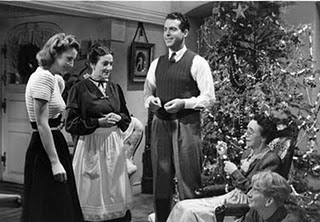
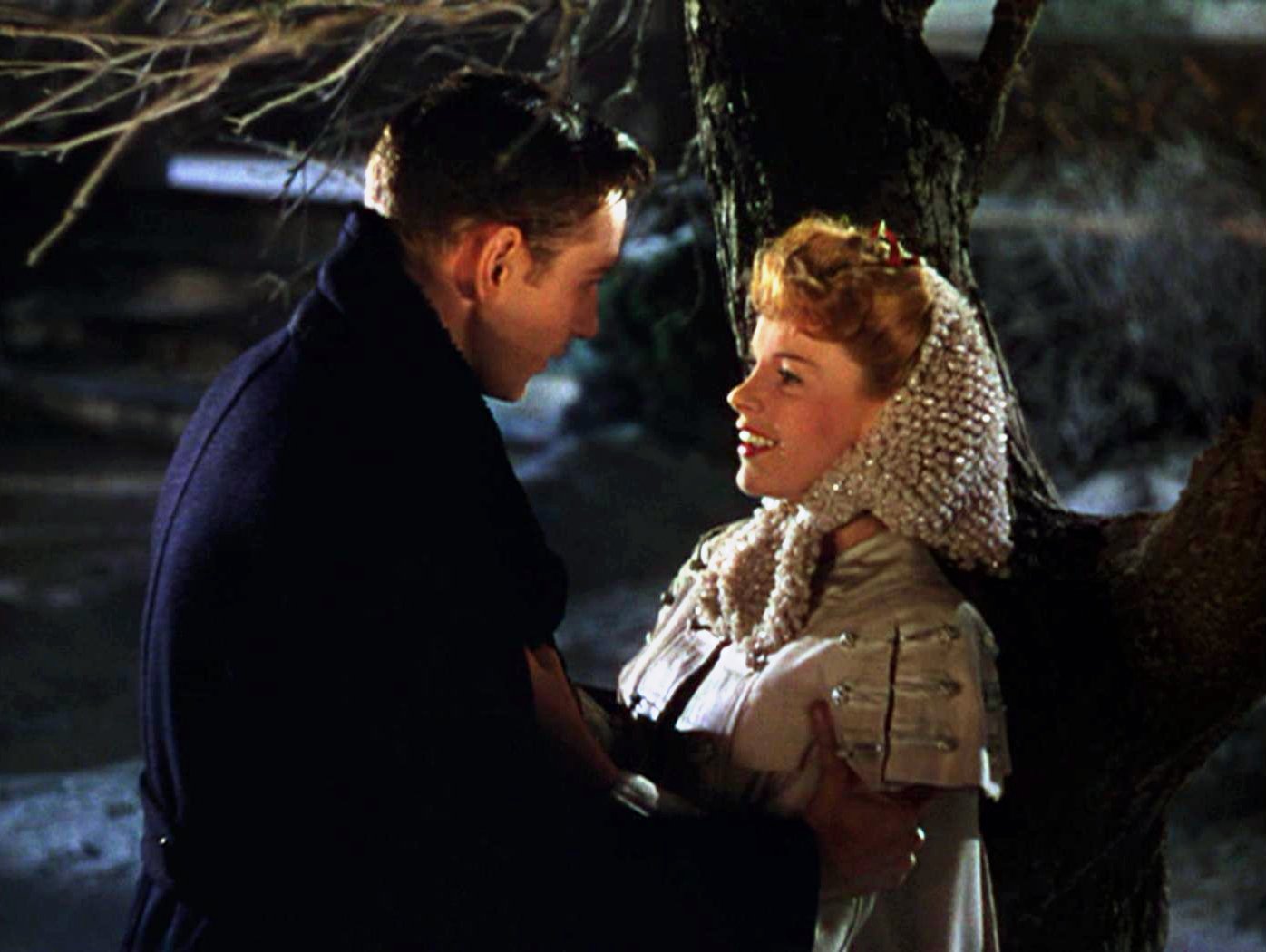
Tom Drake and Judy Garland in “Meet Me in St. Louis” (1944)

I  distinctly remember watching “Meet Me in St Louis” when I was five or six and thinking that Judy Garland looked pretty or laughing at Julie Newmar’s name “Dorcas” in “Seven Brides for Seven Brothers.”

Basically classics have always been in my life, but as a child I never realized that they were old and thought all of these wonderful movies were brand new.

My real interest in movies started when I was in third grade and I saw the cartoon version of “Anastasia” on a rainy November day in 1997. No this isn’t a classic movie, but it started a long line of movie obsessions to come.  I mean, I even thought I was somehow the lost princess Anastasia Romanov. I was hooked.

Fast-forward to middle school. I became interested in shows on TVLand, The Monkees and 1960s pop culture. I was interested in anything old, and naturally gravitated towards movies, which is probably where it all began.

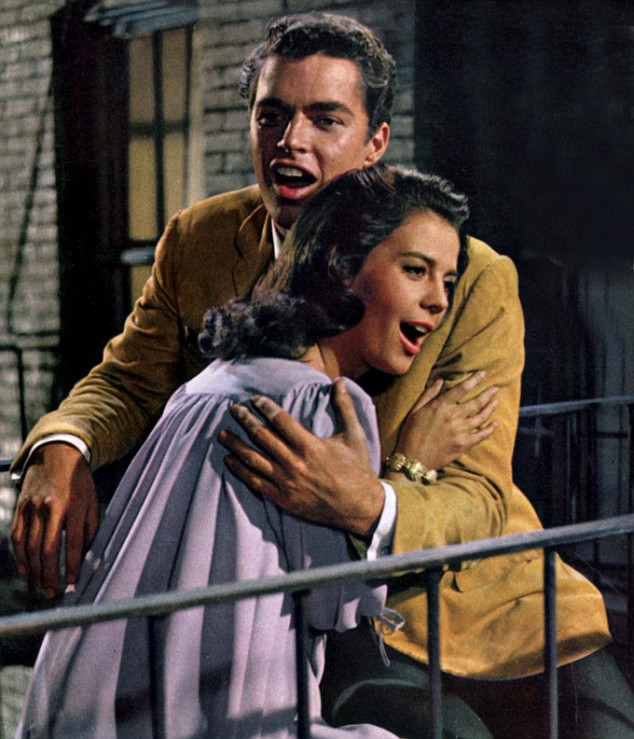
But the real gateway drug to the classic film addiction was “West Side Story” (1961). On an evening in March 2003, my dad said, “You like musicals and old movies; you should see ‘West Side Story.’” He later said he created a monster and wasn’t joking at all.

Richard Beymer and Natalie Wood in “West Side Story” (1961), the film I was obssessed with for two years.

From “West Side Story,” I snowballed into a musical love and I went out of my way to tape them off the television. I started a new musical list that is  still growing at 390 titles.

I then found actors I liked, like Doris Day and Jane Powell, and wanted to see their movies and the interest just grew and grew and grew. Now, I’m not obsessed with one particular actor or movie, it’s more that I’m crazy about the whole classic film shebang.

As a rule I only watch movies from the beginning of film to the mid-1960s. Pre-code movies are great because their vulgarity is done in a tongue-and-check way that sometimes can go by unnoticed if you aren’t paying attention. Once you get into the 1960s and beyond, the plots run thin in an attempt to be artistic, nudity isn’t rare and morals go out the window. Also actors from the Golden Era were fading away and the studio system was crumbling.

I guess if I had to make an analogue with how it all started, “West Side Story” would have been that first beer that led me into old movie alcoholism. It didn’t matter what I watched as long as it fulfilled my movie viewing needs. I think my viewing is a bit more mature than that now. Sure I still watch a few clunkers, or watch a stinker movie for the sake of fulfilling a classic actor list (like “Night of the Demon” for Dana Andrews) but it is just all part of the experience.

What kind of movie fan am I now?

•I make monthly lists from Now Playing to tape; usually 30 to 40 movies a month. We use A LOT of VHS tapes.

•I only buy books, paper dolls, posters or anything of that nature that is movie related. I often search Ebay for classic film memorabilia, and as much as I would enjoy Lana Turner’s evening bag from “Imitation of Life”, as a 21-year-old college student, that really isn’t in my budget.

•I don’t have any real obsession now. I have my favorite movies, actors and actresses but no one that I hyperventilate over when I think about them. I guess the only movie that would come close to that is “Since You Went Away” or the actor Van Johnson.

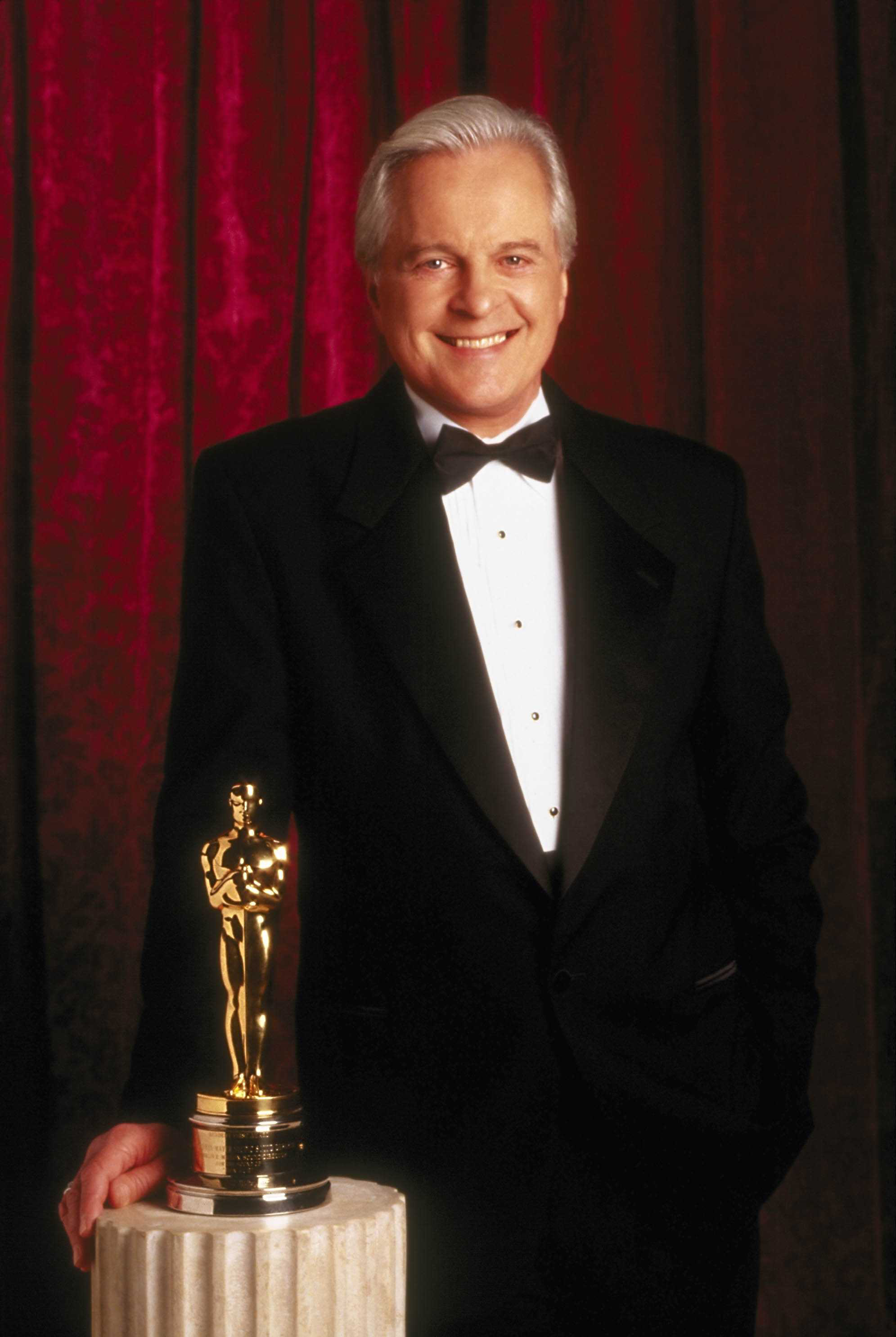
•I want to meet Robert Osborne one day. He is my hero and I think we would

Robert Osborne: My hero

be best friends. Robert, if you just happen to be reading this, let’s meet in Atlanta and have lunch, okay? I’m just in South Carolina so it’s not that far.

•I’ve come to realize that the Hollywood I dreamed about in middle school and early high school is non-existent now. I used to dream about going to Hollywood and thinking it would be like it was during the Golden Era: clean, historically preserved and bowing down to Hollywood greats like Joan Crawford. My family took a family vacation there in 2006 and I’ve realized there is nothing for me there. Hollywood is not interested in preserving history, and even though the Hollywood Bowl was cool, it’s not like Kathryn Grayson will be singing a concert there ever again.

Check out the Comet Over Hollywood Facebook page for the latest updates.