This week, Comet Over Hollywood is celebrating Halloween with slightly more offbeat horror films.
Starting in the 1960s with Bette Davis and Joan Crawford in “Whatever Happened to Baby Jane?” (1962), famous actresses of the 1930s and 1940s who were now “past their prime” were cast in semi-campy horror roles.
Actress Tallulah Bankhead’s last film happened to be one of these horror films. Made in the UK under the title “Fanatic” and called “Die! Die! My Darling! (1965) in the United States, actress Stefanie Powers co-stars with Bankhead.
Directed by Silvio Narizzano, Bankhead plays Mrs. Trefolie whose son Steven died tragically. At the time of his death, Steven was engaged to Patricia Carroll, played by Stefanie Powers, but Patricia intended on breaking off the engagement.
Patricia kept correspondence with Mrs. Trefolie and decides to pay her a visit at her secluded home while she is in England with her fiancé Alan, played by Maurice Kaufmann. Alan warns her not to go alone, but Patricia doesn’t listen.
What Patricia plans to be a four-hour visit turns into several days trapped in Mrs. Trefolie’s home.
Mrs. Trefolie is obsessed with her son and is fanatically religious. For example, Trefolie insists Patricia stays until the next morning for a private church service at home which lasts 12 hours.
Mrs. Trefoile holds Sunday service at her home with her servants. (Bankhead, Donald Sutherland, Yootha Joyce, Peter Vaughan)
Dinner is served after the church service, but the food is plain, unflavored, vegetarian and they use no condiments, because “God’s food should be eaten unadorned.”
When Mrs. Trefoile notices a lipstick stain on Patricia’s glass, she is told to wash her makeup off. There also aren’t any mirrors in the house because they encourage vanity and sensuality.
Patricia is told to change immediately when she is wearing a red sweater, because it is the “Devil’s color.” Mrs. Trefoile believes that Patricia is her daughter-in-law, because she qualifies the engagement to Steven as marriage. In her religious beliefs, Mrs. Trefoile says Patricia could never remarry, even with a dead husband, because it is against God’s will and she is eternally wedded to Steven….though they never were married. Mrs. Trefoile also refuses to go to a local church, because the pastor remarried after his wife died several years before, believing he is forever married to the first woman.
When Mrs. Trefoile finds out Patricia is newly engaged and was planning to breakup with Steven before his death, she blames Patricia for Steven’s death, saying she killed him, and locks her in the house. Helping the elderly woman through all of this are her two servants, who hope to inherent her money.
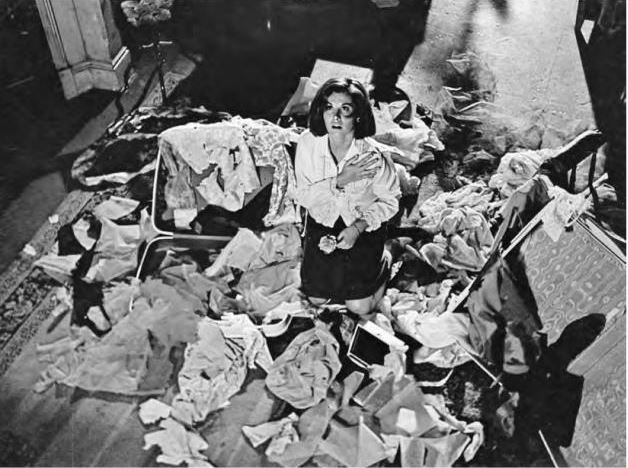
By depriving Patricia of food and locking her away in solitude, Mrs. Trefoile says she is trying to “cleanse Patricia’s soul.” This includes interrogating Patricia about her virginity and tearing up all of her beautiful clothing and jewelry. Mrs. Trefoile believes she hears her son tell her to murder Patricia, and she sets out to do so.
Stefanie Powers’ clothes destroyed by Mrs. Trefoile and her maid, Kate.
Not only is “Die! Die! My Darling!” Bankhead’s last film, but also her first horror movie, according to the LIFE magazine article, “One Old Trouper Comes Back” by Conrad Knickerbocker.
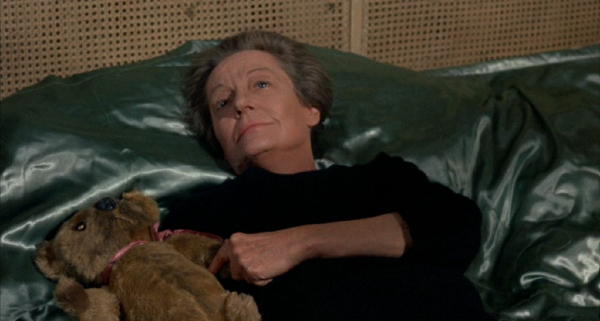
The film is based off the novel “Nightmare” by Anne Blaisdell. The English horror movie is enjoyable. I thought the religious fanaticism added a level of intrigue, depth and craze to Bankhead’s character, rather than the usual overbearing mother role. Mrs. Trefoile’s obsession with her dead son is exhibited by believing that his soul is in the house and responding to her, his photos everywhere and cuddling his teddy bear as she sleeps.
Although Bankhead’s character says she doesn’t believe in vanity, in the film, we see scrapbooks of Mrs. Trefoile in her younger years and costumes hang in the basement, suggesting that at one point she was an actress. (One of the photos shown in the film is Bankhead in her stage role in “Little Foxes.”)
Admittedly, I was rather frustrated while watching “Die! Die! My Darling!” There are several moments where you think Stefanie Powers can overtake this rickety old woman who keeping her captive, but she flails around and fails.
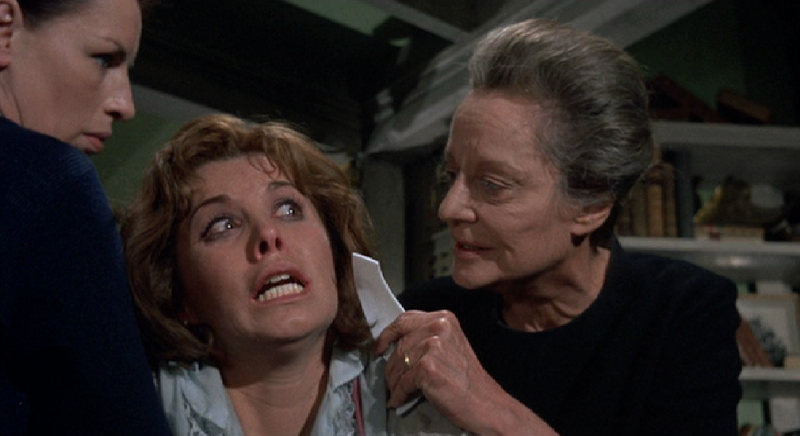
Mrs. Trefoile threatens to cut Patricia’s face so she will no longer be attractive to men. Maid Kate holds Patricia so she can’t escape.
Powers’ character had a sharp tongue but was too weak and uncoordinated to fight Bankhead’s character alone, and this frustrated me greatly. However, while I was frustrated with Powers in the film, I realized that was how her character was written in the script.
Another odd thing about “Die! Die! My Darling!” was the music. For the first half of the movie, the soundtrack was quirky and almost comedic harpsichord music. The music could be comparable to the 1960s English TV show “The Avengers,” starring Diana Rigg. However, as the cat-and-mouse torture between Powers and Bankhead escalated, the music became more serious and exciting.
Mrs. Trefoile talks to her dead son while holding his Teddy bear.
I believe my favorite character in the film was 30-year-old actor Donald Sutherland in one of his first film roles. Sutherland played a worker at Mrs. Trefoile’s home who had special needs. I was a little disappointed he wasn’t in the film more, and his character wasn’t given much of a purpose.
“Die! Die! My Darling!” is a little more quirky and humorous than other horror movies starring actresses like Joan Crawford or Bette Davis. However, while I wouldn’t rank the film higher than “Whatever Happened to Baby Jane?” (1962), “Hush, Hush Sweet Charlotte” (1964) or “Strait-Jacket” (1964), the cat and mouse interactions between Bankhead and Powers were intriguing and made for an enjoyable Friday evening film.
Sidenote: When I watched this movie with my parents, my Dad said all he could think about was the Metallica song “Die, Die, My Darling.” The song “Die, Die, My Darling” was originally written by The Misfits and later covered by Metallica.
If it wasn’t for either of my parents, I wouldn’t like classic films today.
As I have said on Comet numerous times, my parents rolled out films such as “Yankee Doodle Dandy” or “Seven Brides for Seven Brothers” when my sisters and I were toddlers.
It was my dad who later introduced me to “West Side Story (1961) when I was 14, because he noticed my growing interest in musicals. Dad might have later regretted showing me the film when a full blown obsession followed our viewing of the modernized musical version of “Romeo and Juliet.”
This classic film encouragement is partially because they grew up with a love for the classics themselves.
For Father’s Day, I decided to do a brief Question and Answer session with Dad, Bill Pickens, about classic films.
Me: Who are your favorite actors and actresses?
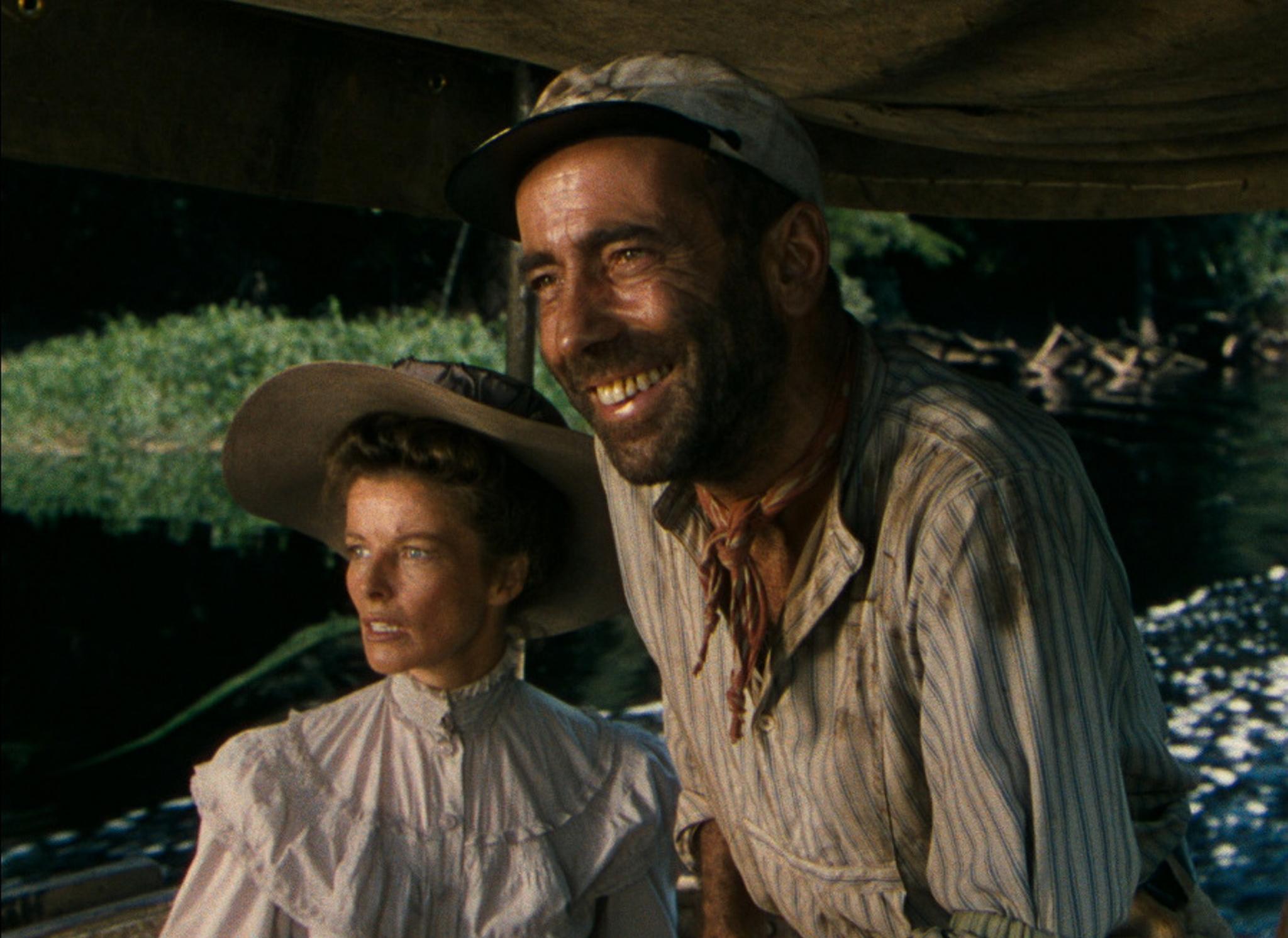
Katharine Hepburn and Humphrey Bogart in “African Queen” (1951)
Dad: My favorite actors are Jimmy Stewart and Gregory Peck. I enjoy their movies and they seemed like they were down to Earth, good people. I also like Humphrey Bogart, because some of my favorite films are “African Queen,” “Casablanca” and “We’re No Angels.”
My favorite actresses are Maureen O’Hara (Dad has always had the hots for Maureen) and Katharine Hepburn.
Me: What are your favorite movies?
Dad: Lawrence of Arabia, The King and I, Twelve O’Clock High, Lion in Winter, The Longest Day, The King and I.
Me: What kind of movies would you go to see as a kid? (Dad was born in 1955, for some reference)
Dad: My older sister Katie and I went to see movies every Saturday afternoon, because we lived on a military base and it was only 25 cents. We would see everything that came out from Disney movies to westerns.
I remember one time, some GI was trying to get fresh with Katie and I kicked him in the leg. I was her bodyguard at the movies. I don’t remember what movie it was but we lived in Ft. Lewis in Washington.
Me: Why do you like older movies?
Dad: They are classy and have interesting story lines. The movies didn’t have to have all the action, like you do today, to tell a good story.
Me: What is the worst movie I have had you watch?
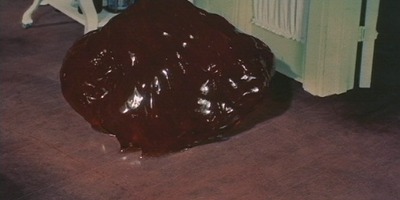
Dad: I can’t think of any really bad ones. “The Blob” was pretty bad though, because it was so campy.
The fearsome monster in “The Blob” (1958)
My Dad has been the only man in a family of all girls for the past 35 years. From putting together Barbie houses, helping us with math homework, nailing taps on the bottoms of dancing shoes or fixing our cars, Dad has been supportive and a good sport.
Probably two of the worst movies we all suffered through were the Doris Day films “Jumbo” and “The Ballad of Josie.” The only film Dad couldn’t take was “Calamity Jane.” He didn’t even make it through the eight minute intro song, “Deadwood Stage.”
“Calamity Jane isn’t a bad movie,” he said. “It’s just not my style.”
He’s been supportive of my film interest and, though he said he couldn’t think of any bad movies, has sat through some terrible ones, all for “the cause” of my movie love.
Happy Father’s Day, to my Dad who supports my interest and who I have even help expand on his.
Dad in a selfie with his three daughters. Comet is back left.
On June 6, 1944, Allied forces stormed Omaha Beach in the Normandy Invasion, known as D-Day.
A few of those soldiers were established actors or later pursued a career in Hollywood. Here are a few of those men that served in D-Day:
Lt Col David Niven, Royal Marine Commando, Normandy 1944
David Niven: The British actor was a Lt. Colonel of the British Commandos. He also worked in the intelligence branch and was later assigned to the U.S. First Infantry.
Niven was one of the first officers to land at Normandy. He later was one of 25 British soldiers to be awarded the U.S. Legion of Merit Medal, according to a 1983 book by Don McCombs and Fred Worth.
Richard Todd during World War II
Richard Todd: Capt. Todd was one of the first British officers to land on D-Day. Todd was part of the British airborne invasion, that took place June 5 through June 7. During Operation Overlord, Todd’s battalion were the reinforcements parachuted in after the gliders landed and captured Pegasus Bridge to prevent German forces crossing the bridge and attacking.
Todd’s battalion was led by Major John Howard, who Todd played in “The Longest Day”(1962). The beret that Todd wears in the film is the one he wore on D-Day. Producer of THE LONGEST DAY, Darryl F. Zanuck, wanted Todd to appear in the film since he actually took part in the D-Day invasion, further adding realism to the documentary-like film.
Robert Montgomery in his Naval uniform during World War II.
Robert Montgomery: American actor Montgomery enlisted in World War II before the United States entered the war.
Montgomery became a PT boat Lt. Commander and was part of the D-Day invasion on board the destroyer, USS Barton (DD-722).
After serving five years of active duty, Montgomery was awarded a Bronze Star, the Good Conduct Medal, the American Defense Service Ribbon, the European Theater Ribbon with two Battle Stars, one Overseas Service Bar, and promoted to the rank of Lt. Commander. (1904-1981)
Actor Charles Durning during World War II. He served in the United States Army.
Charles Durning: American actor Durning served in the United States Army. He was in one of the first waves to land on Omaha Beach during the D-Day invasion. Durning was the only soldier in his company to survive, according to KPBS broadcasting.
Durning was wounded nine days after the landing and earned a Purple Heart. Durning was also awarded the Silver Star.
Actor James Doohan was shot several times during the Normandy Invasion.
James Doohan: Canadian actor Doohan served in the Canadian Army. Doohan was in the Juno Beach invasion on D-Day. During the invasion, Doohan was shot in the leg, chest and lost his right middle finger.
Writer’s note: This post was edited in June 2023 to remove Alec Guinness, as it was noted this was not accurate. In addition, there are several actors who are mentioned as being there during D-Day, but this is also inaccurate. For example, Henry Fonda is mentioned in several articles. While Fonda appeared in the film D-Day film, THE LONGEST DAY and also served during World War II, he did not take part in the Allied Invasion. In June 1944, Fonda was on the USS Curtiss, which was at the Kwajalein Atoll in the Pacific. Art Linkletter also was not at D-Day.
My eyes welled with tears behind my 3D glasses.
“If I ever go looking for my heart’s desire again, I won’t look any further than my own back yard,” Dorothy Gale said at the end of “The Wizard of Oz” (1939).
I sat in the theater trying to collect myself during this unexpected emotional moment back in October when “Wizard of Oz” was re-released in 3D.
And then it dawned on me: I’m turning into my mother… and I’m fine with that.
For years I’d look over at Mom while we are watching a movie and say, “Mom. Why are you crying?”
Judy Garland singing “Somewhere Over the Rainbow” in “Wizard of Oz.”
Judy Garland singing “Have Yourself a Merry Little Christmas” in “Meet Me In St. Louis.” And then again at the end of the movie when she excitedly says, “Right here, in our hometown” about the World’s Fair.
Now I get it. Now Mom and I wipe our eyes together during the train scene of “Since You Went Away.”
I’ve cried during movies for several years–“West Side Story” and “Music for Millions” at age 13 are the earliest times I can think of.
But now in half the movies I watch, I find myself empathizing instead of sympathizing. As I have grown up, I find I share a deeper emotional connection with my mom through the movies.
At Turner Classic Movies Film Festival, I left “East of Eden” sobbing.
James Dean’s father, Raymond Massey, has a stroke in the film and they aren’t sure if he can make it.
Massey weakly whispers to his son, “Replace the nurse, but don’t get anyone else. You take care of me.”
The scene reminded me of my Mom care-giving for my Grandmama who passed away in January. Grandmama also gave me the movie as a Christmas gift one year.
James Dean talks to movie father Raymond Massey after his stroke in “East of Eden.”
When I was in elementary and middle school, I would pick on my Mom and sisters for crying during films. Now I join them.
As we get older and experience more of life, not only are we attached to the characters in the films, we can understand and relate more to what the characters in the films are going through. We may chuckle sheepishly with understanding as we reach for tissues.
Now when I see Bonnie Blue fall off her horse and break her neck in “Gone with the Wind,” I don’t think, “Stupid little girl should have listened to her parents.” I think about how the loss of a child can rip apart a family.
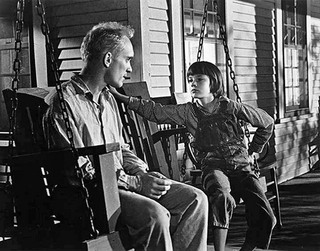
Scout with Boo Radley in “To Kill a Mockingbird.”
When Scout sweetly says “Hey Boo” in “To Kill a Mockingbird ” as he’s hiding behind the door, I understand the innocence of a child who sees the good in a man feared by the whole town.
When nurse Paulette Goddard says goodbye to Marine Sonny Tufts in “So Proudly We Hail,” she knows that she may not see him again because he may die in battle.
But I’m not turning into Mom just through film watching. I notice I have picked up her traits as I’m cooking, cleaning and worrying about people I care about. Maybe one day I’ll be just like Mom, but right now I’m not sure if I could even scrape a mixing bowl as beautifully as Lisa Pickens.
My parents introduced me to classic film as a toddler. Now, even through our emotions, crying is just another way movies bring us closer together.
Happy Mother’s Day
I asked Mom to make me a list of films that she cries during. “I think the list would have been shorter if you had asked for a list that I don’t cry during,” she said. Here is Mom’s list of weepers:
Jennifer Jones says goodbye to Robert Walker as he leaves for World War II in “Since You Went Away.”
Gone With The Wind
Wizard of Oz
Sound of Music
Stella Dallas
One Foot in Heaven
Meet Me In St. Louis
Since You Went Away
To Kill A Mockingbird
The Best Years Of Our Lives
How Green Was My Valley
To Each His Own
Penny Serenade
Make Way For Tomorrow
Little Women ( from 1933 and 1949 )
White Christmas
Goodbye Mr. Chips
Mrs. Miniver
The Pride of the Yankees
West Side Story
So Proudly We Hail
Three Came Home
The Homecoming
The Glenn Miller Story
Born Free
Ben Hur
ET
True Grit ( with John Wayne )
Old Yeller
Parent Trap (with Hayley Mills )
Pollyanna
Little Princess ( with Shirley Temple )
Brave
Toy Story 3
Muppets Take Manhattan
Driving Miss Daisy
Field Of Dreams
Lassie Come Home
Homeward Bound
Cinderella
Little Mermaid
Harry and the Hendersons
Forrest Gump
Cheaper By The Dozen ( with Clifton Webb )
The Bishop’s Wife
It’s a Wonderful Life
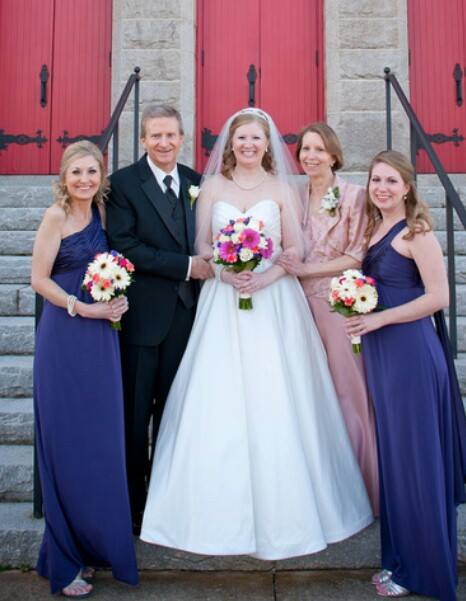
With Mom, Dad and my two sisters at my sister Andrea’s wedding in February 2014.
Love comes in many forms and opposites attract- Paula Abdul even said so in her music video with the singing cat.
However, sometimes people marry who just don’t quite seem to fit.
Here are a few examples of some odd Hollywood couples. Apparently, these celebrities agree that the puzzle pieces didn’t quite fit since all of these marriages ended in divorce.
These prove that Neil Simon doesn’t have the market cornered on odd couples.
Ernest Borgnine and Ethel Merman (June 26, 1964 – July 28, 1964)
Ethel Merman and Ernest Borgnine on their wedding day in 1964.
Borgnine was the gruff working man in films and Merman was the glamorous Broadway diva. The two met in November of 1963, the same year Borgnine divorced from his wife, Mexican actress Katy Jurado.
Merman was nine years older than Borgnine. After they met, Borgnine started courting Merman.
“I’ve never been in love, really in love, before,” Merman told reporters according to Ethel Merman: A Life by Brian Kellow. “For the first time in my life I feel protected.”
After a six month courtship, the two were married.
“Everyone thinks she’s loud and brash. But she’s the opposite,” Borgnine was quoted in Brass Diva: The Life and Legends of Ethel Merman by Caryl Flinn. “She’s soft, gentle and shy. And you know me, I’m ‘Marty.’”
The two married on June 26, 1964 and were divorced 32 days later on July 28, 1964.
Merman never gave reasons for the divorce and Borgnine said in interviews it’s because more people knew him than her on their honeymoon.
“Everybody knew me, but they didn’t know Ethel overseas,” Borgnine said in an interview. “The more they recognised me, the madder she got. That’s what hurt her, so she started taking it out on me.
After the divorce, Merman referred to the marriage as “That thing.” In her autobiography, the chapter “My Marriage to Ernest Borgnine” is one blank page.
Ava Gardner and Mickey Rooney (Jan. 10 1942 – May 21, 1943)
Mickey Rooney and Ava Gardner in 1941.
Newcomer to MGM Ava Gardner met star Mickey Rooney when he was dressed as Carmen Miranda for “Babes on Broadway.” While dressed as the Brazilian Bombshell, Rooney asked Gardner for her number.
North Carolinian, inexperienced Gardner had just arrived to Hollywood and Rooney was a well-known playboy.
“I married him because he wanted to get in my britches,” Gardner once said. “And I wasn’t going to let him until we were married.”
MGM studio head Louis B. Mayer and Rooney’s parents were not pleased with the couple’s marriage.
“I fell madly in love with Ava the first night I went out with her,” Rooney once said. “And later when I asked her to marry me, she wouldn’t have any part of it, like the problem I had getting her number, until I wore her down.”
Rooney spoke fondly of his brief marriage to Gardner in a documentary on her life. The documentary said Gardner thought their marriage would be like her parents: cooking for Rooney and having children. Rooney preferred the night life.
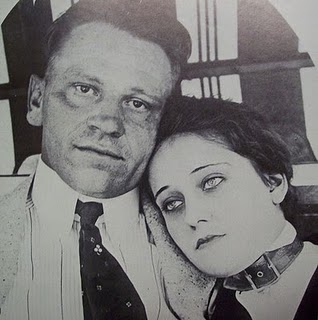
Gloria Swanson and Wallace Beery (March 27, 1916 – March 1, 1919)
Wallace Beery and Gloria Swanson
“Two of the more trivial topics I never discuss are my marriage to Wallace Beery and those frozen dinners which have become famous with my name on them,” Gloria Swanson said.
The two were married after they starred in “Speedie Goes to College” in 1915.
Swanson was a glamorous leading lady and Beery was a gruff, burly man who was notoriously difficult to work with.
Swanson writes in her autobiography “Swanson on Swanson” that Wallace Beery made many forceful advances on their wedding night, leaving her bleeding and in pain.
Swanson also wrote he would pick up her salary for her at the studio and spend it before she saw it.
Beery cheated on Swanson and was abusive. In her autobiography, she writes that he gave her pills when he found out she was pregnant, and implies Beery made her get an abortion.
She woke up in the hospital and a nurse told, “You have nothing to be down in the mouth about, honey. You’re young. You’re pretty. You’ve got all the time in the world to have another baby.”
The couple separated and divorced two years later.
Richard Ney and Greer Garson (July 24, 1943 – Sept. 25, 1947)
Greer Garson and Richard Ney
Ney met Garson while he was playing her son in the film “Mrs. Miniver.”
He was 12 years younger than the Academy Award winning actress.
Ney asked Garson out for dinner and dancing, and she accepted, but she remained distant from her on-screen son during the remainder of the filming for “Mrs. Miniver.”
“I went dancing with Mr. Ney and I had the most beautiful time,” Garson was quoted in her biography.
MGM studio head Louis B. Mayer disapproved of their relationship and it would be unfavorable publicity for an on-screen mother and son to date, according to Garson’s biographer.
They kept their romance secret until “Mrs. Miniver” premiered, and Mayer was right- the couple received unfavorable publicity. Garson told reporters she wanted to marry Ney because he made her feel younger, according to Garson’s biographer.
However, gossip columns began talking about their unraveling marriage.
In the second Miniver film, “The Miniver Story,” Ney’s character was recast.
Linda Darnell and J. Peverell Marley (April 18, 1943 – Feb. 20, 1951)
Pev Marley and Linda Darnell on their wedding day.
Darnell was 20 when she married 42 year old Marley.
Darnell started in Hollywood as a teenager and didn’t have a father figure growing up. The cinematographer was sort of a mentor to the young girl, according to the Biography documentary, “Fallen Angel.”
Marley was a close friend of Darnell’s frequent leading man Tyrone Power. Marley helped sculpt Darnell’s Hollywood image, according to the book Hollywood Beauty: Linda Darnell and the American Dream by Ronald L. Davis.
Marley and Darnell would occasionally frequent night clubs but the press dismissed him as an old friend and escort, according to Davis’s book.
While Pev Marley remained a constant form of strength, the two eloped to Las Vegas. Fox studio head Darryl F. Zanuck was furious, saying it would ruin her image. No one had seen the two as more than friends.
“I like him and age doesn’t matter,” Darnell wrote in fan magazines. “I feel people meant well when they busy bodied about me marrying Pev. It’s just they couldn’t know the truth.”
Darnell announced the two separated while filming “My Darling Clementine” (1946), but then the two began seeing each other while she was filming “Forever Amber” (1947). The two then adopted Charlotte, nicknamed “Lola.” They separated again in 1948 and finally divorced in 1952.
Lupe Velez and Johnny Weissmuller (Oct. 8 1933 – 1939)
Lupe Velez and Johnny Weissmuller in 1935.
Velez’s relationship had recently ended with Gary Cooper when she met Weissmuller.
She was known as the “Mexican Spitfire” and Weissmuller was Hollywood’s Tarzan.
Velez and Weissmuller were staying in the same hotel one night. She called up his room to ask him down for a drink. He hung up on her because he thought it was someone joking. Velez called back and was furious. He apologized and went down to her room, according to the book Tarzan, My Father by Johnny Weissmuller.
Weissmuller was already married to Bobbe Arnst when he started his relationship with Lupe in 1932.
Weissmuller’s son wrote that Velez was good for Johnny, because she was funny and made him laugh. However, she was also supposedly a manic depressive and had low times and also had a very bad temper.
“Dad just couldn’t handle her,” Weissmuller, Jr. wrote.
Once they were married, the two realized they were opposites. Velez went to bed late and woke up late and Weissmuller went to bed early and woke up early. Lupe was spontaneous and Weissmuller wasn’t. She once said in 1934 she felt they would go on quarreling forever, according to the book Lupe Velez: The Life and Career of Hollywood’s “Mexican Spitfire” by Michelle Vogel.
The two separated several times and Velez had several affairs, Weissmuller, Jr. wrote.
But the couples split was supposedly over a dog, according to both Vogel and Weissmuller, Jr.
Weissmuller came home and his dog Otto didn’t great him. When he asked Velez where he was, she said a stranger came in and killed him. Weissmuller said she was lying, packed his bags and never returned.
Arthur Miller and Marilyn Monroe (June 29, 1956 – Jan. 20, 1961)
Play write Arthur Miller and Marilyn Monroe in 1956.
Though Joe DiMaggio and Marilyn Monroe were an odd couple, they seem normal in comparison to Monroe and play wright Arthur Miller.
Monroe’s glittering screen persona better matched DiMaggio’s baseball fame better than Miller’s literary standing.
Miller liked how Monroe listened to his ideas. Monroe liked how intelligent he was and how he supported her career and ambitions, unlike DiMaggio, according to the book The Secret Life of Marilyn Monroe by J. Randy Taraborrelli.
When they married, Miller told the press that Monroe would make one film every 18 months, lasting eight weeks shooting time, and be a wife when she wasn’t making films, according to BBC.
Their relationship supposedly started to decline during the filming of “Let’s Make Love” (1960). Monroe had an affair with Yves Montand, who was also friends with Miller, according to Arthur Miller: His Life and Work by Martin Gottfried.
Supposedly their divorce was over their different lifestyles. At the time of their divorce, Miller was working the script for Monroe’s film, “The Misfits” but it was said they barely spoke on set, according to the BBC.
Monroe died nearly a year later after their divorce.
Apparently Miller was “haunted by Monroe” because he “never resolved their relationship or understood his role in the public’s ongoing obsession with her,” according Gottfried’s book.
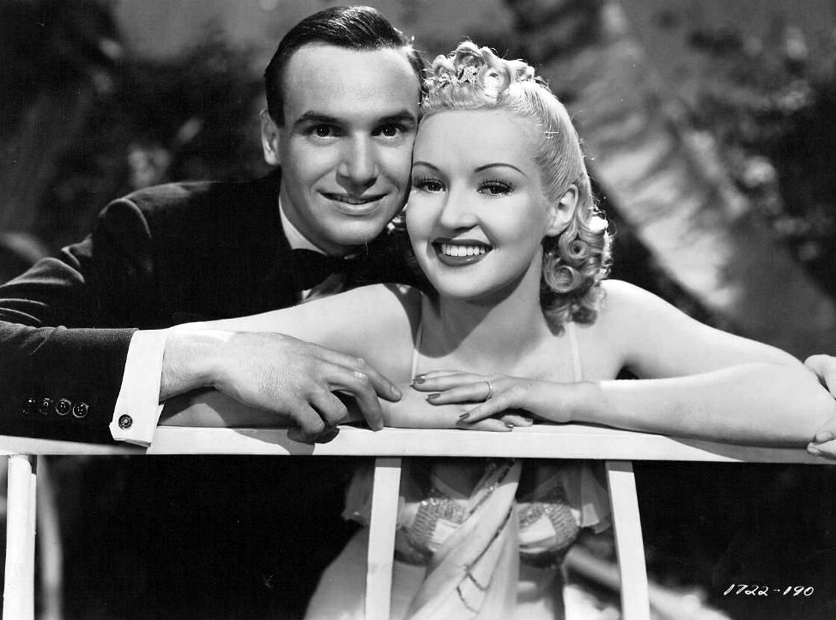
Jackie Coogan and Betty Grable in “College Swing” (1938)
The glamour girl marries the former child star turned comedian.
The couple had a long engagement and Grable’s contract didn’t allow her marry before she was 21, according to Notable American Women: A Biographical Dictionary.
Grable and Coogan were married while he was fighting his lawsuit over misappropriation of the salary he earned as a child star. Part of the reason their marriage dissolved was over the stress of Coogan’s trial trying to get his money back, according to Dickie Moore’s book no child stars ““Twinkle, Twinkle, Little Star (but don’t have sex or take the car).”
“Betty was working hard on her career getting nowhere (her career didn’t take hold until 1939), and she was paying all the bills,” according to Jackie Coogan: The World’s Boy King by Diana Serra Cary.
Once the lawsuit was finally settled, Grable came home from the studio to find all of their wedding gifts gone and Coogan had sold them. The only thing left in the house where the stove, refrigerator and beds, according to Cary’s book.
Coogan also started heavily drinking. For the millions of dollars squandered by his mother and stepfather, he received $80,000 in the settlement.
After Grable signed with Fox, she filed for divorce. In 1940, she became a star with “Down Argentine Way” and Coogan, who at one time had been on top, was struggling. His time spent fighting in World War II was what helped him straighten out, Coogan told Moore in his book.
Rita Hayworth and Orson Welles sign their marriage license in 1943.
Rita Hayworth was Hollywood’s love goddess, though rather down to Earth in real life. Orson Welles was the controversial intellectual, scaring the Americans with the “War of the Worlds” broadcast and getting his film “Citizen Kane” banned from mainstream movie houses.
They were labeled the Beauty and the Brain.
But of her five husbands, Hayworth is said to have cared for Welles the most and called him the love of her life, according to The Hollywood Book of Breakups by James Robert Parish.
Hayworth was dating Victor Mature when Welles met her and Mature went to fight in World War II. Hayworth turned him down many time but Welles said he “persevered” and he won her over.
“It took me five weeks to get Rita to answer the phone,” Welles once said. “But once she did, we were out that night.”
Her shyness is what attracted Welles, according to Orson Welles: A Biography by Barbara Leaming.
Under Welles’ influence, Hayworth read more literature. He even transformed her sexy redhead image by making her an icy blond for his noir film “The Lady from Shanghai” (1947). The public was not pleased.
“Orson Welles was trying something new with me on The Lady from Shanghai (1947) but Harry Cohn wanted The Image — The Image he was going to make me until I was 90,” Hayworth once said.
Their marriage was disintegrating after “The Lady from Shanghai” was completed. Hayworth accused him of being with other women and Welles didn’t understand her jealousy. Though they tried to reconcile, Hayworth eventually filed for divorce, according to Leaming’s book.
“I can’t take his genius anymore,” Hayworth said when they divorced.
Who are some Hollywood couples you always thought were interesting matches? Comment below and tell us who and why!
While bringing in the New Year, why not celebrate with a classic film star flare?
Here are a few beverages that some of your favorite stars may have been drinking on New Year’s Eve:
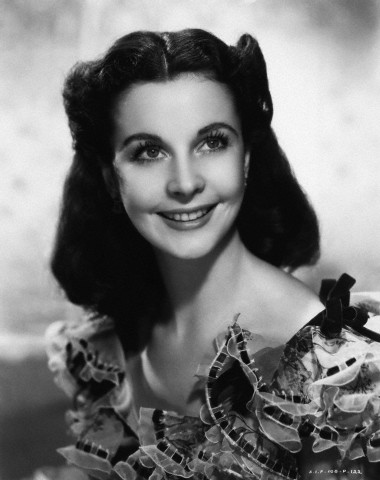
Vivien Leigh: Gin and Tonic
4 to 5 tonic water Ice Cubes
3 ounces gin
4 ounces tonic water
1 tablespoon squeezed lime juice
Lime wedge for garnish Source: Vivien Leigh historian Kendra Bean
Charles Buttersworth: Martin with Gin
2 ounces dry gin
1 ounce dry vermouth
Ice
Olives or a twist of lemon, for garnish Source: World’s Biggest Cookbook
Jean Harlow:
2 oz Bacardi 151 light rum
2 oz sweet vermouth
lemon peel for garnish
*The Comet’s personal favorite
John Wayne:
12 oz Cola
5 count Grenadine
6 count Jack Daniels
Applesauce cake, decorating the tree and a blooming Christmas cactus.
All of these are characteristic of the Walton family Christmas, but one thing is missing.
John Walton, the father, hasn’t returned from his job 50 miles away. It’s snowing, and the Walton family heard over the radio there has been a bus accident.
On Christmas Eve in 1933, it’s John Boy Walton’s job to find his Daddy.
This isn’t an episode of “The Waltons” but the made-for-television-movie “The Homecoming: A Christmas Story” that aired on Dec. 19, 1971.
The 100-minute movie became the pilot for the television series “The Waltons” that aired from Sept. 1972 to 1981.
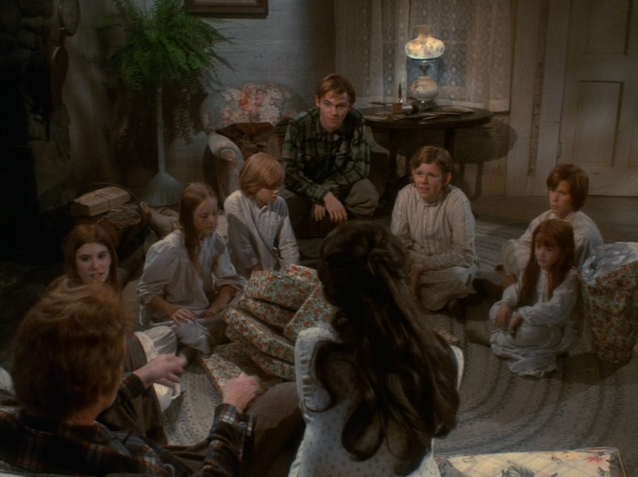
The television film is set in Virginia on Waltons Mountain and introduces the Walton children, grandparents and mother as they wait for John Walton to return on Christmas Eve.
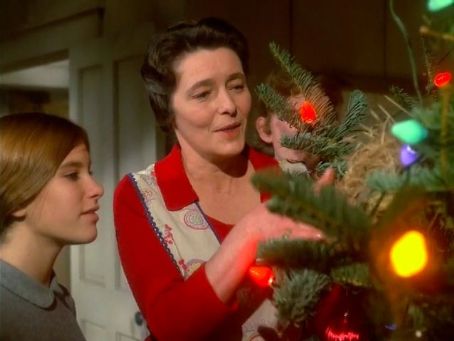
Mary Ellen wants to decorate the Christmas tree with a bird’s nest, and Olivia Walton agrees it makes the tree look nice.
We see the growing pains of 13-year-old Mary Ellen, Erin as a young tattle tale, Jason’s desire to become a musician and the youngest children’s excitement about Santa Claus.
As it gets later, Olivia Walton (Patricia Neal) gets anxious about her husband’s return and sends her oldest son, John Boy (Richard Thomas), out to find his father.
During the search, John Boy runs out of gas and stops at an African-American church, and gets help from Hawthorne Dooley (Cleavon Little).
Hawthorne and John Boy visit the Baldwin sisters (Josephine Hutchinson, Dorothy Stickney), known for their bootleg whiskey, for help during the search.
As John Boy searches for his father, we get a glimpse at how he wants to be a writer, how he feels like a “mother duck’ to his brothers and sisters, and wants to be like his father, but isn’t good at farming and doesn’t like to hunt.
The Walton family originally appeared as the Spencer family in the film “Spencer’s Mountain” (1963), starring Henry Fonda, Maureen O’Hara and James McArthur.
The film was inspired by the book written by Earl Hamner, Jr. about life in Virginia. Hamner was not directly involved in the filming of “Spencer’s Mountain” like he later was with the 1970s TV show, according to “The Waltons: Nostalgia and Myth in Seventies America” by Mike Chopra-Gant.
The family again appears in “The Homecoming,” but the name was changed from Spencer to Walton to avoid legal problems with Warner Brothers, according to Chopra-Gant’s book.
Hamner said “The Homecoming” was a story he planned to write for many years based on his childhood, and he also wrote the screenplay and narrated the film, according to the Chopra-Grant book.
Lines in the film such as “What a woman I married” and “All my babies are thoroughbreds” are part of Hamner’s childhood. They were said by his father, Earl Hamner, Sr, according to the book “Earl Hamner: From Walton’s Mountain to Tomorrow: a Biography” by James E. Person.
The popularity of the television film spawned the television series.
“The Homecoming” gives us a glimpse at a Southern family living in the Blue Ridge Mountains during the Depression.
All Elizabeth Walton wants for Christmas is a doll. When she receives one from a missionary, it’s broken.
Olivia Walton can’t afford toys for the children and only plans on giving them hand-knitted scarves for Christmas. The family doesn’t have a phone, and buying the sugar for the applesauce cake was extravagant.
All little Elizabeth Walton wanted for Christmas was a page of dolls from the Sears-Roebuck catalog.
There are several funny scenes as the children bicker or as we meet the Baldwin sisters.
John Boy and Hawthorne stop at the Baldwin sister home for gas.
We also see the family’s strength and love through moving and heart-warming scenes, such as when John Walton finally returns home and recognizes John-Boy’s yearn for writing through his Christmas gift of writing tablets.
It is the perfect mix of drama, comedy and heart.
While all the child actors are the same, several of the characters in the television movie are different from the actors on the television show:
The Film:
John “John-Boy” Walton, Jr.- Richard Thomas
John Walton, Sr.- Andrew Duggan
Olivia Walton -Patricia Neal
Zeb/Grandpa” Walton -Edgar Bergen
Esther “Grandma” Walton- Ellen Corby
Jason Walton- Jon Walmsley
Mary Ellen Walton- Judy Norton Taylor
Erin Walton-Mary Elizabeth McDonough
Ben Walton- Eric Scott
Jim-Bob Walton -David W. Harper
Elizabeth Walton-Kami Cotler
Emily Baldwin- Dorothy Stickney
Mamie Baldwin- Josephine Hutchinson
Ike Godsey- Woodrow Parfrey
The Show:
John “John-Boy” Walton, Jr.- Richard Thomas
John Walton, Sr.- Ralph Waite
Olivia Walton – Michael Learned
Zeb/Grandpa” Walton- Will Geer
Esther “Grandma” Walton- Ellen Corby
Jason Walton- Jon Walmsley
Mary Ellen Walton- Judy Norton Taylor
Erin Walton-Mary Elizabeth McDonough
Ben Walton -Eric Scott
Jim-Bob Walton- David W. Harper
Elizabeth Walton-Kami Cotler
Emily Baldwin- Mary Jackson
Mamie Baldwin – Helen Kleeb
Ike Godsey- Joe Conley
It’s difficult to say if I like the casting of the show more than the film. After watching both for many years, each cast member has their own special touch.
While I love the television show, Patricia Neal as Olivia Walton has a certain grit and realism. Michael Learned is tough and motherly with her children but is glamorous in comparison to Neal.
Patricia Neal and Andrew Duggan play John and Olivia Walton in the Walton TV movie. Michael Learned and Ralph Waite play the parents on the TV show.
Andrew Duggan is a bigger and more rugged man as John Walton in comparison to Ralph Waite.
Grandpa Walton, played by Edgar Bergen and Will Geer, are similar characters. Both loveable, kind and constantly scolded by Grandma Walton.
Fun fact: This is a reteaming for Ellen Corby and Edgar Bergen, whose characters were married in “I Remember Mama” (1949).
Though the family struggles during the Great Depression in both the film and series, they aren’t poor hillbillies but are working the best they can to stay afloat with little complaint.
I have watched the television show and the film since I was a child, and the warmth that comes from the series feels like you are welcomed into the Walton home.
John Boy receives writing tablets for Christmas from his father.
“We walked a fine line between sentiment and sickeningly sentimentality,” Hamner later wrote about the film. “In the homecoming, Mary Ellen asks her mother if she’s pretty. Olivia replies, without missing a beat of the work she’s doing, ‘No, I think you’re beautiful.’ No tear in the eye, no touching, just a matter of fact statement.”
If you have the opportunity to see “The Homecoming” (and it’s on Youtube), you won’t be drowned in saccharine sweetness but realism and heart. It’s sentimental and welcoming.
Some of my favorite quotes:
Elizabeth: I’m not going to have any babies
Erin: What are you going to have, Elizabeth?
Elizabeth: Puppies!
Mary Ellen: You’re all a bunch of pissants.
Erin: Mama! Mary Ellen is calling us names.
Elizabeth: She said we were pissants. I don’t feel like a pissant.
Missionary: Why look to a foreign country for heathens when the Blue Ridge Mountains are full of them!
Mamie Baldwin: Papa always called them cousins, sister!
Emily Baldwin: Well, they sure dropped out of the family after Papa died.
Emily Baldwin: The nice thing about life is you never know when there is going to be a party!
The Walton children in the movie are the same actors as on the show.
It’s easy for this Christmas film to slip through the cracks.
It isn’t as well-known as other Christmas classics such as “Miracle on 34th Street” or “White Christmas.” And many of the leads are character actors rather than superstars who star in other Christmas films like Barbara Stanwyck or Loretta Young.
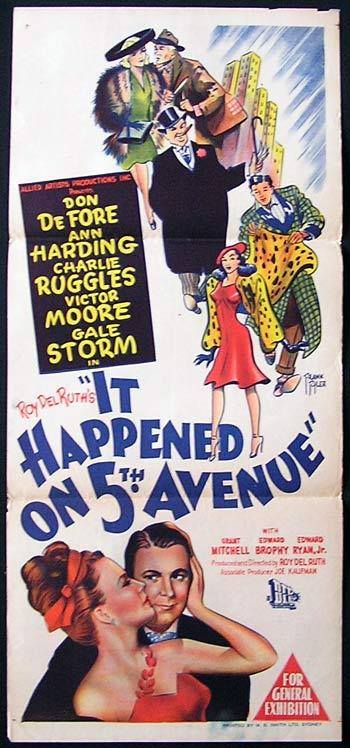
You may have never seen or heard of “It Happened on 5th Avenue (1947), but this film is far too charming for that not to be remedied- and soon.
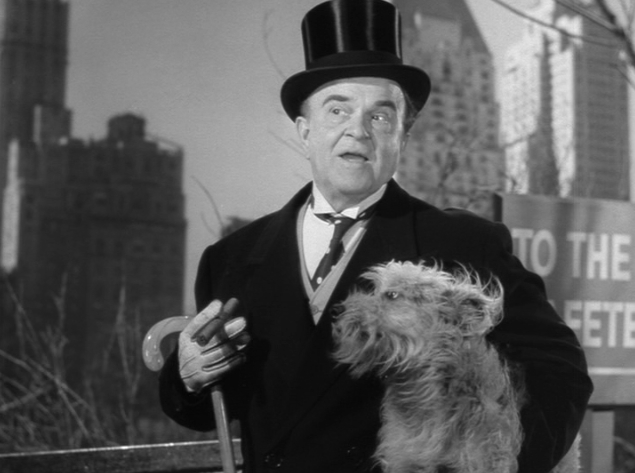
The story begins with homeless Aloysius McKeever (Victor Moore) sneaking into the wealthy mansion of Michael J. O’Connor (Charles Ruggles), the second richest man in the world. The O’Connors live in Virginia during the winter. For the past four winters, McKeever has stayed in the O’Connor home in New York from November 3 until March 13 while the family is away.
McKeever eats their food, wears Mr. O’Connor’s clothes, and occasionally dusts off the furniture.
When the O’Connor’s come back to New York, McKeever heads to their winter home in Virginia.
Homeless McKeever (Victor Moore) dressed in Michael O’Connor’s clothes as he stays in his home.
With a set of keys to several mansions in New York, McKeever explains one day, he got tired of working and has been house hopping for the last 20 years and never has been caught.
But this winter, McKeever has company for the first time.
He meets Jim Bullock (Don DeFore), a veteran who was recently evicted from his apartment. The apartments are going to be torn down by Michael O’Connor’s company to build a skyscraper.
McKeever finds Jim sleeping on a park bench and invites him to his home, vaguely explaining that he is a guest of the O’Connor family.
But the O’Connor house gets more crowded than just the two men.
O’Connor’s daughter Trudy (Gale Storm) runs away from finishing school and goes to the house for clothes. The men think she is a thief, and she doesn’t correct them, but they let her stay.
Then Jim runs into his old Army buddies (Alan Hale, Jr., Edward Ryan) with their wives and children living in a car. They are invited to the O’Connor mansion too until they can find a home.
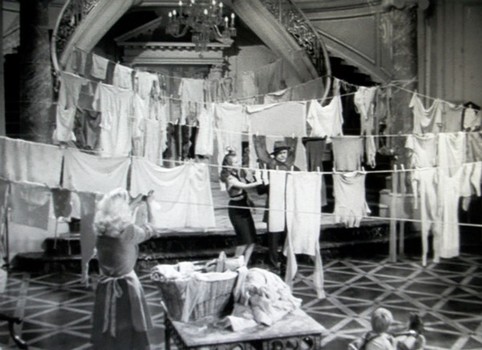
Wives of Jim’s Army buddies use the O’Connor home’s foyer for hanging laundry as the house gets more crowded.
The kicker is when Michael J. O’Connor (Charles Ruggles) and his ex-wife, Mary (Ann Harding), stay at their home-pretending to be homeless- in search of their daughter.
All the while, Jim and his Army friends are trying to bid on an Army camp for veterans who can’t find a home. Their bidding opponent is O’Connor.
“It Happened on Fifth Avenue” was originally supposed to be a Frank Capra Liberty Film. Still, he chose to make “It’s a Wonderful Life” (1946) instead, according to “Have Yourself a Movie Little Christmas” by Alonso Duralde.
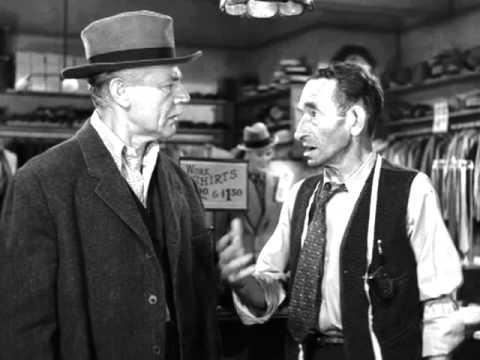
Wealthy Michael O’Connor (Charles Ruggles) exchanges his fancy clothes to dress like he is homeless.
The film was originally supposed to be released during the Christmas season in 1946 but wasn’t released until Easter of 1947, Duralde wrote.
It isn’t surprising that Capra considered this film. The theme of the poor creating life lessons for the rich is similar to many of his other films.
“It Happened on Fifth Avenue” is funny, far-fetched and charming.
It’s a comedy that makes fun of the rich, like the O’Connors, and makes the heroes poor. The O’Connors have an opportunity to look at their lives with the help of McKeever: Michael has disregarded everything for money, Mary lives in Palm Springs and denies she’s middle-aged, and Trudy is unhappy.
Romance blossoms between Trudy (Gale Storm) and Jim (Don DeFore)
Money is what broke up Michael and Mary O’Connor’s marriage. It takes a homeless man to bring them back together again. Trudy finds love and happiness with Jim, the unemployed veteran.
“There are richer men than I,” O’Connor says of McKeever.
Amongst the life lessons and heartwarming scenes, the movie is also hilarious.
With lines such as:
“That joint is as empty as a sewing basket in a nudist camp.”
And
“He called me ‘Sugar,’ because I was hard to get”-referencing rationing during World War II.
While on a mission to see every classic Christmas film I could get my hands on, I came across “It Happened on Fifth Avenue” back in 2010 when it was shown on Turner Classic Movies. Since then, it has become a family favorite in the Pickens household.
Add this one to your yearly Christmas viewing and see that “a house is only what its occupants make it.”
Sometimes holiday family gatherings can be awkward, if not disastrous.
One cinematic example of an unhappy Thanksgiving is in “Giant” (1956) starring Elizabeth Taylor, James Dean and Rock Hudson.
The film follows Bick (Hudson) and Leslie (Taylor) and their life as cattle ranchers in Texas. Leslie, originally from Maryland, marries Bick after knowing him for a short time, and their marriage is tumultuous.
At one part of the film, Leslie travels back to Maryland with her children to evaluate her marriage, participate in her sister’s wedding and spend Thanksgiving with her family.
During the visit, Leslie’s three children become attached to the turkey named Pedro…
(Comet Over Hollywood/Screen Cap by Jessica P)
Here is to hoping your Thanksgiving is less dramatic.
Happy Thanksgiving! I am thankful for everyone of you who reads Comet Over Hollywood and shares the love of classic film.
My dad, Bill Pickens, is a practical movie watcher.
When the Wicked Witch of the West cries “I’m melting!” after water is thrown on her in “The Wizard of Oz” (1939) he says, “Water wouldn’t make her melt. She would dissolve.”
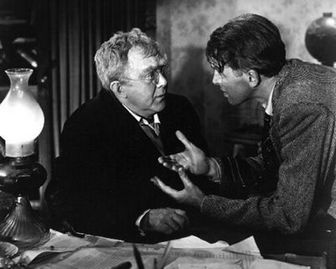
James Stewart as George Bailey asks Thomas Mitchell as Uncle Billy how he lost the money in “It’s a Wonderful Life.”
When Uncle Billy in “It’s A Wonderful Life” (1946) loses the check that would save George Bailey’s bank, my financially responsible father is furious.
In mystery films, he is always trying to figure out the plot twist or who-done-it before the movie is over.
Maybe it’s because he’s an engineer.
But along with teaching me to drive, helping me with long nights of math homework and moving me into new apartments in college and for jobs, my dad has always been supportive of my classic film watching.
Classic films are what my parents grew up on and in return, showed my sisters and me when we were young.
It was even my dad who suggested that I watch “West Side Story” (1961) in 2003 since I was starting to show an interest in musicals.
When I became obsessed with the movie, trying to learn the dances and listening to the soundtrack every day my dad later said he “created a monster.”
But without my dad suggesting that film, I wouldn’t have gone on to see 502 musicals.
Whenever I’m home, my mom, dad and I pick out a classic movie to watch together in the evening. I try to pick out one I didn’t want to watch without them or that I feel everyone would enjoy.
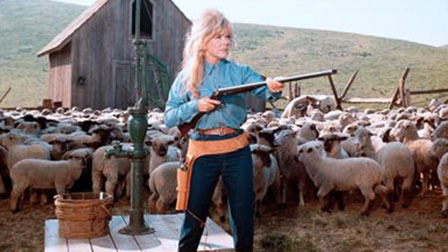
Doris Day as a sheep raising suffragette in “The Ballad of Jose” (1967)
My dad has been a pretty good sport over the last 10 years with my selections. He has sat through frothy musicals such as “Luxury Liner” (1948) starring Jane Powell and even sat through Doris Day’s last and probably worst film “The Ballad of Josie” (1967).
Another time my mom and I had him watch the smutty 1950s film “A Summer Place” (1959) starring Sandra Dee and Troy Donahue.
We chuckled as Dad shouted things about Sandra Dee’s crazy mother in the film. He made jokes like “Whatever you do that woman shoots dogs, I wouldn’t trust her” about Dorothy McGuire who was also in “Old Yeller.”
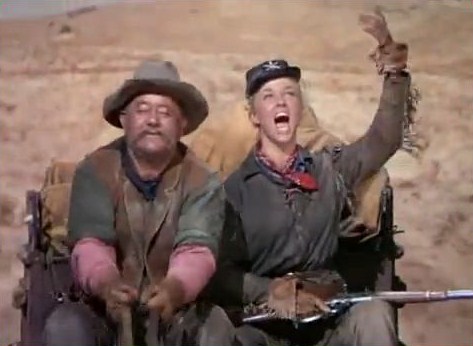
Doris Day singing “Deadwood Stage” in “Calamity Jane” (1953)
One of the only movies he has ever snuck out on and never returned was “Calamity Jane” (1953). I think it was the rather long song “The Deadwood Stage” that starts as soon as the movie begins that drove him from the room. I guess I don’t blame him.
But my favorite movies to watch with my parents are World War II films and thrillers. We all seem to enjoy those.
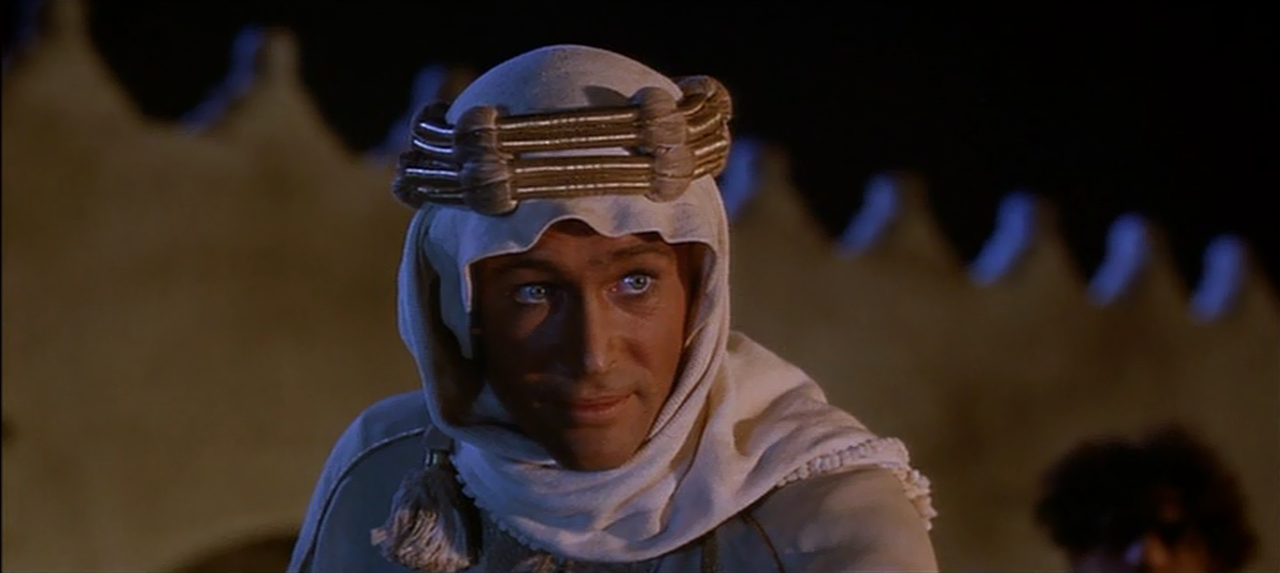
I guess I’m a pretty terrible daughter. After my dad has watched everything down to “Gold Diggers of 1935” (1935) and “Rose Marie” (1936), I have never seen “Lawrence of Arabia.” I guess well have to watch that sometime.
Peter O’Toole in “Lawrence of Arabia” (1962)
I call my mom the agent of my blog Comet Over Hollywood, because she proof reads everything and listens to my ideas.
But my dad has helped out with my film interest as well.
In 2006 we went on a family vacation to Hollywood to tour studios such as Paramount and take pictures of the hand prints in the cement outside of Grauman’s Chinese Theater.
Recently when I was traveling again to Hollywood for the Turner Classic Movies Film Festival, my parents drove me two hours to the Atlanta airport. Atlanta was a straight flight to Los Angeles and they worried about their youngest child making a connecting flight.
When I was a child, I don’t think my parents had any idea what sort of film fanatic they were creating as they introduced us to old movies, but I don’t think they mind.

 Starting in the 1960s with Bette Davis and Joan Crawford in “Whatever Happened to Baby Jane?” (1962), famous actresses of the 1930s and 1940s who were now “past their prime” were cast in semi-campy horror roles.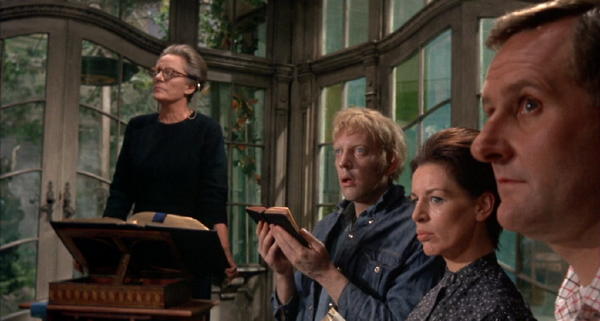














 Comet Over Hollywood