Musical Monday: Honolulu (1939)

It’s no secret that the Hollywood Comet loves musicals.
In 2010, I revealed I had seen 400 movie musicals over the course of eight years. Now that number is over 500. To celebrate and share this musical love, here is my weekly feature about musicals.

Honolulu_(1939)This week’s musical:
Honolulu” (1939)– Musical #172

Studio:
Metro-Goldwyn-Mayer

Director:
Edward Buzzell

Starring:
Eleanor Powell, Robert Young, George Burns, Gracie Allen, Rita Johnson, Willie Fung, Eddie ‘Rochester’ Anderson, Sig Ruman, Ruth Hussey, Phillip Terry
As Themselves: The Pied Pipers, Jo Stafford, The King’s Men, Andy Iona’s Orchestra

Plot:
Popular Hollywood star Brooks Mason (Young) has a lookalike George Smith (Young). To get a rest from his fans, Mason sends Smith to New York for a personal appearance tour and heads to Smith’s Hawaiian plantation for a rest, meeting dancer Dorothy March (Powell) on the way. Complications arise when Mason meets Smith’s girl Cecila (Johnson).

Trivia:
-George Burns and Gracie Allen’s last film appearance together. After this movie, George Burns wouldn’t appear again on screen until 1952.
-Eleanor Powell’s “Hola E Pae” number was re-edited and put in “I Dood It” (1943).
-Eleanor Powell’s tap dance number “I Got a Pair of New Shoes” was cut from the film and can be found here.
-From an April 26, 1939, “Hollywood Shots” column: “There’s a good reason why Eleanor Powell calls Honolulu her favorite films: its the only one that ever gave her a foot bruise costing her at least one toenail.”
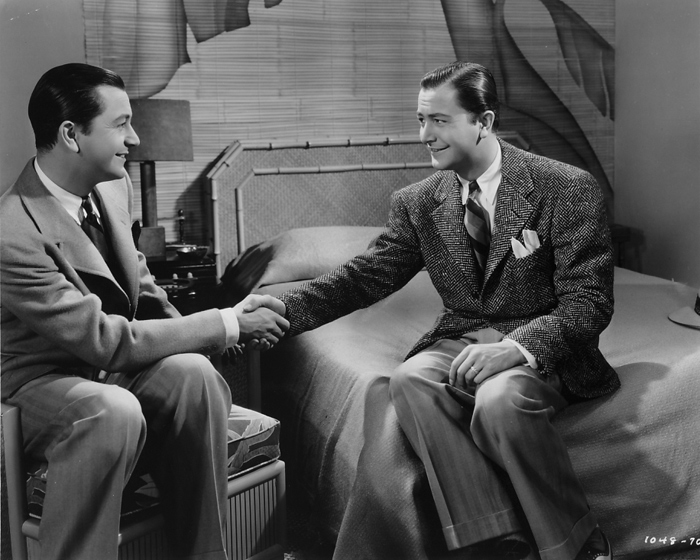
Robert Young plays a double role in

Robert Young plays a double role in “Honolulu”(1939)

Highlights:
-Eleanor Powell’s hula routine with a native tap dance routine
-Robert Young plays a double role
-Costume party featuring Bing Crosby impersonator and Gracie Allen as Mae West

Notable Songs:
-“Honolulu” performed by Gracie Allen, The Pied Pipers
-“The Leader Doesn’t Like Music” performed by Gracie Allen, The King’s Men
-“Hawaiian Medley” performed by The King’s Men, danced by Eleanor Powell
-“Hola E Pae” performed by Andy Iona’s Orchestra, danced by Eleanor Powell

My review:
“Honolulu” is not your usual MGM glittery musical, but it’s a lot of fun. Primarily, the movie is a comedy of lookalikes/mistaken identity with Robert Young. Eleanor Powell is merely a tap dancing backdrop.

Robert Young and Eleanor Powell in

Robert Young and Eleanor Powell in “Honolulu” (1939)

Since Powell does not sing, any songs are performed by Gracie Allen. The one that’s the most fun is “The Leader Doesn’t Like Music” as she is dressed like Mae West for a costume party and her backup singers are dressed like the Marx Brothers.

Married comedians Gracie Allen and George Burns have very little screen time together in their last film together.

The most notable dance number is the amazing hula/tap number that Eleanor Powell does. She starts off barefoot and in a grass skirt doing an impressive Hawaiian dance and then switches into tap shoes to mix tap dancing and hula steps. It’s truly the highlight of the film.

Gracie Allen even does a little tap dancing with Eleanor Powell at the start of the film.

The unfortunate part of this film is Eleanor Powell’s dance in blackface. This is off putting and takes away from Powell’s fantastic dancing, however, it was meant to be a tribute to Bill Robinson. Robinson was a close friend of Powell’s. She was not interested in tap dancing but knew it was the best form of dance to break into the business, and Bill Robinson served as her mentor. Robinson, along with Pearl Bailey, was also a godparent to her son Peter Ford. The two often performed together.

“Honolulu comes from the magical year of 1939 which hailed so many top notch films. It isn’t on the same level of “Mr. Smith Goes to Washington” or “Ninotchka,” but it does still hold a certain level of charm and glitter typical of other 1939 lower budget films.

While “Honolulu” isn’t the most inspiring MGM musical, it’s still a good slice of fun with some amazing tap dancing numbers.

Check out the Comet Over Hollywood Facebook page, follow on Twitter at @HollywoodComet or e-mail at cometoverhollywood@gmail.com

Gidget: Bringing the Surf Culture to Mainstream

When I first started getting interested in classic films, my mom would get excited about movies she wanted to introduce to me. “Gidget” (1959) was one that she could hardly wait to show me.

Views of Sandra Dee in some of my favorite swimsuits and dresses from "Gidget."

Views of Sandra Dee in some of my favorite swimsuits and dresses from “Gidget.”

Sitting there on a Sunday night at age 14, I fell in love with this film. It’s an explosion of color on the gorgeous backdrop of Malibu beach. It features awesome surfing shots and has excellent cast filled with one-liners that are real gems. It’s the perfect fun-in-the-sun Southern California travelogue. To date, it also has one of my favorite film wardrobes.

The movie was pivotal in my film love and got me further entrenched in 1960s pop culture. I read up on famous surfers, researched surfer lingo, listened to the Beach Boys, plastered 1960s surf images around my room and hunted for bathing suits that gave off a 1960s vibe. Of course, I wanted to learn how to surf, which has still never happened since I live four hours away from the beach on the east coast.

Continue reading

Musical Monday: “Let Freedom Ring” (1939)

It’s no secret that the Hollywood Comet loves musicals.
In 2010, I revealed I had seen 400 movie musicals over the course of eight years. Now that number is over 500. To celebrate and share this musical love, here is my weekly feature about musicals.

This week’s musical:
Let Freedom Ring” (1939)– Musical #354

let freedom ring

Studio:
Metro-Goldwyn-Mayer

Director:
Jack Conway

Starring:
Nelson Eddy, Virginia Bruce, Victor McLaglen, Lionel Barrymore, Edward Arnold, Guy Kibbee, Charles Butterworth, Gabby Hayes

Plot:
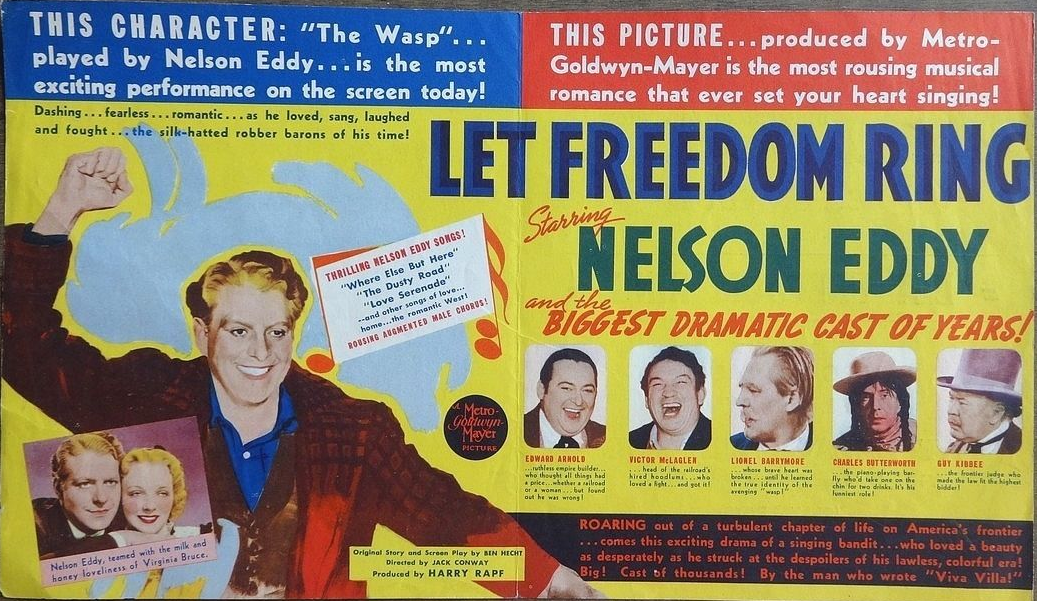
Steve Logan (Eddy) returns to his home back west after graduating from Harvard. Now a lawyer, he finds his town full of corruption being lead by Jim Knox (Arnold). Logan sets out to save his friends and family by disguising himself as “The Wasp” and uses the power of the press to break down Knox.

Trivia:
-Script by Ben Hecht

Nelson Eddy and Virginia Bruce in "Let Freedom Ring."

Nelson Eddy and Virginia Bruce in “Let Freedom Ring.”

Notable songs:
-Dusty Road performed by Nelson Eddy
-Love Serenade performed by Nelson Eddy
-Ten Thousand Cattle Straying performed by Nelson Eddy
-When Irish Eyes Are Smiling performed by Nelson Eddy
-America, My Country ‘Tis of Thee performed by Nelson Eddy and Virginia Bruce

My review:
“Let Freedom Ring,” is more of a western than a musical. Though Nelson Eddy sings three or four songs during the film, his beautiful voice isn’t the focus of the film.
Coming from the great year of 1939, this movie isn’t as well known as it’s contemporaries. However, this little western sparkles just as bright and continues to show that there was something in the water that year that made the majority of the films coming out of Hollywood great.
Along with some lovely songs performed by Eddy, we also have the treat of an excellent supporting cast of character actors. Guy Kibbee, Edward Arnold, Victor McLaglen, Charles Butterworth, Gabby Hayes. What more could you ask for than that?!
McLaglen and Butterworth have several particularly funny scenes.
Virginia Bruce also does well in the film, but unfortunately has very little screen time. Lionel Barrymore is also a treat (as always), but similarly has little screen time. In the film, Eddy actually seemed to have more energy and be less wooden without his frequent co-star Jeannette MacDonald.
This film is interesting if you think about what is going on around the world at this time. Much of Europe was being invaded by Germany and preparing for war. While the United States had not yet joined World War II, it was still at the forefront of their minds.
Nelson Eddy’s character gives several speeches, particularly about not being oppressed by tyranny. I’m fairly certain his lines were written with the European situation in mind.
Whether you are a fan of westerns or musicals, this little film is one you should catch. With great songs, humorous moments and rousing speeches, it’s a fun way to spend 90 minutes.

Nelson Eddy in "Let Freedom Ring."

Nelson Eddy in “Let Freedom Ring.”

Check out the Comet Over Hollywood Facebook page, follow on Twitter at @HollywoodComet or e-mail at cometoverhollywood@gmail.com

Classics in the Carolinas: Edith Fellows

Comet Over Hollywood is doing a mini-series of “Classics in the Carolinas.” I’ll be spotlighting classic movie related topics in South Carolina (my home state) and North Carolina (where I currently live).

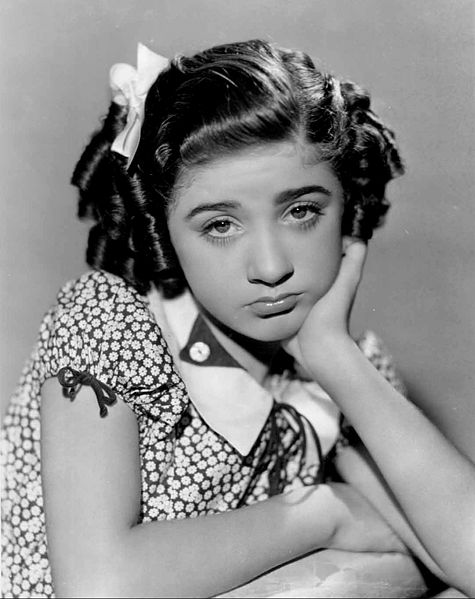
Before heading to Hollywood, child star Edith Fellows lived her early years in Charlotte, NC.

Before heading to Hollywood, child star Edith Fellows lived her early years in Charlotte, NC.

With her bobbed brown hair, big eyes and a face more mature than other child stars, Edith Fellows acted with some of Hollywood’s top stars including Claudette Colbert, Bing Crosby and Melvyn Douglas.

In films such as “She Married Her Boss” (1935) or “And So They Were Married” (1936), Fellows seemed to specialize in playing brats who were reformed by the end of the film. Fellows once said she liked playing brats because she, “Couldn’t do those things at home,” according to actor Dickie Moore’s book about child stars ‘Twinkle, Twinkle Little Star.’

But before Fellows made her way to Hollywood, she spent her early years down South. Born in May 1923 in Boston, MA, her mother left Fellows and her father, Willis Fellows, when she was only a year old. Fellows’ father found a job in Charlotte, NC, and moved there with his parents. Fellows said her first recollection of living in Charlotte was having the measles on Christmas day.

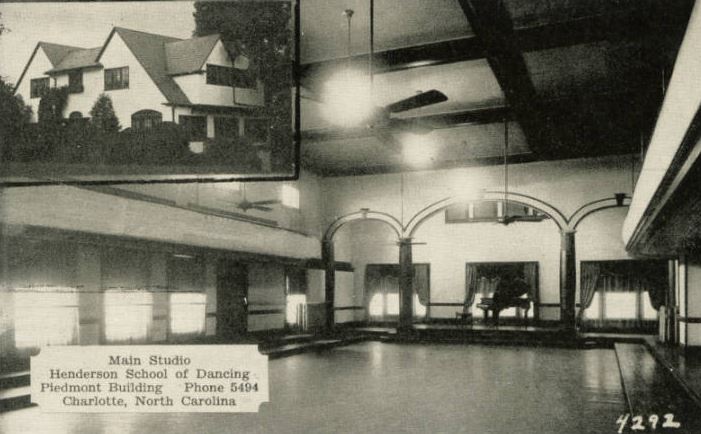
While in Charlotte, Fellows started taking dance lessons at the Henderson School of Dancing located on the 200 block of South Tryon Street, according to the University of North Carolina – Charlotte archives.

The Henderson School of Dancing in Charlotte, NC on Tryon Street. (Source: UNC Charlotte archives)

The Henderson School of Dancing in Charlotte, NC on Tryon Street. (Source: UNC Charlotte archives)

“I was so pigeon-toed that I kept falling over myself,” Fellows said in an interview in the book “Growing Up on Set” by Tom and Jim Goldrup. “My grandmother took me to an orthopedics man and he suggested that she get me some dancing lessons.”

By the time she was three, Fellows was singing, dancing and reciting poetry in local productions.

“I used to sing and recite, they put me in a one woman show when I was only 3 and a half,” Fellow said in the Goldrup book.

A talent scout visited the Henderson School of Dancing and said he could get little Edith into a Hal Roach film. If Fellows’ grandmother paid $50, the talent scout could get her a screen test in Hollywood. Her dance class collected the money so she could go to California, according to a February 1986 issue of “Orange Coast Magazine.”

“It was terribly sad saying goodbye to my friends and dancing buddies. They all came to the railroad to see us off,” Fellows was quoted in Moore’s book. “Nobody asked if I wanted to go. I don’t know how I felt about it. I didn’t know what Hollywood was. My grandmother did, and because she was excited and happy, I caught her excitement without understanding why.”

However, Fellows’ father wasn’t able to go along with them to California.

“Daddy wasn’t able to go. I was standing on the observation platform at the back of the train looking for my daddy and remember crying so much because he hadn’t come,” Fellows was quoted in the Goldrup book. “…I was looking down the track and I could see a small figure on a white horse. It was my father. The train was picking up speed…and he rode alongside…”

When Fellows and her grandmother arrived in Hollywood, they found they had been conned. The address the “talent scout” gave them was an empty lot. Fellows’ grandmother was too proud to return to North Carolina and began cleaning houses. Fellows would stay with neighbors and go along with then children went to work as extras in films and Fellows got a role when the neighborhood boy had chicken pox, according to Moore’s book.

While some young stars had domineering stage mother’s, it was Fellows’ possessive and strong-willed grandmother that pushed her career.

“When I threw something at Claudette Colbert in a movie, I was really throwing at grandma,” she was quoted in Moore’s book.

During a meeting with Columbia studio head Harry Cohen and her grandmother, Cohen yelled at grandma for dressing Fellows in cheap clothing because it reflected poorly on the studio.

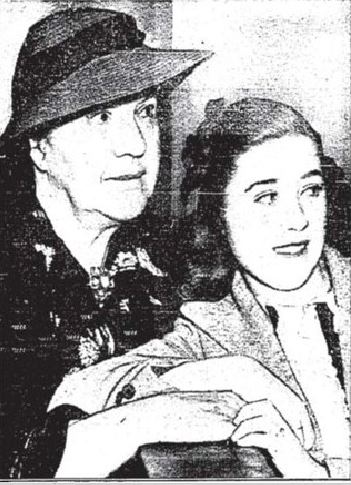
Edith Fellows, 14, and her grandmother in a 1937 newspaper clipping.

Edith Fellows, 14, and her grandmother in a 1937 newspaper clipping.

“I’m sitting there smiling because I’d no idea that my boss was my friend. I almost started falling in love with Harry Cohen,” Moore quoted Fellows. “…Grandma said, ‘Well, Shirley Temple’s mother gets a salary for taking care of Shirley, so I certainly think I deserve a salary for taking care of Edith.’ Cohen said, ‘You’ll get nothing and good day.’”

While Fellows felt earning money was a way to do nice things for her grandmother, she still resented how overbearing she was; not allowing Fellows to have birthday parties with children or to date boys. Grandma died in 1941 when Fellows was 18.

“Grandma’s funeral was one of the best performances I ever gave. When I found her dead one morning, it was a terrible shock, but it didn’t last too long. At the service, I kept my head down because I couldn’t cry…,” Fellows was quoted in Moore’s book. “I felt a great relief. I was almost laughing all the way to the cemetery.”

Fellows was dropped from her contract in 1940, but made plays and films through the late 1980s and early 1990s. She passed away in 2011.

In a 1980s radio interview, she was asked if she could start over and pick to go to Hollywood, would she? She first muttered “No” before saying “Yes, I guess so.”

“It did afford me wonderful opportunities to meet and work with different people,” Fellows was quoted in the Goldrup book. “That was an education in itself.”

Check out the Comet Over Hollywood Facebook page, follow on Twitter at @HollywoodComet or e-mail at cometoverhollywood@gmail.com

Review: Star Reporter (1939)

Often while discussing films we rank their importance with the alphabet.

An A film is a mainstream, high dollar movie. A B movie is a low-budget commercial film that may have a quality story line and actors, but is less publicized. These films would be the bottom half of the double feature — sort of like the song on the 45 record that wasn’t the hit single.

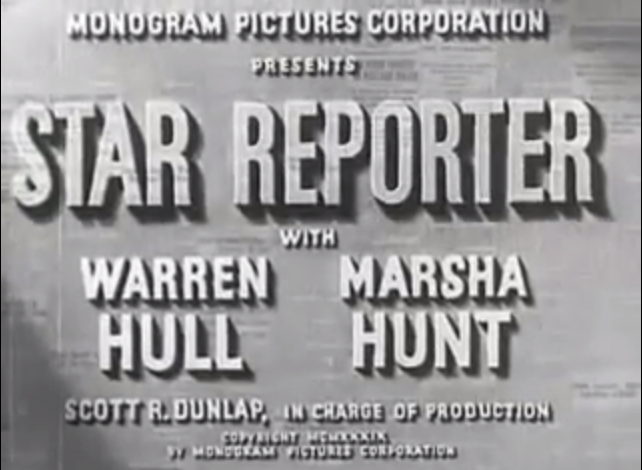
“Star Reporter” (1939) would most likely fall under the “B movie” category.

star

Distributed by “poverty row” studio Monogram Pictures, this hour long film revolves around newspapers and crime.

Reporter John Randolph, played by Warren Hull, works for the Star Tribune newspaper but is also a “star” on the job. Considered bright and brilliant, his father was the owner of the newspaper and was recently murdered. Randolph believes his father was killed because he had information that could bring down the “underworld” of the town.

Randolph is also a big supporter of District Attorney William Burnette, played by Wallis Clark, and throws his support for the DA in each of his stories at the newspaper. Randolph happens to be engaged to the DA’s daughter, Barbara, played by Marsha Hunt.

But when a murder happens, secrets about Randolph and his mother Julia, played by Virginia Howell, are threatened to be dragged out.

It turns out that the deceased newspaper owner was not Randolph’s biological father. Mrs. Randolph was once married to Charlie Bennett, who disappeared and was believed dead. Bennett has now reappeared as the murderer using the name Joe Draper, played by Morgan Wallice.

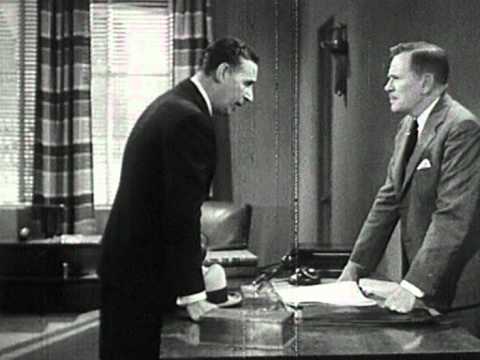
Lawyer Whitaker tries to bargain with the DA.

Lawyer Whitaker tries to bargain with the DA.

Dirty lawyer Whitaker, played by Clay Clement, is defending Draper.  Whitaker knows Mrs. Randolph’s secret and threatens to reveal it, if she and the DA do not cooperate and close the case.

Draper already signed a confession with the DA, but it is stolen by a thief named Clipper, played by actor Paul Fix in a very small role.

The DA decides not to prosecute to protect the Randolphs. John, not knowing the family secret, turns against  his father-in-law-to-be. Now rather than backing the DA, he works to get him thrown out of office, which was Whitaker’s goal.

For an hour long movie, this is an awfully complicated and mildly confusing plot.

Unlike most newspaper films of the 1930s and 1940s, the majority of the film does not involve a reporter playing detective or getting in fights with gangsters.

I was pleasantly surprised by this, until the end. At the end of the film Randolph is in the same house as the gangster/his biological father with a gun pointing at him. Though as a reporter, it’s not terribly accurate. I wasn’t surprised by this plot development. In my experience as a reporter, I have never gotten in fist fights with gangsters, but then maybe it was different in the 1930s.

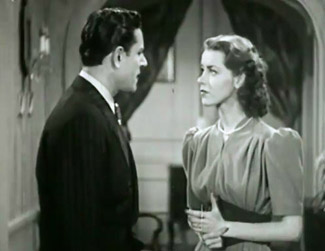
Reporter Randolph is engaged to the DA's daughter, played by Marsha Hunt.

Reporter Randolph is engaged to the DA’s daughter, played by Marsha Hunt.

I did like how some of the lines showed just how busy reporters are and how they frequently are on call or away from home.

“After we’re married you can furnish the pressroom as living quarters. That way I can run in and see you between murders,” Randolph said to his new fiancée Barbara.

“Our wedding guests were kept waiting because of a special edition,” Mrs. Randolph told Barbara.

These lines made me chuckle because anyone in newspapers know the words day off, weekend or quiet evening are almost laughable.

I discovered “Star Reporter” shortly after I started working at The Shelby Star in October 2012.

Over the last two years of working at the newspaper, I felt a special connection to the title, because I was (Shelby) Star reporter Jessica Pickens.

Now as I wrap up my last week at the newspaper, I felt it appropriate to finally review the film I’ve been meaning to write about for two years.

Is “Star Reporter” a great movie? No. The biggest names in the film are Paul Fix, who later went on to be in several John Ford films, and Marsha Hunt. Both actors are in the film for less than 15 minutes.

But it is mildly entertaining, especially if you are looking for a very brief film to watch.

In a year that released “Gone with the Wind,” “Mr. Smith Goes to Washington” and “Wizard of Oz” –just to name a few of nearly 100 well received films- it is interesting to take a look at the B side of the year 1939.

In an age now where we only concentrate the blockbusters, these little hour long films are equally important to explore.

StarReporter1939

Check out the Comet Over Hollywood Facebook page, follow on Twitter at @HollywoodComet or e-mail at cometoverhollywood@gmail.com


Classics at the Carolinas: Lunch with Mickey Rooney

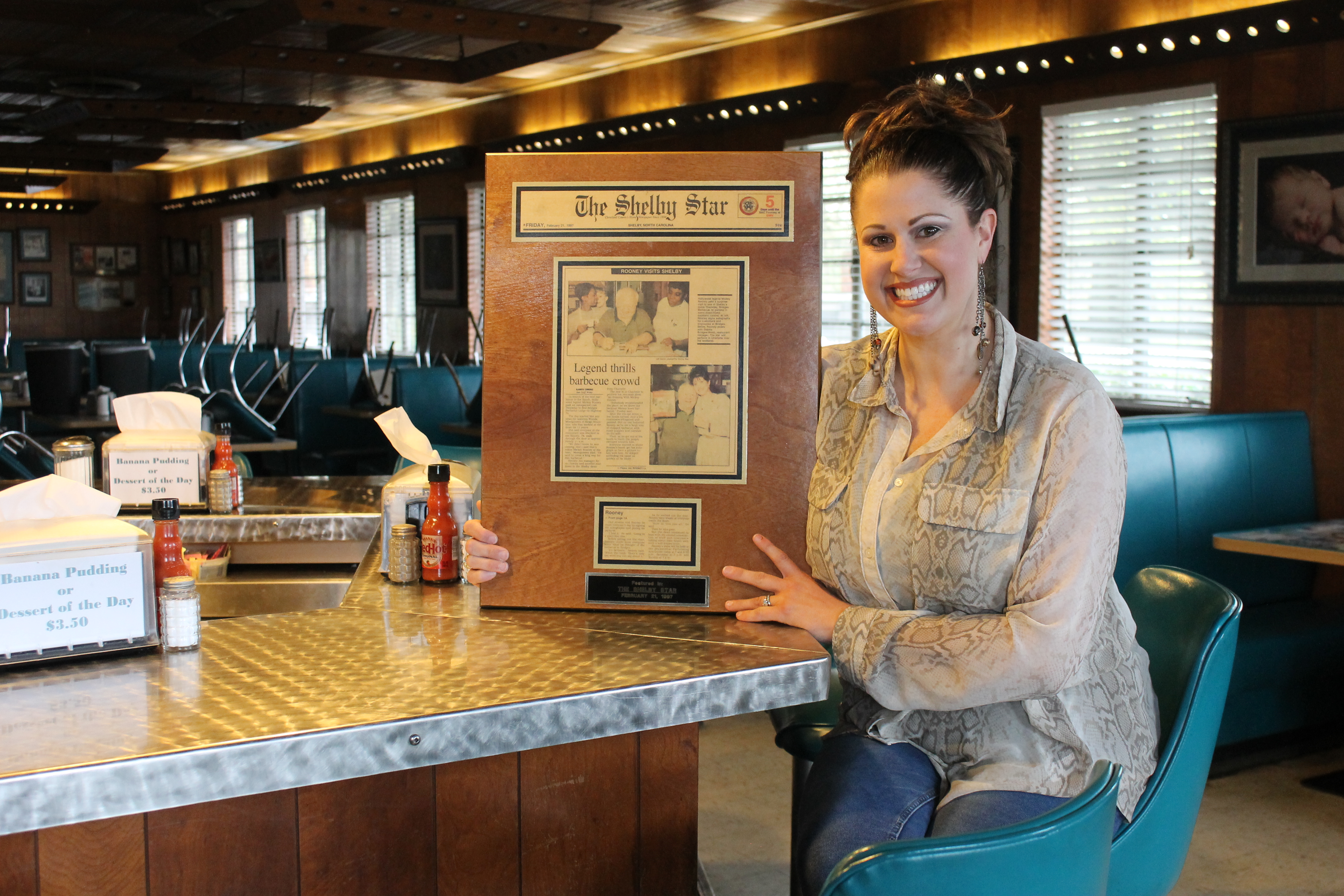
Barbecue patrons still talk about the day Mickey Rooney came to town.

Rooney, who passed away Sunday at age 93, visited Shelby, NC to eat at Red Bridges Barbecue Lodge in 1997.  He was told it was the best barbecue in North Carolina.

Read the full story I wrote for The Shelby Star here: 

http://www.shelbystar.com/news/local/lunch-with-mickey-rooney-1.302034?tc=cr


(The Star/Jessica Pickens) Natalie Ramsey, VP of Red Bridges Barbecue, remembers when Mickey Rooney visited the restaurant in 1997. She holds a Shelby Star article that hangs in the restaurant.

(The Star/Jessica Pickens) Natalie Ramsey, VP of Red Bridges Barbecue, remembers when Mickey Rooney visited the restaurant in 1997. She holds a Shelby Star article that hangs in the restaurant.


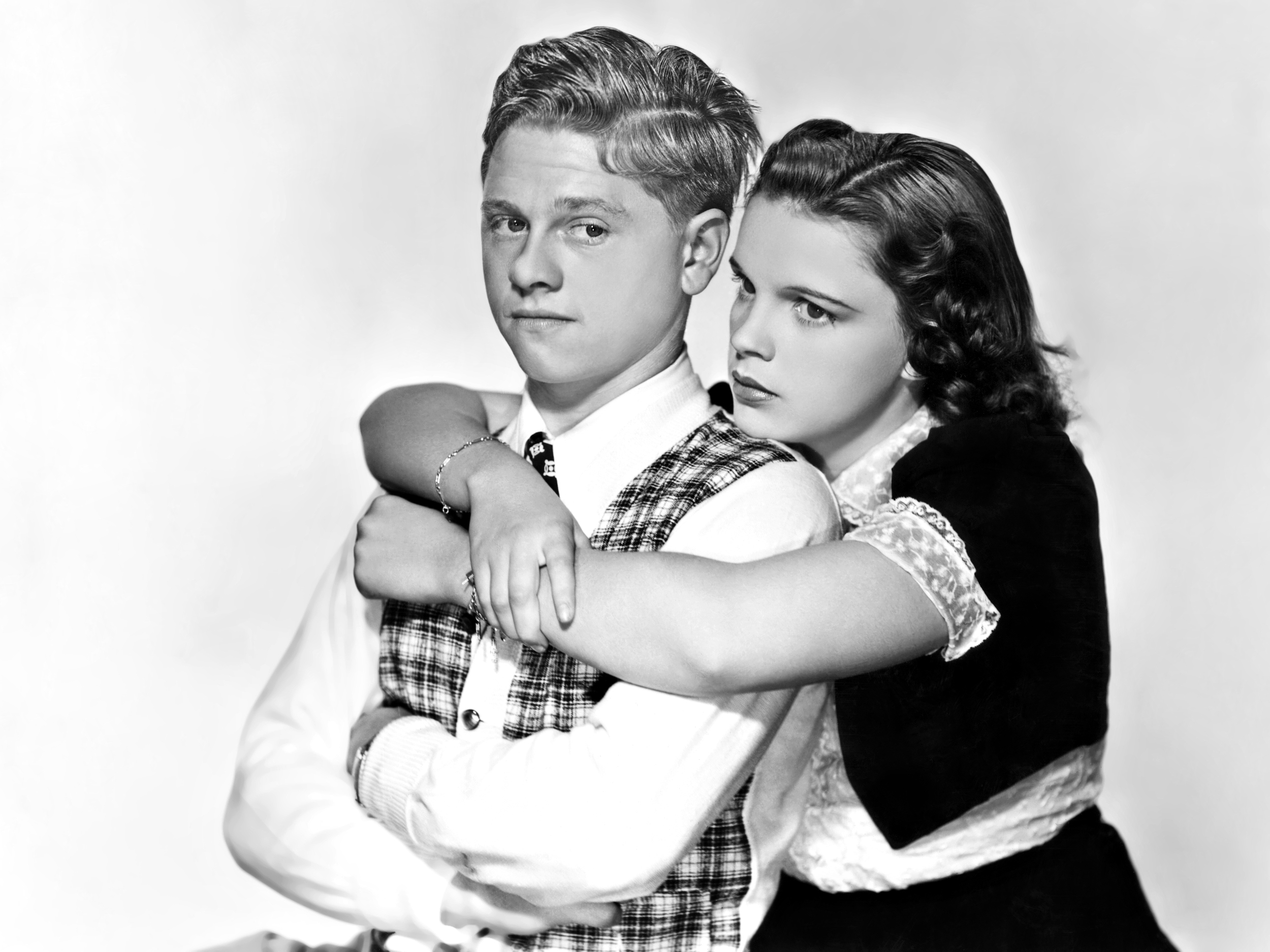
Starring in 10 films with Judy Garland and winner of a Juvenile Academy Award along with Deanna Durbin, Rooney was the top box office draw of 1939.

I can’t deny that Rooney occasionally gets on my nerves in his films, but he was an important aspect of film history-starting in vaudeville, acting in silent films as a youngster and making movies into his 90s, including the 2011 Muppets film.

He had energy and could definitely sell a song.

What are your memories of Mickey Rooney? Did you have a favorite film or ever see him in person? 

Mickey Rooney and Judy Garland in "Love Finds Andy Hardy."

Mickey Rooney and Judy Garland in “Love Finds Andy Hardy.”


Check out the Comet Over Hollywood Facebook page, follow on Twitter at@HollywoodComet or e-mail at cometoverhollywood@gmail.com

Musical Monday: One in a Million (1936)

It’s no secret that the Hollywood Comet loves musicals.
In 2010, I revealed I had seen 400 movie musicals over the course of eight years. Now that number is over 500. To celebrate and share this musical love, here is my weekly feature about musicals.

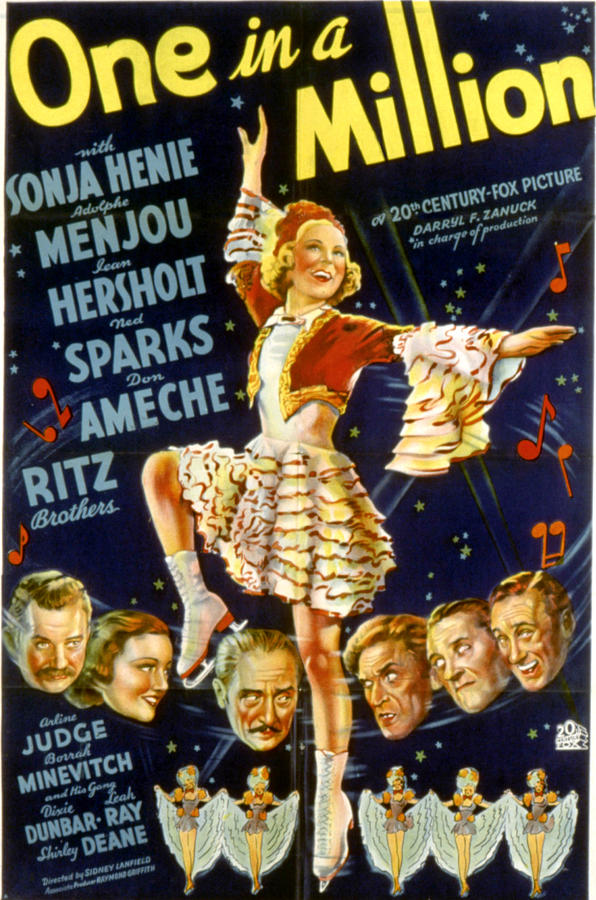
one-in-a-million-sonja-henie-1936-everettThis week’s musical:
One In A Million” (1936)–Musical #478

Studio:
20th Century Fox

Director:
Sidney Lanfield

Starring:
Sonja Henie, Don Ameche, Adolph Menjou, Jean Hersholt, Ned Sparks, June Wilkins, the Ritz Brothers

Plot:
Tad Spencer (Menjou) is broke and takes his female band (including his wife) to the Swiss Alps. They come to an inn run by Henriech Muller (Hersholt) and his daughter Greta (Henie). Greta is a figure skater training for the Winter Olympics. Henriech lost out on a figure skating medal in 1908 and has been training his daughter as a skater. Tad sees dollar signs when he see her skate and wants him in her act. The only problem is Greta is being paid for a nightclub act would hurt her amateur standing in the games. Bob Harris (Ameche) and his photographer Danny Simpson (Sparks), also arrives at the hotel to investigate a fire that may have been an assassination attempt.

Continue reading

Classics in the Carolinas: Remembering Alicia Rhett, India Wilkes in “Gone with the Wind”

COH Alicia Rhett2

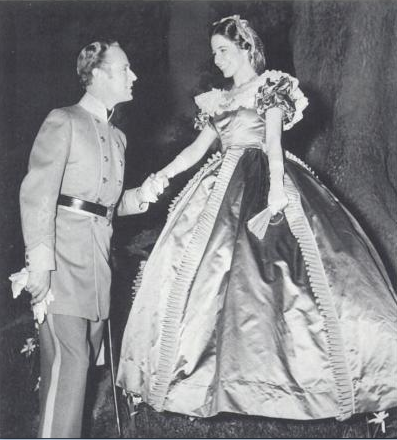
Leslie Howard with his on-screen sister Alicia Rhett.
(Scanned from “The Filming of Gone with the Wind”)

She was a true Southern lady.

Alicia Rhett was discovered on George Cukor’s Southern search for Scarlett O’Hara for the epic film “Gone with the Wind” (1939).

Rhett was cast as Ashley Wilkes’ sister, India Wilkes, in one of the biggest films of all time.

But Rhett’s art was more important to her than stardom.

“I enjoyed it (filming) immensely. I had the time of my life there (California). But when the film ended, I was happy to come home (to Charleston),” Rhett said in an interview in “The Rise of Charleston” by W. Thomas McQueene. “I liked to paint. It was what made me most happy. I really wasn’t interested in making more movies. I was interested in my art.”

Rhett was born in 1915 in Savannah, GA.   After her father was killed in World War I, her family moved to Charleston, SC, according to McQueene’s book.

Casting the role of Scarlett O’Hara for the 1939 movie wasn’t an easy. Hundreds of actresses were considered. Director George Cukor made a trip through Southern states, believing an unknown actress may be the answer to their problem.

Director George Cukor with interviews actresses to play the role of "Scarlet O'Hara": Louisa Robert, Atlanta; Susan Fallingant, Atlanta; Alicia Rhett, Charleston. (Scanned from "The Pictorial History of Gone with the Wind")

Director George Cukor with interviews actresses to play the role of “Scarlet O’Hara”: Louisa Robert, Atlanta; Susan Fallingant, Atlanta; Alicia Rhett, Charleston.
(Scanned from “The Pictorial History of Gone with the Wind”)

Hundreds of Southern women auditioned for the role of Scarlett, Melanie and Mammy, but only six women were considered for follow up auditions, according to “The Art of Gone with the Wind: The Making of a Legend,” by Judy Cameron and Paul J. Christman.

The auditions took place in 1937 in New York and the only Southerners who won roles were Alicia Rhett from Charleston, Mary Anderson who was cast as Maybelle Merriwether from Birmingham, AL and Marcella Martin of Shreveport, LA who was cast as Cathleen Calvert. Martin’s lines were dubbed because her accent wasn’t considered Southern enough, according to the Cameron and Christmas book.

“Alicia Rhett was an amateur actress. This young woman was so good,” Ann Rutherford is quoted by Cameron and Christman. Rutherford played the role of Careen, Scarlett’s younger sister. “She wasn’t Scarlett but Selznick cast her as India Wilkes. And she was excellent.”

During the filming of "Gone with the Wind," Alicia Rhett made sketches between takes. Here with Evelyn Keyes and Ann Rutherford. (Scanned from "The Filming of Gone with the Wind" by Herb Bridges)

During the filming of “Gone with the Wind,” Alicia Rhett made sketches between takes. Here with Evelyn Keyes and Ann Rutherford.
(Scanned from “The Filming of Gone with the Wind” by Herb Bridges)

The character of India Wilkes is the sister of Ashley Wilkes (Leslie Howard) and sister-in-law of Melanie Wilkes (Olivia De Havilland). In the film, India hates Scarlett O’Hara, because Scarlett marries the man India is in love with, Charles Hamilton. India never marries and Scarlett refers to her as an “old maid.”

Rhett was acting when Cukor found her in Charleston.

She was performing in the Oscar Wilde play “Lady Windermere’s Fan” at the Dock Street Theater. Her performance in the Wilde play had “style and élan,” said “Pictorial History of Gone with the Wind” by Gerald Gardner and Harriet Modell Gardner.

COH alicia rhett

Alicia Rhett visits with Mrs. John Woodbury from Louiseville, KY. Woodbury was the past-president-general of the United Daughters of the Confederacy. The Daughters dropped by to visit the filming of the Civil War film.
(Scanned from The Filming of Gone with the Wind by Herb Bridges)

“Gone with the Wind” novel author Margaret Mitchell liked Rhett for her name, according to the Gardner book.

As Rhett performed in the epic Technicolor film about the Civil War and the Reconstruction of the South, Rhett had her own family Civil War history.

Her great-grandfather was Robert Barnwell Rhett, a secessionist politician from South Carolina, according to “A Short History of Charleston” by Robert S. Rosen.

Robert Rhett became a member of the South Carolina legislature in 1826 and resigned from the United States Senate in 1852 when South Carolina seceded from the Union.

Though she was an unknown actress, Rhett enjoyed the company of her A-list co-stars.

She said Leslie Howard, who played her on-screen brother Ashley Wilkes, was “delightful” and Clark Gable, who played Rhett Butler was “charming,” she said in an interview with McQueene.

Rhett (bottom right) in a scene with Marjorie Reynolds, Evelyn Keyes and Olivia De Havilland.

Rhett (bottom right) in a scene with Marjorie Reynolds, Evelyn Keyes and Olivia De Havilland.

Rhett kept in touch with her on-screen sister-in-law Olivia De Havilland, who played Melanie Wilkes, for many years after filming. And she said Vivien Leigh was “just as pretty in person as she was on-screen,” McQueen quoted her.

But she returned to South Carolina after filming to embrace her first love: art.

Alicia Rhett who played India Wilkes, sister of Ashley Wilkes, in "Gone with the Wind" (1939)

Alicia Rhett who played India Wilkes, sister of Ashley Wilkes, in “Gone with the Wind” (1939)

Rhett went on to be one of the most important artists in Charleston, specializing in children’s portraits and also having her work hung in the president’s office at The Citadel.

Rhett passed away on January 4, 2014 at the age of 98. She was the oldest surviving member of “Gone with the Wind.”

Still living from the cast includes Olivia De Havilland, Mickey Kuhn who played Beau Wilkes and Mary Anderson.

Check out the Comet Over Hollywood Facebook page, follow on Twitter at @HollywoodComet or e-mail at cometoverhollywood@gmail.com

Classics in the Carolinas: A visit to the Ava Gardner Museum

Comet Over Hollywood is doing a mini-series of “Classics in the Carolinas.” I’ll be spotlighting classic movie related topics in South Carolina (my home state) and North Carolina (where I currently live and work).

Actress Ava Gardner in "The Killers" (1946)

Actress Ava Gardner in “The Killers” (1946)

One of the biggest stars to emerge from North Carolina is the actress once called “The Most Beautiful Animal” in the tagline for “The Barefoot Contessa.”

The only other North Carolinian whose fame could be equal is Andy Griffith of the “The Andy Griffith Show,” born in Mount Airy, NC.

Ava Gardner was born in rural Grabtown, NC on Christmas Eve in 1922. Gardner’s family was poor and she was the youngest of seven children.

Gardner made a screen test in 1941 for MGM and signed a seven-year contract with the studio. But her career took off after she starred with Burt Lancaster in the 1946 film noir “The Killers.”

Gardner went in to star in “Show Boat” (1951), “Mogambo” (1953) and “The Night of the Iguana” (1964).

The Ava Gardner Museum in Smithfield, NC celebrates Gardner’s life and career with costumes, personal belongings and film posters that tell her story.

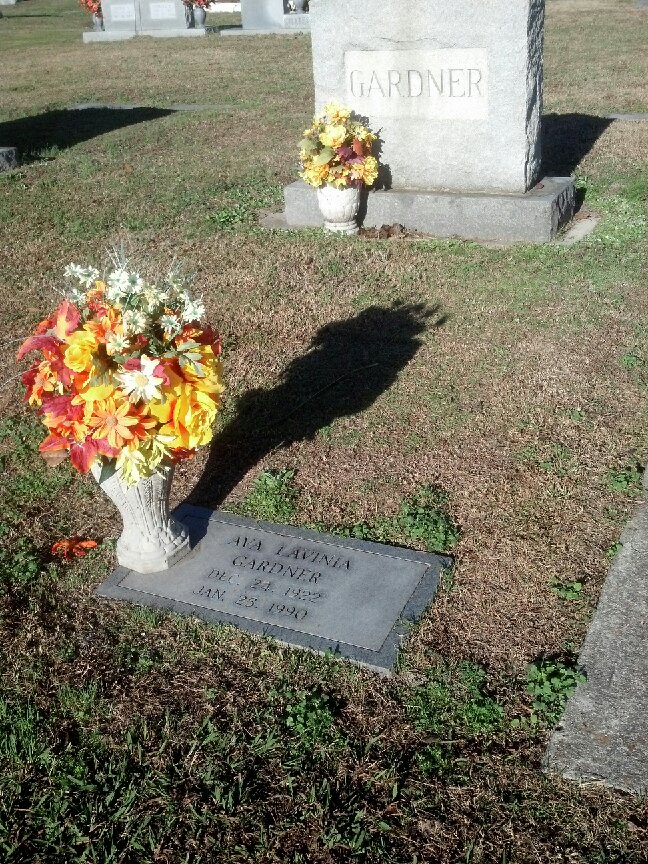
Ava Gardner's grave in Smithfield, NC (Comet Over Hollywood/Jessica P.)

Ava Gardner’s grave in Smithfield, NC (Comet Over Hollywood/Jessica P.)

Within a couple miles of the museum is Ava Gardner’s grave site at the Sunset Memorial Park. Though Gardner passed away in London, her wishes were to be buried with her parents, brothers and sisters in Smithfield.

On Sunday, I traveled from Shelby, NC to Smithfield, NC to visit the museum for the first time. It was seven hours round trip, but well worth the drive.

The 5,000 square-foot museum is beautifully kept and Frank Sinatra (one of Gardner’s husbands) is played as you look about.

When you first enter, you watch an 18 minute documentary on Gardner’s life. Interviewees in the documentary include actresses Arlene Dahl, Kathryn Grayson and Janet Leigh; actor and Gardner’s ex-husband Mickey Rooney; actor Howard Keel; Gardner’s maid and friend Mearene Jordan and her niece.

The documentary included such facts as:

-Clark Gable was her favorite star as a child and she loved watching Gable and Jean Harlow in “Red Dust.” Gardner went on to star in the Harlow role in “Mogambo,” the remake of  “Red Dust.” Gardner also stared three times with Grable in films-“The Hucksters,” “Mogambo” and “Lone Star.”

-Rooney remembered that he dressed as Carmen Miranda when he first met Gardner and asked for her phone number. He spoke fondly on their brief marriage. The documentary said Gardner thought their marriage would be like her parents: cooking for Rooney and having children. Rooney preferred the nightlife.

-During Gardner’s first screen test, the studio could not understand her Southern accent. Her test ended up being a silent test as they took different shots of her face and movements.

-“The Killers” was the first role Gardner enjoyed acting in

-While filming “Show Boat,” actress and fellow North Carolinian Kathryn Grayson said Gardner was fun to work with. Howard Keel said she was up for anything and swore as much as he did.

-Gardner worked hard to do her own singing in the musical “Show Boat” but ended up being dubbed by Annette Warren. Her co-stars were unhappy about the dubbing and she can be heard on the soundtrack.

-Howard Hughes was obsessed with Gardner and the two fought a lot. At one point she hit him over the head with an object. She said she was so mad, she would have killed him had she not been stopped.

-Frank Sinatra was the true love of her life, but they were too much alike. Janet Leigh described them in the documentary as two sticks of dynamite together.

-Gardner didn’t enjoy Hollywood. She spent several years living in Spain and lived the remainder of her life in London.

 Items that can be found in the museum:

 Childhood items:

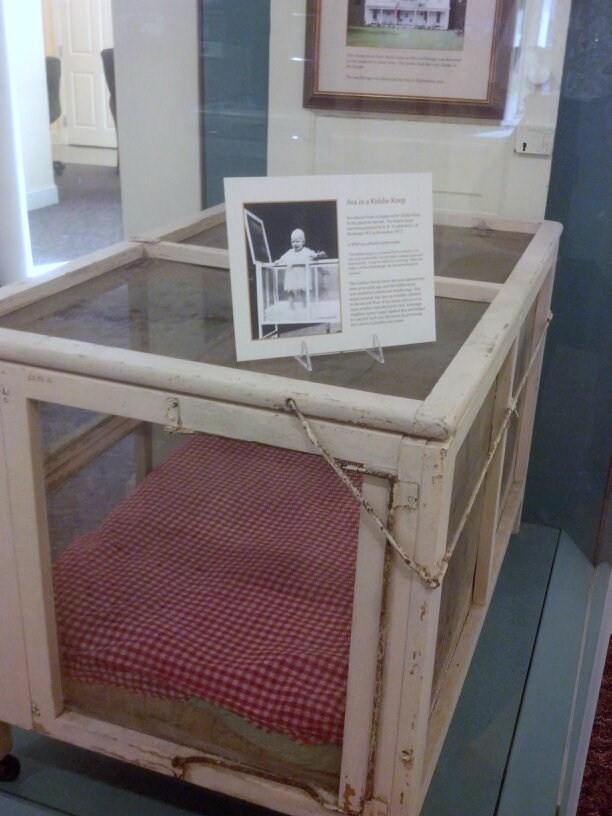
An odd play pin that Ava (pictured on top) used as a child. It could be rolled around and had a top. (Comet Over Hollywood/Jessica P.)

An odd play pin that Ava (pictured on top) used as a child. It could be rolled around and had a top. (Comet Over Hollywood/Jessica P.)

-The family Bible

-Ava Gardner’s 1939 high school diploma

Ava's college yearbook. (Comet Over Hollywood/Jessica P.)

Ava’s college yearbook. Ava is documented as a Campus Beauty. (Comet Over Hollywood/Jessica P.)

Costumes:

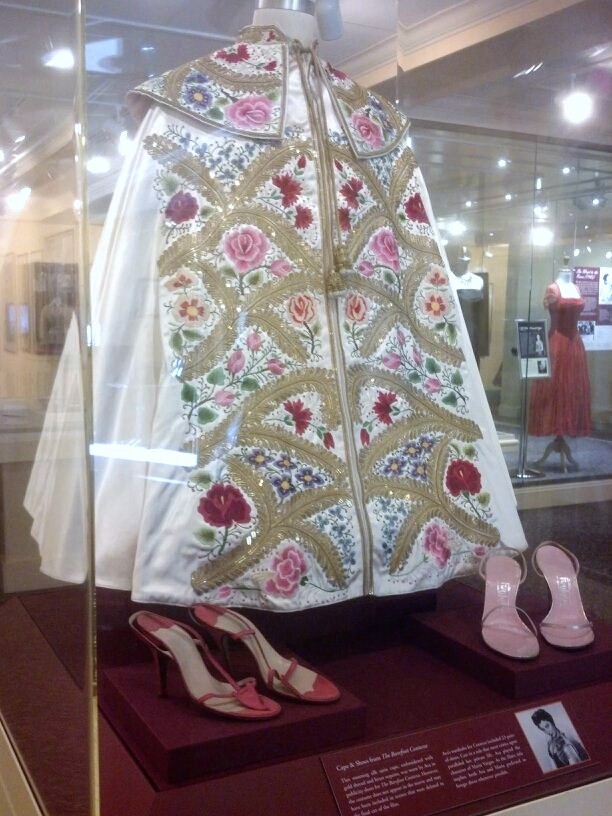
A cape that was used in publicity shots for "Barefoot Contessa" but is not seen in the film. (Comet Over Hollywood/Jessica P)

A cape that was used in publicity shots for “Barefoot Contessa” but is not seen in the film. (Comet Over Hollywood/Jessica P)

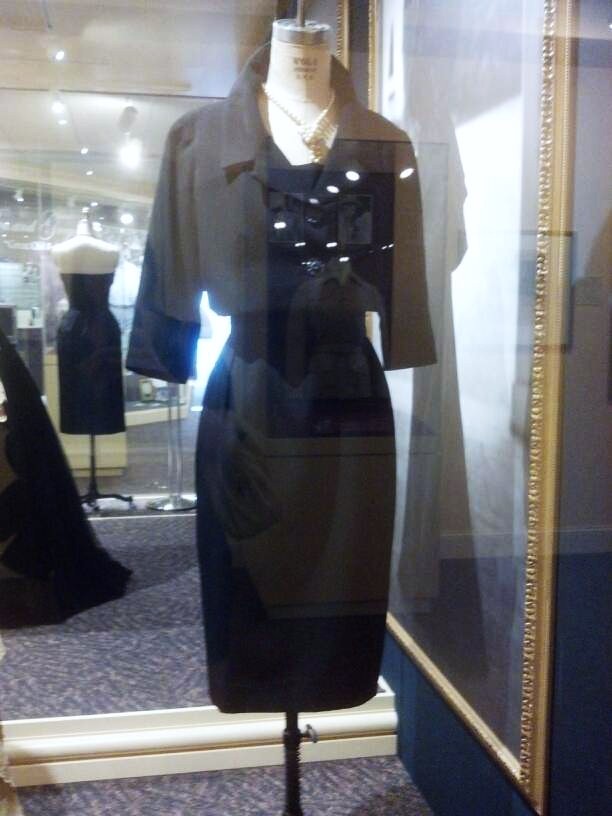
Originally worn by Ingrid Bergman in "Gaslight," this jacket was reworked for Gardner to wear in "The Great Sinner" also starring Gregory Peck and Melvyn Douglas (Comet Over Hollywood/Jessica P)

Originally worn by Ingrid Bergman in “Gaslight,” this jacket was reworked for Gardner to wear in “The Great Sinner” also starring Gregory Peck and Melvyn Douglas (Comet Over Hollywood/Jessica P)

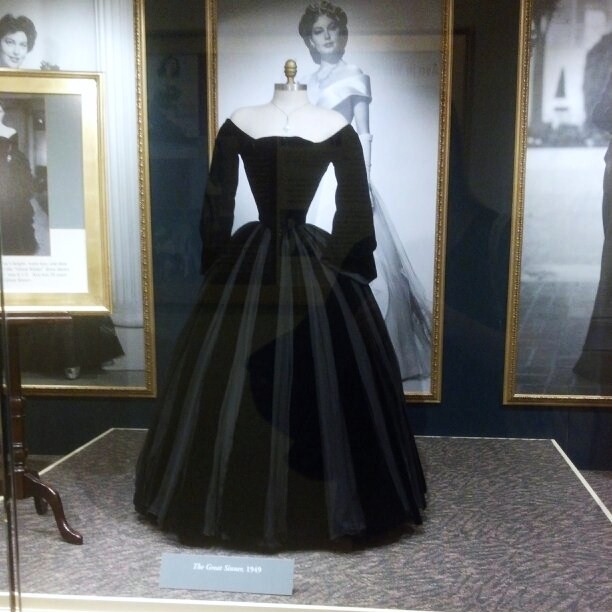
Gardner wore this dress in "The Great Sinner" also starring Gregory Peck and Melvyn Douglas (Comet Over Hollywood/Jessica P)

Gardner wore this dress in “The Great Sinner” also starring Gregory Peck and Melvyn Douglas (Comet Over Hollywood/Jessica P)

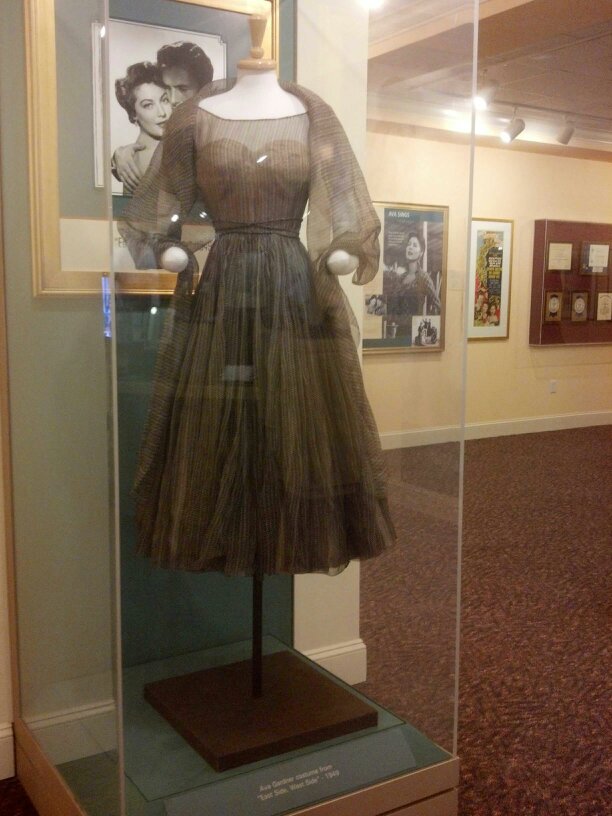
A dress Gardner wore in "East Side, West Side" (1949) which also starred Barbara Stanwyck and James Mason. (Comet Over Hollywood/Jessica P.)

A dress Gardner wore in “East Side, West Side” (1949) which also starred Barbara Stanwyck and James Mason. (Comet Over Hollywood/Jessica P.)

A jacket Gardner wore in "Mogambo" also starring Clark Gable and Grace Kelly (Comet Over Hollywood/Jessica P)

A jacket Gardner wore in “Mogambo” also starring Clark Gable and Grace Kelly (Comet Over Hollywood/Jessica P)

A personal dress of Gardner's (Comet Over Hollywood/Jessica P)

A personal dress of Gardner’s (Comet Over Hollywood/Jessica P)

A dress Gardner wore in "Show Boat" also starring Howard Keel and Kathryn Grayson (Comet Over Hollywood/Jessica Pickens)

A dress Gardner wore in “Show Boat” also starring Howard Keel and Kathryn Grayson (Comet Over Hollywood/Jessica Pickens)

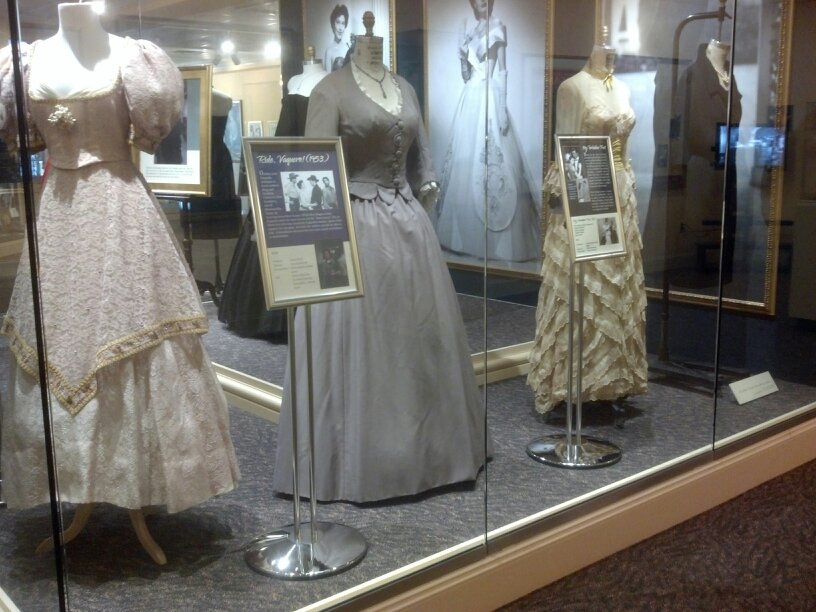
Left to right: Dresses from "Ride Vaquero" starring Robert Taylor and a dress from "My Forbidden Past" starring Robert Mitchum. (Comet Over Hollywood/Jessica P)

Left to right: Dresses from “Ride Vaquero” starring Robert Taylor and a dress from “My Forbidden Past” starring Robert Mitchum. (Comet Over Hollywood/Jessica P)

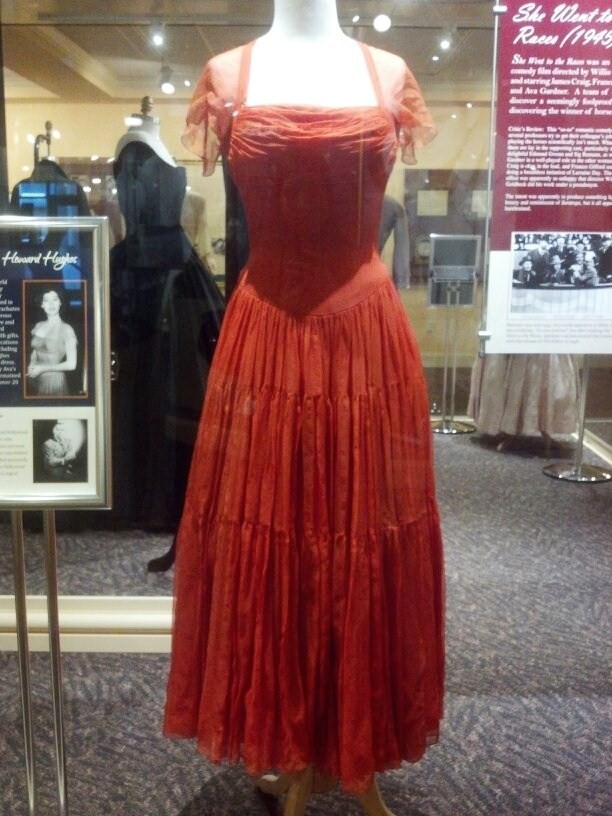
A costume from the film "She Went to the Races" (1945) -my personal favorite of the costumes there.  (Comet Over Hollywood/Jessica P)

A costume from the film “She Went to the Races” (1945) -my personal favorite of the costumes there.
(Comet Over Hollywood/Jessica P)

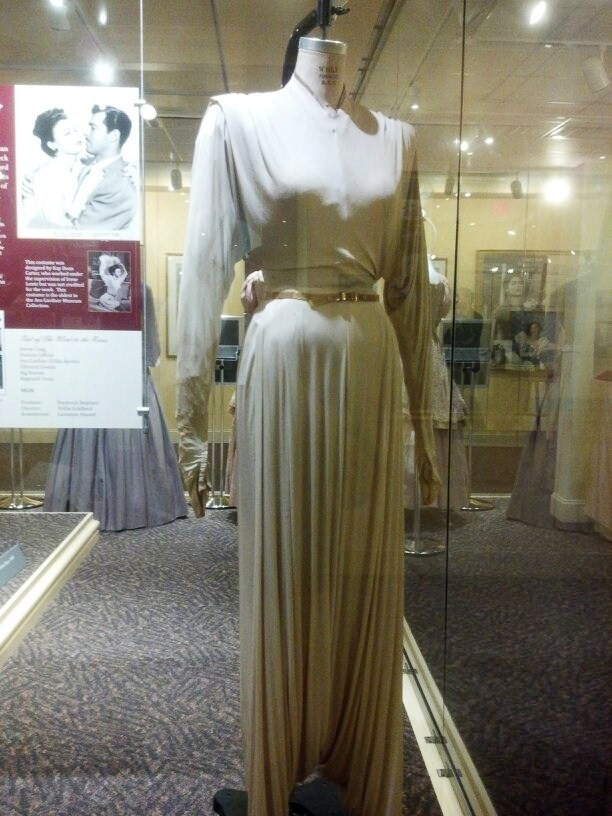
A gift to Gardner from Howard Hughes. Silk was hard to come by because of World War II. In an attempt to woo Gardner, Hughes bought her this dress as an expensive and lavish gift. (Comet Over Hollywood/Jessica P)

A gift to Gardner from Howard Hughes. Silk was hard to come by because of World War II. In an attempt to woo Gardner, Hughes bought her this dress as an expensive and lavish gift. (Comet Over Hollywood/Jessica P)

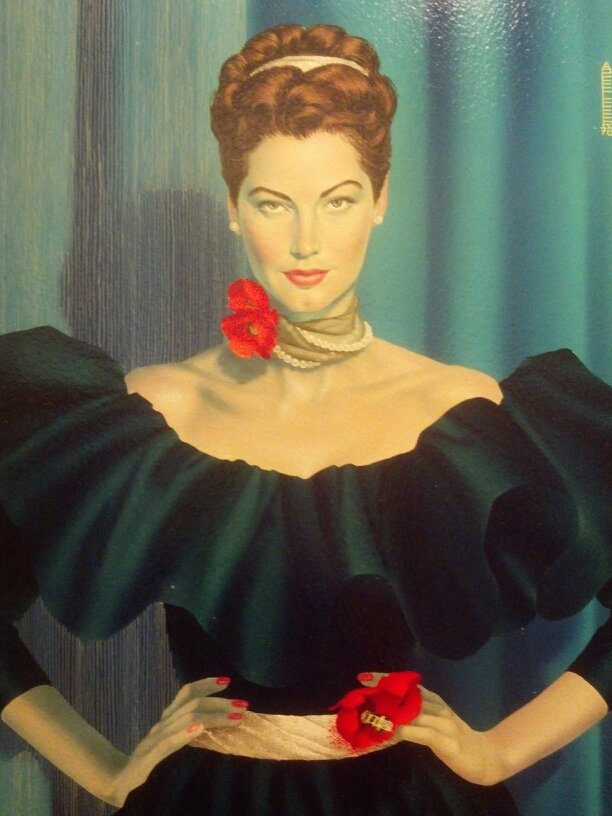
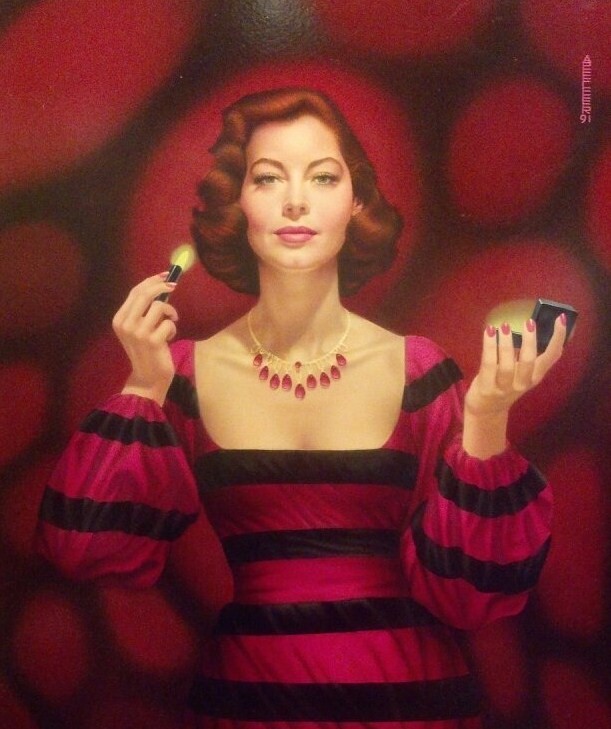
Portraits of Ava Gardner: 

ResizedImage_1385490901748 ResizedImage_1385490904985

Other personal items: 

-Script and contract for “The Night of the Iguana”

A scarf that belonged to Gardner from Queen Elizabeth's coronation in 1952. (Comet Over Hollywood/Jessica P.)

A scarf that belonged to Gardner from Queen Elizabeth’s coronation in 1952. (Comet Over Hollywood/Jessica P.)

-Awards such as the Look Achievement Award for 1948.

-A letter from Grace Kelly. Kelly and Gardner became good friends while filming “Mogambo” and Gardner even attended Kelly’s wedding in Monaco. Gardner said she always received a handwritten Christmas card from Kelly.

-Scripts from films such as “One Touch of Venus

-Bullfighter and bull figurines that she got while living in Spain.

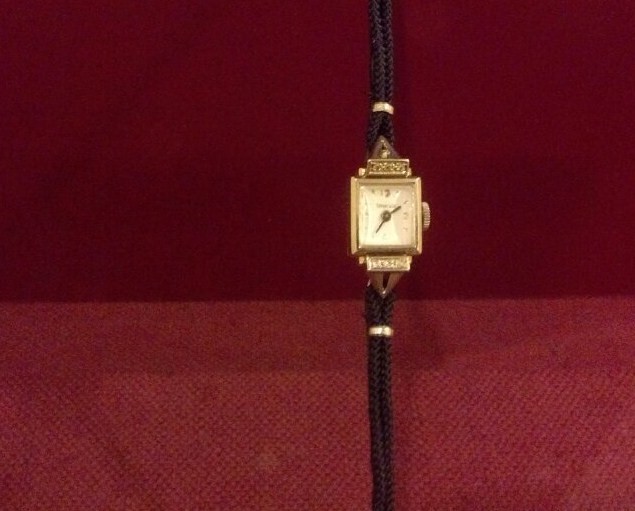
A Tiffany's watch from director John Ford inscribed "To Ava, a Class Act, John Ford."

A Tiffany’s watch from director John Ford inscribed “To Ava, a Class Act, John Ford.”

-Several portraits of Gardner by artist Bert Pfister

-Ava Gardner’s doll collection

-Poems from Gardner’s friend and poet Robert Graves

Jewelry that belonged to Gardner. (Comet Over Hollywood/Jessica P)

Jewelry that belonged to Gardner. (Comet Over Hollywood/Jessica P)

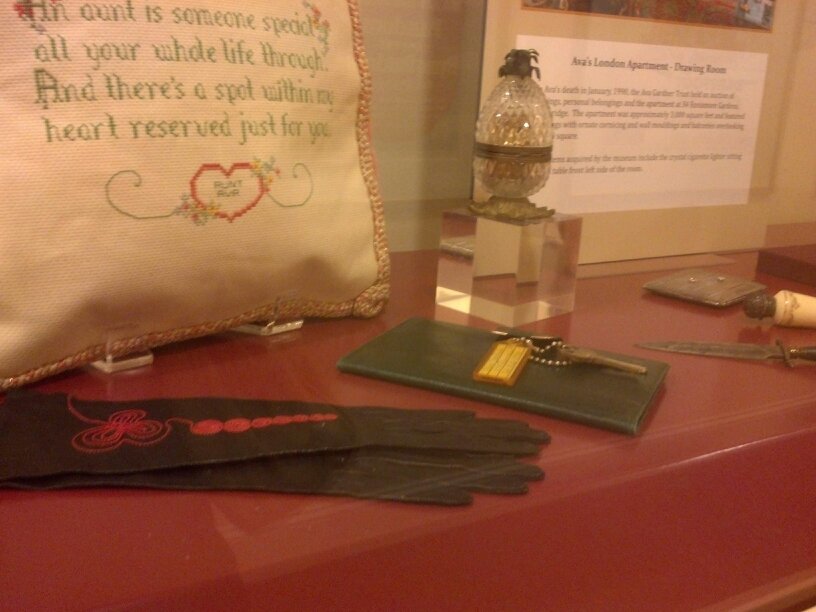
Personal items from Gardner's London apartment. The needle point pillow talks about being an aunt. (Comet Over Hollywood/Jessica P)

Personal items from Gardner’s London apartment. The needle point pillow talks about being an aunt. (Comet Over Hollywood/Jessica P)

-A miniature statue of Gardner from “One Touch of Venus

-Gardner enjoyed collecting China. Several glasses and plates that belonged to her were on display

Was it worth it?

Smithfield is three and a half hour away from Shelby. I was exhausted by the time I got home, but it was a worthwhile visit.

I have always been proud to be living in the same state that Gardner was born. However, even though I have seen many of her film, I never knew much about her life.

I left the Ava Gardner Museum with a new appreciation for Ava Gardner. I also left with a bottle of Ava Gardner wine from Hinnant Family Vineyards.

If you are ever in the area, I suggest a visit.

Check out the Comet Over Hollywood Facebook page, follow on Twitter at @HollywoodComet or e-mail at cometoverhollywood@gmail.com
Olympics to Hollywood: Nat Pendleton

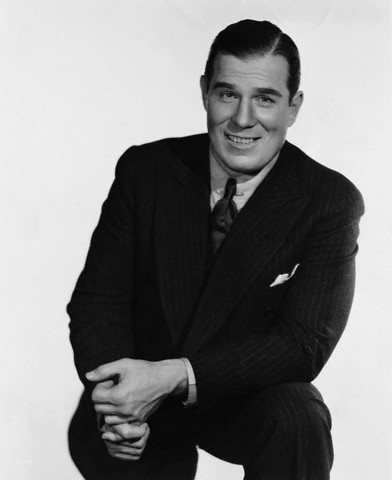
Nat Pendleton in 1935.

Nat Pendleton in 1935.

This November 2013 post was minimally edited on Aug. 2, 2016, for a series on Olympians who went on to be actors. This series coincides with the Rio 2016 Summer Olympics.

Whether he was an affable lug or a dangerous mobster, the face of the dark-haired 6 foot character actor is one film fans recognized in the 1930s and 1940s.

Character actor Nat Pendleton acted in uncredited and supporting roles from 1926 to 1947.
But before Pendleton performed as Sandow the Great in the biographical film “The Great Ziegfeld” (1936), he was flexing his muscles for different reasons.

Pendleton’s fame originally came in the form of an Olympic silver medal in the super heavyweight freestyle wrestling division at the 1920 Summer Olympics in Antwerp, Belgium. That year, the United States won 41 gold, 27 silver and 27 bronze medals — winning the most medals by any of the 29 nations attending. Born in Davenport, Iowa, Pendleton was Iowa’s first Olympic medal winner, according to the National Wrestling Hall of Fame.

Continue reading