Classics in the Carolinas: Kay Kyser

 This fall, Comet Over Hollywood is doing a mini-series of “Classics in the Carolinas.” I’ll be spotlighting classic movie related topics in South Carolina (my home state) and North Carolina (where I currently live and work).

“The Kollege of Musical Knowledge” wasn’t the only colligate education 1940s bandleader Kay Kyser received. He was also a 1928 graduate of the University of North Carolina (UNC) in Chapel Hill.
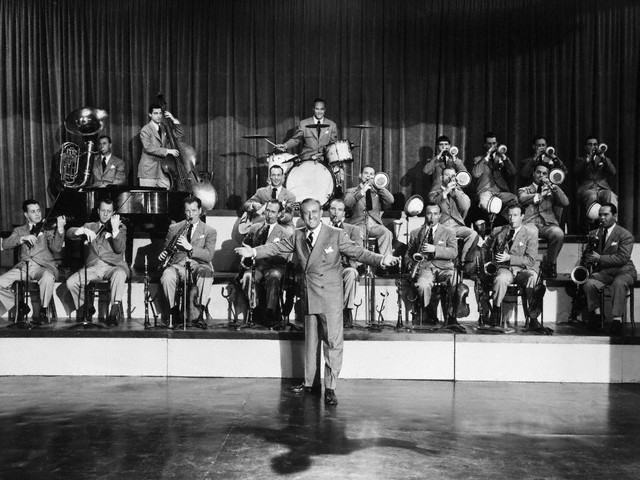
Kay Kyser and his band in 1944

Born in Rocky Mount, N.C. in 1905, Kyser’s mother, Emily Royster Kyser, was the first registered female pharmacist in North Carolina.

Kyser entered UNC in 1923 set on receiving a Bachelor’s degree in law, according to the website “A Tribute to Kay Kyser.” However, Kyser switched his major to economics because “the legal profession meant lots of work,” he said.
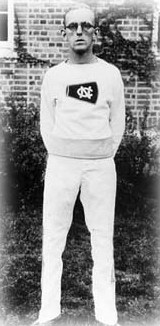
An established student at UNC, Kyser excelled not just in academics but in extracurricular activities:

-He was the senior class president in 1928

-The school’s head cheerleader for the cheering section “The Carolina Cheerios”

-He wrote the school’s fight song “Tar Heels on Hand” in 1937

-Acted in PlayMakers Theater

-Was in Sigma Nu fraternity

-Was a member of honors societies-Alpha Kappa Psi, Order of the Grail, Golden Fleece

But it in 1926 during his junior year of college, that Kyser was invited to lead the school orchestra. Up until this point, Kyser had no musical background, except clarinet lessons which his wife Georgia Carroll said “failed miserably.”

Kyser was selected to lead the band because of his popularity on campus was hoped to bring out large audiences.

After graduating from UNC, went on the road with the band but didn’t really take off until the mid-1930s when Kyser hired girl singer Ginny Simms and trumpeter Ishkabbible (real name Merwyn Bogue).
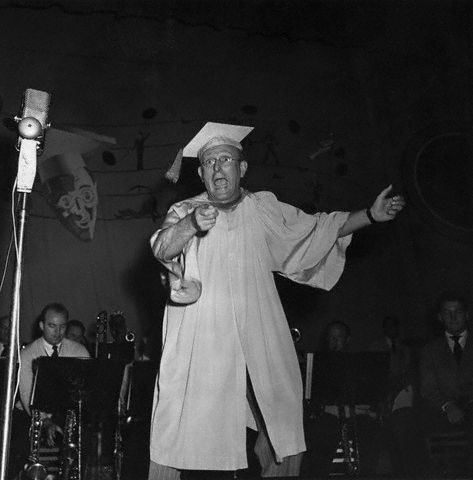
Kyser’s zany style of music is what made him popular.

Kyser’s style was different than other bandleaders of the 1930s and 1940s. He didn’t just play music, the whole band performed in a comedic, fun style. Kyser was known for wearing a graduation cap and gown and showing his southern roots with his signature phrases, “Evenin’ children. How y’all?” and “Y’all’s dance.”

Kyser starred in several Hollywood movies as himself such as “Playmates” (1941) with John Barrymore and “That’s Right-You’re Wrong” (1939) with Lucille Ball. He also traveled abroad during World War II, performing for service men.

But after World War II ended, Kyser retired to Chapel Hill, N.C. with his wife, who was also the band’s singer, Georgia Carroll in 1951.

My mother and grandparents lived in Chapel Hill and would sometimes see Kay Kyser in the grocery store, and also went to the same Lutheran church as his wife. My grandmother said “Gorgeous” Georgia Carroll was just as beautiful in person as she was on screen.

Kyser passed away in 1985, and Carroll remained in Chapel Hill until her death in 2011 at the age of 91. Carroll donated 334 photos and other Kay Kyser artifacts to the Chapel Hill University.
Check out the Comet Over Hollywood Facebook page

Classics in the Carolinas: Joanne Woodward

  This fall, Comet Over Hollywood is doing a mini-series of “Classics in the Carolinas.” I’ll be spotlighting classic movie related topics in South Carolina (my home state) and North Carolina (where I currently live and work).

In 1942, someone very important graduated from Greenville High School, in Greenville, S.C.: my grandfather, Henry E. Vogel.

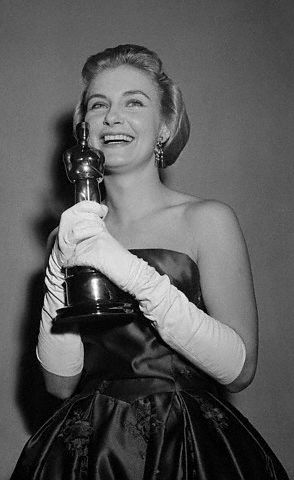
Joanne Woodward with her Oscar for “Three Faces of Eve” in 1958.

But another important figure graduated from Greenville High School: Joanne Woodward.

Woodward won an Academy Award for playing a woman who suffers from multiple personality disorder in “The Three Faces of Eve” (1957). But in real life, she was the envy of women everywhere as the wife of Paul Newman.

Originally born in Thomasville, Georgia in 1930, Woodward moved to Greenville, S.C. after her parents divorced. A teenager when they moved, Woodward started at Greenville High School as a sophomore and graduated in 1947.

While at Greenville High School she was beauty queen several times, “Sweetheart of 1947” her senior year, nominated “Best Looking” and a member of the cafeteria club, said classmate Catherine Tate in an interview. Woodward also attended Christ Episcopal Church in Greenville.

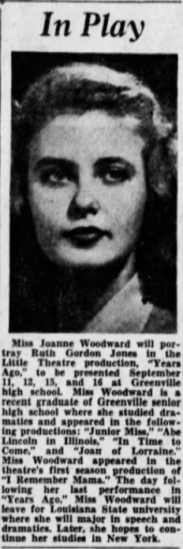
As a high school student, Woodward also performed in “I Remember Mama,” “The Glass Menagerie” and “Inherit the Wind” with the Greenville Little Theater. She returned to Greenville in 1975 to perform “The Glass Menagerie” with the Greenville Little Theater, refusing a formal driver and was the “same Joanne,” Tate said.

Joanne

Sept. 1947 Greenville News clipping about Joanne Woodward

“I don’t know what Joanne Woodward’s ambitions are, but she was a born actress,” said one Greenville critic in an article about “I Remember Mama” in 1946.

Woodward wanted to go to Clemson University, a South Carolina state college 45 minutes away from Greenville, like her brothers but the college was still an all-male military college at the time. (I wasn’t able to find this story confirmed anywhere, but have always been told that. My family is big Clemson fans, with my parents, sisters, great-grandfather and grandfather attending and my other grandfather holding the position of Dean of Science at the university.)

Woodward went to Lousiana State University where she studied drama and then continued on to New York where she found work in plays and on television. Early in both of their careers, Woodward met Paul Newman. Newman was married at the time, but he eventually divorced and the two were married in 1958 until his death in 2008.

In 1992, Newman donated $50,000 to Clemson University in honor of his father-in-law, Wade Woodward, Jr. who graduated from Clemson in 1922. The money went towards the Green Room at the Brooks Center of Performing Arts, according to a January 1992 Associated Press article.

Woodward is currently living in Connecticut, since Paul Newman passed away in 2008.

Paul Newman with wife Joanne Woodward

Paul Newman and Joanne Woodward in 1955

Check out the Comet Over Hollywood Facebook page for the latest updates.

Classics in the Carolinas: Randolph Scott

Comet Over Hollywood is doing a mini-series of “Classics in the Carolinas.” I’ll be spotlighting classic movie related topics in South Carolina (my home state) and North Carolina (where I currently live and work).

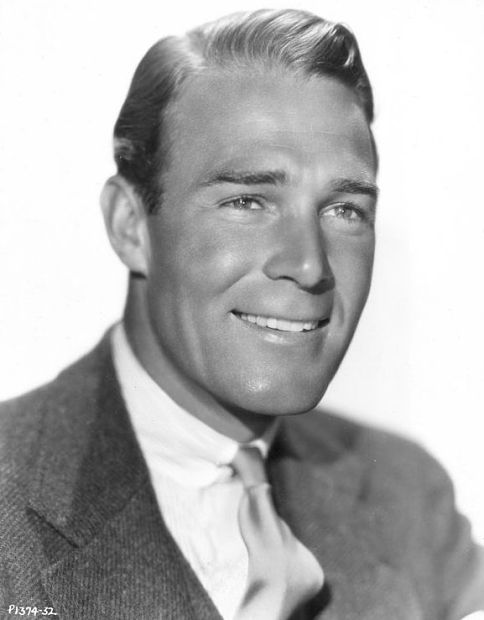
Handsome Randolph Scott

From playing a Confederate soldier alongside Errol Flynn in “Virginia City” (1940) to Shirley Temple’s kindly neighbor in “Rebecca of Sunnybrook Farms” (1938), Randolph Scott acted with the top actors in Hollywood.

But before he romanced Irene Dunne in “Roberta” or was roommates with Cary Grant in their “Bachelor Hall,” Scott grew up in the south.

Though born in Orange County, V.A., in 1898, Scott lived most of his life in Charlotte, N.C. where his father, George Scott, worked as a public accountant and owned the firm Scott, Charnley and Co. The Scott family was prestigious prior to Randolph’s Hollywood fame. His father, a graduate of Guilford College in Greensboro, N.C., was the Chairman of the Finance Committee in Charlotte and oversaw the city’s first published financial statement in the early 1900s.

George Scott also helped modernize Charlotte’s accounting systems for the city’s administration and water department. He also was recognized by the state for the drafting of North Carolina’s first certified public accountant law, and he was appointed by the governor to the state board of accountancy.

Randolph Scott left Charlotte in 1917 when he went to fight in World War I. After returning home, he went to Georgia Tech, with dreams of being an All-American football player until he suffered from a back injury. He then became a Tar Heel when he transferred to the University of North Carolina (UNC) and studied textile engineering and manufacturing.

Scott stayed for two semesters at UNC before returning home to Charlotte where he worked as an accountant for his father’s firm and was a charter member of the Charlotte Civitan Club.

Scott’s grave in Charlotte, N.C. His wife Patricia is buried here with him.

It was in 1927 that Scott left his home of Charlotte, N.C. and traveled to Hollywood with a letter of introduction from his father to Howard Hughes. He was able to meet Hughes and score a screen test with Cecil B. DeMille.

Randolph Scott acted in musicals with Fred Astaire and Ginger Rogers and starred in comedies, but he found his niche in westerns.

“They have been the mainstay of the industry ever since its beginning. And they have been good to me. Westerns are a type of picture which everybody can see and enjoy,” Scott said. “Westerns always make money. And they always increase a star’s fan following.”

Though he acted with the top Hollywood stars of the 1930s and 1940s, he is underrated and not as well known today as his best friends Fred Astaire and Cary Grant.

His last role was an aging gunslinger in Sam Peckinpah’s “Ride the High Country” (1962), after which he didn’t return to films, living the remainder of his life in Beverly Hills.

“All the old movies are turning up on television, and frankly, making pictures doesn’t interest me too much anymore,” he said in 1962.

Scott passed away in 1987 and was buried in his childhood home of Charlotte, N.C. His grave is four blocks from his childhood home.

Since I live close to Charlotte, I visited his grave on Sept. 1, 2012, in Elmwood Cemetery. His wife Patricia of 44 years was buried with him.

Check out the Comet Over Hollywood Facebook page for the latest updates.

1939: Watching a year in films

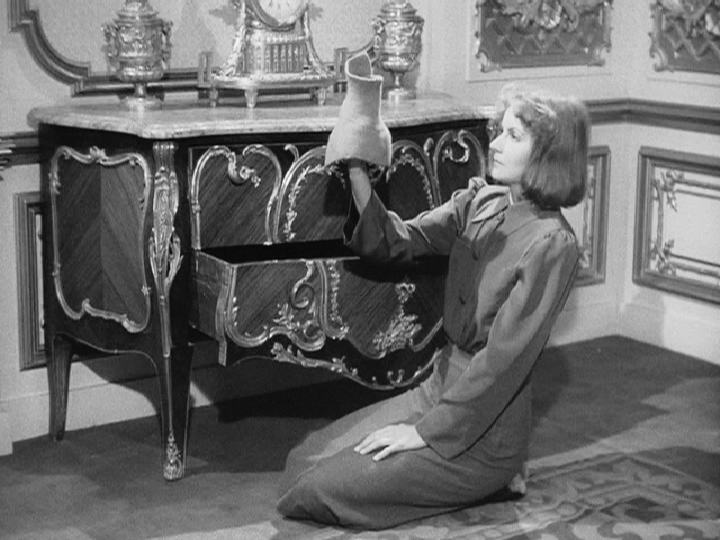
Greta Garbo in “Ninotchka” (1939)

1939.

To most, it’s just a year that occurred a long time ago.

To the Polish, it’s when the Germans took over the country with a Blitzkrieg.

To classic movie fans, it’s a year like no other.

Sure, there are several great films that came out from the 1920s to the 1950s. “Casablanca” came out in 1942. “White Christmas” lit up the screens in 1954. But neither of those years have a plethora of unforgettable movies that have a certain extra something added to them.

Gone with the Wind,” “The Wizard of Oz,” “Mr. Smith Goes To Washington” and “Ninotchka” are all givens when listing off excellent, flawless 1939 films.

But what about the other 515 American films put out in that same year?  Were they just as good?  I decided to find out.

In a crazed moment last summer, I decided to try to see every movie made in 1939. I had two criteria to make it a little easier to find the movies: They must be full-length movies, no short films; they must be American and they cannot be from television (despite being early in TV’s history, there were already experiments with made for TV movies in 1939).

I went on IMDB and got a full list of all the films from 1939. I clicked on each one, made sure it followed my requirements and then typed the title in alphabetical order into a table on Word. It took me several days to make my list due to my inefficient method.

 I was surprised to find that I had already seen 90 of the 515 movies. So far I have seen 106 and counting; this project won’t be completed any time soon.

 Through this process, I have discovered several gems during 1939 that are sometimes overshadowed by larger budget films.

 Some things I’ve discovered:

•Non-MGM films are overlooked:

-“The Rains Came” has a fantastic scene during the flood when the whole city crashes down.

-“Drums Along the Mohawk” gives Claudette Colbert the chance to be in a period film on the frontier and play alongside Henry Fonda. The movie looks fabulous in color.

High quality B movies:

-“Everybody’s Hobby” is a lot of fun with Henry O’Neil being driven crazy by his family’s hobbies.

-Freda Inescort gets the change to play a nice woman in “Beauty for Asking” with a young Lucille Ball.

Contributions to series films:

            –The first “Maisie ” movie starring Ann Sothern premiered. I adore Maisie Revere and her adventures. They are hilarious but also usually have a good moral to them. Jean Harlow was originally supposed to be Maisie before her death. I could definitely see this, but love the spark that Ann offers.

            -Two Dr. Kildare movies come out this year. “Calling Dr. Kildare” and “The Secret of Dr. Kildare,” which were the 3rd and 4th films in the series.  Laraine Day as Nurse Mary Lamont hops on board as a love interest to  Jimmy Kildare.

            -Glenda Farrell and Jane Wyman finish off the “Torchy Blane” series with the last three films.

            –Andy Hardy chases girls and has “man to man” talks with Judge Hardy in three films: “Andy Hardy Gets Spring Fever,” “The Hardy’s Ride High” and “Judge Hardy and  Son.”

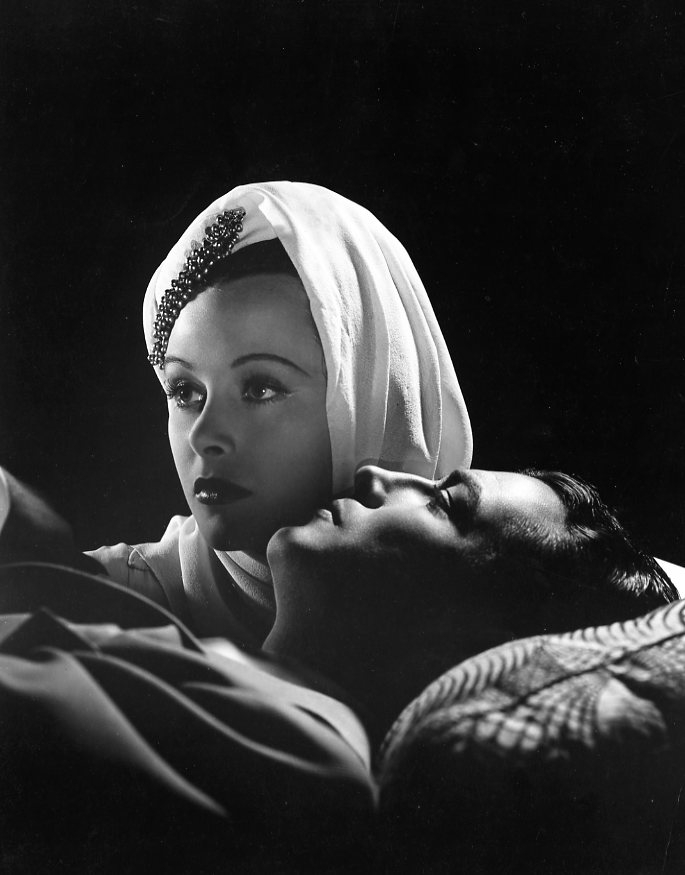
Hedy Lamarr and Robert Taylor in “Lady of the Tropics” (1939)

Stars get their first big break:

            –Fresh from “Algiers,” Hedy Lamarr was playing a love interest to Robert Taylor in her first MGM movie “Lady of the Tropics”

            -Greer Garson graced the screen in her first two films “Goodbye, Mr. Chips” and “Remember?”

            -Lana Turner is moving away from being Cynthia Potter on Andy Hardy and making a name for herself in “Dancing Co-eds” and “Calling Dr. Kildare.”

            -Olivia De Havilland finally gets the big break she was looking for in “Gone with the Wind.”

            -Jimmy Stewart had already made waves in “Of Human Hearts” but he really showed he had leading man power in “Mr. Smith Goes To Washington” and three other films that year.

Deanna Durbin is all grown up as she receives her first kiss from Robert Stack in “First Love.”

Joan Crawford is in color for the first time in “Ice Follies of 1939”

I could go on forever of the excellent movies (like Beau Geste, Of Mice and Men, and Real Glory) but no one wants to read 2000 words on a blog.

 All these movies had a certain magic and allowed several of our best stars to emerge. Where did it come from?

 According to the Turner Classic Movie documentary “1939,” 1939 was prolific for the United States in general. Roosevelt was helping the country work its way out of the Depression, and movies showed off this new wealth with stellar films. The industry began to take off for the next two years and then Pearl Harbor was attacked.

 World War II began for the United States and the growth Hollywood was once experiencing halted. The heyday of movies was forgotten as rationing and blackouts became a concern for the world.

After the war the movie industry would never return to the heights achieved in 1939 and American film tastes would change dramatically over the coming decades.

 I hope to discover more about the magic, and maybe see exactly what its source is when I complete all 515 films. It may be a large undertaking, but I don’t think it will be an unpleasant one.

Check out the Comet Over Hollywood Facebook page for the latest updates.