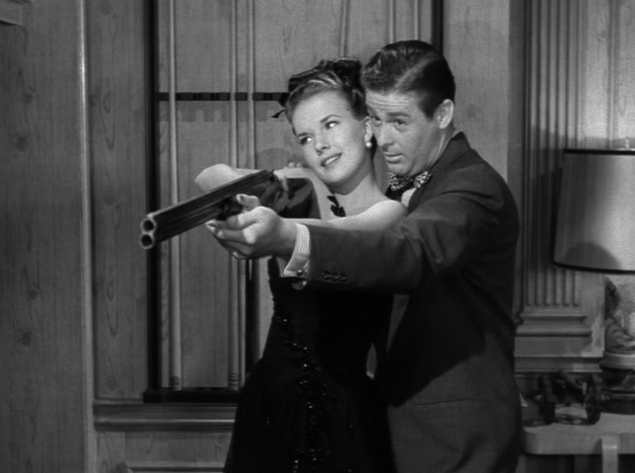
Christmas at Comet’s: “It Happened on Fifth Avenue” (1947)

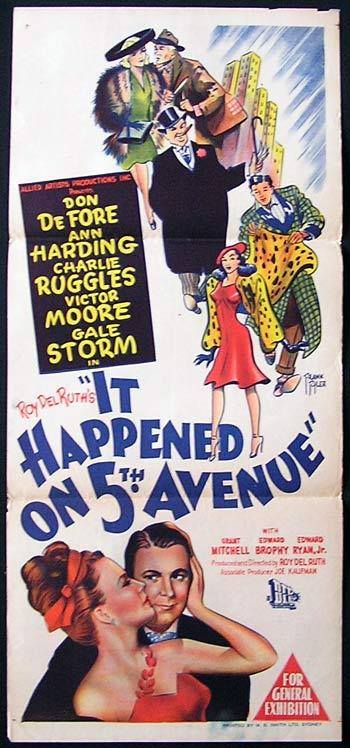
poster

It’s easy for this Christmas film to slip through the cracks.

It isn’t as well-known as other Christmas classics such as “Miracle on 34th Street” or “White Christmas.” And many of the leads are character actors rather than superstars who star in other Christmas films like Barbara Stanwyck or Loretta Young.

You may have never seen or heard of “It Happened on 5th Avenue (1947), but this film is far too charming for that not to be remedied- and soon.

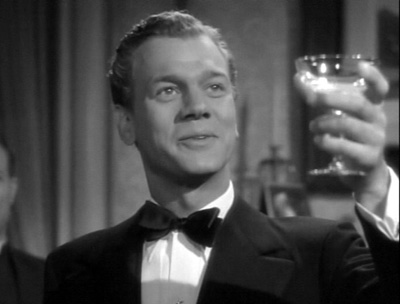
The story begins with homeless Aloysius McKeever (Victor Moore) sneaking into the wealthy mansion of Michael J. O’Connor (Charles Ruggles), the second richest man in the world. The O’Connors live in Virginia during the winter. For the past four winters, McKeever has stayed in the O’Connor home in New York from November 3 until March 13 while the family is away.

McKeever eats their food, wears Mr. O’Connor’s clothes, and occasionally dusts off the furniture.

When the O’Connor’s come back to New York, McKeever heads to their winter home in Virginia.

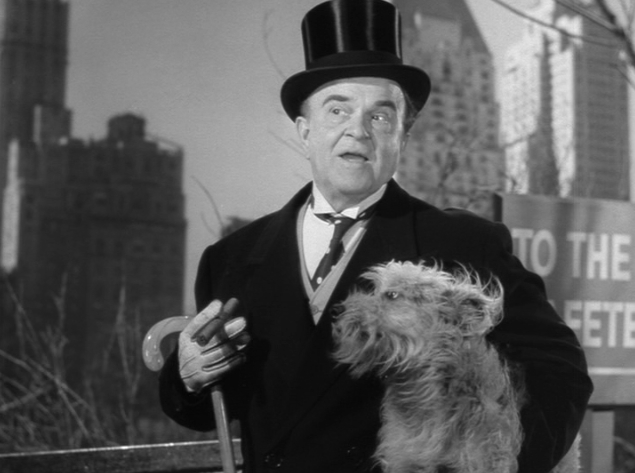
Homeless McKeever (Victor Moore) dressed in Michael O'Connor's clothes as he stays in his home.

Homeless McKeever (Victor Moore) dressed in Michael O’Connor’s clothes as he stays in his home.

With a set of keys to several mansions in New York, McKeever explains one day, he got tired of working and has been house hopping for the last 20 years and never has been caught.

But this winter, McKeever has company for the first time.

He meets Jim Bullock (Don DeFore), a veteran who was recently evicted from his apartment. The apartments are going to be torn down by Michael O’Connor’s company to build a skyscraper.

McKeever finds Jim sleeping on a park bench and invites him to his home, vaguely explaining that he is a guest of the O’Connor family.

But the O’Connor house gets more crowded than just the two men.

O’Connor’s daughter Trudy (Gale Storm) runs away from finishing school and goes to the house for clothes. The men think she is a thief, and she doesn’t correct them, but they let her stay.

Then Jim runs into his old Army buddies (Alan Hale, Jr., Edward Ryan) with their wives and children living in a car. They are invited to the O’Connor mansion too until they can find a home.

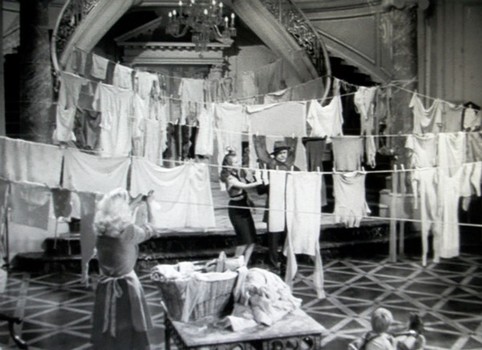
Wives of Jim's Army buddies use the foyer of the O'Connor home for hanging laundry as the house gets more crowded.

Wives of Jim’s Army buddies use the O’Connor home’s foyer for hanging laundry as the house gets more crowded.

The kicker is when Michael J. O’Connor (Charles Ruggles) and his ex-wife, Mary (Ann Harding), stay at their home-pretending to be homeless- in search of their daughter.

All the while, Jim and his Army friends are trying to bid on an Army camp for veterans who can’t find a home. Their bidding opponent is O’Connor.

“It Happened on Fifth Avenue” was originally supposed to be a Frank Capra Liberty Film. Still, he chose to make “It’s a Wonderful Life” (1946) instead, according to “Have Yourself a Movie Little Christmas” by Alonso Duralde.

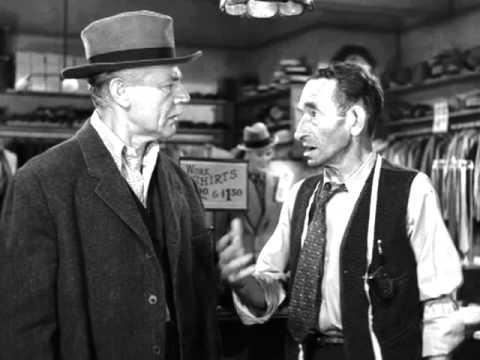
Wealthy Michael O'Connor (Charles Ruggles) exchanges his fancy clothes to dress like he is homeless.

Wealthy Michael O’Connor (Charles Ruggles) exchanges his fancy clothes to dress like he is homeless.

The film was originally supposed to be released during the Christmas season in 1946 but wasn’t released until Easter of 1947, Duralde wrote.

It isn’t surprising that Capra considered this film. The theme of the poor creating life lessons for the rich is similar to many of his other films.

“It Happened on Fifth Avenue” is funny, far-fetched and charming.

It’s a comedy that makes fun of the rich, like the O’Connors, and makes the heroes poor. The O’Connors have an opportunity to look at their lives with the help of McKeever: Michael has disregarded everything for money, Mary lives in Palm Springs and denies she’s middle-aged, and Trudy is unhappy.

Romance blossoms between Trudy (Gale Storm) and Jim (Don DeFore)

Romance blossoms between Trudy (Gale Storm) and Jim (Don DeFore)

Money is what broke up Michael and Mary O’Connor’s marriage. It takes a homeless man to bring them back together again. Trudy finds love and happiness with Jim, the unemployed veteran.

“There are richer men than I,” O’Connor says of McKeever.

Amongst the life lessons and heartwarming scenes, the movie is also hilarious.

With lines such as:

“That joint is as empty as a sewing basket in a nudist camp.”

And

“He called me ‘Sugar,’ because I was hard to get”-referencing rationing during World War II.

While on a mission to see every classic Christmas film I could get my hands on, I came across “It Happened on Fifth Avenue” back in 2010 when it was shown on Turner Classic Movies. Since then, it has become a family favorite in the Pickens household.

Add this one to your yearly Christmas viewing and see that “a house is only what its occupants make it.”


Check out the Comet Over Hollywood Facebook page, follow on Twitter at @HollywoodComet or e-mail at cometoverhollywood@gmail.com

Woman of a Thousand Faces: Remembering Eleanor Parker

Eleanor Parker as the Baroness in "Sound of Music" (1965).

Eleanor Parker as the Baroness in “Sound of Music” (1965).

Today’s audiences know her as the Baroness; the mean blond who was Julie Andrews’ romantic rival in “The Sound of Music” (1965).

Though her role in the 1965 musical is memorable, the talents of Eleanor Parker are so much more than that.

Parker started out at Warner Brothers studios in the early 1940s. She was fresh faced, pretty and red-headed.

Born in Ohio, Parker moved to Hollywood in 1942 and was discovered while sitting in the audience at the Pasadena Community Playhouse by a Warner Brothers talent scout, according to Glamour Girls of the Silver Screen.

Parker’s first role was in 1941, a deleted scene in the Errol Flynn and Olivia De Havilland film “They Died With Their Boots On.” This role was followed by short films, bit parts and B-movies. One of these early jobs included a voice on a record to a soldier husband in the Cary Grant war film, “Destination Tokyo” (1943).

Eleanor Parker in the 1940s

Eleanor Parker in the 1940s

But her first major role with Warner Brothers was alongside John Garfield, Sydney Greenstreet and Paul Henried in “Between Two Worlds” (1944). The all-star cast is on a boat in the afterlife; waiting to see if they will go to heaven or hell.

Her next major role came in the romantic World War II drama, “The Very Thought Of You” (1944) with Dennis Morgan as her romantic co-star. Beulah Bondi and Henry Travers as Parker’s parents, who vehemently disapprove of her romance and eventual marriage to a soldier.

Parker showed her versatility as an actress from films like “Pride of the Marines” (1945), a drama about disabled war veterans co-starring John Garfield, to “Never Say Goodbye” (1946), a comedic romp set around Christmas with Errol Flynn.

She displays her acting abilities best in one of her top, and possibly most disturbing, roles in the prison drama “Caged!” (1950). Parker goes into jail as a naïve and innocent young woman and leaves hardened and cold. One horrifying scene includes Parker’s head getting shaved as a punishment. She was nominated for an Academy Award for Best Actress for her performance in “Caged” but lost to Judy Holliday for “Born Yesterday.”

A year later she was getting drunk on tequila and flirting with Fred MacMurray in the comedy “Millionaire For Christy” (1951).

It’s no wonder that Eleanor Parker has been dubbed “Woman of a Thousand Faces.”

John Garfield, Clark Gable, Stewart Granger, Kirk Douglas, Glenn Ford, Errol Flynn and Humphrey Bogart are just a few of the top leading men she acted with.

“You didn’t go to her films to see Miss Parker being Miss Parker in a different dress and locale,” wrote Doug McClelland in his book “Eleanor Parker: Woman of a Thousand Faces.” “You went to see what person she had created on film.”

Parker helps husband John Garfield adjust to living life without sight in "Pride of the Marines" (1945). (LIFE)

Parker helps husband John Garfield adjust to living life without sight in “Pride of the Marines” (1945). (LIFE)

Parker was nominated for an Academy Award for Best Actress two other times:

-“Detective Story” (1951) –Parker plays the wife of Kirk Douglas who was involved with and got pregnant from a racketeer before their marriage.

-“Interrupted Melody” (1956) –the biographical film about Australian opera singer Marjorie Lawrence who becomes paralyzed due to polio.

She also played a woman with multiple personality disorder in “Lizzie” (1957), the same year Joanne Woodward played a similar role in “The Three Faces Of Eve.” It was Woodward who won the Oscar that year.

In a 1988 interview, she said she was a character actress. That her roles were too diverse that her own personality never “emerged on screen,” according to an article from USA Today.

In her private life, she was shy and collected classical records, according to an April 30, 1945, LIFE article, “Eleanor Parker: Actress plays ‘Of Human Bondage,’ role that made Bette Davis famous.”

McClelland’s book suggests one reason Parker is forgotten today is because of her quiet, private life.

“I’ve prided myself on not dreaming up tales to see my name in print,” McClelland quotes her as saying in an interview.

Some of my personal favorite films of Parker’s include: “The Voice of the Turtle” (1947), “Woman in White” (1948), “Never Say Goodbye” (1946), “The Very Thought of You” (1945), “Pride of the Marines” (1945) and “Valley of the Kings” (1954).

Parker plays a fiesty female in "Scaramouche" (1952)

Parker plays a fiesty female in “Scaramouche” (1952)

Eleanor Parker is one of those actresses that lights up the screen and makes the movie. The only films I remember not enjoying of Parker’s were the Rudolph Valentino biopic “Valentino” (1951) and “The Oscar” (1966). Neither of the films were bad because of Parker, but bad script writing.

Parker passed away today at the age of 91 due to complications from pneumonia, according to the Associated Press.

“Eleanor Parker was and is one of the most beautiful ladies I have ever known,” said “Sound of Music” co-star Christopher Plummer in Parker’s USA Today obituary. “Both as a person and as a beauty. I hardly believe the sad news for I was sure she was enchanted and would live forever.”

Goodbye to one of Warner Brothers’ brightest and most talented stars. “The Very Thought of You” will always make your fans smile.

Turner Classic Movies will be honoring Eleanor Parker on Tuesday, Dec. 17 (ET):
6 a.m. – The Very Thought of You (1944)
7:45 a.m. – Of Human Bondage (1946)
9:45 a.m – The Woman in White (1948)
11:45 p.m. – Caged (1950)
1:30 p.m. – Scaramouche (1952)
3:30 p.m. – Interrupted Melody (1955)
5:15 p.m. – Home from the Hill (1960)

Check out the Comet Over Hollywood Facebook page, follow on Twitter at @HollywoodComet or e-mail at cometoverhollywood@gmail.com

Musical Monday: “Funny Face” (1957)

It’s no secret that the Hollywood Comet loves musicals.
In 2010, I revealed I had seen 400 movie musicals over the course of eight years. Now that number is over 500. To celebrate and share this musical love, here is my weekly feature about musicals.

funny face posterThis week’s musical:
Funny Face” -Musical #32

Studio:
Paramount Pictures

Director:
Stanley Donen

Starring:
Fred Astaire, Audrey Hepburn, Kay Thompson
Model cameos: Dovima, Suzy Parker, Sunny Hartnett

Plot:
An intellectual book store clerk (Hepburn) gets caught up in a fashion shoot. Photographer Dick Avery (Astaire)-based off of real life photographer Richard Avedon- feels she would add something unique to the fashion magazine he works for.

Fred Astaire's character was modeled after photographer Richard Avedon. Astaire is pictured with model, Dovima.

Fred Astaire’s character was modeled after photographer Richard Avedon. Astaire is pictured with model, Dovima.

Trivia:
-This movie was originally going to be an MGM film in the Freed Unit. However, since both Astaire and Hepburn were both working for Paramount, the film was moved to that studio. The MGM executives also weren’t in love with the script, according to The Fifties: Transforming the Screen, 1950-1959 by Peter Lev.
-Fred Astaire only wanted Audrey Hepburn for the film. Filming was delayed, because she wanted husband Mel Ferrer to be with her, according to “Audrey: A Life in Pictures” by Carol Krenz.
-Hepburn was self-conscious about being too skinny and flat chested. Fashion designer Hubert de Givenchy said everyone would be looking more at her eyes, Krenz said.
-Astaire’s role is based on the life of famed fashion photographer Richard Avedon. Stanley Donen hired Avedon for the visual consultant, according to “The Audrey Hepburn Treasures.”
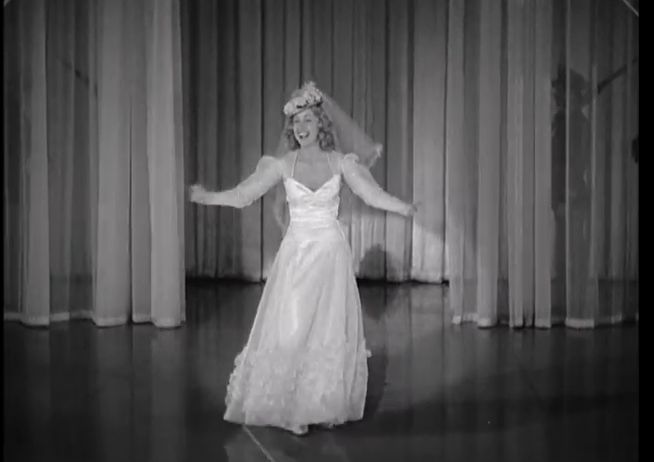
-During the “He Loves, She Loves” number when Hepburn is in the wedding dress, it was difficult for Astaire and Hepburn to dance due to slippery and muddy grass.
-Hepburn’s own dog appears in the train fashion shoot scene.
-The white socks Hepburn wears in the jazz dancing scene caused trouble on set. Hepburn thought all black, including the socks looked better. Director Stanley Donen said if she wore all black, she would fade into the the background in the dimly lit scene and there would be no definition in her movement, according to the Sam Irvin book “Kay Thompson: From Funny Face to Eloise.”

Highlights:
-“Think Pink” isn’t an excellent song but the pink fashion sequence that goes along with the song is to die for. The number has models, including famous Suzy Parker, modeling pink bathing suits, day wear, evening gown and using pink shampoo and tooth paste.

Funny Face pink photogrid

“Think Pink” fashion segment in “Funny Face.” Models include Sunny Hartnett and Suzy Parker. (Film strip made by Comet Over Hollywood)


-The fashion shoot with Audrey Hepburn. The different scenarios are fun and the clothes are gorgeous.

model funny face

Audrey Hepburn fashion shoot (Film strip made by Comet Over Hollywood)

Notable Songs:
All of the music is by George and Ira Gershwin, so most of it is familiar and fairly enjoyable. However, some of the songs aren’t as recognizable Gershwin favorites like “Lady Be Good” and “I Got Rhythm.”
-“Funny Face” sung by Fred Astaire to Audrey Hepburn as he convinces Hepburn to model. Probably the most memorable song in the film.
-“S’Wonderful” sung by Fred Astaire and Audrey Hepburn
-“Let’s Kiss and Make Up” sung by Fred Astaire
-“How Long Has This Been Going On?” sung by Audrey Hepburn

My Review:
Though it’s said Fred Astaire wouldn’t do the film without Audrey Hepburn, Astaire is sadly wasted in this film. Astaire has two major dance numbers, but I don’t feel like it gives him an opportunity to really show off his talent.
However, “Funny Face” gives Audrey Hepburn a rare time to show off her dancing skills on screen. Hepburn originally trained to be a ballet dancer before going into films. Hepburn dances with Astaire and does the bohemian jazz, modern dance number.
Hepburn also does her own singing, rather than being dubbed like she was in “My Fair Lady.” Her voice, though, is better suited for the Gershwin tunes than the operatic score of “My Fair Lady.”
On a whole, though the plot isn’t fantastic- this movie is GORGEOUS. Beautiful color, beautiful clothing and my favorite are the fashion montages.
On a personal note: This film taught me the definition of empathy and made me want a black turtleneck.

Astaire and Hepburn dancing in "Funny face"

Astaire and Hepburn dancing in “Funny face”

Check out the Comet Over Hollywood Facebook page, follow on Twitter at @HollywoodComet or e-mail at cometoverhollywood@gmail.com


Musical Monday: Three Little Words (1950)

It’s no secret that the Hollywood Comet loves musicals.
In 2010, I revealed I had seen 400 movie musicals over the course of eight years. Now that number is over 500. To celebrate and share this musical love, here is my weekly feature about musicals.

This week’s musical:
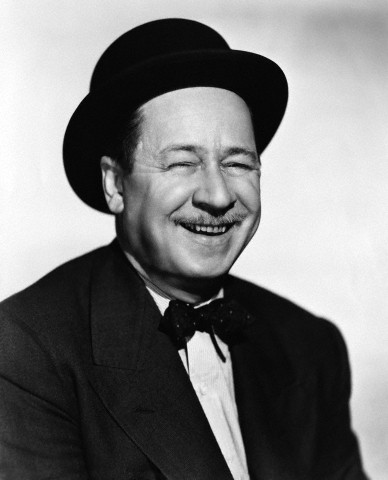
Three Little Words” (1950) — Musical #280

three little words

Studio:
MGM

Director:
Richard Thorpe

Starring:
Fred Astaire, Red Skelton, Vera-Ellen, Arlene Dahl, Keenan Wynn, Gloria DeHaven, Debbie Reynolds, Carleton Carpenter

Plot:
Set in the early 1920s, the movie is a biographical film about Tin Pan Alley songwriters Bert Kalmar (Astaire) and Harry Ruby (Skelton).
Kalmar and his partner Jessie Brown (Vera-Ellen) have a vaudeville act, but he has ambitions of being a magician. After failing at that, Brown and Kalmar have a successful routine until Bert hurts his knee and can’t dance for a year.
Bert hears a song written by Harry Ruby and the two team up to write more music together, eventually writing popular songs, music for films and Broadway plays.

Trivia:
-Actress Gloria DeHaven makes a cameo playing her mother, Flora Parker DeHaven. Flora acted on stage and screen with her husband Carter Davis during the 1920s.
-Songwriters Harry Ruby and Bert Kalmar were friends with Fred Astaire, who played Bert Kalmer, during his vaudeville days. Kalmer died in 1947, before the film was made but had agreed to it before his death. Ruby died in 1974. 

The real Harry Ruby and Bert Kalmar.

The real Harry Ruby and Bert Kalmar.

-Arlene Dahl plays real life actress Eileen Percy. Percy was in films 1917 to 1933. In the film and in real life, Percy and Harry Ruby were married from 1936 until her death in 1973.
-In the film Jesse Brown and Bert Kalmar marry. They did in real life as well but eventually divorced.
-The real Harry Ruby makes a cameo in one of the baseball scenes with Red Skelton.
The dress worn by Gale Robbins in the “All Alone Monday” number is the same dress worn by Ann Miller in the “Girl on the Magazine Cover” in Easter Parade (1948).
-Debbie Reynolds has a cameo in the role of real life actress Helen Kane. Kane dubs Reynolds’s singing.

Debbie Reynolds dressed as Helen Kane with Carleton Carpenter singing "I Wanna Be Loved By You."

Debbie Reynolds dressed as Helen Kane with Carleton Carpenter singing “I Wanna Be Loved By You.”

-Vera-Ellen is dubbed by Anita Ellis

Highlights:
-Gloria DeHaven plays her mother in the film. B
-Debbie Reynolds acts in the role of Helen Kane-who was later the voice of Betty Boop. Reynolds’s singing voice is dubbed by Kane.

Notable Songs:
-“All Alone Monday” sung by Gale Robbins. My favorite song in the film. Though 1930s recordings of the song I came across later were more upbeat and happy sounding, Robbins sang it with a bluesy and mournful feel.
-“Three Little Words” sung by Fred Astaire. The title song isn’t sung or written until the very end of the film but it is the most memorable and leaves you humming after the movie is over.
-“I Wanna Be Loved By You” sung by Debbie Reynolds who is dubbed by Helen Kane, who originated the song. Personally, Kane’s voice grates on my nerves but it is a memorable and famous song.

My Review:

Though parts of this film are fictional-such as the conflict between Bert Kalmer and Harry Ruby- is a good movie as far as biographical pictures go. In many biographical films, the love interest is made up of several different people that the main character had relations with during their career. The love interest also sometimes different name to protect the real life person-examples of this could be Jayne Mansfield’s character in the “George Raft Story” who is supposed to be Betty Grable, or Evelyn Keyes’s character in “The Al Jolson Story,” who is supposed to be Ruby Keeler.
In comparison, both men in this movie were represented with wives that they were involved with in real life.
I also liked the added cameos of people like Gloria DeHaven who plays her mother in the film.
My only beef is that the clothing worn by the female leads isn’t period appropriate and looks more suitable for 1950 and not the 1920s.
In all, “Three Little Words” is an excellent mix of gorgeous Technicolor, excellent dance numbers with Vera-Ellen and Astaire, comedy from Red Skelton and catchy songs.

Red Skelton, Vera-Ellen and Fred Astaire in "Three Little Words"

Red Skelton, Vera-Ellen and Fred Astaire in “Three Little Words”

Check out the Comet Over Hollywood Facebook page, follow on Twitter at @HollywoodComet or e-mail at cometoverhollywood@gmail.com


“Is that Pedro?” -Happy Thanksgiving from Comet Over Hollywood

Sometimes holiday family gatherings can be awkward, if not disastrous.

One cinematic example of an unhappy Thanksgiving is in “Giant” (1956) starring Elizabeth Taylor, James Dean and Rock Hudson.

The film follows Bick (Hudson) and Leslie (Taylor) and their life as cattle ranchers in Texas. Leslie, originally from Maryland, marries Bick after knowing him for a short time, and their marriage is tumultuous.

At one part of the film, Leslie travels back to Maryland with her children to evaluate her marriage, participate in her sister’s wedding and spend Thanksgiving with her family.

During the visit, Leslie’s three children become attached to the turkey named Pedro…

PhotoGrid_1385618013708

(Comet Over Hollywood/Screen Cap by Jessica P)

Here is to hoping your Thanksgiving is less dramatic.

Happy Thanksgiving! I am thankful for everyone of you who reads Comet Over Hollywood and shares the love of classic film.

Check out the Comet Over Hollywood Facebook page, follow on Twitter at @HollywoodComet or e-mail at cometoverhollywood@gmail.com

Classics in the Carolinas: A visit to the Ava Gardner Museum

Comet Over Hollywood is doing a mini-series of “Classics in the Carolinas.” I’ll be spotlighting classic movie related topics in South Carolina (my home state) and North Carolina (where I currently live and work).

Actress Ava Gardner in "The Killers" (1946)

Actress Ava Gardner in “The Killers” (1946)

One of the biggest stars to emerge from North Carolina is the actress once called “The Most Beautiful Animal” in the tagline for “The Barefoot Contessa.”

The only other North Carolinian whose fame could be equal is Andy Griffith of the “The Andy Griffith Show,” born in Mount Airy, NC.

Ava Gardner was born in rural Grabtown, NC on Christmas Eve in 1922. Gardner’s family was poor and she was the youngest of seven children.

Gardner made a screen test in 1941 for MGM and signed a seven-year contract with the studio. But her career took off after she starred with Burt Lancaster in the 1946 film noir “The Killers.”

Gardner went in to star in “Show Boat” (1951), “Mogambo” (1953) and “The Night of the Iguana” (1964).

The Ava Gardner Museum in Smithfield, NC celebrates Gardner’s life and career with costumes, personal belongings and film posters that tell her story.

Ava Gardner's grave in Smithfield, NC (Comet Over Hollywood/Jessica P.)

Ava Gardner’s grave in Smithfield, NC (Comet Over Hollywood/Jessica P.)

Within a couple miles of the museum is Ava Gardner’s grave site at the Sunset Memorial Park. Though Gardner passed away in London, her wishes were to be buried with her parents, brothers and sisters in Smithfield.

On Sunday, I traveled from Shelby, NC to Smithfield, NC to visit the museum for the first time. It was seven hours round trip, but well worth the drive.

The 5,000 square-foot museum is beautifully kept and Frank Sinatra (one of Gardner’s husbands) is played as you look about.

When you first enter, you watch an 18 minute documentary on Gardner’s life. Interviewees in the documentary include actresses Arlene Dahl, Kathryn Grayson and Janet Leigh; actor and Gardner’s ex-husband Mickey Rooney; actor Howard Keel; Gardner’s maid and friend Mearene Jordan and her niece.

The documentary included such facts as:

-Clark Gable was her favorite star as a child and she loved watching Gable and Jean Harlow in “Red Dust.” Gardner went on to star in the Harlow role in “Mogambo,” the remake of  “Red Dust.” Gardner also stared three times with Grable in films-“The Hucksters,” “Mogambo” and “Lone Star.”

-Rooney remembered that he dressed as Carmen Miranda when he first met Gardner and asked for her phone number. He spoke fondly on their brief marriage. The documentary said Gardner thought their marriage would be like her parents: cooking for Rooney and having children. Rooney preferred the nightlife.

-During Gardner’s first screen test, the studio could not understand her Southern accent. Her test ended up being a silent test as they took different shots of her face and movements.

-“The Killers” was the first role Gardner enjoyed acting in

-While filming “Show Boat,” actress and fellow North Carolinian Kathryn Grayson said Gardner was fun to work with. Howard Keel said she was up for anything and swore as much as he did.

-Gardner worked hard to do her own singing in the musical “Show Boat” but ended up being dubbed by Annette Warren. Her co-stars were unhappy about the dubbing and she can be heard on the soundtrack.

-Howard Hughes was obsessed with Gardner and the two fought a lot. At one point she hit him over the head with an object. She said she was so mad, she would have killed him had she not been stopped.

-Frank Sinatra was the true love of her life, but they were too much alike. Janet Leigh described them in the documentary as two sticks of dynamite together.

-Gardner didn’t enjoy Hollywood. She spent several years living in Spain and lived the remainder of her life in London.

 Items that can be found in the museum:

 Childhood items:

An odd play pin that Ava (pictured on top) used as a child. It could be rolled around and had a top. (Comet Over Hollywood/Jessica P.)

An odd play pin that Ava (pictured on top) used as a child. It could be rolled around and had a top. (Comet Over Hollywood/Jessica P.)

-The family Bible

-Ava Gardner’s 1939 high school diploma

Ava's college yearbook. (Comet Over Hollywood/Jessica P.)

Ava’s college yearbook. Ava is documented as a Campus Beauty. (Comet Over Hollywood/Jessica P.)

Costumes:

A cape that was used in publicity shots for "Barefoot Contessa" but is not seen in the film. (Comet Over Hollywood/Jessica P)

A cape that was used in publicity shots for “Barefoot Contessa” but is not seen in the film. (Comet Over Hollywood/Jessica P)

Originally worn by Ingrid Bergman in "Gaslight," this jacket was reworked for Gardner to wear in "The Great Sinner" also starring Gregory Peck and Melvyn Douglas (Comet Over Hollywood/Jessica P)

Originally worn by Ingrid Bergman in “Gaslight,” this jacket was reworked for Gardner to wear in “The Great Sinner” also starring Gregory Peck and Melvyn Douglas (Comet Over Hollywood/Jessica P)

Gardner wore this dress in "The Great Sinner" also starring Gregory Peck and Melvyn Douglas (Comet Over Hollywood/Jessica P)

Gardner wore this dress in “The Great Sinner” also starring Gregory Peck and Melvyn Douglas (Comet Over Hollywood/Jessica P)

A dress Gardner wore in "East Side, West Side" (1949) which also starred Barbara Stanwyck and James Mason. (Comet Over Hollywood/Jessica P.)

A dress Gardner wore in “East Side, West Side” (1949) which also starred Barbara Stanwyck and James Mason. (Comet Over Hollywood/Jessica P.)

A jacket Gardner wore in "Mogambo" also starring Clark Gable and Grace Kelly (Comet Over Hollywood/Jessica P)

A jacket Gardner wore in “Mogambo” also starring Clark Gable and Grace Kelly (Comet Over Hollywood/Jessica P)

A personal dress of Gardner's (Comet Over Hollywood/Jessica P)

A personal dress of Gardner’s (Comet Over Hollywood/Jessica P)

A dress Gardner wore in "Show Boat" also starring Howard Keel and Kathryn Grayson (Comet Over Hollywood/Jessica Pickens)

A dress Gardner wore in “Show Boat” also starring Howard Keel and Kathryn Grayson (Comet Over Hollywood/Jessica Pickens)

Left to right: Dresses from "Ride Vaquero" starring Robert Taylor and a dress from "My Forbidden Past" starring Robert Mitchum. (Comet Over Hollywood/Jessica P)

Left to right: Dresses from “Ride Vaquero” starring Robert Taylor and a dress from “My Forbidden Past” starring Robert Mitchum. (Comet Over Hollywood/Jessica P)

A costume from the film "She Went to the Races" (1945) -my personal favorite of the costumes there.  (Comet Over Hollywood/Jessica P)

A costume from the film “She Went to the Races” (1945) -my personal favorite of the costumes there.
(Comet Over Hollywood/Jessica P)

A gift to Gardner from Howard Hughes. Silk was hard to come by because of World War II. In an attempt to woo Gardner, Hughes bought her this dress as an expensive and lavish gift. (Comet Over Hollywood/Jessica P)

A gift to Gardner from Howard Hughes. Silk was hard to come by because of World War II. In an attempt to woo Gardner, Hughes bought her this dress as an expensive and lavish gift. (Comet Over Hollywood/Jessica P)

Portraits of Ava Gardner: 

ResizedImage_1385490901748 ResizedImage_1385490904985

Other personal items: 

-Script and contract for “The Night of the Iguana”

A scarf that belonged to Gardner from Queen Elizabeth's coronation in 1952. (Comet Over Hollywood/Jessica P.)

A scarf that belonged to Gardner from Queen Elizabeth’s coronation in 1952. (Comet Over Hollywood/Jessica P.)

-Awards such as the Look Achievement Award for 1948.

-A letter from Grace Kelly. Kelly and Gardner became good friends while filming “Mogambo” and Gardner even attended Kelly’s wedding in Monaco. Gardner said she always received a handwritten Christmas card from Kelly.

-Scripts from films such as “One Touch of Venus

-Bullfighter and bull figurines that she got while living in Spain.

A Tiffany's watch from director John Ford inscribed "To Ava, a Class Act, John Ford."

A Tiffany’s watch from director John Ford inscribed “To Ava, a Class Act, John Ford.”

-Several portraits of Gardner by artist Bert Pfister

-Ava Gardner’s doll collection

-Poems from Gardner’s friend and poet Robert Graves

Jewelry that belonged to Gardner. (Comet Over Hollywood/Jessica P)

Jewelry that belonged to Gardner. (Comet Over Hollywood/Jessica P)

Personal items from Gardner's London apartment. The needle point pillow talks about being an aunt. (Comet Over Hollywood/Jessica P)

Personal items from Gardner’s London apartment. The needle point pillow talks about being an aunt. (Comet Over Hollywood/Jessica P)

-A miniature statue of Gardner from “One Touch of Venus

-Gardner enjoyed collecting China. Several glasses and plates that belonged to her were on display

Was it worth it?

Smithfield is three and a half hour away from Shelby. I was exhausted by the time I got home, but it was a worthwhile visit.

I have always been proud to be living in the same state that Gardner was born. However, even though I have seen many of her film, I never knew much about her life.

I left the Ava Gardner Museum with a new appreciation for Ava Gardner. I also left with a bottle of Ava Gardner wine from Hinnant Family Vineyards.

If you are ever in the area, I suggest a visit.

Check out the Comet Over Hollywood Facebook page, follow on Twitter at @HollywoodComet or e-mail at cometoverhollywood@gmail.com

Musical Monday: Seven Sweethearts (1942)

It’s no secret that the Hollywood Comet loves musicals.
In 2010, I revealed I had seen 400 movie musicals over the course of eight years. Now that number is over 500. To celebrate and share this musical love, here is my weekly feature about musicals.

This week’s musical:
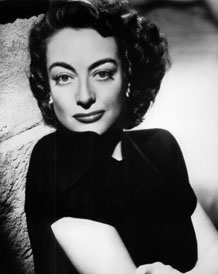
Seven Sweethearts” (1942) –Musical #62

seven sweethearts

Studio:
MGM

Director:
Frank Borzage

Starring:
Kathryn Grayson, Van Heflin, Marsha Hunt, S.Z. Sakall, Cecilia Parker, Donald Meek, Louise Beavers

Plot:
News reporter Henry Taggart (Heflin) goes to Little Delft, Michigan to cover the Tulip Festival. While there, he stays at the quaint House of the Seven Tulips inn, run by Mr. Van Maaster (Sakall). Maaster’s seven daughters-all who have boy names-help run the inn. Spoiled Regina (Hunt) tries to woo Henry but he falls for Billie (Grayson). The only problem is old-fashioned Mr. Maaster won’t let his younger daughters marry before Regina marries.

Trivia:
-This film is a family affair: Kathryn Grayson’s brother Michael Butler and sister Frances Raeburn are in the film. Grayson had a larger career than her siblings.
-Ann Rutherford was originally supposed to be in the film but she had measles. She was replaced by Peggy Moran.
-A film adaptation of a Hungarian play called “Seven Sisters.” The film appeared on Broadway in 1911.
-Producer Joe Pasternak’s first film at MGM.
-Remake of the 1915 film “The Seven Sisters”

Highlights:
-Van Heflin attempting to dance a traditional dance during the Tulip Festival.

Van Heflin and Kathryn Grayson in "Seven Sweethearts"

Van Heflin and Kathryn Grayson in “Seven Sweethearts”

Notable Songs:
There aren’t any songs that really stand out or leave you humming after the movie. However, you have the opportunity to hear Grayson since several songs such as “Tulip Time” and Mozart’s “Cradle Song.”

My Review:
This song is fun and adorable. Though she’s a brat, Marsha Hunt looks adorable, and I swoon every time Van Heflin smiles. This is only Kathryn Grayson’s fourth film, so you get to see her as she is still blossoming into stardom MGM. “Seven Sweethearts” isn’t one of MGM’s huge, glittering musicals, and usually goes under the radar. However, it’s adorable and a lot of fun.

Check out the Comet Over Hollywood Facebook page, follow on Twitter at @HollywoodComet or e-mail at cometoverhollywood@gmail.com

Classic Films in Music Videos: Aeroplane by Red Hot Chili Peppers

This is November’s edition of Comet Over Hollywood’s film references in music videos.

Director/choreographer Busby Berkeley was known for his elaborate nature and kaleidoscope-like musical numbers.

The Red Hot Chili Peppers used scenes from Esther Williams films such as "Million Dollar Mermaid" for inspiration in their music video "Aereoplane"

The Red Hot Chili Peppers used scenes from Esther Williams films such as “Million Dollar Mermaid” for inspiration in their music video “Aereoplane”

His work has been mimicked in movies such as “The Great Muppet Caper” to music videos such the the 1995 Red Hot Chili Peppers song “Aeroplane.”

The music video begins with girls in gold sequined body suits.

Esther Williams in her gold sequined costume for "Million Dollar Mermaid" (1952)

Esther Williams in her gold sequined costume for “Million Dollar Mermaid” (1952)

Berkeley directed swimming star Esther Williams in two films, “Take Me Out to the Ball Game” (1949) and the biographical film on Annette Kellerman, “Million Dollar Mermaid ” (1952.)

In “Million Dollar Mermaid,” Williams wears an aluminum crown and a gold swimsuit, made of 50,000 sequins. Williams said in her autobiography, “The Million Dollar Mermaid: An Autobiography” that it weighed her down like chain-mail.

When Williams dove into the water, the crown hit the water, she broke three vertebrae and was in a full body cast for six months, she wrote.

Also, in the Red Hot Chilli Peppers video, girls swing on trapezes- like in “Easy to Love” (1953) or “Million Dollar Mermaid” (1952). At another part in the video girls dive sideways into the pool, reminiscent of a scene from “Bathing Beauty” (1944).

Another example of a Busby Berkeley kaleidoscope-like shot can be scene at 2:51, which is similar to scene from “42nd Street” (1933). 

Thank you our friends over at Hollywood Revue for telling us the references in this video a few months ago!

Check out the Comet Over Hollywood Facebook page, follow on Twitter at @HollywoodComet or e-mail at cometoverhollywood@gmail.com

Musical Monday: “A Date with Judy” (1948)

It’s no secret that the Hollywood Comet loves musicals.
In 2010, I revealed I had seen 400 movie musicals over the course of eight years. Now that number is over 500. To celebrate and share this musical love, here is my weekly feature about musicals.

dateThis week’s musical:
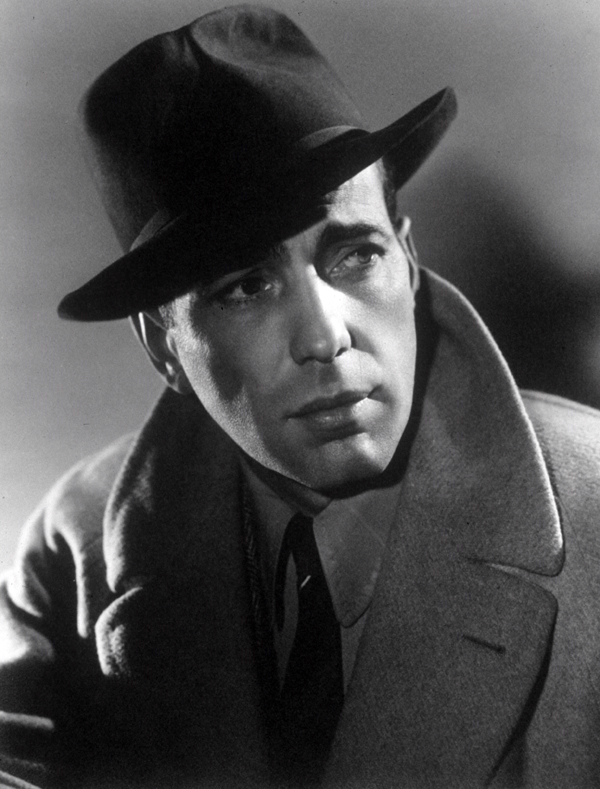
A Date with Judy” (1948) –Musical Monday #105

Studio:
MGM

Director:
Richard Thorpe

Starring:
Jane Powell, Elizabeth Taylor, Wallace Beery, Robert Stack, Selena Royale, Carmen Miranda, Leon Ames, Xavier Cugat, Scotty Beckett

Plot:
Best friends Judy (Powell) and Carol (Taylor) both have a crush on a college aged soda jerk (Stack). While planning her parent’s (Royal, Beery) anniversary party, Judy and Carol fear that Mr. Foster is having an affair with a Latin dancer (Miranda), who is really teaching him rumba lessons to surprise his wife.

Trivia:
-The movie was based on a radio series with the same name.
-The songs “It’s a Most Unusual Day” and “Judaline” debuted in this movie.
-Carmen Miranda’s song “Cuanto la Gusta” was one of her favorite songs. The album reached number 12 on the Billboard charts.
-After this film, Robert Stack was supposed to make a musical remake of the Marion Davies film “Peg O’ My Heart,” that never materialized, according to John Fricke’s book “Judy: A Legendary Film Career.”
-Jane Powell and Elizabeth Taylor were around the same age in this film. Powell said in her TCM Private Screenings Interview that she was a bit jealous that Taylor was dressed in more mature costumes and got to wear green eye shadow.
-This film followed Taylor’s demure roles in “Cynthia” and “Life With Father” and made her more of a “vamp” and a woman. Her next film would be as a sophisticated young engaged woman in “Julia Misbehaves,” according to “How to Be a Movie Star: Elizabeth Taylor in Hollywood” by William J. Mann.
-Elizabeth Taylor is dubbed by Jean McLaren.

Jane Powell and Elizabeth Taylor in "A Date with Judy" (1948)

Jane Powell and Elizabeth Taylor in “A Date with Judy” (1948)

Highlights:
-Wallace Beery trying to dance the rumba.

Notable Songs:
-“It’s a Most Unusual Day” sung by Jane Powell
This song is my favorite in the whole film. It’s light, it’s cheery and fun.
-“Judaline” sung by Jane Powell, Scotty Becket and a quartet
Another fun song. Not serious but light and cute.
-“Love is Where You Find it” sung by Jane Powell
It demonstrates Jane Powell’s excellent singing abilities. Confusion over if she or Kathryn Grayson sung it first on film.

My Review:
This is my favorite Jane Powell movie, as well as one of my all-time favorite films. I recall once in high school when I came home upset about something. I turned on this movie and all of my cares were forgotten- that is the effect “A Date with Judy” has on it’s audience.
It may be frothy and light, but it’s happy. Jane Powell is as adorable as ever and the Technicolor is awesome.
The film has a top notch cast including musical performances from Carmen Miranda and Latin bandleader Xavier Cugat.

Check out the Comet Over Hollywood Facebook page, follow on Twitter at @HollywoodComet or e-mail at cometoverhollywood@gmail.com

Veteran’s Day Musical Monday: “Stage Door Canteen” (1943)

It’s no secret that the Hollywood Comet loves musicals.
In 2010, I revealed I had seen 400 movie musicals over the course of eight years. Now that number is over 500. To celebrate and share this musical love, here is my weekly feature about musicals.

Stage Door Canteen (1943)

Stage_Door_Canteen_posterMusical:
Stage Door Canteen (1943) –Musical #138

Studio:
United Artists

Director:
Frank Borzage

Starring:
Lon McCallister, Marjorie Riordan, Cheryl Walker, William Terry, Sunset Carson, Margaret Early
Cameos:
Judith Anderson, Kenny Baker, Tallulah Bankhead, Ralph Bellamy, Jack Benny, Edgar Bergen, Ray Bolger, Helen Broderick, Ina Claire, Katharine Cornell, Lloyd Corrigan, Jane Darwell, William Demarest, Gracie Fields, Arlene Francis, Virginia Grey, Helen Hayes, Katharine Hepburn, Hugh Herbert, Jean Hersholt, Sam Jaffe, Allen Jenkins, George Jessel,Otto Kruger, Gertrude Lawrence, Gypsy Rose Lee, Alfred Lunt and Lynn Fontanne, Aline MacMahon, Ralph Morgan, Harpo Marx, Elsa Maxwell, Helen Menken, Ethel Merman, Peggy Moran, Alan Mowbray, Paul Muni, Merle Oberon, Franklin Pangborn, George Raft, Selena Royle, Martha Scott, Cornelia Otis Skinner, Ned Sparks, Ethel Waters, Johnny Weissmuller, Dame May Whitty, Ed Wynn, Count Basie, Xavier Cugat, Lina Romay, Benny Goodman, Peggy Lee, Kay Kyser, Guy Lombardo

Gypse Rose Lee performs for the soldiers at the Stage Door Canteen

Gypse Rose Lee performs for the soldiers at the Stage Door Canteen

Plot:
The film follows young women (Riordan, Walker, Early) who volunteer at the Stage Door Canteen in New York. Volunteering involves dancing with soldiers, talking to them and serving food. However, the canteen has strict rules-no dating servicemen. Eileen (Walker) admits to only volunteering, because she is hoping to be discovered as an actress by one of the celebrities. But her selfish ways are shaken when she meets soldier Dakota (Terry). Innocent soldier, California (McCallister) doesn’t have a girl back home, writes letters to his father and has never been kissed. He meets Jean (Riordan) at the canteen and tells her she has given him his happiest moments since he has joined the service.
The majority of the film is made up of cameos by famous Broadway and Hollywood stars including Gypsy Rose Lee, George Raft, Johnny Weismuller and Katharine Cornell. The romances are a backdrop for the performances, stringing the film together.

Eileen (Walker) and Dakota (Terry) realize they are in love at the Stage Door Canteen

Eileen (Walker) and Dakota (Terry) realize they are in love at the Stage Door Canteen

Trivia:
-The real Stage Door Canteen was on 44th Street in New York, but the movie was filmed in Hollywood.
-Stage actress Katharine Cornell’s only film appearance.
-The story line was inspired by the Irving Berlin song “I Left My Heart at the Stage Door Canteen.”
-A portion of the money that the film made was donated to the Stage Door Canteen. “Stage Door Canteen” was the top grossing film of the year, making $4,339,500, according to George Raft: The Films by Everett Aaker
-Katharine Hepburn’s only musical film, though she is never in a musical number.
-Peggy Lee’s second film appearance
-Ruth Roman’s first film appearance.

Jean (Riordan) gives California (McCallister) his first kiss

Jean (Riordan) gives California (McCallister) his first kiss

Highlights:
-Katharine Cornell plays a scene from Romeo and Juliet with Lon McCallister.
-Cornell gives a young British soldier cake and an orange. He is overcome with joy because of the orange and says “I haven’t seen one of these in two years. It’s like Christmas!” Tear worthy.
-Katharine Hepburn gives Eileen (Walker) a talking to of why she needs to continue serving in the canteen even though her fiance is fighting overseas. Probably the most dramatic scene of the film.
-Ventriloquist Edgar Bergan with his puppets Charlie McCarthy and Mortimer Snerd.

Notable Songs:
-“The Girl I Love to Leave Behind” sung by Roy Bolger
-“She’s a Bombshell from Brooklyn” performed by Xavier Cugat and Lina Romay
-“We Mustn’t Say Goodnight” sung by Lanny Ross
-“Sleep, Baby, Sleep in Your Jeep” performed by the Guy Lombardo Orchestra
-“Quick Sands” performed by Count Bassie and Ethel Waters
-“Goodnight Sweetheart” performed by Benny Goodman, Guy Lombardo and sung by Kenny Baker
-“Ave Maria” performed by violinist Yehudi Menuhin

My Review:
I love this movie. Before seeing this movie for the first time several years ago, I wasn’t familiar with stage stars such as Helen Menken or Katharine Cornell. But the film opened shows the other side of entertainment, showing the past celebrities of the east coast. Though the main story line is brief and thin, I still enjoy it. A boy and girl becoming attached after dancing and talking all night and the boy not knowing if he will return from the war? I think that’s believable.
The movie also has several scenes that are very touching and make me tear up: the British boy having an orange for the first time in two years, Lon McCallister getting his first kiss. Yep, the waterworks are running.
If you are looking for a film with a strong plot line and character development, “Stage Door Canteen” probably isn’t for you. But if you are hoping to get a glimpse into the past-to see how soldiers may have spent their leave and what songs and stars were popular-this movie is 2 hours and 10 minutes of your day well spent.