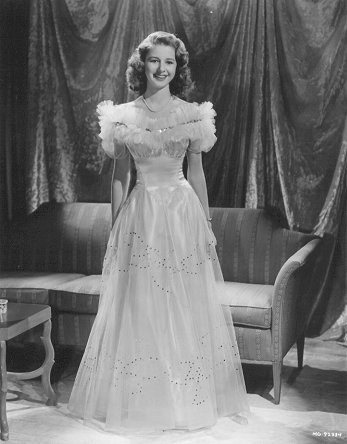
Dogs on Film: Since You Went Away

As many of you know the wartime film “Since You Went Away” (1944) is one of my all time favorite movies.

It has everything: An excellent cast filled with cameos, poignant moments, and magnificent camera work. But one of my favorite things about the film is the Hilton’s English Bulldog Soda.

Soda plops himself on a map as Col. Smollett and Bridget look for her father’s military base.

The movie revolves around Ann Hilton (Claudette Colbert), her two daughters Jane and Bridget (Jennifer Jones and Shirley Temple), their boarder Col. Smollett (Monty Wooley) and a slew of other characters that move in and out of their lives.  However, though Soda is just their pet, he still plays an instrumental role in the film-he even has his own theme music during the movie. When ever Soda has an appearance, a little tune is played by an oboe.

Soda seems to respond or foreshadow the main characters emotions throughout the film.

A few examples: 

Soda sitting on Mr. Hilton’s bed

•When we enter the film, Ann is coming back from seeing Mr. Hilton off to fight in the war. Soda is lying sadly, flat on the floor in front of his Mr. Hilton’s favorite chair. One of his owners has left him.  Jane and Bridget come home from school and Mrs. Hilton tries to put on a happy front for them. But her daughters start to cry, because they realize nothing will be the same without their dad. At this moment, Soda trots into the room-sensing his family is sad and he needs to be with them. Soda hops up on to Mr. Hilton’s bed and rests his head on his master’s robe.

•Another moment the girls are gathered around their mother as she reads a letter from Mr. Hilton. Soda is laying near the chair with her as if he is listening too.

•The Hilton’s rent the master bedroom to a boarder while trying to make ends meet without Mr. Hilton’s salary.  Col. Smollett ends up renting the room.  Smollett is very particular- he wants his eggs boiled exactly at 2.5 minutes and is irritated by the laundry hanging in the bathroom-among other things. It comes to no surprise that he has a low tolerance for dogs. So of course,  Soda attaches himself to Smollett, much to his dismay. The Colonel announces his displeasure for the dog right when he comes into the house.

Soda pestering Col. Smollett during a game of charades.

Soda growls and barks at Col. Smollett as he starts to put his belongings in the room, most likely saying, “This is my master’s bedroom, you shouldn’t be here.”  When Smollett is about to go to bed, Soda is laying on Mr. Hilton’s bed and Col. Smollett says, “That monstrous animal seems to have attached himself to this bed.”

Soda is protecting his family against this strange man in their household, but Soda gets more friendly towards Col. Smollett-as Smollett does towards Soda. At first he complains about the dog and doesn’t like how Soda follows him around. At his birthday party, Soda begs for cake beside Smollett’s chair. During a game of charades at the Christmas party, Smollet is lying on the floor, and Soda walks up and starts licking him on the face. Though Col. Smollett won’t admit it, he likes Soda’s company towards the end of the movie and even calls him when its time to go to bed.

Comforting Mrs. Hilton

•Soda seems to be in tune with what is going on around him and his family. Like I mentioned earlier, he is aware when his master has left, but he is also aware when Mr. Hilton is in danger. Mrs. Hilton receives bad news about her husband from the War Department. That night, she sits in her husband’s chair and looks through their scrap book which includes a dance card from the night they were engaged, the horoscope for the day they were married and their daughter’s birth announcements. As Ann Hilton starts to cry, Soda trots into the room, puts his front paws on the chair and she hugs Soda as she sobs.

On Christmas Eve, Mrs. Hilton gets a telephone call with a cable gram message containing good news about her husband. As Mrs. Hilton happily calls out to her daughters that their father is coming home, Soda perks up from his spot in bed with Col. Smollett, barks and runs to join his family.

Though several of Soda’s scenes are rather emotional, Soda also offers a good bit of comic relief.  Some of the funny scenes are when he is bothering Col. Smollett. My personal favorite is when Soda is sitting on the front lawn and the sprinkler turns on, he runs away and shakes himself. Unfortunately, the scene directly after this is when Mrs. Hilton gets a message from the War Department.  Soda’s water sprinkler scene gives us a false sense of security and happiness with the Hilton family, but also offering a funny moment before we receive bad news.

Running from the sprinkler!

Though Soda isn’t the star of “Since You Went Away,” his performance is as enjoyable as the cameos of Guy Madison, Keenan Wynn and Lionel Barrymore. He is my personal favorite movie dog, and I’d like to name a dog ‘Soda’ after him.  Soda is aware of his surroundings and family’s emotion during wartime and tries to take care of them.


Check out the Comet Over Hollywood Facebook page for the latest updates.
Loves of Lana

For Valentine’s Day, I want to pay tribute to an actress who liked to love and be loved. Her daughter Cheryl Crane said Lana would describe love as “heels-over-chin, pinwheels-on-fire in love.” She was once quoted as saying, “I think men are exciting, and the gal who denies that men are exciting is either a lady with no corpuscles or a statue.”

Lana Turner was classy about her past relationships when they got married. Crane says, “There were past beaux, like Tony (Martin), who she later came to adore as part of a couple. George Montgomery and Dinah Shore, Robert and Rosemary Stack, James and Gloria Stewart, Ronald and Nancy Reagan, and Tony and Cyd (Charisse) were some of Mother’s favorite married couples. They were friends she thought were perfectly matched. Once a former boyfriend became part of what she saw as a great couple, she downplayed her pas with him.”

Cheryl Crane provides a long list of men that Lana had in her life in her book “LANA: The Memories, the Myths, the Movies,” but explains that several of them were just dates, friends and not all of them went past kisses  goodnight.

Wayne Morris: Morris was a good looking, stocky Warner Brothers player who ended up being a highly decorated World War II flyer. Lana said Wayne Morris was her first big crush when she was under contract to Mervyn LeRoy.

Lana and Ronald Regan in 1937

Ronald Reagan: Reagan was Lana’s first studio arranged romance at Warner Brothers. The two started at the studio around the same time. Crane says the most the two did together was go horseback riding. When Reagan became president, she had a hard time thinking of “that young guy from Warners” as the president.

Don Barry: Barry played one of the interns in “Calling Doctor Kildare” (1939) with Lana, who plays a bad girl in the movie. He wasn’t Lana’s type because he wasn’t much taller than she was, but Crane said they had a good time together.

Lana and Mickey Rooney

Mickey Rooney: Lana and Mickey Rooney met in 1938 and starred together in “Love Finds Andy Hardy” (1938). Like several other pretty young starlets, the Andy Hardy series helped launch Lana’s career. In 1991, Mickey Rooney published an autobiography that said he and Lana had a love affair resulting in pregnancy and an abortion. Crane said Lana was furious and denied it. Lana called her attorney and wanted to fight Rooney’s statements, which Crane said wasn’t like her mother at all. Whenever something untrue was printed about Lana she said to ignore it because fighting brought more attention to yourself. In the end, it is a story of he said, she said.

Robert Stack:  Robert Stack and Lana dated on and off during the 1930s and 1940s, mostly in between Lana’s more serious relationships. Stack fought in the Navy during World War II and while on leave, visited Lana on the set of “Keep Your Powder Dry.”

Lana and Greg Bautzer

Greg Bautzer: Bautzer was Lana Turner’s first love. She was 17 and he was an attorney and ladies’ man. Bautzer proposed to Lana, but he was also dating Joan Crawford at the time. Crawford confronted Lana saying she and Bautzer were getting married and that Lana should get lost. However, Bautzer didn’t marry either woman. Lana stayed friends with Bautzer on a professional basis but never was romantically involved with him again. She later said, “I learned how to be hurt from Greg.”

Lana and Artie Shaw

Artie Shaw (Husband #1):  Lana and Artie Shaw met on the set of “Dancing Co-Ed” and the couple did not hit it off. She fond him to be arrogant and too serious and he thought she was a brainless star.     Regardless, he asked her on dates and she turned him down. Shaw happened to call one evening after Greg Bautzer stood her up, so she said yes. Shaw wooed her by driving down to Santa Monica and talking about his life philosophies. That same night, on Feb. 13, 1940, the two flew to Las Vegas and got married. According to Crane, Lana soon realized she married a stranger-she wasn’t even aware that he had been married twice before, but she tried to make the marriage work.    However, Shaw tried to change Lana.
“He was only interested in trying to change me completely,” she said.
The couple fought constantly and were only married for four months and 11 days-from Feb. 1940 to Sept. 1940. He wouldn’t part with a piano Lana’s mother had given them, so she took his clarinet.
During the divorce proceedings, Lana found out she was pregnant, but Shaw said he didn’t believe it was his baby. She decided to get an abortion and Shaw didn’t stop her.

Lana and Victor Mature

Victor Mature: Lana and Victor Mature dated in 1941 before Mature started a serious relationship with Rita Hayworth. They later starred together in the horrible World War II movie, “Betrayed” (1954).

Lana and Tony Martin

Tony Martin:  Before marrying Cyd Charisse in 1948 and after divorcing Alice Faye in 1940, Tony Martin dated Lana after meeting her in “Ziegfeld Girl” (1941). The couple was engaged to be married for a short time and Lana had several piece of jewelry that were engraved from Martin, Crane said.

Gene Krupa: Lana was a music lover, something that drew her to Artie Shaw.  Crane said she enjoyed late night jam sessions and dated several popular musicians of the 1940s.  Some of these include drummer Buddy Rich, clarinetist Benny Goodman and Tommy Dorsey- who once gave her a trombone engraved “Lana, Happy New Year, The Boys in the Band.”  She dated Gene Krupa, while he was in the middle of of a divorce. But the main thing that scared her away was his marijuana use, Crane said.

George Montgomery: Lana and George Montgomery dated before he married Dinah Shore in 1943. Montgomery was also engaged to Hedy Lamarr before going over seas to fight in World War II. Lamarr married John Loder while Montgomery was away.

Publicity still of Lana and Robert Taylor in “Johnny Eager” (1941)

Robert Taylor: Lana and Robert Taylor starred together in “Johnny Eager” (1941) and Crane said their chemistry was electric: “these two beautiful people got carried away during the filming.”  This was one of the few times Lana ever got involved with a co-star, Crane said.
However, Taylor was married to Barbara Stanwyck at this time so Lana tried to resist, but they “fell into a heavy flirtation.” Stanwyck heard about it and headed down to the set to tell Lana hands off. Taylor told Lana he was going to leave Stanwyck for her and Lana backed off completely after that, Crane said.

Lana and Frank Sinatra

Frank Sinatra: Lana dated Frank Sinatra while he was married to Nancy and before and after his marriage to Ava Gardner. However, the two never were involved while Sinatra was married to Ava Garnder-her best friend and his love of his life.

Lana, Stephen Crane and baby Cheryl

Stephen Crane (Husband #2):  Stephen Crane met Lana at the Mocambo night club. He was a struggling actor and said he was a tobacco heir. The two married on July 17, 1942, after knowing each other for a short time.
In 1942, Lana discovered she was pregnant with Cheryl and that their marriage was invalid-he married Lana before his divorce with his first wife was finalized, Crane said.  She got an annulment and didn’t want to take him back, but the couple remarried in July 1943-mainly because Lana didn’t want her child to be illegitimate.
Crane went to fight in the war, but was discharged for foot and back injuries that didn’t let him go overseas. On a trip home to Crane’s hometown in Indiana, Lana found out he was a phony and about a year later she divorced him in Aug. 1944.
He was able to get a few acting jobs, but made his mark in the restaurant business. The couple stayed friends for Cheryl’s sake. Crane said she thinks her father always loved Lana and found several scrap books he had kept of her after he died in 1985.

Lana and John Hodiak

John Hodiak: John Hodiak  unfortunately got mixed up in Lana and Crane’s divorce, Crane said. Lana made up a story about dating another man to get Stephen Crane to divorce her, and the name she blurted out was John Hodiak-her  “Marriage was a Private Affair” (1944) co-star. Crane said Lana never spoke of Hodiak except that she felt bad that she had used him to end her marriage.

Lana and Turhan Bey

Turhan Bey: Turhan Bey and Lana dated shortly after she separated from Stephen Crane. However, Bey’s mother didn’t approve of Lana so the romance ended, Crane said.   Bey never married.  Crane ran into Bey at a party 50 years after the romance ended and he asked about Lana calling her the love of his life. He wanted to take her out to dinner, but Lana was too ill to accept the invitation but was touched by his remarks.

Lana and Howard Hughes

Howard Hughes: Howard Hughes dated Lana Turner briefly, and Crane believes he would have had a better chance with her if he had dressed neater. Lana’s mother got to know him as he would wait for Lana to get ready and mother would him Hughes’s pants that were always too long. He helped Lana out after their relationship ended once. In 1949, she suffered a miscarriage and wanted her mother with her. Lana’s mother called Hughes and he chartered a flight for her and even rode along to make sure she got there okay.

Lana and Peter Lawford

Peter Lawford: Crane thinks Peter Lawford was more attracted to Lana than she was with him. They dated in the mid-1940s and were also dating other people at the same time.

Lana and Robert Hutton

Robert Hutton: Robert Hutton and Lana stared dating while she was making “The Postman Always Rings Twice.”  The gossip columnists closely watched the couple, but he was not Lana’s main focus. She went on a trip to South America and when she returned in 1946 he was married to model Cleatus Caldwell.

Lana and Tyrone Power

Tyrone Power: Lana said Tyrone Power was the love of her life. She had been an acquaintance of his, but he was married to Annabelle. In 1946, he and Annabelle separated. He invited Lana over for a cocktail and kissed her goodnight, which Crane said made Lana weak in the knees. Lana and Tyrone were separated due to filming, but she flew to Mexico to see him for New Year’s. Tyrone’s divorce was granted and Lana was hoping the they could get married.  She also was thrilled to find out she was pregnant but Tyrone didn’t share her sentiments.
Tyrone went on a 12 week airplane trip he had been planning and Lana threw him an extravagant party. While he was gone, she let him know that she decided to get an aboration.
When he returned they did not resume their relationship. He heard she had been seen with Frank Sinatra and he admitted to her that he had fallen in love with actress Linda Christian. Crane said their split always hurt Lana.

Lana and Bob Topping

Bob Topping (Husband #3): Bob Topping quickly popped into the picture after Tyrone Power was out. Topping was a millionaire who wooed Lana with expensive gifts. The couple got married in April 1948, and it was Lana’s first big wedding and went on a five month honeymoon. Lana enjoyed the lavish rich lifestyle, Crane said.  In 1949, Lana got pregnant but the child was stillborn.
Topping had faults such as drinking and gambling. He was on an allowance and Lana ended up paying several of the bills and the couple would fight about money. Lana’s mother told her, “You can’t afford to keep a millionaire.” They divorced in 1952.

Lana and Fernando Lamas

Fernando Lamas:  Fernando Lamas and Lana made “Merry Widow” together in 1951. It was a stormy romance, and they fought a good bit. Lamas was jealous, particularly if Lana danced with someone else. The fight that ended it was at a Marion Davies party in 1952. Lamas and Lana were at a table with Arlene Dahl and husband Lex Barker, and Esther Williams and her husband Ben Gage, Crane said. Barker wanted to dance with Lana and she said yes. Lamas was fuming and an arguement that night ended their romance. Ironically, Lamas later married both Arlene Dahl and Esther Williams and Lana married Lex Barker.

Lana and Lex Barker

Lex Barker (Husband #4):  Lex Barker and Lana started dating in the spring of 1952, after Lex and Arlene Dahl divorced. The two traveled across Europe together. Barker and Lana married in Sept. 1953, in Italy. Lana wanted another child and became pregnant again but again lost the child for a third time, Crane said.
Barker and Lana traveled a good bit, which Cheryl Crane said she liked.  Barker would sexually abuse Cheryl, and she finally confided in her grandmother. When Lana’s mother told her what Barker had been doing, Lana ordered him out of her house. Barker said, “Whatever your daughter told you, it’s a lie,” but Lana hadn’t mentioned Cheryl.
Their marriage ended in 1957 and he died in 1973. At the time Lana said, “It wasn’t soon enough.”

Lana and Johnny Stompanato

Johnny Stompanato: ‘John Steele’ began sending flowers to her in 1957. When she found out his real name and that he was trouble, she was in too deep with the relationship. He was a body guard to mobster Mickey Cohen and known for draining wealthy women’s money, Crane said. The more Lana learned about him, the more dangerous the relationship got, but she thought she could handle it. Stompanato traveled with her while she filmed movies and her make-up artist once had to cover bruises on her face. Crane said Lana was frightened.
Cheryl was home for Easter vacation when Lana told her about Sompanato’s attacks, and Lana said she was going to get rid of him. Cherly heard them arguing and in a panic grabbed a knife off the counter, planning to scare him off. Cheryl stood outside and listened, Lana opened the door and Stompanato was about to hit Lana. Cheryl stepped forward and he ran into her knife.
“There is no gentle way to put it: at the age of 14, I stabbed and killed John Stompanato, my mother’s boyfriend, during an episode of physical abuse,” Cheryl Crane said. “Mother and I both attempted to set the record straight in our respective autobiographies.”
Lana and Cheryl were taken to the police department and gave their statements. Cheryl was booked on suspicion of murder and taken to juvenile hall. The coroner’s inquest was broadcast live. Stompanato’s murder was ruled justifiable homicide and Cheryl was released to the custody of her grandmother.
Crane said the events that occurred over Good Friday weekend in 1958 were forever mentioned when Lana or Cheryl were mentioned in the news, regardless of the topic.
“I took a life and that is something that remains with me always,” Crane said. “By it is a nightmare that my family and I lived through together and survived.”

Lana and Fred May

Fred May (Husband #5): Crane said Lana was fonder of Fred May than any of her other of her other husbands. May reminded Lana of Tyrone Power, but she wasn’t ready to get married yet. They lived together for a year and then married in November 1960 when Cheryl left reform school. May fell in love with Lana the person, not the star and made her feel like she was loved for herself.  There wasn’t a tangible reason why the couple split up in 1962, Crane said, but they remained friends until his death in 1964.

Lana and Robert Eaton

Robert Eaton (Husband #6): Robert Eaton was part of a new set of friends that Lana hung around with in the mid-1960s. He was 10 years younger than she was, but Lana and Eaton married in Virginia in 1965.  Crane believed Eaton was an opportunist using her mother, but Lana didn’t want to listen. Lana went abroad to shoot a film, and when she returned she found Eaton with another woman. They divorced in 1969.

Lana in Ronald Dante

Ronald Dante (Husband #7): Lana went to popular 1960s night stops and met Ronald Dante at the “Candy Store.” Crane said, “Dante had long hair, rode a motorcycle and worked as a nightclub hypnotist.” The couple got married in May 1969. Crane said she thinks Lana married Dante because he made her feel young. However, he stole from her and they divorced in 1972. “Husband six and seven are best left unmentioned,” Lana said.

Which is your favorite Lana romance or Lana husband? I think mine might be Fred May and Tyrone Power. Let us know!

Check out the Comet Over Hollywood Facebook page for the latest updates.
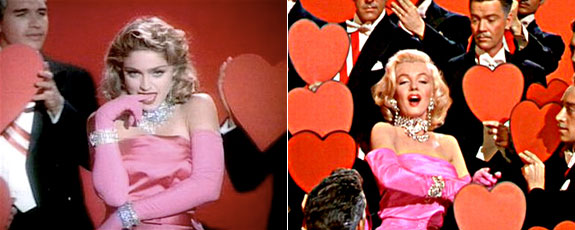
Classic film in music videos: Good Boys by Blondie

Norma Shearer and Lon Chaney

This is February’s edition of Comet Over Hollywood’s classic film references in music videos.

Blondie, rock star of the 1980s, released an album in 2003 called “The Curse of Blondie.” This album included a new wave pop song “Good Boys.”

The music video is in black and white and modeled after a silent film and is very similar to the Lon Chaney movie “He Who Gets Slapped” (1924).

In the music video one clown, dressed in white, is in love with a beautiful circus performer. She laughs at his love and keeps company with a mean clown who wears black. At the end of the video, the white clown gets killed by a tiger.

This is similar to “He Who Gets Laughed” because Lon Chaney is in love with Norma Shearer, who also laughs at his love. She is in love with horseback rider John Gilbert, but is determined to marry an evil rich man. In the end, Lon Chaney dies from a tiger attack like in the video and it is caused by the rich baron.

What do you think?

Check back in March for the next classic film reference in music videos.

February’s beauty tip is also coming soon!

Check out the Comet Over Hollywood Facebook page for the latest updates.
Hair to dye for

Classic film stars are known for their impeccable style and flawless looks. But like everyone else, they didn’t always look perfect.

One thing that I am very aware of with movie stars and on daily life is a bad dye job. Here are a few actresses that suffered from bad hair color changes in films or changed their look that helped state their career.

Some of these hair color made and broke careers.

Cyd Charisse in “Band Wagon” and “Two Weeks in Another Town”

Through the main part of Cyd Charisse’s career, she was brunette.  The dark hair opening up Hispanic roles like in “Sombrero” and “Fiesta” or as a Native American in “The Wild North.” However, as her career began to wind down in the 1960s Cyd started styling her hair with blonde highlights that she wore until her death, a style that didn’t look bad on her. However, Cyd Charisse did not look good with red hair in “Two Weeks In Another Town (1962).  I think it’s safe to assume though, that more people look at Cyd’s legs rather than her hair.

Doris Day in “Romance on the High Seas” and “It’s a Great Feeling”

Doris Day is known for her sunny demeanor and blond locks.  But in the comedy “It’s a Great Feeling” (1949), we get to see what brunette Doris would’ve looked like. In the film Doris is desperately trying to land a job as an actress. To trick a producer she dresses up like a French woman with a brown wig and sings “At the Cafe Rendezvous.” Later she is brunette again wearing the above outfit in a dream sequence singing “There is Nothing Rougher Than Love.” I don’t think Doris looks bad as a brunette, but I prefer her as a blonde.

Dorothy Malone

In my opinion, Dorothy Malone looked prettiest with her natural brown color, however her career didn’t take off until she dyed her hair blonde in 1956 for “Written on the Wind” and started playing bad girl roles in movies.  Prior to this she played small or forgettable parts in movies like “Janie Gets Married” (1946),  “One Sunday Afternoon” (1948) or -the role that got her noticed-the sexy library in “The Big Sleep.”

Eleanor Parker

Eleanor Parker is another example of role types changing with hair colors. A natural red-head, Parker started her career playing in war-time comedies and romances in the 1940s, such as “The Very Thought of You” (1944), “Never Say Goodbye” (1947)  and “Pride of the Marines” (1945).  She was beautiful, fresh-faced, sweet and gave heartfelt performances. With the dawn of the 1950s, Parker’s roles started to change- with prison drama “Caged!” (1950) catapulting her into disturbed women and bad girl characters. Her hair was dyed blonde in a few films, particularly ones that she was up to no good. Movies like “Detective Story” (1951), “Lizzie” (1957) and “The Man with the Golden Arm” (1955) showed a different side of Parker. Though she still made some lighter films, they weren’t the same heartwarming movies from the 1940s. In my opinion, red-hair Eleanor Parker is much prettier than blonde Parker, which really washes her out.

Jane Russell

Jane Russell was a natural brunette but went red in “The Revolt of Mamie Stover” (1956) and blonde in “Fuzzy Pink Nightgown” (1957). She’s perfect with her natural color, but red doesn’t look that bad. However, Russell’s blonde hair is about as bad as the film she had it in.

Jeanne Crain

Jeanne Crain is another sweet 1940s sweetheart with natural brown locks who starred in light, family comedies like “State Fair” (1945), “Margie” (1946) or “Cheaper By the Dozen” (1950).  However,  younger actresses like Terry Moore and Jean Peters were signed to 20th Century Fox and replaced actresses like Crain and Betty Grable, according to Glamour Girls of the Silver Screen. In 1953, Crain dyed her hair red, hoping to appear sexier and get sexy, young roles to help boost her career. But this didn’t work out for her.  She continued acting in films until the 1960s, but nothing overly notable. Her only sexy role was in “Gentlemen Marry Brunettes” (1955) with Jane Russell. I really hated when Jeanne Crain dyed her hair red. I think it looks horrible.

Jennifer Jones

Through all of her career, Jennifer Jones had brown hair.  But in the quirky film, “Beat the Devil” (1953), Jones sported a blonde hair-do. It looked pretty bad, and I’m not sure why they decided Jones needed to blonde in this film. However, her character is very flighty and talkative so it may have been a way to enhance that persona.

Joan Bennett

Joan Bennett started off her career as a natural honey blonde. Bennett starred in several forgettable films, until “Trade Winds” (1938) with Frederic March.  In the film, Bennett kills a man, dyes her hair brown and flees the county. Dying her hair in this film changed her career for the better and she was a brunette for the rest of her life, according to TCM’s host Robert Osborne. At the time Bennett dyed her hair, actress Hedy Lamarr was emerging as a success in “Algiers” (1938).  Several comparisons were made about the two actresses’ appearance, and they were publicized as rivals, according to Hedy Lamarr’s autobiography “Ecstasy and Me: My Life As A Woman.” To make matters even more interesting, Lamarr also married Bennett’s ex-husband Gene Markey. Personally I think Bennett looks better as a blond, brunette made her look harsh and older.

Linda Darnell

Linda Darnell is a natural brunette, usually cast in Spanish roles such as in “My Darling Clementine” (1946) or “Blood & Sand” (1941). But in 1947, Darnell went red for the film adaptation of the spicy novel “Forever Amber.” The film was supposed to help Darnell’s career and was the most expensive 20th Century Fox film at the time.  The film was successful in the box office, but did not get very good reviews-not reviving Darnell’s career. Though Darnell doesn’t look bad with reddish hair, she certainly looks her best as a brunette.

Olivia De Havilland

Academy Award-winning actress Olivia de Havilland went platinum blonde for her role in “Not As A Stranger” (1955). In the medical drama she plays Swedish nurse Kristina Hedvigson, and de Havilland’s accent in the film is just as bad as her hair.

Rita Hayworth

Famous for her flaming red-hair, Rita Hayworth is of Spanish decent and has naturally dark hair.  When she signed to a studio, studio heads decided her hair-line was too low and performed electrolysis for years to raise it, and dyed her hair red.  The hair color transformation made her famous, but another hair color change wasn’t so popular. Hayworth’s husband Orson Welles decided she needed to cut her hair short and dye it platinum blonde. Welles wrote the screen play and directed “The Lady From Shanghai” (1948) and wanted his wife to play the wicked lead woman; thinking no one would believe her in the role with red hair. The film bombed, because of Hayworth’s blond hair. I think Hayworth is beautiful with any hair color, but looks the best as a red-head, hands down.

Ginger Rogers

Like Hayworth, the hair color Ginger Rogers is most famous for, isn’t her own.  Through the 1930s until her death, Roger’s usually had blonde hair. Her natural hair color is actually auburn, which you can see in some of her very early films likes those with Joe E. Brown, according to Ginger Rogers’ autobiography. In the 1940s, Ginger Rogers decided to change her look and wore her hair brown in a few films such as “Primrose Path” (1940), “Kitty Foyle” (1940) and “TTom; Dick & Harry” (1941).  Rogers is one of the few people who can pull off both brunette and blond hair. I’m really not sure which I like better.

Who knew hair color could be so important?

What do you think? How do you feel about these actresses’ hair colors? What are some other actresses who changed the color of their feathers and either looked great, bad or changed their career?

Check out the Comet Over Hollywood Facebook page 

Classic movies in music videos: Tonight, Tonight by Smashing Pumpkins

This is January’s edition of Comet Over Hollywood’s classic film references in music videos.

The famous scene from “A Trip to the Moon” (1902)

In light of the hit film “Hugo” (2011) that pays tribute to French film pioneer George Méliès, I wanted to share the 1996 video “Tonight, Tonight” by Smashing Pumpkins from their album Mellon Collie & the Infinite Sadness.

The film plays off the theme of “A Trip To The Moon & The Extraordinary Voyage” (1902) where people get into a strange flying contraption-this time something that looks like a zeppelin and not a spaceship- and flies to outer space.  The flying vehicle passes the same moon from “A Trip to the Moon” that the spaceship flies into and the passengers meet similar space monsters as in the film.

The video further pays tribute Méliès by having a scene with mermaids-referencing another short film he made-and having a ship float by at the end named the S.S. Méliès.

The idea for the music video came from the video’s directors Jonathan Dayton and Valerie Faris because the album art for Mellon Collie & the Infinite Sadness reminded them of a silent film.

The band was surprised by the music video’s success and fan response and it won six awards at the MTV Video Music Awards in 1996: Video of the Year, Breakthrough Video, Best Direction in a Video (Directors: Jonathan Dayton and Valerie Faris), Best Special Effects in a Video (Special Effects: Chris Staves), Best Art Direction in a Video (Art Director: K. K. Barrett and Wayne White) and Best Cinematography in a Video (Director of Photography: Declan Quinn).

Though Méliès was a pioneer of modern film, he couldn’t keep up with the changing times and died bitter and poor; working selling toys in a train station- as we see in “Hugo.”

I am pleased to see that not only the recent film and this music video give him the recognition he deserves.

Check out the Comet Over Hollywood Facebook page 

A vigil for Carole

Today marks 70 years since Carole Lombard died in a plane crash in Nevada on her way home from selling war bonds.

She was one of America’s most beautiful, funny and sincere actresses.

I wanted to take a moment and pay tribute to Carole, her films and her patriotism.

If you have Twitter, I would like to try to get #VigilforCaroleLombard trending today. Thank you!

Patriotic Carole: Shortly after America entered the war, Carole Lombard was recruited by MGM’s publicity department to sell War Bonds, according to the History Channel. She was returning home from selling War Bonds in her home state of Indiana when her plane crashed outside of Las Vegas, killing 20 passengers including Carole and her mother. The following photos are from a War Bond Rally where she raised $2 million.

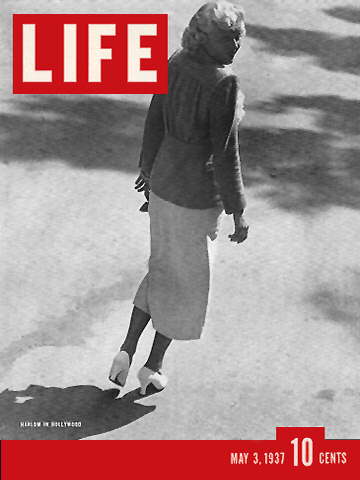
Carole selling war bonds (LIFE)

Singing the "Star Spangled Banner" during a war bond sale. (LIFE)

Selling war bonds (LIFE)

Carole and Clark: It’s no secret that Carole Lombard and Clark Gable are my favorite Hollywood couple. They were married in March 1939 until her death in 1942. Most people, including myself, think that the couple were soul mates.  The two still acted, but seemed to be living a simpler life on their ranch; raising chickens and Clark teaching Carole how to farm. Gable was devastated after her death and began drinking heavily. He enlisted in the Army and told friends that he didn’t care if he came back or not. Carole had a dachshund named Commissioner that followed Clark Gable around after she died.

Hands down favorite photo of Carole and husband, Clark Gable.

Carole and Clark having an intimate conversation.

Beautiful in color on their ranch in San Fernando Valley.

Clark taught Carole about farming, and she was eager to learn.

Gable bought prize winning $20,000 chickens. Unknowingly, Lombard gave these chickens to needy families. Gable joked they had an expensive chicken dinner!

Another all time favorite photo of mine-Clark and Carole quail hunting.

Carole in pigtails, quail hunting.

This is the cutest photo.

Carole and a chicken!

Carole and her dachshund Commissioner.

Carole the movie star: In my opinion, Carole is one of the most beautiful and versatile of the classic Hollywood stars: she could be sexy, hilarious and dramatic. She had flawless skin, golden hair and fabulous style. But she was also one of the guys on set, cussing like a sailor and making jokes.

Carole the glamorous film star.

Carole on the radio. I love her hat and fur. Very glamorous.

Perfect example of Carole Lombard: sexy and hilarious.

I think this is from "Lady By Choice." Feel free to correct me

The look I strive for. My role model.

 Carole Lombard: 1908 – 1942

Check out the Comet Over Hollywood Facebook page for the latest updates.

Actress beauty tip #20: Jane Powell exercises

This is the twentieth installment of the monthly classic actress beauty tips that I have read about and tested.

Jane Powell in 1954. Had a great figure then and still does!

Since the holidays are over  (no more sweets and heavy foods to slow me down) I’m ready to start exercising even more.

From past posts, many of you know I’m partial to Jane Fonda exercises, along with contemporary workouts like Jillian Michaels.  But recently I’ve been trying to find new exercises.

Keeping in tune with my 1980s Jane Fonda workouts, I’ve had my eye on an exercise tape actress and singer Jane Powell released in 1986 called “Jane Powell’s Fight Back With Fitness.” After letting it sit in Ebay watch list for months, I finally bought it last week for $6.

Jane Powell’s 1986 workout video

The exercises are for people with arthritis. I knew this when I bought the tape, but I still was interested in watching the tape and figured some of the exercises could still work for me.

Well….I was a little wrong.

The first 24 minutes of the video is breathing and stretching and the last 22 minutes consist of some floor work.

I mainly just watched the warm up portion because the exercises weren’t really for me. For example, some of the exercises involve touching each finger to your thumb, or breathing deeply and stretching your arms up to open your ribcage.

While I didn’t participate the whole time, I could tell that these would actually be very good exercises for someone with joint problems.

I did join in for leg and stomach exercises during the 22 minutes of floor work. While Jane Powell only did five slow reps, I would pause the tape and do several more.

Aside from exercises that weren’t appropriate for my physical level, it was a really fun work out tape.

Jane Powell in her 1986 video.

Jane is adorable and sometimes counts in a sing songy voice, so we get just a taste of her operatic voice. She wears a bright, sunny yellow leotard and is very sweet to the people exercising with her-understand their limitations and complimenting them the whole time.

To review: For those who are looking for an exercise video to get ripped and toned, this isn’t for you. But for a film fan who wants to see one of their favorite musical stars in another medium, it is a lot of fun.

Jane Powell is 57 in this video and looks wonderful-and looks great today as well!  I think it’s good that she did a workout video taking into consideration that some people aren’t able to do more strenuous exercises.

Check back for February’s beauty tip!

Check out the Comet Over Hollywood Facebook page for the latest updates.
What does 2012 bring for Comet?

Happy New Year everyone!

I hope everyone has had a great, safe holiday season and are prepared for 2012- if the world does indeed end, please refer to my Mad Max survival post.

Happy New Year around the world from Ann Sheridan and myself.

So what is in store for Comet Over Hollywood in 2012?

A blogathon!

I’ve hinted that I’m planning on doing a blogathon- I’ve actually been thinking about it since this summer, but I was waiting until the holidays ended to formally announce it.

The blogathon will be called “Gone Too Soon” dedicated to actors who passed away before the age of 50, such as Natalie Wood, Jean Harlow, Carole Landis, Bobby Driscol, John Hodiak-just to name a few.

I’m scheduling the blogathon for March 9 and 10.  I will do another post listing rules, banners and the process later on but I would like to go ahead and start gauging interest.

Also in 2012 I plan on doing:

A contest!

I haven’t decided the format yet, but I think I’m planning on doing it in February. More details will come about this too.

Thank you all for reading Comet Over Hollywood this year.  It’s been a really fun year in the blog world, with some really awesome posts and blogathons from my peers. I have to say I think my favorite blogathons I particpated in was the 1939 blogathon, Hollywood Revue’s Fashion blogathon and the Guilty Pleasures blogathon was lots of fun too.

Look for January’s beauty tip soon and more classic film fun.

Check out the Comet Over Hollywood Facebook page for the latest updates.
These Amazing Shadows-preserving our history

In October Comet Over Hollywood was approached, along with other classic film blogs, to review “These Amazing Shadows,” a documentary directed by Kurt Norton and Paul Mariano.  The documentary, which airs at 10 p.m., Thursday, Dec. 29, 2011, on PBS, explores the foundation of the National Film Registry in 1988 and the importance of preserving culturally significant films.

“These Amazing Shadows” explains clearly how the Film Preservation Act of 1988 came into being.

It began when media mogul Ted Turner purchased the entire MGM film library and proceeded to colorize many of the black and white films.  According to Turner he was improving the movies and had every right to colorize them. “Last time I checked, they were my films,” Turner said.

But this did not sit well with members of Hollywood-directors and actors alike were furious.

Orson Welles famously said, “Keep Ted Turner and his damn Crayolas away from my movies.” Ginger Rogers, Sydney Pollack, Woody Allen and James Stewart were just a few to speak out against the process before Congress.

Eventually the Film Preservation Act would be enacted and the National Film Registry would pick 25 significant films to preserve each year.

Had the documentary chosen to focus solely on the history of the Film Preservation Act and the National Film Registry, it would have been nothing more than a short history lesson.  Thankfully, “These Amazing Shadows” delves deeper into why film is so important and why particular movies are chosen for the registry.

The documentary takes the time to expand upon why the Film Registry includes other movie genres including industrial, educational, documentary and home movies, touching on how these other areas shape American culture and life.

Watching this documentary it becomes very clear that films are not just for entertainment, but that they can be time capsules of our history and culture. Speakers in the documentary from other countries saw movies like “West Side Story” (1961) and thought that was what America was like.

Many of the movies in the registry are relatively unknown when compared to stable mates such as “The Wizard of Oz”(1939) and “Cascablanca” (1942).  Some of the most surprising films in the registry are “Gus Visser and His Singing Duck” (1925), a two minute film demonstrating sound, and the 1950s cartoon advertisement “Let’s All Go to the Lobby” which encouraged patrons to go buy snacks.

Other films in the registry are as simple as a 1939 home movie of daily life in Minnesota or the disturbing footage of President John F. Kennedy getting shot. Neither of these were block buster Hollywood films but contribute to the history of America.

“These Amazing Shadows” poignantly conveys that a movie is more than a series images burned into film.  A good film functions as art, a time capsule, or a reflection of culture.  But even seemingly insignificant films like a man talking with a duck still deserved to be respected for its cultural value.

Ultimately, “These Amazing Shadows” is a near perfect documentary. It left me informed, emotional and in awe. I was uplifted that so many films have been rescued and preserved through the National Film Registry, but also found myself holding a warning, “If we don’t save and preserve films, we won’t have a history.”

Check out the Comet Over Hollywood Facebook page 

Christmas wishes from Comet, Judge Hardy and a dachshund

Merry Christmas from Comet Over Hollywood!!

Here is a Christmas greeting from my dachshund, Molly, and me.

Here is another heartwarming family Christmas wish from the Hardy family. This video was made in 1938 holiday season and I think it went along with “Love Finds Andy Hardy” (1938)-my favorite Andy Hardy movie.

I hope everyone has a wonderful and safe holiday weekend with family and friends. Thank you all so much for reading Comet Over Hollywood. Stop by and relax after the holidays and we will continue to have more classic film fun!

Merry Christmas and best wishes,

Jessica Noelle Pickens

Check out the Comet Over Hollywood Facebook page