Classics in the Carolinas: Randolph Scott

Comet Over Hollywood is doing a mini-series of “Classics in the Carolinas.” I’ll be spotlighting classic movie related topics in South Carolina (my home state) and North Carolina (where I currently live and work).

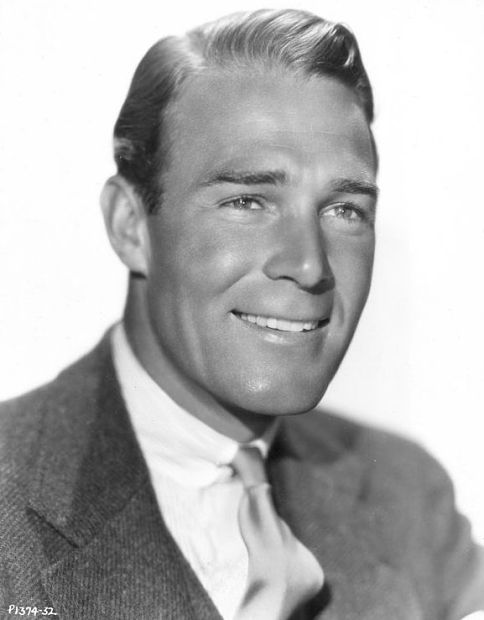
Handsome Randolph Scott

From playing a Confederate soldier alongside Errol Flynn in “Virginia City” (1940) to Shirley Temple’s kindly neighbor in “Rebecca of Sunnybrook Farms” (1938), Randolph Scott acted with the top actors in Hollywood.

But before he romanced Irene Dunne in “Roberta” or was roommates with Cary Grant in their “Bachelor Hall,” Scott grew up in the south.

Though born in Orange County, V.A., in 1898, Scott lived most of his life in Charlotte, N.C. where his father, George Scott, worked as a public accountant and owned the firm Scott, Charnley and Co. The Scott family was prestigious prior to Randolph’s Hollywood fame. His father, a graduate of Guilford College in Greensboro, N.C., was the Chairman of the Finance Committee in Charlotte and oversaw the city’s first published financial statement in the early 1900s.

George Scott also helped modernize Charlotte’s accounting systems for the city’s administration and water department. He also was recognized by the state for the drafting of North Carolina’s first certified public accountant law, and he was appointed by the governor to the state board of accountancy.

Randolph Scott left Charlotte in 1917 when he went to fight in World War I. After returning home, he went to Georgia Tech, with dreams of being an All-American football player until he suffered from a back injury. He then became a Tar Heel when he transferred to the University of North Carolina (UNC) and studied textile engineering and manufacturing.

Scott stayed for two semesters at UNC before returning home to Charlotte where he worked as an accountant for his father’s firm and was a charter member of the Charlotte Civitan Club.

Scott’s grave in Charlotte, N.C. His wife Patricia is buried here with him.

It was in 1927 that Scott left his home of Charlotte, N.C. and traveled to Hollywood with a letter of introduction from his father to Howard Hughes. He was able to meet Hughes and score a screen test with Cecil B. DeMille.

Randolph Scott acted in musicals with Fred Astaire and Ginger Rogers and starred in comedies, but he found his niche in westerns.

“They have been the mainstay of the industry ever since its beginning. And they have been good to me. Westerns are a type of picture which everybody can see and enjoy,” Scott said. “Westerns always make money. And they always increase a star’s fan following.”

Though he acted with the top Hollywood stars of the 1930s and 1940s, he is underrated and not as well known today as his best friends Fred Astaire and Cary Grant.

His last role was an aging gunslinger in Sam Peckinpah’s “Ride the High Country” (1962), after which he didn’t return to films, living the remainder of his life in Beverly Hills.

“All the old movies are turning up on television, and frankly, making pictures doesn’t interest me too much anymore,” he said in 1962.

Scott passed away in 1987 and was buried in his childhood home of Charlotte, N.C. His grave is four blocks from his childhood home.

Since I live close to Charlotte, I visited his grave on Sept. 1, 2012, in Elmwood Cemetery. His wife Patricia of 44 years was buried with him.

Check out the Comet Over Hollywood Facebook page for the latest updates.

Late to my own party…

Comet Over Hollywood is two years old!

The only problem is I’m late to my own blog anniversary party by three months…Comet’s birthday is actually in May.

Since I’m running so late I decided to tie my blog’s anniversary in with the Summer Under the Stars event Turner Classic Movies holds every August.

I decided I should reenact the grapefruit scene in “Public Enemy” (1931) for one of my monthly beauty tips.

So as a special treat and thank you to my readers….

In the film “Public Enemy,” James Cagney, who is being celebrated today on TCM for Summer Under the Stars, smashes a grapefruit in Mae Clarke’s face at the breakfast table.

Apparently the scene was a joke Clarke and Cagney were playing on the film crew to see how they would react, according to IMDB. Director ‘Wild Bill’ Wellman decided to keep it in the movie.

It also created caused American women’s groups to protest Clarke’s abuse and for Cagney to stomach a lot of grapefruit when restaurant patrons would order it for him as a gag.

Though the scene is rather humorous and well remembered by film goers, Public Enemy is a very gritty drama with a disturbing ending.

The film is an example of how great and versatile an actor Cagney was: playing maniacal criminals to song and dance men.

Make sure to read out other posts on James Cagney during the TCM Summer Under the Stars blogathon at http://scribehardonfilm.wordpress.com/ and http://sittinonabackyardfence.com/ for the month long classic film celebration!

Stop by back in September for another classic actress beauty tip.

Check out the Comet Over Hollywood Facebook page for the latest updates.


Actress Beauty Tip #24: Rita Hayworth olive oil hair rinse

This is the twenty-fourth  installment of the monthly classic actress beauty tips that I have read about and tested.  

This post is  part Day 8 TCM Summer Under the Stars Blogathon for Rita Hayworth Day on TCM. 

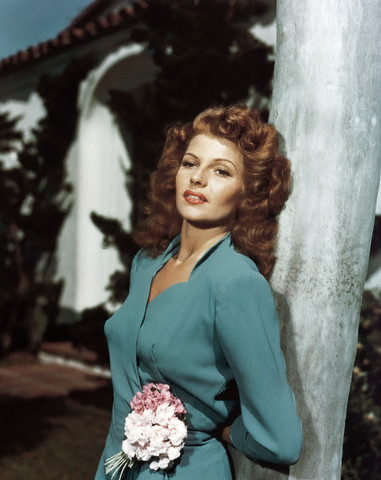
Rita Hayworth in the 1940s

Rita Hayworth is best known for her beautiful, flowing red hair.  The love goddess was one of the most beautiful actresses of the 1940s and 1950s and caused an outrage when she cut her long hair short and dyed it blond for “Lady from Shanghai.” Her hair cut was part of the reason the movie failed in the box offices.

I’ve always wanted to look more like Rita Hayworth, who is one of my favorite actresses, but I didn’t go as far as dying my hair from blond to auburn. Instead, tried something that kept Hayworth’s locks looking lush.

Hayworth used to condition her hair with oil after shampooing for shine and softness, according to Glamour magazine.

As someone with oily hair, I balked at this beauty tip. But tried it anyways.

This is what I did, as instructed by Glamour:

WARNING: This will leave your shower slippery due to the olive oil, so make sure to use soap to clean your shower afterwords. I’ll admit, I almost fell a few times.

1. I shampooed my hair (shampoo of choice-Drama Clean by Herbal Essences) and rinsed.
2. Poured a large amount of olive oil in my hand and worked it through my hair.
3. Wrapped my wet hair in a towel with the olive oil in it, and let it sit for 15 minutes.
4. Rinsed my hair with hot water. Then used a small amount of shampoo to wash out the oil.
5. Poured lemon juice over my hair to cleanse my hair of the remainder oil out. Rinse.
6. Dried hair with hair dryer.

At the end of it all, my hair felt a little bit oily, but not as much as expected. It ended up feeling very soft and flowy. I tested the beauty tip in the evening and washed my hair again this morning. I still felt like I could see a difference in softness after being washed again.

To review:  While reviewing actress beauty tips I’ve rinsed my hair with champagne, taken a milk bath and exfoliated with sugar, but none of that bothered me as much as putting olive oil in my hair. Though it left my hair soft and silky, it was too much of a mess to actually use in my daily life. I also had planned on this to be a two-part beauty tip, ending with a Rita Hayworth hair style tutorial. However, I was concerned the lemon juice left my hair too dry and didn’t want to risk using a curling iron.

Make sure to read out other posts on Rita Hayworth during the TCM Summer Under the Stars blogathon at http://scribehardonfilm.wordpress.com/ and http://sittinonabackyardfence.com/ for the month long classic film celebration!

Stop by back in September for another classic actress beauty tip.

Check out the Comet Over Hollywood Facebook page for the latest updates.

Classic Movies in Music Videos: Give Me All Your Luvin’ by Madonna

This is August’s edition of Comet Over Hollywood’s classic film references in music videos.

2012 marks the 50th anniversary of Marilyn Monroe’s death on August 5, 1962.  Turner Classic Movies is dedicating today to Marilyn Monroe with a whole day of her film’s during their 10th annual Summer Under the Stars Salute.

As we all know, everyone and their mother has imitated Marilyn Monroe in some shape or form. Comet has even already spotlighted two music videos where Lana Del Rey and Madonna both paid tribute to the 1950s sex symbol.

Well 27 years after Madonna dressed up like Marilyn in “Material Girl,” the singer paid tribute to her again in her 2012 single “Give Me All Your Luvin’.”

But Madonna isn’t the only one in the video who donned short blond curls and a sexy white dress. Her two famous back-up singers in the song, MIA and Nicki Minaj also dress up like Monroe.

The Marilyn moment happens at 2:08 to 2:54 minutes into the video:

Check out other posts on Marilyn Monroe during the TCM Summer Under the Stars blogathon at http://scribehardonfilm.wordpress.com/ and http://sittinonabackyardfence.com/ for the month long classic film celebration!

Check back in September for another classic film reference in music videos!

Check out the Comet Over Hollywood Facebook page for the latest updates.

Actress Beauty Tip #23: Fashion copied in films

This is the twenty-third  installment of the monthly classic actress beauty tips that I have read about and tested.  I can’t believe the last beauty tip review was in April.

Like March and April’s beauty tip, July is going to focus on fashion trends from films. For the time being I’ve run out of regiments to test, but I’m still digging around for some. If you have anything you want to read about, let me know!

Esther Williams-the Million Dollar Mermaid

One of my favorite actresses is Esther Williams, “The Million Dollar Mermaid”.

The Olympic swimmer turned movie star may not have been the greatest at acting. However, she always looked lovely gracefully swimming through the water during a synchronized swimming extravaganza that was featured in nearly all of her movies.

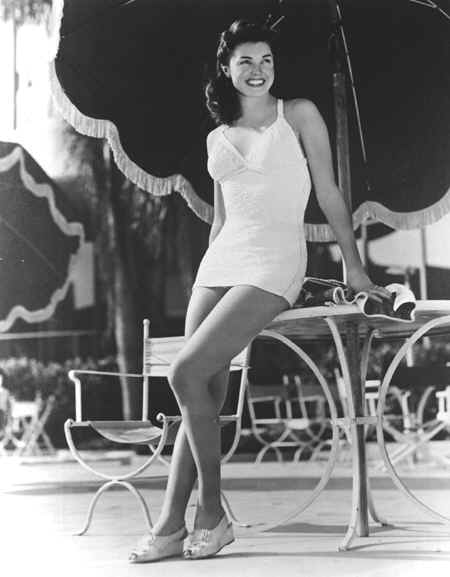
Williams in the 1940s

Not only was her swimming ability fascinating, but her figure always looked great in a fashionable, one-pieced bathing suit.

When summer rolls around, I’m sure I’m not the only classic film fan scouring eBay and vintage clothing stores looking for 1940s, Maillot pin-up looking bathing suits.

Esther Williams does have her own swimsuit line, but it’s hard to justify spending $90 on a bathing suit when you are on a budget, so you search for alternatives.

Two years ago I found a new a new-old maillot style bathing suit and got to wear it for the first time this weekend to a party.

(left to right) My friend Kitsey and I, modeling our vintage looking swim wear.

It was comfortable and I wasn’t self-conscious as a bikini might have made me, but still felt like a 1940s pin-up.

Friends even said I “looked like I had stepped out from another decade”-making me feel even more like  Esther Williams.

To review: Though bikinis are considered more sexy and commonly worn these days, don’t be afraid to buy a vintage style one piece. It looks just as nice and get you feeling like a Hollywood starlet.

Check out the Comet Over Hollywood Facebook page for the latest updates.

Classic film in music videos: National Anthem by Lana Del Rey

This is July’s edition of Comet Over Hollywood’s classic film references in music videos.

As we just pass the Fourth of July, it only seems appropriate to have a song with patriotic lyrics like “Red, white, blues in the sky, summer’s in the air and baby heaven’s in your eyes.”   However, Lana Del Rey’s “National Anthem” video isn’t a summer, patriotic explosion.

The video starts off with Del Rey as Marilyn Monroe singing “Happy Birthday” to President John F. Kennedy.  Some may find it odd that Del Rey wore her hair naturally-not Monroe bleached blond-but even more interesting that JFK is played by rapper A$AP.

The rest of the video is Lana Del Rey (playing a dual role) as Jackie O. with the president and their children.

The director, Anthony Mandler, of the video said:

“And I think the Kennedy relationship, certainly the triangle of Marilyn Monroe and Jackie O and Jack Kennedy, became this kind of ideal of what seemed perfect from the outside was maybe rotting from the inside,” he continued. “And Lana was really interested in exploring this loss of innocence, this idea that what you think you’re experiencing is maybe not what it’s always going to be. “

For comparison, here is Marilyn Monroe singing happy birthday to JFK inMay 1962:

Lana Del Rey’s “National Anthem” as both Marilyn and Jackie:

It’s not surprise that Del Rey donned a Jackie O. look. Her fashion and music style is 1960s inspired and she calls herself a version of Nancy Sinatra.

I think it’s interesting that a few songs recently use Monroe’s and Kennedy’s relationship as inspiration, including Lady Gaga’s “Government Hooker.”

Check back in August for another classic film reference in music videos!

Check out the Comet Over Hollywood Facebook page for the latest updates.

Sessue Hayakawa: Actor and Mazda

Several people in their 20’s who ride in my car ask “Who is Sessue Hayakawa?”

No, it’s not because they recently watched “The Cheat” (1915), but because that is the name of my 2008 Mazda 3.

My car, named for actor Sessue Hayakawa. It lives outside of the Tribune office for 80% of its time.

When I got my car in October, the car needed a Japanese name that was either World War II or old Hollywood related.

Names like Tokyo Rose and Kamakazi didn’t fit and Anna Mae Wong is Chinese, so the great Sessue Hayakawa, who was born on June 10, 1889, seemed like a good name for my new sedan.

Though several of movie goers mainly know Hayakawa from his most famous role in “Bridge Over the River Kwai;” Hayakawa’s roles in the late 1940s to the early 1960s marked a comeback for the actor.

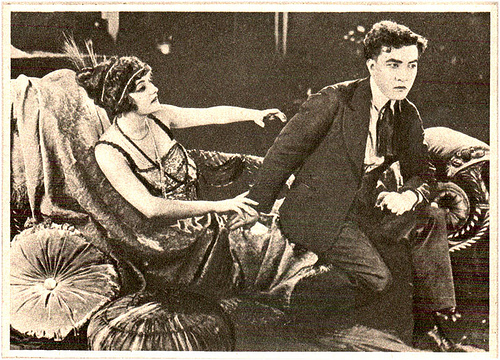
Hayakawa during silent film stardom in “His Birthright” (1918)

Born in Japan to wealthy parents, Hayakawa was the first Asian-American film star in the United States; starting his acting career in 1914.

He became a celebrity after playing an Asian who has an affair with a white aristocrat woman in Cecil B. DeMille’s “The Cheat” (1915). After this film Hayakawa was one of the highest paid actors in Hollywood.

However, by the 1920s, Hayakawa’s career started to decline as Anti-Asian sentiments began to rise in the United States.

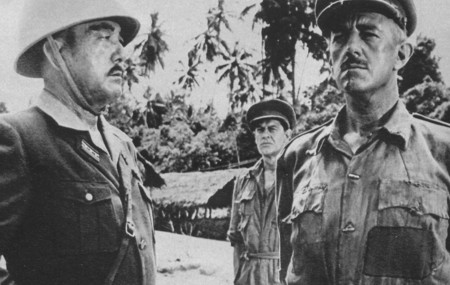
Hayakawa and Alec Guiness in “Bridge Over the River Kwai.” Hayakawa was nominated for Best Supporting Actor.

He was in a handful of films from 1932 to 1947, but made a comeback in Hollywood after World War II. Most of his roles were as a Japanese officer in post-war World War II films such as “Three Came Home” (1950) and “Bridge Over the River Kwai” (1957).

From a pirate in “Swiss Family Robinson” (1960) to romancing the silent era’s leading actresses, Hayakawa could do it all. Though his early, prolific career may be forgotten by most, he still left his mark on contemporary film.

Though the name might be a mouthful, I hope to teach passengers in Sessue the Mazda a little bit of film history while they are along for the ride.

Check out the Comet Over Hollywood Facebook page for the latest updates.

Classic film in music videos: Material Girl by Madonna

This is June’s edition of Comet Over Hollywood’s classic film references in music videos.

In honor of Marilyn Monroe’s 86th birthday on Friday, June 1,  Comet is spotlighting a Madonna’s 1985 music video “Material Girl.” I remember seeing this music video when I was little and loving the glamour, and Madonna’s wardrobe.

Madonna and Marilyn

It wasn’t until much later that I realized she was recreating Monroe’s “Diamonds Are a Girl’s Best Friend” musical number from the 1953 film “Gentlemen Prefer Blondes.”

Madonna was a fan of Marilyn Monroe and wanted to pay homage to her in the music video:

“My favorite scene in all of Monroe’s movies is when she does that dance sequence for ‘Diamonds Are a Girl’s Best Friend’. And when it came time to do the video for the song [Material Girl], I said, I can just redo that whole scene and it will be perfect,” Madonna said in 1987 to the New York Daily News.  “Marilyn was made into something not human in a way, and I can relate to that. Her sexuality was something everyone was obsessed with and that I can relate to. There were certain things about her vulnerability that I’m curious about and attracted to.”

Madonna-

Trivia:
-When Marilyn is singing “No no no,” singer Marnie Nixon was dubbing her.
-You can see George Chakiris, who later won Best Supporting Actor for “West Side Story,” as a back-up singer.
-Jessica Pickens (me) is not a Marilyn Monroe fan.

Who hasn’t tried to look like Marilyn? Here is a link I came across with other actresses who dressed up as Marilyn Monroe. Pretty interesting, most of them are terrible.

My apologies for not having classic film references in April or May, guys.  McCrea in May contest winners will be announced soon!

Check out the Comet Over Hollywood Facebook page for the latest updates.

Get a LIFE: Collecting America’s best magazine.

30 LIFE magazines I’ve collected so far, including the first Nov. 23, 1936, issue.

I’ve collected a lot of things during my lifetime.

My parents started a stamp collection for me when I was little, snipping colorful stamps off envelopes of flowers, places and famous people; that’s how I first learned who Grace Kelly was.

Then in high school I started writing to living film stars and collecting their autographs. To date, I have 30 signed photographs from stars like Deanna Durbin, Paul Newman and Joan Fontaine.

But most recently, I’ve decided to mix my love of history, American culture and film by collecting the best American magazine ever published: LIFE.

Jean Harlow 1937

Published weekly starting in November 1936 to December 1972, over 1,800 issues of LIFE magazine was printed. It may be crazy that I want to collect the majority of these magazines, but let me explain how LIFE is special compared to other gossip rags.

From its first issue in November 23, 1936, there is an emphasis on film and entertainment with a four page feature on film and stage actress Helen Hayes. But outside of the footlight parade world are photographs of a mangled car that was hit by a train in Wisconsin, a man hit on the head with a blackjack in Philadelphia and a Louisiana couple holding a baby a bulldog carried to their doorstep.

LIFE didn’t just focus on celebrity like People or ridiculous ways to catch a man like Cosmopolitan. The focus of the magazine was much more broad and encompassing of all topics.

Prior to 1936, LIFE was a humorous magazine until Henry Luce obtained the name rights and turned LIFE into a photojournalism magazine. The magazine showed Americans what life was like around the world outside of what they were used to: a Wyoming winter, Metropolitan Opera ballet dancers or Greek soldiers.

Gene Tierney 1941

Some of the most famous film stars originated in LIFE such as Rita Hayworth picnicking on the beach, Marilyn Monroe jumping and looking backwards and old Clark Gable’s portrait during his last film in 1961.

But other than stars, LIFE wasn’t afraid to show horrors and realism such as a dead soldier on the beach of Normandy or somebody injured after a car accident; photos that today would be considered too sensitive.

Each decade went through different transitions:

-Pre-War: Featured several movie stars but also focus on life around the world with pictures of Wyoming winters and Greek soldiers.  During this time period the United States was suffering from economic struggles in the Great Depressions and the magazine offered escapism.

-World War II era: The magazine changed again with the start of World War II featuring soldiers, airplanes, factory workers, and General MacArthur on the cover of the magazines- evoking patriotism as well as a look at what was going on in the European and Pacific theaters.

-1950s to early-1960s: Covers focused on glamour, sophistication, and fun.  Fashion, the English royal family, Marilyn Monroe and UCLA homecomings were some of the covers-all typical of happy-go-lucky consumerism post-war America.

-Mid-1960s to 1972: Covers interpret rapid world changes and the anger during Vietnam era. The covers feature political figures, threatened orangutans in the Rain Forest and Apollo 11 footprints on the moon.

From reading about the making of “Gone with the Wind” to a German shepherd dog nursing tiger cubs, LIFE had it all. No magazine will ever again give American readers the variety that LIFE offered.

To date I have 30 LIFE magazines, so I have a ways to go. But it will be an interesting journey through our past, regardless of how long it takes.

Check out the Comet Over Hollywood Facebook page 

McCrea in May contest at Comet

Comet Over Hollywood is hosting it’s first ever contest in celebration of Turner Classic Movies finally honoring Joel McCrea as May’s Star of the Month.

As my biggest heartthrob and favorite actor, I had to do something for Mr. McCrea, as well as thank all of you for your support of Comet.

I am giving away three Joel McCrea comedies on DVD: 

Jean Arthur realizes a strange man (Joel McCrea) is staying in her apartment with the permission of border, Charles Coburn in "More the Merrier" (1943).

-The More the Merrier (1943): The World War 2 housing shortage comedy also starring Jean Arthur and Charles Coburn.

Joel McCrea and Claudette Colbert in "Palm Beach Story" (1942).

-The Palm Beach Story (1942): McCrea’s wife Claudette Colbert divorces him in order to earn McCrea money from a millionaire in this Preston Sturges comedy. The movie also stars Mary Astor and Rudy Vallee.

Screenwriter Joel McCrea lives as a hobo to see the other side in "Sullivans Travels" (1941).

-Sullivan’s Travels (1941): McCrea is a screen play writer tired of writing fluffy comedies. He travels as a hobo for inspiration for a serious script; getting into trouble and risking his life. The film also stars Veronica Lake.

The contest will be open from Tuesday, May 1, 2012, to Thursday, May 31, 2012. There will be three winners-each receiving one of these DVDs-announced in June.

To enter send the answers to the following questions to cometoverhollywood@gmail.com:

1. What actress was married to Joel McCrea for 57 years?

2. What film did McCrea say was his personal favorite film he made?

3. What is the name of McCrea’s actor son? Name a movie he was in.

4. What actor did McCrea say he always received “leftover scripts” from, including his famous role in Hitchcock’s “Foreign Correspondent”?

5. What was the name of the movie where Joel McCrea played James Kildare (starting off the Lew Ayres series)?

Good luck everyone and spread the word! Remember, email your answers to cometoverhollywood@gmail.com.

Check out the Comet Over Hollywood Facebook page