Watching 1939: Henry Goes Arizona

In 2011, I announced I was trying to see every film released in 1939. This new series chronicles films released in 1939 as I watch them. As we start out this blog feature, this section may become more concrete as I search for a common thread that runs throughout each film of the year. Right now, that’s difficult. 

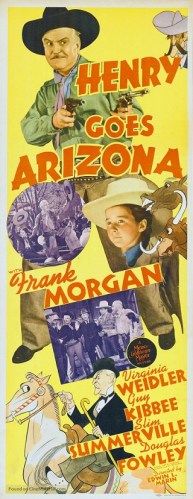
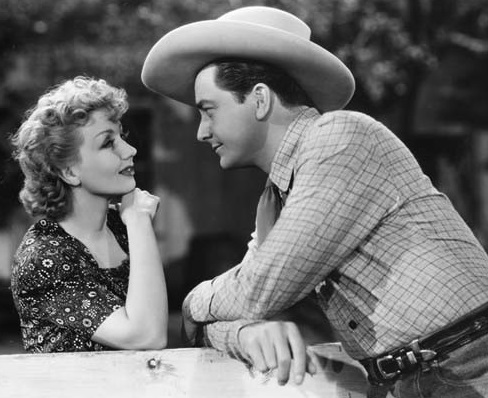
1939 film: Henry Goes Arizona (1939)

Release date:  Dec. 8, 1939

Cast: 
Frank Morgan, Virginia Weidler, Guy Kibbee, Slim Summerville, Douglas Fowley, Owen Davis Jr., Porter Hall (uncredited)

Studio:  Metro-Goldwyn-Mayer

Director:  Edwin L. Marin

Plot:
Henry (Morgan) is a down-on-his-luck New York vaudeville actor. He thinks he has a stroke of luck when he inherits his half-brother’s ranch in Arizona. But he may not be so lucky when he finds out his brother has been murdered.

1939 Notes:
• Douglas Fowley was in nine films released in 1939
• Frank Morgan was in four films released in 1939
• Virginia Weidler was in 10 films released in 1939.
• Slim Summerville was in four films released in 1939

Continue reading

Watching 1939: The Roaring Twenties

In 2011, I announced I was trying to see every film released in 1939. This new series chronicles films released in 1939 as I watch them. As we start out this blog feature, this section may become more concrete as I search for a common thread that runs throughout each film of the year. Right now, that’s difficult. 

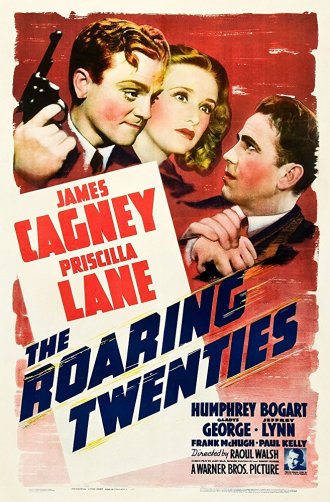
1939 film:  The Roaring Twenties (1939)

Release date:  Oct. 28, 1939

Cast:  James Cagney, Humphrey Bogart, Priscilla Lane, Gladys George, Jeffrey Lynn, Frank McHugh, Paul Kelly, Robert Armstrong (uncredited)

Studio: 
Warner Brothers

Director:  Raoul Walsh

Plot:
During World War I, three men meet in a foxhole and become friends: Eddie Bartlett (Cagney) who wants to go back to his pre-war job as a mechanic, George Hally (Bogart) who is a bit brash and wants to run a saloon, and Lloyd Hart (Lynn) who is college educated and wants to be a lawyer. When the war ends, Eddie returns home and can’t find work. Prohibition begins and Eddie gets mixed up with bootleggers. He also meets and falls in love with Jean (Lane), who doesn’t reciprocate his feelings, and gets Jean a job singing in a club owned by Panama Smith (George). The years go by and Eddie and George work together as bootleggers and Jean grows closer to Llyod.

Continue reading

Watching 1939: Maisie (1939)

In 2011, I announced I was trying to see every film released in 1939. This new series chronicles films released in 1939 as I watch them. As we start out this blog feature, this section may become more concrete as I search for a common thread that runs throughout each film of the year. Right now, that’s difficult. 

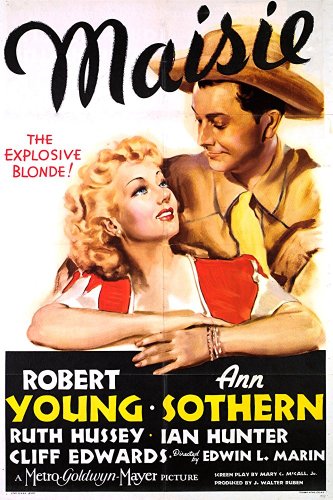
1939 film: Maisie

Release date: June 22, 1939

Cast:  Ann Sothern, Robert Young, Ruth Hussey, Ian Hunter, Cliff Edwards, George Tobias, John Hubbard (credited as Anthony Allan), Art Mix, Willie Fung

Studio:  Metro-Goldwyn-Mayer

Director:  Edwin L. Marin

Plot:
Maisie Ravier (Sothern) is a fast-talking, brassy New York vaudeville performer who travels to Wyoming for a show. When she arrives, she finds that the show folded after one performance, and now she’s broke and stranded. Maisie meets cowboy Slim (Young), who is a manager of a nearby ranch. He instantly dislikes her, but begrudgingly takes her to the ranch so she has a place to stay for the night. The owner of the ranch and Slim’s boss, Clifford Ames (Hunter) arrives with his wife Sybil (Hussey). Instead of leaving, Maisie starts working as Sybil’s maid, but Maisie gets in over her head when she discovers Sybil’s extracurricular romance.

1939 Notes:
• The first of the 10 Maisie films released by MGM. The last film was released in 1947. There was also a spin-off radio show called “The Adventures of Maisie” which broadcast from 1945 to 1947 and again from 1949 to 1953.
• Ann Sothern signed a contract with Metro-Goldwyn-Mayer because of this film.
• Ruth Hussey was in seven films released in 1939
• Ann Sothern was in four films released in 1939
• Robert Young was in four films released in 1939
• Ian Hunter was in five films released in 1939

Other trivia: 
• The film rights were purchased with plans for Jean Harlow to star in the film. However, Jean Harlow died in 1937 and the film idea was shelved. When MGM execs saw Ann Sothern in Trade Winds (1938), they felt she was perfect for Maisie and signed her to a contract to play the role, according to a 2015 film introduction by former TCM host Robert Osborne.
• The concept was based on the book “Dark Dame” by Wilson Collison
• The working title for the film was Maisie Was A Lady and Broadway to Wyoming. One of the films was titled “Maisie Was a Lady” and was released in 1941.

My review: Searching for the “1939 feature”:

This week’s 1939 film is significant: It started a film series that spanned from 1939 to 1947 (and it had a spin-off radio show) and it boosted actress Ann Sothern’s career.

From Boston Blackie to the Saint, there were several film series during the classic era of film.

But to me, few film series stand out as much as the “Maisie” series, which kicked off in 1939. The character of Maisie Ravier is the brassy showgirl with clanging bracelets and loud clothing. But she has a heart of gold. I could certainly see Jean Harlow in the role since the story was purchased with her in mind, but Ann Sothern makes this her role and is perfect for the part.

After the first “Maisie” film was released in 1939, nine more followed, with the last released in 1947. While each film follows Maisie’s adventures, there was no continuation of the storyline from the previous film and she has a different boyfriend in each story.

The year of 1939 was a turning point for Ann Sothern. Not only was the first “Maisie” film released in 1939, but this film boosted her career. Sothern had steadily in Hollywood for several years but with no large successes. Her film career began in 1927, where she was in uncredited parts until 1930. Sothern was signed a film contract with Columbia Pictures in 1934 and then RKO Radio Pictures in 1936, but her roles were not of a high callibur. Ann Sothern did not find true success until MGM signed her and she was cast as Maisie.

Ann Sothern, who I feel is an underrated actress, is perfect for this role and makes the Maisie films so much fun. While her character is sassy and fast-talking, she’s also warm and funny.

Robert Young, Ruth Hussey and Ian Hunter co-star in “Maisie” (1939), and all do a terrific job. Robert Young plays his usual nice guy role (with a touch of grumpiness) and Ian Hunter is his usual stalwart, loveable character. Ruth Hussey, who is also underrated and can play any type of role, makes it easy to dislike her character in this one.

The “Maisie” series is one of my favorite film series. I’ll never forget when Warner Archive released the series on DVD in 2012 how thrilled I was (I was so happy I think I cried). If you don’t have the two volume Warner Archive Maisie set, I highly recommend it. All of the Maisie films are as delightful as the first film in the series.

The Maisie films never rose above a B-level budget movie and all of them were filmed in black and white. But these B-movies always made MGM money. They were cheap to make and made money, which executives liked, according to the late Robert Osborne.

Regardless of budget, the Maisie films are a delight and Ann Sothern is wonderful in the role. The year 1939 was a good year for Sothern and us since we still get to enjoy this film.

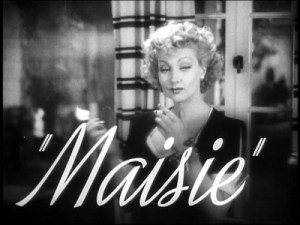
Ann Sothern and Robert Young

Check out the Comet Over Hollywood Facebook page, follow on Twitter at @HollywoodComet or e-mail at cometoverhollywood@gmail.com


Watching 1939: Blackmail (1939)

In 2011, I announced I was trying to see every film released in 1939. This new series chronicles films released in 1939 as I watch them. As we start out this blog feature, this section may become more concrete as I search for a common thread that runs throughout each film of the year. Right now, that’s difficult. 

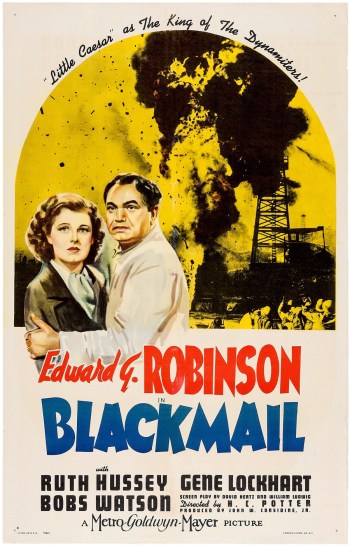
1939 film: Blackmail

Release date: Sept. 9, 1939

Cast: Edward G. Robinson, Ruth Hussey, Gene Lockhart, Bobs Watson, Guinn ‘Big Boy’ Williams, John Wray, Arthur Hohl, Esther Dale, Willie Best (uncredited)

Studio:  Metro-Goldwyn-Mayer

Director: H.C. Potter

Plot: John Ingram (Robinson) has a successful business fighting oil fires and lives a happy life with his family (Hussey, Watson). But his not so savory past comes to light when he’s seen in a newsreel and someone tries to blackmail him.

1939 Notes:
• Edward G. Robinson was only in two films in 1939.
• Bob Watson was in five films released in 1939.
• Ruth Hussey was in seven films released in 1939.
• Guinn ‘Big Boy’ Williams was in nine films in 1939.

Continue reading

Watching 1939: The Rookie Cop (1939)

In 2011, I announced I was trying to see every film released in 1939. This new series chronicles films released in 1939 as I watch them. As we start out this blog feature, this section may become more concrete as I search for a common thread that runs throughout each film of the year. Right now, that’s difficult. 

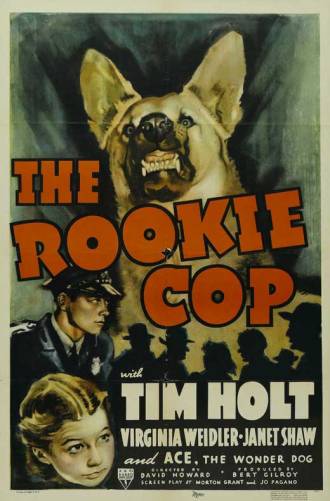
1939 film: The Rookie Cop

Release date: April 28, 1939

Cast:  Tim Holt, Virginia Weidler, Janet Shaw, Frank M. Thomas, Robert Emmett Keane, Monte Montague, Ace the Wonder Dog

Studio:  RKO Radio Pictures

Director:  David Howard

Plot:
Clem Maitland (Holt) is a police officer who is trying to get the police commissioner to agree to hiring a police dog. Clem uses the German shepherd Ace (Ace the Wonder Dog) on the job prove the dog’s value with police work. Using the dog backfires on a case and Clem is suspended. When his handyman friend Tom (Montague) gets accused of stealing a company’s payroll, Clem works with Ace to clear his name. Clem’s small young friend Nicey (Weidler) tags along to help solve the crimes.

Continue reading

Watching 1939: It’s a Wonderful World (1939)

In 2011, I announced I was trying to see every film released in 1939. This new series chronicles films released in 1939 as I watch them. As we start out this blog feature, this section may become more concrete as I search for a common thread that runs throughout each film of the year. Right now, that’s difficult. 

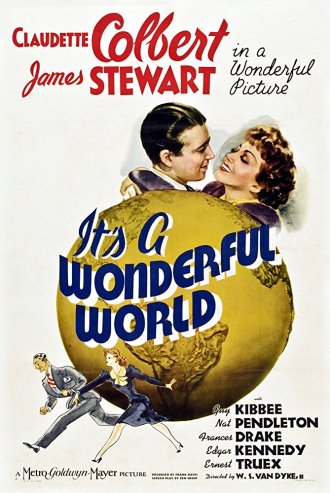
1939 Film: It’s a Wonderful World

Release date: May 19, 1939

Cast: Claudette Colbert, James Stewart, Guy Kibbee, Nat Pendleton, Frances Drake, Edgar Kennedy, Sidney Blackmer, Ernest Truex, Hans Conried, Grady Sutton, Cecilia Callejo, Cecil Cunningham, Frank Faylen (uncredited), Phillip Terry (uncredited)

Studio:
Metro-Goldwyn-Mayer

Director:
W.S. Van Dyke

Plot:
Wealthy Willie Heyward (Treux) is accused of murder and his private detective Guy Johnson (Stewart) is arrested for obstruction of justice for hiding Heyward after the murder. Johnson escapes the police by jumping off a train, and poetess Edwina Corday (Colbert) witnesses his escape. Guy kidnaps Edwina so she won’t report him to the police as he tries to continue to clear Heyward of murder.

Continue reading

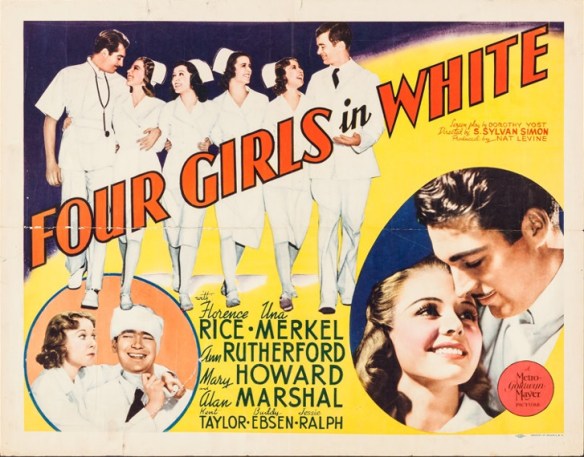
Watching 1939: Four Girls in White (1939)

In 2011, I announced I was trying to see every film released in 1939. This new series chronicles films released in 1939 as I watch them. As we start out this blog feature, this section may become more concrete as I search for a common thread that runs throughout each film of the year. Right now, that’s difficult. 

1939 Film: Four Girls in White

Release date: January 27, 1939

Cast: Florence Rice, Ann Rutherford, Una Merkel, Mary Howard, Alan Marshal, Kent Taylor, Buddy Ebsen, Jessie Ralph, Sara Haden, Phillip Terry, Tom Neal, Joy Anderson (uncredited)

Studio:
Metro-Goldwyn-Mayer

Director:
S. Sylvan Simon

Plot:
Four nurses (Rice, Rutherford, Merkel, Howard) are student nurses trying to make it through their three years at a hospital until graduation. Norma (Rice) is looking for a rich husband, Mary (Howard) pines way for her young daughter, Patricia (Rutherford) is sweet and diligent, and Gertie (Merkel) looks forward to her next meal. The girls face the stresses of becoming a nurse and making mistakes. Norma falls in love with a doctor (Marshal) but is frustrated that he always gets called into work.

1939 notes:
• Ann Rutherford was in seven films released in 1939. This one was released first.

• Phillip Terry was in 12 feature films in 1939. This is one of four films that was credited. The rest were uncredited.

Mary Howard, Florence Rice, Ann Rutherford and Una Merkel in “Four Girls in White” (1939)

My review: Searching for the “1939 feature”:
I love nurse films and this one is no exception. The 1930s were filled with nurse films, but many of the Pre-Code era featured sassy, fast-talking nurses who have at least one scene in their skivvies and rolling up or down their stockings. An example of this would be Night Nurse (1931), where Barbara Stanwyck ends up as a private nurse to children of an alcoholic mom.

Others were very dramatic accounts, like Prison Nurse (1938) or The Nurse from Brooklyn (1938).

While there have been many films focusing on the nursing field throughout the 1930s, I feel that “Four Girls in White” (1939) provides something a little different.

I felt that “Four Girls in White” showed girls working to become nurses in a hospital with the same tone and feeling that the Dr. Kildare film series (which began in 1937) showed about young doctors coming into the medical field.

Each nurse is independent and eager for a career in the medical field. Now, some of these nurses had different agendas other than just helping sick people. One, in particular, was looking to marry a rich husband, but we see each of them studying and working hard to learn (and also messing up). Much of their learning is shown through montages that give a feel for the four nurses’ personalities.

These low-budget Metro-Goldwyn-Mayer films of the late 1930s and early 1940s all have a brisk brightness that is especially pleasing. There are some overly dramatic moments (a few disasters strike and all nurses are needed) but it really is a fun film.

Is it a great film? Probably not, but it has a fresh and hopeful feeling that is found in MGM films of this time.

Check out the Comet Over Hollywood Facebook page, follow on Twitter at @HollywoodComet or e-mail at cometoverhollywood@gmail.com

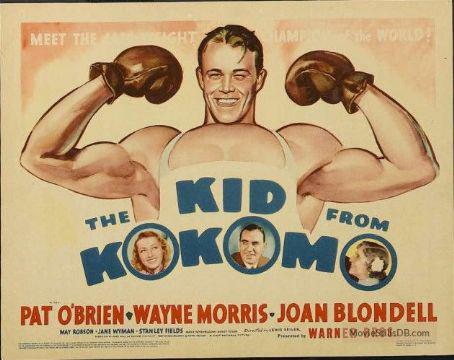
Watching 1939: The Kid from Kokomo (1939)

In 2011, I announced I was trying to see every film released in 1939. This new series chronicles films released in 1939 as I watch them. As we start out this blog feature, this section may become more concrete as I search for a common thread that runs throughout each film of the year. Right now, that’s difficult. 

1939 film: The Kid from Kokomo

Release date: May 19, 1939

Cast: Wayne Morris, Joan Blondell, Pat O’Brien, Jane Wyman, May Robson, Sidney Toler, Maxie Rosenbloom, Stanley Fields, Ward Bond,

Studio: Warner Brothers

Director: Lewis Seiler

Plot:
Fight promoter Billy Murphy (Pat O’Brien) is rarely on the straight and narrow with his fighters. One day he finds Homer Baston (Wayne Morris) on a farm, with a punch so strong that it sends men flying. Why did Homer punch them? Because they said Mother’s Day was a racket. Homer is loyal to a mother that he never knew and hopes one day she will return. Murphy recruits Homer to become a fighter, but Homer is reluctant to leave home in case his mother returns. To con him into fighting, Murphy creates a publicity hunt for Homer’s mother. Just as Homer is about to walk out, Murphy finds Maggie (May Robson), a drunken woman with a criminal past. He convinces Maggie to tell Homer that she is his mother to keep him from fighting. While Homer succeeds with his career, Maggie spends all of his money and bets it on horses.

Homer also meets and falls in love with Marian (Jane Wyman), who comes from a wealthy family and her father (Sidney Toler) is a judge…who recognizes Maggie.

1939 Notes:
• By 1939, Wayne Morris was one of the main contract players at Warner Brothers. He made eight films in both 1937 and 1938, but only two in 1939.

• This was one of six screenplays by Dalton Trumbo filmed in 1939.

Other trivia: 
• Adapted from the story “Broadway Cavalier.”

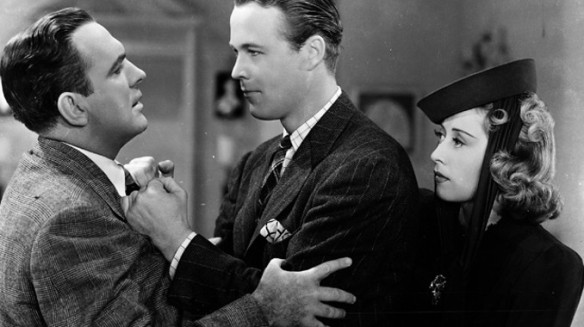
Pat O’Brien, Wayne Morris and Joan Blondell

My review: Searching for the “1939 feature”:
This is an entertaining B-movie. I love Wayne Morris as the sweet, naïve farm boy (my heart melted to butter when I saw him carrying a lamb). But May Robson steals the show here as the criminal posing as a mother, who ends up carrying for this sweet guy. May Robson was 80 years old when this film was released, so really she could have been a grandmother to 25-year-old Wayne Morris!

The May 20, 1939, New York Times review by Frank Nugent said “line between comedy and sheer bad taste has rarely been more clearly overstepped than in the Strand’s “The Kid From Kokomo”…which I felt was a bit dramatic. The film is an innocent comedy that perhaps uses a guy’s love for his mother to get him into boxing.

“The Kid from Kokomo” is not a unique film for any of the leads and far from the only film they made in 1939. The only actor in less than three films was Wayne Morris, who only released two films in 1939:
• May Robson: 7
• Jane Wyman: 5
• Pat O’Brien: 5
• Joan Blondell: 5

Though it was released in 1939, “The Kid from Kokomo” has the same brisk feel of most Warner Brothers comedies from 1936 to 1940. The year of release doesn’t make it much different. In fact, Wayne Morris’s role is very similar to his character in the comedy “Kid Galahad” (1937), another film that features Morris plucked from his daily life and groomed to be a boxer.

Once World War II began, this type of fast-paced, con-artist comedy seems to stop being used as a basic plotline theme.

Check out the Comet Over Hollywood Facebook page, follow on Twitter at @HollywoodComet or e-mail at cometoverhollywood@gmail.com

New Comet Over Hollywood series: 1939

For classic film fans, 1939 is a mystical year filled with perfect films.

Gone with the Wind,” “The Wizard of Oz,” “Mr. Smith Goes To Washington” and “Ninotchka” are just a few of the greats that were released in 1939.

But in 2011, I decided I wanted to see beyond more than just the big-budget box office successes of the year and dig deeper to see what made this year tick. Were all the movies special or was it just a handful?

This included watching all the B and C movies – The 68-minute movies that star people like character actor Henry O’Neill as a lead character.

So seven years ago I set out to see every film made in 1939, a count that came roughly to 515.

Read more in my 2011 post “1939: Watching a Year” about how this all began.

To date after all this time, I’ve still managed to only watch 173 movies made in 1939. So to help propel myself further, I am beginning a weekly Comet Over Hollywood series focused on the films of 1939.

Every Thursday, I will review a film made during 1939. This could range from the top tier films to those B movies shown in a double feature.

Join me every week as I “Watch a Year.”

Check out the Comet Over Hollywood Facebook page, follow on Twitter at @HollywoodComet or e-mail at cometoverhollywood@gmail.com

Review: Star Reporter (1939)

Often while discussing films we rank their importance with the alphabet.

An A film is a mainstream, high dollar movie. A B movie is a low-budget commercial film that may have a quality story line and actors, but is less publicized. These films would be the bottom half of the double feature — sort of like the song on the 45 record that wasn’t the hit single.

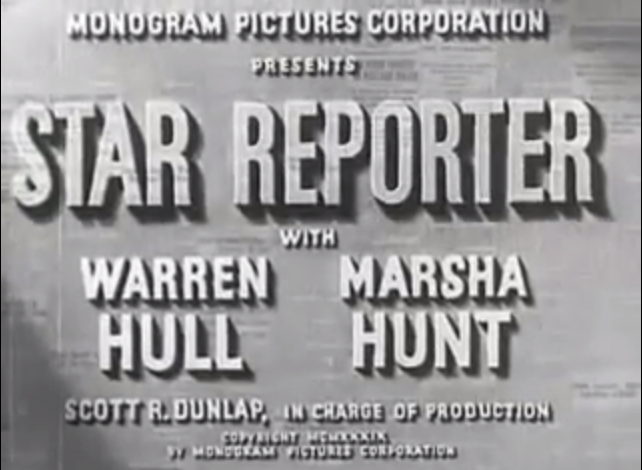
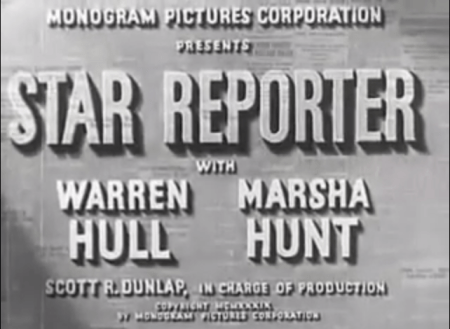
“Star Reporter” (1939) would most likely fall under the “B movie” category.
star

Distributed by “poverty row” studio Monogram Pictures, this hour long film revolves around newspapers and crime.

Reporter John Randolph, played by Warren Hull, works for the Star Tribune newspaper but is also a “star” on the job. Considered bright and brilliant, his father was the owner of the newspaper and was recently murdered. Randolph believes his father was killed because he had information that could bring down the “underworld” of the town.

Randolph is also a big supporter of District Attorney William Burnette, played by Wallis Clark, and throws his support for the DA in each of his stories at the newspaper. Randolph happens to be engaged to the DA’s daughter, Barbara, played by Marsha Hunt.

But when a murder happens, secrets about Randolph and his mother Julia, played by Virginia Howell, are threatened to be dragged out.

It turns out that the deceased newspaper owner was not Randolph’s biological father. Mrs. Randolph was once married to Charlie Bennett, who disappeared and was believed dead. Bennett has now reappeared as the murderer using the name Joe Draper, played by Morgan Wallice.
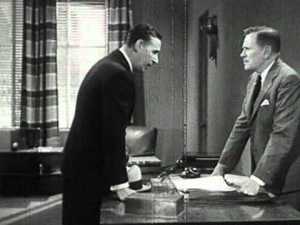
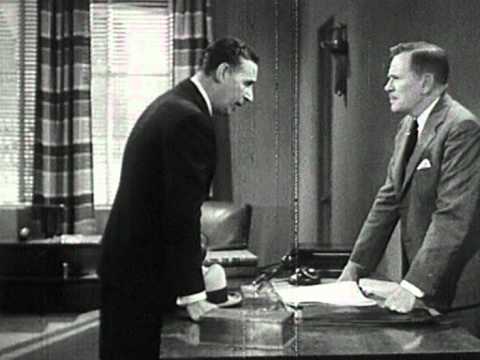
Lawyer Whitaker tries to bargain with the DA.

Lawyer Whitaker tries to bargain with the DA.

Dirty lawyer Whitaker, played by Clay Clement, is defending Draper.  Whitaker knows Mrs. Randolph’s secret and threatens to reveal it, if she and the DA do not cooperate and close the case.

Draper already signed a confession with the DA, but it is stolen by a thief named Clipper, played by actor Paul Fix in a very small role.

The DA decides not to prosecute to protect the Randolphs. John, not knowing the family secret, turns against  his father-in-law-to-be. Now rather than backing the DA, he works to get him thrown out of office, which was Whitaker’s goal.

For an hour long movie, this is an awfully complicated and mildly confusing plot.

Unlike most newspaper films of the 1930s and 1940s, the majority of the film does not involve a reporter playing detective or getting in fights with gangsters.

I was pleasantly surprised by this, until the end. At the end of the film Randolph is in the same house as the gangster/his biological father with a gun pointing at him. Though as a reporter, it’s not terribly accurate. I wasn’t surprised by this plot development. In my experience as a reporter, I have never gotten in fist fights with gangsters, but then maybe it was different in the 1930s.
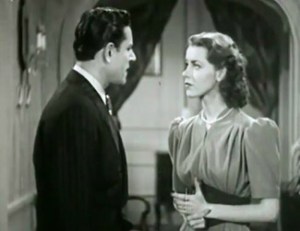
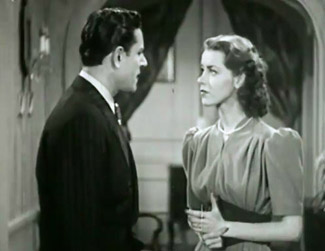
Reporter Randolph is engaged to the DA's daughter, played by Marsha Hunt.

Reporter Randolph is engaged to the DA’s daughter, played by Marsha Hunt.

I did like how some of the lines showed just how busy reporters are and how they frequently are on call or away from home.

“After we’re married you can furnish the pressroom as living quarters. That way I can run in and see you between murders,” Randolph said to his new fiancée Barbara.

“Our wedding guests were kept waiting because of a special edition,” Mrs. Randolph told Barbara.

These lines made me chuckle because anyone in newspapers know the words day off, weekend or quiet evening are almost laughable.

I discovered “Star Reporter” shortly after I started working at The Shelby Star in October 2012.

Over the last two years of working at the newspaper, I felt a special connection to the title, because I was (Shelby) Star reporter Jessica Pickens.

Now as I wrap up my last week at the newspaper, I felt it appropriate to finally review the film I’ve been meaning to write about for two years.

Is “Star Reporter” a great movie? No. The biggest names in the film are Paul Fix, who later went on to be in several John Ford films, and Marsha Hunt. Both actors are in the film for less than 15 minutes.

But it is mildly entertaining, especially if you are looking for a very brief film to watch.

In a year that released “Gone with the Wind,” “Mr. Smith Goes to Washington” and “Wizard of Oz” –just to name a few of nearly 100 well received films- it is interesting to take a look at the B side of the year 1939.

In an age now where we only concentrate the blockbusters, these little hour long films are equally important to explore.
StarReporter1939

Check out the Comet Over Hollywood Facebook page, follow on Twitter at @HollywoodComet or e-mail at cometoverhollywood@gmail.com