RIP Patricia Neal

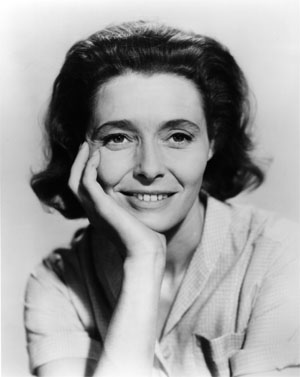
Patricia Neal in the 1960s

The first time I ever saw Patricia Neal was in the Waltons Christmas movie “The Homecoming: A Christmas Story” (1973). In the Waltons pilot, she wasn’t glamorous and was a mother of seven children and living on a farm during the depression.

Many people remember Neal as being sexy in her own way but never glamorous. Paul Newman wanted her in “Hud” and George Prepard used her in “Breakfast at Tiffany’s” but many forget her early days as a studio actor.

She was groomed as a Warner Brother’s glamour girl and was dubbed the “next Garbo” by Jack L. Warner, according to Stephen Michael Shearer’s book “Patricia Neal: An Unquiet Life.”

Her first role was a romantic, screw-ball comedy with Ronald Reagan, “John Loves Mary” (1949). It was a role that was more suited for Jane Wyman or Eleanor Parker and Neal looked uncomfortable in the role. Neal was a stage actress who entered the studio scene after World War II. She was too late for that type of role, because they were on their way out.

Glamorous Patricia Neal

“Her way with a gag line is painful,”said Bosley Crowther, New York Times critic from 1940 to 1967, about “John Loves Mary“.

After her role in “The Fountainhead” (1949) and several other mediocre films, Neal’s Hollywood career waned and Warner Brothers did not want to renew her contract, according to her New York Times obituary. She went back to acting in plays, but came back with a bang in “A Face in the Crowd” (1957).

Like Dennis Hopper, I like to remember Miss Neal in her glamour days at Warner Brothers, no matter how bad her films were. (I will say I didn’t mind the “Washington Story” but maybe that is because Van Johnson was in it). I suppose, I like to remember her from that time, because it is often forgotten and I simply like the 1940s and 1950s better than the 1960s.

I think it’s important to explore the early part of a great actor’s career, because it is amazing to see where they ended up.

Farewell, Patricia. You were a great actress and will be missed.

Did you know?
-Patricia Neal and writer Roald Dahl were married from 1950 to 1983.
-She suffered from a stroke in the 1960s while she was pregnant and was only 39 and had to learn how to walk again.
-She is the mother of 5 children.
-She and Gary Cooper had a torrid affair during the filming of “Fountainhead.”
-She was offered the role of Mrs. Robinson in “The Graduate” but turned it down due to her stroke.
Source: IMDB and New York Times

Check out the Comet Over Hollywood Facebook page for the latest updates.

Actress Beauty Tips # 3: Cold Cream Cleansing

This is the third installment of our monthly classic actress beauty tips that I have read about AND tested.

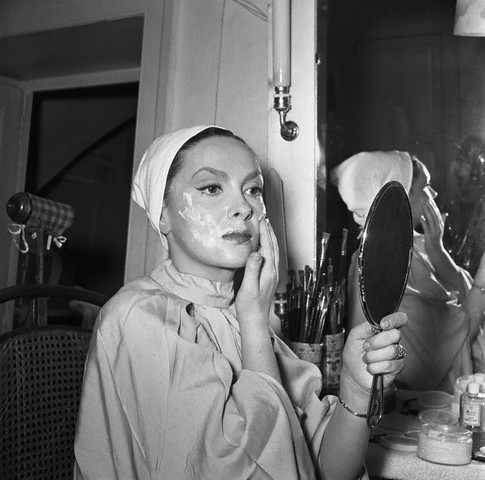
Gina Lollobrigida cold creaming in 1953

This post is a bit different. The last two beauty tips I found after reading up on old actresses’ beauty secrets. This beauty tip was one I have observed being practiced by numerous actresses in films.

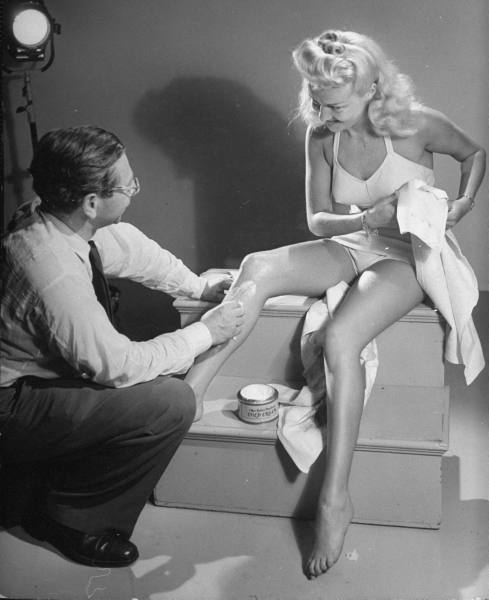
LIFE photographer Walter Sanders putting cold cream on Betty Grable’s famous legs in 1943

Who hasn’t seen a film that an actress is slathering her face with cold cream as she is getting ready for a night on the town,  going to bed or getting a facial in an upscale salon?  I know Jean Harlow has her face covered in cream as she is at a beauty parlor in “Red-Headed Woman” (1932) after working her way up in society by nabbing a rich man, and I’m sure that several women are getting facials with cold cream in the upscale beauty spa “The Women” (1939).

Early in my high school years, I saw these perfect actresses with the cold cream facials and thought, “Maybe that would work for me.” I tried it a few times, found that my skin would feel softer and cleaner, but never made it part of my nightly ritual.

This summer I would come home after a hot day at my internship at a newspaper feeling greasy, dirty and like my make-up was caking on my face. Previously, I read in teen magazines like “YM” that you should wash your face twice: once to get off the make-up and once to clean the skin.  (I generally just wash my face with plain soap and water-either Ivory soap or a gentle Neutrogena bar soap).

Even after washing my face twice I still was breaking out and felt dirty. I remembered the actresses cleaning their skin with cold cream and decided to do the same.

Cold Cream Cleansing:

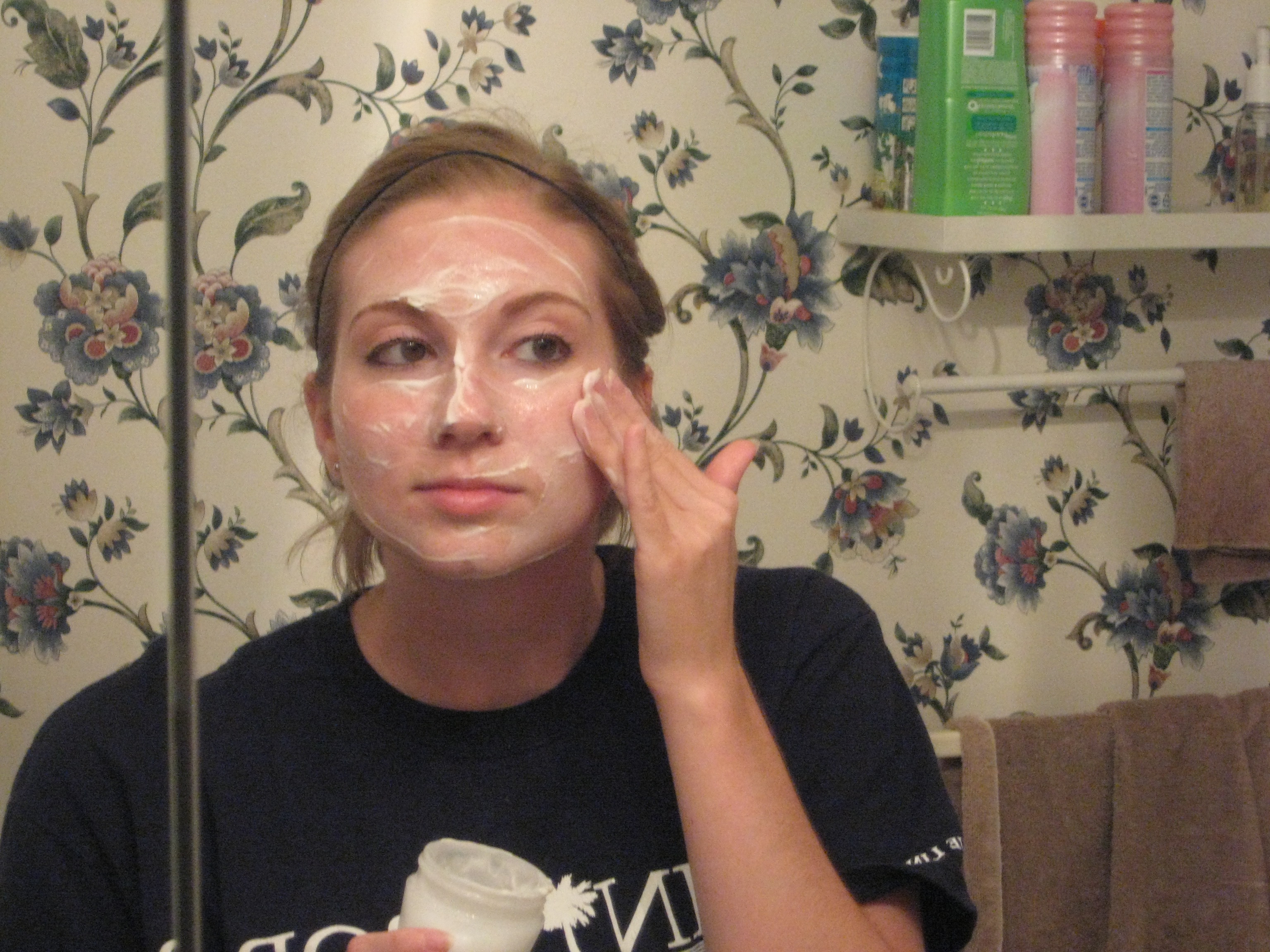
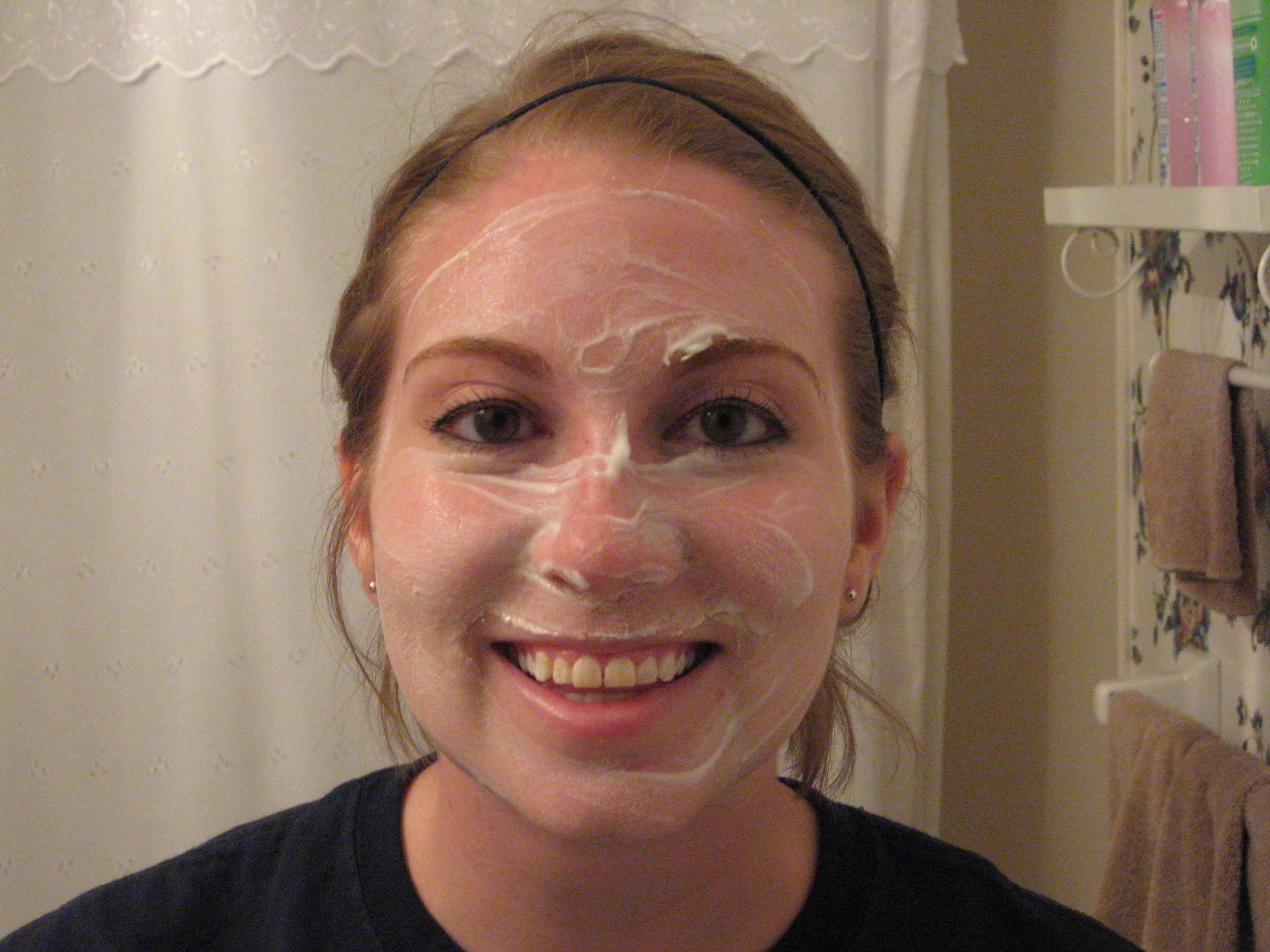
Cold creaming up my face

1.) Find a jar of cold cream. A large jar is probably $5 or $6, but it lasts forever. I use Pond’s cold cream; it’s very smooth and creamy.

2.) With your skin dry, lather your face up with cold cream. I apply it pretty liberally in order to have enough to rub into my skin.

3.) Rub, pat and smooth the cold cream on your skin. If I’m washing it off immediately I sometimes close my eyes and rub it over my eyelashes to get eyeliner and mascara off.

4.) Rub the cold cream into your skin as long as you want. It’s not going to sink in like lotion. I generally rub it until it turns to a slick, greasy consistency.

5.) Wipe or wash off. If you simply wipe your face with a dry tissue or wash cloth, you will still feel greasy depending on your skin type. I have oily skin so I wash off the cold cream.

6.) After washing off the cold cream, I follow-up with a second washing to make sure all cold cream and make-up residue is gone.

7.) Your skin will be left feeling fresh, clean and soft.

To Review: After cleansing with cold cream almost every day this summer, my skin has been clearer and smoother. I was in Minneapolis, M.N. for a few days last week and came home broken out. My skin is pretty sensitive, so sometimes water in different areas in the country causes me to break out. When I came home, I lathered up with cold cream and scrubbed with Boraxo and was back to normal.

Check back September 1 for the next beauty tip!

P.S. I have to apologize for not giving an update for on a follow up test of champagne hair rinsing. I might do a mid-month beauty tip and a half for that. I haven’t had a chance to test it again, sorry guys.

Happy cold creaming!

Check out the Comet Over Hollywood Facebook page for the latest updates.

Evolution of a classic film fanatic

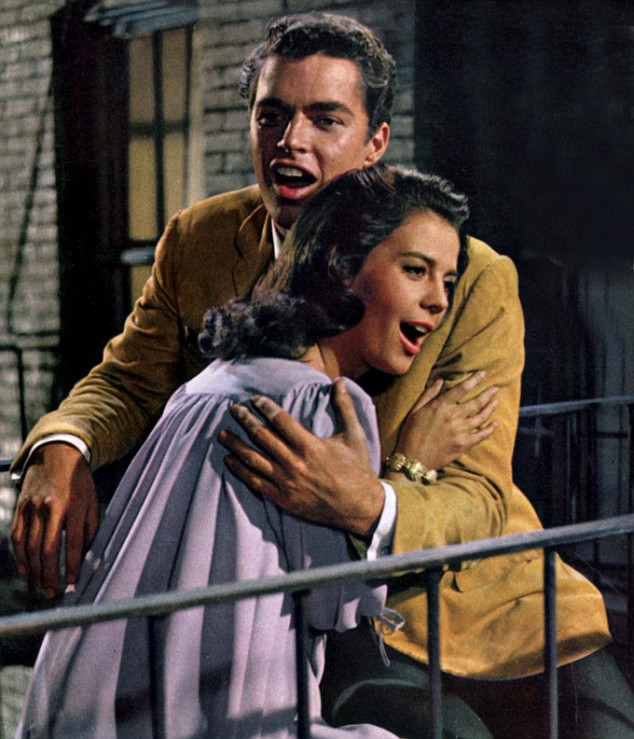
It started with a girl named Maria and a boy named Tony who thought something was coming. That’s what I usually tell people when they ask how I became a classic movie fan: it happened on a fateful March evening in 2003 when I saw “West Side Story” (1961). I became obsessed, end of story.

But my “West Side Story” obsession (which is a whole other blog post) isn’t even close to where my classic film education began. Let’s travel back in time to 1988, the year I was born. Or maybe 1991, I would have been a bit more coherent to films at age three.

My parents introduced my two older sisters and me to classic film at an early age. Some of these movies were Disney movies like “Lady and the Tramp” or “Swiss Family Robinson” or family friendly movies like “White Christmas” and “Yankee Doodle Dandy.”
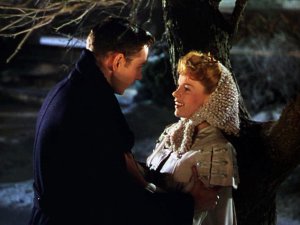
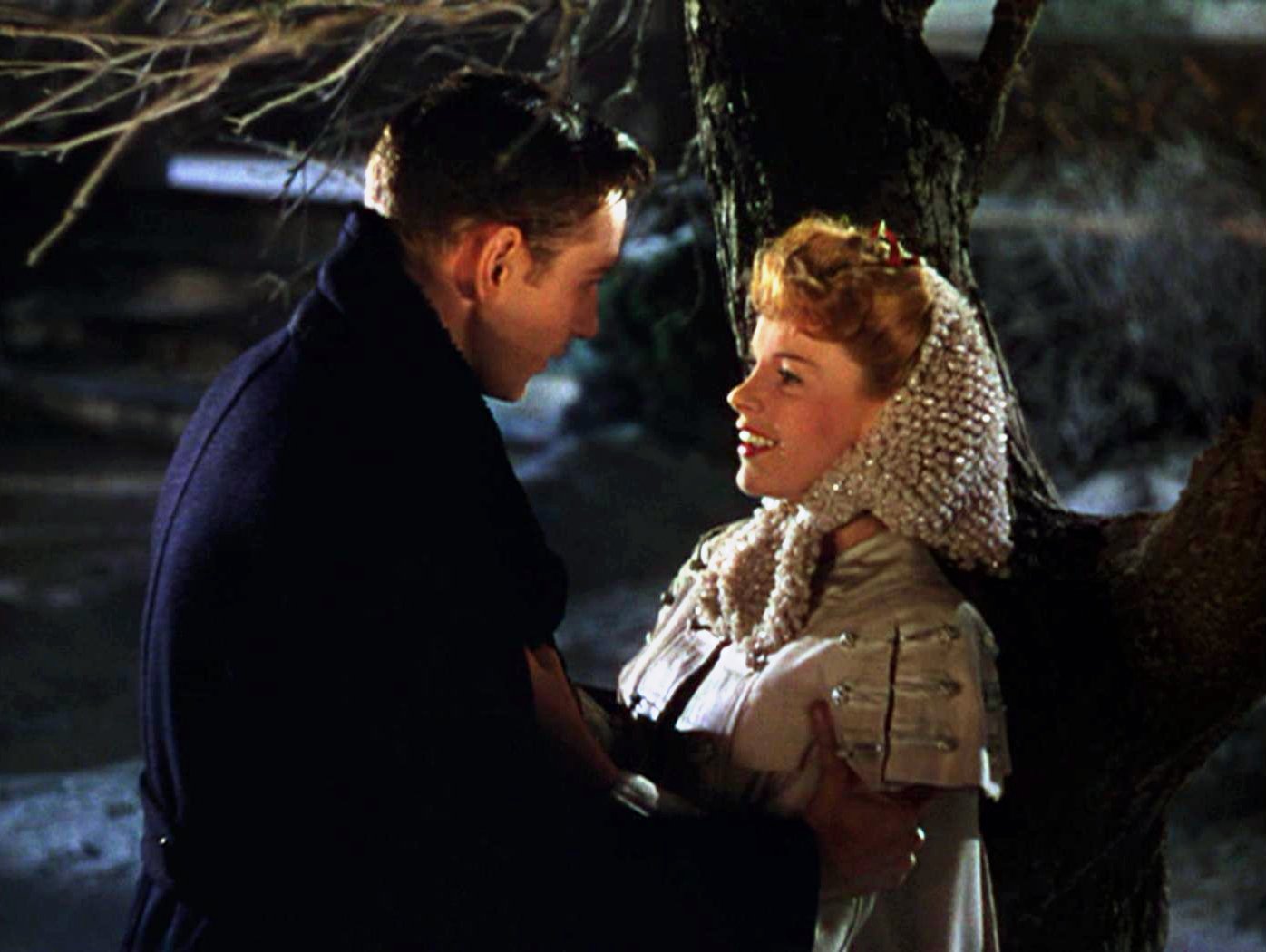
Tom Drake and Judy Garland in “Meet Me in St. Louis” (1944)

I  distinctly remember watching “Meet Me in St Louis” when I was five or six and thinking that Judy Garland looked pretty or laughing at Julie Newmar’s name “Dorcas” in “Seven Brides for Seven Brothers.”

Basically classics have always been in my life, but as a child I never realized that they were old and thought all of these wonderful movies were brand new.

My real interest in movies started when I was in third grade and I saw the cartoon version of “Anastasia” on a rainy November day in 1997. No this isn’t a classic movie, but it started a long line of movie obsessions to come.  I mean, I even thought I was somehow the lost princess Anastasia Romanov. I was hooked.

Fast-forward to middle school. I became interested in shows on TVLand, The Monkees and 1960s pop culture. I was interested in anything old, and naturally gravitated towards movies, which is probably where it all began.

But the real gateway drug to the classic film addiction was “West Side Story” (1961). On an evening in March 2003, my dad said, “You like musicals and old movies; you should see ‘West Side Story.’” He later said he created a monster and wasn’t joking at all.
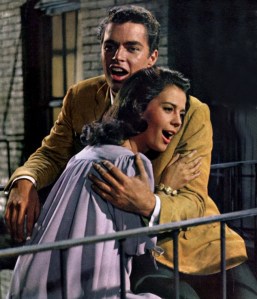
Richard Beymer and Natalie Wood in “West Side Story” (1961), the film I was obssessed with for two years.

From “West Side Story,” I snowballed into a musical love and I went out of my way to tape them off the television. I started a new musical list that is  still growing at 390 titles.

I then found actors I liked, like Doris Day and Jane Powell, and wanted to see their movies and the interest just grew and grew and grew. Now, I’m not obsessed with one particular actor or movie, it’s more that I’m crazy about the whole classic film shebang.

As a rule I only watch movies from the beginning of film to the mid-1960s. Pre-code movies are great because their vulgarity is done in a tongue-and-check way that sometimes can go by unnoticed if you aren’t paying attention. Once you get into the 1960s and beyond, the plots run thin in an attempt to be artistic, nudity isn’t rare and morals go out the window. Also actors from the Golden Era were fading away and the studio system was crumbling.

I guess if I had to make an analogue with how it all started, “West Side Story” would have been that first beer that led me into old movie alcoholism. It didn’t matter what I watched as long as it fulfilled my movie viewing needs. I think my viewing is a bit more mature than that now. Sure I still watch a few clunkers, or watch a stinker movie for the sake of fulfilling a classic actor list (like “Night of the Demon” for Dana Andrews) but it is just all part of the experience.

What kind of movie fan am I now?

•I make monthly lists from Now Playing to tape; usually 30 to 40 movies a month. We use A LOT of VHS tapes.

•I only buy books, paper dolls, posters or anything of that nature that is movie related. I often search Ebay for classic film memorabilia, and as much as I would enjoy Lana Turner’s evening bag from “Imitation of Life”, as a 21-year-old college student, that really isn’t in my budget.

•I don’t have any real obsession now. I have my favorite movies, actors and actresses but no one that I hyperventilate over when I think about them. I guess the only movie that would come close to that is “Since You Went Away” or the actor Van Johnson.

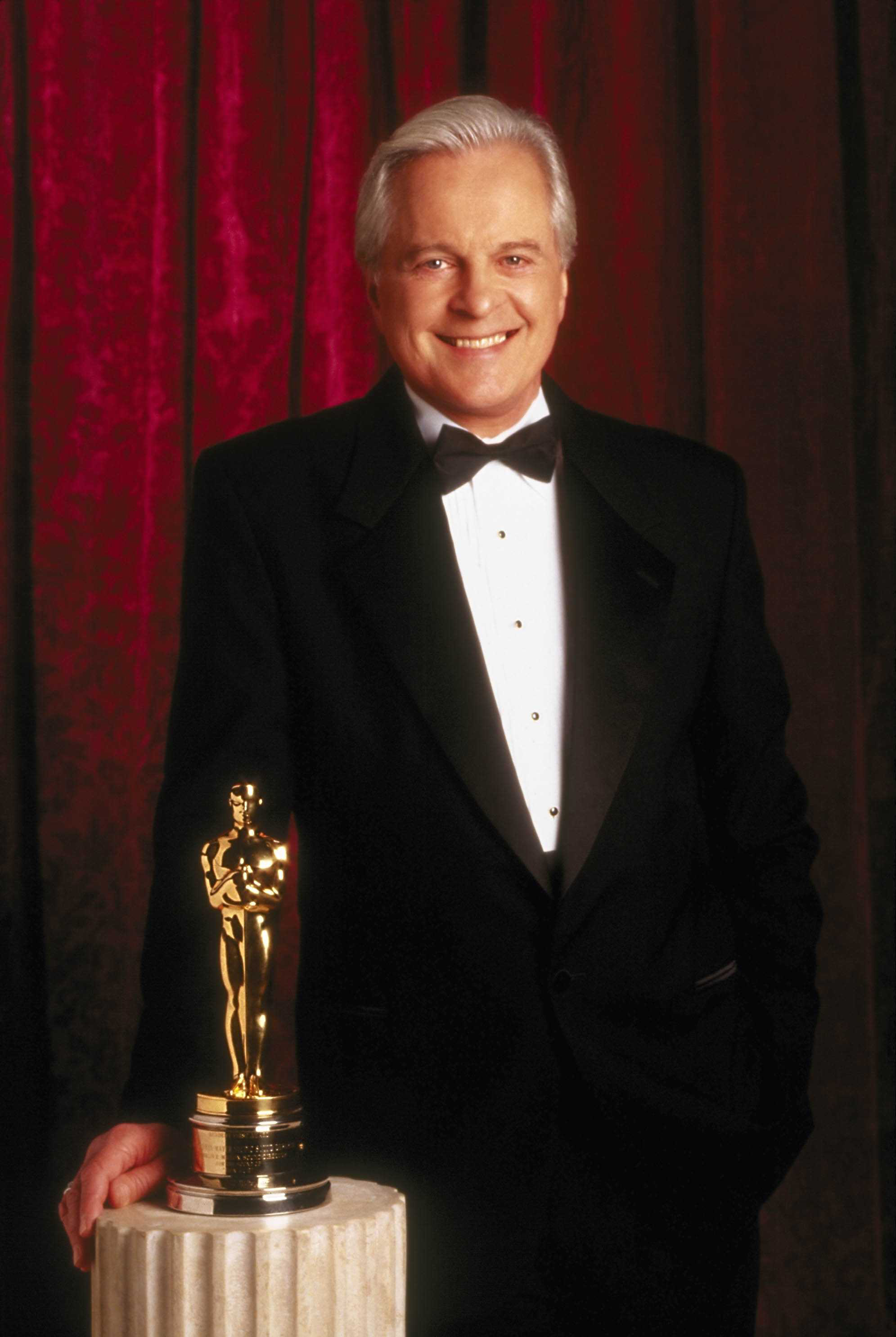
•I want to meet Robert Osborne one day. He is my hero and I think we would
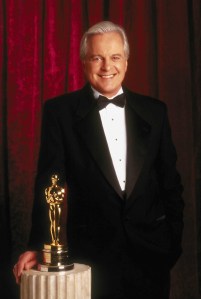
Robert Osborne: My hero

be best friends. Robert, if you just happen to be reading this, let’s meet in Atlanta and have lunch, okay? I’m just in South Carolina so it’s not that far.

•I’ve come to realize that the Hollywood I dreamed about in middle school and early high school is non-existent now. I used to dream about going to Hollywood and thinking it would be like it was during the Golden Era: clean, historically preserved and bowing down to Hollywood greats like Joan Crawford. My family took a family vacation there in 2006 and I’ve realized there is nothing for me there. Hollywood is not interested in preserving history, and even though the Hollywood Bowl was cool, it’s not like Kathryn Grayson will be singing a concert there ever again.

Check out the Comet Over Hollywood Facebook page for the latest updates.

I’m ready for my close up: Photography in films

Photography and moving pictures walk hand-in-hand, especially when shooting in black and white. Many people prefer color and dismiss black and white as cheap. However, some don’t realize the skill it takes to shoot black and white: making sure you have perfect lighting or having the shadows just right are just a few things to consider.

For being so closely related, it’s surprising that there aren’t many classic films about photography. I was only able to find an handful:

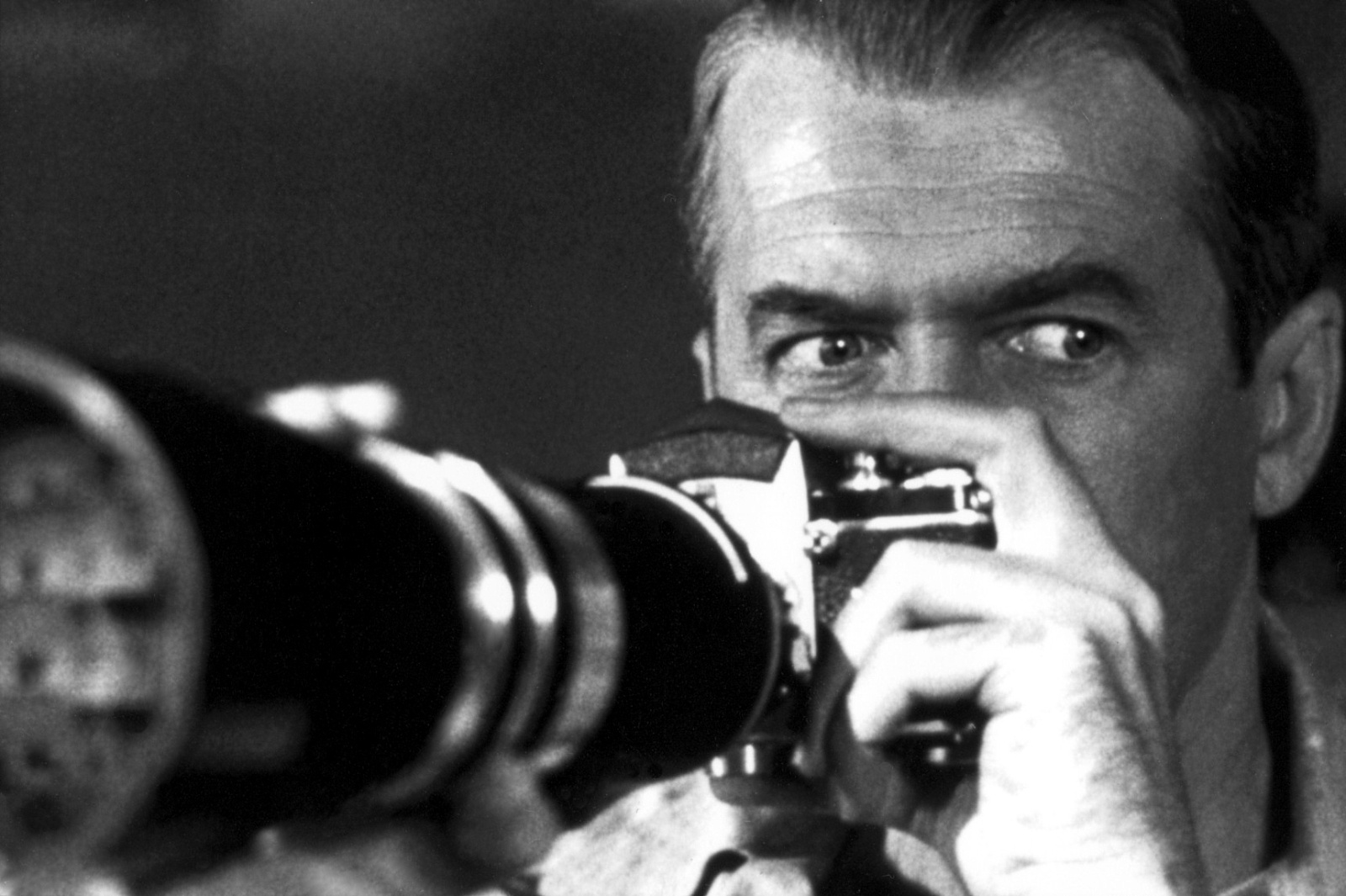
James Stewart in “Rear Window” spying on his neighbor

1. Rear Window (1954): James Stewart plays L.B. “Jeff” Jeffries, a free lance photographer who is laid up with a broken leg that was a result of a dangerous assignment. I’m not sure if this movie paints photographers in the best light. Jeff is in love with high society Grace Kelly but doubts that she could go on assignments with him even though she says she could. Jeff is also a bit of a peeping Tom, spying on his neighbors with his telephoto lens.
However, his peeping Tom-ery isn’t all bad since he uses it to solve a murder that he partially witnesses in an apartment across the way. Jeff cleverly mixes his career and survival techniques as he thwarts the murderer by blinding him with flash bulbs.

2. Roman Holiday (1953): The movie is more about  journalism than a photography, but the photographer certainly plays a large part in the film. Journalist, Joe Bradley (Gregory Peck), is trying to get an exclusive story on a visiting princess (Audrey Hepburn) who just happens to be staying in his apartment.
Eddie Albert plays Peck’s photographer friend who tags along to get the photos for the story. This movie seems to depicts photographers as deceitful playboys. When Peck calls Albert about the story, Albert is photographing and kissing a woman in his apartment. When he is getting pictures of the princess, he doesn’t openly take pictures of her but uses sneaky little spy cameras. A real photographer wouldn’t be so afraid…
Actually, from a journalism student’s point-of-view, it doesn’t paint the newspaper business in a good light either. It has the “anything for a story” undertones and Peck goes to unethical measures to get a story. Even though he doesn’t publish it, if he was doing that in today’s journalism world he would probably face a law suit.

Audrey Hepburn and Fred Astaire in “Funny Face.” Their characters were modeled after Richard Avedon and Dovima.

3. Funny Face (1957):

This movie is simply about fashion photography. It has many interesting and pretty scenes with fashion, dresses and dancing. The thing I like about the movie is that Fred Astaire’s character, Dick Avery, and Audrey Hepburn’s character is supposed to be like the relationship between one of my favorite photographers, Richard Avedon and his muse, Dovima.
Fashion photography is fun and pretty to look at, but the photographer I can’t imagine it being very exciting. From a journalist/writer view point, it would be like writing the same story over and over again. For example, how does Danielle Steel get any excitement out of writing when all of her books basically have the same plot?


4. Weddings and Babies (1958): This is an independent film about a photographer (John Myhers) who is trying to save money in order to get married to his girlfriend, Viveca Lindfors.
I think this movie gives the most realistic depiction of a photographer. He feels unfulfilled because he is only taking pictures of just weddings and babies and wants to do something with a purpose. I’ve heard several photographers say that, others take the wedding route because it’s easier and pays well, but the ones with a drive don’t care so much about the money.
My philosophy of photography is that it should inform just like a newspaper article. You can write a story about how the Yanomamo are losing their indigenous life style, but a picture can better show how it is devastating them. Photography should be about truth, not about how to show in the best light.


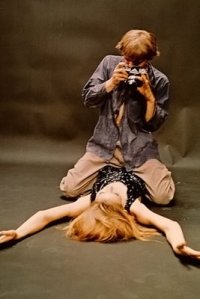
5. Blowup (1966): This movie is a mod 1960s, English film. If that doesn’t mean anything to you, it means that it’s rather odd, has little plot and a few naked women thrown in for good measure. However, in comparison to the photographer in “Rear Window” who is a photojournalist and travels the world, the photographer, played by David Hemmings, is a successful commercial fashion photographer. He is also bored with life…go figure, wouldn’t you if you were just photographing fashion?
Anyways, the movie is about his career as a photographer, but it is rather long and drawn out. He thinks he might have photographed a murder, but we never really find out and the murder is never solved. It is a treat though to see the beautiful Russian model, Verushka, at the beginning of the film.

Those movies are the only real pre-1970s movies that used photography as a basis of the plot. I was disappointed and surprised that there are so few movies that have main characters playing photographers, since photojournalism was a big field in the 1940s and 1950s due to publications like LIFE that revolved around photography. I just can’t believe that there are so many movies about stewardesses, nurses and architects but so few about photographers.

Here are a few films that the main characters are photographers, but it is not a main point in the plot:

-One More Tomorrow (1946): Anne Sheridan plays a photographer who falls in love with high society Dennis Morgan. The fact that she is a female photographer means she is lower class and could never fit in Morgan’s social circle.

If a Man Answers (1962): Sandra Dee marries photographer Bobby Darin. She plans on keeping her new husband using a dog training book, because she worries about him photographing other women.

Wait Until Dark (1967): Audrey Hepburn plays a blind woman terrorized by men trying to get a heroine filled doll. Her husband in the movie is a photographer.

Check out the Comet Over Hollywood Facebook page for the latest updates.

Remake is a dirty word

Classic 1939 film “Wizard of Oz” faces remake doom

Yesterday on the radio, I heard Ryan Seacrest say that as a result of the success of “Alice in Wonderland,” Tim Burton was wanting to remake the classic, shouldn’t be touched 1939 “Wizard of Oz.”

I think this is terribly ironic because just last Friday I was watching the documentary “Memories of Oz” (2001) on Turner Classic Movies. The documentary was part of the annual July airing of “Wizard of Oz” to celebrate when it was released.

In this documentary actor/writer John Waters (who seemed rather bizarre) said that remaking the “Wizard of Oz” would be suicide and it would fail; the only way it would work would be with completely unknown actors, but that wouldn’t even be fool proof.

Well John, looks like they didn’t listen to your advice. However, as much as I want it to, I doubt Tim Burton’s movie will fail. Everyone seems to love his creepy, odd direction and films and they all do fabulous in the box office. I personally am not a fan, but it seems I am the only one who is not.

As for unknown actors, Seacrest said that it was rumored that Angelina Jolie would play the Wicked Witch of the West. He said she wanted to show that she wasn’t afraid to play “evil roles” and he also called her “the biggest celebrity in the world.”

Ok two things Ryan: 1.) Hasn’t Angelina already proven that (in film and real life haha)?  2.) I wouldn’t say Angelina is the “biggest star in the world.” All she does is adopt babies and occasionally act. I had forgotten about her until I saw a preview for “Salt.” She wasn’t even at the Academy Awards!

I don’t know about how many of you feel about remakes. I personally hate them. It usually seems I worry and worry and worry about them and then they fail in the box office anyway or you never hear about them. Examples of this would be: “The Women” (2008)-second remake of 1939 Joan Crawford film, “Beyond a Reasonable Doubt” (2009)-remake of 1956 Dana Andrews film  or “Psycho” (1998)-remake of the 1960 Hitchcock film.

After I told my mother, she said, “Next they will remake ‘Gone with the Wind’!” I disagree, because it doesn’t seem that anyone is interested in the South except for we southerners. Also, “Gone with the Wind” has been dubbed ‘racist’ because it has slaves in it, so I’m not sure how current politically correct would tip toe around the historical fact that there were slave owners in the 1800’s in the south. However, Robert Osborne, prime time host of Turner Classic Movies and my idol, shakes his head when people call the film ‘racist’ and reminds his viewers that it was a different time in film and you can’t take everything from contemporary standards.

How do you feel about the remake? Do you think it will fail? What classic movie is next to go on the chopping block?

Check out the Comet Over Hollywood Facebook page for the latest updates.

Happy 4th of July, Pilgrim

Today we celebrate the birth of America. I thought about what makes me think “Now that’s America” when I watch old movies. Here are a few things that I thought of:

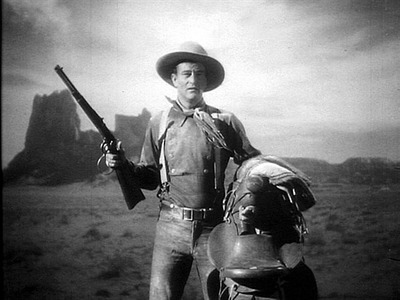
John Wayne looking VERY attractive in “Stagecoach” (1939).

John Wayne: What other actor is so widely known and associated with America? His roles are usually a cowboy or a soldier. My favorite role of his is from “They Were Expendable” which is probably one of the best World War 2 movies along with “Battleground.”
Many of my friends and others have criticized John Wayne as always playing the same role, or playing himself. I personally don’t see the issue with this when so many of today’s actors like Katherine Hegel or Jennifer Aniston play the same role over and over again. The only difference is John Wayne played meaningful, strong and manly roles while those actresses are always dizzy, confused dames. To me, John All-America actor. He even played football in college, what could be more American than that?

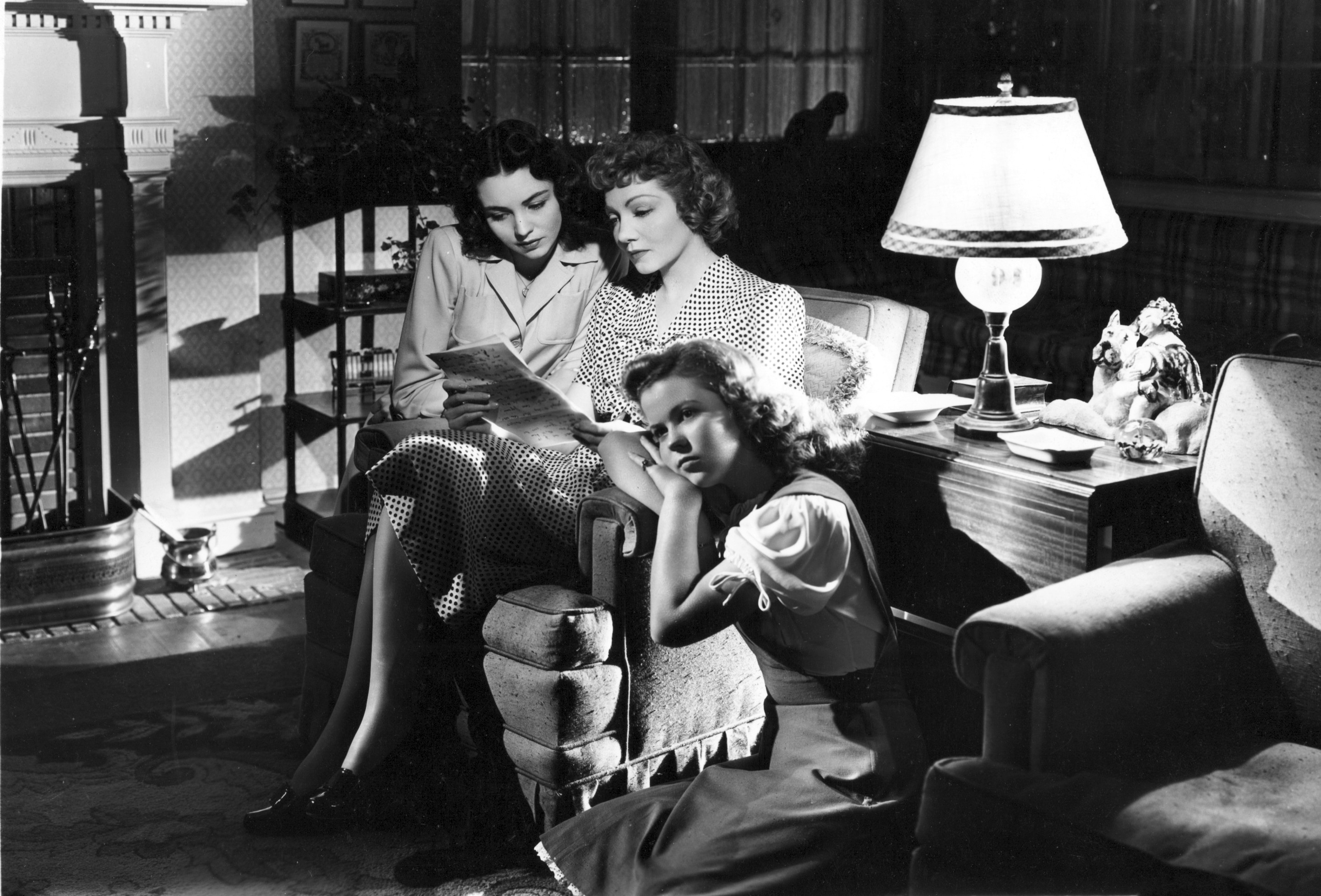
Claudette Colbert, Jennifer Jones and Shirley Temple in my favorite movie, “Since You Went Away” (1944)

The 1940s: Another thing that embodies America is the 1940s war era. I suppose I am a bit romantic about patriotism because I crave a patriotism that no longer exists. During World War II, men were willing to fight for the country and those on the home front who couldn’t fight did all they could to help out. Victory Gardens were grown, cooking grease was saved and sent to the military, women sacrificed their silk stockings and painted their legs. People gave up daily luxuries that people today would refuse to give up.

LIFE magazine: LIFE magazine used to be the top publication. I can’t think of a magazine published today that can compare to LIFE. It showed the world the truth about war, the current fashions and let them in on celebrity lives. Even more so, it was a magazine that was started to revolve around photo journalism. It has some of the best photos and photographers like Robert Capa who showed us what war really was.

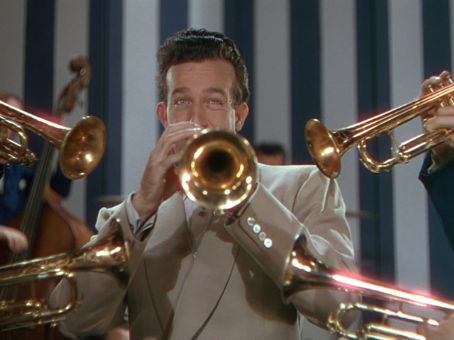
Harry James in “Best Foot Foward”

Other things:
-Pin-Up girls: Betty Grable, Esther Williams or Rita Hayworth. They all had sex appeal, but that same attainable, girl next door quality.
-Big Band music: No one can play a trumpet better than Harry James and Tommy Dorsey always seemed like one of the most likeable fellows. Glenn Miller even died while he was flying to a USO show during World War II.-Irving Berlin: Jerome Kern once said, “Irving Berlin has no place in American music, he is American music.” The man wrote “White Christmas”, “Cheek to Cheek” and “Putin’ on the Ritz”, who else can you say that about?

Also happy birthday to: Louis B. Mayer, George M. Cohan, George Murphy, Gloria Stewart, Eva Marie Saint and Stephen Boyd.

Happy 4th of July!

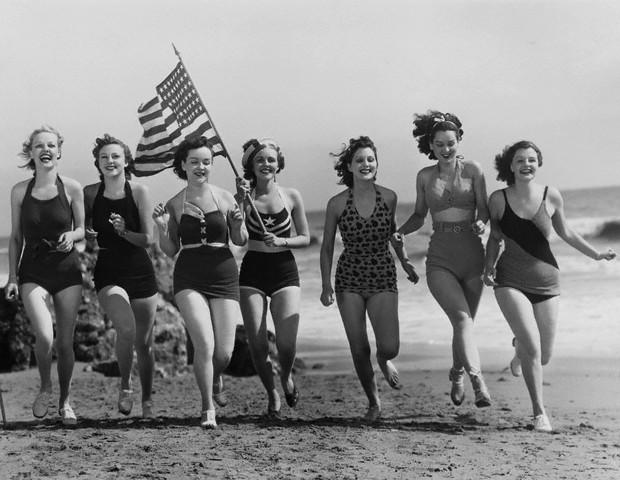
Ziegfeld girls in 1936

 Check out the Comet Over Hollywood Facebook page for the latest updates.

Actress Beauty Tips #2: Champagne Hair Rinse

This is the second installment of our monthly classic actress beauty tips that I have read about AND tested.

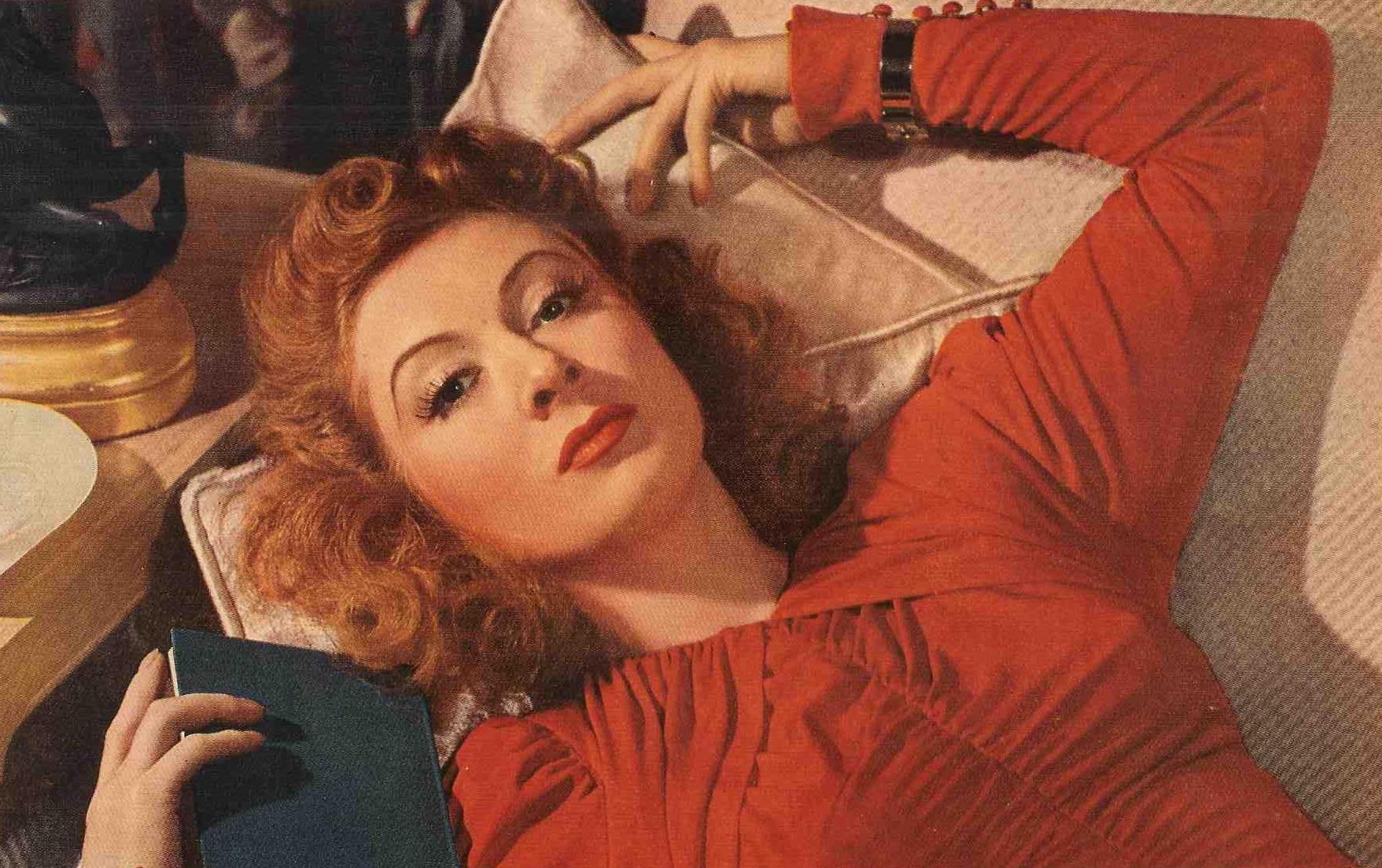
Greer Garson in the 1940s

Actress Greer Garson, star of “Mrs Miniver” is known for her vibrant red hair; Robert Mitchum even referred to her as “Big Red.” According to Divas: the Site, after Miss Garson shampooed, she would rinse her hair with a cup of California champagne, brush her hair100 times and tie it in a net for the rest of the evening.

After further research, I found that rinsing hair with champagne is a way to make your hair soft, shiny and brighten natural highlights for flaxen haired individuals. I read about Miss Garson’s hair treatment last summer and have been intrigued to try it. This blog has finally given me a reason to do so.

**Disclaimer: My hair is of age to be rinsed with alcohol. It started growing November 1988. **

Champagne Hair Rinsing:

1.) Go out and buy champagne. I didn’t want to be too cheap, but not too expensive either so I bought a $15 bottle of Korbel at BI-LO.

Korbel California Champagne

2.) Most directions say to measure out a half cup of champagne and half cup of  hot water. I did a straight cup of champagne since it sounded like Miss Garson did not dilute her alcohol.

3.) Shampoo and condition your hair.

4.) Now for the fun part: After shampooing and rinsing, pour the champagne into your hair. I made sure to pour it on top of my hair and underneath. During this part, I realized why several reviews suggested mixing the champagne with hot water. The champagne was COLD after being in the refrigerator. It was a rather odd sensation as it bubbled in my ears and nose and dripped from my hair.

5.) DO NOT RINSE OUT THE CHAMPAGNE.

6.) Brush and towel dry your hair to get rid of any excess champagne. No, I did not brush my hair 100 times like Miss Garson.

7.) Nor did I tie my hair in a scarf for the night.  Blow dry your hair.

To review: My hair looked shinier and felt softer, but I didn’t see a major difference. I was surprised that my hair didn’t feel stiff or sticky from the process. However, the smell of my hair gave me a craving for cheese and crackers.

Since I tested this at night, the champagne will be washed out in my morning shower.  I think I will retest the rinse one morning so I can see how it feels to have champagne in your hair all day. Hopefully people wouldn’t smell it and think I’m an alcoholic, haha.

I’m not sure if I will ever see those “champagne highlights” websites discussed, but it is a fun routine.  Other than silly, I did feel sort of glamorous during the process.

Check back August 1 for the next beauty tip and an update on champagne hair rinsing!

Check out the Comet Over Hollywood Facebook page for the latest updates.

Different look, same great product

“Comet Over Hollywood” has received a slight make-over. Not that I don’t love Cyd Charisse in “Party Girl,” I just felt that we needed to put on our bathing suits with Constance Bennett and dive in to summer movie fun blogging!

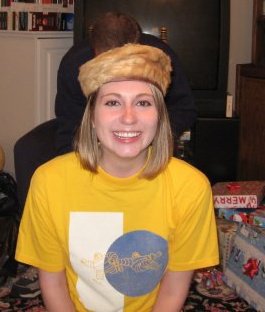
My mink hat on Christmas Day 2009

Cheesiness aside, Constance Bennett is an actress I really admire and try to follow. For years she was known as one of the best dressed women in Hollywood. Why was Bennett such a fashion icon? Because she wore what she liked and didn’t follow fads.

I admit she is the reason I buy a lot of the vintage clothes I own and wear. Within the past year I’ve bought: a mink hat, turban, orange 1960s cape/poncho or 1940s yellow strapless formal.

Therefore, I dedicate this blog to my fashion inspiration, Constance Bennett.

Here is a video that shows Bennett’s glamour and fashion:

Hollywood Dads and Star Babies

On Father’s Day we remember the times dad taught us to drive, checked our oil and watched “Calamity Jane” with us.  I would also like to remember Hollywood fathers that had children who also went on to have film careers.  Here are a few of my favorite Hollywood families.

Like father, like son:

John and Patrick Wayne in “The Searchers” (1956)

John Wayne and Patrick Wayne-

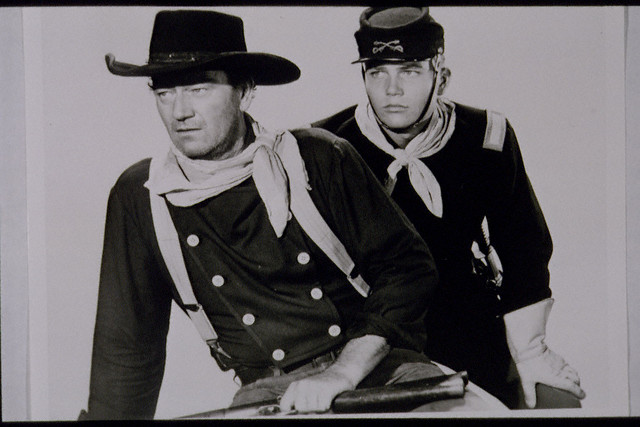
Can you think of a more attractive father and son? Patrick Wayne had big cowboy boots to fill but had a modest career as an actor. Patrick was born in 1939, when his father made one of his most successful films “Stagecoach.”  Patrick was 11 when he made his first film, “Rio Grande” with his father. John and his son were in the ten films together including:
Rio Grande” (1950),”The Quiet Man” (1952), “The Searchers” (1956), “The Conqueror” (1956), “The Alamo” (1960), “The Comancheros” (1960), “Donovan’s Reef” (1963), “McLintock” (1963), “The Green Berets” (1968) and “Big Jake” (1971).

Douglas Fairbanks Sr. and Jr. in 1936 on the set of “Jump for Glory”


Douglas Fairbanks Sr. and Douglas Fairbanks Jr.-

Another attractive, father and son duo: Douglas Fairbank Sr. and Jr. Douglas Fairbanks Jr. was born into Hollywood royalty. Daddy Fairbanks was one of the silent screen’s biggest idols and Junior became a heart-throb (at least mine, he is my desktop background).
“I never tried to emulate my father. Anyone trying to do that would be a second-rate carbon copy,” Fairbanks Jr. said. However, both men were known for their swashbuckling roles.
Jr. had a successful career, best known for his role with Cary Grant and Victor McLaglen in “Gunga Din” (1939) and “Sinbad the Sailor” (1947).
Both men were married to some of Hollywood’s top actresses. Senior to Mary Pickford-their estate was known as “Pickfair”- and Junior to Joan Crawford.

Ed and Keenan Wynn in 1948 at a hospital charity event.

Ed Wynn and Keenan Wynn-

Not as handsome, but definitely funny.  Keenan helped his father Ed get a Hollywood career, according to IMDB.  Keenan always played the pal, heel or funny man in the movies while Ed was the bumbling clown.  The father and son team were in the Disney movies “The Absent Minded Professor” and “Son of Flubber” together in the 1960s.


 Daddy’s little girl:

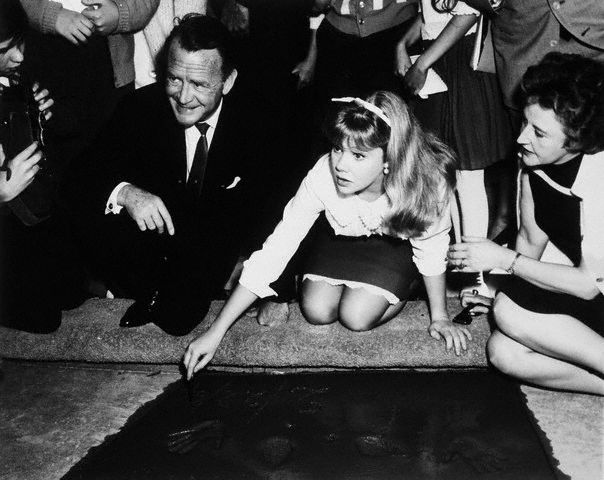
John and Hayley Mills-

“Acting is just a natural thing in my family. Other boys and girls go into the family business. So do we,” Hayley said.
John Mills had a successful career in England starring in films like “This Happy Breed” and”Hobson’s Choice.”
Hayley’s made success in Disney movies such “Pollyanna” and “Parent Trap.” Dad cashed in at Disney in the movie “Swiss Family Robinson’s” playing the father.
The two were in the 1959 thriller “Tiger Bay” and the 1966 comedy/drama “The Family Way.”

Robert and Elizabeth Montgomery

Robert and Elizabeth Montgomery-

Robert Montgomery started in movies when talkies shook Hollywood. He shocked audiences with Norma Shearer in the sex comedy/drama “The Divorcee” (1930). He showed war wasn’t all patrotism and glamour in “They Were Expendable” (1945) and let audiences see how he solved a murder through his eyes literally (we only saw his face in the movie a few times) in “Lady in the Lake” (1947).

In contrast, his daughter Elizabeth, starred in the wholesome 1960s television series, “Bewitched.”  Elizabeth got her start after appearing on several episodes of her father’s series, “Robert Montgomery Presents,” according to IMDB.  “I guess you could say I’m a TV baby,” Elizabeth said.

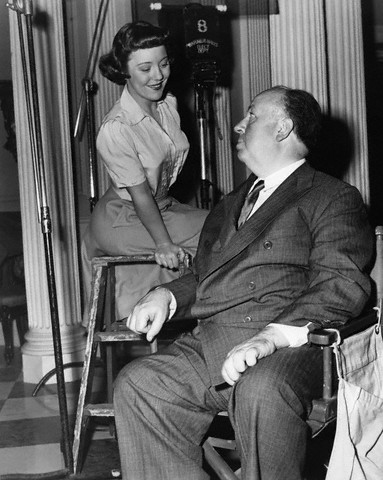
Alfred and Patricia Hitchcock-

The master of suspense had one daughter. Patricia didn’t have a huge film career, but she did act in three films that her father directed. Her largest role was as Barbara, Ruth Roman’s little sister, in “Strangers in a Train” (1951).  She also had a bit role in “Stage Fright” (1950), was a secretary in “Psycho” (1961) and appeared in several episodes of “Alfred Hitchcok Presents.”

Some actors are less than complementary about Hitch, but he and Patricia had a good relationship. The book “Alfred Hitchcock: The Legacy of Victorianism” analyzes “Stage Fright,” comparing Patricia’s and Jane Wyman’s similar appearances. The joking but loving father-daughter relationship between  Wyman and her father in the film characterized Patricia and Hitchcock’s relationship, according to the book.     Other film fathers:-Edgar Bergen: puppet, Charlie McCarthy and daughter, Candice-Lloyd Bridges: sons Beau and Jeff-Lon Chaney: son Lon Chaney, Jr. of “Of Mice and Men” (1939) fame-Tony Curtis: daughter Jamie Lee-Kirk Douglas:  son, Michael-Henry Fonda: son Peter, daughter Jane-Rance Howard: songs Clint and Ron-Walter Huston: director son, John-Robert Keith: son, Brian of “Family Affair” and “Parent Trap” fame-Gordon MacRea: daughter, Meredith of “Petticoat Junction” fame-Joel McCrea: son, Jody of beach movie fame-Vincent Minnelli: daughter, Liza-Lyle Talbot: son Stephen (Gilbert from “Leave it to Beaver”)

Happy Father’s day to the star of our household, my dad, who has to put up with three daughters and their shopping, complaining and movie musicals. Check out the Comet Over Hollywood Facebook page for the latest updates.

Confessions of a VHS User

222 classic movies on VHS tapes

Recently my mother told me that we had an estimated 222 movies taped off of Turner Classic Movies. Why you ask?

Every month I flip through the “Turner Classic Movie Now Playing Guide” and make a list of 20 to 50 movies to tape.

Our family owns a DVR but we use VHS tapes, because they hold more, are reusable and usually give us higher quality.

I tape so many movies so I can fulfill the many lists I have made to organize my old movie obsessions.

Here is a very brief summary of the lists I have so far:
-Movie Musical list: I have currently seen 374 musicals. I started this list back in 2004 when I was in 9th grade.  This includes any movie musical I have seen, new or old; anything from a Kay Kyser musical to “Chicago.”
-Silent Movie list: This currently only has 40 movies. I only started really getting interested in silent films in late 2008 and just started the list in March 2010.
-Screen teams: This is a list of famous screen teams such as Errol Flynn and Olivia De Havilland, Myrna Loy and William Powell, Annette Funicello and Frankie Avalon.  I try to see all of the movies the screen teams were in together.
-Movies Series: Similarly to the Screen Teams list, I am trying to see all the movies in certain film series such as Andy Hardy, Dr. Kildaire and Maisie.
-Actresses Lists: I have 47 actresses that I am trying to see all of their movies. A few of these are Jean Arthur, Bette Davis and Kay Francis. So far I’ve only seen all of Judy Garland’s movies.
-Actors Lists: Similar to the actress list, except with 19 actors. Lists include Van Johnson, Dana Andrews and George Brent.

Recently, I have started a rather ambitious list. It is all of the movies from 1939- a total of 514 movies and I have only seen 84.

“The Rains Came”: 20th Century Fox’s contribution to the 1939 royalty

The year of 1939 is important not just for “The Wizard of Oz” and “Gone with the Wind,” but it also birthed other well known movies such as “Ninotchka,” “Goodbye, Mr. Chips,” “Stagecoach” and “The Grapes of Wrath.”

It’s amazing to look at all of the films that came out during what is known as “Hollywood’s Greatest Year,” and I was inspired to try to see all of them.

Turner Classic Movies showed a documentary in the summer of 2009 called “1939: Hollywood’s Greatest Year.” The documentary said the reason this year was profitable was the United States was slowly getting out of the depression and the film companies were able to fund bigger projects.

However, this glory only lasted one year.  Two years later World War II hit, actors were drafted and America and Hollywood put their efforts toward the war on the home front and overseas. Once the war was over, the tone of America and movies changed from light and happy 1930s films to darker and angsty melodramas, according to the documentary.

In a way, this is why I want to make the list. I feel like when people hear 1939, they think of “Gone with the Wind” or “Wizard of Oz,” but there were so many other special movies that year. I want to see if the other films that you don’t hear about have that same magic. Who knows, once I finish watching all 514 movies maybe I’ll try my hand at writing a book.

Making the list took maybe three days, however I know that the watching process will take much longer. I’m worried about being able to track some of the movies and making it through low budget crime movies.

Wish me luck!

Check out the Comet Over Hollywood Facebook page for the latest updates.