The story of Tommy Kirk

Tommy Kirk in “Old Yeller”

You may have seen him turning into a sheepdog on “The Shaggy Dog,” tragically killing his dog in “Old Yeller” or as the know-it-all brother in “Swiss Family Robinson.”

Life for fresh-faced, slightly goofy Tommy Kirk seemed sunny in those 1950s movies at Walt Disney Studios. He was one of the studio’s top stars and even was part of the Mickey Mouse Club in the “Hardy Boy” series with Tim Considine. He was wholesome, clean cut and quirky-things that easily won over Disney audiences.

But as Kirk grew out of those kid roles in the early 1960s, life started to drastically change. Like most child stars, the transition from family movies to teen movies can be difficult. Studios and audiences don’t like you because you aren’t as cute and are going through the awkward years of growing up. However, it’s harder for a child star when they are gay.

It was becoming apparent that adult Tommy Kirk was gay and this didn’t fit into Walt Disney’s family-friendly, perfect studio.
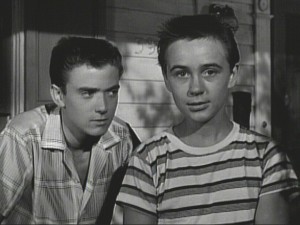
Tommy Kirk and Tim Considine in Mickey Mouse Club’s “Hardy Boys”

“Even more than MGM, Disney [in the early 1960s] was the most conservative studio in town. They were growing aware. They weren’t stupid. They could add two and two, and I think they were beginning to suspect my homosexuality,” Kirk said. “I noticed people in certain quarters were getting less and less friendly. In 1963 Disney didn’t renew my option and let me go. But Walt let me return to do the final Merlin Jones movie, ‘The Monkey’s Uncle,’ because those were moneymakers for the studio.” (Taken from IMDB)

Kirk said his teen years were a very unhappy time for him.  He had also been marked as box office poison after movies like “Village of Giants” (1965) and “Mars Needs Women” (1967).  Kirk’s career could have been saved by a potential role in “The Sons of Katie Elder” (1965) with John Wayne. Unfortunately, he went to a party where people were smoking marijuana. The party was busted, Kirk was arrested and newspapers printed “Ex- Disney Child Star Arrested for Pot.” He was fired from the film.

Not only was his career floundering, but once he accepted he was gay, he had no way to meet people or express himself.

“I knew I was gay, but I had no outlet for my feelings. It was very hard to meet people and, at that time, there was no place to go to socialize,” Kirk said. “It wasn’t until the early sixties that I began to hear of places where gays congregated. When I was about 17 or 18 years old, I finally admitted to myself that I wasn’t going to change. I didn’t know what the consequences would be, but I had the definite feeling that it was going to wreck my Disney career and maybe my whole acting career.

Eventually, I became involved with somebody and I was fired. Disney was a family film studio and I was supposed to be their young, leading man. After they found out I was involved with someone, that was the end of Disney.” (Taken from IMDB)

Though Kirk’s acting career went into the mid and late 1960s when codes and morals were beginning to loosen, there was no way for him to portray a gay man on screen.

Tommy Kirk and Annette Funicello. The two starred in several films together including “Pajama Party”

Quite on the opposite side, Kirk was in highly heterosexual all-American teenage romance beach films.  In “Pajama Party” (1964) with Annette Funicello, Kirk plays a Martian that doesn’t understand romance or how to woo women. Funicello’s character teaches the Martian-named Go Go- how to show affection in order to make her boyfriend jealous. Teaching Kirk how to romance a woman in a film almost makes me wonder if it was a jab at him.

Kirk quit acting by the early 1970s, saying that he got sick of it and stopped. He now runs a carpet and upholstery cleaning business, according to IMDB.

For a child star who struggled so much, Tommy Kirk is really forgotten today. Books like “Screen World Presents: Encyclopedia of Hollywood Film Actors” mentions in the last few sentences about his career, “It was not until years later that Kirk was fired after word got out about his homosexuality.”

Other books like “Queering Teen Culture” by Jeffery Dennis don’t discuss the hurt or ruin that Kirk experienced. The book mainly seems to focus on the silly roles he was in and how overly sexual the males were in beach movies.

For somebody that stared in most of the live-action Disney classics, you don’t hear anything about him. I wonder if it has to do with Disney still trying to keep appearances.

From interviews I’ve seen in recent years, Tommy Kirk seems to be bitter from the experience. I can’t say that I blame him.

It’s heartbreaking that such a bright young Disney star fell down so hard.

Check out the Comet Over Hollywood Facebook page, follow on Twitter at @HollywoodComet or e-mail at cometoverhollywood@gmail.com


Happy Father’s Day with the MacRea’s

Last year I did a post on fathers and their actor children. This year I decided to focus on just one father and daughter: Gordon MacRea and his oldest daughter Meredith. I found a very sweet duet of the two singing “Count Your Blessings” from the movie “White Christmas” (1954).

You may know Meredith as a ditzy blonde from various beach films or the perfect Billie Jo on the TV show “Petticoat Junction”- I have to admit, when I was in 4th grade she was my least favorite sister because she sang too much.

I adore Gordon MacRea and he is one of my favorite singers. Unfortunately, his career was cut short due to alcohol problems.

Once in the 1980s, Gordan MacRea was doing a performance in my hometown of Greenville, S.C.  Due to his alcoholism, he was so drunk during the concert that he couldn’t remember the lyrics during the song. So sad 😦 My mother told me that Meredith wrote a letter to the paper thanking his fans for attending and apologizing that her father was unable to perform.

I think Meredith really loved her father and tried to help him out as much as she could. I’ve seen clips of the two of them in the 1970s on gameshows and she was very loving towards him and still called him daddy.

Check out the Comet Over Hollywood Facebook page or e-mail us at cometoverhollywood@gmail.com.

Classic Movies in Music Videos: “Bones” by The Killers

Here we have another installment of music videos that feature either classic movie stars, movies or reference classic movies.

This month’s music video is “Bones” by The Killers from their album “Sam’s Town.”

The video is of a guy and a girl in a drive in movie and we see several classic films on-screen as well as being acted out by the couple.

Some movie references are:
•”Jason and the Argonauts” (Very first shot, the fact that the band members are skeletons
•”From Here to Eternity” (1953)- :30 seconds, 1:00, 1:30
•”Easy to Love” (1953)-  2:12
•”Lolita” (1962)- 2:39
•”Creature from the Black Lagoon” (1954)- 3:16

Enjoy and let me know if I missed any!

Check out the Comet Over Hollywood Facebook page 

D-Day, 6th of June

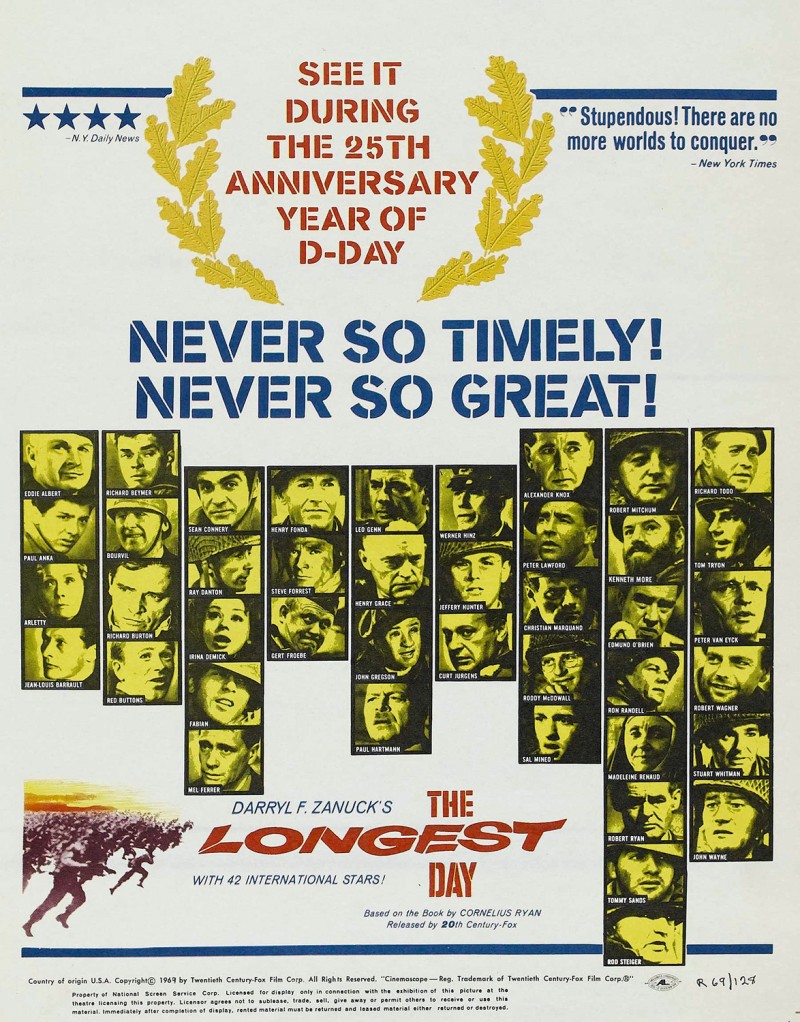
Whenever June 6 rolls around, my mind usually turns to the star-studded World War II film “The Longest Day” (1962). The film dramatizes the D-Day Invasion on Omaha Beach on June 6, 1944.

The film stars every major star you can think of, but the person who stood out to me the most was Henry Grace.

Who is Henry Grace?

Grace played Dwight Eisenhower in “The Longest Day.” But Grace wasn’t an actor. He was set decorator. He was chosen for the film because of his surprising resemblance of our 34th president.

Eisenhower was actually considered to play himself, but makeup artists couldn’t make him look young enough, according to IMDB.


Set designer Henry Grace (left) and President Dwight Eisenhower (right)

Set designer Henry Grace (left) and President Dwight Eisenhower (right)

Grace started as a set director in 1934 through 1970, working on films such as “Camille” (1936), “Blackboard Jungle” (1955), “Viva Las Vegas” (1964) and the television show “The Man From Uncle.”

“The Longest Day” was Graces’s only film performance.

Next time you watch the film, make sure to look out for Grace! It’s a very long, but very good movie.

Stars in “The Longest Day”:
longet posterJohn Wayne
Robert Mitchum
Robert Ryan
Henry Fonda
Sal Mineo
Richard Burton
Eddie Albert
Richard Todd
Sean Connery
Alexander Knox
Red Buttons
Richard Beymer
Jeffrey Hunter
Richard Dawson
Fabian
Roddy McDowall
Peter Lawford
Edmund O’Brien
Paul Anka
Mel Ferrer
Tommy Sands
Robert Wagner
and the list goes on

Check out the Comet Over Hollywood Facebook page, follow on Twitter at @HollywoodComet or e-mail at cometoverhollywood@gmail.com
Time marches on: Comet’s Anniversary

I’m as bad as a cinema husband. I forgot my own one year anniversary!

“Comet Over Hollywood” turned a year old on May 17.

Technically, it was created in April 2009, as I shared in a post about the blog’s namesake back in April.  However, I only wrote five posts from April 2009 to May 2010.

In 2009, the blog was me reviewing movies I watched. The only problem is that when I give a plot summary, I am terrible about giving a blow-by-blow summary, I also watch way too many movies to catch up.  This turns into a 9,000-word summary that is tiring for me to write and for you to read.

Though forgotten, Comet’s anniversary was still better than Ida’s 8 year wedding anniversary in “They Drive By Night” (1940)

Last summer I reinvented the blog by trying to think of clever viewpoints on movies and how film has drastically affected my life.

I started “Comet Over Hollywood” to share with others how I felt about movies. I knew there were other film fans that related to my interest. I also hoped in a small way I could help reform the haters of black-and-white movies.

I have to admit, I am really proud of “Comet.” I never imagined that I would meet so many fantastic film fans and get so much support from a community.

Thank you to everyone who has helped make “Comet Over Hollywood” a pleasure to share.

Check out the Comet Over Hollywood Facebook page 

Beauty Tip #13 **Anniversary Edition**: Lux Soap

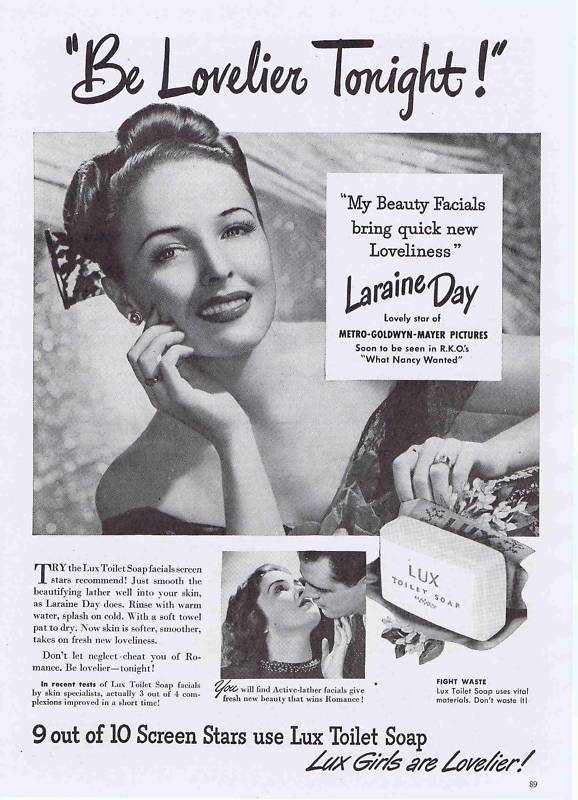
Lovely Laraine Day in a Lux Soap ad

A year ago today, I posted my first classic movie tip. It was Lana Turner’s use of Boraxo soap to scrub her skin. I still use it now and find it really effective.

This is the 13th beauty tip and is a special tip for Comet’s beauty tips anniversary.

I sometimes listen to Lux Radio Broadcasts via podcast.  The Lux Radio Broadcasts were weekly broadcasts sponsored by Lux Soap where actors and actresses performed films on the radio. Sometimes the actors who starred in the movies perform them but other times they have to find replacements. For example, Shirley Temple and Herbert Marshall reprised their roles in “Kathleen” but Frances Gifford took over as the Laraine Day role.

Performing film scripts on air was a way the film industries were able to incorporate radio so that it wouldn’t be a threat to films, according to the Movies and Moguls documentary.

Lux Soap commercials would run in the broadcast. During the 1930s and war years, the commercials would talk about housewives using it to cut grease on dishes, keep the snap in their stockings or how it helped keep their complexion clear.

Paulette Goddard looking beautiful with the help of Lux

In the 1950s the commercials get increasingly corny. For example: “I was watching Jeanne Crain on the set of ‘Letter to Three Wives’ and she had to do the country club scene over and over again. At the end of the scene, she was exhausted but she said the one thing that did hold up were her stockings that had been washed in Lux Soap.”

Since the commercials made Lux sound like a miracle soap, I decided to do some investigation.

Most actresses were part of the Lux ad campaign and claimed that it made their skin soft and clear.

I went on Ebay to find my own Lux soap to see how it worked for me.  Lux is no longer found in stores, but is still sold abroad.

I bought a few bars of new Lux (Mild soap with honey) and several old bars of soap. The seller said the soap was from pre-1974 but wasn’t sure of the exact date.

I used both soaps after being particularly dirty after jogging and going to the swimming pool. The new soap smelled nice and was soft but really wasn’t anything spectacular.

The old soap still produced a nice thick, creamy lather and left my skin feeling soft. It did smell very strongly and I had a faint smell on my skin for the rest of the day.

The white packages are the pre-1974 soap and the peach colored is new.

 To review: I didn’t notice my skin looking as beautiful as a movie star, but I certainly felt clean and smooth afterwards. Maybe after using it a little longer I will have the skin of Dorothy Lamour or Cyd Charisse!

Also, Comet’s own anniverary post will be coming soon. It was actually in mid-May and I completely forgot!

Check out the Comet Over Hollywood Facebook page for the latest updates.

The Van Johnson War

In honor of Memorial Day, I wanted to share some of my favorite war movies.

But there’s a catch…they all star Van Johnson.

It’s no denying that Van Johnson was one of the most sought-after actors on the MGM lot during World War II. Big names like James Stewart, Clark Gable and Mickey Rooney were overseas fighting the war.

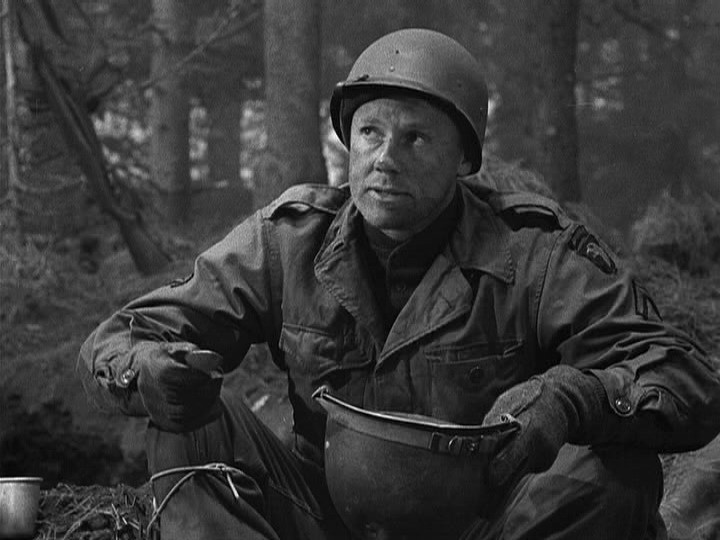
Van Johnson trying to make scrambled eggs in his helmet in “Battleground” (1949)

But Van Johnson wasn’t able to get in on the action. A car accident during the filming of “A Guy Named Joe” left him with a metal plate in his head which omitted him from going overseas to fight.

 I do like other war movies besides ones that star Van Johnson. My undying love for Van isn’t the reason I’m dedicating this post to him, but because the films that Van made give a wide variety of the different aspects of war.

 War Abroad:

A Guy Named Joe (1943): The infamous movie that made Mr. Johnson a star and oddly paired him as Irene Dunne’s love interest.  Bomber Pilot Pete, Spencer Tracey, dies on a mission and becomes the guardian angel for a young pilot named Ted.  Pete helps Ted fly difficult missions and gives him his blessing as Ted starts to romance Pete’s old girlfriend Dorinda-played by Irene Dunne. Not one character is named Joe in this movie. The title comes from American soldiers nicknamed “Joe.” Filming was halted when Van had his car accident. It took three months until he could return but Spencer Tracey insisted that they keep him in the film. To Review: It’s a good movie and you get a glimpse of Esther Williams in one of her first roles (not swimming). I will say, Spencer Tracey does ALOT of talking. Not a bad thing, it can just get tiring.

Phyllis Thaxter and Van Johnson as Ellen and Ted Lawson in “Thirty Seconds Over Tokyo”

Thirty Seconds Over Tokyo (1944): The true story about Dolittle’s raid on Tokyo after the attack on Pearl Harbor. The story follows Van Johnson playing real-life soldier Ted Lawson. Lawson and the rest of the men, including actors Robert Walker, Don DeFore and young Robert Mitchum, train for the mission and then drop bombs on Tokyo.  There are several scenes in the movie of Lawson marrying his wife Ellen, played by Phyllis Thaxter, their last times together and him remembering her. This may seem cheesy sometimes with lines like Him: “How did you get to be so cute?” Her: “I had to be if I was going to get such a good lookin’ fella.” But you have to consider the context. In Lawson’s book, he said the only way he got through the war was thinking about his wife. To review: This is one of my favorite World War II movies. Very patriotic, interesting, exciting and Van Johnson. Dolittle’s troops also trained at Lake Murray which is about an hour and a half from my house.

Battleground (1949): What can I say about my favorite war movie of all time? Van Johnson is a bit older and not just the fresh-faced innocent soldier. This time he’s a bit more cynical and has seen a lot more life as his character Holley. The innocent kid in this movie is played by Marshall Thompson. This is a star-studded film with actors like George Murphy, Ricardo Montalbon, John Hodiak and James Whitmore. The soldiers are fighting the Battle of the Bulge and dealing with heavy fog and lack of supplies. Since this film wasn’t made during the war, it isn’t as glitteringly patriotic. The soldiers are cynical, mockingly saying, “I found a home in the Army” and you watch the new recruits change from wide-eyed babes to hardened non-believers. To review: I’ve heard that this is one of the films that veterans consider the most accurate when it comes to World War 2 movies. It’s my favorite war movie as well as one of my favorite films. I don’t just like it for the lineup of attractive male stars but also the realism. The soldiers get downtrodden and tired. It’s exciting and nail-biting at times while other times make you want to cry. I think my favorite part is Leon Ames’ Christmas sermon about the “$64 question” if the men felt that the war was necessary or not.

War on the Homefront:

War Against Mrs. Hadley (1942): Van Johnson has a very small role, but never the less the film is great. The wealthy Mrs. Stella Hadley (Fay Bainter) thinks she is above the war and that everyone is making a fuss about nothing.  The attack on Pearl Harbor ruined her birthday and her family has the nerve to volunteer to help with the war effort. The widow thinks her husband’s status as a newspaper publisher will keep her son away from the fighting and keep her daughter away from canteens. She thinks she can work her way out of blackouts and rationing with the help of her government friends in Washington. However, Mrs. Hadley finds that even money can’t get you a break in the war. Van Johnson plays a young serviceman that Mrs. Hadley’s daughter, Pat (Jean Rogers), meets while volunteering at a canteen. They marry and mother disapproves. To review: I love this movie. Fay Bainter does a terrific job. Though Van has a small role, I think it illustrates how everyone wasn’t for the war when it started. I think it delivers a great message, even today. A country isn’t solely going to serve its people. You have to pitch in too.

The Human Comedy (1943): This is another early Van Johnson film. Mickey Rooney is really the star here. Fay Bainter (nice in this one) plays the mother of Mickey Rooney, Van Johnson, Butch Jenkins and Donna Reed. Her husband has recently died and Van is leaving to go fight in the war. The movie really shows how small-town life functioned during the war. Young Mickey Rooney helps old Frank Morgan run the telegraph office. Donna Reed and her friends go to the movies with soldiers that may never come home from overseas. To review: It’s a really poignant view of small-town American life during the war. Sometimes it’s beautiful and other times tragic. War movies don’t just have to be about the Pacific and European theaters. Wars also affect people at home. This paints an excellent, innocent portrait of this.

Who should Van choose? Gloria or June?

Two Girls and a Sailor (1944): The plot is very simple. June Allyson and Gloria De Haven are the Deyo Sisters, daughters of vaudeville parents. When they grow up they start their own nightclub act and entertain soldiers in their home after the show. A mysterious stranger donates an old warehouse to the girls so they can start a top-notch canteen. Performers like Jose Iturbi, Xavier Cugat, Lena Horne and Harry James all come and perform at this club. Van Johnson is the sailor torn between the two girls with soldier Tom Drake as his competition. The whole time the girls are trying to figure out who their mysterious donor is. To review: No one ever said every movie had to be as serious as “War and Peace.” This movie’s plot may be as light as a feather but it is so much fun. It’s actually one of my favorite movies. Lots of great musical performances and sweet moments.  The movie shows how people wanted to entertain and help soldiers on leave and unselfishly let them into their homes.

By no means are these the only great war movies out there, but it’s interesting to see how one actor’s films can span so many different aspects of the war.

I hope everyone has a happy and safe Memorial Day and remember the real reason of the holiday, not just a free Monday off from work or school. Have fun and be safe.

Check out the Comet Over Hollywood Facebook page 

Classic Movies in Music Videos: “Dark of the Matinee”

I’m starting yet another new feature on “Comet” about actors and actresses, or anything classic film related, in music videos.

The video featured today is Franz Ferdinand’s 2004 song “The Dark of the Matinee” from their self titled first album.

The video doesn’t have a classic actor in it, but there are several old movie clips.

If I can tell correctly from the quick flashes of the videos, I think I spotted Douglas Fairbanks, Sr. it what looks like “Sinbad the Sailor” along with an old western and silent movie that I couldn’t determine. I think it may have been a Pearl White movie.

What movies did you pick out?

Check out the Comet Over Hollywood Facebook page and Radio Waves Over Hollywood Facebook page.


Classic Film Beauty Tip: Jane Fonda Workout #34

Jane Fonda pregnancy workout record, Workout book and the workout VHS

What do classic film and a good work out have in common?

Jane Fonda.

In 1982, my mom bought the “Jane Fonda Workout” VHS tape.  Twenty-nine years later, my mother and myself are still doing the exercises along with Jane.

Arm circles (palms up, thumbs in) with Jane.

The workout tape isn’t something new to my family’s exercise regiment. When my oldest sister Erin was four-years-old (she is now 31), she would put on her leg warmers, leotard and a belt to look just like Jane.  When my mom was pregnant with my 26-year-old sister Andrea, the workouts helped her get her figure back quickly.

When I was little, my sisters and I would put on bathing suits and exercise with mommy. I’ve continued to work out with Jane for prom in high school and have forced myself to do the advanced exercises this summer to lose weight for swimsuit season and job interviews.

The workout has several cardio exercises and helps strengthen abs, legs, arms and butt.  The tape includes a 30 minute beginners exercise segment and an hour-long advanced workout (that will kick your butt). It’s probably one of the best work out videos out there.

This particular VHS is in high demand too. It hasn’t been released on DVD yet and is being sold for up to $72 on Amazon and Ebay.

I’ll admit that Jane Fonda isn’t the first people I think of when I hear “classic film.” I consider her one of the “new age” actors. Even her father Henry Fonda scoffed at the method acting she was learning about in acting school, according to her “Private Screenings” interview with Robert Osborne.

But Jane was born into Hollywood royalty and was getting her start in the late 1950s and 1960s. Once you get into “Barbarella”, “Klute” and getting her photo taken while sitting on North Vietnam guns, I start to lose interest.

Due to Jane’s politics, my grandparents were both a little shocked when my mom bought the work out tape. My mother’s father fought in the infantry during the Battle of the Bulge in World War 2, and my father’s dad went to West Point, fought in Korea and retired from the army in 1965.

However, politics aside, Jane Fonda gives an excellent workout!

Below is a sample of her advanced work out:

Several other actors during this time got into the fitness craze. Jane Powell had one called “Fight Back with Fitness” and Esther Williams swam once again in “Swim, Baby, Swim.” I haven’t had a chance to try either of these, but I’ll let everyone know if they work as well as Jane Fonda when I do.

Check out the Comet Over Hollywood Facebook page for the latest updates.

1939: Watching a year in films

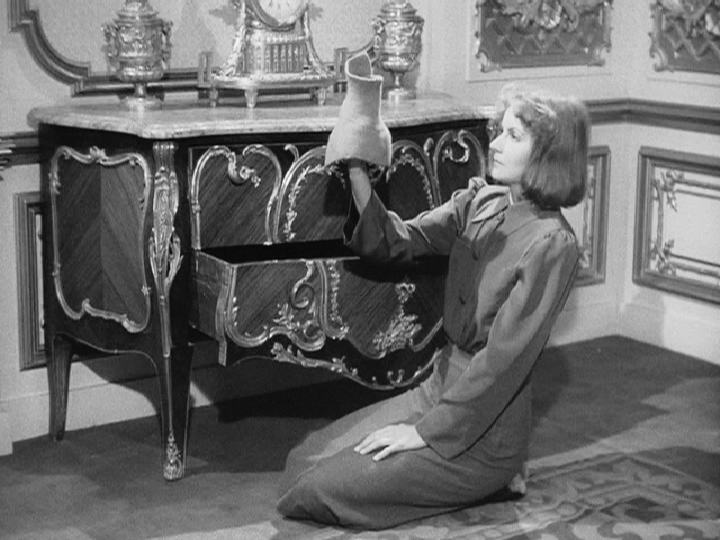
Greta Garbo in “Ninotchka” (1939)

1939.

To most, it’s just a year that occurred a long time ago.

To the Polish, it’s when the Germans took over the country with a Blitzkrieg.

To classic movie fans, it’s a year like no other.

Sure, there are several great films that came out from the 1920s to the 1950s. “Casablanca” came out in 1942. “White Christmas” lit up the screens in 1954. But neither of those years have a plethora of unforgettable movies that have a certain extra something added to them.

Gone with the Wind,” “The Wizard of Oz,” “Mr. Smith Goes To Washington” and “Ninotchka” are all givens when listing off excellent, flawless 1939 films.

But what about the other 515 American films put out in that same year?  Were they just as good?  I decided to find out.

In a crazed moment last summer, I decided to try to see every movie made in 1939. I had two criteria to make it a little easier to find the movies: They must be full-length movies, no short films; they must be American and they cannot be from television (despite being early in TV’s history, there were already experiments with made for TV movies in 1939).

I went on IMDB and got a full list of all the films from 1939. I clicked on each one, made sure it followed my requirements and then typed the title in alphabetical order into a table on Word. It took me several days to make my list due to my inefficient method.

 I was surprised to find that I had already seen 90 of the 515 movies. So far I have seen 106 and counting; this project won’t be completed any time soon.

 Through this process, I have discovered several gems during 1939 that are sometimes overshadowed by larger budget films.

 Some things I’ve discovered:

•Non-MGM films are overlooked:

-“The Rains Came” has a fantastic scene during the flood when the whole city crashes down.

-“Drums Along the Mohawk” gives Claudette Colbert the chance to be in a period film on the frontier and play alongside Henry Fonda. The movie looks fabulous in color.

High quality B movies:

-“Everybody’s Hobby” is a lot of fun with Henry O’Neil being driven crazy by his family’s hobbies.

-Freda Inescort gets the change to play a nice woman in “Beauty for Asking” with a young Lucille Ball.

Contributions to series films:

            –The first “Maisie ” movie starring Ann Sothern premiered. I adore Maisie Revere and her adventures. They are hilarious but also usually have a good moral to them. Jean Harlow was originally supposed to be Maisie before her death. I could definitely see this, but love the spark that Ann offers.

            -Two Dr. Kildare movies come out this year. “Calling Dr. Kildare” and “The Secret of Dr. Kildare,” which were the 3rd and 4th films in the series.  Laraine Day as Nurse Mary Lamont hops on board as a love interest to  Jimmy Kildare.

            -Glenda Farrell and Jane Wyman finish off the “Torchy Blane” series with the last three films.

            –Andy Hardy chases girls and has “man to man” talks with Judge Hardy in three films: “Andy Hardy Gets Spring Fever,” “The Hardy’s Ride High” and “Judge Hardy and  Son.”

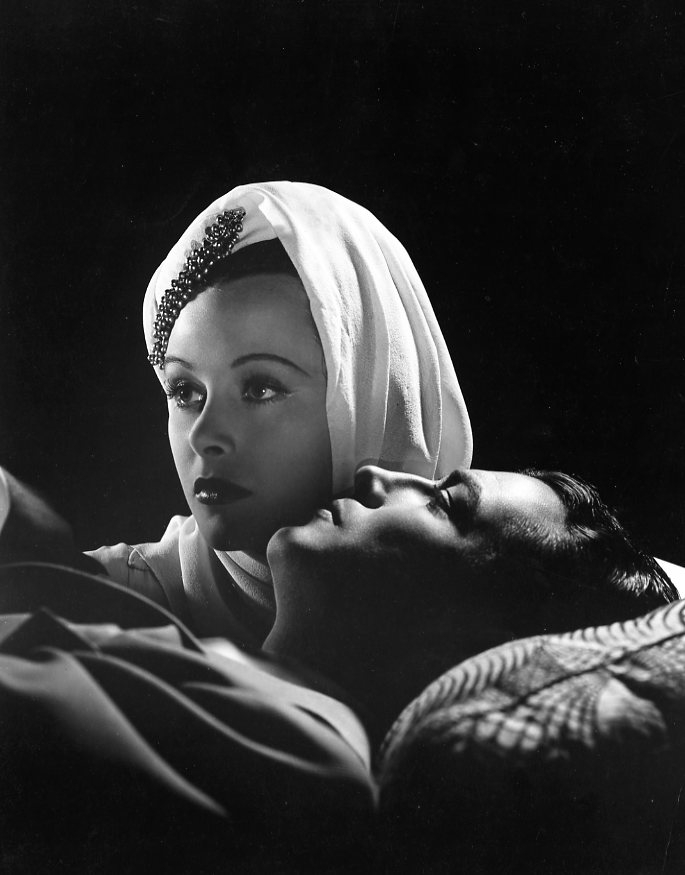
Hedy Lamarr and Robert Taylor in “Lady of the Tropics” (1939)

Stars get their first big break:

            –Fresh from “Algiers,” Hedy Lamarr was playing a love interest to Robert Taylor in her first MGM movie “Lady of the Tropics”

            -Greer Garson graced the screen in her first two films “Goodbye, Mr. Chips” and “Remember?”

            -Lana Turner is moving away from being Cynthia Potter on Andy Hardy and making a name for herself in “Dancing Co-eds” and “Calling Dr. Kildare.”

            -Olivia De Havilland finally gets the big break she was looking for in “Gone with the Wind.”

            -Jimmy Stewart had already made waves in “Of Human Hearts” but he really showed he had leading man power in “Mr. Smith Goes To Washington” and three other films that year.

Deanna Durbin is all grown up as she receives her first kiss from Robert Stack in “First Love.”

Joan Crawford is in color for the first time in “Ice Follies of 1939”

I could go on forever of the excellent movies (like Beau Geste, Of Mice and Men, and Real Glory) but no one wants to read 2000 words on a blog.

 All these movies had a certain magic and allowed several of our best stars to emerge. Where did it come from?

 According to the Turner Classic Movie documentary “1939,” 1939 was prolific for the United States in general. Roosevelt was helping the country work its way out of the Depression, and movies showed off this new wealth with stellar films. The industry began to take off for the next two years and then Pearl Harbor was attacked.

 World War II began for the United States and the growth Hollywood was once experiencing halted. The heyday of movies was forgotten as rationing and blackouts became a concern for the world.

After the war the movie industry would never return to the heights achieved in 1939 and American film tastes would change dramatically over the coming decades.

 I hope to discover more about the magic, and maybe see exactly what its source is when I complete all 515 films. It may be a large undertaking, but I don’t think it will be an unpleasant one.

Check out the Comet Over Hollywood Facebook page for the latest updates.