Many of us have movies that we watched repeatedly as children.
For my two older sisters and myself, it was the made-for-TV Disney horror comedy “Mr. Boogedy” (1986). My sisters saw it when it originally aired on Disney channel on a Sunday night in April of 1986. Eventually my parents recorded it off of the television to keep and we’ve had it ever since. I’ve watched it more times than I can count and can still quote along.
Our version of the VHS tape was recorded in the mid-1990s, complete with commercials for the New Mickey Mouse Club, an up and coming singer named Brandy Norwood and promos for movies such as “Angels in the Outfield” and “Batteries Not Included.” I’m re-watching this Pickens family favorite on the old VHS as I type.
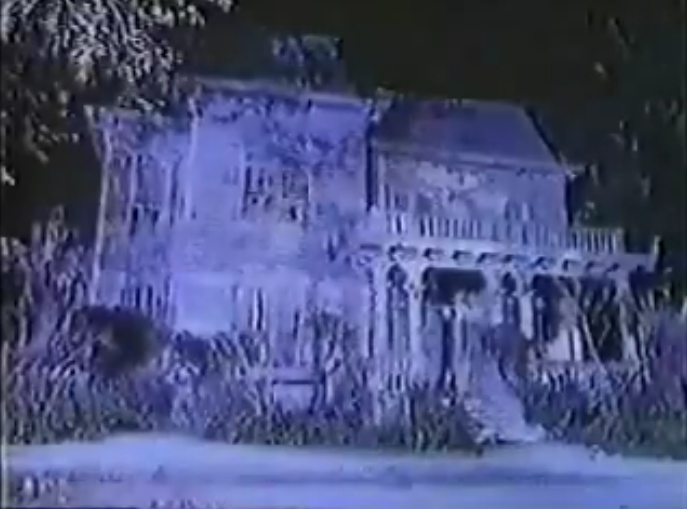
The Davis’s new home, a “definite fixer upper”
The 45 minute movie follows the Davis family who moves to small town Lucifer Falls, New England to live in a in their very first house. The parents- Eloise (Mimi Kennedy) and Carleton Davis (Richard Masur)- apparently didn’t see the house in person before purchasing and just went by what the realtor said.
The family plans to open a franchise gag store, Gag City. Carleton is full of practical jokes and frequently quips “just kidding.”
When they pull up to the decrepit old house with wind blowing and lightening striking, Carleton excitedly exclaims, “Just what the realtor said, a definite fixer upper.” The rest of the family isn’t too sure- which includes two sons Corwin (David Faustino) and Aurie (Benji Gregory) and daughter Jennifer (Kristy Swanson).
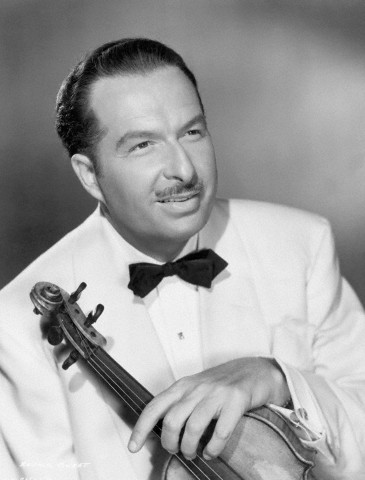
One of my favorite CDs to listen to while my hour long commute is “Maracas, Marimbas & Mambos: Latin Classics At M-G-M.” Along with ballads performed by Colombian singer Carlos Ramierz and toe tapping, show stoppers by Carmen Miranda, one of my favorite 1940s bandleaders multiple times on this album: Xavier Cugat. From the fun and humorous “Take it Easy” from “Two Girls and A Sailor” (1944) to the bouncing “Walter Winchell Rumba,” Cugat’s songs are jaunty and full of spirit.
What do you think of when you hear “1940s culture”? Big band music performed by the likes of Glenn Miller or Tommy Dorsey with teens swing dancing and Frank Sinatra crooning? Though big band and swing seem to characterize the popular perception of World War II era United States, one of the biggest fads in the United States in the 1940’s was Latin and Spanish culture.
Throughout the mid-1930s through the early-1950s, Hispanic themed music was popular and Xavier Cugat was the Rumba King.
Cugat, nicknamed Cugie, was arguably was the top Hispanic bandleader during this time, popularizing the rumba in the United States. Cugat’s popularity landed him into 17 Hollywood films, including “Luxury Liner” and “Holiday in Mexico” with Jane Powell, and “Thrill of Romance,” “Bathing Beauty” and “On an Island with You” with Esther Williams.
In most of his film appearances, Cugat was accompanied by his female singer, Lina Romay.
Cugat’s trademark was directing his musicians with his violin in one hand while holding a chihuahua in the other. Other times he may sketch a quick drawing while directing.
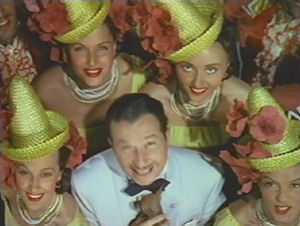
Xavier Cugat in “Holiday in Mexico” (1948) performing the song “Yo Te Amo Mucho-And That’s That”
Along with Cugat, other hispanic performers would be featured, but each had their own musical style and none overlapped. Carmen Miranda’s numbers were colorful and often comical, characterized by her detailed and elaborate costumes.
Pianist José Iturbi would be featured playing classical pieces, sometimes accompanied by his sister Amparo.
But the Latin fueled music didn’t stop with Cugat, Iturbi and Miranda. In “Easy to Wed” (1946), Esther Williams and Van Johnson sing in Portuguese–coached by Carmen Miranda–“Bonecu de Pixe,” accompanied by “Hit Parade” organist Hazel Smith. Williams said they were trained by Carmen Miranda and she felt ridiculous singing in Portuguese since she was butchering the language, according to her autobiography “The Million Dollar Mermaid.”
To a lesser degree, in most 1940s films, if the stars are in a nightclub, you bet they will be doing a rumba at one point. In “A Date with Judy” (1948) Carmen Miranda teaches Wallace Beery how to rumba so he can dance with his wife, Selena Royal, for their anniversary. Even Charles Laughton was doing the rumba with Deanna Durbin in “It Started with Eve” (1941).
But this Hispanic influence didn’t stop at the music during this time period: It translated into clothing, film themes and dances.
Fashion
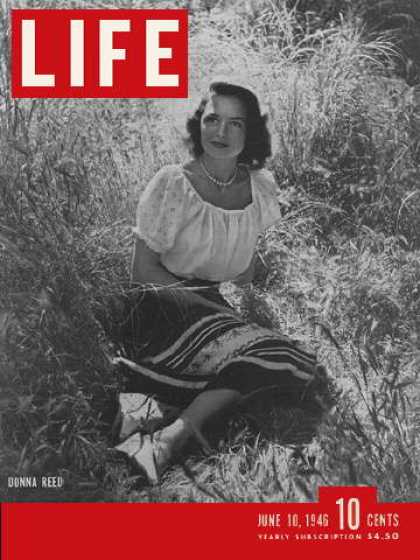
Donna Reed on a June 1946 cover of LIFE in peasant clothes
The Spanish and Latin influence was not just limited to night club entertainment but also rubbed off on fashion.
Popular 1940s summer fashions were influenced by Latin culture with peasant blouses, colorful fiesta skirts and espadrille shoes.
Jane Powell can be seen wearing this style in wore a in “Luxury Liner” (1948). The July 17, 1944, LIFE magazine cover features a model wearing what was known as the “Peasant Clothes.” She is wearing a lose, capped sleeve blouse, a flared striped skirt and wedged hemp shoes.
Fly Rio, Rio by the sea-o
Movies reflected the Spanish influence interest with fashions, music, location and even film title. Some films in the 1940s were:
Other movies like “Gilda” (1946) or “Romance on the High Seas” (1948) are located in South America and take part in Carnival.
Why was this Hispanic influence huge in United States pop culture?
The Good Neighbor Policy.
To state it as simply as possible-During Franklin D. Roosevelt’s presidency starting in 1933, the policy was created with the principle for the United States not to interfere with domestic affairs in Latin America, and the United States acting like “a good neighbor.”
Specifically with stars like Brazilian Carmen Miranda, her job was to star in patriotic films such as “The Gang’s All Here” to bridge the gap between the Americas.
However, the policy declined in 1945 after World War II ended and the Cold War began.
Cugat remained popular throughout the 1950s, but much like big band performers like Harry James or Tommy Dorsey, his popularity faded as the rumbas and dance music were less relevant and rock n’ roll started to emerge. He retired in 1971 after suffering a stroke.
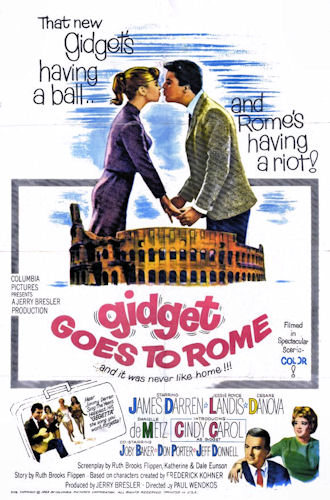
“Gidget Goes to Rome” isn’t the best of the three Gidget feature films, but it may not be the worst?
Mike Connolly described the film as a “teenage takeoff on La Dolce Vita,” according to a Feb. 20, 1963, news brief.
In this film, we join Gidget and her friends for a third summer. Gidget (Cindy Carol) is about to go off to college and is planning a trip to Rome, Italy, with her friends — Lucy (Noreen Corcoran) and Libby (Trudi Ames). She’s trying to convince her boyfriend Moondoggie/Jeff (James Darren) and his buddies — Judge (Joby Baker) and Clay (Peter Brooks) — to come along. But before they can head abroad, Gidget’s parents need some convincing. They will only let Gidget go if she has a chaperon. Judge enlists his rich, eccentric Aunt Albertina (Jessie Royce Landis). Without her knowledge, Gidget’s father (Don Porter) writes to an old friend he met in Italy during World War II, Paolo Cellini (Cesare Danova).
“Gidget Goes Hawaiian” (1961) is the worst of the Gidget feature films. And even though it’s ridiculous and has some stupid
The success of the 1959 “Gidget” film was followed by two feature films, three made-for-TV movies and two television shows.
As previously mentioned, I adore the film “Gidget” (1959) that spawned a beach culture craze. However, the film that followed two years later is abysmal.
In the film, Moondoggie/Jeff Matthews (James Darren) returns from college. He and Gidget spend a carefree summer together, and Moondoggie gives Gidget his fraternity pin. All is bliss until Gidget’s parents (Jeff Donnell, Carl Reiner) surprise her with a trip to Hawaii. Rather than being overjoyed, Gidget is outraged, because she will have to leave Moondoggie, who only has two weeks of summer vacation left. In a tizzy, she runs to tell him the bad news. Rather than being angry with her, Moondoggie is happy that she has the opportunity to go on this trip. Naturally Gidget assumes that this means he doesn’t love her, so she flies off the handle, gives him back his fraternity pin and decides she wants to go to Hawaii.
When I first started getting interested in classic films, my mom would get excited about movies she wanted to introduce to me. “Gidget” (1959) was one that she could hardly wait to show me.
Views of Sandra Dee in some of my favorite swimsuits and dresses from “Gidget.”
Sitting there on a Sunday night at age 14, I fell in love with this film. It’s an explosion of color on the gorgeous backdrop of Malibu beach. It features awesome surfing shots and has excellent cast filled with one-liners that are real gems. It’s the perfect fun-in-the-sun Southern California travelogue. To date, it also has one of my favorite film wardrobes.
The movie was pivotal in my film love and got me further entrenched in 1960s pop culture. I read up on famous surfers, researched surfer lingo, listened to the Beach Boys, plastered 1960s surf images around my room and hunted for bathing suits that gave off a 1960s vibe. Of course, I wanted to learn how to surf, which has still never happened since I live four hours away from the beach on the east coast.
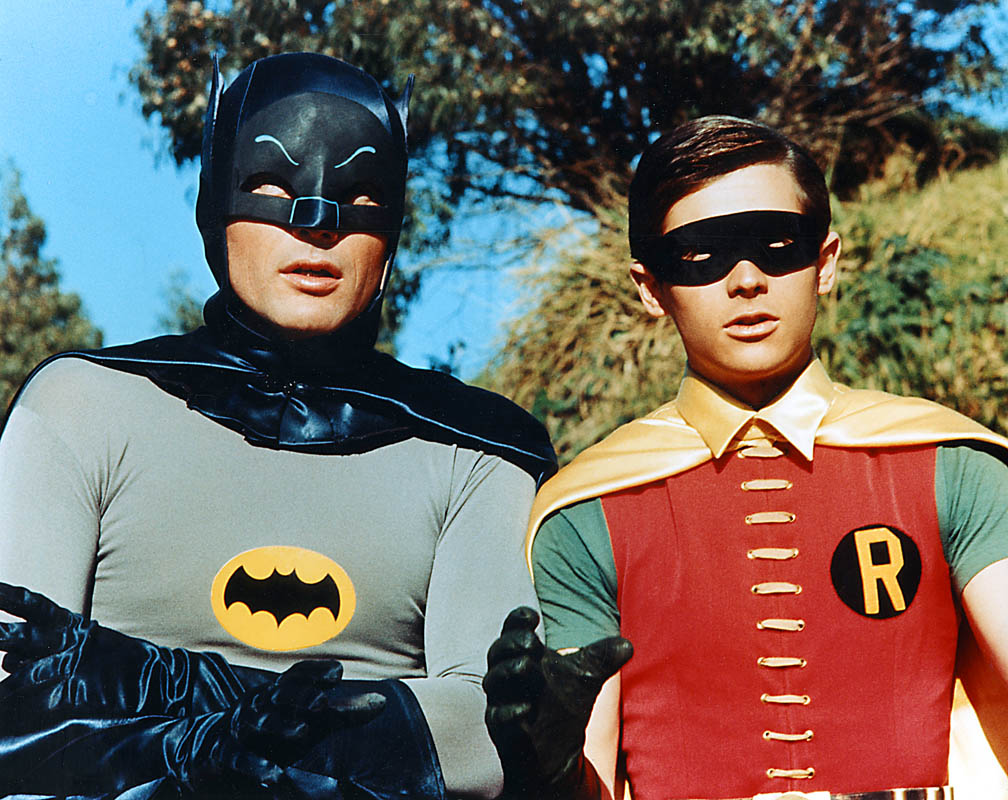
I may not have been alive when the 1966 “Batman” television show starring Adam West and Burt Ward was originally aired, but it is my favorite adaptation of the caped crusader. Ward was even one of my first celebrity crushes.
Adam West as Batman and Burt Ward as Robin int he 1966 “Batman” TV show.
This declaration frequently gets me in trouble. “It’s goofy. Batman isn’t supposed to be funny,” friends will retort. This is probably true. However, when life is too serious, hokey lines mixed with colorful word bubbles of “Bam!” and “Pow” popping up during fights can be balm for the soul.
I was first introduced to the television series when TVLand re-aired the show in 2001. I was 13 and starting to dig deeper into my classic film, television and music obsession that is still running strong today.
My mom remembered watching the show as a child and dressing up as Batman and Robin with her friends. She introduced me to the show, and like most nostalgic things my parents introduced me to, I was hooked.
The parody show ran originally from 1966 through 1968. Airing twice weekly for the first two seasons, each half hour show ended with a cliff hanger of Batman and Robin in peril with the announcer alluding that the “Worst was yet to come” and to be sure to tune in the “Same Bat time, Same Bat channel.”
The lines Batman said were delivered in the most serious manner but meant to be ridiculous and humorous. Robin’s character on the show is characterized by his exclamations of “Holy,” connected to what he and Batman were discussing.
Every night “Batman” aired, I would sit watching with what I called my “Holy List.” . And I tried to write down every single “holy” uttered during the show.
I still have my “Holy List,” and it’s sitting beside me as I write this. Creased with fold marks and with faded pencil writing, my list ended up being nine pages, some front and back. Included on the list are some of the Riddler’s puzzles scrawled in the margins.
A few of my favorite Robin “Holy” quotations:
-Holy purple cannibal
-Holy here-we-go-again
-Holy reverse priority
-Holy missing relatives
-Holy Fourth Amendment
-Holy Rip Van Winkle
-Holy diversionary tactics
-Holy uncanny photographic mental process
-Holy squirrel cage
-Holy one-track-bat-computer-mind
The show was a favorite of some of Hollywood’s top celebrities including Natalie Wood, Frank Sinatra and Cary Grant. All three wanted to guest star but were never able to be fit in.
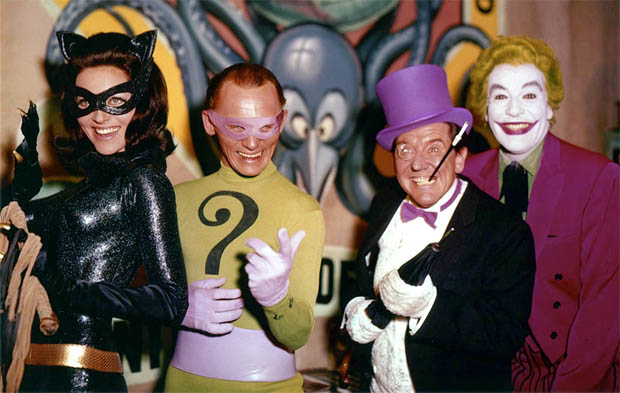
The primary villains on the show were the Riddler, played by Frank Gorshwin; the Joker, played by Cesar Romero; the Penguin, played by Burgess Meredith; and Catwoman, played by Julie Newmar, Eartha Kitt and Lee Meriwether (in the film).
Lee Meriwether as Catwoman, Frank Gorshwin as the Riddler, Burgess Meredith as the Penguin and Cesar Romero as The Joker in the 1966 “Batman” film. Julie Newmar and Eartha Kitt played Catwoman on the TV show.
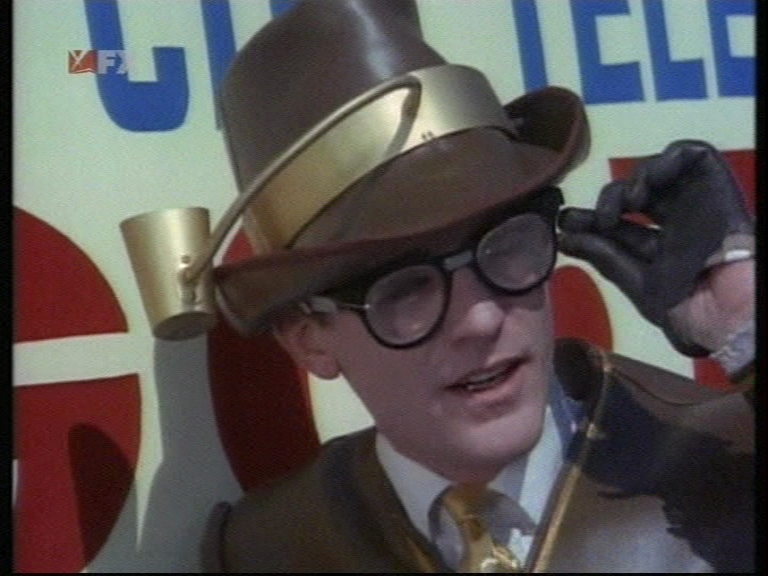
The show included celebrity guest stars who would play villains on the show including Tallulah Bankhead as the Blackwidow, Van Johnson as the Minstrel, Roddy McDowell as Bookworm, or Vincent Price as Egghead. Other times, stars like Jerry Lewis would appear when they were looking out the window as Batman and Robin scaled a wall.
Two other classic Hollywood stars appear on the show as regulars. Neil Hamilton plays Commissioner Gordon. Hamilton was in several 1930s films, usually playing a cad who jilted a woman. Alan Napier plays Alfred the butler. Napier was a character actor in the 1930s through the 1970s, appearing in films such as “Lassie” (1943) or “The Uninvited” (1944).
Roddy McDowall guest starred as “The Bookworm.”
On the show, Batman also had the most impressive gadgets including shark repellent (in the 1966 Batman film) or Bat sleeping gas used to knock out bad guys and take them back to the Bat Cave. However, while fighting crime, Batman always reminded Robin that safety and responsibility had to come first- often telling him to put on his seatbelt in the BatMobile or to do his algebra homework.
For years, I waited for the series to be released on DVD. I happily watched as seasons of my other favorite classic television shows such as “My Three Sons,” “Emergency” and “Adam-12” were released, and constantly wondered, “But what about Batman?”
When the announcement came earlier in 2014 that the television series would be released by Warner Brothers this November, I was overjoyed. I guess sometimes it’s the simple, material things that keep us going. Complications with rights prevented the release of the television show.
Now owning the first season of “Batman” on DVD, I found it just as delightful as I did when I was 13. The color and picture on the DVD is vibrant and looks great. My only qualm is that it looks like rather than releasing the full second season on DVD, the seasons are being split up in two parts- similar to how Warner released “My Three Sons.”
Whether you find Adam West cheesy as Batman or not, there is no denying that the television show is a pleasant and fun way to spend a spare hour.
This week, Comet Over Hollywood is celebrating Halloween with slightly more offbeat horror films.
(This contains spoilers to explain alternate endings)
When I was growing up, there were two movies my sisters and I begged for our parents to rent from Blockbuster: “Troop Beverly Hills” (1989) and “Watcher in the Woods” (1980)
While I watch “Troop” fairly regularly, it had been at least 15 or 20 years since I had seen “Watcher in the Woods.”
I only remembered three things about the Disney horror film: a girl wearing a blindfold appearing in mirrors, elderly Bette Davis and being scared after watching it.
In the film, Americans Helen (Carroll Baker) and Paul (David McCallum) move their two daughters to England. Jan (Lynn-Holly Johnson) is an intuitive teenager and Ellie (Kyle Richards) is her younger sister.
The family finds a large mansion for rent at a price that they can’t refuse, leased by elderly Mrs. Alywood (Bette Davis), whose daughter disappeared under mysterious circumstances 40 years ago.
Much to the shock of several villagers, Jan looks very similar to Mrs. Alywood’s missing daughter Karen.
Within the first few days of the family moving into the large home, Jan begins to experience strange disturbances: a window breaks by itself and leaves the shape of a triangle, she sees a blue circle in a river, she can’t see her reflection in a mirror, and a mirror breaks by itself and she sees a blindfolded girl pleading for help.
Jan sees a vision of Karen pleading for help in the fun house in “Watcher in the Woods.”
Ellie even names a new puppy Nerak (Karen spelled backward) after something “tells her to name it Nerak.”
Several other disturbances happen like something is protecting the Curtis daughters. At a motorcycle race, Ellie starts yelling for Jan and when Jan moves to her, a motorcycle lands and explodes where she was standing.
Jan tells Mrs. Alywood about the disturbances, who shares with her about the night Karen went missing in the 1940s. Karen was with three friends in an old church. The church caught on fire and the three other teenagers escaped, but Karen did not. However, the church was searched and her remains were never found.
The Curtis family, including Carroll Baker, moving to their England home.
When Jan tries to ask the other three people who were with Karen about what happened, they are all too afraid to discuss the events. Only one man, Tom Colley (Richard Pasco) will say what happened. Karen was being initiated into a secret society when the church caught on fire. When a bell in the church fell, she disappeared.
As Jan searches for answers, a spirit- or the watcher- is using Ellie to communicate with Jan to free Karen.
During an eclipse, Jan assembles the original three people at the church to free Karen.
Ellie enters, possessed by the “watcher,” and explains what happened on the night 40 years before. The watcher has been on Earth since Karen was sent to an “alternate dimension” by mistake.
Jan stands where Karen stood as everyone holds hands around her, and Karen reappears, still 17 years old, and is reunited with her mother.
Alternate ending
The ending in the theatrical release is not what was originally released in theaters in 1980.
“Even when they released it, Disney couldn’t decide how to end Watchers in the Woods,” Davis said in the biography, “The Girl Who Walked Home Alone: Bette Davis: A Personal Biography By Charlotte Chandler. “…Eventually they tried three different endings, but I haven’t the foggiest as to which they chose for posterity.”
The film was also rushed to theaters to correspond with Bette Davis’s 50th anniversary as a film star.
In the first theatrical ending, released for a week in New York City on April 17, 1980, the group still gathers in the chapel for a seance to bring back Karen. Rather than a beam of light coming over Jan and returning Karen like in the 1981 ending, an alien comes into the room, picks Jan up and takes her away.
Jan’s mom runs into the chapel asking whereher child is, and Jan reappears with Karen. Jan returns Karen to Mrs. Alywood, and Ellie asks Jan what happened. Jan gives vague answers, still leaving what happened unexplained.
Ellie: Where was she? Jan: I’m not sure. A place where people are changed into negative images. Ellie: How did she get there? Jan: An accidental exchange between the watcher and her. He needed my image to set her free. Ellie: So what happened to the watcher? Jan: Now the watcher can go home too, where ever that is *smiles into the distance and the film ends*
“I challenge even the most indulgent fan to give a coherent translation of what passes for an explanation at the end,” New York Times film critic Vincent Canby wrote in 1980.
Due to the cryptic ending, the film was poorly received and was said to not have an ending. “Watcher in the Woods” was pulled from theaters, re-edited and released again in 1981.
“We felt we had seven-eighths of a good picture, but the ending confused people,” said the Disney co-producer Tom Leech in 1981.
The revisions took 18 months and cost $1 million, but the film earned $1.2 million after the second release in its first week. Many theater owners said if the alien science fiction ending was changed, they would be willing to take the picture, according to an Oct. 22, 1981 article, “New ending gives Disney movie second chance” by Aljean Harmetz.
“The ending is seamless, satisfying, resolving the mystery,” wrote The Richmond Times-Dispatch after the second release.
My review:
While I was revisiting “Watcher in the Woods,” I couldn’t remember how it ended. I was probably six or seven years old the last time I watched the film, and I’m not surprised that I didn’t remember Karen being in an “alternate dimension.” Even now, I found that explanation of the missing girl mildly confusing. However, the 1981 ending is admittedly more clear than the 1980 ending.
Bette Davis, 72, in “Watchers in the Woods”
I think my favorite part was seeing Bette Davis, 72, and Carroll Baker, 49, late in their careers. Davis unsurprisingly gave the best performance in the whole film.
Though I’m not familiar with much of Lynn-Holly Johnson’s work, I believe Disney cast her because if you squint, she vaguely looks like former Disney star Hayley Mills.
I think my biggest complaint with “Watcher in the Woods” is, while I enjoyed it, the story seemed to move awfully slow for an 82 minute film.
Regardless, rewatching “Watcher in the Woods” was a pleasant trip down memory lane. I still found some parts genuinely frightening, such as when Jan is in the fun house, and Karen appears in every mirror pleading for help.
“Watcher in the Woods” is a fairly dark horror movie for Disney but it isn’t that scary. However if it is still semi-scaring me at 25, you can imagine why I don’t watch more frightening horror films.
This week, Comet Over Hollywood is celebrating Halloween with slightly more offbeat horror films.
Starting in the 1960s with Bette Davis and Joan Crawford in “Whatever Happened to Baby Jane?” (1962), famous actresses of the 1930s and 1940s who were now “past their prime” were cast in semi-campy horror roles.
Actress Tallulah Bankhead’s last film happened to be one of these horror films. Made in the UK under the title “Fanatic” and called “Die! Die! My Darling! (1965) in the United States, actress Stefanie Powers co-stars with Bankhead.
Directed by Silvio Narizzano, Bankhead plays Mrs. Trefolie whose son Steven died tragically. At the time of his death, Steven was engaged to Patricia Carroll, played by Stefanie Powers, but Patricia intended on breaking off the engagement.
Patricia kept correspondence with Mrs. Trefolie and decides to pay her a visit at her secluded home while she is in England with her fiancé Alan, played by Maurice Kaufmann. Alan warns her not to go alone, but Patricia doesn’t listen.
What Patricia plans to be a four-hour visit turns into several days trapped in Mrs. Trefolie’s home.
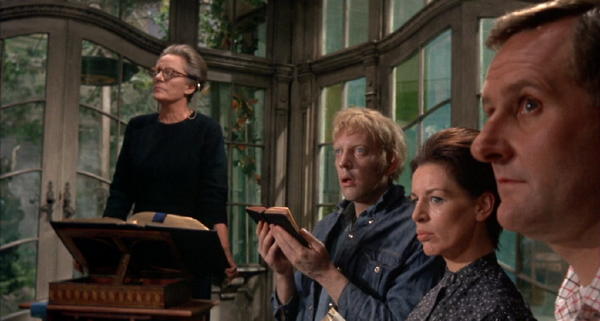
Mrs. Trefolie is obsessed with her son and is fanatically religious. For example, Trefolie insists Patricia stays until the next morning for a private church service at home which lasts 12 hours.
Mrs. Trefoile holds Sunday service at her home with her servants. (Bankhead, Donald Sutherland, Yootha Joyce, Peter Vaughan)
Dinner is served after the church service, but the food is plain, unflavored, vegetarian and they use no condiments, because “God’s food should be eaten unadorned.”
When Mrs. Trefoile notices a lipstick stain on Patricia’s glass, she is told to wash her makeup off. There also aren’t any mirrors in the house because they encourage vanity and sensuality.
Patricia is told to change immediately when she is wearing a red sweater, because it is the “Devil’s color.” Mrs. Trefoile believes that Patricia is her daughter-in-law, because she qualifies the engagement to Steven as marriage. In her religious beliefs, Mrs. Trefoile says Patricia could never remarry, even with a dead husband, because it is against God’s will and she is eternally wedded to Steven….though they never were married. Mrs. Trefoile also refuses to go to a local church, because the pastor remarried after his wife died several years before, believing he is forever married to the first woman.
When Mrs. Trefoile finds out Patricia is newly engaged and was planning to breakup with Steven before his death, she blames Patricia for Steven’s death, saying she killed him, and locks her in the house. Helping the elderly woman through all of this are her two servants, who hope to inherent her money.
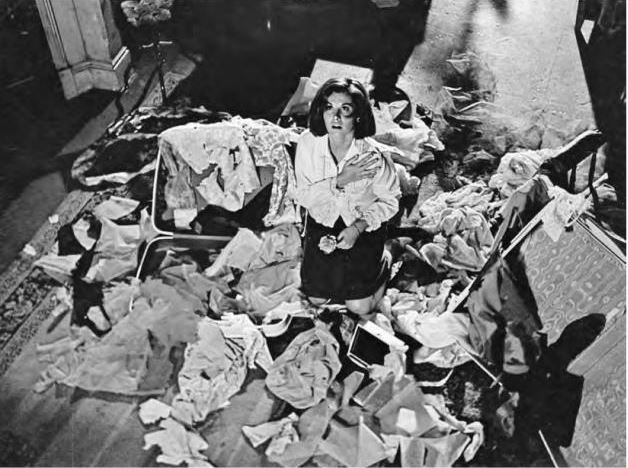
By depriving Patricia of food and locking her away in solitude, Mrs. Trefoile says she is trying to “cleanse Patricia’s soul.” This includes interrogating Patricia about her virginity and tearing up all of her beautiful clothing and jewelry. Mrs. Trefoile believes she hears her son tell her to murder Patricia, and she sets out to do so.
Stefanie Powers’ clothes destroyed by Mrs. Trefoile and her maid, Kate.
Not only is “Die! Die! My Darling!” Bankhead’s last film, but also her first horror movie, according to the LIFE magazine article, “One Old Trouper Comes Back” by Conrad Knickerbocker.
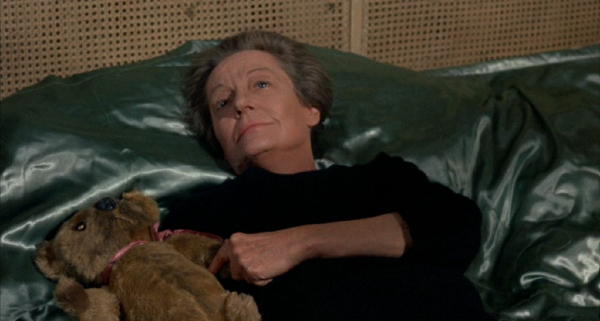
The film is based off the novel “Nightmare” by Anne Blaisdell. The English horror movie is enjoyable. I thought the religious fanaticism added a level of intrigue, depth and craze to Bankhead’s character, rather than the usual overbearing mother role. Mrs. Trefoile’s obsession with her dead son is exhibited by believing that his soul is in the house and responding to her, his photos everywhere and cuddling his teddy bear as she sleeps.
Although Bankhead’s character says she doesn’t believe in vanity, in the film, we see scrapbooks of Mrs. Trefoile in her younger years and costumes hang in the basement, suggesting that at one point she was an actress. (One of the photos shown in the film is Bankhead in her stage role in “Little Foxes.”)
Admittedly, I was rather frustrated while watching “Die! Die! My Darling!” There are several moments where you think Stefanie Powers can overtake this rickety old woman who keeping her captive, but she flails around and fails.
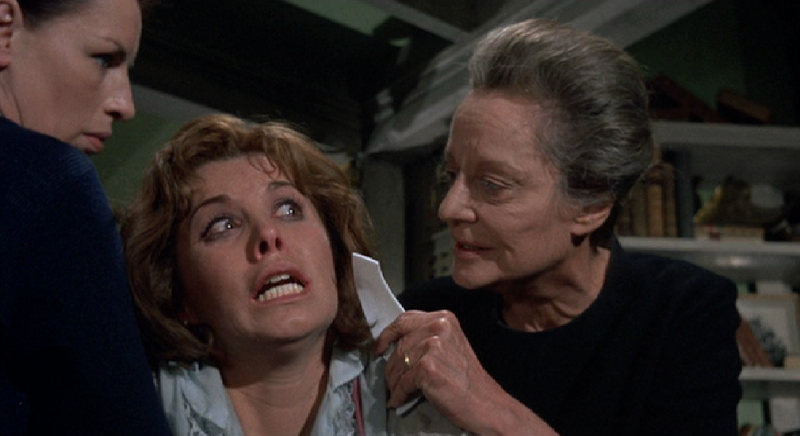
Mrs. Trefoile threatens to cut Patricia’s face so she will no longer be attractive to men. Maid Kate holds Patricia so she can’t escape.
Powers’ character had a sharp tongue but was too weak and uncoordinated to fight Bankhead’s character alone, and this frustrated me greatly. However, while I was frustrated with Powers in the film, I realized that was how her character was written in the script.
Another odd thing about “Die! Die! My Darling!” was the music. For the first half of the movie, the soundtrack was quirky and almost comedic harpsichord music. The music could be comparable to the 1960s English TV show “The Avengers,” starring Diana Rigg. However, as the cat-and-mouse torture between Powers and Bankhead escalated, the music became more serious and exciting.
Mrs. Trefoile talks to her dead son while holding his Teddy bear.
I believe my favorite character in the film was 30-year-old actor Donald Sutherland in one of his first film roles. Sutherland played a worker at Mrs. Trefoile’s home who had special needs. I was a little disappointed he wasn’t in the film more, and his character wasn’t given much of a purpose.
“Die! Die! My Darling!” is a little more quirky and humorous than other horror movies starring actresses like Joan Crawford or Bette Davis. However, while I wouldn’t rank the film higher than “Whatever Happened to Baby Jane?” (1962), “Hush, Hush Sweet Charlotte” (1964) or “Strait-Jacket” (1964), the cat and mouse interactions between Bankhead and Powers were intriguing and made for an enjoyable Friday evening film.
Sidenote: When I watched this movie with my parents, my Dad said all he could think about was the Metallica song “Die, Die, My Darling.” The song “Die, Die, My Darling” was originally written by The Misfits and later covered by Metallica.
We all have at least one guilty pleasure film that is so terrible, but we inexplicably love it.
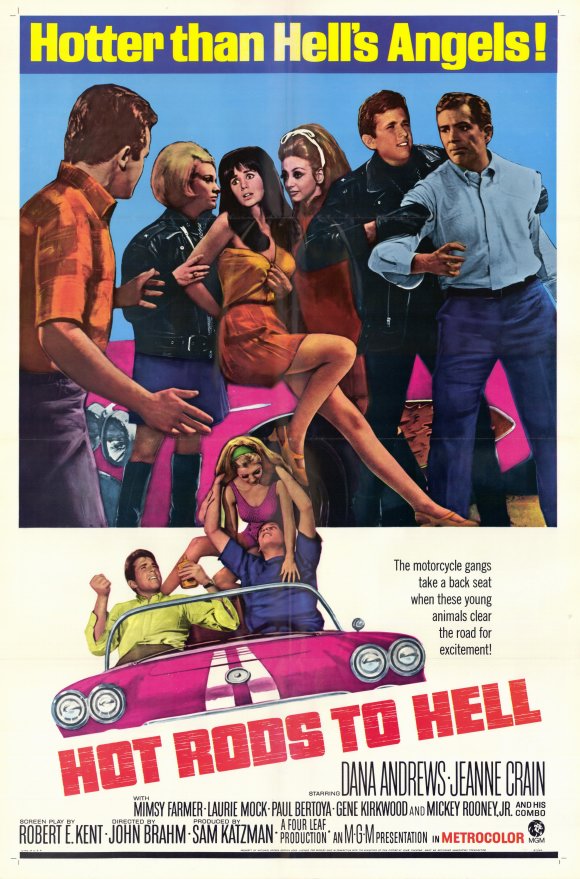
I have several, and one of them is the 1967 drama/thriller “Hot Rods to Hell.” It is one of those films where you laugh at the ridiculous lines and moments but have a desire to rewatch it constantly.
Originally made for TV but released in theaters, the camp film stars veteran Hollywood stars Jeanne Crain, as Peg Phillips, and Dana Andrews, as Tom Phillips.
This is one of four films Andrews and Crain made together during their Hollywood careers that spanned the 1940s through the 1970s.
Their first film together was movie musical “State Fair” (1945) where Crain plays a farm girl named Margy who meets Andrews, a reporter named Pat, and falls in love with him at the state fair.
“State Fair” ends with the two happily running towards each other and kissing in the street.
I like to imagine that “Hot Rods to Hell” is Margy and Pat 22 years later with their children.
The movie follows the couple and their two children Tina, played by Laurie Mock, and Jamie, played by Jeffrey Byron, as they move from their New England home to run a motel in California after Tom is in a serious wreck.
The film begins with Tom driving home from a business trip to celebrate Christmas with his family. A reckless driver causes the accident and leaves Tom with a back problem and some mental issues. Due to the wreck, he no longer wants to drive and can’t listen to Christmas music.
Tom’s brother arranges for the family to move to California to run the motel, believing it will benefit Tom’s physical and mental health.
Drag racing teens running cars off the road: Ernie, Gloria and Duke played by Gene Kirkwood, Mimsy Farmer and Paul Bertoya.
As the family is driving through the desert in their station wagon, they encounter teenagers drag racing a modified 1958 Chevrolet Corvette.
“Run them off the road, Duke. Run them off the road,” shouts the teenage girl Gloria, played by Mimsy Farmer, as she is perched on the back of the car as they race.
The teenagers are children of local, wealthy farmers who don’t care what the teens do. The teenagers have a constant thirst to get their “kicks” but nothing will satisfy them.
“What kind of animals are those,” Tom shouts as they are nearly run off the road. “They are insane.”
Peg covers her face with her hands and screams, “Tom I can’t stand it!”
Tina, who desperately wants to be a hip teenager, defends them by saying that all the kids drag race.
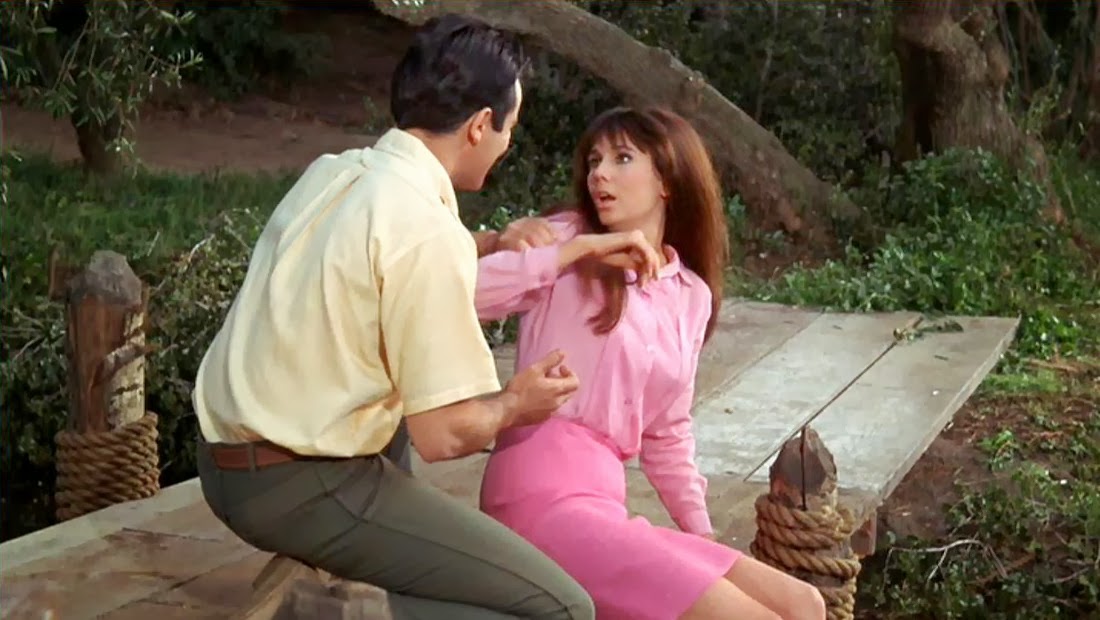
The majority of the 92 minute movie involves Duke, played by Paul Bertoya; Gloria and Ernie, played by Gene Kirkwood, harassing the Phillips family on the road. They tailgate the family through small towns, try to run them off the road and follow them to a picnic ground, where Duke attempts to seduce Tina.
Tina is frightened but fascinated with the bad kids.
When the Phillips finally arrives at the motel, rather than finding solace, there is more trouble.
The motel and the adjacent a bar and grill are inhabited by the drag racers and other teens like them. The previous owner allowed the teenagers to drink and have trysts in the motel. It makes you wonder if Tom’s brother did any research on the spot before encouraging the Phillips to move there.
When the drag racers discover the Phillips are the new owners, they do all they can to make them leave; knowing Tom will sanitize the spot.
The family is terrorized by the drag racers.
Frightened and disgusted with what they find, the Phillips decide to stay the night at the hotel before figuring out what their next move should be.
Tina, still fascinated with Duke, goes to see him at the bar, almost like she is thinking, “Oh these people have been terrorizing my family all day. I think I’ll go hang with them.”
Jealous Gloria tells Tom and who tries to strangle Duke.
“Tina how far would you have gone,” Peg yells at her daughter. “Are you going to end up in a motel room with any man?!”
The family leaves the hotel to get the police, and the drag racers continue to follow the Phillips family.
“Oh they’re back again,” Jamie screams. “They want to crack us up!”
After even more harassment, Tom finally and successfully stands up to Duke and Ernie.
Tom places his car in the middle of the road in a game of “chicken” and the family hides. Duke and Ernie swerves to miss the car and crashes.
The crash causes an immediate attitude change and the boys tell Tom they won’t give him anymore trouble. The film ends with Tom deciding to go back and run the motel properly.
“Hot Rods to Hell” is truly a terrible movie, but I can’t get enough of it.
Duke tries to seduce Tina, played by Laurie Mock.
The hilarious lines and the over reacting to the situations make it a true guilty pleasure and cult classic.
But at the same time, it’s sort of sad. To see 1940s and 1950s stars Dana Andrews and Jeanne Crain late in their career and performing in this type of film is disheartening.
Crain was a top star at 20th Century Fox in the 1940s and 1950s and was nominated for an Academy Award for Best Actress for her role in “Pinky” (1949).
Dana Andrews previously starred in top notch films such as the noir “Laura” (1944) and the post-war drama “The Best Years of Our Lives” (1946).
However, Andrews had children in college so he had to work, said the Carl Rollyson biography “Hollywood Enigma: Dana Andrews.”
While the old glamorous and glittering Golden Era of film was fading, the top stars were retiring or resorting to cult films like this one to continue to make money.
To compare, Joan Crawford was killing people with an ax in “STRAIT-JACKET” (1964) and Lana Turner was drugged with LSD in “The Big Cube” (1969).
While I marvel at the beautiful films in the early careers of these stars, I also can’t get enough of their late careers. Classic Hollywood’s career downturns have turned into our guilty pleasures.
Do you know your neighbors?
The family with the dog that barks all night, the child who rides through your yard on his bike or the woman who sends flowers when a relative dies?
Stuck in his wheelchair with a broken leg, James Stewart’s character in Alfred Hitchcock’s “Rear Window” (1954) got acquainted with his neighbors through a telephoto lens.
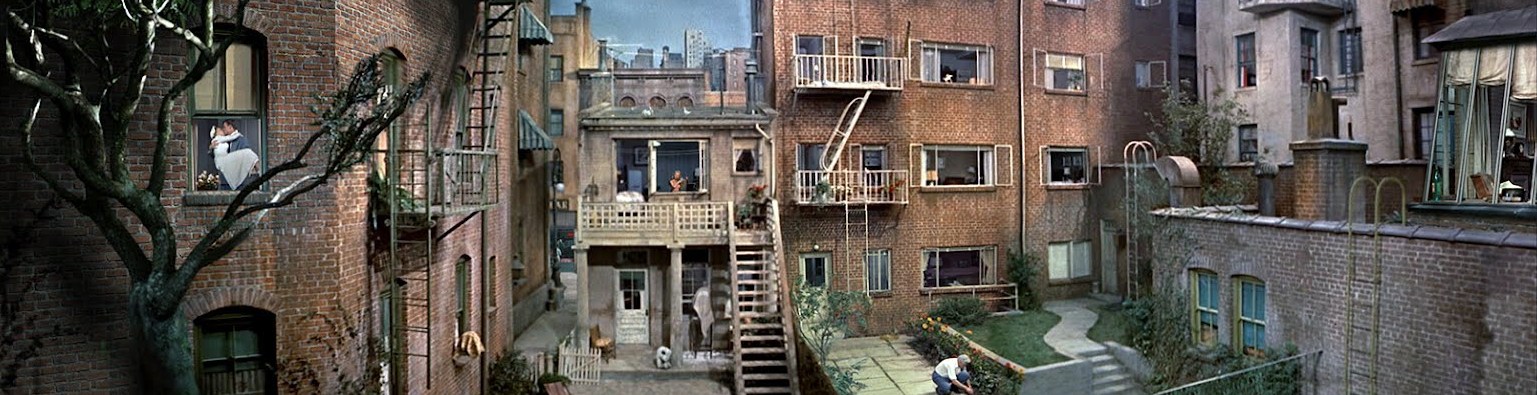
In a New York flat, the injured photographer passes the hours watching other apartment dwellers who live around a courtyard.
While spying through his zoom lens, L.B. “Jeff” Jefferies ( James Stewart) may have stumbled across a murder. Lars Thorwald (Raymond Burr), who lives across the courtyard, had an invalid wife who suddenly no longer exists and Jeff wants to know why.
While James Stewart in his wheelchair and Grace Kelly in her Edith Head gowns take center stage-flanked by Wendell Corey, Thelma Ritter and Raymond Burr- those being peeped upon are equally important in this “Is this woman dead?” story.
But who were these people? As “Rear Window” celebrates its 60th birthday in Aug. 2014, premiering on the big screen Aug. 4, 1954, let’s take a look at who “Miss Torso,” “Miss Lonelyheart” and the amorous newlyweds are.
The Neighbors:
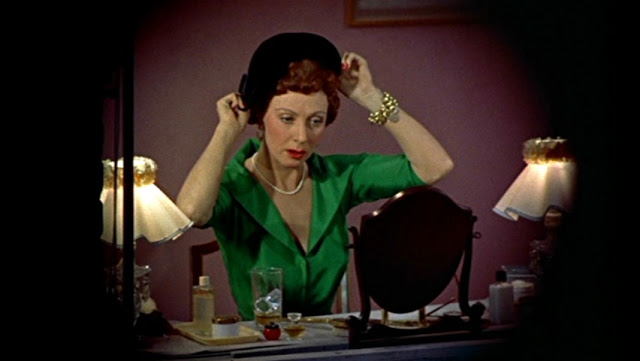
Judith Evelyn plays Miss Lonelyheart. She prepares to go on a date.
-Miss Lonelyheart: Miss Lonelyheart is the middle aged woman in the courtyard who longs for love but has yet to find it. Jeff watches her pantomime that she is on a date and then cry that she doesn’t have a lover. When she finally has a date, the man aggressively tries to make love to her and she pushes him from the house and sobs.
Miss Lonelyheart is played by Judith Evelyn who also performed in the films “The Egyptian” (1954), “Giant” (1956) and “The Tingler” (1958). Evelyn had a career on Broadway in the plays “Craig’s Wife” as Mrs. Craig in the 1947 revival and “The Shrike” as Ann Downs in 1952. Evelyn won the Drama League’s Distinguished Performance Award in 1942.
Evelyn was married to Canadian radio performer Andrew Allan. Allan, Evelyn and her father were aboard the Athenia in 1939 and were traveling through the Irish Sea, the body of water that separates Ireland and Great Britain. The ship was torpedoed by a German submarine on Sept. 3, 1939, three days after the Germans invaded Poland. This was the first British passenger liner sunk by Germans. Six out of 85 passengers survived, including Allan and Evelyn, but her father died.
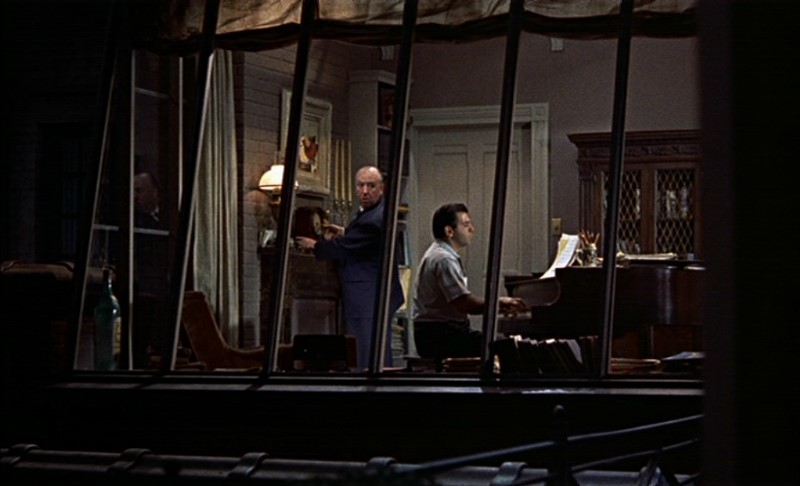
Ross Bagdasarian plays the “Songwriter,” pictured here with Alfred Hitchcock in his signature cameo.
-The Songwriter: The Songwriter has the lavish apartment with large windows. His piano music serenades the apartment courtyard for much of the film as he composes. It’s in the Songwriter’s apartment where director Alfred Hitchcock makes his cameo. The Songwriter’s composing stops Miss Lonelyheart from committing suicide…and distracts Lisa (Grace Kelly) from doing some investigative work.
The songwriter is played by Ross Bagdasarian, who actually was a composer. Bagdasarian is also known as “David Seville,” father and creator of Alvin and the Chipmunks. He wrote the “Chipmunk Song” (Christmas Don’t Be Late) in 1958, which he won a Grammy Award. Bagdasarian was also the voice of David Seville in the 1960s “Alvin and the Chipmunk” cartoon.
Along with the Chipmunks, Bagdasarian wrote songs including “Come On-A to My House” made famous by Rosemary Clooney and “Alfi and Harry,” which was the theme of the Hitchcock film “The Trouble With Harry” (1955).
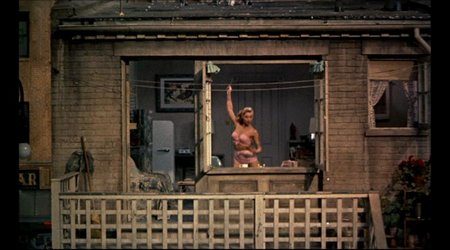
Georgine Darcy plays the dancer “Miss Torso”
-Miss Torso: Miss Torso is the sexy ballet dancer who lives directly across the way from Jeff. She dances her way through her morning routine, entertains men and is happy to see her military boyfriend at the end of the film.
The pretty blond dancer is played by Georgine Darcy, who studied with the New York City Ballet. Her mother, however, encouraged her to be a stripper to make a “fast buck,” according to her 2004 obituary.
When cast as Miss Torso, she didn’t know who director Alfred Hitchcock was. She was paid $350 for the role, and Hitchcock encouraged her to get an agent and study acting, but she didn’t. She was only in a handful of films and television appearances from 1954 to 1971. She was married to actor and singer Byron Palmer from 1974 until her death in 2004.
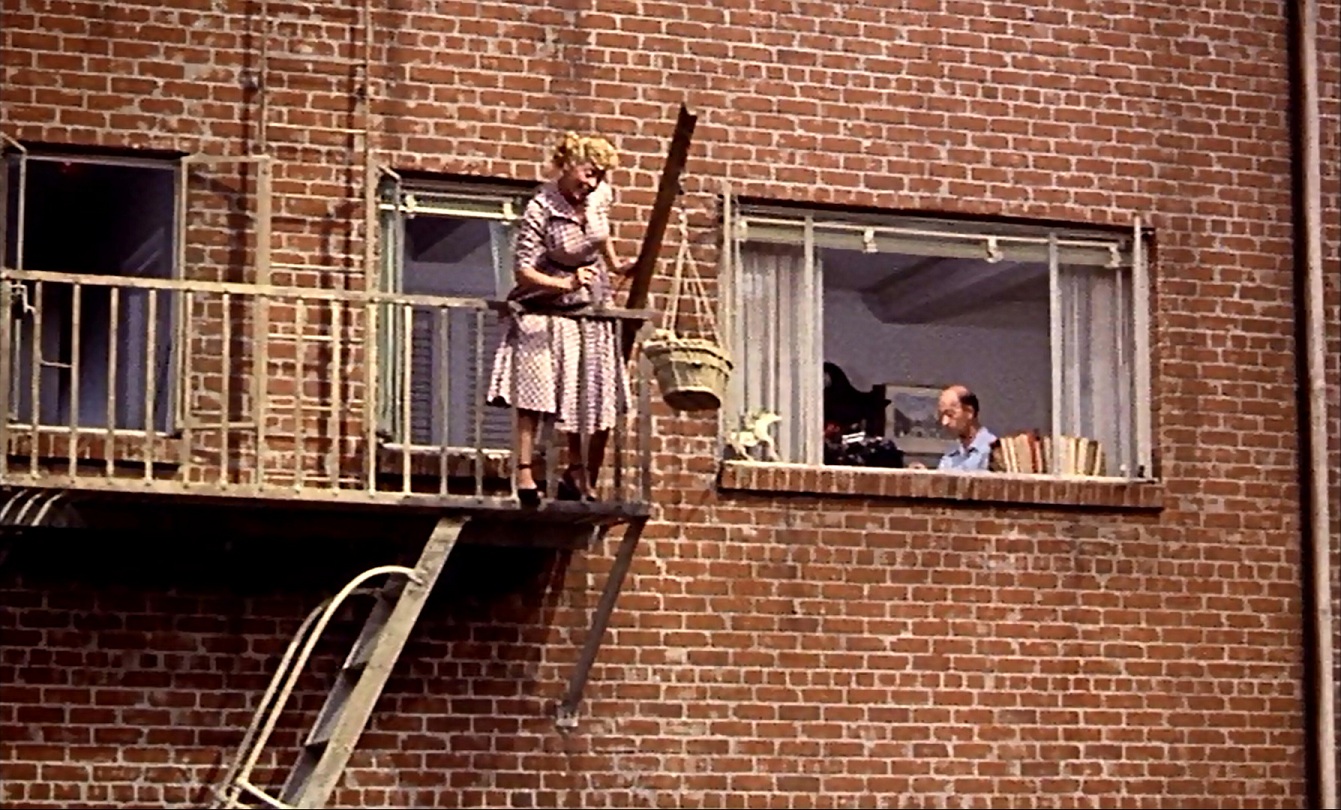
Sara Berner lowers their dog down into the courtyard. Frank Handy sits inside the apartment.
-The Couple on the Fire Escape: On hot summer evenings, this couple sleeps on a mattress on their fire escape. Each night, the wife lowers their small dog down into the courtyard in a basket and then lifts the dog back up in the basket. The dog serves as a turning point in the film.
The husband is played by Frank Cady, best known for his role as Sam Drucker on the TV shows “Petticoat Junction,” “The Beverly Hillbillies” and “Green Acres.”
Though best known for his television roles, Cady was also in several films including “Ace in the Hole” (1951) and “The Bad Seed” (1956).
The wife is played by Sara Berner, who was a voice actor in several Warner Brothers animated shorts from 1933 to 1946. Berner was the voice of Jerry the Mouse in “The Worry Song” when Tom danced with Gene Kelly in “Anchors Away” (1945).
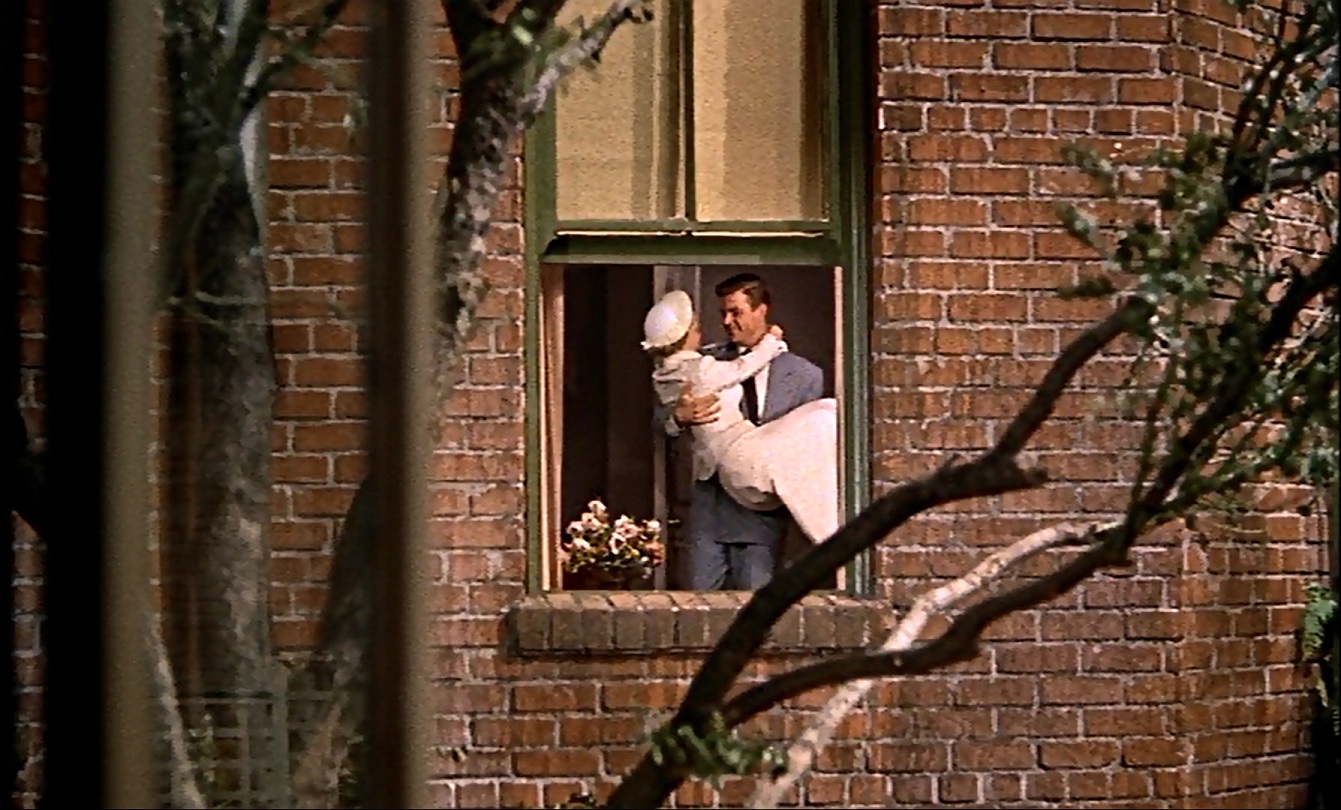
Rand Harper and Havis Davenport play the newlyweds.
-The Newlyweds: One of the first neighbors in the courtyard we are introduced to are the newlyweds. They are moving into their new apartment as the film starts. The landlord shows the couple the apartment, and the two keep trying to steal kisses as the landlord shows them from room to room. When he finally leaves, the husband carries his new bride through their threshold. The shade is drawn to their apartment for a great deal of the film, implying that they are….getting acquainted.
The husband is played by Rand Harper who played several bit parts in “Sabrina” (1954), “The FBI Story” (1959) and the TV show “Sea Hunt.”
The wife is played by Havis Davenport who played bit roles in film and TV such as “A Star is Born” (1954). She retired from acting in 1957.
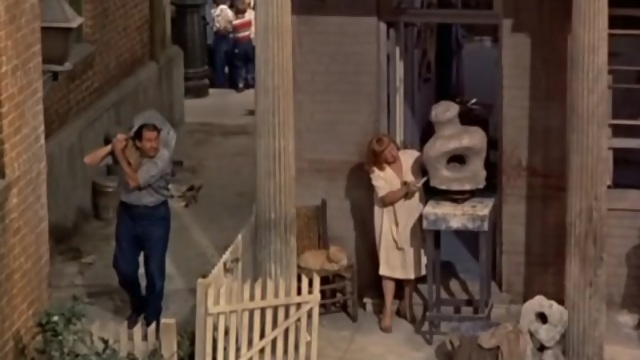
Jesslyn Fax plays the sculpting neighbor.
-Sculpting Woman: The sculpting neighbor uses a hearing aid, appears to maybe be a bit of a busy body and is sculpting odd shapes in the courtyard. At the beginning she tries to say good morning to mysterious Thorwald (Burr) and he practically sneers at her.
The sculpting woman is played by Jesslyn Fax. This was not her only Alfred Hitchock project. Fax appeared in a bit role in “North by Northwest,” three “Alfred Hitchcock Presents” episodes and two “Alfred Hitchcock Hour” episodes.
Fax appeared in several films and television shows including “Music Man” (1962), “Kiss Me Deadly” (1955), “An Affair to Remember” (1957), “The Best of Everything” (1959) and an episode of “I Love Lucy.”
Added bonus: When James Stewart talks to his editor on the telephone, the voice is actor Gig Young.









 Comet Over Hollywood