Guilty Film Pleasures: A Summer Place (1959)

Troy Donahue and Sandra Dee in “A Summer Place” (1959)

I have three main guilty pleasures: ridiculous, flashy clothes; Krispy Kreme doughnuts and trashy classic films.

I love pre-code 1930s films because of their quick witted lines, snappy pace and how down trodden women somehow pull themselves out of horrible situations-whether  they are adjusting to life after Sing Sing or secretly bringing up an illegitimate child.

During the 1940s and early 1950s, not many movies were as delightfully dirty as these pre-code films. There were a few salacious films, but viewers have to sometimes read between the lines to pick up on scandal.

 But then the late 1950s happened. Actors like Connie Stevens, Sandra Dee, Tab Hunter and Troy Donahue emerged and were perfect to play teens that constantly got into trouble.

“Susan Slade”, “Parrish”, “Rome Adventure” are just a few deliciously trashy films that came out during the late 1950s and late 1960s.

However, one of my all time favorite trashy 1950s films is “A Summer Place” (1959).

Family dinner at Pine Island. Cut the awkwardness with a knife.

The film revolves around two families: the Hunters and the Jorgenson’s.

Sylvia and Bart Hunter (played by Dorothy McGuire and Arthur Kennedy) own a summer resort on Pine Island in Maine. They live there year round with their son Johnny (Troy Donahue). The Pine Island home was owned by Bart’s family, but once he took over it fell into shambles. Bart is an alcoholic but Sylvia sticks by him in the interest of their son.

This particular summer Ken Jorgensen (Richard Egan) returns to Pine Island with his wife and daughter (Constance Ford and Sandra Dee). Ken was a lifeguard at Pine Island when he, Bart and Sylvia were teenagers. We soon find out that Ken and Sylvia were romantically involved during those summers but she married Bart because he was wealthier.

Ken and Sylvia start to secretly meet and rekindle their romance…and their children begin to follow this suite.

 Midnight meetings in the boat house, nosey old women, divorce on the grounds of adultery and teen pregnancy are sprinkled throughout the film.

This may sound like a run-of-the-mill 1950s trash fest, but there are so many things that make it very special:

Troy Donahue: Troy was a big star in the 1950s but he wasn’t running on much more than his looks. His emotions usually run from A to A. But I do feel that in “Summer Place” we get the special treat more emotion from Troy, including a tear running down his face.

Beulah Bondi: She doesn’t have a large role but she is wonderful as the busy body, but understanding aunt of Bart. My favorite line of her’s is when she first sees Sandra Dee, “Hardly proper to be so pretty. Seems all the nice girls I know have bad skin, are too fat, too thin or have thick ankles.”

•I love Constance Ford’s role as Helen Jorgenson. She does a wonderful job making you hate her. I love how she does ridiculous things like trying to strap down her daughter with a bra and de-sexing clothes. At one point Richard Egan gives a powerful speech about Helen and her prejudices. During the film’s screening at Radio City Music Hall, the audience gave a standing ovation at this part of the film, according to IMDB.

•There are so many great scenes.

            -Molly’s bra floating in the water after her dad throws it out the window.

            -Johnny awkwardly holding up Molly’s skirt after she is cut by a thorn.

            -Helen examining Molly to make sure she is still a “good girl” after having to spend the night on the beach with Johnny due to a boating accident.

            -Molly telling Johnny the plot of “King Kong” right before he um…deflowers her.

            -And my favorite part: Helen pushing Molly into a plastic Christmas tree. While still on the floor Molly looks up and says, “Merry Christmas Mama.”
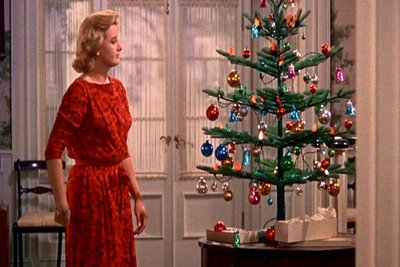
Wait for it….

 “Summer Place” is also a special movie to me, because I have had the good fortune to be able to read the book written by Sloan Wilson the film was based off. It is a great read and one of my favorites and gives more insight of why the different characters are why they are.

The book explains that Helen and Ken married out of loneliness. After being jilted by Sylvia, Ken worked to be rich and successful to spite her. Helen’s father is Ken’s business partner and goes home with him for dinner where he meets Helen. They are both lonely and decide to get married. Helen is very sheltered and taught by her parents that sex is dirty-it’s a wonder Molly was ever born.

We learn that Sylvia liked Bart and was more of a tease to Ken. She married Bart because her recently wealthy father had gone bankrupt. The night they were engaged, Bart’s grandfather found out they had also lost all of their money too. Not only do Bart and Sylvia have a son, Johnny, they also have a daughter in the book.

Bart is an alcoholic because he has an inferiority complex. He is one of the idle rich who has little purpose in life. He marries a woman who he knows doesn’t love him which only makes matters worse. The book describes the only time Bart felt he had any purpose in life was when he was a commander of a ship during World War II. After the war, his alcoholism increased.

Lastly, in the film Molly wants Johnny to protect and help her when she finds out she is pregnant. In the book, Molly is more pissed than anything. She likes him still but is mad about the situation. At the end when the two stay on Pine Island together to start their life, you get the feeling that Johnny loves Molly more than she loves him.
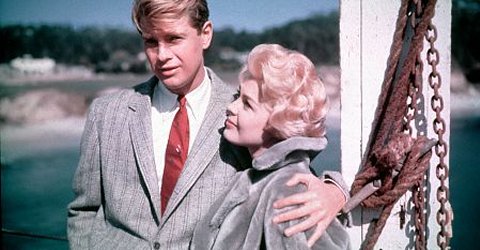
Excited about their life of unplanned parenting!

Before I watched this movie to review, my dad had never had the pleasure of seeing it. I would like to leave you with some of his reactions I wrote down during the movie:

– “Whatever you do that woman shoots dogs, I wouldn’t trust her!” –Referring to Dorothy McGuire’s role in “Old Yeller”

-“My god, a bunch of crabby people!”-referring to the people in the Pine Island resort

-“Now I know why they don’t sleep together, surprised they have any kids!” (after Mr. and Mrs. Jorgenson fight about sex and race)

-“They’re going to do a pelvic exam?? Oh my god!”

– “Probably mom’s out hanging from her heels spying in a tree.”-While Molly and Johnny meet

-Dad making Psycho music noises about mother waiting for Molly to come home.

-Movie: “Frank Llyod Wright designed our house.” Dad: “That’s exactly what I was thinking!” (seriously)

-“I may never like that music again. It gets on my nerves after awhile”-referring to the ‘Summer Place’ theme

Check out the Comet Over Hollywood Facebook page, follow on Twitter at @HollywoodComet or e-mail us at cometoverhollywood@gmail.com

Strangers on a Train under the stars

Favorite part of the movie

In the past year I’ve read several posts about other bloggers going to screenings of classic films.

Angela at ‘Hollywood Revue” went to see “White Christmas” during the holidays and I thought it sounded so nice when everyone sang along at the end of the movie. Let me tell you, if I had been there I would have cried.  Marsha at ‘A Person in the Dark’ recently saw a screening of “Daisy Kenyon” featuring a speaker who was a personal friend of Joan Crawford’s.

Unfortunately, local movie theaters where I live don’t show classic films. The only classic films I know of shown in the Greenville, S.C. area are Moonlight Movies at the Peace Center.  At the end of May and the beginning of September, the Peace Center shows films every Wednesday for four weeks.  I have never been able to go until now, because I was away at school.

This week they showed “Strangers on a Train” (1951) starring Robert Walker, Farley Granger and Ruth Roman. I didn’t want to miss it  one of my favorite Alfred Hitchcock movies.

The film is about two strangers who meet on a train. Walker tries to convince Granger to swap murders of people they they don’t care for. Granger doesn’t take Walker serious until his wife, Miriam, ends up dead.

Moonlight Movies is kind of a “cool rich person in Greenville” thing to do, rather than a gathering of a lot of classic film lovers like some movie screenings.  There were several talking  (including the ones who came 30 minutes late and sat right in front of us) and some old drunk people behind us.

Regardless of the distractions, seeing the “Strangers on a Train” again confirmed a few things:

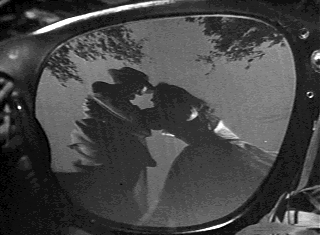
Glasses shot

-Robert Walker is really a wonderful actor. I think of him as the shy, sweet and awkward boy in “Since You Went Away.”  Seeing him in “Strangers on a Train” where he is insane is such a juxtaposition.  Walker does SUCH a good job in this movie. I hate that his life ended shortly after.

-Miriam’s murder, which we only witness through the reflection of her glasses, is one of my all time favorite film scenes and demonstrates Hitchcock’s mastery of camera.

-At one point Ruth Roman and Farely Granger are walking through a museum and then stop and turn around. In one shot they are walking through a real museum and the next standing in front of a screen that is showing a film of a museum, making it look like they are there.

At the end of the film everyone clapped and I asked my sister and her boyfriend what their reactions to the film were (they aren’t avid classic film watchers). Here were their responses:

Sister: “There shouldn’t be drinking at the films and there should be an age limit for who attends.” -not really what I was looking for

Sister’s boyfriend: “I wanted them to use the sister with glasses as a decoy to catch the bad guy.”

Overall, it was a relatively nice experience. I would like to go to a screening in a movie house one day, but this is a good start.

Here are a few photos from the evening:

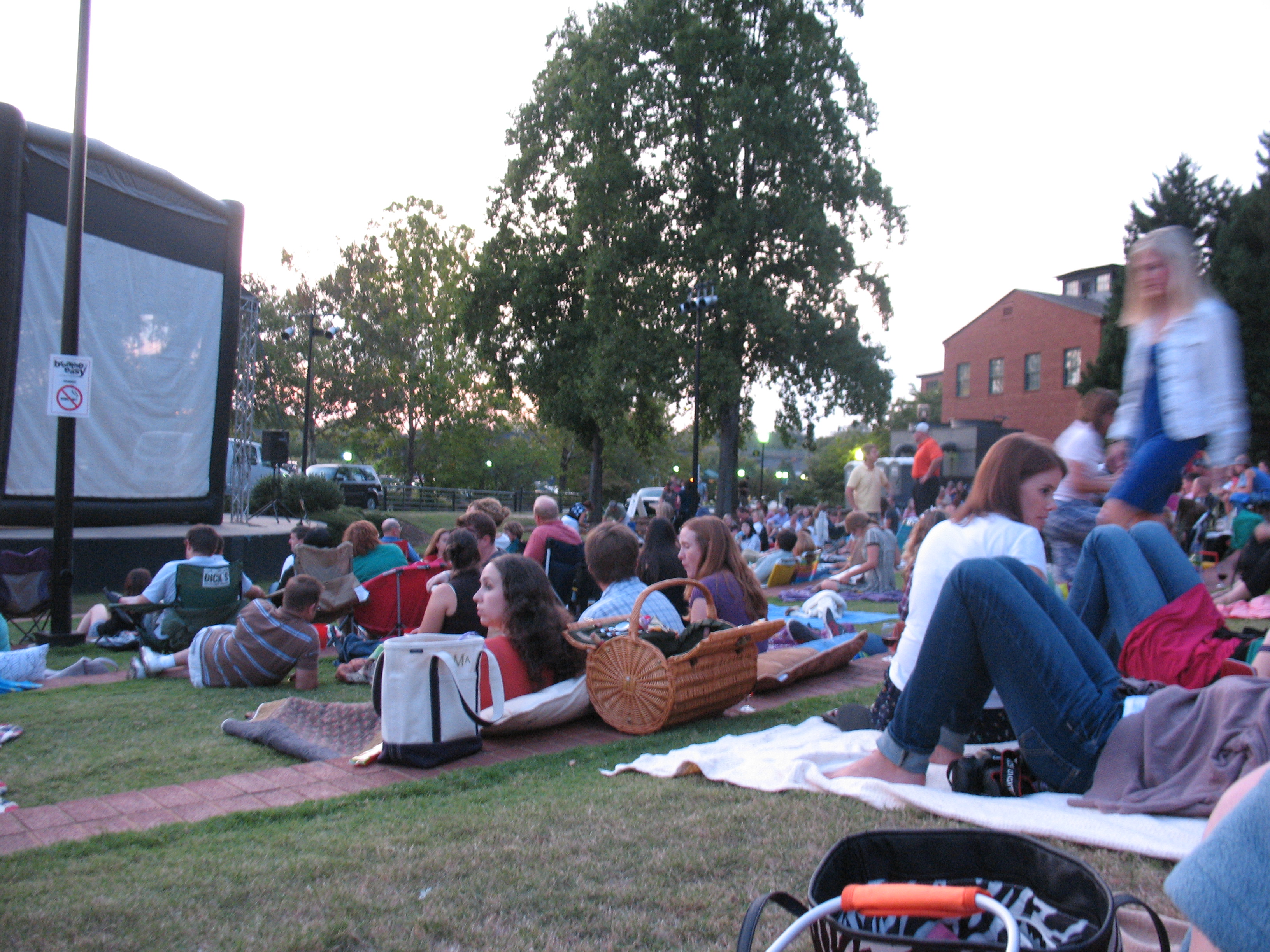
Before the movie started before it got dark. It was pretty crowded. (Downtown Greenville at the Peace Center Amphitheater)

Sitting in my little chair, excited for the movie to start.

My sister and her boyfriend that I dragged along.

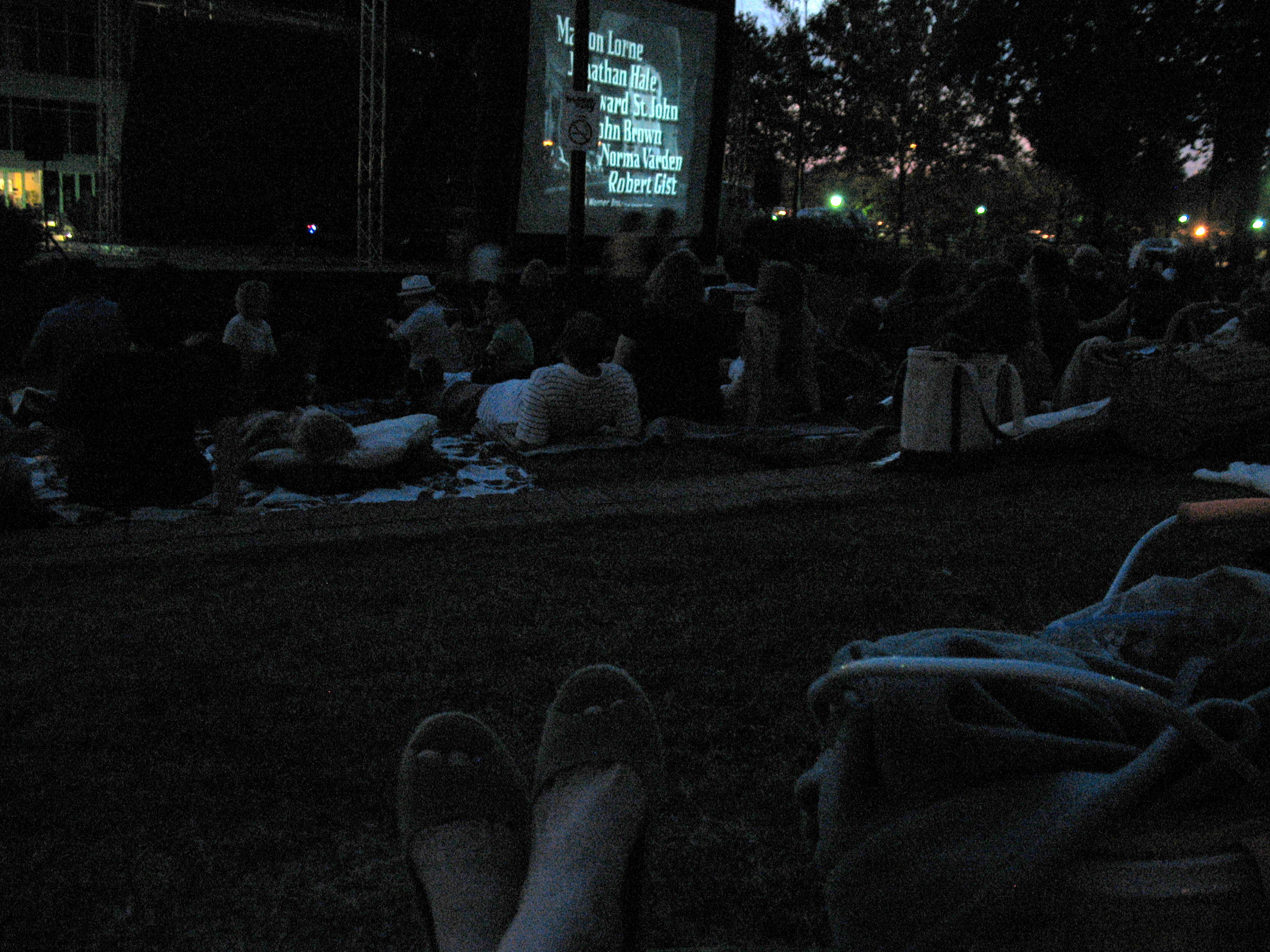
The movie is starting!

Check out the Comet Over Hollywood Facebook page  or follow on Twitter at @HollywoodComet

Take me out to the ball game: Athlete Biopics

Biographical films have been a popular film genre since the 1920s. There are films about actors that you may have never heard of, scientists who did great things and musicians who died young.

It is no secret Hollywood took creative liberties with the lives of famous people in their films. To quote George M. Cohen after seeing “Yankee Doodle Dandy” (1942), “It was a good movie. Who was it about?”

Life stories were changed to make a most interesting film, but also to protect individuals who were still living when the film was made.

Along with the fabricated biographical information, I have also wondered how similar actor and the person they are portraying look alike.

I am starting a series of posts that will compare the appearances of the actor and the role they are playing. I thought it would be fun and interesting.

I’ll be dividing these up by categories (i.e. presidents, actors, writers), making athletes my first one.

Baseball:

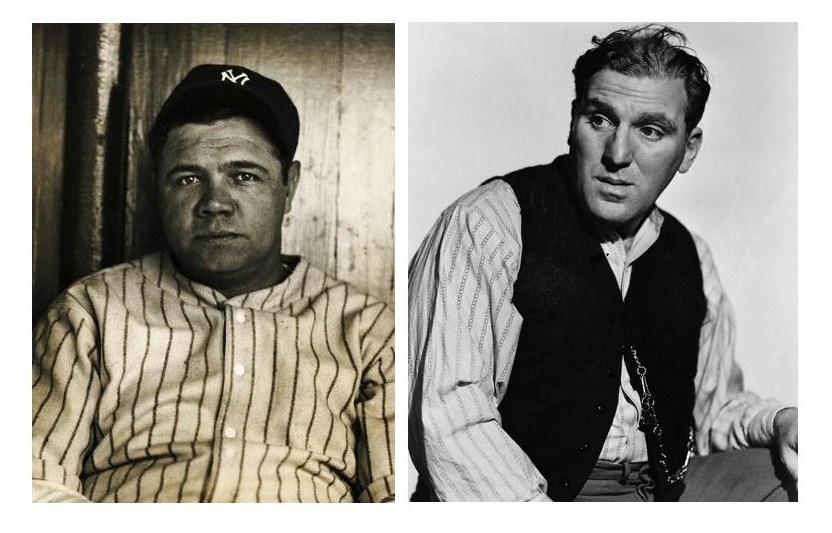
Babe Ruth and William Benedix

The Babe Ruth Story (1948): I haven’t seen this movie, but I have heard it’s not very good. William Benedix plays Babe Ruth. Benedix is great as a comedian or a bad guy, but I have a hard time picturing him in a biography. Appearance: They both have that “big oaf” look, but don’t look very much alike.

Lou Gehrig and Gary Cooper

“Pride of the Yankees” (1942):  This is one of my all time favorite movies. I love Teresa Wright, who plays Gehrig’s wife, and Gary Cooper does a wonderful job in the film. Very touching and sweet. Appearance: Cooper looks fairly similar to Gehrig. This is probably one of the best “look-a-likes” as far as biopics go.

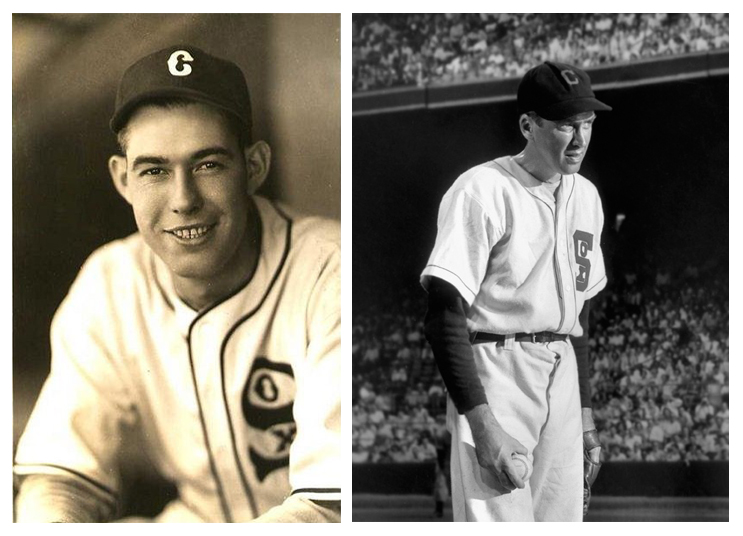
Monty Stratton and James Stewart

“The Stratton Story” (1949): This film stars June Allyson and James Stewart as a husband and wife. Stewart is baseball player Monty Stratton who loses his leg during a hunting accident.  The film follows his struggle to attempt to play baseball again with his prosthetic leg. Appearance: Other than the fact that both men are skinny, I don’t think they look very much alike.

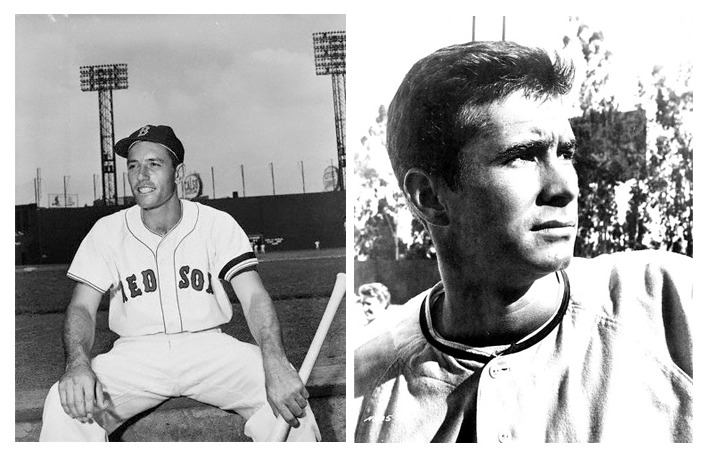
Jim Piersall and Anthony Perkins

“Fear Strikes Out” (1957): Perkins plays Jim Piersall (still living) who has a nervous breakdown while trying to please his father (Karl Malden). I don’t think these two look alike at all. Appearance: Piersall is the attractive, fresh all-American guy while Perkins is much more dark and brooding.

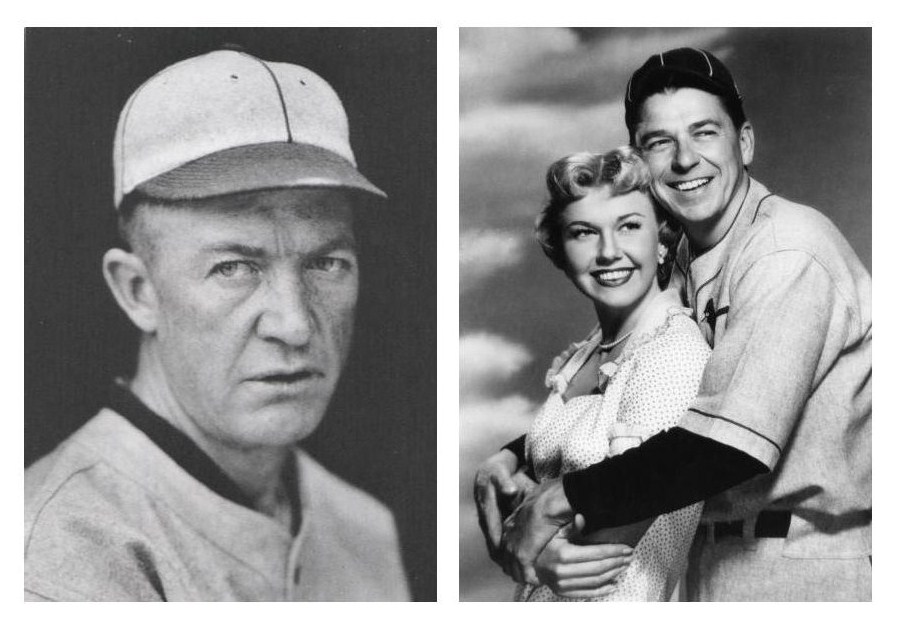
Grover Cleveland Alexander and Ronald Reagan

“The Winning Team” (1952): The film starts off happy as Aimee (Doris Day) and Grover Cleveland Alexander (Ronald Reagan) get married.   Just as Grover is rising to the top as a pitcher, he suffers an eye injury which impairs his vision. Grover is bitter and turns to alcohol which makes him unreliable.  Appearance: I don’t think  Alexander and Reagan look anything alike. Alexander has harsh, rough features and you can tell he went through a tough time. Reagan has clean looks. I think Grover Cleveland looks more like Harry Carey, Sr.

**I know I left out “The Jackie Robinson Story” (1950), but he played himself so no look-a-like comparison.

Football:

Knute Rockne and Pat O’Brien

“Knute Rockne: All American” (1940): My family isn’t fans of Notre Dame football. But Knute Rockne is the only reason I might be, because I really like this movie. The film covers the life of the football player and coach. Rockne is known as “America’s most renowned football coach” and also popularized the forward pass.  However, it drives me crazy when they pronounce his name as ‘K-nute’ in the movie instead of ‘Newt.’ Appearance: Along with Gehrig and Cooper, Rockne and O’Brien look very similar as well. Rockne has a rougher look, but they have similar facial features. It appears O’Brien was given a false nose for the role.

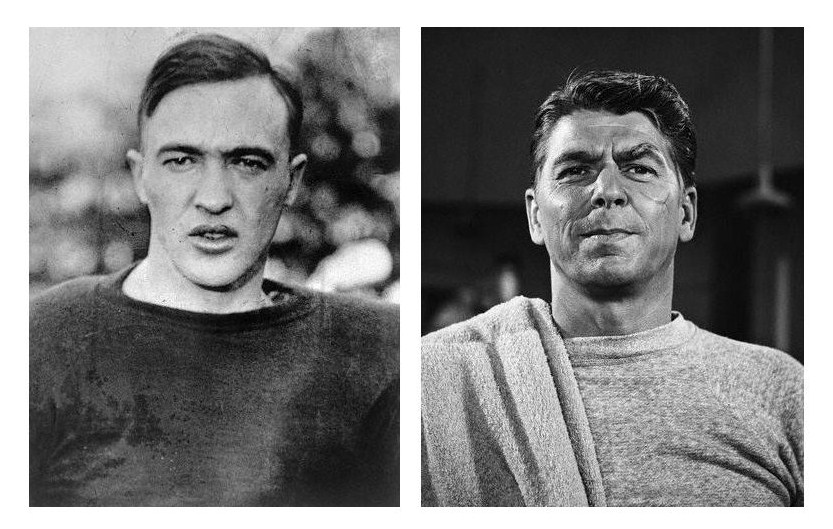
George Gipp and Ronald Reagan

“Knute Rockne: All American” (1940): Also from “Knute Rockne,” Ronald Reagan plays George “Gipper” Gipp. Gipp is known today as one of the most versatile athletes playing halfback, quarterback and punter.  Gipp died at age 25 in 1920 of either pneumonia or strep throat (the cause is debated).  His death spawned the famous quote by Knute Rockne, “Win just one for the Gipper.” Appearance: Ronald Reagan does a great job in the film, but looks nothing like the Gipper. Gipp was much bigger and had very broad features. I can’t think of a 1940s actor that he looked like.

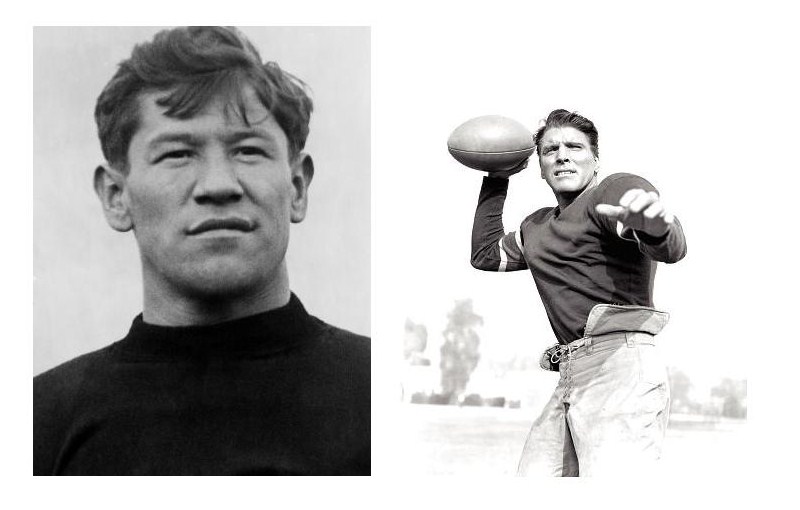
Jim Thorpe and Burt Lancaster

“Jim Thorpe-All American” (1951): Burt Lancaster plays Jim Thorpe, early 1900s football player of American Indian ancestry. Thorpe was All-American in 1911 and 1912 at Carlisle University. He was in the 1912 Olympics for decathlon and pentathlon and was awarded two gold medals that were taken away. Appearance: Thorpe and Lancaster don’t really look alike, but they have similar facial shapes. Thorpe is bigger while Lancaster is thinner and most likely shorter.

Boxing:

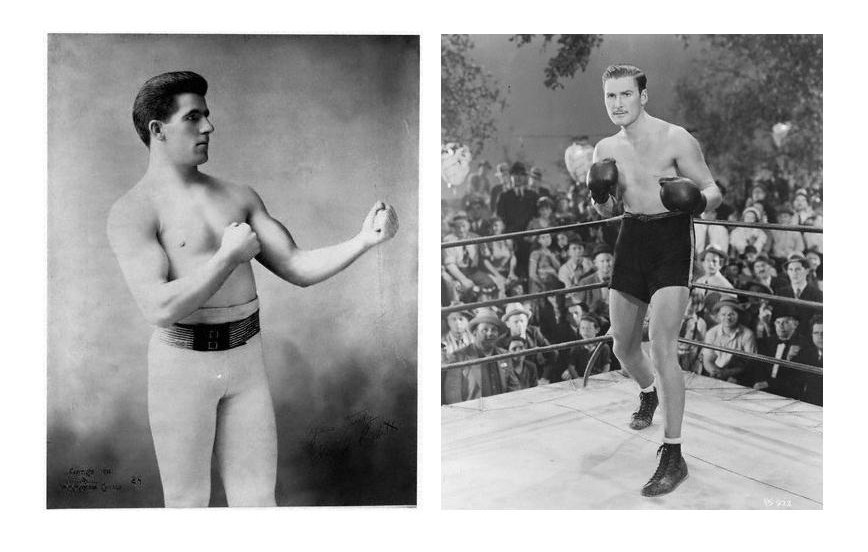
“Gentleman” James J. Corbett and Errol Flynn

“Gentleman Jim” (1942): This is an overlooked film of Errol Flynn’s which I think is quite good. Flynn plays James Corbett who is a crude, bare knuckled boxer in San Francisco.  In the late 1800s, boxing isn’t considered a “gentlemanly” sport so the gentlemen of the area sponsor Corbett at an exclusive sports club to change the sport’s image. Corbett is best known for defeating John L. Sullivan (played by Ward Bond).  In between the fancy footwork, Corbett finds time to romance Alexis Smith (who plays Victoria Ware) and make wise cracks with Jack Carson (playing Walter Lowrie). Appearance: Corbett and Flynn look nothing alike. Flynn is thinner and has a more debonair look. Corbett is handsome, but in a rugged sort of way.

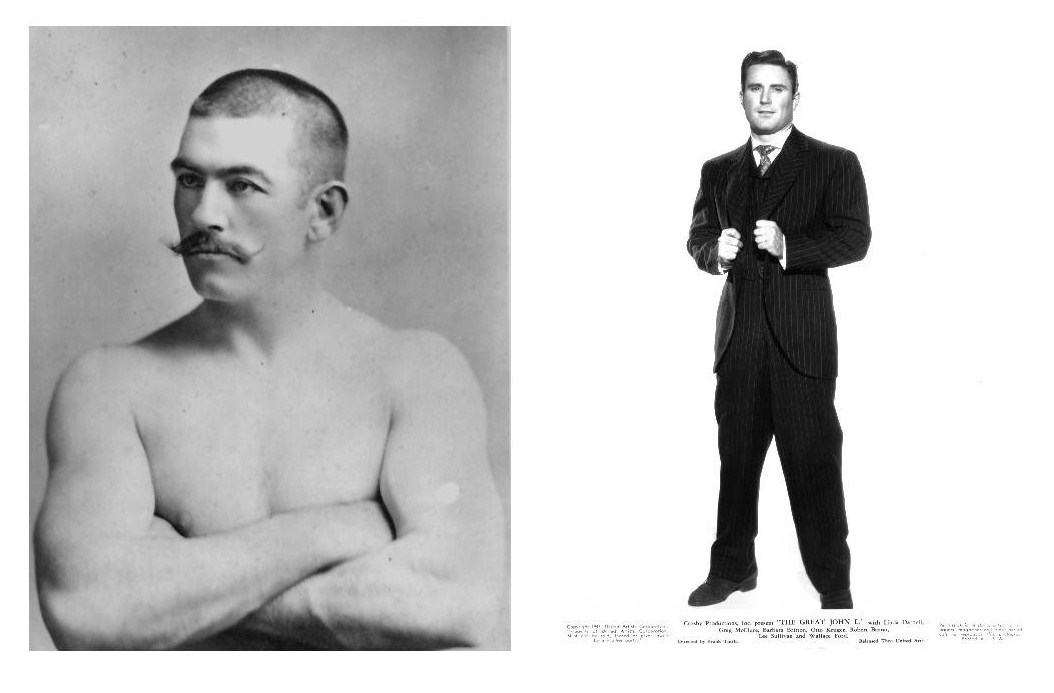
John L. Sullivan and Greg McClure” 

“The Great John L.” (1945): I’ve never seen this movie, but I couldn’t talk about boxing films and not mention John L. Sullivan.  Sullivan is one of the most famous boxers and was the first heavyweight champion of gloved boxing in 1881 and 1882. The film about his life stars Greg McClure in the title role, Linda Darnell and Otto Kruger. Appearance: These two men couldn’t look any different. Sullivan looks gruff, mean and like someone I wouldn’t want to meet in a dark alley.  I think McClure looks more like boxer Jack Dempsey, heavy weight champion of the world in 1919 and 1926.

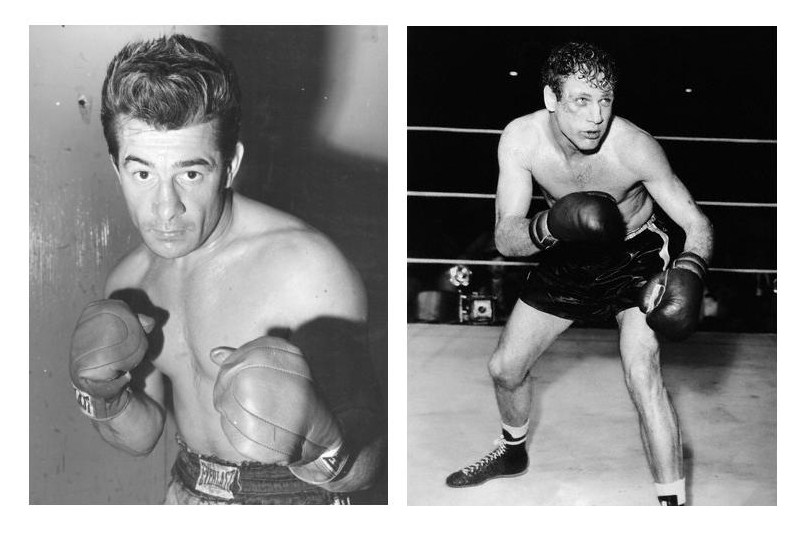
Rocky Graziano and Paul Newman

“Somebody Up There Likes Me” (1956): I’m not much for dark, angsty, brooding 1950s films, but I was pleasantly surprised by this film. Instead of being a downer, it ended up being rather uplifting. Newman plays Graziano who can’t seem to stay out of trouble. Constantly arrested and goes AWOL from the Army. He meets his wife Norma, played by Pier Angeli, and starts his career boxing which helps straighten out his life. Appearance: Graziano and Newman don’t look much alike. Graziano has a much thinner face while Newman’s is more chiseled.

That’s all for sports! Stay tuned for more biopic comparisons!

Check out the Comet Over Hollywood Facebook page .

You can’t get a role with a gun: the story behind “Annie Get Your Gun”

I had always read that “Annie Get Your Gun” was a horrible experience for actress, singer Betty Hutton.

Actors and stage workers were cold towards her, she wasn’t invited to the movie premiere and MGM wasn’t the warm home she found at Paramount.

For years, I read this treatment was attributed to the fact that Betty Hutton quickly stepped in to the role when Judy Garland was unable to make the film. MGM workers resented that someone was kicking their Judy out of a highly coveted musical biography about the sharp shooter Annie Oakley.

Howard Keel, Betty Hutton, Louis Calhern and Keenan Wynn singing “No Business Like Show Business.”

About a month ago, I read and reviewed Betty Hutton’s autobiography “Backstage, You Can Have.” I found that the story about “Annie Get Your Gun” wasn’t as cut and dry as “Judy was kicked out, they were mean to Betty.”  Betty Hutton might have also helped a little in digging her grave.

When the Irving Berlin musical first hit Broadway stages in 1946, Betty knew she wanted to play the part.

 “In May (of 1946), the same month we were finishing up work on “The Perils Of Pauline,” a new musical opened…The show was called “Annie Get Your Gun” and it starred Ethel Merman in the title role. I went to New York to see it, and fell deeply in love with the role of Annie Oakley. This was a part I just had to play in the hotly anticipated movie version” (Hutton 209).

 Betty begged Paramount to buy film rights. Paramount was giving her weak films like “Dream Girl” and she felt that Annie Oakley would have helped bolster her career. However, Arthur Freed at MGM paid Irving Berlin $650,000 for the play and planned on MGM’s top star Judy Garland to play the role.

Judy Garland dressed for the “I’m an Indian Too” number.

“I was heartbroken,” Hutton said. Besides Hutton, Ginger Rogers also campaigned for the role and was told Annie Oakley doesn’t wear silk stockings and high heels.

 However, when MGM began filming “Annie Get Your Gun” it was full of disasters:

•New star Howard Keel fell off his horse and broke his ankle.

•Frank Morgan, playing Colonel Buffalo Bill, had a heart attack and died and was replaced by Louis Calhern

•Busby Berkley started out being the director and was fired and replaced by Charles Walters who was then replaced by George Sidney

•Judy Garland didn’t want to do the movie at all.

 Garland felt that she wasn’t right for the role. The video below shows Judy Garland in a few shots they filmed with her as Annie. She looks unsure and not very well. Judy started not showing up to the set, her contract was suspended.

Garland was not unhappy that Betty Hutton took her place; in fact she later told Betty Hutton that she did a good job and was pleased that Hutton got the part.

 “Years, later while we (Judy and Betty) were both working in Las Vegas, Judy and I became very good friends. She told me then she had never wanted the picture and it wasn’t right for her. She admitted the part was right for me, and after all was said and done, she was happy I got it” (Hutton 229).

 The problem was how Hutton handled getting the part. She let everyone know how much she had wanted it.

Hutton told the Associated Press, “I’m so excited I can’t sleep. For four years I’ve been trying to do Annie. I haven’t been happy with the pictures I’ve had since Buddy DeSylva left Paramount and I pleaded them to buy it. I really bawled them out when they let MGM get it.”

 Not only did this comment not make Hutton very endearing to MGM players, but also didn’t help her floundering relationship with Paramount. Hutton was already at odds with Paramount as she let fame go to her head. In her autobiography Hutton said she wasn’t as uncaring as the comment made her sound, she was just excited (228).

 After reading Betty Hutton’s autobiography, comments like these are what helped end her career. Hutton said herself that she couldn’t shut up and always put her foot in her mouth with the press. This was certainly one of those times.

 It was difficult for Hutton to come into an unfamiliar studio. She had found a family at Paramount and described MGM as much more formal-cast members addressed her as Miss Hutton rather than Betty.  While Betty may have found this off-puting, I believe this was simply out of respect for her.

Betty Hutton is hilarious in her version of “I’m an Indian Too”

Though MGM was unfamiliar, it didn’t stop Betty from trying to work under her terms.

 Betty admits that it was “probably too much Hutton, too fast.”  She wanted to be applauded when she did something good like she was at Paramount and insisted on having air conditioning on the set (231 Hutton).  I personally, think these are mighty large demands to make for a studio that isn’t your own. I would have been peeved too if I was part of the cast.

 Betty was a force of nature and gave her all in performances. Louis Calhern, who played Colonel Buffalo Bill, told Keel, “She’s upstaging the hell out of you.” Keel brushed it off saying he was new and that the camera would come around to him once in a while, according to Howard Keel’s book “Only Make Believe: My Life in Show Business (119). At one point, Betty got upset because she said Keel was upstaging her and they redid the scene 35 times until it was how she liked it.

 Regardless though, Howard Keel said he thought Betty Hutton was sweet and they got along okay. He admitted however, that the rest of the cast wasn’t happy with her.

 However, Hutton apparently thought differently and was also sort of bratty in her recount of the situation:

 “Here he was in his very first film role. Was this greenhorn attempting to call the shots? ‘Annie Get Your Gun’ is Annie’s story, not that of Howard Keel’s character, Frank Butler. If the story had been reversed, I would have gladly handed Howard the burdensome responsibility of carrying the film as I had. Keel Proved to be my primary adversary during the shooting of the film. There was much bad blood between us” (Hutton 232).

 It’s funny that Hutton’s most memorable role was one of her unhappiest experiences as a film star. Though, as much as I love her, I think some of the unhappiness was caused by Betty.

 After “Annie Get Your Gun,” Hutton made three more feature films and a handful of television appearances. Her difficult behavior and use of pills ended her career.

 It’s almost ironic how Hutton’s career ended for one of the main reasons Judy Garland was fired from the film: pills. Unfortunately, while Judy was still revered and loved at the time of her death in 1968, Hutton was largely forgotten by the early 1960s.

Addendum: Comet Over Hollywood has received a large number of search results on Wednesday, Dec. 30, 2015, asking who dubbed Betty Hutton in “Annie Get Your Gun.” I want to share that Miss Hutton did her own singing and was never dubbed in any of her films. Hutton was a singer who got her start as a singer for Vincent Lopez’s orchestra. 

Sources:

“Backstage, You Can Have: My Own Story” by Betty Hutton

“Only Make Believe: My Life in Show Business” by Howard Keel

Check out the Comet Over Hollywood Facebook page  or follow on Twitter at @HollywoodComet.

There’s No Business Like Show Business: book review of Betty Hutton’s autobiography

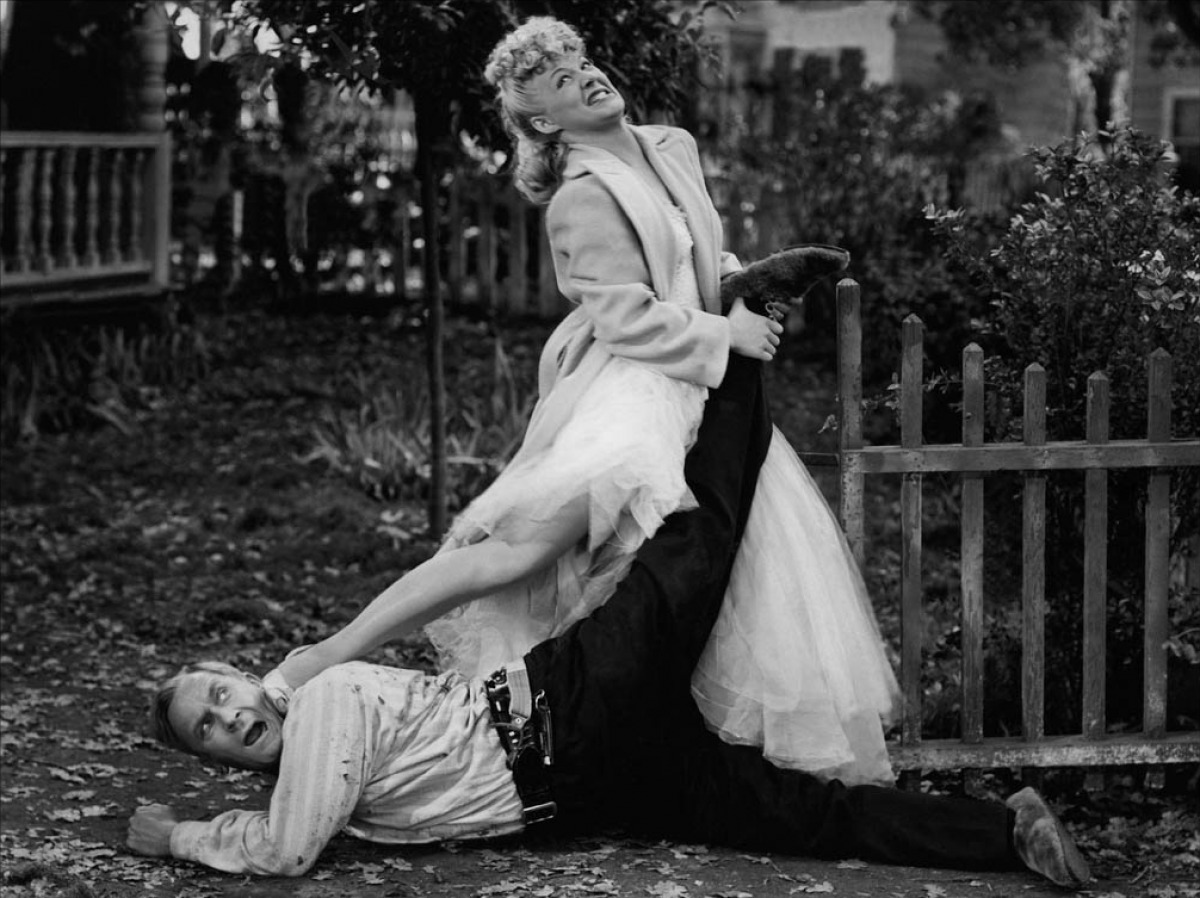
The zany Betty Hutton we love performing her role as Trudy Kockenlocker in “Miracle of Morgan’s Creek” (1944) dragging William Demarest.

Bob Hope called her a “Vitamin pill with legs.”

Betty Hutton was one of the top stars at Paramount studios from the 1940s until the early 1950s. She was famous for her boundless energy and shouting style of singing.

“They all knew Betty didn’t just get up and sing a song,” she said in her autobiography. “I sang, I danced, and I climbed the walls. The only thing they didn’t know is how far I’d carry it once I got up there.”

She worked hard to climb to stardom and her fame rose quickly. However, it fell just as fast.  Hutton was only in 20 movies from 1942 to 1957.

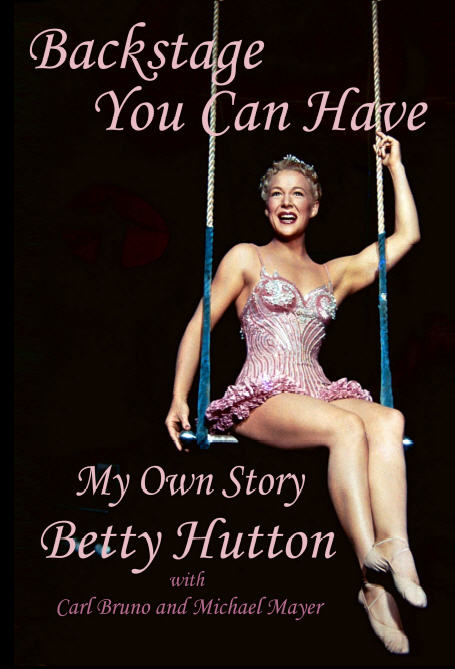
Hutton’s autobiography published in 2009.

Hutton describes this rise and fall in her autobiography Backstage, You Can Have: My Own Story, a book that was published posthumously in 2009, two years after her death in 2007.

The autobiography covers Betty’s unconventional childhood with her bootlegging mother in Lansing, Michigan and her rise to fame as the energetic girl singer for Vincent Lopez’s jazz band.  Hutton’s career jump started on Broadway with the second female lead in “Panama Hattie” starring Ethel Merman. Her Broadway career was brief though. Hutton was frustrated when Merman cut some of her show stopping songs, and was promised by songwriter Buddy DeSylva that he would make her a Paramount star. He stayed true to his words.

Hutton starred in several successful yet forgotten films, but she is best remembered for her roles in “Annie Get Your Gun” (1950) and “The Greatest Show on Earth” (1954). Unfortunately, when Hutton was at the top, she was also nearing the end-about to fall off her stardom pedestal. In the early 1950s, Hutton frustrated the press; upset the Paramount bosses and got involved in pills, all of which contributed to the end of a promising career.

“It was somewhere around the time we were shooting the film in Florida, that I took my first pill,” Hutton said. “I had just dissolved my marriage with Teddy. That coupled with the stress of working on the movie (Greatest Show on Earth), was getting to me. In addition, I was not at the weight I wished I had for the film. I don’t remember how I came upon my first Dexamil, but it was in Miami, and I took it to increase my energy level and reduce my desire to eat.”

By the 1960s, Hutton’s life as a movie star was long gone. She filed for bankruptcy, her daughters moved out and her pill addiction worsened.

“One morning I packed what I had left in the way of personal belongings in a paper bag, and headed out the door of my hotel room for the final time,” Hutton said.  “My room rent was already way overdue, and I had no means of raising the necessary money to pay the bill.”

This scene is the last we hear from Miss Hutton. She writes a note to the readers saying she is not sure if she wants to continue writing the book. Writing the book proved to be happy and painful, she said.

The rest of the book is written by Carl Bruno, who helped care for Betty off and on from the early 1970s until her death in 2007. Bruno’s partner was a Lutheran minister, Gene Arnaiz, who tried to help Hutton and allowed her to live with them in California. From 1974 until 1996, Hutton lived either in Rhode Island with Catholic priest, Father Maguire, or in California with Carl and Gene.

“Father was a Godly man, but he was a mortal all the same,” Bruno said. “There were times when Betty became too much for him…When Father felt it necessary, he would ship Betty back to the boys in California…Likewise, Carl and Gene would tire of her after a time, and back she would go to her austere lifestyle in the Rhode Island rectory.”

Betty Hutton died in 2007 in California of colon cancer while living with Carl Bruno and Michael Mayer.

My thoughts on the book:

Doing her own trapeze stunts in “The Greatest Show on Earth” (1954), Betty’s last big film role.

What you see on the screen seems to be what you get with Betty Hutton. She had the same fiery, go get ‘em, energetic outlook when she talks about her career as her characters had in her films.  As Betty described her childhood, as she was fighting for her family and trying to make her way into show business, you wanted to fight along with her. I would put down the book and feel like I could face anything; Betty’s attitude is that infectious.

This autobiography is entertaining but depressing at the same time. At one point Hutton had me crying as she talked about visiting the boys overseas during World War II, and then laughing a few sentences later with the line, “We all know it’s common knowledge that movie stars don’t poop.”

Sometimes while reading I got frustrated with Betty. It was like watching a movie saying, “Oh no, don’t do that.” Quotes she said to newspapers, difficulty she gave the Paramount studio heads and the use of pills were painful to read about. I think the biggest thing that upset me in the book is when she turned down the role of Ado Annie in “Oklahoma” to do the TV spectacular “Satins and Spurs.” She later regretted turning down the role when she saw Rogers and Hammerstein were personally overseeing the film. I think that really could have jumpstarted her career. I also feel if pills hadn’t been in the picture, things would have been very different for Betty Hutton.

I have always heard about Betty’s bad relationship with her children and how they disowned her but that didn’t come up a lot in the book. Though she loved her children, Betty said she never should have tried to maintain both a career and her family.

I still enjoyed the book once Betty stopped writing and the remainder of her story was filled in by Bruno and Mayer, but I was a bit disappointed. I knew Father Maguire and the Catholic faith meant a lot to Betty and I was hoping to hear more about it in her own words rather than it being skimmed over that she lived with him.

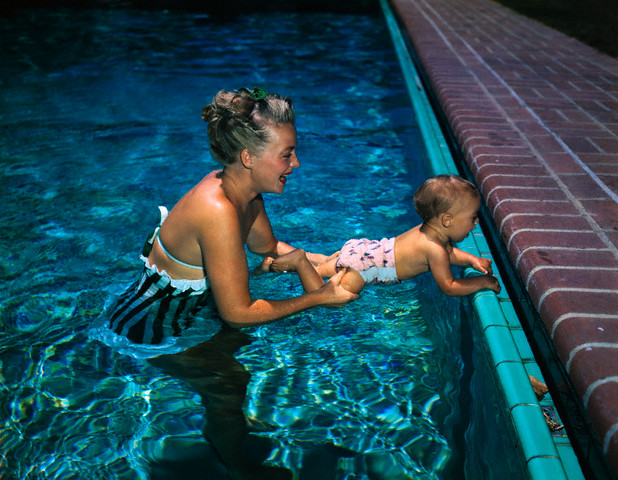
Betty teaching daughter Lindsay how to swim in 1947.

Bruno and Mayer seemed to care about Betty, but some of the things they wrote seemed more “Oh woe is us; we had to put up with so much.” True, they did, but the book wasn’t about their trials it was about Betty. I also felt like they added a lot of asinine details that weren’t needed and could be potentially embarrassing for Betty. For an example, there was a brief anecdote about Betty goofing off in a long red wig and falling and breaking her glasses or that morphine made Betty throw up at the hospital. Neither story added anything to the story nor was there a point.

The book did clear up one thing that confused me during the time of Betty’s death in 2007. I remember when I saw Betty had died on Turner Classic Movies’ website; I looked around on the internet to find more news sources about it but could find nothing. Apparently, it was Betty’s wish not to tell the press about her death until she was buried. She thought that reporters would be hounding her until her death.

When Betty died, Bruno called family, friends and Robert Osborne, who Betty respected. The TCM website put up that Betty had died and their schedule change to honor her. The press and fans wanted confirmation of Betty’s death. Bruno and Mayer seemed miffed at TCM for this, but I wonder if they made Betty’s wishes clear. I feel like if they had, Osborne wouldn’t have put anything on the website.

Overall, the book was very good, but be prepared to feel hyped up at the beginning and pretty low at the end. Betty Hutton was one of the most energetic, talented film stars we know. It’s a shame that her life took such a turn.

Hutton, Betty, Carl Bruno, Michael Mayer. Backstage, You Can Have. Betty Hutton Estate: 2009.

Check out the Comet Over Hollywood Facebook page for the latest updates.

Audrey Hepburn: The Sorority Girl’s Pin-Up

You may see this image on a daily basis if you go to college.

On a college campus you can’t miss the familiar outline of Holly Golightly from Breakfast at Tiffany’s (1961) with her cigarette holder while wearing a long black gown on the back of a sorority T-shirt. And of course under that photo will be Chanel’s quote “A girl should be two things: classy and fabulous.” (Though that is completely ironic, because Givenchy dressed Hepburn in most of her films).

If you don’t believe me, scroll through this blog that describes itself as a “celebration of Greek Life.” There are at least 4 posts about both Audrey Hepburn and Coco Chanel.

Sororities have taken the stylish, gamine star and are using her as their unofficial spokes person for the pay-for-your-friends groups.

Photoshopped Audrey Hepburn head on an ADPI body.

She is on their t-shirts, event fliers, posters in their dorm rooms, coffee cups, keychains and Facebooks. Miss Hepburn helps announce fall and spring recruitment, formals and bake sales they have to raise money for their charities. If Audrey Hepburn was a business, it would be one of the wealthiest companies in the United States.

Once in my photography class, I even heard a boy ask who Audrey Hepburn was and my friend Dominic Beamer responded, “You know, she’s that lady who is on the back of all of the sorority t-shirts.”

But why pick on Audrey Hepburn? At the start of her career, she was described as having enormous eyebrows, rat chewed bangs and horse teeth. Does that sound glamorous or sexy?

I think a large part is the Givenchy outfits in “Breakfast at Tiffany’s.”  Who can forget the black dress she wears in front of Tiffany’s, the pink party dress she wears when Fred dies or even her brown trench coat?  However, Givenchy also designed the clothes for “Sabrina“, “Charade” and “How to Steal a Million.” Why don’t we see an outline of Audrey in that crazy helmet hat from “How to Steal a Million” or the dress she wows the Lamarees with at the exclusive dinner party in “Sabrina.”

Audrey Hepburn was one of my first favorite actresses when my movie love began. My love with her started with “Sabrina” and then Funny Face.”  I eventually made my way around to “Breakfast At Tiffany’s.”

When I first saw it in the 8th grade I had no clue what was going on: Why is she getting arrested? Why did he give her $50 to go to the powder room? What is Patricia Neal’s deal?  Now that I’m older, I understand the drug and sexual references; “Breakfast At Tiffany’s” is covering some pretty serious stuff.  I often wonder if these girls who say it’s their favorite movie watch it for the glamour of Givenchy’s clothes and George Preppard’s good looks or if they have even seen it at all.  Are they looking at the deeper meaning that Truman Capote wrote about in his novel: a woman toying with the idea of bisexuality?  Audrey Hepburn even felt like she was miscast in the role.

An example of Audrey Hepburn on a T-shirt.

Audrey Hepburn was glamorous in the movies, but like most actresses, didn’t have a fabulous personal life.
•She hid in a cellar from the Nazi’s during World War 2. She and her mother lived in occupied Holland and were forced to eat tullip bulbs and grass. This is what lead to her eating disorder later on in life.
• She wanted to be a ballerina but was told that she was too tall.
• Audrey had a difficult time getting pregnant. She was pregnant at the start of the movie “The Unforgiven” but was thrown from the horse and suffered a miscarriage-along with a broken back.
• Audrey had two failed marriages: One with actor Mel Ferrer and another with Andrea Dotti who cheated on her.
• While filming “My Fair Lady,” Hepburn worked very hard learning the songs and desperately wanted to sing. In the end she was dubbed my Marnie Nixon. Hepburn later said she wouldn’t have agreed to the film had she known this.
• She was constantly self conscious about her flat chest, thinness and looks. She was very uncomfortable and unhappy during the movie “Funny Face” and wanted Mel Ferrer with her during all times.
• Robert Wolders lived with her at the end of her life….(I feel like he was someone who just swooned the older actresses and wanted their money).

Standard Coco Chanel quote

However, Audrey Hepburn also was a wonderful woman who had a love for gardens and spent the end of her life  doing work with UNICEF. She was also a great actress who won an Oscar for “Roman Holiday.” It’s a shame to me that she has her image defamed on brainless, comic sans-fonted sorority t-shirts.

Check out the Comet Over Hollywood Facebook page 

F is for Fake, as Orson Welles said

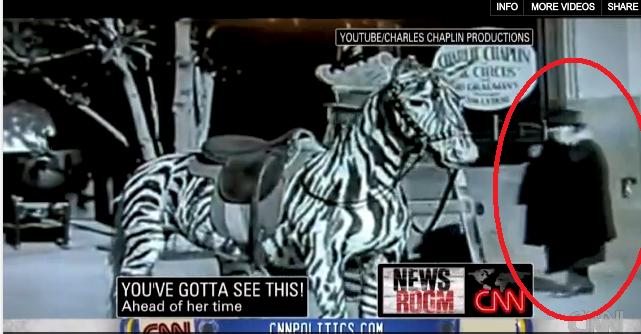
A friend shared a CNN story with me about a woman on a cell phone passing by in the background in the 1928 Charlie Chaplin film “The Circus.”

What do all of you classic film fans think of this?

Circled person is supposedly holding a cell phone.

I personally think it’s a bunch of poppycock and don’t believe it and here is why:

 1. Videos like these are easily faked. With the mass amounts of sophisticated film software available today, anyone could dress in 1920s garb and walk around in the background of an already filmed movie. Even take “Forest Gump” (1994) for example. Remember when Tom Hanks is seen in videos taken in the 1960s such as the black students going into the University of Alabama with Governor George Wallace blocking the entrance?

 2. It could have been a person in the movie simply with their hand to their ear or holding down their hat. The public is looking at “The Circus” with preconceived notions of today and our technology. We are looking at simple gestures they are making and automatically think that holding your hand to your ear means a cell phone because we see that several times on a daily basis.

 3. From what I have heard, IF there is a time travel you can’t take contemporary items and technology with you. Cell phones didn’t exist in 1928 so you can’t have it.

 4. Hypothetically, if there is time travel and you somehow still had your cell phone, you couldn’t use it anyways. There were no satellites or cell phone towers. And who on Earth would she be talking to? From what I’ve seen in time travel movies, once you go back in time  you can’t communicate with the contemporary world. It’s not like she traveled back and time and can call someone in 2010 and say, “Hey Jennifer, yeh I got it to 1928 safely.”

I mean believe me, if there was such thing as time travel I would hop right on and go back to the good ole technology free days of the 1920s-1940s, but there isn’t in my opinion.

So there you go, there are my thoughts and as it is I think I put too much thought into it.

What do you think?  Leave a comment and let me know!

Check out the Comet Over Hollywood Facebook page and Radio Waves Over Hollywood Facebook page.

Take my pulse, Lew Ayres: Medicine in Old Movies

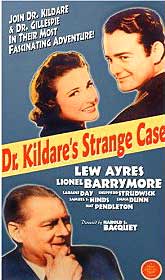
One summer Turner Classic Movies showed almost all of the 15 “Dr. Kildare” movies from the 1930s and 1940s…and of course I had my mother tape every single one. So for a a couple of weeks my family sat down and fell in love with Dr. Kildare (Lew Ayres), Mary Lamount (Laraine Day), Nurse Molly Byrd (Alma Kruger), Hospital Admin Dr. Carew (Walter Kingsford) and of course Dr. Gillespie (Lionel Barrymore).

Each movie was cute, somewhat suspenseful and always had a bit of comic relief from Dr. Gillespie-who was wheel chair bound due to Barrymore’s arthritis.

The most interesting thing about the Dr. Kildare series is seeing how much medicine has changed. Part of me is thankful to live in contemporary time with up to date medical technology, but I still want to live in the 1940s.

1940

It is also interesting to see the way they cure some of the medical cases. For example, in “Dr. Kildare’s Strange Case” (1940), a man is found on the street who was seemingly out of his mind. As it turns out the man had schizophrenia and they cured it. (Also notice how they pronounce the word in old movies: Ski-zo-FREE-nia)

Yes that’s right. Dr. Kildare cured schizophrenia. Amazing since even today it is incurable. The man was unconscious and given a shot that makes him go back to a “primate state and go through the stages of man until he is himself again.” And it works. The man is better, finds his wife (he also had a case of amnesia) and lives happily ever after.

However, the Dr. Kildare series isn’t the only movie that suggests schizophrenia can be cured. In the film “Bewitched” (1945), sweet Phyllis Thaxter has a voice inside of her head telling her murderous things such as to kill her fiancé. At the end of the movie, her psychiatrist helps her see which personality wins out.  She is cured and back to normal.

Moving away from schizophrenia, in “The People vs. Dr. Kildare,” Dr. Kildare performs an emergency surgery on ice skater Bonita Granville at the scene of a bad car accident. Granville then finds that she can’t walk (though her leg healed properly) and sues Dr. Kildare.  I may not be a med student, but I find it questionable that Kildare performed the surgery outside in an area that was not sanitary.

I will say I appreciate the bluntness of Dr. Gillespie. Doctors would be sued if they talked to their patients the way Gillespie barks at his, but they are usually cured and he gets the point across.

Here is an example of Dr. Gillespie’s doctor tactics:
Dr. Gillespie: Well, Mr. Ingersoll, good morning, and how are you feeling today?
Patient, Rufus Ingersoll: Never felt better in my life!
Dr. Gillespie: Oh ho, that’s fine. That’s fine…because your system’s in a state of collapse. Sit down before you fall down!

“Emergency”-My favorite TV show

Though the medical practices of Dr. Kildare might seem archaic by today’s standards, they certainly seemed up to date for the standards of the 1940s. The doctors were in New York City -not the country doctor seen in many other movies of the 1930s and 1940s.

Actually, the medical practices you see 30 years later in the television show “Emergency!” (1972 to 1979) aren’t much different. Nurse Dixie McCall, Doctor Bracket and Doctor Early seem like they are the only employees at Rampart General Hospital. My family and I always joke that those three doctors were the only doctors in the hospital because they did it all: Deliver babies, perform surgery and general practice.

Regardless of the questionable terminology and medical methods of the “Dr. Kildare” series, don’t let it turn you off. After watching all 15 movies, you will feel like Laraine Day, Nat Pendleton, Lew Ayres and Marie Blake are part of your family.

Check out the Comet Over Hollywood Facebook page and Radio Waves Over Hollywood Facebook page.

Remake is a dirty word

Classic 1939 film “Wizard of Oz” faces remake doom

Yesterday on the radio, I heard Ryan Seacrest say that as a result of the success of “Alice in Wonderland,” Tim Burton was wanting to remake the classic, shouldn’t be touched 1939 “Wizard of Oz.”

I think this is terribly ironic because just last Friday I was watching the documentary “Memories of Oz” (2001) on Turner Classic Movies. The documentary was part of the annual July airing of “Wizard of Oz” to celebrate when it was released.

In this documentary actor/writer John Waters (who seemed rather bizarre) said that remaking the “Wizard of Oz” would be suicide and it would fail; the only way it would work would be with completely unknown actors, but that wouldn’t even be fool proof.

Well John, looks like they didn’t listen to your advice. However, as much as I want it to, I doubt Tim Burton’s movie will fail. Everyone seems to love his creepy, odd direction and films and they all do fabulous in the box office. I personally am not a fan, but it seems I am the only one who is not.

As for unknown actors, Seacrest said that it was rumored that Angelina Jolie would play the Wicked Witch of the West. He said she wanted to show that she wasn’t afraid to play “evil roles” and he also called her “the biggest celebrity in the world.”

Ok two things Ryan: 1.) Hasn’t Angelina already proven that (in film and real life haha)?  2.) I wouldn’t say Angelina is the “biggest star in the world.” All she does is adopt babies and occasionally act. I had forgotten about her until I saw a preview for “Salt.” She wasn’t even at the Academy Awards!

I don’t know about how many of you feel about remakes. I personally hate them. It usually seems I worry and worry and worry about them and then they fail in the box office anyway or you never hear about them. Examples of this would be: “The Women” (2008)-second remake of 1939 Joan Crawford film, “Beyond a Reasonable Doubt” (2009)-remake of 1956 Dana Andrews film  or “Psycho” (1998)-remake of the 1960 Hitchcock film.

After I told my mother, she said, “Next they will remake ‘Gone with the Wind’!” I disagree, because it doesn’t seem that anyone is interested in the South except for we southerners. Also, “Gone with the Wind” has been dubbed ‘racist’ because it has slaves in it, so I’m not sure how current politically correct would tip toe around the historical fact that there were slave owners in the 1800’s in the south. However, Robert Osborne, prime time host of Turner Classic Movies and my idol, shakes his head when people call the film ‘racist’ and reminds his viewers that it was a different time in film and you can’t take everything from contemporary standards.

How do you feel about the remake? Do you think it will fail? What classic movie is next to go on the chopping block?

Check out the Comet Over Hollywood Facebook page for the latest updates.

The Mystery of the Murdered Movie

I love Nancy Drew.

I have played and solved 21 of the HerInteractive PC games and read most of the original yellow bound novels. I even own a Nancy Drew cookbook, a “Nancy Drew’s Guide to Life” book and a large Nancy Drew cut out.

Nancy Drew has played a pivotal role for the past 80 years in literature for young girls, as well as in pop culture.

Everyone knows who she is and is fairly respected as a literary character. However, why is there not a flattering movie adaptation depicting everyone’s this important literary character and symbol for American women?

Eight years after the first Nancy Drew novel, “The Secret of the Old Clock,” was published in 1930, the first Nancy Drew film adaptation was released.

Nancy Drew, Reporter,” the first film adaptation of the series, was released in 1938, three more movies were released all in 1939. These movies included “Nancy Drew  Troubleshooter,” “Nancy Drew Detective ” and “Nancy Drew and the Hidden Staircase).”

Film series were not rare in the 1930’s and 1940’s. In fact many studios made a great deal of money off of series such as “Andy Hardy,” “Dr. Kildaire,” “Maisie” and “Boston Blackie just to name a few of many.

I imagine that is what Warner Brothers was trying to do with Nancy Drew. But none of the films followed or resembled any of the Nancy Drew books, except for snippets of “Nancy Drew and the Hidden Staircase” which I think is modeling itself after the book “The Hidden Staircase.”

In novels Miss Drew is level-headed, fearless and intelligent. She doesn’t goof off and there isn’t much time for romance in her life. Yes there is her boyfriend, Ned Nickerson, but I can count on one hand the amount of times they kissed or flirted in the novels. She was also very talented and fashionable. She could tap dance the Morris code while wearing a freshly pressed tailored suit.

Also in the novels, Ned was concerned about Nancy but never hindered her sleuthing. Carson Drew, Nancy’s father, was a distinguished lawyer. He teased his daughter for her appetite for mysteries and trusted her good sense.

However, the characters in the 1930s Nancy Drew series didn’t resemble Carolyn Keene’s intelligent teens.

Nancy Drew, played by Bonita Granville, was bumbling, scatter-brained and frightened for most of the films. She set out to solve a mystery but would run home before finding any actual clues.

Bonita Granville as Nancy Drew and Frankie Thomas as Ted Nickerson

Ned Nickerson, played by Frankie Thomas, was named TED in the movies for some reason. He was maybe the most tolerable character in the movies, but I wouldn’t run to him to protect me.

John Litel was a very irritating Carson Drew. He forbid Nancy from sleuthing and worried about her constantly. Even Hannah Gruen, the housekeeper, ran away in terror when someone broke into their home. Hannah in the books would have knocked them on their ear.

John Litel as Carson Drew in “Nancy Drew…Reporter” (1938)

The films involve very little mystery solving and an over abundance of silly slap-stick. I’m not asking for a whole detailed novel to be played out in the 68 minute films, but Warner Brothers could have at least been accurate with their character depictions.

Bonita Granville, who was 16 when she played Nancy Drew, was in top-notch films such as “These Three”(1936), which she received her only Oscar nomination, and “Now, Voyager” (1941), giving excellent performances in both but clearly Nancy Drew was not the role for her.

I made a list of who, with some tweaks to the script, could have been the perfect Nancy Drew casting in the 1930s or 1940s.

Nancy Drew: Deanna Durbin (19 at this time) would be my first pick. She sometimes plays silly characters, but also plays serious roles beautifully. Nancy Drew was also supposed to be very attractive. Miss Granville wasn’t ugly, but Deanna Durbin is decidedly prettier. I’m sure they would have to fit in a song or two for Deanna. She would have been old enough by this time, because “First Love,” the film that she received her first on-screen kiss came out the same year as the series.

Carson Drew: John Litel is generally a character actor with small roles. I’m not sure why they chose him to play the distinguished lawyer, Carson Drew. I can’t think of anyone else who could play this role more perfectly than Walter Pidgeon. Mr. Pidgeon is the definition of distinguished and sophistication. With his fatherly and friendly acting style, along with his pipe, I can picture him now giving Nancy advice.

Ned Nickerson: I would either say a teen-aged Jackie Cooper (17 at the time) or Robert Stack (20 at this time). Both boys were attractive and would have seemed more protective of Nancy Drew than Frankie Thomas. Stack was also in the 1939 film “First Love” with Miss Durbin and would have been of a suitable age.

Check out the Comet Over Hollywood Facebook page for the latest updates.