An influential mermaid

My dear friends at True Classics has invited bloggers to share their “Movie Memories” during the month of June. I am honored that I was invited to participate . Head to True Classics to read the other marvelous posts!

little mermaid

Little Mermaid

I remember sitting in a dim theater and looking at lit up designs on the wall.

It was 1989 and I was about a year old, but I remember. Somehow I have an uncanny memory.

The Little Mermaid” was the last Disney feature film to be animated with hand painted cells and it was my first movie in a movie theater.

Though “The Little Mermaid” isn’t necessarily a classic film, I was very attached to the movie when I was very young. It introduced me to a love of movies and movie characters.

My sisters tell me I used to roll around in the bath water while my mother would try to bathe me pretending to be a mermaid like Ariel. A Christmas Day home video shows me excitedly playing with a new Ariel Barbie while trying to sing tunes from the film.

I even remember telling my mom that I wanted to be a mermaid when I grew up. She said, “You can’t, you have to be born a mermaid.” I found this to be a very puzzling statement.

cinderella2

Cinderella

My parents always took my sisters and me to see the new Disney cartoons but also introduced us to the classic Disney films. Cinderella (1950) was another favorite of mine at a young age.

The Little Mermaid” and “Cinderella” are typical favorite films for little girls between the age of two to six, and maybe even older.

Several years later in 1997, I saw another film that affected the way I viewed movies. In third grade, I fell in love with the Twentieth Century Fox animated film “Anastasia.”

anastasia

Anastasia

I was obsessed.  I wore a locket like in the film, learned the dances, studied Romanov history and wished I was the lost princess Anastasia Romanov. My mom told me that wouldn’t be possible. But this time I understood what she meant.

The movie interested me in history and the 1920s since the song “Paris Holds the Key to Your Heart” has cameos from Josephine Baker and Maurice Chevalier.

Again, another movie changed the way I looked at things.

At the age of 14, my dad decided to introduce me to “West Side Story.” I remember it was March and I was on spring break.

West Side Story mambo scene

West Side Story mambo scene

West Side Story” changed the way I looked at film and solidified my love for classic movies. It’s what led me to watch 501 musicals and thousands of other classic films.

But my film love all started with “The Little Mermaid.”

As I sat in the movie theater, not even two years old, my life was change. Movies became important to me at an early age, shaping my interests and world views.

Who would have thought that a disobedient teenage mermaid could be so influential.

Check out the Comet Over Hollywood Facebook page for the latest updates or follow on Twitter at @HollywoodComet.

Musical Mondays: “Thrill of a Romance” (1945)

It’s no secret that the Hollywood Comet loves musicals.
In 2010, I revealed I had seen 400 movie musicals over the course of eight years. Now that number is over 500. To celebrate and share this musical love, here is my weekly feature about musicals.
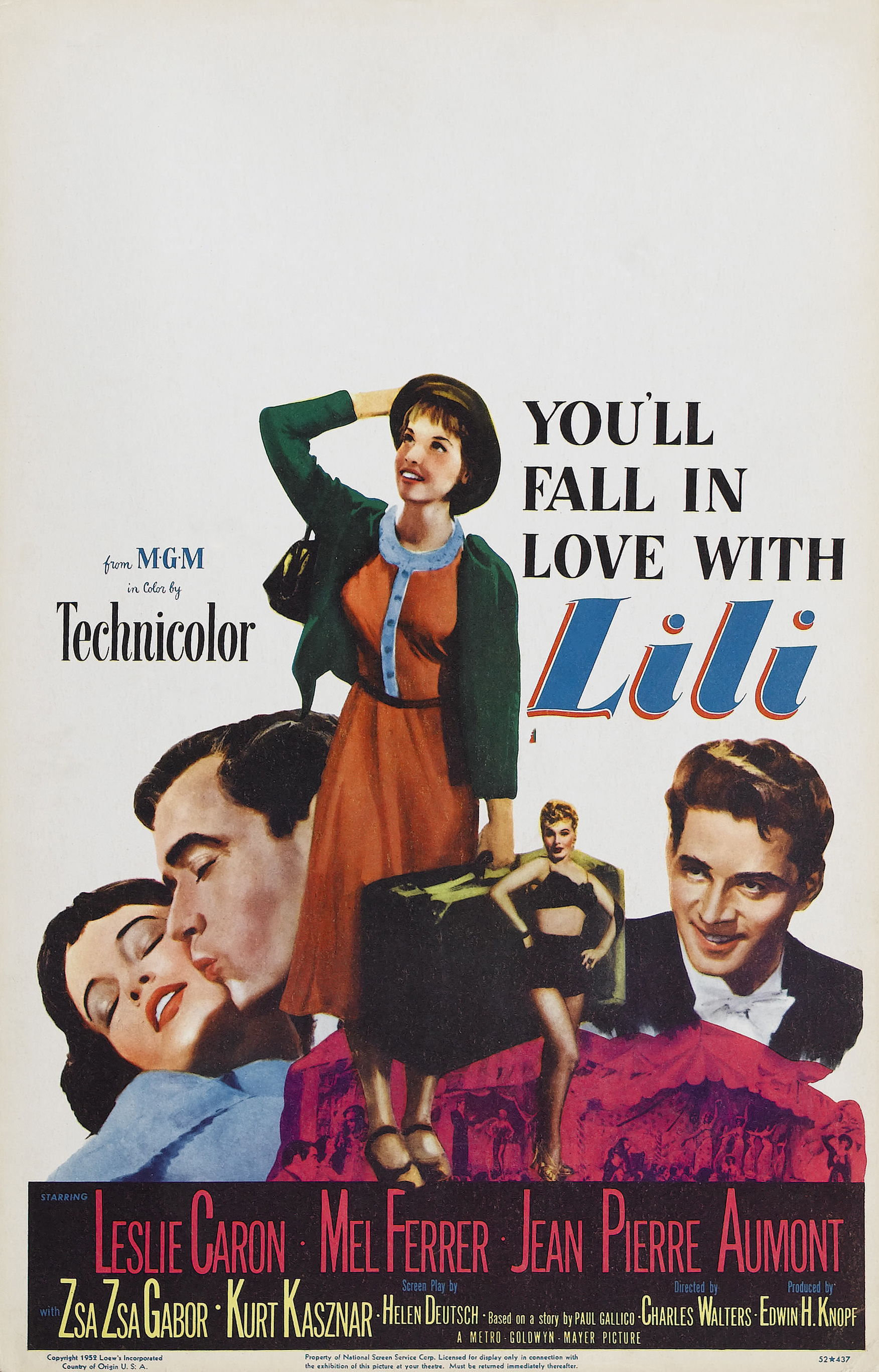
thrill posterThis week’s musical:
Thrill of a Romance” (1945)- Musical #502*

Studio:
Metro-Goldwyn-Mayer

Director:
Richard Thorpe

Starring: 
Esther Williams, Van Johnson, Frances Gifford, Henry Travers, Spring Byington, Lauritz Melchior, Tommy Dorsey and his band

Plot:
Pretty swimming teacher Cynthia Glenn (Williams) is swept off her feet by wealthy Robert Delbar (Carelton Young) who charms her in a whirlwind romance. After a short time, Cynthia and Robert are married and head to a resort for their honeymoon.
However, after only being married a few hours, Robert abandons his new bride for a business deal, leaving her alone on her honeymoon. As she mopes about being left alone, World War II hero, Major Thomas Milvaine (Johnson) sweeps in to cheer her up.
All of this happens on a glittering backdrop of Technicolor outdoor scenery, swimming sequences and musical performances from big band leader Tommy Dorsey and opera singer Lauritz Melchior.

Trivia:

Van Johnson and Esther Williams. This is my favorite outfit Esther wears in the film.

Van Johnson and Esther Williams. This is my favorite outfit Esther wears in the film.

-“Thrill of a Romance” is the first of four full-length films Esther Williams and Van Johnson made together. But this wasn’t their first film together. Williams has a brief part in “A Guy Named Joe” (1943) with Johnson. Their other films include “Easy to Wed,” “Duchess of Idaho” and “Easy to Love.”
-A young girl plays the piano and sings and is supposed to be Tommy Dorsey’s daughter in the film.  The girl isn’t Dorsey’s daughter and is actress Helene Stanley playing Susan Dorsey in the film. However, he did have a daughter named Susie in real life.

Notable songs:
-Tommy Dorsey plays one of his famous songs, “Song of India.” Aside from that song, it’s always fun to hear big band music in films, especially since that would have been the “pop standard” of that time period.
-Famous Danish opera singer Lauritz Melchior performs several songs in the film. This is notable since he was influential as an opera singer.

Highlights:
-Young Jerry Scott hiding on the terrace singing “Please Don’t Say No, Say Maybe.”
-Van Johnson lip syncing (though he can sing in real life) as Lauritz Melchior sings “Please Don’t Say No, Say Maybe.”
-Esther Williams swimming with Van Johnson

Esther and Frances Gifford.

Esther and Frances Gifford.

My review:
Not only is “Thrill of a Romance” my favorite Esther Williams film, but it is a perfect example of a mid-1940s MGM musical.
It’s not the type of musical where people break into song because they are so full of emotion they can’t speak. It is more a romantic story with a backdrop of musical performances.

Esther and Van dancing to  Tommy D

Esther and Van dancing to Tommy D

The film has a beautiful set, gorgeous costumes, catchy songs and vibrant, young actors.
MGM films always have that something extra special, and while there are a lot of special things about this movie-Esther Williams and swimming sequences stand out.
Louis B. Mayer liked to add class and culture to his films. While some musicals would have contemporary musicians featured, such as Tommy Dorsey in this one, he also featured classical performers in his films. This could vary from pianist Jose Iturbi or opera singer Lauritz Melchior, in the case of this film.
Though this movie may be dismissed as sugar coated, I always find it thoroughly enjoyable.
It will make you want to visit the resort they are staying at–and you will want Williams’s wardrobe. I don’t believe she wears more beautiful clothing in any of her other films.
It’s one of those films that if you are down, it will immediately lift your spirits.

*Though I saw this musical over eight years ago, I discovered I had never put it down on my musical list. Egads!

You can find my Esther Williams tribute here. Williams passed away at the age of 91 on June 6, 2013.

Check back next week for Musical Monday.

Check out the Comet Over Hollywood Facebook page for the latest updates or follow on Twitter at @HollywoodComet.

The All-American Aphrodite: Remembering Esther Williams

My cinema relationship with Esther Williams helped shape my film interests.

I didn’t full watch any of her films until 2003 when my film appetite craved musicals.

A swimming scene from "This Time for Keeps"

A swimming scene from “This Time for Keeps”

As I gorged on her candy-colored, aqua musical extravaganzas, I couldn’t wait until I could see another film. Each of her musicals brings back memories of spending weekends endlessly watching her movies.

When I was 15 I read her autobiography, “The Million Dollar Mermaid.” It’s my favorite film autobiography that I’ve read so far.

When I was 17, I bought one of her Esther Williams bathing suits.

Williams inspired me to practice swimming strokes and try to learn how to swim (I failed swimming lessons when I was five years old. How embarrassing).

I remember in 2004 when she was highlighted during TCM’s August Summer under the Stars series. I wasn’t looking forward to going back to school in August but my excitement of Esther Williams’ day out-weighed my dread.

Esther Williams and frequent co-star Van Johnson in "Easy to Wed"

Esther Williams and frequent co-star Van Johnson in “Easy to Wed” dressed for the number “Bonecu de Pixe.” Carmen Miranda helped them with the Portuguese lyrics.

But it’s not just how she affected my every day actions, but my film knowledge that makes her important to me.

To date, I have seen all but two of Esther Williams’ films: “A Raw Wind in Eden” and “The Big Show.”

Esther Williams’s films are a textbook example of the mid-1940s to early 1950s MGM musicals: brightly colored, beautiful clothing and lavish musical numbers that may include Williams swimming, Xavier Cugat and his band shaking maracas or opera singer Lauritz Melchior belting a tune.

Her films also introduced me to my biggest film crush- Van Johnson.

Something I have always found appealing about Williams is that she is very attainable.

Her beauty is natural and girl-next-door like and her figure is athletic, rather than actress anorexic. In her 1996 Private Screenings Interview with Robert Osborne, she said becoming a star was all an accident.

Continue reading

Musical Mondays: Rose of Washington Square (1939)

It’s no secret that the Hollywood Comet loves musicals.

In 2010, I revealed I had seen 400 movie musicals over the course of eight years. Now that number is over 500.

To celebrate and share this musical love, I’m starting a weekly feature about musicals.

This week’s musical:
Rose of Washington Square” (1939)- Musical #462

roseStarring:
Alice Faye, Tyrone Power, Al Jolson, William Frawley, Joyce Compton

Director: 
Gregory Ratoff

Studio:
Twentieth Century Fox

Plot:
Set in the 1920s, Rose (Faye) and Ted (Jolson) dream of becoming singing stars. While Ted’s career takes off, Rose works her way up while singing in speakeasies. Then Rose meets and falls in love with gambling, con-artist Bart (Power). Bart has trouble with the law but somehow keeps his troubles away from her. When Rose is discovered by Ziegfeld and makes it big on Broadway, she and Bart marry but he disappears because of trouble with the law.

Trivia:
The plot of this film strongly resembled Fanny Brice’s relationship with Jules W. Arndt Stein. Faye even sings Brice’s signature song “My Man.”

Alice Faye as Rose falls in love with gambler Tyrone Power who plays Bart.

Alice Faye as Rose falls in love with gambler Tyrone Power who plays Bart.

Brice sued 20th Century Fox for $750,000 and the studio settled with Brice for an undisclosed amount, according to the Biography documentary on Alice Faye.

The publicity made “Rose of Washington Square the biggest musical hit of 1939.

Notable songs:
-Al Jolson sings his signature songs “My Mammy,” “Toot, Toot, Tootsie” and “California, Here I Come”

-Alice Faye sings Fanny Brice’s signature ballad “My Man”

Highlights:
-Louis Prima has an appearance playing the trumpet as Alice Faye sings. Not only is it always great to have a Prima appearance in a film, but Faye later married Phil Harris who performed with Prima in Disney’s “The Jungle Book.”

-When Alice Faye sings “Rose of Washington Square” specialty dancers Igor and Tanya perform a dizzying dance. Also dancers sing and dance as they smoke a cigarette, toss the cigarette and another appears in their hand.

"Rose of Washington Square" cigarette dancing

“Rose of Washington Square” cigarette dancing

My review:
Alice Faye once said, “My voice was deeper than the plot” of many of her movies and this applies to “Rose of Washington Square.”

I love Alice Faye and will watch her in anything, but my favorite part was getting to see her perform with Louis Prima. Though Jolson was in black face, it was interesting to see him perform several of the songs that made him famous.

The movie was released during Hollywood’s best year, has a stellar cast and well-known songs, but it lacks something. Aside from the Brice vs. 20th Century Fox publicity, it is a run of the mill singer-trying-to-make-it-big musical.

Check out the Comet Over Hollywood Facebook page, follow on Twitter at @HollywoodComet or e-mail at cometoverhollywood@gmail.com
Actress Beauty Tip #30: Marilyn Monroe breakfast

This is the thirtieth installment of the monthly classic actress beauty tips that I have read about and tested.

Since I’ve started these beauty tips, I’ve tried some crazy things. Some include washing my hair with champagne and bathing in milk.

When I was living at home, my parents didn’t mind as long as I cleaned up after myself.

However, I get the feeling that I would have been scolded for Beauty Tip #30.

Recently, I’ve been reading columns by NY Magazine diet columnist, Rebecca Harrington. Harrington read about what Greta Garbo, Elizabeth Taylor and Marilyn Monroe ate and tests it for about two weeks to see the results. Most of the foods are revolting, have complicated recipes and Harringon’s accounts are hilarious.

To celebrate Marilyn Monroe’s birthday, I decided to try one of her diet tricks.

Every morning, Monroe had warm milk with a raw egg in this, according to Harrington.

An article about Monroe's diet routine in Pageant magazine, Sept. 1952

An article about Monroe’s diet routine in Pageant magazine, Sept. 1952

“To my surprise it was utterly delicious,” she said in her column. Reading this I thought, “Hm. Milk and eggs are actually two things I have at my house. I’m trying to lose weight. I should try this.”

My goal was to drink the milk and raw egg concoction for a week and see what weight loss results I had. I lasted two days.

I didn’t stop because I was hungry or that it tasted bad. The combination is actually pretty good -really only taste the milk- and I stayed full for hours after drinking it.

My issue was looking at the drippy, gooey consistency of the raw egg in my milk and that I was basically drinking salmonella-in-a-cup.

It also dawned on me that drinking a raw egg is just plain stupid. The health benefit of drinking a glass of milk and eating a hard boiled egg is probably about the same and it’s safer.

To review: The milk and raw egg combination kept me full and  tasted fine, but the fact that I was drinking a raw egg (salmonella in a cup) unnerved me. I can stay just as full and healthy by drinking a glass of milk and a cooked egg.

Check out the Comet Over Hollywood Facebook page for the latest updates.

An education from “The Philadelphia Story”

The Philadelphia Story” taught me what a hangover was when I was nine.

And who knew what yare meant before Katharine Hepburn used the word?

My fourth grade education was enhanced when I learned the meaning of those words the first time I saw “The Philadelphia Story” (1940) in 1998.

Katharine Hepburn as Tracy Lord with too many men after her

Katharine Hepburn as Tracy Lord with too many men after her

My dad was out of town one summer evening and my mother, sister and I picked a movie to watch. We loved it.

“Why did she shield her eyes from the sun like that?” I asked my mom. She explained the consequences people face the next morning after drinking too much.

For years after, I even tried to imitate Hepburn’s silly little laugh she does in the film.

I had forgotten not only about my new vocabulary words the first time I saw the film but many of the charming scenes in “The Philadelphia Story” until I saw it last night for the first time on the big screen.

Moonlight Movies at Falls Park in Greenville, SC

Moonlight Movies at Falls Park in Greenville, SC

I drove an hour to my hometown of Greenville, SC where outdoor classic films are shown every week in May at the Reedy River Falls Park.

Classic film screenings are a treat for me. Where I live, viewing movies on the big screen is rare.

It had been several years since I had seen this movie. Though I knew it was good- boasting a cast of Katharine Hepburn, Cary Grant, James Stewart, Ruth Hussey, Virginia Weidler and Roland Young-I forgot how wonderful it really was.

The leads are perfect in nearly every film but Virginia Weidler steals the show.

On paper, the film sound dizzy: A divorced woman is remarrying, the ex-husband pops back in the picture and then a reporter-who already has a girlfriend-becomes a potential romantic partner. It’s a love pentagon.

But somehow the story works when it’s acted out.

The only time it doesn’t work is in the horrible Grace Kelly remake, “High Society.”

The script of The Philadelphia Story was written specifically for Katharine Hepburn who originated the role on Broadway and reprised her role as Tracy Lord on screen. The film helped rid Hepburn of her box office poison status. 

Katharine Hepburn with Van Heflin in the stage version of The Philadelphia story

Katharine Hepburn with Van Heflin in the stage version of The Philadelphia story

In the play, Joseph Cotten played C. K. Dexter Haven (played by Cary Grant in the film version) and Macaulay Connor was played by Van Heflin (played by James Stewart). While watching the movie last night I couldn’t help picture those two performing those roles.

I have only been to one other Moonlight Movie series in Greenville back in 2011 to see Strangers on a Train. It wasn’t a pleasant experience due to people talking and continuously getting up and down during the film.

However, last night was much more relaxing and everyone was respectful of the movie.

The only disappointing thing is no one applauded when the film started or when actors entered their first scene like at the Turner Classic Film Festival, however I heard several people around me say they had never seen the movie again.

Revisiting “The Philadelphia Story” was fun and I reminded me how great a movie it was. I’m discovering seeing movies on the big screen is a very special experience.

After all-they were made to be seen that way.

Check out the Comet Over Hollywood Facebook page for the latest updates or follow on Twitter at @HollywoodComet.

The forgotten Hollywood war hero: Wayne Morris

Warner Brothers star, Wayne Morris in he 1930s

Warner Brothers star, Wayne Morris in he 1930s

He can be seen playing alongside Bette Davis as a boxer in “Kid Galahad” (1937) or a cadet running amok at the Virginia Military Institute in “Brother Rat.”

Wayne Morris may not be a name you’re familiar with but you have most likely seen the husky, affable blond in Warner Brothers 1930s and 1940s films.

But you may not be familiar with Morris’ war time record.
We frequently hear about Hollywood actors such as James Stewart, Clark Gable and Mickey Rooney who enlisted and were decorated for their bravery during World War II.

However, Morris is rarely recognized for his service and was one of World War II’s first flying aces.

His interest in flying started in Hollywood.

While filming “Flying Angles” (1940) with Jane Wyman and Dennis Morgan, Morris learned how to fly a plane.

Morris in 1944 in his plane "Meatball." The decals show how many Japanese planes he shot down.

Morris in 1944 in his plane “Meatball.” The decals show how many Japanese planes he shot down.

Once World War II began, Morris joined the Naval Reserve and became a Naval flier in 1942 on the U.S.S. Essex. He put his career on hold to fight. The same year he was married to Olympic swimmer Patricia O’Rourke.

“Every time they showed a picture aboard the Essex, I was scared to death it would be one of mine,” Morris said. “That’s something I could never have lived down.”

Morris flew 57 missions-while some actors only flew 20 or less- and made seven kills, which qualified him as an ace.  He also helped sink five enemy ships.

He originally was told he was too big to fly fighter planes until he went to his uncle-in-law, Cdr. David McCampbell who wrote him a letter, allowing him to fly the VF-15, according to “McCampbell’s Heroes: the Story of the U.S. Navy’s Most Celebrated Carrier Fighter of the Pacific”, Edwin P. Hoyt.

Three of his planes were so badly damaged by enemy fire that they were deemed unfit to fly and were dumped in the ocean, according to IMDB.

“As to what a fellow thinks when he’s scared, I guess it’s the same with anyone. You get fleeting glimpses in your mind of your home, your wife, the baby you want to see,” Morris said. “You see so clearly all the mistakes you made. You want another chance to correct those mistakes. You wonder how you could have attached so much importance to ridiculous, meaningless things in your life. But before you get to thinking too much, you’re off into action and everything else is forgotten.”

For his duty, Morris was honored with four Distinguished Flying Crosses and two Air Medals.

When he returned to Hollywood after four year at war, his once promising career floundered and Warner Brothers did not allow him to act for a year.

Jack Warner welcoming actors home from the war in 1945 including Wayne Morris, Ronald Reagan, Army Air Forces; Jack Warner; Gig Young, Coast Guard; and Harry Lewis, Army.

Jack Warner welcoming actors home from the war in 1945 including Wayne Morris, Ronald Reagan, Army Air Forces; Jack Warner; Gig Young, Coast Guard; and Harry Lewis, Army.

Morris’s most notable post-war films include “The Voice of the Turtle,” “John Loves Mary” and “Paths of Glory.” His career ended with several B-westerns.

At the age of 45, Morris passed away in 1959 from a massive heart attack.

But his service to his country was not forgotten. Morris is buried in Arlington Cemetery and was given full military honors at his funeral.

Morris with his wife Patricia and daughter Pamela in 1946.

Morris with his wife Patricia and daughter Pamela in 1946.

Though I am thankful for all men and women who serve our country, I wanted to recognize Wayne Morris.

For years I saw Wayne Morris in films and knew nothing about him except that I liked him. He is one of those character actors that can make a movie special.

Morris seemed like a regular guy. Before he started out in Hollywood, he played football at Los Angeles Junior College and worked as a forest ranger.

After I researched him and discovered his war record, I wanted to honor his service and his work in films.

Thank you to Wayne Morris and men and women in the military for serving our country.

Check out the Comet Over Hollywood Facebook page for the latest updates or follow on Twitter at @HollywoodComet. E-mail us at cometoverhollywood@gmail.com

Searching for ‘Rosebud:’ Child star searches for himself in autobiography

Dickie Moore with Pete the Pup in

Dickie Moore with Pete the Pup in “Our Gang” in 1930. Moore said he didn’t enjoy the Hal Roach series because he didn’t feel he fit in

Dick Moore was searching for his “Rosebud.”

In “Citizen Kane,” a sled with the word “Rosebud” was the key to Charles Foster Kane’s lost childhood.

For Moore, early memories were a slew of movie scenes with James Cagney, Barbara Stanwyck and Paul Muni. He was the breadwinner for his out of work parents and went to school at a studio with other acting children.

His childhood was far a normal childhood of peanut butter and jelly sandwiches and playing at recess.

bookIn Dick Moore’s book, “Twinkle, Twinkle, Little Star (but don’t have sex or take the car),” Moore shares his memories of performing as child star Dickie Moore and interviews 31 child actors to see how their experiences compare to his.

Some of these actors include Stymie of Our Gang, Roddy McDowall, Jane Powell, Jane Withers, Jackie Coogan, Edith Fellows, Natalie Wood, Jackie Cooper, Shirley Temple, Baby Peggy (Diana Serra Cary) and Peggy Ann Garner.

“All of us shared common lives and times, huge responsibilities and salaries that shriveled fathers’ egos,” Moore wrote

Some children wanted to go into show business, like Jane Withers. Others were pushed by their mothers (or saber-tooth tigers of the Hollywood jungle, according to Diana Cary), like Natalie Wood who sat on a director’s lap and sing him a song while a movie was location in Santa Rosa. And some happened by accident.

Moore was one of those accidents. A friend of a friend of his mother’s was a casting director who happened to stop by the Moore home. The studio pursued Mrs. Moore for Dickie to be in pictures. She said no, but finally gave in since Dickie’s father was out of work.

Dickie was 11 months old in his first film and playing John Barrymore as a baby.

Once Moore started acting, his father had an even more difficult time finding work. Employers assumed he made enough money and other parents brought their children to see Mr. Moore at work, hoping he could put them in films. Mr. Temple had the same problem.

The book explores how each child got into films, their home life, the affect on non-acting siblings and birthday parties.

Most of the young actors’ parties were opportunities for publicity and magazine photographers to put their faces in magazines.

“Everyone was posing. The whole business of publicity made parties seem synthetic. If you have a party, it’s supposed to just be with people,” said actor Gene Reynolds. “But most of our parties were stunt to get pictures in magazines so where is the fun in that?”

Shirley Temple cutting the cake at her birthday party in 1935.

Shirley Temple cutting the cake at her birthday party in 1935.

Shirley Temple, the first child to carry a full weight picture on her own, would have three birthday parties each year: one with other child actors, one on set with the crew and one with her family.

“The parties were endless…Fox would have one for a large number of people I didn’t know, a lot of children I’d never seen in my life and would never seen again. And I was he hostess. It was kind of strange. I figured it was part of my job.”

Temple was also very isolated, as were many children. Moore’s parents allowed him freedom to play outside while others had no friends.

“Parents often discouraged their children from forming solid friendships because friends might tell each other about a part that was coming up and then, from the parents’ point of view, that wrong child would get the job,” Moore wrote.

Competition was high among child actors: Who could cry the best on cue, lying about ages to be younger and trying to look young, i.e. pigtails, short dresses.

Adult co-stars and their treatment to youngsters are discussed in the book. Marlene Dietrich was warm and friendly in “The Blue Angel,” Franchet Tone taught him how to play chess during “The Bride Wore Red” and Gary Cooper suggested what type of gun Moore should buy.

Moore with Barbara Stanwyck in

Moore with Barbara Stanwyck in “So Big”

But Moore’s favorite female adult star was Barbara Stanwyck was Moore’s favorite in “So Big.”

“Affectionate and demonstrative, she was easy to understand. She talked but didn’t fuss,” Moore wrote. “She was a direct and gracious woman, who seemed extremely interested in whatever interested me.”

Unanimously children liked working with Spencer Tracy because he would look right at you during a scene and listen to your lines.

Bobs Watson followed Tracy around during “Boys Town.”

“Often after a scene, he’d reach over and hug me and take me on his lap,” Watson said. “I felt like a little puppy. I would follow him around and stand close, hoping it would call me over and he often would.”

The two most disliked were W.C Fields and Wallace Beery.

“We did four long film together,” Jackie Cooper said about Beery. “They couldn’t find eight guys to carry his casket.”

Margaret O’Brien said he stole her lunch and Jane Powell said he would steal props off the set.

Two children got along with him: Darryl Hickman and Jackie Coogan.

Coogan’s father was a veteran in the business and it seems some of the tougher actors respected him because of this.

W.C. Fields and Gloria Jean in

W.C. Fields and Gloria Jean in “Never Give a Sucker an Even Break.”

Fields notoriously disliked children and was known for getting drunk while filming. But Gloria Jean got along with him, because she tried to look out for him.

While the book tells some humorous and heartwarming stories, there is an underlying sadness. It’s like reading Romeo and Juliet and knowing the lovers die at the end of the play.

You know that for many of the child stars, their career would come to an end.

Children such as Jackie Coogan and Baby Peggy faced financial problems when their family member squandered or stole the millions they had earned for their family.

The biggest fear for a child star is to age, as many faded away when they got older. Moore was in magazines and on ice cream lids (similar to baseball cards) until he had scarlet fever and was away from the screen for a year, taking him back to the bottom.

Baby Peggy (Diana Serra Cary) and her fan mail.

Baby Peggy (Diana Serra Cary) and her fan mail.

Baby Peggy felt she was a has-been at five.

Others like Jackie Cooper, Natalie Wood and Roddy McDowall went on to have a successful adult life.

But many child stars, even Jane Withers who loved acting, did not wish for their children to go into the business-they wanted them to have a normal childhood.

“They were wrong,” Roddy McDowall told Moore. “They were wrong to take us children and do that to our lives, to twist our environment in that way and then leave it for us to sort out.”

“Twinkle Twinkle Little Star..” is one of the best classic Hollywood books I have ever read about one of the most complicated and fascinating subjects.

If you can find it for a decent price, I highly suggest it.

This is part of my Children in Film blogathon. Read all of the entries here: https://cometoverhollywood.com/2013/05/24/children-in-films-blogathon-the-contributors/

Check out the Comet Over Hollywood Facebook page for the latest updates or follow on Twitter at @HollywoodComet.

“I didn’t care about the movies really. I was tall. I could talk. It was easy to do.” -Joseph Cotten

Joseph Cotten

Joseph Cotten

I have two huge classic Hollywood crushes, both highly underrated: Joseph Cotten and Joel McCrea.

But it is Cotten who we celebrate today at Comet, born on this day in 1905 in Virginia, making Mr. Cotten even more appealing to your southern writer.

But if his smooth voice, wavy hair and good looks aren’t enough for you, Cotten is a darn good actor.

He stars in two of my favorite films “Since You Went Away” (1944) and Alfred Hitchcock’s “Shadow of a Doubt” (1943) as well “Citizen Kane” (1940), which the American Film Institute has named the greatest film of all-time.

He was directed by Alfred Hitchcock and Orson Welles.

Some of his leading ladies include Bette Davis, Ingrid Bergman, Loretta Young, Claudette Colbert, Jennifer Jones, Ginger Rogers, Joan Fontaine and Barbara Stanwyck.

Before films, he performed in the stage version of “Philadelphia Story” with Katharine Hepburn.

Here are a few anecdotes from Cotten’s 1987 autobiography “Vanity Will Get You Somewhere.”

Orson Welles and Joseph Cotten in Citizen Kane

Orson Welles and Joseph Cotten in Citizen Kane

Citizen Kane (1940)

The film was originally set to open in Radio City Music Hall in February 1941, until Hearst stepped in, said Joseph Cotten, who played Jedediah Leland in the film.

“Of course I knew we’d been treading on thin ice with the obvious similarities between Kane and William Randolph Hearst. I also knew that Mr. Hearst was a powerful man. I was to discover just how powerful,” said Cotten. “The Radio City Music Hall turned down Citizen Kane because Louella Parsons, Hearst’s right hand, had threatened the theater.”

The executive producer, George Schaefer, was offered money to destroy the picture and the negative.

“The whole motion picture industry was threatened if they showed the movie,” Cotten said. “Hearst’s newspapers would bring skeletons out of the closets, and there were many.”

Schaefer refused to be bullied and was able to get bookings for the film in a couple of independent movie houses, Cotten said.

“Although people who sneaked in to see the picture raved about it, none of our names were mentioned in the Hearst newspapers or mentioned in Louella Parson’s column,” he said. “What I found personally rather baffling, after Kane, I made several movies in which my name was above the title but Hearst’s newspapers always managed to review these pictures without mentioning my name. It was quite a feat to tell the entire story of a film and leave out the leading man.”

 Shadow of a Doubt (1943)

Cotten told Hitchcock that he was nervous to play a murderer and wasn’t sure how they behaved, he wrote in his autobiography.

“Uncle Charlie (Cotten’s character) feels no guilt at all. To him, the elimination of his widows is a dedication, an important sociological contribution to civilization,” Hitchcock told him.  (67)

As Uncle Charlie in “Shadow of a Doubt”:

Her’s to Hold (1943)

While Cotten filmed “Her’s to Hold” with Deanna Durbin, a misunderstanding occurred.

Cotten was out late and had an early morning call for a radio show. He left a message with his wife Lenore that he would be staying in his dressing room (69).

Cotten and Durbin in a scene in "Her's to Hold" with Murray Alper in the background.

Cotten and Durbin in a scene in “Her’s to Hold” with Murray Alper in the background.

When he left his dressing room that morning, he found a security guard waiting outside who greeted him good morning. When Cotten met Durbin that morning in the commissary, he found out she had also stayed overnight in her bungalow.

Hedda Hopper got a hold of the story.

“The item that appeared in Hedda’s column was not the personal kind of reference that one would clip for a scrapbook, or care to preserve in any of those elaborate, leather-bound gift journals inscribed ‘Golden Memories,’” Cotten wrote (71).

After the incident, he called Hopper up and said if his name was mentioned again, he would kick her in the behind. She did and he did.

“The Kick was not a boot that would have carried a football over the crossbar, but neither was it a token tap,” he wrote. “…the contact was positive enough to disturb the flower garden on top of the outrageous hats she was renowned for.”

Since You Went Away (1944)

Cotten on the set of Since You Went Away with Jones. The two starred in four films together. He remained friends with Jones and Selznick.

Cotten on the set of Since You Went Away with Jones. The two starred in four films together. He remained friends with Jones and Selznick.

“Claudette (Colbert) was one of the most complete, humorous, hard-working and delightfully, almost shockingly, honest creatures I’ve ever worked with, Cotten said in his autobiography.

During the filming, Robert Walker and Jennifer Jones were going through a divorce and it was rumored Jones would marry David O. Selznick after the divorce was final.

“Claudette and I, each thinking that we were sitting on a powder keg, remained silent. The picture was not in any way affected by their romance.

The only person on our set who behaved in a rather furtive and giggly fashion was young Shirley Temple. Years later she told me that she had a schoolgirl crush on me.” (56)

Cotten said Temple had tried to convince the director to let her kiss him in the film. But in the movie, it was Jones’s character who had the crush on Cotten.

“The poor girl had to gaze at me adoringly non-stop,” he said.

Niagara (1953)

Cotten and Monroe on the set of Niagara

Cotten and Monroe on the set of Niagara

“I enjoyed her company. I enjoyed working with her,” Cotten said about working with Marilyn Monroe in her first starring role (110).

He said she had an appetite for laughter and was aware of her sense of humor describing her as a “pretty clown.”

Cotten recalls hearing about her death and receiving a phone call from the Associated Press for a comment.

“At first I was sure it had to be an accident. Such buoyancy of spirit, such sparkling anticipation, such a happy and comic attitude would deny support to any theory,” he wrote. “But she had such moments of fear and insecurity….As to all the other furtive theories-cover-up, murder, etc. – I have no knowledge or interest in such sordidness. I knew and acted with Marilyn Monroe. I am proud of having that privilege.”

Medina and Cotten in 1962

Medina and Cotten in 1962

Cotten was married to his first wife from 1931 to 1960 when she passed away from leukemia.

He married Patricia Medina from 1960 until his death in 1994. Cotten said she was the most beautiful woman in the world.

“If Helen of Troy’s face launched a thousand ships, Patricia’s could launch a million,” he said. “She is possibly the only truly beautiful woman ever to exist who is not disliked by one single person.”

“We are ordinary, extraordinarily lucky people,” Cotten wrote. “For that, all I can say is ‘Amen.’”

Happy birthday, Joseph Cotten, one of the best actors of classic film.

Happy birthday, Jo

Happy birthday, Jo

Check out the Comet Over Hollywood Facebook page for the latest updates or follow on Twitter at @HollywoodComet.

Classic film in music videos: Oh Father by Madonna

This is May’s edition of Comet Over Hollywood’s classic film references in movies.

Citizen Kane (1941) was named the greatest film of all time by the American Film Institute in 1998.

But prior to this, Madonna used themes from the Orson Welles film in her 1989 music video “Oh Father,” according to writer E. Ann Kaplan.

A scene similar to Citizen Kane in Madonna's video "Oh Father"

A scene similar to Citizen Kane in Madonna’s video “Oh Father”

The whole video is shot in black and white. At the beginning of the music video, a priest is looking out the window, watching a little girl spin and play in the snow. Inside, the little girl’s father is lying over her mother as she dies.

Madonna's video was modeled after his scene of Agnes Morehead as Mary Kane watching young Charles Foster Kane playing outside. (Screen capture by Comet Over Hollywood)

Madonna’s video was modeled after his scene of Agnes Morehead as Mary Kane watching young Charles Foster Kane playing outside. (Screen capture by Comet Over Hollywood)

The scene is similar to young Charles Foster Kane playing in the snow as his parents are inside, preparing to send him away with guardian to be raised in luxury. When Kane is taken away from his parents, he acts rebellious and is expelled from several universities.

The song and video were Madonna’s attempt to accept her mother’s death and her father remarrying.

“I had to deal with the loss of my mother and then had to deal with the guilt of her being gone and then I had to deal with the loss of my father when he married my stepmother. So I was just one angry abandoned girl. I’m still angry,” she is quoted as saying in a 2002 biography “Madonna: An Intimate Biography” by Randy Taraborelli. 

Check out the Comet Over Hollywood Facebook page for the latest updates.