And so it ends: Review of the last day of the TCM Film Festival

As I sit waiting for my flight to Atlanta, GA from Los Angeles, CA, here is a recap of the last day (Sunday, April 28) of the TCM Film Festival. Tomorrow I’ll write a review of the overall experience.

Come September (1961) starring Rock Hudson, Sandra Dee, Bobby Darin and Gina Lollobrigida. I started the last day of the festival with the frothy, fun romantic comedy set in Italy. Though other great films such as Gilda, Badlands and Yankee Doodle Dandy were also showing, I was in the mood for the familiar and colorful film after a late night. According Vanity Fair correspondent Matt Tyrnauer this wealthy “white telephone” aristocrat film was filmed during a time that Italian films had more socialist themes so this film was slightly behind its time.

I Am Suzanne (1933) starring Lilian Harvey and Gene Raymond.
This is one of those movies that I sat there through the majority of the movie thinking, “What the heck?”
It was an odd film but worth seeing.
I considered going to see Ann Blyth talk before Kismet (1955). However, though I love Blyth, I don’t like Kismet so I chose a film I had never seen before.
“I Am Suzanne” was introduced by Museum of Modern Art film archivist Katie Trainor, she said the film had not been seen in 80 years.
The oddness of the film is due to the fact that the plot revolves around puppets. Marionette puppets.
Raymond is a puppeteer and Harvey is a (very bad) dancer. Raymond is so entranced by Harvey that he wants to model a puppet of her. Harvey’s issue is that though Raymond loves her, she feels he loves the puppet version more than her. The film ends with a 10 minute puppet and dance performance. I plan on doing a full post on this film so stay tuned.

It Happened One Night (1934) starring Clark Gable and Claudette Colbert. I considered going to see a more serious movie during this film block but decided “Hey, it’s the last day. I’m going to have fun.” It’s terrific watching a 1930s comedy and hearing an audience erupt in laughter. You notice the subtle comedic glances and moments more on the big screen.

image

The General (1926)- This was the big finale of the night shown in Graumann’s Chinese (or now called TCL Chinese). The crowded screening started with the 1920 Keaton short “One Week” and both films were accompanied by the Alloy Orchestra. I had seen both the General and One Week before, but it’s an amazing experience to watch it on the big screen with live music.
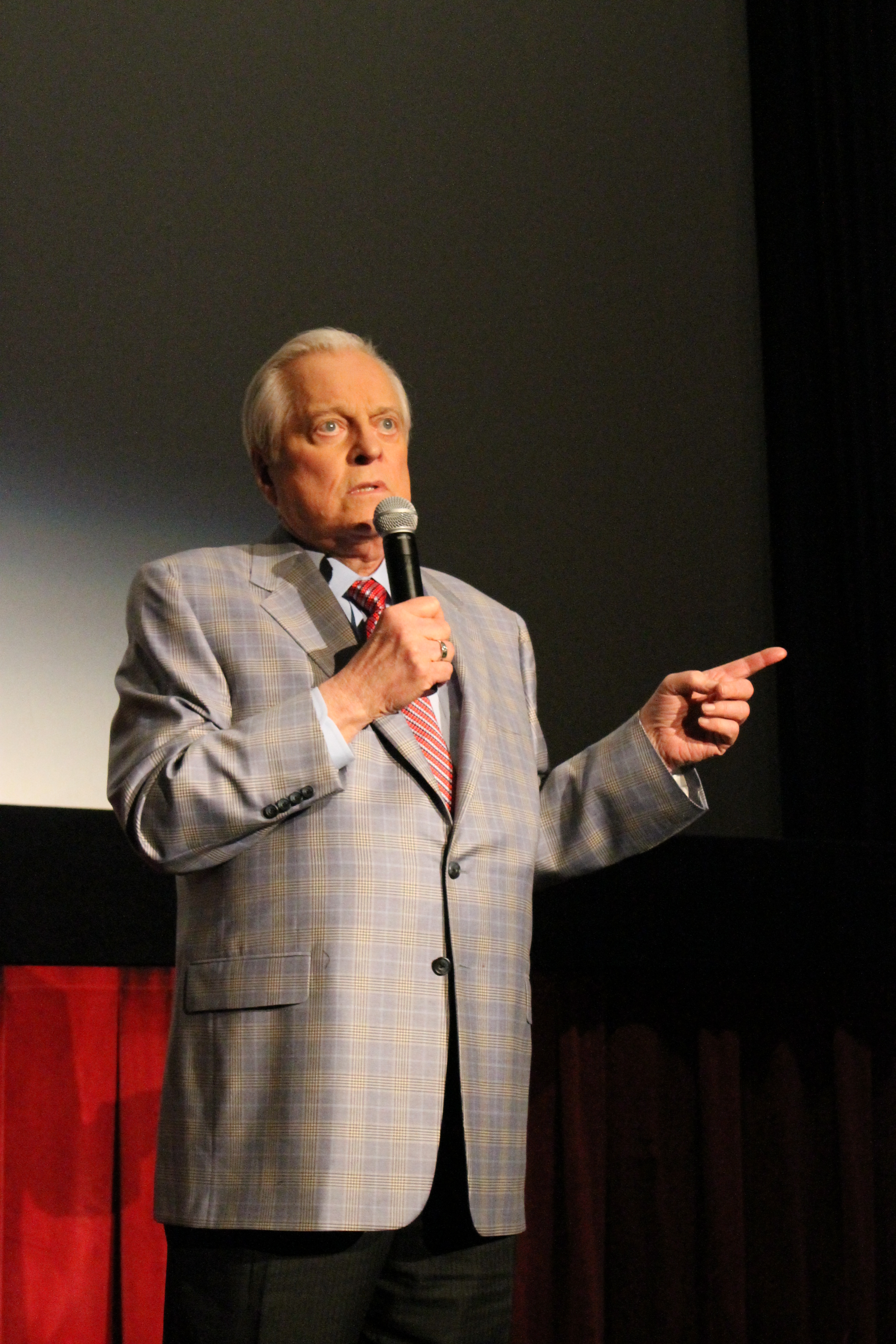
But even more special, it’s the second to last film shown in Graumann’s before the historic theater will be remodeled to IMAX. The crowd boo-ed as Robert Osborne said that but told everyone to take in the architecture before it’s gone. So above is a photo of the ceiling of the theater

Overall, it was a wonderful trip and I hope to return next year. I hope you have enjoyed my updates as well.

“I have nothing but wonderful memories of Joan”-Mildred Pierce and Ann Blyth

A packed house at the Egyptian Theater rose to their feet, cheering like Freddie Mercury was entering the building.
But the applause was for a petite, doll-like and lovely actress: Ann Blyth.
Blyth introduced Mildred Pierce (1945), a film that she plays Joan Crawford’s spoiled daughter, Veda.
Robert Osborne interviewed her, pointing out that it was lucky Blyth wasn’t typecasted as bad girls after this film. In fact, her roles were usually sweet after this.
He also pointed out that she tried to dispel negative Joan Crawford rumors.
“I have nothing but wonderful memories of Joan,” Blyth said.
Blyth also told about attractive men she worked with such as Tyrone Power who had beautiful brown eyes.
When she went on to MGM to be in musicals she said “It was a heavenly experience and I had the opportunity to sing beautiful music.”
She quit acting because she didn’t like the direction films were going in but later found that was a mistake because she had been considered for “The Three Faces of Eve.”
She also said she still sees friends such as Jane Powell, Jane Withers and Joan Leslie at least three times a year.
The best part of Mildred Pierce was when the whole audience cheered when Joan Crawford slapped Ann Blyth.

Saturday morning I saw:
-Bugs Bunny Cartoons for his 75th birthday: Leonard Maltin introduced the cartoons saying how Warner Brothers cartoons were the first to have the characters talk at the screen. I’ll admit I had a bit of a moment while watching, thinking about my childhood. Classical music and old actors were also introduced to me by classic cartoons.

image

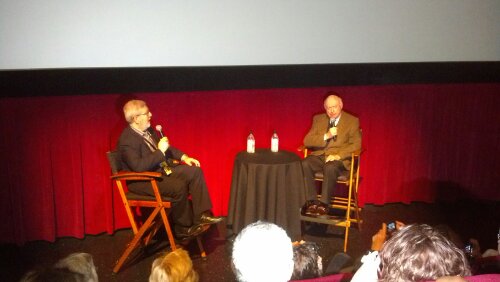
-A Lady Vanishes (1938): Introduced by Leonard Maltin and 98 year old Saboteur actor, Norman Lloyd. He gave up a tennis game to speak. He said A Lady Vanishes and 39 Steps were the last two English films Hitchcock made and were both perfection.
“I tell film students, don’t go to film school. Just watch 39 Steps,” said Lloyd.

image

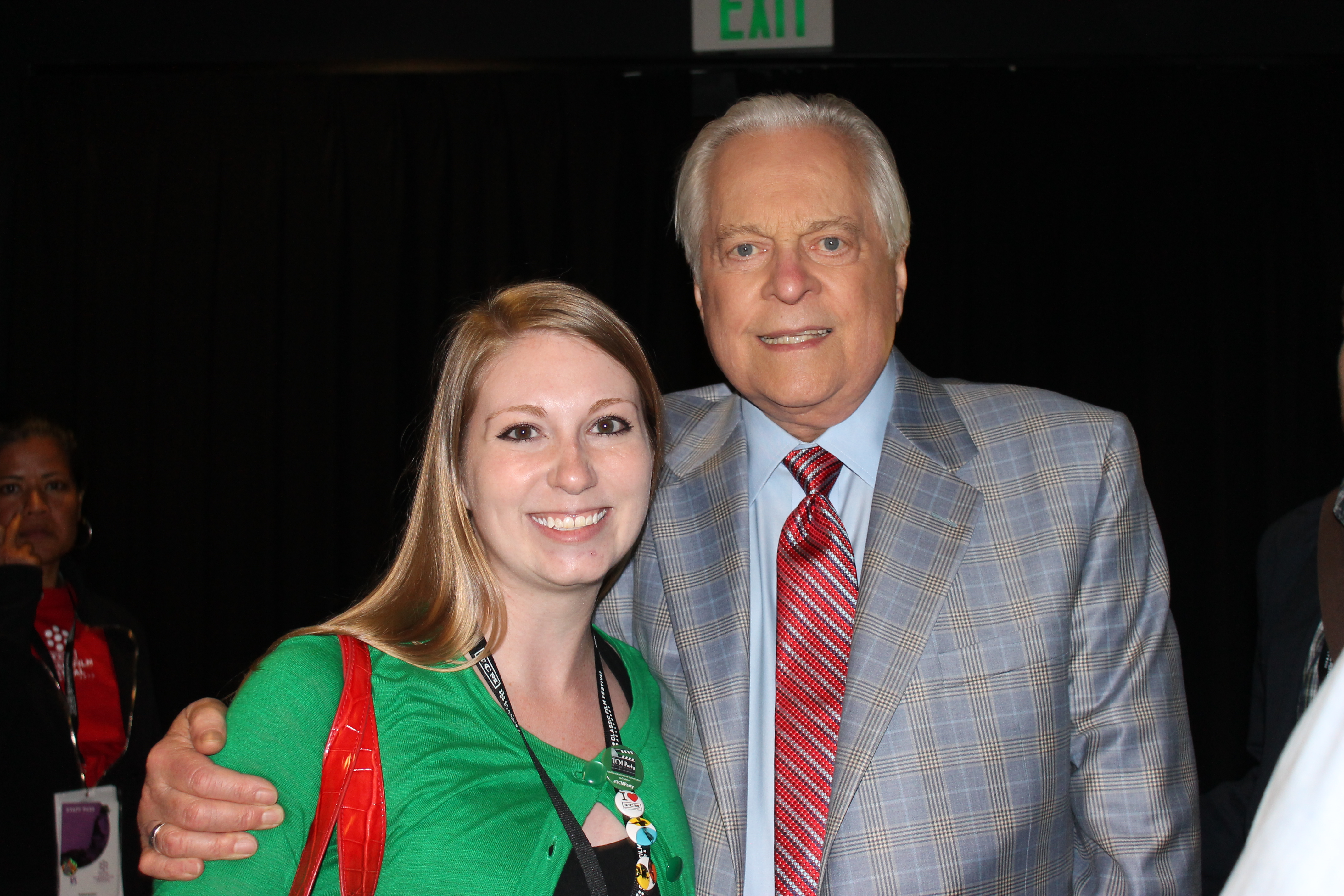
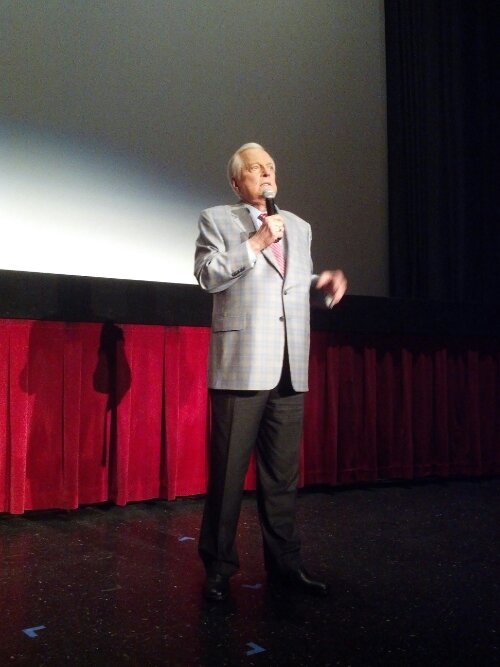
–Desert Song (1943) starring Dennis Morgan. Robert Osborne introduced the film so I sat in the front like a nerd so I could get a close picture. Osborne said this movie hadn’t been seen in 50 years because of copyright problems. As a musical fan and Dennis Morgan lover, I have always wanted to see this movie. I have also seen the 1953 remake with Kathryn Grayson and Gordon MacRea so I was comparing the two as I watched it. The 9143 version was colorful and beautiful, but I enjoyed the leading lady and plot better in the 1953 version. Osborne stayed and watched the film as well because he said this was the film he was most looking forward to. After the film I waited outside and got a photo with him.

-Island of Lost Souls (1932) starring Lelia Hyams, Richard Arlen and Charles Laughton. I went to the midnight showing of this film. I’d seen it before last summer but it was awesome to watch this freaky film so late at night. I think several of the viewers fell asleep. Running around and watching movies all day is very tiring!

Apologies in advanced for any typos. I’m using WordPress on my phone which is slightly cumbersome.

Now its the last day and I’m waiting to go in to Come September. Follow me @HollywoodComet or @StarJPickens.

Turner Classic Film Festival: MacMurray, Harlow, Hitchcock, Bow and Wayne

image

image

Friday (April 26) is the first full day of the Turner Classic Film Festival and it has been amazing.
Above is a photo of Kate MacMurray, daughter of Fred MacMurray and June Haver introducing “Suddenly It’s Spring” (1947).
The next photo is the ceiling of the Egyptian Theater where I saw “Notorious” (1946) and “It” (1927).
Today’s films that I saw:
-Libeled Lady (1936) starring Jean Harlow, William Powell, Spencer Tracy and Myrna Loy. I’ve seen it several times and can say its a favorite comedy of mine.
TCM’s Scott McGee introduced the film and said, “Screwball comedy is a lost art” which I would agree with.
Libeled Lady was advertised the first “all-star cast” since Dinner at Eight, McGee said.
It’s really amazing to sit in a theater where people applaud when Harlow comes on screen and die with laughter during Powell’s trout fishing scene.
-Suddenly It’s Spring (1947) starring Paulette Goddard and Fred MacMurray.
I LOVED this one. A really fun comedy about a couple who decides to get a divorce in 1941 but both serve during WW2. When they return, Goddard, who’s career as a WAC is giving marriage advice, isn’t so sure about the divorce but MacMurray already has a new bride picked out.
MacMurray’s daughter Kate spoke before the movie and told wonderful stories such as:
-John Wayne set up her parents June Haver and Fred MacMurray at a costume party. MacMurray’s previous wife had passed away as did Haver’s boyfriend.
“Mother was dressed as a saloon girl, maybe that’s what did it,” MacMurray said.
-MacMurray, a saxophonist and also once a singer for a jazz band, played the saxophone for the My Three Sons TV show theme song.
-After making The Apartment-where he plays a cad-the MacMurray family was at DisneyLand. A woman approached him and hit him with her purse because she had taken her family to see the movie. “That wasn’t a Disney movie,” she told him. MacMurray felt uncomfortable playing his roles in Billy Wilder films “The Apartment” and “Double Indemnity” since they weren’t his customary nice guy, comedic roles.
-Carole Lombard got him a raise at Paramount
-Haver met MacMurray before the costume party while making a film. Haver said he was so sweet and would bring his lunch, usually a peanut butter and jelly sandwich.

-Notorious (1946) starring Ingrid Bergman and Cary Grant. Rose McGowan spoke before the film and said it was a favorite of her’s. Hitchcock’s creative shots looked excellent on the big screen, but I must confess I dozed off. Not because I was bored but the 3 hour time change and lack of food (there’s literally no time to eat) made me tired.

-It (1927) starring Clara Bow. This was the first time I had seen a silent film with a live orchestra accompanying and it was AMAZING. Biographer David Stenn who wrote “Clara Bow: Running Wild” spoke before the film and called her a “great natural talent of movies.”
It is a really fun silent film, which coined Bow as the “It” girl. But as a dachshund owner, my favorite line is “I feel so low I could walk underneath a dachshund on stilts.”

-Hondo (1954): starring John Wayne and Geraldine Page. This was the first 3D movie I’ve EVER seen. It was amazing. I’ve always said She Wore a Yellow Ribbon was my favorite Wayne film but seeing Hondo for a second time may have changed my mind. The film is a perfect example of Wayne’s ruggedness and western appeal as he fights off the Apaches. In short, John Wayne is my ideal man.

That’s all for tonight! I opted to skip out on the midnight showing of Plan 9 from Outer Space to gear up for tomorrow’s films.
For updates during the day: check me out on Twitter @HollywoodComet or @StarJPickens. If you don’t have a twitter account, you should still be able to find me even by googling my name and Twitter.
Apologies in advanced for any typos. I’m using WordPress on my phone which is slightly cumbersome.

Turner Classic Film Festival: Mitzi Gaynor and South Pacific

image

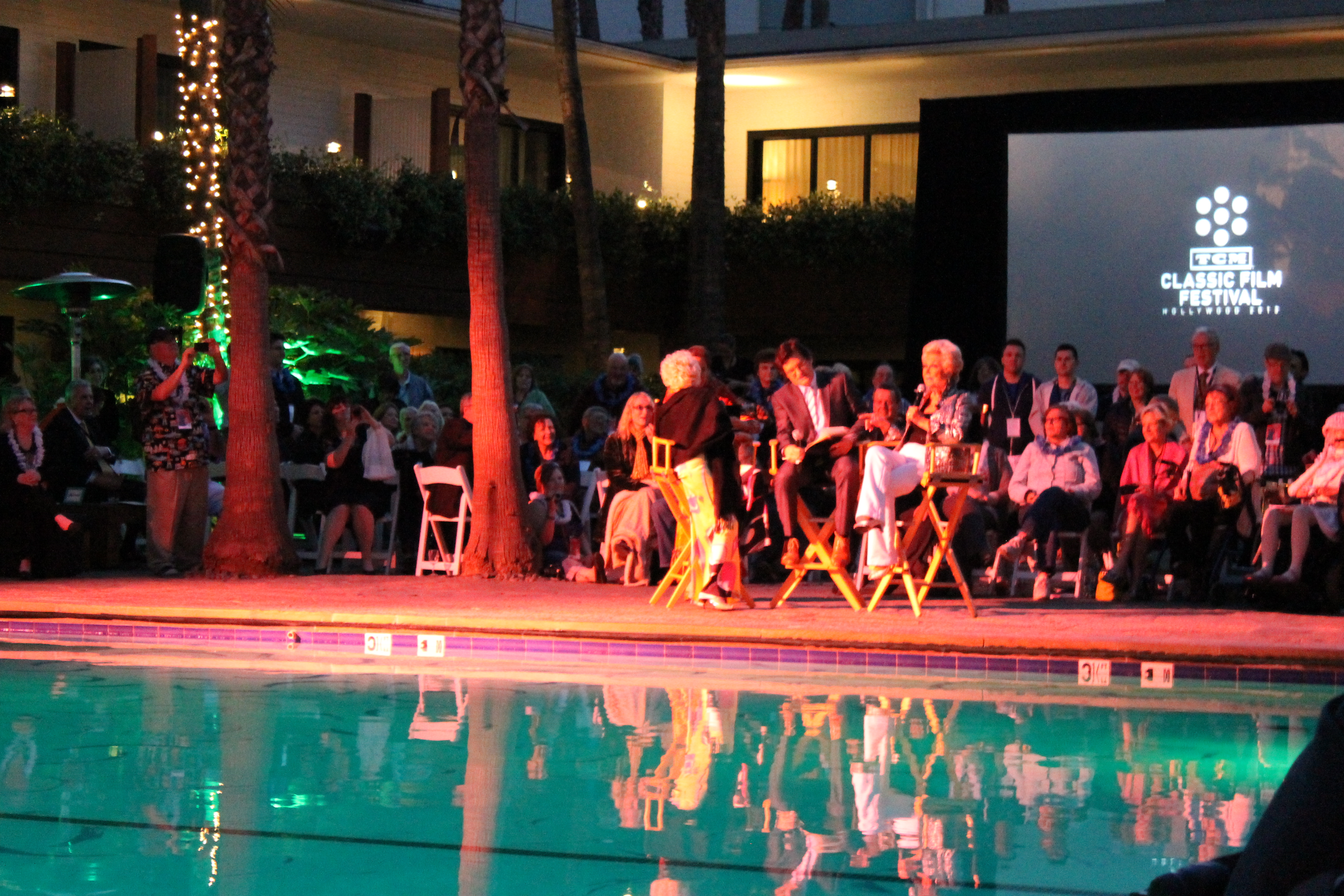
Last night (Thursday, April 25) I saw my first film at the Turner Classic Film Festival: South Pacific.
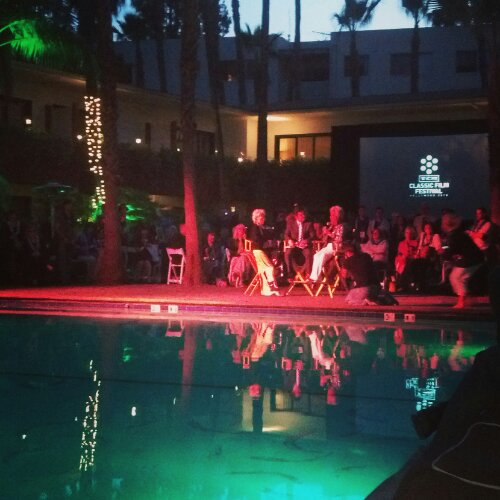
The film was shown poolside at the Roosevelt Hotel and introduced by Ben Mankiewicz with France Nuyen and Mitzi Gaynor as special guests.
Nuyen told about how she got her role in the film and was a French model. She went on set with high fashion makeup and was told to wash it off for the film. She cried because she thought she would be ugly.
Gaynor was hilarious. Her feistiness and off color stories could be compared to a Debbie Reynolds interview.
Gaynor got the role of Nellie Forbush in South Pacific over actresses such as Susan Hayward, Elizabeth Taylor, June Allyson, Doris Day and several others.
While Mankiewicz was interviewing Gaynor, she demanded he bring out his new baby for everyone to see. By the end, she had taken over the interview.
Hilariously Gaynor told of how she complimented her costar Rossano Brazzi on his good looks and Brazzi said, “I know.”
During the screening of South Pacific, people clapped after each song.
The ambiance of the film by the pool was beautiful.
This is just a brief post to keep y’all updated during TCMFF.

This morning I saw Jean Harlow in Libeled Lady (1936) and am now waiting to see Suddenly It’s Spring (1947) with Fred MacMurray and Paulette Goddard introduced by MacMurray’s daughter, Kate MacMurray.

More about Friday’s events in the next post.

The Comet goes to Hollywood

image

In roughly a week, I will be leaving my familiar North Carolina, small town surroundings for a solo adventure.
I’ll be attending my first Turner Classic Film Festival (TCMFF) in Los Angeles, CA, which will involve flying alone for the first time.
Attending this festival has been something I’ve wanted to do since the festival started. But in 2010 and 2011, I was still in college and the event hit around exams.
In 2012, I was working at my first reporter job out of college-a three day a week newspaper in a small town. I was making an equally small sum of money, prohibiting me from saving enough to ever think of going to the festival.
At this same time last year I was going through a difficult personal time but not being at the festival hurt more.
As I cried real tears, watching photos of fans with Robert Osborne being posted, I vowed I would be in California in 2013. And now I’m going.
But that may be where the road to TCMFF begins but not my classic film passion.
As a small child, I thought every kid watched “Seven Brides for Seven Brothers” and “Yankee Doodle Dandy” with their parents.
In middle school, I only listened to bands like the Monkees and Herman’s Hermits. I couldn’t understand why only one of my classmates had seen “Breakfast at Tiffany’s.”
In high school, I accepted I was different, if not weird. As I attempted to learn steps to the mambo in “West Side Story,” or chose to stay home and watch “The Lost Weekend” or “A Date with Judy” than go party with friends, I realized I was a classic film fan.
My teenage classmates considered it uncool-not that I cared-but once I got to college, it was embraced. I would hesitantly tell people, “I love old movies” and they would exclaim how cool it was.
By sophomore year of college, I started Comet Over Hollywood and was amazed to find how many other fans there were out there who were like me. They also loved the shots during the canteen dance in “Since You; Went Away” or appreciated the child acting of Virginia Weidler-most importantly they knew what I was talking about.
They were like me, a classic movie fan.
Now, working at a daily newspaper, I have the opportunity to spread even more film love with a weekly column. Since, I’ve receieved e-mails from readers telling me how they met spouses due to film love or thank me for helping them relive memories of seeing “A Summer Place.”
And next week from April 25 to April 29, I can connect with even more fans in person.
As for the movies I’m going to see? I honestly I haven’t made a rough game plan of what movies I’ll be attending-not only does newspaper reporting keep me busy, but I hope for my trip to be rather spontaneous.
However, I do know I’m interested in the screenings of “Libeled Lady,” “South Pacific” (Mitzi Gaynor is a favorite of mine), “It” and either of the Ann Blyth films (she’s also a favorite of mine)- but honestly those are the only films I remember seeing after a first glance at the film schedule. I know there are more.
And of course, I hope to see my hero and favorite person on the planet-Robert Osborne-even if it’s from 100 feet away.
So film fans and dear readers, I look forward to seeing you soon if you are attending. And if you are, please say hello.
I’ll be the blond who will still be saying y’all, even in Hollywood.
Love,
Jessica P.
The Hollywood Comet
image

Classics in the Carolinas: Stanley Donen

Comet Over Hollywood is doing a mini-series of “Classics in the Carolinas.” I’ll be spotlighting classic movie related topics in South Carolina (my home state) and North Carolina (where I currently live and work).

Updated Feb. 23, 2019.
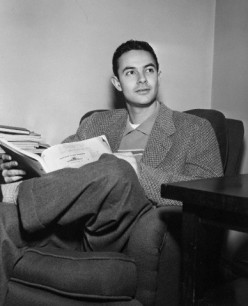
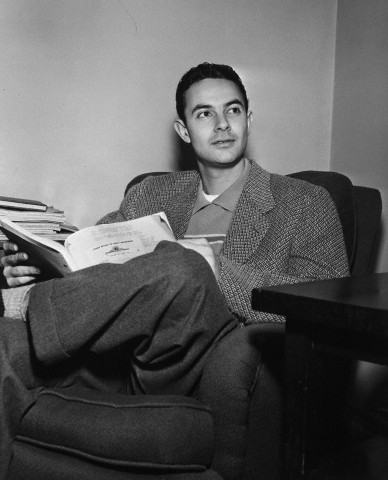
Stanley Donen in 1950

Stanley Donen in 1950

He directed and choreographed some of the most famous musicals of the 1940s and 1950s, including “Singin’ in the Rain.”

And he’s from my birthplace

Stanley Donen was born in 1924 in Columbia, S.C.-the capital of South Carolina.

He left the south for New York when he was a teenager.

Donen described his childhood as an unhappy one in a 1983 book by Joseph Andrew Casper.

His parents were of the Jewish faith. Though Donen did not identify with the religion, he was taunted by anti-Semitic classmates in the late 1920s and early 1930s.

Due to the bullying he endured in his youth, Donen did not recall the city fondly in interviews.

“It was sleepy, it was awful, I hated growing up there, and I couldn’t wait to get out,” Donen said in the book Stephen M. Silverman, Dancing on the Ceiling: Stanley Donen and His Movies.

In his 2006 Turner Classic Movies Private Screenings interview with Robert Osborne, Donen described Columbia as a “small town.” At the time, Columbia was probably a small, but now, is the largest city in South Carolina.

“My family and I were Southerners,” Donen said in Silverman’s book. “Really, really Southern, and really, really American. My mother was born in Columbia, SC. My father was born in Augusta, GA, which is just over the border. His father died in Beaufort, SC, and my mother’s mother and father–that is, my maternal grandparents–are buried in the same town where they were born, Columbia, SC.”
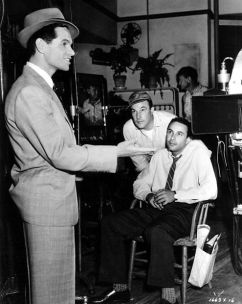
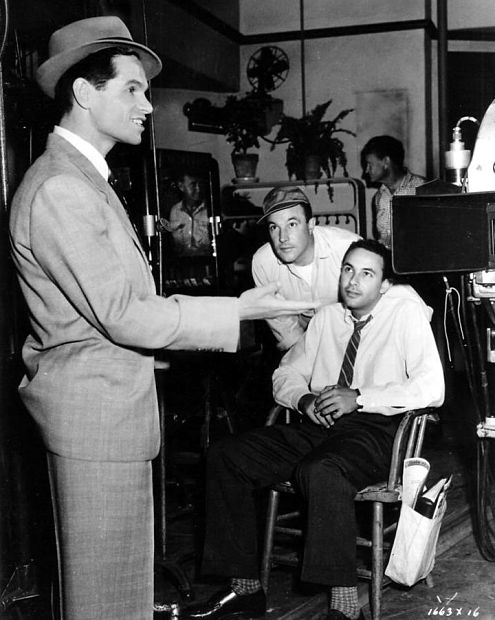
Donen and Gene Kelly watch Michael Kidd sing in "It's Always Fair Weather"

Donen and Gene Kelly watch Michael Kidd sing in “It’s Always Fair Weather”

Donen would have been named after his grandfather, Issac, but his mother felt Issac would make for a bad life in the south, so he was named Stanley instead, according to the book.

“Columbia was a town with a wonderful group of Jewish people. It’s just that there weren’t too many of them,” said a childhood neighbor, Betty Walker in Silverman’s book. “They were really outnumbered.”

After school to escape from his unhappiness, Donen went to the movies.

“I saw Fred Astaire in ‘Flying Down to Rio’ when I was nine years old, and it changed my life,” he said in the Casper biography. “It just seemed wonderful, and my life wasn’t wonderful. The joy of dancing to music! And Fred was so amazing, and Ginger— oh, God! Ginger!”

After watching Astaire and Rogers, he started taking dance lessons in Columbia and performed at the Town Theater.

His mother encouraged him to move to New York and in 1940, at the age of 16, he found himself as a chorus boy in “Pal Joey” with Gene Kelly as the lead. Kelly asked him to be the assistant choreographer and the show’s stage manager.

In 1943, Donen went to Hollywood and helped choreograph the film “Best Foot Forward” starring Lucille Ball. Donen was the stage manager for the play on Broadway, which starred Rosemary Lane. When the film rights were bought by MGM for the play, Donen went to Hollywood along with some of the play cast which included June Allyson and Nancy Walker, according to Allyson’s autobiography.

Donen’s Hollywood choreography career continued with movies like “Cover Girl” and “Living in a Big Way.”

The first film he directed in Hollywood was “On the Town” (1948). He continued on directing some of the most famous Hollywood films including “Singin’ In the Rain” (1952), “Seven Brides For Seven Brothers” (1954) and “Charade” (1963). Stars he directed include Cary Grant, Audrey Hepburn, Gene Kelly, Fred Astaire and Sophia Loren.

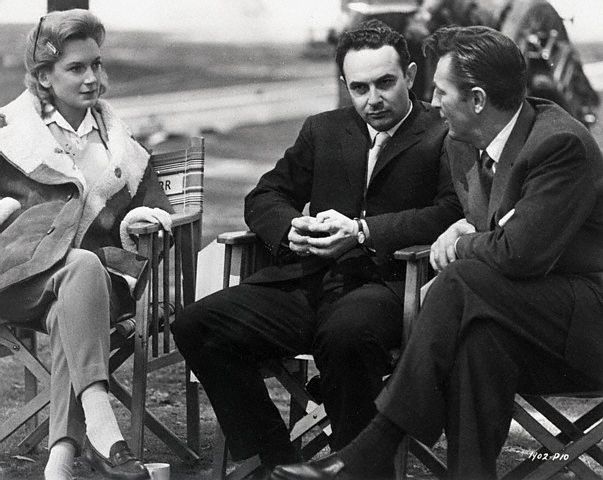
Deborah Kerr, Stanley Donen,  and Robert Mitchum

With Deborah Kerr and Robert Mitchum for “The Grass is Greener”

Though Donen’s life in Columbia wasn’t a happy one, he influenced one woman with her dance career. Naomi Calvert, who co-owned the Columbia dance institution Calvert-Brodie dance studio, studied under Donen as well as Tim McCoy, who helped Vera-Ellen.

She co-owned a reputable dance studio in Columbia called Calvert-Brodie, along with Ann Brodie, for over 30 years. Calvert passed away in 2016.

My oldest sister attended Calvert-Brodie and looking back on home videos of dance recitals, the recitals were like a mini “revue” or “follies.”

These weren’t children bouncing their hip and shaking their finger at the audience. These were themed dance recitals, such as a patriotic theme and a circus theme. They would begin with an opening number. The circus show was complete with a person on a trapeze, and the patriotic show had little girls tap dancing with drums. My oldest sister, Erin, had a tap solo.

Clearly, Mr. Donen influenced her craft.

Though my father grew up in Columbia as an Army brat and we lived there as a family for six years, it isn’t the Pickens family’s favorite place either.

Though it’s the capital of the state, many people call Columbia “the arm-pit of the South.”

While Donen didn’t remember his hometown fondly, I’m also disheartened to see that he often isn’t remembered by his birthplace either. For his 90th birthday in 2014, a non-profit movie theater held a film retrospective, and in 2017 he was inducted into the South Carolina Hall of Fame. Otherwise, any recognition is few and far between, even by The State newspaper on the day of his death.

The town that mistreated him in his youth has also unfortunately forgotten one of the most vibrant film directors of film history.
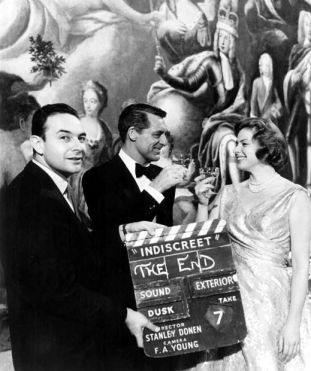
 

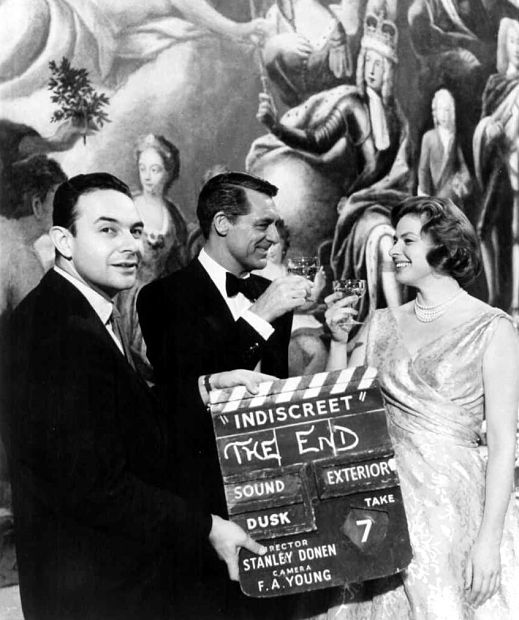
The end. On the set of "Indiscreet" with Ingrid Bergman and Cary Grant

The end. On the set of “Indiscreet” with Ingrid Bergman and Cary Grant

Check out the Comet Over Hollywood Facebook page for the latest updates.

“Now it’s time to say goodbye”: Remembering Annette Funicello

Just thinking about her makes me smile.

annette funicello 2

Annette Funicello

Annette Funicello has always been a source of happiness in my household. Her films, the Annette mystery book series, her music- she has always been a favorite of the Pickens’ family.

Though I didn’t grow up in the 1960s, I grew up with Annette. My mom was a huge fan so I was introduced to “The Shaggy Dog” (1959) and “Babes in Toyland” (1961) at a young age.

“I had Annette books, coloring books and paper dolls growing up,” my mom, Lisa Pickens, said. “I really liked her a lot. Since she was only in movies while she was young, we didn’t see her age. There was something special about Annette.”

Annette was an original Mousketeer on the Mickey Mouse Club. She autographed a photo for me in 2008

Annette was an original Mousketeer on the Mickey Mouse Club. She autographed a photo for me in 2008

Even in the past two years, summer afternoons were spent downloading her songs on iTunes and watching old Mickey Mouse Club episodes and the Annette series. In the serial Annette was a “country cousin” who moves to the city to live with her wealthy aunt and uncle.

“Throughout all the years we were friends she never changed from that sweet person who cared so much about others,” said Mousketeeer Sharon Baird, on the Official Disney Fan Club. “She always had time for everyone; family, friends and fans alike. It’s no wonder she was America’s sweetheart.”

In the 1950s, Annette Funicello stood out as a Mousketeer on the Mickey Mouse Club. Her background was Italian and she looked different than the other, Anglo-Saxon children.

She even suggested that she change her last name to “something more American,” but Walt Disney disagreed, saying her own name made her more unique, according to IMDB.

And her uniqueness is what made her the most popular of the original Mousketeers.

“The Disney studio wasn’t like other studios. It was just like home – it always had a small-town, family atmosphere,” she said.
Along with The Mickey Mouse Club, Annette starred in Disney films such as “The Misadventures of Merlin Jones” (1964) and “Babes in Toyland.”

Her fame brought her to recording career, with records like “Hawiaannette,” “Itallianette” and “Danceannette,” but Miss Funicello didn’t think she could sing.

“The Sherman Brothers wrote a song for me for the Annette series called ‘How Will I Know My Love,’” she said in an interview. “They told me we have to put this on a single. People are writing us like crazy wanting to buy it. I told them I don’t sing. And they said, ‘Well I’m signing you to a recording contact, young lady.’ And I said yes sir, and that’s what started my singing career.”

Composer Tutti Camarata was the one who created “The Annette Sound.” This is where she would sing the song once. She then would listen to the song with headphones, while trying to sing along as exact as she could, she said.

“It gave me that larger sound that I needed, because my voice is very small with a range of about of three notes,” she laughed. “It worked. I think my favorite song was ‘Pineapple Princess.’ I was lucky enough to have five songs that made the Top 10.”

Stevie Wonder, early in his career, with Annette Funicello and Frankie Avalon in "Muscle Beach"

Stevie Wonder, early in his career, with Annette Funicello and Frankie Avalon in “Muscle Beach”

Annette was also one of the first performers to sing with the Beach Boys as they were growing in fame.

“I really shouldn’t put down my singing career, because I’m so appreciative of everything that came my way,” she said.

In interviews and in her autobiography “A Dream is a Wish Your Heart Makes,” Annette seems like somebody you would run in to at the store. Annette was sweet and down to Earth, making her more relatable for her fans.

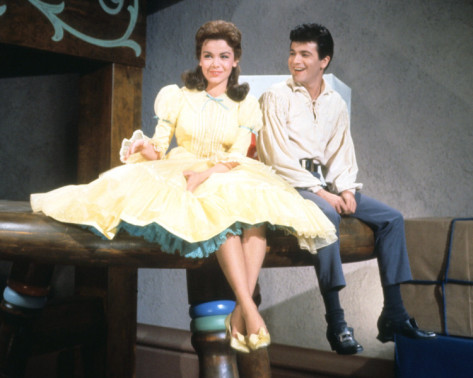
With Tommy Sands in "Babes in Toyland"

With Tommy Sands in “Babes in Toyland”

Even while she was in movies, her father still worked at a gas station, and Annette wasn’t allowed to date until she was 16, according to her New York Times obituary.

In real life, she stayed friends with fellow teen stars Frankie Avalon, Shelley Fabres and fellow Mousketeers Doreen Tracey and Cheryl Holdridge, who passed away in 2009. She was good friends with Jimmy Dodd from the Mickey Mouse Club until his death in 1964.

While she was 21-years-old and still under contract at Disney, she was approached about roles in beach films. Walt Disney approved Annette doing the films as long as she didn’t show her belly button in bathing suits, according to the New York Times.

These films included the silly, but fun, “Beach Blanket Bingo” (1965) and “Beach Party (1963).

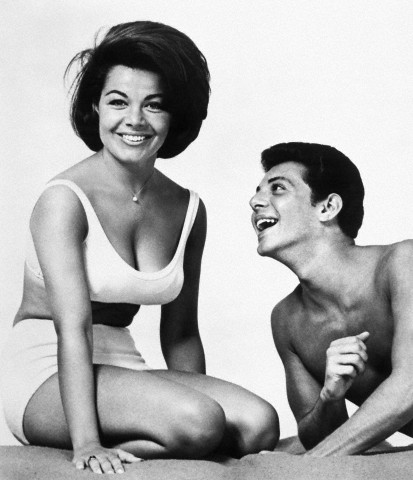
Annette Funicello and Frankie Avalon in "Beach Party"

Annette Funicello and Frankie Avalon in “Beach Party”

Annette retired from films, only making a few appearances, after she married her first husband in 1965 to raise her family.

“She was always there for car pools, Hot Dog Day and the P.T.A,” her daughter said in 1994.

After they divorced, she remarried in 1986 to Glen Holt. They remained married until she passed away.

Annette returned for a few appearances in the 1980s including “Back to the Beach” (1987) with Frankie Avalon, and an appearance on the TV Show “Full House” where Michelle pronounced her last name as “Funny-Jello.”

It was in 1987, she learned she had Multiple Sclerosis and established the Annette Funicello Research Fund for Neurological Diseases.

Miss Funicello passed away today at the age of 70, and the world seems a little dimmer.

“Everyone who knew Annette, loved and respected her,” said Walt Disney’s daughter Diane Miller.  “She was one of the loveliest people I’ve ever known, and was always so kind to everyone. She was also the consummate professional and had such great loyalty to my father. Annette will always be very special to me.”

Rest in peace, Annette. You will always remain in our hearts as you chant “Meeska-Mooska-Mouseketeer” and surf the beaches of California.

Check out the Comet Over Hollywood Facebook page for the latest updates.

From Hollywood to Raleigh: the biggest collection of Gone with the Wind memorabilia

gone with the wind

It started when James Tumblin, saw a dress from “Gone with the Wind” lying on the floor at Universal Studios in 1962.

It was the dress Scarlett O’Hara wore while riding through the shanty town in the 1939 film.

comet10

Found on the floor about to be thrown away, this was the first item in Tumblin’s Gone with the Wind collection-Scarlett’s dress she wore in the shanty town scene

“My mother always taught me to be respectful of belongings. Even if I’m walking through K-Mart I pick up clothing that’s on the floor,” said the former Universal Studios hair and make-up department head. “I picked up the dress and realized it was a dress from ‘Gone with the Wind.’”

Tumblin asked why the dress was on the floor and was told the dress was going to be thrown away.

“I asked if I could buy it and was told $20 for the dress and a whole other rack of clothes,” he said. “I casually accepted. I knew if I was too excited they would go up on the price. The rack of clothes didn’t include other Gone with the Wind costumes but had costumes that Judy Garland wore in ‘Easter Parade.’”

After that, Tumblin began getting phone calls from people who had items from “Gone with the Wind.”

Now, Tumblin owns the largest “Gone with the Wind” collection in the world. He owns at least 300,000 pieces of film memorabilia. Part of his collection has been displayed in the North Carolina Museum of History in Raleigh in the Real to Reel: The Making of Gone with the Wind exhibit. The exhibit started in Aug. 2012 and was originally supposed to end in January. It has been so successful, it was extended until April 14.

The hast worn by Vivien Leigh in the barbecue scene in Gone with the Wind

The hat worn by Vivien Leigh in the barbecue scene in Gone with the Wind

Tumblin’s collection is stored at his home in Oregon. The latest item he bought was a coat worn by a Munchkin in “The Wizard of Oz” (1939).

I traveled from Shelby, N.C. with my parents to see the exhibit on Saturday, April 6.

Vivien Leigh's Academy Award for Best Actress for Gone with the Wind

Vivien Leigh’s Academy Award for Best Actress for Gone with the Wind

The exhibit included costumes worn by Viven Leigh as Scarlett O’Hara, Clark Gable as Rhett Butler, Olivia de Havilland as Melanie Wilkes, Leslie Howard as Ashley Wilkes, Ona Munson as Belle Watling and Cammie King as Bonnie Blue Butler.

It also had the script used by Hattie McDaniel who played Mammy, furniture used in the film and Vivien Leigh’s Academy Award for Best Actress as Scarlett O’Hara.

While walking in, one of the museum workers told us Tumblin, the owner of the exhibit, was inside.

I kicked myself for not bringing along a reporter’s notebook and scrambled to find paper in the museum so I could interview Tumblin. I settled for the back of several museum volunteer fliers.

Tumblin was sitting on a bench with his 27-year-old son Josh when I introduced myself as a reporter for the Shelby Star. The two scooted down and let me sit with them for about a 45 minute interview.

comet9

Owner of the collection, James Tumblin greeting visitors and answering questions at the North Carolina Museum of History in Raleigh

“Are you going to click your heels three times and go back to Kansas?” he joked, glancing down at my bright orange flats.

Born in Denver, Colorado, Tumblin began working at Universal Studios in the late-1950s and retired in 1982.

“I wanted to make a lot of money and buy my mother a house,” he said. “I guess I was too naïve to realize rejection. But I kept going back and wore them down, and they finally gave me a job sweeping hair in the costume department.”

A muff and coat worn by Ona Munson as Belle Watling. This was costume designer Walter Plunket's favorite muff and coat. It took three years to restore it when it was found.

A muff and coat worn by Ona Munson as Belle Watling. This was costume designer Walter Plunket’s favorite muff and coat. It took three years to restore it when it was found.

Every night, he would stay and comb the wigs. One day his boss, Larry Germain, asked him if he had been combing the wigs.

“He told me that Debbie Reynolds liked the way I had combed her wig and said she wanted me to come out to her house and comb her wigs,” Tumblin said. “She paid me $200 to do it. It was the first time I rode in a limousine. They realized I had talent and that’s how it all started.”

He got along with many of the stars and it was a happy time. The only downside was when he found a favorite actor to be unpleasant.

Claudette Colbert, Bette Davis, Marilyn Monroe, Greta Garbo and Mae West are just a few people he worked with.

“Marilyn Monroe was lovely and child-like. Cary Grant was a lovely man. Garbo had already retired, but she would have me up to her apartment in New York to cut her hair,” Tumblin said. “Mae West was a hoot. She would have me up to her beach house and I did 30 wigs for her.”

Katharine Hepburn was another close friend who Tumblin frequently had as a house guest after he retired.

“She loved to drive my truck and always lectured me about my posture,” he said.

William Cameron Menzies's production painting for the burning of Atlanta scene

William Cameron Menzies’s production painting for the burning of Atlanta scene

Another friend was Doris Day. He had an ongoing joke with Day where he threw her into a swimming pool.

Movies he worked on include “Lawrence of Arabia” (1962), “Psycho” (1960), “The Birds” (1963), “The Sound of Music” (1964), “Thoroughly Modern Millie” (1967), “Star Wars” and “The Terminator.”

“I worked for a year and a half on Lawrence of Arabia. I hadn’t seen it for 40 years when I saw it again at a film festival,” he said. “I started crying and my son asked me what was wrong. I worked on this film for a year and a half of my life and so many of these people are gone now.”

The dissolve of the studio system didn’t affect the costume department, but Tumblin didn’t like the situation.

The original score by Max Steiner for Gone with the Wind

The original score by Max Steiner for Gone with the Wind

“It was sad to see all of these people go. I used to see Fred Astaire coming in his convertible. Doris Day and Rock Hudson had dressing rooms next to each other,” he said. “Universal was the first studio to lease out a sound studio to television with shows like ‘Leave It To Beaver.’ Universal survived while other studios died when they turned their noses up to television.”

I even found that Tumblin and I share the same favorite classic film: “Since You Went Away” (1944).

“It was a job,” he said. “What’s nice to know is that I did it well enough that people still want to see my work in films.”

Room of costumes from Gone with the Wind at the NC Museum of History

Room of costumes from Gone with the Wind at the NC Museum of History

Costume designs for Gone with the Wind by Walter Plunkett

Costume designs for Gone with the Wind by Walter Plunkett

A suit worn by Clark Gable as Rhett Butler. It was later worn by John Wayne, who at one point was the same size as Gable.

A suit worn by Clark Gable as Rhett Butler. It was later worn by John Wayne, who at one point was the same size as Gable.

Tattered Civil War uniform worn by Leslie Howard as Ashley Wilkes

Tattered Civil War uniform worn by Leslie Howard as Ashley Wilkes

Worn by Vivien Leigh in the hospital scene in Gone with the Wind

Worn by Vivien Leigh in the hospital scene in Gone with the Wind

Worn by Cammie King as Bonnie Blue Butler during the horse riding incident

Worn by Cammie King as Bonnie Blue Butler during the horse riding incident

Worn by Olivia Deviland as Melanie Wilkes during the train station scene

Worn by Olivia Deviland as Melanie Wilkes during the train station scene

Check out the Comet Over Hollywood Facebook page for the latest updates.

Day and MacRae: A forgotten screen team

Doris Day.

The sunny blond who can brighten a day with a smile.

On her birthday, I wanted to remember one of my favorite leading men who starred in five films with her.

But I don’t mean Rock Hudson.

Day and Hudson joined in the late 1950s to create one of Hollywood’s most memorable screen teams.

The two starred in three films together: “Pillow Talk” (1959), “Lover Come Back” (1961) and “Send Me No Flowers” (1964).

But before Rock entered into the picture, Day was teamed five times with another tall, dark and handsome actor-but this one could sing.

Doris Day and Gordon MacRae in "On Moonlight Bay"

Doris Day and Gordon MacRae in “On Moonlight Bay”

Gordon MacRae starred in five films with Day while she was under contract at Warner Brothers. Day was under contract at Warner from 1948 to 1955 and made 17 pictures, according to her autobiography, “Doris Day: Her Own Story.” (111)

“With pictures assigned to me one after the other, I found myself performing with the same Warner Brothers actors over and over again,” she wrote. “Three pictures with Jack Carson, five with Gordon MacRae, two with Ronald Reagen, four with Gene Nelson. A major studio was really a big repertory company that constantly shuffled its employees around so as to keep them busy as much of the time as possible.” (111)

"Tea for Two" (1950)

“Tea for Two” (1950)

Her first movie with MacRae was “Tea for Two” (1950).

“It was my first movie with Gordon MacRae and Gene Nelson, two cheerful, amusing young men,” she wrote.

“Tea for Two” is based off the play “No, No Nanette.” Day, as Nanette, bets her uncle $25,000, played by S.Z. “Cuddles” Sakall, that she can say to no to everything for 48 hours. If she wins, she can back her boyfriend’s Broadway show.

Of course there are misunderstandings along the way and affect her romance with MacRae.

Doris Day plays a tom boy in "On Moonlight Bay" before she goes on her first date with McCrae

Doris Day plays a tom boy in “On Moonlight Bay” before she goes on her first date with McCrae

“In those Warner Brothers years, the pictures I enjoyed the most (not the scripts but the fun I had making them) were the nostalgic musicals-Tea for Two, Lullaby of Broadway, On Moonlight Bay, I’ll See You in My Dreams, By the Light of the Silvery Moon, Calamity Jane,” she wrote. “I liked the old songs, and the good old times that those films captured. I guess I’m really an old-fashioned girl at heart.” (117)

Of those films Day listed, Tea for Two, On Moonlight Bay and By the Light of the Silvery Moon also starred MacRae as her singing boyfriend. Other films they were in together included  “West Point Story” and “Starlift.”

Prior to his films with Day, MacRae starred in a few forgettable films and two June Haver vehicles. “Tea for Two” was his sixth film. Their last film “By the Light of the Silver Moon” (1953) was followed by “Oklahoma!” (1955)-the film he is remembered for today.
My favorite Day-MacRae films are “On Moonlight Bay” (1951) and “By the Light of the Silvery Moon” (1953).

Rosemary DeCamp, Doris Day, Leon Ames, Gordon MacRae in "On Moonlight Bay"

Rosemary DeCamp, Doris Day, Leon Ames, Gordon MacRae in “On Moonlight Bay”

The two films are a series based on the Booth Tarkington “Penrod” stories but revolve around the sister Marjorie, played by Day. Set at the early 1900s, Day is a tomboy and starts going on dates with Bill, played by MacRae. At first Bill has big, philosophical ideas, saying marriage is stupid.

The first film ends with Bill going to fight in World War I. The second movie picks up when he returns and follows the dilemma of when the two will get married.

The movies are heartwarming and include antics by Day’s little brother Wesley, played by Billy Grey, and her parents, played by Leon Ames and Rosemary DeCamp.

Though Day and MacRae are not remembered as a great screen team today, I feel they had great chemistry and their voices blended well in musicals.

MacRae’s personal life may have been stormy in his later years, but he had a sunny, boy next door characteristic that worked well with Day’s persona.

Happy birthday to my favorite actress since I was in eighth grade and who consistently puts a smile on my face.

Check out the Comet Over Hollywood Facebook page for the latest updates.

Easter at the Hollywood Bowl

The Hollywood Bowl has held historic performances from Olivia de Havilland and Mickey Rooney in “A Midsummer Night’s Dream” in 1934 to the Beatles in 1964 and 1965.

It also holds an Easter sunrise service every year.

The tradition started in 1919 when silent film stars held a sunrise service near the area of the Hollywood Bowl. The service was then moved to the site in 1921, when the Bowl was basically a rocky, weedy hillside that had excellent natural acoustics, according to the Hollywood Bowl’s website.

Los Angeles Philharmonic at the Hollywood Bowl in 1921.

Los Angeles Philharmonic at the Hollywood Bowl in 1921.

At the 1921 service, the Los Angeles Philharmonic performed and over 800 people attended.

In 1922, the Los Angeles Philharmonic performed for 50,000 at the Easter Service and the Hollywood Bowl officially opened four months later on July 11, 1922.

Easter Service in 1922 with 50,000 people in attendance.

Easter Service in 1922 with 50,000 people in attendance.

The shell on the stage at the Hollywood Bowl was designed by Frank Lloyd Wright’s son, Lloyd Wright, in 1928 but seems to have been removed for the service.

Hollywood Bowl Easter service in 1928

Hollywood Bowl Easter service in 1928

The Hollywood Bowl Easter Sunrise Service is held every year but has been canceled at least three times in recent years: in the mid-1990s for renovations, 2010 due to lack of funding and 2012 for maintenance on the Hollywood Bowl, according to a Los Angeles Times article.

Ariel view of the 1929 Easter service

Ariel view of the 1929 Easter service

Mary Pickford attends the Hollywood Bowl Easter Service in 1953 on her 61 birthday. She is recites the "Salutation to the Dawn."

Mary Pickford recites “Salutation to the Dawn” in 1953 on her 61 birthday.

17,000 attend the service in 1956

17,000 attend the service in 1956

Easter service in 1962

Easter service in 1962

Happy Easter everyone!

Check out the Comet Over Hollywood Facebook page