Pages to Screen: The Bishop’s Wife

When a novel is turned into a film, several things can happen:
The novel source material is often better than the film, as the story on-screen misses nuances or thoughts portrayed in a book.

Other times, the film and book are so similar that they complement each other.

And occasionally, you wonder how such a lovely film could have come from the original book.
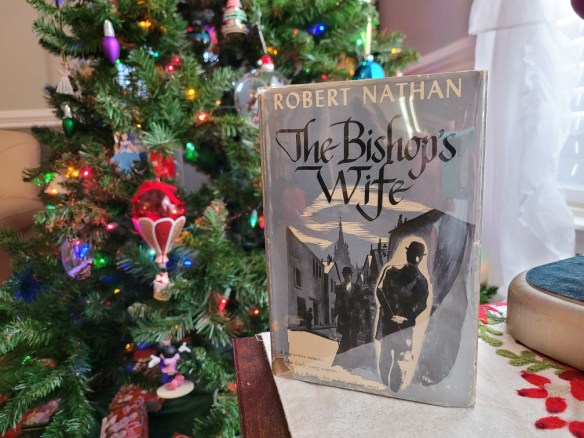
Resized_20231221_160638

A photo of my copy of The Bishop’s Wife by Robert Nathan

That is how I felt while reading Robert Nathan’s 1928 novel, “The Bishop’s Wife.” The brief 192-page novel isn’t bad; it’s just quite different from the 1947 film it was transformed into, starring Cary Grant, Loretta Young and David Niven.

The nuts and bolts are there: there is a bishop, Henry Brougham, who is fundraising to build a cathedral; his wife, Julia Brougham, their daughter; and an angel who comes to visit them.
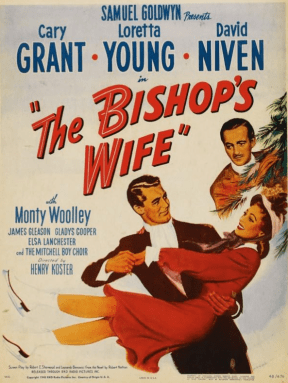
bisho's wife5In the beloved holiday classic films, the story follows the Bishop, played by David Niven, who feels he must build the most spectacular new cathedral the city has ever seen. As he fundraises and rubs elbows with the rich (such as Gladys Cooper’s character), the Bishop loses sight of what’s important about his religious role and alienates his family. His wife Julia, played by Loretta Young, longs for when they were happy and in love and first married, living in a less wealthy part of town. In an answer to his prayer for guidance for the chapel, an angel named Dudley, played by Cary Grant, visits the Bishop. The Bishop is constantly annoyed by Dudley and his perfection, but mainly because Julia enjoys Dudley’s attention, and Dudley seems to be falling for his wife. Dudley helps Julia see the simple pleasures of life, like buying a new hat or going ice skating, while showing a less-willing bishop that a cathedral is not what he needs.

In Nathan’s 1928 book, similarly, everyone is dissatisfied and looking for something, but in a different way.

The Bishop, Henry Brougham, is looking for a new archdeacon and a way to build a new cathedral. But the book — as the title alludes — is really about the Bishop’s wife, Julia. As a young girl, Julia imagined what she would feel and learn in marriage and the love she would feel, but that’s missing. She’s a perfect wife but feels no love or passion in her marriage. In the book, what is missing from Julia’s life is mainly that she is sexually dissatisfied. On their wedding night, the Bishop indicated that sex was “an act of hygiene” and not necessary to their love, as the Bishop feels he has to have pure and moral thoughts. In the book, Julia is much more meek and mild than Loretta Young’s character in the film, who seems kind and intelligent but weary.

Since she finds no love from Henry, Julia throws herself into her work as a dutiful wife and pouring affection over their little daughter Juliet, named for the tragic love of “Romeo and Juliet.”

Even young Juliet feels things are missing from her life, as she feels that she needs to be loved and adored by all her friends and adults.
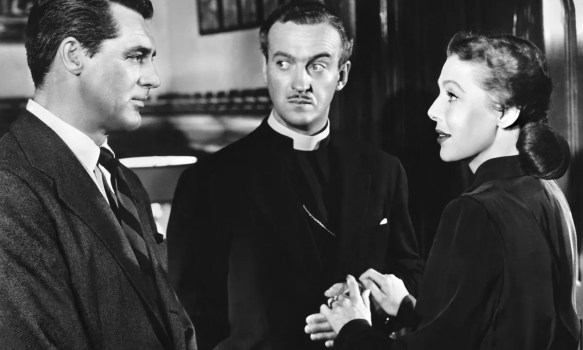
bishop's wife

Cary Grant as Dudley the angel, David Niven as the Bishop, and Loretta Young as Julia (the Bishop’s Wife) in the film version of Robert Nathan’s book, The Bishop’s Wife

And then there’s the angel named Michael in the book. He’s philosophical, and instead of trying to halt the cathedral like in the film, he helps ask wealthy individuals for even more money. Michael makes Julia feel a longing she had kept buried, and Michael too longs for his past and a home.

In the film, Dudley shows Julia affection and love through simple pleasures, and in the book, Michael and Julia embrace at the end and they hear heavenly music. In both, Julia becomes frightened and sends the angel away.

Professor Wutheridge’s character is also in the book (played by Monty Woolley in the film), but he isn’t an old friend of the Bishop and Julia. The professor makes his first appearance in Chapter 9 (of 19), and he is a scholar who attends the Bishop’s services and has philosophical conversations with Michael. Michael even tells the professor he’s an angel, but this is the only person he tells besides the Bishop. In comparison, no one but the Bishop knows Dudley is an angel, but the professor figures it out in the film.
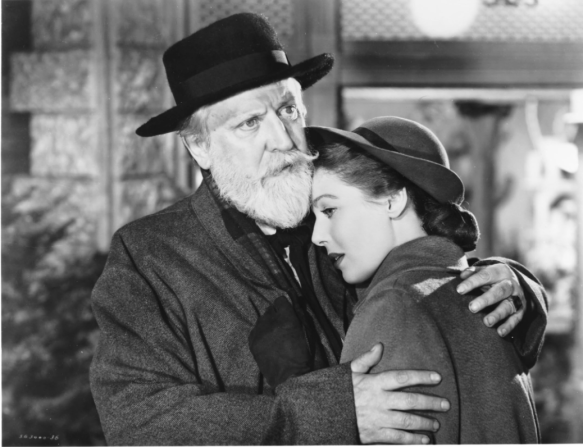
bisho's wfe5

Monty Woolley and Loretta Young in the 1947 film, The Bishop’s Wife

Chapter 9 is our first introduction to the topic of Christmas in the book.

While I type this review, I’m wondering if you may think, “Well, these do sound fairly similar!” and on paper, they do. But while reading the novel, you are struck by how different they are.

In 1928, the book received praising reviews.

“I know of no other contemporary American writer of fiction who is quite like Robert Nathan. His new book The Bishop’s Wife will give those who admire this highlight individual writer a chance to read him at his best,” wrote Arnold Mulder in his Oct. 8, 1928, review in the Post-Crescent.

The Oct. 14, 1928, review in The Los Angeles Times notes that the book is full of “charm, quiet humor and wisdom that it must prove a delight to every man who loves subtlety, sweetness and a dash of the devil.”

Again, while I didn’t dislike the book, the charm and humor were lost on me here as I compared it to the charming and magical 1947 film. While I watched the movie after I finished reading the book, I wondered, “How did they create this lovely story out of the book?”
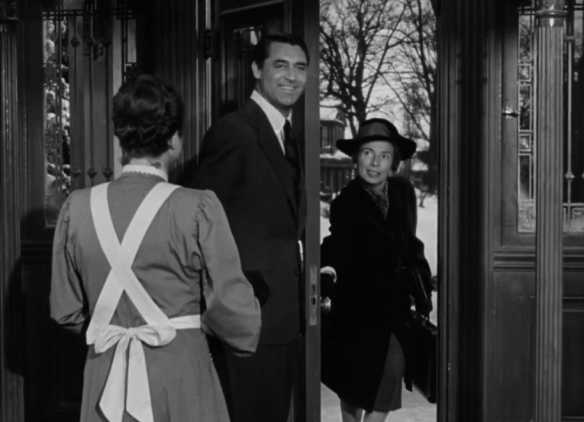
bishop's wife4

Elsa Lanchester and Sara Haden admiring Cary Grant’s Dudley in the film version of The Bishop’s Wife. Screenshot by Comet Over Hollywood

There are so many wonderful, new scenes in the film that make the story for me. For example, when Dudley the angel goes to the wealthy, miserly Mrs. Hamilton (Gladys Cooper) and finally breaks her cold exterior. Or how the Bishop’s secretary (Sara Haden) and the family’s maid (Elsa Lanchester) can’t stop craning their necks at the extremely attractive new visitor, Dudley, and how they both start wearing flowers in their hair around him.
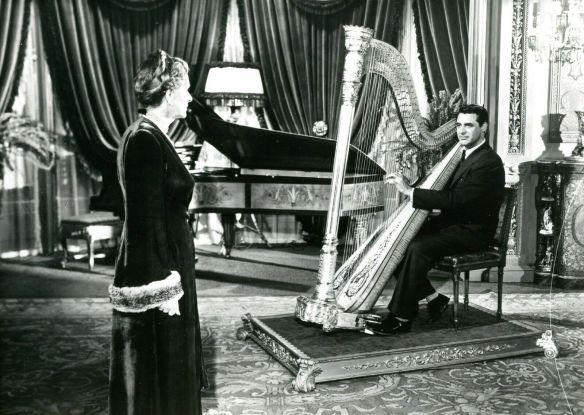
bishop's wife3

Gladys Cooper and Cary Grant in the film version of The Bishop’s Wife

There is also no confrontation between the angel and the Bishop telling him to leave. Instead, Michael departs on his own without much fanfare. The Bishop is much less vocal or powerful in the book, and in the end, everyone is largely left the way they were. In the novel, the Bishop never does anything to make his wife happy, not on his own, at least because Julia decides what will make her happy: another child to love.

While Robert Nathan’s “The Bishop’s Wife” was quite different, it’s interesting to read the source material for a favorite film and marvel at the work of screenwriters and how they can transform a 192-page stale novel and transform it into a beautiful film.
Stories so nice, they told them twice: Christmas remakes

This article was originally written by me and published on the DVD Netflix blog, Inside the Envelop, in December 2019. DVD Netflix was shuttered in Sept. 2023, so I am republishing my work for DVD Netflix here: 

Sometimes a story is so good, Hollywood decides to tell it again.

Since the silent film era, films have been remade in Hollywood.

Remakes can either be a mirror image of the original film; nearly scene-for-scene with similar lines. Others reimagine the story and take on a different angle, sometimes adding music or an updated plot.

When it comes to holiday feature film classics, several have been retold. Here are a few:

christmas ct

Christmas in Connecticut
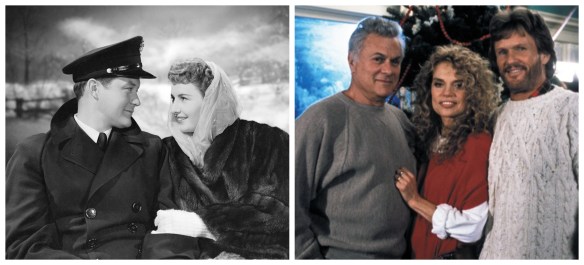
1945: The original “Christmas in Connecticut” was release in 1945. In the story, Elizabeth Lane (Barbara Stanwyck) is a successful magazine writer who presents herself as the perfect housewife. She is an exceptional cook who also lives on a farm in Connecticut with her husband and baby.
Her publisher Alexander Yardley (Sidney Greenstreet) invites himself and a World War II hero Jefferson Jones (Dennis Morgan) to the Lane home for Christmas. The only problem is that Elizabeth Lane can’t cook, isn’t married and has no baby, and she has to create a ruse in order to keep her job.
1992: In 1992 with the same title, the story was retold in a made-for-TV movie directed by Arnold Schwarzenegger. The plot was updated from magazines to television. In the remake, Dyan Cannon plays Elizabeth Blane, a cooking show TV star who has also penned several cookbooks. Her manager Alexander Yadley (Tony Curtis) wants her to film a live TV show focused on cooking dinner for a forest ranger hero, Jefferson Jones (Kris Kristofferson). Other than one “Tales from the Crypt” episode, this is the only movie directed by Arnold Schwarzenegger.

bishop preachers

The Bishop’s Wife
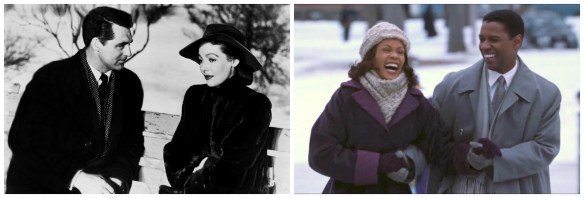
The Bishop’s Wife (1947): In “The Bishop’s Wife,” Henry Brougham (David Niven) is a bishop who is constantly busy and stressed about a new cathedral he is trying to have built. Henry’s fundraising for the new facility is at the mercy of wealthy widow Agnes Hamilton (Gladys Cooper). Henry’s wife, Julia (Loretta Young), misses when life was more simple and their marriage struggles because of Henry’s position as bishop. An angel, named Dudley (Cary Grant), comes down to help Henry and Julia during the Christmas season.
Preacher’s Wife (1996): In 1996, “The Bishop’s Wife” was remade as “The Preacher’s Wife” with Courtney B. Vance as Rev. Henry Biggs and his wife Julia, played by Whitney Houston. Denzel Washington plays Dudley the angel. The premise is similar, but the setting is changed from building a new cathedral to helping a small, struggling Baptist church. The antagonist is a real estate developer, played by Gregory Hines, who wants Rev. Biggs to sell the property. The remake is also more of a musical with 13 songs performed by Whitney Houston throughout the film.

miracles 2

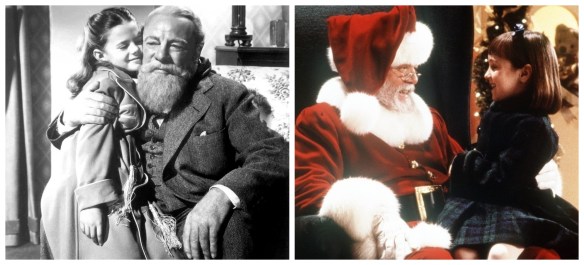
Miracle on the 34th Street
1947: At the Macy’s Thanksgiving Day Parade, the man who is playing Santa Claus is drunk. Kris Kringle (Edmund Gwenn) is outraged and brings it to the attention of Doris Walker (Maureen O’Hara), who is running the event. Kris replaces the intoxicated Santa, and does such a great job that he is hired as Macy’s department store Santa for the holiday season. As Kris works in the store, he befriends Doris and her young daughter Susan (Natalie Wood). Doris is no-nonsense and disillusioned from her divorce. Because of this, she never taught Susan about fairy tales or Santa Claus. Kris tries to teach Susan how to make believe and how to be a child. As Kris continues to say he is Santa Claus, the Macy’s psychologist questions his sanity. In the end, lawyer Fred Gailey (John Payne) defends Kris in a court hearing to determine if Kris really is Santa Claus.
1994: When the story was remade in 1994, Macy’s department store did not want to be involved in the film, so the story takes place in the fictional Cole’s Department Store. Much of the story is similar to the original but with some updated names. Elizabeth Walker plays Dorey Walker and Richard Attenborough plays Kris Krinkle. In the 1947 film Doris is not dating Fred at the beginning of the film – though he is interested in her. But in the 1994 film, Dorey has a boyfriend named Bryan Bedford, who is played by Dylan McDermott. Mara Wilson plays young Susan.

grinch

How the Grinch Stole Christmas!
Dr. Seuss’ book about the Grinch, a hermit who hates Christmas, has been transformed three times.
The story is about the Grinch who lives alone on a mountain. His hatred for the holiday makes him devise a plan to stop Christmas. He will dress as Santa Claus and steal all the Christmas items from the nearby town of Whoville on Christmas Eve. But on Christmas morning when everyone wakes up, the Grinch hears them gathered and singing, rather than being sad. He travels down the mountain to return their Christmas items and joins in their celebration.
1966: The first time the story was told on screen or television was in a cartoon television special, which aired on CBS on Dec. 18, 1966. The TV special was directed by Chuck Jones, and Boris Karloff narrated and talked for the Grinch.
2000: A live-action feature film of “How the Grinch Stole Christmas!” was released in 2000 with Jim Carrey as the Grinch. The film was directed by Ron Howard.
2018: Most recently, a second feature film was released in 2018 titled “Dr. Seuss’ The Grinch.” This time, the story was 3D computer-animated with Benedict Cumberbatch voicing the Grinch and Pharrell Williams as the narrator.

shop

The Shop Around the Corner (1940)
Based on a 1937 Hungarian play called Parfumerie by Miklós László, this story has been adapted three times:
Shop Around the Corner (1940): The 1940 version stars Maureen Sullavan and James Stewart. Set in Budapest, Alfred Kralik (Stewart) works in a leathergoods store owned by Mr. Matuschek (Frank Morgan). Klara Novak (Sullavan) comes to the store looking for work, and Klara and Alfred immediately clash. However, both have a secret pen pal that they are falling in love with, and they don’t know it’s the coworker they hate. On Christmas Eve, the are each other’s pin pal.
In the Good Ole Summertime (1949): In 1949, the story was remade as a musical starring Judy Garland as Veronica Fisher and Van Johnson as Andrew Larkin. This time, instead of working in a leathergoods store, they both work in a music shop.
You’ve Got Mail (1998): In 1998, the story was updated from letter correspondence to e-mail pen pals.
The story is changed big business versus small business. Kathleen Kelly (Meg Ryan) owns a small, independent book store which is threatened by a big box book store owned by Joe Fox (Tom Hanks).

Which is your favorite of each version? 

Check out the Comet Over Hollywood Facebook page, follow on Twitter at @HollywoodComet or e-mail at cometoverhollywood@gmail.com

Musical Monday: Tom Thumb (1958)

It’s no secret that the Hollywood Comet loves musicals.
In 2010, I revealed I had seen 400 movie musicals over the course of eight years. Now that number is over 600. To celebrate and share this musical love, here is my weekly feature about musicals.

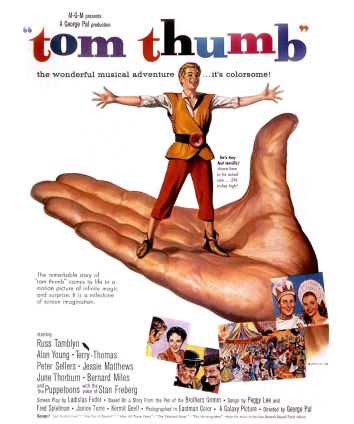
tom thumbThis week’s musical:
Tom Thumb (1958) – Musical #762

Studio:
Metro-Goldwyn-Mayer

Director:
George Pal

Starring:
Russ Tamblyn, Peters Sellers, Terry-Thomas, Alan Young, June Thornburn, Bernard Miles, Jessie Matthews, Ian Wallace

Plot:
After a woodsman (Miles) stops cutting down a tree when he’s halted by the Forest Queen (Thornburn), the woodsman and his wife (Matthews) are granted three wishes. The couple accidentally squanders their wishes and realize they could have wished for what they always wanted—a child. Sadly, they think how they would love a child no matter how small. That night, their child Tom Thumb (Tamblyn) arrives thanks to the Forrest Queen. The couple is exuberant. Tom has several adventures, including dancing with his toys that come to life and being conned by two thieves (Sellers, Thomas) who want him to rob the treasury.

Continue reading

Musical Monday: Cole Porter’s Aladdin (1958)

It’s no secret that the Hollywood Comet loves musicals.
In 2010, I revealed I had seen 400 movie musicals over the course of eight years. Now that number is over 600. To celebrate and share this musical love, here is my weekly feature about musicals.

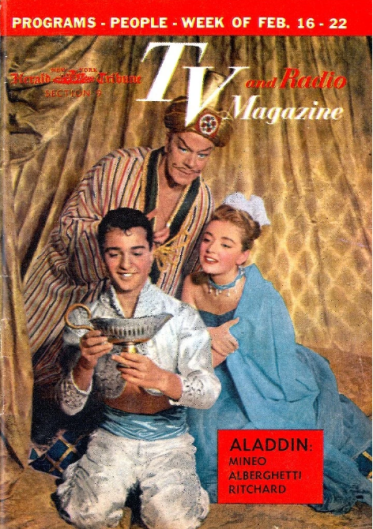
AladdinThis week’s musical:
Cole Porter’s Aladdin (1958) – Musical #761

Studio:
CBS

Director:
Ralph Nelson

Starring:
Sal Mineo, Anna Maria Alberghetti, Dennis King, Basil Rathbone, Howard Morris, Una Merkel, Cyril Ritchard, George Hall, Geoffrey Holder, Alec Clarke, Akim Tamiroff

Plot:
The story of Aladdin (Mineo), who finds a lamp with a Genie (Holder). As Aladdin tries to keep the lamp away from a sorcerer (Ritchard), he falls in love with Princess Ming Chou (Alberghetti), daughter of the Emperor (Rathbone).

Continue reading

Christmas songs that originated in films

This was originally published on the Inside the Envelope DVD Netflix blog, which was shuttered after the service ended in Sept. 2023.

The holiday season isn’t complete without listening to some Christmas tunes and watching a cozy film. But what about the times those two go hand-in-hand? There are holiday music staples that originated from films or TV versions:

Continue reading

Musical Monday: Peau d’âne/Donkey Skin (1970)

It’s no secret that the Hollywood Comet loves musicals.
In 2010, I revealed I had seen 400 movie musicals over the course of eight years. Now that number is over 600. To celebrate and share this musical love, here is my weekly feature about musicals.

donkey skin posterThis week’s musical:
Peau d’âne/Donkey Skin (1970) – Musical #760

Studio:
Cinema International Corporation

Director:
Jacques Demy

Starring:
Catherine Deneuve, Jean Marias, Jacques Perrin, Micheline Presle, Delphine Seyrig, Fernand Ledoux, Henri Crémieux, Sacha Pitoëff, Pierre Repp, Jean Servais, Georges Adet, Louise Chevalier

Plot:
The king (Marias) lives happily with his beautiful queen (Deneuve) and their only daughter (also Deneuve). When the queen dies suddenly, she asks that if he remarries because he still needs a male heir, to marry someone more beautiful and virtuous than she. After shutting himself off in grief, the king decides to find a beautiful princess to marry. When portraits from all over the land are brought, he discovers his own daughter is the most beautiful and more charming than his mother, and he proposes marriage to his own daughter. The princess seeks help from her fairy godmother (Seyrig), who instructs her to ask for seemingly impossible gifts of the king before they will marry. When he fulfills each task, the princess asks the king to kill his prize donkey that produces gold and jewels. The princess disguises herself in the donkey skin, fleeing to a distant land where she is known as a dirty scullery maid who smells bad. When Prince Charming (Perrin) visits the village and sees Donkey Skin/the princess out of her disguise, he falls in love and wants to marry her.

Continue reading

Musical Monday: Oh! What a Lovely War (1969)

It’s no secret that the Hollywood Comet loves musicals.
In 2010, I revealed I had seen 400 movie musicals over the course of eight years. Now that number is over 600. To celebrate and share this musical love, here is my weekly feature about musicals.

This week’s musical:
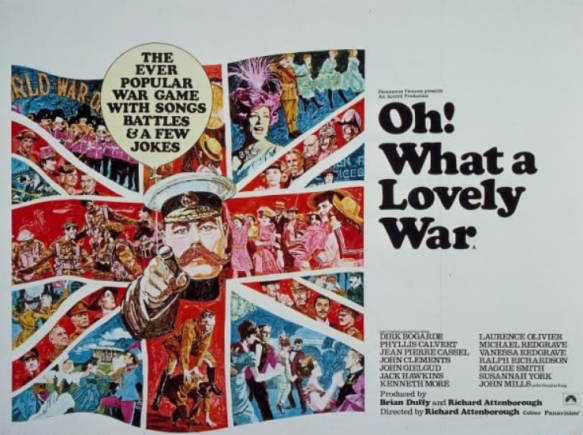
Oh! What a Lovely War (1969) – Musical #758

oh what a lovely war

Studio:
Paramount Pictures

Director:
Richard Attenborough

Starring:
The Smith family: Wendy Allnutt, Colin Farrell, Malcolm McFee, John Rae, Corin Redgrave, Maurice Roëves, Paul Shelley, Kim Smith, Angela Thorne, Mary Wimbush

Extended guest star appearances: John Mills, Dirk Bogarde, Phyllis Calvert, Jean-Pierre Cassel, John Clements, John Gielgud, Jack Hawkins, Kenneth More, Laurence Olivier, Michael Redgrave, Vanessa Redgrave, Ralph Richardson, Maggie Smith, Susannah York

Also starring: Vincent Ball, Pia Colombo, Paul Daneman, Isabel Dean, Christian Doermer, Robert Flemyng, Meriel Forbes, Frank Forsyth, Ian Holm, David Lodge, Joe Melia, Guy Middleton, Juliet Mills, Nanette Newman, Cecil Parker, Natasha Parry, Gerald Sim, Thorley Walters, Anthony Ainley, Michael Bates, Fanny Carby, Cecilia Darby, Geoffrey Davies, Edward Fox, George Ghent, Zeph Gladstone, Peter Gilmore, Ben Howard, Norman Jones, Paddy Joyce, Angus Lennie, Harry Locke, Clifford Mollison, Derek Newark, John Owens, Ron Pember, Dorothy Reynolds, Norman Shelley, Marianne Stone, John Trigger, Kathleen Wileman, Penelope Allen, Maurice Arthur, Freddie Ascott, Dinny Jones, Carole Gray, Bernard Jarvis, Jane Seymour (uncredited)

Plot:
Shown through fantasy metaphors, as well as real life scenes, the story follows working class British family, the Smith family, who enlist in World War I, and the juxtaposition between the fighting men, military leaders and the rich.

Continue reading

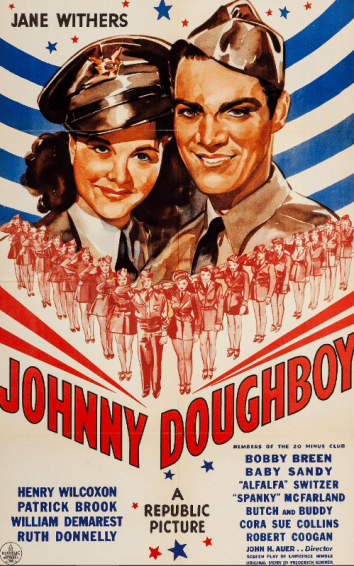
Musical Monday: Johnny Doughboy (1942)

It’s no secret that the Hollywood Comet loves musicals.
In 2010, I revealed I had seen 400 movie musicals over the course of eight years. Now that number is over 600. To celebrate and share this musical love, here is my weekly feature about musicals.

johnny doughboyThis week’s musical:
Johnny Doughboy (1942) – Musical #757

Studio:
Republic Pictures

Director:
John H. Auer

Starring:
Jane Withers, William Demarest, Henry Wilcoxon, Ruth Donnelly, Etta McDaniel, Jack Boyle (billed as Patrick Brooks), Joline Westbrook
Themselves as 20 Minus Club Members: Bobby Breen, Cora Sue Collins, Baby Sandy, Robert Coogan, Carl ‘Alfalfa’ Switzer, George ‘Spanky’ McFarland, Kenneth Brown, Billy Lenhart, Grace Costello

Plot:
Sixteen-year-old actress Ann Winter (Withers) is sick of playing kid parts in films. Just as Ann leaves angrily for a two week vacation, the prize winner of the Ann Winters look-a-like contest, Penelope Ryan (also Withers) arrives to stay the weekend. Ann’s agent Harry (Demarest) asks Penelope to stand in for Ann while she’s gone.

While Penelope pretends to be Ann, former child stars of the 20 Minus Club want “Ann” to participate in a Junior Victory Caravan show for the war effort. Penelope wants to help but has to say no.

Meanwhile, through a series of events Ann finds herself at the cabin of playwright Oliver Lawrence (Wilcoxon), and she sets her hope high that she will get to be in an upcoming play of his.

Continue reading

Musical Monday: A Wave, a WAC and a Marine (1944)

It’s no secret that the Hollywood Comet loves musicals.
In 2010, I revealed I had seen 400 movie musicals over the course of eight years. Now that number is over 600. To celebrate and share this musical love, here is my weekly feature about musicals.

This week’s musical:
A Wave, a WAC and a Marine (1944) – Musical #756

Studio:
Monogram Pictures

Director:
Phil Karlson

Starring:
Elyse Knox, Ann Gillis, Sally Eilers, Richard Lane, Marjorie Woodworth, Ramsay Ames, Henny Youngman, Alan Dinehart, Cy Kendall, Aileen Pringle, Jack Mulhall, Mabel Todd, Mel Blanc (uncredited)
Themselves: Charles “Red” Marshall, Billy Mack, Milt Bronson, Elvia Allman, Sid Tomack, Rose Murphy, Freddie Rich, Connie Haines, The Music Maids

Plot:
Talent scout O. Henry Brown (Youngman) confuses two understudies, Marian and Judy (Knox and Gillis), for the stars of the Broadway show “A WAVE, a WAC and a Marine,” Eileen and Betty (Woodworth and Ames). Brown takes Marian and Judy to Hollywood to be signed by Margaret Ames (Eilers) who realizes his mistake and turns the girls down. Marian and Judy have to figure out what to do now that they are stuck in Hollywood.

Continue reading

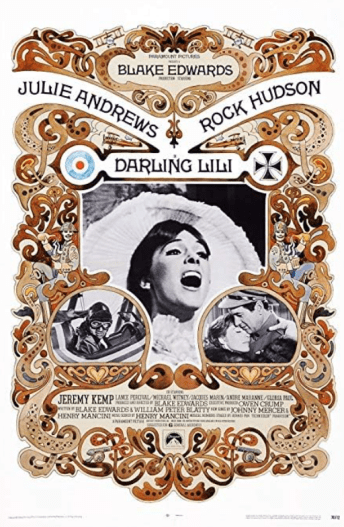
Musical Monday: Darling Lili (1970)

It’s no secret that the Hollywood Comet loves musicals.
In 2010, I revealed I had seen 400 movie musicals over the course of eight years. Now that number is over 600. To celebrate and share this musical love, here is my weekly feature about musicals.

darling liliThis week’s musical:
Darling Lili (1970) – Musical #755

Studio:
Paramount Pictures

Director:
Blake Edwards

Starring:
Julie Andrews, Rock Hudson, Jeremy Kemp, Lance Percival, Michael Witney, Gloria Paul, Jacques Marin, André Maranne, Bernard Kay, Doreen Keogh, Carl Duering, Vernon Dobtcheff, Laurie Main, Louis Mercier

Plot:
Set during World War I, Lili Smith (Andrews) is a popular English singer who also happens to be a spy for Germany, providing information to Kurt von Ruger (Kemp). When Lili is to get close to American aviator Major Larrabee (Hudson) for information, she falls in love with him. As the two grow close, Lili’s emotions and jealousy conflict with her position as a spy.

Continue reading