Musical Monday: Meet Me in Las Vegas (1956)

It’s no secret that the Hollywood Comet loves musicals.
In 2010, I revealed I had seen 400 movie musicals over the course of eight years. Now that number is over 500. To celebrate and share this musical love, here is my weekly feature about musicals.

This week’s musical:
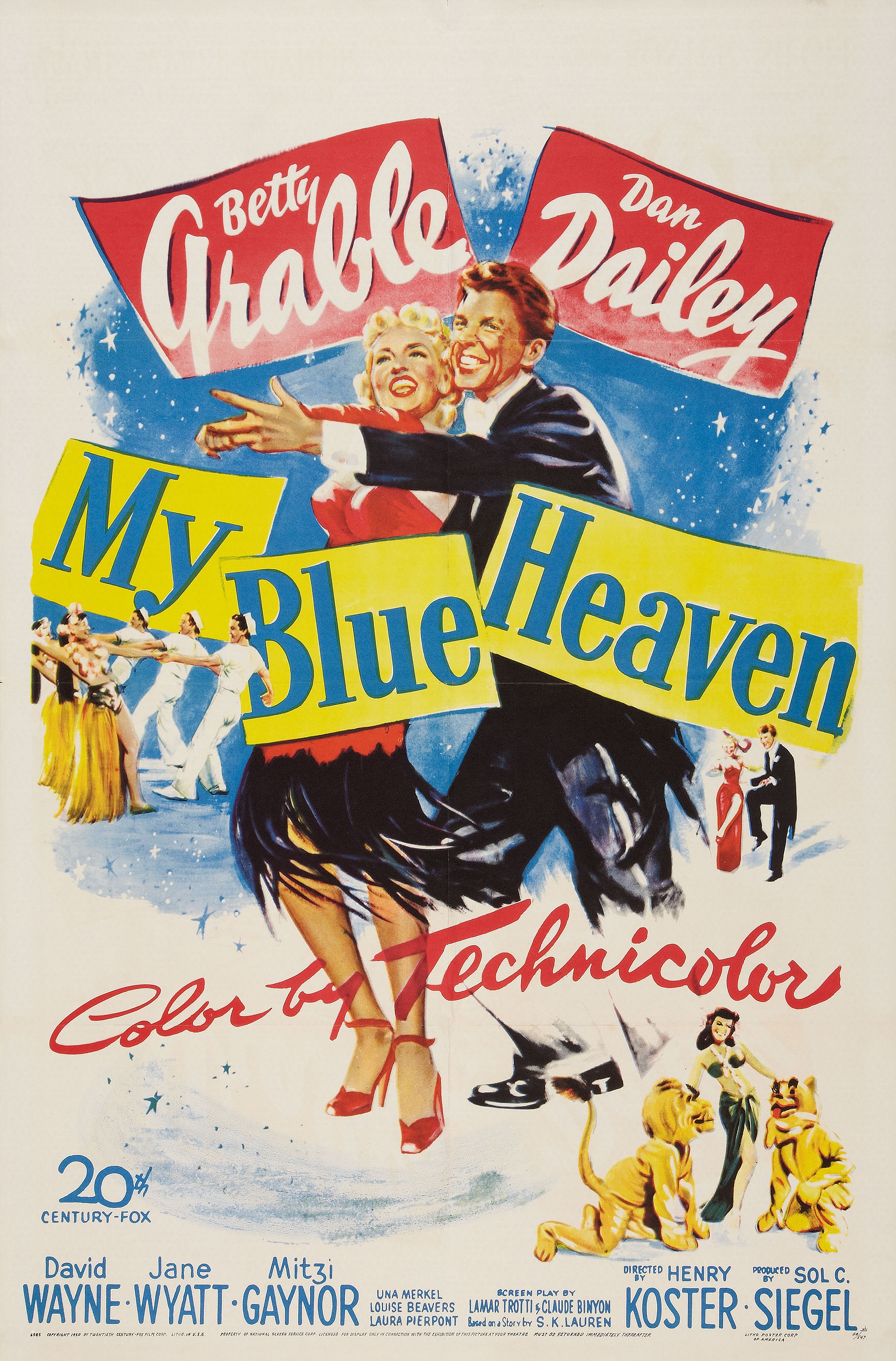
“Meet Me In Las Vegas” – Musical #151

UP_MEET_ME_IN_LAS_VEGAS_MOV

Studio:
Metro-Goldwyn-Mayer

Director:
Roy Rowland

Starring:
Dan Dailey, Cyd Charisse, Agnes Moorehead, Paul Henreid, Lili Darvus, Jim Backus, George Chakiris, Betty Lynn, Sammy Davis Jr. (voice only), Robert Fuller (uncredited)
As themselves: Lena Horne, Frankie Laine, Pier Angeli, Vic Damone, Debbie Reynolds, Peter Lorre, Tony Martin, Dewey Martin, The Four Aces, Steve Forrest, Jeff Richards, Frank Sinatra, Elaine Stewart, Jerry Colonna

Plot:
Ballet dancer Maria Corvier (Charisse) is performing at the Sands Hotel in Las Vegas. Gambling rancher Chuck Rodwell (Dailey) makes his yearly visit to Las Vegas and is notorious for poor luck with gambling. Chuck finds that he has consitent luck winning big every time he holds Maria’s hand.

Trivia:
-Composers George Stoll and Johnny Green were Nominated for an Academy Award for Best Music, Scoring of a Musical Picture.
-Filmed in Las Vegas.

Highlights:
-Cameos by Lena Horne, Frankie Laine, Pier Angeli, Vic Damone, Debbie Reynolds, Peter Lorre, Tony Martin, Dewey Martin, Steve Forrest, Jeff Richards, Frank Sinatra, Elaine Stewart, Jerry Colonna
-The “Frankie and Johnny” dance number narrated by Sammy Davis, Jr.
-Dan Dailey dancing and singing with Mitsuko

Notable Songs:
-“Frankie and Johnny” sung by Sammy Davis Jr.
-“The Girl with the Yaller Shoes” sung by Dan Dailey
-“If You Can Dream” sung by Lena Horne
-“My Lucky Charm” sung by Dan Dailey and Mitsuko Sawamura; also performed by Jerry Colonna

My Review:
“Meet Me in Las Vegas” has a simple and nonsensical plot: holding the hand brings good luck while gambling.
But while the plot is silly and simple, this is a charming musical, and the cast has a lot to do with that.
Cyd Charisse is stunning with beautiful clothes and impressive dances, as always, and Dan Dailey always feels like an old friend in his films.
As an added bonus you get 13 cameos from other MGM players throughout the film from Charisse’s husband Tony Martin to actress Debbie Reynolds.
While the songs aren’t terribly memorable, the dancing is outstanding. Charisse has the opportunity to exhibit both her classical ballet style with Tchaikovsky’s Sleeping Beauty Ballet and her modern dance with the “Frankie and Johnny” number.
This brightly colored Technicolor musical is one that keeps me smiling throughout.

Cyd Charisse and Dan Dailey in "Meet Me in Las Vegas" (1956).

Cyd Charisse and Dan Dailey in “Meet Me in Las Vegas” (1956).

Check out the Comet Over Hollywood Facebook page, follow on Twitter at @HollywoodComet or e-mail at cometoverhollywood@gmail.com

Musical Monday: For Me and My Gal (1942)

It’s no secret that the Hollywood Comet loves musicals.
In 2010, I revealed I had seen 400 movie musicals over the course of eight years. Now that number is over 500. To celebrate and share this musical love, here is my weekly feature about musicals.

This week’s musical:
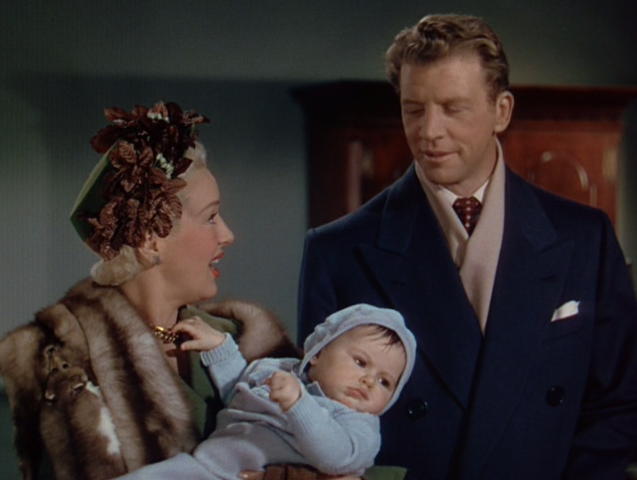
For Me and My Gal” –Musical #10

Poster - For Me and My Gal_03

Studio:
Metro-Goldwyn-Mayer

Director:
Busby Berkeley

Starring:
Judy Garland, Gene Kelly, George Murphy, Ben Blue, Richard Quine, Mártha Eggerth, Keenan Wynn (uncredited)

Plot:
Set in 1916 right before the United States entered World War I, the film follows vaudeville team Jo Hayden (Garland) and Jimmy Metcalf (Murphy). While traveling, Jo and Jimmy meet self-centered Harry Palmer (Kelly), who is looking for any way to reach the top. Jo falls for Harry and leaves Jimmy to start an act with Harry. Right before Jo and Harry are going to hit the big time, Harry is drafted into World War I. Harry takes extreme measures to stay out of the military and risks his relationship with Jo at the same time.

Judy Garland and George Murphy in the

Judy Garland and George Murphy in the “Oh, You Beautiful Doll” number in “For Me and My Gal.”

Trivia:
-Gene Kelly’s first film.
-The first time Judy Garland’s name was listed above the title, according to Judy: A Legendary Film Career by John Fricke
-“For Me and My Gal” is loosely based on Kelly’s character, the vaudeville performer Harry Palmer, who did become form a team and become engaged to performer Jo Hayden.
-The title was originally “The Big Time” and then “Applause” with hopes a title song would be written by Arthur Freed, according to DVD commentary by Judy Garland historian John Fricke.
-The script was written with Judy Garland in mind and George Murphy originally was going to have Gene Kelly’s role. When Murphy lost the role, he said it was one of the greatest disappointments of his life, according to Fricke.
-Eleanor Powell and Dan Dailey were originally slated in the cast. There were going to be two female roles (a dancer and a singer), but it was combined into Judy’s role, according to Fricke.

Notable Songs:
-“For Me and My Gal” performed by Judy Garland and Gene Kelly
-“Oh, You Beautiful Doll” performed by George Murphy
-“After You’re Gone” performed by Judy Garland
-“Ballin’ the Jack” performed by Judy Garland and Gene Kelly

My Review:
“For Me and My Gal” is a fun film with a plot that revolves around the art form of vaudeville, which was popular in nostalgia movie musicals in the 1930s and 1940s. The introduction to the film says it is “fondly dedicated” to the vaudeville performers who traveled from town to town and lived out of trunks.

Set in 1916, this musical was released in October 1942, right after the United States entered World War II. Production planning started for this film in 1940.

“For Me and My Gal” has catchy songs, great costuming and a compelling story line. But for me, the film is more interesting for two major reasons: This is the first truly adult role for Judy Garland.

Audiences were able to see Garland as a sophisticated young woman with an adult romantic lead and complex dance numbers. She wasn’t playing second fiddle to Rooney’s antics, which sometimes happened in her previous films, and her singing and dancing talents are further showcased.

Gene Kelly, Judy Garland and George Murphy in a publicity still for

Gene Kelly, Judy Garland and George Murphy in a publicity still for “For Me and My Gal.”

Before this film, Garland was primarily in child or teenager roles. Garland’s role in “Little Nelly Kelly” before “For Me and My Gal” also gave her the opportunity to play an adult role. However, it was a dual role- she was an adult who marries George Murphy and then Murphy’s child. It wasn’t quite the same as the woman she plays in “For Me and My Gal,” and part of the film kept her a child.

The second notable fact about this film is that it’s Gene Kelly’s first film role. Fresh from Broadway playing “Pal Joey,” studio heads were uncertain how Kelly would photograph, but Garland fought for him to be in the film.

A fact new to me is that “For Me and My Gal” is loosely based on Kelly’s character, the vaudeville performer Harry Palmer, who did become form a team and become engaged to performer Jo Hayden. The film closely follows Palmer and Hayden’s relationship with some changes. In real life, Hayden had a friend named Danny Metcalf who was killed in action. In the film, Danny Metcalf was split into two people- Jo’s brother Danny who is killed and her friend Jimmy Metcalf, played by George Murphy. Hayden and Palmer married in 1919 and Palmer died in 1962.

“For Me and My Gal” is an entertaining MGM musical that allows you to watch two Garland grow and Kelly start an impressive career. My only complaint is there isn’t enough George Murphy. Otherwise, it’s a ton of fun.

Check out the Comet Over Hollywood Facebook page, follow on Twitter at @HollywoodComet or e-mail at cometoverhollywood@gmail.com

Musical Monday: Navy Blues (1941)

It’s no secret that the Hollywood Comet loves musicals.
In 2010, I revealed I had seen 400 movie musicals over the course of eight years. Now that number is over 500. To celebrate and share this musical love, here is my weekly feature about musicals.

This week’s musical:
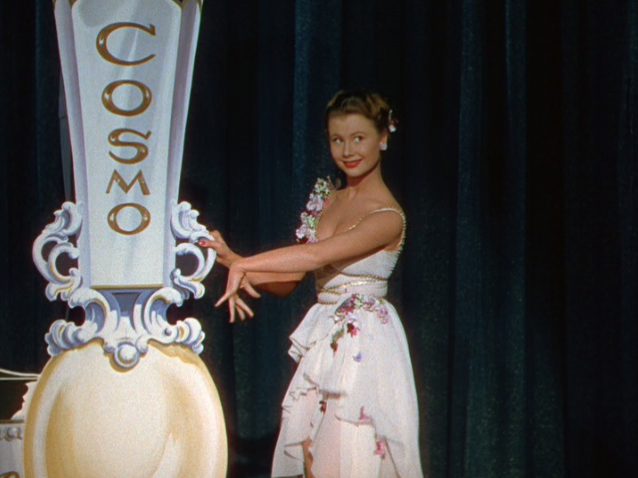
“Navy Blues –Musical #512

navy blues2

Studio:
Warner Brothers

Director:
Lloyd Bacon

Starring:
Ann Sheridan, Martha Raye, Jack Oakie, Jack Haley, Herbert Anderson, Jack Carson, Jackie Gleason, John Ridgley, Georgia Carroll (uncredited), Leslie Brooks (uncredited), William Hopper (uncredited), Gig Young (uncredited)

Plot:
Cake and Powerhouse (Oakie, Haley) are two Navy seamen on leave in Hawaii and are trying to borrow money to pay their way for fun. They meet prize gunner Homer Matthews (Anderson), who is being transferred to their ship. Their meeting with Matthews sparks an idea to earn more money. They want to enter Homer into the gunner competition to win the trophy for their trip and start taking bets on his abilities with the rest of their shipmates. The only problem is Homer will only be on their ship for a few days before he is discharged from the Navy, leaving before the gunnery competition. Cake and Powerhouse now work to keep Homer from leaving the Navy, but Homer is eager to return to his pig farm in Iowa. They enlist the help of night club performers Marge (Sheridan) and Lilibelle (Martha.)

Jack Haley, Herb Anderson and Jack Oakie in "Navy Blues."

Jack Haley, Herb Anderson and Jack Oakie in “Navy Blues.”

Trivia:
-The first musical comedy to come from Warner Brothers in four years, according to a January 1941 column by Louella Parsons.
-Eddie Albert was orignally slated for the film, according to the January 1941 Parsons article.
-Intro: “Honolulu where Aloha means goodbye and Shore Leave means trouble.”
-Jackie Gleason’s film debut.

Highlights:
-Georgia Carroll performing as a chorus girl
-Ann Sheridan singing
-Herbert Anderson calling pigs

Notable Songs:
-“Navy Blues” performed by Ann Sheridan and Martha Raye
-“In Waikiki” performed by Ann Sheridan and chorus
-“You’re a Natural”performed by Herb Anderson and Ann Sheridan

Martha Raye and Ann Sheridan at the beginning of "Navy Blues." Unfortunately, neither has enough screen time for my liking.

Martha Raye and Ann Sheridan at the beginning of “Navy Blues.” Unfortunately, neither has enough screen time for my liking.

My Review:
The New York Times review, published on Sept. 21, 1941, hit the nail on the head in their review saying, “Oakie and Haley working harder for laughs than a bum vaudeville team in Omaha” and that the script is full of corn.
When I watched this movie looking for an Ann Sheridan vehicle. Sheridan was in a few musicals and I love to hear her deep singing voice. However, if you are looking for a film with a lot of Ann time, don’t look to “Navy Blues.”
The film opens with Sheridan singing “Navy Blues,” looking beautiful in an adorable sailor style costume…but the film goes downhill from there.
The film is centered around the crazy, frantic antics of Jack Haley and Jack Oakie as they do con their friends and will do anything to earn a buck. Our leading ladies Ann Sheridan and Martha Raye have very little screen time in this hour and 48 minute movie.
The antics revolve around getting Herb Anderson’s character to stay in the Navy. One of the biggest highlights of this film for me was seeing Anderson (or Dennis the Menace’s dad, as my family frequently calls him) in a larger role. Before his TV dad fame, Anderson was a film character actor. His character actor roles were usually smaller than other character actors such as James Gleason or William Frawley.
We even have the opportunity to hear Anderson sing. He’s just always someone I enjoy seeing on screen. His demeanor and turtle-like look makes me smile.

Ann Sheridan and Herb Anderson in "Navy Blues."

Ann Sheridan and Herb Anderson in “Navy Blues.”

It was also a great surprise to see lovely Georgia Carroll appear in this film, singing as one of the Navy Blues Sextette Members. Carroll was the singer for band leader Kay Kyser’s band and the two later married. I believe I even shouted “That’s Georgia Carroll!” when she appeared on screen.
“Navy Blues” isn’t the worst musical I have ever seen, it’s simply that Oakie and Haley’s corn got tiresome when all I wanted was to see more Ann Sheridan.

Check out the Comet Over Hollywood Facebook page, follow on Twitter at @HollywoodComet or e-mail at cometoverhollywood@gmail.com

Actress Beauty Tip #35: Youth Dew Perfume- An Actress Favorite

This is the thirty-fifth installment of my classic actress beauty tips that I have read about and tested.

Youth Dew advertisement by Estee Lauder

Youth Dew advertisement by Estee Lauder

Youth Dew was an instant success from the time it was released in 1953.

Created by Estee Lauder as a bath oil that could double as a perfume and sold for $5, the scent was blend of rose, jasmine, vetiver and patchouli, according to Estee Lauder cosmetics.

The perfume was also popular with Hollywood actresses including Gloria Swanson, Joan Crawford and Dolores Del Rio.

Swanson was a collector and life-long lover of perfume. The Turner Classic Movies documentary “Movies and Moguls” said Gloria Swanson spent $500 per month on perfume in the 1920s.  A 1924 report said she spent $6,000 alone that year on perfume, according to “Gloria Swanson: The Ultimate Star” by Stephen Michael Shearer. One of Swanson’s favorite scenes included Caron’s Narcisse Noir.

Del Rio was also a perfume collector with fragrances such as Parfum des Champs Elysees by Guerlain, Jungla by Myrurgia, Secret de la Perle by Pleville, La Jacee by Coty, Sans Adieu by Worth and Les Lys by D’Orsay.

Joan Crawford throwing rice with new husband Alfred Steele. Crawford said Youth Dew helped her attract him.

Joan Crawford throwing rice with new husband Alfred Steele. Crawford said Youth Dew helped her attract him.

A few of Crawford’s favorite perfumes included Jungle Gardenia, Spanish Geranium by Lanvin and she also enjoyed the men’s cologne, Royall Lyme.

But one favorite all three women shared was Estee Lauder’s Youth Dew.

Actress Gloria Swanson in 1956. Collector of perfume, she said she frequently wore Youth Dew.

Actress Gloria Swanson in 1956. Collector of perfume, she said she frequently wore Youth Dew.

Crawford claimed she attracted her fourth husband, Pepsi CEO Alfred Steele, with the scent. Supposedly Steele whispered in her ear while they were dancing, “I can’t stop dancing with you. You smell so exquisite,” according to the book “America’s Obsessives” by Joshua Kendall.

Swanson frequently told reporters she wore the scent, and Del Rio said she brushed Youth Dew into her hair, saying it was the secret to drive men mad, according to the book “Estee Lauder: Business Woman and Cosmetic Pioneer” by Robert Grayson.

Youth Dew has a strong, heavy, powdery and rather musky scent. It’s a smell that most people now seem to categorize as old fashioned or even grandmotherly.

Dolores Del Rio in 1955. Del Rio said she brushed the perfume in her hair to "drive men mad."

Dolores Del Rio in 1955. Del Rio said she brushed the perfume in her hair to “drive men mad.”

When I read about classic actress perfumes, I always hope for the best and take a great leap of faith when purchasing them without smelling them first. That stands true for Youth Dew, as well as perfumes worn by Audrey Hepburn, Jean Harlow and created by Elizabeth Taylor. You do feel glamorous while wearing a perfume you know was your favorite actress’s signature scent (except for Taylor’s. It’s truly terrible). However, most of these perfumes that have a long history seem to have this same powdery, over powering smell.

I prefer lighter scents, which are more en vogue today. For example, some of my personal favorite scents include Estee Lauder’s Sensuous and Dolce Gabbana’s Light Blue. The heaviest scents I own are Chanel Mademoiselle and Escada Magnetism.

While I don’t think Youth Dew is putrid, it’s so strong that it did clog my sinuses. While visiting my parents, my mother was trying to get a good whiff of the perfume and sprayed the perfume once in the kitchen. The room instantly was filled with the smell and it stuck around for the rest of the evening.

“My sinuses are shutting down! I feel sick,” Mom said.

My bottle of Youth Dew (Comet Over Hollywood/Jessica P)

My bottle of Youth Dew (Comet Over Hollywood/Jessica P)

Though I warned her not to spray it, she said she was helping with my blog research. Shortly after, my dad got home.

“It smells terrible. What have you been up to,” Dad said.

To Review: Youth Dew is clearly not a fan favorite with my parents. While I didn’t hate the smell, it definitely is fairly overpowering. I’m not sure this is something I could wear all through the work day without ending up with itchy eyes and a headache.

Check out the Comet Over Hollywood Facebook page, follow on Twitter at @HollywoodComet or e-mail at cometoverhollywood@gmail.com


Yul Brynner spearheaded cancer awareness, prevention

Yul Brynner (1)Known for his mysterious, intense looks and bald head, actor Yul Brynner is famous for his film roles in “The Magnificent Seven,” “Anastasia,” “The Ten Commandments” and “The King and I” as the King of Siam.

But Brynner also played a role in cancer awareness. This week is Oral, Head and Neck Cancer Awareness Week (April 12-18, 2015); an event that Brynner’s own illness helped play a role in.

Brynner and oncologist George Sisson, MD, formed the Yul Brynner Head and Neck Cancer Foundation in 1984 in Chicago. Renamed in 2001 as the Head and Neck Cancer Alliance and based in Charleston, SC, the organization’s mission continues to be educating people on the side effects of tobacco and its connection to cancers of the head, neck and mouth.

While the King of Siam is one of the roles Brynner is best known for, it was also one of his favorites. Aside from the 1956 film version, Brynner performed the role on stage 4,625 times up until three months before his death in 1985, according to his Los Angeles Times obituary.

OHANCAW_logoBrynner began reprising the role of the King in 1977. He first appeared on stage in the role in 1951. His daughter Victoria called his returning to Broadway for “The King and I” a “God send,” in the documentary “The Hollywood Collection: Yul Brynner- The Man Who Was King,” because he hadn’t been in a good place in his career.

“He was getting to play again a role that had been his for years,” Victoria said.

In 1983, while Brynner was still playing the King, he learned he had lung cancer. One source, the Encyclopedia of Cancer and Society by Graham Colditz, said Brynner saw a doctor because his throat felt hoarse and that is how he was connected with Sisson. The 2006 biography “Yul Brynner” by Michelangelo Capua said Brynner found a lump on his neck while putting on his makeup. Brynner was diagnosed with inoperable lung cancer in September 1983 by three oncologists.

Brynner tried to keep his illness quiet from the public; only telling close friends and family members, according to Capua’s book. Brynner started smoking as a kid and smoked five packs of cigarettes a day, according to his Los Angeles Times obituary.

“I recall very clearly the night that he called me. He said, ‘I don’t have very good news and that he had three months to live,’” Victoria said. “From then on it was a battle to defy this disease. He kept on doing the King and I. It gave him structure: something to do every day, something to fight for. It gave him two and a half years that we really hadn’t hoped for.”

Brynner underwent radiation treatment, because the side effects were less severe than chemotherapy, according to Capua’s biography.

“Having been ill has opened my eyes suddenly to the fact that, the gypsies have a wonderful phrase for it: ‘Your future is getting shorter.’ There are things I want to do beyond sharpening and honing this role further,” Brynner said in a 1984 New York Times interview. “At the same time, the illness has changed the King for me. Some lines come as a surprise suddenly: ‘Every day, my Lord in heaven show the way’ and ‘Every day I try to live for one more day.’ This describes completely how I do the show and how I survived the illness.”

Yul Brynner during the 1985 "King and I" revival.

Yul Brynner during the 1985 “King and I” revival.

While still performing, the play was renamed “The King and I: Farewell Tour,” and Brynner would visit cancer patients in hospitals. He spoke with a 10-year-old boy who was bald due to his radiation therapy, and told the child, “See, I’m a star and I’m bald. It’s not so bad being bald,” according to Capua’s biography.

Brynner’s last performance in the “King and I” was June 30, 1985.

Before his death, Brynner was interviewed on Good Morning America (GMA) where he told the reporter that he wanted to film a commercial before his death warning people about the dangers of smoking. Part of this interview was edited into a PSA for the American Cancer Foundation.

“If I could take back that smoking, we wouldn’t be talking about any cancer,” Brynner said on GMA. “I smoked a lot since I was a kid just to appear macho, because I didn’t have brains enough. Something else makes you macho. I really wanted to make a commercial when I realized I was so sick.”

The commercial aired posthumously.

“Now that I’m gone, I tell you: Don’t smoke, whatever you do, just don’t smoke,” Brynner said.

He died on Oct. 10, 1985, at age 65 at New York Hospital- Cornell Medical Center.

“There was an idea that you go to bed not knowing if you have a tomorrow and you must be thankful for every tomorrow and make the most of it,” Brynner told the New York Times in 1984. “I couldn’t see myself going to bed and waiting to see what would happen with my illness. I preferred to play to 2,000 or 3,000 people and standing ovations. The choice is quite simple.”

Check out the Comet Over Hollywood Facebook page, follow on Twitter at @HollywoodComet or e-mail at cometoverhollywood@gmail.com

Musical Monday: Do You Love Me? (1946)

It’s no secret that the Hollywood Comet loves musicals.
In 2010, I revealed I had seen 400 movie musicals over the course of eight years. Now that number is over 500. To celebrate and share this musical love, here is my weekly feature about musicals.

do-you-love-me-movie-poster-1946-1020705247This week’s musical:
“Do You Love Me” –Musical #511

Studio:
Twentieth Century Fox

Director:
Gregory Ratoff

Starring:
Maureen O’Hara, Dick Hyams, Harry James, Reginard Gardiner, Richard Gaines, Lex Barker (uncredited)
Cameo: Betty Grable appears uncredited as James’ fan in a taxi cab.

Plot:
Conservative Katherine Hilliard (O’Hara) is dean of a stuffy music school, following in her father’s footsteps, and is allergic to popular music. She is engaged to her similarly stuffy colleague Ralph (Gaines). Katherine takes a trip to New York to plan with her composer colleague Herbert Benham (Gardiner) about the upcoming spring music festival. On her way to New York, Katherine meets trumpet player Barry Clayton (James) who insults her by saying she is too stuffy to appreciate popular music. After relaying this to Herbert, he encourages her to loosen up and have fun. Katherine takes her advice, catching the attention of Barry and crooner Jimmy Hale (Haymes).

Dick Haymes, Maureen O'Hara, Harry James in "Do You Love Me."

Dick Haymes, Maureen O’Hara, Harry James in “Do You Love Me.”

Trivia:
-Maureen O’Hara called this “The worst picture I ever made,” in her autobiography “Tis Herself.”
-Produced by George Jessel
-Betty Grable, who was married to Harry James at the time, makes a cameo as a fan of his.

Highlights:
-Fashion show shopping montage of outfits.
-Betty Grable’s cameo at the end of the film.

Notable Songs:
-“St. Louis Blues” performed by Harry James and his band
-“Do You Love Me” performed by Dick Haymes
-“Moonlight Propoganda” performed by Dick Haymes

My Review:
Though I know Maureen O’Hara said this was the worst film of her career, but I had a great time watching this film.
The plot isn’t substantial and fairly predictable. It is the usual but fun 1930s or 1940s plot of a conservative teacher coming from a stuffy college and eventually letting her hair down and having fun. It may not be O’Hara’s best performance, but it is fun and has some great music if you like big band.
For me the two biggest highlights:
1. Seeing O’Hara and her glorious film wardrobe in Technicolor. I’m a sucker for film fashion and movie makerovers and I enjoyed seeing her transformation from teacher to glamour girl. This film also features a highlight for any lover of vintage clothing: a scene where the main actress goes shopping at an upscale store and multiple gowns are modeled for her.
2. Hearing bandleader and trumpeter Harry James perform. It’s a highlight to see big band leaders of the time in classic films. It gives you a good feel of what was popular and music at that time, and you also get to see these performers talking and in person rather than just hearing them on a recording.
The biggest highlight was a cameo by Betty Grable at the end as a fan of Harry James. Betty Grable was one of Fox’s top stars and she and James were married at the time. It was a witty and adorable comedic moment. The brief scene is similar to any joke in a contemporary film or TV show that tied in a pop culture or current event reference.
I would also be remiss if I did not mention Reginald Gardiner’s role in this as O’Hara’s colleague and friend. Gardiner is the one who encourages O’Hara’s character to literally let down her hair and have fun for once. Whether he is playing a snob, a cad or the humorous best friend, Gardiner’s characters are always a delight.
“Do You Love Me?” was down right fun with some geniune laugh out loud moments. If you have the opportunity to see this film and are looking for a colorful way to brighten your day, I encourage you to do so.

Check out the Comet Over Hollywood Facebook page, follow on Twitter at @HollywoodComet or e-mail at cometoverhollywood@gmail.com

Classic films in music videos: “Last Cup of Sorrow” by Faith No More

This is April’s edition of Comet Over Hollywood’s film references in music videos.

The band Faith No More, categorized as alternative metal and experimental rock, pays homage to the Alfred Hitchcock directed film, “Vertigo” (1958) in their music video “Last Cup of Sorrow.”

The band, formed in 1981 and who is coming out with a new studio album this year, released in 1997 “Last Cup of Sorrow” on their sixth album called “Album of the Year.”

FNM_-_Last_Cup_BlueThe video doesn’t just reference “Vertigo” like many music videos do, but actually plays out various scenes from the movies but in a silly, satirical manner. The single’s album art also copies the film poster’s artwork.

In the video, lead singer Mike Patton is dressed as James Stewart’s character, Scottie Ferguson, while actress Jennifer Jason Leigh is dressed as Kim Novak’s character, Madeleine. Some of the camera angles and zooms also try to mimic the cinematography by Robert Burks under Hitchcock’s direction.

Here are a few scenes from “Vertigo” with Kim Novak and James Stewart that are directly referenced in the video:

Vertigo-1958

vertigo6

veritgo 2

alfredhitchcock_vertigo_goldengatebridge

09c6476b26af880e1112645d866c8a9f

Check out the Comet Over Hollywood Facebook page, follow on Twitter at @HollywoodComet or e-mail at cometoverhollywood@gmail.com

Travels with My Parents: TCMFF Through New Eyes

I returned to Hollywood by way of North Carolina last week for my third Turner Classic Movies Classic Film Festival (TCMFF). I was excited to visit with my fellow film lovers and bloggers, hear classic film stars discuss their careers, and watch films on the big screen- the way they should be seen.

But this year had a new layer of excitement: My parents were joining me for their first ever TCMFF. After going to the festival on my own for two years, my travel buddies were the people who originally introduced me to classic film when I was a baby.

After we left Hollywood, I realized our only photo together was documenting their first In-N-Out Burger experience. (Comet Over Hollywood/Jessica P)

After we left Hollywood, I realized our only photo together was documenting their first In-N-Out Burger experience. (Comet Over Hollywood/Jessica P)

This wasn’t Mom and Dad’s first time in Hollywood. My family took a trip to Los Angeles in 2006, so they were familiar with the craziness of Hollywood Boulevard complete with people dressed in disheveled Spongebob costumes or impersonating Prince’s singing.

Since my first year at TCMFF, I knew they needed to come. After two years of care giving for my grandmother and her estate, my parents took a much needed vacation to what like to call “The Disney World of Classic Film.”

We pretty much stuck together the whole festival, because we shared similar interests in the films that we watched. These are their post festival reactions:

Julie Andrews was wisked quickly down the red carpet before "Sound of Music." (Comet Over Hollywood/Jessica P)

Julie Andrews was wisked quickly down the red carpet before “Sound of Music.” (Comet Over Hollywood/Jessica P)

Mom (Lisa):
I really had a good time. I enjoyed seeing a lot of the movies and meeting all of the bloggers of websites that I have been reading for so long. My favorite was the Disney film “So Dear to My Heart,” because it was such a sweet, simple story and I really enjoyed it. It would be nice if Disney would put it out on DVD. My other favorite was “Why Be Good?” with Colleen Moore. It’s almost 90 years old and it raised a lot of the same concerns that you see now, which I thought was interesting. I also really liked “Reign of Terror.” We were one of the last people in the theater and by pure accident we were on the front row, five feet away from where Norman Lloyd was going to be interviewed. Errol Flynn’s family sat beside us during “The Sea Hawk,” which was also really cool. I loved hearing Jane Withers speak during the Hollywood Homes Movies at the Roosevelt because she was a hoot. I also loved seeing Sophia Loren. We were two rows away and she looked fantastic. The overall festival was a great experience. It was very well done and everybody there was very friendly and helpful. There wasn’t anything that I didn’t enjoy, except I wish I could have seen even more films. We will definitely have to go back another year to see Robert Osborne. I hope he’s feeling better so he can be there. I would love to hear his interviews.

Actress Sophia Loren being interviewed by TCM host Ben Mankiewicz before "Marriage Italian Style" (Comet Over Hollywood/Jessica P)

Actress Sophia Loren being interviewed by TCM host Ben Mankiewicz before “Marriage Italian Style” (Comet Over Hollywood/Jessica P)

Dad (Bill):
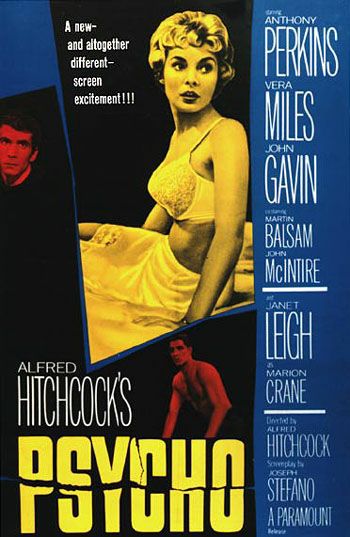
The two movies I enjoyed the most were “Why Be Good?” and “Don’t Bet on Women.” I liked the earlier movies, because it was interesting to see that many of the ideas between then and now are relatively the same. Cinematically, my favorite was “Psycho.” It was really worked well on the big screen. It’s one of my favorite films, and I have never seen it on the big screen. The way it was presented was very impactful. I enjoyed all of the interviews we saw. Norman Lloyd was interesting because he is 100 years old and has amazing commentary with all of his stories. He has worked with so many different people! I enjoyed seeing Sophia Loren, because she is truly an icon. I have heard about her since I was a kid and it was amazing seeing her in person. The whole film festival was very organized. My only disappointment was there were several movies that I wanted to see all scheduled at the same time and I couldn’t see them all.

Myself:
I always love meeting and visiting with readers, film fans and fellow blogger friends. My favorite film of the whole trip was “Reign of Terror,” a new-to-me film. It was my top pick of the festival and I was thrilled that I was able to see it; I was actually the last person who got into the theater before they filled up. The cinematography by John Alton under the direction of Anthony Mann was breathtaking and innovative. I enjoy Robert Cummings as an actor and loved having the opportunity to see him in darker role. “Reign of Terror” is unique, because it is a mix of film noir set during the French Revolution with some humor mixed in; not something you come across very often. Character actor Arnold Moss was probably my favorite character in the film as the delicious snake-in-the-grass Fouché. He had all the best lines.

Robert Cummings and Arnold Moss in "Reign of Terror."

Robert Cummings and Arnold Moss in “Reign of Terror.”

Another notable feature about TCMFF is you have the opportunity to see several films that either haven’t been seen in many years, because they were lost or in a restoration process, or it’s a screening of the restoration’s debut. It’s always a special experience to watch a silent film with a live accompaniment, but it was extra special to be there for Carl Davis’s premiere of the new score for “Steamboat Bill, Jr.” Live accompaniments may not be anything new for some people but that is something you seldom (or never) experience in many areas of the southeast.

Along with my parents joining, this year was a little different, because I had a few new experiences. We got into Los Angeles a little earlier and had the opportunity to do a little sight seeing. It was also my first year in the bleachers watching the red carpet events. It was fun cheering for Julie Andrews, Shirley Jones, and even the passholders, as they entered Gruaman’s Chinese Theater. I also took some time to see the handprint ceremony with Christopher Plummer, who seemed like a gentleman. It was a hilarious coincidence that I ended up sitting beside Errol Flynn’s grandson, Sean, in “The Sea Hawk.”

The 2015 TCMFF may be my favorite year so far, because nine of the 14 films I saw were new-to-me. The only downside was that TCM host Robert Osborne was unable to attend. Along with all of his other fans, I send warm wishes for a speedy recovery.

Shirley Jones on the red carpet at TCMFF. (Comet Over Hollywood/Jessica P.)

Shirley Jones on the red carpet at TCMFF. (Comet Over Hollywood/Jessica P.)

Films:
Queen Christina (1933)
Sea Hawk (1940)
Reign of Terror (1949)
Young Mr. Lincoln (1939)
Steamboat Bill, Jr. (1928)
On Her Majesty’s Secret Service (1969)
Why Be Good? (1929)
So Dear to My Heart (1948)
Air Mail (1932)
The Loved One (1965)
Nothing Lasts Forever (1984)
Don’t Bet On Women (1931)
Psycho (1960)
Marriage Italian Style (1964)

Christopher Plummer exits Grauman's Chinese before his handprint ceremony. (Comet Over Hollywood/Jessica P.)

Christopher Plummer exits Grauman’s Chinese before his handprint ceremony. (Comet Over Hollywood/Jessica P.)

Special Guests:
Robert Morse- red carpet and “The Loved One”
Shirley Jones- red carpet
Marty Ingles- red carpet
Diane Baker- red carpet
Norman Lloyd- red carpet and “Reign of Terror”
Film editor, Anne V. Coates- red carpet
Julie Andrews- red carpet
Christopher Plummer- red carpet and his handprint ceremony
William Shatner – Plummer’s handprint ceremony
Shirley MacLaine – Plummer’s handprint ceremony
Alex Trebek – Plummer’s handprint ceremony
Errol Flynn’s daughter, Rory Flynn- “The Sea Hawk”
Errol Flynn’s grandson, Sean Flynn (Sean and Rory sat next to me in The Sea Hawk)
Peter Fonda- “Young Mr. Lincoln”
Film Historian, Leonard Maltin
Composer Carl Davis – “Steamboat Bill Jr.
George Lazenby- “On Her Majesty’s Secret Service”
Director Tom Schiller- “Nothing Lasts Forever”
Zach Galligan- “Nothing Lasts Forever”
Director Edgar Wright- “Psycho”
Sophia Loren – “Marriage Italian Style”


Norman Lloyd on the red carpet at TCMFF. (Comet Over Hollywood/Jessica P.)

Norman Lloyd on the red carpet at TCMFF. (Comet Over Hollywood/Jessica P.)

Check out the Comet Over Hollywood Facebook page, follow on Twitter at @HollywoodComet or e-mail at cometoverhollywood@gmail.com

Musical Monday: Night and Day (1946)

It’s no secret that the Hollywood Comet loves musicals.
In 2010, I revealed I had seen 400 movie musicals over the course of eight years. Now that number is over 500. To celebrate and share this musical love, here is my weekly feature about musicals.

This week’s musical:
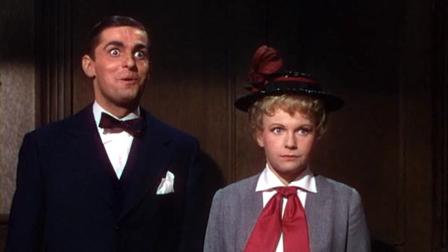
“Night and Day” –Musical #101

night-and-day-1946 

Studio:
Warner Brothers

Director:
Michael Curtiz

Starring:
Cary Grant, Alexi Smith, Jane Wyman, Donald Woods, Ginny Sims, Selena Royle, Eve Arden, Dorothy Malone, Henry Stephenson, Alan Hale, Sig Ruman, Carlos Ramírez
As themselves: Mary Martin, Monty Woolley

Plot:
Fictional biographical film of songwriter Cole Porter.

Cole Porter and his wife Linda Lee

Cole Porter and his wife Linda Lee

Trivia:
-Cole Porter is a celebrated songwriter who was active from post-World War I teens through the 1950s. He was born in 1891 and died in 1964.
-Warner Brothers chose “Night and Day” to mark the studio’s 20th anniversary of sound films, according to an Oct. 4, 1946, article in the Montreal Gazette.
-“Script writers had a hard time finding crisis in his life to sustain a storyline,” according to a mention of the film in his Oct. 16, 1964, Associated Press obituary in the Gettysburg Times.
-Footage shown of Roy Rogers singing “Don’t Fence Me In” is from the Warner Brothers film “Hollywood Canteen” (1944)
-Ray Heindorf and Max Steiner were nominated for an Academy Award for Best Music, Scoring of a Musical Picture.

Highlights:
-Eve Arden as a French performer, simply because it’s ridiculous.
-Mary Martin cameo

Notable Songs:
-“Night and Day”
-“I’m in Love Again” performed by Jane Wyman
-“Let’s Do It” performed by Jane Wyman
-“You Do Something to Me” performed by Jane Wyman
-“I’ve Got You Under My Skin” performed by Ginny Simms
-“Don’t Fence Me In” footage of Roy Rogers
-“Begin the Beguine” performed by Carlos Ramirez

Cary Grant as Cole Porter  and Alexis Smith as Linda Lee in "Night and Day"

Cary Grant as Cole Porter and Alexis Smith as Linda Lee in “Night and Day”

My Review:
There were about 10 years between my first and second viewings of this film. I didn’t find it any better.

Starring Cary Grant and filmed in gorgeous Technicolor, you know you are about to hear some fantastic music going into this film. It’s basically Cole Porter’s Greatest Hits.

But the celebrated songs by Porter can’t save this film. The ridiculous story line of the highlighly fictionalized biography is just a dud. The fact that the biography is fictionalized isn’t surprising. Musical Monday has highlighted the “fictionalized musical biography” many, many times before now.

The San Francisco News said in a review, “This is no more the story of Cole Porter’s life than a two-cent stamp is of Washington.” LIFE magazine said “Film About Cole Porter’s Life is an Example of What’s Wrong with Hollywood Musicals,” saying the numbers were tasteless, the dialogue forcefully recreated from real conversations and a timeworn plot. I can’t say that I disagree. But a made up life story is more forgivable if it is at least entertaining and enjoyable. “Night and Day” is just fairly painful.

Even Cole Porter said, “If I could survive that, I can survive anything,” after the premiere of the film.

Some of the scripts of these biographical films, such as this one, are reviewed by the topic person-Porter did not die until 1964- and the 2011 William McBrien Porter biography discusses Porter reading over the script. With any of these biographical films, I’m not sure how much say the subject matter or their family members have in the script. Maybe it is simply that they don’t want the film to be accurate and their private lives on display.

However, there are almost too many inaccuracies to list in a brief review.

In the film, Alexis Smith plays Porter’s wife Linda Lee Porter, Porter’s wife from 1919 until her death in 1954. It is rare for the romantic lead in a biographical film, to be based off of a real person. Many times, the romantic lead is made up or a mix of multiple people. An example of this is Evelyn Keye’s character in “The Al Jolson Story.” It is obvious that she is supposed to be Ruby Keeler, but her character is named something different. Probably because Keeler was still alive and didn’t want to be associated with the film.

Though Porter and Linda were married, the culture of 1946 and the Hays Production Code prevented the prevented the film from giving the true nature of their relationship and marriage. Porter and Linda’s marriage was more of a marriage of convenience. Porter was gay and his marriage to Linda gave a heterosexual appearance during a time when homosexuality was not as accepted. The marriage gave Linda prominence in society.

Monty Woolley, Jane Wyman and Mary Martin’s brief role are probably the only highlights of the film. Woolley and Martin play themselves, as they were connected with Porter in real life.

It’s not the highly inaccurate plot that makes “Night and Day” bad. “Yankee Doodle Dandy” is also fiction but is an entertaining film. It’s really just that the fictionalized premise is terrible and often downright ridiculous.

The only thing thing “Night and Day” has going for it is the music. In that case, buy some of Cole Porter’s songs instead.

Check out the Comet Over Hollywood Facebook page, follow on Twitter at @HollywoodComet or e-mail at cometoverhollywood@gmail.com


Musical Monday: The Mikado (1939)

It’s no secret that the Hollywood Comet loves musicals.
In 2010, I revealed I had seen 400 movie musicals over the course of eight years. Now that number is over 500. To celebrate and share this musical love, here is my weekly feature about musicals.

This week’s musical:
“The Mikado” –Musical #495

kenny

Studio:
Pinewood Studios

Director:
Victor Schertzinger

Starring:
Kenny Baker, Jean Colin, Sydney Granville, John Barclay

Plot:
Set in Japan, Nanki-Poo (Baker), a prince disguised as a wandering minstrel, falls in love with Yum Yum (Colin).However, she is engaged to the Lord High Execution. Nanki-Poo is set to be executed because he is in love with an engaged girl.

Trivia:
-Written by composers Arthur Sullivan and W.S. Gilbert, “The Mikado” originally opened in London in March 1885 at the Savoy Theater and ran 672 performances.
-Aside from Kenny Baker, many of the players in the film were from the D’Oyly Carte Opera Company, a professional company that opened in the 1870s and closed in 1982. The company staged Gilbert and Sullivan operas.
-Rereleaed in theaters in 1949.
-Nominated for an Academy Award for Best Cinematography, Color by William V. Skall. The film lost to “Gone with the Wind.”
-Nominated for the Mussolini Cup for Best Foreign Film at the Venice Film Festival.

Kenny Baker and Jean Colins in "The Mikado"

Kenny Baker and Jean Colins in “The Mikado”

Notable Songs:
-“Gentleman of Japan”

My Review:
I watched this movie back in September and I have had to sit on it that long, figuring out what to say.
Simply put: “The Mikado” was boring, stupid, odd and all the songs sounded the same.
I have always heard of “The Mikado,” but I never knew what it was about. The whole hour and a half film is debating if they should kill Nanki-Poo (Baker) for loving an engaged girl.
The execution is discussed in a jovial manner. I understand dark comedies and usually enjoy them, but this was plain annoying.
While taking into consideration that this musical was written in the late 1800s, the supposed Japanese names are ridiculous. I mean…Yum Yum? This is a musical that is still performed, which honestly surprises me for the blatant disregard for Japanese culture and mockery of it.
I was ready for this movie to end from the moment I started it. I only continued watching it because I wanted to see if it would get better, and it didn’t.

Check out the Comet Over Hollywood Facebook page, follow on Twitter at @HollywoodComet or e-mail at cometoverhollywood@gmail.com