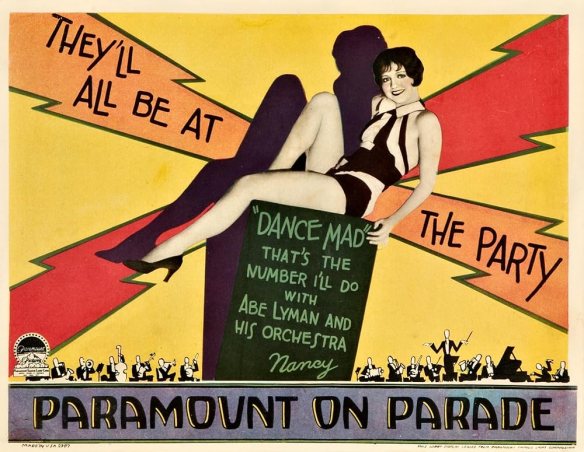
Musical Monday: Paramount on Parade (1930)

It’s no secret that the Hollywood Comet loves musicals.
In 2010, I revealed I had seen 400 movie musicals over the course of eight years. Now that number is over 600. To celebrate and share this musical love, here is my weekly feature about musicals.

This week’s musical:
Paramount on Parade (1930) – Musical #831

Studio:
Paramount Pictures

Director:
Dorothy Arzner, Otto Brower, Edmund Goulding, Victor Heerman, Edwin H. Knopf, Rowland V. Lee, Ernst Lubitsch, Lothar Mendes, Victor Schertzinger, A. Edward Sutherland, Frank Tuttle

Starring:
Iris Adrian, Richard Arlen, Jean Arthur, Mischa Auer, William Austin, George Bancroft, Clara Bow, Evelyn Brent, Mary Brian, Clive Brook, Virginia Bruce, Nancy Carroll, Ruth Chatterton, Maurice Chevalier, Gary Cooper, Cecil Cunningham, Leon Errol, Stuart Erwin, Henry Fink, Kay Francis, Richard “Skeets” Gallagher, Edmund Goulding, Harry Green, Mitzi Green, Robert Greig, James Hall, Phillips Holmes, Helen Kane, Dennis King, Abe Lyman, Fredric March, Nino Martini, Mitzi Mayfair, Marion Morgan Dancers, David Newell, Jack Oakie, Warner Oland, Zelma O’Neal, Eugene Pallette, Joan Peers, Jack Pennick, William Powell, Charles “Buddy” Rogers, Lillian Roth, Rolfe Sedan, Stanley Smith, Fay Wray

Plot:
Paramount Pictures Studios introduces their movie stars in a talking picture musical. The studio’s stars appear as themselves, performing songs and skits. Jack Oakie and Maurice Chevalier are more heavily featured than most of the stars.

Continue reading

Favorite First-Time Watches of 2025:

In 2025, I watched more than 350 films, which is about 100 fewer films than I usually watch in a year. There were several great movies I watched, but these are my favorite new-to-me film discoveries of the year.
I, Jane Doe (1948)
Directed by John H. Auer
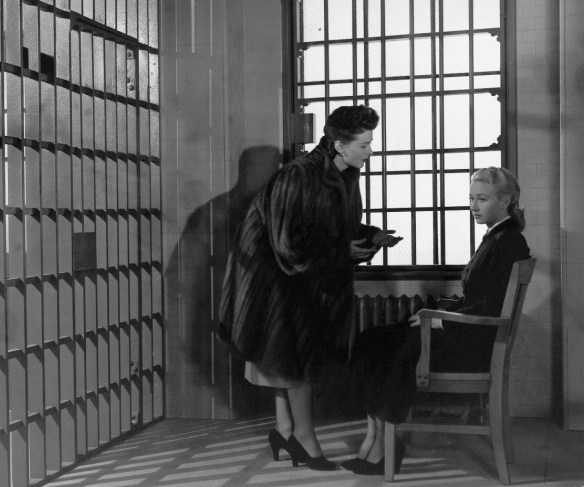
In the film, Ruth Hussey plays Eve Curtis, whose Stephen (John Carroll) is murdered at the start of the film. His murderer is Annette Dubois (Vera Ralston). While distraught at the loss of her husband, as Eve unravels Stephen’s infidelities and the lies he told Annette, everything was not as it seemed with her marriage.

This was the first film I watched of 2025, and I couldn’t have picked a better movie to kick off the year. I don’t want to spoil the plot, because this film certainly takes some unexpected turns that has an extremely satisfying outcome. I would file this under “feminist noir.”
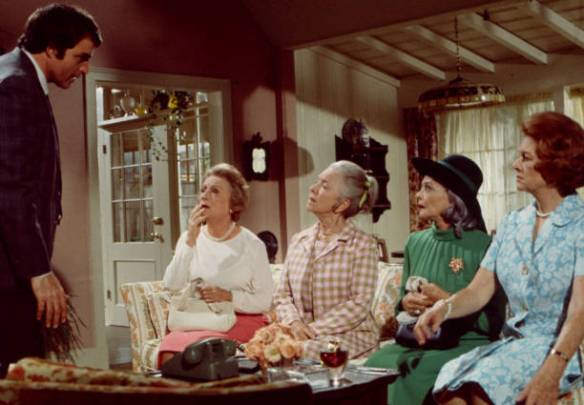
Do Not Fold, Spindle, or Mutilate (1971)
Directed by Ted Post
A quartet of elderly friends played by Helen Hayes, Myrna Loy, Mildred Natwick and Sylvia Sidney, decide to test out a new “computer dating” where you fill out a survey and a computer finds you a match. They make up a fictional girl and there are consequences for their fun when a would-be suitor (played by Vince Edwards) becomes obsessed with the fictional dream girl; resulting in a murder.

I watched this made-for-TV mystery/comedy twice this year because it was so much fun. The four actresses are hilarious together, especially as they get in over their head with a dangerous character. It made me smile so much, I almost considered watching it again!

The Night of the Generals (1967)
Directed by Anatole Litvak
The story travels between the years during World War II and current day (1967) as police try to solve the murder of a prostitute and connect it to murders during the war. The suspicion is on three German generals: General Tanz (Peter O’Toole), General Kahlenberge (Donald Pleasence) and General von Seidlitz-Gabler (Charles Grey).

When I started the film, it took me a minute to get into the pivot between wartime and post-war, but it’s an effective storytelling device. It has an incredible cast with Christopher Plummer as Field Marshall Rommel, Omar Sharif as a Major investigating the murders, and Tom Courtney who is a pawn in everyone’s game.

Sharif is so good in this, Courtney is incredible and underrated, but of course, it’s O’Toole who takes the cake as the unwell and sadistic general. What a movie.
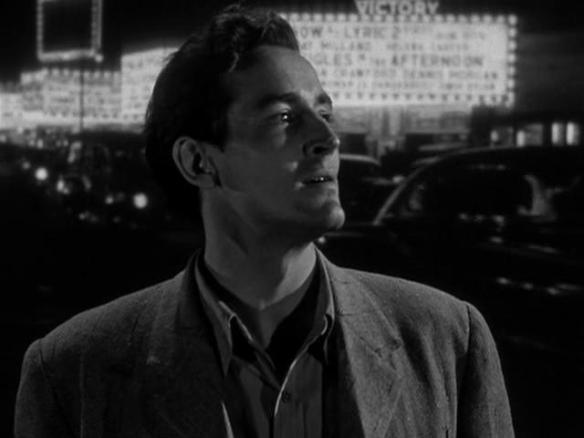
The Glass Wall (1953)
Directed by Maxwell Shane
Vittorio Gassman plays Peter, a Hungarian who has survived Nazi concentration camps, and has come to the United States for a new life and to escape the horrors of the war. However, when the ship arrives, Peter doesn’t have the correct papers and he is held on the ship to be deported back to Hungary. Desperate to start a new life, Peter escapes and searches for an Allied soldier who he helped hide from the Nazis, but the only thing he knows about him is his name is Tom and he plays the clarinet. Peter meets Maggie (Gloria Grahame) who tries to help him. He only has 24 hours to find Tom, or he will be barred from coming to the U.S. forever.

THE GLASS WALL is a stunning film. The film noir genre was a product of World War II and the topic of being a refugee is unique to most noir films I’ve seen. And rather than crime, murder or theft, it’s about someone who is seeking a better life. It has a surprising amount of heart as strangers help people around Peter help him. Vittorio Gassman gives an outstanding performance and it features excellent cinematography by Joseph F. Biroc – and it was filmed on location in New York City.
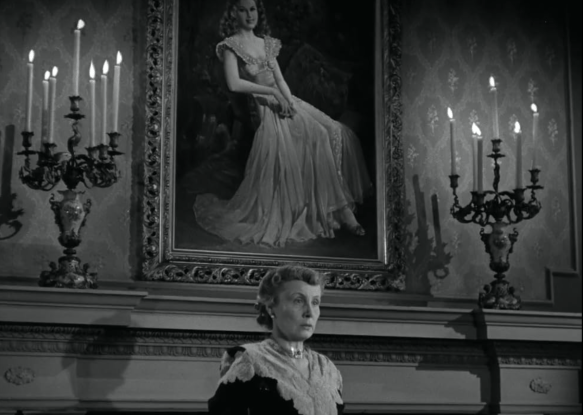
Strangers in the Night (1944)
Directed by Anthony Mann
Marine Sergeant, Johnny Meadows (William Terry) returns home from the war, eager to meet a young woman he has been writing to while fighting overseas. When he arrives at her home, he meets her strange mother, Mrs. Blake (Helene Thimig), but can’t get a straight answer on where her daughter is. A new physician in town, Dr. Leslie Ross (Virginia Grey), helps him get to the bottom of where the daughter is.

I don’t want to say too much about this film without spoiling it, but it’s a good one! Exciting, eerie and astonishing. The best part? It runs at a brisk 56 minutes. If you can watch an episode of “Stranger Things,” you certainly can make time for this.
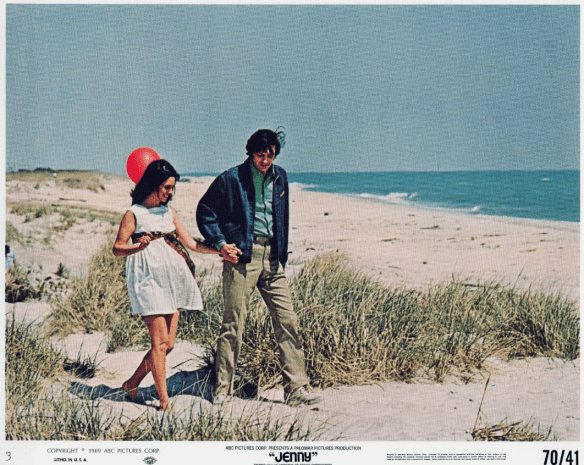
Jenny (1970)
Directed by George Bloomfield
Jenny (Marlo Thomas) is pregnant and unmarried–unthinkable for this time period. She meets Delano (Alan Alda) who is trying to avoid being drafted into the Vietnam War. Being married and having a baby helps keep men out of the military, and being married would help Jenny’s reputation. The two marry to help each other out, but Delano doesn’t change his lifestyle or break up with his girlfriend.

I thought this was really lovely film. It made me sad that Marlo Thomas didn’t make more feature films during this era of her career, because she’s really wonderful.

I loved that the character of Jenny is a mix of new age and extremely old fashioned. She loves classic films and old stars, but also is into “new age” stuff like astrology or listening to Kabuki music.

This is a really tender, sweet, and charming film that made me so sad at the end. The fantasy montage at the end is really lovely.
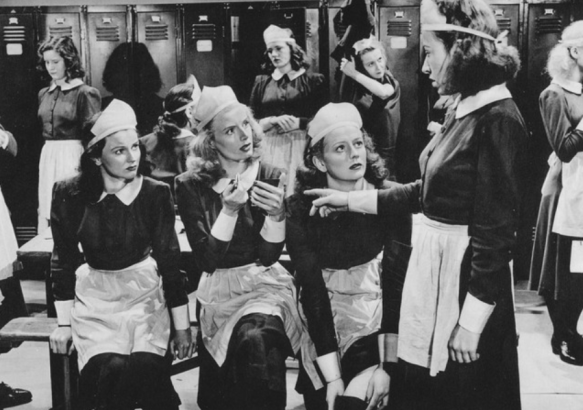
Love in Waiting (1948)
Directed by Douglas Peirce
Three young women (Peggy Evans, Elspet Gray, Patsy Drake) work as waitresses and balance their love lives. One of the young women, Golly (Evans), becomes romantic with the restaurant’s owner, Robert Clitheroe (David Tomlinson). This makes her the target of her manager, Miss Bell (Linda Gray), who also likes Robert. Amongst their lovelife drama, there is a workplace scandal over black market food trading.

I do love an English film! And this one is charming and adorable. I loved seeing Tomlinson–known best today as the father on MARY POPPINS – as a younger actor.
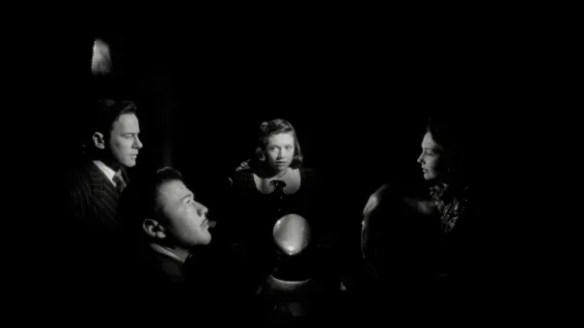
The Amazing Mr. X (1948)
Directed by Bernard Vorhaus
Christine Farber (Lynn Bari) will soon be married to Martin Abbott (Richard Carlson). But as the wedding dating approaches, she seems to be haunted by her deceased husband, Paul. Christine has a chance meeting with Alexis (Turhan Bey), a spiritualist who seems to know a great deal about Christine. As Christine turns to Alexis for counsel, her sister Janet (Cathy O’Donnell) and fiance Martin investigate, believing he’s not what he seems.

THE AMAZING MR. X is so much fun. It’s a bit spooky at parts, we have comedic relief from the nosey sister played by Cathy O’Donnell, and I’m always thrilled to see Richard Carlson in a movie. There are some unexpected twists that I won’t spoil here! The best part of all is that this movie is visually stunning, thanks to the outstanding cinematography of John Alton. He has such a way with shadows and darkness, especially in this film.
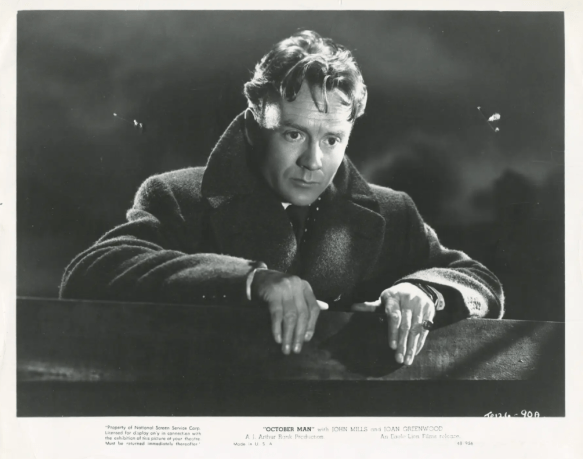
The October Man (1947)
Directed by Roy Ward Baker
After surviving a train accident, Jim Ackland (John Mills) receives additional care for a mental breakdown. A year after the accident, he tries to start a new life and finds a home in a boarding house. Jim befriends fellow boarding house resident, Molly (Kay Walsh). When Molly is killed, Jim is immediately under suspicion due to his time in the mental institution, and he works to clear his name.

I feel John Mills is an overlooked and underrated actor. And like almost everything he does, he’s excellent in this film. THE OCTOBER MAN is truly excellent. I love the mix of suspense, mystery and humor.
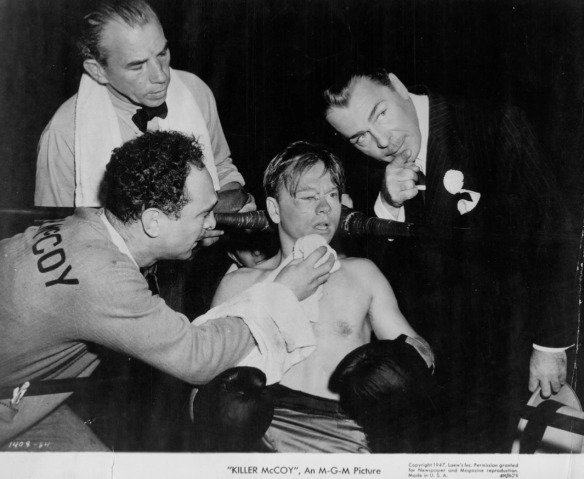
Killer McCoy (1947)
Directed by Roy Rowland
By pure accident, it’s discovered that Tommy McCoy (Mickey Rooney) is a skilled boxer. Tommy is built into a professional boxer and competes in lightweight matches. His former vaudeville performer father (James Dunn) drinks away most of Tommy’s earnings, and Tommy becomes entangled with gamblers (Brian Donlevy) who want him to “fix” fights.

When I saw this, I didn’t know what to expect going in and I loved it. This was made during a period that was nearing the end of Mickey Rooney’s time under contract at Metro-Goldwyn-Mayer. He was also getting too old to play teenage, Andy Hardy-like characters. I truly feel this is his third best performance while at MGM, the first two being THE HUMAN COMEDY and NATIONAL VELVET.

Nine Girls (1944)
Directed by Leigh Jason
A group of sorority girls and their faculty advisor (Ann Harding) are heading to a cabin in the woods for the weekend. It’s discovered that one of the girls is murdered, but the weather makes it impossible for the girls to return to town. Police officers Capt. Brooks (Willard Robertson) and Walter Cummings (William Demarest) make it out to investigate and question the girls.

I’m a sucker for an ensemble cast, especially of a group of actresses I love. For our students, we have a star-studded cast including: Anita Louise, Evelyn Keyes, Nina Foch, Jinx Falkenburg, Leslie Brooks, Lynn Merrick, Jeff Donnell, Shirley Mills and Marcia May Jones.

It’s an intriguing mystery, but more than anything it’s quite funny. There are some great zinger lines throughout. My only complaint is I wish I could have seen a better print of this one.
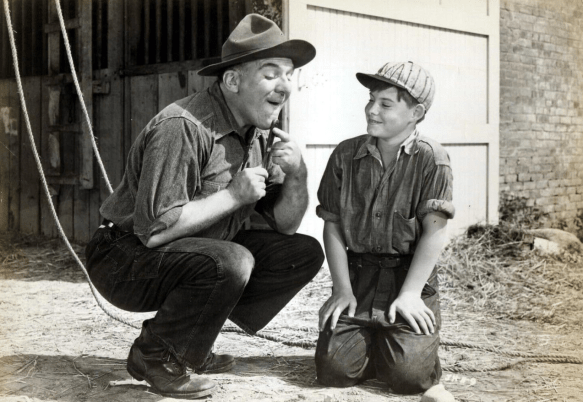
Johnny Holiday (1949)
Directed by Willis Goldbeck
Young boy Johnny Holiday (Allen Martin Jr.) is constantly getting in trouble with the law, largely thanks to the bad influence of teenager Eddie Dugan (Stanley Clements). After getting caught for an attempted robbery, Johnny is sent to a reform school farm. There he meets Sgt. Walker (William Bendix), who provides tough love to the boys. Though Johnny initially resists help, he eventually takes pride in the responsibility he gains on the farm … until Eddie is also sent to the same farm.

In a way, this film reminds me of BOYS TOWN (1938). It’s quite lovely and sweet. Allen Martin Jr, an actor I’m not familiar with, does a great job. But more than anything, I just love William Bendix. I hope he was that sweet and kind in real life. There is also a surprise appearance from Hoagie Carmichael.

Alive and Kicking (1958)
Directed by Cyril Frankel
Dora (Sybil Thorndike), Rose (Kathleen Harrison) and Mabel (Estelle Winwood) escape a nursing home when they learn they are soon to be sent to another nursing facility. They end up on an island in Ireland, where they soon meet MacDonagh (Stanley Holloway) who is about to move into three cottages. When MacDonagh mysteriously disappears, the three ladies pose as his nieces and stay in the home, while befriending villagers on the island.
ALIVE AND KICKING took a few unexpected turns, but what a delight this one was! Thorndike, Harrison and Winwood are hilarious together. A special shoutout to a very young Richard Harris who appears in this film.
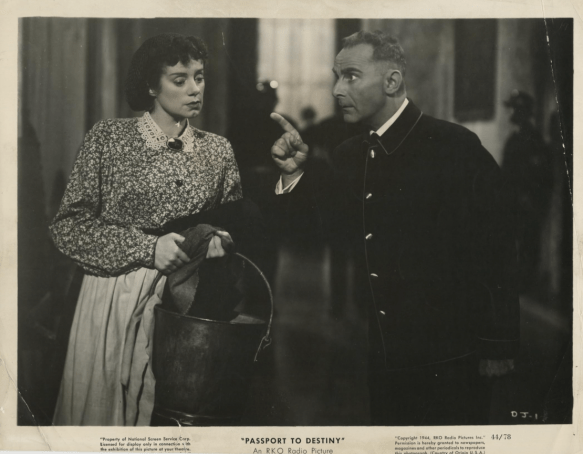
Passport to Destiny (1944)
Directed by Ray McCarey
Ella Muggins (Elsa Lanchester) believes a glass eye left by her deceased husband brings her secret powers and protection after she survives an air raid in London. Armed with this protection, she travels to Germany where she plans to assassinate Adolf Hitler.

I think PASSPORT TO DESTINY was the funniest film I saw this year. It’s hilarious and charming. For example, there’s a scene where Elsa Lanchester is flipping through the phone book trying to find Hitler. It’s a rare treat to see Elsa Lanchester in a starring role. What a gem this was!
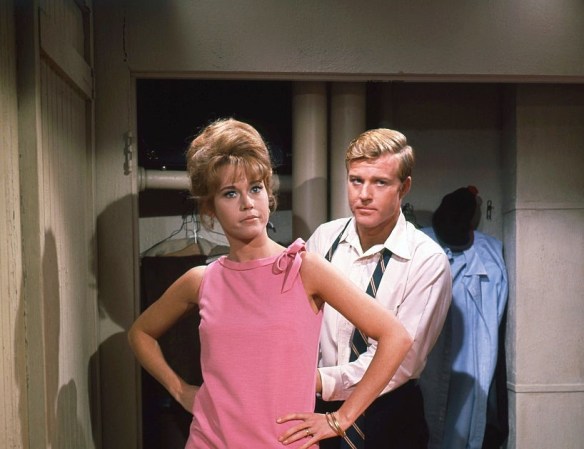
Barefoot in the Park (1967)
Directed by Gene Saks
Newlyweds Corie (Jane Fonda) and Paul Bratter (Robert Redford) adjust to life together in a less than desirable New York City apartment, an eccentric neighbor (Charles Boyer) and Corie’s mother (Mildred Natwick).

I’m not sure how I lived to age 37 and only just now saw BAREFOOT IN THE PARK. This was so much fun. Hilarious, excellent fashion, wonderful performances. I’m almost ashamed that I hadn’t seen it already! I’m also prepared to model my entire wardrobe after Jane Fonda’s look in this film.

Other places you can follow Comet Over Hollywood: 

Christmas in the Movies: An Interview with Jeremy Arnold

Today when the term “Christmas movie” is thrown out, we have mental images of cozy holiday films, family dramas set during the Christmas season, or formulaic TV movies on Hallmark.
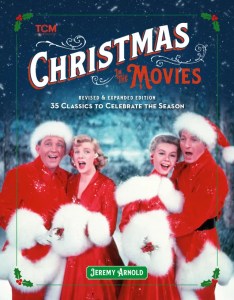
But the genre of “Christmas movie” didn’t always exist, according to Jeremy Arnold, film historian and author ofChristmas in the Movies: 35 Classics to Celebrate the Season.”

“They were not making Christmas movies. The term didn’t exist in the 1940s. Frank Capra never said, ‘I’m going to make a Christmas movie with Jimmy Stewart,’” Arnold said. “They were dramas. They were musicals. They were romantic comedies. Westerns, even, and the whole idea of a Christmas movie as a thing and eventually a genre, didn’t come till decades later.”

Despite that, the rise of holiday storytelling came with World War II.

“It’s that the war is starting, so this idea of family is really coming to the fore,” Arnold said. “Christmas movies take the idea of the family unit and link the stories to the holiday somehow. Christmas pops up in all kinds of movies in many different genres. They were often released throughout the year, not just during the Christmas season. Hollywood, screenwriters and producers were thinking of the Christmas season as a storytelling device and a way to really inject meaning.”

For example, MIRACLE ON 34TH STREET (1947) was released in June, not during the holiday season as it would be now. It was also released in a prolific year for holiday films. The year was two years after the end of World War II, a war that affected families across the world.

“The second half of the decade was about families trying to reconstitute themselves, sometimes without the return of those loved ones,” Arnold said. The ones that did return sometimes had great psychological troubles. That’s one of the origins of film noir.”

Both Christmas movies and film noir were both influenced by the effects of World War II, Arnold said, comparing the storytelling of the holidays and film noir genre as the flipside of each other.

“Film noir pulls characters down into the underbelly of their psyches and of society, and Christmas movies tend to lift characters up,” he said.

Christmas movies released during 1947 include: MIRACLE ON 34TH STREET, THE BISHOP’S WIFE and IT HAPPENED ON FIFTH AVENUE. IT’S A WONDERFUL LIFE (1946) and 3 GODFATHERS (1948) also flank this prolific year of holiday films.

While writing his book, Arnold worked to create a strict definition in order to narrow down the films he highlighted. His definition?

“Christmas has to be important to the story,” Arnold said. “It can’t just be a setting, can’t just be a background. Although I will say that any movie with Christmas in it is fun to watch at Christmas time. I just don’t consider them all to be Christmas movies.”

Listen to the video below for the full interview on holiday films and under-the-radar Christmas films Jeremy Arnold recommends:

In the D.C. area? Jeremy Arnold will be introducing holiday films from Dec. 21 – 25 at the AFI Silver Theater. Find the full schedule here. 

Other places you can follow Comet Over Hollywood: 

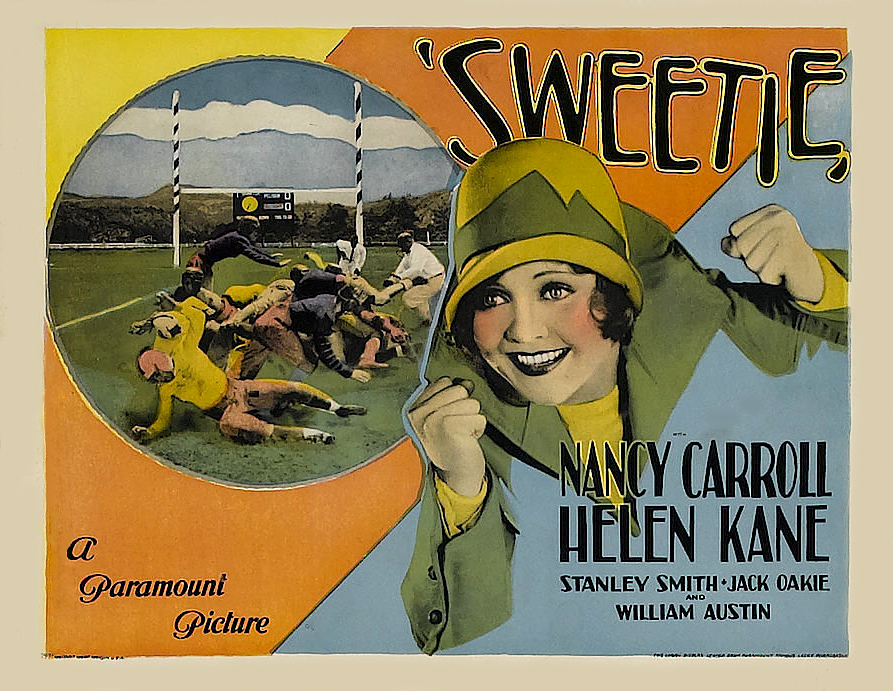
Musical Monday: Sweetie (1929)

It’s no secret that the Hollywood Comet loves musicals.
In 2010, I revealed I had seen 400 movie musicals over the course of eight years. Now that number is over 600. To celebrate and share this musical love, here is my weekly feature about musicals.

This week’s musical:
Sweetie (1929) – Musical #821

Studio:
Paramount Pictures

Director:
Frank Tuttle

Starring:
Nancy Carroll, Helen Kane, Jack Oakie, Stanley Smith, William Austin, Stuart Erwin, Joseph Depew, Wallace MacDonald
Specialty performers: The King’s Men

Plot:
Biff Bentley (Smith) is the star football player at Pelham University in North Carolina. He’s engaged to chorus girl Barbara Pell (Carroll), and Biff is planning to elope with Barbara. But at the last minute, when Barbara arrives, Biff decides to stay at school to help the team. Shortly after, Barbara learns that she has inherited Pelham University. Still smarting from her heartbreak, she decides to take this opportunity to get back at Biff and the football team.

Continue reading

Musical Monday: Road to Rio (1947)

It’s no secret that the Hollywood Comet loves musicals.
In 2010, I revealed I had seen 400 movie musicals over the course of eight years. Now that number is over 600. To celebrate and share this musical love, here is my weekly feature about musicals.

This week’s musical:
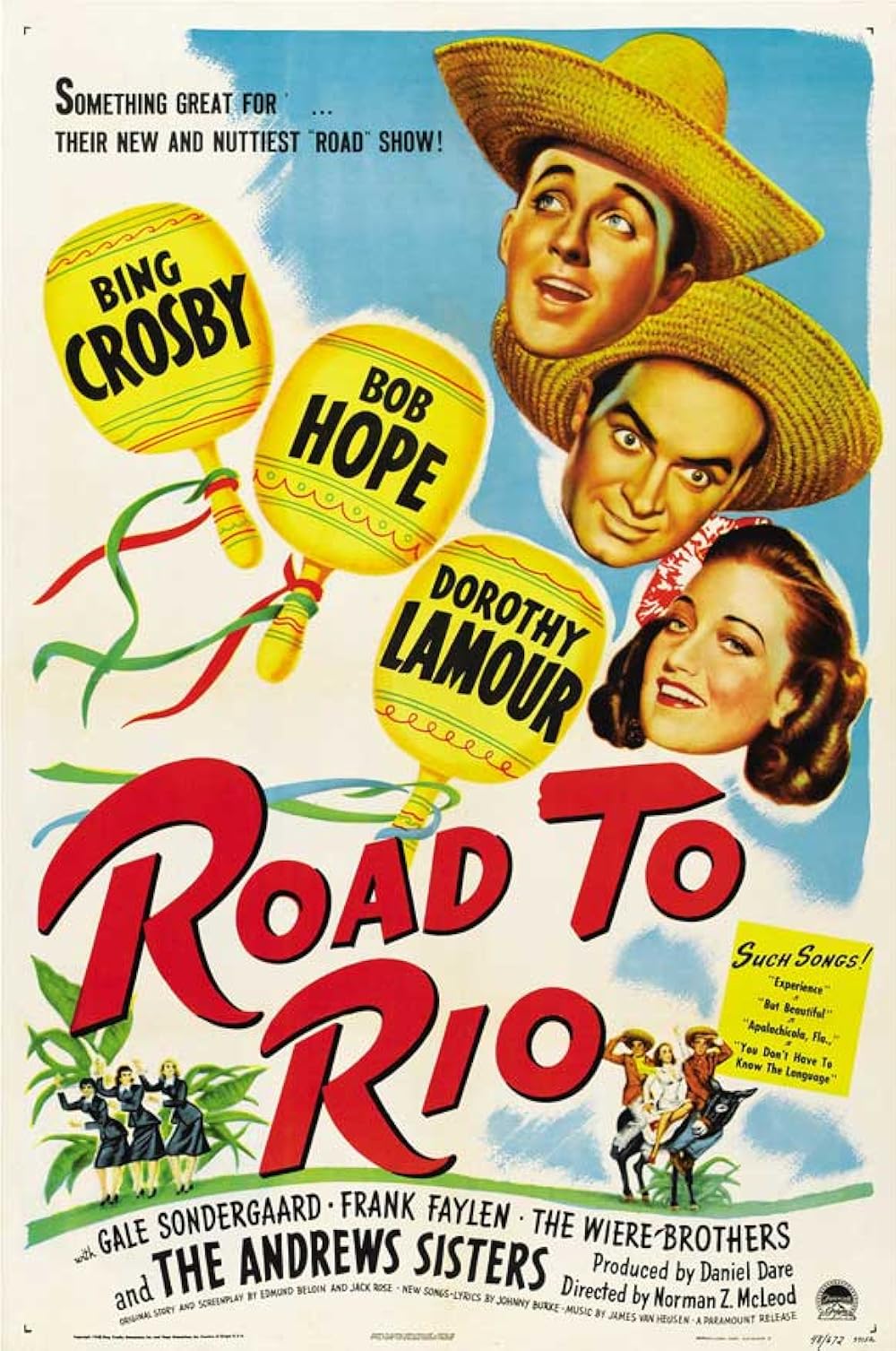
Road to Rio (1947) – Musical #813

Studio:
Paramount Pictures

Director:
Norman Z. McLeod

Starring:
Bing Crosby, Bob Hope, Dorothy Lamour, Gale Sondergaard, Frank Faylen, George Meeker,
Frank Puglia, Robert Barrat, Nestor Paiva, Stanley Andrews, Harry Woods
Themselves: The Andrews Sisters, The Wiere Brothers, Jerry Colonna

Plot:
Vaudeville performers Scat Sweeney (Crosby) and Hot Lips Barton (Hope) travel the United States, and are frequently chased out of states after Scat woos women in each area. In one area, the duo’s act burns down an entire carnival. Fleeing the scene of their crime, Scat and Hot Lips stowaway on a ship to Rio de Janeiro, Brazil, where they meet wealthy Lucia Maria de Andrade (Lamour). Lucia’s finances and future nuptials are being controlled by her nefarious guardian, Catherine Vail (Sondergaard).

Continue reading

Musical Monday: The Hollywood Revue of 1929 (1929)

It’s no secret that the Hollywood Comet loves musicals.
In 2010, I revealed I had seen 400 movie musicals over the course of eight years. Now that number is over 600. To celebrate and share this musical love, here is my weekly feature about musicals.

This week’s musical:
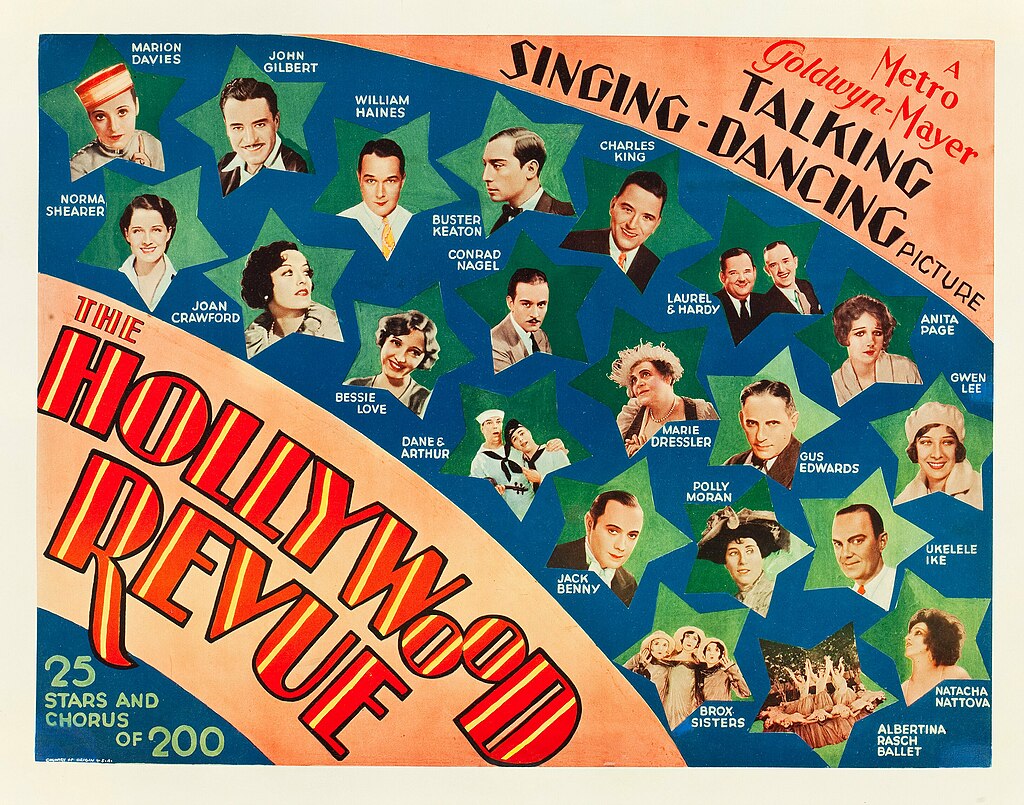
The Hollywood Revue of 1929 (1929) – Musical #795

hollywood revue7

Studio:
Metro-Goldwyn-Mayer

Director:
Charles F. Riesner

Starring:
All Performers as themselves:
Master of Ceremony: Conrad Nagel, Jack Benny
Galaxy of Stars: John Gilbert, Norma Shearer, Joan Crawford, Bessie Love, Anita Page, Buster Keaton, Marion Davies, Lionel Barrymore, William Haines, Marie Dressler, Cliff Edwards, Stan Laurel, Oliver Hardy, Nils Asther, Charles King, Polly Moran, Gus Edwards, Karl Dane, George K. Arthur, Gwen Lee
Uncredited: Ann Dvorak (uncredited)

Plot:
To introduce audiences to Metro-Goldwyn-Mayer stars in a talking picture, the MGM stars, all as themselves, perform a revue of songs and skits with actors Conrad Nagel and Jack Benny as the hosts.

Continue reading

Favorite new-to-me watches of 2024

I watched several great movies in 2024, but these are my favorite first-time new-to-me film discoveries of the year. These are not in order of favorite, but in the order that I watched them in 2024:

garden of evil

Garden of Evil (1954)
Directed by Henry Hathaway
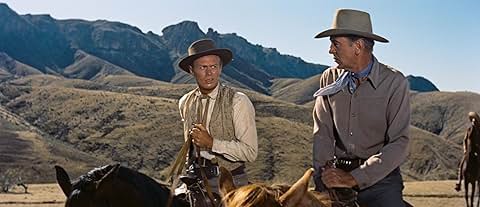
Gary Cooper, Richard Widmark and Camron Mitchell play an American trio stranded in Mexico, who agree to help Susan Hayward, whose husband (Hugh Marlowe) is injured and trapped in the mountains. The journey is treacherous, and the men are suspicious of Hayward’s motives, which she keeps secret.

I knew nothing about this film going in — only knowing it was a western. I also had some predictions of how it would play out early on, and all of them were wrong.

The cast of this film is excellent, and Gary Cooper and Susan Hayward are good, but Richard Widmark was the standout performer in this film. Widmark is so good and his character is not at all how you expect him to be.

I watched this via a Twilight Time Bluray, and it was stunning. It made me miss the boutique line even more. Filmed in gorgeous Technicolor and on-location shots, it included some gorgeous matte painting backdrops. It also made me mourn that many 20th Century Fox films will never have a restoration.

The film also included a unique Bernard Herrmann score here. With a western flair, much of the score doesn’t sound like Herrmann’s signature style.

color reversal: KODAK UNIVERSAL K14. SBA settings neutral SBA off, color SBA on

Desperately Seeking Susan (1985)
Directed by Susan Seidelman
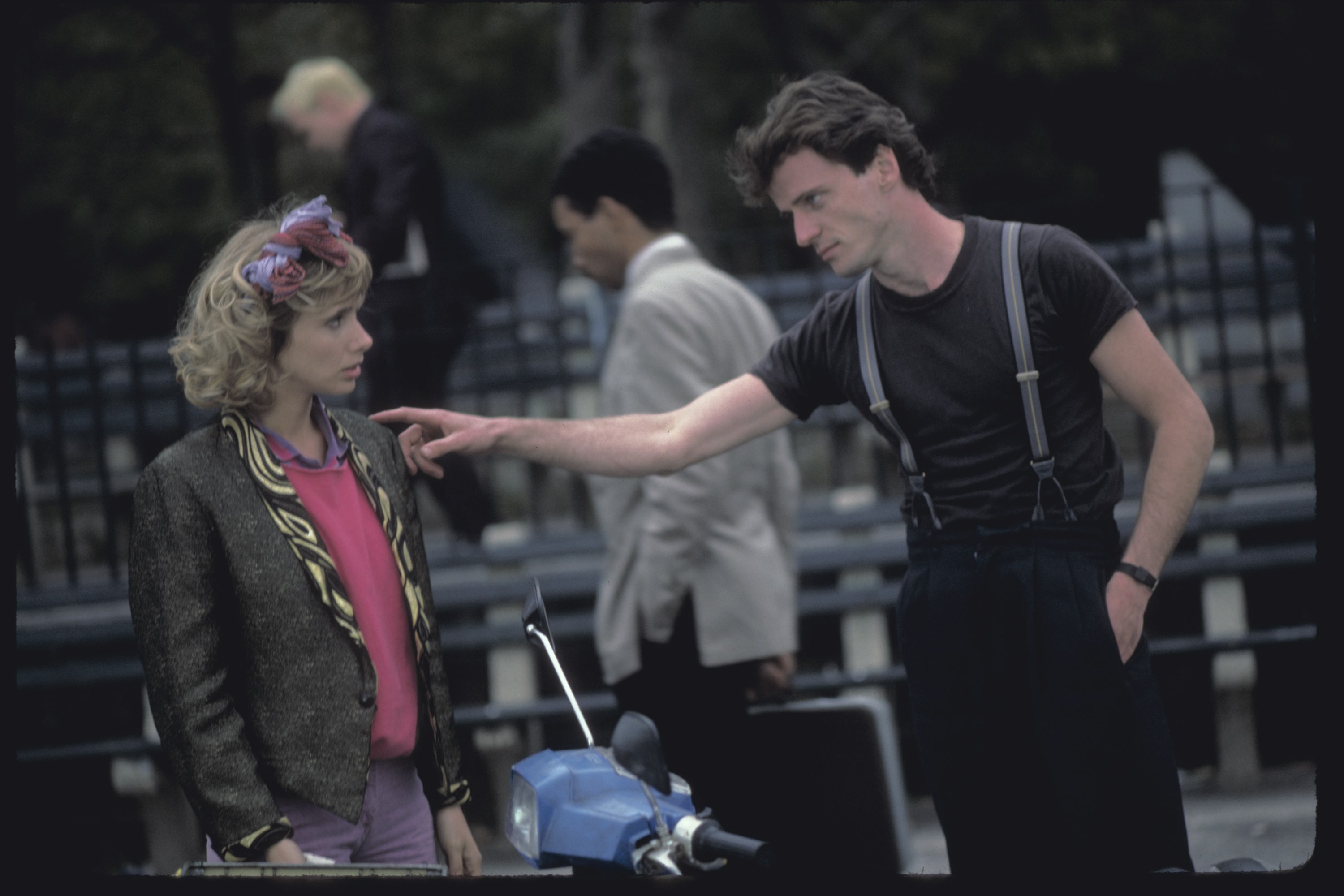
Rosanna Arquette plays Roberta Glass, a bored New Jersey housewife who enjoys reading the personal ads between two lovers, including one that reads “Desperately Seeking Susan,” asking two lovers to meet in a park in New York City. Roberta travels to the meeting spot, hoping to see the lovers — Susan and Jim (Robert Joy). She then follows Susan to a thrift shop, where Susan sells a distinctive jacket with a pyramid on the back. Roberta is intrigued by her bohemian look and lifestyle and buys the jacket. While trying to catch up with Susan, Roberta hits her head and loses her memory. A friend of Jim, Dez (Aidin Quinn), finds Roberta and assumes she’s Susan.

After years of hearing about it, I finally watched this and had a great time. I never really knew what it was about, but I didn’t expect it to be a mix of comedy, crime, romance and mystery. Madonna’s signature fashion look in this (that Arquette’s character mimics) is so great, and the music is outstanding, too. After watching this, I was ready to change my whole life like Roberta Glass.

Continue reading

I’m ready for my close up: Photography in films

Photography and moving pictures walk hand-in-hand, especially when shooting in black and white. Many people prefer color and dismiss black and white as cheap. However, some don’t realize the skill it takes to shoot black and white: making sure you have perfect lighting or having the shadows just right are just a few things to consider.

For being so closely related, it’s surprising that there aren’t many classic films about photography. I was only able to find an handful:

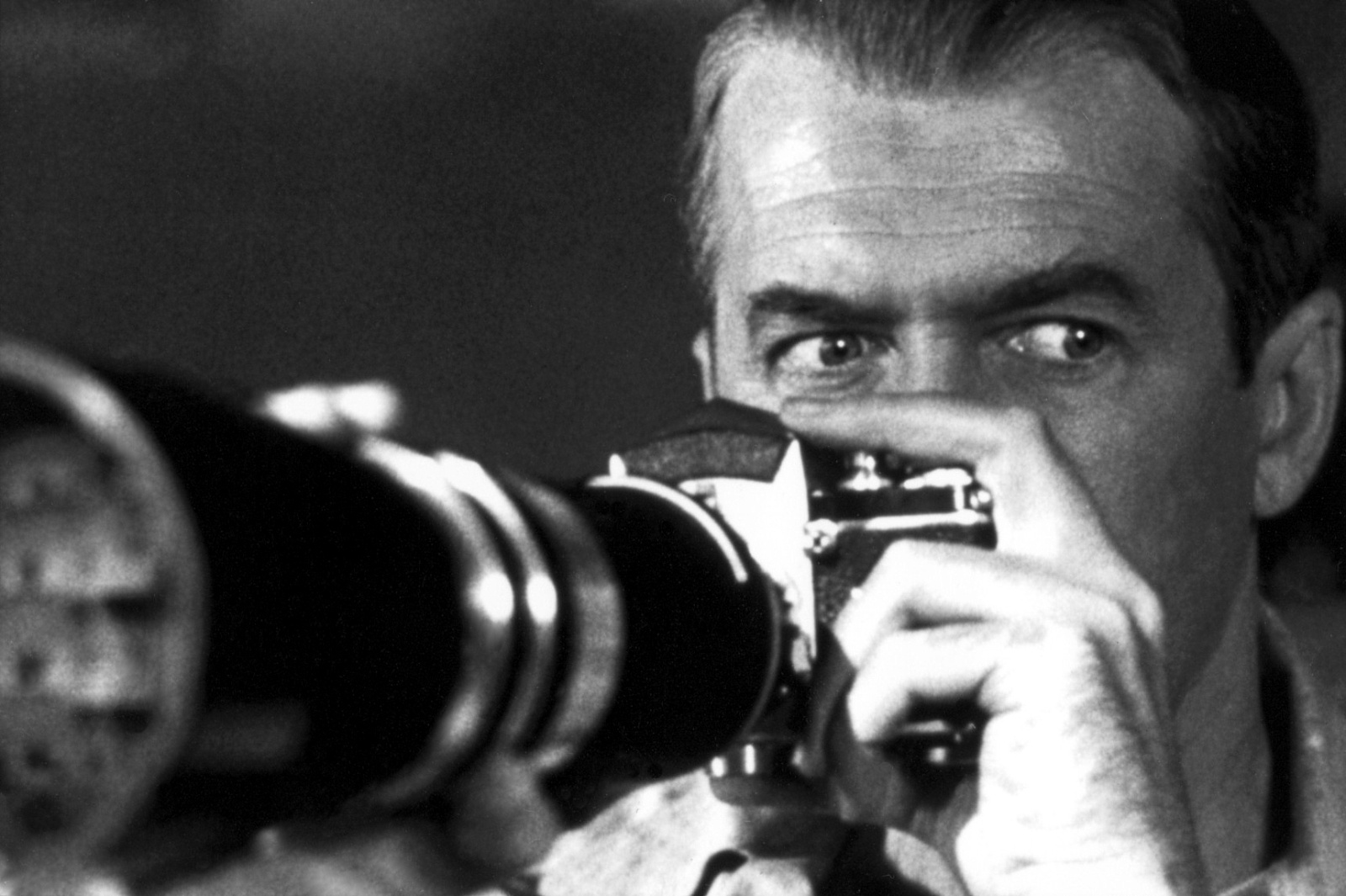
James Stewart in “Rear Window” spying on his neighbor

1. Rear Window (1954): James Stewart plays L.B. “Jeff” Jeffries, a free lance photographer who is laid up with a broken leg that was a result of a dangerous assignment. I’m not sure if this movie paints photographers in the best light. Jeff is in love with high society Grace Kelly but doubts that she could go on assignments with him even though she says she could. Jeff is also a bit of a peeping Tom, spying on his neighbors with his telephoto lens.
However, his peeping Tom-ery isn’t all bad since he uses it to solve a murder that he partially witnesses in an apartment across the way. Jeff cleverly mixes his career and survival techniques as he thwarts the murderer by blinding him with flash bulbs.

2. Roman Holiday (1953): The movie is more about  journalism than a photography, but the photographer certainly plays a large part in the film. Journalist, Joe Bradley (Gregory Peck), is trying to get an exclusive story on a visiting princess (Audrey Hepburn) who just happens to be staying in his apartment.
Eddie Albert plays Peck’s photographer friend who tags along to get the photos for the story. This movie seems to depicts photographers as deceitful playboys. When Peck calls Albert about the story, Albert is photographing and kissing a woman in his apartment. When he is getting pictures of the princess, he doesn’t openly take pictures of her but uses sneaky little spy cameras. A real photographer wouldn’t be so afraid…
Actually, from a journalism student’s point-of-view, it doesn’t paint the newspaper business in a good light either. It has the “anything for a story” undertones and Peck goes to unethical measures to get a story. Even though he doesn’t publish it, if he was doing that in today’s journalism world he would probably face a law suit.

Audrey Hepburn and Fred Astaire in “Funny Face.” Their characters were modeled after Richard Avedon and Dovima.

3. Funny Face (1957):

This movie is simply about fashion photography. It has many interesting and pretty scenes with fashion, dresses and dancing. The thing I like about the movie is that Fred Astaire’s character, Dick Avery, and Audrey Hepburn’s character is supposed to be like the relationship between one of my favorite photographers, Richard Avedon and his muse, Dovima.
Fashion photography is fun and pretty to look at, but the photographer I can’t imagine it being very exciting. From a journalist/writer view point, it would be like writing the same story over and over again. For example, how does Danielle Steel get any excitement out of writing when all of her books basically have the same plot?


4. Weddings and Babies (1958): This is an independent film about a photographer (John Myhers) who is trying to save money in order to get married to his girlfriend, Viveca Lindfors.
I think this movie gives the most realistic depiction of a photographer. He feels unfulfilled because he is only taking pictures of just weddings and babies and wants to do something with a purpose. I’ve heard several photographers say that, others take the wedding route because it’s easier and pays well, but the ones with a drive don’t care so much about the money.
My philosophy of photography is that it should inform just like a newspaper article. You can write a story about how the Yanomamo are losing their indigenous life style, but a picture can better show how it is devastating them. Photography should be about truth, not about how to show in the best light.


5. Blowup (1966): This movie is a mod 1960s, English film. If that doesn’t mean anything to you, it means that it’s rather odd, has little plot and a few naked women thrown in for good measure. However, in comparison to the photographer in “Rear Window” who is a photojournalist and travels the world, the photographer, played by David Hemmings, is a successful commercial fashion photographer. He is also bored with life…go figure, wouldn’t you if you were just photographing fashion?
Anyways, the movie is about his career as a photographer, but it is rather long and drawn out. He thinks he might have photographed a murder, but we never really find out and the murder is never solved. It is a treat though to see the beautiful Russian model, Verushka, at the beginning of the film.

Those movies are the only real pre-1970s movies that used photography as a basis of the plot. I was disappointed and surprised that there are so few movies that have main characters playing photographers, since photojournalism was a big field in the 1940s and 1950s due to publications like LIFE that revolved around photography. I just can’t believe that there are so many movies about stewardesses, nurses and architects but so few about photographers.

Here are a few films that the main characters are photographers, but it is not a main point in the plot:

-One More Tomorrow (1946): Anne Sheridan plays a photographer who falls in love with high society Dennis Morgan. The fact that she is a female photographer means she is lower class and could never fit in Morgan’s social circle.

If a Man Answers (1962): Sandra Dee marries photographer Bobby Darin. She plans on keeping her new husband using a dog training book, because she worries about him photographing other women.

Wait Until Dark (1967): Audrey Hepburn plays a blind woman terrorized by men trying to get a heroine filled doll. Her husband in the movie is a photographer.

Check out the Comet Over Hollywood Facebook page for the latest updates.

Star Collector


Anita Page in the 1920’s. At one point she had more fan mail than Greta Garbo.

Not only am I old-fashioned in my movie tastes, but I am also pretty passe as a movie fan.

I write fan mail.

You may be thinking, “Who does that anymore?” A surprising amount do continue to write to stars like Debbie Reynolds, Tony Curtis and Elizabeth Taylor. No one writes the stars of today, though, like Angelina Jolie, Orlando Bloom or Jennifer Aniston. Why is this? Because they won’t answer…that is if you can even find an address to write to.

I get my fan mail addresses from an autograph database called StarTiger.com. On the website you can search virtually any movie star, singer or sports player. Each star has their own profile page. On this page there is a list of addresses that you can contact them.

Continue reading