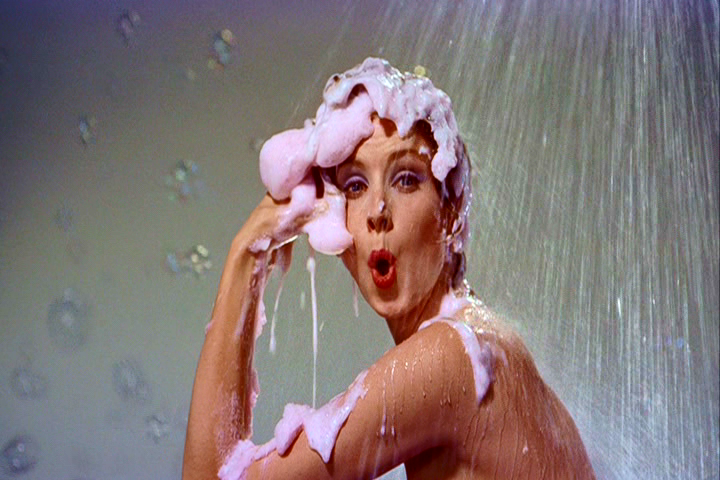
Musical Monday: “Can-Can” (1960)

It’s no secret that the Hollywood Comet loves musicals.
In 2010, I revealed I had seen 400 movie musicals over the course of eight years. Now that number is over 500. To celebrate and share this musical love, here is my weekly feature about musicals.

Can_CanThis week’s musical:
Can-Can” (1960) — Musical #506

Studio:
20th Century Fox

Director:
Walter Lang

Starring:
Frank Sinatra, Shirley MacLaine, Maurice Chevalier, Louis Jourdan, Juliet Prowse

Plot:
Set in 1896 France, Simone Pistache (MacLaine) owns a nightclub that continuously is raided by police for performing the lewd can-can dance.  Simone is in love with her lawyer François Durnais (Sinatra) and helps keep her out of jail. Judge Philipe Forrestier is the one who keeps getting the club raided, but Philipe ends up falling in love with Simone and the two are engaged, jilting Francois.

Trivia:
-During the filming, USSR leader Nikita Khrushchev visited the set and was shocked by the film. He called it “immoral.” He said, “The face of humanity is prettier than it’s backside,” and Shirley MacLaine said he was just mad that the dancers were wearing underwear during the can-can dance. The incident gained the film national publicity, according to Shirley MacLaine.
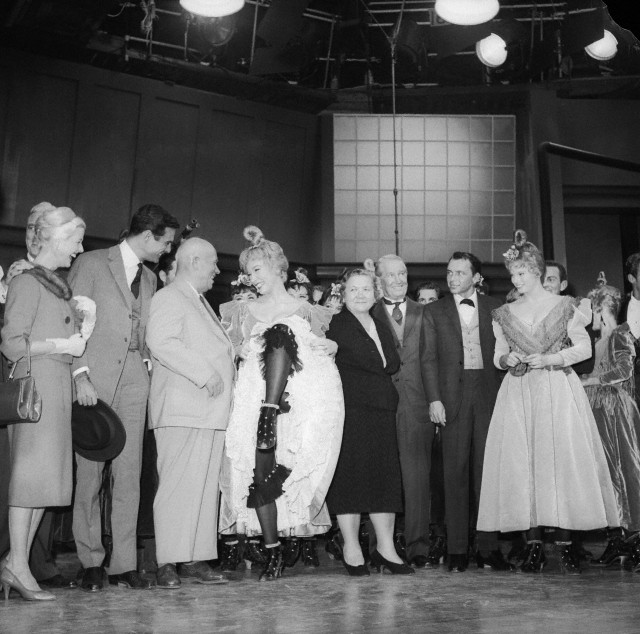
Shirley MacLaine performs like a Can Can girl for Soviet Premier Nikita Khrushchev at the 20th Century Fox Studios. Left to right: Louis Jourden, Mr. Khrushchev, Shirley MacLaine, Mrs. Khrushchev, Maurice Chevalier, and Frank Sinatra.

Shirley MacLaine performs like a Can Can girl for Soviet Premier Nikita Khrushchev at the 20th Century Fox Studios. Left to right: Louis Jourden, Mr. Khrushchev, Shirley MacLaine, Mrs. Khrushchev, Maurice Chevalier, and Frank Sinatra.

-Juliet Prowse’s first film.
-Frank Sinatra requested Shirley MacLaine for this film, requiring 20th Century Fox to buy out her Columbia Pictures contract for “Who’s That Lady?” that Janet Leigh eventually starred in, according to Sinatra in Hollywood by Tom Santopietro.
-Frank Sinatra didn’t like to work before noon so they worked “French hours” when shooting the film. During the World Series, no one would know where Sinatra was until they would see him on TV in a box watching the game at the stadium, according to Shirley MacLaine.
-The original play opened on Broadway in 1953 and ran for 892 performance. Gwenn Verdon won the 1954 Tony Award for Supporting or Featured Actress in a Musical.
The film was rather different from the stage version which gave it some bad reviews: “The music has been reduced to snatches, the book has been weirdly changed and the dances-well they have been knocked out by some tired jigs, knocked out by Hermes Pan,” said the New York Times in 1960.
-Nominated for an Academy Award for Best Costume Design by Irene Scharaff and Best Music, Scoring of a Musical Picture by Nelson Riddle.

Highlights:
-A man walks up, slaps Shirley MacLaine, rips off her skirt and then they start a strange dance of dragging each other around. This is the Apache Dance. I’m not saying this is a good dance, it’s just random and notable because of its oddness.
-The Garden of Eden Ballet is the best part of the film, aside from the dancers dressed as bunnies and monkeys. It gives us a chance to actually see the dancing talents of Juliet Prowse, Marc Wilder and Shirley MacLaine.

Shirley MacLaine and Marc Wilder dance the "Garden of Eden" ballet

Shirley MacLaine and Marc Wilder dance the “Garden of Eden” ballet

Notable Songs:
The movie is filled with famous Cole Porter songs such as “It Was Just One of Those Things,” “Let’s Do It” and “You Do Something to Me.” However, while Sinatra, Chevalier and Jourdan sing the songs well,  the song placements seem awkward.

My Review:
Why is there so much screaming when the can-can is danced?
But that’s besides the point.
This movie is overly long and the majority of the stars are miscast. Basically, the two leads are a mess, in my opinion. Shirley MacLaine is a fine dancer, her singing is only okay and her acting in this film is mediocre. Frank Sinatra seems silly as a Frenchman, but has good vocals. Louis Jourdan, as handsome as ever, and Maurice Chevalier-reunited together two years after “Gigi” (1958)- are just fine and fit into the plot well. A star-studded cast with Cole Porter songs shouldn’t go wrong, but it did.
I enjoy plenty of films that are full of fluff, but this one seems overly long for the plot we are given. While the score is chock-full of excellent Cole Porter songs, they just….seem oddly placed.
Visually, the movie is gorgeous with Louis Jourdan’s good looks and lovely costumes by Irene Scharff. The Garden of Eden Ballet is also gorgeous and the best part of the film.
When a five minute dance is the best part of a 131 minute film, this is a problem.

Check out the Comet Over Hollywood Facebook page, follow on Twitter at @HollywoodComet or e-mail at cometoverhollywood@gmail.com
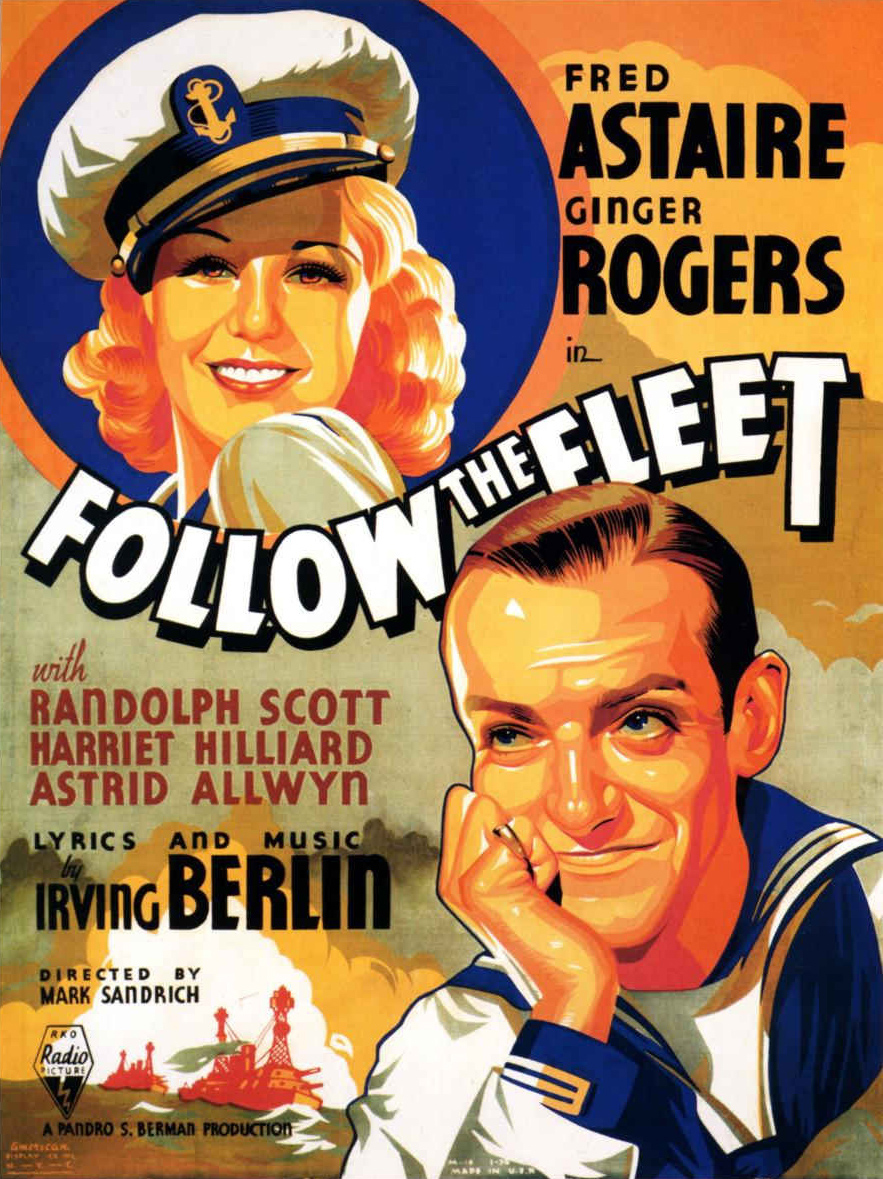
Musical Monday: “Follow the Fleet” (1936)

It’s no secret that the Hollywood Comet loves musicals.
In 2010, I revealed I had seen 400 movie musicals over the course of eight years. Now that number is over 500. To celebrate and share this musical love, here is my weekly feature about musicals.

follow the fleet 2This week’s musical:
Follow the Fleet” (1936) — Musical #155

Studio:
RKO

Director:
Mark Sandrich

Starring:
Fred Astaire, Ginger Rogers, Randolph Scott, Harriet Hilliard, Betty Grable, Lucille Ball

Plot:
Bake Baker (Astaire) joined the Navy after his former dance partner Sherry Martin (Rogers) turned him down when he asked her to marry him.
Now he’s back on shore leave and he meets her by chance at a 10 cents a dance joint.
Sherry’s bookish sister Connie (Hilliard) meets Bake’s sea mate Bilge Smith (Scott) and falls in love with him. But Bilge isn’t read to settle down and starts running around with a rich divorcee.

follow the fleet

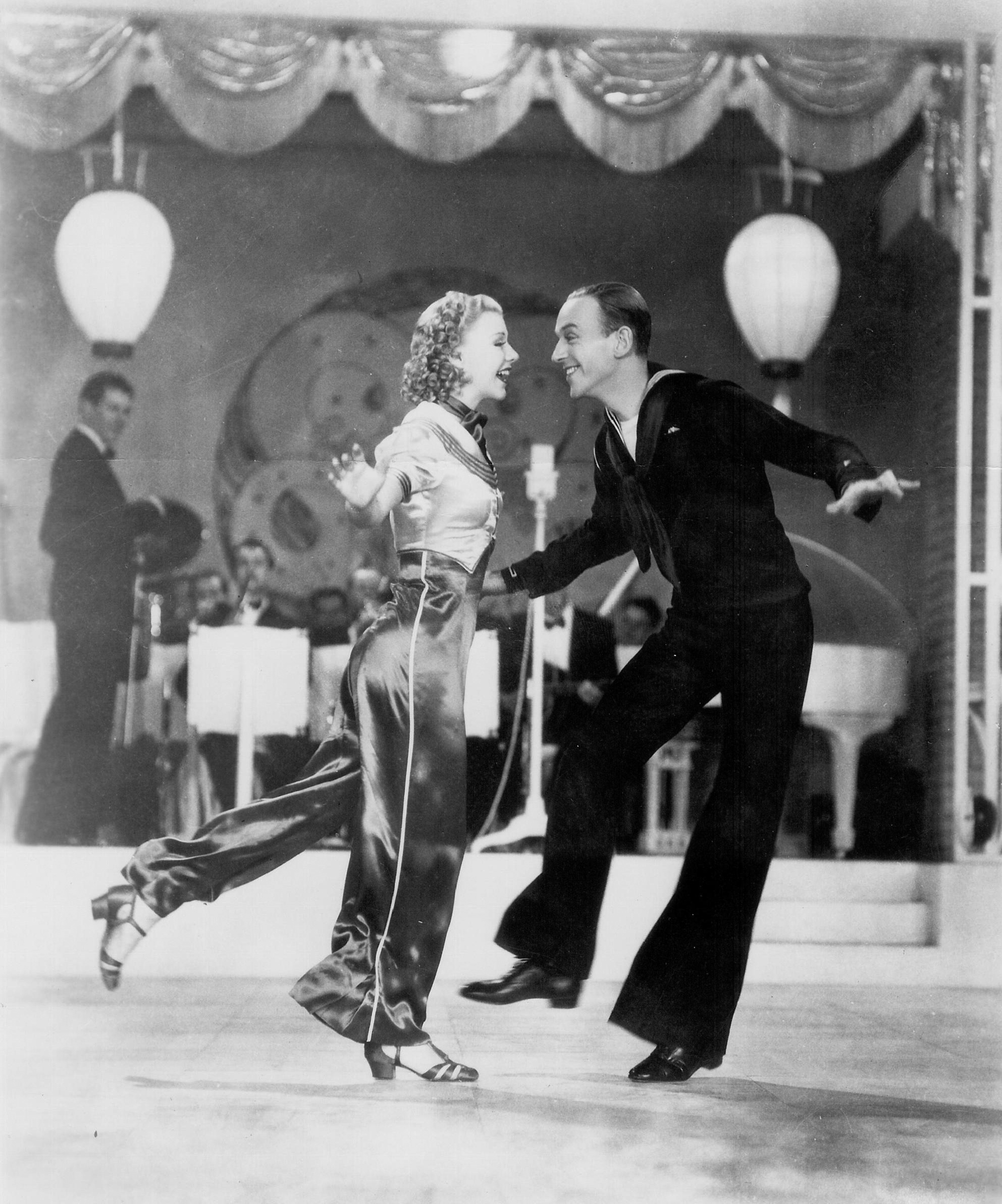
Ginger Rogers and Fred Astaire dance to “Let Yourself Go”

Trivia:
-This movie was made after the success of “Roberta.” RKO wanted to bring Randolph Scott and Irene Dunne back together again for another film with Fred Astaire and Ginger Rogers as the secondary leads, according to TCM host Robert Osborne. Dunne’s contract expired with RKO and she went on to star in “Showboat” (1936). New comer Harriet Hilliard was selected to fill the Irene Dunne role, Osborne said.
-The beaded dress Ginger Rogers wears in “Let’s Face the Music and Dance” was very heavy. Fred Astaire said the dress was too heavy to be made for dancing. During the first take, a long sleeve hit Astaire in the face. After 20 more takes, Astaire felt like the first take was their best, said Robert Osborne.
-Fred Astaire and Ginger Rogers’ fifth film together.
-The couple in the dance contest with Astaire and Rogers were unknowns picked by choreographer Hermes Pan.
-Lucille Ball and Betty Grable have small roles in the film.
-Actor/singer Tony Martin has an uncredited role in the film.
-Irving Berlin wrote “Get Thee Behind Me, Satan” was originally written for “Top Hat.”
-Adapted from the play “Shore Leave.”

Highlights:
-Ginger Rogers and Fred Astaire in the dance contest. They do impressive dance steps and Rogers is wearing pants so you can actually see the dance moves she’s doing.

Notable Songs:
All the songs are quality because the score is written by Irving Berlin but my favorites are:
-“Let Yourself Go” sung by Ginger Rogers
-“I’m Putting All My Eggs in One Basket” sung by Fred Astaire and Ginger Rogers
-“Let’s Face the Music and Dance” sung by Fred Astaire

Harriet Hilliard and Randolph Scott in "Follow the Fleet"

Harriet Hilliard and Randolph Scott in “Follow the Fleet”

My Review:
While this was following the success of “Roberta,” it isn’t quite as good as “Roberta.” Harriet Hilliard is fine, but I would have loved to see Irene Dunne in the role.
The music in this Astaire and Rogers film is terrific since the score is written by Irving Berlin. It is also a real treat that all but one of Rogers’ dance performances are done in pants so you can see her footwork better than when she is wearing a ballgown.
The plot isn’t bad but some of the lines said in the film could be bothersome to the contemporary viewer. Such as Ginger Rogers saying you have to be dumb to get a man. Or that Harriet salvages a boat for a man she doesn’t even know.
Regardless of my issues with silly parts of the plot, if you are a Fred Astaire and Ginger Rogers fan, this is definitely a movie you should see. 

Check out the Comet Over Hollywood Facebook page, follow on Twitter at @HollywoodComet or e-mail at cometoverhollywood@gmail.com

Musical Monday: “Monte Carlo” (1930)

It’s no secret that the Hollywood Comet loves musicals.
In 2010, I revealed I had seen 400 movie musicals over the course of eight years. Now that number is over 500. To celebrate and share this musical love, here is my weekly feature about musicals.

monte carloThis week’s musical:
Monte Carlo” (1930) –Musical #276

Studio:
Paramount Pictures

Director:
Ernst Lubitsch

Starring:
Jeanette MacDonald, Jack Buchanan, Zasu Pitts

Plot:
Countess Helene (MacDonald) flees minutes before her wedding and heads to Monte Carlo. The penniless countess hopes to win money at the Roulette wheel or find a wealthy man. Count Rudolph (Buchanan) takes a liking to Helene and gets closer to her by posing as the hairdresser that she hires. She falls in love with him but doesn’t want to marry what she thinks is a penniless man.

Trivia:
-Ernst Lubitsch had a crush on Jeanette MacDonald and expressed this to her. She thought he was joking and he was angry by her response, straining their relationship, according to Turner Classic Movies Host Ben Mankiewicz.
-Director Ernst Lubitsch’s second sound film.
-Actor Jack Buchanan’s American film debut. His next American film was “The Band Wagon” in 1953.

Jack Buchanan poses as a hairdresser to get closer to Jeannette MacDonald.

Jack Buchanan poses as a hairdresser to get closer to Jeannette MacDonald.

Notable Songs:
-Many of the songs don’t stick with you during the film. However “Beyond the Blue Horizon” sung by Jeanette MacDonald is the best song in the film.

My Review:
Lubitsch musicals are different from other musicals. Rather than having a show stopping tune, the songs usually add to the plot and sometimes is like sing-song talking.
Though I love Ernst Lubitsch and actress Jeanette MacDonald, I did not love this film. Jack Buchanan is wonderful in “The Band Wagon” (1953) but lackluster in this film. In most of the MacDonald-Lubitsch teamings, Maurice Chevalier was MacDonald’s leading man. Buchanan just didn’t fit as a romantic leading man.
I also felt like the movie dragged a bit. Though I struggled to get through this one, I will suggest it if you enjoy Lubitsch films. The shots are beautiful and all have “the Lubitsch touch.”

Check out the Comet Over Hollywood Facebook page, follow on Twitter at @HollywoodComet or e-mail at cometoverhollywood@gmail.com

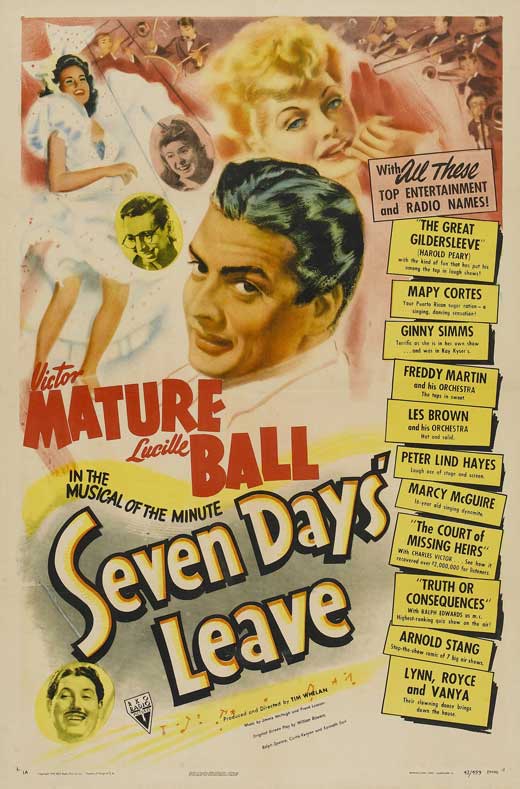
Musical Monday: “Seven Days’ Leave” (1942)

t’s no secret that the Hollywood Comet loves musicals.
In 2010, I revealed I had seen 400 movie musicals over the course of eight years. Now that number is over 500. To celebrate and share this musical love, here is my weekly feature about musicals.

seven-days-leave-movie-poster-1942-1020701154This week’s musical:
Seven Days’ Leave (1942) — Musical #475

Studio:
RKO

Director:
Tim Whelan

Starring:
Victor Mature, Lucille Ball,

Plot:
Army Private Johnny Grey (Mature) discovers he is an heir of $100,000. However, he has to marry another heiress (Ball) in seven days in order to receive the money.

Trivia:
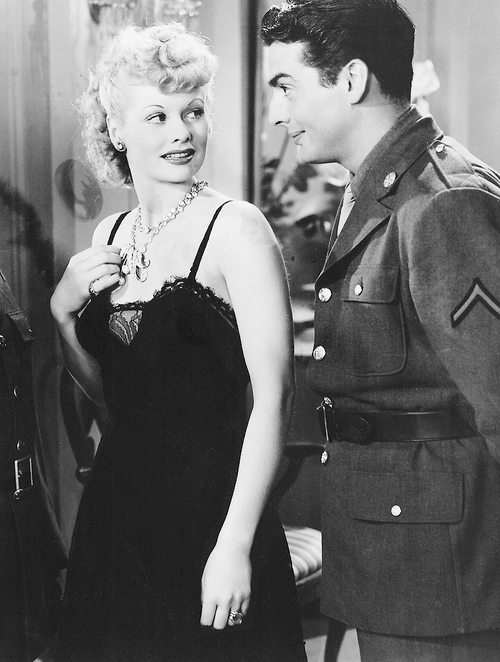
-Ball and Mature didn’t enjoy making this film. Ball had just completed “Big Street” and wanted to be taken more seriously in film. Ball was also unhappy because her husband Desi Arnaz was away fundraising for the war relief, according to The Films of Victor Mature by James McKay
-Mature was having an affair with Rita Hayworth and wanted her to be the leading lady rather than Ball. Mature’s attitude about it didn’t help his and Ball’s relationship, according to The Films of Victor Mature by James McKay.
-Several NBC radio shows are featured such as Truth or Consequence
-Remake of the 1930 Gary Cooper film, “Seven Days Leave,” according to 1000 Questions About Canada By John Robert Colombo.

lucyHighlights:
-Victor Mature dancing and singing (but dubbed).
-Impressions of Lionel Barrymore and Ronald Colman by one of the soldiers. Though they aren’t terrific, I always enjoy hearing impressions of celebrities.
-The comedic ballroom dancing routine with Lynn Royce and Vanya. It starts out with a male and female dance number. Then a second man comes in for comedic relief, mostly at the lady’s expense.

Notable Songs:
-“Please Won’t You Leave My Girl Alone” sung by Victor Mature and a group of soldiers at the very beginning and the very end of the film. It’s not a good tune, but it’s the most memorable and catchy.
-“Can’t Get Out of This Mood” sung by Ginny Simms with the Freddy Martin Orchestra. This is the best song sung in the whole film. Moody and musically lovely.

My Review:
Neither of the stars were pleased to be in this film and I can’t blame them. The plot of having to marry someone in order to get money isn’t a new one. Romantic mix-ups should be expected. Though I wouldn’t say this movie was horrible, I also wouldn’t go out of my way to watch it multiple times.

Check out the Comet Over Hollywood Facebook page, follow on Twitter at @HollywoodComet or e-mail at cometoverhollywood@gmail.com

Musical Monday: “You’ll Never Get Rich” (1941)

It’s no secret that the Hollywood Comet loves musicals.
In 2010, I revealed I had seen 400 movie musicals over the course of eight years. Now that number is over 500. To celebrate and share this musical love, here is my weekly feature about musicals.

richposterThis week’s musical:
You’ll Never Get Rich” (1941) –Musical #48

Studio:
Columbia Pictures

Director:
Sidney Lanfield

Starring:
Fred Astaire, Rita Hayworth, Robert Benchley, Osa Massen, John Hubbard, Frieda Inescourt, Guin ‘Big Boy’ Williams

Plot:
Broadway choreographer Robert Curtis (Fred Astaire) gets mixed up in the philandering of producer Martin Cortland (Benchley). Cortland buys a bracelet for a pretty chorus girl Shelia Winthrop (Hayworth) but Cortland’s wife (Frieda Inescourt) find the bracelet after Shelia refuses it. Robert gets mixed up in Courtland’s explanations to his wife, and is able to escape the confusion when he is drafted into the Army.

Trivia:
-Rita Hayworth’s first starring role in a large budget film for Columbia Pictures. It was successful at the box office and turned Hayworth into a star.
-During the filming of this movie, the famous LIFE photo of Rita Hayworth in a negligee on a bed was published, making her even more famous along with this movie.
-Nominated for two Academy Awards: Best Music, Original Score by Cole Porter for the song “Since I Kissed My Baby Goodbye.” The second was for Best Music, Scoring of a Musical Picture by Morris Stoloff.

Robert Benchley tries to woo Rita Hayworth with a bracelet in "You'll Never Get Rich"

Robert Benchley tries to woo Rita Hayworth with a bracelet in “You’ll Never Get Rich”

-Fred Astaire appeared in two pictures with Hayworth. This film and “You Were Never Lovelier.” Though he liked dancing with Hayworth, he didn’t want to do any more pictures with her. He wanted to get away from being associated as a team with any particular actress, such as Ginger Rogers, according to “Encyclopedia of American Cinema.”
-Astaire said Hayworth danced with “trained perfection and individuality,” according to his autobiography “Steps in Time: An Autobiography.”
-The film had a working title of “He’s My Uncle,” according to “The Complete Lyrics Of Cole Porter.”

The Stars on the Film:
Rita Hayworth on the film:
-“The brass at Columbia had forgotten the fact that I was a dancer, until Fred Astaire, who knew my background, reminded them,” Rita Hayworth is quoted in the book “Hollywood Gold: Films of the Forties and Fifties” by John Howard Reid. “When Fred came to Columbia to make ‘You’ll Never Get Rich,’ they asked who they wanted as a dancing partner. Fred asked for me! That surprised me, but Fred knew what he was about. He knew my work. The film was a huge success and as a result, I was loaned out to Fox for ‘My Gal Sal.'”

Fred Astaire on the film:
Rita danced with trained perfection and individuality. Of course, she knew through experience what the dancing business was all about,” Fred Astaire is quoted in the book “Hollywood Gold: Films of the Forties and Fifties” by John Howard Reid. “That was apparent when I started working with her. I enjoyed making both ‘You’ll Never Get Rich’ and ‘You Were Never Lovelier‘ because of Rita.”

“She’s a natural. She’s constantly surprising me. Nothing is too difficult for her. She watches, goes up, practices up and the next day she has it perfect,” in the Oct. 1941, “Born to Dance-Together” in Movie Stars Parade.

Highlights:
-The film begins with Robert Benchley riding in a vehicle. He tells the chauffeur to slow down and we see the credits in the form of billboards along the road.
-The first musical number is an interesting dance number that mixes modern dance and tap dancing together.

-Fred Astaire and Rita Hayworth’s duet tap dance at the beginning of the film when Astaire is showing her how to do a dance in the show. The number show’s off just how good a dancer Hayworth is.

-Popular 1940s singer Martha Tilton shows up at the end as a specialty performance for the “Wedding Cake Walk” number.

Singer Martha Tilton makes an appearance singing "The Wedding Cake Walk."  (Comet Over Hollywood/Screen Cap by Jessica Pickens)

Singer Martha Tilton makes an appearance singing “The Wedding Cake Walk.” (Comet Over Hollywood/Screen Cap by Jessica Pickens)

Notable Songs:
-Shootin’ the Works for Uncle Sam sung by Fred Astaire
-The Wedding Cake Walk sung by Martha Tilton

My Review:
The biggest point of interest with “You’ll Never Get Rich” is this is the film that made Rita Hayworth a star and showed Fred Astaire could have other dancing partners besides Ginger Rogers.
While Fred Astaire sings a few songs and we hear two songs from the Four Tones group, this musical seems to focus more on dancing. It’s a vehicle for Rita Hayworth, showing off how good of a dancer she is, so she isn’t dubbed like she is in musicals in the future.
The plot is a bit zany and runs on miscommunication jokes, however it’s a fairly cute and entertaining film. The thing that stands out the most are the excellent dancing numbers with Rita Hayworth and Fred Astaire.

Rita Hayworth and Fred Astaire dancing in the "So Near and Yet So Far" number.

Rita Hayworth and Fred Astaire dancing in the “So Near and Yet So Far” number.

Check out the Comet Over Hollywood Facebook page, follow on Twitter at @HollywoodComet or e-mail at cometoverhollywood@gmail.com
Musical Monday: “Funny Face” (1957)

It’s no secret that the Hollywood Comet loves musicals.
In 2010, I revealed I had seen 400 movie musicals over the course of eight years. Now that number is over 500. To celebrate and share this musical love, here is my weekly feature about musicals.

funny face posterThis week’s musical:
Funny Face” -Musical #32

Studio:
Paramount Pictures

Director:
Stanley Donen

Starring:
Fred Astaire, Audrey Hepburn, Kay Thompson
Model cameos: Dovima, Suzy Parker, Sunny Hartnett

Plot:
An intellectual book store clerk (Hepburn) gets caught up in a fashion shoot. Photographer Dick Avery (Astaire)-based off of real life photographer Richard Avedon- feels she would add something unique to the fashion magazine he works for.

Fred Astaire's character was modeled after photographer Richard Avedon. Astaire is pictured with model, Dovima.

Fred Astaire’s character was modeled after photographer Richard Avedon. Astaire is pictured with model, Dovima.

Trivia:
-This movie was originally going to be an MGM film in the Freed Unit. However, since both Astaire and Hepburn were both working for Paramount, the film was moved to that studio. The MGM executives also weren’t in love with the script, according to The Fifties: Transforming the Screen, 1950-1959 by Peter Lev.
-Fred Astaire only wanted Audrey Hepburn for the film. Filming was delayed, because she wanted husband Mel Ferrer to be with her, according to “Audrey: A Life in Pictures” by Carol Krenz.
-Hepburn was self-conscious about being too skinny and flat chested. Fashion designer Hubert de Givenchy said everyone would be looking more at her eyes, Krenz said.
-Astaire’s role is based on the life of famed fashion photographer Richard Avedon. Stanley Donen hired Avedon for the visual consultant, according to “The Audrey Hepburn Treasures.”
-During the “He Loves, She Loves” number when Hepburn is in the wedding dress, it was difficult for Astaire and Hepburn to dance due to slippery and muddy grass.
-Hepburn’s own dog appears in the train fashion shoot scene.
-The white socks Hepburn wears in the jazz dancing scene caused trouble on set. Hepburn thought all black, including the socks looked better. Director Stanley Donen said if she wore all black, she would fade into the the background in the dimly lit scene and there would be no definition in her movement, according to the Sam Irvin book “Kay Thompson: From Funny Face to Eloise.”

Highlights:
-“Think Pink” isn’t an excellent song but the pink fashion sequence that goes along with the song is to die for. The number has models, including famous Suzy Parker, modeling pink bathing suits, day wear, evening gown and using pink shampoo and tooth paste.

Funny Face pink photogrid

“Think Pink” fashion segment in “Funny Face.” Models include Sunny Hartnett and Suzy Parker. (Film strip made by Comet Over Hollywood)


-The fashion shoot with Audrey Hepburn. The different scenarios are fun and the clothes are gorgeous.

model funny face

Audrey Hepburn fashion shoot (Film strip made by Comet Over Hollywood)

Notable Songs:
All of the music is by George and Ira Gershwin, so most of it is familiar and fairly enjoyable. However, some of the songs aren’t as recognizable Gershwin favorites like “Lady Be Good” and “I Got Rhythm.”
-“Funny Face” sung by Fred Astaire to Audrey Hepburn as he convinces Hepburn to model. Probably the most memorable song in the film.
-“S’Wonderful” sung by Fred Astaire and Audrey Hepburn
-“Let’s Kiss and Make Up” sung by Fred Astaire
-“How Long Has This Been Going On?” sung by Audrey Hepburn

My Review:
Though it’s said Fred Astaire wouldn’t do the film without Audrey Hepburn, Astaire is sadly wasted in this film. Astaire has two major dance numbers, but I don’t feel like it gives him an opportunity to really show off his talent.
However, “Funny Face” gives Audrey Hepburn a rare time to show off her dancing skills on screen. Hepburn originally trained to be a ballet dancer before going into films. Hepburn dances with Astaire and does the bohemian jazz, modern dance number.
Hepburn also does her own singing, rather than being dubbed like she was in “My Fair Lady.” Her voice, though, is better suited for the Gershwin tunes than the operatic score of “My Fair Lady.”
On a whole, though the plot isn’t fantastic- this movie is GORGEOUS. Beautiful color, beautiful clothing and my favorite are the fashion montages.
On a personal note: This film taught me the definition of empathy and made me want a black turtleneck.

Astaire and Hepburn dancing in "Funny face"

Astaire and Hepburn dancing in “Funny face”

Check out the Comet Over Hollywood Facebook page, follow on Twitter at @HollywoodComet or e-mail at cometoverhollywood@gmail.com
 

Musical Monday: Three Little Words (1950)

It’s no secret that the Hollywood Comet loves musicals.
In 2010, I revealed I had seen 400 movie musicals over the course of eight years. Now that number is over 500. To celebrate and share this musical love, here is my weekly feature about musicals.

This week’s musical:
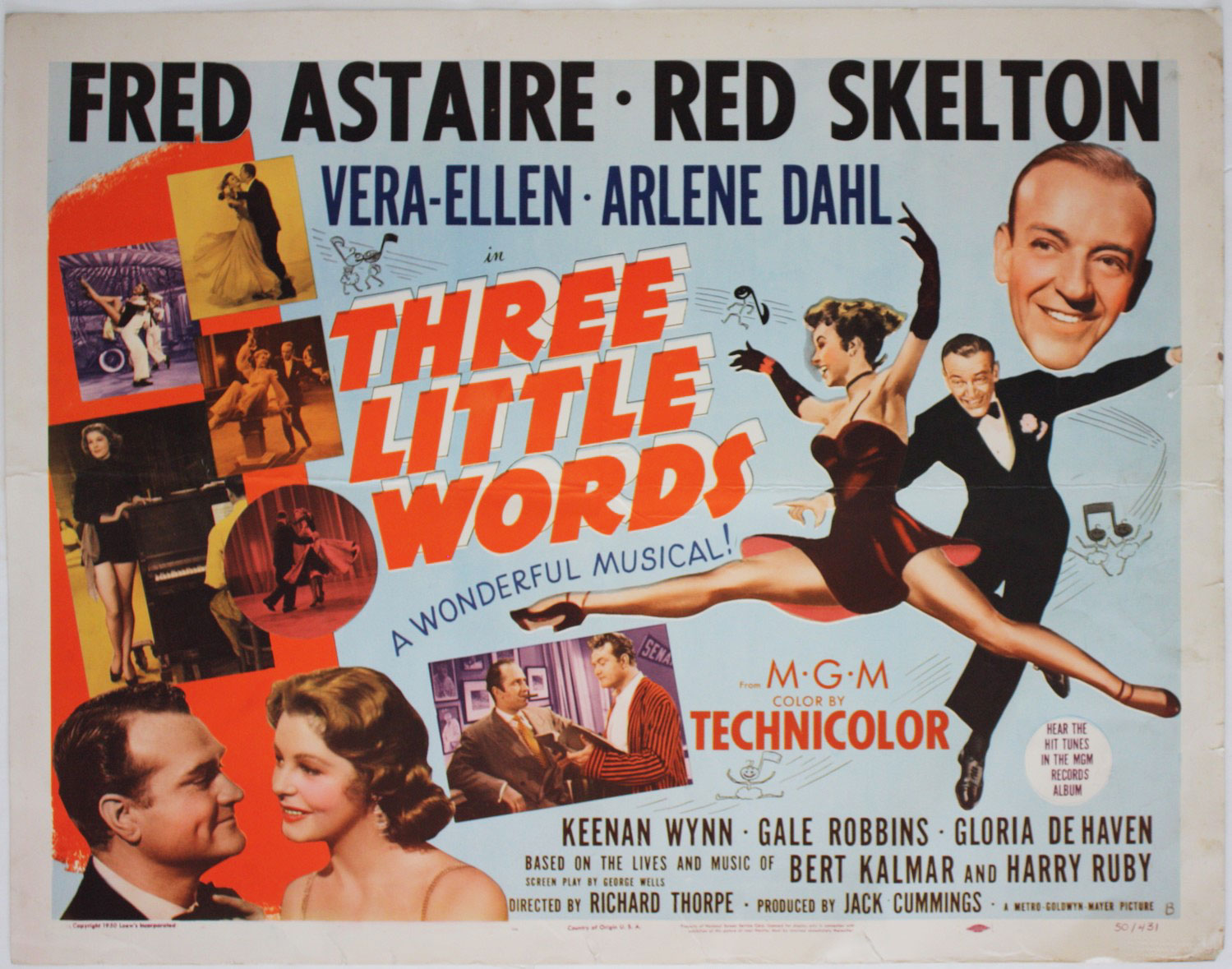
Three Little Words” (1950) — Musical #280

three little words

Studio:
MGM

Director:
Richard Thorpe

Starring:
Fred Astaire, Red Skelton, Vera-Ellen, Arlene Dahl, Keenan Wynn, Gloria DeHaven, Debbie Reynolds, Carleton Carpenter

Plot:
Set in the early 1920s, the movie is a biographical film about Tin Pan Alley songwriters Bert Kalmar (Astaire) and Harry Ruby (Skelton).
Kalmar and his partner Jessie Brown (Vera-Ellen) have a vaudeville act, but he has ambitions of being a magician. After failing at that, Brown and Kalmar have a successful routine until Bert hurts his knee and can’t dance for a year.
Bert hears a song written by Harry Ruby and the two team up to write more music together, eventually writing popular songs, music for films and Broadway plays.

Trivia:
-Actress Gloria DeHaven makes a cameo playing her mother, Flora Parker DeHaven. Flora acted on stage and screen with her husband Carter Davis during the 1920s.
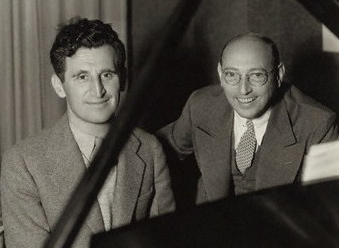
-Songwriters Harry Ruby and Bert Kalmar were friends with Fred Astaire, who played Bert Kalmer, during his vaudeville days. Kalmer died in 1947, before the film was made but had agreed to it before his death. Ruby died in 1974. 

The real Harry Ruby and Bert Kalmar.

The real Harry Ruby and Bert Kalmar.

-Arlene Dahl plays real life actress Eileen Percy. Percy was in films 1917 to 1933. In the film and in real life, Percy and Harry Ruby were married from 1936 until her death in 1973.
-In the film Jesse Brown and Bert Kalmar marry. They did in real life as well but eventually divorced.
-The real Harry Ruby makes a cameo in one of the baseball scenes with Red Skelton.
The dress worn by Gale Robbins in the “All Alone Monday” number is the same dress worn by Ann Miller in the “Girl on the Magazine Cover” in Easter Parade (1948).
-Debbie Reynolds has a cameo in the role of real life actress Helen Kane. Kane dubs Reynolds’s singing.

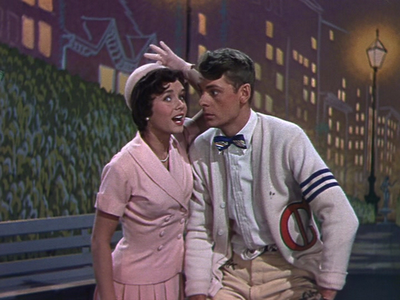
Debbie Reynolds dressed as Helen Kane with Carleton Carpenter singing "I Wanna Be Loved By You."

Debbie Reynolds dressed as Helen Kane with Carleton Carpenter singing “I Wanna Be Loved By You.”

-Vera-Ellen is dubbed by Anita Ellis

Highlights:
-Gloria DeHaven plays her mother in the film. B
-Debbie Reynolds acts in the role of Helen Kane-who was later the voice of Betty Boop. Reynolds’s singing voice is dubbed by Kane.

Notable Songs:
-“All Alone Monday” sung by Gale Robbins. My favorite song in the film. Though 1930s recordings of the song I came across later were more upbeat and happy sounding, Robbins sang it with a bluesy and mournful feel.
-“Three Little Words” sung by Fred Astaire. The title song isn’t sung or written until the very end of the film but it is the most memorable and leaves you humming after the movie is over.
-“I Wanna Be Loved By You” sung by Debbie Reynolds who is dubbed by Helen Kane, who originated the song. Personally, Kane’s voice grates on my nerves but it is a memorable and famous song.

My Review:

Though parts of this film are fictional-such as the conflict between Bert Kalmer and Harry Ruby- is a good movie as far as biographical pictures go. In many biographical films, the love interest is made up of several different people that the main character had relations with during their career. The love interest also sometimes different name to protect the real life person-examples of this could be Jayne Mansfield’s character in the “George Raft Story” who is supposed to be Betty Grable, or Evelyn Keyes’s character in “The Al Jolson Story,” who is supposed to be Ruby Keeler.
In comparison, both men in this movie were represented with wives that they were involved with in real life.
I also liked the added cameos of people like Gloria DeHaven who plays her mother in the film.
My only beef is that the clothing worn by the female leads isn’t period appropriate and looks more suitable for 1950 and not the 1920s.
In all, “Three Little Words” is an excellent mix of gorgeous Technicolor, excellent dance numbers with Vera-Ellen and Astaire, comedy from Red Skelton and catchy songs.

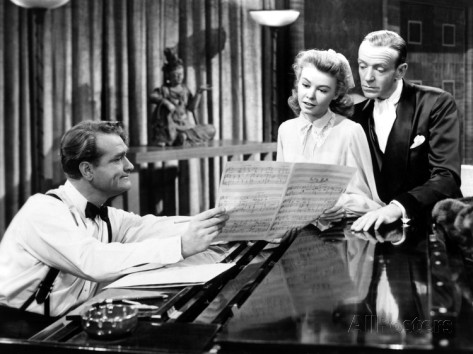
Red Skelton, Vera-Ellen and Fred Astaire in "Three Little Words"

Red Skelton, Vera-Ellen and Fred Astaire in “Three Little Words”

Check out the Comet Over Hollywood Facebook page, follow on Twitter at @HollywoodComet or e-mail at cometoverhollywood@gmail.com


Musical Monday: Seven Sweethearts (1942)

It’s no secret that the Hollywood Comet loves musicals.
In 2010, I revealed I had seen 400 movie musicals over the course of eight years. Now that number is over 500. To celebrate and share this musical love, here is my weekly feature about musicals.

This week’s musical:
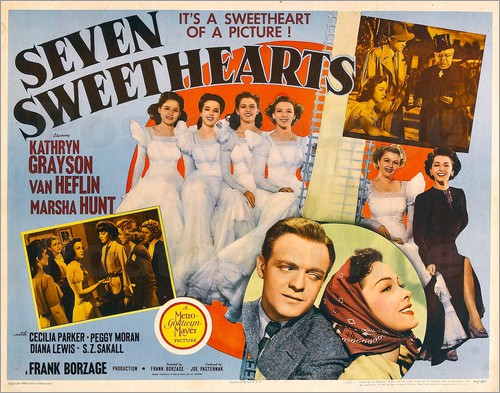
Seven Sweethearts” (1942) –Musical #62

seven sweethearts

Studio:
MGM

Director:
Frank Borzage

Starring:
Kathryn Grayson, Van Heflin, Marsha Hunt, S.Z. Sakall, Cecilia Parker, Donald Meek, Louise Beavers

Plot:
News reporter Henry Taggart (Heflin) goes to Little Delft, Michigan to cover the Tulip Festival. While there, he stays at the quaint House of the Seven Tulips inn, run by Mr. Van Maaster (Sakall). Maaster’s seven daughters-all who have boy names-help run the inn. Spoiled Regina (Hunt) tries to woo Henry but he falls for Billie (Grayson). The only problem is old-fashioned Mr. Maaster won’t let his younger daughters marry before Regina marries.

Trivia:
-This film is a family affair: Kathryn Grayson’s brother Michael Butler and sister Frances Raeburn are in the film. Grayson had a larger career than her siblings.
-Ann Rutherford was originally supposed to be in the film but she had measles. She was replaced by Peggy Moran.
-A film adaptation of a Hungarian play called “Seven Sisters.” The film appeared on Broadway in 1911.
-Producer Joe Pasternak’s first film at MGM.
-Remake of the 1915 film “The Seven Sisters”

Highlights:
-Van Heflin attempting to dance a traditional dance during the Tulip Festival.

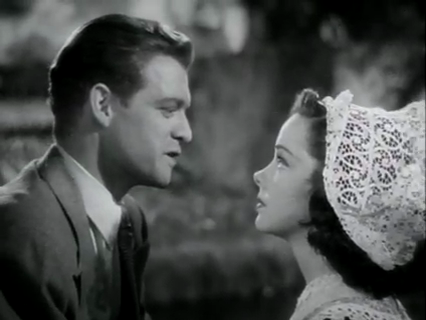
Van Heflin and Kathryn Grayson in "Seven Sweethearts"

Van Heflin and Kathryn Grayson in “Seven Sweethearts”

Notable Songs:
There aren’t any songs that really stand out or leave you humming after the movie. However, you have the opportunity to hear Grayson since several songs such as “Tulip Time” and Mozart’s “Cradle Song.”

My Review:
This song is fun and adorable. Though she’s a brat, Marsha Hunt looks adorable, and I swoon every time Van Heflin smiles. This is only Kathryn Grayson’s fourth film, so you get to see her as she is still blossoming into stardom MGM. “Seven Sweethearts” isn’t one of MGM’s huge, glittering musicals, and usually goes under the radar. However, it’s adorable and a lot of fun.

Check out the Comet Over Hollywood Facebook page, follow on Twitter at @HollywoodComet or e-mail at cometoverhollywood@gmail.com

Musical Monday: “A Date with Judy” (1948)

It’s no secret that the Hollywood Comet loves musicals.
In 2010, I revealed I had seen 400 movie musicals over the course of eight years. Now that number is over 500. To celebrate and share this musical love, here is my weekly feature about musicals.

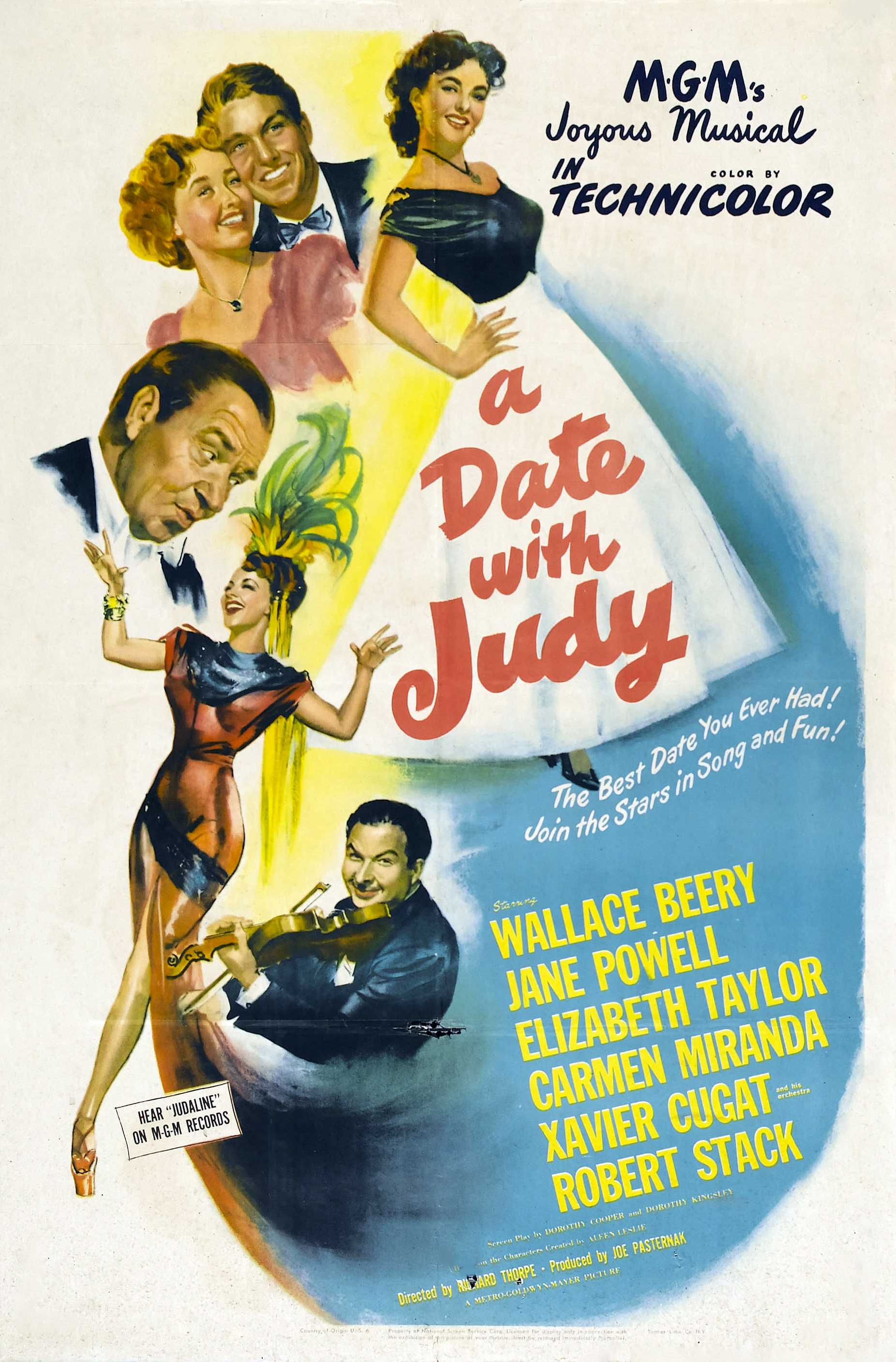
dateThis week’s musical:
A Date with Judy” (1948) –Musical Monday #105

Studio:
MGM

Director:
Richard Thorpe

Starring:
Jane Powell, Elizabeth Taylor, Wallace Beery, Robert Stack, Selena Royale, Carmen Miranda, Leon Ames, Xavier Cugat, Scotty Beckett

Plot:
Best friends Judy (Powell) and Carol (Taylor) both have a crush on a college aged soda jerk (Stack). While planning her parent’s (Royal, Beery) anniversary party, Judy and Carol fear that Mr. Foster is having an affair with a Latin dancer (Miranda), who is really teaching him rumba lessons to surprise his wife.

Trivia:
-The movie was based on a radio series with the same name.
-The songs “It’s a Most Unusual Day” and “Judaline” debuted in this movie.
-Carmen Miranda’s song “Cuanto la Gusta” was one of her favorite songs. The album reached number 12 on the Billboard charts.
-After this film, Robert Stack was supposed to make a musical remake of the Marion Davies film “Peg O’ My Heart,” that never materialized, according to John Fricke’s book “Judy: A Legendary Film Career.”
-Jane Powell and Elizabeth Taylor were around the same age in this film. Powell said in her TCM Private Screenings Interview that she was a bit jealous that Taylor was dressed in more mature costumes and got to wear green eye shadow.
-This film followed Taylor’s demure roles in “Cynthia” and “Life With Father” and made her more of a “vamp” and a woman. Her next film would be as a sophisticated young engaged woman in “Julia Misbehaves,” according to “How to Be a Movie Star: Elizabeth Taylor in Hollywood” by William J. Mann.
-Elizabeth Taylor is dubbed by Jean McLaren.

Jane Powell and Elizabeth Taylor in "A Date with Judy" (1948)

Jane Powell and Elizabeth Taylor in “A Date with Judy” (1948)

Highlights:
-Wallace Beery trying to dance the rumba.

Notable Songs:
-“It’s a Most Unusual Day” sung by Jane Powell
This song is my favorite in the whole film. It’s light, it’s cheery and fun.
-“Judaline” sung by Jane Powell, Scotty Becket and a quartet
Another fun song. Not serious but light and cute.
-“Love is Where You Find it” sung by Jane Powell
It demonstrates Jane Powell’s excellent singing abilities. Confusion over if she or Kathryn Grayson sung it first on film.

My Review:
This is my favorite Jane Powell movie, as well as one of my all-time favorite films. I recall once in high school when I came home upset about something. I turned on this movie and all of my cares were forgotten- that is the effect “A Date with Judy” has on it’s audience.
It may be frothy and light, but it’s happy. Jane Powell is as adorable as ever and the Technicolor is awesome.
The film has a top notch cast including musical performances from Carmen Miranda and Latin bandleader Xavier Cugat.

Check out the Comet Over Hollywood Facebook page, follow on Twitter at @HollywoodComet or e-mail at cometoverhollywood@gmail.com
Veteran’s Day Musical Monday: “Stage Door Canteen” (1943)

It’s no secret that the Hollywood Comet loves musicals.
In 2010, I revealed I had seen 400 movie musicals over the course of eight years. Now that number is over 500. To celebrate and share this musical love, here is my weekly feature about musicals.

Stage Door Canteen (1943)

Stage_Door_Canteen_posterMusical:
Stage Door Canteen (1943) –Musical #138

Studio:
United Artists

Director:
Frank Borzage

Starring:
Lon McCallister, Marjorie Riordan, Cheryl Walker, William Terry, Sunset Carson, Margaret Early
Cameos:
Judith Anderson, Kenny Baker, Tallulah Bankhead, Ralph Bellamy, Jack Benny, Edgar Bergen, Ray Bolger, Helen Broderick, Ina Claire, Katharine Cornell, Lloyd Corrigan, Jane Darwell, William Demarest, Gracie Fields, Arlene Francis, Virginia Grey, Helen Hayes, Katharine Hepburn, Hugh Herbert, Jean Hersholt, Sam Jaffe, Allen Jenkins, George Jessel,Otto Kruger, Gertrude Lawrence, Gypsy Rose Lee, Alfred Lunt and Lynn Fontanne, Aline MacMahon, Ralph Morgan, Harpo Marx, Elsa Maxwell, Helen Menken, Ethel Merman, Peggy Moran, Alan Mowbray, Paul Muni, Merle Oberon, Franklin Pangborn, George Raft, Selena Royle, Martha Scott, Cornelia Otis Skinner, Ned Sparks, Ethel Waters, Johnny Weissmuller, Dame May Whitty, Ed Wynn, Count Basie, Xavier Cugat, Lina Romay, Benny Goodman, Peggy Lee, Kay Kyser, Guy Lombardo

Gypse Rose Lee performs for the soldiers at the Stage Door Canteen

Gypse Rose Lee performs for the soldiers at the Stage Door Canteen

Plot:
The film follows young women (Riordan, Walker, Early) who volunteer at the Stage Door Canteen in New York. Volunteering involves dancing with soldiers, talking to them and serving food. However, the canteen has strict rules-no dating servicemen. Eileen (Walker) admits to only volunteering, because she is hoping to be discovered as an actress by one of the celebrities. But her selfish ways are shaken when she meets soldier Dakota (Terry). Innocent soldier, California (McCallister) doesn’t have a girl back home, writes letters to his father and has never been kissed. He meets Jean (Riordan) at the canteen and tells her she has given him his happiest moments since he has joined the service.
The majority of the film is made up of cameos by famous Broadway and Hollywood stars including Gypsy Rose Lee, George Raft, Johnny Weismuller and Katharine Cornell. The romances are a backdrop for the performances, stringing the film together.

Eileen (Walker) and Dakota (Terry) realize they are in love at the Stage Door Canteen

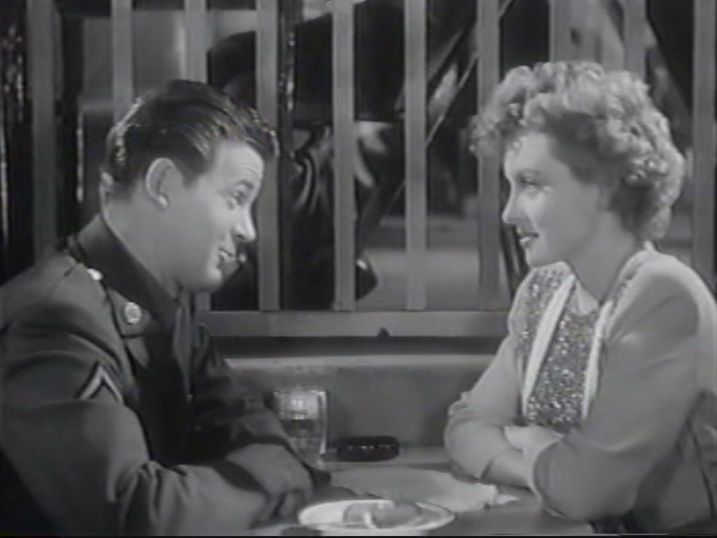
Eileen (Walker) and Dakota (Terry) realize they are in love at the Stage Door Canteen

Trivia:
-The real Stage Door Canteen was on 44th Street in New York, but the movie was filmed in Hollywood.
-Stage actress Katharine Cornell’s only film appearance.
-The story line was inspired by the Irving Berlin song “I Left My Heart at the Stage Door Canteen.”
-A portion of the money that the film made was donated to the Stage Door Canteen. “Stage Door Canteen” was the top grossing film of the year, making $4,339,500, according to George Raft: The Films by Everett Aaker
-Katharine Hepburn’s only musical film, though she is never in a musical number.
-Peggy Lee’s second film appearance
-Ruth Roman’s first film appearance.

Jean (Riordan) gives California (McCallister) his first kiss

Jean (Riordan) gives California (McCallister) his first kiss

Highlights:
-Katharine Cornell plays a scene from Romeo and Juliet with Lon McCallister.
-Cornell gives a young British soldier cake and an orange. He is overcome with joy because of the orange and says “I haven’t seen one of these in two years. It’s like Christmas!” Tear worthy.
-Katharine Hepburn gives Eileen (Walker) a talking to of why she needs to continue serving in the canteen even though her fiance is fighting overseas. Probably the most dramatic scene of the film.
-Ventriloquist Edgar Bergan with his puppets Charlie McCarthy and Mortimer Snerd.

Notable Songs:
-“The Girl I Love to Leave Behind” sung by Roy Bolger
-“She’s a Bombshell from Brooklyn” performed by Xavier Cugat and Lina Romay
-“We Mustn’t Say Goodnight” sung by Lanny Ross
-“Sleep, Baby, Sleep in Your Jeep” performed by the Guy Lombardo Orchestra
-“Quick Sands” performed by Count Bassie and Ethel Waters
-“Goodnight Sweetheart” performed by Benny Goodman, Guy Lombardo and sung by Kenny Baker
-“Ave Maria” performed by violinist Yehudi Menuhin

My Review:
I love this movie. Before seeing this movie for the first time several years ago, I wasn’t familiar with stage stars such as Helen Menken or Katharine Cornell. But the film opened shows the other side of entertainment, showing the past celebrities of the east coast. Though the main story line is brief and thin, I still enjoy it. A boy and girl becoming attached after dancing and talking all night and the boy not knowing if he will return from the war? I think that’s believable.
The movie also has several scenes that are very touching and make me tear up: the British boy having an orange for the first time in two years, Lon McCallister getting his first kiss. Yep, the waterworks are running.
If you are looking for a film with a strong plot line and character development, “Stage Door Canteen” probably isn’t for you. But if you are hoping to get a glimpse into the past-to see how soldiers may have spent their leave and what songs and stars were popular-this movie is 2 hours and 10 minutes of your day well spent.