Musical Monday: “Two Weeks with Love” (1950)

It’s no secret that the Hollywood Comet loves musicals.
In 2010, I revealed I had seen 400 movie musicals over the course of eight years. Now that number is over 500. To celebrate and share this musical love, here is my weekly feature about musicals.

two weeksThis week’s musical:
Two Weeks With Love” (1950)-Musical #71

Studio:
Metro-Goldwyn-Mayer

Director:
Ray Rowland

Starring:
Jane Powell, Ricardo Montalban, Ann Harding, Louis Calhern, Debbie Reynolds, Carleton Carpenter, Phyllis Kirk, Tommy Retting, Gary Gray

Plot:
In the early 1900s, the Robinson family takes their annual summer vacation to Kissimee in the Catskills. It’s a coming of age story as 17-year-old Patti (Powell) is ready to grow up and wear corsets and date men but her mother (Harding) and father (Calhern) still thinks she is too young. That summer a handsome young Cuban named Demi (Montalban) visits the resort. While Patti swoons, her older friend Valerie (Kirk) works to keep Demi’s attention on her. In the background, Patti’s younger teenage sister Melba (Reynolds) has a crush on Billy (Carpenter) who is chasing Patti.

Patti's rival Valerie is always making it hard for Patti and Demi to be alone. (Kirk, Montalban, Powell) (Comet Over Hollywood/ Screen Cap by Jessica P.)

Patti’s rival Valerie is always making it hard for Patti and Demi to be alone. (Kirk, Montalban, Powell) (Comet Over Hollywood/ Screen Cap by Jessica P.)

Trivia:
-Debbie Reynolds wrote in her memoir “Unsinkable,” that her mother packed her lunch of ground up bologna and pickle juice sandwiches every day. Louis Calhern’s lunches were prepared for him by the studio, but he usually traded with Debbie for her sandwiches.

Famous stars in the 1930s, Ann Harding and Louis Calhern play Horatio and Katherine Robinson in "Two Weeks with Love." (Comet Over Hollywood/ Screen Cap by Jessica P.)

Famous stars in the 1930s, Ann Harding and Louis Calhern play Horatio and Katherine Robinson in “Two Weeks with Love.” (Comet Over Hollywood/ Screen Cap by Jessica P.)

-Jane Powell says this is one of her favorite movies, according to her autobiography “The Girl Next Door and How She Grew.”
“I loved making ‘Two Weeks with Love’ because it was a very special experience,” Powell wrote in her book. “The cast was so wonderful, I feel happy even now when I think about the film.”
-Debbie Reynolds plays the French horn during the song “That’s How I Love You.” Whether she is really playing the horn in the film or not, Reynolds played the French horn in high school.
-Louis Calhern once said he was miscast as playing the father of Debbie Reynolds and Jane Powell. “Me, with my long nose, and being as tall as I am, playing the father of two little button noses like Janie and Debbie,” Powell quoted in her book.
-Phyllis Kirk’s third movie.
-Debbie Reynolds fourth movie.
-The hotel where the family is staying in “Two Weeks with Love” is the same hotel in the first scene of “Annie Get Your Gun” (1951).
-The dances in the film were choreographed by Busby Berkeley, who was known for his kaleidoscope shots in 1930s films such as “42nd Street.”

Highlights:

Patti's mischievous little brothers hide fireworks under their bed, and father (Calhern) accidentally lights a fuse. (Comet Over Hollywood/ Screen cap by Jessica P.)

Patti’s mischievous little brothers hide fireworks under their bed, and father (Calhern) accidentally lights a fuse. (Comet Over Hollywood/ Screen cap by Jessica P.)

-The two youngest boys hide hundreds of firecrackers under their bed. They accidentally get lit when their father unknowingly lights it with his cigar. Chaos ensues.
-Powell has a few dream sequences where she imagines Montalban is fawning over her. Both are hilarious and adorable. One is when she is alone in a canoe. She imagines he proposes to her and he tells her that she is full of “latent fire” and then is outraged that she doesn’t wear a corset.
-The second dream sequence is Powell glamorously dressed in only a corset, hat and umbrella. Everyone at the hotel is admiring her. Then, everyone’s outfits turn to royal wear and Montalban and Carpenter have a sword fight over Powell. Powell sings “My Hero” as she waltzes with Montalban.
-Calhern tries to help Powell and buys her a corset in the film, not knowing what he’s buying, he gets a surgical corset. During a dance with Montalban, it locks.

Patti (Powell) dreams of being a grown up lady who wears a corset in this dream sequence. (Comet Over Hollywood/Screen Cap by Jessica P.)

Patti (Powell) dreams of being a grown up lady who wears a corset in this dream sequence. (Comet Over Hollywood/Screen Cap by Jessica P.)

Notable Songs:
-“Abba Dabba Honeymoon” sung by Debbie Reynolds and Carleton Carpenter. This is the most notable song in the movie. Carpenter and Reynolds fast, energetic singing style is what makes it memorable. The song made the Hit Parade and Reynolds and Carleton went on tour to promote the song and the film.

-“By the Light of the Silvery Moon” sung by Ann Harding and Louis Calhern. They don’t have great voices but it’s a very sweet moment.
-“My Hero” sung by Jane Powell during the corset dream sequence.

Patti (Powell) dances the tango with Demi (Montalban) in the resort's talent show. (Comet Over Hollywood/ Screen Cap by Jessica Pickens)

Patti (Powell) dances the tango with Demi (Montalban) in the resort’s talent show. (Comet Over Hollywood/ Screen Cap by Jessica Pickens)

My Review:
Two Weeks With Love” is a joy to watch. It has an excellent cast, is fun and colorful with it’s Technicolor. But not only is it lighthearted, it’s hilarious. There are so many jokes in the movie that keep me laughing, keeping it charming and witty. It’s wonderful to see Ann Harding and Louis Calhern later in their career if you know them more from their 1930s role. In the 1930s, Harding usually played intellectual women with lose morals and Calhern played cads with gun. But later in their career, they fill the role of loving parents perfectly. Jane Powell was an established star by now and is 21 in the film, and is delightful as always. In her first major role, Debbie Reynolds energy and enthusiasm that made her famous is already shining. If you haven’t seen “Two Weeks with Love,” I highly suggest it. It may not be as famous as other 1950s MGM films, but you will remember it once you watch it.

Check out the Comet Over Hollywood Facebook page, follow on Twitter at @HollywoodComet or e-mail at cometoverhollywood@gmail.com


Musical Monday: “Moon Over Miami” (1941)

It’s no secret that the Hollywood Comet loves musicals.
In 2010, I revealed I had seen 400 movie musicals over the course of eight years. Now that number is over 500. To celebrate and share this musical love, here is my weekly feature about musicals.

This week’s musical:
“Moon Over Miami” –Musical #162

Poster - Moon Over Miami_04

Studio:
20th Century Fox

Director:
Walter Lang

Starring:
Betty Grable, Carole Landis, Don Ameche, Robert Cummings, Charlotte Greenwood, Jack Haley

Plot:
Kay and Barbara Latimer (Grable and Landis) work with their Aunt Susan (Greenwood) at a burger joint in Texas. They think they are going to come into a windfall of money, but only ends up being $4,000. Kay comes up with a scheme where they will go to Miami on the money and get rich husbands. Kay poses as an heiress with her sister acting as her secretary and her aunt poses as her maid. Kay meets two millionaires who are smitten with her- Jeff (Cummings) and Phil (Ameche). Which will she pick and are they everything that they seem they are?

Trivia:
-Joan Davis was cast in the Carole Landis role in March 1941.
-John Payne and Dana Andrews were considered for the male leads.
-Originally supposed to star Virginia Gilmore and Gene Tierney or Arline Judge were conceived to appear in the roles of Barbara and Susan.
-Remake of “Three Blind Mice” (1938)-starring Loretta Young and Joel McCrea-and “The Greeks Had a Word for Them” (1932) starring Joan Blondell, Madge Evans and Ina Claire.
-Remade with “Three Little Girls in Blue” (1946) starring June Haver (who once was called the Pocket Betty Grable), Vivian Blaine and Vera-Ellen.

Highlights:
-The Condos Brothers (Frank and Harry) dance with Grable and then perform in an elaborate South American dance number. Grables dance in “You Started Something” with them is one of my favorite dances in the film.
-Charlotte Greenwood’s flexible, high leg swinging dance moves

One of Charlotte Greenwood's signature dance moves (Comet Over Hollywood/ Screen cap by Jessica P)

One of Charlotte Greenwood’s signature dance moves (Comet Over Hollywood/ Screen cap by Jessica P)

-In “The Kindergarten Congo,” Grable dances with Hermes Pan, who choreographed many of Fred Astaire’s musical numbers in musical films.
-Betty Grable’s wardrobe. She buys a new wardrobe to catch a millionaire husband and every single outfit is adorable. Here are some picture of my favorites:

moonovermaimi5

My favorite dress in Moon Over Miami. Grable is dancing with the Condos Brothers in “You Started Something” (Comet Over Hollywood/Screen cap by Jessica P.)

Lovely peach evening gown worn by Grable. (Comet Over Hollywood/Screen cap by Jessica P)

Lovely peach evening gown worn by Grable. (Comet Over Hollywood/Screen cap by Jessica P)

Another favorite outfit Grable wears in "The Kindergarten Conga" (Comet Over Hollywood/Screen Cap by Jessica Pickens)

Another favorite outfit Grable wears in “The Kindergarten Conga” (Comet Over Hollywood/Screen Cap by Jessica Pickens)


Notable Songs:
-“You Started Something” sung by Robert Cummings and Betty Grable
-“Kindergarten Conga” sung by Betty Grable, which is my favorite number in the film
-“Loveliness and Love” sung by Don Ameche
-“Is That Good?” sung by Charlotte Greenwood and Jack Haley

My Review:
This is my favorite Betty Grable movie and a movie I pop in when I have the blues. It’s colorful, the fashion is great and the songs are catchy and lighthearted. Grable looks her most beautiful and the supporting cast is excellent. Landis isn’t featured as much as Grable but does a great job in all of her scenes. Charlotte Greenwood is always a delight, especially with her goofy dancing. Both leading men are also entertaining and likeable. There are few things I can find wrong with “Moon Over Miami,” other than the fact that it has to end.
It isn’t a heavy film with some great intelligent message. But if you are looking for a pleasant way to spend an hour and a half, I suggest you spend it with “Moon Over Miami”

 
Check out the Comet Over Hollywood Facebook page, follow on Twitter at @HollywoodComet or e-mail at cometoverhollywood@gmail.com

Musical Monday: “Doll Face” (1945)

It’s no secret that the Hollywood Comet loves musicals.
In 2010, I revealed I had seen 400 movie musicals over the course of eight years. Now that number is over 500. To celebrate and share this musical love, here is my weekly feature about musicals.

This week’s musical:
Doll Face (1945)- Musical #474

doll face

Studio:
20th Century Fox

Director:
Lewis Seiler

Starring:
Vivian Blaine, Carmen Miranda, Dennis O’Keefe, Stephen Dunne, Perry Como, Martha Stewart (not the home decor woman)

Plot:
Mary “Doll Face” Carroll (Blaine) hopes to break out of burlesque and into the big time. When she is turned down due to her performing background, her manager Michael Hannigan (O’Keefe) decides to have a ghost written autobiography written about Mary. The author of the book Frederick Gerard (Dunne) begins to fall in love with Mary causing conflict with Michael, who also is in love with her. Using the publicity of the book, Michael begins to produce a Broadway show with the help of the other burlesque performers.

Trivia:

Carmen Miranda performing "Chico Chico"

Carmen Miranda performing “Chico Chico”

-Based on the 1943 play “The Naked Genius” written by burlesque performer Gypsy Rose Lee.
-Carole Landis was offered the lead in the film but turned it down, according to the book Carole Landis: A Most Beautiful Girl by Eric Lawrence Gans
-Carmen Miranda’s first starring film that is in black and white.
-“Eighty Miles Outside of Atlanta” from “Something for the Boys” can be heard in the background.
-Carmen Miranda’s song “True to the Navy” cut from the film. The song as filmed still exists. Paramount held exclusive rights to the song and wouldn’t allow 20th Century-Fox the song. It was performed by Clara Bow in “Paramount On Parade” (1930)
– “Doll Face” is one of four films Vivian Blaine and Carmen Miranda were in together. The other films included “If I’m Lucky” (1946), “Something for the Boys” (1945) and “Greenwich Village” (1944).

Notable Songs:
-Perry Como’s song “Hubba Hubba Dig You Later” became a hit for him after the film. It reached number 3 on the charts and was Como’s second Gold album, according to the book Perry Como: A Biography and Complete Career Record By Malcolm Macfarlane, Ken Crossland

My Review:
This film is fun and cute but forgettable. The songs aren’t very exciting either.
As a lover of classic films, I obviously enjoy films shot in black and white. However, casting Carmen Miranda, Hollywood’s most colorful performer, in a black and white was murderous to her career. Biographies on her life cite that her novelty was wearing off when Fox began casting her in non-color films.

Check out the Comet Over Hollywood Facebook page, follow on Twitter at @HollywoodComet or e-mail at cometoverhollywood@gmail.com
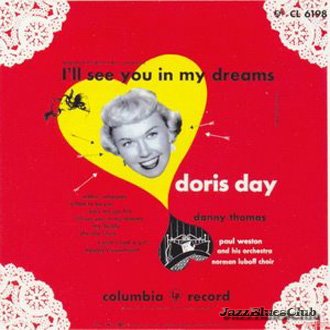
Musical Monday: “Hi-De-Ho” (1947)

It’s no secret that the Hollywood Comet loves musicals.
In 2010, I revealed I had seen 400 movie musicals over the course of eight years. Now that number is over 500. To celebrate and share this musical love, here is my weekly feature about musicals.

This week’s musical:
“Hi-De-Ho” (1947) – Musical #503

hi de ho

Studio:
All-American Studios

Director:
Josh Binney
Starring:
Cab Calloway (as himself), Ida James, Jeni Le Gon

Plot:
Cab Calloway plays himself a as a bandleader who is getting bored with his sexy singing girlfriend Minnie who he calls a moocher. Minnie is jealous of Cab’s female band manager named Nettie. Out of jealousy, Minnie gets a job at a night club that rivals the club that Cab is performing at. She also asks gangsters to kill Cab.

Trivia:
-“Hi-De-Ho” is what is known as a “race film.” The film is made up of an entirely black cast that were generally made between 1915 and 1950. These films were usually produced outside of the Hollywood studio system.
-The film also features the Peters Sisters and The Miller Brothers

Cab and Minnie the moocher

Cab and Minnie the moocher

Notable Songs:
The movie has several of Cab Calloway’s songs, but sadly no “Minnie the Moocher.”
Song include:
-“Minnie was a Hep Cat”
-“St. James Infirmary”
-“At Dawn Time”
-“Bop Bop”
-“The Hi-De-Ho Man, That’s Me”

My Review:
The plot to this film is very thin and the quality of the picture is very low. If you go strictly by the story line, “Hi-De-Ho” is lousy. However, this is a great exhibition of Cab Calloway’s music with eight songs from the big band leader. It’s also interesting for its historical value as a “race film.” If you can find this movie, I would highly suggest it for its excellent music. The only disappointing feature is that it doesn’t have the song “Minnie the Moocher.”

Check out the Comet Over Hollywood Facebook page, follow on Twitter at @HollywoodComet or e-mail at cometoverhollywood@gmail.com
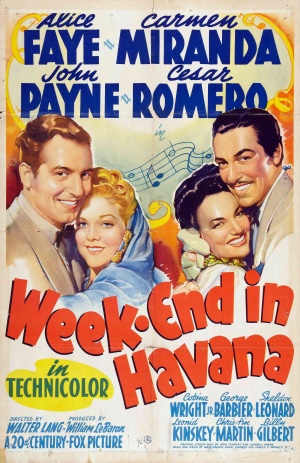
Musical Monday: “Music for Madame” (1937)

It’s no secret that the Hollywood Comet loves musicals.
In 2010, I revealed I had seen 400 movie musicals over the course of eight years. Now that number is over 500. To celebrate and share this musical love, here is my weekly feature about musicals.

This week’s musical:
“Music for Madame” (1948) – Musical #504

music for madame

Studio:
RKO Radio Pictures

Director:
John G. Blystone

Starring:
Joan Fontaine, Nino Martini, Lee Patrick, Alan Mowbray, Alan Hale, Grant Mitchell, Billy Gilbert, Jack Carson

Plot:
Nino Maretti, an aspiring opera singer (Martini) is conned into thinking he is singing for important composer at a Hollywood party. In reality, Nino is singing at a Hollywood party to distract the guests as the two con artists steal priceless pearls. Jean Clemens (Fontaine) is at the same party, trying to get a symphony she wrote noticed. When Nino realizes he was used, he goes into hiding and doesn’t sing so he won’t be recognized—all the while falling in love with Jean.

Nino Martini, Joan Fontaine, and Lee Patrick (left to right) work as Hollywood film extras in "Music for Madame."

Nino Martini, Joan Fontaine, and Lee Patrick (left to right) work as Hollywood film extras in “Music for Madame.”

Trivia:
-“Music for Madame” is Fontaine’s fifth credited role on screen. The movie following “Music” is her only other musical, “Damsel in Distress” (1937) with Fred Astaire.
-Mowbray’s character was spoofing famous conductor Leopold Stokowski.
-According to IMDB, the film lost $375,000 at the box office.
-Martini was an Italian opera singer who sang with the New York City Metropolitan Opera. He made four films from 1935 to 1948. “Music for Madame” was his second to last film.
-Actor Jack Carson has a small role as an assistant director.
-Actor Ward Bond has an uncredited role in the film.

Notable Songs:
-Vesti la giubba from the opera “Pagliacci” (1892)
-“King of the Road” is sung by a truck driver who picks up Fontaine and Martini and accompanied by several car horns played by the two passengers.
-“I Want the World to Know” is the love theme of the film, written by Fontaine’s character and sung several times by Martini.

Highlights:
-Alan Hale. Hale is an excellent character actor in all of his films, but he is the only actor who stands out with humor and charisma in this film. The other actors are all pale in comparison to him.
-The scene with the truck drive singing “King of the Road” is an interesting one. He says he doesn’t have a radio so he makes music himself with all of these horns inside his vehicle. It’s not a musical masterpiece but of all the musicals I have seen, I’ve never seen a number like that.
-Martini’s acting is not the best, but he does have a beautiful singing voice.
-Fontaine looks incredibly young with a page boy bob and a bow in her hair. It’s an interesting way to see her when you are used to the sophisticated roles she played starting in the 1940s.

Jean (Fontaine) is detained by police after the pearls go missing.

Jean (Fontaine) is detained by police after the pearls go missing.

My Review:
I feel like “Music for Madame” is one of those movies that Academy Award winning actress Joan Fontaine looks back at and shudders. It’s not a terrible movie, but it’s also one I wouldn’t highly recommend. “Music for Madame” is a simple, entertaining plot but a lot of the acting is lacking. Nino Martini has a beautiful voice, but that can’t carry the film on it’s own. Fontaine is still exercising her acting chops. The most interesting character in my opinion is Alan Hale as a bumbling, music loving detective.

heck out the Comet Over Hollywood Facebook page, follow on Twitter at @HollywoodComet or e-mail at cometoverhollywood@gmail.com
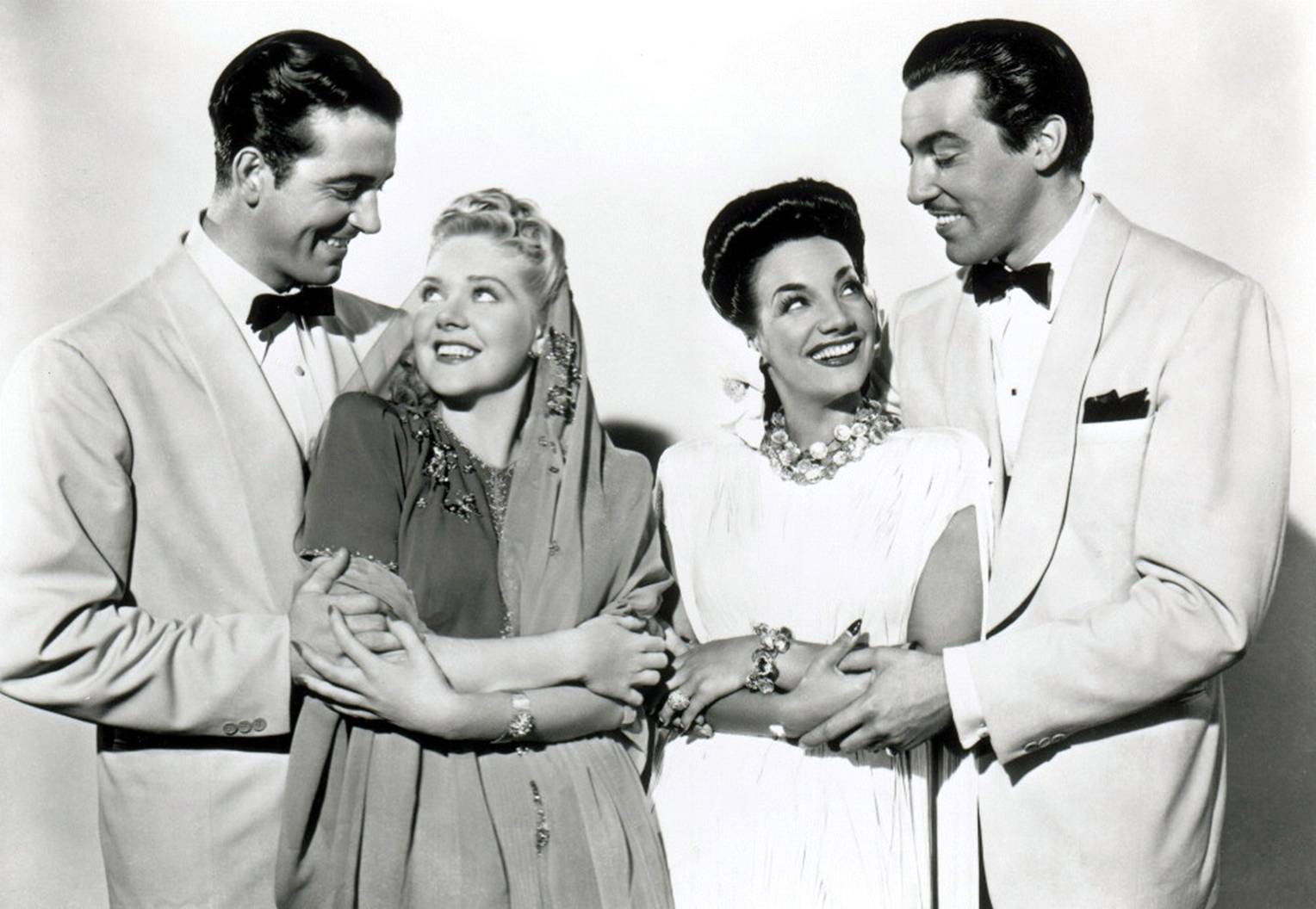
Musical Monday: “You Were Meant for Me” (1948)

It’s no secret that the Hollywood Comet loves musicals.

In 2010, I revealed I had seen 400 movie musicals over the course of eight years. Now that number is over 500. To celebrate and share this musical love, here is my weekly feature about musicals.

This week’s musical:
You Were Meant for Me” (1948) – Musical #503

you were meant for me

Studio:
20th Century Fox

Director:
Lloyd Bacon

Starring:
Jeanne Crain, Dan Dailey, Oscar Levant, Barbara Lawrence, Selena Royale, Percy Kilbride

Plot:
Set in 1929, teenager Peggy Mayhew (Crain) falls in love popular bandleader Chuck Arnold (Dailey). She spontaneously kisses him on stage after winning a prize. Chuck asks to see Peggy again. When she travels to the next town to see his band, they elope. Peggy has to adapt to life on the road with musicians. The couple then struggles with their careers and their relationship when the stock market crashes.

Trivia:
-Marilyn Monroe had an uncredited role that ended up being cut from the film.
-Though Dan Dailey had been in films for eight years, this film was around the time his career was starting to take off.
-The first 20 or 30 minutes is very similar to “Orchestra Wives” (1942). Crain falls in love with a bandleader, travels to see him and they elope. Ann Rutherford does the same thing in “Orchestra Wives.” Once the couple elopes in the film, the similarities end there.

Notable Songs:
The whole film is full of fun, popular songs of the 1920s written by George Gershwin, Arthur Freed and Nacio Herb Brown such as:
-The title song “You Were Meant for Me” by Freed and Brown. This song can also be heard in other films such as “Penny Serenade” and “Singin’ in the Rain.”
-Other popular 1920s songs such as “Ain’t She Sweet,” “Crazy Rhythm” and “Ain’t Misbehavin.”

you were meant for me 2

Dan Dailey and Jeanne Crain in “You Were Meant for Me”

Highlights:
-Pianist Oscar Levant performs
-Jeanne Crain and Dan Dailey do a cute song and dance routine to “Ain’t She Sweet” while in a soda shop.
-Dan Dailey tap dancing to “Crazy Rhyme.” Though Dailey isn’t the greatest tap dancer of the 1940s and 1950s, he does a great job.
-Small role of Barbara Lawrence. Though she isn’t in the film very much, she is still delightful to see.
-Small role of Herb Anderson who played the father on the 1950s TV show “Dennis the Menace”

My Review:
“You Were Meant for Me” isn’t an award winning film, but it’s light-hearted and fun.
The musical performances in the film are mainly by Dan Dailey on stage, rather than spontaneous songs and dances brought on by emotion from the character.
The film is in black and white, which isn’t a problem for classic film fans, but shows the 20th Century Fox didn’t see it as an important musical-though it starred two of their top stars.
Crain and Dailey make a good pair and I wish they had been in more films together. Dailey is an underrated actor and does an excellent job with singing in dancing in this film. His voice is mellow and soothing and his tap dancing is believable.
My only complaint is that the film ends rather abruptly. Otherwise, it’s an enjoyable film that I highly suggest.

Check back next week for Musical Monday.

This is part of the Summer Under the Stars blogathon 

Check out the Comet Over Hollywood Facebook page for the latest updates or follow on Twitter at @HollywoodComet.

Musical Monday: “Les Parapluies de Cherbourg” (1964)

It’s no secret that the Hollywood Comet loves musicals.
In 2010, I revealed I had seen 400 movie musicals over the course of eight years. Now that number is over 500. To celebrate and share this musical love, here is my weekly feature about musicals.

This week’s musical:
“Les Parapluies de Cherbourg” or “The Umbrellas of Cherbourg” — Musical #285

umbrellas

Director:
Jacques Demy

Starring: 
Catherine Deneuve, Nino Casteluovo, Anne Vernon, Marc Michel

Plot:
Told in three part, the movie begins in 1957 and ends in 1964.
Performed much like an opera where all the French dialogue is sung, 17-year-old Geneviève (Deneuve) is in love with 20-year-old Guy (Casteluovo) who works as a mechanic.  Geneviève’s helps her mother (Vernon)  run an umbrella shop in Cherbourg, France. Her mother objects to them getting married because they are too young. Guy is drafted to fight for two years in the Algerian War.
While he is gone, Geneviève finds she is pregnant with his child. Her mother works to convince Geneviève to forget about Guy and to marry a more wealthy jewel dealer, Roland Cassard (Michel).

Highlights:
-Different from American musicals, there is no dancing and no show stopper song. If the lines were not all sung, it would be just a normal drama.
-The color is very candy-coated and gorgeous. Costumes of the actors match the brightly colored paint, wallpaper and decor.

Vernon and Deneuve (as Genvieve). Deneuve's dress matches the bright wallpaper

Vernon and Deneuve (as Genvieve). Deneuve’s dress matches the bright wallpaper

-The scene where Roland and Geneviève sit across from each other at the dinner table. As they speak to one each other, they look straight into the camera and speak.

Roland (Marc Michel) looks straight at the camera as he looks across the table as Genvieve

Roland (Marc Michel) looks straight at the camera as he looks across the table as Genvieve

-Pregnant Geneviève in a white wedding gown, looking very unhappy.

Roland and Genvieve's unhappy wedding

Roland and Genvieve’s unhappy wedding

-The 1960s fashions are gorgeous and as colorful as the backdrop.
-The heart wrenching ending that leaves so many questions

Trivia:
-Grand Prize Winner at the 1964 Cannes Film Festival
-Every actor in the all singing, opera-like film was dubbed:
Danielle Licari: Geneviève Emery
José Bartel: Guy Foucher
Christiane Legrand: Madame Emery
Georges Blaness: Roland Cassard
Claudine Meunier: Madeleine
Claire Leclerc: Aunt Élise
-“Umbrellas of Cherbourg” follows the Jacques Demy film “Lola” (1961). The character Roland Cassard is in “Lola” and in “Umbrellas” sings about a woman he once loved named Lola and how she broke his heart.
-The film is divided into three parts from 1957 to 1964: The Departure, The Absence, The Return
-An English stage version was adapted in 1979.
-Nominated for four Academy Awards in 1966 including: Best Music, Original Score for “I Will Wait for You;” Best Music, Score; Best Music, Scoring of Music, Adaptation or Treatment; Best Writing, Story and Screenplay – Written Directly for the Screen

Notable Songs:
-Each scene and scenario has it’s own song. The tunes are a mix of jazz to ballads.
-The most popular song from the film is “I Will Wait for You” sung by Geneviève and Guy before he leaves on the train to join the military.

My Review:
“Les Parapluies de Cherbourg” is one of my favorite musicals-up there with my all-time favorite “West Side Story” (1961). I love the gorgeous candy-coated color, the costumes and the heart wrenching sadness.
But most of all, I love the innovative all-singing French dialogue. Some lines are poetic while others are as simple as “Eat a little fruit” or “Have you had dinner?”
The story line is simplistic but doesn’t have the normal happy ending that an American 1950s or 1960s musical may have. Don’t let the subtitles and all singing throw you off, you won’t regret giving this musical a chance.

A few scenes to share to show the beautiful coloring”

umbrellas2

First appearance of Catherine Deneuve in the film- looking out the umbrella shop for Guy

The two sing the title song "I Will Wait for You" the day we find out Guy is drafted

The two sing the title song “I Will Wait for You” the day we find out Guy is drafted

umbrellas3

Guy and Genevieve embrace after finding out he will be drafted

umbrellas9

umbrellas7

Genevieve is pregnant with Guy’s child and Carnival is going on outside.

umbrellas11

Pregnant Genevieve sadly follows her mother’s wishes of marrying a rich man

umbrellas13

The young lover, both married, meet again after five years.

Check back next week for Musical Monday.

This is part of the Summer Under the Stars blogathon for Catherine Deneuve Day.

Check out the Comet Over Hollywood Facebook page for the latest updates or follow on Twitter at @HollywoodComet.

Musical Monday: “Broadway Melody of 1936” (1935)

It’s no secret that the Hollywood Comet loves musicals.
In 2010, I revealed I had seen 400 movie musicals over the course of eight years. Now that number is over 500. To celebrate and share this musical love, here is my weekly feature about musicals.

BROADWAY MELODY 1936This week’s musical:
Broadway Melody Of 1936” (1935) –Musical #206

Studio:
MGM

Director:
Roy Del Ruth

Starring:
Eleanor Powell, Robert Taylor, Jack Benny, Una Merkel, Buddy Ebsen, June Knight, Frances Langford (as herself)

Plot:
This is the second “The Broadway Melody” film, following the “Broadway Melody of 1929” and is considered one of the best Broadway Melody films, according to “All about Oscar: The History and Politics of the Academy Awards” By Emanuel Levy. Bob Gordon (Taylor) wants to put on a show and his high school sweetheart Irene (Powell) is hoping he will recognize her talent. However, Lillian Brent (Knight) is putting money in the show and wants to star in the show in return. Irene poses as a sexy French star in order to get the leading role. Bert Keeler (Benny) is a Broadway columnist adding comic relief, always getting punched in the nose.

Trivia:

Parker posing as Mademoiselle Arlette-the fake French star invented by gossip columnist Bert Keeler

Powell posing as Mademoiselle Arlette-the fake French star invented by gossip columnist Bert Keeler

-MGM was apparently in danger of going bankrupt in 1935. “Broadway Melody of 1936” and other Eleanor Powell films is what saved the studio, according to the musical documentary “That’s Entertainment III” (1994).
-Powell was originally given the smaller role of a secretary played by Una Merkel and along with another dance. Powell did a dance a screen test before the film started to see her versatility and she did a dance combination of tap, ballet and acrobatics, according the book “American Classic Screen Profiles” edited by John C. Tibbetts, James M. Welsh. Because of the dance, Powell was moved to a role with higher billing.
-Buddy Ebsen performs with his real life sister Vilma Ebsen in the film. Broadway Melody of 1936 is Vilma’s only film. The two started out as a vaudeville act and were once known as the “Baby Astaires”
-Part of a series of “Broadway Melody” films starting with “Broadway Melody” (1929) and followed by “Broadway Melody of 1938” (1937) and “Broadway Melody of 1940” (1940). Taylor, Powell and Ebsen starred again together in “Broadway Melody of 1938.” However, other than show business, the movies have no plot connection.
-Nominated for an Academy Award for Best Picture. “Mutiny on the Bounty” was the Best Picture winner that year.
-Also nominated for Best Writing, Original Story and won for Best Dance Direction.
-Tap dancer Eleanor Powell’s first leading role.
-Buddy Ebsen’s first film.
-Powell’s singing is dubbed by Marjorie Lane.

Robert Taylor as Bob Gordon.

Robert Taylor as Bob Gordon.

Highlights:
-Robert Taylor singing “I’ve Got a Feelin’ You’re Foolin’.” Taylor is not known for his singing, but he does a good job performing. The song is performed on a rooftop dance floor and tables and chairs pop up out of the floor.  The number is a great example of the excessively wealthy often represented in early to mid-1930s films.
-The odd man at the talent agency who is looking to get into show business with his different snoring sounds.
-Buddy Ebsen tap dancing with his real life sister Vilma Ebsen in the fun song “Sing Before Breakfast.”
-Eleanor Powell does a Katharine Hepburn impression from “Morning Glory.”
-In a dream sequence, Powell ballet dances to “You Are My Lucky Star” showing her versatility of dance
-Bert Keeler’s stooge dresses up like a woman to fool people about a fake French actress.

Notable songs:
The whole score is excellent because it is made up by song by composer Nacio Herb Brown including:
-“Broadway Rhythm” sung by Frances Langford
-“You Are My Lucky Star” sung by Frances Langford. Langford sings it straight and sweet and then swings the song, characterizing it with her singing style.
-“Broadway Melody”
-“I’ve Got a Feelin’ You’re Foolin'” sung by Robert Taylor and June Knight
-“Sing Before Breakfast” performed by Buddy and Vilma Ebsen

Powell in the film's finale

Powell in the film’s finale

My review:
“Broadway Melody of 1936” is a fun musical with excellent songs. It’s a good example of the frothy, escapism films that were relevant during the Great Depression. Eleanor Powell is a delight to watch tap dancing in any film, but especially her first starring role. While tap dancers were a dime a dozen in the 1930s, she was innovative and stood out against the rest. Robert Taylor was still in his “pretty boy” phase of his career, but aside from his looks, you can see that he has talent as an actor.
The Ebsens are wonderful to watch and it’s a treat to see the brother and sister dance together in their only film.
My only complaint is joke about the man who snores wears very thin.
“Broadway Melody of 1936” is considered the best of the “Broadway Melody” films. “Broadway Melody of 1938” is very similar with a similar cast-with the addition of Judy Garland and the great Sophie Tucker. “Broadway Melody of 1940” teams Eleanor Powell for the only time with Fred Astaire.

Check back next week for Musical Monday.

Check out the Comet Over Hollywood Facebook page for the latest updates or follow on Twitter at @HollywoodComet.

Musical Monday: “Lili” (1953)

It’s no secret that the Hollywood Comet loves musicals.
In 2010, I revealed I had seen 400 movie musicals over the course of eight years. Now that number is over 500. To celebrate and share this musical love, here is my weekly feature about musicals.

liliThis week’s musical:
Lili“– Musical #473

Studio:
MGM

Director:
Charles Walters

Starring:
Leslie Caron, Mel Ferrer, Jean-Pierre Aumont, Zsa Zsa Gabor, Kurt Kasznar

Plot:
An orphan young girl named Lili (Caron) goes to work for a baker who has already died. She is taken in by a carnival group and develops a crush on the lecherous magician Marc (Aumont). After she loses a waitressing job in the carnival, she doesn’t know who to turn to. Just as she considers taking her life, a puppet calls to her from the puppet booth (with Mel Ferrer behind the curtain). Lili sings and jokes with the puppets, and a crowd grows behind her. The angry Paul (Ferrer) sees the crowd and stars an act with Lili. The whole time, Lili is still infatuated with Marc, which angers Paul.

Trivia:
-Leslie Caron is supposed to play a 16 year old girl in the film. She really was 22 years old.
-Gower Champion directed a stage version on Broadway of the movie in 1961 called “Carnival.” The Leslie Caron role was played by Anna Marie Alberghetti.
-The song “Hi-Lilli Lo-Lilli” reached #30 on the charts
-Based on the Saturday Evening Post short story “The Man Who Hated People” by Paul Gallico. The story was based on the puppet show “Kukla, Fran and Ollie”.
-Bronislau Kaper won an Academy Award for Best Music Scoring
-Other Academy Award Nominations: Leslie Caron was Best Actress, Best Art Direction for a Color film, Best Cinematography for a Color film, Charles Walters for Best Director, Helen Deutsch for Best Writing, Screenplay
-Cabaret puppeteers Walton and O’Rourke made the puppets for the film.
-Professional puppeteers worked the puppets of Carrot Top, Golo the Giant, Marguerite and Reynardo—not Mel Ferrer.

Leslie Caron as Lili talks with puppets

Leslie Caron as Lili talks with puppets

Highlights (and unintentional humorous scenes):
-Lecherous Aumont says about young Lili “The female soul is like a chestnut, it has to go through fire before it gets delicious”
-Mel Ferrer’s character used to be a great dancer, but his leg was injured in the war so he can no longer dance. And he’s bitter. At one point, he angrily shouts, “I shall now perform a double pirouette!” and then dramatically slams into a cabinet and says he no longer can dance. It’s hilariously awkward.
-During a dream sequence, Caron sort of dances with Aumont. She first wears a sexy waitress outfit and then is transformed into a slinky sequin dress that his assistant (Gabor) wears.
-Caron says that Carrot Top the puppet is her boyfriend.
-Ferrer walks in as Aumont is trying to seduce Caron. Ferrer basically calls her a whore, but a short time later is calling her sweet and as pure as a silver bell.
-After being hurt by both Ferrer and Aumont, Caron decides to leave. Ferrer convinces her to stay through the puppets. Caron hugs the puppets. Then Caron asks, “Why do you hide behind these puppets?” Ferrer yells, “I am the puppets!”
-Caron finally leaves town and has another dream sequence and has a dream sequence where she is walking with life sized versions of Ferrer’s puppets.

Lili dances with life size puppets during a dream sequence.

Lili dances with life size puppets during a dream sequence.

Notable Songs:
-Though this is said to be a musical, “Lili” only has one song that is sung multiple times: “Hi-Lilli, Lo-Lilli”

My Review:
Several reviews says that “Lili” is refreshing, charming and whimsical, but I can’t say that I was as enchanted. The premise of the story is fairly charming, but the puppets, the lecherous men and Mel Ferrer’s dramatic outbursts killed it for me.
The movie-dubbed a musical- was a huge waste of Leslie Caron’s immense talent as a ballet dancer. Caron’s film career started off with the extravaganza “An American in Paris” (1951) where she had elaborate dance scenes. Even in the dream sequences, Caron only made a few prances here and there, but nothing that showed off her professional dancing skills.
Following “Lili,” Caron once again got to show off her ballet skills in “The Glass Slipper” (1955) and “Daddy Long Legs” (1955).
All in all, I found “Lili” rather strange and couldn’t close my mouth from disbelief when the film ended.

Check back next week for Musical Monday.

Check out the Comet Over Hollywood Facebook page, follow on Twitter at @HollywoodComet or e-mail at cometoverhollywood@gmail.com
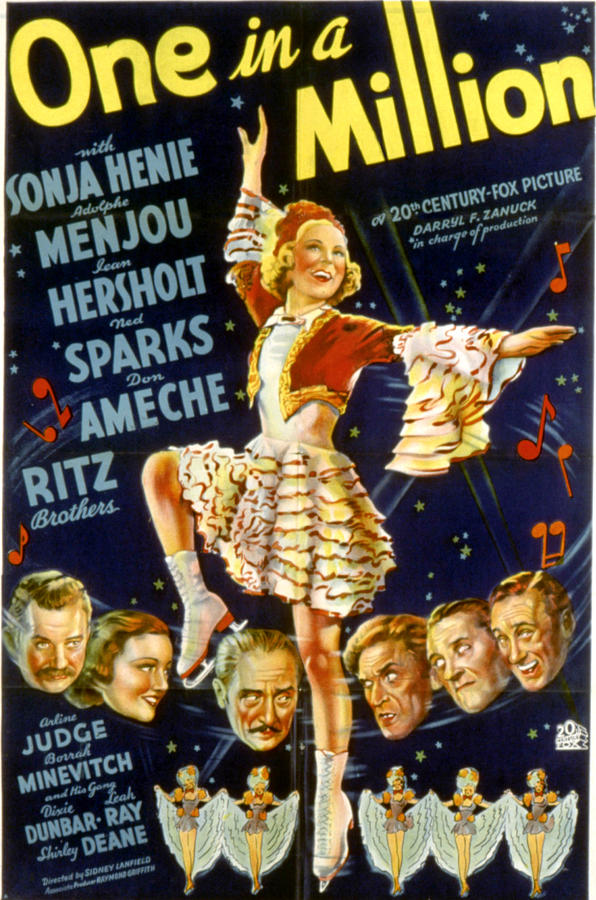
Musical Mondays: “Three Smart Girls” (1936)

It’s no secret that the Hollywood Comet loves musicals.

In 2010, I revealed I had seen 400 movie musicals over the course of eight years. Now that number is over 500. To celebrate and share this musical love, here is my weekly feature about musicals.

This week’s musical:
Three Smart Girls” (1936) Musical #132

Three_Smart_Girls_Poster

Studio:
Universal Pictures

Director:
Henry Koster

Starring:
Deanna Durbin, Ray Milland, Charles Winneger, Binnie Barnes, Alice Brady, Mischa Auer, Nan Grey, Barbara Read, Lucile Watson,

Plot:
Three sisters (Read, Gray, Durbin) living with their mother in Switzerland hear that their father (Winneger) is remarrying. The sisters travel to New York to see their father- who they haven’t seen in 10 years- to stop the wedding so their parents can get back together. The sisters scheme to make the new, gold-digging bride (Barnes) turn her attention to a wealthier fellow

Babara Read, Deanna Durbin and Nan Grey as sisters in "Three Smart Girls"

Barbara Read, Deanna Durbin and Nan Grey as sisters in “Three Smart Girls”

Trivia:
-Opera singing actress Deanna Durbin’s first film
-Louis B. Mayer had Durbin and Judy Garland both tested for MGM Studios. Garland was signed with MGM while Universal signed Durbin. Garland cried when she saw Universal had faith in Durbin to lead in her first films, and MGM was sticking Garland into supporting roles, according to the 2010 book “The Songs of Hollywood” by Philip Furia and Laurie Patterson.
-“Three Daring Daughters” (1948) is not officially said to be a remake, the movies are very similar. Opera singing Jane Powell is similar to the Deanna Durbin role and the daughters are trying to get their newly married mother back with their father. The films end differently, though.
-The plot can also be compared to the Hayley Mills Disney film, “The Parent Trap” (1961).
-Followed by “Three Smart Girls Grow Up” (1939) and “Hers To Hold” (1943)
-Nominated for an Academy Award for Best Picture of 1936 against films such as “The Great Ziegfeld,” “Libeled Lady,” “Anthony Adverse,” “Mr. Deeds Goes To Town,” “Romeo and Juliet” and “San Francisco.” “The Great Ziegfeld” was the Best Picture winner that year.
-The film was also nominated for an Academy Award for Best Sound Recording and Best Writing for Original Screenplay.

Notable songs:
None of the songs are terribly familiar or familiar, other than “Il Bacio,” but they all showcase Durbin’s beautiful voice. Aside from a brief song from Binnie Barnes, the four songs sung in the comedy are all by Durbin.

My review:

Young Ray Milland (Screencap by Michael Troutman at I Shoot the Pictures http://ishootthepictures.com/2011/12/15/my-deanna-durbin-punishment-part-i-three-smart-girls-1936-worth-a-look/)

Young Ray Milland (Screencap by I Shoot the Pictures)

Though I’m not sure how the movie was nominated for Best Picture, I really enjoy “Three Smart Girls” (1936).
The film would have catered to both adult and child audiences in 1936 with the adult and child stars in the film.
It’s also a joy to see young Ray Milland early in this film career. Though he started in films in the early 1930s, “Three Smart Girls” was around the time when he started playing credited roles.
This is not your average musical full of singing and dancing in the middle of the street. “Three Smart Girls” is a comedy serving as a vehicle for up and coming star Deanna Durbin. The plot tells that she is taking singing lessons to become an opera singer, and she will break into song when asked.

Check back next week for Musical Monday.

Check out the Comet Over Hollywood Facebook page, follow on Twitter at @HollywoodComet or e-mail at cometoverhollywood@gmail.com