Musical Monday: “Let Freedom Ring” (1939)

It’s no secret that the Hollywood Comet loves musicals.
In 2010, I revealed I had seen 400 movie musicals over the course of eight years. Now that number is over 500. To celebrate and share this musical love, here is my weekly feature about musicals.

This week’s musical:
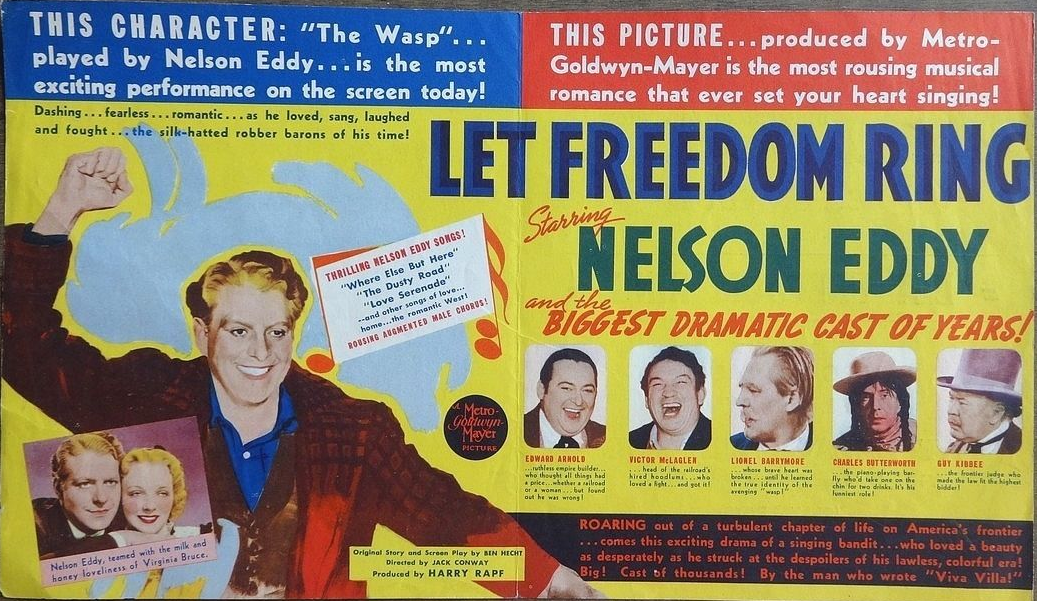
Let Freedom Ring” (1939)– Musical #354

let freedom ring

Studio:
Metro-Goldwyn-Mayer

Director:
Jack Conway

Starring:
Nelson Eddy, Virginia Bruce, Victor McLaglen, Lionel Barrymore, Edward Arnold, Guy Kibbee, Charles Butterworth, Gabby Hayes

Plot:
Steve Logan (Eddy) returns to his home back west after graduating from Harvard. Now a lawyer, he finds his town full of corruption being lead by Jim Knox (Arnold). Logan sets out to save his friends and family by disguising himself as “The Wasp” and uses the power of the press to break down Knox.

Trivia:
-Script by Ben Hecht
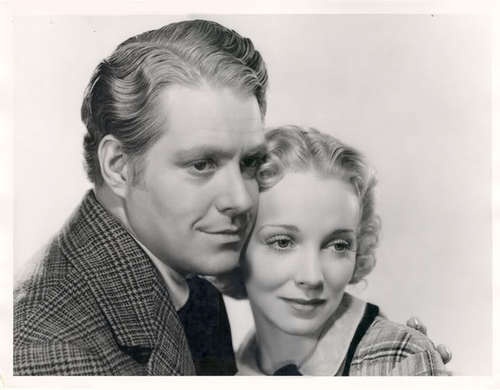
Nelson Eddy and Virginia Bruce in "Let Freedom Ring."

Nelson Eddy and Virginia Bruce in “Let Freedom Ring.”

Notable songs:
-Dusty Road performed by Nelson Eddy
-Love Serenade performed by Nelson Eddy
-Ten Thousand Cattle Straying performed by Nelson Eddy
-When Irish Eyes Are Smiling performed by Nelson Eddy
-America, My Country ‘Tis of Thee performed by Nelson Eddy and Virginia Bruce

My review:
“Let Freedom Ring,” is more of a western than a musical. Though Nelson Eddy sings three or four songs during the film, his beautiful voice isn’t the focus of the film.
Coming from the great year of 1939, this movie isn’t as well known as it’s contemporaries. However, this little western sparkles just as bright and continues to show that there was something in the water that year that made the majority of the films coming out of Hollywood great.
Along with some lovely songs performed by Eddy, we also have the treat of an excellent supporting cast of character actors. Guy Kibbee, Edward Arnold, Victor McLaglen, Charles Butterworth, Gabby Hayes. What more could you ask for than that?!
McLaglen and Butterworth have several particularly funny scenes.
Virginia Bruce also does well in the film, but unfortunately has very little screen time. Lionel Barrymore is also a treat (as always), but similarly has little screen time. In the film, Eddy actually seemed to have more energy and be less wooden without his frequent co-star Jeannette MacDonald.
This film is interesting if you think about what is going on around the world at this time. Much of Europe was being invaded by Germany and preparing for war. While the United States had not yet joined World War II, it was still at the forefront of their minds.
Nelson Eddy’s character gives several speeches, particularly about not being oppressed by tyranny. I’m fairly certain his lines were written with the European situation in mind.
Whether you are a fan of westerns or musicals, this little film is one you should catch. With great songs, humorous moments and rousing speeches, it’s a fun way to spend 90 minutes.
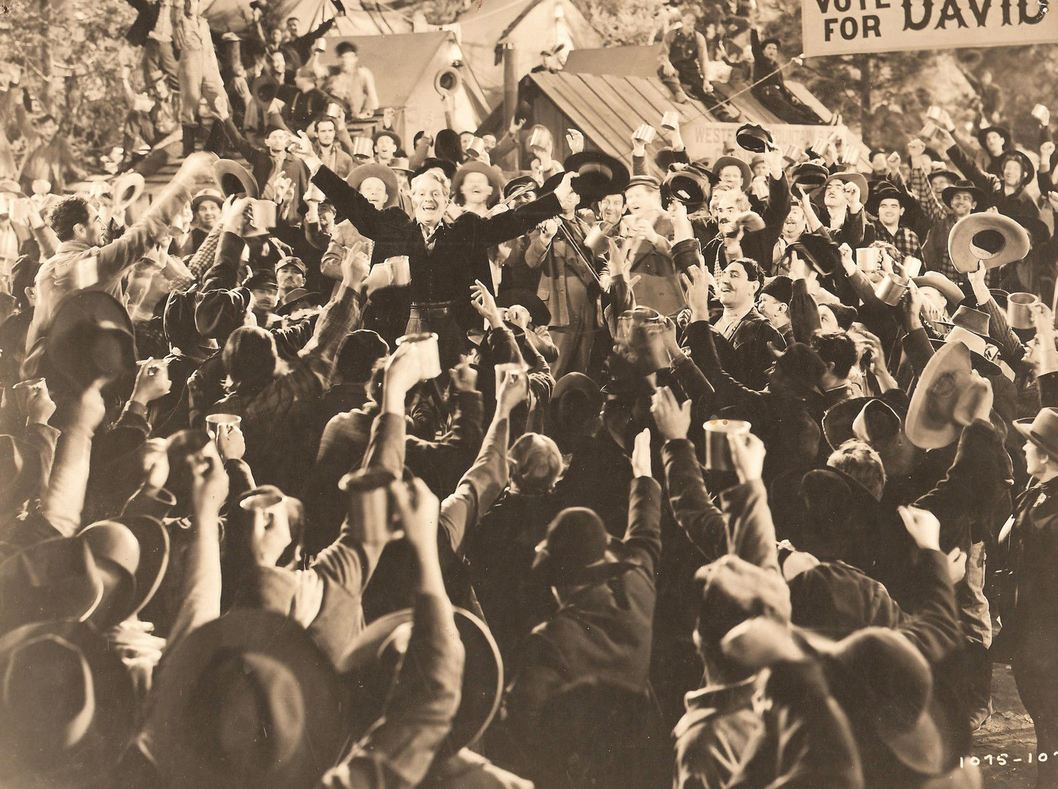
Nelson Eddy in "Let Freedom Ring."

Nelson Eddy in “Let Freedom Ring.”

Check out the Comet Over Hollywood Facebook page, follow on Twitter at @HollywoodComet or e-mail at cometoverhollywood@gmail.com
Actress Beauty Tip #36: Oatmeal face mask

This is the thirty-sixth installment of my classic actress beauty tips that I have read about and tested.

Syndicated beauty columnist Lydia Lane interviewed actresses from 1938 to 1980. Along with sharing the beauty secrets of actresses like Greer Garson, Jan Sterling and Anne Baxter, Lane also took questions from her readers.

In an Aug. 14, 1960, column, Elizabeth Bennett of Nashville, Tenn. wrote:
“I went to school with Mary Healy, and her complexion is just as pretty now as it was then. I don’t know her well enough to ask what she does. But could you find out?”

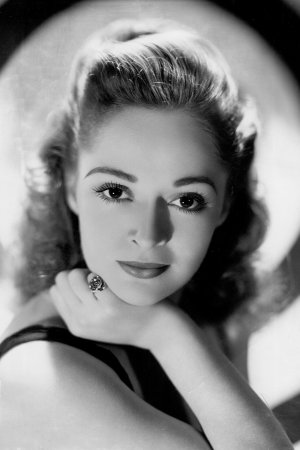
Actress Mary Healy

Actress Mary Healy

Beauty columnist Lydia Lane writes back:
“Mary says, ‘I don’t wear make-up when I’m not working, and I’m always very careful about getting my pores thoroughly clean. And I still use the same facial that my lovely grandmother recommended. I make a paste of dry oatmeal and water. When it is the consistency to spread, I smooth it on my face and lie down for 10 minutes while it dries. Then I wash it off with warm water and splash with cold.”

Oatmeal naturally contains cleansing features, particularly good for sensitive skin, that reduces redness and inflammation. It’s used as an addition to a beauty regiment, not a substitute, according to “Natural Beauty at Home” by Janice Cox.

Actress, singer Mary Healy acted in the late 1930s through the early 1960s, but she wasn’t in many “A-list” films. The most notable is “The 5,000 Fingers of Dr. T” (1953), based off the Dr. Seus book. She was most notable for her comedy team with her acting husband Peter Lind Hayes. The two starred on  “Peter Loves Mary” (1960-61), the “Peter Lind Hayes Show,” variety shows and radio shows in the 1940s. Hayes and Healy were married from 1940 until his death in 1998. Healy passed away in Feb. 2015.

When I read about Miss Healy’s beauty tip, I thought, “Well that sounds easy enough to test and try for Comet’s readers.”

Boy was I wrong. There was no “spreading” when it came to this oatmeal mask. I was caking breakfast food on my face ended up being a difficult mess that left me looking like I came straight from Davey Jones locker, with barnacles growing on my face like a Universal sci-fi monster.

In search of the perfect oatmeal to water ratio, and it seems one doesn’t exist that makes it easily spreadable. I sought out other oatmeal mask recipes on various beauty websites and home beauty ritual books. Most oatmeal mask recipes include other ingredients such as honey, yogurt, olive oil or milk. However, I wanted to stick to water and dry oatmeal as Miss Healy did.

I tried various mixtures:

  • First I tried uncooked instant oatmeal. This was no good. I added too much water and it added up too soupy, regardless of how I tried to remedy it. I was even squeezing water out of the oatmeal to no avail.
  • Next I read using cooked oatmeal was the way to go. But again, the water to oatmeal ratio was never quite right. It was either too runny and it dripped right off my face or it was so sticky that it stuck to my hands more than my face.
  • The best mixture was 1/2 water and 1/4 oatmeal, but that was still much to thick and sticky to spread as easily as Miss Healy describes.
  • I also tried using the cooked oatmeal as a scrub rather than a mask. This worked quite well. I had been experiencing some peeling that day and it was fixed by this.

Finally it occurred to that I hadn’t actually tried followed Mary Healy’s instructions except when I tried using instant oatmeal. I filled a bowl with dry, uncooked oatmeal and slowly added water until the oatmeal was merely damp and paste-like. Once I finally did this correctly, this was the best mixture.

But regardless of the mixture, this is not an easy thing to spread on your face. You end up clumping lukewarm oatmeal on your face, with bits follow back into your hand,on your sink or on the floor with your cat looking quizzically at you and trying to eat it. Or that’s at least what my cat Tallulah did. Needless to say, it’s a big mess.

To review: While the scrub and masks would leave my face feeling soft, I did not see any other major change. I had several blemishes at the time of use, and this did not seem to help with redness or inflammation as others said. But regardless of any skin improvements, this is really too much of a frustrating mess to incorporate into a beauty regiment.

Check out the Comet Over Hollywood Facebook page, follow on Twitter at @HollywoodComet or e-mail at cometoverhollywood@gmail.com
Musical Monday: Beach Ball (1965)

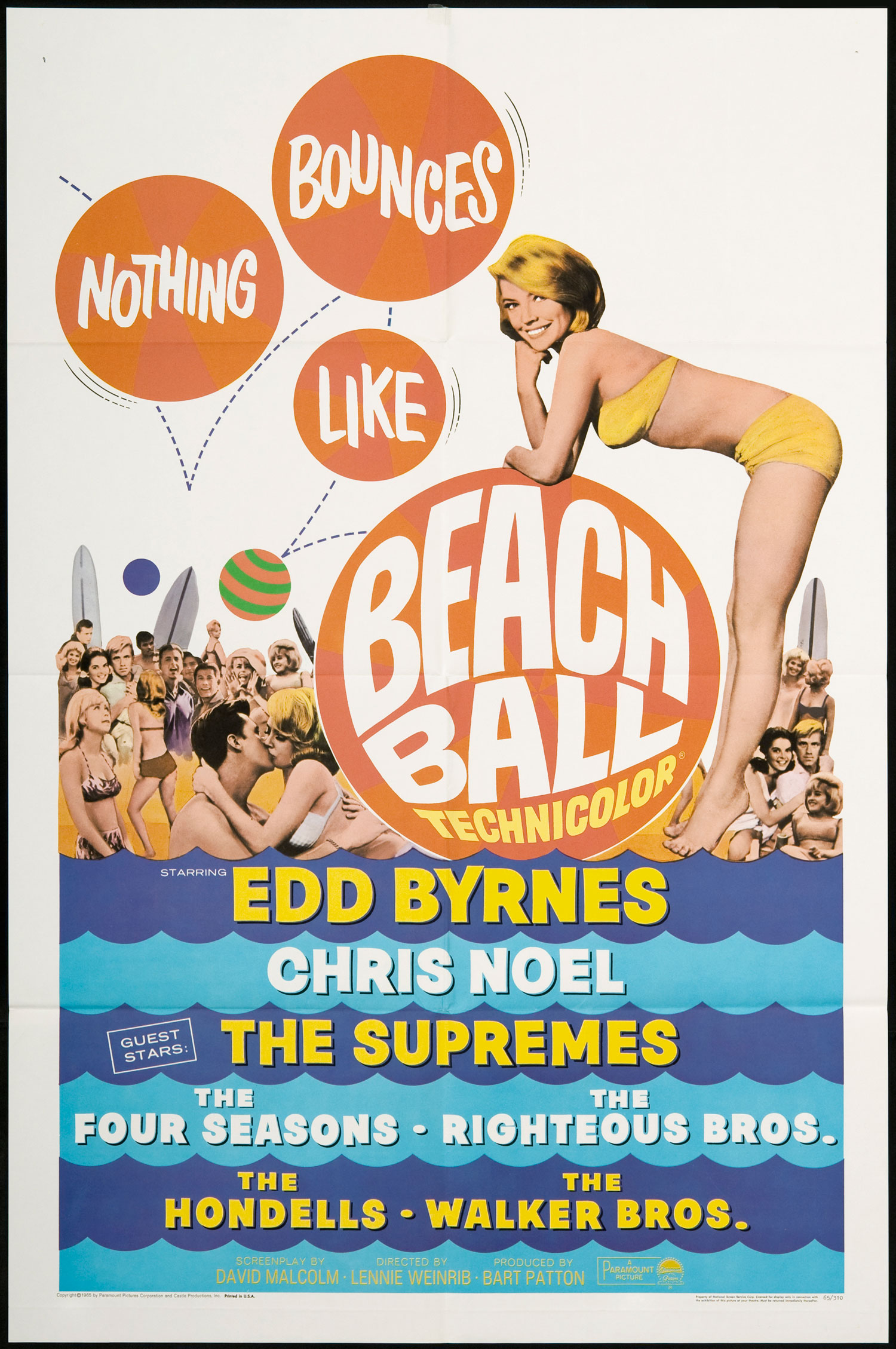
It’s no secret that the Hollywood Comet loves musicals. In 2010, I revealed I had seen 400 movie musicals over the course of eight years. Now that number is over 500. To celebrate and share this musical love, here is my weekly feature about musicals. beach-ball-1965-poster

This week’s musical: “Beach Ball” –Musical #517

Studio: Paramount Pictures

Director: Lennie Weinrib

Starring: Chris Noel, Edd Byrnes, Aron Kincaid, James Wellman, Robert Logan, Mikki Jamison, Don Edmonds, Brenda Benet, Gail Gilmore, Anna Lavele Themselves: The Four Seasons, The Supremes, The Righteous Brothers, The Hondells, The Walker Brothers, The Nashville Teens

Plot: The band the Wigglers is trying to keep their instruments from being repossessed. In order to pay for them, Dick (Byrnes) tries to get an ethnic music studies grant from the college he dropped out of from grant committee member Susan (Noel). When Susan finds out she has been had, she tears up the check. But then feeling some remorse, Susan and the other pretty committee members shed their studious looks, going undercover as pretty beach bunnies to help them get the grant.

The

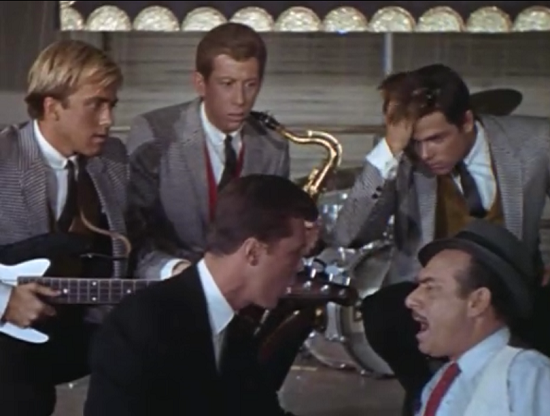
The “Wigglers” can’t afford their instruments and are trying to earn money to keep them.

Trivia:
-Chris Noel’s first starring role.
-Chris Noel said she did not care for Edd Byrnes because he was “egotistical” and kept putting his tongue in her mouth during the kissing scenes, which she didn’t care for, according to the book “Fantasy Femmes of Sixties Cinema” by Tom Lisanti.

Notable Songs:
-Come to the Beach Ball with Me performed by the Supremes
-Surfer Boy performed by the Supremes -Dawn (Go Away) performed by the Four Seasons
-Baby, What You Want Me to Do performed by The Righteous Brothers

My Review:
With the success of Frankie Avalon and Annette Funicello beach films, other studios tried to follow American International Pictures’ lead and make similar teenage beach movies. Paramount Pictures’ attempt is “Beach Ball,” which is one of the better carbon copy beach films. It’s very similar to “Beach Blanket Bingo,” complete with car racing, sky diving, musical acts and surfing. However, what sets “Beach Ball” apart from any of the other beach films is it’s fantastic music line-up which includes Frankie Valli and the Four Seasons, the Righteous Brothers and The Supremes. While The Supremes sing the title song for “Dr. Goldfoot and the Bikini Machine,” this is their only beach film appearance. All of the beach films are pretty silly and a little tiresome at times, but they somehow are charming and suck you in. If you are looking for beach films outside of the American International Pictures films, give “Beach Ball” a try. It’s not award winning, but you will definitely hear some great music.

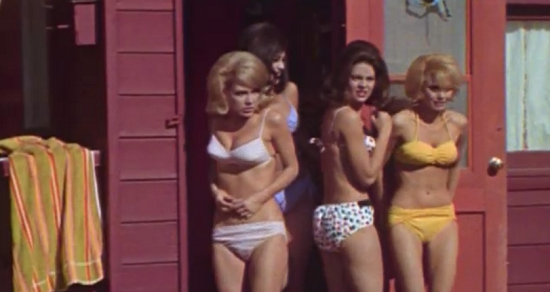
The undercover grant committee.

The undercover grant committee.

Check out the Comet Over Hollywood Facebook page, follow on Twitter at @HollywoodComet or e-mail at cometoverhollywood@gmail.com
Father’s Day with Comet’s Dad

Father’s Day from Comet Over Hollywood! This year, we have a few words from my dad.

As we did on Mother’s Day, I have a video of telling about his film love and introducing his children to classic films–particularly “West Side Story” (1961) to me:

Father’s Day from the Comet Archives:
My dad, the practical movie watcher
What Fathered Comet’s Interested?

Check out the Comet Over Hollywood Facebook page, follow on Twitter at @HollywoodComet or e-mail at cometoverhollywood@gmail.com
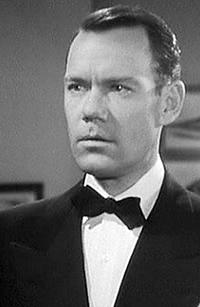
A Familiar Face: Character actor John Ridgely

Character actor John Ridgely

Character actor John Ridgely

They are the highlights of most of our favorite films; coming in with the most striking lines and comedic moments.

A character actor is often the best part of the film. Not the star and a little lower than the secondary lead, a character actor has something distinct that they carry from film to film; whether it’s a funny voice, a physical appearance or personality trait. Think S.Z. “Cuddles” Sakall’s chubby cheeks, Joyce Compton’s southern drawl or Una O’Connor’s fussy Irish habits.

But there are character actors who are just below these sidekick-like roles. The audience recognizes their face but may not know their name. These actors usually perform a role in the film that helps move the plot along, even if it is something as simple as being a police officer arresting the bad guy or a hotel clerk checking the lead actors into a hotel.

This role describes the versatile “every man” actor, John Ridgely (sometimes spelled Ridgeley). Born John Huntington Rea in Illinois, Ridgely was a graduate of Stanford University with plans to go into an industrial career. After performing in plays with the Pasadena Playhouse, Ridgely entered films in the 1930s.

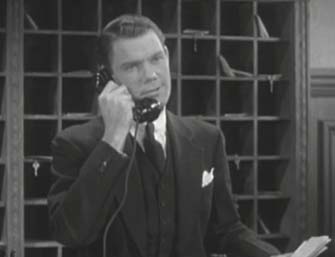
If you have watched a Warner Brother’s film made between 1935 and 1948, chances are you have spotted Ridgley. The tall, dark haired vaguely attractive actor appeared in 145 feature films. His roles ranged from police officers, doctors, heavies, truck drivers, salesmen, orchestra leaders, part of a double date, cab drivers, hotel clerks, coroners and reporters.

John Ridgely as a hotel clerk in

John Ridgely as a hotel clerk in “Nancy Drew-Reporter.”

Some of his films include The Big Sleep (1946), Arsenic and Old Lace (1944), “They Died With Their Boots On (1941), The Letter (1940) and Dark Victory (1939), humorously listed as Man Making Crack About Judith.

Actress Lauren Bacall’s first screen test was with Ridgely for the film “To Have and Have Not” (1944), performing the famous “put your lips together and blow” scene. The scene was written without any real intention of keeping it in the film, but after seeing the screen test, director Howard Hawks changed his mind, according to Bacall’s autobiography “By Myself.”

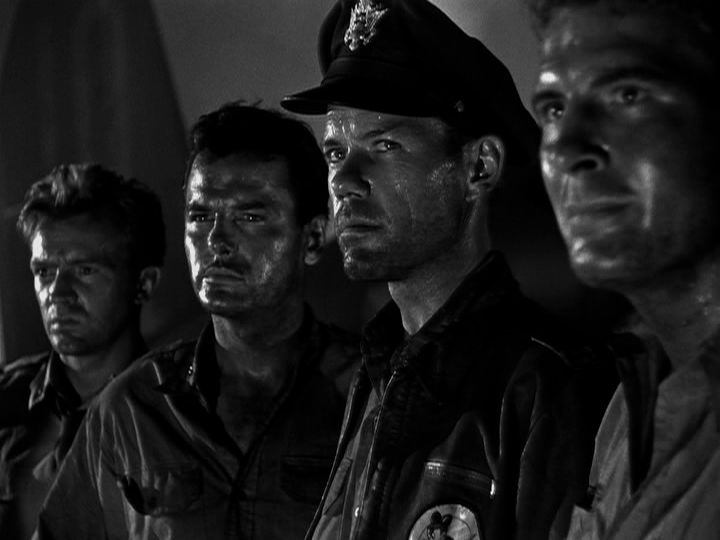
But Ridgely received top billing in the 1943 World War II film “Air Force;” co-starring with John Garfield, Arthur Kennedy, Gig Young and Harry Carey.

John Ridgley had top billing in

John Ridgley had top billing in “Air Force.”

For his first (and last) time in a lead role, Ridgely does an excellent job. In the Feb. 4, 1943, New York Times film review, critic Bosely Crowther called Ridgely’s performance “refreshingly direct.”

“Mr. Hawks very wisely recruited a cast with no outstanding star, thus assuring himself the privilege of giving everyone a chance. And his actors have responded handsomely,” Crowther wrote.

Two years later, Ridgely acted with John Garfield in “Pride of the Marines” (1945). Though the role is not as large as “Air Force,” Ridgely has a sufficient amount of screen time as a next door neighbor and friend of Garfield and his wife, played by Eleanor Parker.

But regardless how much screen time he received in films, Ridgley garnered media attention, as most film stars in the classic era did. This included:

  • April 10, 1943: A humorous newspaper story in an April 10, 1943, article where Ridgely gave a few kids a ride. The kids asked to be let out of the car when they found out he was an actor.
  • July 20, 1943: “Theater Gossip” John Garfield and John Ridgley announced to be acting with Cary Grant in “Destination Tokyo.” The two Johns are both noted for just coming from the film “Air Force.”
  • Nov. 11, 1943:The Evening Independent, “Playhouse Film Provides Thrills, Flynn Stars in Hudson Bay Story of Nazi Spies”: Ridgley is noted for acting in the upcoming Errol Flynn film, “Northern Pursuit.”
  • Feb. 11, 1944: “Sign on Windshield Almost Ruins Actor,” an article tells how Ridgely almost was in a car accident due to his surprise of seeing an old woman driving a 1903 Baker Electric.
  • Oct. 27, 1944: “The Evening Independent” under “Theater Gossip”: John Ridgley is noted for playing a “heavy” in the upcoming film, “The Big Sleep.” “Assignment of Ridgely was announced at the same time it was disclosed Regis Toomey was signed for an important role as a fast talking muscle man…Ridgely portrayed a meteorologist in Destination Tokyo and a confused husband in The Doughgirls.”
  • April 6, 1945: Ridgely is mentioned in the sub-head of a review on “God is My Co-Pilot” starring Dennis Morgan.
  • May 27, 1951: article mentions Ridgely was celebrating his 19th anniversary in film and his next upcoming project, playing a doctor in the “The Blue Veil.”
Arthur Kennedy, Gig Young, John Ridgely and Charles Drake in

Arthur Kennedy, Gig Young, John Ridgely and Charles Drake in “Air Force.”

Ridgely left the industry in 1953 and died in Manhattan in 1968 of heart failure. Conflicting reports say he is buried in New York while other says Forest Lawn in Hollywood. Ridgley was married to Virginia Robinson and had a son, John Ridgely Rea.

While he wasn’t a huge star, Ridgely was still considered important enough to be noted by the press. Regardless of the role, Ridgely always adds something to the film and it’s fun to pick him out in his various roles.

Check out the Comet Over Hollywood Facebook page, follow on Twitter at @HollywoodComet or e-mail at cometoverhollywood@gmail.com
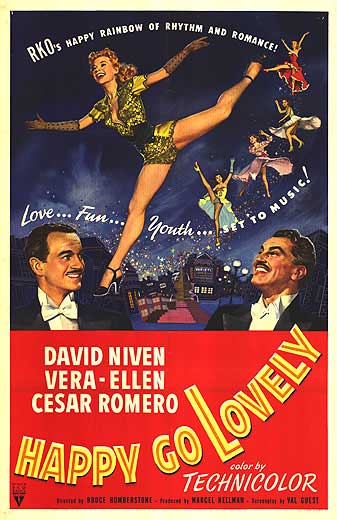
Musical Monday: Happy Go Lovely (1951)

It’s no secret that the Hollywood Comet loves musicals.
In 2010, I revealed I had seen 400 movie musicals over the course of eight years. Now that number is over 500. To celebrate and share this musical love, here is my weekly feature about musicals.

b70-15397This week’s musical:
“Happy Go Lovely” –Musical #125

Studio:
Associated British-Pathé (UK) and RKO Radio Pictures (US)

Director:
H. Bruce Humberstone

Starring:
David Niven, Vera-Ellen, Cesar Romero, Bobby Howes, Diane Hart, Kay Kendall (uncredited)

Plot:
Director John Frost (Romero) is putting on a show in Edenborough, Scotland, but doesn’t have a funds to do it. When a rumor starts that chorus dancer Janet Jones (Vera-Ellen) is engaged to greeting card millionaire B.G. Bruno (Niven), John makes Janet the lead with hopes that Bruno will put money in the show.

Trivia:
-This film was made in Great Britain in attempt to compete with American films and incorporate American pop culture in British films. They did so by starring and directing American talent, according to Popular Music On Screen: From Hollywood Musical to Music Video by John Mundy
-British musical films were struggling. Casting American talent in their films was one strategy to solve this, according to The International Film Musical edited by Corey Creekmur, Linda Mokdad
-When screened in the United States, a gag involving a kilt had to be cut, according to Banned in the U.S.A.: British Films in the United States and their Censorship, 1933-1966 by Anthony Slide.
-Vera-Ellen’s singing was dubbed by Eve Boswell, a singer popular in Great  Britain in the 1950s.

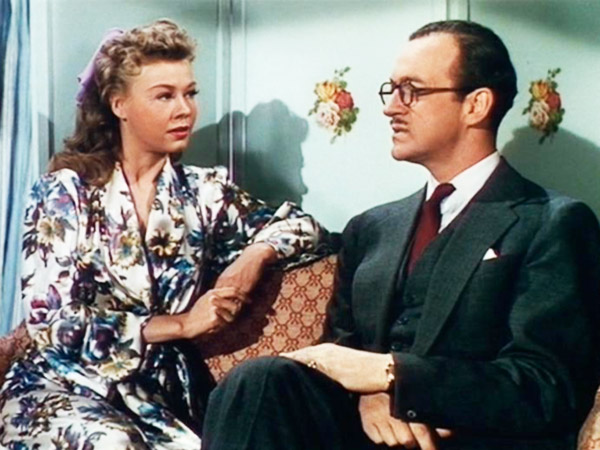
Vera-Ellen and David Niven in "Happy Go Lovely"

Vera-Ellen and David Niven in “Happy Go Lovely”

Notable Songs:
-“One, Two, Three” performed by Vera-Ellen
-“Would You-Could You?” performed by Vera-Ellen

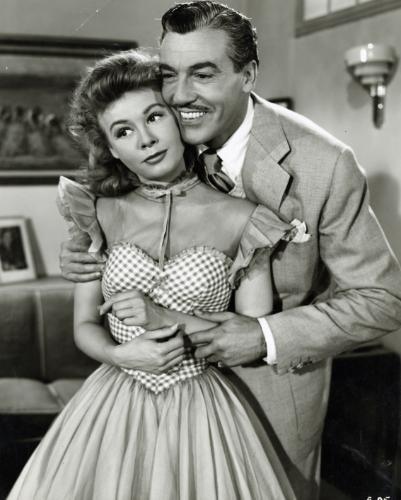
Vera-Ellen and Cesar Romero in "Happy Go Lovely"

Vera-Ellen and Cesar Romero in “Happy Go Lovely”

My Review:
I love this musical.
There are some first time film watching experiences that you remember and sometimes reflect on. “Happy Go Lovely” is one of those for me. Sometimes I randomly remember laying on the couch on a Friday, fall afternoon after coming home from high school. It was the weekend and I was ready to relax with classic films. That film binge started with “Happy Go Lovely.” I loved it then and I love it now.
It’s a silly, and simple plot and it’s largely forgotten. I think that it’s not as recognized today by American audiences since it was made in Great Britain with stars popular in America.
This is a fun little cinderella story that starts with a big misunderstanding and a rumor which eventually becomes reality.
I always enjoy seeing Vera-Ellen on screen. We only had her in films for such a brief time: her career spanned from 1945 to 1957 with only 16 film and TV appearances. She always had a glittering prescience and is one of the best dancers to ever grace the silver screen.
Then we have David Niven. Niven is always charming, humorous and seems sincere in his acting, regardless of the role.
And to top it all off, we have Cesar Romero!
For a little British musical, “Happy Go Lovely” has a fun cast with a few laugh out loud moments and catchy songs. And it’s in Technicolor.
If you enjoy musicals and are looking for a little slice of escapism, this is one of my favorite “go-to’s.”

Check out the Comet Over Hollywood Facebook page, follow on Twitter at @HollywoodComet or e-mail at cometoverhollywood@gmail.com
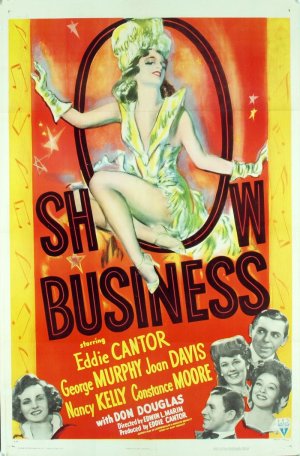
Musical Monday: Show Business (1944)

It’s no secret that the Hollywood Comet loves musicals. In 2010, I revealed I had seen 400 movie musicals over the course of eight years. Now that number is over 500. To celebrate and share this musical love, here is my weekly feature about musicals. show biz

This week’s musical: “Show Business” –Musical #516

Studio: RKO Pictures

Director: Edwin L. Marin

Starring: Eddie Cantor, George Murphy, Joan Davis, Nancy Kelly, Constance Moore, Donald Douglas, Dorothy Malone (uncredited)

Plot: Supposedly loosely based on Eddie Cantor’s rise to stardom, popular burlesque star George Doane (Murphy) takes Eddie Martin (Cantor) under his wing after Cantor wins amatuer night. The men meet Joan (Davis) and Connie (Ford) and the four of them decide to team up and try to strike it big in vaudeville. In between the singing and dancing, George and Connie fall in love.

Trivia:

-Produced by Eddie Cantor

-This picture was to celebrate Eddie Cantor’s 35th year in entertainment and is supposed to be a fictional biography of Cantor’s career, according to the 1944 New York Times review.

Highlights: -Joan Davis pretending to sing opera

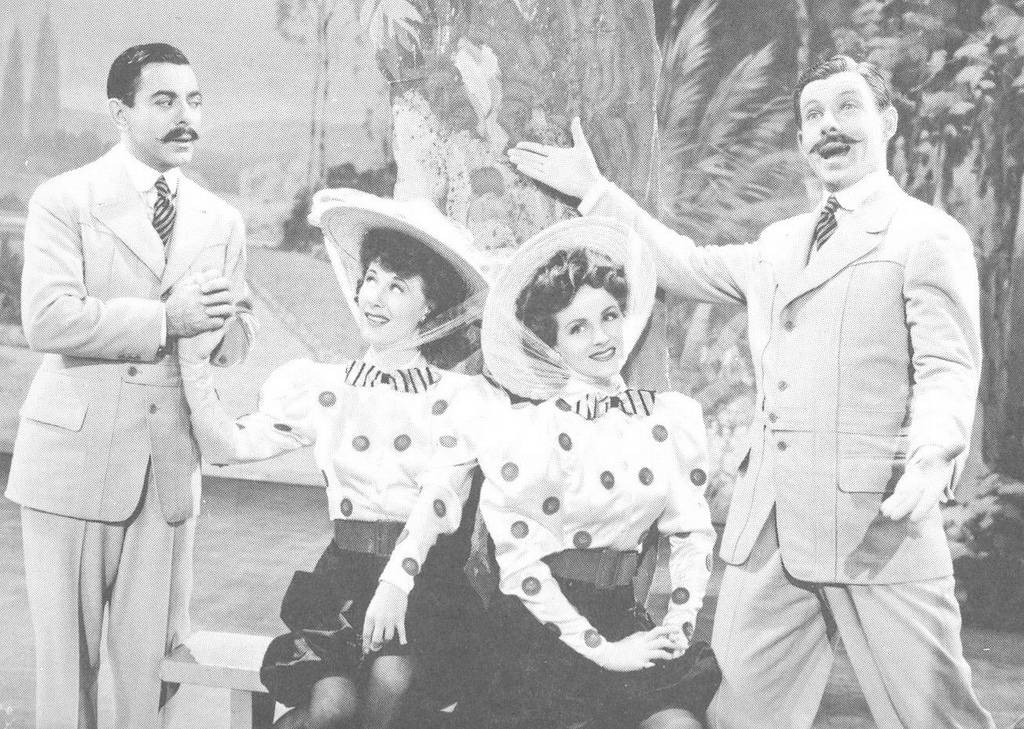
Eddie Cantor, Constance Ford, Joan Davis, George Murphy in

Eddie Cantor, Constance Ford, Joan Davis, George Murphy in “Show Business.”

Notable Songs:

-“Good Ole Fashioned Girl” performed by the four leads

-“They’re Wearin’ ‘Em Higher in Hawaii” performed by George Murphy

-“I Don’t Want to Get Well” performed by Eddie Cantor

-“It Had to Be You” performed by George Murphy and Constance Ford

My Review: For a movie that is celebrating Eddie Cantor’s 35th year in entertainment, “Show Business” seems pretty lackluster. While I love George Murphy and enjoy Joan Davis’s humor, you somehow think a celebratory anniversary film would be in Technicolor with loads of stars. However, in comparison to the “Eddie Cantor Story” biopic, this film is gold. Despite this, “Show Business” is a charming little film filled with a dozen songs. I think the thing that struck me the most is how beautifully the quartet’s singing voices blended perfectly in harmony. Really lovely and superb. I also had a few laugh out loud moments at Joan Davis and Eddie Cantor’s humor. “Show Business” is an easily forgettable film in the grand scheme of movie musicals. But for 92 minutes when you sit down and watch it are a lot of fun. Check out the Comet Over Hollywood Facebook page, follow on Twitter at @HollywoodComet or e-mail at cometoverhollywood@gmail.com

Classic films in music videos: “Gimme Some More” by Busta Rhymes

This is June’s edition of Comet Over Hollywood’s film references in music videos.

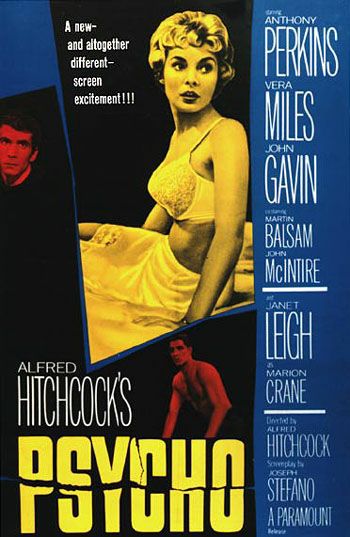
Psycho_(1960)Composer Bernard Herrmann’s music is constantly sampled in contemporary pop culture; from commercials to spoofs on TV.

Several popular music artists have incorporated Herrmann’s music into their songs or music videos. For example, Lady Gaga used part of the “Vertigo” score in her 2011 “Born this Way” music video, which Comet Over Hollywood highlighted in 2013.

Another popular artist who sampled Herrmann’s work is American rapper and producer Busta Rhymes.

In his 1998 single “Gimme Some More” from the album E.L.E., Rhymes uses a part of the opening sequence from Alfred Hitchcock’s 1960 film “Psycho,” composed by Herrmann. This song reached number one on the U.S. Billboard R&B/Hip Hop charts in 1999.

The sample of the opening score is used as throughout the song as the main beat.

Below is the song and the opening credits from Psycho for comparison: 

Love Bernard Herrmann? Our friends are making a documentary about Herrmann called “Lives of Bernard Herrmann.” Check them out on Facebook and Twitter.

Check out the Comet Over Hollywood Facebook page, follow on Twitter at @HollywoodComet or e-mail at cometoverhollywood@gmail.com
Musical Monday: The Fabulous Dorseys (1947)

It’s no secret that the Hollywood Comet loves musicals.
In 2010, I revealed I had seen 400 movie musicals over the course of eight years. Now that number is over 500. To celebrate and share this musical love, here is my weekly feature about musicals.

This week’s musical:
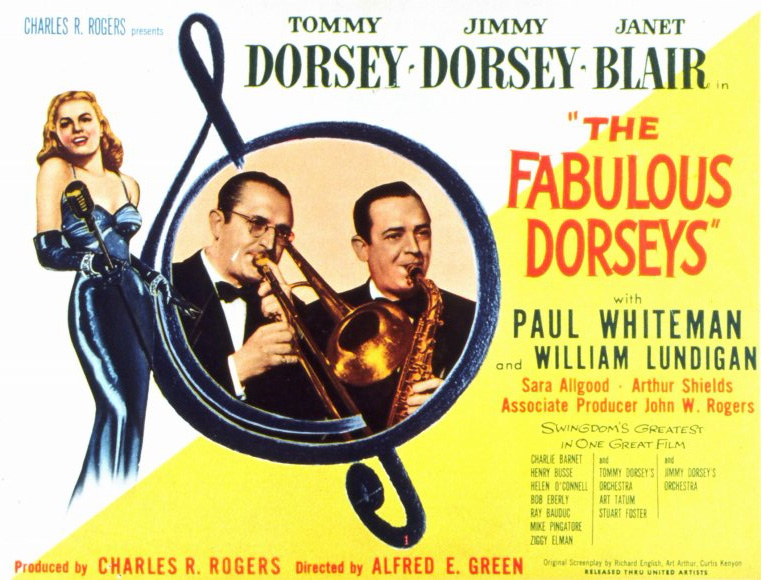
“The Fabulous Dorseys” –Musical #314

fabulous dorsesys

Studio:
United Artists

Director:
Alfred E. Green

Starring:
As themselves: Tommy Dorsey, Jimmy Dorsey
Also starring: Janet Blair, William Lundigan, Sara Allgood, Arthur Shields, Buz Buckley, Bobby Warde
Cameo appearances: Paul Whiteman, Charlie Barnet, Henry Busse, Bob Eberly, Helen O’Connell and Art Tatum.

Plot:
Starting in their youth in 1916, the film is a fictionalized biopic of bandleader brothers Jimmy and Tommy Dorsey who reached the height of their fame in the 1940s. The film depicts the brother’s differences and tumultuous relationship that lead to them splitting into their own separate bands.

Trivia:
-The film is based off of a Saturday Evening Post article called “The Battling Brothers Dorsey.”
-When the film was released in February 1947, their hometown in Pennsylvania designated the week “Dorsey Week.”
-The film failed critically and commercially and the brothers made no profit from the film, according to “Tommy Dorsey: Livin’ in a Great Big Way : a Biography” by Peter J. Levinson.

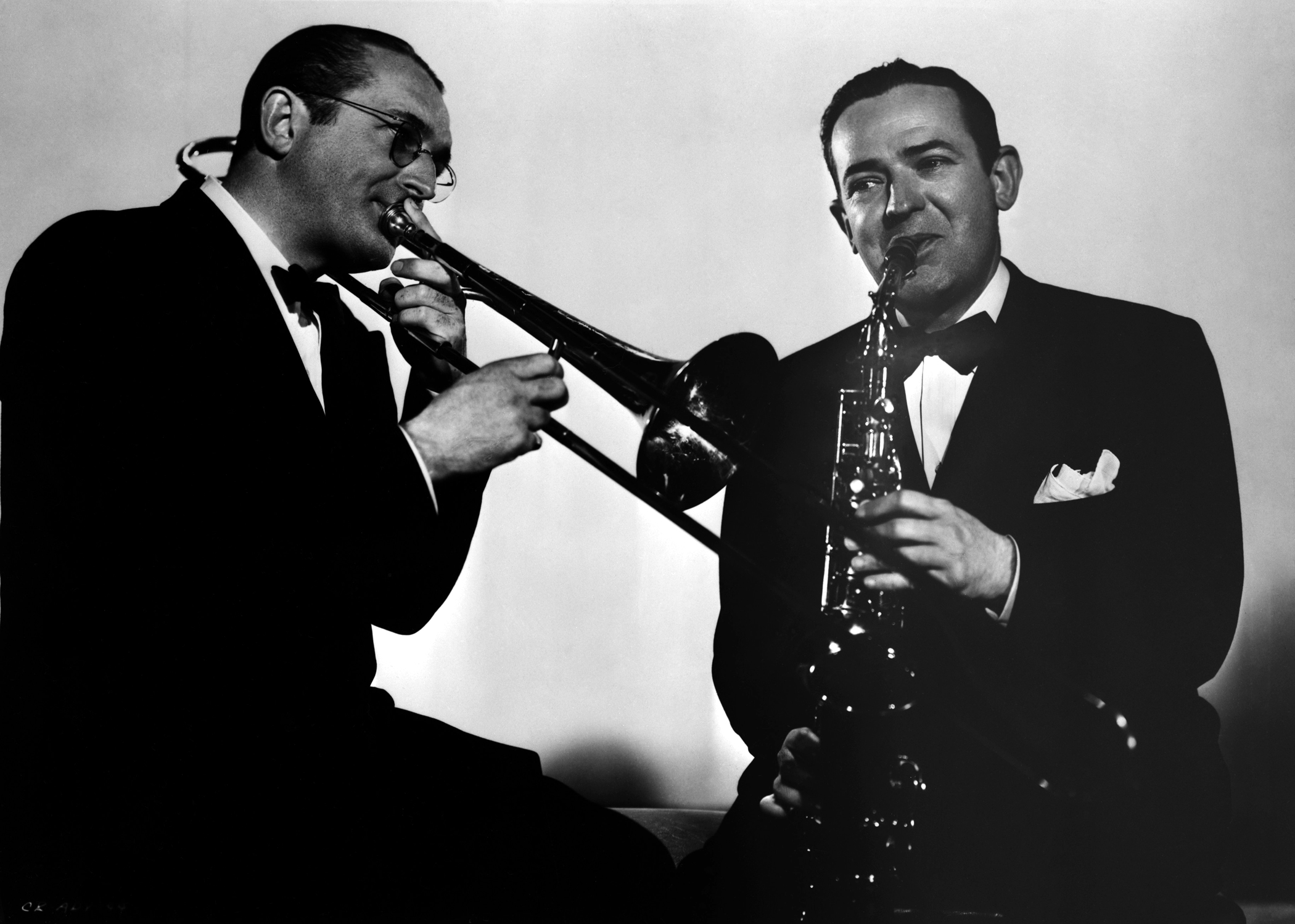
Tommy Dorsey playing the trombone and Jimmy Dorsey playing the saxophone.

Tommy Dorsey playing the trombone and Jimmy Dorsey playing the saxophone.

Highlights:
-Seeing the Dorsey brothers on screen together.

Notable Songs:
-Marie
-Tangerine
-Green Eyes performed by Bob Eberly and Helen O’Connell
-The Object of My Affection performed by Janet Blair
-Turquoise performed by Art Tatum

My Review:
This is one of the few biographical films I can think of that actually stars the people who it is about. While this film is mostly fictional, the fact that the film stars its subject matters is very interesting, and it’s notable to see the Dorsey brothers together on film.
Trombone playing Tommy Dorsey and saxophone playing Jimmy Dorsey were two of the top big band leaders of the 1930s and 1940s, though Tommy was probably more famous than his brother. Both brothers were featured as musicians in several films of the 1940s and 1950s, but Tommy popped up more often, particularly in MGM films such as “Ship Ahoy,” “DuBarry was a Lady” and “Thrill of Romance” and the Goldwyn film “A Song is Born” with Danny Kaye.
The film shows the Dorsey brothers growing up in humble upbringings and their father encouraging their musicianship, it seems that much is at least true. The film also shows the two brothers performing together in a band known as “the Dorsey Brothers” but frequently fighting, that much is also true.
The Dorsey brothers were extremely competitive, and though Tommy was more successful, he was jealous of his brother, according to the book “Tommy Dorsey: Livin’ in a Great Big Way : a Biography” by Peter J. Levinson.
The brothers formed their band in 1930 and split in 1935. Before their split, they tried to stay together by one brother directing the band for the first half of the performance and then switching, according to Levinson’s book. The two eventually formed again in 1953 to perform together, but both died only a few years later: Tommy in 1956 at age 51 and Jimmy in 1957 at age 53. Their mother (who is played by Sara Algood in the film), outlived her two musician sons, passing away in 1968 at the age of 93.
As actors, Tommy is much more natural and human on screen while Jimmy Dorsey seems a bit more like a 1930s Warner Brothers character actor.
The film almost concentrates too much on the two brothers fighting, which gets tedious. After the first two or three fights in the film, I think the audience gets the idea that they didn’t get along.
Janet Blair is in the film as a childhood friend who performed as their girl singer in the film and falls in love with a piano player. I’m sure that much is fictional and was added into the film so there was a romance somewhere in the plot line.
While the actual plotline is questionable, this film gives a brief glimpse into the lives of two brothers who had a longstanding feud and also gives you the opportunity to hear excellent music and musical cameos of some of the most popular performers of that time.

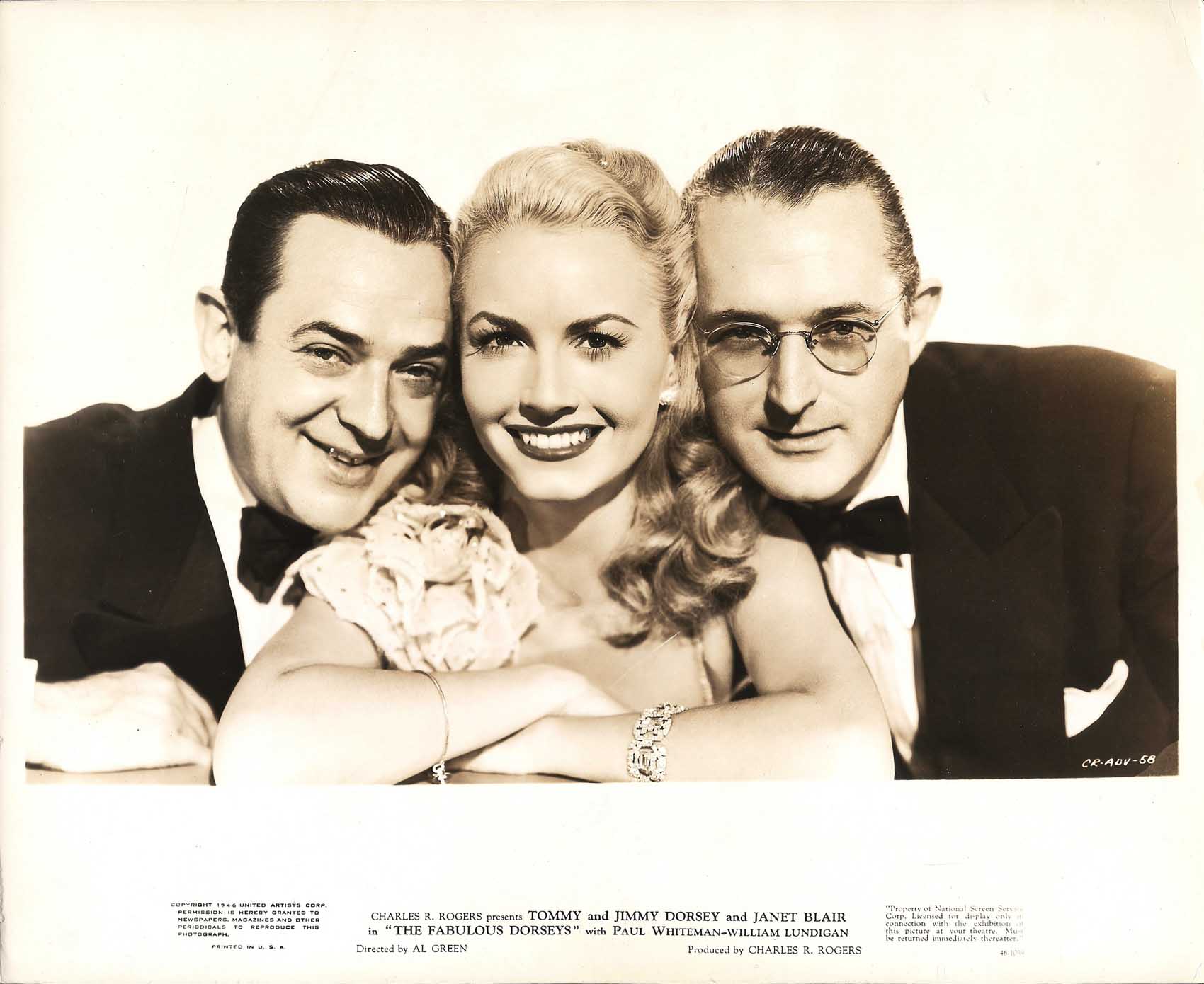
Publicity photo of Jimmy Dorsey, Janet Blair and Tommy Dorsey for "The Fabulous Dorseys" (1947).

Publicity photo of Jimmy Dorsey, Janet Blair and Tommy Dorsey for “The Fabulous Dorseys” (1947).

Check out the Comet Over Hollywood Facebook page, follow on Twitter at @HollywoodComet or e-mail at cometoverhollywood@gmail.com