Unknown's avatar

About Jnpickens

Classic film lover and reporter in North Carolina.

Who is “A Star is Born” about?

What Hollywood figures inspired the characters in “A Star is Born”?

When I started out this post, I was ready with a relatively simple answer.  In an April 2018 interview with William Wellman, Jr., at the Turner Classic Movies Classic Film Festival, he listed one couple. But the more I researched, the more complex this answer became.

Since the first studios were built in Hollywood, the lives and deaths of film stars were as dramatic as the roles they played on the screens. Their tragic lives and deaths inspired “What Price Hollywood?” (1932) – the unofficial precursor to “A Star is Born” —and the 1937 film “A Star Is Born” starring Janet Gaynor and Fredric March.”
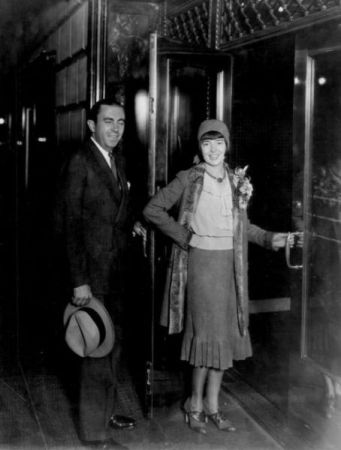
John McCormick and Colleen Moore

Colleen Moore and John McCormick

Colleen Moore was one of the influences for “What Price Hollywood?” (1932), according to the book “The Bennetts: An Acting Family” by Brian Kellow. Moore was married to First National Pictures producer John McCormick. McCormick was responsible for Moore cutting her hair into a sleek bob for the flapper look. The actress and producer were married in 1923, collaborated on 20 films together and made millions of dollars. Business-wise, it was a successful match. But as Moore became even more famous, her husband’s alcoholism deepened and she covered up for him when he was hospitalized or at the studio. Moore divorced McCormick in 1930.
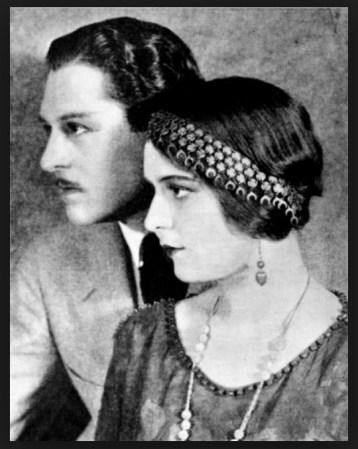
John Bowers and Marguerite De La Motte in a publicity photo for Daughters Who Pay (1925)

John Bowers and Marguerite De La Motte:

Silent film actor John Bowers started in films in 1914 and was in 95 films from 1914 to 1931. Marguerite De La Motte, who started in films in 1916, was a frequent co-star of Bowers’s. They first co-starred in the film “Desire” (1923) and were in a total of 12 films together from 1923 to 1927. John Bowers and Marguerite De La Motte were married in 1924. But when sound entered in films, Bowers’s film career ended. De La Motte was also in a few talking pictures, though she only appeared in five films from 1930 to 1942. Bowers began to have a drinking problem after his career ended, according to the website Silents are Golden, and the couple separated. Director Henry Hathaway remembered Bowers begging for a job, and Hathaway invited Bowers to dinner. When Bowers left, he said, “Well, this is the last time you’ll ever see me. You’ll have a real life picture. I’m going to jump overboard.”

On Nov. 13, 1936, John Bowers rented a boat, sailed it out into the Pacific Ocean and drowned. Police found his body floating near Las Flores, according to the book “A Life of Barbara Stanwyck: Steel-True 1907-1940” by Victoria Wilson. William Wellman, Jr., son of William Wellman who directed “A Star is Born” (1937), said Norman Maine was based on the marriage, career, and death of John Bowers, though Wellman was two weeks into shooting the film when Bowers died, according to Wilson’s book.
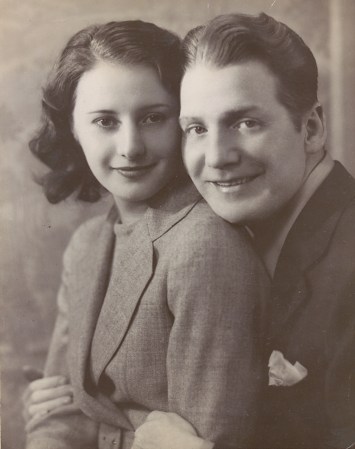
Barbara Stanwyck and Frank Faye

Frank Fay and Barbara Stanwyck:

Barbara Stanwyck biographer Victoria Wilson writes that the Vicki Lester and Norman Maine acting marriage was based on Frank Fay and Barbara Stanwyck during their marriage from 1928 to 1935.

When they were first married, Stanwyck was not acting in films, and Frank Fay was a famous vaudeville star and already acting in films. By 1935 when they divorced, Stanwyck’s star was rising, and Fay helped guide her success: from convincing Harry Cohn to hire her for “Mexicali Rose” to giving her screen test to director Frank Capra. Capra then made Stanwyck a star by casting her in four of his films, according to Wilson’s book. While Stanwyck’s films were successful, Fay’s failed, and he began to drink. Stanwyck tried to help him with his career and would appear with him on stage. They divorced due to his abuse and alcoholism. Barbara Stanwyck also did not attend the premiere of “A Star is Born” (1937).
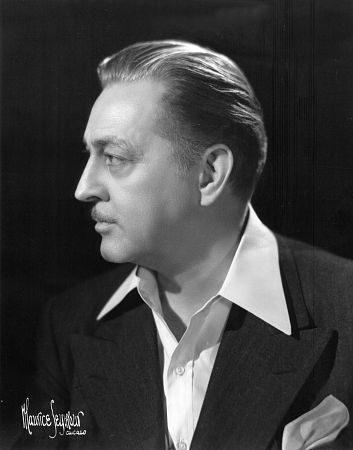
John Barrymore

John Barrymore

Of any actor, John Barrymore has the most parallels to Norman Maine, the once famous matinee idol who fell into alcohlism as his career declined. John Barrymore was one of the top stars of stage and screen of the 1920s and 1930s, but drinking was his downfall. He became unreliable, and his roles became fewer and lacked prestige as the years wore on and he drank more. In his last film, “Playmates” (1941), co-starring comedic big band leader Kay Kyser, Barrymore’s character is a has-been who drinks too much. The fact that his life became a punchline in an RKO musical comedy is depressing. John Barrymore went to a sanitarium for a rest cure and director George Cukor visited him with a possible role, just like Oliver Niles does for Norman Maine. And like Maine, Barrymore turned down the role because it was too small, according to Wilson’s book. David O. Selznick even wanted John Barrymore for the role of Norman Maine in “A Star is Born” (1937), but at this point Barrymore had a hard time remembering his lines. John Barrymore died in 1942 at age 60 from pneumonia and cirrhosis of the liver.


Marshall Neilan

Marshall Neilan

Director Marshall Neilan is cited as an inspiration for Lowell Sherman’s director character of Max Carey in “What Price Hollywood?” (1932), who drinks too much and commits suicide at the end of the film, according to Kellow’s book. From 1913 to 1937, Neilan directed 107 films, but his work slowed after the dawn of sound due to his alcoholism. Neilan has a small role in the 1937 version of “A Star is Born” when Norman (Fredric March) goes to the race track after being released from the sanitarium. Neilan died in 1958 of throat cancer.


Tom Forman

Tom Forman

Another inspiration for Max Carey in “What Price Hollywood” (1932) is director Tom Forman. Author Adela Rogers St. Johns based her story “The Truth About Hollywood” on Forman. Forman directed successful films in Hollywood such as “Shadows” (1922) and “The Virginian” (1923). However, his career took a turn and Forman was left with low-budget directing projects. On Nov. 7, 1926, Forman shot himself through the heart and died at the age of 33. In the film “What Price Hollywood,” Max Carey dies in the same manner.


John Gilbert and Virginia Bruce

William Wellman’s son, William Wellman, Jr., wrote in the book “Wild Bill Wellman: Hollywood Rebel,” that John Gilbert and the decline of his career was another inspiration for his father’s Norman Maine in “A Star is Born” (1937). John Gilbert was one of the top stars of the silent era, and his alcoholism was part of his downfall — similar to John Barrymore. However, his daughter Leatrice Gilbert Fountain says “A Star is Born” is not based on her father in her 1985 book, “Dark Star: The Untold Story of the Meteoric Rise and Fall of Legendary Silent Screen Star John Gilbert.” But Gilbert being an inspiration for Norman Maine would make sense, particularly, because he was married to up-and-coming starlet Virginia Bruce from 1932 to 1934. Bruce was gaining popularity while Gilbert was practically a has-been. Gilbert’s last film was in 1934, and he died in 1936 at age 38 of a heart attack.
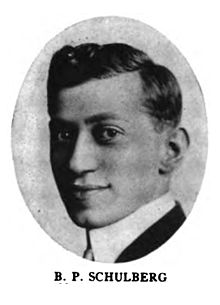
B.P. Schulberg

B.P. Schulberg

B. P. Schulberg, film pioneer and studio executive, was the inspiration for studio head, Oliver Niles, according to the book “A Life of Barbara Stanwyck” by Victoria Wilson. Niles is played by Adolphe Menjou in the 1937 version and Charles Bickford in the 1954 version
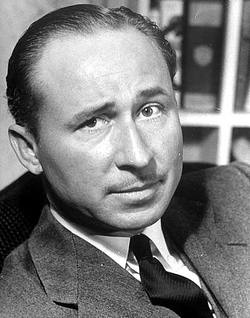
Russell Birdwell

Russell Birdwell

Russell Birdwell was the model of ruthless publicity agent Matt Libby, according to Victoria Wilson’s book. Libby is played by Lionel Stander in the 1937 version and Jack Carson in the 1954 version. One of Birdwell’s publicity stunts included hiring an actress in 1927 to dress in all black and lay flowers on the tomb of Rudolph Valentino on the first anniversary of his death, known as “The Woman in Black.”

Other nods to real life:

  • Vicki Lester’s closing line of “I am Mrs. Norman Maine” was inspired by Dorothy Davenport who was billed as Mrs. Wallace Reid after her husband, actor Wallace Reid, died in 1923. Reid died due to complications from his addiction to morphine. This is the last line in both the 1937 and 1954 version.
  • The funeral scenes in the 1937 and 1954 versions are said to be inspired by Irving Thalberg’s funeral and the response the crowd had to his widow, Norma Shearer. A Sept. 16, 1936, newspaper said 1,500 attended Thalberg’s funeral.

Check out the Comet Over Hollywood Facebook page, follow on Twitter at @HollywoodComet or e-mail at cometoverhollywood@gmail.com
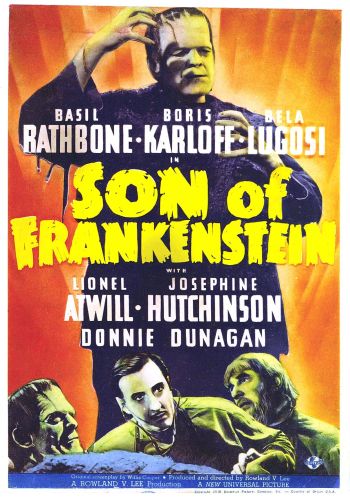
Watching 1939: Son of Frankenstein (1939)

In 2011, I announced I was trying to see every film released in 1939. This new series chronicles films released in 1939 as I watch them. As we start out this blog feature, this section may become more concrete as I search for a common thread that runs throughout each film of the year. Right now, that’s difficult. 

1939 film:  Son of Frankenstein (1939)

Release date: 

Cast:  Boris Karloff, Basil Rathbone, Bela Lugosi, Lionel Atwill, Josephine Hutchinson, Donnie Dunagan, Emma Dunn, Edgar Norton

Studio:  Universal

Director:  Rowland V. Lee

Plot:
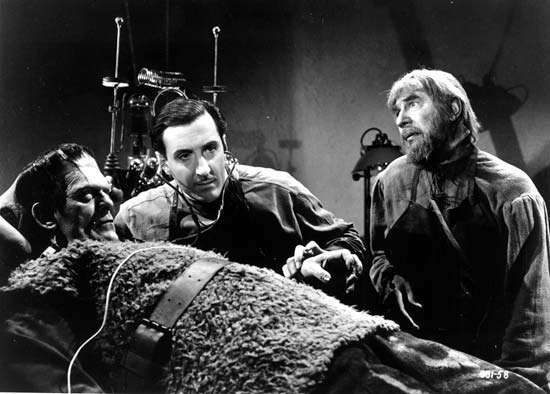
Twenty-five years after Dr. Frankenstein and the monster’s death, his son Baron Wolf von Frankenstein (Rathbone) and his family (Hutchinson, Dunagan) travel to the Frankenstein estate from the United States when it is left to them after his father’s death. The whole town resents Baron Frankenstein returning because of the terror his family brought on the village. When realizing the Monster (Karloff) is still alive, he follows in his father’s footsteps to bring him back to life with the help of Ygor (Lugosi).

1939 Notes:
• Boris Karloff’s last role playing Dr. Frankenstein’s Monster.
• Josephine Hutchinson’s only film released in 1939.
• Lionel Atwill was in nine films released in 1939.
• Bela Lugosi was in five films released in 1939.
• Boris Karloff and Basil Rathbone were both in six films released in 1939.

Other trivia: 
• Peter Lorre was originally approached to play the role of Baron Wolf von Frankenstein, which he turned down, according to 1938 articles in The Hollywood Reporter.
• Director Rowland V. Lee tested shooting the film in color, which was abandoned.
• The third Frankenstein film released by Universal. The first two were Frankenstein (1931) and Bride of Frankenstein (1935).
• Donnie Dunagan’s second film.
• The monster makeup was created by Jack P. Pierce, and it took approximately four hours to prepare Boris Karloff for the scenes.

My review: Searching for the “1939 feature”:
The year 1939 was important for a few actors in this film. For Boris Karloff, it was the last time he would have to dress in the heavy monster costume after performing the role three times.

For Basil Rathbone, the year would end up profitable as he would end up playing his most well-known role: Sherlock Holmes.

But before becoming the famed detective, Rathbone had to play Dr. Frankenstein’s misguided son in “Frankenstein’s Son.”

Moving his family across the world and excited to shed the college professor life, Rathbone’s character views Dr. Frankenstein as a genius, rather than a madman. While the monster is supposed to be scary, Rathbone’s character is one of the main villans of this film, with Bela Lugosi’s Ygor leading the madness.

“Son of Frankenstein” features a high quality cast with Basil Rathbone, providing evil with panache, and Josephine Hutchinson. I also love Donnie Dunagan, who later voiced “Bambi” in 1942. The film of course features creepy mainstays Bela Lugosi, Lionel Atwill and Boris Karloff (as the Monster).

“Son of Frankenstein” isn’t the most important film of the year, but it’s a fun example of the Universal horror films. Honestly, it’s probably my favorite of the Frankenstein films. Plus Frankenstein wears that awesome fashion vest.

I would also say it’s the last high-quality Frankenstein film before Frankenstein is teamed up in the cross-reference films, with the Wolfman and his other horror friends.

Check out the Comet Over Hollywood Facebook page, follow on Twitter at @HollywoodComet or e-mail at cometoverhollywood@gmail.com

Musical Monday: A Star is Born (1954)

It’s no secret that the Hollywood Comet loves musicals.
In 2010, I revealed I had seen 400 movie musicals over the course of eight years. Now that number is over 500. To celebrate and share this musical love, here is my weekly feature about musicals.

This week’s musical:
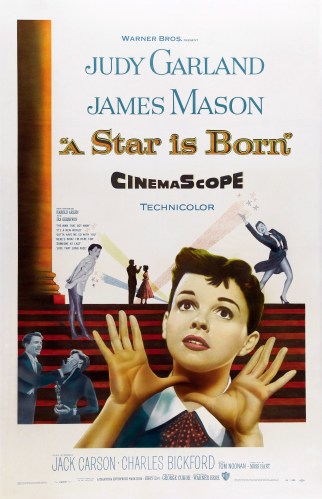
A Star Is Born (1954) – Musical #342

Studio:
Warner Bros.

Director:
George Cukor

Starring:
Judy Garland, James Mason, Jack Carson, Charles Bickford, Tommy Noonan, Lucy Marlow, Hazel Shermet, Amanda Blake, Irving Bacon, James Brown, Nancy Kulp (uncredited), Barbara Pepper (uncredited), Dick Simmons (uncredited), Grady Sutton (uncredited)

Plot:
Singer Esther Blodgett (Garland) is spotted by film star Norman Maine (Mason). Though Norman is one of Hollywood’s top stars, his career is on the decline due to his alcoholism. Norman helps Esther into the picture business and Esther becomes successful film star Vicki Lester. The two fall in love and marry, but will their marriage enough for Norman?

Continue reading

Review: Horror stars keep us in “Suspense”

Complete with creepy organ music straight from a radio serial, “Suspense” was a live television program that aired from 1949 to 1954. The show followed a radio program of the same name, which is obvious from the narration and music.

Continue reading

Watching 1939: Sweepstakes Winner (1939)

In 2011, I announced I was trying to see every film released in 1939. This new series chronicles films released in 1939 as I watch them. As we start out this blog feature, this section may become more concrete as I search for a common thread that runs throughout each film of the year. Right now, that’s difficult. 

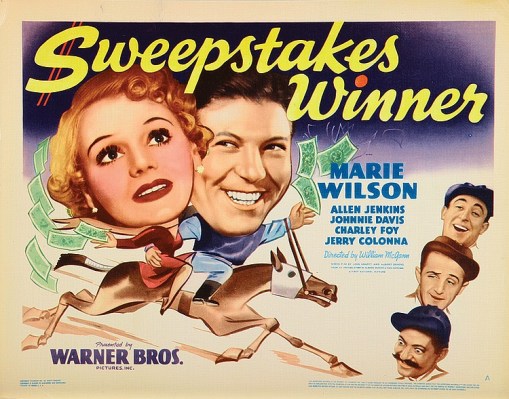
1939 film:  Sweepstakes Winner (1939)

Release date:  May 20, 1939

Cast: 
Marie Wilson, Johnnie Davis, Allen Jenkins, Charley Foy, Jerry Colonna, Granville Bates, Vera Lewis, Frankie Burke, Sam McDaniel

Studio:  Warner Brothers

Director:  William C. McGann

Plot:
Jennie (Wilson) gets a $1,000 inheritance from her grandfather and is convinced to give it to bookies Tip (Jenkins) and Jinx (Foy) to bet on a horse. She wants to buy a horse named Firefly with the winnings, but Tip and Jinx lose her money. Broke, Jennie gets a job as a waitress but Jinx and Tip convince her to buy an Irish Sweepstakes ticket and she wins.

Continue reading

Musical Monday: Colleen (1936)

It’s no secret that the Hollywood Comet loves musicals.
In 2010, I revealed I had seen 400 movie musicals over the course of eight years. Now that number is over 500. To celebrate and share this musical love, here is my weekly feature about musicals.

This week’s musical:
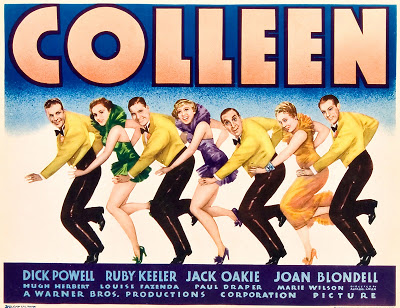
Colleen” (1936)– Musical #284

Studio:
Warner Brothers

Director:
Alfred E. Green

Starring:
Dick Powell, Ruby Keeler, Jack Oakie, Joan Blondell, Hugh Herbert, Louise Fazenda, Paul Draper, Marie Wilson, Luis Alberni, Hobart Cavanaugh, Berton Churchill, J.M. Kerrigan, Addison Richards

Plot:
Donald Ames, III, (Powell) runs the Ames Company and works to keep his uncle Cedric (Herbert) out of business decision. But when Donald heads out on a business trip, Uncle Cedric wreaks havoc by hiring grifter Joe Cook (Oakie) and pretty chocolate dipper Minnie (Blondell), and buys a dress shop where Colleen (Keeler) works for Minnie because she loves fashion. When Donald returns, he has to clean up the mess.

Continue reading

Watching 1939: Blondie Meets the Boss

In 2011, I announced I was trying to see every film released in 1939. This new series chronicles films released in 1939 as I watch them. As we start out this blog feature, this section may become more concrete as I search for a common thread that runs throughout each film of the year. Right now, that’s difficult. 

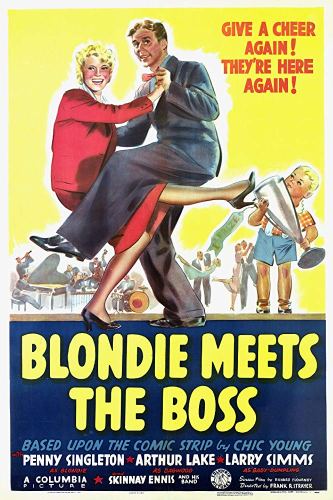
1939 film:  Blondie Meets the Boss

Release date:  March 8, 1939

Cast:  Penny Singleton, Arthur Lake, Larry Simms, Danny Mummert, Jonathan Hale, Daisy the Dog, Dorothy Moore, Inez Courtney, Joel Dean, Dorothy Comingore, Stanley Brown, Don Beddoe

Studio:  Columbia Pictures

Director:  Frank R. Strayer

Plot:
Blondie (Singleton) and Dagwood (Lake) are ready to go on vacation with their Baby Dumpling (Simms). The day they leave, Dagwood’s boss Mr. Dithers (Hale) said he has to go out of town on urgent business and needs Dagwood to stay and work and cancel his vacation. Outrage, Dagwood resigns. Blondie begs Mr. Dithers for Dagwood’s job. Dithers strikes a deal with Blondie: she works in Dagwood’s place while he is on the business trip.

Continue reading

Musical Monday: Bright Lights (1930)

It’s no secret that the Hollywood Comet loves musicals.
In 2010, I revealed I had seen 400 movie musicals over the course of eight years. Now that number is over 500. To celebrate and share this musical love, here is my weekly feature about musicals.

This week’s musical:
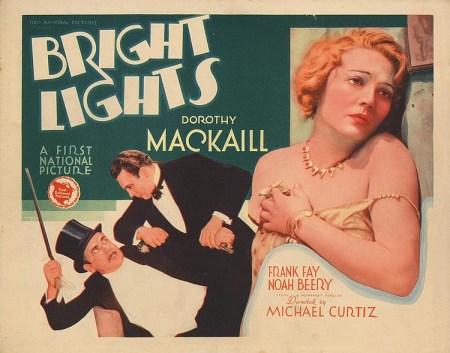
Bright Lights (1930)  – Musical #592

Studio:
Warner Brothers

Director:
Michael Curtiz

Starring:
Dorothy Mackaill, Frank Fay, Noah Beery, Daphne Pollard, Inez Courtney, Frank McHugh, Tom Dugan, James Murray, Edward J. Nugent, Philip Strange, Louise Beavers (uncredited), John Carradine (uncredited)

Plot:
Broadway star Louanne (Mackaill) is retiring from the stage to marry a society gentleman. However, he doesn’t know her colorful past, which she shares a watered down version to the press. Throughout her scandalous past of hula dancing at honky tonks in the Congo and dancing at a carnival show, Wally (Fay) was with her the whole time, who is in love with her. On the eve of her marriage, someone from her past shows up in the audience.

Continue reading

Watching 1939: The Rains Came (1939)

In 2011, I announced I was trying to see every film released in 1939. This new series chronicles films released in 1939 as I watch them. As we start out this blog feature, this section may become more concrete as I search for a common thread that runs throughout each film of the year. Right now, that’s difficult. 

1939 film:The Rains Came

Release date:  Sept. 8, 1939

Cast:  Tyrone Power, Myrna Loy, George Brent, Brenda Joyce, Nigel Bruce, Maria Ouspenskaya, Joseph Schildkraut, Mary Nash, Jane Darwell, Marjorie Rambeau, Henry Travers, H.B. Warner, Laura Hope Crews, William Royle, C. Montague Shaw, Harry Hayden

Studio:  20th Century Fox

Director:  Clarence Brown

Plot:
Living in India in 1938, Tom Ransome (Brent) is an artist with a reputation of being an alcoholic. While at a reception at the palace of the Maharajah (Warner) and the Maharani (Ouspenskaya), Ransome meets his old flame from England, Lady Edwina Esketh (Loy) who is unhappily married to the much older Lord Albert Esketh (Bruce). Lady Esketh meets and falls in love with prominent doctor Major Rama Safti (Power). While romances are budding, the rainy season begins in Ranchipur brining natural disaster and disease.

Continue reading

Musical Monday: Wonder Man (1945)

It’s no secret that the Hollywood Comet loves musicals.
In 2010, I revealed I had seen 400 movie musicals over the course of eight years. Now that number is over 500. To celebrate and share this musical love, here is my weekly feature about musicals.

This week’s musical:
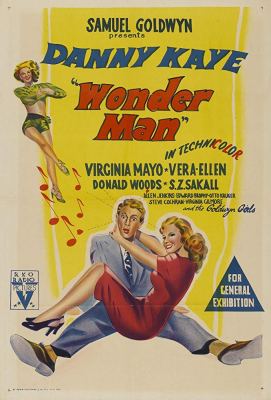
Wonder Man (1945) – Musical #239

Studio:
The Samuel Goldwyn Company, distributed through RKO

Director:
H. Bruce Humberstone

Starring:
Danny Kaye, Virginia Mayo, Vera-Ellen, Donald Woods, S.Z. Sakall, Allen Jenkins, Steve Cochran, Edward Brophy, Otto Kruger, Natalie Schafer, Richard Lane, Huntz Hall, Edward Gargan, Virginia Gilmore, The Goldwyn Girls

Plot:
Flashy nightclub performer Buzzy Bellew (Kaye) is killed before he can testify against gangster Ten Grand Jackson (Cochran). Buzzy then haunts his bookish twin brother Edwin Dingle (Kaye) to help him.

Continue reading