Musical Monday: Navy Blues (1941)

It’s no secret that the Hollywood Comet loves musicals.
In 2010, I revealed I had seen 400 movie musicals over the course of eight years. Now that number is over 500. To celebrate and share this musical love, here is my weekly feature about musicals.
This week’s musical:
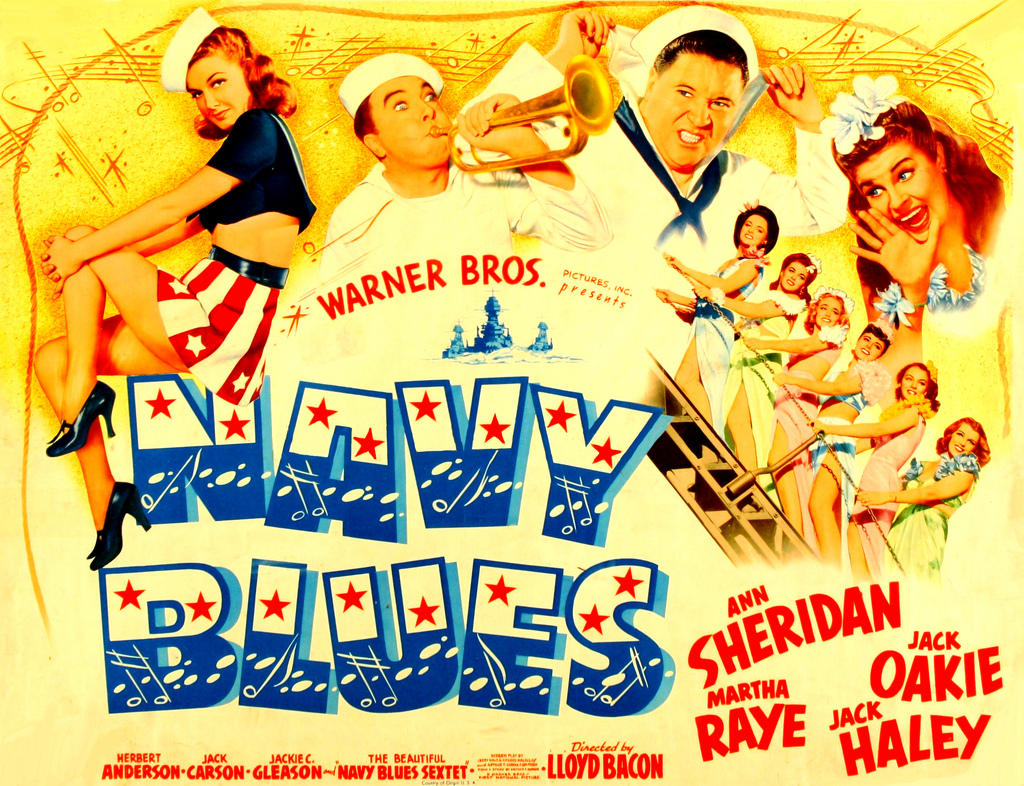
“Navy Blues –Musical #512

navy blues2

Studio:
Warner Brothers

Director:
Lloyd Bacon

Starring:
Ann Sheridan, Martha Raye, Jack Oakie, Jack Haley, Herbert Anderson, Jack Carson, Jackie Gleason, John Ridgley, Georgia Carroll (uncredited), Leslie Brooks (uncredited), William Hopper (uncredited), Gig Young (uncredited)

Plot:
Cake and Powerhouse (Oakie, Haley) are two Navy seamen on leave in Hawaii and are trying to borrow money to pay their way for fun. They meet prize gunner Homer Matthews (Anderson), who is being transferred to their ship. Their meeting with Matthews sparks an idea to earn more money. They want to enter Homer into the gunner competition to win the trophy for their trip and start taking bets on his abilities with the rest of their shipmates. The only problem is Homer will only be on their ship for a few days before he is discharged from the Navy, leaving before the gunnery competition. Cake and Powerhouse now work to keep Homer from leaving the Navy, but Homer is eager to return to his pig farm in Iowa. They enlist the help of night club performers Marge (Sheridan) and Lilibelle (Martha.)

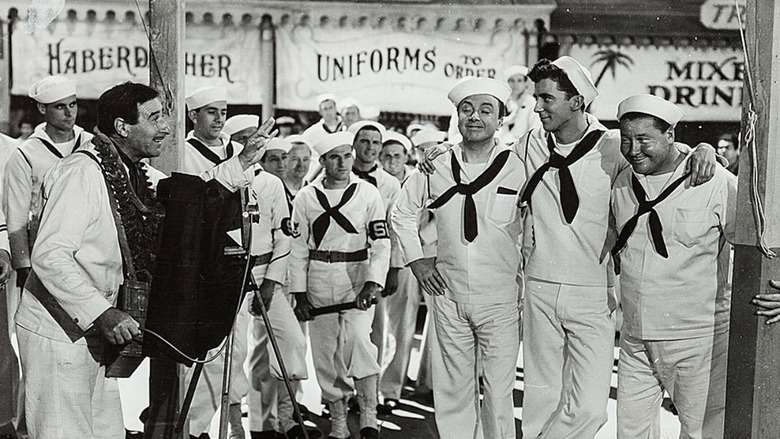
Jack Haley, Herb Anderson and Jack Oakie in "Navy Blues."

Jack Haley, Herb Anderson and Jack Oakie in “Navy Blues.”

Trivia:
-The first musical comedy to come from Warner Brothers in four years, according to a January 1941 column by Louella Parsons.
-Eddie Albert was orignally slated for the film, according to the January 1941 Parsons article.
-Intro: “Honolulu where Aloha means goodbye and Shore Leave means trouble.”
-Jackie Gleason’s film debut.

Highlights:
-Georgia Carroll performing as a chorus girl
-Ann Sheridan singing
-Herbert Anderson calling pigs

Notable Songs:
-“Navy Blues” performed by Ann Sheridan and Martha Raye
-“In Waikiki” performed by Ann Sheridan and chorus
-“You’re a Natural”performed by Herb Anderson and Ann Sheridan

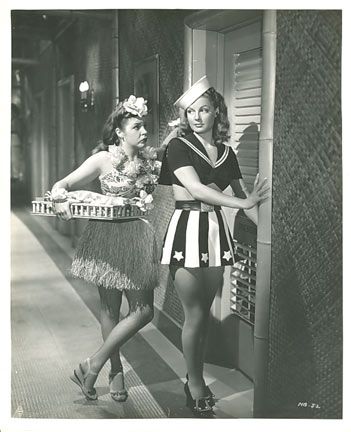
Martha Raye and Ann Sheridan at the beginning of "Navy Blues." Unfortunately, neither has enough screen time for my liking.

Martha Raye and Ann Sheridan at the beginning of “Navy Blues.” Unfortunately, neither has enough screen time for my liking.

My Review:
The New York Times review, published on Sept. 21, 1941, hit the nail on the head in their review saying, “Oakie and Haley working harder for laughs than a bum vaudeville team in Omaha” and that the script is full of corn.
When I watched this movie looking for an Ann Sheridan vehicle. Sheridan was in a few musicals and I love to hear her deep singing voice. However, if you are looking for a film with a lot of Ann time, don’t look to “Navy Blues.”
The film opens with Sheridan singing “Navy Blues,” looking beautiful in an adorable sailor style costume…but the film goes downhill from there.
The film is centered around the crazy, frantic antics of Jack Haley and Jack Oakie as they do con their friends and will do anything to earn a buck. Our leading ladies Ann Sheridan and Martha Raye have very little screen time in this hour and 48 minute movie.
The antics revolve around getting Herb Anderson’s character to stay in the Navy. One of the biggest highlights of this film for me was seeing Anderson (or Dennis the Menace’s dad, as my family frequently calls him) in a larger role. Before his TV dad fame, Anderson was a film character actor. His character actor roles were usually smaller than other character actors such as James Gleason or William Frawley.
We even have the opportunity to hear Anderson sing. He’s just always someone I enjoy seeing on screen. His demeanor and turtle-like look makes me smile.

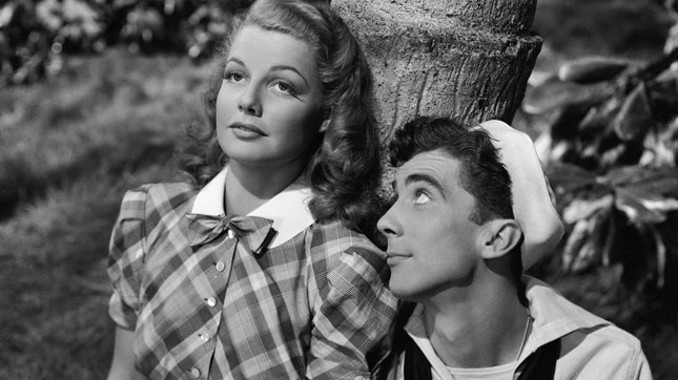
Ann Sheridan and Herb Anderson in "Navy Blues."

Ann Sheridan and Herb Anderson in “Navy Blues.”

It was also a great surprise to see lovely Georgia Carroll appear in this film, singing as one of the Navy Blues Sextette Members. Carroll was the singer for band leader Kay Kyser’s band and the two later married. I believe I even shouted “That’s Georgia Carroll!” when she appeared on screen.
“Navy Blues” isn’t the worst musical I have ever seen, it’s simply that Oakie and Haley’s corn got tiresome when all I wanted was to see more Ann Sheridan.

Check out the Comet Over Hollywood Facebook page, follow on Twitter at @HollywoodComet or e-mail at cometoverhollywood@gmail.com
Musical Monday: Do You Love Me? (1946)

It’s no secret that the Hollywood Comet loves musicals.
In 2010, I revealed I had seen 400 movie musicals over the course of eight years. Now that number is over 500. To celebrate and share this musical love, here is my weekly feature about musicals.

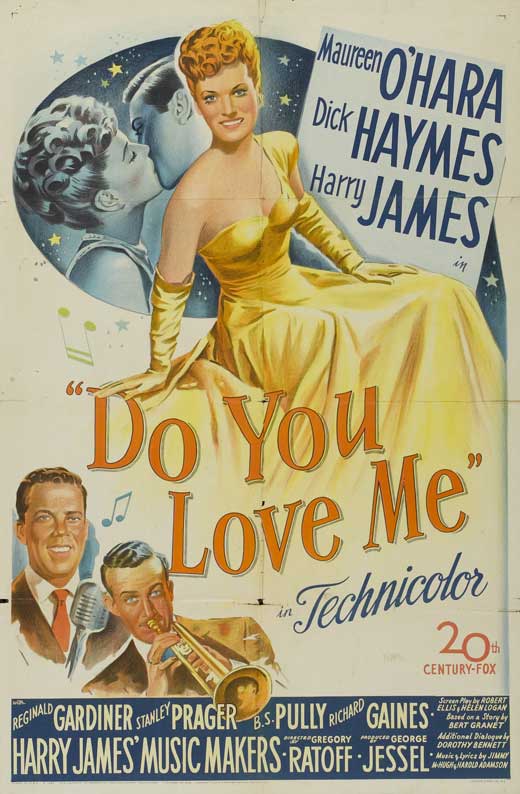
do-you-love-me-movie-poster-1946-1020705247This week’s musical:
“Do You Love Me” –Musical #511

Studio:
Twentieth Century Fox

Director:
Gregory Ratoff

Starring:
Maureen O’Hara, Dick Hyams, Harry James, Reginard Gardiner, Richard Gaines, Lex Barker (uncredited)
Cameo: Betty Grable appears uncredited as James’ fan in a taxi cab.

Plot:
Conservative Katherine Hilliard (O’Hara) is dean of a stuffy music school, following in her father’s footsteps, and is allergic to popular music. She is engaged to her similarly stuffy colleague Ralph (Gaines). Katherine takes a trip to New York to plan with her composer colleague Herbert Benham (Gardiner) about the upcoming spring music festival. On her way to New York, Katherine meets trumpet player Barry Clayton (James) who insults her by saying she is too stuffy to appreciate popular music. After relaying this to Herbert, he encourages her to loosen up and have fun. Katherine takes her advice, catching the attention of Barry and crooner Jimmy Hale (Haymes).

Dick Haymes, Maureen O'Hara, Harry James in "Do You Love Me."

Dick Haymes, Maureen O’Hara, Harry James in “Do You Love Me.”

Trivia:
-Maureen O’Hara called this “The worst picture I ever made,” in her autobiography “Tis Herself.”
-Produced by George Jessel
-Betty Grable, who was married to Harry James at the time, makes a cameo as a fan of his.

Highlights:
-Fashion show shopping montage of outfits.
-Betty Grable’s cameo at the end of the film.

Notable Songs:
-“St. Louis Blues” performed by Harry James and his band
-“Do You Love Me” performed by Dick Haymes
-“Moonlight Propoganda” performed by Dick Haymes

My Review:
Though I know Maureen O’Hara said this was the worst film of her career, but I had a great time watching this film.
The plot isn’t substantial and fairly predictable. It is the usual but fun 1930s or 1940s plot of a conservative teacher coming from a stuffy college and eventually letting her hair down and having fun. It may not be O’Hara’s best performance, but it is fun and has some great music if you like big band.
For me the two biggest highlights:
1. Seeing O’Hara and her glorious film wardrobe in Technicolor. I’m a sucker for film fashion and movie makerovers and I enjoyed seeing her transformation from teacher to glamour girl. This film also features a highlight for any lover of vintage clothing: a scene where the main actress goes shopping at an upscale store and multiple gowns are modeled for her.
2. Hearing bandleader and trumpeter Harry James perform. It’s a highlight to see big band leaders of the time in classic films. It gives you a good feel of what was popular and music at that time, and you also get to see these performers talking and in person rather than just hearing them on a recording.
The biggest highlight was a cameo by Betty Grable at the end as a fan of Harry James. Betty Grable was one of Fox’s top stars and she and James were married at the time. It was a witty and adorable comedic moment. The brief scene is similar to any joke in a contemporary film or TV show that tied in a pop culture or current event reference.
I would also be remiss if I did not mention Reginald Gardiner’s role in this as O’Hara’s colleague and friend. Gardiner is the one who encourages O’Hara’s character to literally let down her hair and have fun for once. Whether he is playing a snob, a cad or the humorous best friend, Gardiner’s characters are always a delight.
“Do You Love Me?” was down right fun with some geniune laugh out loud moments. If you have the opportunity to see this film and are looking for a colorful way to brighten your day, I encourage you to do so.

Check out the Comet Over Hollywood Facebook page, follow on Twitter at @HollywoodComet or e-mail at cometoverhollywood@gmail.com
Musical Monday: Night and Day (1946)

It’s no secret that the Hollywood Comet loves musicals.
In 2010, I revealed I had seen 400 movie musicals over the course of eight years. Now that number is over 500. To celebrate and share this musical love, here is my weekly feature about musicals.

This week’s musical:
“Night and Day” –Musical #101

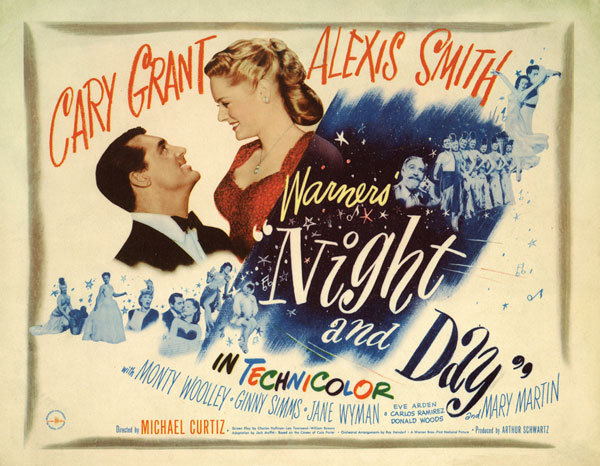
night-and-day-1946 

Studio:
Warner Brothers

Director:
Michael Curtiz

Starring:
Cary Grant, Alexi Smith, Jane Wyman, Donald Woods, Ginny Sims, Selena Royle, Eve Arden, Dorothy Malone, Henry Stephenson, Alan Hale, Sig Ruman, Carlos Ramírez
As themselves: Mary Martin, Monty Woolley

Plot:
Fictional biographical film of songwriter Cole Porter.

Cole Porter and his wife Linda Lee

Cole Porter and his wife Linda Lee

Trivia:
-Cole Porter is a celebrated songwriter who was active from post-World War I teens through the 1950s. He was born in 1891 and died in 1964.
-Warner Brothers chose “Night and Day” to mark the studio’s 20th anniversary of sound films, according to an Oct. 4, 1946, article in the Montreal Gazette.
-“Script writers had a hard time finding crisis in his life to sustain a storyline,” according to a mention of the film in his Oct. 16, 1964, Associated Press obituary in the Gettysburg Times.
-Footage shown of Roy Rogers singing “Don’t Fence Me In” is from the Warner Brothers film “Hollywood Canteen” (1944)
-Ray Heindorf and Max Steiner were nominated for an Academy Award for Best Music, Scoring of a Musical Picture.

Highlights:
-Eve Arden as a French performer, simply because it’s ridiculous.
-Mary Martin cameo

Notable Songs:
-“Night and Day”
-“I’m in Love Again” performed by Jane Wyman
-“Let’s Do It” performed by Jane Wyman
-“You Do Something to Me” performed by Jane Wyman
-“I’ve Got You Under My Skin” performed by Ginny Simms
-“Don’t Fence Me In” footage of Roy Rogers
-“Begin the Beguine” performed by Carlos Ramirez

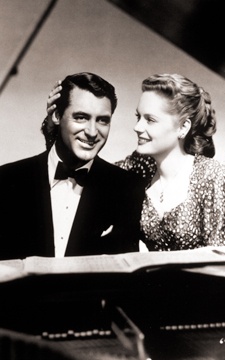
Cary Grant as Cole Porter  and Alexis Smith as Linda Lee in "Night and Day"

Cary Grant as Cole Porter and Alexis Smith as Linda Lee in “Night and Day”

My Review:
There were about 10 years between my first and second viewings of this film. I didn’t find it any better.

Starring Cary Grant and filmed in gorgeous Technicolor, you know you are about to hear some fantastic music going into this film. It’s basically Cole Porter’s Greatest Hits.

But the celebrated songs by Porter can’t save this film. The ridiculous story line of the highlighly fictionalized biography is just a dud. The fact that the biography is fictionalized isn’t surprising. Musical Monday has highlighted the “fictionalized musical biography” many, many times before now.

The San Francisco News said in a review, “This is no more the story of Cole Porter’s life than a two-cent stamp is of Washington.” LIFE magazine said “Film About Cole Porter’s Life is an Example of What’s Wrong with Hollywood Musicals,” saying the numbers were tasteless, the dialogue forcefully recreated from real conversations and a timeworn plot. I can’t say that I disagree. But a made up life story is more forgivable if it is at least entertaining and enjoyable. “Night and Day” is just fairly painful.

Even Cole Porter said, “If I could survive that, I can survive anything,” after the premiere of the film.

Some of the scripts of these biographical films, such as this one, are reviewed by the topic person-Porter did not die until 1964- and the 2011 William McBrien Porter biography discusses Porter reading over the script. With any of these biographical films, I’m not sure how much say the subject matter or their family members have in the script. Maybe it is simply that they don’t want the film to be accurate and their private lives on display.

However, there are almost too many inaccuracies to list in a brief review.

In the film, Alexis Smith plays Porter’s wife Linda Lee Porter, Porter’s wife from 1919 until her death in 1954. It is rare for the romantic lead in a biographical film, to be based off of a real person. Many times, the romantic lead is made up or a mix of multiple people. An example of this is Evelyn Keye’s character in “The Al Jolson Story.” It is obvious that she is supposed to be Ruby Keeler, but her character is named something different. Probably because Keeler was still alive and didn’t want to be associated with the film.

Though Porter and Linda were married, the culture of 1946 and the Hays Production Code prevented the prevented the film from giving the true nature of their relationship and marriage. Porter and Linda’s marriage was more of a marriage of convenience. Porter was gay and his marriage to Linda gave a heterosexual appearance during a time when homosexuality was not as accepted. The marriage gave Linda prominence in society.

Monty Woolley, Jane Wyman and Mary Martin’s brief role are probably the only highlights of the film. Woolley and Martin play themselves, as they were connected with Porter in real life.

It’s not the highly inaccurate plot that makes “Night and Day” bad. “Yankee Doodle Dandy” is also fiction but is an entertaining film. It’s really just that the fictionalized premise is terrible and often downright ridiculous.

The only thing thing “Night and Day” has going for it is the music. In that case, buy some of Cole Porter’s songs instead.

Check out the Comet Over Hollywood Facebook page, follow on Twitter at @HollywoodComet or e-mail at cometoverhollywood@gmail.com
 

Musical Monday: The Mikado (1939)

It’s no secret that the Hollywood Comet loves musicals.
In 2010, I revealed I had seen 400 movie musicals over the course of eight years. Now that number is over 500. To celebrate and share this musical love, here is my weekly feature about musicals.

This week’s musical:
“The Mikado” –Musical #495

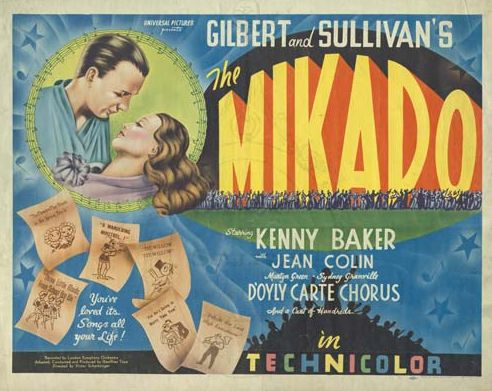
kenny

Studio:
Pinewood Studios

Director:
Victor Schertzinger

Starring:
Kenny Baker, Jean Colin, Sydney Granville, John Barclay

Plot:
Set in Japan, Nanki-Poo (Baker), a prince disguised as a wandering minstrel, falls in love with Yum Yum (Colin).However, she is engaged to the Lord High Execution. Nanki-Poo is set to be executed because he is in love with an engaged girl.

Trivia:
-Written by composers Arthur Sullivan and W.S. Gilbert, “The Mikado” originally opened in London in March 1885 at the Savoy Theater and ran 672 performances.
-Aside from Kenny Baker, many of the players in the film were from the D’Oyly Carte Opera Company, a professional company that opened in the 1870s and closed in 1982. The company staged Gilbert and Sullivan operas.
-Rereleaed in theaters in 1949.
-Nominated for an Academy Award for Best Cinematography, Color by William V. Skall. The film lost to “Gone with the Wind.”
-Nominated for the Mussolini Cup for Best Foreign Film at the Venice Film Festival.

Kenny Baker and Jean Colins in "The Mikado"

Kenny Baker and Jean Colins in “The Mikado”

Notable Songs:
-“Gentleman of Japan”

My Review:
I watched this movie back in September and I have had to sit on it that long, figuring out what to say.
Simply put: “The Mikado” was boring, stupid, odd and all the songs sounded the same.
I have always heard of “The Mikado,” but I never knew what it was about. The whole hour and a half film is debating if they should kill Nanki-Poo (Baker) for loving an engaged girl.
The execution is discussed in a jovial manner. I understand dark comedies and usually enjoy them, but this was plain annoying.
While taking into consideration that this musical was written in the late 1800s, the supposed Japanese names are ridiculous. I mean…Yum Yum? This is a musical that is still performed, which honestly surprises me for the blatant disregard for Japanese culture and mockery of it.
I was ready for this movie to end from the moment I started it. I only continued watching it because I wanted to see if it would get better, and it didn’t.

Check out the Comet Over Hollywood Facebook page, follow on Twitter at @HollywoodComet or e-mail at cometoverhollywood@gmail.com


Musical Monday: Serenade (1956)

It’s no secret that the Hollywood Comet loves musicals.
In 2010, I revealed I had seen 400 movie musicals over the course of eight years. Now that number is over 500. To celebrate and share this musical love, here is my weekly feature about musicals.

This week’s musical:
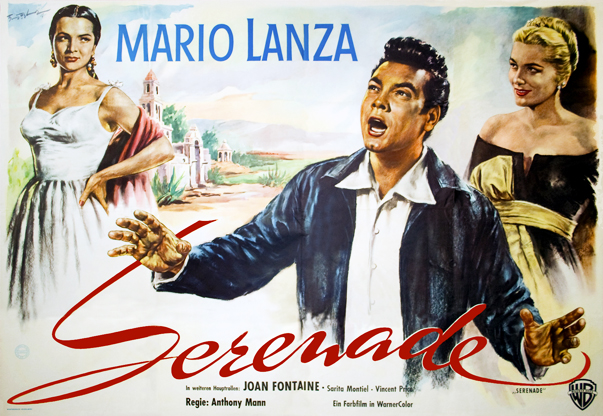
“Serenade” –Musical #510

serena3

Studio:
Warner Brothers

Director:
Anthony Mann

Starring:
Mario Lanza, Joan Fontaine, Sara Montiel, Vincent Price, Joseph Callelia, Vince Edwards, Ed Platt

Plot:
Vineyard worker Damon (Lanza) has dreams of becoming an opera star. When socialite Kendall Hale (Fontaine) gets lost and spots him in vineyard, makes Damon her project to make him famous. But like other countless athletes and artists, Kendall builds them up to toss them aside, causing destruction to each one. Damon is no exception. After a break down, Damon goes to Mexico where he tries to rebuild his life.

Trivia:

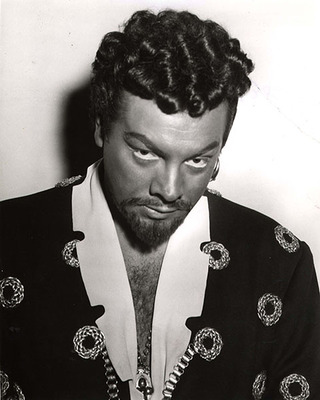
Mario Lanza dressed in costume "Othello."

Mario Lanza dressed in costume “Othello.”

-Adapted from a James M. Cain novel.
-Metropolitan Opera Singer Licia Albanese is featured in the “Othello” scene.
-Mario Lanza’s first film in three years.
-A brief part of “Othello” is performed in the film. While Lanza is only in costume for 14 minutes, the makeup took four hours, according to a March 24, 1956, “Miami News” article.
-In the film, Juana (Montiel) becomes Damon’s wife. In the Cain book, she is a prostitute and the two open a brothel together. Also in the book, Damon struggles with bisexuality.

Notable Songs:
-“Dio Ti Giocondi” performed by Mario Lanza and Licia Albanese
-“Serenade” performed by Mario Lanza
-“Ave Maria” performed by Mario Lanza

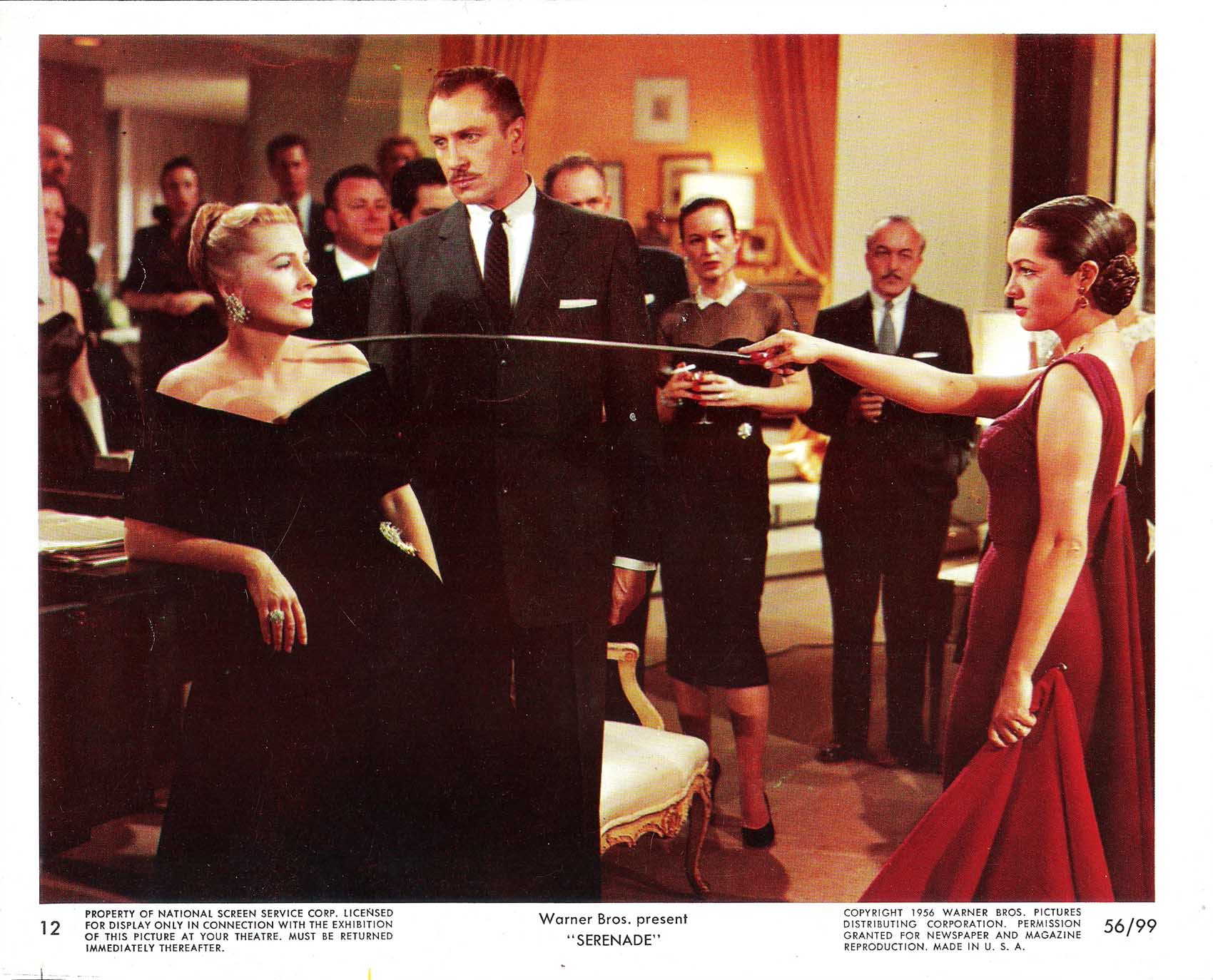
The only really exciting part of the film.

The only really exciting part of the film.

My Review:
Simply put, “Serenade” is dull.
It’s a slow moving, predictable plot. The plot is predictable and not new: the mature society lady who molds an artist just to move on to the next project. The most interesting characters were played by the secondary roles. Vincent Price was the most interesting character as he helps Lanza with his career. It’s also interesting to see character actor Joseph Calleia as an elderly music lover.
The most sympathetic character was Juana, played by Sara Montiel. She was lovely and also brought two rather exciting scenes to an otherwise boring movie.
While Mario Lanza has a beautiful voice and I enjoy opera, his songs are also boring. It is disappointing that the “Othello” scene is so brief.
“Serenade” is overly dramatic and overly long. Even Anthony Mann’s direction and beautiful music could not save this film.


Check out the Comet Over Hollywood Facebook page, follow on Twitter at @HollywoodComet or e-mail at cometoverhollywood@gmail.com
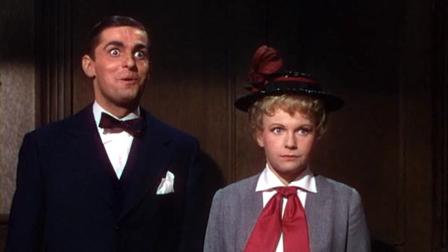
Musical Monday: My Wild Irish Rose (1947)

It’s no secret that the Hollywood Comet loves musicals.
In 2010, I revealed I had seen 400 movie musicals over the course of eight years. Now that number is over 500. To celebrate and share this musical love, here is my weekly feature about musicals.

This week’s musical:
“My Wild Irish Rose” –Musical #309

picture

Studio:
Warner Brothers

Director:
David Butler

Starring:
Dennis Morgan, Arlene Dahl, Andrea King, Alan Hale, George Tobias, George O’Brien, Sara Allgood, Ben Blue, William Frawley

Plot:
Fictional, biographical film on Irish singer Chauncey Olcott (Morgan); chronicling his rise to fame and connections with performer Lillian Russell (King) and William Scanlan (Frawley). As he climbs the ladder to fame, Olcott meets and falls in love with Rose Donovan (Dahl), who’s father (Hale) does not want her to be involved with Olcott.

Trivia:

Dennis Morgan as Chauncey Olcott and Andrea King as Lillian Russell in "My Wild Irish Rose" (1947).

Dennis Morgan as Chauncey Olcott and Andrea King as Lillian Russell in “My Wild Irish Rose” (1947).

-Chauncey Olcott was an performer, songwriter and actor who’s career spanned from 1894 until 1920. Born in New York, Olcott’s family was of Irish decent, so most of his songs had Irish themes to them. He was born in 1858 and died in 1932. According to critic Dorothy Parker, Lillian Russell and Olcott were friends and she helped his career.
-Alexis Smith was considered for the role of Lillian Russell, which went to Andrea King. Virginia Bruce was also set for the role, according to “The Women of Warner Brothers” by Daniel Bubbeo.
-Andrea King was dubbed in her role as Lillian Russell, according to Bubbeo’s book.
-“My costumes were the most beautiful I had ever seen and my jewelry was real. I had two armed guards with me at all times,” King said in Bubbeo’s book.
-Arlene Dahl’s first credited role.
-Ray Heindorf and Max Steiner were nominated for an Academy Award for Best Music, Scoring of a Musical Picture.
-The film was based from a 1939 story written by Olcott’s widow, Rita, called “Song in His Heart,” according to Bubbeo’s book.
-One of Warner Brother’s top films of 1948.

Highlights:
-Any time Dennis Morgan sings in any film is a highlight.

Dennis Morgan performs in "My Wild Irish Rose" (1947).

Dennis Morgan performs in “My Wild Irish Rose” (1947).

Notable Songs:
-Hush-a-Bye, Wee Rose of Killarney performed by Dennis Morgan
-My Wild Irish Rose performed by Dennis Morgan
-When Irish Eyes Are Smiling performed by Dennis Morgan
-Let Me Dream Some More performed by Dennis Morgan and Andrea King
-Mother Machree performed by Dennis Morgan

My Review:
chaunceyAs Comet Over Hollywood has discussed countless times before, many Hollywood biographical films, particularly those of the musical nature, are embellished and provide very little actual fact.
“My Wild Irish Rose” is no exception. The real Chauncey Olcott may look more like William Frawley than Dennis Morgan.
However, it’s a fun, colorful and entertaining film filled with notable Irish songs; all performed in Dennis Morgan’s velvety voice. While Morgan sings, George O’Brien and Ben Blue bring some comedy to the film.
Other familiar and likable Warner Brothers faces appear in this lush, Technicolor film including Alan Hale, Andrea King and George Tobias.
What I like about “My Wild Irish Rose,” is that Dennis Morgan truly gets center stage without having to share screen time, songs and leading ladies with Jack Carson. This seems to be a rare musical gem in Morgan’s career where he is the only singing lead, so we hear multiple Irish classic tunes performed by Mr. Morgan.
If you are a Dennis Morgan fan, love Irish music or simply want a nice film for St. Patrick’s Day, check out “My Wild Irish Rose.”


Check out the Comet Over Hollywood Facebook page, follow on Twitter at @HollywoodComet or e-mail at cometoverhollywood@gmail.com

Musical Monday: First a Girl (1935)

In 2010, I revealed I had seen 400 movie musicals over the course of eight years. Now that number is over 500. To celebrate and share this musical love, here is my weekly feature about musicals.

first a girlThis week’s musical:
“First a Girl” –Musical #505

Studio:
RKO

Director:
Leigh Jason

Starring:
Jessie Matthews, Sonnie Hale, Anna Lee,

Plot:
Elizabeth (Matthews) is a delivery girl at a dress store with dreams of being a dancer. One day, she borrows a dress for an audition and doesn’t get the part. In the meanwhile, she meets down on his luck Shakespearean actor Victor (Hale) who does female impersonations. After ruining the dress, Elizabeth is too afraid to return to the dress store. Victor allows her to get in on his act. When Victor is too ill to go on stage as a female impersonator, he grooms Elizabeth to act as a female impersonator, even though she is already a woman. Elizabeth becomes a huge success but problems arise when she falls in love with a man.

Trivia:
-Late remade as “Victor/Victoria” (1982) starring James Garner, Julie Andrews and Robert Preston.
-Adapted from a 1933 German film called “Viktor and Viktoria”

Highlights:
-Jessie Matthews drinking with Griffith Jones, who believes she’s a man. However, she is not used to the strong beverages that he keeps ordering.

Jessie Matthews, Sonny Hale and Griffith Jones in "First a Girl"

Jessie Matthews, Sonny Hale and Robert Griffith in “First a Girl”

Notable Songs:
-It’s Written All Over Your Face performed by Jessie Matthews
-Everything’s In Rhythm With My Heart performed by Jessie Matthews and Sonnie Hale
-Half and Half performed by Jessie Matthews
-Say The Word And It’s Yours performed by Jessie Matthews

My Review:
When this film began I kept thinking how similar it was to the 1982 film “Victor/Victoria.” Until seeing this movie, I had no idea it was a remake.
“First a Girl” is an entertaining little British film with a subject matter that would probably not have been seen in a 1935 American film. Not only is Jessie Matthews supposed to be a cross dressing male (though the audience knows she is a female), there are some homosexual innuendos and jokes that probably would not have even been seen in a pre-code American film.
When Elizabeth begins falling for Robert (Jones), it is uncertain if he likes her character because she is a man or because she is a man that seems feminine enough to be a woman. Our main character is even a little confused by this.
When I started this film, I was not familiar with any of the main actors but all of them were entertaining. The songs in this musical are forgettable, but it’s story line that is fairly unique for a 1930s film is pleasant, fun and enjoyable. If you come across this forgetting little gem, give it a whirl.

Check out the Comet Over Hollywood Facebook page, follow on Twitter at @HollywoodComet or e-mail at cometoverhollywood@gmail.com
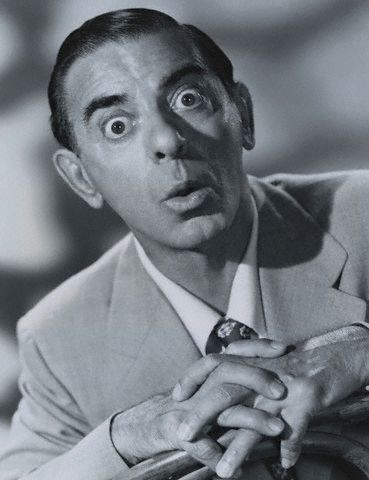
Musical Monday: That Girl From Paris (1936)

It’s no secret that the Hollywood Comet loves musicals.
In 2010, I revealed I had seen 400 movie musicals over the course of eight years. Now that number is over 500. To celebrate and share this musical love, here is my weekly feature about musicals.

ADIEU PARIS BONJOUR NEW YORKThis week’s musical:
“That Girl From Paris” –Musical #504

Studio:
RKO

Director:
Leigh Jason

Starring:
Lily Pons, Gene Raymond, Jack Oakie, Herman Bing, Mischa Auer, Frank Jenks, Lucille Ball, Jimmy Dorsey

Plot:
The day of her wedding, French opera star Nicole Martin (Pons) decides she want adventure, rather than marrying the man selected to be her husband. “Nikki” decides she wants adventure and meets up with American singer, bandleader Windy McLean (Raymond) while she is hitchhiking. Windy finds Nikki annoying and sails to America, but Nikki falls in love with him and castaways on the ship. Windy then has trouble on his hands while he avoids arrest for helping hide a stowaway in New York. Windy also has trouble when his girlfriend Claire (Ball) isn’t too fond of Nikki.

Trivia:
-Later remade as “Four Jacks and a Jill” (1942) starring Anne Shirley, June Havoc and Ray Bolger.
-Version of “Street Girl” (1929) starring Betty Compson.

Lucille Ball, Gene Raymond, Jack Oakie, Mischa Auer, Lily Pons and other band members in "That Girl From Paris"

Lucille Ball, Gene Raymond, Jack Oakie, Mischa Auer, Lily Pons and other band members in “That Girl From Paris”

Highlights:
-Lucille Ball’s role.

Notable Songs:
-Love and Learn performed by Jack Oakie
-When You and I Were Young, Maggie performed by Jack Oakie

Behind the scenes photo of Lucille Ball and Lily Pons

Behind the scenes photo of Lucille Ball and Lily Pons

My Review:
“That Girl From Paris” is one of several 1930s and 1940s films that took a page from “It Happened One Night” (1934) — see also “Eve Knew Her Apples” (1945).
Lily Pons runs away from her wedding to find adventure and follows around a man (Raymond) who wants nothing to do with her. I can’t say I blame Gene Raymond, because her character is quite annoying.
The two leads in the films– Lily Pons and Gene Raymond are plain annoying.
The audience is supposed to cheer for Lily Pons to end up with Raymond and live happily ever after, but I honestly feel sorry for Lucille Ball who ends up harassed by Pons and jilted by Raymond.
I found myself enjoying the supporting characters the most. Lucille Ball, Jack Oakie (who wasn’t annoying for once), Mischa Auer and Frank Jenks were much more enjoyable and much less annoying.
“That Girl From Paris” is a run of the mill, low-budget musical filled with high jinks and forgettable songs. Pons does have a beautiful operatic voice, but her annoying character overshadowed that for me.
If you are looking for a runaway bride film just watch “It Happened One Night” instead. If you want a film with good opera music- go the Jane Powell, Deanna Durbin or Jeannette MacDonald route instead.
However, if you are a true Lucille Ball fan looking to watch all of her work, this may be worth your time since she is the only bright spot in this dull film.
I don’t often direct you to not watch a musical, but this one was just too irritating.

Check out the Comet Over Hollywood Facebook page, follow on Twitter at @HollywoodComet or e-mail at cometoverhollywood@gmail.com
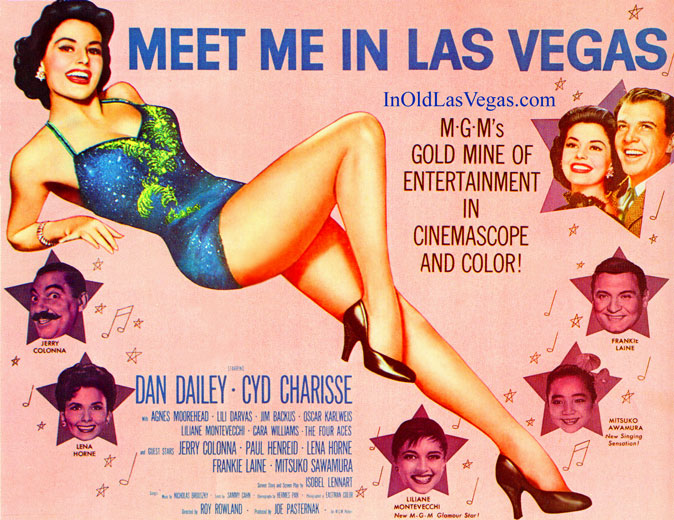
Musical Monday: Born to Sing (1942)

It’s no secret that the Hollywood Comet loves musicals.
In 2010, I revealed I had seen 400 movie musicals over the course of eight years. Now that number is over 500. To celebrate and share this musical love, here is my weekly feature about musicals.

bornThis week’s musical:
“Born to Sing” –Musical #507

Studio:
Metro-Goldwyn-Mayer

Director:
Edward Ludwig

Starring:
Virginia Weidler, Ray McDonald, Leo Gorcey, Douglas McPhail, Rags Ragland, Sheldon Leonard, Henry O’Neill, Margaret Dumont, Darla Hood, Joe Yule, Charles Lane, Richard Hall, Lester Matthews

Plot:
The day ‘Snap’ Collins (Gorcey) is released from reform school, he and his friends Steve (McDonald) and Steve (Nunn) find Frank Eastman (O’Neill) who has just tried to commit suicide. The three young men revive him just as his teenage daughter Patsy (Weidler) comes home. Eastman reveals that music he composed while he was in prison was stolen by producer Arthur Cartwright (Matthews). The teens work to put on a show so Eastman can get the credit that he deserves.

Trivia:
-Originally a vehicle for Mickey Rooney and Judy Garland, according to TCM host Ben Mankeiwicz

Virginia Weidler with her father, played by Henry O'Neill, after he tried to commit suicide in "Born to Sing."

Virginia Weidler with her father, played by Henry O’Neill, after he tried to commit suicide in “Born to Sing.”

Highlights:
-Darla Hood’s film appearance.

Notable Songs:
-“Here I Am, Eight Years Old” performed by Darla Hood
-“Two A.M.” performed by Ray MacDonald and Virginia Weidler

My Review:
This film is a very similar formula of Judy Garland and Mickey Rooney musical made around this time. The two Garland/Rooney films I particularly feel it mimics are “Babes on Broadway” (1941) and “Strike Up the Band” (1940).
“Born to Sing” has the same equation of down on their teens with a “Let’s put on a show!” idea to solve all of their financial problems. Somehow, their shows always look as lavish as an Florenz Ziegfeld produced musical– better sets or costumes than I have ever seen in any community theater show.
A few things that really stood out to me as a rip off of previous Rooney/Garland plots:

-The boys come across a deserted building that was once used for Nazi rallies in the United States. Naturally they convert this into a performance space.

Child piano performer Richard Hall.

Child piano performer Richard Hall.

-Richard Hall plays an overly serious child prodigy musician in both “Born to Sing” and “Babes on Broadway.” In both films, people see how little he is and doubt him until he blows them away at the pino.
-“Born to Sing” and “Strike Up the Band” both have large, comedic Conga numbers. Mickey Rooney dresses up like Carmen Miranda in “Do La Conga” and “Born to Sing” features Beverly Hudson singing “I Hate the Conga.”
The big finale was directed by Busby Berkeley, which you think would be great, but it was garbage. The last eight minutes is the Berkeley directed “A Ballad for America” performed by operatic sing Douglas McPhail, who is also in the Garland/Rooney film “Babes in Arms.” I like opera music, but McPhail is dull in every film I have seen him in. On top of his dull singing style, the song is also just plain bland. Several shots in this Berkeley filmed number were fairly reminiscent of the “Forgotten Man” number from “Gold Diggers of 1933.”

Virginia Weidler and Ray McDonald plead for help from a gangster in "Born to Sing."

Virginia Weidler and Ray McDonald plead for help from a gangster in “Born to Sing.”

The saving factor of “Born to Sing” was that my favorite child actress, Virginia Weidler, is a grown up young woman in the film. Sadly, there is not enough Weidler to keep me happy.
The other main notable factor in this film is seeing Darla Hood perform. Hood previously acted in the Our Gang/Little Rascals films. She sings a song called “Here I Am, Eight Years Old” (And my life is already over), which is rather sad and poignant coming from the perspective of a fading child actor.
While “Born to Sing” isn’t a bad movie, it is just a shame that it feels like it’s pages torn out of scripts from other Garland/Rooney films and pasted together.
If this truly was going to be another Garland/Rooney extravaganza as Mankiewicz said in his introduction, I wonder if there would have been some more thought put into the plot.

Check out the Comet Over Hollywood Facebook page, follow on Twitter at @HollywoodComet or e-mail at cometoverhollywood@gmail.com
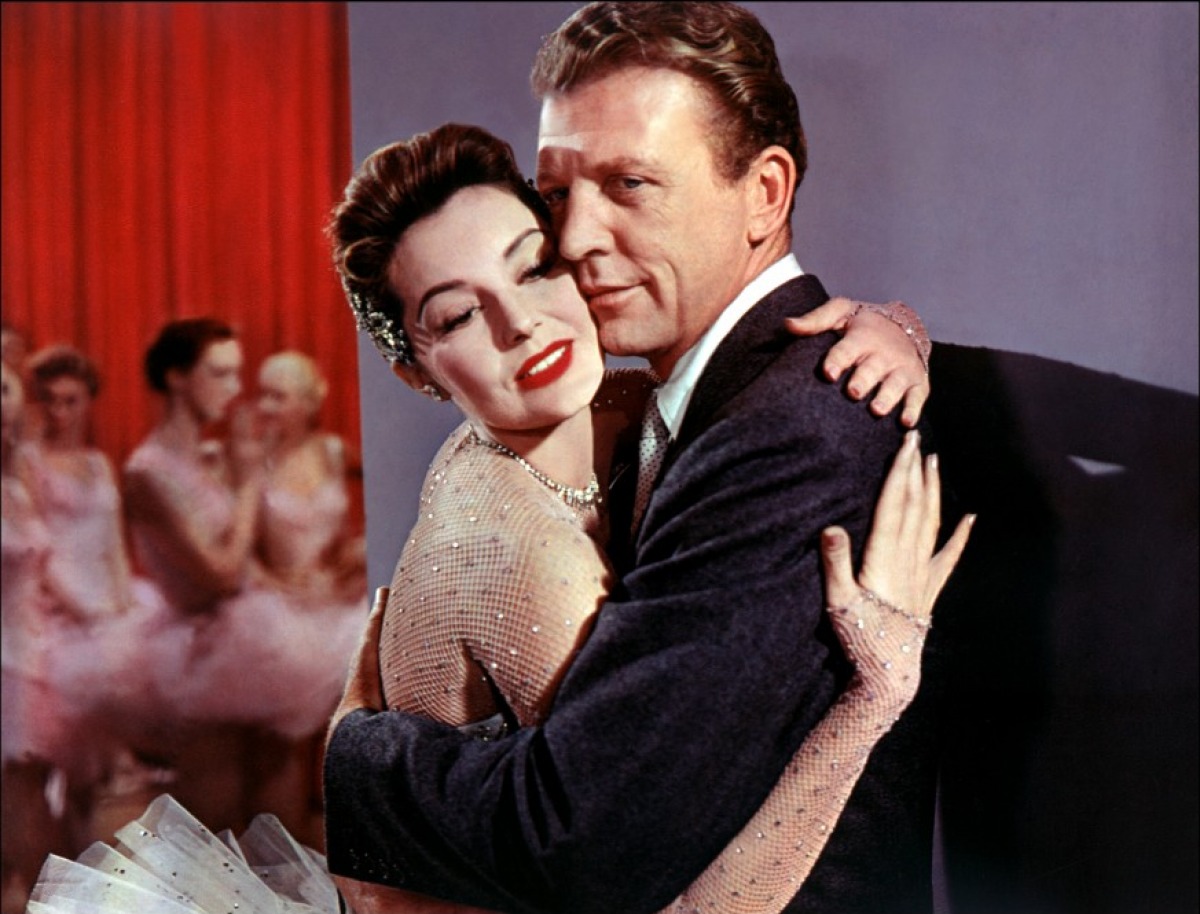
Musical Monday: The Seven Little Foys (1955)

It’s no secret that the Hollywood Comet loves musicals.
In 2010, I revealed I had seen 400 movie musicals over the course of eight years. Now that number is over 500. To celebrate and share this musical love, here is my weekly feature about musicals.

foy2This week’s musical:
The Seven Little Foys” –Musical #499

Studio:
Paramount Pictures

Director:
Melville Shavelson

Starring:
Bob Hope, Milly Vitale, George Tobias, Angela Clarke, James Cagney, Billy Gray
Narrator: Charley Foy

Plot:
Biographical film of vaudeville performer Eddie Foy (Hope). The film mainly concentrates on Foy’s marriage, the birth of his seven children and how he was never home for his family. After Foy’s wife and mother of the seven children passes away, the children are brought into the act.

Trivia:
-James Cagney reprises his role as George M. Cohen from “Yankee Doodle Dandy.”
-Son of Eddie Foy, Charley Foy, narrated the film.
-In 1964, a made for television special of the story aired presented by Bob Hope Presents the Chrysler Theatre. In 2007, there was a stage musical adaptation.

Highlights:
-James Cagney as George M. Cohen
-Bob Hope and James Cagney dancing to “Mary’s a Grand Old Name” together

Notable Songs:
-“I’m the Greatest Father Of Them All” performed by Bob Hope and the children
-“Row, Row, Row” performed by Bob Hope and the children
-“Chinatown, My Chinatown” performed by Bob Hope and the children

My Review:

The real Eddie Foy, Sr.

The real Eddie Foy, Sr.

Bob Hope’s role in “The Seven Little Foys” is one of two truly dramatic roles he did in his career, the other being “Beau James” (1957). While fun, comedic Hope is entertaining, I enjoyed seeing a more serious screen performance from him.
The real Eddie Foy, Sr. died in 1928 at the age of 71. His son, Eddie Foy, Jr. can be spotted in several 1930s comedies.
As Comet Over Hollywood has noted many times prior in other posts, biographical films, particularly those of the musical nature, sometimes have fanciful inaccurate plots.
While Foy did have seven children, the movie only shows one wife. In reality, he had four women he was either married to or romantically involved with for many years.
Eddie Foy, Sr. and the Seven Little Foys performed together from 1910 until 1913. After they stopped performing, most of the children went on to pursue their own entertainment careers.
When I first saw this movie in middle school shortly after Hope died in 2003, I didn’t like it. Being used to the wisecracking Hope, I thought he was mean and didn’t enjoy this film. Revisiting this film over 10 years later I enjoyed it a great deal more. I think Hope does a good job with a character who has a bit more meat than films such as “Road to Hong Kong” or “My Favorite Spy.”
The first half of the film sets up Foy as a bit of a heel who is never home for his family and then comes home after she dies. In the second half you see the resentment from his children as he brings them into show business.
Of the musical numbers, the only real standout was a dance duet Bob Hope did with James Cagney, who was reprising his role as George M. Cohen. That is the real standout feature of this film to me, along with seeing Hope’s more serious side.
If you are looking for the stereotypical Bob Hope film of double takes, wisecracks and breaking the fourth wall, “Seven Little Foys” may not be for you. But if you are a Hope fan, I encourage you to check this one out to see the full spectrum of his career.

Bob Hope and the Seven Little Foys in the 1955 biographical film.

Bob Hope and the Seven Little Foys in the 1955 biographical film.

Check out the Comet Over Hollywood Facebook page, follow on Twitter at @HollywoodComet or e-mail at cometoverhollywood@gmail.com