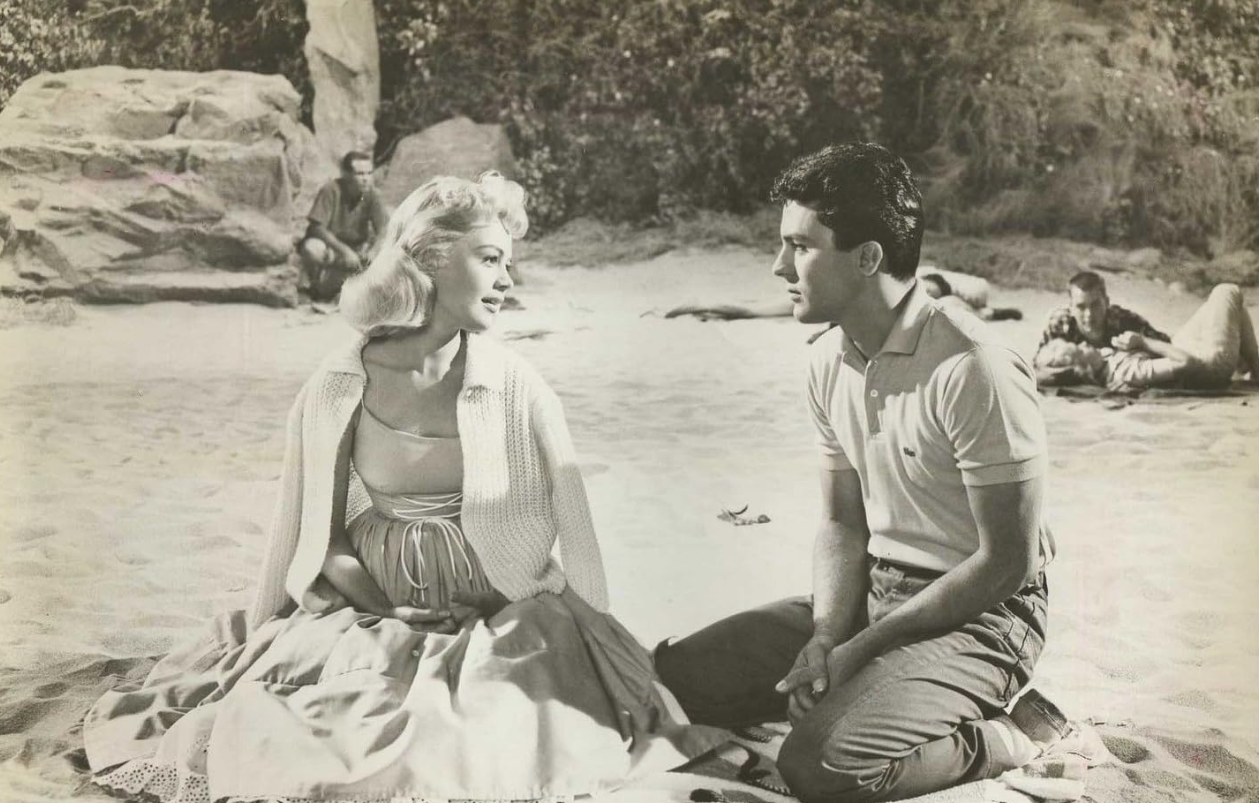
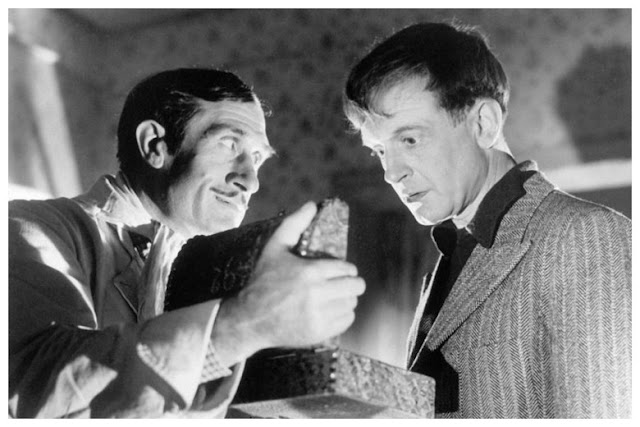
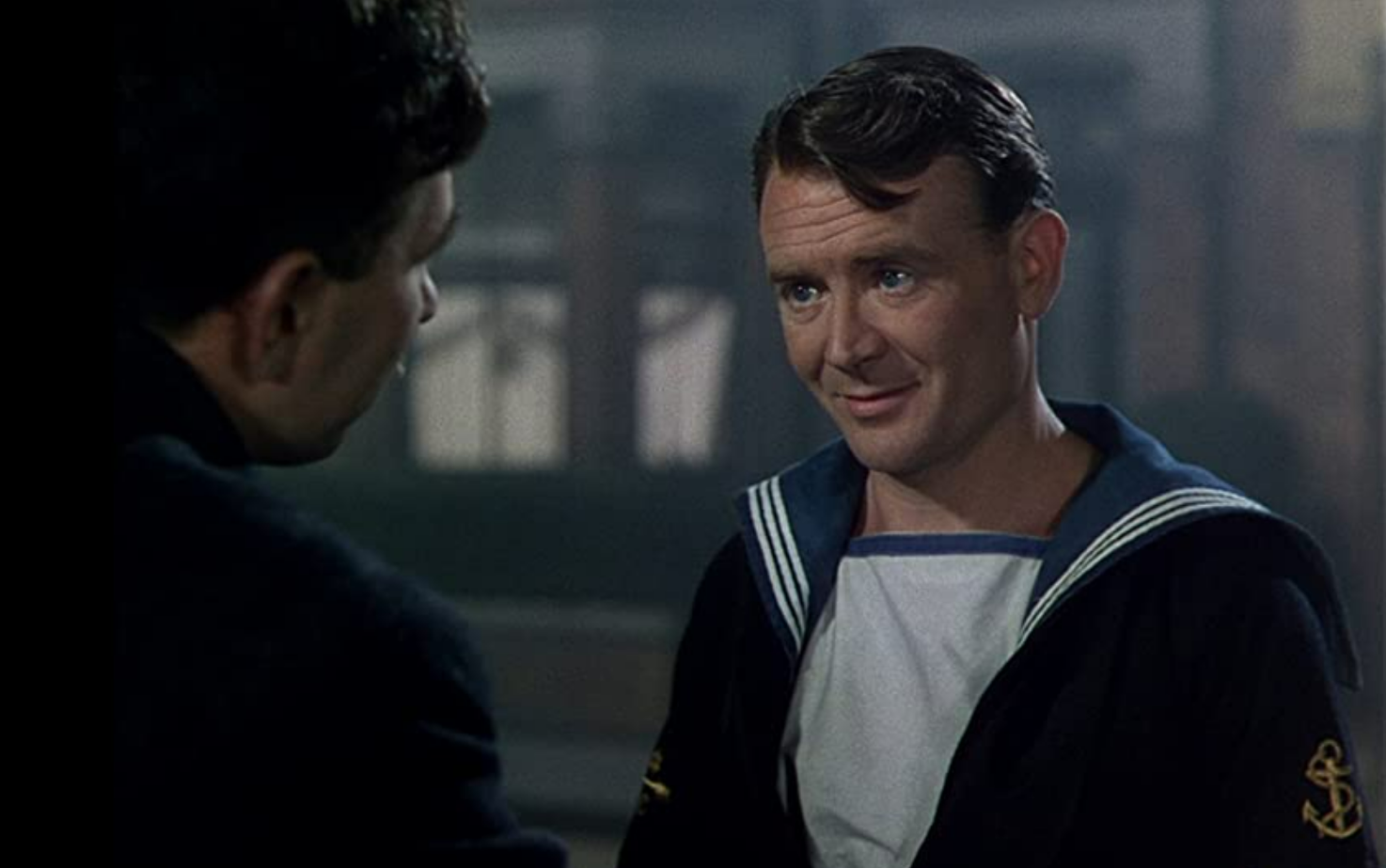
Favorite First-Time Watches of 2025:

In 2025, I watched more than 350 films, which is about 100 fewer films than I usually watch in a year. There were several great movies I watched, but these are my favorite new-to-me film discoveries of the year.
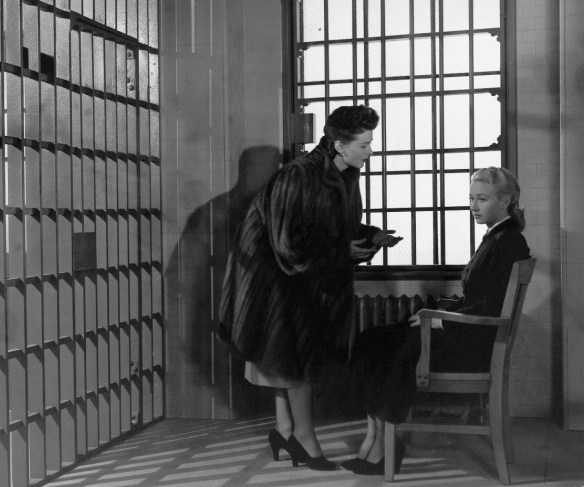
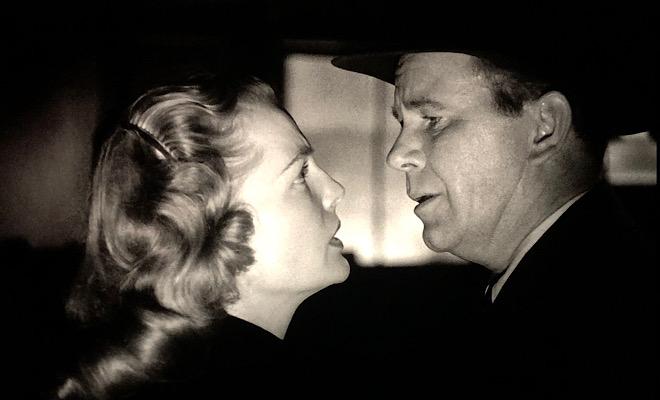
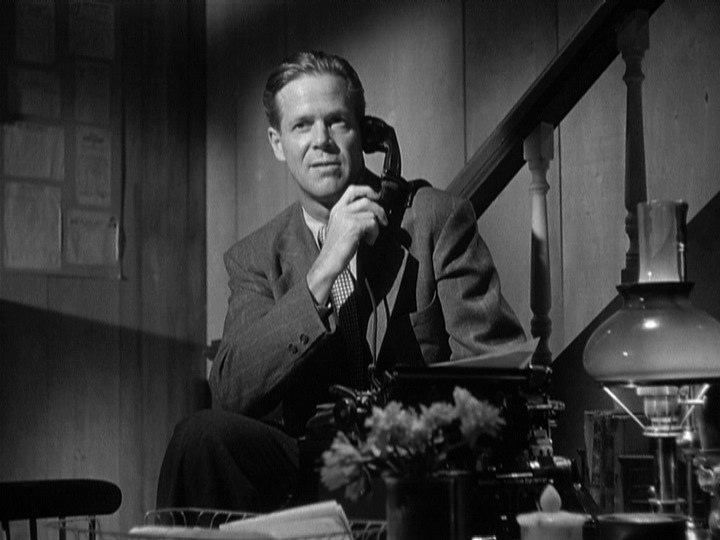
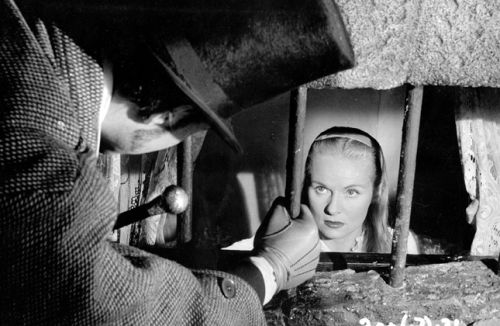
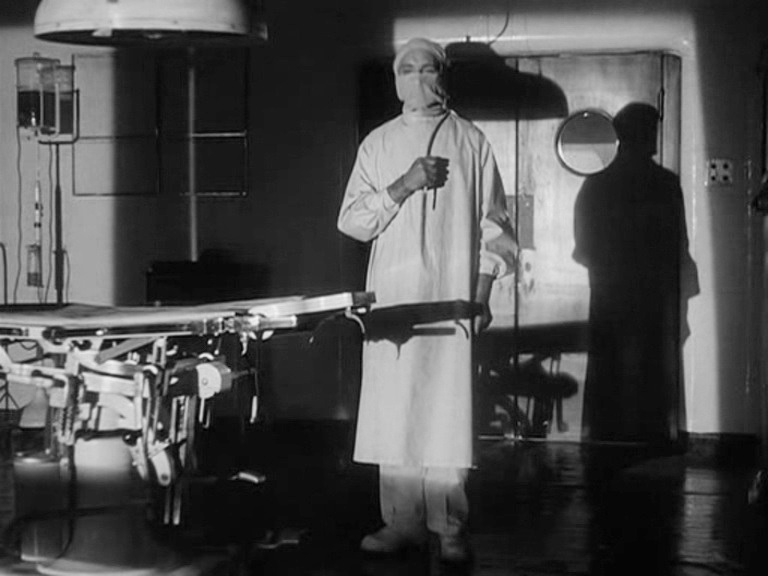
I, Jane Doe (1948)
Directed by John H. Auer
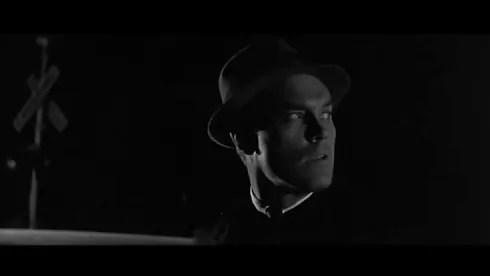
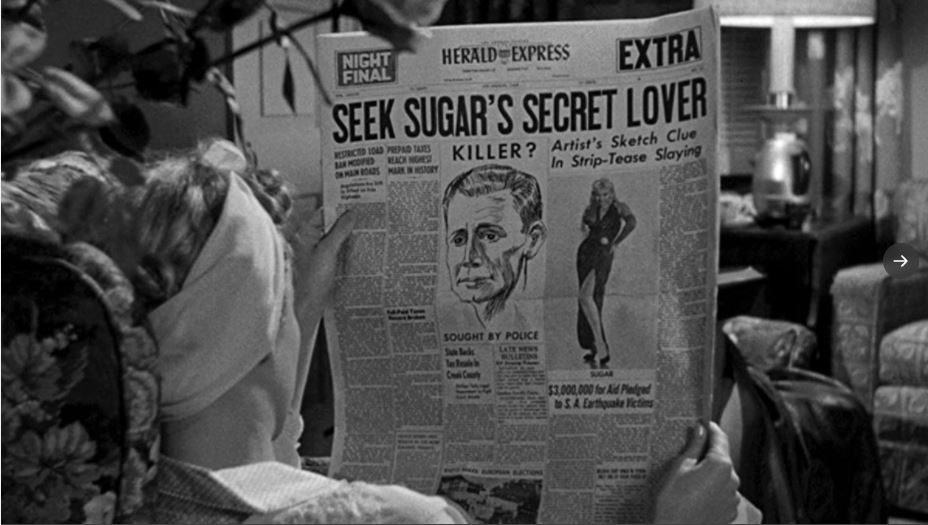
In the film, Ruth Hussey plays Eve Curtis, whose Stephen (John Carroll) is murdered at the start of the film. His murderer is Annette Dubois (Vera Ralston). While distraught at the loss of her husband, as Eve unravels Stephen’s infidelities and the lies he told Annette, everything was not as it seemed with her marriage.

This was the first film I watched of 2025, and I couldn’t have picked a better movie to kick off the year. I don’t want to spoil the plot, because this film certainly takes some unexpected turns that has an extremely satisfying outcome. I would file this under “feminist noir.”
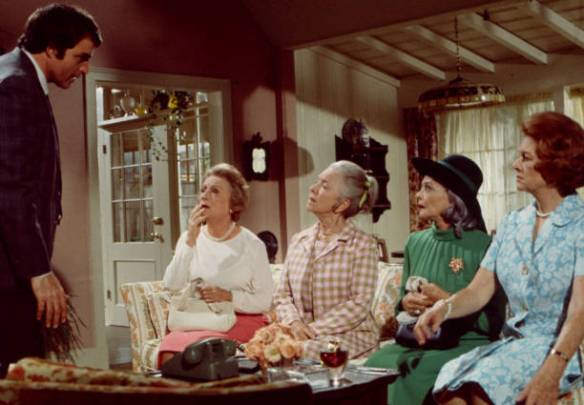
Do Not Fold, Spindle, or Mutilate (1971)
Directed by Ted Post
A quartet of elderly friends played by Helen Hayes, Myrna Loy, Mildred Natwick and Sylvia Sidney, decide to test out a new “computer dating” where you fill out a survey and a computer finds you a match. They make up a fictional girl and there are consequences for their fun when a would-be suitor (played by Vince Edwards) becomes obsessed with the fictional dream girl; resulting in a murder.

I watched this made-for-TV mystery/comedy twice this year because it was so much fun. The four actresses are hilarious together, especially as they get in over their head with a dangerous character. It made me smile so much, I almost considered watching it again!

The Night of the Generals (1967)
Directed by Anatole Litvak
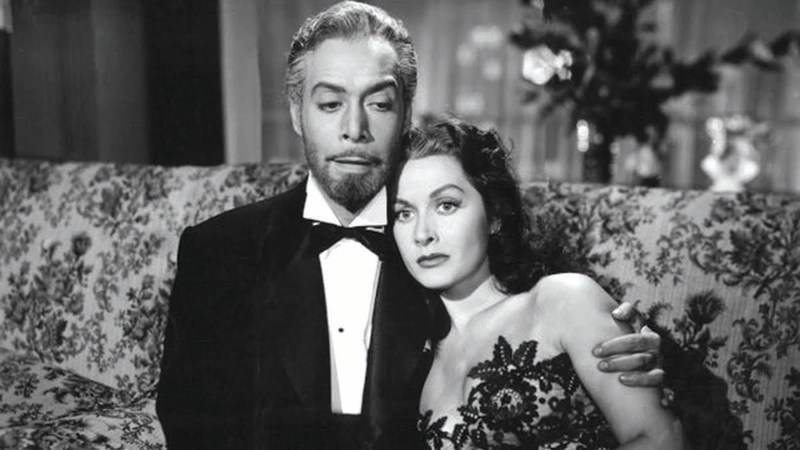
The story travels between the years during World War II and current day (1967) as police try to solve the murder of a prostitute and connect it to murders during the war. The suspicion is on three German generals: General Tanz (Peter O’Toole), General Kahlenberge (Donald Pleasence) and General von Seidlitz-Gabler (Charles Grey).

When I started the film, it took me a minute to get into the pivot between wartime and post-war, but it’s an effective storytelling device. It has an incredible cast with Christopher Plummer as Field Marshall Rommel, Omar Sharif as a Major investigating the murders, and Tom Courtney who is a pawn in everyone’s game.

Sharif is so good in this, Courtney is incredible and underrated, but of course, it’s O’Toole who takes the cake as the unwell and sadistic general. What a movie.
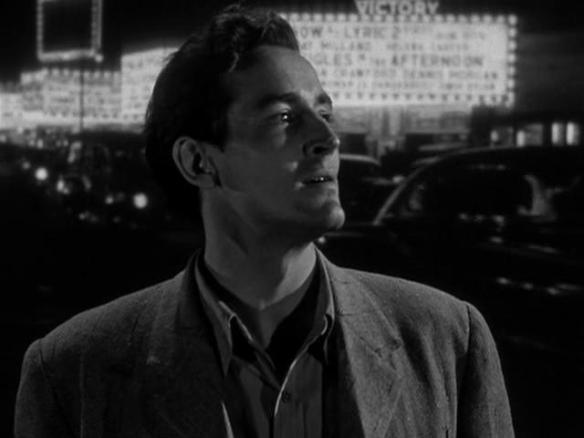
The Glass Wall (1953)
Directed by Maxwell Shane
Vittorio Gassman plays Peter, a Hungarian who has survived Nazi concentration camps, and has come to the United States for a new life and to escape the horrors of the war. However, when the ship arrives, Peter doesn’t have the correct papers and he is held on the ship to be deported back to Hungary. Desperate to start a new life, Peter escapes and searches for an Allied soldier who he helped hide from the Nazis, but the only thing he knows about him is his name is Tom and he plays the clarinet. Peter meets Maggie (Gloria Grahame) who tries to help him. He only has 24 hours to find Tom, or he will be barred from coming to the U.S. forever.

THE GLASS WALL is a stunning film. The film noir genre was a product of World War II and the topic of being a refugee is unique to most noir films I’ve seen. And rather than crime, murder or theft, it’s about someone who is seeking a better life. It has a surprising amount of heart as strangers help people around Peter help him. Vittorio Gassman gives an outstanding performance and it features excellent cinematography by Joseph F. Biroc – and it was filmed on location in New York City.
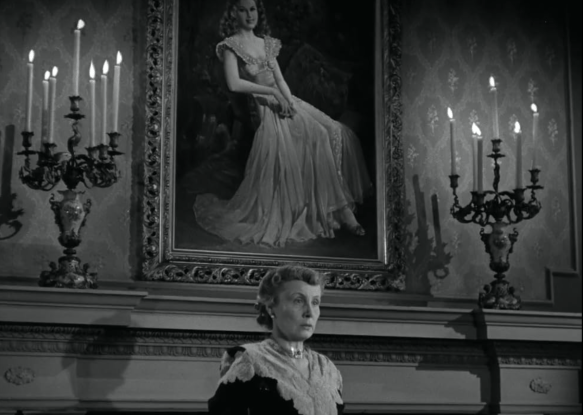
Strangers in the Night (1944)
Directed by Anthony Mann
Marine Sergeant, Johnny Meadows (William Terry) returns home from the war, eager to meet a young woman he has been writing to while fighting overseas. When he arrives at her home, he meets her strange mother, Mrs. Blake (Helene Thimig), but can’t get a straight answer on where her daughter is. A new physician in town, Dr. Leslie Ross (Virginia Grey), helps him get to the bottom of where the daughter is.

I don’t want to say too much about this film without spoiling it, but it’s a good one! Exciting, eerie and astonishing. The best part? It runs at a brisk 56 minutes. If you can watch an episode of “Stranger Things,” you certainly can make time for this.
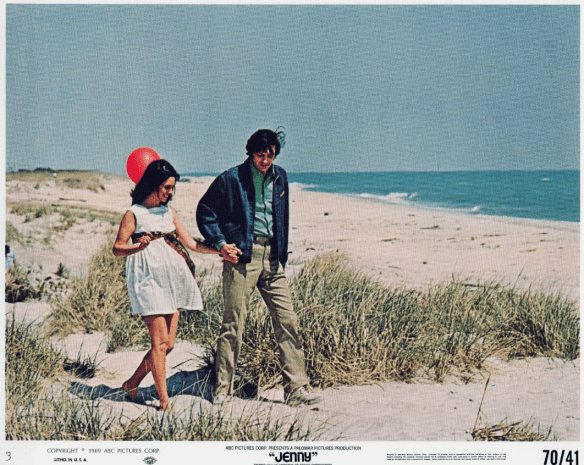
Jenny (1970)
Directed by George Bloomfield
Jenny (Marlo Thomas) is pregnant and unmarried–unthinkable for this time period. She meets Delano (Alan Alda) who is trying to avoid being drafted into the Vietnam War. Being married and having a baby helps keep men out of the military, and being married would help Jenny’s reputation. The two marry to help each other out, but Delano doesn’t change his lifestyle or break up with his girlfriend.

I thought this was really lovely film. It made me sad that Marlo Thomas didn’t make more feature films during this era of her career, because she’s really wonderful.

I loved that the character of Jenny is a mix of new age and extremely old fashioned. She loves classic films and old stars, but also is into “new age” stuff like astrology or listening to Kabuki music.

This is a really tender, sweet, and charming film that made me so sad at the end. The fantasy montage at the end is really lovely.
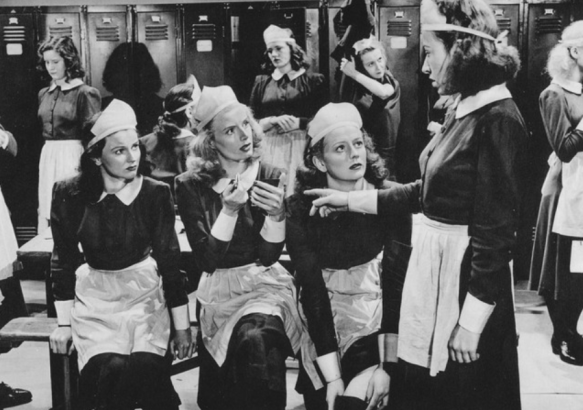
Love in Waiting (1948)
Directed by Douglas Peirce
Three young women (Peggy Evans, Elspet Gray, Patsy Drake) work as waitresses and balance their love lives. One of the young women, Golly (Evans), becomes romantic with the restaurant’s owner, Robert Clitheroe (David Tomlinson). This makes her the target of her manager, Miss Bell (Linda Gray), who also likes Robert. Amongst their lovelife drama, there is a workplace scandal over black market food trading.

I do love an English film! And this one is charming and adorable. I loved seeing Tomlinson–known best today as the father on MARY POPPINS – as a younger actor.
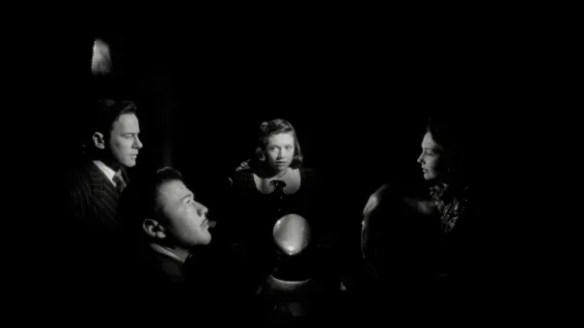
The Amazing Mr. X (1948)
Directed by Bernard Vorhaus
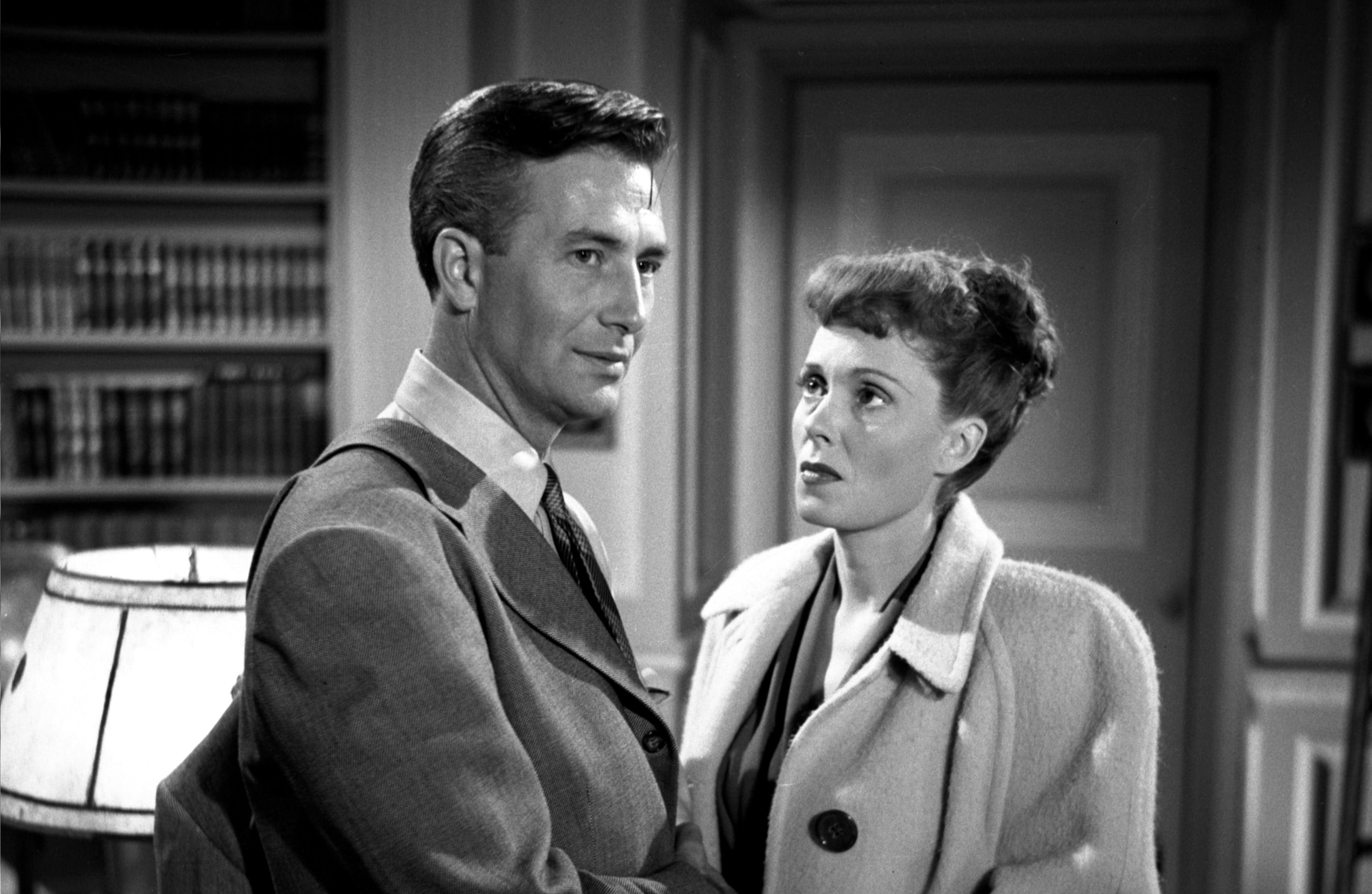
Christine Farber (Lynn Bari) will soon be married to Martin Abbott (Richard Carlson). But as the wedding dating approaches, she seems to be haunted by her deceased husband, Paul. Christine has a chance meeting with Alexis (Turhan Bey), a spiritualist who seems to know a great deal about Christine. As Christine turns to Alexis for counsel, her sister Janet (Cathy O’Donnell) and fiance Martin investigate, believing he’s not what he seems.

THE AMAZING MR. X is so much fun. It’s a bit spooky at parts, we have comedic relief from the nosey sister played by Cathy O’Donnell, and I’m always thrilled to see Richard Carlson in a movie. There are some unexpected twists that I won’t spoil here! The best part of all is that this movie is visually stunning, thanks to the outstanding cinematography of John Alton. He has such a way with shadows and darkness, especially in this film.
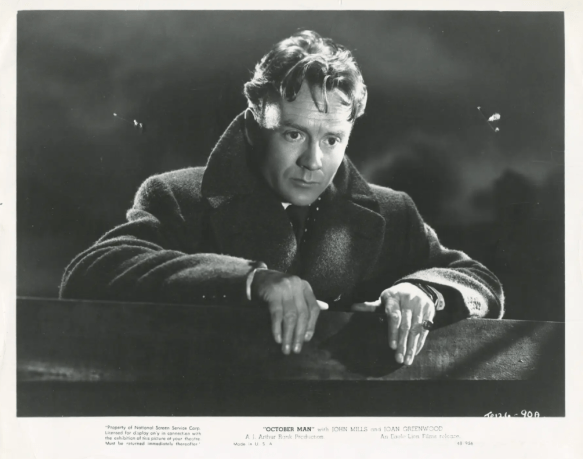
The October Man (1947)
Directed by Roy Ward Baker
After surviving a train accident, Jim Ackland (John Mills) receives additional care for a mental breakdown. A year after the accident, he tries to start a new life and finds a home in a boarding house. Jim befriends fellow boarding house resident, Molly (Kay Walsh). When Molly is killed, Jim is immediately under suspicion due to his time in the mental institution, and he works to clear his name.

I feel John Mills is an overlooked and underrated actor. And like almost everything he does, he’s excellent in this film. THE OCTOBER MAN is truly excellent. I love the mix of suspense, mystery and humor.
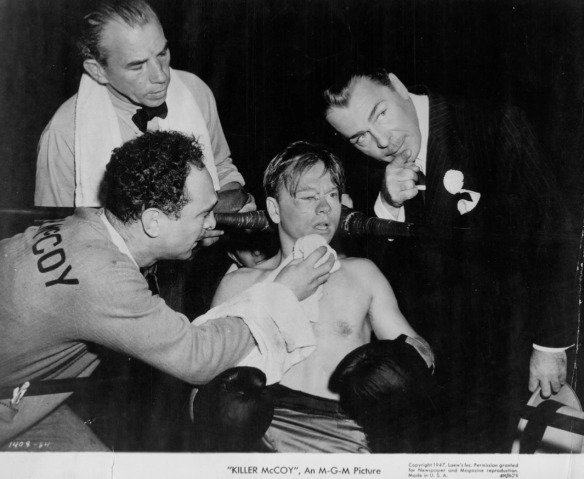
Killer McCoy (1947)
Directed by Roy Rowland
By pure accident, it’s discovered that Tommy McCoy (Mickey Rooney) is a skilled boxer. Tommy is built into a professional boxer and competes in lightweight matches. His former vaudeville performer father (James Dunn) drinks away most of Tommy’s earnings, and Tommy becomes entangled with gamblers (Brian Donlevy) who want him to “fix” fights.

When I saw this, I didn’t know what to expect going in and I loved it. This was made during a period that was nearing the end of Mickey Rooney’s time under contract at Metro-Goldwyn-Mayer. He was also getting too old to play teenage, Andy Hardy-like characters. I truly feel this is his third best performance while at MGM, the first two being THE HUMAN COMEDY and NATIONAL VELVET.

Nine Girls (1944)
Directed by Leigh Jason
A group of sorority girls and their faculty advisor (Ann Harding) are heading to a cabin in the woods for the weekend. It’s discovered that one of the girls is murdered, but the weather makes it impossible for the girls to return to town. Police officers Capt. Brooks (Willard Robertson) and Walter Cummings (William Demarest) make it out to investigate and question the girls.

I’m a sucker for an ensemble cast, especially of a group of actresses I love. For our students, we have a star-studded cast including: Anita Louise, Evelyn Keyes, Nina Foch, Jinx Falkenburg, Leslie Brooks, Lynn Merrick, Jeff Donnell, Shirley Mills and Marcia May Jones.

It’s an intriguing mystery, but more than anything it’s quite funny. There are some great zinger lines throughout. My only complaint is I wish I could have seen a better print of this one.
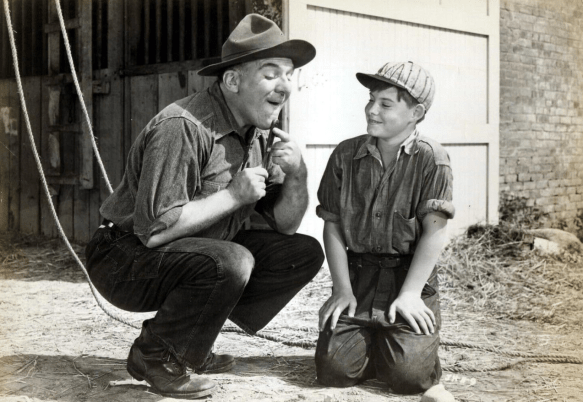
Johnny Holiday (1949)
Directed by Willis Goldbeck
Young boy Johnny Holiday (Allen Martin Jr.) is constantly getting in trouble with the law, largely thanks to the bad influence of teenager Eddie Dugan (Stanley Clements). After getting caught for an attempted robbery, Johnny is sent to a reform school farm. There he meets Sgt. Walker (William Bendix), who provides tough love to the boys. Though Johnny initially resists help, he eventually takes pride in the responsibility he gains on the farm … until Eddie is also sent to the same farm.

In a way, this film reminds me of BOYS TOWN (1938). It’s quite lovely and sweet. Allen Martin Jr, an actor I’m not familiar with, does a great job. But more than anything, I just love William Bendix. I hope he was that sweet and kind in real life. There is also a surprise appearance from Hoagie Carmichael.

Alive and Kicking (1958)
Directed by Cyril Frankel
Dora (Sybil Thorndike), Rose (Kathleen Harrison) and Mabel (Estelle Winwood) escape a nursing home when they learn they are soon to be sent to another nursing facility. They end up on an island in Ireland, where they soon meet MacDonagh (Stanley Holloway) who is about to move into three cottages. When MacDonagh mysteriously disappears, the three ladies pose as his nieces and stay in the home, while befriending villagers on the island.
ALIVE AND KICKING took a few unexpected turns, but what a delight this one was! Thorndike, Harrison and Winwood are hilarious together. A special shoutout to a very young Richard Harris who appears in this film.
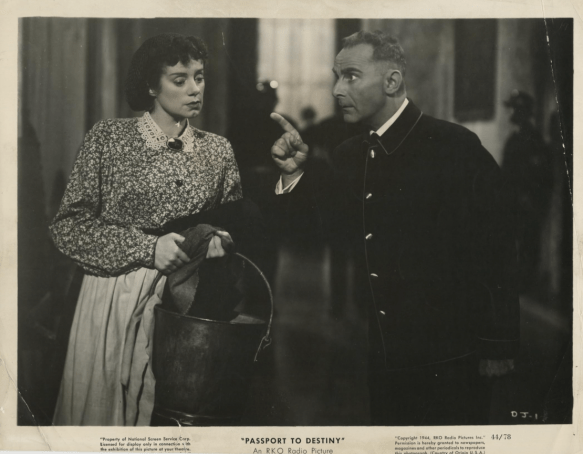
Passport to Destiny (1944)
Directed by Ray McCarey
Ella Muggins (Elsa Lanchester) believes a glass eye left by her deceased husband brings her secret powers and protection after she survives an air raid in London. Armed with this protection, she travels to Germany where she plans to assassinate Adolf Hitler.

I think PASSPORT TO DESTINY was the funniest film I saw this year. It’s hilarious and charming. For example, there’s a scene where Elsa Lanchester is flipping through the phone book trying to find Hitler. It’s a rare treat to see Elsa Lanchester in a starring role. What a gem this was!
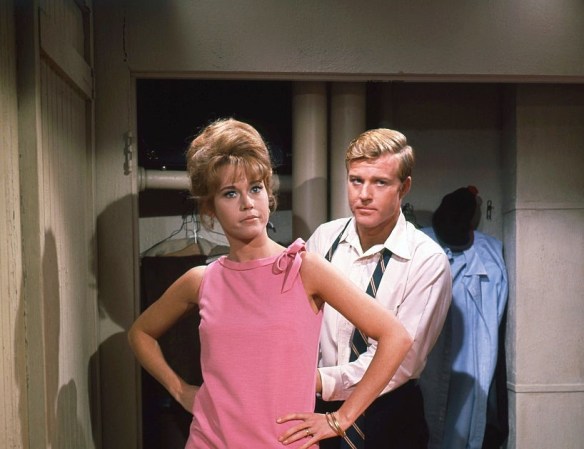
Barefoot in the Park (1967)
Directed by Gene Saks
Newlyweds Corie (Jane Fonda) and Paul Bratter (Robert Redford) adjust to life together in a less than desirable New York City apartment, an eccentric neighbor (Charles Boyer) and Corie’s mother (Mildred Natwick).

I’m not sure how I lived to age 37 and only just now saw BAREFOOT IN THE PARK. This was so much fun. Hilarious, excellent fashion, wonderful performances. I’m almost ashamed that I hadn’t seen it already! I’m also prepared to model my entire wardrobe after Jane Fonda’s look in this film.

Other places you can follow Comet Over Hollywood: 

Favorite new-to-me watches of 2024

I watched several great movies in 2024, but these are my favorite first-time new-to-me film discoveries of the year. These are not in order of favorite, but in the order that I watched them in 2024:

garden of evil

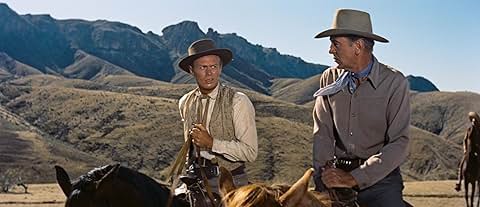
Garden of Evil (1954)
Directed by Henry Hathaway
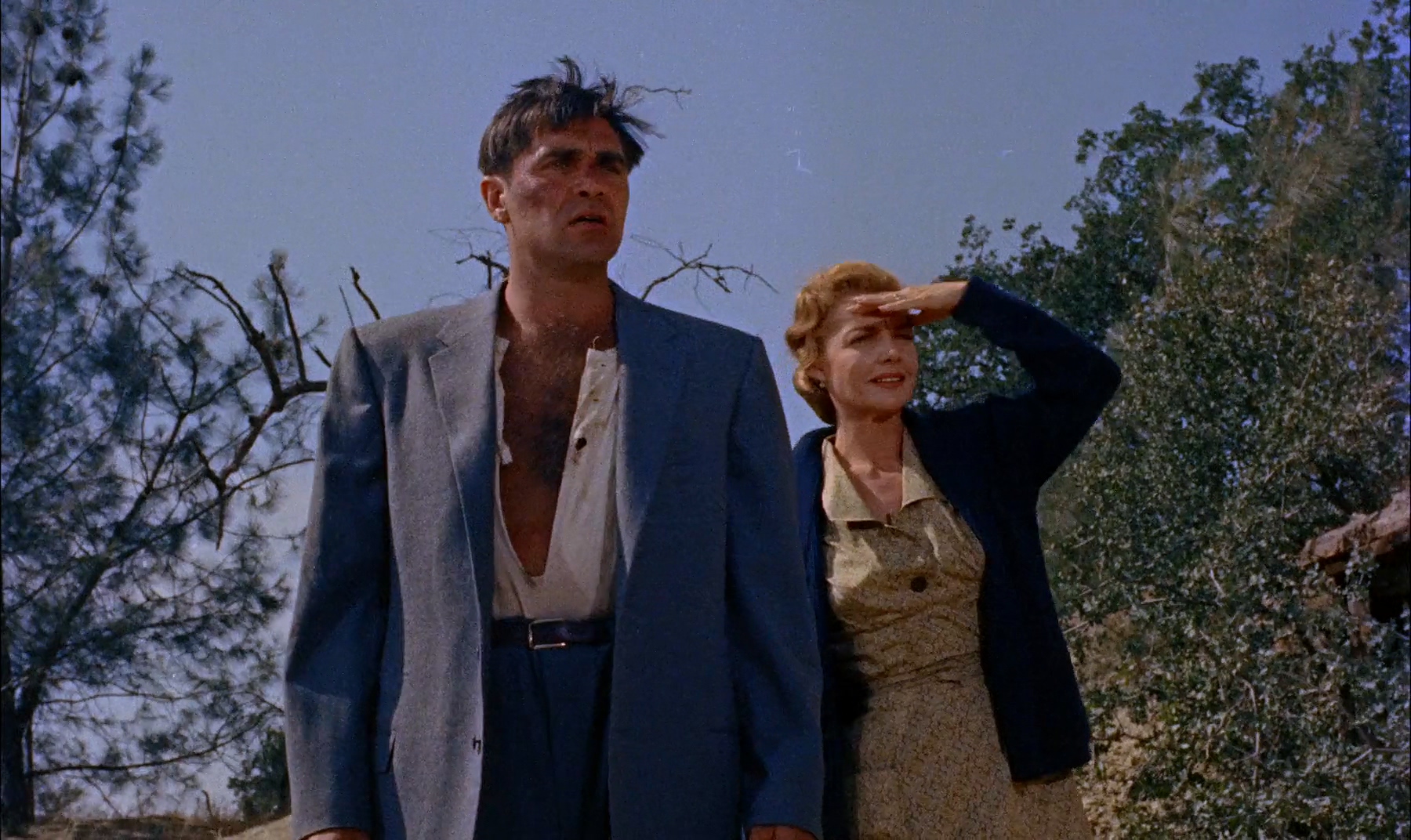
Gary Cooper, Richard Widmark and Camron Mitchell play an American trio stranded in Mexico, who agree to help Susan Hayward, whose husband (Hugh Marlowe) is injured and trapped in the mountains. The journey is treacherous, and the men are suspicious of Hayward’s motives, which she keeps secret.

I knew nothing about this film going in — only knowing it was a western. I also had some predictions of how it would play out early on, and all of them were wrong.

The cast of this film is excellent, and Gary Cooper and Susan Hayward are good, but Richard Widmark was the standout performer in this film. Widmark is so good and his character is not at all how you expect him to be.

I watched this via a Twilight Time Bluray, and it was stunning. It made me miss the boutique line even more. Filmed in gorgeous Technicolor and on-location shots, it included some gorgeous matte painting backdrops. It also made me mourn that many 20th Century Fox films will never have a restoration.

The film also included a unique Bernard Herrmann score here. With a western flair, much of the score doesn’t sound like Herrmann’s signature style.

color reversal: KODAK UNIVERSAL K14. SBA settings neutral SBA off, color SBA on

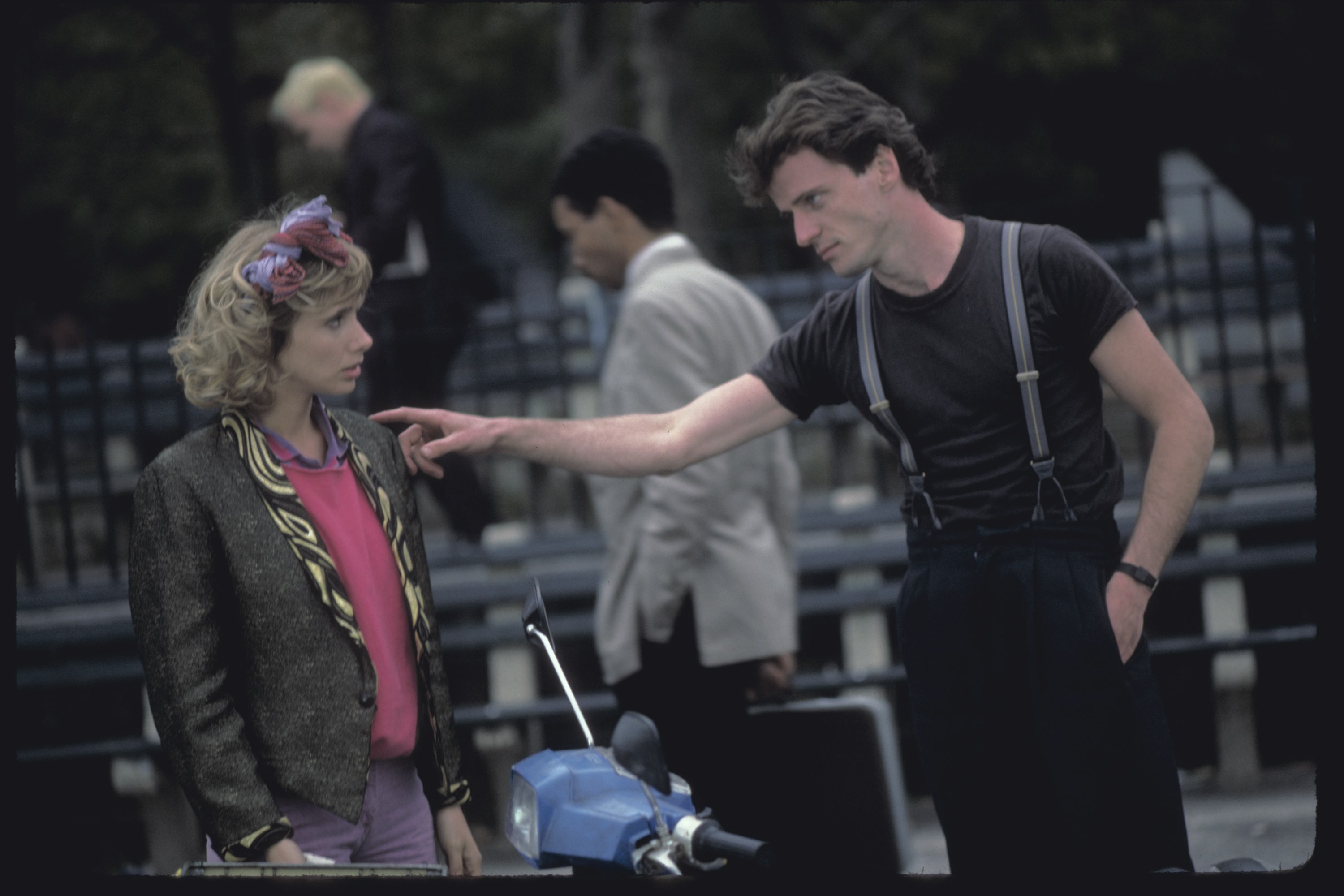
Desperately Seeking Susan (1985)
Directed by Susan Seidelman
Rosanna Arquette plays Roberta Glass, a bored New Jersey housewife who enjoys reading the personal ads between two lovers, including one that reads “Desperately Seeking Susan,” asking two lovers to meet in a park in New York City. Roberta travels to the meeting spot, hoping to see the lovers — Susan and Jim (Robert Joy). She then follows Susan to a thrift shop, where Susan sells a distinctive jacket with a pyramid on the back. Roberta is intrigued by her bohemian look and lifestyle and buys the jacket. While trying to catch up with Susan, Roberta hits her head and loses her memory. A friend of Jim, Dez (Aidin Quinn), finds Roberta and assumes she’s Susan.

After years of hearing about it, I finally watched this and had a great time. I never really knew what it was about, but I didn’t expect it to be a mix of comedy, crime, romance and mystery. Madonna’s signature fashion look in this (that Arquette’s character mimics) is so great, and the music is outstanding, too. After watching this, I was ready to change my whole life like Roberta Glass.

Continue reading

Favorite new-to-me watches of 2023

I watched several great movies in 2023, but these are my favorite first time new-to-me film discoveries of the year. These are not in order of favorite, but in the order that I watched them in 2023:

Ten North Frederick (1958)

ten north

Suzy Parker and Gary Cooper in 10 North Frederick

Directed by Phillip Dunne
An intriguing and lovely film that was quite different than I expected it to be. Gary Cooper plays a successful businessman in a loveless marriage to Geraldine Fitzgerald. He controls his children’s lives, sometimes ruining their happiness because ambitions for a political future, and eventually does the same thing to himself. He has a May-December affair with much younger woman, played by Suzy Parker. Cooper is wonderful and charming, per usual. Parker is stunningly gorgeous and lovely. Geraldine Fitzgerald does a great job of making you want to smack her.
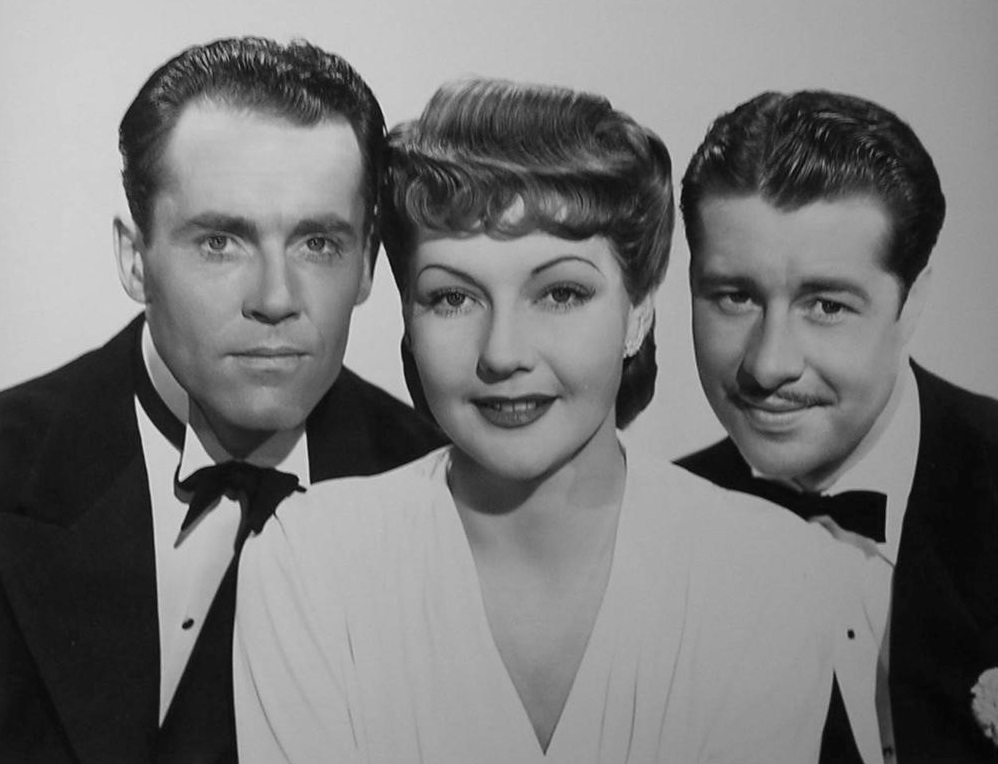
The lovely actress Diane Varsi is wonderful as Cooper’s daughter, and it makes you wish her was in more films.

23 Paces to Baker Street (1956)

23 paces

Directed by Henry Hathaway
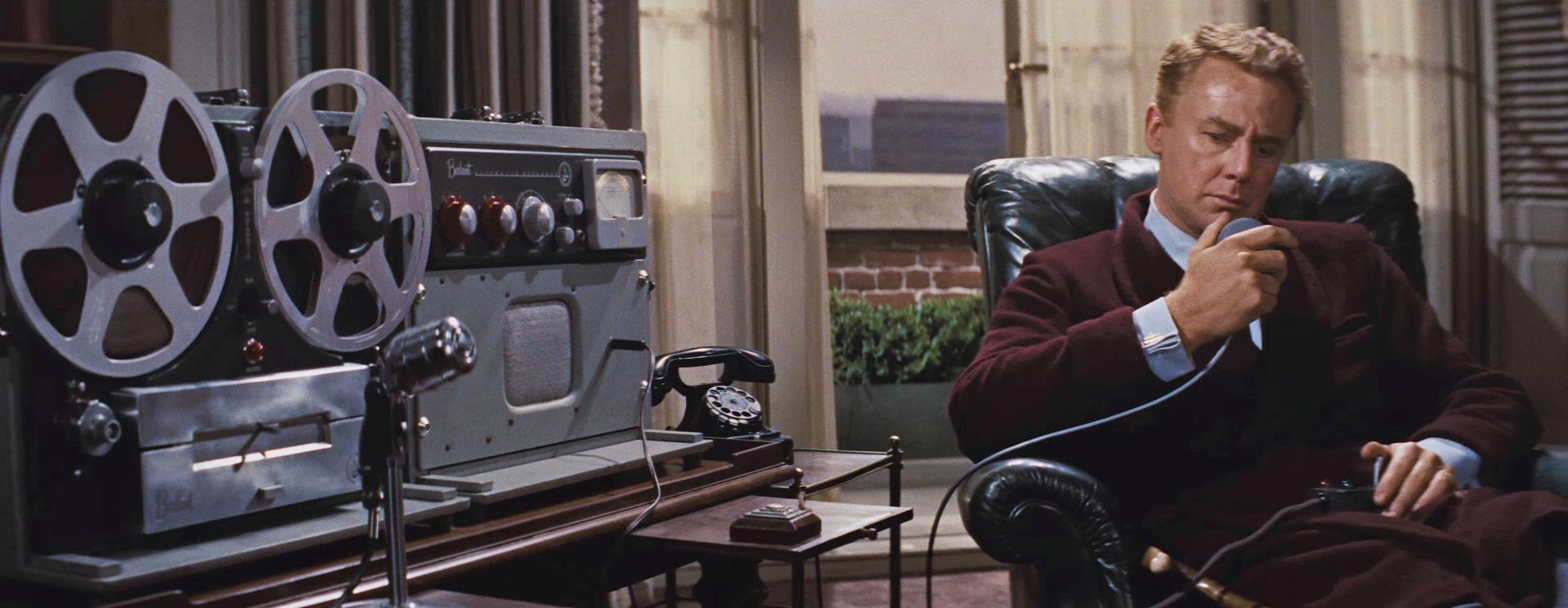
If you have followed me long enough, you should know that I love Van Johnson films and this is no exception.
Van Johnson stars as an American man who is blind and living in London. While sitting in a local pub, he overhears a kidnapping plot. Since the police won’t take him seriously, he becomes obsessed with solving the crime. This film was like a mix of REAR WINDOW and WAIT UNTIL DARK, and the ending had me sitting straight up in my seat because it was so exciting.

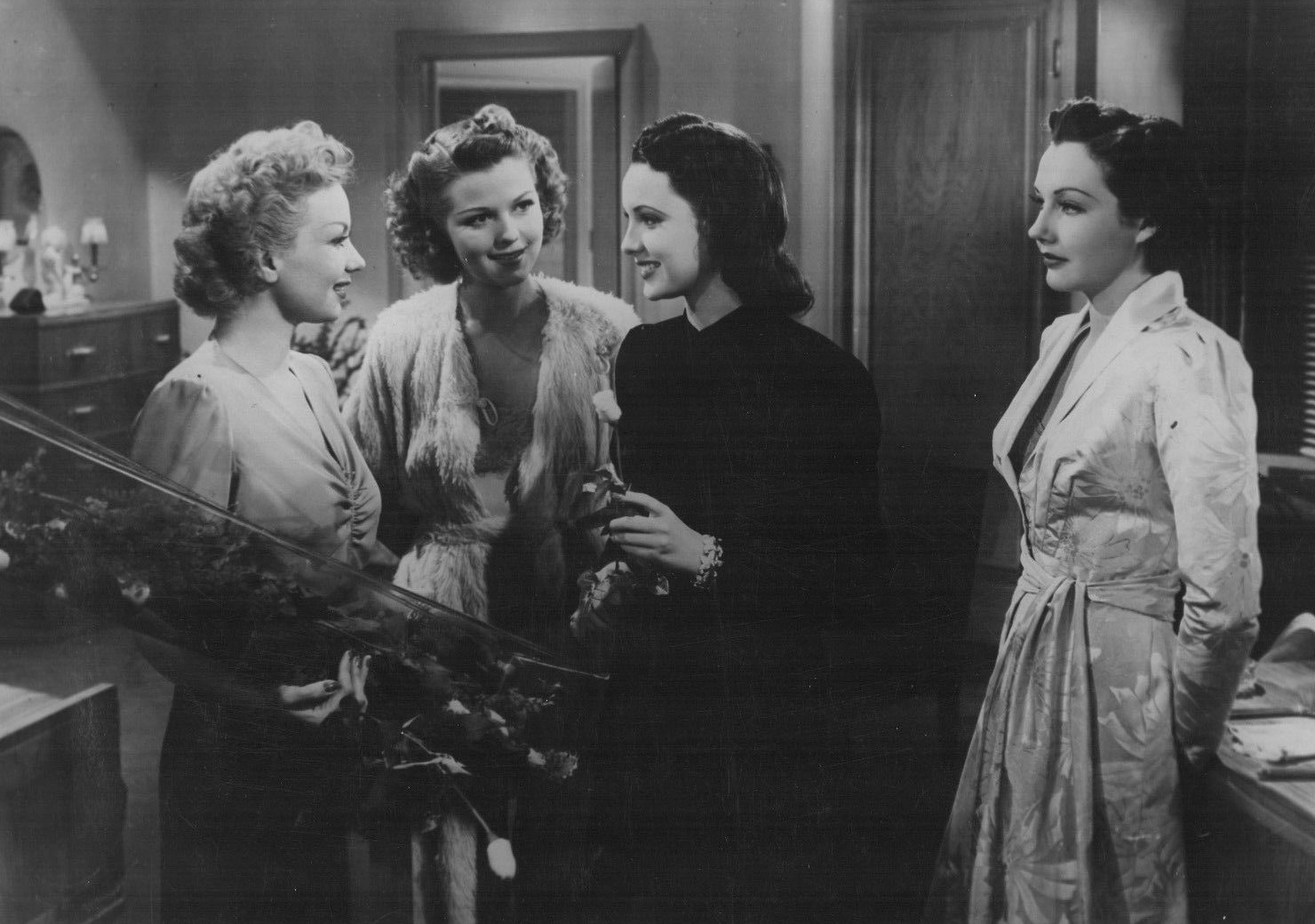
Hotel for Women (1939)

hotel for women2

Ann Sothern, Jean Rogers, Linda Darnell, Lynn Bari

Directed by Gregory Ratoff
Though I had to watch a horrible print of this hard-to-find film, I thought it was great fun. Linda Darnell stars in her first film as a young woman who moves to New York City to follow her boyfriend, played by James Ellison who is always great at playing a jerk. While Darnell’s character has been carrying the torch back home, the boyfriend has moved on, so she stays in NYC to become a model. This movie is interesting because society hostess Elsa Maxwell not only helped develop the story for the film, but also makes an appearance in the film. If you can believe it, Darnell is only 15 years old when she starred in this film.

Violent Playground (1958)

violent playground

Directed by Basil Dearden
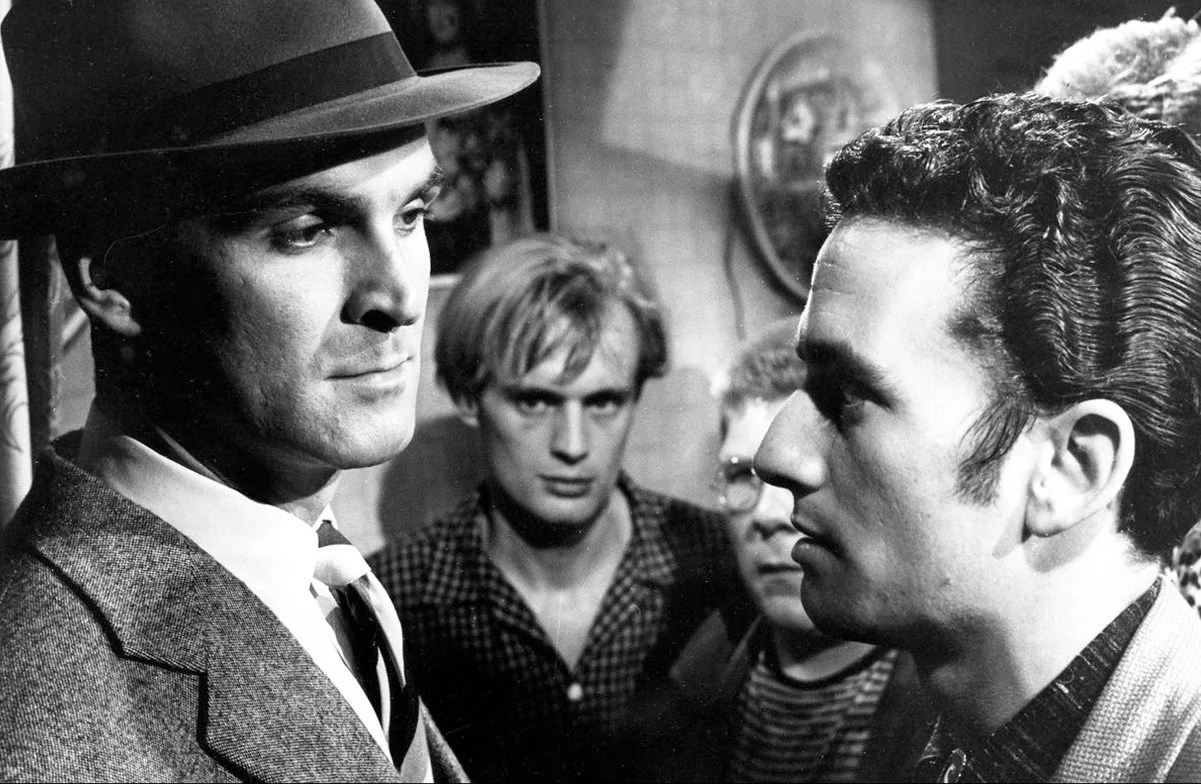
This harsh and grimy crime drama is set in Liverpool and looks at juvenile delinquents in the city. Stanley Baker plays a police officer demoted to being the juvenile liaison officer and quickly finds he has his hands full when he finds a group of teens who are setting fires to major industry buildings. The leader of the group is played by David McCallum (who passed away this year), in an early film role. I appreciated this film, because there are more humorous and lighthearted moments than I expected, especially from Baker’s character. McCallum blows you away though, especially in the alarming ending to this film.

Lawrence of Arabia (1962)

lawrence of arabia

Directed by David Lean
I know it seems amazing that I’m just now seeing LAWRENCE OF ARABIA in 2023, but it has been a first-time-watch I was saving for the right moment and this year was it. While I’ve been in love with Peter O’Toole since I was 14 years old, I’m glad I waited 20 years until I watched this one. I wouldn’t have appreciated it then.
What can you say about a perfect film?
With direction by David Lean, cinematography by Freddie A. Young and editing by Ann V. Coates, this film is insanely and unbelievably stunning. There are some shots that are so beautiful (and difficult) that they are jaw dropping – the clear stars in the night sky, the blowing sand. And of course, all of the actors are fabulous, especially Peter O’Toole and Omar Sharif. I may never be the same after watching this movie.

While watching this film, I sat and thought about how it would be if this film was made today. No on location filming, none of that wonderful blowing sand and nature elements. It’d all be CGI on an indoor set in California – how depressing is that to think about?

No disrespect to Gregory Peck, but Peter O’Toole should’ve won Best Actor for this film.

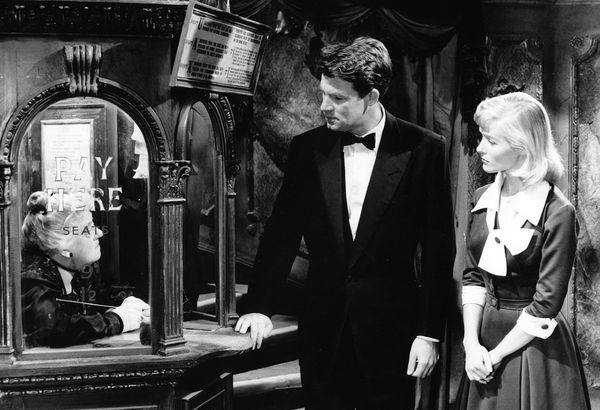
Counsellor at Law (1933)

counselor at law

Directed by William Wyler
The film largely takes place in the office of a successful lawyer, played by John Barrymore. His secretary, played by Bebe Daniels, is in love with him. The lawyer’s wife is unfaithful and he also has dealings in his legal history that could ruin his career. This fast-paced, fast-talking film will nearly leave you breathless but it provides excellent performances. John Barrymore and Bebe Daniels both don’t get the recognition they deserve as actors, and this film shows them both at their best.

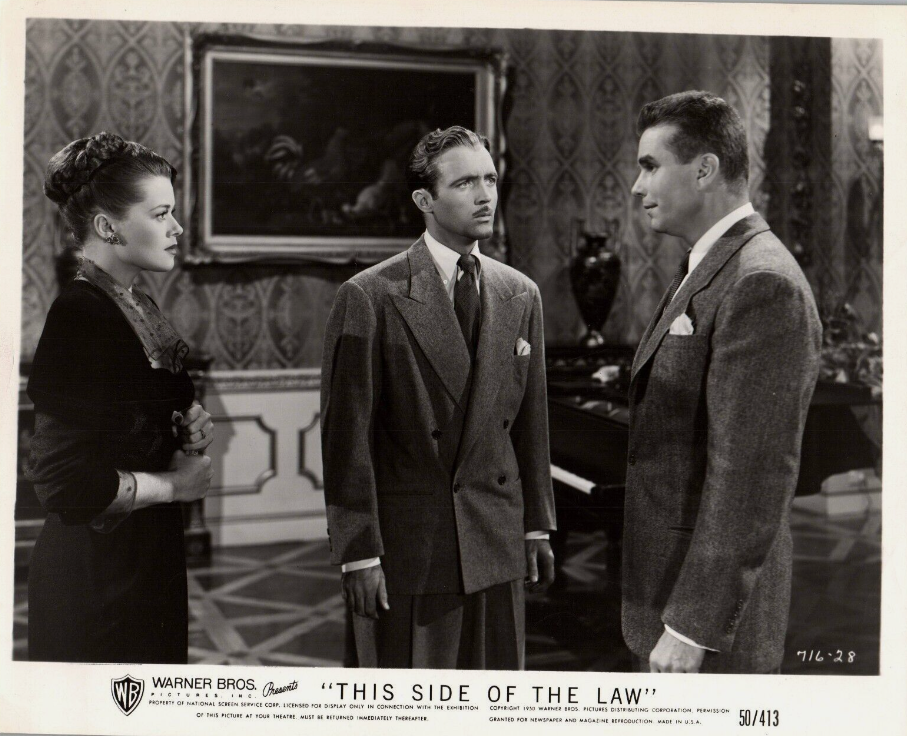
This Side of the Law (1950)

this side of the law

Directed by Richard L. Bare
This brief B-thriller/noir blew me away when I really didn’t expect it to! When a hidden gem! Kent Smith plays a drifter who is bailed out of jail and asked to impersonate a missing millionaire so that his estate can be settled. The problem is, the way it will be settled is when he is legally declared dead. The build up to figure out what happened to the missing man is thrilling and I was surprised that this was an unexpected great time. Janis Paige co-stars and she is always wonderful.

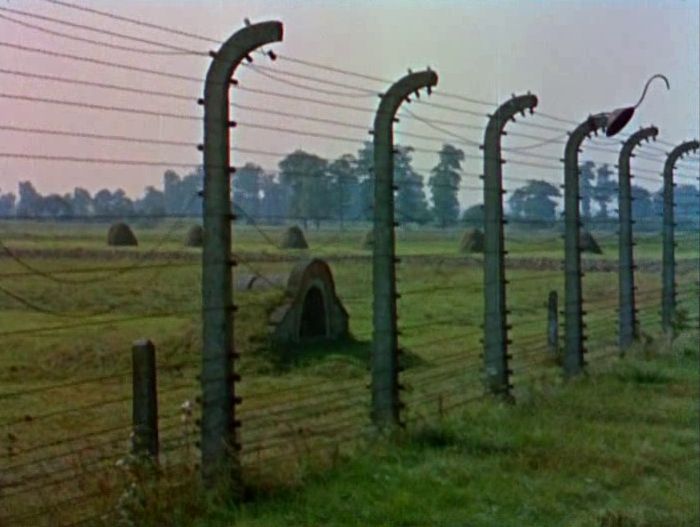
Night and Fog/ Nuit et brouillard (1956)

night and fog

Directed by Alain Resnais
Filmed 10 years after the Holocaust during World War II, director Alain Resnais films the abandoned grounds of the Auschwitz concentration camp, and documents the Nazi rise to power and the life of the Jewish prisoners living in the camps. This is a tough watch, but an important one.

The Naked Kiss (1964)

naked kiss

Directed by Samuel Fuller
Like with most Samuel Fuller films, this film begins and eventually takes several turns that you aren’t expecting, so I don’t want to go too much into details. Constance Towers plays a prostitute who moves to another town to start a new life. While it seems like everything is falling into place, all of her dreams take a shocking turn. Amazing film with some jaw dropping moments.
I loved watching the DVD interview with sweet Constance Towers wearing a pink cable knit sweater, talking about how this was “Pure Sammy Fuller.”

Olivia (1951)

Olivia

Directed by Jacqueline Audry
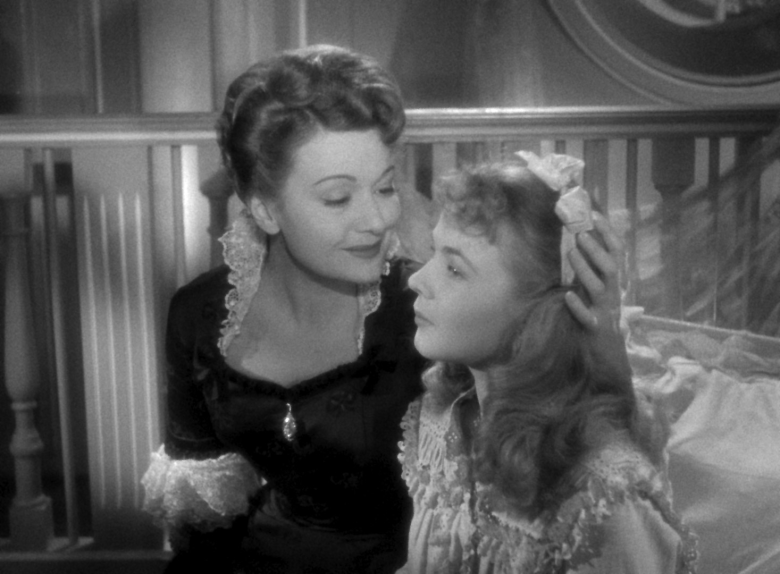
Set in the 19th century, this boarding school drama is one of the more interesting views of the year. The film is set in an all-girls boarding school with two female teachers (one the headmistress) and the girls seem to take sides of who is their favorite. However, this is deeper than just having a favorite teacher — it’s infatuation and love. This tense drama is showcased against a lush showcase of beautiful gowns and décor. This movie is stunning, intriguing. And with the queer flirtation and romance, this film is ahead of its time.

The Endless Summer (1966)

endless-5

Robert August hits some waves off the coast of South Africa in The Endless Summer (1966). The film went on to inspire surfing communities all over the world.

Directed by Bruce Brown
In an effort to find an “endless summer” where you can surf all year, California surfers Robert August and Michael Hynson as they travel to the Southern Hemisphere to test the surf in areas like Ghana, Nigeria, South Africa, Australia and New Zealand. I thought this documentary was thrilling and stunningly beautiful. Astonishing from start to finish. And it almost rekindled my teenage desire to surf … until they discussed sharks in the water.

The Lost Patrol (1934)

lost patrol

Directed by John Ford
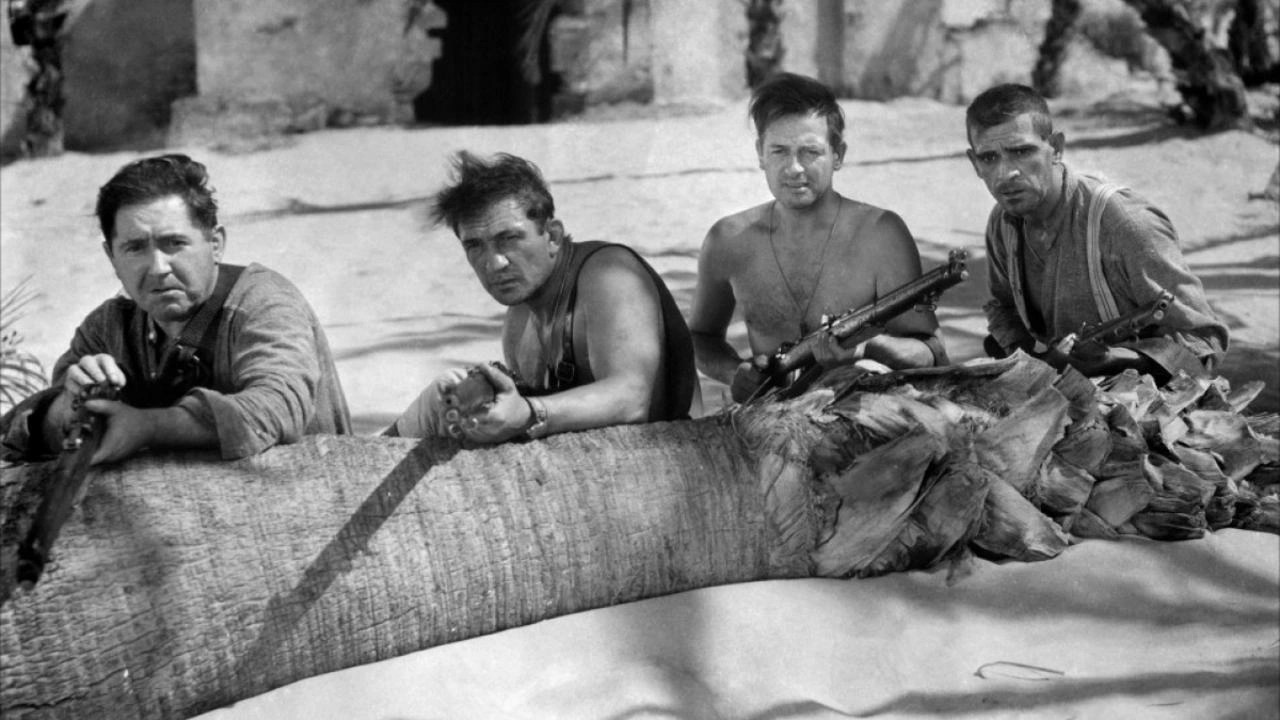
Set during World War I, a British Army patrol is crossing the desert and they are being killed one-by-one by an unknown and unseen assailant. It has an excellent cast complete with Victor McLaglen, Boris Karloff, Wallace Ford, Reginald Denny, Alan Hale and Douglas Walton. I’ve seen nearly every film adaptation of this story and this version is the best. It’s grim, devastating but great.

The Last Flight (1931)

last flight

Directed by William Dieterle
World War I veterans played by David Manners, Johnny Mack Brown, Richard Barthelmess and Elliot Nugent, aimlessly exist in post-war Paris. They meet a young woman, played by Helen Chandler and drink too much and live recklessly. When people today try to say there were no movies about World War I or the effects of World War I (other than being wrong), you can easily point to this film. This film I a cinematic representation of the Lost Generation. This is a devastating and astonishing watch.

Orpheus/ Orphée (1950)

orpheus

Directed by Jean Cocteau
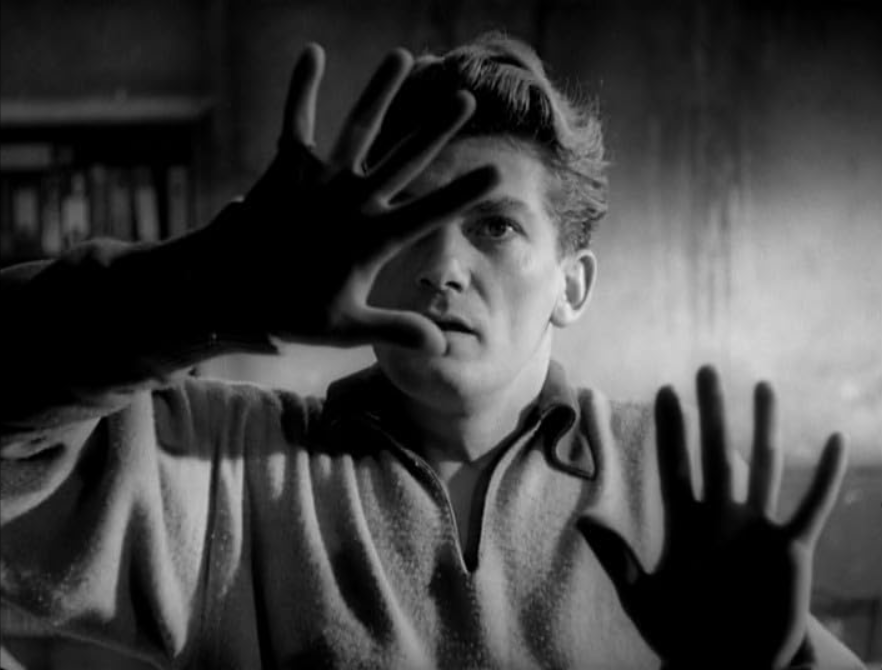
A modern retelling of the Greek mythology of Orpheus and Eurydice. Jean Marais plays poet, Orpheus, and is married to Eurydice, who is pregnant. After a man is killed in the town square, Orpheus meets death and falls in love with her. Orpheus becomes obsessed Death and wants to follow her to the underworld. This film is visually stunning and breathtaking. It really has to be seen because my words won’t do the beauty of this film justice.

King of Hearts/ Le roi de coeur (1966)

king of hearts
Directed by Philippe de Broca
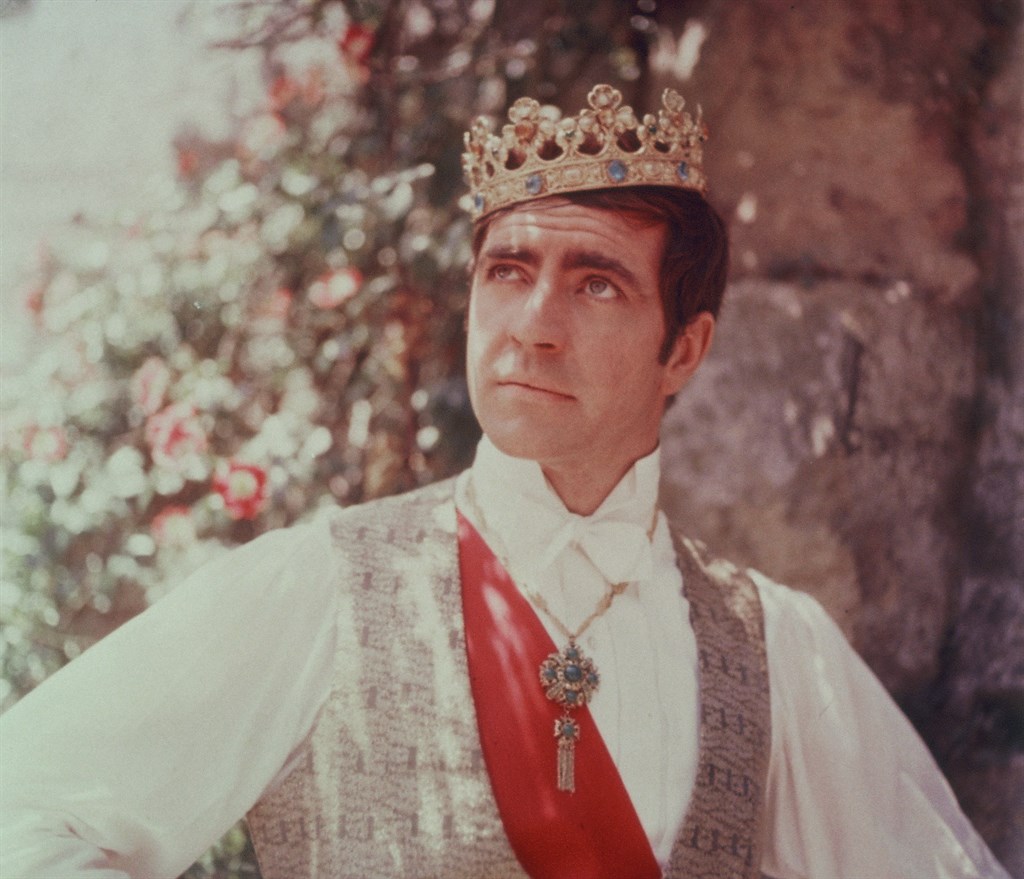
Set during World War I, a mild mannered private, played by Alan Bates, is sent to scout a French town for the enemy. Instead, he finds that the whole town has been evacuated except for an insane asylum. The patients are released and live colorfully, opening businesses, throwing parties, donning elaborate costumes and performing in a circus.
I swooned for Alan Bates throughout the film because he is extremely handsome in this. This off-beat film was a Vietnam protest film, in a word saying that war is “insane.” It’s colorful, odd, whimsical and devastating.

Sylvia and the Ghost/ Sylvie et le fantôme (1946)

sylvie and the ghost
Directed by Claude Autant-Lara
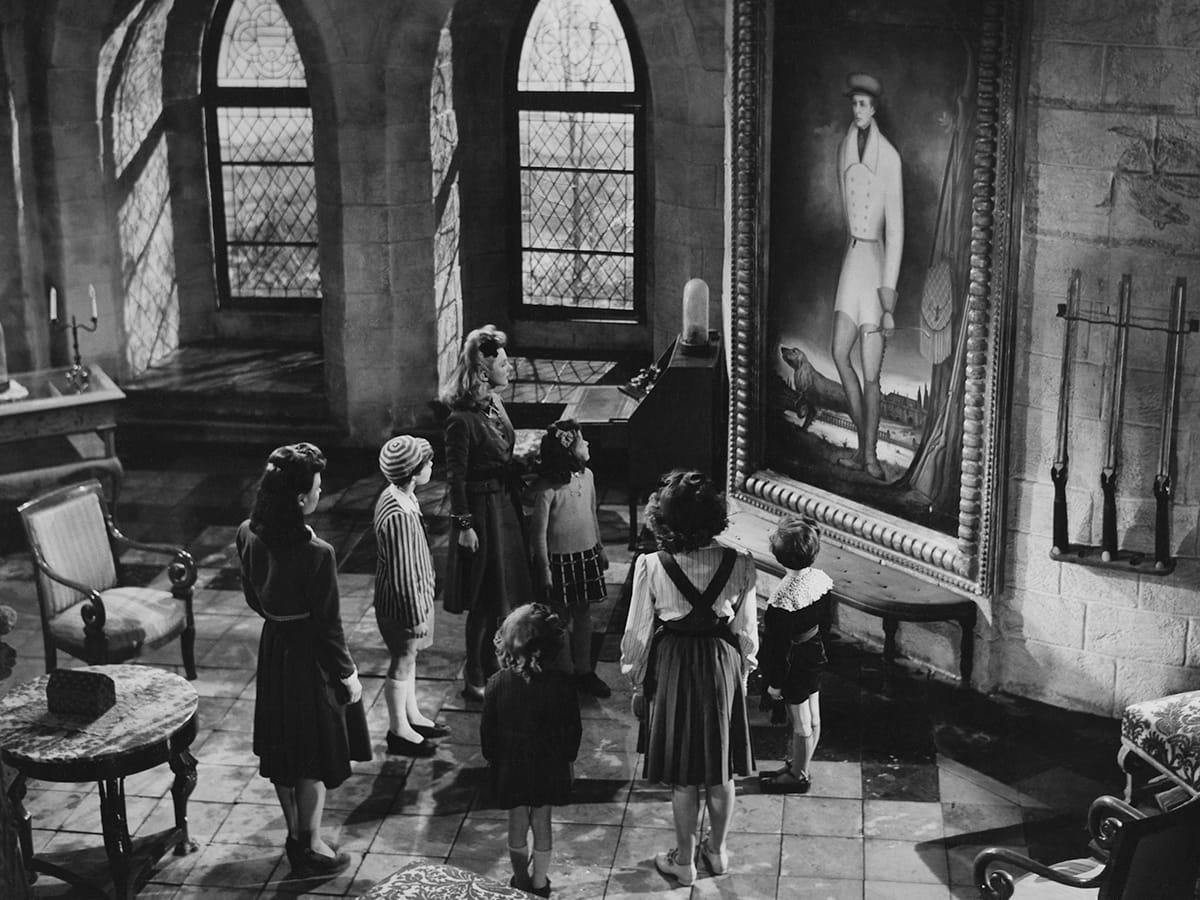
Teenager Sylvie (Odette Joyeux) is in love with the painting of Alain, the former lover of her grandmother who was killed in a dual, and the ghost of Alain still haunts the castle. Just ahead of Sylvie’s birthday, her father decides to sell the painting since the family has hit hard times. Knowing his daughter will be sad her father hires three ghosts to perform at birthday party to make her believe they are the ghost of Alain, and two of them fall in love with her.
What a joy this film is! It’s funny, romantic and whimsical. A must see.

Confidentially Yours/ Vivement dimanche! (1983)

Confidentially Yours

Fanny Ardant, Jean-Louis Trintignant, Philippe Laudenbach, Jean-Pierre Kalfon, Caroline Sihol,Philippe Morier-Genoud

Directed by François Truffaut
A real estate agent, played by Jean-Louis Trintignant, is accused of the murder of his wife and her lover. Knowing her boss is innocent, his secretary played by Fanny Ardant, helps play detective and uncover the real murderer.
This was such a fun time but also keeps you guessing about “who dunit.” Shot in black and white, it feels like any classic film or an Alfred Hitchcock mystery.

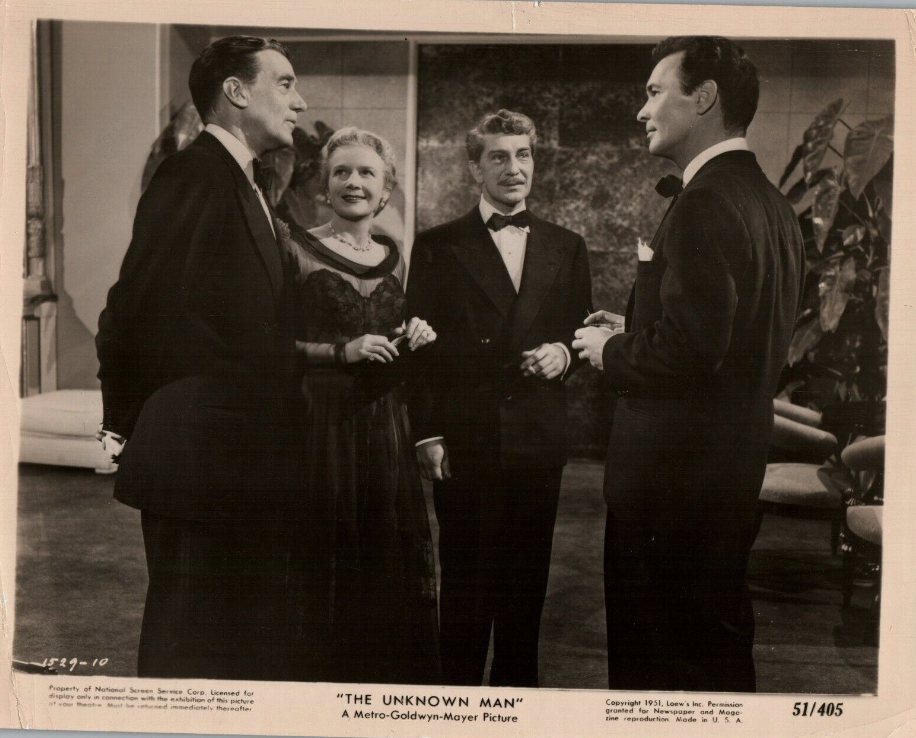
The Unknown Man (1951)

unknown man
Directed by Richard Thorpe
An ethical and upstanding lawyer Dwight Masen, played by Walter Pidgeon, gets Rudy Walchek, played by Keefe Brasselle, off for murder. Masen gradually realizes that not only was Walchek guilty, but several people around town are corrupt. He works to get him convicted, even if it means tarnishing his own reputation.
Walter Pidgeon is an excellent fit for playing an ethical, upstanding and stalwart lawyer. This film was intriguing from start to end, but also shocking towards the end. I loved this.

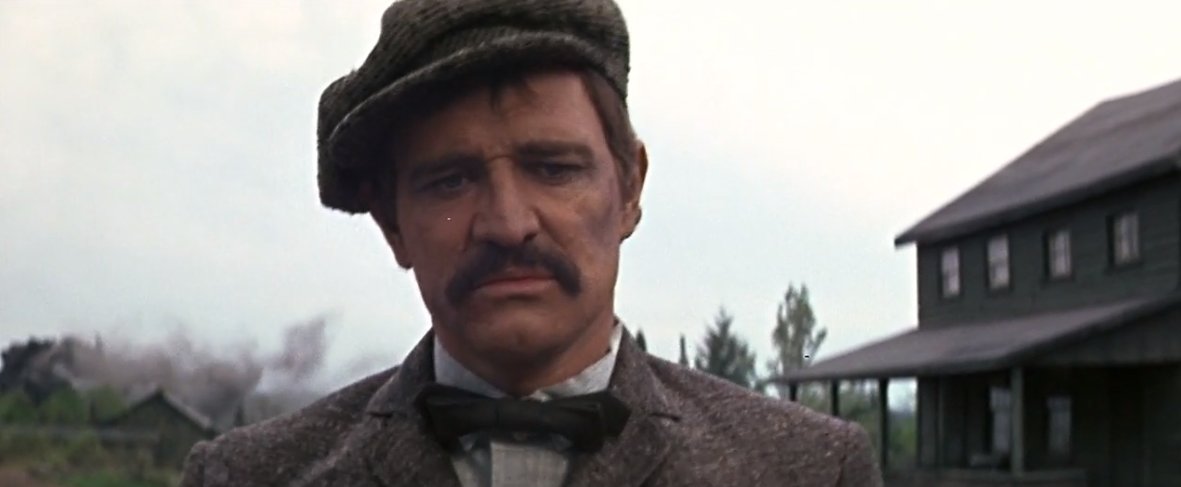
The Molly Maguires (1970)

molly maguires
Directed by Martin Ritt
Set in 1876 in Schuylkill County, Penn., Richard Harris plays an investigator. He’s trying to uncover a gang, known as the Molly Maguires led by a miner played by Sean Connery, who are a group of miners sabotaging the coal mines in order to get better working conditions.
I was blown away by this film. Everyone in it is great but this is Richard Harris’s movie. Harris gave a stunning performance. The film is also visually stunning, thanks to the masterful cinematography of James Wong Howe. This is a great example of how to light a film. For example, the setting is in the coal mines, but this movie is never too dark to see (like most movies today). To top it all off, this film has a beautiful score by the great film composer, Henry Mancini.

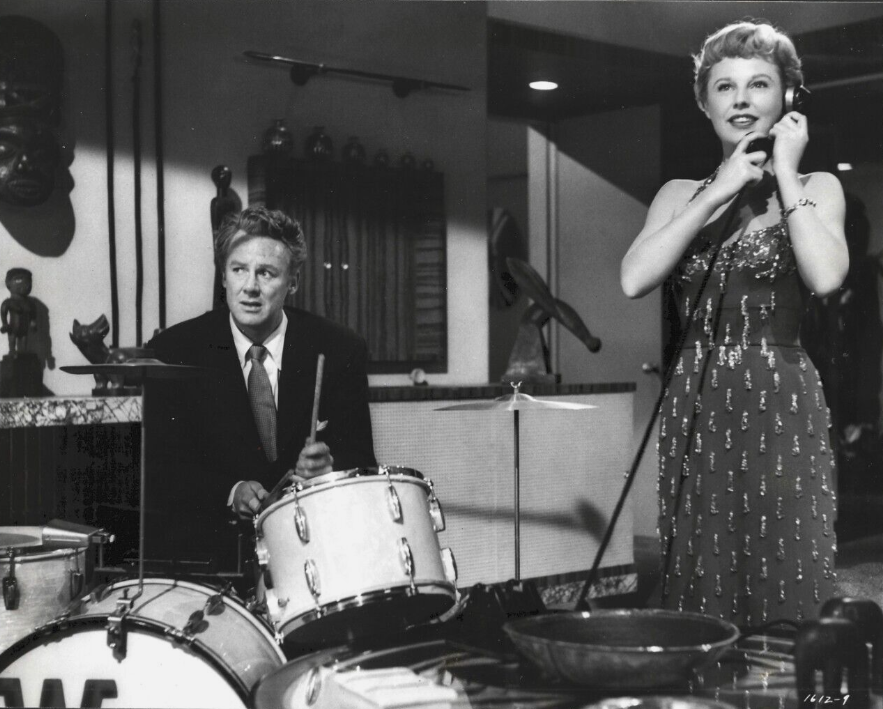
Remains to Be Seen (1953)

remains3
Directed by Don Weis
Van Johnson plays a luxury apartment manager who also dabbles in drumming. While responding to a complaint, he finds that one of his tenants is dead. Shortly after, the dead man’s niece arrives, plays by June Allyson. Johnson and Allyson investigate the murder together, while also falling in love.
This is a Van Johnson/June Allyson film that I have wanted to see for years and I finally tracked it down—it didn’t disappoint! It was a joyful mix of a murder mystery set to music. I enjoyed that the usually squeaky clean Allyson plays a brassy character. Best of all, this mystery had me fooled and I didn’t see the ending coming. So much fun!

The Four Horsemen of the Apocalypse (1921)

four horsemen
Directed by Rex Ingram
A wealthy landowner in Argentina has two daughters: one is married to a German man and another an English man. When the patriarch dies, the husbands of the daughters decide to take their families back to their home countries. But when World War I breaks out, it tears the two families apart as they fight for opposing sides. In his breakout performance, Rudolph Valentino plays the son of the English man. Wow that first shot of Valentino, no wonder everyone fell in love with him! This is one of those epic films that I’ve heard about since I first started watching classic films and I’m glad I finally was able to watch it. This is another anti-war film, with the “four horsemen” signifying the end of the world with World War I.

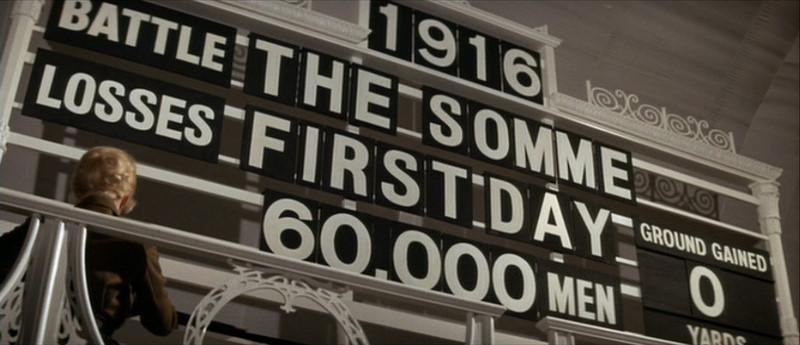
Oh! What a Lovely War (1969)

oh what a lovely war 6
Directed by Richard Attenborough
The history of World War I is shown through a mix of fantasy metaphors and real life scenes. The story follows the enlisted Smith family and the juxtaposition between the wealthy and military leaders.
“Oh! What a Lovely War” is big, breathtaking, and while it has humor, ultimately it’s devastating. Another anti-war film, the final scene is a jarring view as the camera zooms upward, showing thousands of white crosses signifying the lost lives. I could describe the film and the creative way it was shown, but I encourage you to see it yourself.

I Wouldn’t Be in Your Shoes (1948)

wouldn't be in your shoes
Directed by William Nigh
Don Castle plays a man wrongly accused and jailed for murder. After he throws his shoes out the window to quiet a neighborhood cat, someone uses the shoes to commit a murder and he is framed. While he is on death row, his wife, played by Elyse Knox, seeks the help of a police man, played by Regis Toomey, to prove her husband’s innocence.
This is an incredibly enjoyable B-movie noir, with the added bonus of being set at Christmas! I always enjoy seeing Regis Toomey in films, but

Honorable mention—All films I loved, but not as much as those above:
30 Is a Dangerous Age, Cynthia (1968)
Among the Missing (1934)
Donkey Skin (1970)
Dr. No (1962
Flesh and Fury (1952)
The Big Punch (1948)
The Enforcer (1951)
The Fabulous Senorita (1952)
The Longest Night (1936)
The Prisoner of Shark Island (1936)
The Wrong Box (1966)
Time Without Pity (1957)
Wild River (1960)

Check out the Comet Over Hollywood Facebook page, follow on Twitter at @HollywoodComet or e-mail at cometoverhollywood@gmail.com

Pages to Screen: The Bishop’s Wife

When a novel is turned into a film, several things can happen:
The novel source material is often better than the film, as the story on-screen misses nuances or thoughts portrayed in a book.

Other times, the film and book are so similar that they complement each other.

And occasionally, you wonder how such a lovely film could have come from the original book.

Resized_20231221_160638

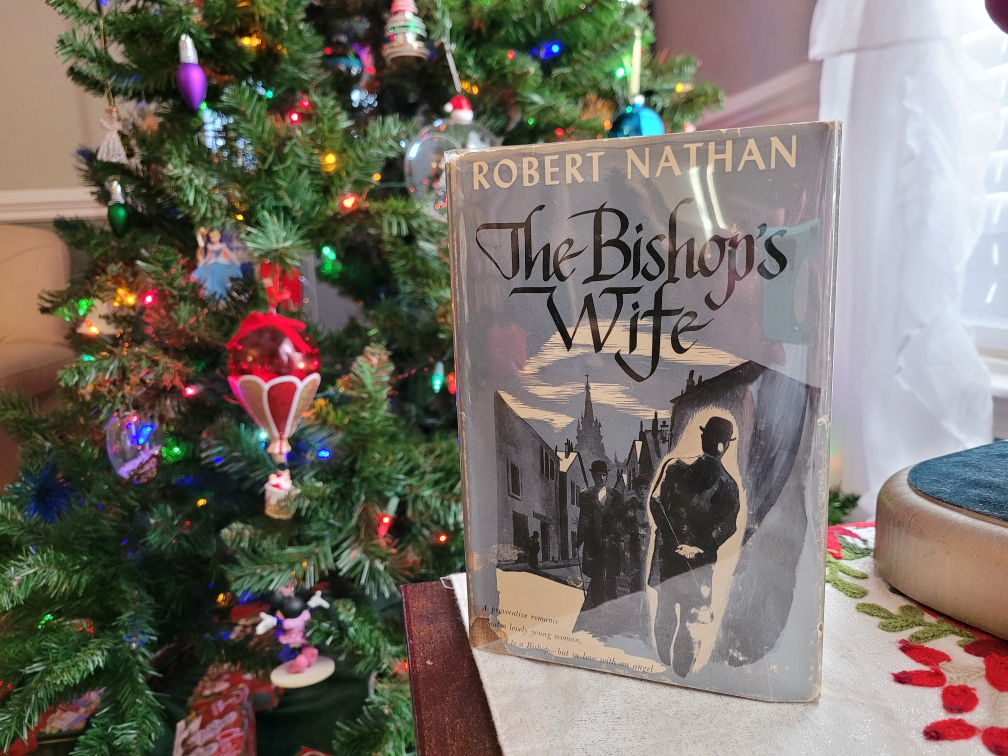
A photo of my copy of The Bishop’s Wife by Robert Nathan

That is how I felt while reading Robert Nathan’s 1928 novel, “The Bishop’s Wife.” The brief 192-page novel isn’t bad; it’s just quite different from the 1947 film it was transformed into, starring Cary Grant, Loretta Young and David Niven.

The nuts and bolts are there: there is a bishop, Henry Brougham, who is fundraising to build a cathedral; his wife, Julia Brougham, their daughter; and an angel who comes to visit them.

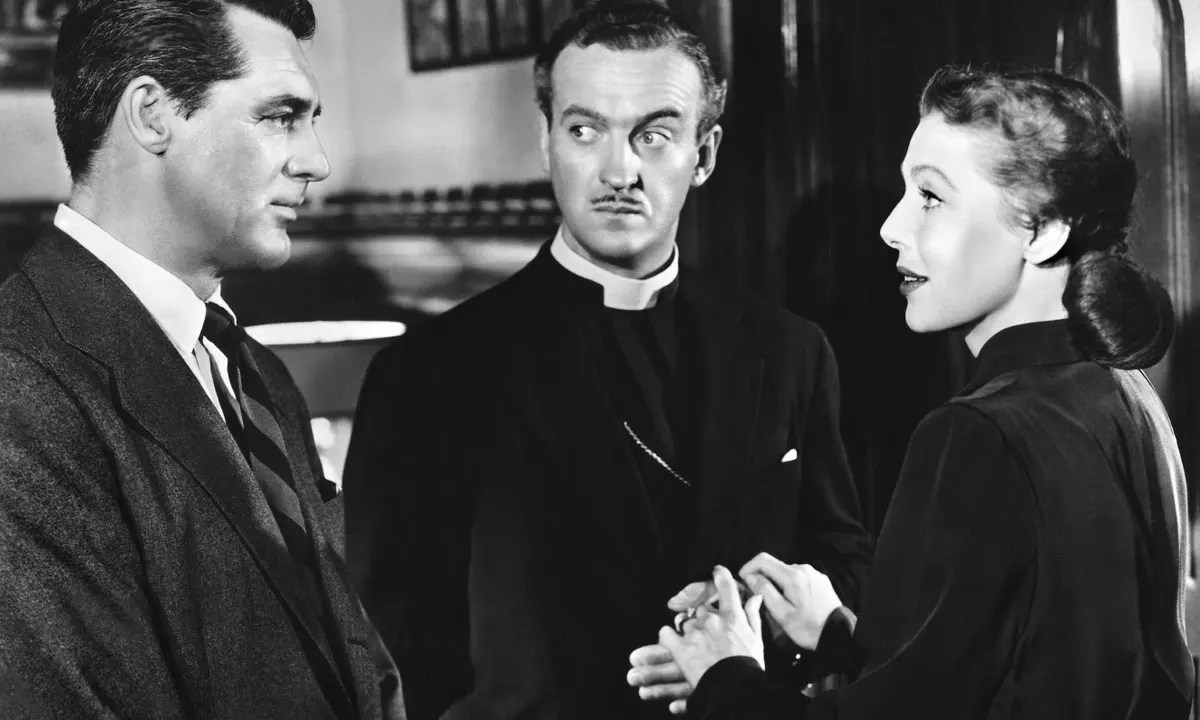
bisho's wife5In the beloved holiday classic films, the story follows the Bishop, played by David Niven, who feels he must build the most spectacular new cathedral the city has ever seen. As he fundraises and rubs elbows with the rich (such as Gladys Cooper’s character), the Bishop loses sight of what’s important about his religious role and alienates his family. His wife Julia, played by Loretta Young, longs for when they were happy and in love and first married, living in a less wealthy part of town. In an answer to his prayer for guidance for the chapel, an angel named Dudley, played by Cary Grant, visits the Bishop. The Bishop is constantly annoyed by Dudley and his perfection, but mainly because Julia enjoys Dudley’s attention, and Dudley seems to be falling for his wife. Dudley helps Julia see the simple pleasures of life, like buying a new hat or going ice skating, while showing a less-willing bishop that a cathedral is not what he needs.

In Nathan’s 1928 book, similarly, everyone is dissatisfied and looking for something, but in a different way.

The Bishop, Henry Brougham, is looking for a new archdeacon and a way to build a new cathedral. But the book — as the title alludes — is really about the Bishop’s wife, Julia. As a young girl, Julia imagined what she would feel and learn in marriage and the love she would feel, but that’s missing. She’s a perfect wife but feels no love or passion in her marriage. In the book, what is missing from Julia’s life is mainly that she is sexually dissatisfied. On their wedding night, the Bishop indicated that sex was “an act of hygiene” and not necessary to their love, as the Bishop feels he has to have pure and moral thoughts. In the book, Julia is much more meek and mild than Loretta Young’s character in the film, who seems kind and intelligent but weary.

Since she finds no love from Henry, Julia throws herself into her work as a dutiful wife and pouring affection over their little daughter Juliet, named for the tragic love of “Romeo and Juliet.”

Even young Juliet feels things are missing from her life, as she feels that she needs to be loved and adored by all her friends and adults.

bishop's wife

Cary Grant as Dudley the angel, David Niven as the Bishop, and Loretta Young as Julia (the Bishop’s Wife) in the film version of Robert Nathan’s book, The Bishop’s Wife

And then there’s the angel named Michael in the book. He’s philosophical, and instead of trying to halt the cathedral like in the film, he helps ask wealthy individuals for even more money. Michael makes Julia feel a longing she had kept buried, and Michael too longs for his past and a home.

In the film, Dudley shows Julia affection and love through simple pleasures, and in the book, Michael and Julia embrace at the end and they hear heavenly music. In both, Julia becomes frightened and sends the angel away.

Professor Wutheridge’s character is also in the book (played by Monty Woolley in the film), but he isn’t an old friend of the Bishop and Julia. The professor makes his first appearance in Chapter 9 (of 19), and he is a scholar who attends the Bishop’s services and has philosophical conversations with Michael. Michael even tells the professor he’s an angel, but this is the only person he tells besides the Bishop. In comparison, no one but the Bishop knows Dudley is an angel, but the professor figures it out in the film.

bisho's wfe5

Monty Woolley and Loretta Young in the 1947 film, The Bishop’s Wife

Chapter 9 is our first introduction to the topic of Christmas in the book.

While I type this review, I’m wondering if you may think, “Well, these do sound fairly similar!” and on paper, they do. But while reading the novel, you are struck by how different they are.

In 1928, the book received praising reviews.

“I know of no other contemporary American writer of fiction who is quite like Robert Nathan. His new book The Bishop’s Wife will give those who admire this highlight individual writer a chance to read him at his best,” wrote Arnold Mulder in his Oct. 8, 1928, review in the Post-Crescent.

The Oct. 14, 1928, review in The Los Angeles Times notes that the book is full of “charm, quiet humor and wisdom that it must prove a delight to every man who loves subtlety, sweetness and a dash of the devil.”

Again, while I didn’t dislike the book, the charm and humor were lost on me here as I compared it to the charming and magical 1947 film. While I watched the movie after I finished reading the book, I wondered, “How did they create this lovely story out of the book?”

bishop's wife4

Elsa Lanchester and Sara Haden admiring Cary Grant’s Dudley in the film version of The Bishop’s Wife. Screenshot by Comet Over Hollywood

There are so many wonderful, new scenes in the film that make the story for me. For example, when Dudley the angel goes to the wealthy, miserly Mrs. Hamilton (Gladys Cooper) and finally breaks her cold exterior. Or how the Bishop’s secretary (Sara Haden) and the family’s maid (Elsa Lanchester) can’t stop craning their necks at the extremely attractive new visitor, Dudley, and how they both start wearing flowers in their hair around him.

bishop's wife3

Gladys Cooper and Cary Grant in the film version of The Bishop’s Wife

There is also no confrontation between the angel and the Bishop telling him to leave. Instead, Michael departs on his own without much fanfare. The Bishop is much less vocal or powerful in the book, and in the end, everyone is largely left the way they were. In the novel, the Bishop never does anything to make his wife happy, not on his own, at least because Julia decides what will make her happy: another child to love.

While Robert Nathan’s “The Bishop’s Wife” was quite different, it’s interesting to read the source material for a favorite film and marvel at the work of screenwriters and how they can transform a 192-page stale novel and transform it into a beautiful film.

Pages to Screen: Gidget Goes to Rome (1963)

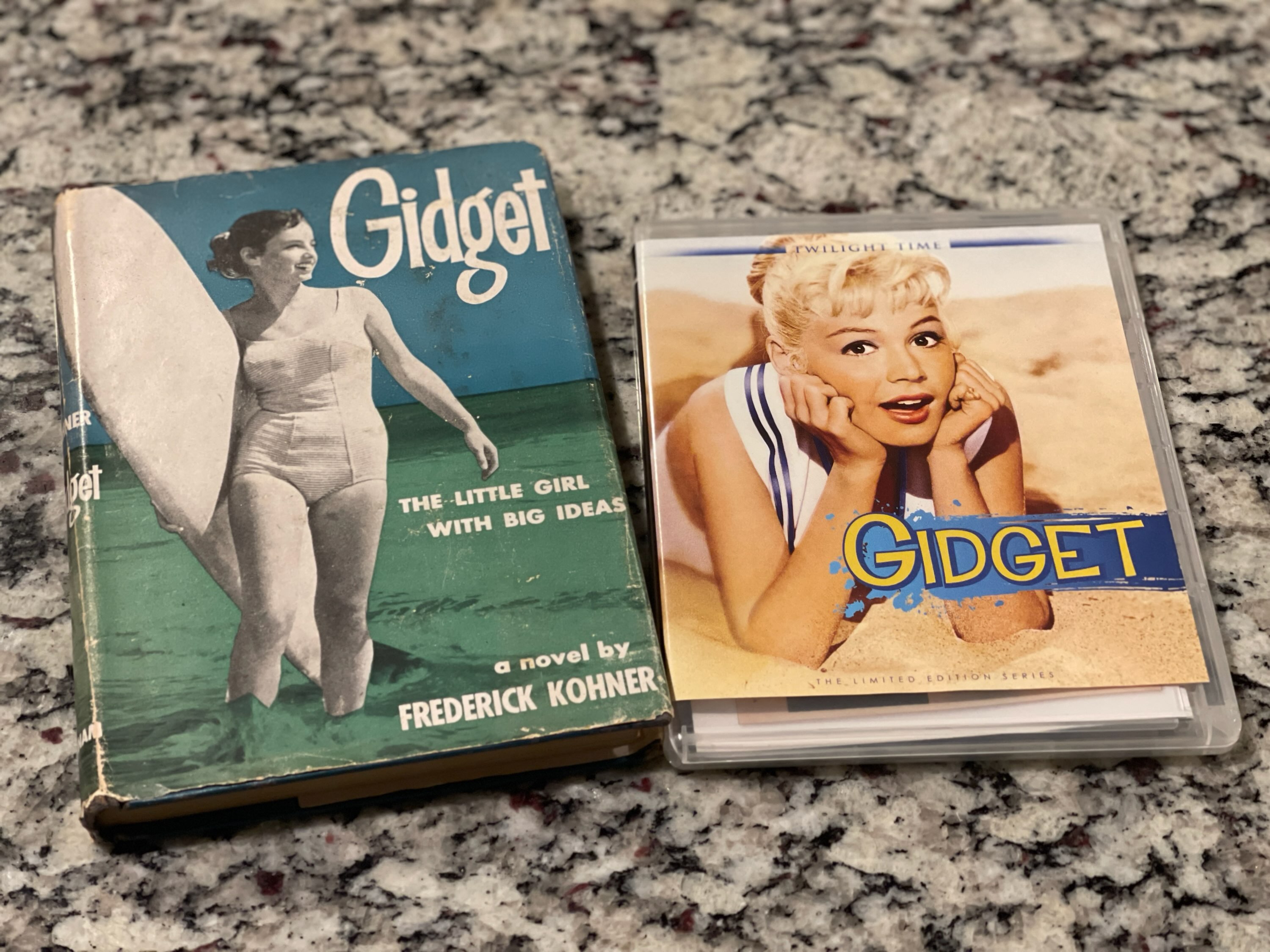
20230914_155059

Which is worse: the book version of “Gidget Goes to Rome” or the feature film?

Well, it’s tough to say. Let me provide some background and break it down.

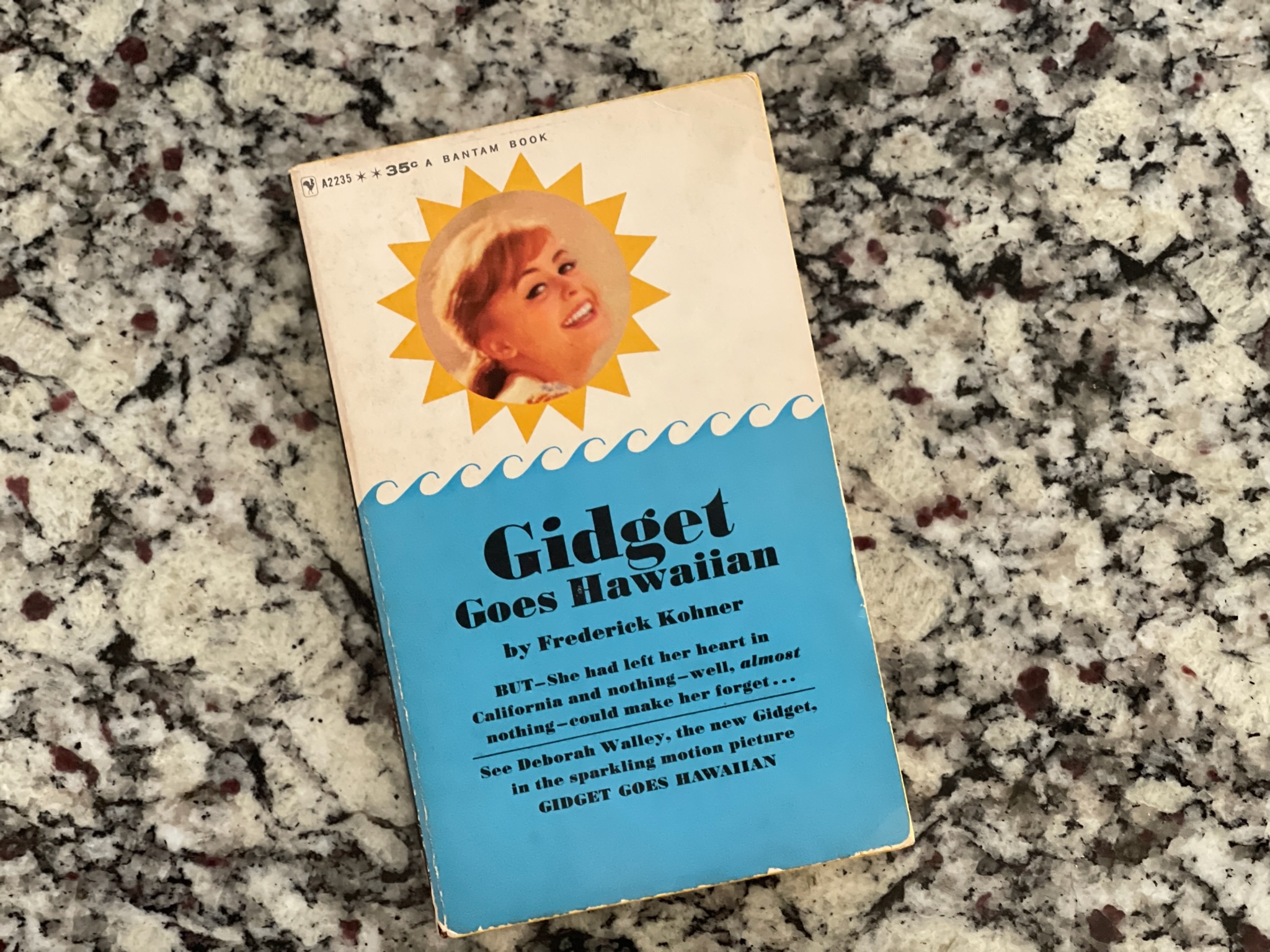
Similar to “Gidget Goes Hawaiian,” author and screenwriter Frederick Kohner wrote the novelization of the feature film “Gidget Goes to Rome” (1963). Kohner based his novel on the film’s screenplay by Ruth Brooks Flippen, Katherine Eunson and Dale Eunson. This was the last “Gidget” feature film, but not the last “Gidget” novel. In between “Gidget Goes Hawaiian” (1961) and “Gidget Goes to Rome” (1963), Kohner wrote another original Gidget story, “The Affairs of Gidget” in 1963.

The general “Gidget Goes to Rome” plot of both the book and film is that Gidget and her two female friends are eager to go to Italy with Moondoggie and his two male friends. The families of the three girls won’t let them go without a chaperone, so the guys dig up an eccentric aunt who joins them. The aunt also finds a pretty female tour guide, Daniella, whom Moondoggie is attracted to. Gidget meets an older Italian man (this differs in the stories) who escorts her around the city. Angry at Moondoggie for liking Daniella, Gidget throws herself into spending time with the Italian man.

That is where the similarities end. Below are the differences between the two:

The differences:
The “friend of her father”:
• In the film: To keep an eye on his daughter, Gidget’s dad (played by Don Porter) writes to an old friend in Italy, Paolo Cellini (played by Cesare Danova), to look after his daughter but in secret. Paolo is a magazine reporter who seeks Gidget out and makes up a story about interviewing her for an article on an American tourist. Gidget swoons for Paolo, who gives her a great deal of attention but doesn’t encourage her. When Gidget learns he’s married and has children, she is devastated.

• The book: In case she needs anything, Gidget’s father gives her the name of an old classmate who lives in Italy, Dr. Marcello Paladino. When Gidget falls ill, she calls Dr. Marcello Paladino … but there are two in the phone book. Dr. Paladino shows Gidget around the city and courts her, eventually admitting that he is married, but she is on holiday for Ferragosto, and men have a romantic rendezvous when their wives are out of town on holiday. The two are romantically involved (while Moondoggie sulks), and at the very end, we learn that he is the wrong Dr. Paladino.

gidget-goes-to-rome-cesare-danova-cindy-carol-original-lobby-card

Gidget and Paolo.

Daniela, the tour guide:
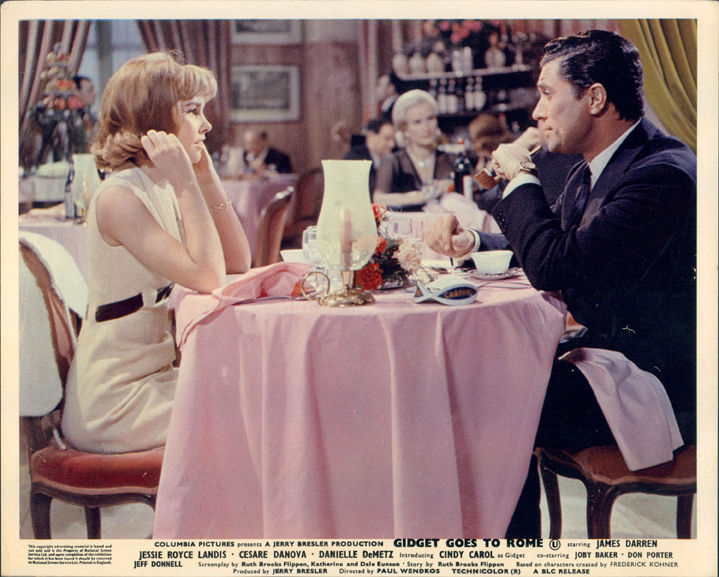
• In the film: Daniela is a pretty tour guide whom Moondoggie/Jeff immediately flips for. Moondoggie kicks Gidget to the curb while romancing Daniela and eventually trying to propose and take her back to the States.
In the book: Jeff flirts with Daniela, who reciprocates, which angers Gidget. The two fight and agree to have a separate time. Gidget gets in deep with Dr. Paladino. Meanwhile, Daniela flirts with Jeff’s two friends, eventually tossing them all aside. Midway through the novel, Jeff is exploring the city alone.

• In the book, it’s that Gidget is the one having a romantic good time, unlike in the movie. I am sure this was reversed so as not to encourage young women from having European romantic escapades. It seems only boys can do that.

I lovingly call the film “Gidget Goes to Rome,” “The Gidget where Moondoggie is an asshole.” But while reading the book, I thought, “Is he more of a jerk in the book or the movie?” Well, it’s a toss-up. In the movie, Moondoggie cheats on her — they break up, but he’s shocked when she returns his pin while he’s romancing Daniela! At least in the book, he’s suffering while she’s with Dr. Paladino and isn’t with Daniela for long. In the book, Moondoggie is cold and distant, and the two have little time together and don’t even kiss (they note this). In the movie, they have some happy times together right when they arrive in Rome, but it is short-lived. I guess he’s equally a jerk in both.

gidget goes to rome32

James Darren is smitten with Daniela the travel guide.

Now, to discuss why both the movie and the book stink:

The movie:
While the original “Gidget” (1959) film is 95 minutes, “Gidget Goes to Rome” runs at 106 minutes, and that extra 10 minutes feels very long, those minutes are filled with:
Dream sequences: Two dream sequences of Gidget imagining she is Cleopatra and another where she is a Christian martyr in the gladiator ring. These are not in the book.
• Several zany, shouty moments with Gidget:
– Gidget walks past a “do not enter” sign at a museum and is chased by museum staff and taken by police to the embassy. (Not in the book).
– Gidget throws her mother’s lucky coin into the Fontana di Trevi and jumps into the fountain to retrieve it. Police drag her out with lots of shouting. This does happen in the book, but instead, she’s trying to find Moondoggie’s fraternity pin that she threw into the fountain.
– Gidget is going to watch a fashion show with designs by Fontana, enters the back door, gets forcibly changed by fashion show helpers, and is pushed out onto the runway. This begins a chase from police, fashion members, etc. This does not happen in the book.
• Gidget pathetically and immaturely tries to get Jeff’s attention the whole time. Book Gidget is sort of dumb, but she at least goes out on her own and has a good time.

gidget goes to rome9

Gidget and Jeff/Moondoggie while they are still in love in Rome.

The book:
While the book eliminates the extra asinine parts (dream sequences, getting lost in the museum, the fashion show, etc.), it still has this stupid story. But I think that the book’s biggest crime is that it’s boring. The descriptions of the tourist sights are necessary but long-winded. The dialogue from Dr. Paladino is written in mixed English and Italian, making it a bit difficult to read. I looked up a few translations but eventually gave up and just used context clues.

I just imagined Frederick Kohner, who created this character, reading the screenplay and shaking his head thinking, “Well, I’ll do the best I can with this material.” Mercifully, the book ends at the wild party and is wrapped up neatly there, unlike the film, which continues after the party (which is a minor point) and goes on and on.

What I find frustrating about the 1961 and 1963 feature films with Deborah Walley and Cindy Carol films is that while Gidget is allowed to mature in the books, she still seems very young in the movie. Not only is she young, but she’s whiney and immature.

The film has some good points: the bright Technicolor, the fun clothes and Jessie Royce Landis is humorous. And in the book, I prefer that Gidget has been going out with a random older man who doesn’t know her father. Makes for a better plot point.

I see blame tossed at Cindy Carol for this film being a stinker, but honestly, I think it’s just a lousy storyline and script. Gidget got her own La Dolce Vita, but we suffered.

This article is part of the 2023 Classic Film Summer Reading Challenge hosted by Out of the Past.

Check out the Comet Over Hollywood Facebook page, follow on Twitter at @HollywoodComet, follow me on Letterboxd or e-mail at cometoverhollywood@gmail.com
Page to Screen: Gidget Goes Hawaiian

“It’s not the same, down by the sea … since the Gidget came to Waikiki …” It’s especially not the same since in the second Gidget film, “Gidget Goes Hawaiian” (1961), the whole cast except for Moondoggie is different.

Thankfully, the book version of “Gidget Goes Hawaiian” is much better than the film.

gidget goes hawaiia

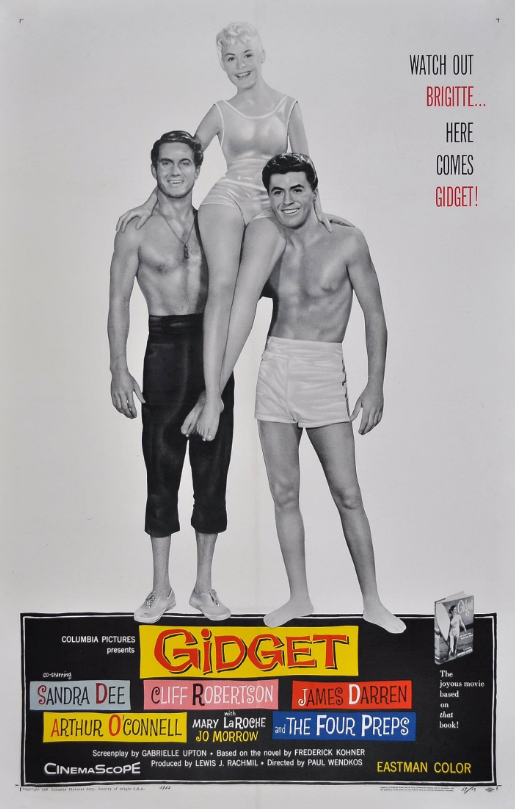
To recap: In 1957, screenwriter Frederick Kohner wrote the bestselling novel “Gidget: The Little Girl with Big Ideas,” which was based on the summer adventures of his daughter, Kathy. Gidget discovers surfing, hangs out with a college-aged male surfers at Malibu and has a crush on one in particular, named Moondoggie. The bestselling book was adapted into the hit film, “Gidget” (1959), starring Sandra Dee, James Darren and Cliff Robertson.

Continue reading

Pages to Screen: Gidget (1959)

From Frankie and Annette beach party films to the Beach Boys singing “Surfin’ U.S.A,”— it all started because of one book: Gidget by Frederick Kohner.

Published in 1957, Kohner based the book on the summer adventures of his daughter, Kathy.

gidget

Kohner was a Hollywood screenwriter who left his home of Austria-Hungary when the Nazis invaded. Some of his screenwriting credits include MAD ABOUT MUSIC (1938) and IT’S A DATE (1940). One day, while riding in the car with her father, Kathy said she wanted to write a story about her days at the beach, Kathy Kohner-Zuckerman told Comet Over Hollywood in a 2015 interview.

“I told him, ‘There is a guy who lives in a shack,’” Zuckerman said. “Dad said, ‘Well, you aren’t a writer, but I know you keep diaries, and I’ll write the story. Sounds like fun.’ I told my dad pretty much everything; I had a very good relationship with him. I still have those diary pages.”

kathy-and-fredrick

Screenwriter Frederick Kohner with his daughter Kathy, who served as inspiration for Gidget.

From her diary and conversations together, Frederick Kohner wrote the best-selling novel “Gidget: The Little Girl with Big Ideas.” The main character, Franzie, becomes interested in surfing and tries to break into a male-dominated sport. Because of her short stature, the guys nickname her Gidget, short for girl midget. As she learns to shoot the curl, Franzie has a crush on one of the surfers, Jeff, nicknamed Moondoggie.

The book is filled with surfer slang and nicknames and includes some truths. For example, while Kathy had a crush on one of the surfers, she never dated any of them, like Gidget and Moondoggie. The name Franzie was also inspired by Kathy’s mother, according to Comet’s 2015 interview with Kohner-Zuckerman.

“Most of our friends were shocked when we let Kathy go around with those surfers, and sometimes I was shocked too,” Frederick Kohner said in a 1957 LIFE magazine interview. “But she isn’t the sort of girl who can hide anything, and she would come home and tell us everything she had done. The more I heard, the more interested I became.”

While some of the book is primarily fiction, a good bit is based on actual events.

“There was someone who lived in a shack, I did have a big crush on one of the surfers, I did buy a board with a totem pole on it, I did learn how to surf, I did get tonsillitis a lot, I did bring food to the beach for the guys, I did try very hard to be liked,” she said in the 2015 interview. “But as for the big crush, I don’t know whether it was reciprocated or not. I think sometimes he did like me, and other times he thought I was a kid sister. There was no big romance, but I was definitely charged on Bill. That was his name.”

The book was an immediate success, and Kohner-Zuckerman worried what the other surfers would say. While Kathy received national attention, including a LIFE magazine article in the Oct. 28, 1957, issue, she never felt the success was hers.

“It was my father’s success,” she told Comet in 2015.

Gidget on screen
“Published this month, it already has been sold to the movies,” Life magazine said in the Oct. 28, 1957, article.

gidget2

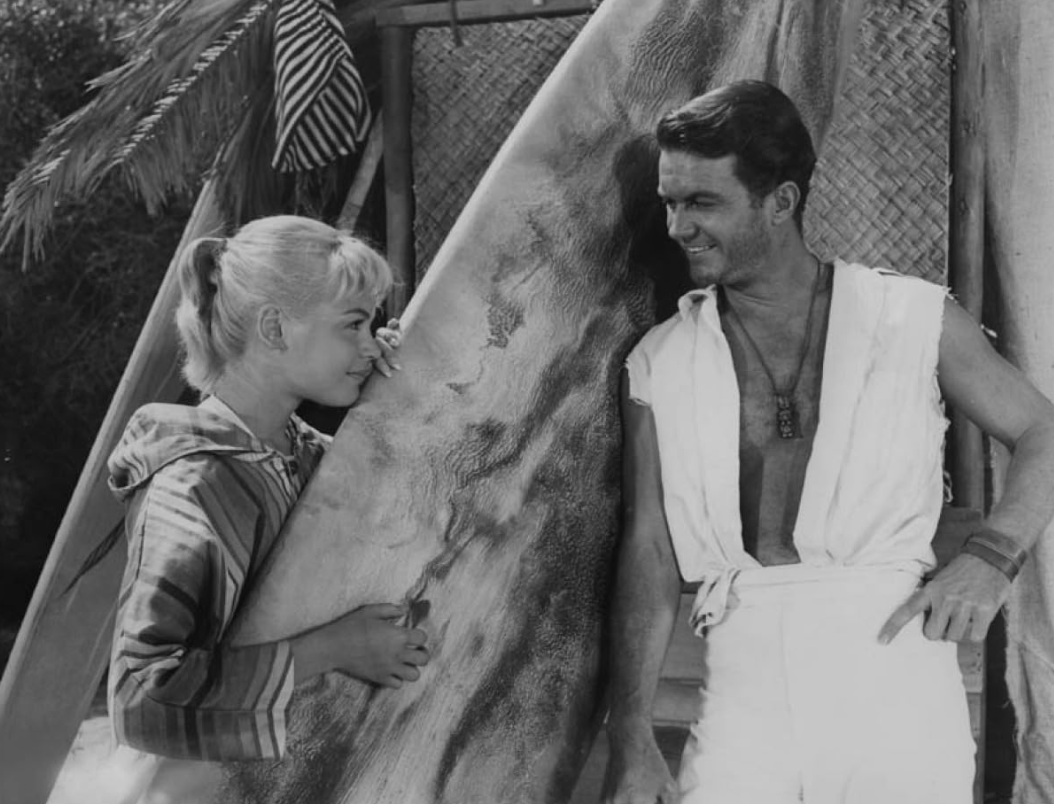
The book was brought to the screen in 1959, starring Sandra Dee in the title role. While the film version of “Gidget” and the novel are similar, there are several differences. In general, Kohner’s Gidget is a bit more street savvy, clever, and a bit of a smart ass. Sandra Dee’s Gidget is sweet and demure. Here are other differences:
• The film begins with Gidget reluctantly going on a “manhunt” with her friends. There isn’t a manhunt in the book, just a division with her friends. She keeps surfing a secret from both her family and friends.
• The book Gidget is bright but not as academic as Sandra Dee.
• Surfing is a secret from her friends and family.
• In the book, Gidget’s parents aren’t home when she leaves for the luau. The luau plot is entirely different: Gidget attends alone, Moondoggie is mad about it, and there is a fire because the guys surf with torches.
• The Kahuna isn’t so sensitive in the book. He doesn’t have a bird and doesn’t become a pilot. Maybe this was because the movie didn’t encourage people to become surf bums.
• Moondoggie has a steady girlfriend.

Elements that are the same:
• Gidget does bring food for the other surfers, though more regularly, and legs of lamb are mentioned.
• Gidget does have tonsillitis.
• Gidget stays overnight in Kahuna’s shack after the luau, but it’s because she can’t get home after the fire. It doesn’t play out the same and is innocent.

Interestingly, other plot points in the book that aren’t used in the 1959 film are used in the 1965 Sally Field TV show. Like on the TV show, in the book, Gidget has a friend named LaRue who loves horses (there is a whole episode about her love of horses). Also, like on the TV show, Gidget has a sister and a psychologist brother-in-law named Larry in the novel.

While there are several differences, I think Cliff Robertson is well-cast as the easygoing Kahuna, and James Darren fits the bill for the moody Moondoggie.

gidget5

gidget4

While there are several differences, I love both the book and the film. This was my fourth time reading the book, and I enjoyed revisiting it every time. And both the book and the film were incredibly important to the surf craze.

Kohner-Zuckerman remembers meeting the cast and seeing the film.

“It’s odd being that person and watching the films about what Gidget does,” she told Comet in 2015. “Sandra Dee is Gidget. There’s me, the real person, but she was great as the character. In the Sally Field TV show- that wasn’t my life. She got involved in high school and the band and journalism. As cute as it was, that wasn’t me. I wanted to be one of the gang or one of the guys. I didn’t like high school. I wanted to be in Malibu.”

Most of all, Kohner-Zuckerman still loves the story because it’s about a young girl having the guts to buck societal standards and do what she wants.

“A large element of the Gidget story is having the attitude to pursue what you want.”

This article is part of the 2023 Classic Film Summer Reading Challenge hosted by Out of the Past.

Check out the Comet Over Hollywood Facebook page, follow on Twitter at @HollywoodComet, follow me on Letterboxd or e-mail at cometoverhollywood@gmail.com
Favorite new-to-me films of 2022

In 2022, I didn’t watch as many due to several life changes. I only watched a little over 400 feature-length films, but still saw several great ones. Below are my favorite new-to-me films of 2022, in order of when I watched them:

cat ballou3

Cat Ballou (1965)
Directed by Elliot Silverstein
I watched this in memory of Dwayne Hickman (and now we’ve lost Michael Callan), and had a great time. I wish we had more Hickman and Callan buddy films! Bittersweet to see Nat King Cole in this, since he died shortly after.

private war2

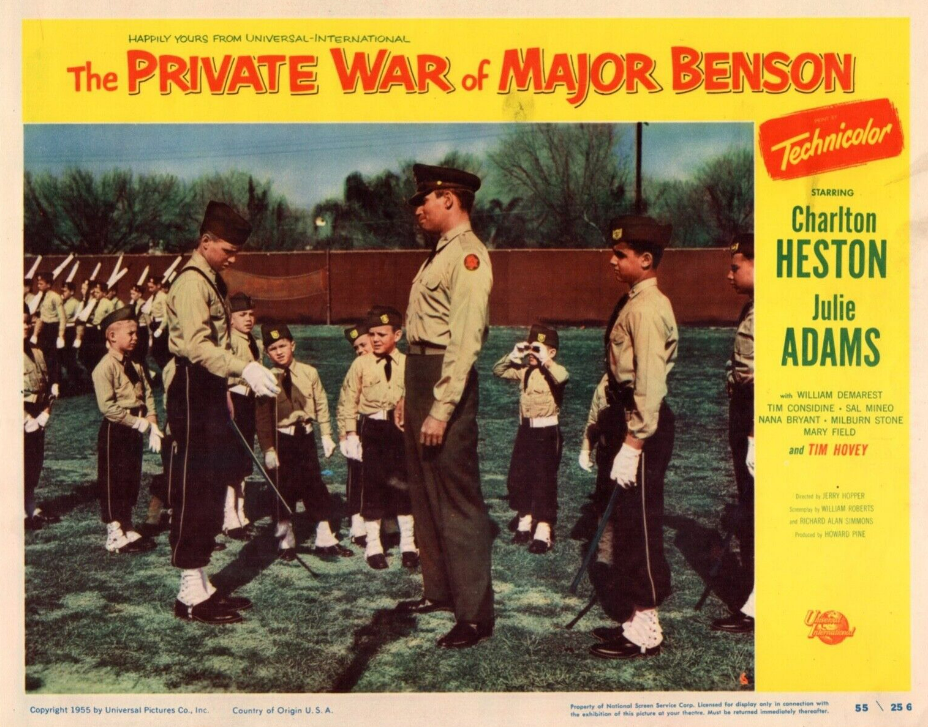
The Private War of Major Benson (1955)
Directed by Jerry Hopper
I wanted to watch this film for several years and was happy to finally watch it. An interesting different role for Charlton Heston and lots of cute kids. I loved seeing young Sal Mineo in an early role.

carnival of sinners

La main du diable/Carnival of Sinners (1943)
Directed by Maurice Tourneur
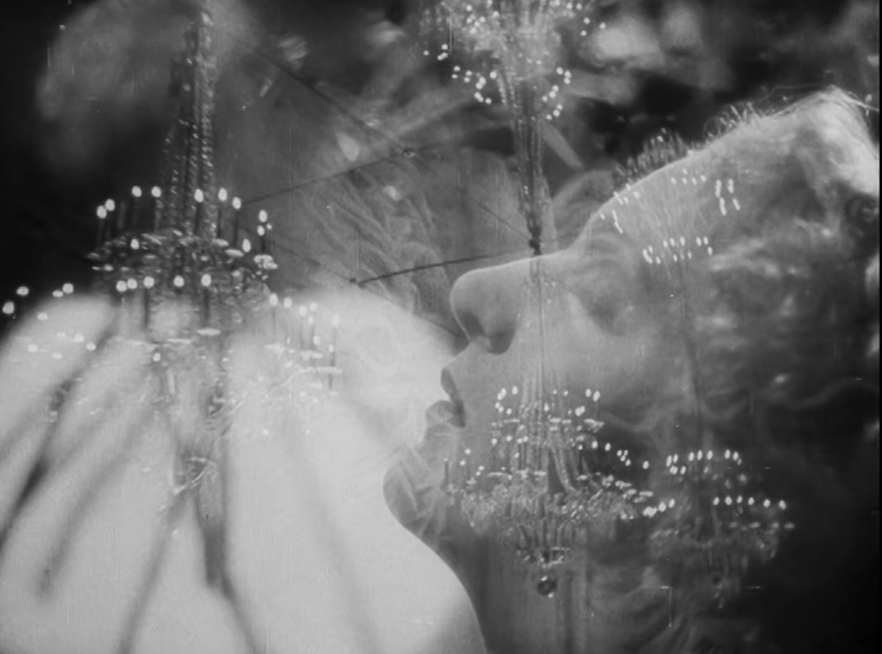
This may actually be my all-time favorite film of 2022. I watched this in January 2022 and it has stuck with me ever since. The visuals and storytelling are simply stunning. With an intriguing plot that keeps you wondering “How will our main character get out of this predicament?” My jaw was quite literally dropped throughout most of the film. Highly recommend seeking this one out. Few films have captivated me like this one.

this happy breed

This Happy Breed (1944)
Directed by David Lean
A visually stunning film with bright Technicolor that interestingly contrasts with the poignant story. Like real life families, you see the happiest and most crushing moments of their life. There are some very sad moments in this film, and the end left me worrying for one of the main characters, as if she was a real person. It’s overall so stunning, and I love John Mills.
sound of hte mountain

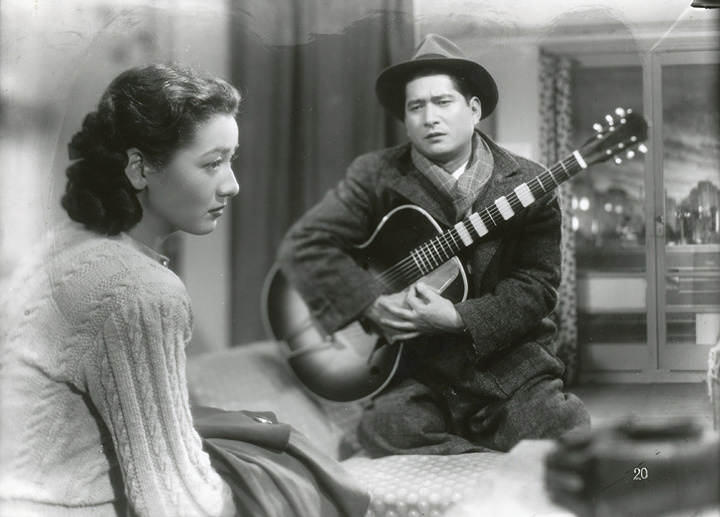
Yama no oto/Sound of the Mountain (1954)
Directed by Mikio Naruse
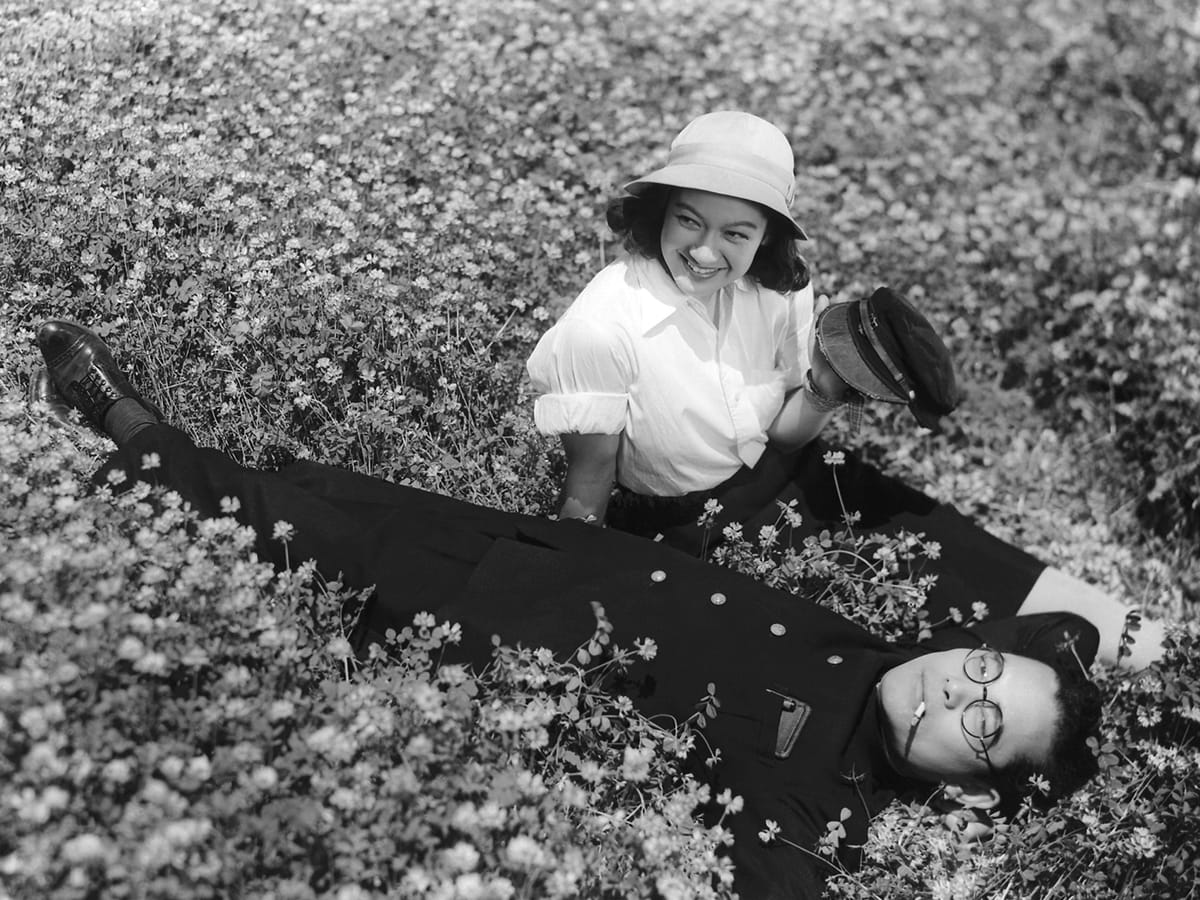
A beautiful and sad film about how you can do everything to a relationship, but it may not matter. In this case, it’s about a husband and wife.
Naruse also shows how separated the husband and wife are by showing the wife with her father-in-law more than she is with her spouse, showing you can love someone’s family more than you may love them. Really crushing but lovely.

obsession

Obsession (1976)
Directed by Brian De Palma
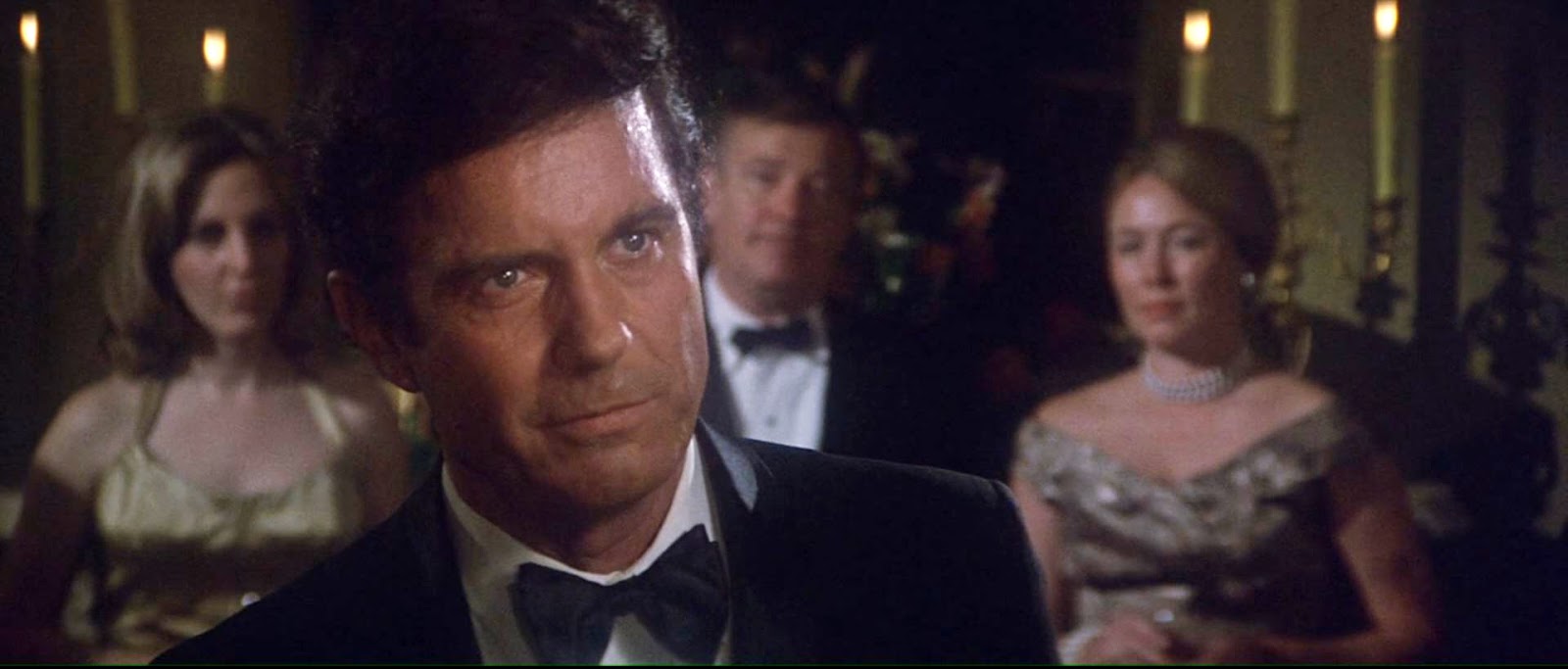
Featuring composer Bernard Herrmann’s last score, this film caught me off guard. I wasn’t sure if I’d even like it, but the end unexpectedly left me in tears. I loved the cinematography that gave the feel of steamy, humid New Orleans heat. I part suspected the end twist and was shocked I was correct. I also love Cliff Robertson. As someone born and raised in the south, the only downside was John Lithgow’s exaggerated (and bad) southern accent.

last of sheil

The Last of Sheila (1973)
Directed by Herbert Ross
Probably my second favorite film of the year, and the only one on this list that had a rewatch. This is an excellent all-star “whodunit” cast. The Last of Sheila is such a fun film to watch and has excellent dialogue throughout. You keep guessing and laughing throughout.

dANCE CARD

Un carnet de bal/Dancing Card (1937)
Directed by Julien Duvivier
I would love to have the gall to be a woman in her 30s, revisiting all the men who loved me when I was 16 and say, “Do you remember me?” without saying my name or giving any context. I loved the vignettes of this story and seeing what happened to each lover. Also visually stunning. Probably my third favorite film of the year. The film LYDIA was later loosely based on this story.

the river3

The River (1951)
Directed by Jean Renoir
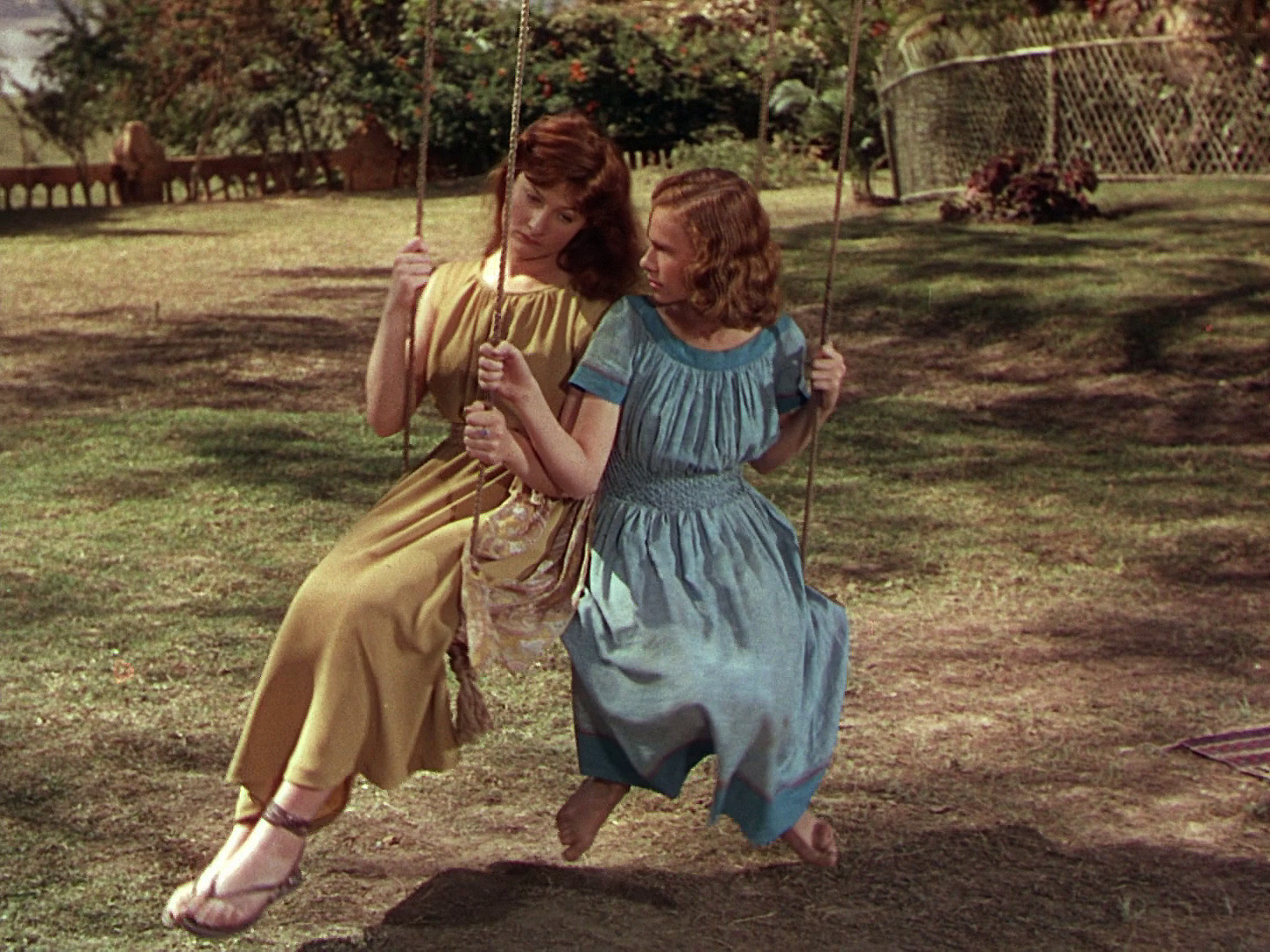
Visually stunning in Technicolor, this is a very quiet, methodical coming-of-age story. It had some very sad moments where you thought, “This isn’t really going to happen, right?” and then it does. The film is equally heartwarming and heartbreaking.

lady godiva

Lady Godiva Rides Again (1951)
Directed by Frank Launder
I had the best time watching this movie. This was a fun, humorous look at the world of beauty contests and the rise and fall of a beauty queen. I loved Dennis Price playing a self-absorbed movie star, and the small roles played by Alastair Sim, Googie Withers and Trevor Howard. Not the best film ever made, but lots of fun. Also, you can catch a quick glimpse of Joan Collins in this film.

cash on demand

Cash on Demand (1961)
Directed by Quentin Lawrence
A thrilling, holiday-themed heist film that keeps you wondering what will happen. Peter Cushing gives an excellent performance in this.

underworld

The Underworld Story (1950)
Directed by Cy Endfield
That Dan Duryea. Even when you’re supposed to like him (I think?), you still aren’t sure if you can trust him. Duryea gives an excellent performance as a slimy reporter who may or may not be on the level, but also may be the only person you can turn to in this film. Howard Da Silva may steal the show, though. Stunning cinematography by Stanley Cortez. The only downside in this film is the odd casting of Mary Anderson, but otherwise I loved the film.

7 women

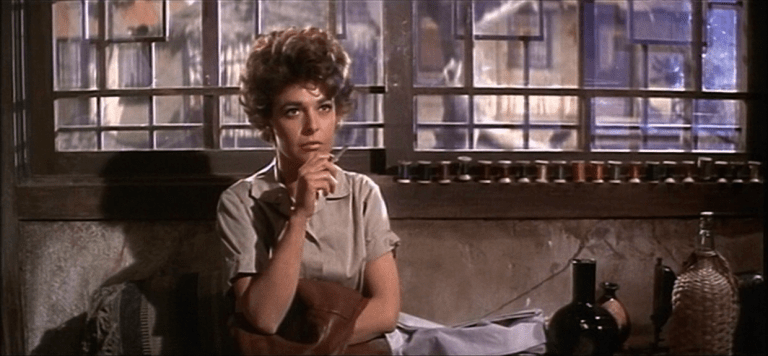
7 Women (1965)
Directed by John Ford
Beautifully photographed, this film yields excellent performances from a largely female cast, including Anne Bancroft, Sue Lyon, Margaret Leighton, Flora Robson, Mildred Dunnock, Betty Field and Anna Lee. Eddie Albert gives a great performance, as a weak man who tries to be strong and ends up failing. The only downside of the film is the dubious casting of Mike Mazurki

captain newman md

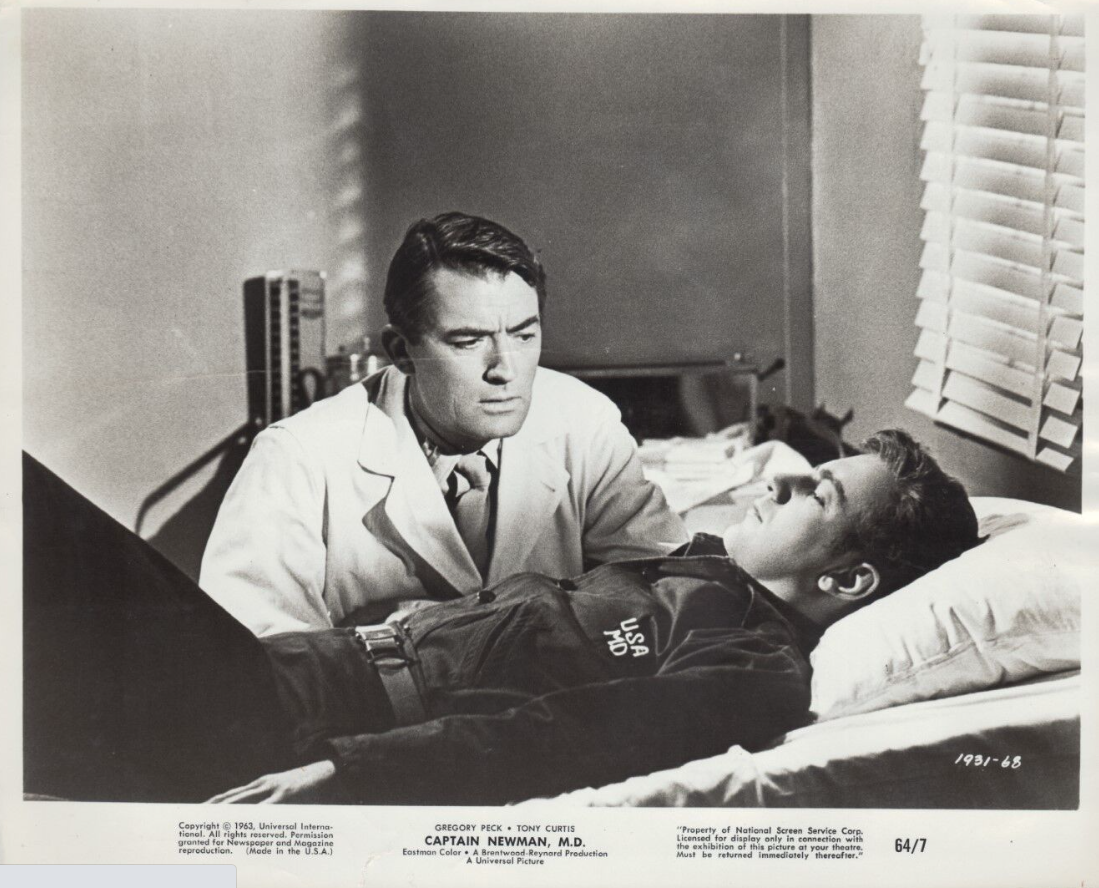
Captain Newman, MD (1963)
Directed by David Miller
Tony Curtis brings the comic relief, Gregory Peck brings the balance, but Bobby Darin and Eddie Albert provide the stand out performances. Darin deserved an Academy Award-nomination for this one. Wow!

niights of

Le notti di Cabiria/Nights of Cabiria (1957)
Directed by Federico Fellini
I can’t believe I saw “Sweet Charity” before seeing this. Needless to say, this film is worlds better than the American musical remake. This was a crushing film with some sweet and funny moments. I can’t believe it took me this long to see it.

dirty dozen

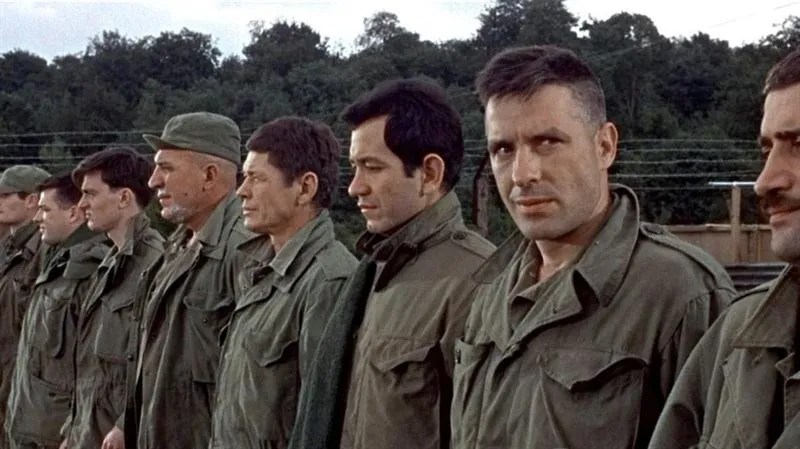
The Dirty Dozen (1967)
Directed by Robert Aldrich
Remember that scene in “Sleepless in Seattle” where they pretend to cry about a scene in “The Dirty Dozen”? Well, I actually did cry during “The Dirty Dozen”— largely because of the Donald Sutherland character. I really enjoyed this non-conventional World War II film with an all-star cast. Shout out to Robert Ryan looking really cool in sunglasses.

brainstorm

Brainstorm (1965)
Directed by William Conrad
A thrilling film with lots of twists and turns, that really makes you start wondering about the lead character, played by Jeffrey Hunter. Dana Andrews plays a rare bad guy role, and Hunter is excellent. Also doesn’t hurt that Andrews and Hunter are both very handsome.

beast must die

La bestia debe morir/The Beast Must Die (1952)
Directed by Román Viñoly Barreto
This is an excellent film noir thriller, that tells you right off what happens, but then uses flashback to show why it happened. While it is exciting, it also is mixed with heartbreak as we see the motive for the lead character seeking revenge.
I ended this year with seeing the French retelling of this story, and while it is similar, I think the Argentinian story is slightly better done.

my man and i

My Man and I (1952)
Directed by William A. Wellman
This film caught me off guard with how great it was. Ricardo Montalbán plays a naïve, unbelievably sweet guy, Shelley Winters plays a woman who is a mess, and Wendall Corey is just a bad dude. Claire Trevor, as Corey’s wife, gives Ricardo Montalbán a look that could melt butter. This was just a great story and I really didn’t expect to love it as much as I did.

reluctant saint

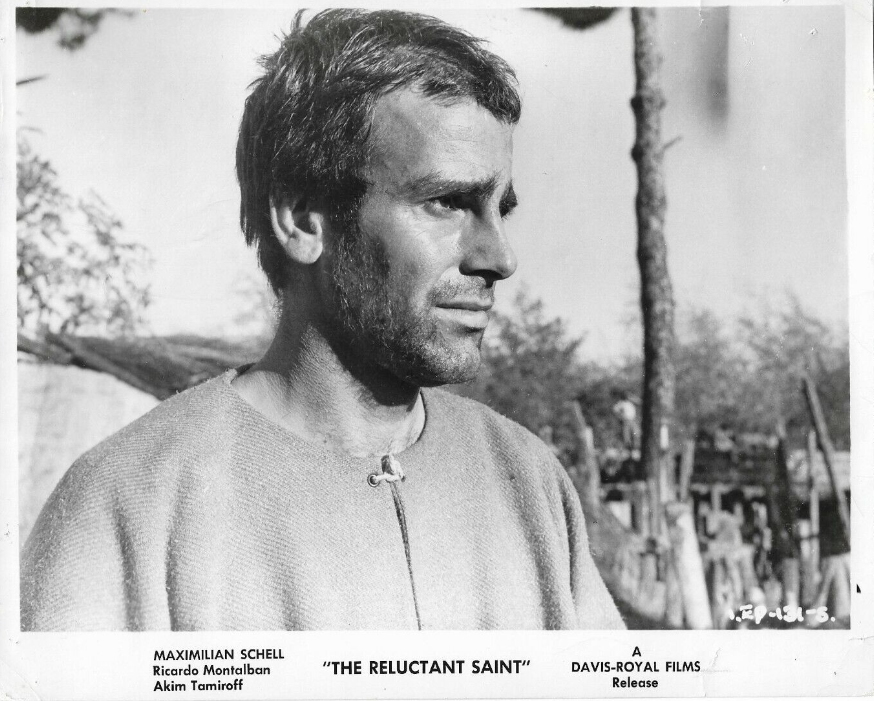
The Reluctant Saint (1962)
Directed by Edward Dmytryk
Another film that I didn’t expect to love as much as I did. Maximilian Schell is fabulous and broke my heart the whole time — but in the best way. I usually think of Schell playing suave or forceful characters, but here he is a sweet, mild man. It’s a quiet, lovely film.

hell to eternitty2

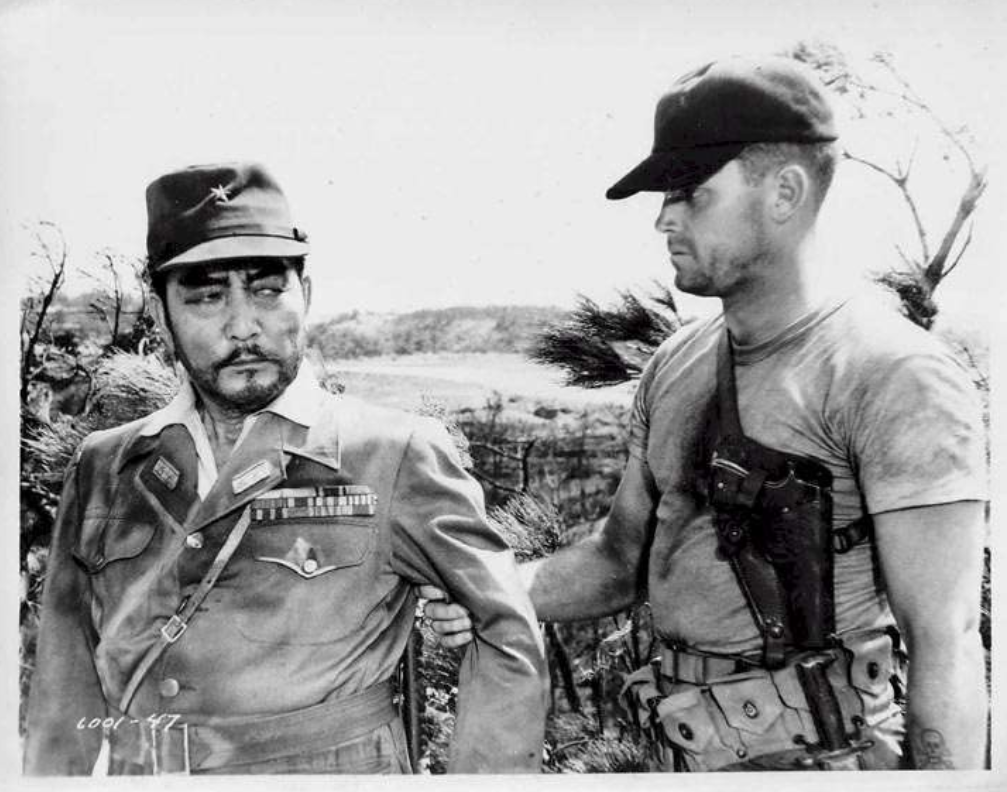
Hell to Eternity (1960)
Directed by Phil Karlson
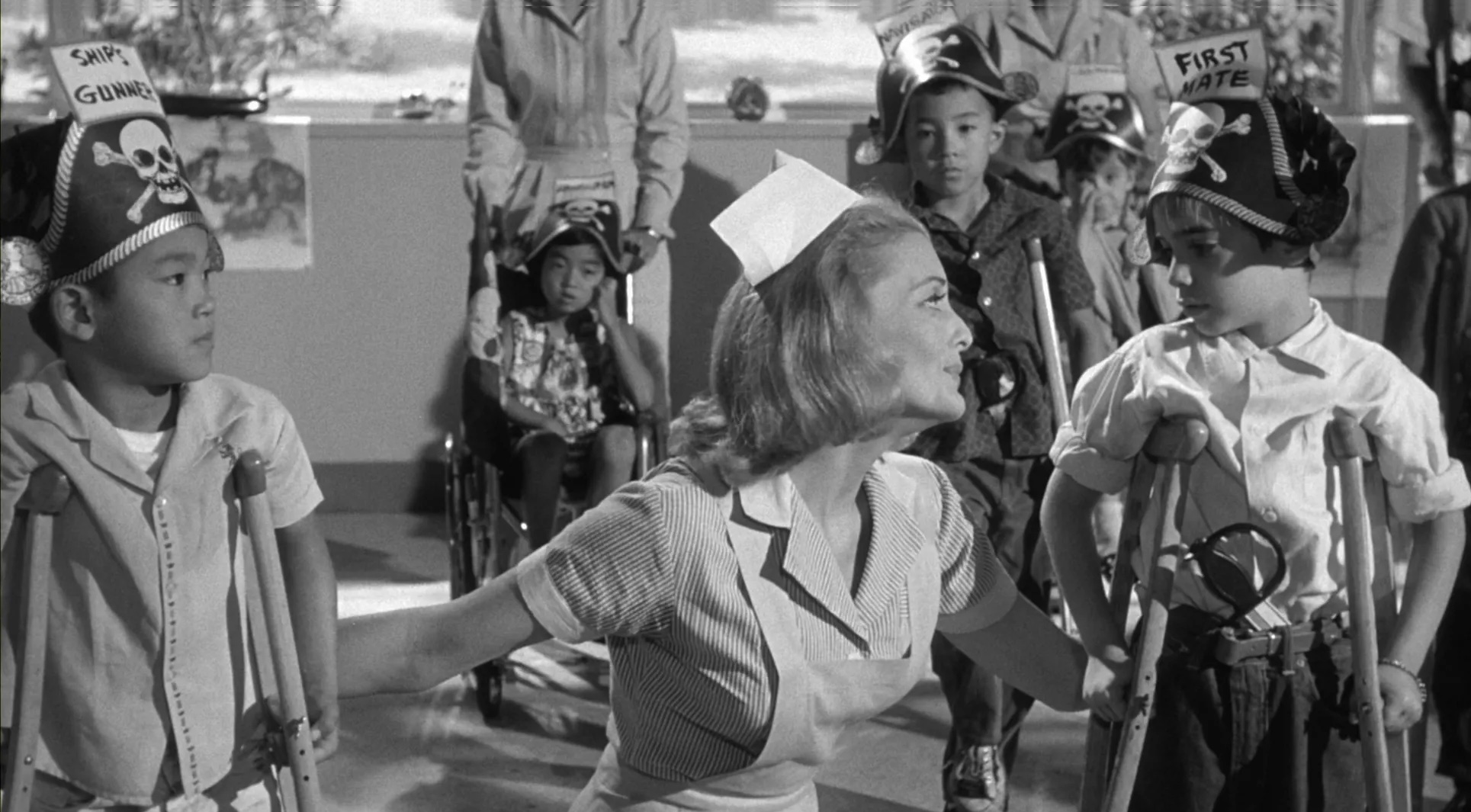
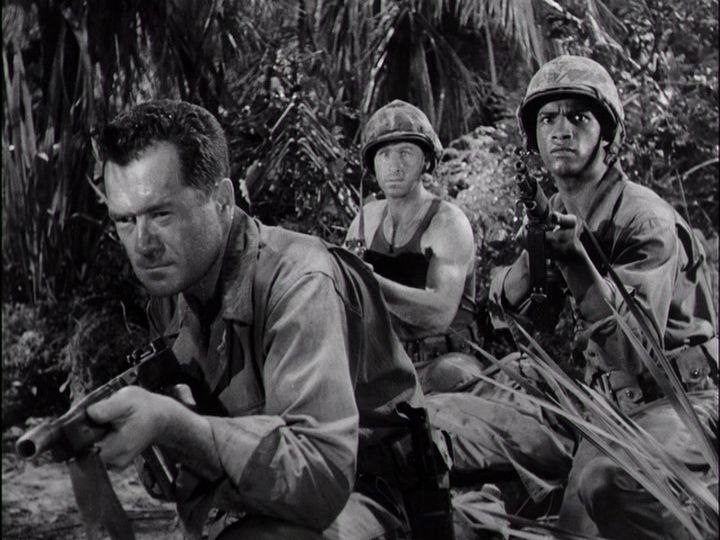
This is somehow different than most World War II films made after the conflict ended. The film is based on the real life person, Guy Gabaldon, whose adoptive family was Japanese. Hell to Eternity is a thoughtful film. Vic Damone appears in a small role, playing a character that differs from his previous MGM youthful roles. It also features some surprisingly graphic battle scenes, which were unique for 1960 cinema.

Honorable Mention:
The Eve of Saint Mark (1944)
The Turning Point (1952)
Von Ryan’s Express
Let There Be Light (1946)
Return from the Sea (1954)
Night of the Iguana (1964)
The Great Mr. Nobody (1941)

Chad & Jeremy summers

It was the summer of 2002. And it’s one of those summers that lives in your memory with a golden glow. For some reason, it was a summer so many things changed and I went from a 13-year-old seventh grade kid to a grown up soon-to-be-eighth-grader 13-year-old (at least in my mind).

It was the summer I traded in my glasses for contact lenses, I stayed up too late reading with a flashlight, sewed pillows, watched TVLand … and it was the summer I discovered Chad & Jeremy. And ever since then, I’ve associated that British singing duo with summer.

That spring, the 1960s TV show “Batman,” starring Adam West and Burt Ward, started airing on TVLand and I became a big fan. I watched as often as I could; keeping a list of Robin’s “Holy” mentions as he said them. It was while watching “Batman” that I discovered Chad & Jeremy playing themselves in the season 2 episodes “That Cat’s Meow” and “The Bat’s Kow Tow.” Chad & Jeremy are staying at the Stately Wayne Manor and are at risk of having their voices stolen by Catwoman (played by Julie Newmar). On the episode Chad Stuart and Jeremy Clyde sing “Teenage Failure” and “Distant Shores,” and hearing those two songs had me sold.*

96eb3e0eefc854bf398daf816faeb472

Chad & Jeremy on “Batman”

Days later, I did what any 13 year old in 2002 did when they loved a song. I had my parents drive me to Best Buy and I bought The Very Best of Chad & Jeremy. And my family soon got tired of hearing “The Very Best of Chad & Jeremy.” I’d have them listen whenever we went out in the car – whether it was a long car trip or on the way to church.

Continue reading

Favorite new-to-me films of 2021

At the end of each year, I think back on my favorite new-to-me film discoveries.

For the past few years, I’ve shared these in just a Twitter thread, but this year, I decided to write a formal blog post. As of Dec. 29, 2021, I have watched 517 feature films. The following or the films I’ve continued to think about long after they were over. The first three may be a tie:

crimson

The Crimson Kimono (1959)
Written and directed by Samuel Fuller
Over the past few years, I have really gotten into director Sam Fuller’s films, and I was blown away by THE CRIMSON KIMONO. The story is powerful but it’s also visually stunning.

that man from rio

That Man From Rio/ L’homme de Rio (1964)
Directed by Philippe de Broca
I watched this in memory of Jean-Paul Belmondo and was left in a glittering haze of a love of cinema — in love with this film, Belmondo and the whole idea of traveling to Rio de Janerio. I daydreamed about this movie the whole next day of watching it. Its thoroughly charming.

dog fight max resolution

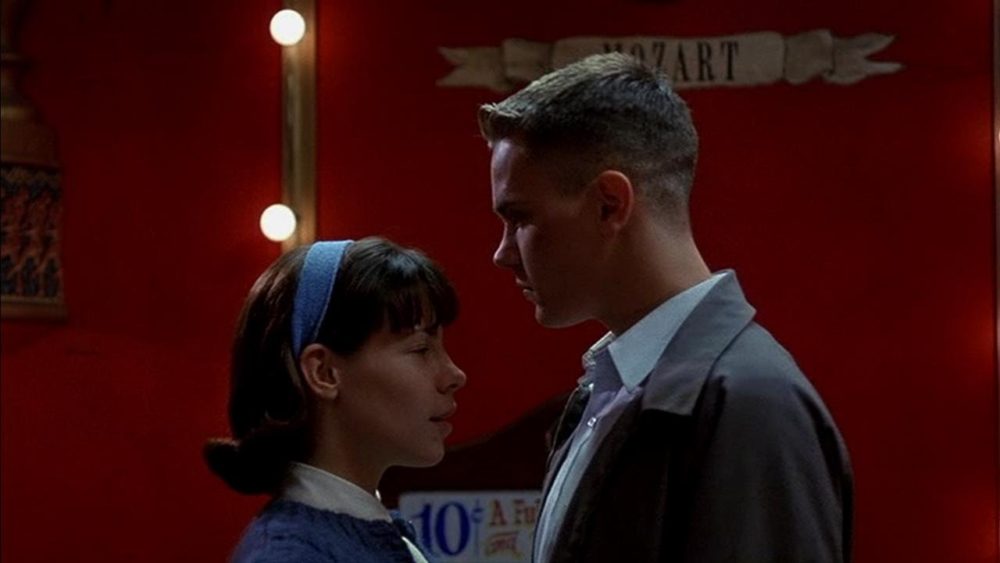
Dogfight (1991)
Directed by Nancy Savoca
If you follow me on any social media platform or have spoken with me in person, you’ve heard me mention DOGFIGHT.
As of Dec. 29, 2021, I watched DOGFIGHT six times from May 2021 to the end of the year. Why? I don’t really know – do you have to have a reason for why a film moves you? All I know is that I couldn’t stop thinking about it. Don’t just go off the plot description that is given for this film. Watch it for yourself.

smallest show

The Smallest Show on Earth (1957)
Directed by Basil Dearden
This is the sweetest, most charming movies. I love to see real-life married couple Virginia McKenna and Bill Travers act together for starters. And then some of the actors are their co-stars, Margaret Rutherford, Peter Sellers and Bernard Miles. It’s just plain lovely.

come next spring

Come Next Spring (1956)
Directed by R.G. Springsteen
Steve Cochran usually plays a bad dude. And here, he plays a reformed bad dude and I loved it. Come Next Spring is really lovely and visually stunning in Technicolor. Ann Sheridan is also a major highlight in this film, but Steve Cochran’s sensitive performance blew me away.

home of the brave3

Home of the Brave (1949)
Directed by Mark Robson
I didn’t expect to cry as much as I did during this movie. Not only does HOME OF THE BRAVE look at racial tensions with Black and White soldiers serving in World War II, but it also looks at the complicated emotions of soldiers when their friends are killed in action. James Edwards is not recognized enough as an actor and he shines here.

no regrets

No Regrets for Our Youth/Waga seishun ni kuinashi (1946)
Directed by Akira Kurosawa
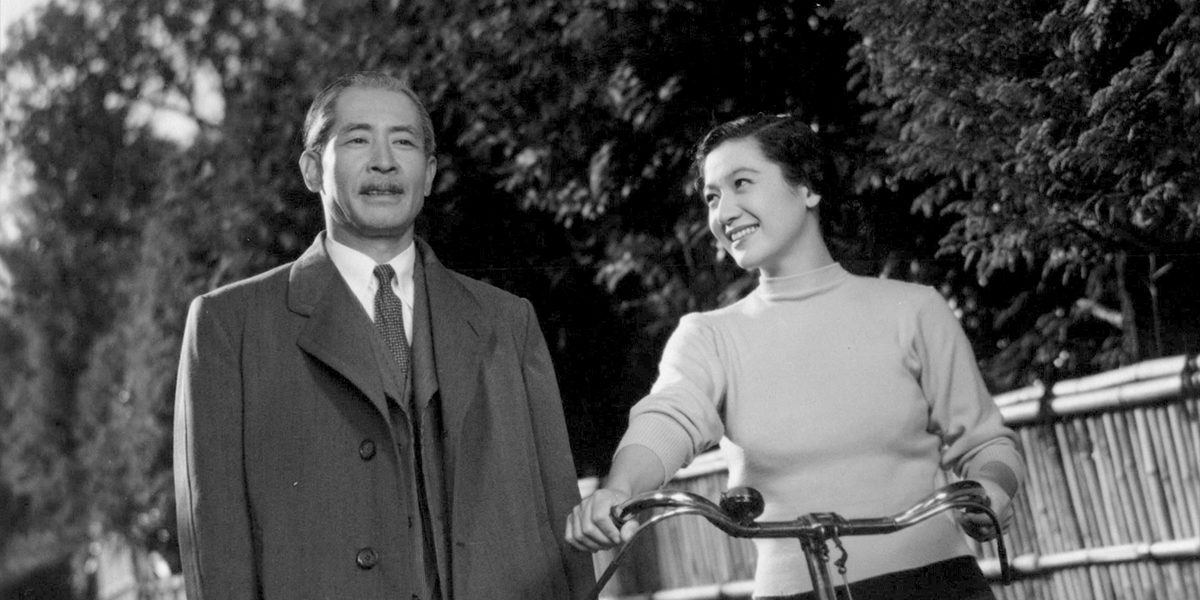
An incredible film that left me speechless. I was blown away. Actress Setsuko Hara is always wonderful, but I enjoyed seeing her play a different type of character than I’m used to seeing. Hara’s character is complex and transforms from a selfish, conflicted youth to a woman who sacrifices her life and reputation for a loved one.

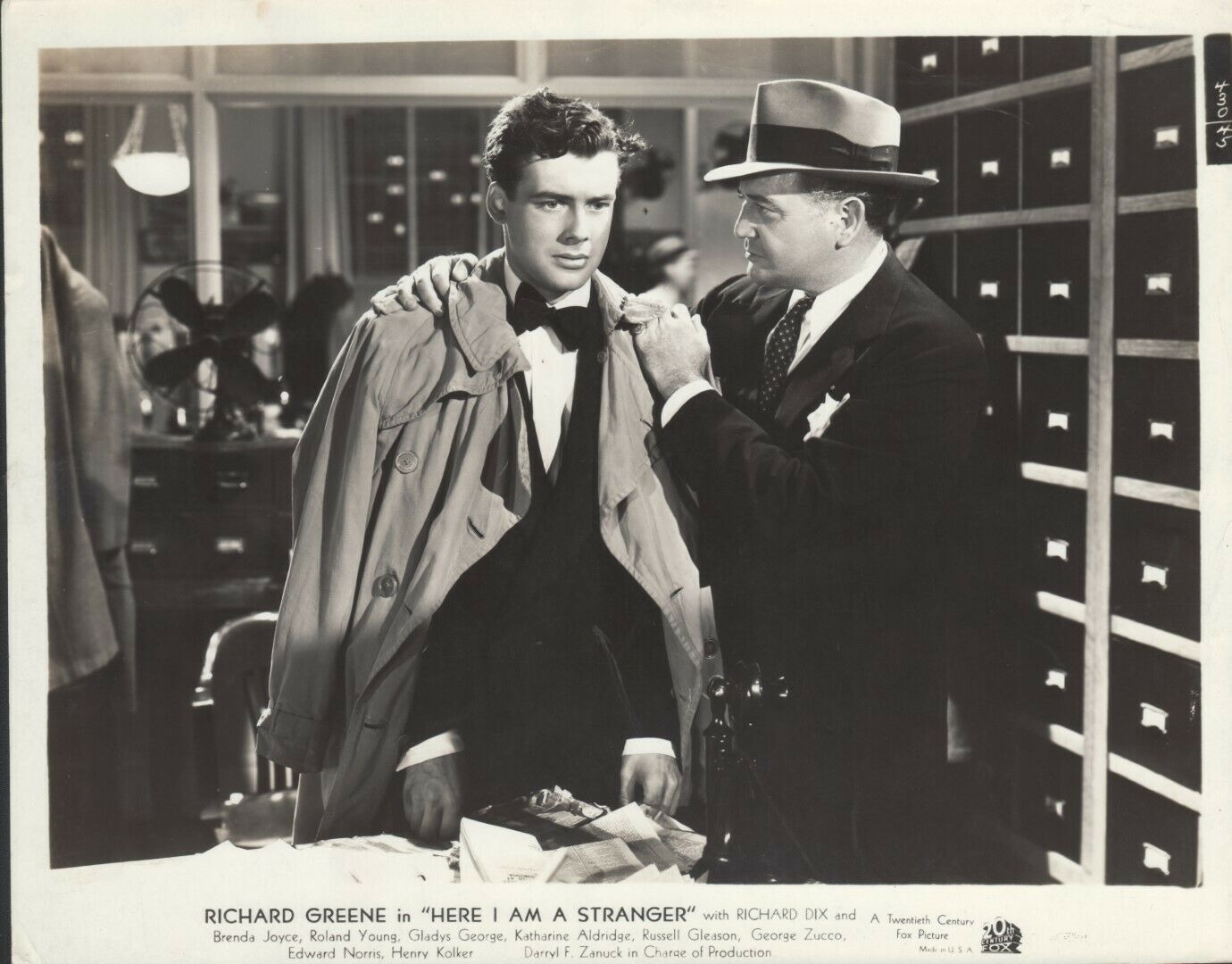
here i am stranger3

Here I am a Stranger (1939)
Directed by Roy Del Ruth
This was my favorite new-to-me film from 1939 of this year. Richard Dix gave an emotional and sensitive performance of a father who reconnects with his son after many years. I also loved seeing Brenda Joyce play against type.
My full review here.

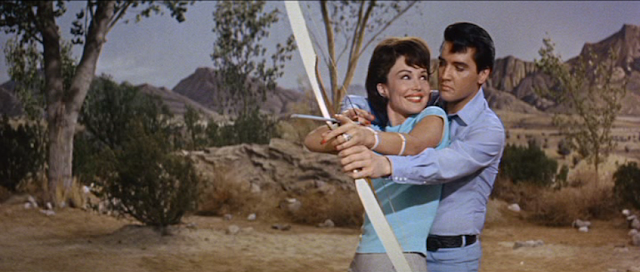
tickle me 7

Tickle Me (1965)
Directed by Norman Taurog
Have you ever remembered a movie scene that you watched as a child but you never knew what it was? Watching Tickle Me solved that mystery for me this year—I remembered Elvis and a woman in a haunted house and never knew what it was. Tickle Me is wacky and ridiculous, but it also made me laugh more than any other new-to-me movie I watched this year. Sometimes a feel good silly film is needed at the right moment. A movie doesn’t have to be the best, most serious Academy Award winner to find its way on a list like this. Shout out to my friend Nikki who loves this film. My full review here.

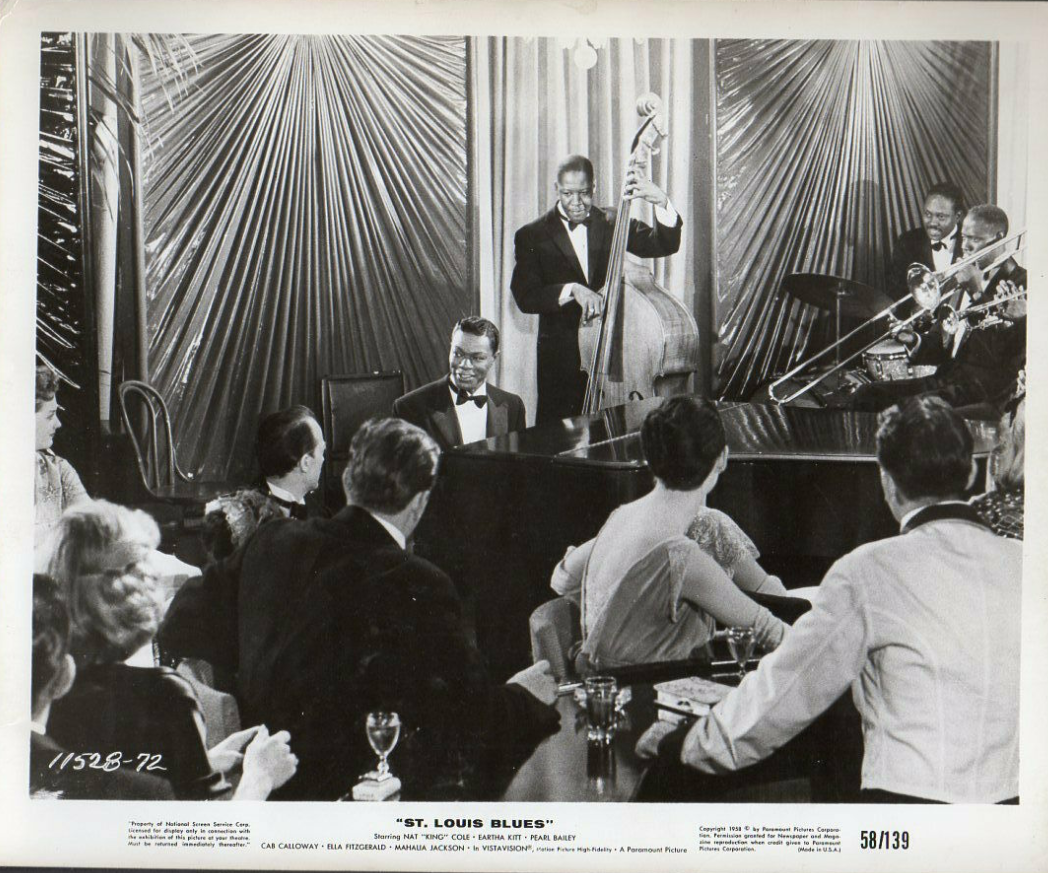
St. Louis Blues

St. Louis Blues (1958)
Directed by Allen Reisner
After wanting to see this film for years, I was happy to finally discover this musical. It’s interesting to see Nat King Cole in a lead performance, when he generally only appeared as a specialty act in feature films. This film is chock full of musical performances, and Eartha Kitt naturally steals the show. My full review here.

mad

Madeleine (1950)
Directed by David Lean
Why did I put off watching this film for so long? This had me on the edge of my seat, and also feeling heartbroken for Madeleine’s suiter, Mr. Minnoch. Even more interesting that this is based on a true story.

green for

Green for Danger (1946)
Directed by Sidney Gilliat
This “whodunit” had me guessing until the very end of the film. Thoroughly enjoyable, and Alastair Sim was wonderful (per usual).

magnificent

The Magnificent Dope (1942)
Directed by Walter Lang
I didn’t know what to expect from THE MAGNIFICENT DOPE, and judging by the title, I feared it would be an irritating, zany comedy. Far from it. Don Ameche as a bullish, unsuccessful business man and lazy Henry Fonda gets caught up in his success scheme when he wins the “biggest failure” contest. Both are in love with Lynn Bari. It sounds silly but it works in a charming way.

Heres-to-the-young-lady-still-1

Here’s to the Young Lady/Ojôsan kanpai (1949)
Directed by Keisuke Kinoshita
What a joy! This lovely romantic comedy made me laugh and left me feeling wistful.

strange

Strange Bargain (1949)
Directed by Will Price
Martha Scott and Jeffrey Lynn? Sign me up! I thought this was an exciting film noir with interesting twists. Now I need to watch the follow-up “Murder, She Wrote” episode.

song of the open road3

Jackie Moran, Bonita Granville, Jane Powell in SONG OF THE OPEN ROAD

Song of the Open Road (1944)
Directed by S. Sylvan Simon
This was the only Jane Powell film I hadn’t seen, and after she died I sought it out. It may be low budget, but I had such fun watching it. The film begins with teens riding bikes and singing and I was charmed at that moment. My full review here.

under pup3

The Under-Pup (1939)
Directed by Richard Wallace
This was another favorite 1939 new-to-me film discovery. I haven’t seen many Gloria Jean films, because they can be difficult to access. My full review here.

Honorable Mention
Films I loved but didn’t quite make the favorites list
Rembrandt (1936)
Convicts 4 (1962)
The Lovers (1958)
Invitation to Happiness (1939)
Murder at the Vanities (1934)
Seven Keys to Baldpate (1929)
Tennessee Champ (1954)
Crooks and Coronets (1969)
As Long as They’re Happy (1955)

I joined Letterboxd this year, so if you’d like to see my thoughts on other films I watch, you can find me here: https://letterboxd.com/HollywoodComet/

Check out the Comet Over Hollywood Facebook page, follow on Twitter at @HollywoodComet or e-mail at cometoverhollywood@gmail.com