Classic movies in music videos: “All These Things That I’ve Done”-The Killers

I’m starting yet another new feature on “Comet” about actors and actresses, or anything classic film related, in music videos. The last video I posted featured Cyd Charisse in the Blue Mercedes video “I Want to Be Your Property.”

The video featured today is The Killer’s 2004 song “All These Things I Have Done” from their first album “Hot Fuss.”  The song has two videos; the other is the band playing a concert and walking down the street hugging people-not as interesting as this one. This video was made in 2005 and seems to have a more “Sam’s Town” album feel.

Dangerous go-go dancers in “Faster Pussycat Kill Kill”

The video doesn’t have a classic actor in it, but references the movie “Faster Pussycat… Kill! Kill!” (1965). Complete with desert setting and deadly, buxom women.  The Asian character in the music video with the braids, seems to be channeling the late Tura Santana’s character, Vula.

The music video story is out of order, but you can understand the sequence by paying attention to the numbers each girl holds up.

Side Note: I recently saw the cult film “Faster Pussycat… Kill! Kill!” and have to admit, it was hard to find anything to like about it.  I wasn’t really sure why they killed the girl’s boyfriend and and her bogus karate move that supposedly killed him more than likely would have just dislocated his shoulder.

This isn’t the only time the Killer’s reference class film in lyrics or videos. The lead singer of The Killer’s, Brandon Flowers, is mormon and has very traditional values. Lyrics like “red white and blue upon a birthday cake,” “Some kind of slick, chrome American prince” and “A southern drawl, a world unseen” give a feeling of Americana.  In other songs Flowers sings about old actors like Marlon Brandon, James Dean and Greta Garbo as I discussed in a post back in June.

Here is the amusing and fun video for “All These Things That I Have Done” (I apologize that you will have to open it in a new window):

This won’t be the last time you hear about The Killer’s on here. They are my favorite band, but they have more classic movie references. Check back for the next classic movies and actors in music videos!

Check out the Comet Over Hollywood Facebook page and follow on Twitter @HollywoodComet.

Saddle up for “Radio Waves” tonight at 6 p.m. ET

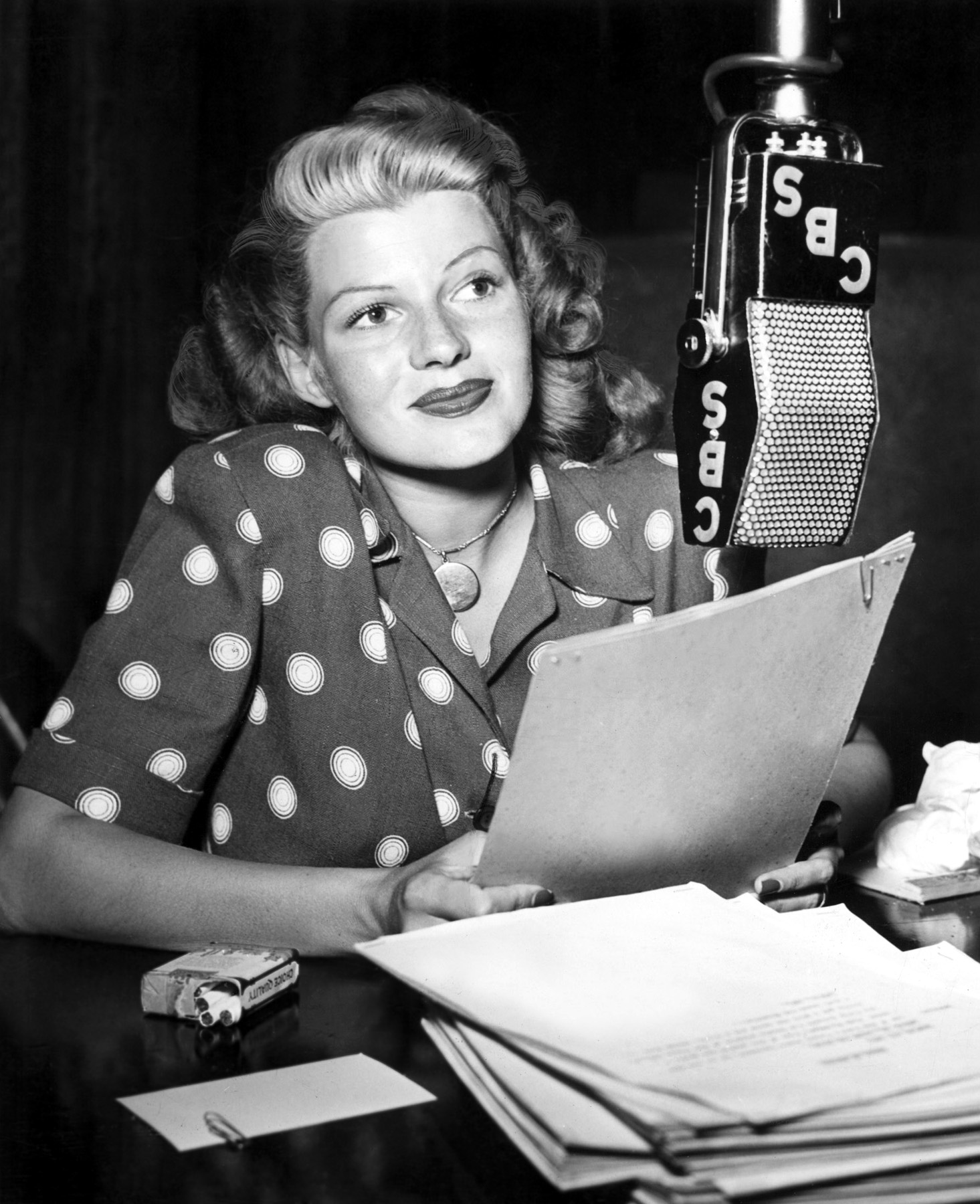
Gene Autry on CBS

“Radio  Waves Over Hollywood” will be streaming live Thursday night from 6 p.m. to 8 p.m (Eastern time).

Tonight from 6 p.m. to 7 p.m., “Radio Waves” will have guest star Preston Jenkinson, senior broadcast journalism major, discussing some of his favorite westerns and comparing the 2010 version of “True Grit” to the John Wayne version.

In the second hour of the show, from 7 p.m. to 8 p.m., guest star Devang Joshi, senior computer science major, will discuss the new face of westerns and how they changed in the 1960s.  Some films in this discussion will be Sergie Lenoe’s trilogy of Clint Eastwood films such as “The Good, the Bad and the Ugly.”

So be sure to listen at 6 p.m. to 8 p.m.  live stream on www.winrfm.com (go to Listen Live) or  the old WINR website.

Call in at 803-323-2122, whether you know me or not, to contribute to the discussion.  I would love to hear from you!

And remember, non-Winthrop students can listen and call in too!

Also, if you listen to the “Radio Waves Over Hollywood” show, leave feedback for me in the comments area. Let me know what I need to work on or what you want to hear!

Check out the Comet Over Hollywood Facebook page and Radio Waves Over Hollywood Facebook page.

The anniversary of my magnificent obsession

Jets trying to scare the sharks. Photo from LIFE

Today is the anniversary of an event that occurred eight years ago.

It was a Saturday, at the end of my 8th grade spring break.  I had just gotten over being sick and had watched many other great films for the first time while I was couch ridden including “Peyton Place” (1957) and “Singin’ In the Rain” (1952).  But none of them were compared to this film.

On March 8, 2003, my dad thought I should be introduced to “West Side Story” (1961) because of my newly developed interest in classic musicals.   He now shakes his head and says he created a monster.

Who knew snapping fingers, mambos, dancing on roof tops and signal whistles in NYC would be so Earth shattering for a 14-year-old?

I sat there in one of our family’s old corduroy, gold rocking arm chairs, skeptical on what this movie would be like. But after the movie was over, I floated upstairs to my room feeling a change inside me and knowing my movie interests would never be the same.

Maria spotting Tony for the first time

It wasn’t just one scene in “West Side Story” that affected me:  it was the whole movie:
-The beauty of everything blurring around Tony and Maria when they first see each other.
-The emotion that fills Tony’s face as he sings “Maria.”
-The mix of reds and orange hues in the movie set that fit the movie so well.
-The last heart-wrenching 30 minutes of the movie that never fails to make me tear up.

Prior to “West Side Story” I was already well into my old movie interest starting the previous summer when I became fascinated with Audrey Hepburn and then Doris Day.

I’m not sure if I would have appreciated “West Side Story” as much as I did if I hadn’t already had a good classic movie cushion to fall back on.

But “West Side Story” wasn’t just a passing interest, it became a lifestyle.

I perfected my whistling so I could do the signal at the beginning of the movie. I learned how to snap so I could snap like the Sharks and the Jets. I a tried my hardest to learn the mambo and dances from “The Dance at the Gym”-which didn’t work out too well. I printed over 100 photos from the internet and plastered my closet doors with them.

Much to my family’s frustration I also listened to the soundtrack-every night in the shower. It quickly got old for everyone but me.

It is safe to say that I was hyperventilatingly, unhealthily obsessed with “West Side Story.”

I try to play it “Cool” now

I still love the movie, but it is safe to say I’m not longer obsessed. This crazy obsession lasted through my freshman year of high school. It tapered off when I found other great movies like “So Proudly We Hail” (1942), “Since You Went Away” (1944) and “Sunset Boulevard” (1951).

I can still listen to the soundtrack and know exactly what is going on during the song, and I still cry at the end of the movie.

Though my “West Side Story” obsession may have irritated my family, caused friends to roll their eyes and was a bit unnatural, I don’t see it as a bad thing.

“West Side Story” opened me even more to musicals and classic movies; searching for another movie that could beat it. It’s still one of my favorite movies and I bless the day I discovered it.

Check out the Comet Over Hollywood Facebook page for the latest updates or follow on Twitter at @HollywoodComet.

Saratoga: Harlow’s last curtain call

Jean Harlow’s death in 1937 at the age of 26 came to a shock to many; particularly those working on her last film, “Saratoga.”

Jean Harlow and Anita Loos worked on several movies together, such as “Red-Headed Woman.”

Anita Loos described in her 1977 book “Cast of Thousands: A Pictorial Memoir of the Most Glittering Stars in Hollywood,”  waiting on the set with Clark Gable and other stars in the film for Jean Harlow to get out of the hospital.  Loos wrote the screenplay for “Saratoga,” along with several other Jean Harlow films like “Red-Headed Woman.”  The book is divided up into different sections about several different actors that Loos encountered during her time in Hollywood, and a large portion is dedicated to working with Jean, Jean’s marriage to Paul Bern, and her death.

The stars were under the impression that Harlow would get well again, the film would be completed, and they would continue on with their usual business.  If I recall correctly, Loos said Harlow had been off the set for a few days, and they continued shooting the scenes without her.  When they received the phone call of her death, they were shocked, and close friend Clark Gable (who nicknamed her Sis) was devastated.

I saw “Saratoga” two summers ago and thought it was entertaining but rather disturbing.  The film was incomplete when Harlow died, so several of her scenes had to be shot with her double Mary Dees and a voice double.

The scenes after Jean’s death are weird and uncomfortable to watch for a couple of reasons:

1. The fact that you know she is dead, even though you saw her before at the beginning of the movie
2. The covering of the face, the irritating fake voice and the thin scenes the double is in are disconcerting.  The voice drives me up the wall and part of you is like “Turn around, I want to see Jean’s face” though you know darn well it’s not her.  The scenes with the double are so brief and fleeting that you can tell the crew was saying, “Let’s wrap this up as quickly and painlessly as possible.”
3. The fact that Jean is in the last scene singing with Clark Gable on the train.  I guess this scene was shot earlier, but you almost think, “Oh, there’s Baby, she’s okay.”

Here are scenes that someone put together of Jean’s double taking over for the rest of “Saratoga”:

Here is a video of Jean acting in “Red Dust” (1932) so you can compare the voices:

Regardless of the double, the general plot of “Saratoga” is good, and it has a strong cast, including Jean Harlow, Clark Gable, Walter Pidgeon, Frank Morgan and  Lionel Barrymore.  Clark Gable is his usual scoundrel, playing a gambler this time, who wins a ranch in a bet from Lionel Barrymore.  Now that he’s won Barrymore’s ranch, Clark is now trying to win over his daughter Jean Harlow. This was Harlow and Clark’s sixth and last film together.

With the star power here, this clearly wasn’t a B movie that they were throwing Jean in because they thought she was washed up. There was a lot of money at stake.  After Jean’s death, there were talks about shelving the movie and reshooting her parts with Virginia Bruce or Jean Arthur.  However, fans pleaded with MGM to let them get one last chance to see their Baby, according to IMDB.

Gable and Harlow in their last film together.

I have mixed feelings about reshooting with another actress or keeping Jean’s parts in the movie.  Jean and Clark have terrific chemistry, like always.  But frankly, the plot is predictable and typical of a Clark Gable movie.  I personally think it was only saved by Jean Harlow’s comedic wit and beauty.  Jean Arthur would have been terrible in the role, and Virginia Bruce would have been just as predictable. The film would have fallen flat.

But at the same time, I almost wish the film had been shelved, much like Marilyn Monroe’s unfinished movie “Something’s Got to Give” (Though the difference is “Saratoga” nearly done and Monroe’s film just starting).  I’m not saying that I’m not thankful to see one last glimpse of Jean alive and well, but it’s heartbreaking to watch.  You see her at the beginning of the movie very beautiful and very much alive.  It’s like watching someone on the street, knowing they are about to die, but they have no clue.

After 74 years, Jean Harlow is still loved and missed, and “Saratoga” is still a bit disturbing. We love you, Jean; happy 100th birthday.

E-mail us at CometOverHollywood@Gmail.com, or check out the Comet Over Hollywood Facebook page

Radio Waves radio show tonight!

Joel McCrea and Bette Davis with Cecil B. DeMille after a Lux performance


“Radio  Waves Over Hollywood” will be streaming live Thursday night from 6 p.m. to 8 p.m (Eastern time).

Here are a few things we will be discussing:
•Wrapping up the discussion on screenteams
•Jane Russell tribute
•Starting a discussion on movie series

So be sure to listen at 6 p.m. to 8 p.m.  live stream on www.winrfm.com (go to Listen Live) or  the old WINR website.

Call in at 803-323-2122, whether you know me or not, to contribute to the discussion.  I would love to hear from you!

And remember, non-Winthrop students can listen and call in too!

Also, if you listen to the “Radio Waves Over Hollywood” show, leave feedback for me in the comments area. Let me know what I need to work on or what you want to hear!

Check out the Comet Over Hollywood Facebook page and Radio Waves Over Hollywood Facebook page.
Our Kind of Woman: RIP Jane Russell

Jane Russell in “The Outlaw” (1942)

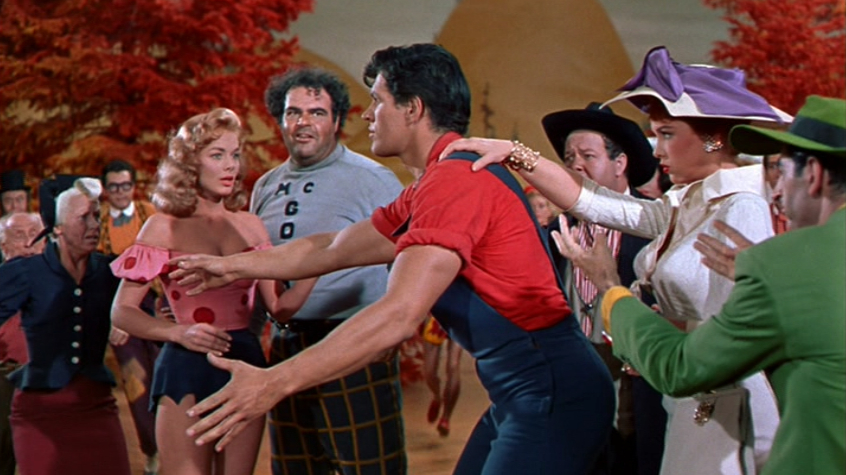
When I watched “Gentlemen Prefer Blondes,” it wasn’t Marilyn Monroe that I enjoyed watching, it was Jane Russell.  Russell had all the wit, charm and sarcasm that the movie needed to be bearable.

In an era where legs reigned (Betty Grable or Rita Hayworth), Jane Russell made it big with her own assets.  I think its safe to say that she paved the way to accentuated chests during the 1950s.  Just like Betty’s over the shoulder glance and Rita’s bed perching; it was Jane’s photo of her lounging on the haystack with her off the shoulder blouse for “The Outlaw” (1942) that started her off as a star.

But unlike so many other sexy, pin-ups of the 1950s like Mamie Van Dorean, Marilyn Monroe or Jayne Mansfield; Jane wasn’t like the rest.  For one she had brown hair and was a big woman. Russell wasn’t fat, but she was tall. Let’s just say, I wouldn’t wanted to make her angry. For another, she seemed to have brains and wouldn’t be pushed around.

Jane Russell in a LIFE photo from 1942 by Eliot Elisofon

In a 1995 “Turner Classic Movie Private Screenings” with Robert Osborne and Robert Mitchum-who frustrated Osborne with his lack of talking-Russell shared stories of publicity photo shoots.  She said the camera man would give her something a watering pail while she was wearing a nightgown and get her to bend over so that you could see her cleavage.

“Sometimes the photographers would pose me in a low-necked nightgown and tell me to bend down and pick up the pails. They were not shooting the pails.”

Her response? “Up your’s buddy.”

Anyone would have to be smart, tough and fun to be able to costar several times with Robert Mitchum. Other actresses like Greer Garson and Katherine Hepburn starred with Mitchum, but didn’t hit it off too well with the well-known tough guy.

But Russell and Mitchum became a well known screen team, starring in “Macao” and “His Kind of Woman” while also being friends. Their friendship to me shows the down to earth, relaxed person that she probably was.

One reason I have always enjoyed Russell’s films are because they are fun and she is usually believable in her parts. As silly as it sounds, one of my favorite movies of her’s is “The French Line” (1953) where she plays a wealthy oil heiress from Texas who goes on an undercover vacation to make sure men love her for more than her money. The plot isn’t very thick, Gilbert Roland is sort of sleazy and the first several minutes of the movies involves her singing in a bathtub, but it is a fun, colorful movie.

Jane Russell and Robert Mitchum in “His Kind of Woman” (1951)

I also really enjoy the Russell Mitchum movies: “His Kind of Woman” (1951) and “Macao” (1953).  She looks beautiful in both, the films are intriguing and exciting, but there are even slightly humorous parts like with Vincent Price in “Macao.”  As a screen team, I never got a mushy, gushy vibe from them either. While you can tell they care about each other in movies, they generally aren’t falling all over themselves.

I also will admit, I have seen her early role in “The Young Widow” (1942) which Russell hated. In 1996, she said “The Young Widow should have died with her husband.”  I didn’t think it was a terrific movie but not as bad as Russell thought.

Up until her death, Miss Russell was still very visible and commenting on movies, her career and politics. It’s encouraging to see a classic movie star who tries to stay active rather than dying silently in their home.

Miss Russell was part of one of the best era’s in Hollywood and I’m glad that she was here to share her experiences with us for so long.

“I really think the 1940s were the best generation for Hollywood. Everybody was patriotic then. Nobody was talking the way they do now, against the soldiers. It was a different era, a different Hollywood then, and we respected our country, our leaders and our fighting men,” Russell said. “Sure, I’ll admit, I’m a mean-spirited, politically conservative old actress. I’m not bigoted against any race, just those idiots who want to spit on our soldiers’ hard work or remove the Ten Commandments from our schools and courtroom walls.”

Jane Russell will be missed, but certainly not forgotten. Rest in peace, Miss Russell.

Check out the Comet Over Hollywood Facebook page and Follow on Twitter at @HollywoodComet

Actress beauty tip #10: Audrey Hepburn’s perfume

This is the tenth installment of my monthly classic actress beauty tips that I have read about and tested.

I love perfume. It’s nice to be recognized with a particular scent. It’s feminine and fun.

Several actresses were perfume addicts as well. The Turner Classic Movies documentary “Movies and Moguls” said Gloria Swanson spent $500 per month on perfume in the 1920s.

The ad reads “Once she was the only woman in the world allowed to wear this perfume. L’Interdit. Created by Givenchy for Audrey Hepburn.”

Recently I’ve been trying out different perfumes used by actresses. This month, I tried out Givenchy’s L’Interdit which was created and worn by Audrey Hepburn. The scent was created in 1957 and was made solely for Audrey. It was only offered in stores after she had worn it for a few years.

I’ve had a sample of this perfume for at least five years. It came in a gift set with my Very Irresistible Givenchy perfume and I simply forgot about it.  I only realized that I had it, and that it would make a good beauty tip, last weekend.

I wore it last week so I could smell it, get others to smell it and see if I could tolerate it for the whole day.

The perfume doesn’t smell bad. In fact, it’s pretty light and airy, but it is a very mature smell.  It has that musky, powdery smell that fills your nose when you sit behind an old woman in church.

My thoughts about the mature scent were confirmed when I had friends smell my wrist and say, “You smell like my mom” or “Aw that makes me think of my grandmother.”

To review:  The perfume smells nice and is light, but is probably a little mature for a 22-year-old. I may try again in a few years to see if my opinion changes.  On a side note, I read that the L’Interdit sold now isn’t the original scent. One blog said the original L’Interdit was much more spicy and exotic and not as flowery and musky. It’s a shame it was changed because that sounds much more appealing.

Check out the Comet Over Hollywood Facebook page and Radio Waves Over Hollywood Facebook page.
I say potato and you say potahto

My mom got an e-mail from Amazon.com this morning about an Alice Faye CD called “In a Wonderland: Vol. 4.”

I want you all to observe the cover of the CD very closely. Other than the fact that the cover looks like a sixth grader designed it in Paint, what do you notice?  Please comment if you notice it!

So terrible

Check out the Comet Over Hollywood Facebook page and Radio Waves Over Hollywood Facebook page for “Comet’s” radio show.

Musical look-a-likes: Harve and Howard

I wanted to follow up on yesterday’s Or maybe like the Prisoner of Zenda post about classic celebrities who look alike.

I talked about how singer/actors Howard Keel and Harve Presnell looked and sang similarly.  To recap, Keel was in movies like “Kiss Me Kate” and “Seven Brides for Seven Brothers” while Presnell was in “Paint Your Wagon” and “The Unsinkable Molly Brown.”

The photos I posted showed their physical similarities, but I am posting two videos to show their similar vocal styles.

PicMonkey Collage

Howard Keel and Harve Presnell

Keel in his role of Frank Butler in “Annie Get Your Gun” singing “The Girl that I Marry.”

Presnell in “Paint Your Wagon” in his role as Rotten Luck Willy singing “They Call the Wind Mariah.”


Check out the Comet Over Hollywood Facebook page or follow on Twitter at @HollywoodComet

Or maybe like The Prison of Zenda

Back in September, I wrote a blog post called Just like the prince and in the pauper about actors who have an uncanny resemblance. I realized I left out a few actors who look like they could be relatives.
This post, like the other, is named after another famous mix up of identities. In the “The Prisoner of Zenda” (1937), commoner Ronald Colman looks exactly like prince Ronald Colman and is asked to impersonate him for the prince’s safety. There was a 1954 remake with Stewart Granger as well, but I like Colman better.

Nelson Eddy and Gene Raymond

Nelson Eddy and Gene Raymond: These two men have an uncanny resemblance and I can’t believe I forgot to add them in my last look-a-likes post. I only remembered when I was telling my grandmother about the post and she mentioned that she always thought they looked similar. The odd thing about these two men’s similar appearance is that they both had strong connections to actress and opera singer Jeanette MacDonald.
•Gene Raymond and Jeanette MacDonald were married from 1937 until her death in 1965. They were paired in “Smilin’ Through” (1941) together.  They seemed to have a long and happy marriage, both gushing about the other in quotes.  Gene seemed to love Jeanette very much. In 1972, seven years after her death he said, “”We had 28 glorious years. Jeanette and I respected and loved each other, very deeply. We put one another before anyone or anything. I am blessed to have known her, loved her and been loved by her – absolutely, an incredible lady!”
Jeanette seemed equally enthralled with her husband. In 1943, Jeanette said, “I can’t believe how blessed I am! I’m married to the most wonderful man, Gene Raymond, whom I’m deeply in love with, and, my career is right where I want it to be. I can live like this forever!”  And again in 1947 she gushed, “Gene, is the most wonderful man I’ve ever known. He’s warm, sensitive, loving, funny and very handsome. Being Mrs. Gene Raymond, I admit I’m biased!”
•However, Nelson Eddy and Jeanette MacDonald had a curious and rumored connection. I’ve heard that they hated each other and would eat garlic when they had to sing to each other. I’ve also heard that they had a secret love affair. I’m really on the fence about both, because I’ve seen a lot of conflicting information. Supposedly during the 1950s, Jeanette MacDonald was asked by her friend Samuel Griffin why she married Gene instead of Nelson and she said, “I must have had rock in my head.”  I still really don’t think they had an affair though, especially when in 1957, Nelson said, “I don’t know why people still want to believe that Jeanette MacDonald and I were a couple off the set. There’s no truth to that rumor, at all. She’s happily married to Gene Raymond and I’m happily married to Anne. I guess people want to believe that what they see on the screen is reality while in actuality, it’s just a movie!”
Regardless of romantic involvement with Jeanette MacDonald, both men looked startlingly similar.

Harve Presnell and Howard Keel

Harve Presnell and Howard Keel: Not only do these men look very similar, they also have the same deep and bellowing baritone singing voice. Howard Keel broke into the MGM musical extravaganza in the early 1950s with his rich, vibrating voice. He stared in big budget musicals like “Annie Get Your Gun” (1951) and “Seven Brides for Seven Brothers” (1954).
Similarly, Harve Presnell has the same semi-operatic, rumbling voice and physique, but was about five or 10 years too late for the musical game. His first big musical was “The Unsinkable Molly Brown” in 1964, which was toward the end of the golden age of musicals and a major turn in films. He was in other musicals like “Paint Your Wagon” (1968) and acted until his death in 2009, but one can only wonder what his career could have been like in the 1950s. You can really see the resemblance if you compare Presnell in “Paint Your Wagon” and Keel in “Kiss Me Kate.”

Dick Powell and Kenny Baker

Dick Powell and Kenny Baker: Dick Powell was the ultimate crooner and Kenny Baker was a singer on Jack Benny’s radio show. Both singers look very similar, sing the same crooning style, but Baker was never the same star caliber as Powell.
Powell was every woman’s heartthrob as he cuddled Ruby Keeler and sang about June and the moon. He was clean cut, attractive, always grinning and the sweet young all-American guy who won the girl. His career rocketed in “42nd Street” and never looked back as he went on to do film noir movies like “Murder, My Sweet” and even direct films.
The first time I saw Baker in “Goldwyn Follies” (1938), I thought “This must be Sam Goldwyn’s answer to Dick Powell.” Baker looks like Powell’s twin brother, who is slightly less attractive. Baker started his film career two years later than Powell, but ended it earlier as well. His film appearances in low budget movies like “Goldwyn Follies” and “52nd Street” (1937) are forgettable. He was in the larger budget “The Harvey Girls” (1948) as Cyd Charisse’s love interest, but does not have a substantial role. One could wonder if his lack of fame is because of Powell’s and Baker’s similar mugs.

Andrea Leeds and Olivia deHavilland

Andrea Leeds and Olivia deHavilland: Olivia deHavilland was compared to Anne Shirley in the last look-a-like post, but one cannot over look the similarities of Leeds and deHavilland’s film demeanor and appearance. Both have delicate features, soft eyes and soothing voices. Leeds and deHavilland were both Warner players, so I often wonder if Leeds was groomed to be a deHavilland replacement. Her first substantial role was in “Stage Door” in 1937, which is when deHavilland was in the midst of court battles with Warner Brothers.
However, there probably wasn’t a motive, they just happen to look nearly the same with the same mild mannerisms. Interestingly enough, Leeds was strongly considered for the role of Melanie Hamilton in “Gone with the Wind,” the role deHavilland made famous and was nominated for.

Check out the Comet Over Hollywood Facebook page and follow on Twitter at @HollywoodComet