Musical Monday: I Live for Love (1935)

It’s no secret that the Hollywood Comet loves musicals.
In 2010, I revealed I had seen 400 movie musicals over the course of eight years. Now that number is over 500. To celebrate and share this musical love, here is my weekly feature about musicals.

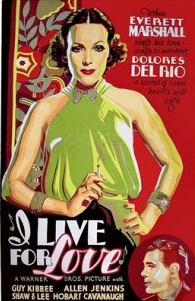
i live for loveThis week’s musical:
“I Live for Love” (1935)– Musical #547

Studio:
Warner Brothers

Director:
Busby Berkeley

Starring:
Dolores Del Rio, Everett Marshall, Guy Kibbee, Allen Jenkins, Berton Churchill, Hobart Cavanaugh, Don Alvarado

Plot:
Donna (Del Rio) is a diva of the stage and wants her lover Rico (Alvarado) as her leading man. To keep this from happening, the producers (Churchill, Cavanaugh) grab Roger Kerry (Marshall) off the street and say he has a contract. Donna and Roger butt heads, he’s replaced by Rico, and Donna’s play flops. While her fame flops, Roger rises as a huge radio star. The two eventually fall in love, and Roger wants both of them to leave their careers behind.

Trivia:
-This is the second and last film of the film’s leading man, Everett Marshall. Marshall was a Metropolitan Opera singer and preferred the stage.
-Originally titled “Romance in a Glass House, according to Buzz: The Life and Art of Busby Berkeley by Jeffrey Spivak

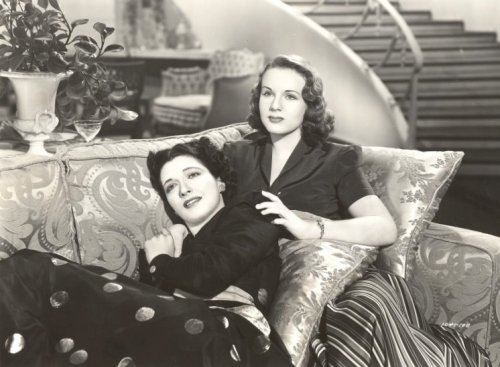
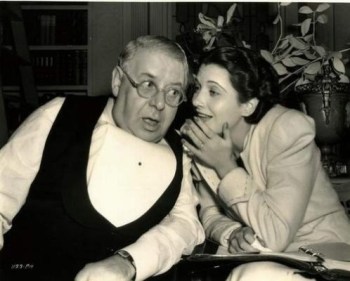
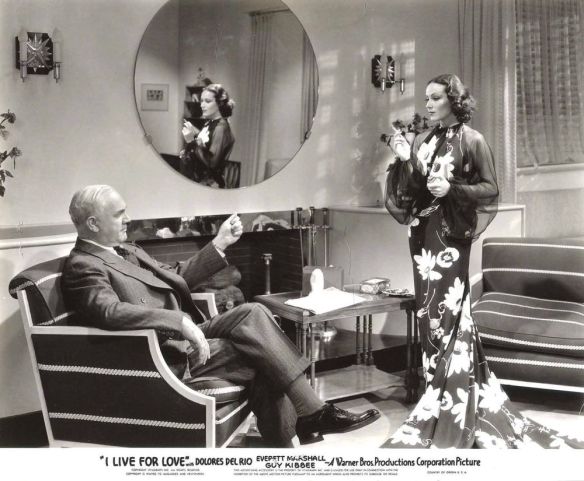
Benton Churchill and Dolores Del Rio in "I Live for Love."

Benton Churchill and Dolores Del Rio in “I Live for Love.”

Highlights:
-Allen Jenkins dancing and singing to a ridiculous tune

Notable Songs:
-“Mine Alone” performed by Everett Marshall
-“I Live for Love” performed by Everett Marshall

My review:
“I Live for Love” is a fairly forgettable hour-long film.

Though this musical was directed by Busby Berkeley directed films, there are no Berkeley numbers—really no dance numbers in the film at all. The only musical numbers in the film are performed by opera singer, Everett Marshall.

Dolores Del Rio is always photographed beautifully and capable in her films, but t

Not familiar the name Everett Marshall? That’s not surprising. Marshall, a Metropolitan Opera and Broadway performer, was only in two films and this was his last film.

Though Marshall and Del Rio are the stars, character actors Allen Jenkins, Berton Churchill, Hobart Cavanaugh and Guy Kibbee are the real stars of the show. They carried the film and were the most memorable characters.

If you are a fan of Warner Brother’s fan or trying to see Busby Berkeley, I suggest seeing it. If not, don’t waste your time.

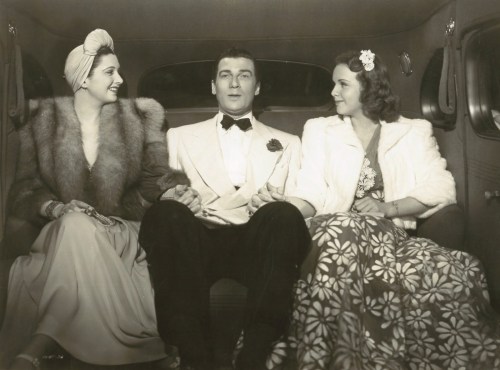
Dolores Del Rio and Everett Marshall in "I Live for Love."

Dolores Del Rio and Everett Marshall in “I Live for Love.”

Check out the Comet Over Hollywood Facebook page, follow on Twitter at @HollywoodComet or e-mail at cometoverhollywood@gmail.com

Turner Classic Movies Classic Film Festival 2016: The Films

It’s hard to believe that it’s been more than a week since I flew out to Los Angeles for my fifth Hollywood visit and fourth Turner Classic Movies Film Festival (TCMFF).

Ready to cover the festival on Thursday night.

Ready to cover the festival on Thursday night.

Last year, my parents joined me for the TCMFF, but this year I traveled solo for the event. I originally announced that I wouldn’t be attending TCMFF this year. Two weeks prior, I was in Washington, D.C. for a Bernard Herrmann festival and wasn’t sure if I could swing it. However, everything happily worked out and I was heading back to Cali-for-i-A again and humming “Going Hollywood.”

I arrived on the Wednesday the day before the festival started, giving me the opportunity to attend a book signing of the film fashion book “Creating the Illusion” by Jay Jorgensen and Donald Scoggins. I was most excited about this presentation because it was held at the Hollywood Heritage Museum, which is located in the Laskey-DeMille Barn. Built in 1913, the barn was one of the first studios in Hollywood. In 2006, I tried to visit the museum but it was closed.

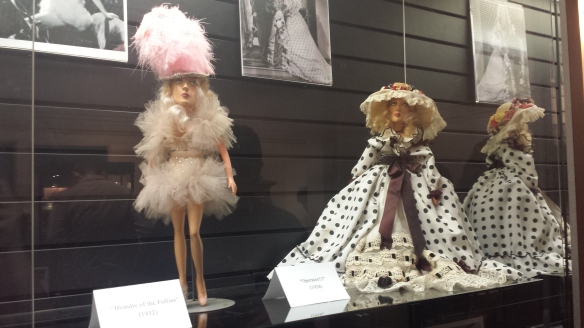
The museum had interesting pieces of memorabilia such as Marion Davies’ doll collection, a costume from the 1925 Ben-Hur, and the Charlie Chaplin outfit Gloria Swanson wore in Sunset Blvd.

Marion Davies' doll collection at the Hollywood Heritage Museum.

Marion Davies’ doll collection at the Hollywood Heritage Museum.

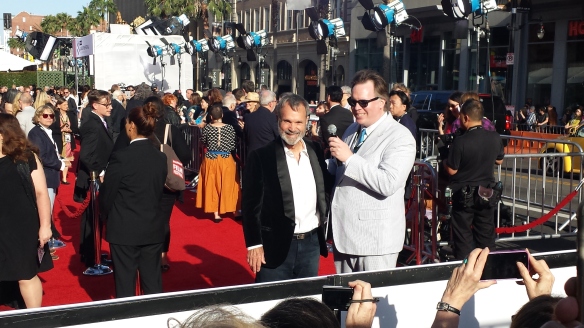
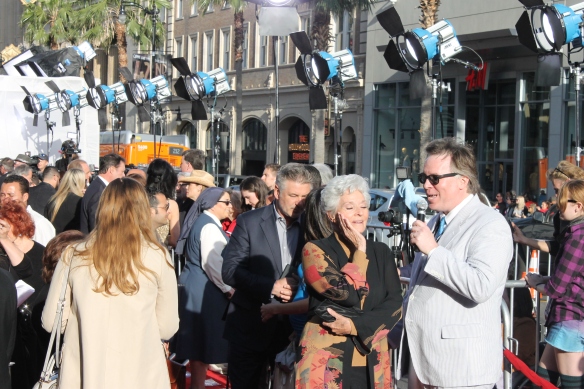
The festival ran from Thursday, April 28 through Sunday, May 1. TCMFF begins in the evening on Thursday with two film slots. There is also a red carpet event where the celebrities attending the festival walk the red carpet before the opening film, which was “All the President’s Men.”

This year, I skipped the first and two films to watch the red carpet attendees and was able to see:

  • Former child star, Darryl Hickman
  • Actor, producer Norman Lloyd
  • Former child star, Ted Donaldson
  • Actress Lee Meriwether
  • Actor and former TCM Essentials host, Alec Baldwin
  • Actress Katharine Houghton
  • Director Roger Corman
  • Actor Louis Gossett
  • Chris Lemmon, son of Jack Lemmon
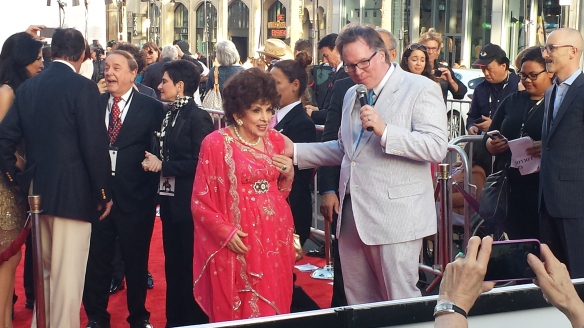
  • Italian actress Gina Lollobrigdia
Darryl Hickman on the red carpet (Photo: Jessica Pickens)

Darryl Hickman on the red carpet (Photo: Jessica Pickens)

Gina Lollobrigdia on the red carpet (Photo: Jessica P.)

Gina Lollobrigdia on the red carpet (Photo: Jessica P.)

Lee Meriwether on the red carpet.

Lee Meriwether on the red carpet.

The films I saw during throughout the festival included:

    • Los Tallos Amargos (1956)—An Argentinian noir. The title translates to “The Bitter Stems”
    • He Ran All the Way (1951)—John Garfield’s last film before his 1952 death
    • When You’re in Love (1937)—World premiere restoration with special guest Jennifer Grant, Cary Grant’s daughter
    • Batman (1966)—with special guests Lee Meriwether and Adam West
    • Manchurian Candidate (1962)—with special guest Angela Lansbury
    • Roar (1981)—Midnight screening of Tippi Hedren Film
    • 90th anniversary of Vitaphone—A presentation on the dawn of sound and 7 shorts
    • The Long Goodbye (1972)—with special guest Elliot Gould
    • Band of Outsiders (1964)—with special guest Anna Karina
    • Gog (1953)—Midnight showing of 3D restoration
    • One Potato, Two Potato (1964)—with special guest director Larry Peerce
    • Network (1976)—with special guest Faye Dunaway

Favorites:
Of these films, my favorites were “The Long Goodbye” (1972) and “One Potato, Two Potato,” but neither of these were new discoveries for me. In fact, I just watched both in February and March 2016. However, I enjoyed so much on my television that I wanted to revisit both on the big screen, and I don’t regret it. My TV in my apartment is quite small, and when I watched “The Long Goodbye,” I felt like I missed some important nuances at the beginning. The film was gorgeous on the big screen in 35mm, and I loved seeing it with an audience, especially when they started to chuckle when a very young Arnold Schwarzenegger appears in an early role. It was equally cool to see this screening because Elliott Gould was interviewed prior to the film and I also saw him interviewed at Club TCM an hour before.

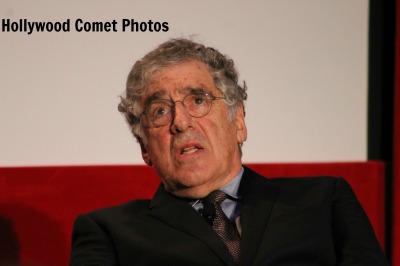
Elliott Gould interviewed by Alec Baldwin at the Roosevelt Hotel. (Photo/Jessica P.)

Elliott Gould interviewed by Alec Baldwin at the Roosevelt Hotel. (Photo/Jessica P.)

“One Potato, Two Potato” is a very simple film but has a message that’s more powerful than almost any other film I have ever seen. While I was crushed at the ending when I watched it on my TV, I was sobbing in the movie theater.

Of those new-to-me favorites, I really enjoyed “When You’re in Love” with Cary Grant and Grace Moore because it was a fun and humorous musical romp. The 90 years of Vitaphone screening is also in my top two favorite festival moments. Audiences had the opportunity to see Vitaphone shorts that hadn’t been viewed in 87 years! My favorites of the seven shorts were the comedic duo, the Beau Brummels and Baby Rose Marie (who you may know from the Dick Van Dyke Show) singing her heart out. I also really enjoyed “Roar” (1981). It was so bizarre and disturbing, but I also have never laughed so much during a film while not being certain if I should laugh or not. It’s incredibly difficult to describe how you feel while watching it, so I suggest looking it up.

Least Favorites:

Anna Karina with Ben Mankiewicz

Anna Karina with Ben Mankiewicz

Of all the films I watched, I wasn’t a fan of “Band of Outsiders,” which is probably an unpopular opinion. Of the French New Wave filmmakers, I’m a François Truffaut fan (who also used Bernard Herrmann as a composer) and not so much Jean-Luc Godard. It was awesome to see Anna Karina but the film to me dragged. I guess some people would automatically say “It’s because you didn’t get it” because I feel like it’s one of those films people say they liked just to sound smart. But I fell asleep and didn’t feel like I missed much. I also was pretty surprised when Anna Karina said it took three weeks for her male co-stars to learn “The Madison” dance. Maybe it’s because I’m a dancer, but it looked like a dance that anyone could learn in a day.

Films I Regret Not seeing:
There are some time slots that I regret eating during. I most regret missing “Private Property” (1960) because I was eating lunch. Other films landed during films or presentations I was attending. I hate that I missed “A House Divided” (1931), Bulldog Drummond Strikes Back (1934), Buena Sera, Mrs. Campbell (1968), the documentary “Harold and Lillian,” “I’ve Always Loved You” (1946) and “Repeat Performance” (1947).

Many TCMFF fans missed the 1933 pre-code “Double Harness” starring William Powell and Ann Harding and I was almost shocked by the popularity. It’s a great film and has been shown frequently on TCM since it was restored in April 2007 with several other presumed to be lost films such as Rafter Romance, One Man’s Journey and Stingaree. I guess I figured most TCM viewers had watched it in the past, especially because it aired a few months back during the pre-code festival on TCM. FYI: It’s airing Friday, May 27, at 11 a.m. ET.

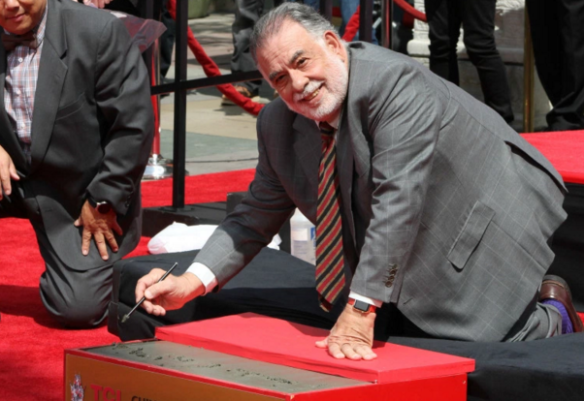
Director Francis Ford Coppola during his hand and foot print ceremony. (Photo/Jessica P.)

Director Francis Ford Coppola during his hand and foot print ceremony. (Photo/Jessica P.)

This year I saw the least amount of films I have ever watched at TCMFF. This is partially because I opted for some of the special events like director Francis Ford Coppola’s hand and foot print ceremony (which was attended by director Peter Bogdanovitch), an interview with Elliott Gould held in Club TCM at the Roosevelt Hotel, a presentation on the Art of Film Scores by Academy Award-winning composer Michael Giacchino, and “My First Time in Hollywood” with presentations by Nancy Olson and David Ladd.

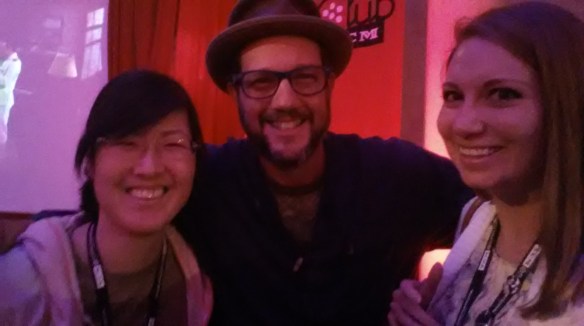
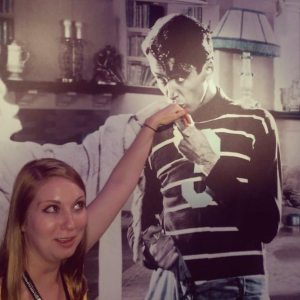
Met an old friend in Hollywood

Met an old friend in Hollywood

I also took some time to stop and eat at least one meal a day. For those of you who have never attended, you have to make a difficult decision: Do I eat? Or do I see this really cool film that I’ve never seen before? Since I got sick the last two years, I decided to take a few breaks and not push myself too hard. For example, at my first festival in 2013 (when I was a few years younger), I watched 16 films with no meal breaks. This year I watched 11.

And even while not booking ever slot with a film, it was still an outstanding time. I’ll be back next year, and most likely with my parents.

Check out the Comet Over Hollywood Facebook page, follow on Twitter at @HollywoodComet or e-mail at cometoverhollywood@gmail.com

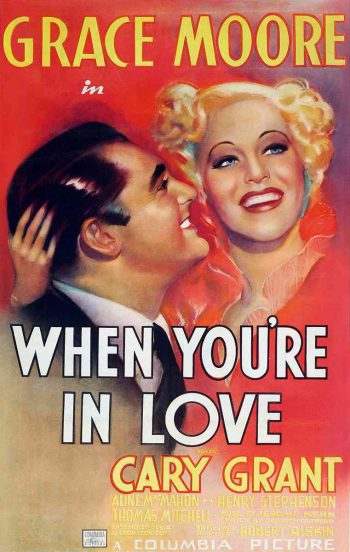
TCM Classic Film Festival Musical Monday: When You’re in Love (1937)

It’s no secret that the Hollywood Comet loves musicals.
In 2010, I revealed I had seen 400 movie musicals over the course of eight years. Now that number is over 500. To celebrate and share this musical love, here is my weekly feature about musicals.

love2This week’s musical:
“When You’re in Love” (1937)– Musical #547

Studio:
Columbia Pictures

Director:
Robert Riskin

Starring:
Grace Moore, Cary Grant, Aline MacMahon, Henry Stephenson, Thomas Mitchell, Catherine Doucet, Luis Alberni, Gerald Oliver Smith, Emma Dunn, George C. Pearce, Scotty Beckett (uncreditd)

Plot:
Opera singer Louise Fuller (Moore) who is stuck in Mexico and needs to get back so she can hold a music festival that she promised her uncle (Stephenson), but she can’t get back into the U.S. Jimmy Hudson (Grant) is unable to pay his hotel bill in Mexico. Fuller and Hudson’s lawyer’s decide the two should get married so they can get home, Fuller pays Hudson’s debts and they could divorce after six months. Though they start off fighting, love blossoms.

Trivia:
-The world premiere of the film’s restoration was at the 2016 Turner Classic Movies Classic Film Festival.
-Director Robert Riskin wrote and directed the film. It was a very loose retailoring of “It Happened One Night” for Moore, The Merchant Prince of Poverty Row: Harry Cohn of Columbia Pictures by Bernard F. Dick
-Writer Robert Riskin’s only try at directing

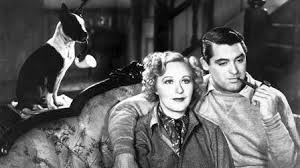
Grace Moore and Cary Grant in "When You're in Love"

Grace Moore and Cary Grant in “When You’re in Love”

Highlights:
-Grace Moore performing Minnie the Moocher

Notable Songs:
-“Minnie the Moocher” performed by Grace Moore
-“Our Song” performed by Grace Moore
-“The Whistling Boy” performed by Grace Moore
-“Vissi D’Arte” performed by Grace Moore

My review:
I’ve seen all of Cary Grant’s films–except for some of his early 1930s movies. Not only was it a treat to finally see this rare film, it was even more amazing to see it on the big screen and in all it’s newly restored glory, thanks to the Turner Classic Movies Classic Film Festival. I didn’t even arrive at the festival, thinking I would be getting a Musical Monday post out of it.

I really enjoyed “When You’re in Love.” While everyone knows Cary Grant as a huge star, at the time of this film he wasn’t as famous as his operatic leading lady: Grace Moore, a name many people don’t remember today. As I’ve watched musicals over the years, I’ve seen almost all of Miss Moore’s nine films made during her brief Hollywood career and I find her likeable. She’s beautiful and has a gorgeous voice.

Nicknamed the “Tennessee Nightingale,” Moore was a Ziegfeld Girl in the Ziegfeld Follies and had 16 seasons with the Metropolitan Opera. Her Hollywood films helped make opera popular with mainstream audiences. Sadly, Moore died in 1947 at age 48 in a plane crash near Copenhagen.

While watching this movie with an audience, I realized few of them were familiar with Grace Moore. When I saw that “When You’re in Love” paired Cary Grant and Grace Moore, I automatically knew it was a musical. But when leaving the theater, I heard some grumblings of “I didn’t know that was going to be a musical” from fans who only wanted to see Cary Grant.

Grant and Moore are both very funny, and there is a fun scene with Grace Moore performing Cab Calloway’s “Minnie the Moocher” while Grant plays the piano. Another favorite scene of mine involves Moore singing with a group of children and little uncredited Scotty Beckett is on her lap. There are close-ups of the various children’s faces and some of their reactions were hilarious.

But you can’t give all the credit for this film’s charm to the lead actors. The supporting cast is what really makes the film special, especially Aline MacMahon and Henry Stephenson who are always fantastic. One character actor, elderly George C. Pearce, had what I think was the funniest moment in the film: He answers the phone, asks them to hold on, puts on his glasses, and tells them to go ahead. Funny, because relevant to everyone’s life.

If you have the opportunity to every catch this film, do. It’s great fun and one that we haven’t been able to really enjoy for a long time.

Check out the Comet Over Hollywood Facebook page, follow on Twitter at @HollywoodComet or e-mail at cometoverhollywood@gmail.com

Comet in Hollywood: Turner Classic Movies Classic Film Festival 2016

tcmff16

Comet will be in Hollywood this week!

We’ll be attending our fourth Turner Classic Movies Film Festival, which is Thursday, April 28, through Sunday, May 1.

For those who have never attended, this is like a film 10k — no running (you may power walk between film — but equally as exhausting. From 9 a.m. to after 12 a.m., you watch classic film after classic film with other fans who know and love Cary Grant or Roland Young as much as you do.

Though you are sleep and food deprived (you either watch films, pack snacks or skip a film to eat) the TCM Film Festival is truly Walt Disney World for classic film fans.

There isn’t a great deal of downtime, but I’ll do my best to post while I’m in Hollywood. In addition to this page, here are other ways to follow me:
Twitter: @HollywoodComet
Facebook: https://www.facebook.com/cometoverhollywood
Instagram: @HollywoodComet
Or here! CometOverHollywood.com

Musical Monday: Going Hollywood (1933)

It’s no secret that the Hollywood Comet loves musicals.
In 2010, I revealed I had seen 400 movie musicals over the course of eight years. Now that number is over 500. To celebrate and share this musical love, here is my weekly feature about musicals.

going hollywoodThis week’s musical:
“Going Hollywood” (1933)– Musical #123

Studio:
Metro-Goldwyn-Mayer

Director:
Raoul Walsh

Starring:
Marion Davies, Bing Crosby, Fifi D’Orsay, Stuart Erwin, Ned Sparks, Patsy Kelly, Bobby Watson, Sterling Holloway (uncredited)

Plot:
Sylvia Bruce (Davies) is board as a French teacher at Briarcroft’s School for Girls. After hearing a romantic tune on the radio performed by Bill Williams (Crosby), Sylvia packs her bags to head out to find excitement, romance and to thank Bill for inspiring her. Bill is heading to Hollywood to make a film with French actress Lili Yvonne (D’Orsay) and Sylvia follows him.

Continue reading →

Festival explores radio, film career of composer Bernard Herrmann

Film composer Bernard Herrmann is mostly known for a film that he originally disliked.

“When we left the screening of ‘Psycho,’ he said, ‘Wasn’t that the biggest piece of crap you’ve ever seen?’” said the film composer’s eldest daughter, Dorothy Herrmann. “Daddy had no use for Psycho until it became a cult classic.”

However, those shrieking, staccato violins that played during a rather violent shower scene is may be what he’s best known for.

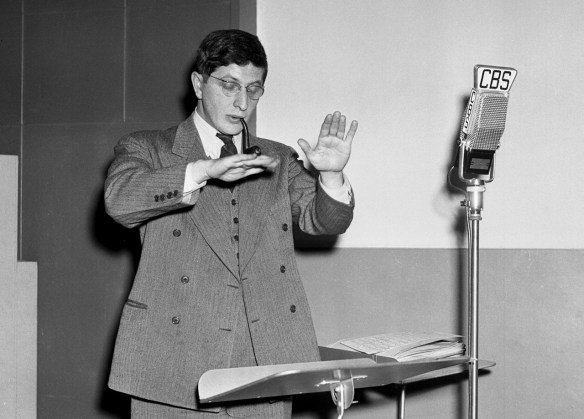
Rehearsal of The Free Company radio drama with conductor Bernard Herrmann. Image dated April 6, 1941. Copyright © 1941 CBS Broadcasting Inc. All Rights Reserved. Credit: CBS Photo Archive.

Rehearsal of The Free Company radio drama with conductor Bernard Herrmann. Image dated April 6, 1941. Copyright © 1941 CBS Broadcasting Inc. All Rights Reserved. Credit: CBS Photo Archive.

Dorothy Herrmann spoke last weekend during a Bernard Herrmann festival—from April 15 through April 17—in Washington, D.C. The PostClassical Ensemble, Georgetown University, AFI Silver and the National Gallery of Art co-hosted one of few festivals that celebrates the composer’s life and career in film, radio and symphony.

Along with the weekend celebration, AFI Silver screened films scored by Herrmann throughout the month including “Hangover Square,” “Vertigo” and “The Bride Wore Black.”

Along with myself, fans and Herrmann’s family traveled from Kentucky, New York, Mississippi, North Carolina, California and Pennsylvania, to pay tribute to the composer. During the weekend festival, Herrmann historians and musicologists delved into the composer’s work.

Continue reading →

Musical Monday: Little Miss Broadway (1938)

It’s no secret that the Hollywood Comet loves musicals.
In 2010, I revealed I had seen 400 movie musicals over the course of eight years. Now that number is over 500. To celebrate and share this musical love, here is my weekly feature about musicals.

This week’s musical:
Little Miss Broadway –Musical #287

broadway

Studio:
20th Century Fox

Director:
Irving Cummings

Starring:
Shirley Temple, George Murphy, Jimmy Durante, Phyllis Brooks, Edna May Oliver, Donald Meek, Edward Ellis, El Brendel
Themselves: The Brian Sisters- Betty Brian, Doris Brian, Gwen Brian; The Brewster Twins (Barbara and Gloria Brewster)

Plot:
Orphan Betsy Brown (Temple)is adopted by friends of her parents- Pop Shea (Edward Ellis) and his daughter Barbara (Phyllis Brooks) who run a hotel for performers. However, the hotel lead is held by Sarah Wendling (Oliver) and her brother Willoughby (Meek), and Sarah hates the show business tenants and looks for every way to shut down the hotel. However, when Sarah’s nephew Roger (Murphy) meets Betsy, he’s instantly taken with the child and finds himself attracted to Barbara. Roger sets out to help the show business hotel stay open.

Continue reading →

Musical Monday: Everybody Sing (1938)

It’s no secret that the Hollywood Comet loves musicals.
In 2010, I revealed I had seen 400 movie musicals over the course of eight years. Now that number is over 500. To celebrate and share this musical love, here is my weekly feature about musicals.

everybody singThis week’s musical:
Everybody Sing –Musical #540

Studio:
Metro-Goldwyn-Mayer

Director:
Edwin L. Marin

Starring:
Allan Jones, Judy Garland, Fanny Brice, Billie Burke, Lynne Carver, Reginald Owen, Reginald Gardiner, Monty Wooley

Plot:
Judy (Garland) is constantly getting in trouble and expelled from her private school. She’s expelled again when she starts singing swing in her music class. When she returns home, she finds her madcap family: her actress mother (Burke), playwright father (Gardner), mother’s protegee (Owen), Russian Maid (Brice), singing cook (Jones), and ambitious older sister (Carver). No one will listen to Judy when she tries to tell them she’s expelled, no one will listen to her and they are too wrapped up in their affairs to pay attention. When her parents try to send her abroad, she escapes and gets a starring role in a musical show.

Continue reading →

Musical Monday: Words and Music (1948)

It’s no secret that the Hollywood Comet loves musicals.
In 2010, I revealed I had seen 400 movie musicals over the course of eight years. Now that number is over 500. To celebrate and share this musical love, here is my weekly feature about musicals.

This week’s musical:
Words And Music (1948)– Musical #69

words and music

Studio:
Metro-Goldwyn-Mayer

Director:
Norman Taurog

Starring:
Tom Drake as Richard Rodgers and Mickey Rooney as Lorenz Hart
Also Starring: June Allyson, Cyd Charisse, Perry Como, Vera-Ellen, Judy Garland, Betty Garrett, Lena Horne, Gene Kelly, Janet Leigh, Jeannette Nolan, Richard Quine, Ann Sothern, Clinton Sundberg, Marshall Thompson, Mel Torme

Plot:
Fictional biographical film of the songwriters Richard Rodgers and Lorenz Hart, chronicling their success on Broadway, abroad and in Hollywood.

Songwriters Richard Rodgers and Lorenz Hart in the 1930s. Their career is portrayed in "Words and Music."

Songwriters Richard Rodgers and Lorenz Hart in the 1930s. Their career is portrayed in “Words and Music.”

Trivia:
-The project started in 1946 and was originally titled, “With a Song in My Heart” and then “Easy to Remember,” according to A Ship Without A Sail: The Life of Lorenz Hart by Gary Marmorstein.

-Richard Rodgers hated the movie, according to Marmostein’s book.

-Lyricist Lorenz Hart, who Mickey Rooney plays in the film, died in 1943 at age 48. Richard Rodgers was 46 when this film was released and passed away in 1979. After Hart passed away, Rodgers became songwriting partners with Oscar Hammerstein.

-“Words and Music” was Perry Como’s first film with MGM after signing a seven-year contract. His MGM career ended promptly with this film after he sang happy birthday to Louis B. Mayer and ended it with an insult, according to the book Perry Como: A Biography and Complete Career Record by Malcolm Macfarlane, Ken Crossland.

-Mickey Rooney and Judy Garland’s last on-screen performance.

-Perry Como had two songs deleted from the film: “You’re Nearer” and “Lover,” according to the Malcolm Macfarlane and Ken Crossland book.

-Tom Drake is dubbed by Bill Lee

-Cyd Charisse is dubbed by Eileen Wilson

Highlights:
-The all-star cast
-Judy Garland and Mickey Rooney’s performance of “I Wish I Was in Love Again”

Notable Songs:
-“Manhattan” performed by Mickey Rooney
-“Mountain Greenery” performed by Perry Como
-“Where’s That Rainbow?” performed by Ann Sothern
-“On Your Toes” performed by Cyd Charissed (dubbed by Eileen Wilson) and Dee Turnell
-“Thou Swell” performed by June Allyson
-“The Lady Is A Tramp” performed by Lena Horne
– “I Wish I Were in Love Again” performed by Judy Garland and Mickey Rooney
-“Slaughter on Tenth Avenue” danced by Gene Kelly and Vera-Ellen

My review:
“Nice music, poor plot.”

This was the general consensus among the film critics after “Words and Music” had its New York City premiere on Dec. 8, 1948. And 68 years later, these critics still aren’t wrong.

This movie is in gorgeous Technicolor, has a fantastic cast of nearly all of MGM’s major musical stars, and beautiful songs with breathtaking dances. But somehow it falls short due to the story.

“Words and Music” is a musical film where the plot weaves in and out of a patchwork of musical numbers. While this format is bizarre and a little difficult to follow, it wasn’t uncommon during this time for a musical picture to mainly be a revue of song and dance with a tiny bit of plot sprinkled in. MGM did the same thing (but a little better) in 1946 with the musical “Till the Clouds Roll By”—A film about Jerome Kern. Warner Brothers had a comparable format with their 1943 film “This is the Army,” where the story halts for 45 minutes of a musical show.

But the musical numbers aren’t the problem, in fact they are the high spots of the film. We have the opportunity to see Ann Sothern in the gorgeous Technicolor number “Where’s My Rainbow?,” June Allyson adorably in the “Connecticut Yankee” number “Thou Swell,” and Lena Horne give the best rendition that ever existed of “The Lady is a Tramp.”

Mickey Rooney as Lorenz Hart and Tom Drake as Richard Rodgers

Mickey Rooney as Lorenz Hart and Tom Drake as Richard Rodgers

The issue is the terrible and inaccurate biographical plot line. I like Tom Drake, but he’s not a very strong leading man while playing songwriter Richard Rodger. And Mickey Rooney is over the top and fairly ridiculous as the ill-fated Lorenz Hart.

Hart had a troubled life that involved alcoholism. He also was tormented by the fact that he was only five feet tall and was a homosexual in a time where this was not embraced by society, according to the book A Ship Without A Sail: The Life of Lorenz Hart by Gary Marmorstein.

Ann Sothern gorgeous in Technicolor in the number "Where's My Rainbow" (1

Ann Sothern gorgeous in Technicolor in the number “Where’s My Rainbow” (Comet Over Hollywood screenshot)

Unsurprisingly though, none of this is detailed in the film. “Words and Music” depicts Hart as what New York Times writer Wilfrid Sheed quipped: “a lovelorn dwarf.” In the film, Hart’s character is turned down by a fictional love interest played by Betty Garrett in the 1920s and hasn’t gotten over it 20 years later.

There is even an odd but comical scenes where Mickey Rooney buys elevated shoes to be taller to impress the girl.

Aside from Hart’s personal life, the timeline of this film is confusing. For starters, Hart holds a huge party when he first moves to Hollywood and performs a song with guest Judy Garland.  It’s an energetic and standout scene in the film—until you stop and realize that in real life this didn’t happen. Hart moved to Hollywood in the early 1930s when Garland was still a little girl.

On a bittersweet note—Rooney and Garland’s performance of “I Wish I Were in Love Again” is also memorable because it was their last on-screen performance after starring together in 10 films through the late-1930s and early-1940s.

June Allyson in the number "Thou Swell" with twins Ramon Blackburn and Royce Blackburn

June Allyson in the number “Thou Swell” with twins Ramon Blackburn and Royce Blackburn (Comet Over Hollywood screenshot)

The musical numbers in the film also aren’t in chronological order of the years they opened on Broadway, making the story a little more confusing and “patchwork” like. For example, the film starts with the 1926 play “Peggy Ann,” then goes to the 1936 play “On Your Toes” and then back to a 1926 musical, “The Girl Friend.” While an average 1948 moviegoer may not notice this, it’s a little confusing if you are doing research or know when these musicals were on the stage.

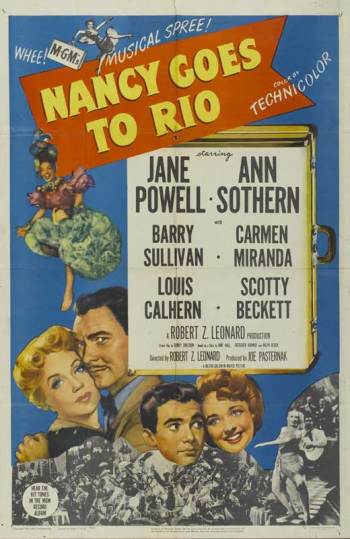
Lastly, audiences have the opportunity to see Perry Como, aka Mr. Cool, in his first and only Metro-Goldwyn-Mayer film. Como plays a fictional pal to Rodgers and Hart at the beginning of the film. However, at the end of the movie during a tribute to Lorenz Hart, Gene Kelly introduces Perry Como as…Perry Como. Someone didn’t think that out well.

While inaccuracies in musical biopics are nothing new, it’s simply that those in “Words and Music” are awfully clumsy. Despite that, “Words and Music” is an excellent showcase of MGM’s talented singers and dancers: from Cyd Charisse, Lena Horne, June Allyson, Gene Kelly, Mel Torme, Vera-Ellen and of course, Judy Garland.

Even grumpy New York Times film critic Bosley Crowther said in his Dec. 10, 1948 review: To be sure, there is much that is appealing—especially to us reminiscent folks—about certain of the musical numbers that sit like islands in the swamp of the plot. It is pleasant to hear Betty Garrett, for a starter, sing “There’s a Small Hotel” or to watch little crinkle-faced June Allyson head a big production rendering of “Thou Swell.” There is melody and magnificence in a richly-staged dance spectacle which packages two or three numbers, notably “The Girl Friend” and “This Can’t Be Love.” And it is nice to watch Perry Como and Cyd Charisse do “Blue Room” in pastels.

If you give this one a chance, I suggest drinking in the Technicolor costumes, catchy songs and mesmerizing dance steps and ignore the plot.

Check out the Comet Over Hollywood Facebook page, follow on Twitter at @HollywoodComet or e-mail at cometoverhollywood@gmail.com