Hollywood Veterans in Arlington National Cemetery: Dashiell Hammett

Last weekend, filmmaker Brandon Brown and I set out to find six celebrities buried in Arlington National Cemetery in Washington, DC. The venture took four hours and more than five miles of walking. To put that into perspective, we were hunting for six graves out of more than 400,000 people buried in the 26 square mile cemetery with roughly an 8 mile trail running through it. This week, I am highlighting these people who either served in the military or were married to military personnel. 

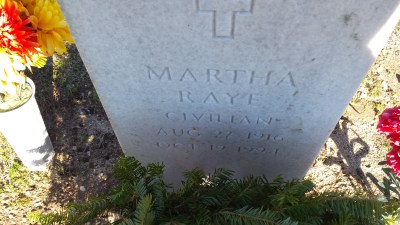
Author Dashiell Hammett's grave at Arlington National Cemetery in Washington, DC. (Comet Over Hollywood/Jessica Pickens)

Author Dashiell Hammett’s grave at Arlington National Cemetery in Washington, DC. (Comet Over Hollywood/Jessica Pickens)

The man who invented Nick and Nora Charles in the 1934 book “The Thin Man,” is a United States Army veteran of World War I and II.

Author Samuel Dashiell Hammett, one of the most influential authors of hard-boiled detective novels, is famous for writing “The Maltese Falcon,” “The Thin Man” and “The Glass Key.”

He also wrote the screen plays for “Watch On the Rhine” (1943), “After the Thin Man” (1936), “The Glass Key” (1942) and “Shadow of the Thin Man” (1941)

But before his detective novel days, Hammett was a soldier.

Enlisting in the Army in 1918, Hammett was a sergeant in the Motor Ambulance Corp. While serving, he contracted tuberculosis; a disease that affected him for the rest of his life, according to the PBS American Masters series.

However, Hammett never got overseas during World War I. Frequent hospitals visits due to the flu and tuberculosis kept him stateside before he was discharged in May 1919, according to “Gentlemen Volunteers: The Story of the American Ambulance Drivers” in the Great War by Arlen J. Hansen.

Staff of the Adak Newspaper that Hammett edited. (Photo Courtesy of Anchorage Museum)

Staff of the Adak Newspaper that Hammett edited. (Photo Courtesy of Anchorage Museum)

But in World War II, Hammett’s military duties were more active. Hammett,48, picked up his military career in 1941, at the height of his fame. After the bombing of Pearl Harbor, he enlisted in the Army as a private and was honorably discharged as a sergeant three year later.

Hammett fought against the Japanese in Battle of Attu, islands located off of Alaska, which was part of the Aleutian Islands Campaign. This is the only World War II battle fought on incorporated United States territory. The battle lasted more than two weeks of hand-to-hand combat in arctic conditions.

Hammett during World War II.

Hammett during World War II.

“Modern armies had never fought before in any field that was like the Aleutians,” Hammett was quoted in “The Capture of Attu: A World War II Battle as Told by the Men who Fought There,” by Robert J. Mitchell, Sewell Tappan Tyng and Nelson L. Drummond. “We could borrow no knowledge from the past. We would have to learn as we went along, how to live and fight and win this land; the least known part of our America.”

Hammett also edited a post newspaper while serving on the Alaskan base, according to a 2009 article from the Alaska Dispatch News.

In between his service in the World Wars, Hammett established himself writing detective novels, creating detective character Sam Spade. Many of his novels were turned into popular Hollywood films, most notably “The Thin Man,” which became a series starring William Powell and Myrna Loy, and “The Maltese Falcon,” starring Humphrey Bogart, Mary Astor and marking the screen debut of Sydney Greenstreet.

Hammett passed away in New York in 1961 but was buried in Arlington National Cemetery with military honors.

Check out the Comet Over Hollywood Facebook page, follow on Twitter at @HollywoodComet or e-mail at cometoverhollywood@gmail.com

Musical Monday: My Wild Irish Rose (1947)

It’s no secret that the Hollywood Comet loves musicals.
In 2010, I revealed I had seen 400 movie musicals over the course of eight years. Now that number is over 500. To celebrate and share this musical love, here is my weekly feature about musicals.

This week’s musical:
“My Wild Irish Rose” –Musical #309

picture

Studio:
Warner Brothers

Director:
David Butler

Starring:
Dennis Morgan, Arlene Dahl, Andrea King, Alan Hale, George Tobias, George O’Brien, Sara Allgood, Ben Blue, William Frawley

Plot:
Fictional, biographical film on Irish singer Chauncey Olcott (Morgan); chronicling his rise to fame and connections with performer Lillian Russell (King) and William Scanlan (Frawley). As he climbs the ladder to fame, Olcott meets and falls in love with Rose Donovan (Dahl), who’s father (Hale) does not want her to be involved with Olcott.

Trivia:

Dennis Morgan as Chauncey Olcott and Andrea King as Lillian Russell in "My Wild Irish Rose" (1947).

Dennis Morgan as Chauncey Olcott and Andrea King as Lillian Russell in “My Wild Irish Rose” (1947).

-Chauncey Olcott was an performer, songwriter and actor who’s career spanned from 1894 until 1920. Born in New York, Olcott’s family was of Irish decent, so most of his songs had Irish themes to them. He was born in 1858 and died in 1932. According to critic Dorothy Parker, Lillian Russell and Olcott were friends and she helped his career.
-Alexis Smith was considered for the role of Lillian Russell, which went to Andrea King. Virginia Bruce was also set for the role, according to “The Women of Warner Brothers” by Daniel Bubbeo.
-Andrea King was dubbed in her role as Lillian Russell, according to Bubbeo’s book.
-“My costumes were the most beautiful I had ever seen and my jewelry was real. I had two armed guards with me at all times,” King said in Bubbeo’s book.
-Arlene Dahl’s first credited role.
-Ray Heindorf and Max Steiner were nominated for an Academy Award for Best Music, Scoring of a Musical Picture.
-The film was based from a 1939 story written by Olcott’s widow, Rita, called “Song in His Heart,” according to Bubbeo’s book.
-One of Warner Brother’s top films of 1948.

Highlights:
-Any time Dennis Morgan sings in any film is a highlight.

Dennis Morgan performs in "My Wild Irish Rose" (1947).

Dennis Morgan performs in “My Wild Irish Rose” (1947).

Notable Songs:
-Hush-a-Bye, Wee Rose of Killarney performed by Dennis Morgan
-My Wild Irish Rose performed by Dennis Morgan
-When Irish Eyes Are Smiling performed by Dennis Morgan
-Let Me Dream Some More performed by Dennis Morgan and Andrea King
-Mother Machree performed by Dennis Morgan

My Review:
chaunceyAs Comet Over Hollywood has discussed countless times before, many Hollywood biographical films, particularly those of the musical nature, are embellished and provide very little actual fact.
“My Wild Irish Rose” is no exception. The real Chauncey Olcott may look more like William Frawley than Dennis Morgan.
However, it’s a fun, colorful and entertaining film filled with notable Irish songs; all performed in Dennis Morgan’s velvety voice. While Morgan sings, George O’Brien and Ben Blue bring some comedy to the film.
Other familiar and likable Warner Brothers faces appear in this lush, Technicolor film including Alan Hale, Andrea King and George Tobias.
What I like about “My Wild Irish Rose,” is that Dennis Morgan truly gets center stage without having to share screen time, songs and leading ladies with Jack Carson. This seems to be a rare musical gem in Morgan’s career where he is the only singing lead, so we hear multiple Irish classic tunes performed by Mr. Morgan.
If you are a Dennis Morgan fan, love Irish music or simply want a nice film for St. Patrick’s Day, check out “My Wild Irish Rose.”


Check out the Comet Over Hollywood Facebook page, follow on Twitter at @HollywoodComet or e-mail at cometoverhollywood@gmail.com

Musical Monday: First a Girl (1935)

In 2010, I revealed I had seen 400 movie musicals over the course of eight years. Now that number is over 500. To celebrate and share this musical love, here is my weekly feature about musicals.

first a girlThis week’s musical:
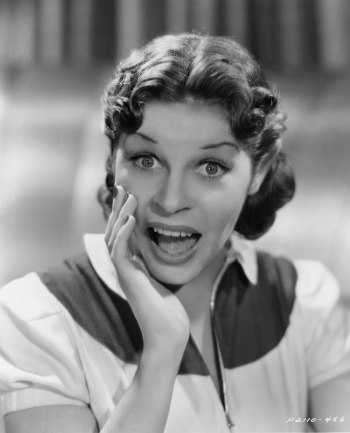
“First a Girl” –Musical #505

Studio:
RKO

Director:
Leigh Jason

Starring:
Jessie Matthews, Sonnie Hale, Anna Lee,

Plot:
Elizabeth (Matthews) is a delivery girl at a dress store with dreams of being a dancer. One day, she borrows a dress for an audition and doesn’t get the part. In the meanwhile, she meets down on his luck Shakespearean actor Victor (Hale) who does female impersonations. After ruining the dress, Elizabeth is too afraid to return to the dress store. Victor allows her to get in on his act. When Victor is too ill to go on stage as a female impersonator, he grooms Elizabeth to act as a female impersonator, even though she is already a woman. Elizabeth becomes a huge success but problems arise when she falls in love with a man.

Trivia:
-Late remade as “Victor/Victoria” (1982) starring James Garner, Julie Andrews and Robert Preston.
-Adapted from a 1933 German film called “Viktor and Viktoria”

Highlights:
-Jessie Matthews drinking with Griffith Jones, who believes she’s a man. However, she is not used to the strong beverages that he keeps ordering.

Jessie Matthews, Sonny Hale and Griffith Jones in "First a Girl"

Jessie Matthews, Sonny Hale and Robert Griffith in “First a Girl”

Notable Songs:
-It’s Written All Over Your Face performed by Jessie Matthews
-Everything’s In Rhythm With My Heart performed by Jessie Matthews and Sonnie Hale
-Half and Half performed by Jessie Matthews
-Say The Word And It’s Yours performed by Jessie Matthews

My Review:
When this film began I kept thinking how similar it was to the 1982 film “Victor/Victoria.” Until seeing this movie, I had no idea it was a remake.
“First a Girl” is an entertaining little British film with a subject matter that would probably not have been seen in a 1935 American film. Not only is Jessie Matthews supposed to be a cross dressing male (though the audience knows she is a female), there are some homosexual innuendos and jokes that probably would not have even been seen in a pre-code American film.
When Elizabeth begins falling for Robert (Jones), it is uncertain if he likes her character because she is a man or because she is a man that seems feminine enough to be a woman. Our main character is even a little confused by this.
When I started this film, I was not familiar with any of the main actors but all of them were entertaining. The songs in this musical are forgettable, but it’s story line that is fairly unique for a 1930s film is pleasant, fun and enjoyable. If you come across this forgetting little gem, give it a whirl.

Check out the Comet Over Hollywood Facebook page, follow on Twitter at @HollywoodComet or e-mail at cometoverhollywood@gmail.com

Musical Monday: That Girl From Paris (1936)

It’s no secret that the Hollywood Comet loves musicals.
In 2010, I revealed I had seen 400 movie musicals over the course of eight years. Now that number is over 500. To celebrate and share this musical love, here is my weekly feature about musicals.

ADIEU PARIS BONJOUR NEW YORKThis week’s musical:
“That Girl From Paris” –Musical #504

Studio:
RKO

Director:
Leigh Jason

Starring:
Lily Pons, Gene Raymond, Jack Oakie, Herman Bing, Mischa Auer, Frank Jenks, Lucille Ball, Jimmy Dorsey

Plot:
The day of her wedding, French opera star Nicole Martin (Pons) decides she want adventure, rather than marrying the man selected to be her husband. “Nikki” decides she wants adventure and meets up with American singer, bandleader Windy McLean (Raymond) while she is hitchhiking. Windy finds Nikki annoying and sails to America, but Nikki falls in love with him and castaways on the ship. Windy then has trouble on his hands while he avoids arrest for helping hide a stowaway in New York. Windy also has trouble when his girlfriend Claire (Ball) isn’t too fond of Nikki.

Trivia:
-Later remade as “Four Jacks and a Jill” (1942) starring Anne Shirley, June Havoc and Ray Bolger.
-Version of “Street Girl” (1929) starring Betty Compson.

Lucille Ball, Gene Raymond, Jack Oakie, Mischa Auer, Lily Pons and other band members in "That Girl From Paris"

Lucille Ball, Gene Raymond, Jack Oakie, Mischa Auer, Lily Pons and other band members in “That Girl From Paris”

Highlights:
-Lucille Ball’s role.

Notable Songs:
-Love and Learn performed by Jack Oakie
-When You and I Were Young, Maggie performed by Jack Oakie

Behind the scenes photo of Lucille Ball and Lily Pons

Behind the scenes photo of Lucille Ball and Lily Pons

My Review:
“That Girl From Paris” is one of several 1930s and 1940s films that took a page from “It Happened One Night” (1934) — see also “Eve Knew Her Apples” (1945).
Lily Pons runs away from her wedding to find adventure and follows around a man (Raymond) who wants nothing to do with her. I can’t say I blame Gene Raymond, because her character is quite annoying.
The two leads in the films– Lily Pons and Gene Raymond are plain annoying.
The audience is supposed to cheer for Lily Pons to end up with Raymond and live happily ever after, but I honestly feel sorry for Lucille Ball who ends up harassed by Pons and jilted by Raymond.
I found myself enjoying the supporting characters the most. Lucille Ball, Jack Oakie (who wasn’t annoying for once), Mischa Auer and Frank Jenks were much more enjoyable and much less annoying.
“That Girl From Paris” is a run of the mill, low-budget musical filled with high jinks and forgettable songs. Pons does have a beautiful operatic voice, but her annoying character overshadowed that for me.
If you are looking for a runaway bride film just watch “It Happened One Night” instead. If you want a film with good opera music- go the Jane Powell, Deanna Durbin or Jeannette MacDonald route instead.
However, if you are a true Lucille Ball fan looking to watch all of her work, this may be worth your time since she is the only bright spot in this dull film.
I don’t often direct you to not watch a musical, but this one was just too irritating.

Check out the Comet Over Hollywood Facebook page, follow on Twitter at @HollywoodComet or e-mail at cometoverhollywood@gmail.com

Musical Monday: Born to Sing (1942)

It’s no secret that the Hollywood Comet loves musicals.
In 2010, I revealed I had seen 400 movie musicals over the course of eight years. Now that number is over 500. To celebrate and share this musical love, here is my weekly feature about musicals.

bornThis week’s musical:
“Born to Sing” –Musical #507

Studio:
Metro-Goldwyn-Mayer

Director:
Edward Ludwig

Starring:
Virginia Weidler, Ray McDonald, Leo Gorcey, Douglas McPhail, Rags Ragland, Sheldon Leonard, Henry O’Neill, Margaret Dumont, Darla Hood, Joe Yule, Charles Lane, Richard Hall, Lester Matthews

Plot:
The day ‘Snap’ Collins (Gorcey) is released from reform school, he and his friends Steve (McDonald) and Steve (Nunn) find Frank Eastman (O’Neill) who has just tried to commit suicide. The three young men revive him just as his teenage daughter Patsy (Weidler) comes home. Eastman reveals that music he composed while he was in prison was stolen by producer Arthur Cartwright (Matthews). The teens work to put on a show so Eastman can get the credit that he deserves.

Trivia:
-Originally a vehicle for Mickey Rooney and Judy Garland, according to TCM host Ben Mankeiwicz

Virginia Weidler with her father, played by Henry O'Neill, after he tried to commit suicide in "Born to Sing."

Virginia Weidler with her father, played by Henry O’Neill, after he tried to commit suicide in “Born to Sing.”

Highlights:
-Darla Hood’s film appearance.

Notable Songs:
-“Here I Am, Eight Years Old” performed by Darla Hood
-“Two A.M.” performed by Ray MacDonald and Virginia Weidler

My Review:
This film is a very similar formula of Judy Garland and Mickey Rooney musical made around this time. The two Garland/Rooney films I particularly feel it mimics are “Babes on Broadway” (1941) and “Strike Up the Band” (1940).
“Born to Sing” has the same equation of down on their teens with a “Let’s put on a show!” idea to solve all of their financial problems. Somehow, their shows always look as lavish as an Florenz Ziegfeld produced musical– better sets or costumes than I have ever seen in any community theater show.
A few things that really stood out to me as a rip off of previous Rooney/Garland plots:

-The boys come across a deserted building that was once used for Nazi rallies in the United States. Naturally they convert this into a performance space.

Child piano performer Richard Hall.

Child piano performer Richard Hall.

-Richard Hall plays an overly serious child prodigy musician in both “Born to Sing” and “Babes on Broadway.” In both films, people see how little he is and doubt him until he blows them away at the pino.
-“Born to Sing” and “Strike Up the Band” both have large, comedic Conga numbers. Mickey Rooney dresses up like Carmen Miranda in “Do La Conga” and “Born to Sing” features Beverly Hudson singing “I Hate the Conga.”
The big finale was directed by Busby Berkeley, which you think would be great, but it was garbage. The last eight minutes is the Berkeley directed “A Ballad for America” performed by operatic sing Douglas McPhail, who is also in the Garland/Rooney film “Babes in Arms.” I like opera music, but McPhail is dull in every film I have seen him in. On top of his dull singing style, the song is also just plain bland. Several shots in this Berkeley filmed number were fairly reminiscent of the “Forgotten Man” number from “Gold Diggers of 1933.”

Virginia Weidler and Ray McDonald plead for help from a gangster in "Born to Sing."

Virginia Weidler and Ray McDonald plead for help from a gangster in “Born to Sing.”

The saving factor of “Born to Sing” was that my favorite child actress, Virginia Weidler, is a grown up young woman in the film. Sadly, there is not enough Weidler to keep me happy.
The other main notable factor in this film is seeing Darla Hood perform. Hood previously acted in the Our Gang/Little Rascals films. She sings a song called “Here I Am, Eight Years Old” (And my life is already over), which is rather sad and poignant coming from the perspective of a fading child actor.
While “Born to Sing” isn’t a bad movie, it is just a shame that it feels like it’s pages torn out of scripts from other Garland/Rooney films and pasted together.
If this truly was going to be another Garland/Rooney extravaganza as Mankiewicz said in his introduction, I wonder if there would have been some more thought put into the plot.

Check out the Comet Over Hollywood Facebook page, follow on Twitter at @HollywoodComet or e-mail at cometoverhollywood@gmail.com

Musical Monday: The Seven Little Foys (1955)

It’s no secret that the Hollywood Comet loves musicals.
In 2010, I revealed I had seen 400 movie musicals over the course of eight years. Now that number is over 500. To celebrate and share this musical love, here is my weekly feature about musicals.

foy2This week’s musical:
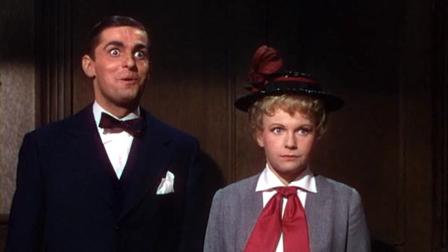
The Seven Little Foys” –Musical #499

Studio:
Paramount Pictures

Director:
Melville Shavelson

Starring:
Bob Hope, Milly Vitale, George Tobias, Angela Clarke, James Cagney, Billy Gray
Narrator: Charley Foy

Plot:
Biographical film of vaudeville performer Eddie Foy (Hope). The film mainly concentrates on Foy’s marriage, the birth of his seven children and how he was never home for his family. After Foy’s wife and mother of the seven children passes away, the children are brought into the act.

Trivia:
-James Cagney reprises his role as George M. Cohen from “Yankee Doodle Dandy.”
-Son of Eddie Foy, Charley Foy, narrated the film.
-In 1964, a made for television special of the story aired presented by Bob Hope Presents the Chrysler Theatre. In 2007, there was a stage musical adaptation.

Highlights:
-James Cagney as George M. Cohen
-Bob Hope and James Cagney dancing to “Mary’s a Grand Old Name” together

Notable Songs:
-“I’m the Greatest Father Of Them All” performed by Bob Hope and the children
-“Row, Row, Row” performed by Bob Hope and the children
-“Chinatown, My Chinatown” performed by Bob Hope and the children

My Review:

The real Eddie Foy, Sr.

The real Eddie Foy, Sr.

Bob Hope’s role in “The Seven Little Foys” is one of two truly dramatic roles he did in his career, the other being “Beau James” (1957). While fun, comedic Hope is entertaining, I enjoyed seeing a more serious screen performance from him.
The real Eddie Foy, Sr. died in 1928 at the age of 71. His son, Eddie Foy, Jr. can be spotted in several 1930s comedies.
As Comet Over Hollywood has noted many times prior in other posts, biographical films, particularly those of the musical nature, sometimes have fanciful inaccurate plots.
While Foy did have seven children, the movie only shows one wife. In reality, he had four women he was either married to or romantically involved with for many years.
Eddie Foy, Sr. and the Seven Little Foys performed together from 1910 until 1913. After they stopped performing, most of the children went on to pursue their own entertainment careers.
When I first saw this movie in middle school shortly after Hope died in 2003, I didn’t like it. Being used to the wisecracking Hope, I thought he was mean and didn’t enjoy this film. Revisiting this film over 10 years later I enjoyed it a great deal more. I think Hope does a good job with a character who has a bit more meat than films such as “Road to Hong Kong” or “My Favorite Spy.”
The first half of the film sets up Foy as a bit of a heel who is never home for his family and then comes home after she dies. In the second half you see the resentment from his children as he brings them into show business.
Of the musical numbers, the only real standout was a dance duet Bob Hope did with James Cagney, who was reprising his role as George M. Cohen. That is the real standout feature of this film to me, along with seeing Hope’s more serious side.
If you are looking for the stereotypical Bob Hope film of double takes, wisecracks and breaking the fourth wall, “Seven Little Foys” may not be for you. But if you are a Hope fan, I encourage you to check this one out to see the full spectrum of his career.

Bob Hope and the Seven Little Foys in the 1955 biographical film.

Bob Hope and the Seven Little Foys in the 1955 biographical film.

Check out the Comet Over Hollywood Facebook page, follow on Twitter at @HollywoodComet or e-mail at cometoverhollywood@gmail.com

Musical Monday: Sweetheart of the Campus (1941)

It’s no secret that the Hollywood Comet loves musicals.
In 2010, I revealed I had seen 400 movie musicals over the course of eight years. Now that number is over 500. To celebrate and share this musical love, here is my weekly feature about musicals.

Sweetheart%20of%20the%20CampusThis week’s musical:
“Sweet Heart of the Campus” –Musical #498

Studio:
Columbia Pictures Corporation

Director:
Edward Dmytryk

Starring:
Ruby Keeler, Ozzie Hilliard, Ozzie Nelson, Gordon Oliver

Plot:
Ozzie Norton (Nelson) and his band which includes dancer Betty Blake (Keeler) are about to open a nightclub near Lambeth Technological College. Before they open, college professors, the sheriff and daughter of the college’s president Harriet Hale (Hilliard) coem to shut down the band because the club is too close to the campus. The club later reopens with Ozzie and his band to help recruit students to the financially floundering school.

Trivia:
-Last film of actress and dancer Ruby Keeler. After guest starring on multiple TV shows, she did make one last movie in 1989 called “Beverly Hills Brats.”
-Husband and wife Ozzie Hilliard and Ozzie Nelson star in the film as love interests.
-The film was also released under the title “Broadway Ahead.”

Ruby Keeler and Ozzie Nelson in "Sweethearts of the Campus" (1941)

Ruby Keeler and Ozzie Nelson in “Sweethearts of the Campus” (1941)

Notable Songs:
-“Tap Happy” performed by Ruby Keeler
-“Zip Me Baby with a Gentle Zag”

My Review:
This is the epitome of a 1940s “B” musical: thin plot, jiving music and celebrities who aren’t exactly on the A list.
I think the thing that I find most interesting is the cast. Most people know Harriet Hilliard and Ozzie Nelson from their 1950s TV show “Ozzie and Harriet” starring themselves and their songs. I always find it interesting to see them in 1930s and 1940s films, playing young people rather than parents.
See Ruby Keeler in her last film was also an interesting comparison to her early Busby Berkeley directed musicals. Her tap dancing seemed much more fluid and graceful in “Sweetheart of the Campus” compared to her “hoofing” in films like “42nd Street” (1933).
After this film, Keeler left films and appeared in a few television shows.
“It (Sweethearts) was so bad, I had no regrets about leaving,” Keeler was quoted in the book “The Women of Warner Brothers” by Daniel Bubbeo.
“Sweetheart of the Campus” is simply fun and entertaining but nothing to write home about. It has music that you tap your foot to and a plot that can keep you interested enough for 67 minutes.

Check out the Comet Over Hollywood Facebook page, follow on Twitter at @HollywoodComet or e-mail at cometoverhollywood@gmail.com

Classics in the Carolinas: Edith Fellows

Comet Over Hollywood is doing a mini-series of “Classics in the Carolinas.” I’ll be spotlighting classic movie related topics in South Carolina (my home state) and North Carolina (where I currently live).

Before heading to Hollywood, child star Edith Fellows lived her early years in Charlotte, NC.

Before heading to Hollywood, child star Edith Fellows lived her early years in Charlotte, NC.

With her bobbed brown hair, big eyes and a face more mature than other child stars, Edith Fellows acted with some of Hollywood’s top stars including Claudette Colbert, Bing Crosby and Melvyn Douglas.

In films such as “She Married Her Boss” (1935) or “And So They Were Married” (1936), Fellows seemed to specialize in playing brats who were reformed by the end of the film. Fellows once said she liked playing brats because she, “Couldn’t do those things at home,” according to actor Dickie Moore’s book about child stars ‘Twinkle, Twinkle Little Star.’

But before Fellows made her way to Hollywood, she spent her early years down South. Born in May 1923 in Boston, MA, her mother left Fellows and her father, Willis Fellows, when she was only a year old. Fellows’ father found a job in Charlotte, NC, and moved there with his parents. Fellows said her first recollection of living in Charlotte was having the measles on Christmas day.

While in Charlotte, Fellows started taking dance lessons at the Henderson School of Dancing located on the 200 block of South Tryon Street, according to the University of North Carolina – Charlotte archives.

The Henderson School of Dancing in Charlotte, NC on Tryon Street. (Source: UNC Charlotte archives)

The Henderson School of Dancing in Charlotte, NC on Tryon Street. (Source: UNC Charlotte archives)

“I was so pigeon-toed that I kept falling over myself,” Fellows said in an interview in the book “Growing Up on Set” by Tom and Jim Goldrup. “My grandmother took me to an orthopedics man and he suggested that she get me some dancing lessons.”

By the time she was three, Fellows was singing, dancing and reciting poetry in local productions.

“I used to sing and recite, they put me in a one woman show when I was only 3 and a half,” Fellow said in the Goldrup book.

A talent scout visited the Henderson School of Dancing and said he could get little Edith into a Hal Roach film. If Fellows’ grandmother paid $50, the talent scout could get her a screen test in Hollywood. Her dance class collected the money so she could go to California, according to a February 1986 issue of “Orange Coast Magazine.”

“It was terribly sad saying goodbye to my friends and dancing buddies. They all came to the railroad to see us off,” Fellows was quoted in Moore’s book. “Nobody asked if I wanted to go. I don’t know how I felt about it. I didn’t know what Hollywood was. My grandmother did, and because she was excited and happy, I caught her excitement without understanding why.”

However, Fellows’ father wasn’t able to go along with them to California.

“Daddy wasn’t able to go. I was standing on the observation platform at the back of the train looking for my daddy and remember crying so much because he hadn’t come,” Fellows was quoted in the Goldrup book. “…I was looking down the track and I could see a small figure on a white horse. It was my father. The train was picking up speed…and he rode alongside…”

When Fellows and her grandmother arrived in Hollywood, they found they had been conned. The address the “talent scout” gave them was an empty lot. Fellows’ grandmother was too proud to return to North Carolina and began cleaning houses. Fellows would stay with neighbors and go along with then children went to work as extras in films and Fellows got a role when the neighborhood boy had chicken pox, according to Moore’s book.

While some young stars had domineering stage mother’s, it was Fellows’ possessive and strong-willed grandmother that pushed her career.

“When I threw something at Claudette Colbert in a movie, I was really throwing at grandma,” she was quoted in Moore’s book.

During a meeting with Columbia studio head Harry Cohen and her grandmother, Cohen yelled at grandma for dressing Fellows in cheap clothing because it reflected poorly on the studio.

Edith Fellows, 14, and her grandmother in a 1937 newspaper clipping.

Edith Fellows, 14, and her grandmother in a 1937 newspaper clipping.

“I’m sitting there smiling because I’d no idea that my boss was my friend. I almost started falling in love with Harry Cohen,” Moore quoted Fellows. “…Grandma said, ‘Well, Shirley Temple’s mother gets a salary for taking care of Shirley, so I certainly think I deserve a salary for taking care of Edith.’ Cohen said, ‘You’ll get nothing and good day.’”

While Fellows felt earning money was a way to do nice things for her grandmother, she still resented how overbearing she was; not allowing Fellows to have birthday parties with children or to date boys. Grandma died in 1941 when Fellows was 18.

“Grandma’s funeral was one of the best performances I ever gave. When I found her dead one morning, it was a terrible shock, but it didn’t last too long. At the service, I kept my head down because I couldn’t cry…,” Fellows was quoted in Moore’s book. “I felt a great relief. I was almost laughing all the way to the cemetery.”

Fellows was dropped from her contract in 1940, but made plays and films through the late 1980s and early 1990s. She passed away in 2011.

In a 1980s radio interview, she was asked if she could start over and pick to go to Hollywood, would she? She first muttered “No” before saying “Yes, I guess so.”

“It did afford me wonderful opportunities to meet and work with different people,” Fellows was quoted in the Goldrup book. “That was an education in itself.”

Check out the Comet Over Hollywood Facebook page, follow on Twitter at @HollywoodComet or e-mail at cometoverhollywood@gmail.com

Musical Monday: Meet Me After the Show (1951)

It’s no secret that the Hollywood Comet loves musicals.
In 2010, I revealed I had seen 400 movie musicals over the course of eight years. Now that number is over 500. To celebrate and share this musical love, here is my weekly feature about musicals.

This week’s musical:
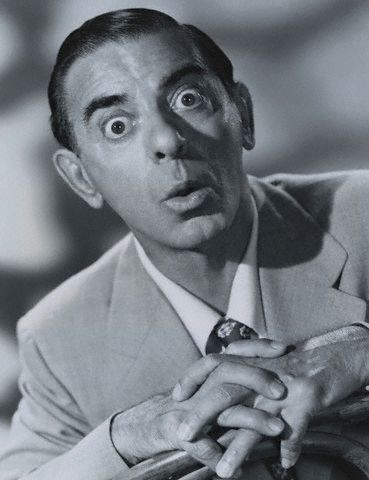
“Meet Me After the Show” –Musical #497

meet_me_after_the_show

Studio:
20th Century Fox

Director:
Richard Sale

Starring:
Betty Grable, MacDonald Carey, Eddie Albert, Rory Calhoun, Lois Andrews, Irene Ryan, Fred Clark

Plot:
Broadway star Delilah Lee (Grable) is about to start another successful run of a new show written by her husband Jeff Ames (Carey). Jeff discovered Delilah as a cheap singer in Florida and groomed her to be a top star. When Delilah finds out Gloria Carstairs (Andrews) is backing the show and also has the hots for her husband, Delilah leaves him and the show. When Jeff can’t pay the alimony, Delilah feigns amnesia-going back to her performance roots in Florida- to win him back.

Trivia:
-Produced by George Jessel

Highlights:
-Chorus sing “Me-Oh-Miami” as scenes of Miami are shown. Same song was used in the Betty Grable film, “Moon Over Miami.”
-Gwen Verdon as a specialty dancer

Notable Songs:
-Meet Me After the Show performed by Betty Grable
-Betting on a Man performed by Betty Grable

My Review:
For a film that is a musical, I preferred the plot lines over the singing and dancing.
“Meet Me After the Show” has a fairly funny plot line and the non-singing leading men – Eddie Albert and MacDonald Carey- make the film for me. While I love Betty Grable, her performance was overshadowed by the terrible songs that were in this film.
Grable, 20th Century Fox’s top star since the 1940s, has always been able to sell a song with her energy and dancing. But the material she’s given is lousy. One song consists of a lot of body builder-looking men dressed as Romans and Grable dancing around and repeatedly saying “Joe.” I wasn’t sure what Joe and Romans had to do with anything, but the song was annoying. In the number “I Feel Like Dancing” with Gwen Verdon, the two start out dressed like robbers, talk about how they feel like dancing and then suddenly they have Grable in an evening gown. I felt like I missed a major plot line in this song.
The overall film and plot line are fun and funny, but most of the songs had me wishing they would in. However, I wouldn’t overlook it just because of the silly songs. Any Betty Grable film is generally a fun one.

Check out the Comet Over Hollywood Facebook page, follow on Twitter at @HollywoodComet or e-mail at cometoverhollywood@gmail.com

Musical Monday: “Sally” (1929)

It’s no secret that the Hollywood Comet loves musicals.
In 2010, I revealed I had seen 400 movie musicals over the course of eight years. Now that number is over 500. To celebrate and share this musical love, here is my weekly feature about musicals.

sally posterThis week’s musical:
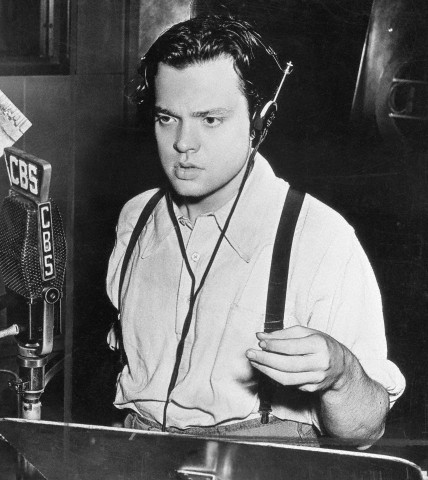
“Sally” –Musical #308

Studio:
First National Pictures

Director:
John Francis Dillon

Starring:
Marilyn Miller, Joe E. Brown, Alexander Gray, T. Roy Barnes, Pert Kelton, Ford Sterling,

Plot:
Based on the Broadway play made famous by Marilyn Miller, Sally Green (Miller) is a waitress with dreams of becoming a dancer. A rich fellow named Blair Fellow (Gray) visits Sally at work frequently. Though they are smitten, he is also in a marriage of convenience. One day, Sally drops a tray on a customer and the same day a talent agent offers her a job dancing. One of her dancing jobs is to impersonate a royal Russian dancer at a party given by Blair’s parents. Blair knows it is Sally all along, but when his parents learn she is a fake, they ask her to leave. Sally then becomes a dancer on Broadway.

Trivia:
-The film stars actress Marilyn Miller, who made the play popular on Broadway. The play was produced by Florenz Ziegfeld and ran from 1920 until 1922.
-The full film was originally in 2-color Technicolor. Now, only the “Wild Rose” musical number remains.
-Nominated for an Academy Award for Best Art Direction by Jack Okey in 1930.
-The first of three films Marilyn Miller made.

Highlights:
-The last remaining color footage during the “Wild Rose” number

The last remaining color scene during the "Sally."

The last remaining color scene during the “Sally.”

Notable Songs:
-Look for the Silver Lining performed by Alexander Gray
-All I Want to Do Do Do Is Dance performed by Marilyn Miller
-Sally performed by the Ensemble
-If I’m Dreaming (Don’t Wake Me Too Soon) performed by Marilyn Miller and Alexander Gray

My Review:
Marilyn Miller was one of Broadway’s biggest stars of the 1910s and 1920s. However– as noted before by TCM prime time host Robert Osborne– Miller’s onstage magic does not come across on screen.
She is pretty and interesting to watch, but really just nothing special.
Though she is known for her dancing, most of Miller’s steps seem haphazard, uncoordinated with her partners and are far from graceful. Even her ballet number looks a bit amateurish.
However, all of this seems pretty characteristic of musicals made shortly after the dawn of sound in Hollywood. As noted previously in a post about “Tanned Legs” (1929), these early musicals have messy dance numbers, thrown together plots and odd, unflattering dance moves.
Honorable mention goes to Joe E. Brown, who is the most memorable part of this film.
I have no doubt that “Sally” was more enchanting of a story on the stage.

Check out the Comet Over Hollywood Facebook page, follow on Twitter at @HollywoodComet or e-mail at cometoverhollywood@gmail.com