Classics in the Carolinas: Edith Fellows

Comet Over Hollywood is doing a mini-series of “Classics in the Carolinas.” I’ll be spotlighting classic movie related topics in South Carolina (my home state) and North Carolina (where I currently live).
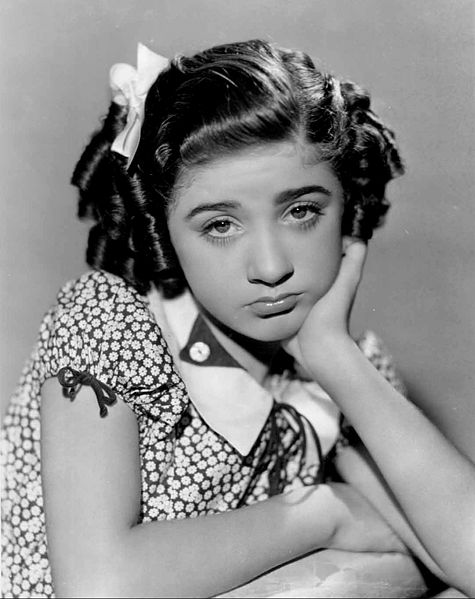
Before heading to Hollywood, child star Edith Fellows lived her early years in Charlotte, NC.

Before heading to Hollywood, child star Edith Fellows lived her early years in Charlotte, NC.

With her bobbed brown hair, big eyes and a face more mature than other child stars, Edith Fellows acted with some of Hollywood’s top stars including Claudette Colbert, Bing Crosby and Melvyn Douglas.

In films such as “She Married Her Boss” (1935) or “And So They Were Married” (1936), Fellows seemed to specialize in playing brats who were reformed by the end of the film. Fellows once said she liked playing brats because she, “Couldn’t do those things at home,” according to actor Dickie Moore’s book about child stars ‘Twinkle, Twinkle Little Star.’

But before Fellows made her way to Hollywood, she spent her early years down South. Born in May 1923 in Boston, MA, her mother left Fellows and her father, Willis Fellows, when she was only a year old. Fellows’ father found a job in Charlotte, NC, and moved there with his parents. Fellows said her first recollection of living in Charlotte was having the measles on Christmas day.

While in Charlotte, Fellows started taking dance lessons at the Henderson School of Dancing located on the 200 block of South Tryon Street, according to the University of North Carolina – Charlotte archives.
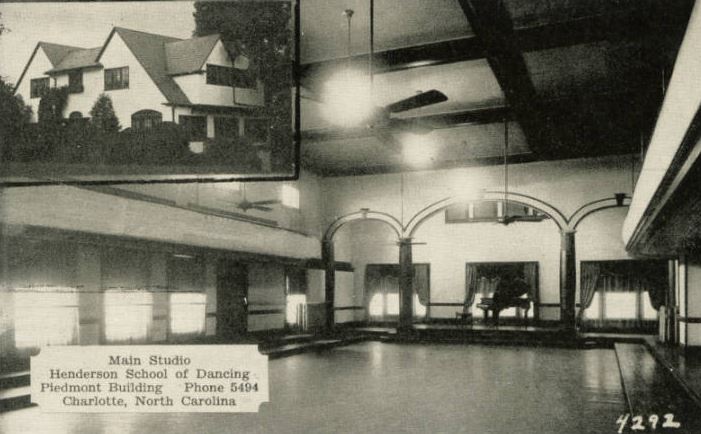
The Henderson School of Dancing in Charlotte, NC on Tryon Street. (Source: UNC Charlotte archives)

The Henderson School of Dancing in Charlotte, NC on Tryon Street. (Source: UNC Charlotte archives)

“I was so pigeon-toed that I kept falling over myself,” Fellows said in an interview in the book “Growing Up on Set” by Tom and Jim Goldrup. “My grandmother took me to an orthopedics man and he suggested that she get me some dancing lessons.”

By the time she was three, Fellows was singing, dancing and reciting poetry in local productions.

“I used to sing and recite, they put me in a one woman show when I was only 3 and a half,” Fellow said in the Goldrup book.

A talent scout visited the Henderson School of Dancing and said he could get little Edith into a Hal Roach film. If Fellows’ grandmother paid $50, the talent scout could get her a screen test in Hollywood. Her dance class collected the money so she could go to California, according to a February 1986 issue of “Orange Coast Magazine.”

“It was terribly sad saying goodbye to my friends and dancing buddies. They all came to the railroad to see us off,” Fellows was quoted in Moore’s book. “Nobody asked if I wanted to go. I don’t know how I felt about it. I didn’t know what Hollywood was. My grandmother did, and because she was excited and happy, I caught her excitement without understanding why.”

However, Fellows’ father wasn’t able to go along with them to California.

“Daddy wasn’t able to go. I was standing on the observation platform at the back of the train looking for my daddy and remember crying so much because he hadn’t come,” Fellows was quoted in the Goldrup book. “…I was looking down the track and I could see a small figure on a white horse. It was my father. The train was picking up speed…and he rode alongside…”

When Fellows and her grandmother arrived in Hollywood, they found they had been conned. The address the “talent scout” gave them was an empty lot. Fellows’ grandmother was too proud to return to North Carolina and began cleaning houses. Fellows would stay with neighbors and go along with then children went to work as extras in films and Fellows got a role when the neighborhood boy had chicken pox, according to Moore’s book.

While some young stars had domineering stage mother’s, it was Fellows’ possessive and strong-willed grandmother that pushed her career.

“When I threw something at Claudette Colbert in a movie, I was really throwing at grandma,” she was quoted in Moore’s book.

During a meeting with Columbia studio head Harry Cohen and her grandmother, Cohen yelled at grandma for dressing Fellows in cheap clothing because it reflected poorly on the studio.
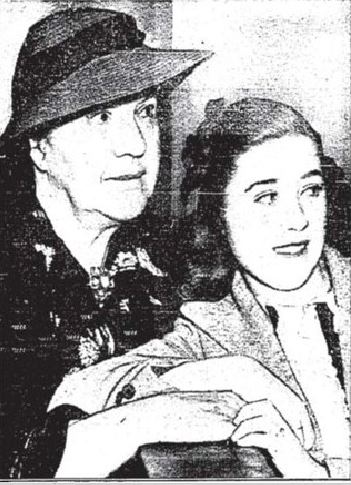
Edith Fellows, 14, and her grandmother in a 1937 newspaper clipping.

Edith Fellows, 14, and her grandmother in a 1937 newspaper clipping.

“I’m sitting there smiling because I’d no idea that my boss was my friend. I almost started falling in love with Harry Cohen,” Moore quoted Fellows. “…Grandma said, ‘Well, Shirley Temple’s mother gets a salary for taking care of Shirley, so I certainly think I deserve a salary for taking care of Edith.’ Cohen said, ‘You’ll get nothing and good day.’”

While Fellows felt earning money was a way to do nice things for her grandmother, she still resented how overbearing she was; not allowing Fellows to have birthday parties with children or to date boys. Grandma died in 1941 when Fellows was 18.

“Grandma’s funeral was one of the best performances I ever gave. When I found her dead one morning, it was a terrible shock, but it didn’t last too long. At the service, I kept my head down because I couldn’t cry…,” Fellows was quoted in Moore’s book. “I felt a great relief. I was almost laughing all the way to the cemetery.”

Fellows was dropped from her contract in 1940, but made plays and films through the late 1980s and early 1990s. She passed away in 2011.

In a 1980s radio interview, she was asked if she could start over and pick to go to Hollywood, would she? She first muttered “No” before saying “Yes, I guess so.”

“It did afford me wonderful opportunities to meet and work with different people,” Fellows was quoted in the Goldrup book. “That was an education in itself.”

Check out the Comet Over Hollywood Facebook page, follow on Twitter at @HollywoodComet or e-mail at cometoverhollywood@gmail.com
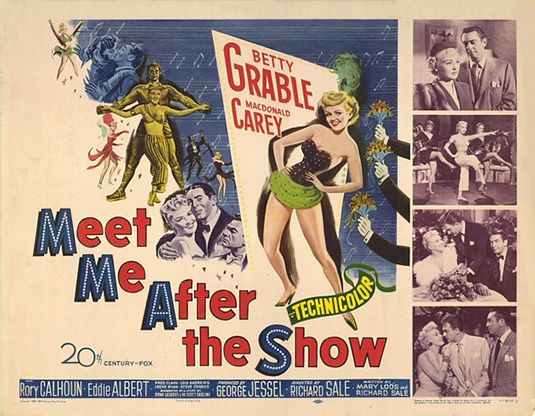
Musical Monday: Meet Me After the Show (1951)

It’s no secret that the Hollywood Comet loves musicals.
In 2010, I revealed I had seen 400 movie musicals over the course of eight years. Now that number is over 500. To celebrate and share this musical love, here is my weekly feature about musicals.

This week’s musical:
“Meet Me After the Show” –Musical #497

meet_me_after_the_show

Studio:
20th Century Fox

Director:
Richard Sale

Starring:
Betty Grable, MacDonald Carey, Eddie Albert, Rory Calhoun, Lois Andrews, Irene Ryan, Fred Clark

Plot:
Broadway star Delilah Lee (Grable) is about to start another successful run of a new show written by her husband Jeff Ames (Carey). Jeff discovered Delilah as a cheap singer in Florida and groomed her to be a top star. When Delilah finds out Gloria Carstairs (Andrews) is backing the show and also has the hots for her husband, Delilah leaves him and the show. When Jeff can’t pay the alimony, Delilah feigns amnesia-going back to her performance roots in Florida- to win him back.

Trivia:
-Produced by George Jessel

Highlights:
-Chorus sing “Me-Oh-Miami” as scenes of Miami are shown. Same song was used in the Betty Grable film, “Moon Over Miami.”
-Gwen Verdon as a specialty dancer

Notable Songs:
-Meet Me After the Show performed by Betty Grable
-Betting on a Man performed by Betty Grable

My Review:
For a film that is a musical, I preferred the plot lines over the singing and dancing.
“Meet Me After the Show” has a fairly funny plot line and the non-singing leading men – Eddie Albert and MacDonald Carey- make the film for me. While I love Betty Grable, her performance was overshadowed by the terrible songs that were in this film.
Grable, 20th Century Fox’s top star since the 1940s, has always been able to sell a song with her energy and dancing. But the material she’s given is lousy. One song consists of a lot of body builder-looking men dressed as Romans and Grable dancing around and repeatedly saying “Joe.” I wasn’t sure what Joe and Romans had to do with anything, but the song was annoying. In the number “I Feel Like Dancing” with Gwen Verdon, the two start out dressed like robbers, talk about how they feel like dancing and then suddenly they have Grable in an evening gown. I felt like I missed a major plot line in this song.
The overall film and plot line are fun and funny, but most of the songs had me wishing they would in. However, I wouldn’t overlook it just because of the silly songs. Any Betty Grable film is generally a fun one.

Check out the Comet Over Hollywood Facebook page, follow on Twitter at @HollywoodComet or e-mail at cometoverhollywood@gmail.com
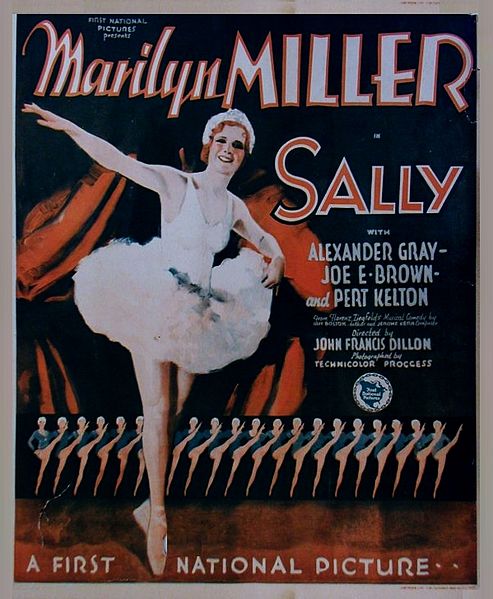
Musical Monday: “Sally” (1929)

It’s no secret that the Hollywood Comet loves musicals.
In 2010, I revealed I had seen 400 movie musicals over the course of eight years. Now that number is over 500. To celebrate and share this musical love, here is my weekly feature about musicals.

sally posterThis week’s musical:
“Sally” –Musical #308

Studio:
First National Pictures

Director:
John Francis Dillon

Starring:
Marilyn Miller, Joe E. Brown, Alexander Gray, T. Roy Barnes, Pert Kelton, Ford Sterling,

Plot:
Based on the Broadway play made famous by Marilyn Miller, Sally Green (Miller) is a waitress with dreams of becoming a dancer. A rich fellow named Blair Fellow (Gray) visits Sally at work frequently. Though they are smitten, he is also in a marriage of convenience. One day, Sally drops a tray on a customer and the same day a talent agent offers her a job dancing. One of her dancing jobs is to impersonate a royal Russian dancer at a party given by Blair’s parents. Blair knows it is Sally all along, but when his parents learn she is a fake, they ask her to leave. Sally then becomes a dancer on Broadway.

Trivia:
-The film stars actress Marilyn Miller, who made the play popular on Broadway. The play was produced by Florenz Ziegfeld and ran from 1920 until 1922.
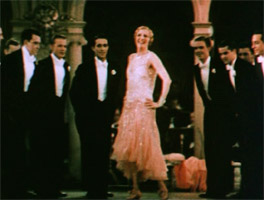
-The full film was originally in 2-color Technicolor. Now, only the “Wild Rose” musical number remains.
-Nominated for an Academy Award for Best Art Direction by Jack Okey in 1930.
-The first of three films Marilyn Miller made.

Highlights:
-The last remaining color footage during the “Wild Rose” number

The last remaining color scene during the "Sally."

The last remaining color scene during the “Sally.”

Notable Songs:
-Look for the Silver Lining performed by Alexander Gray
-All I Want to Do Do Do Is Dance performed by Marilyn Miller
-Sally performed by the Ensemble
-If I’m Dreaming (Don’t Wake Me Too Soon) performed by Marilyn Miller and Alexander Gray

My Review:
Marilyn Miller was one of Broadway’s biggest stars of the 1910s and 1920s. However– as noted before by TCM prime time host Robert Osborne– Miller’s onstage magic does not come across on screen.
She is pretty and interesting to watch, but really just nothing special.
Though she is known for her dancing, most of Miller’s steps seem haphazard, uncoordinated with her partners and are far from graceful. Even her ballet number looks a bit amateurish.
However, all of this seems pretty characteristic of musicals made shortly after the dawn of sound in Hollywood. As noted previously in a post about “Tanned Legs” (1929), these early musicals have messy dance numbers, thrown together plots and odd, unflattering dance moves.
Honorable mention goes to Joe E. Brown, who is the most memorable part of this film.
I have no doubt that “Sally” was more enchanting of a story on the stage.

Check out the Comet Over Hollywood Facebook page, follow on Twitter at @HollywoodComet or e-mail at cometoverhollywood@gmail.com
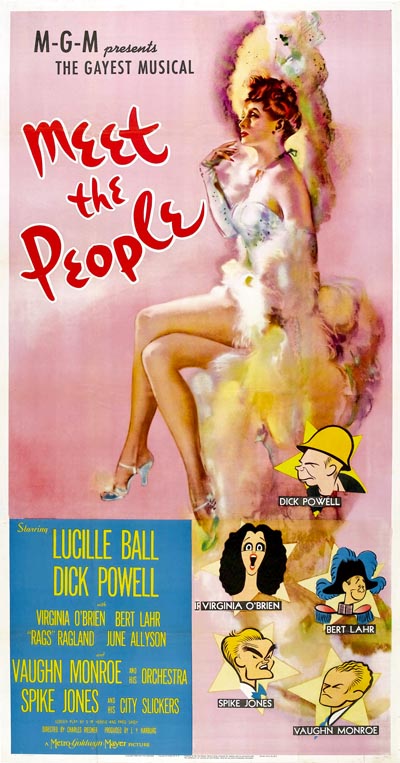
Musical Monday: Meet the People (1944)

It’s no secret that the Hollywood Comet loves musicals.
In 2010, I revealed I had seen 400 movie musicals over the course of eight years. Now that number is over 500. To celebrate and share this musical love, here is my weekly feature about musicals.

meet the peopleThis week’s musical:
“Meet the People” –Musical #104

Studio:
Metro-Goldwyn-Mayer

Director:
Charles Riesner

Starring:
Lucille Ball, Dick Powell, Bert Lahr, Virginia O’Brien, Rags Ragland, June Allyson, Howard Freeman
Themselves: Vaughn Monroe and his Orchestra

Plot:
William Swanson (Powell), a shipyard worker has written a musical about the war industry and want glamorous Broadway actress Julie Hampton (Ball) to star in the show. But when the show gets to the stage, William is curious to see that it glosses over the war and heighten the glamour. Pulling his play and heading back to Delaware, Julie follows William to get a glimpse at war work and convince him to reconsider.

Trivia:
-In her autobiography “Love Lucy,” Lucille Ball said she was “just another clothes horse” in this film.
-Ball wrote in her autobiography she loved working with Dick Powell and didn’t feel he ever received proper credit for his talents.
-At the time of this film, actress June Allyson was going to be dropped by MGM. Her next project was going to be “Two Girls and a Sailor” with Gloria DeHaven. Allyson was to play the secondary role as the beautiful sister and DeHaven the lead. Dick Powell advised her to ask Mayer to switch the roles, he did and it made her a star.
-It was on the set of “Meet the People” that June Allyson and Dick Powell became friends, and later married.
-Lucille Ball’s third project under contract at MGM.
-Lucille Ball’s singing was dubbed by Gloria Grafton.
-This movie was shown overseas to servicemen before it was released in the United States.
-According to MGM records the movie earned $670,000 in the US and Canada and $290,000 elsewhere resulting in a loss of $717,000.

Dick Powell, Virginia O'Brien, June Allyson and Lucille Ball in "Meet the People"

Dick Powell, Virginia O’Brien, June Allyson and Lucille Ball in “Meet the People”

Highlights:
-Singer Vaughn Monroe’s film appearance

Notable Songs:
-“Meet the People” performed by Dick Powell
-“I Like to Recognize the Tune” performed by Vaughn Monroe and June Allyson
-“Say We’re Sweethearts Again” performed by Virginia O’Brien

My Review:
Today, most of the world knows Lucille Ball as one of the greatest female comedians of all time due to her highly successful television career.
But at the beginning of her career, studios did not see that talent and were not too sure what to do with the actress. Studios like MGM groomed her to be the same as their other starlets- beautiful, coiffed and highly fashionable, and that simply didn’t fit Lucy.
In her autobiography, Lucille Ball ball dismisses this film and says she was “just another clothes horse.” However, she really enjoyed working with Dick Powell and felt he was an underrated talent and director.
While Dick Powell had a successful career in the 1930s, you can almost see that he was tired of the dry musicals. This was made the same year as “Murder, My Sweet” when Powell showed he could do more than croon.
The thing that makes “Meet the People” notable is June Allyson right before she hit it big and performer Vaughn Monroe.
Monroe is a terrific singing and very popular in the 1940s and 1950s, but isn’t spotted in films very often. Monroe was only in one other film than this, “Carnegie Hall.”
But Monroe and Allyson’s number about “I Like to Recognize the Tune” is one of the few songs you even remember after watching “Meet the People.” Allyson was on the drop list at MGM but only continued to be successful after this film from encouragement from Lucille Ball and advice from her (later husband) Dick Powell.
“Meet the People” is not one of MGM’s more memorable musical. However, it is entertaining and has some funny moments. Don’t write it off completely, but don’t expect anything amazing.

Check out the Comet Over Hollywood Facebook page, follow on Twitter at @HollywoodComet or e-mail at cometoverhollywood@gmail.com
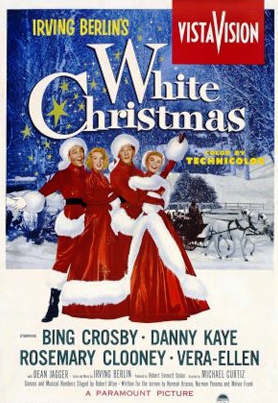
Christmas Musical Monday: “White Christmas” (1954)

It’s no secret that the Hollywood Comet loves musicals.
In 2010, I revealed I had seen 400 movie musicals over the course of eight years. Now that number is over 500. To celebrate and share this musical love, here is my weekly feature about musicals.

White_Chrismas_filmThis week’s musical:
“White Christmas” –Musical #21

Studio:
Paramount Studios

Director:
Michael Curtiz

Starring:
Bing Crosby, Danny Kaye, Rosemary Clooney, Vera-Ellen, Dean Jagger, Mary Wickes, Anne Whitfield, George Charkiris, Barrie Chase, Sig Ruman, Grady Sutton, Carl Switzer (photo)

Plot:
On Christmas Eve in 1944, Bob Wallace (Crosby) with the help of Phil Davis (Kaye) put on a small Christmas show to entertain their Army company and pay tribute to Major General Waverly (Jagger), who is leaving the outfit. The company is then attacked and Davis saves Wallace from a falling wall. When Wallace comes to thank Davis, Davis convinces him to go into show business with him.
Fast forward 10 years and Wallace and Davis are both successful performers and producers. On their way to New York after a performance in Florida, they stop to catch the act of Betty and Judy Haynes, sisters of an old Army buddy. After a series of events, Wallace and Davis end up heading to Vermont, rather than New York, with the sisters to an inn where they are performing.
The inn is owned by General Waverly, who isn’t doing very good business. The two men set out to help him boost business.

Trivia:
-Actress, dancer Vera-Ellen did not do her own singing in this film. During the “Sisters” number, Rosemary Clooney sang both parts. Trudy Stevens dubbed Ellen in “Snow” and “White Christmas.”

Rosemary Clooney and Vera-Ellen in "Sisters." Clooney sang both parts of the song.

Rosemary Clooney and Vera-Ellen in “Sisters.” Clooney sang both parts of the song.

-Fred Astaire was originally slated to play Danny Kaye’s role. The plan was to reunite Crosby and Astaire after their initial holiday hit “Holiday Inn” (1942). Astaire felt he was too old for this type of role and dropped out. Donald O’Connor then was set to replace Astaire, but O’Connor fell very ill. Danny Kaye was then cast along side Bing Crosby, according to the documentary “Backstage Stories from White Christmas.”
-When Bing Crosby and Danny Kaye perform the “Sisters” number, Kaye improvises and starts hitting him with the feathered fan. Crosby’s laughter was genuine, according to the documentary “Backstage Stories from White Christmas.”
-Ginger Rogers and Debbie Reynolds were considered as female leads for the film, according to “Late Life Jazz: The Life and Career of Rosemary Clooney” by Ken Crossland, Malcolm Macfarlane.
-The first Paramount Picture to be filmed in VistaVision, a higher resolution, widescreen, 35mm motion picture film format created by engineers at Paramount.
-Rosemary Clooney said in an interview in 2000 that she loved making the film. She also said she was not a dancer and Vera-Ellen- an extremely versatile dancer- was very patient with her.
-The photo of Betty and Judy’s brother is actor Carl Switzer, who played Alfalfa in the “Our Gang” films.
-This film helped actor, dancer George Chakiris gain popularity. Rather than being in a large dance ensemble, he was part of four men dancing around Rosemary Clooney in the “Love You Didn’t Do Right By Me” number. In an interview, Chakiris said girls were wondering who the “guy with the cleft chin” was after this close-up with Clooney, according to the documentary “Backstage Stories from White Christmas.”
-Nominated for an Academy Award for Best Song for “Count Your Blessings Instead of Sheep.”
-Top earning films of 1954.

Highlights:
-The “Abraham” dance number with Vera-Ellen and John Brascia.
-Barrie Chase meeting Bing Crosby at the beginning and saying “Mutual I’m sure” her “Kiss my foot, or have an apple” line. Chase may be my favorite character in the film.
-Every musical number in the whole film.
-Edith Head costumes

Notable Songs:
-“Mandy” performed by Rosemary Clooney, Danny Kaye, Bing Crosby, cast
-“Choreography” performed by Danny Kaye
-“White Christmas” performed by Bing Crosby
-“Old Man” performed by Bing Crosby, Danny Kaye and cast
-“Sisters” performed by Rosemary Clooney and Vera-Ellen (dubbed by Clooney)
-“Snow” performed by Clooney, Crosby, Kaye, Ellen (dubbed by Steven)
-“Love, You Didn’t Do Right By Me” performed by Rosemary Clooney
-“Gee! I Wish I Was Back in the Army” performed by Clooney, Crosby, Kaye, Ellen (dubbed)

Danny Kaye, Vera-Ellen and Bing Crosby in the "Mandy" number

Danny Kaye, Vera-Ellen and Bing Crosby in the “Mandy” number

My Review:
Maybe I’m not a very good film fan, because there are few films I can say I have seen more than 10, or even 5 times. There are so many to see that I just keep pushing through. But “White Christmas” is one of those rare films that I can quote along or know the what dance step is coming up in a musical number.
I credit this film for my desire to dance and driving me to take tap dancing lessons- particularly the “Abraham” and “Mandy” numbers.
It is a film that my family has watched nearly every Christmas for as long as I can remember and is easily a favorite films.
I could talk forever about how well the cast, costumes and musical numbers fit beautifully together to weave an interesting story that leaves you tearing up at the end.
But I recently had an opportunity to see the film with fresh eyes.
On Sunday, Dec. 14, my family went and saw it on the big screen for the first time. A film that I have seen over 30 times and thought I knew backwards, I suddenly noticed things I had never seen before.
I never noticed that Bing Crosby had yellow socks when he drives up to bring the mail to General Waverly. Or I never noticed some continuity errors, like when we are introduced to the Haynes sisters, Judy sets down the coffee pot and in the next shot she is holding it.
But most of all, I noticed the nuances in performances, especially Danny Kaye’s comedic genius.
You can see a film for years, but there is something special about watching it the way it was supposed to be shown that gives you an even greater appreciation.

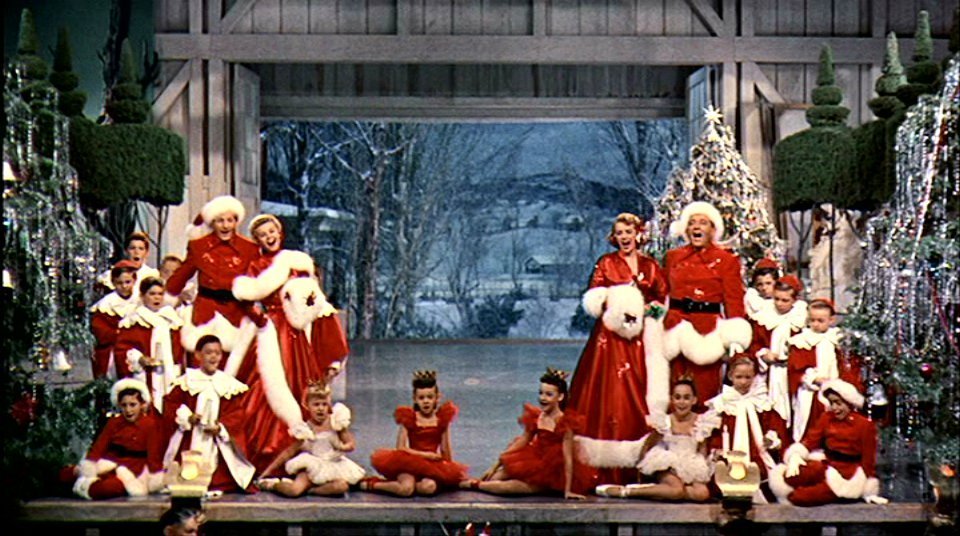
White Christmas finale

White Christmas finale

Check out the Comet Over Hollywood Facebook page, follow on Twitter at @HollywoodComet or e-mail at cometoverhollywood@gmail.com

Musical Monday: Babes in Toyland (1961)

It’s no secret that the Hollywood Comet loves musicals.
In 2010, I revealed I had seen 400 movie musicals over the course of eight years. Now that number is over 500. To celebrate and share this musical love, here is my weekly feature about musicals.

babes in toylandThis week’s musical:
“Babes In Toyland” –Musical #41

Studio:
Walt Disney Studios

Director:
Jack Donohue

Starring:
Annette Funicello, Ray Bolger, Tommy Sands, Ed Wynn, Tommy Kirk, Kevin Corcoran, Ann Jillian, Brian Corcoran, Mary McCarty, Henry Calvin, Gene Sheldon

Plot:
The film is introduced by Mother Goose (McCarty) and her goose Sylvester. Mary,Mary Quite Contrary (Funicello) and Tom the Piper’s Son (Sands) are to be married. However, evil Barnaby (Bolger) has other ideas. Mary will inherit a large sum of money when she marries and Barnaby wants it. He hires two crooks (Calvin, Sheldon) to kill Tom by throwing him into the sea. Barnaby is also going to steal Bo Peep’s (Jillian) sheep so that Mary no longer has income and will have to marry him. However, the crooks decide to make their own profit by selling Tom to gypsies, rather than drowning him.
While Barnaby is trying to woo Mary, the other children search for the lost sheep in the Forest of No Return. They all stumble upon Toyland, where the Toymaker and his assistant (Wynn, Kirk) are preparing for Christmas.

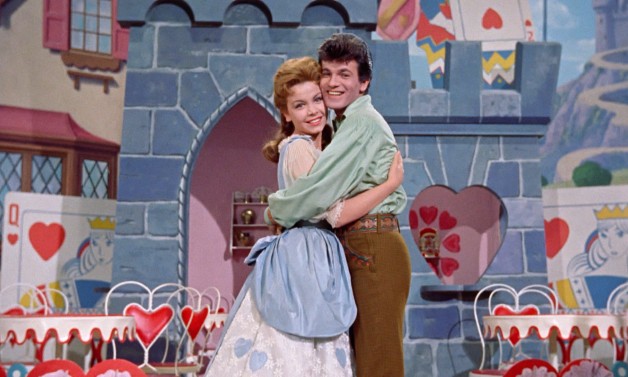
Annette Funicello as Mary Contrary and Tommy Sands as Tom Piper in "Babes in Toyland."

Annette Funicello as Mary Contrary and Tommy Sands as Tom Piper in “Babes in Toyland.”

Trivia:
-The first live-action musical made by Disney and it failed commercially. The next live action, full-length musical was “Mary Poppins” (1964).
-Walt Disney had Annette’s dark hair tinted red for the film, according to Funicello’s autobiography “A Dream Is a Wish Your Heart Makes: My Story.”
-Annette Funicello wrote in her book that “Babes in Toyland” was her favorite film making experience.
“It was one of those rare times when everything about making the film- from my director, my co-stars, the crew, the costumes, even the scenery- was perfect,” she wrote.
-Annette wrote it was a thrill to work with Ray Bolger who was “such a gentleman.”
-James Darren and Michael Callan were both considered for Tommy Sands role of Tom Piper, Funicello wrote.

Actress Ann Jillian in her film debut with actor Kevin Corcoran

Actress Ann Jillian in her film debut with actor Kevin Corcoran

-The “I Can’t Do the Sum” number was filmed using the Chromakey technique, as several different colored Annette’s jump out and also sing.
-At one point during the “I Can’t Do the Sum” number, Annette is walking on her hands, as her character thinks this could save money on shoes. Annette was really walking on her hands.
“Technicians had to wire all of my clothing, down to each layer of my petticoat, and I wore a wig, the strands of which were wired as well so that may hair wouldn’t fall in my face while I was upside down,” she wrote.
-Annette loved the wedding dress she wore in the film so much, that she contacted the film’s designer Bill Thomas when she was married in 1965 to design her dress.
-The stop-motion toy soldiers during Tom and Barnaby’s battle took six months to film.
-The film premiered in 1961 around Christmas.
-Version of the 1934 Laurel & Hardy “Babes in Toyland.”
-Walt Disney visited the set every day, Annette wrote.
-The voice of Sylvester the Goose was director Jack Donohue.
-Film debut of Ann Jillian.

Actor quotes on the film:
-“This was the first, and unfortunately, the last movie I made in which I actually danced something besides the watusi or the swim. Not to put those other films down, but I always considered myself a dancer before anything else, and through the sets of Toyland and Mother Goose Village, I danced across the screen in a way I’d always dreamed of.” -Annette Funicello

-I thought he was delightful and so did everyone else. You couldn’t not like him. He was completely crazy and he was just as crazy offscreen as he was on. But it was all, of course, an act. He was a very serious, religious man in his own way, but he loved playing Ed Wynn, the perfect fool, the complete nut. And he was good at it. Actually I think the movie is sort of a klunker, especially when I compare it to the Laurel and Hardy Babes in Toyland. It’s not a great film but it has a few cute moments. It’s an oddity. But I’m not embarrassed about it like I am about some other movies I’ve made.” – Tommy Kirk on Ed Wynn

The Villians: Henry Calvin, Ray Bolger, Gene Sheldon

The Villians: Henry Calvin, Ray Bolger, Gene Sheldon

Highlights:
-The dance by the gypsies
-Any time Annette Funicello is on screen

Notable Songs:
-“I Can’t Do the Sum” sung by Annette Funicello
-“March of the Toys”
-“Just a Whisper Away” sung by Annette Funicello and Tommy Sands
-“We Won’t Be Happy Till We Get It” sung by Ray Bolger, Henry Calvin, Gene Sheldon
-“Nevermind Bo Peep” sung by Ann Jillian
-“Go to Sleep” sung by Tommy Sands and Annette Funicello
-“Forest of No Return” suny by some trees
-“Workshop Song” sung by Annette Funicello, Tommy Sands, Ed Wynn, children

Annette Funicello in “I Can’t Do the Sum”:

My Review:

Tommy Kirk as the toy eventer with Ed Wynn who is the Toymaker

Tommy Kirk as the toy eventer with Ed Wynn who is the Toymaker

Have you ever watched a movie that you REALLY want to love but just can’t?
That’s how I unfortunately feel about “Babes in Toyland” (1961). My family even owns this movie because we love Annette and really want to love this film.
Walt Disney was hoping to make “Babes in Toyland” to be on the same scale as “Wizard of Oz” (1939), but it somehow just didn’t pan out.
I guess I’m not alone in my dismay, since this was a commercial failure when it was released in December 1961.
It has it all- Annette, who I adore; an excellent cast, there isn’t an actor in this I don’t love; beautiful costumes; colorful sets; and it’s Disney! But somehow it falls short.
Though I love musicals, this movie is song after song after song. Probably because it is based off of a 1903 Victor Hubert operetta.
My favorite song by far is “I Can’t Do the Sum,” where Annette Funicello worries about how her family will pay the bills. I guess I also really like this song, because I related to it when I started living on my own.
I think another flaw is that the story line lags in places and 105 minutes seems a bit long for this story.
The villains in the film also are irritating. Though Ray Bolger, Henry Calvin and Gene Sheldon are all wonderful actors, their characters are tiresome. When my mom and I revisited this film, we would groan every time they came on screen.
Don’t get me wrong, I don’t hate “Babes in Toyland.” I just wish it could be better. For me, the best part of the film is any time Annette comes on screen. Annette was such a bright spot in anything she was in and is what makes “Babes in Toyland” worth watching at all.
I also love Disney regulars Tommy Kirk and Kevin Corchoran, who are both in the film, but sadly neither has very much screen time.
I’m not sure what could have made this film better. Fewer songs? Maybe shorter than 105 minutes? More Annette? I don’t know. I just wish Disney’s first full-length, live-action musical wasn’t such a klunker.

Check out the Comet Over Hollywood Facebook page, follow on Twitter at @HollywoodComet or e-mail at cometoverhollywood@gmail.com
Comet Over Hollywood celebrates fans

ATTENTION!

comet
This holiday season, I want to give back to all of you who help celebrate classic Hollywood every day.

What I’m doing: Each week of December, I will have a prize drawing for one of Comet Over Hollywood’s fans.

What I need you to do: Spread the word about Comet with your friends and help us get 2015 Facebook fans by January 1. Tweet about us, share us on Facebook, talk about Comet to complete strangers.

Let’s have some fun spreading the good word of classic film.

Happy holidays!

Jessica Pickens, the Hollywood Comet

Check out the Comet Over Hollywood Facebook page, follow on Twitter at @HollywoodComet or e-mail at cometoverhollywood@gmail.com

Holy favorite Batman

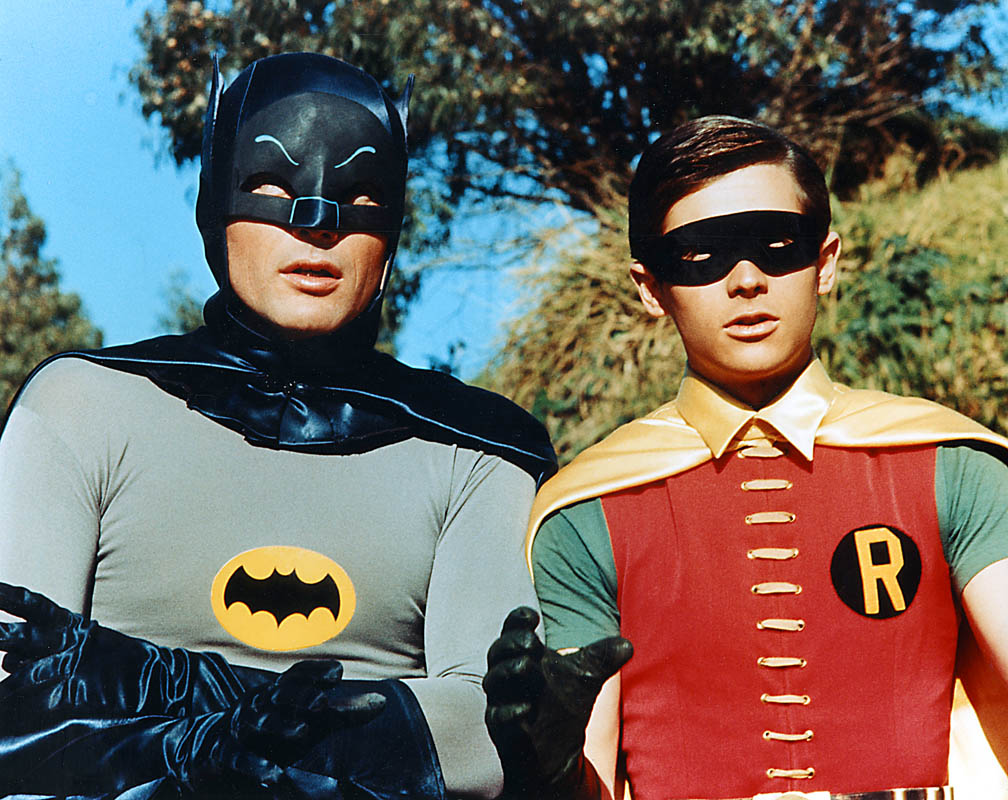
I may not have been alive when the 1966 “Batman” television show starring Adam West and Burt Ward was originally aired, but it is my favorite adaptation of the caped crusader. Ward was even one of my first celebrity crushes.

Adam West as Batman and Burt Ward as Robin int he 1966 “Batman” TV show.

This declaration frequently gets me in trouble. “It’s goofy. Batman isn’t supposed to be funny,” friends will retort. This is probably true. However, when life is too serious, hokey lines mixed with colorful word bubbles of “Bam!” and “Pow” popping up during fights can be balm for the soul.

I was first introduced to the television series when TVLand re-aired the show in 2001. I was 13 and starting to dig deeper into my classic film, television and music obsession that is still running strong today.

My mom remembered watching the show as a child and dressing up as Batman and Robin with her friends. She introduced me to the show, and like most nostalgic things my parents introduced me to, I was hooked.

The parody show ran originally from 1966 through 1968. Airing twice weekly for the first two seasons, each half hour show ended with a cliff hanger of Batman and Robin in peril with the announcer alluding that the “Worst was yet to come” and to be sure to tune in the “Same Bat time, Same Bat channel.”

The lines Batman said were delivered in the most serious manner but meant to be ridiculous and humorous. Robin’s character on the show is characterized by his exclamations of “Holy,” connected to what he and Batman were discussing.

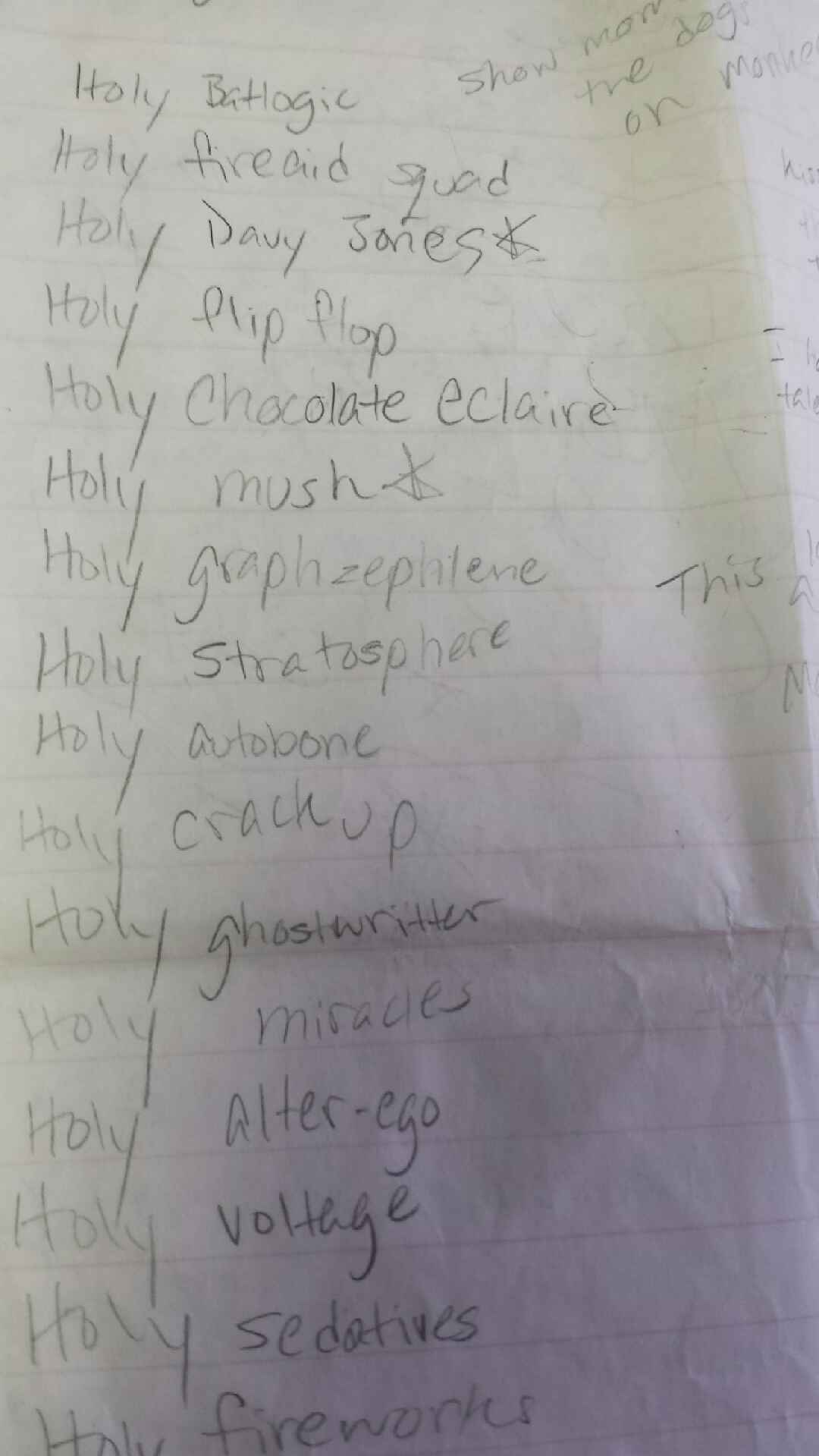
Every night “Batman” aired, I would sit watching with what I called my “Holy List.” . And I tried to write down every single “holy” uttered during the show.

I still have my “Holy List,” and it’s sitting beside me as I write this. Creased with fold marks and with faded pencil writing, my list ended up being nine pages, some front and back. Included on the list are some of the Riddler’s puzzles scrawled in the margins.

A few of my favorite Robin “Holy” quotations:

-Holy purple cannibal

-Holy here-we-go-again

-Holy reverse priority

-Holy missing relatives

-Holy Fourth Amendment

-Holy Rip Van Winkle

-Holy diversionary tactics

-Holy uncanny photographic mental process

-Holy squirrel cage

-Holy one-track-bat-computer-mind

The show was a favorite of some of Hollywood’s top celebrities including Natalie Wood, Frank Sinatra and Cary Grant. All three wanted to guest star but were never able to be fit in.

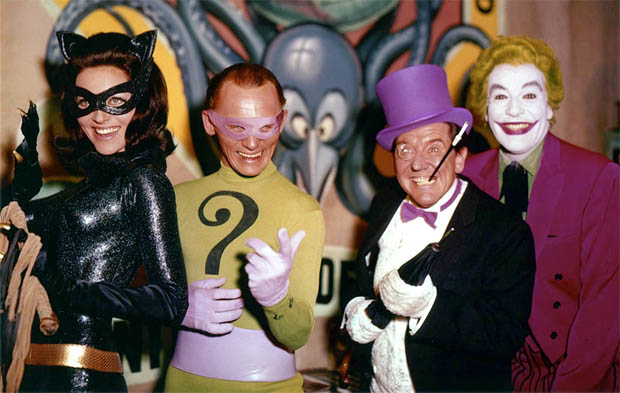
The primary villains on the show were the Riddler, played by Frank Gorshwin; the Joker, played by Cesar Romero; the Penguin, played by Burgess Meredith; and Catwoman, played by Julie Newmar, Eartha Kitt and Lee Meriwether (in the film).

Lee Meriwether as Catwoman, Frank Gorshwin as the Riddler, Burgess Meredith as the Penguin and Cesar Romero as The Joker in the 1966 “Batman” film. Julie Newmar and Eartha Kitt played Catwoman on the TV show.

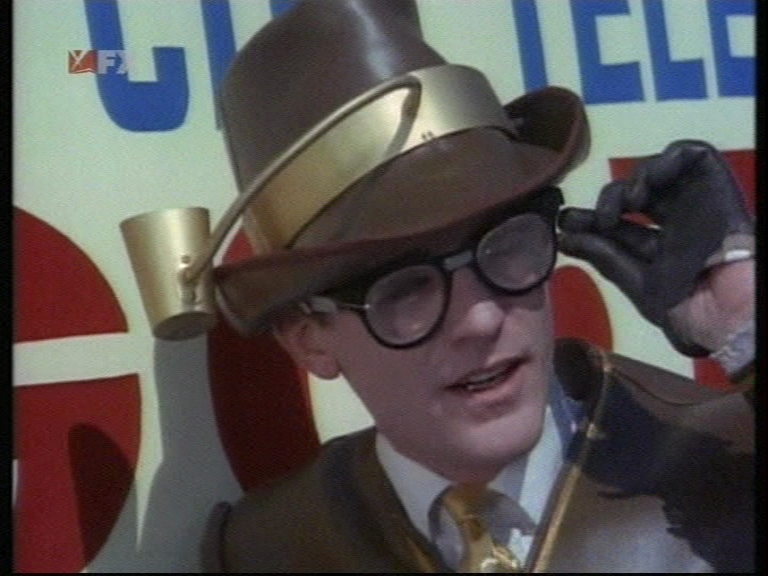
The show included celebrity guest stars who would play villains on the show including Tallulah Bankhead as the Blackwidow, Van Johnson as the Minstrel, Roddy McDowell as Bookworm, or Vincent Price as Egghead. Other times, stars like Jerry Lewis would appear when they were looking out the window as Batman and Robin scaled a wall.

Two other classic Hollywood stars appear on the show as regulars. Neil Hamilton plays Commissioner Gordon. Hamilton was in several 1930s films, usually playing a cad who jilted a woman. Alan Napier plays Alfred the butler. Napier was a character actor in the 1930s through the 1970s, appearing in films such as “Lassie” (1943) or “The Uninvited” (1944).

Roddy McDowall guest starred as “The Bookworm.”

On the show, Batman also had the most impressive gadgets including shark repellent (in the 1966 Batman film) or Bat sleeping gas used to knock out bad guys and take them back to the Bat Cave. However, while fighting crime, Batman always reminded Robin that safety and responsibility had to come first- often telling him to put on his seatbelt in the BatMobile or to do his algebra homework.

For years, I waited for the series to be released on DVD. I happily watched as seasons of my other favorite classic television shows such as “My Three Sons,” “Emergency” and “Adam-12” were released, and constantly wondered, “But what about Batman?”

When the announcement came earlier in 2014 that the television series would be released by Warner Brothers this November, I was overjoyed. I guess sometimes it’s the simple, material things that keep us going. Complications with rights prevented the release of the television show.

Now owning the first season of “Batman” on DVD, I found it just as delightful as I did when I was 13. The color and picture on the DVD is vibrant and looks great. My only qualm is that it looks like rather than releasing the full second season on DVD, the seasons are being split up in two parts- similar to how Warner released “My Three Sons.”

Whether you find Adam West cheesy as Batman or not, there is no denying that the television show is a pleasant and fun way to spend a spare hour.

Check out the Comet Over Hollywood Facebook page, follow on Twitter at @HollywoodComet or e-mail at cometoverhollywood@gmail.com

Musical Monday: “Tanned Legs (1929)

It’s no secret that the Hollywood Comet loves musicals.
In 2010, I revealed I had seen 400 movie musicals over the course of eight years. Now that number is over 500. To celebrate and share this musical love, here is my weekly feature about musicals.

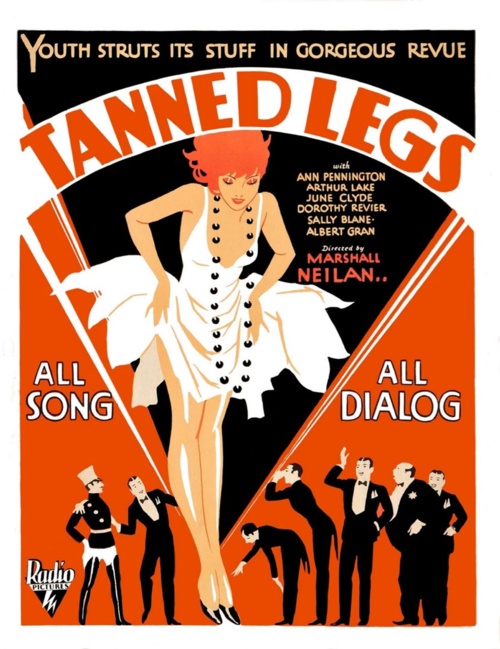
tanned legsThis week’s musical:
“Tanned Legs” –Musical #496

Studio:
RKO Radio Pictures

Director:
Marshall Neilan

Starring:
Arthur Lake, June Clyde, Sally Blane, Ann Pennington, Dorothy Revier, Nella Walker, Albert Gran, Allen Kearns, Edmund Burns
As themselves: Johnny Johnson’s Orchestra

Plot:
There is a lot of romantic trouble as the Reynolds family vacations at a seaside resort.
Peggy Reynolds (Clyde) is unhappy with her philandering parents (Nella Walker, Albert Gran) who are both carrying on with people closer to Peggy’s age than theirs. More romantic trouble occurs as Peggy’s sister Janet (Blane) is dating Clinton Darrow (Burns), who is only interested in the Reynold’s family money. Peggy is dating Bill (Lake), who constantly proposes and she refuses.
Peggy decides she needs to fix her family. But things get even more messy when Mr. Reynolds buys stock from his mistress, Mrs. Lyons-King (Reiver) and Clinton blackmails Janet over love letters. When Peggy tries to save her sister’s reputation by taking the letters from Clinton’s room, Janet thinks her sister is stealing her boyfriend and Bill thinks Peggy is cheating on him.
The musical portion of this film comes in as the actors rehearse for the resort’s charity show.

Trivia:
-Advertised as “All Dialogue!”
-Actress June Clyde’s first credited film role. The former vaudeville star was supposedly selected for the film because of her nice legs, according to “The First Hollywood Musicals” by Edwin M. Bradley.
-Actress Olive Borden was supposed to star in the movie but was replaced by June Clyde, according to “Olive Borden: The Life and Films of Hollywood’s Joy Girl” by Michelle Vogel.
-Pianist Oscar Levant, who later starred in several films such as “American in Paris” (1951), wrote several of the songs for this film.

Highlights:
-In the first minute, as the camera pan the beach, a man is dancing with a mermaid.

Notable Songs:
-“Come in the Water, the Water Is Fine” performed by June Clyde
-“You’re Responsibile” sung by Ann Pennington and Allen Kearns
-“Tanned Legs” sung by Ann Pennington

Allen Kearns and Ann Pennington in "Tanned Legs" (1929)

Allen Kearns and Ann Pennington in “Tanned Legs” (1929)

My Review:
Director Busby Berkeley is frequently credited as “saving the movie musical.” Berkley’s elaborate kaleidoscopic-like dance numbers set to tunes written by Al Dubin and Harry Warren graced movie screens in the early 1930s. Before that, movie musicals were frankly a mess and were quickly losing popularity.
Take “The Wedding of the Painted Doll” number from “Broadway Melody” (1929). A mess. Seriously. The number starts with two girls dancing and all of a sudden more and more and more dancers come on stage until there are maybe 40 dancers. The number of people isn’t unusual, except everyone is flailing and doing their own thing– from pirouettes across the stage to cartwheels to high kicks.
This wasn’t unusual before Berkeley figured out how to make musicals work with the dawn of sound.
“Tanned Legs” is not quite as bad when it comes to musical numbers, but you can certainly use it as a gauge of how movie musicals evolved into something much more sophisticated even three years later with “42nd Street” (1933).
In the first number called “Come in the Water, the Water Is Fine,” the camera man starts out about 50 to 100 feet away from the stage. I think it was supposed to be like a person watching from the distance, and then moving closer.
As the camera gets closer, June Clyde is just standing and singing and girls are doing odd (and sloppy) sumersaults behind her. They aren’t even together. They all lay down, lifting their legs in a sequence, but not together.
The plot is about as mediocre as the musical numbers but is rather charming in the “1920s flaming youth” sort of way.
For me, the biggest treat was seeing Sally Blane, sister to Loretta Young, and Ann Pennington in a film- it was actually the first time I had ever seen either actress perform.
If you are looking for terrific acting, fascinating musical numbers and catchy songs- this movie really isn’t for you. But you have to keep in mind that this talkie is very early in the dawn of sound period- so they were still learning.
If you are looking for a time capsule into film history, 1920s flappers and the evolution of movie musicals, this may be more for you.

Check out the Comet Over Hollywood Facebook page, follow on Twitter at @HollywoodComet or e-mail at cometoverhollywood@gmail.com
Musical Monday: Hullabaloo (1940)

It’s no secret that the Hollywood Comet loves musicals.
In 2010, I revealed I had seen 400 movie musicals over the course of eight years. Now that number is over 500. To celebrate and share this musical love, here is my weekly feature about musicals.

hullaballoo3This week’s musical:
“Hullabaloo” –Musical #497

Studio:
MGM

Director:
Edwin L. Marin

Starring:
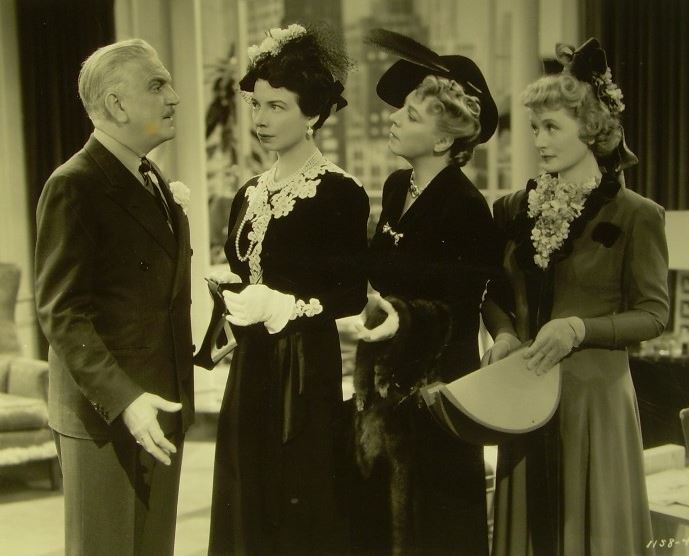
Frank Morgan, Dan Dailey, Virginia Grey, Billie Burke, Donald Meek, Reginald Owen, Virginia O’Brien, Nydia Westman, Leni Lynn, Charles Holland, Sara Haden, Ann Morriss, Larry Nunn, Curt Bois, Jack Albertson, Leo Gorcey, Arthur O’Connell

Plot:
Out of work vaudeville star Frankie Merriweather (Morgan) is trying to break into radio. When Frankie gets his own radio show, he is immediately fired when he causes a panic with his “Battle of the Planets” when listeners think it is a newscast, because he bypassed the advertisements.
Trying to figure out how to get back into his career and pay alimony to three ex-wives, Frankie gets his children (Grey, Lynn, Nunn) into the act.

Trivia:
-Virginia O’Brien’s first screen appearance
-Frank Morgan does a radio show called “Battle of the Planets,” which is a spoof of Orson Welles’s 1938 broadcast “The War of the Worlds.”
-Frank Morgan does “impressions” of Robert Taylor, Mickey Rooney, Hedy Lamarr on the phone, and Claudette Colbert, Clark Gable and Spencer Tracey in a a scene from “Boomtown.” The “Boomtown” impression is straight from the film. Mickey Rooney and Hedy Lamarr sound like they are not the real actors doing the voice over.
-Dan Dailey and Virginia Grey whistle “A Handful of Stars.” Their whistling is dubbed by Elvida Rizzo and Morton Scott

Highlights:
-Leo Gorcey in a small role as a bellhop
-Frank Morgan’s celebrity “impressions” (That are dubbed by the stars or other impersonators)

Frank Morgan has to earn money to pay alimony to three wives.

Frank Morgan has to earn money to pay alimony to three wives.

Notable Songs:
-“Carry Me Back to Old Virginny”
-“We’ve Come a Long Way Together”
-“When My Baby Smiles at Me”
-“A Handful of Stars”

My Review:

Dan Dailey and Virginia Grey in "Hullabaloo" (1940).

Dan Dailey and Virginia Grey in “Hullabaloo” (1940).

While Metro-Goldwyn-Mayer is often best remembered for it’s lavish, big-budget musicals such as “Singin’ in the Rain,” “Babes in Arms” or “Seven Brides for Seven Brothers.”
However, the studio also cranked out several B-level musicals, that are equally entertaining. “Hullabaloo” is an example of one of those lower budget musicals.
Frank Morgan and Virginia Grey are the leads in this film, and while they were famous and appeared in several films, they generally were supporting roles in larger budget MGM movies.
While the movie’s plot is about actors trying to break into radio, it gives an interesting glimpse into entertainment history.
The radio is seen as an “economic salvation” for struggling vaudeville stars as they transition their careers, according to “Radio in the Movies: A History and Filmography, 1926-2010” By Laurence Etling.
Radio was another outlet for vaudeville stars to keep performing as that medium of entertainment faded.
There are also a few notable things about this 78 minute film. First, just a couple of years after Orson Welles’s 1938 broadcast “The War of the Worlds,” “Hullabaloo” spoofs the panic that Welle’s radio broadcast caused. I thought it was interesting just because it showed how “War of the Worlds” impacted pop culture- even then- enough to joke about. I could be wrong, but I feel like could be comparative to jokes in the media about current celebrities.
Another highlight in the film are Frank Morgan’s “celebrity impressions.” Obviously…Morgan is not actually doing the impressions- most of them sound like the real actor speaking – but it’s so ridiculous to see that it’s humorous.
But for me, the true highlight was Virginia O’Brien’s first credited on-screen role. The frozen-faced singer pops on screen for two musical performances.
Though it’s a very silly film, if you have a little over an hour to spare, “Hullabaloo,” isn’t a bad way to spend it.

Check out the Comet Over Hollywood Facebook page, follow on Twitter at @HollywoodComet or e-mail at cometoverhollywood@gmail.com