Olympics to Hollywood: Nat Pendleton

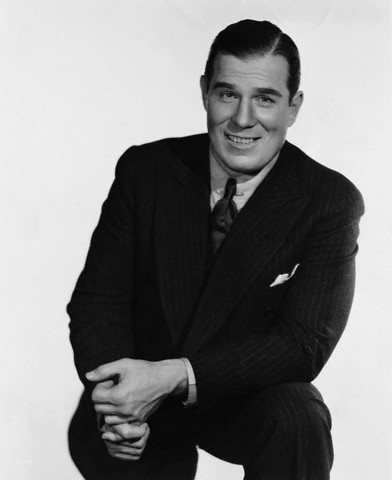
Nat Pendleton in 1935.

Nat Pendleton in 1935.

This November 2013 post was minimally edited on Aug. 2, 2016, for a series on Olympians who went on to be actors. This series coincides with the Rio 2016 Summer Olympics.

Whether he was an affable lug or a dangerous mobster, the face of the dark-haired 6 foot character actor is one film fans recognized in the 1930s and 1940s.

Character actor Nat Pendleton acted in uncredited and supporting roles from 1926 to 1947.

But before Pendleton performed as Sandow the Great in the biographical film “The Great Ziegfeld” (1936), he was flexing his muscles for different reasons.

Pendleton’s fame originally came in the form of an Olympic silver medal in the super heavyweight freestyle wrestling division at the 1920 Summer Olympics in Antwerp, Belgium. That year, the United States won 41 gold, 27 silver and 27 bronze medals — winning the most medals by any of the 29 nations attending. Born in Davenport, Iowa, Pendleton was Iowa’s first Olympic medal winner, according to the National Wrestling Hall of Fame.

Continue reading

He never met a man he didn’t like: A visit to the Will Rogers Museum

He never met a man he didn’t like.

Will Rogers was born in Oologah, OK, and his final resting place is at the Will Rogers Memorial Museum in Claremore, OK.

Rogers made a name for himself in vaudeville as doing roping tricks, eventually making it to the Ziegfeld Follies. He then made silent films, talking pictures, wrote syndicated newspaper columns and broadcasted on the radio. Rogers was always on top of his communication game.
Rogers died in 1935 in a plane crash in Alaska.

Will Rogers statue near his tomb. (Comet Over Hollywood/Jessica P.)

Will Rogers statue near his tomb. (Comet Over Hollywood/Jessica P.)

“When commercial radio evolved, Rogers quickly migrated to the new format,” said an exhibit at the Will Rogers Memorial Museum. “If alive today, he probably would be blogging and tweeting.”

This past September, my co-worker Brittany Randolph and I went on a road trip to Oklahoma. She loves the plains and I was along for an adventure. I didn’t care where we went as long as we visited the Will Rogers Rogers Memorial Museum.

The museum includes:
-Rogers’s saddle collection such as Mongolian, French and Navajo saddles
-A gallery of portraits painted of Will Rogers
-A theater that shows “The Will Rogers Story” narrated that Bob Hope
-Rogers’s tiny saddle collection
-A smaller theater that shows Will Rogers films
-A diorama on Will Rogers life
-Artifacts such as hats, scripts or costumes that belonged to Rogers
-History on Rogers’ family, dating back to his Native American heritage
-Rooms of the museum recreate rooms of Rogers’s home such as his study-modeled to make him think of ranch life
-Will Rogers’ grave site is in a garden outside the museum with a large statue of him on a horse.
-Samples of some of his radio broadcasts

Part of Rogers's tiny saddle collection

Part of Rogers’s tiny saddle collection

Portrait of Will Rogers

Portrait of Will Rogers

A hat of Will Rogers

A hat of Will Rogers

Me posing with Will Rogers lobby cards

Me posing with Will Rogers lobby cards

IMG_6495

Watching a Will Rogers film

Watching a Will Rogers film

Young Will Rogers

Young Will Rogers

Will Rogers's family had a pet cow that stayed in the house like a dog

Will Rogers’s family had a pet cow that stayed in the house like a dog

Gorgeous ceilings of the museum

Gorgeous ceilings of the museum

Portrait of Will Rogers

Portrait of Will Rogers

Small sculpture of Rogers roping a calf

Small sculpture of Rogers roping a calf

Part of Will Rogers saddle collection

Part of Will Rogers saddle collection

The back of the Will Rogers Museum

The back of the Will Rogers Museum

Will Rogers tomb

Will Rogers tomb

Posing with Will Rogers's statue

Posing with Will Rogers’s statue

The museum opened in 1938 and was dedicated on what would have been his 59th birthday. The land where the museum stands was purchased by Will and his wife Betty in 1911. Betty donated the land to the state in 1937, according to the Will Rogers Memorial Museum.

Along with Rogers, his wife Betty (d. 1944) and their four children: Fred Stone Rogers, 1918-1920; Mary Amelia Rogers Brooks, 1913-1989; and James Blake (­Jim) Rogers, 1915-2000; as well as Jim’s wife, Marguerite Astrea Kemmler Rogers, 1917-1987 lay to rest behind the museum.

If you are ever in the Claremore, OK area, I highly suggest visiting the Will Rogers Memorial Museum.

For someone who lives in the southeast with few historical film museums to offer, it was a treat to get to visit the Will Rogers Museum and his resting place.
It was peaceful and a beautiful tribute to a highly respected man.

IMG_6457

“Being a hero is about the shortest-lived profession on Earth.”

Check out the Comet Over Hollywood Facebook page, follow on Twitter at @HollywoodComet or e-mail at cometoverhollywood@gmail.com

Musical Monday: “She’s Back on Broadway” (1953)

It’s no secret that the Hollywood Comet loves musicals.
In 2010, I revealed I had seen 400 movie musicals over the course of eight years. Now that number is over 500. To celebrate and share this musical love, here is my weekly feature about musicals.

This week’s musical:
She’s Back on Broadway” (1953) — Musical #450

broadway

Studio:
Warner Brothers Pictures

Director:
Gordon Douglas

Starring:
Virginia Mayo, Gene Nelson, Frank Lovejoy, Steve Cochran, Patrice Wymore

Plot:
Hollywood actress Catherine Terris (Mayo) finds her film career is declining. She decides to return to Broadway where she started out to get a fresh start. The director of the musical play is Rick Sommers (Cochran), who Catherine had a relationship with during her stage days. However, he has been bitter ever since she left six years before to go to Hollywood. The two clash during rehearsal and nearly ruin the play.

Cochran and Mayo in a publicity photo for "She's Back on Broadway"

Cochran and Mayo in a publicity photo for “She’s Back on Broadway”

Trivia:
-Virginia Mayo is dubbed by Bonnie Lou Williams
-Though the two films have no plot connection, She’s Back on Broadway is supposedly a sequel to “She’s Working Her Way Through College” (1952), which is a remake of “The Male Animal” (1942). The only connection is the Mayo and Nelson re-teaming.

Notable Songs:
I’m not left humming any of the songs from this film but I would say “I’ll Take You” performed by Gene Nelson and Virginia Mayo is the most memorable.

Highlights:
-The audition montage at the beginning of the film for the play including dancer and goofy male singers.

My Review:
Musical films about musical theater are interesting. The play being performed in “She’s Back on Broadway” is called “Breakfast in Bed.” There is one song called “Breakfast in Bed” but other songs include a Latin dance vibe, a song about Mardi Gras and then a few romantic ballads. Numbers within the musical play don’t make sense to have an actual story line, so I guess we are supposed to assume it’s a musical revue.
She’s Back on Broadway” is a run of the mill, early 1950s Warner Brothers musical-several songs mixed with some melodrama and filmed in Warnercolor.
Whether it’s Doris Day in “Lullaby of Broadway” or Virginia Mayo on this, they are all relatively similar with Gene Nelson dancing somewhere in the background. Steve Cochran plays his usual moody role in this as well.
Not to say that these colorful musicals aren’t mildly entertaining, but they are rather forgettable.

Check out the Comet Over Hollywood Facebook page, follow on Twitter at @HollywoodComet or e-mail at cometoverhollywood@gmail.com

Classics in the Carolinas: Burt Lancaster and Clemson University

Comet Over Hollywood is doing a mini-series of “Classics in the Carolinas.” I’ll be spotlighting classic movie related topics in South Carolina (my home state) and North Carolina (where I currently live and work).

posterClemson University has a long history in my family.

My great-grandfather graduated from there in 1918, my paternal grandfather went there, my maternal grandfather was the Dean of Science, both my parents attended the school and so did both of my sisters.

But Clemson also has a touch of film history.

In 1973, Clemson, SC and Anderson, SC were the filming locations for the movie “The Midnight Man,” starring and co-directed by actor Burt Lancaster.

In the film, Lancaster plays ex-con Jim Slade who starts working as a night watchman at a local university, Jordan College. The film also stars Cameron Mitchell, Susan Clark and Catharine Bach has a small role.

My mother grew up in Clemson and was a junior at Daniel High School in Clemson during the filming of “The Midnight Man.”

“I remember when the news came out that they were looking at Clemson and a few other places for filming, everyone thought it was very exciting,” said Lisa Pickens, mother of Comet Over Hollywood.

Burt Lancaster filming scenes from "Midnight Man" on the campus of Clemson University. Source: Clemson archives

Burt Lancaster filming scenes from “Midnight Man” on the campus of Clemson University. Source: Clemson archives

Filming locations included areas:

-The campus of Clemson University such as inside Tillman Hall

-Driving down Highway 123 and goes into a bar in Anderson, SC

-The Anderson, SC courthouse

-Cameron Mitchell exercises in Riggs Field, which was Clemson’s second football field from 1915 to 1941 and now is the university’s soccer stadium

-Lancaster gets off the bus in front of Clemson’s post office which is now Mell Hall, Clemson’s Housing Office.

-Swimming pool scenes were filmed in Holtzendorff Hall

“A lot of people thought they should use the balcony of our house,” said Barbara Evers, writer and aunt of Comet Over Hollywood. “I don’t remember why. As far as I know, they never considered it.”

Several locals were used in the filming, including classmates of my mother, Lisa Vogel Pickens, and my uncle Henry Vogel.

“Your Mom heard they were holding auditions in the basement of the Post Office (Mell Hall). She got permission, and we went,” Evers said. “We never found the place where auditions were being held. Your Mom was sure excited, though.  She ran down the stairs of the Post Office.”

Lancaster and Mitchell in a press conference. Source: Clemson TAPS Yearbook 1972-1973

Lancaster and Mitchell in a press conference. Source: Clemson TAPS Yearbook 1972-1973

During the filming of “Midnight Man,” Lancaster was heavily drinking and getting up at 5 a.m. to start filming, according to the Kate Buford book “Burt Lancaster: An American Life.”

“I remember Burt Lancaster stayed in the penthouse of the Clemson House, Clemson’s nicest hotel which now is a dorm for students,” Pickens said. “He complained about the mattress and wanted a king size bed. Friends of my parents, the Whitlocks, let them use their king size mattress. I have no idea why they would do that.”

Filming took six weeks, according to “Burt Lancaster Excites Clemson Campus,” a Feb. 25, 1973, article from the Herald-Journal.

At the time, the Town of Clemson had approximately 5,500 people living there and the university had 9,700 students, according to the article.

Filming on the campus of Clemson University. Source: Clemson TAPS Yearbook 1972-1973

Filming on the campus of Clemson University. Source: Clemson TAPS Yearbook 1972-1973

“Boys at the dormitory window applauded at the end of the scene. Lancaster responded with a smile and then pointed out that one of the boys had a woman with him,” said the Herald-Journal article.

Unfortunately, “Midnight Man” didn’t do well. Both Evers and Pickens recall being disappointed that the film received bad reviews.

“You hope it will do well since it was filmed in your hometown, but it didn’t,” Pickens said.

Other movies filmed in the Upstate of South Carolina include the George Clooney comedy “Leatherheads” (2008), filmed in my hometown of Greenville, SC, and “Radio” (2003) filmed in Walterboro, SC.

“The Midnight Man” was shot from February 1973 until March 1973 and was released on June 10, 1974.

There was a premiere at the Astro Theater in Clemson on March 14, 1974.

“I thought it would be exciting to go to the premiere but Lancaster didn’t show up, so I didn’t go,” Pickens said. “Even in small Clemson, I never ran across the actors.”

Filming crews at Clemson University. Source: Clemson TAPS Yearbook 1972-1973

Filming crews at Clemson University. Source: Clemson TAPS Yearbook 1972-1973

Check out the Comet Over Hollywood Facebook page, follow on Twitter at @HollywoodComet or e-mail at cometoverhollywood@gmail.com

Halloween with Comet Over Hollywood

Happy Halloween from Comet Over Hollywood!

This week’s video discusses:
-My Louise Brooks costume based on the lost silent film “Now We’re in the Air” (1927)
-My favorite horror film-which is limited, because I am too much of a scaredy cat to watch horror films
-And I sing a little for you!

My Halloween costume modeled after Louise Brooks in "Now We're In the Air" (1927)

My Halloween costume modeled after Louise Brooks in “Now We’re In the Air” (1927)

Did you dress up as anything classic film related this year? Be sure to e-mail me your photos at cometoverhollywood@gmail.com and I will help you show them off on Comet!

For Throwback Thursday, here are some previous Halloweens we have celebrated together:
-2010 Carmen Miranda costume
-2011 Cyd Charisse from “Bandwagon” costume
-2012 Elizabeth Taylor “Cleopatra” (1964) make-up tutorial

Stay safe tonight. And if you throw flour in anyone’s face (a la Margaret O’Brien in “Meet Me In St. Louis” (1944), make sure everyone knows that you are the “most horrible.”

Thanks for reading and watching!

Check out the Comet Over Hollywood Facebook page, follow on Twitter at @HollywoodComet or e-mail at cometoverhollywood@gmail.com

Musical Monday: Meet Me in St. Louis (1944)

It’s no secret that the Hollywood Comet loves musicals.
In 2010, I revealed I had seen 400 movie musicals over the course of eight years. Now that number is over 500. To celebrate and share this musical love, here is my weekly feature about musicals.

meet meThis week’s musical:
Meet Me In St. Louis” –Musical #10

Studio:
MGM

Director:
Vincente Minnelli

Starring:
Judy Garland, Mary Astor, Leon Ames, Margaret O’Brien, Lucille Bremer, Marjorie Main, Tom Drake, June Lockhart, Harry Davenport, Chill Wills, Joan Carroll.

Plot:
Meet Me In St. Louis” revolves around the Smith family who lives in St. Louis and follows them from Summer of 1903 until the 1904 World’s Fair. The film is broken up into story segments such as Summer, Fall of 1903 with Halloween, Winter of 1903 with Christmas and Summer of 1904 when they go to the World’s Fair.
Esther (Garland) falls in love the boy next door, John Truitt (Drake) and her sister Rose (Bremer) is a flirt who likes older men. The two younger sisters Tootie (O’Brien) and Agnes (Carroll) cause mischief. The conflict comes when their father (Ames) needs to move the family to New York.

Trivia:
-Van Johnson was originally supposed to play John Truitt rather than Tom Drake.
-The daughter of a lighting man was originally cast as Tootie. When O’Brien was cast instead, the lighting man intentionally attempted to drop a light on O’Brien.
-Arthur Freed dubbed Leon Ames’s singing voice.
-Judy Garland and director Vincente Minnelli met on this film. They were married from 1945 to 1951.
-Garland was 21 when she was in this movie and was disappointed to play another teenager. She wanted to move on to other adult roles.
-“Meet Me in St. Louis” was made into a Broadway show in 1989, according to “Hollywood Musicals Year by Year” by Stanley Green.
-Director Vincente Minnelli’s first film hit, according to The American Musical and the Performance of Personal Identity by Raymond Knapp

Judy Garland as Esther singing "The Trolley Song"

Judy Garland as Esther singing “The Trolley Song”

-The film is based off a series of autobiographical stories by Sally Benson published in “The New Yorker,” according to Knapp’s book
-A personal favorite film of producer Arthur Freed.
-The highest grossing film at the time for MGM since “Gone with the Wind” (1939).
-The film was remade twice for television. Once in 1959 starring Jane Powell, Jeanne Crain, Patty Duke, Walter Pidgeon and Myrna Loy. The second time was in 1966 starring Shelley Fabares and Celeste Holm.

Highlights:
-The terrific cast. Though the leads are amazing, I would argue that the secondary leads of Marjorie Main and Harry Davenport steal the show.
-Lon’s going away party with “Skip to My Lou” and Tootie and Esther singing “The Cake Walk” is one of my favorite parts.
-I love the holiday portions of the film such as:
Halloween: Tootie and Agnes trick-or-treating in their spooky costumes-Agnes as a drunken ghost and Tootie as a horrible ghost. The two are dared to throw flour on neighbors and shout “I HATE YOU.” I’m always shocked that these kids parents don’t care they are starting a huge bonfire in the middle of the neighborhood.

Margaret O'Brien as Tootie being the "most horrible"

Margaret O’Brien as Tootie being the “most horrible”

Christmas: Esther (Garland) and Rose (Bremer) go to a dance and try to sabotage Lucille Ballard’s (Lockhart) dance card by giving her dopey boys to dance with. The scene where Esther dances with all of the silly boys is hilarious.
More Christmas: Tootie (O’Brien) is a snowman murderer. Tootie is upset the family is moving so she destroys the snowmen.
-And then there is Warren Sheffield (Robert Sully)

Notable Songs:
-The Trolly Song sung by Judy Garland. The most famous song in the film. It’s such fun and Garland did the scene in one take.
-“Skip to My Lou”/”Under the Bamboo Tree” sung by Judy Garland and Lucille Bremer during the party scene. It’s so fun and I wish my party was like this.
-“Have Yourself a Merry Little Christmas” sung by Judy Garland is also another famous song from the film. It makes me mother cry every time. And I have recently inherited sappily crying during the scene.
-“The Boy Next Door” sung by Judy Garland

My Review:
This is one of my favorite films of all time. It’s one of those movies that I have been watching since I was a baby and it never gets old. The humor, the gorgeous Technicolor and the wonderful songs. The story flows well and the songs fit in effortlessly.
I can’t think about this movie without smiling.

Check out the Comet Over Hollywood Facebook page, follow on Twitter at @HollywoodComet or e-mail at cometoverhollywood@gmail.com
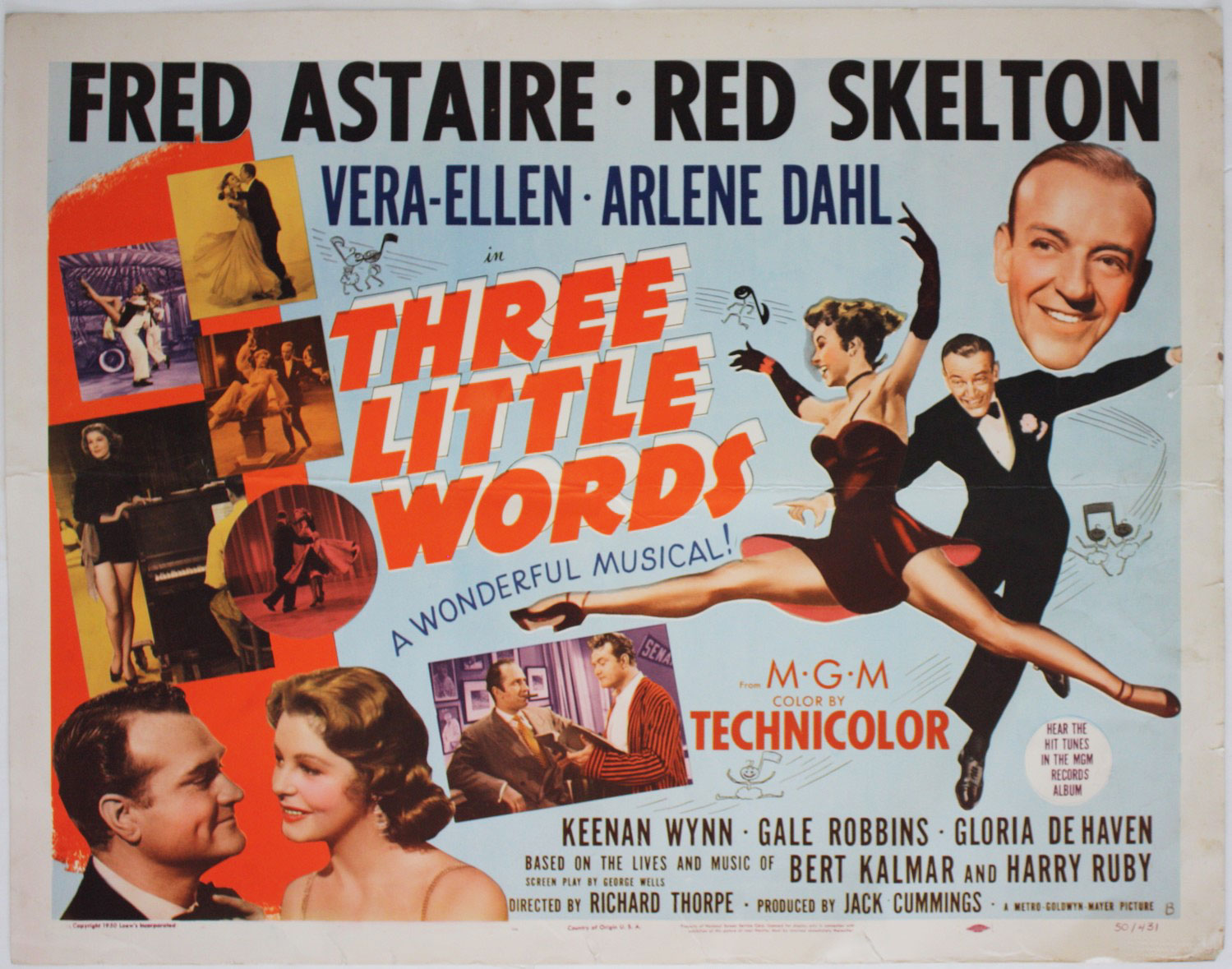
Movie night at Comet’s

This week, the Comet welcomes you into my home for movie night!

Since June, I have been holding monthly movie nights known as “Classics at Comet’s.”

My friends were interested in seeing what my classic film was all about so each month I present a film from a different decade.

Watch to see what Classics at Comet’s is all about:

What is are films you feel like everyone should see?

Thanks for reading and watching!

Check out the Comet Over Hollywood Facebook page, follow on Twitter at @HollywoodComet or e-mail at cometoverhollywood@gmail.com
Musical Monday: “Centennial Summer” (1946)

It’s no secret that the Hollywood Comet loves musicals.
In 2010, I revealed I had seen 400 movie musicals over the course of eight years. Now that number is over 500. To celebrate and share this musical love, here is my weekly feature about musicals.

Centennial_Summer_FilmPosterThis week’s musical:
“Centennial Summer” (1946)–Musical #505

Studio:
20th Century Fox

Director:
Otto Preminger

Starring:
Jeanne Crain, Linda Darnell, Cornel Wilde, Walter Brennan, Constance Bennett, Dorothy Gish

Plot:
Set in Philadelphia during the United State’s centennial celebration in 1876, the plot focuses on the Rogers family. Their Aunt Zenia (Bennett) comes to visit from Paris, France for the celebration and brings her French nephew Philippe (Wilde). The oldest Rogers sisters Edith (Darnell)-the flirty older sister who gets all the boys- and Julia (Craine)-the more quiet sister who has never had a romance- immediately both are enchanted by the Frenchman. The two both work for his affections.

Trivia
-Composer Jerome Kern’s last musical score for either stage or film, according to “Hollywood Musicals Year by Year” by Stanley Green
-The film was Fox’s response to MGM’s hit “Meet Me In St. Louis” (1944). Both films focus on turn of the century nostalgia.
-Based on a book by Albert E. Idell
-Very few of the actors do their own singing. Crain was dubbed by Louanne Hogan (who also dubbed Crain in “State Fair“) and Darnell was dubbed by Kay St. Germain Wells (who also dubbed Darnell in “Hangover Square“).

Edith (Darnell) and Julia (Craine) compete for the attentions of Phillippe (Wilde). Comet Over Hollywood/ Screencap by Jessica P.

Edith (Darnell) and Julia (Craine) compete for the attentions of Phillippe (Wilde). Comet Over Hollywood/ Screencap by Jessica P.

Highlights:
-The vibrant, Technicolor sets and costumes make this film.
-The movie includes items that were introduced during this time period such as a magic lantern show.
-Cornel Wilde carrying two dachshunds as he gets off the train….only because I’m a dachshund owner.
-I love the large cast ranging from silent film star Dorothy Gish, pre-code queen Constance Bennett to fresh faced Jeanne Craine.

Notable Songs:
For Jerome Kern’s last work before his 1945 death, none of the songs in this film were memorable.
Many of them seemed misplaced. For example: Philppe (Wilde) and Jesse (Brennan) were about to have a serious conversation in a saloon about Julia (Craine) when African-American singer Avon Long enters the saloon and starts singing “Cinderella Sue.” Though the song was probably one of the more entertaining tunes in the film, it cut right into the middle of a scene. Why would they do that?

Philippe and Jesse look ridiculous dressed in French costumes (after a masquerade) in a saloon. Comet Over Hollywood/Screen Cap by Jessica P.

Philippe and Jesse look ridiculous dressed in French costumes (after a masquerade) in a saloon. Comet Over Hollywood/Screen Cap by Jessica P.

My Review:
This is actually one movie I wish was not a musical. Don’t get me wrong, I loved the cast and the story line and thoroughly enjoyed watching it. But right as the plot was moving right along, it would come to a grinding halt with a misplaced, forgettable song.
It’s very obvious that this was 20th Century Fox trying their hand at a turn-of-the-century family stories since Metro-Goldwyn-Mayer had so much success with “Meet Me in St. Louis” (1944).
However, “Centennial” is more frustrating than heartwarming.
All of the actors did a wonderful job, particularly Jeanne Crain who has always been a favorite of mine. However, Cornel Wilde’s French accent sounded more like a Charles Boyer impression.
“Centennial Summer” is a film I have searched for and wanted to see for years. Thank you to our friends over at Laura’s Miscellaneous Musings for letting me know it is currently up on Youtube and contributing to an enjoyable afternoon.

Check out the Comet Over Hollywood Facebook page, follow on Twitter at @HollywoodComet or e-mail at cometoverhollywood@gmail.com
Comet speaks!

Hello readers!

You have read Comet Over Hollywood here and maybe you follow me on Twitter or the Comet Over Hollywood Facebook page.

Now I’m bringing yet another way to celebrate classic Hollywood.

Every week, Youtube videos – just another way to discuss classic films. They could vary from testing a classic beauty tip, visiting a celebrity museum or footage from the Turner Classic Movie Film Festival.

This week’s introduces the videos and myself and also further discusses the interview I had with actress turned nun Dolores Hart back in September.

Enjoy!

Subscribe on Youtube or follow along at Comet and look out for next week’s video!

I’d like to give a special thanks to my friend and coworker, Ben Earp for helping me shoot and edit the video. If you enjoy trains, be sure to follow his youtube page as well

Thanks for reading and watching!

Check out the Comet Over Hollywood Facebook page, follow on Twitter at @HollywoodComet or e-mail at cometoverhollywood@gmail.com
Musical Monday: Hans Christian Andersen (1952)

It’s no secret that the Hollywood Comet loves musicals.
In 2010, I revealed I had seen 400 movie musicals over the course of eight years. Now that number is over 500. To celebrate and share this musical love, here is my weekly feature about musicals.

Hans_Christian_Andersen_FilmPosterThis week’s musical:
Hans Christian Andersen” –Musical #46

Studio:
Samuel Goldwyn Productions

Director:
Charles Vidor

Starring:
Danny Kaye, Farley Granger, Zizi Jeanmaire

Plot:
A fictitious telling of the life of Hans Christian Andersen. The film was not meant to be a biography of Andersen’s life but a “fairy tale about this great spinner of fairy tales,” said producer Samuel Goldwyn.
Hans Christian Andersen (Kaye) is shoe cobbler and journeys to Copenhagen. He becomes a cobbler and tells stories such as Thumbelina, The Ugly Duckling and the Emperor’s New Clothes to the local children. With his stories he also become a famous writer. Andersen does work as a cobbler for a temperamental ballerina (Jeanmaire) named Doro and falls in love, not realizing she is married to Niels (Granger). Andersen confesses his secret love by writing the ballet “The Little Mermaid” for Doro. After Doro tells Hans that she is married, he returns home to Odense.

Trivia:

Danny Kaye as Hans Christian Anderson tells stories to village children.

Danny Kaye as Hans Christian Andersen tells stories to village children.

-Goldwyn had writers working on a “Hans Christian Andersen” musical in 1938, but the time was never right to produce it. Before starting, according to the A. Scott Berg biography “Goldwyn.”
-Farley Granger thought the film was ridiculous and said it was beginning to be a joke around town, “Boy meets girl, boy loses girl, boy gets boy,” he said, according to the “Goldwyn” biography.
-“Hans Christian Andersen” cost $4 million to make, according to “Goldwyn.”
-Danes did not appreciate the depiction of Hans Christian Andersen and Andersen scholars said Kaye looked nothing like Andersen, according to “Goldwyn.”
-“Hans Christian Andersen” is the second highest grossing Goldwyn picture behind “The Best Years of Our Lives,” according to “Goldwyn.”
-Actress and ballerina Moira Shearer was supposed to play the role of Doro couldn’t because she was pregnant.
-Samuel Goldwyn originally wanted animated
-Zizi Jeanmaire dances with Roland Petit in the Little Mermaid ballet sequence. The two were married in 1954 and remained married until Petit’s death in 2011.
-The film opened the week of Thanksgiving in 1952. It was first aired on television in 1966.
-Actress Barie Chase has an uncredited role has a ballerina.
-The soundtrack released after the film includes Jane Wyman singing the female songs with Danny Kaye.

Highlights:
-There are two notable dream sequences in the film:
1. Hans falls in love with Doro the ballet dancer has a colorful dream sequence of the couple singing “No Two People.”

2. Andersen gets locked in a closet and can not see the performance of “The Little Mermaid.” As he’s locked in the closet, he imagines how it is performed. The imagined performance is the one he audience sees.

Zizi Jeanmaire as Doro performs the ballet of "The Little Mermaid" in "Hans Christian Anderson" with dancer (and future husband) Roland Petit

Zizi Jeanmaire as Doro performs the ballet of “The Little Mermaid” in “Hans Christian Andersen” with dancer (and future husband) Roland Petit

Notable Songs:
It’s hard to pick a favorite song from “Hans Christian Andersen” because there are so many lovely songs that are all very catchy:
-“Wonderful Copenhagen” sung by Danny Kaye, Joseph Walsh and sailors (a personal favorite of mine)


-“No Two People” sung by Danny Kaye and Zizi Jeanmaire (but Jane Wyman on the commercial soundtrack release)
-“Thumbelina” sung by Danny Kaye
-“The King’s New Clothes” sung by Danny Kaye
-“Ugly Duckling” sung by Danny Kaye
-“Inchworm” sung by Danny Kaye (another personal favorite)

My review:
I can’t deny that the premise of this film is a little silly. The film and main character named after a real historical figure but purposefully and admittedly has nothing to do with his life?
But I also can’t deny that I love this movie. It’s so light-hearted, happy and lovely.
It’s an interesting change of role for Danny Kaye. In films like “Up in Arms” (1944), “Wonder Man” (1945) and “The Kid from Brooklyn” (1946)- Kaye’s characters sang the fast talking songs (written by his wife Sylvia Fine) and played ridiculous zany characters. But Hans Christian Andersen allows Kaye to demonstrate his true vocal talents and play a calm, caring character. Kaye was interested in the film before even seeing the script, and I think it was a wise decision on his point.
I can see why Farley Granger didn’t like this film, because he does look rather ridiculous in his period costume and is an unsympathetic character. I’ll admit, his talent was wasted on this movie. It’s such a small role, you wonder why he was picked.
But that aside, “Hans Christian Andersen” is a film that simply makes me happy.
I love the music, I love the color and I love Danny Kaye.

Check out the Comet Over Hollywood Facebook page, follow on Twitter at @HollywoodComet or e-mail at cometoverhollywood@gmail.com