Watching 1939: Nurse Edith Cavell

In 2011, I announced I was trying to see every film released in 1939. This new series chronicles films released in 1939 as I watch them. As we start out this blog feature, this section may become more concrete as I search for a common thread that runs throughout each film of the year. Right now, that’s difficult. 
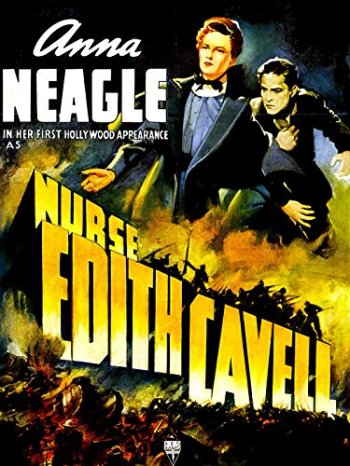
1939 film:  Nurse Edith Cavell

Release date: Sept. 22, 1939 (NYC premiere)

Cast: 
Anna Neagle, Edna May Oliver, George Sanders, May Robson, Zasu Pitts, H. B. Warner, Mary Howard, Robert Coote, Henry Brandon, Jimmy Butler, Rex Downing

Studio:  RKO

Director:  Herbert Wilcox

Plot:
Starting in 1913, English nurse Edith Cavell is the matron of a small hospital in Brussels. The Germans occupy Brussels when World War I begins. With the help of three other local women — Countess de Mavon (Oliver), Mme. Rappard (Robson) and Mme. Moulin (Pitts) — Nurse Cavell shelters Belgian, French and English that are wounded or prisoners of war and helps them escape to the Netherlands.

Awards and Nominations:
• Anthony Collins was nominated for an Academy Award for Best Music, Original Score

1939 Notes:
• Released Sept. 22, 1939, only a few weeks after Germany invaded Poland, beginning World War II on Sept. 1, 1939.
• The first film that Anna Neagle made for RKO in the United States
• “Nurse Edith Cavell” (1939) is a remake. Director Herbert Wilcox first directed the story of Edith Cavell in te film Dawn (1928). He remade the film in 1939 with his wife Anna Neagle as the lead.
• One of 5 films Zasu Pitts made in 1939; one of seven films May Robson made, one of four films starring Edna Mae Oliver, one of 8 films made by George Sanders
• Anna Neagle’s only film in 1939
• 1939 news briefs said this was Anna Neagle’s first American film.
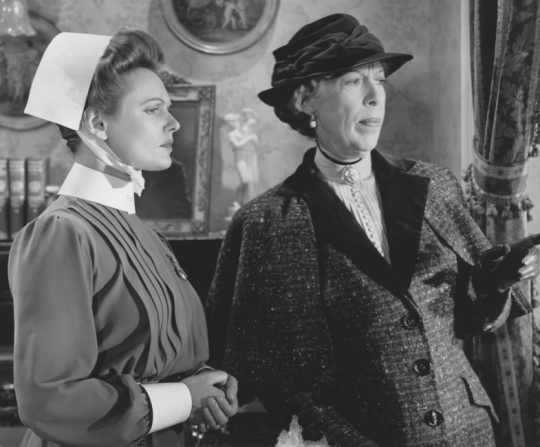
Anna Neagle and Edna May Oliver in “Nurse Edith Cavell”

Other trivia: 
• One of five versions of Edith Cavell’s story. The others are: Nurse and Martyr (1915), Nurse Cavell (1916), The Woman the Germans Shot (1918), Dawn (1928)
• Jimmy Butler plays Jean Rappard, a runaway Belgium prisoner of war, fought in World War II and was killed in action in France.
• The screenplay was written based on Nurse Cavell’s personal papers including letters, notes in Nurse Edith Cavell’s Bible and in her diary from 1913 to 1915, according to an April 20, 1939, article.
• Herbert Wilcox wanted Wendy Barrie to play one of the supporting characters, according to an April 21, 1939, brief.
• A film brief on April 24, 1939, also mentioned Douglas Fairbanks Jr. was going to be in the cast. Fairbanks Jr. did not end up in the film.

My review: Searching for the “1939 feature”:
Nurse films are one of my favorite types of films. And in the classic age of films, telling the biographical stories of brave nurses caring for patients was nothing new. For example, Kay Francis had already played Florence Nightingale in “White Angel” (1936) and the story of Nurse Edith Cavell had been told four times before this movie’s release.

But there is something different about “Nurse Edith Cavell” (1939). In comparison to some medical films that can be rather melodramatic, “Nurse Edith Cavell” is a very quiet film that has some tense moments.

English actress Anna Neagle plays Nurse Cavell as a level-headed character who is very calm and collected and rarely speaks above a low, soft voice. Even when she faces danger, she doesn’t yell or scream. The plot solely revolves around Cavell and three other women helping British, Belgian and French soldiers escape occupied Belgium to the Netherlands.

Knowing nothing about this film, you glance at the cast and see Zasu Pitts, May Robson and Edna May Oliver and could assume this is a comedy. While there are slightly funny parts involving Zasu Pitts, this is a serious film. This was one of Edna May Oliver’s last films and she passed away in 1942.

While it is set during World War I, the film doesn’t condemn the Germans. Nurse Cavell’s sentiment was that “patriotism is not enough, I must have no hate in my heart.” Because of this, she cared for German soldiers who were brought to her hospital, along with the British, French and Belgians that she helped escape. If anything, the message of this film is pacifism. With the political climate in 1939, director Herbert Wilcox was asked if the film would reflect that:

“Our job is entertainment, not propaganda,” Wilcox is quoted in the “Around Hollywood” column by Robbin Coons on May 29, 1939. “The film will be anti-militarist, not anti-German.”

“We will show Edith Cavell as one of war’s victims, as the great woman she was,” Neagle is also quoted in the article.

George Sanders has a surprisingly small role as a German officer, entering into the story 50 minutes into the 100-minute film. The Germans suspect that someone is aiding prisoners of war and enlist a soldier, played by German actor Henry Brandon, to investigate.

Portrait of the real Nurse Edith Cavell

Before seeing this movie, I had never heard of Nurse Edith Cavell, but she became a prominent figure during World War I, particularly in 1915. I’m not sure if everyone knows the history of Nurse Cavell and what became of her and I don’t want to share any spoilers. But I will share that her story shook the world and was shared internationally. Her story was used in her home country of England for military recruitment and to rally the United States into joining the war. The United States did not enter World War I until 1917.

A few notes I thought were particularly interesting:
– In regards to history and 1939, this film is interesting because it shows homefront conditions in Europe during World War I. And it was released only weeks after England and France declared war on Germany on Sept. 3, 1939, two days after Germany invaded Poland. During film screening and a personal appearance in Columbus, Ohio, on Sept. 21, 1939, Anna Neagle said:
“Over here, the war is so unreal, that I actually cannot believe that it affects my country, my people. I am on my way home, but I haven’t the faintest idea what I’m returning to.

– Many biographical films have dramatic elements added to the real story, but from what I have read, much of what was portrayed in the film was factual. This would have been an easy story to exaggerate and the Germans could have been portrayed as “barbaric,” as they were in news stories in 1915, but they are not. The story shows Germans occupying the town and searching the hospital, but nothing is over the top. The main realistic difference is that Anna Neagle was 35 when she performed this role, and Nurse Cavell was 49 in 1915.

– “Nurse Edith Cavell” differs from many films revolving around a woman made at this time. There is no contrived love story what so ever, which is rare. Anna Neagle has no suitor or lover in the film, nor do her three “underground” accomplices. (Though Zasu Pitts is married, her husband is only seen in a few scenes helping soldiers escape).

– Director Herbert Wilcox is remaking his own film. In 1928, Wilcox told the story of Nurse Cavell in the film “Dawn” starring Sybil Thorndike. Neagle and Wilcox were married when this film was made.

“Nurse Edith Cavell” is not a well-known movie today and not terribly easy to find (I watched it on Amazon Prime, but the sound is garbled for 20 minutes in the middle). But while it was being made, it received a great deal of news coverage in 1939. It is a quiet film that I enjoyed and delivered a great message of strength.

Check out the Comet Over Hollywood Facebook page, follow on Twitter at @HollywoodComet or e-mail at cometoverhollywood@gmail.com


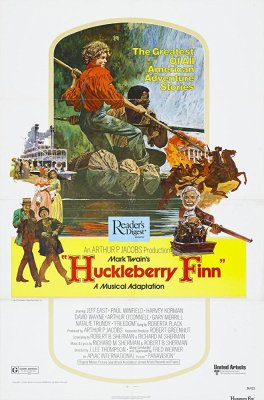
Musical Monday: Huckleberry Finn (1974)

It’s no secret that the Hollywood Comet loves musicals.
In 2010, I revealed I had seen 400 movie musicals over the course of eight years. Now that number is over 500. To celebrate and share this musical love, here is my weekly feature about musicals.

This week’s musical:
Huckleberry Finn (1974) – Musical #583

Studio:
United Artists

Director:
J. Lee Thompson

Starring:
Jeff East, Paul Winfield, Harvey Korman, Gary Merrill, David Wayne, Arthur O’Connell, Natalie Trundy, Odessa Cleveland, Lucille Benson, Kim O’Brien, Jean Fay, Ruby Leftwich, Linda Watkins

Plot:
A musical adaptation of Mark Twain’s story of “Huckleberry Finn.” Huckleberry Finn (East) is an orphan after his father (Merrill) is dead and is living with two elderly women. Huck’s father turns out not being dead and kidnaps him after hearing Huck found some treasure and he wants the money. Huck stages his death and travels down the river with Jim (Winfield), a slave running to freedom.

Continue reading

Watching 1939: Ninotchka

In 2011, I announced I was trying to see every film released in 1939. This new series chronicles films released in 1939 as I watch them. As we start out this blog feature, this section may become more concrete as I search for a common thread that runs throughout each film of the year. Right now, that’s difficult. 

1939 film:  Ninotchka (1939)

Release date: Nov. 29, 1939

Cast: 
Greta Garbo, Melvyn Douglas, Ina Claire, Sig Ruman, Felix Bressart, Bela Lugosi, Alexander Granach, Gregory Gaye, Dorothy Adams (uncredited), George Tobias (uncredited)

Studio:  Metro-Goldwyn-Mayer

Director: 
Ernst Lubitsch

Plot:
Three Russians, Comrade Iranoff (Ruman), Comrade Iranoff (Bressart) and Comrade Kopalski (Granach) travel to Paris, France, from Russia on official business – to sell the jewels of Grand Duchess Swana (Claire) that the Soviets confiscated. When Swana gets wind of this, she sends her boyfriend Count Leon d’Algout (Douglas) to intervene so she can reclaim her jewelry. To trick the comrades out of the jewelry, Leon changes the point of view of the three comrades, showing them what life is like in Paris. When the Soviet government hears that the sale is not moving forward, they send Nina Ivanovna Yakushova, or Ninotchka, (Garbo) to Paris to clean up the mess. Rigid and serious when she arrives, Ninotchka soon is also warmed and changed by Paris and falls in love.

1939 Notes:
• Ernst Lubitsch’s only film in 1939
• Greta Garbo’s only film of 1939 and her first comedy. This was her second to last film.
• Melvyn Douglas made four films in 1939.
• Ernst Lubitsch’s first assignment as a producer for M-G-M

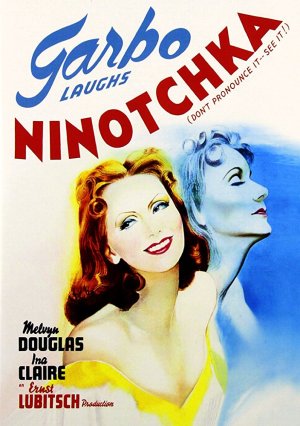
Garbo (and Melvyn Douglas) laugh in Ninotchka (1939)

Other trivia: 
• Remade as the musical “Silk Stockings” (1957) starring Cyd Charisse, Fred Astaire and Janis Paige. The 1957 film version was an adaptation of a 1954 stage musical with music by Cole Porter.
• Screenplay by Charles Brackett and Billy Wilder
• Greta Garbo wanted Cary Grant to play the lead, according to a Sheilah Graham column published on Jan. 3, 1939.
• For Greta Garbo’s first talking film, “Anna Christie” the slogan “Garbo talks!” was used in advertisements. Mimicking that advertising, this movie used the slogan “Garbo Laughs!”
• Adapted in 1950 as a stage play.

My review: Searching for the “1939 feature”:
“Ninotchka” is a glittering example of the perfect 1939 film:
1. It was Greta Garbo’s first comedy and her only film of 1939.
2. Was directed by Ernst Lubitsch, so it has that “Lubitsch touch.” (Also his only 1939 film)
3. Includes a script written by Charles Brackett and Billy Wilder

All of these factors add up to create a charming film.

The satirical comedy was written by Charles Brackett and Billy Wilder and is chockful of hilarious one-liners and back-and-forths.

This was Greta Garbo’s first film since 1937’s Conquest. Newspapers in 1938 announced her return to film with two films to be released in 1939: Ninotchka and Madame Curie. The latter wasn’t released until 1943 and starred Greer Garson. After Ninotchka, Garbo didn’t make another film until 1941, “Two-Faced Woman,” which was her last film.

Greta Garbo is a performer revered as one of the best actors of all time. Garbo’s film career began in 1920 and spanned 21 years with 32 films. This is my favorite Greta Garbo film. For much of her career, we saw Garbo brood, suffer or fall in love. But in Ninotchka, we get to see how funny she could be, even when she’s playing the very dry and mechanical Nina Ivanovna Yakushova, before she loosens up to be Ninotchka.

In her first talking film, Anna Christie (1930), the advertising slogan was “Garbo talks!” Playing off of that, MGM advertised the comedy with “Garbo laughs!” Her performance here is just as joyous as that advertising line captures. It’s amazing that Ninotchka was her second to last film. With the right comedic material, you can’t help but wonder what other films Garbo could have made had she stayed in Hollywood.

As production was beginning, Sheilah Graham reported that Garbo had picked Cary Grant “to make love to her” in her new film, Ninotchka. And as wonderful as Cary Grant is, I’m glad Melvyn Douglas was the final selection as the male lead in this film. Douglas brings his understated charm and also his sense of humor to the movie.

Outside of our leads, the supporting cast practically steals the show. Sig Ruman, Felix Bressart and Alexander Granach as the three comrades who blunder the business deal are hilarious and adorable as they explore the joys of life outside of Soviet Russia.

Sig Ruman, Felix Bressart and Alexander Granach

Set in France, “Ninotchka” was released on Nov. 29, 1939, as the landscape of Europe was rapidly changing. On Sept. 1, 1939, Germany invaded Poland and World War II began. The film begins with a bittersweet intro:

“This picture takes place in Paris in those wonderful days when a siren was a brunette and not an alarm…and if a Frenchman turned out the light it was not on account of an air raid!”

Though our allies at this time, this film was banned in Soviet Russia because of the way Soviets were portrayed.

It’s difficult not to gush over this film (as I already have). Watching it is such a cheerful experience. It is a great example of the sparkling 1939, and it may be a perfect film (if not pretty darn close).

Check out the Comet Over Hollywood Facebook page, follow on Twitter at @HollywoodComet or e-mail at cometoverhollywood@gmail.com

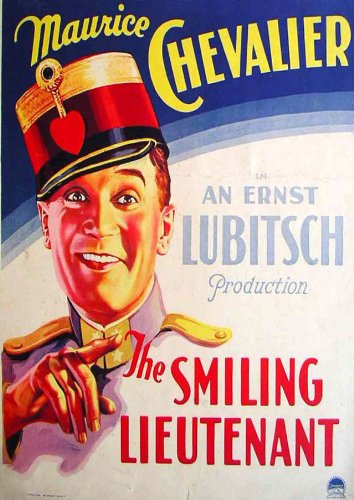
Musical Monday: The Smiling Lieutenant (1931)

It’s no secret that the Hollywood Comet loves musicals.
In 2010, I revealed I had seen 400 movie musicals over the course of eight years. Now that number is over 500. To celebrate and share this musical love, here is my weekly feature about musicals.

This week’s musical:
The Smiling Lieutenant (1931) – Musical #358

Studio:
Paramount Pictures

Director:
Ernst Lubitsch

Starring:
Maurice Chevalier, Claudette Colbert, Miriam Hopkins, Charles Ruggles, George Barbier, Hugh O’Connell, Elizabeth Patterson (uncredited)

Plot:
While Lt. Nikolaus ‘Niki’ von Preyn (Chevalier) is standing at attention for the visiting king of Flausenthurm, he winks at his girlfriend Franzi (Colbert). The king (Barbier) is furious, thinking Niki is laughing at his daughter, the Princess Anna (Hopkins). To escape a potential court marshall, Niki says he was winking at Princess Anna, which complicates his love life.

Continue reading

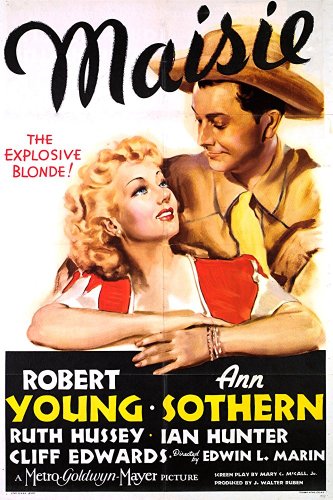
Watching 1939: Maisie (1939)

In 2011, I announced I was trying to see every film released in 1939. This new series chronicles films released in 1939 as I watch them. As we start out this blog feature, this section may become more concrete as I search for a common thread that runs throughout each film of the year. Right now, that’s difficult. 

1939 film: Maisie

Release date: June 22, 1939

Cast:  Ann Sothern, Robert Young, Ruth Hussey, Ian Hunter, Cliff Edwards, George Tobias, John Hubbard (credited as Anthony Allan), Art Mix, Willie Fung

Studio:  Metro-Goldwyn-Mayer

Director:  Edwin L. Marin

Plot:
Maisie Ravier (Sothern) is a fast-talking, brassy New York vaudeville performer who travels to Wyoming for a show. When she arrives, she finds that the show folded after one performance, and now she’s broke and stranded. Maisie meets cowboy Slim (Young), who is a manager of a nearby ranch. He instantly dislikes her, but begrudgingly takes her to the ranch so she has a place to stay for the night. The owner of the ranch and Slim’s boss, Clifford Ames (Hunter) arrives with his wife Sybil (Hussey). Instead of leaving, Maisie starts working as Sybil’s maid, but Maisie gets in over her head when she discovers Sybil’s extracurricular romance.

1939 Notes:
• The first of the 10 Maisie films released by MGM. The last film was released in 1947. There was also a spin-off radio show called “The Adventures of Maisie” which broadcast from 1945 to 1947 and again from 1949 to 1953.
• Ann Sothern signed a contract with Metro-Goldwyn-Mayer because of this film.
• Ruth Hussey was in seven films released in 1939
• Ann Sothern was in four films released in 1939
• Robert Young was in four films released in 1939
• Ian Hunter was in five films released in 1939

Other trivia: 
• The film rights were purchased with plans for Jean Harlow to star in the film. However, Jean Harlow died in 1937 and the film idea was shelved. When MGM execs saw Ann Sothern in Trade Winds (1938), they felt she was perfect for Maisie and signed her to a contract to play the role, according to a 2015 film introduction by former TCM host Robert Osborne.
• The concept was based on the book “Dark Dame” by Wilson Collison
• The working title for the film was Maisie Was A Lady and Broadway to Wyoming. One of the films was titled “Maisie Was a Lady” and was released in 1941.

My review: Searching for the “1939 feature”:

This week’s 1939 film is significant: It started a film series that spanned from 1939 to 1947 (and it had a spin-off radio show) and it boosted actress Ann Sothern’s career.

From Boston Blackie to the Saint, there were several film series during the classic era of film.

But to me, few film series stand out as much as the “Maisie” series, which kicked off in 1939. The character of Maisie Ravier is the brassy showgirl with clanging bracelets and loud clothing. But she has a heart of gold. I could certainly see Jean Harlow in the role since the story was purchased with her in mind, but Ann Sothern makes this her role and is perfect for the part.

After the first “Maisie” film was released in 1939, nine more followed, with the last released in 1947. While each film follows Maisie’s adventures, there was no continuation of the storyline from the previous film and she has a different boyfriend in each story.

The year of 1939 was a turning point for Ann Sothern. Not only was the first “Maisie” film released in 1939, but this film boosted her career. Sothern had steadily in Hollywood for several years but with no large successes. Her film career began in 1927, where she was in uncredited parts until 1930. Sothern was signed a film contract with Columbia Pictures in 1934 and then RKO Radio Pictures in 1936, but her roles were not of a high callibur. Ann Sothern did not find true success until MGM signed her and she was cast as Maisie.

Ann Sothern, who I feel is an underrated actress, is perfect for this role and makes the Maisie films so much fun. While her character is sassy and fast-talking, she’s also warm and funny.

Robert Young, Ruth Hussey and Ian Hunter co-star in “Maisie” (1939), and all do a terrific job. Robert Young plays his usual nice guy role (with a touch of grumpiness) and Ian Hunter is his usual stalwart, loveable character. Ruth Hussey, who is also underrated and can play any type of role, makes it easy to dislike her character in this one.

The “Maisie” series is one of my favorite film series. I’ll never forget when Warner Archive released the series on DVD in 2012 how thrilled I was (I was so happy I think I cried). If you don’t have the two volume Warner Archive Maisie set, I highly recommend it. All of the Maisie films are as delightful as the first film in the series.

The Maisie films never rose above a B-level budget movie and all of them were filmed in black and white. But these B-movies always made MGM money. They were cheap to make and made money, which executives liked, according to the late Robert Osborne.

Regardless of budget, the Maisie films are a delight and Ann Sothern is wonderful in the role. The year 1939 was a good year for Sothern and us since we still get to enjoy this film.

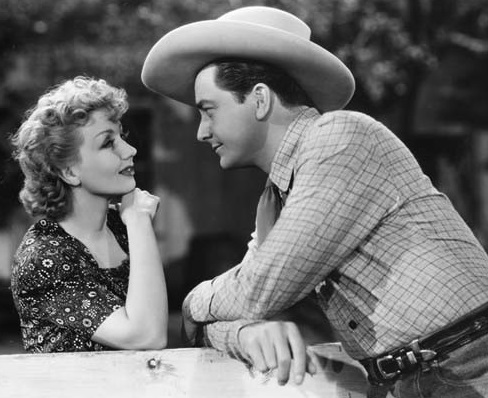
Ann Sothern and Robert Young

Check out the Comet Over Hollywood Facebook page, follow on Twitter at @HollywoodComet or e-mail at cometoverhollywood@gmail.com


Musical Monday: Chasing Rainbows (1930)

It’s no secret that the Hollywood Comet loves musicals.
In 2010, I revealed I had seen 400 movie musicals over the course of eight years. Now that number is over 500. To celebrate and share this musical love, here is my weekly feature about musicals.

This week’s musical:
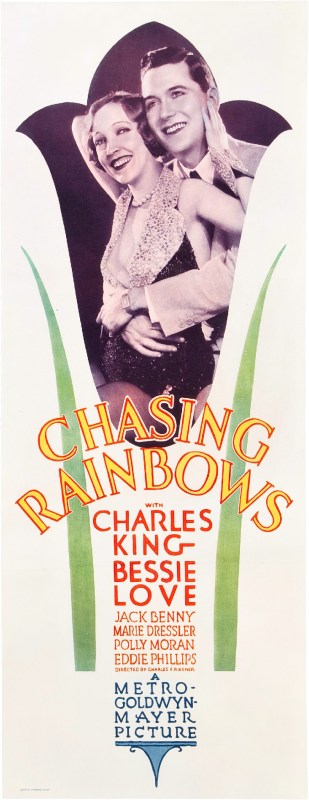
Chasing Rainbows (1930) – Musical #355

Studio:
Metro-Goldwyn-Mayer

Director:
Charles Reisner

Starring:
Bessie Love, Charles King, Jack Benny, George K. Arthur, Polly Moran, Marie Dressler, Gwen Lee, Nita Martan, Eddie Phillips, Ann Dvorak (uncredited)

Plot:
A group of actors travels across the country, touring their show. Carlie (Love) is in love with her vaudeville partner Terry (King), who falls in love with every leading lady.

Trivia:
-Introduced the song “Happy Days Are Here Again”
-The original released included a two-strip Technicolor finale, which is now lost.
-First titled “Road Showed”
-First film Jack Benny made in Hollywood, though not the first film released with him in it

Highlights:
-Marie Dressler sing/talk

Notable Songs:
-“Happy Days Are Here Again” performed by Charles King and the chorus
-“Lucky Me, Lovable You” performed by Charles King
-“My Dynamic Personality” performed by Marie Dressler

My review:
As I have noted before, musicals made shortly after the dawn of sound can be haphazard. Songs may be thrown in or randomly performed that don’t seem to fit in with the plot and dance numbers can be clumsy.

However, “Chasing Rainbows” is an exception. The mix of song and plot are done a little better in “Chasing Rainbows.” Perhaps it works better because the lead characters are in a musical show. So some songs are their performances, and others are to the person that they love.

What’s interesting is that our two leads, Charles King and Bessie Love, were both mainly done with Hollywood in 1931. Bessie Love’s career picked back up in 1950, when she started playing small roles in film and TV, but nothing at the caliber she was once at.

The actors that went on to be the biggest stars were the supporting characters: Marie Dressler and Jack Benny.

But “Chasing Rainbows” is disappointing, but it is not the fault of the director, writers or actors. When the film was released in 1930, the end of the film shift from black and white to 2-strip Technicolor finale with three songs, including Bessie Love and Charles King singing “Everybody Tap,” Charles King singing “Love Ain’t Nothin’ But the Blues” and Marie Dressler reprising “My Dynamic Personality.”

However, this footage is lost and the movie ends abruptly. Bessie Love runs out of her dressing room and the movie ends. It would have been amazing to see that number that is now lost. It is also curious that the film preservationists chose not to add a photo still with a song playing over it, like is done in so many films with lost portions. But perhaps that wasn’t an option.

Check out the Comet Over Hollywood Facebook page, follow on Twitter at @HollywoodComet or e-mail at cometoverhollywood@gmail.com

Watching 1939: Arizona Legion

In 2011, I announced I was trying to see every film released in 1939. This new series chronicles films released in 1939 as I watch them. As we start out this blog feature, this section may become more concrete as I search for a common thread that runs throughout each film of the year. Right now, that’s difficult. 

1939 film: Arizona Legion

Release date: Jan. 20, 1939

Cast: George O’Brien, Laraine Day (billed as Laraine Johnson), Carlyle Moore Jr., Chill Wills, Tom Chatterton, Edward LeSaint, Glenn Strange, Harry Cording

Studio:  RKO Radio Pictures

Director: David Howard

Plot:
When a stagecoach is robbed by Whisky Joe (Cording), everyone is too afraid to speak up and identify or accuse the criminal. Boone Yeager (O’Brien) is a hard-drinking cowboy who the judge (LeSaint) asks to infiltrate the clan of Whiskey Joe. The daughter of the Judge, Letty (Day/Johnson) is engaged to Boone and she doesn’t understand his recent behavior.

1939 Notes:
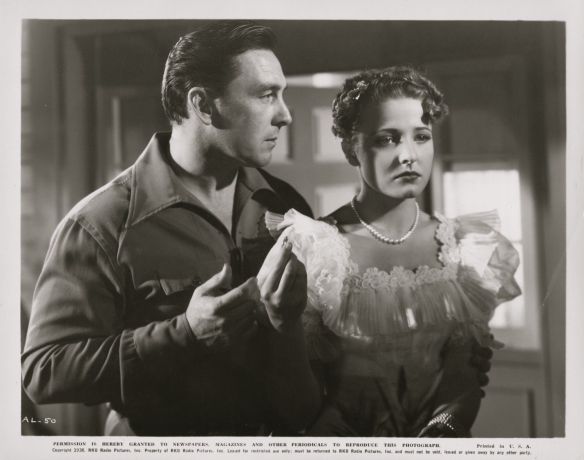
• Laraine Day was billed Laraine Johnson. Laraine changed her last name to “Day” after signing a contract with M-G-M. She only made three films released in 1939 and the last is what helped boost her career, Calling Dr. Kildare (1939). It was her first role in the Dr. Kildare film series, where she played the doctor’s girlfriend, Mary Lamont.

George O’Brien and Laraine Johnson (Day)

My review: Searching for the “1939 feature”:
There are several great westerns of the classic film era. And there are even more low-budget westerns that graced the silver screen. “Arizona Legion” (1939) would fall in the latter category.

The film plot isn’t anything new or different, though it is an entertaining film. During this point in his career, George O’Brien starring almost exclusively in westerns from 1937 to 1940. Many of these films barely (or don’t) surpass a 60-minute length.

While the film type or plot isn’t anything new to films at this time, O’Brien’s leading lady was. The lead actress is billed as Laraine Johnson, who later changed her name to Laraine Day and became one of Metro-Goldwyn-Mayer’s contract players. “Arizona Legion,” Day’s fifth film, wasn’t necessarily important to her career, but 1939 was the year she broke out in films.

This same year, Laraine Johnson was signed to MGM, changed her name and was cast in the Dr. Kildare film series (starring Lew Ayres and Lionel Barrymore) as Dr. Kildare’s love interest. In 1940, she even went on to star in Alfred Hitchcock’s Foreign Correspondent (1940).

While some films released in 1939 are not of great importance in the grand scheme of things, some were the catalyst to a successful career. That could be the case for Laraine Day and this film.

Check out the Comet Over Hollywood Facebook page, follow on Twitter at @HollywoodComet or e-mail at cometoverhollywood@gmail.com


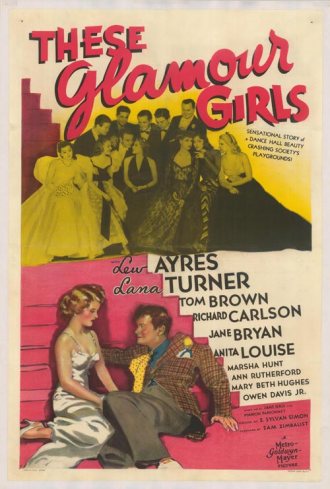
Musical Monday: Two Girls on Broadway (1940)

It’s no secret that the Hollywood Comet loves musicals.
In 2010, I revealed I had seen 400 movie musicals over the course of eight years. Now that number is over 500. To celebrate and share this musical love, here is my weekly feature about musicals.

This week’s musical:
Two Girls on Broadway (1940) – Musical #586

Studio:
Metro-Goldwyn-Mayer

Director:
Alfred E. Green

Starring:
Lana Turner, Joan Blondell, George Murphey, Kent Taylor, Wallace Ford, Richard Lane, Otto Yamaoka, Lloyd Corrigan

Plot:
When Eddie Kerns (Murphey) sells his song and is offered a job to perform it in a show, he calls his girlfriend Molly Mahoney (Blondell) and tells her to join him in New York. Molly Mahoney and her sister Pat (Turner) have been running a dance school in Nebraska, and both go to New York, also hoping to hit it big. The only problem is when they audition for the show Eddie is in, producer Buddy Bartell (Lane) only wants to hire Pat to perform with Eddie.

Trivia:
-Remake of The Broadway Melody (1929)
-Joan Blondell’s first film with Metro-Goldwyn-Mayer.
-Released in Great Britain under the name “Choose Your Partner.”
-The song “Maybe It’s the Moon” by Bob Wright and Chet Forrest was written for the film but not performed.
-Costumes by Dolly Tree
-Produced by Jack Cummings

Continue reading

Watching 1939: Blackmail (1939)

In 2011, I announced I was trying to see every film released in 1939. This new series chronicles films released in 1939 as I watch them. As we start out this blog feature, this section may become more concrete as I search for a common thread that runs throughout each film of the year. Right now, that’s difficult. 

1939 film: Blackmail

Release date: Sept. 9, 1939

Cast: Edward G. Robinson, Ruth Hussey, Gene Lockhart, Bobs Watson, Guinn ‘Big Boy’ Williams, John Wray, Arthur Hohl, Esther Dale, Willie Best (uncredited)

Studio:  Metro-Goldwyn-Mayer

Director: H.C. Potter

Plot: John Ingram (Robinson) has a successful business fighting oil fires and lives a happy life with his family (Hussey, Watson). But his not so savory past comes to light when he’s seen in a newsreel and someone tries to blackmail him.

1939 Notes:
• Edward G. Robinson was only in two films in 1939.
• Bob Watson was in five films released in 1939.
• Ruth Hussey was in seven films released in 1939.
• Guinn ‘Big Boy’ Williams was in nine films in 1939.

Continue reading

Musical Monday: Carmen Jones (1954)

It’s no secret that the Hollywood Comet loves musicals.
In 2010, I revealed I had seen 400 movie musicals over the course of eight years. Now that number is over 500. To celebrate and share this musical love, here is my weekly feature about musicals.

This week’s musical:
Carmen Jones (1954) – Musical #585

Studio:
20th Century Fox

Director:
Otto Preminger

Starring:
Harry Belafonte, Dorothy Dandridge, Pearl Bailey, Brock Peters, Diahann Carroll, Olga James, Joe Adams, Roy Glenn, Nick Stewart, Alvin Ailey (uncredited), Carmen De Lavallade (uncredited), Bernie Hamilton (uncredited)

Plot:
Set during World War II in North Carolina, the plot is a modern version of the opera “Carmen.” Joe (Belafonte) is in the Army and is about to be sent to flight school to become a pilot and officer. His girlfriend Cindy Lou (James) comes to see him off and wants to get married before he leaves. All of these plans are thwarted when Carmen Jones (Dandridge) sets her eyes on Joe. Carmen works in a parachute factory on base and gets in a fight with another worker and is sent to jail. Joe has to take her to jail, but she escapes, which cause Joe to be thrown in the brig and be demoted in rank. When he gets out of jail, Joe tells Dorothy he’s still going to flight school, but she is angry that Joe would think of leaving her. The two run away to Chicago, making Joe A.W.O.L. With Joe in hiding from the military police, Carmen starts to see boxer Huskey Miller (Adams).

Continue reading