Before twin Hayley Mills was trying to get their parents together in “The Parent Trap” (1961), Jackie Moran and Edith Fellows worked to keep their parents apart in “And So They Were Married” (1936).
In this fun, comedic romp, divorced Edith Farnham (Mary Astor) and her daughter Brenda (Fellows) are spending the Christmas holidays at the gala opening of a ski lodge. Because of Edith’s divorce, both she and Brenda are anti-men.
Widower Stephen Blake (Melvyn Douglas) is also heading to the same lodge and tailgates their car up the mountain. This leaves both Edith and Brenda with a sour taste and no interest in socializing with Stephen.
After they all arrive at the ski lodge, an avalanche occurs, and the three are the only guests at the new hotel for a few days until the roads can be cleared. Brenda develops a cold, forcing Stephen and Edith to eventually socialize, and they begin to fall in love.
On Dec. 7, 1941, Stella Hadley celebrated her birthday like she did every other year.
Lunch is to be served promptly at 1 p.m. with guests: her son Theodore (Richard Ney), daughter Patricia (Jean Rogers), best friend Cecila (Spring Byington), family friend Elliot (Edward Arnold) and her doctor (Miles Mander).
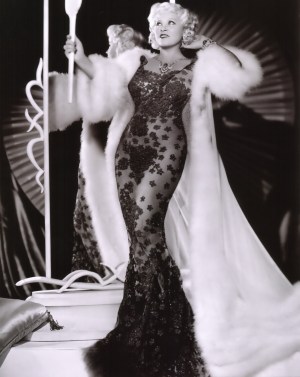
Mae West in a publicity photo for “Go West Young Man” (1936)
Mae West, known for her buxom figure, long Gibson-girl like gowns and sultry voice, slinked through 1930s films throwing around phrases like “Why don’t you come up and see me sometime?”
But after only 10 films from 1932 through 1940, Mae West’s film career declined after being dubbed “Box Office Poison” in 1937–others on this list included Greta Garbo, Joan Crawford, Norma Shearer and Katharine Hepburn.
West worked to remain relevant by acting on the stage and radio. By the 1960s and 1970s, she found herself with a cult following aided by the sexual revolution, according to No Applause–Just Throw Money: The Book That Made Vaudeville Famous by Trav S.D.
It’s no secret that the Hollywood Comet loves musicals. In 2010, I revealed I had seen 400 movie musicals over the course of eight years. Now that number is over 500. To celebrate and share this musical love, here is my weekly feature about musicals.
This week’s musical:
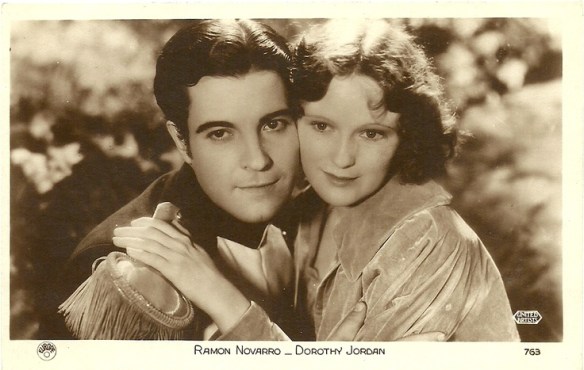
Devil-May-Care (1929) – Musical #536
Studio:
Metro-Goldwyn-Mayer
Director:
Sidney Franklin
Starring:
Ramon Novarro, Dorothy Jordan, Marion Harris, John Miljan, Ann Dvorak (uncredited), John Carroll (uncredited)
Plot:
Set during the Napoleonic era, Armand de Treville (Novarro) is a soldier for Napoleon and is jailed by the king. He is about to be killed by a firing squad and escapes. He hides in the bedroom of beautiful Leonie de Beaufort (Jordan), who immediately decides she hates Armand because she is a royalist. Armand continues to hide out from the royalists at the home of his friend Countess Louise (Harris), where he hides as a servant. Leonie ends up being the cousin of the Countess and she stays with her and resists the advances of Armand.
Trivia:
-Ramon Novarro’s talking debut.
-Labeled the “first dramatic operetta of talking pictures,” according to Beyond Paradise: The Life of Ramon Novarro
By Andre Soares
-Composer Dimitri Tiomkin wrote the ballet music in the musical score.
Notable Songs:
-Charming performed by Ramon Novarro
-March of the Guard performed by a chorus
-If He Cared performed by Dorothy Jordan
My review:
I honestly wasn’t expecting much as I went into “Devil-May-Care.” In fact, I didn’t know it was going to be a musical until I saw the title card which detailed it as a “musical romance.” But as I continued watching, this ended up being a pleasant little film.
I think my biggest take away from “Devil-May-Care” was that I had no idea that Ramon Novarro could sing and with such a pleasant voice! “Devil-May-Care” wasn’t only the first time audiences heard Novarro sing, but also was the first time they ever heard him sing, as this was Novarro’s first talking film.
At one time, Novarro was a top draw in the box offices and was known the “New Valentino.” While this film is noteworthy as his first talkie, like many others, Novarro’s star began to slip with the dawn of talking pictures.
“Devil-May-Care” has a pretty slow moving story, but it flowed better with song and plot line than any other early (1929-1930) movie musical I have seen to date.
The movie was met with positive, but unenthusiastic reviews. The Dec. 23, 1929, review by Mordaut Hall called is “pleasant entertainment.”
“Mr. Novarro is not impressive as a Frenchman. He sings agreeably, but not as freely as one might anticipate after the constant references to his operatic career,” Hall wrote.
Hall also humorously wrote about troubles in the projection room during his “Devil-May-Care” experience: “The reproduction is fairly good, but once or twice last night the mechanics got beyond control of the operators in the projection booth.”
The plot line itself is uninspired and a bit slow, and it’s a bit distracting that Novarro is supposed to be French but speaks with a heavy Mexican accent. However, this little musical is notable for allowing fans to first hear the voice Ramon Novarro.
It’s no secret that the Hollywood Comet loves musicals. In 2010, I revealed I had seen 400 movie musicals over the course of eight years. Now that number is over 500. To celebrate and share this musical love, here is my weekly feature about musicals.
Starring:
Ruby Keeler, Joan Blondell, Dick Powell, Hugh Herbert, Zasu Pitts, Guy Kibbee
Plot:
Eccentric cousin Ezra Ounce (Herbert) decides to divide up his fortune of $10 million before he dies. Part of this will go to his cousin Mathilda and her husband. However, Ezra hates actors and their daughter is looking at going into show business.
Trivia:
-Ruby Keeler and Dick Powell’s fourth film together.
-Ruby Keeler’s last film with Busby Berkely.
Notable Songs:
-Dames performed by Dick Powell
-I Only Have Eyes for You performed by Dick Powell and Ruby Keeler
-Try to See It My Way performed by Dick Powell
-The Girl at the Ironing Board performed by Joan Blondell
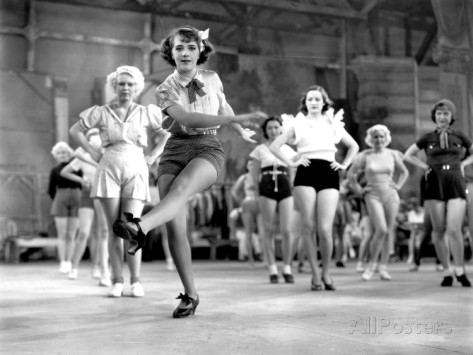
Ruby Keeler dancing in “Dames.”
Publicity photo of Dick Powell and several “Dames.”
Highlights:
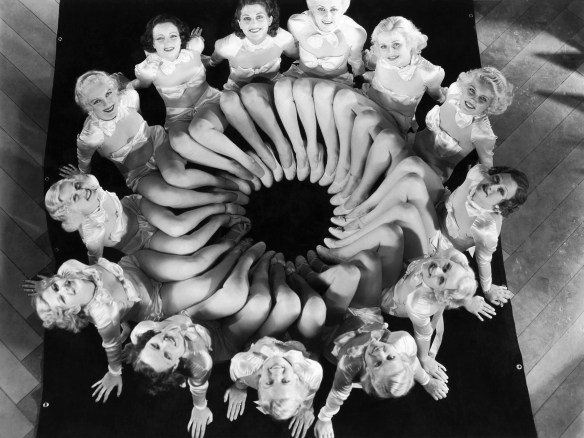
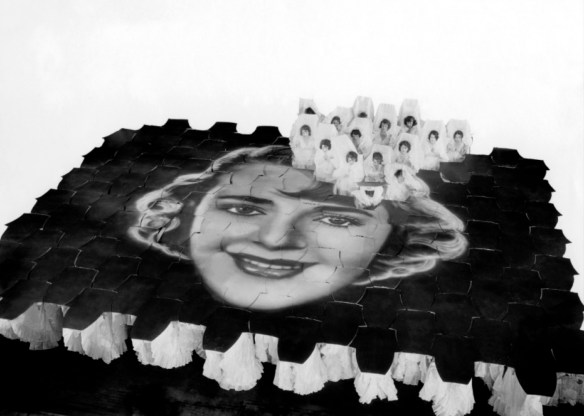
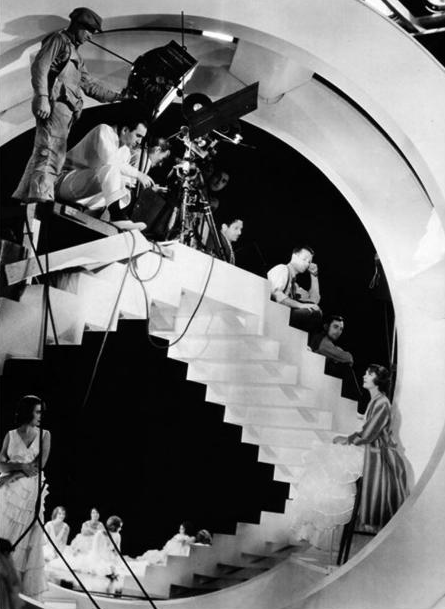
-The elaborate “Only Have Eyes for You” number that features several large shots and blown up pictures of Ruby Keeler. The best part is when Keeler rises up from below the stage through a trap door, that happens to be in the pupil of her eye.
Joan Blondell causing trouble for Guy Kibbee in “Dames.”
My review:
While “42nd Street” and “Footlight Parade” are my top two favorite Busby Berkeley directed films starring Ruby Keeler and Dick Powell (one of seven), “Dames” comes in at a close third.
Like the other two, “Dames” has it all: An excellent cast, breathtaking Berkeley directed musical numbers, toe tapping songs, humor and it’s very pre-code. In fact, I find “Dames” to be pretty hilarious.
An great example of humor and pre-code in “Dames” is when Guy Kibbee finds Joan Blondell stowing away in his bed on a train. Blondell isn’t wearing pajamas and Kibbee is fearful of a scandal that would make him lose the millions of dollars his very moral cousin has agreed to leave him. When Kibbee orders her to leave, she says “Why? I don’t snore.”
More humor comes when cousins Ruby Keeler and Dick Powell are in love, but we learn Powell is Keeler’s 13th cousin.
The film’s plot mainly revolves around Cousin Ezra’s (Herbert) moral code and hating theater people. This is why Ezra has disowned his relative Jimmy (Powell), because he is in the theater and trying to put on a show. As long as his family members Horace (Kibbee), Mathilda (Pitts) and Barbara (Keeler), don’t interact with Jimmy, they will get $6 million. However, Barbara is in love with Jimmy and also plans to audition to for his show.
Further complications arise when Mabel (Blondell) plans to blackmail Horace for money, know he would lose the $6 million if Ezra knew of their run in on the train.
Joan Blondell is wonderful in this film, as she is with everything else. We learn in these musicals that she really lacks the pipes to carry a tune, but her character and humor make up for it.
The “Only Have Eyes for You” number is really outstanding. it’s really a solid 5 minute homage to Ruby Keeler, complete with people dancing with large cut outs of her face and her face becoming the dance floor.
As far as Busby Berkeley, pre-code musicals go, “Dames” is the tops. Add it to your list of “must sees.”
It’s no secret that the Hollywood Comet loves musicals. In 2010, I revealed I had seen 400 movie musicals over the course of eight years. Now that number is over 500. To celebrate and share this musical love, here is my weekly feature about musicals.
Starring:
Priscilla Lane, Jack Carson, Richard Whorf, Lloyd Nolan, Elia Kazan, Billy Halop, Betty Field, Wallace Ford, Joyce Compton, Howard Da Silva, Faith Domergue (uncredited), Faye Emerson (uncredited), William Hopper (uncredited)
Plot:
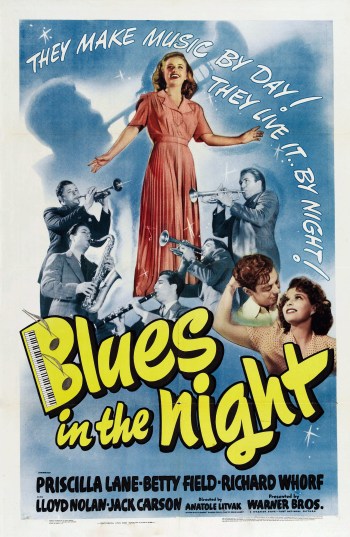
Jigger (Whorf), Leo (Carson), Peppi (Halop), Nickie (Kazan), and Pete (Whitney) have formed a jazz band and want to take it on the road. With Leo’s wife, “Character” (Lane) as the lead singer, the group rides the rails and hitchhikes to each gig. Character and Leo’s marriage is unstable, as he gambles a great deal, and she’s afraid to tell him when she gets pregnant,because she knows he doesn’t want to be tied down. The group runs into escaped convict Del Davis (Nolan) who steals their money and then offers them a job at a New Jersey road house since they didn’t turn him over to the police. The road house is a dump but they eventually build it into a swinging establishment. Even with more steady work, their problems haven’t ended. Kay Grant (Field) first has her sites set on Leo and then turns to Whorf, causing him to eventually have a nervous breakdown.
Trivia:
-Harold Arlen (music) and Johnny Mercer (lyrics) were nominated for an Academy Award for Best Music, Best Original Song, “Blues in the Night”
-Faith Domergue first role in a film as an uncredited jitterbug dancer.
-Richard Whorf’s role of Jigger was offered to both James Cagney and John Garfield, according to Anatole Litvak: The Life and Films
By Michelangelo Capua
-The original title of the film was first “Hot Nocturne” and then “New Orleans Blues,” according to Anatole Litvak: The Life and Films
By Michelangelo Capua
Notable Songs:
-Blues in the Night performed several times throughout the film
-Hang on to Your Lids, Kids performed by Priscilla Lane
-Says Who? Says You, Says I
-This Time the Dream’s on Me performed by Priscilla Lane
Hightlights:
-Blues in the Night performed in the jail
-The crazy montage of when Richard Whorf has a break down
My review:
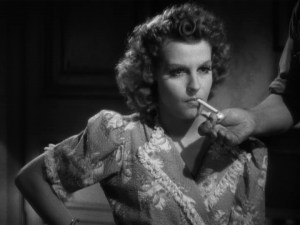
Betty Field in “Blues in the Night”
While categorized as a musical, “Blue in the Night” is an interesting blend of crime, noir and music. This isn’t your typical upbeat musical and Priscilla Lane isn’t plucky and carefree.
The film depicts the struggles of an up and coming jazz band and the dynamics of an unstable marriage. Priscilla Lane and Jack Carson are married in the film, but it’s clear that while he married her, he really doesn’t want to be tied down and is constantly gambling and carousing. When Priscilla Lane’s character gets pregnant, she is afraid to tell her husband because it would ruin his care free lifestlye and she fears he would leave her.
The movie has crime and gangster film elements as well when the band gets involved with Lloyd Nolan, a gangster who is hiding out, and his ex-moll, played by Betty Field who has her eyes on most of the men in the band.
Added bonus is that you get to hear Johnny Mercer’s “Blues in the Night” a few times throughout the film.
If you’re looking for a rollicking musical, “Blues in the Night” isn’t really for you.
But if you are looking for a characteristic brooding Warner Brothers film, this could be for you.
It’s no secret that the Hollywood Comet loves musicals. In 2010, I revealed I had seen 400 movie musicals over the course of eight years. Now that number is over 500. To celebrate and share this musical love, here is my weekly feature about musicals.
This week’s musical:
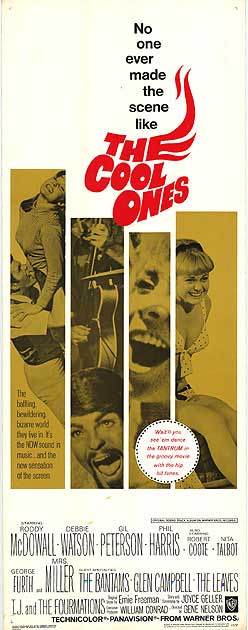
“The Cool Ones” (1967)– Musical #531
Studio:
Paramount Pictures
Director:
Gene Nelson
Starring:
Roddy McDowall, Debbie Watson, Phil Harris, Gil Peterson, Richard Harris, Nita Talbot, Glen Campbell, Teri Garr (uncredited)
Themselves: Mrs. Miller, The Bantams, The Leaves, T.J. and The Fourmations, The Forté Four
Plot:
Hallie Rogers (Watson), who dances as a go-go dancer on a variety show, will stop at nothing to become a pop star. During one show, she starts wildly dancing and grabs the microphone from the singer–who happens to be Glen Campbell–and starts singing. Hallie obviously gets fired, but learns that the wild dance she did on stage is now all the rage called “The Trantrum.” Hallie teams up with faded pop singer Cliff Donner (Peterson) to create a boy/girl performing duo. Eccentric millionaire music promoter Tony Krum (McDowall) works to make the two famous as a romantic, singing couple. The only problem is Cliff really is in love with Hallie but she is too focused on her fame to give it up for love.
Trivia:
-Former Warner Brothers actor and dancer Gene Nelson directed this film.
-Roddy McDowall’s character is apparently based on record producer Phil Spector.
-Singer Mrs. Miller’s only film appearance.
-Choreographed by Toni Basil.
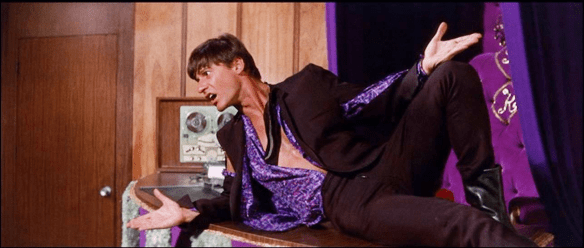
Roddy McDowall in “The Cool Ones”
Notable Songs:
-It’s Magic performed by Mrs. Miller
-Have a Tantrum performed by Gil Peterson and Debbie Watson
-The Cool Ones performed by Gil Peterson and Debbie Watson
-Where Did I Go Wrong performed by Roddy McDowall
My review:
New York Times film critic Bosley Crowther wrote “I venture to guess this will disgust even the kids” in his May 11, 1967, review of “The Cool Ones.”
Crowther most likely hit the nail on the head. “The Cool Ones” has earned a place on my list of the worst movies that I have ever seen. But then at the same time, it’s so bad you can’t look away and have to watch the whole movie.
The stupidity of this movie isn’t necessarily the story line or even the cast. For me, it’s the leading lady: Debbie Watson. Her lines and songs are all shouted and she’s simply annoying. “The Cool Ones” isn’t her first offense either. Ms. Watson was equally as bad in her role as Tammy in the last of the “Tammy” film series, “Tammy and the Millionaire” (1967).
Debbie Watson and Gil Peterson in “The Cool Ones”
Watson is so overly dramatic that I can’t even be sympathetic with her character, who is the main focus of the film. For example, when she first asks Cliff if he will team up with her, he says “I’ll think about it,” and she flips her lid and pushes him in the pool.
Roddy McDowall’s character is probably the high spot of the film as the over-the-top, kooky record producer. Though McDowall doesn’t appear until halfway through the film. We even get to hear McDowall sing a bit. It’s also fun to see Phil Harris–husband of actress Alice Faye and frequent Disney character voice–though his character isn’t the most friendly.
You also get to see singer Mrs. Miller in her only film appearance.
It’s almost a shame that this teen, rock-n-roll comedy is so terrible. It’s very colorful and very late-1960s. I didn’t go to this thinking it would be “West Side Story” but at least it would be on the same level of fun as an Elvis movie.
Perhaps “The Cool Ones” wouldn’t have been as painful if there has been a different lead actress. Maybe a Shelley Fabares or Nancy Sinatra would have been better.
Regardless, there is nothing “cool” about “The Cool Ones.”
It’s no secret that the Hollywood Comet loves musicals. In 2010, I revealed I had seen 400 movie musicals over the course of eight years. Now that number is over 500. To celebrate and share this musical love, here is my weekly feature about musicals.
Starring:
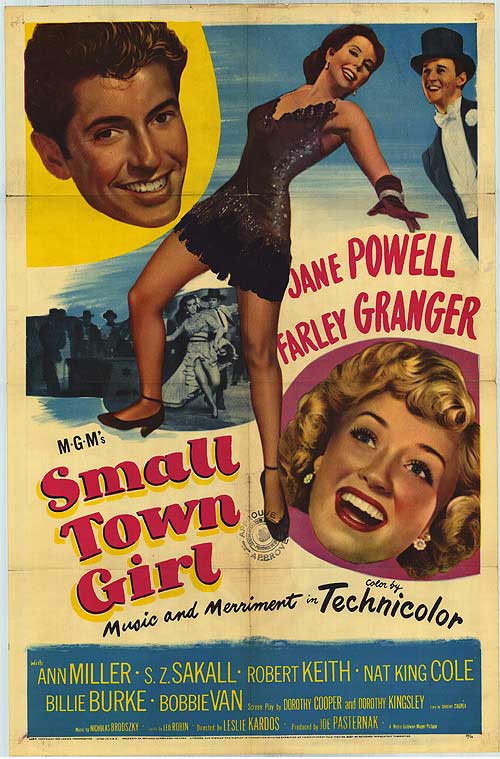
Jane Powell, Farley Granger, Ann Miller, Fay Wray, Billie Burke, S.Z. Sakall, Bobby Van, Robert Keith, Robert Hyatt, Chill Wills (uncredited) Themselves: Nat King Cole
Plot:
Judge Kimbell (Keith) throws big city hotshot Rick Livingston (Granger) in jail for going 80 miles per mile in a small town with his Broadway girlfriend Lisa Bellmount (Miller). The judge’s daughter Cindy (Powell) ends up falling for Rick.
Trivia:
-Nicholas Brodszky and Leo Robin were nominated for an Academy Award for Best Music, Original Song for the song “My Flaming Heart.”
-Dances choreographed by Busby Berkeley.
-Ann Miller’s “I’ve Gotta Heart That Beat” performance has 86 instruments up through the floor and the musicians are hidden beneath the floor, according to The Rough Guide to Film Musicals by David Parkinson
-Musical director is André Previn.
-Costumes by Helen Rose.
Highlights:
-Nat King Cole’s appearance and performance
-Ann Miller’s “I’ve Gotta Hear that Beat” number
-Bobby Van’s exhausting 3-minute jump through town.
Notable Songs:
–I’ve Gotta Hear That Beat performed by Ann Miller tap dancing and hands coming out of the floor playing drums and holding saxophones, clarinets and violins.
–My Flaming Heart performed by Nat King Cole
My review:
“Small Town Girl” is a fun, colorful musical with an outstanding cast. However, of Jane Powell’s MGM films, this is not her best. The storyline isn’t a bad one and it has some cute, humorous moments, but I prefer other Powell films such as “Luxury Liner” and “Holiday in Mexico.”
Farley Granger plays the arrogant, rich playboy well but is a poor romantic match for Powell.
While Jane Powell is known for her beautiful, operatic voice, she doesn’t have many notable songs or musical numbers. The real stand out musical numbers come from the supporting cast of Ann Miller, Bobby Van and an appearance from singer Nat King Cole as himself.
Ann Miller’s Busby Berkeley choreographed “Gotta Hear That Beat that Beat” is a visually amazing piece. The number is complete with Miller’s high-speed tap dancing feet and instruments being played by bodiless hands.
A second impressive, though exhausting, number is Bobby Van jumping through his small town. While this is quite a feat, it also makes my knees hurt just watching him bound down the street, shaking hands and jumping across hedges.
Also, while Van’s jumping is interesting, his character is fairly annoying.
For Nat King Cole fans, you also have the opportunity to see the velvet voice singer during a nightclub scene, which is a real treat.
The film has a terrific supporting cast with Robert Keith and Fay Wray as Powell’s parents, Billie Burke as Farley Granger’s mother, and S.Z. “Cuddles” Sakall as Van’s father. You also get the comical Chill Wills as the jailer.
Once big stars of the 1930s Burke and Wray seem wasted in this film as they both have less than 10 or 15 minutes of screen time.
For me, Robert Keith and Cuddles Sakall provided the most comedic entertainment and were honestly my favorite part of this film.
While I enjoy “Small Town Girl,” but I wouldn’t suggest it as a “must see,” unless you are a huge fan of any of the stars in this movie.
Publicity photo of Farley Granger, Jane Powell and Bobby Van for “Small Town Girl.”
A year after “Mr. Boogedy” (1986) aired, the Wonderful World of Disney aired its 1987 sequel, “Bride of Boogedy.”
In the sequel, the Davis family is now comfortably settled at their newly renovated in Lucifer Home and happily rid of the ghost Mr. Boogedy for a year.
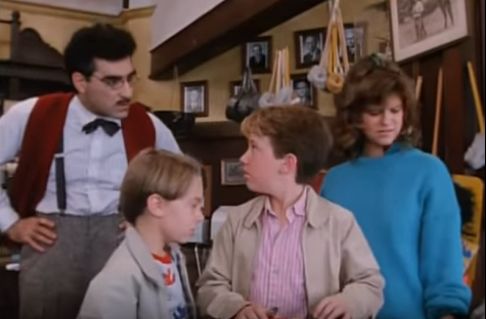
The children in Mr. Lynch’s store, and Mr. Lynch being grumpy.
The family is involved and well liked in the town now, much to the chagrin of shop owner Tom Lynch (Eugene Levy). Eloise and Carl Davis (Mimi Kennedy and Richard Masur) are preparing to open their Gag City store downtown, and Carl Davis was named mayor of the town’s festival. This is a position usually held by Mr. Lynch, causing Mr. Lynch wanting the Davis family to leave town.
One night while walking home from babysitting, their daughter Jennifer (Tammy Lauren) is spooked in the woods by someone in a hat and cloak telling her to get out of his house. Believing that Mr. Boogedy is back, Jennifer runs home screaming.
Many of us have movies that we watched repeatedly as children.
For my two older sisters and myself, it was the made-for-TV Disney horror comedy “Mr. Boogedy” (1986). My sisters saw it when it originally aired on Disney channel on a Sunday night in April of 1986. Eventually my parents recorded it off of the television to keep and we’ve had it ever since. I’ve watched it more times than I can count and can still quote along.
Our version of the VHS tape was recorded in the mid-1990s, complete with commercials for the New Mickey Mouse Club, an up and coming singer named Brandy Norwood and promos for movies such as “Angels in the Outfield” and “Batteries Not Included.” I’m re-watching this Pickens family favorite on the old VHS as I type.
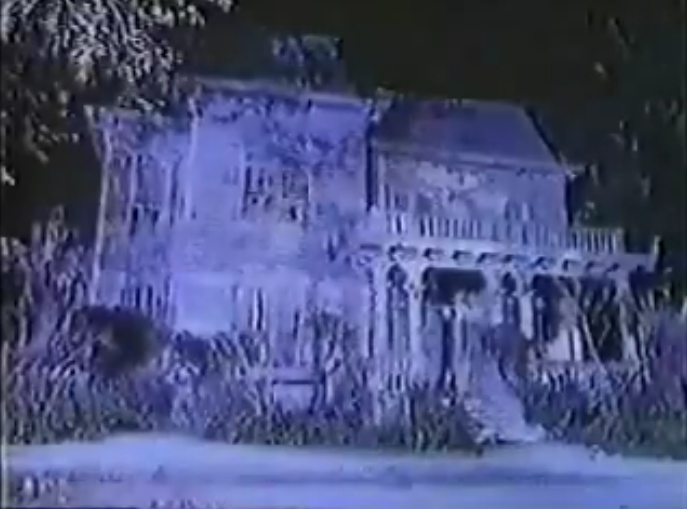
The Davis’s new home, a “definite fixer upper”
The 45 minute movie follows the Davis family who moves to small town Lucifer Falls, New England to live in a in their very first house. The parents- Eloise (Mimi Kennedy) and Carleton Davis (Richard Masur)- apparently didn’t see the house in person before purchasing and just went by what the realtor said.
The family plans to open a franchise gag store, Gag City. Carleton is full of practical jokes and frequently quips “just kidding.”
When they pull up to the decrepit old house with wind blowing and lightening striking, Carleton excitedly exclaims, “Just what the realtor said, a definite fixer upper.” The rest of the family isn’t too sure- which includes two sons Corwin (David Faustino) and Aurie (Benji Gregory) and daughter Jennifer (Kristy Swanson).

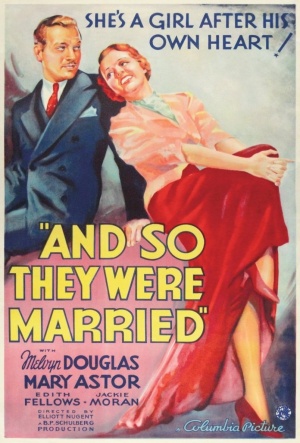 Before twin Hayley Mills was trying to get their parents together in “The Parent Trap” (1961), Jackie Moran and Edith Fellows worked to keep their parents apart in “And So They Were Married” (1936).

 (1934) – Musical #225





 ” (1941)– Musical #191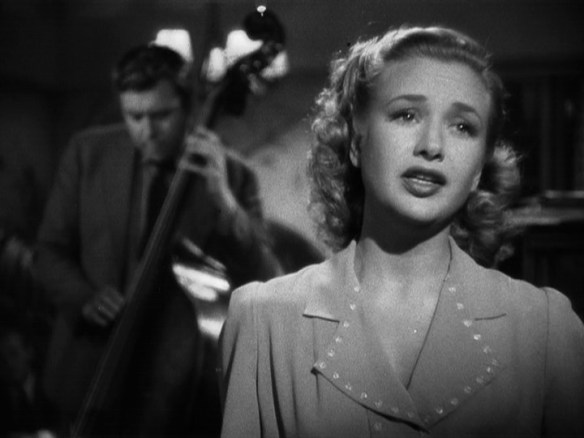
 ” (1953)– Musical #76
 performed by Ann Miller tap dancing and hands coming out of the floor playing drums and holding saxophones, clarinets and violins.
 performed by Nat King Cole
 Comet Over Hollywood