Musical Monday: Golden Girl (1951)

It’s no secret that the Hollywood Comet loves musicals.
In 2010, I revealed I had seen 400 movie musicals over the course of eight years. Now that number is over 500. To celebrate and share this musical love, here is my weekly feature about musicals.
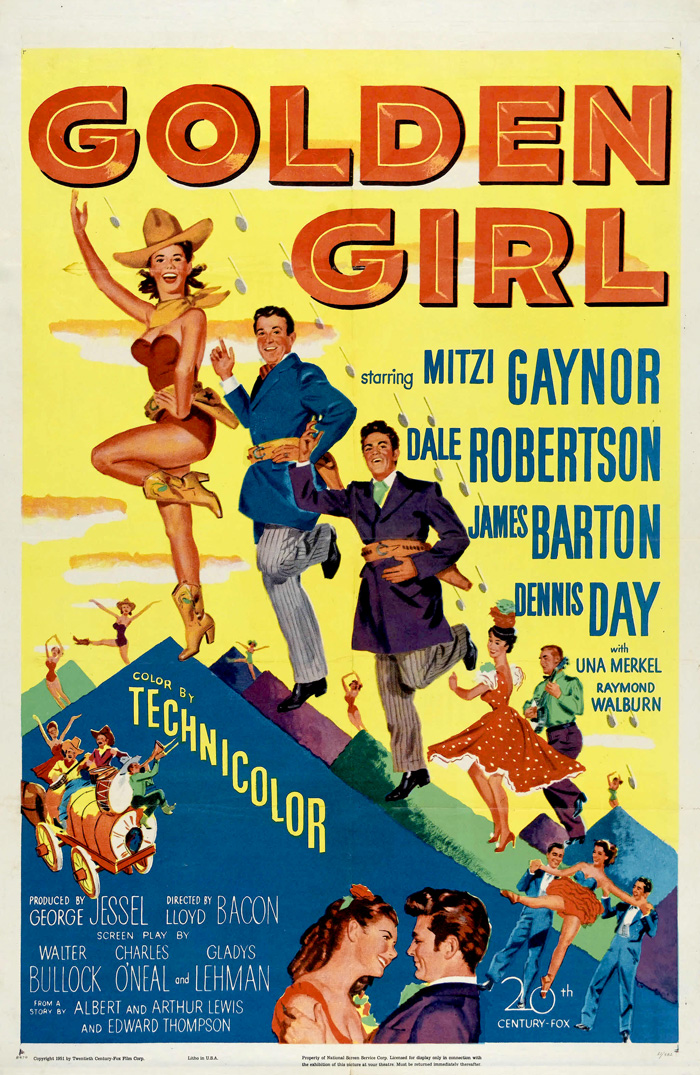
GoldenGirl_PosterThis week’s musical:
Golden Girl” –Musical #492

Studio:
20th Century Fox

Director:
Lloyd Bacon

Starring:
Mitzi Gaynor, Dale Robertson, Dennis Day, James Barton, Una Merkel, Raymond Washburn, Gene Sheldon, Carmen D’Antonio, Jimmie Dodd (uncredited)

Plot:
Set during the Civil War, the biographical film follows performer Lotta Crabtree (Gaynor) during her rise to fame. In this fictionalized biopic, Crabtree’s father (Barton) is a gambler who loses the family boarding house in a card game. Lotta, who desperately wants to become an actress, decides to earn the family money by performing. Before leaving to perform, Lotta meets Tom Richmond (Robertson) from Alabama and falls in love with him. Richmond follows her show to every venue, but may not be there just to see her.

Trivia:
-The real Lotta Crabtree, nicknamed the Nation’s Darling, was born in 1847 and died in 1924. In real life she started her career at age 6.
-Produced by George Jessell
-Mitzi Gaynor said “Golden Girl” was one of her favorite films.
-Nominated for an Academy Award for Best Music, Original Song for the song “Never” by Lionel Newman and Eliot Daniel.
-Jimmie Dodd who later was on the Mickey Mouse Club is in a bit role as a musician.

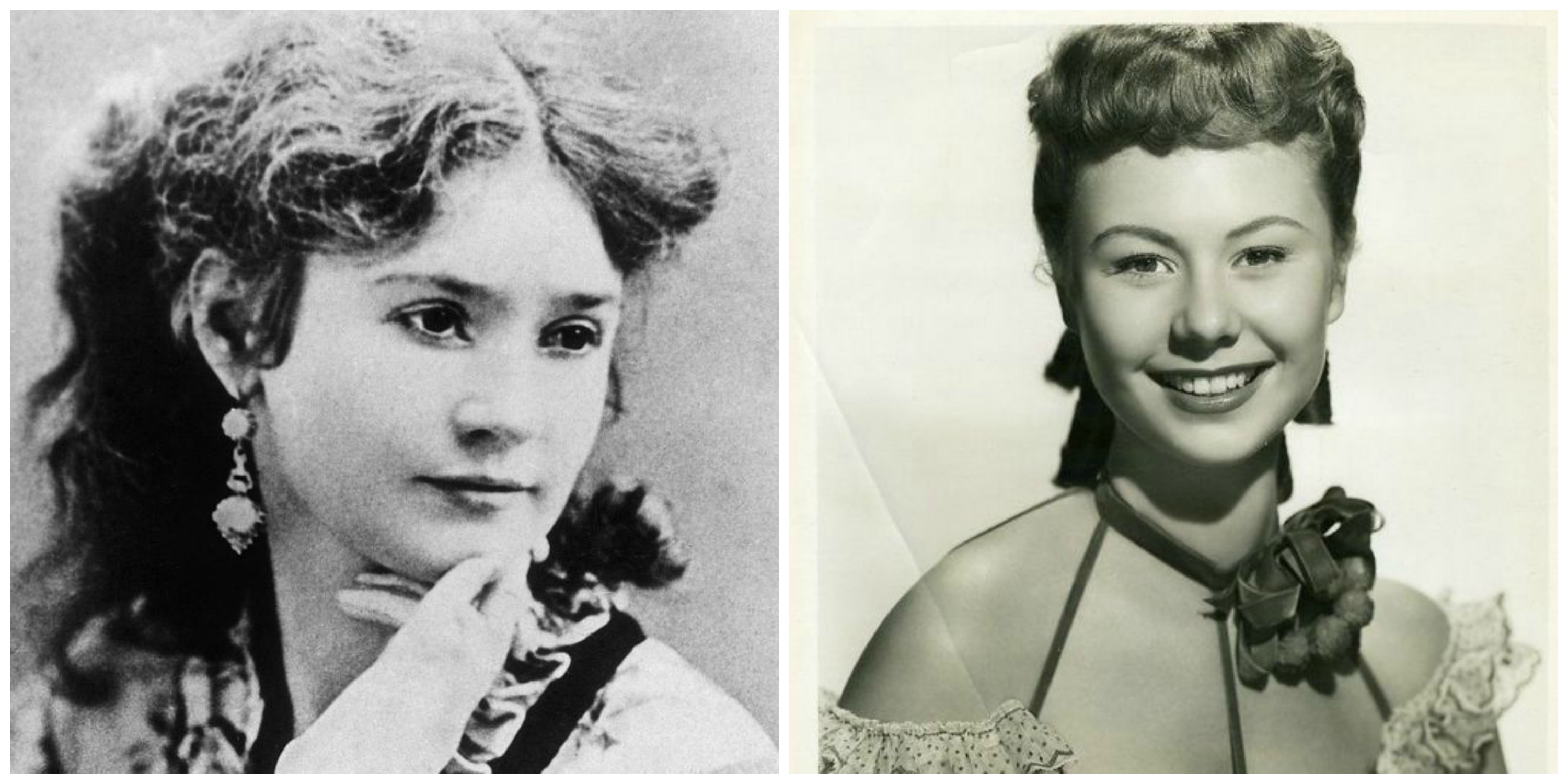
The real Lotta Crabtree and Mitzi Gaynor dressed as Lotta Crabtree for "Golden Girl"

The real Lotta Crabtree and Mitzi Gaynor dressed as Lotta Crabtree for “Golden Girl”

Highlights:
-Mitzi Gaynor and James Barton’s tap dance together

Notable Songs:
-“Dixie” performed by Mitzi Gaynor
-“Kiss Me Quick and Go” performed by Mitzi Gaynor
-“Oh, Them Golden Slippers” performed by Mitzi Gaynor (and a male quartet between scenes)
-“Carry Me Back to Old Virginny” performed by Mitzi Gaynor and Dennis Day
-“Sunday Morning” performed by Mitzi Gaynor and Dennis Day
-“Never” performed by Dennis Day

mitzi2

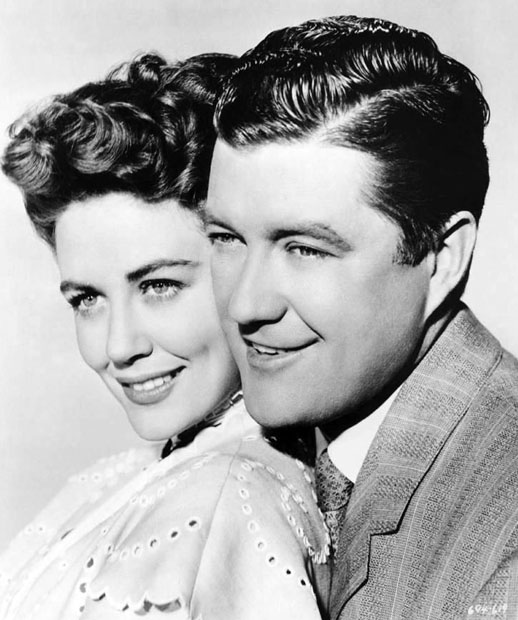
Gaynor and Robertson in “Golden Girl”

My Review:
As we have discussed in many Musical Monday posts, biographical films are generally not accurate accounts of the person’s life.
In “Golden Girl,” Lotta’s career starts as a teenager. In real life, Lotta was performing by the age of 6 and retired when she was 45. Also in the film, Lotta wants to be an actress like Lola Montez, and apparently in real life, Montez encouraged Lotta to start an acting career.
All of that being said, “Golden Girl” is a fun film and Mitzi Gaynor gives an energetic performance.
When the film started, I thought I would be annoyed with Dennis Day and his character, but I was pleasantly surprised. He gives a good performance, sings beautifully and was really likable.
Dale Robertson was also handsome and likable as Gaynor’s love interest. I think it also goes without saying that Una Merkel and James Barton who play Lotta’s parents stole the show.
I watched “Golden Girl” and another Gaynor biopic “The I Don’t Care Girl” back to back. If you remember, the latter was lackluster, but “Golden Girl” was a breath of fresh air and left me smiling and humming “Oh, Them Golden Slippers.”

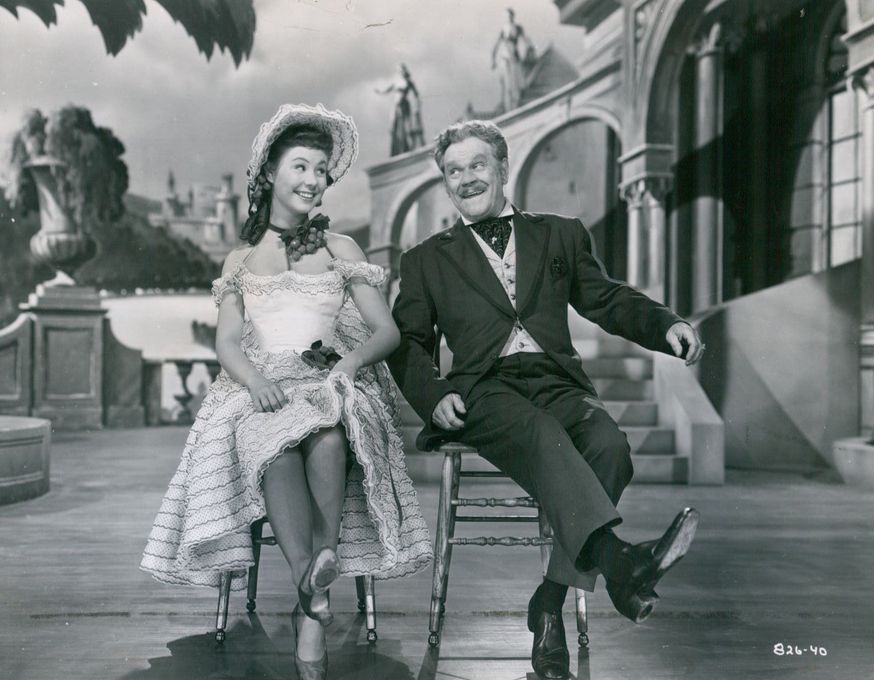
Mitzi Gaynor dancing with James Barton.

Mitzi Gaynor dancing with James Barton.

Check out the Comet Over Hollywood Facebook page, follow on Twitter at@HollywoodComet or e-mail at cometoverhollywood@gmail.com

Musical Monday: We’re Not Dressing (1934)

It’s no secret that the Hollywood Comet loves musicals.
In 2010, I revealed I had seen 400 movie musicals over the course of eight years. Now that number is over 500. To celebrate and share this musical love, here is my weekly feature about musicals.

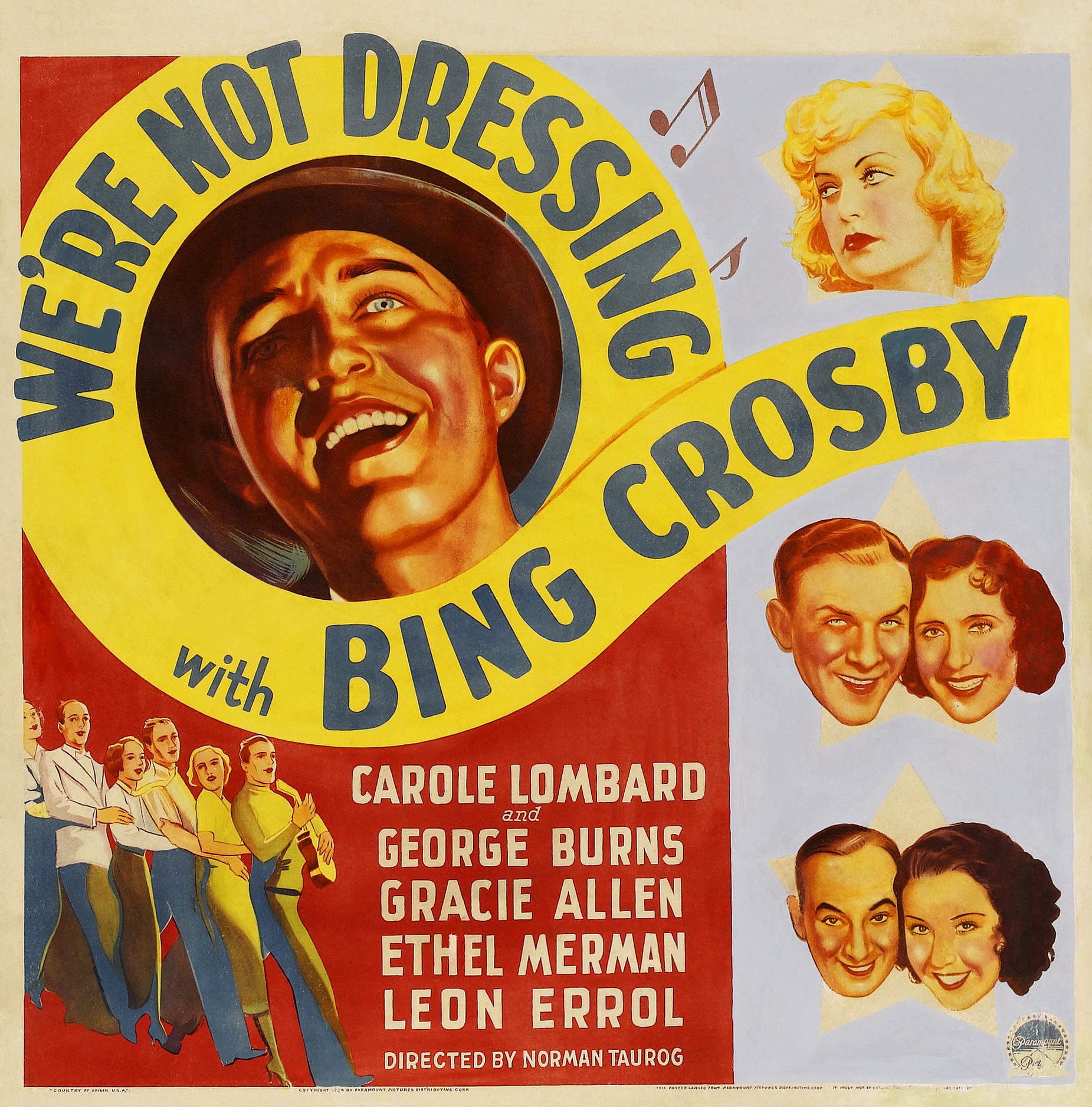
we're not posterThis week’s musical:
“We’re Not Dressing” –Musical #264

Studio:
Paramount Pictures

Director:
Norman Taurog

Starring:
Carole Lombard, Bing Crosby, George Burns, Gracie Allen, Ethel Merman, Leon Erroll, Ray Milland, Jay Henry

Plot:
-Heiress Doris Worthington (Lombard) is on a yatch trip with her friends (Erroll, Merman) and two princes who want to marry her (Milland, Henry). However, Doris keeps going between making eyes at and arguing with singing sailor Stephen Jones (Crosby). An accident causes the yacht to sink, and Jones ends up with Doris and her helpless, wealthy friends on an uninhabited island. None of them are used to working and Jones is the only one with survival skills. He soon has everyone except Doris working. Also on the island are husband and wife explorers (Burns, Allen).

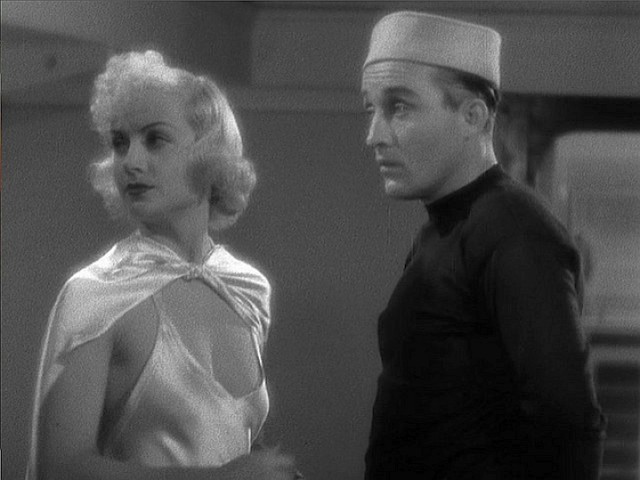
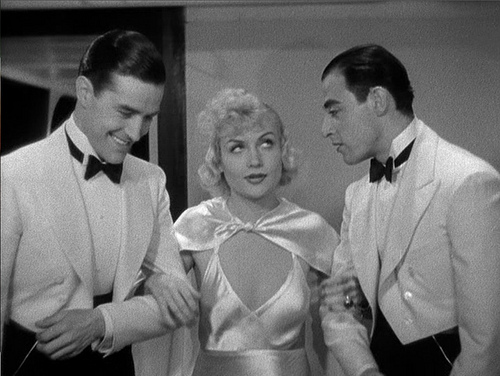
Carole Lombard and Bing Crosby in "We're Not Dressing"

Carole Lombard and Bing Crosby in “We’re Not Dressing”

Trivia:
-The song “The Animal in Me” was performed by Ethel Merman but was cut from the film. It was later used instead in “The Big Broadcast of 1936” (1935). Merman’s song “He Reminds Me Of You” was also cut from the film.
-Based on a 1902 play, “The Admirable Crichton.”
-Filmed on Santana Catalina Island.

Highlights:
-During the credits, the waves are used as a transition.

-Gracie Allen and George Burns

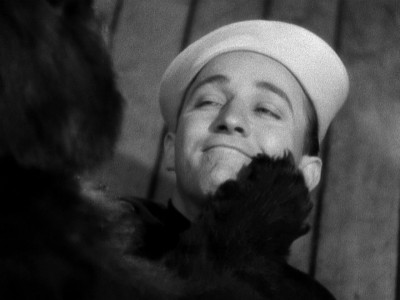
Droopy the Bear swoons for Bing Crosby's singing.

Droopy the Bear swoons for Bing Crosby’s singing.

Notable Songs:
-“Goodnight, Little Lady” performed by Bing Crosby
-“She Reminds Me of You” performed by Bing Crosby
-“I Positively Refuse to Sing” performed by Bing Crosby
-“Love They Neighbor” performed by Bing Crosby
-“It’s Just an Old Spanish Custom” performed by Ethel Merman and Leon Errol (Only notable because it’s only one of two songs the famous singer performs)

My Review:
If you’re looking for a film complete with a shipwreck and dancing bear who swoons for Bing Crosby’s crooning, this is your movie.
“We’re Not Dressing” is odd, off-beat and mildly irritating at times. But for me- none of that is really a commentary on any of the stars. Except maybe for Leon Errol. He always annoys me.
Lombard and her gaggle of socialites are sailing on the Pacific ocean. We are never told what their destination was supposed to be, but I don’t think that is actually important in the script. I think the fact that they were aimlessly sailing in a yacht with two princes was just to emphasize spoiled Lombard’s wealth.

Lombard and her two princes- Ray Milland and Jay Henry.

Lombard and her two princes- Ray Milland and Jay Henry.

Also to reiterate the wealth is her pet bear named Droopy. Droopy loves when Bing Crosby sings. At one point Droopy the Bear even roller-skates around the boat.
The boat crashes when drunken Leon Errol attempts to steer the boat, causing it to capsize.
Once on the island, Lombard is angry because Crosby won’t act as a servant to her, even though she fired him while they were on the boat. Predictably, Lombard ends up falling in love with Crosby.
Bing Crosby’s character is probably the only sane person in the bunch. He also gives the best performance. But you better love Crosby’s crooning if you watch this film, because he sings roughly seven songs in this 74 minute film.
Carole Lombard is beautiful and her comedy isn’t overwhelming (I love My Man Godfrey, but I feel like I have to catch my breath at the end). Her character is very huffy though, so that was a bit annoying.
Ethel Merman was wasted, singing only two songs, and so were Gracie Allen and George Burns. For me, Allen and Burns were the true bright spot of this movie.
With a cast boasting so many big names, I think the real issue here is the goofy story line.
I won’t say I didn’t like “We’re Not Dressing,” it just sort of left me feeling scattered and scratching my head at the end, wondering what I just watched.

Check out the Comet Over Hollywood Facebook page, follow on Twitter at@HollywoodComet or e-mail at cometoverhollywood@gmail.com

Musical Monday: The I Don’t Care Girl (1953)

It’s no secret that the Hollywood Comet loves musicals.
In 2010, I revealed I had seen 400 movie musicals over the course of eight years. Now that number is over 500. To celebrate and share this musical love, here is my weekly feature about musicals.

the-i-dont-care-girl-movie-poster-1953-1020701174This week’s musical:
“The I Don’t Care Girl” –Musical #491

Studio:
20th Century Fox

Director:
Lloyd Bacon

Starring:
Mitzi Gaynor, David Wayne, Oscar Levant, Bob Graham, Craig Hill, George Jessel (as himself), Hazel Brooks, Barrie Chase (uncredited), Julie Newmar (uncredited), Gwen Verdon (uncredited)

Plot:
Biographical film on vaudeville performer Eva Tanguay who sang the song “I Don’t Care.” Though the film is a biographical film about Tanguay, the film starts in present time with George Jessell trying to plan the film. They find Tanguay’s old partners and friends and the story is told through their inconsistent memories.

Trivia:
-The real life Eva Tanguay was born in 1878 and died in 1947 at the age of 68. Tanguay was good friends with performer Sophie Tucker. Tanguay dubbed herself “the girl who made vaudeville famous.”
-Produced by George Jessel and played himself in the film.
-Jack Cole was the choreographer and Gwen Verdon was Gaynor’s dance in.
-In a TCM interview with Mitzi Gaynor, during the fire scene Gaynor said everything was fireproof except with her.
-Max Showalter was originally supposed to play the Oscar Levant role. However, Jessel saw Levant in “An American in Paris” and cast him instead, according to Science Fiction and Fantasy Film Flashbacks by Tom Weaver.

The real Eva Tanguay and a publicity portrait of Mitzi Gaynor in costume as Tanguay for "I Don't Care Girl"

The real Eva Tanguay and a publicity portrait of Mitzi Gaynor in costume as Tanguay for “I Don’t Care Girl”

Highlights:
-Jack Cole’s choreography

Notable Songs:
-“I Don’t Care” performed by Mitzi Gaynor- since it’s the title song
-“As Long As You Care, I Care” performed by Bob Graham
-“Kiss Me My Honey, Kiss Me” performed by Mitzi Gaynor and Bob Graham

My Review:

Performer Eva Tanguay

Performer Eva Tanguay

I started “The I Don’t Care Girl” knowing nothing about vaudeville actress Eva Tanguay and ended the hour and 18 minute biographical film still knowing next to nothing about Tanguay, other than the fact that she existed and made the song “I Don’t Care” famous.

Obviously, most biographical films- particularly of the musical nature- are not very accurate. However, you leave with at least a sense of why the person was important. But I didn’t feel that with Eva Tanguay after watching “The I Don’t Care Girl” until I did some independent research.

Tanguay was known for being energetic and robust and often wore flamboyant costumes. When the Lincoln penny was released, she wore a dress completely made of pennies. She later wore a 45 pound dress made out of greenback dollars. Tanguay was close friends with Broadway star Sophie Tucker and later lost her millions in the 1929 stock market crash. All of these would have been interesting things to add to the plot.

I think part of this is because the movie is so brief. I think it’s also because the format of the film. Producer George Jessel plays himself saying,”What are we going to do about this Eva Tanguay movie?” and proceeds to hear three different sides of the story about Eva Tanguay.

Mitzi Gaynor is always lovely, energetic and fun to watch. Her musical numbers in this film are great, but her acting is slightly frantic. However, this could have been direction, and maybe she was trying to show Tanguay’s energy. Jack Cole’s dance numbers are always fantastic too. However, the numbers were modern 1950s dance and not things that would have been seen in the Ziegfeld Follies at the turn of the century. Again, this may be because they felt the audience would enjoy this more, but other biographical films (The Dolly Sisters, Look for the Silver Lining) seem to attempt to stay true to the era.

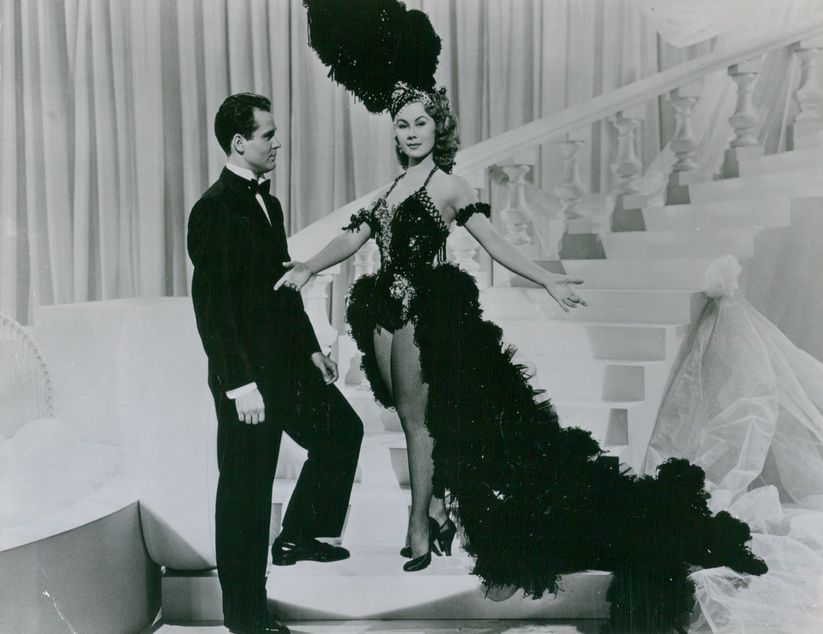
Overall, while the basis of the movie is “What are we going to do about his Eva Tanguay film?” It feels like 20th Century Fox actually felt this way and then threw it up on screen.

Bob Graham and Mitzi Gaynor in "The I Don't Care Girl"

Bob Graham and Mitzi Gaynor in “The I Don’t Care Girl”

Check out the Comet Over Hollywood Facebook page, follow on Twitter at@HollywoodComet or e-mail at cometoverhollywood@gmail.com

Musical Monday: The Harvey Girls (1946)

It’s no secret that the Hollywood Comet loves musicals.
In 2010, I revealed I had seen 400 movie musicals over the course of eight years. Now that number is over 500. To celebrate and share this musical love, here is my weekly feature about musicals.

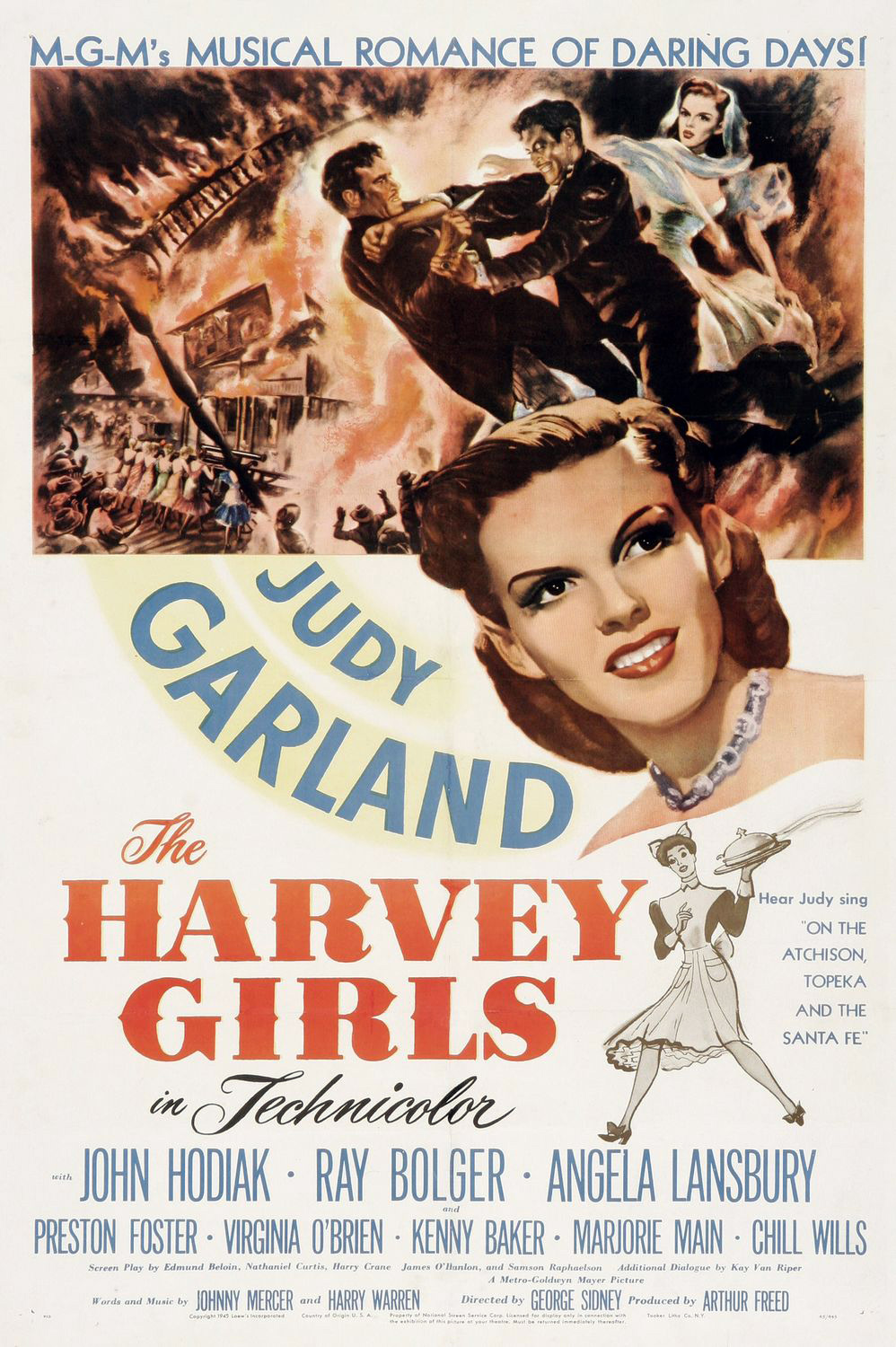
harvey girlsThis week’s musical:
The Harvey Girls” –Musical #43

Studio:
Metro-Goldwyn-Mayer

Director:
George Sidney

Starring:
Judy Garlands, John Hodiak, Angela Lansbury, Ray Bolger, Cyd Charisse, Virgina O’Brien, Preston Foster, Marjorie Main, Kenny Baker, Selena Royale, Chill Wills, Ruth Brady

Plot:
Set in the 1890s, the film is a fictional story about the real life Harvey Girls who worked at Fred Harvey’s Harvey House restaurants that aided westward expansion and civilization. The restaurants offered civilization and clean service to trains who stopped in the area.
Susan Bradley (Garland) travels on the Atchison, Topeka and the Santa Fe railroad from Ohio to Arizona to get married to a man she only knows via letters. Also on the train are “Harvey Girls.” The Harvey Girls are from all over the country and are traveling to work as waitresses in the newly opened Harvey House Restaurant.
When the train arrives, Susan’s husband-to-be is not exactly what she expected. She calls off the marriage and she ends up working as a Harvey Girl.
However, the owners and girls who work at the local saloon don’t take kindly to their business being taken by the new Harvey House and set out to drive them out.

Trivia:
-“The Harvey Girls” originally was going to be a straight western movie starring Clark Gable. MGM worked on the script for many years until it was sent to the Arthur Freed Musical Unit. Judy Garland and Gable were originally going to be cast as the stars, but they didn’t think the audience would accept the pairing. The age difference between the two stars would have made the story difficult especially when Garland sang “Dear Mr. Gable” as a young girl according to George Sidney during the director commentary.

-Based on a historical story on the Fred Harvey restaurants called the Harvey House.

-George Sidney interviewed girls from all over the country to get girls from each state. One of the Harvey Girls was New York model, Ethel Brady.

Judy Garland during "The Atchison, Topeka and the Santa Fe" number

Judy Garland during “The Atchison, Topeka and the Santa Fe” number

-The number “On the Atchison, Topeka and the Santa Fe” was done in one take with Judy Garland. The number was shown to Garland and after seeing it once she said “I’m ready,” Sidney said in the commentary. It was “one of the longest musical numbers in a motion picture all done in two shots,” Sidney said.

-Judy Garland and John Hodiak were going to sing a duet called “My Intuition” written by Harry Warren and Johnny Mercer. The song’s purpose was to “advance their relationship” in the film. The song was right after their first meeting in the valley when John kisses Judy. The song was cut after the first preview because it was thought to slow down the film, according to notes on the DVD.

-“March of the Doagies” and the “March of the Doagies Reprkise” are two others songs that were cut from the screenplay, along with four other musical numbers, according to the DVD notes. The number took place during the Harvey Girls party. They leave the party and Judy leads the party, skipping down the town, carrying torches and into the prairie as she sings. The “March of the Doagies” number was huge and took many evenings to film on the MGM backlot. The footage of the number was not seen until it showed up in 1994 in “That’s Entertainment III,” according to DVD notes.

-Actress Virginia O’Brien isn’t in the film after her “In the Wild, Wild West” number, because she was pregnant. She “had her own little Harvey Girl,” Sidney said.

19-year-old Angela Lansbury and John Hodiak in "The Harvey Girls"

19-year-old Angela Lansbury and John Hodiak in “The Harvey Girls”

-John Hodiak had the measles and shooting was held up, Sidney said.

-President Franklin Roosevelt died during the filming of “The Harvey Girls” and shooting was called off for a few days, according to George Sidney.

-Grandson of Fred Harvey, who started the Harvey House Restaurant, Byron Harvey Jr. played an uncredited role as a train conductor.

-Cyd Charisse’s second film. Her first movie was “The Ziegfeld Follies.”

-Angela Lansbury was only 19 when she was in this film. Ann Sothern was originally supposed to play this role, according to director George Sidney in the commentary.

-Another song called “Hayride” with Ray Bolger was cut, but only the vocals remain.

-Angela Lansbury was dubbed by Virginia Rees

-Cyd Charisse was dubbed by Marion Doengnes

-Shot some of the scenes in Monument Valley where many John Wayne films were made.

-The first film for costume designer Helen Rose.

Actress Virginia O'Brien, who had to drop out of filming after the "Wild Wild West" number.

Actress Virginia O’Brien, who had to drop out of filming after the “Wild Wild West” number.

Awards: 
-Won the Academy Award for Best Music, Original Score for “On the Atchison, Topeka and the Santa Fe” written by Harry Warren and Johnny Mercer.
-Nominated for Best Music, Scoring of a Musical Picture written by Lennie Hayton.

Highlights:
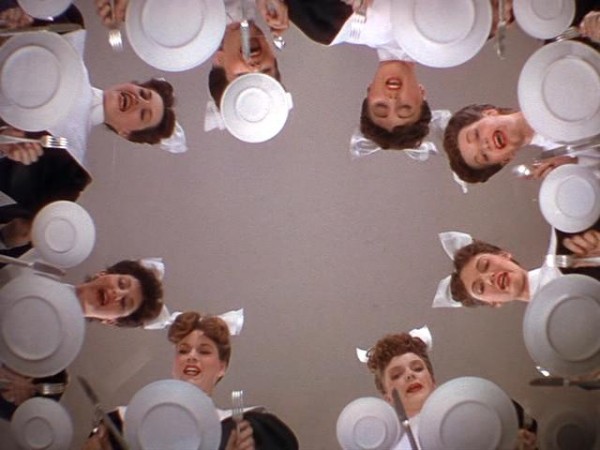
-The 8 minute “Atchison, Topeka and the Santa Fe” number
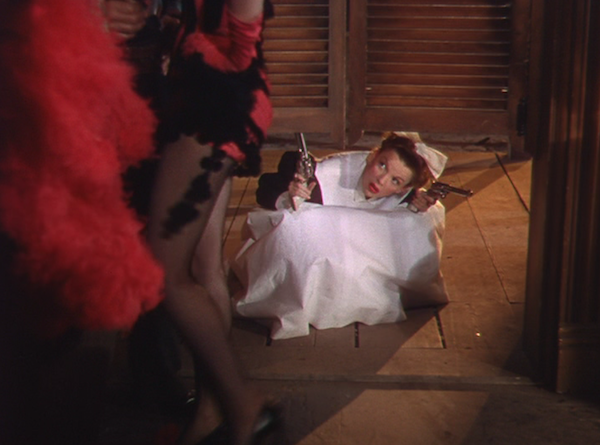
-In an effort to close the Harvey House, men from the saloon steal every steak from the restaurant. Outraged, Judy Garland goes to the saloon with two guns telling them to “stick ’em up.” She is successful in getting the steaks back, but the whole scene is hilarious.

Judy Garland going into the saloon with guns to steal back the steaks in "The Harvey Girls."

Judy Garland going into the saloon with guns to steal back the steaks in “The Harvey Girls.”

Notable Songs:
-Atchison, Topeka and the Santa Fe performed by Judy Garland and most of the cast
-The Wild, Wild West performed by Virginia O’Brien

My Review:
“The Harvey Girls” is such a fun movie.
The cast is stellar, costumes are gorgeous and the Technicolor backdrop of the Old West looks like a postcard.
My only real issue with the film is “The Atchison, Topeka and the Santa Fe” is Judy Garland’s strongest song and Ray Bolger only gets a chance to show off his dancing in one number- but he only sings a bit at the beginning.
Many of the songs that did showcase Bolger or Garland ended up being cut.
It’s a shame that the “My Intuition” song was cut, because it gave Judy Garland a higher quality song than the others to sing. I also love hearing John Hodiak’s singing voice which isn’t trained but is pleasant. “March of the Doagies” isn’t a very good song, but it also showcased Judy’s voice very well.
However, it’s easy to look back now and say “I wish that song was still in the movie,” but I’m sure it was the best decision in 1946.
Of the songs in this movie, “The Atchison, Topeka and the Santa Fe,” is the stand out number by far. It’s eight minutes long, but it is engaging and interesting the whole time. We get the perspective of the people in the town who are excited about the train arriving, the conductor, the Harvey Girls and where they came from, and then Judy Garland who is traveling for the first time.

The three female leads: Cyd Charisse, Judy Garland and Virginia O'Brien after singing "It's a Great Big World"

The three female leads: Cyd Charisse, Judy Garland and Virginia O’Brien after singing “It’s a Great Big World”

There are also so many large names in this movie that it is hard for the secondary leads to get enough screen time. But somehow it works out. Virginia O’Brien and Cyd Charisse are in two songs, and Charisse has a dance number. Kenny Baker (aka the poor man’s Dick Powell) also has a song, and Ray Bolger has his tap dancing number.
One of the real highlights for me is Marjorie Main. She’s consistently funny in most of her comedic roles and continues to be hilarious in the “Harvey Girls.”
Another huge bright spot in this film is John Hodiak as the leading man. He’s one of my top Hollywood heartthrobs.
I do think it’s interesting that this originally was going to be a non-musical film. I’m sure it would have been entertaining, but we wouldn’t have had the colorful and lovely piece we have today.

The Harvey Girls

The Harvey Girls

Check out the Comet Over Hollywood Facebook page, follow on Twitter at@HollywoodComet or e-mail at cometoverhollywood@gmail.com

Review: Meet Me in St. Louis (1959) CBS TV Special

It’s difficult to improve on perfection.

While this two-hour CBS 1959 TV Special may not be a remake, it pales when compared to the original.

The first “television special of 1959” was an adaptation of  the 1944 film “Meet Me In St. Louis” starring Judy Garland, Mary Astor, Leon Ames, Margaret O’Brien, Marjorie Main, Tom Drake and Lucille Bremer.

(L) Judy Garland and Tom Drake in the 1944 "Meet Me in St. Louis." (R) Jane Powell and Tab Hunter reprising their roles in a 1959 TV Special.

(L) Judy Garland and Tom Drake in the 1944 “Meet Me in St. Louis.” (R) Jane Powell and Tab Hunter reprising their roles in a 1959 TV Special.

Adapted from short stories written by Sally Benson, the story follows the Smith family who lives in St. Louis. The story begins in the Summer of 1903 and is broken into segments: Summer, Fall of 1903 with Halloween, Winter of 1903 with Christmas and Summer again in 1904. The story ends as the family goes to the 1904 World’s Fair in St. Louis.

The lead, Esther, falls in love with the boy next door named John Truitt and the oldest sister Rose is a flirt who likes older men. The younger daughters Tootie and Agnes cause mischief.

The main conflict in the story is when the father announces the family has to move to New York for his job.

In the film, Garland plays Esther and Bremer plays Rose. O’Brien plays Tootie, and Ames and Astor are the parents. Tom Drake plays John Truitt, Marjorie Main is Katie the Maid, and Davenport plays Grandpa.

The 1944 film has a steller cast, but the 1959 cast is equally impressive:

Jane Powell as Esther, Jeanne Crain as Rose, Patty Duke as Tootie, Tab Hunter as John Truitt, Myrna Loy as Mrs. Anna Smith, Walter Pidgeon as Mr. Alanzo Smith, Reta Shaw as Katie the Maid, Ed Wynn as Grandpa and Kelly Brown as Lon Smith.

Many of the scenes and lines are similar to the 1944 film, if not identical, but there are some subtle differences in the film and the TV version:

-In the 1944 version, the brother Lon doesn’t have a great deal of screen time. The TV special version of the “Skip to My Lou” number at Lon’s going away party is much more elaborate. Lon becomes the star of the show. He leaps and jumps over girls. The number almost comes across more like the Barn Raising from “Seven Brides for Seven Brothers” than a carefree, casual dance at a party.

-In the 1959 version, Esther’s whole family ribs her about her crush on John Truitt, and Mom even helps her pick out a hat suitable for “catching a man.” I found this pretty hokey. And who’s Mom would really do that?

-The iconic “Trolley Song” number from the 1944 film is obviously shot while the singers are on the trolley and the trolley is (supposedly) moving. The teenagers are riding the trolley to the swamp to see what progress has been made on what will be the 1904 World’s Fair grounds. In the 1959 version, the singers and dancers aren’t actually on the trolley for the majority of the song. However, I’m sure this had to do with limitations of a television studio. Also in the TV special Esther isn’t as surprised when John Truitt arrives on the trolley, they had a date to go to the swamp together.

Tab Hunter and Jane Powell in the trolley song (yes this is about how the quality is.

Tab Hunter and Jane Powell in the trolley song (yes this is about how the quality is.

-Unlike the 1944 version, we see the characters at the swamp in the television special. It’s fun but not entirely necessary. During their time at the swamp, Hunter sings “Boys and Girls Like You and Me” which was dropped from the 1944 print.

-In the Halloween scene, Tootie said John Truitt “tried to kill her” and Ether goes and hits him (and later apologizes when she learns the truth) to defend her little sister. In the 1959 version, Hunter sings “When Did This Feeling Begin” after this scene- giving John Truitt’s character two songs in the special. Truitt doesn’t sing at all in the film.

-After Esther sings “Have Yourself a Merry Little Christmas,” in the film- Tootie goes berserk and knocks down snowmen in the backyard. On TV, Tootie digs up her “dead” dolls from the backyard.  Mother comes to comfort her rather than Esther.

-The TV Special ends with the family walking off the porch to go to the World’s Fair, rather than them actually going to the fair like in the film. Again, this probably had to do with television limitations.

While I love every actor in the 1959 TV Special something is just severally lacking.

Jane Powell sings "Have Yourself a Merry Little Christmas" to Patty Duke.

Jane Powell sings “Have Yourself a Merry Little Christmas” to Patty Duke.

Jane Powell is one of my favorite actresses of all time, but let’s face it, she just isn’t Judy Garland. Comparing the two is really like trying to compare apples and oranges.

Garland brought a bit more sass and warmth to the role, while Powell could have easily been doing a continuation of her awkward, coming-of-age character in “Two Weeks with Love.”

Powell and Garland have very different singing styles, but they are equally pleasant. Hearing songs like “The Boy Next Door” and “The Trolley Song” sung more operatically is a bit different if you are used to hearing the songs performed the way Garland does.

Myrna Loy is another one of my favorites, but I didn’t care for her as the mother in this special. Maybe it was the script, but she was a bit dreamy and sweet. Mary Astor’s role was more of a strong mother, in my opinion.

Jeanne Crain’s Rose was less snooty than Lucille Bremer. Though it might be unbelievable, Patty Duke’s Tootie was sometimes as annoying or worse than Margaret O’Brien’s. Mainly because Duke would flat out screech, like how “John Truitt tried to kill” her. O’Brien’s specialty was tears rather than screaming.

I think the only casting I flat out disagreed with was Tab Hunter, who was an odd John Truitt to me. However, I don’t have any other suggestions for a “Boy Next Door” type in 1959.

The one actor I loved the most in the TV role was Walter Pidgeon. He has a fatherly warmth but is also a good curmudgeon.

With top-notch actors in the roles, I’m not sure what fell flat for me with the TV special. It wasn’t bad or terrible, just different.

The 1944 film is charming, colorful, nostalgic and poignant. It makes you laugh, sigh, cry and you don’t want the film to end. I wasn’t sad when the 1959 special ended. I was maybe even slightly relieved. The story was again reused in 1966 non-musical television pilot starring Shelley Fabares as Esther, Celeste Holm as Mrs. Anna Smith and Morgan Brittany as Agnes.

While I wouldn’t call the CBS “Meet Me in St. Louis” a remake, it didn’t improve upon what was already in place. With a new cast, adding extra songs and originally deleted scenes, you just can’t improve on perfection.

Check out the Comet Over Hollywood Facebook page, follow on Twitter at @HollywoodComet or e-mail at cometoverhollywood@gmail.com


Musical Monday: “Rock Rock Rock!” (1956)

It’s no secret that the Hollywood Comet loves musicals.
In 2010, I revealed I had seen 400 movie musicals over the course of eight years. Now that number is over 500. To celebrate and share this musical love, here is my weekly feature about musicals.


rock rock rockThis week’s musical:

“Rock Rock Rock!” –Musical #384

Studio:
Vanguard Productions

Director:
Will Price

Starring:
Tuesday Weld, Fran Manfred, Teddy Randazzo, Jaqueline Kerr, Ivy Shulman, David Winters
Themselves: Alan Freed and his Rock n’ Roll Band, the Moonglows, Chuck Berry, the Flaningos, Jimmy Cavallo and His House Rockers, Johnny Burnette Trio, LaVern Baker, Cirino and the Bowties, Frankie Lymon and the Teenagers,

Plot:
Dori (Weld) is in love with Tommy (Randazzo) and is worried new girl Gloria (Kerr) will try to steal her boyfriend. When she learns Gloria is wearing a blue (Tommy’s favorite color) strapless evening gown, Dori wants one too, but her dad won’t buy her one. Dori has to earn the money and decides to start a bank and make loans to her classmates to earn the money- which works about as well as you can image.
Sprinkled around the thin plot are 21 performances by early, popular rock n’ roll singers and groups.

Trivia:
-Connie Francis dubbed Tuesday Weld and even gets billing in the credits at the beginning with her picture.
-Actress Tuesday Weld’s first film, who was 13 when this was made.
-Actress Valerie Harper has an uncredited role as a girl at the prom.

Notable Songs:
-“Tra la la” by LaVern Baker
-“You Can’t Catch Me” by Chuck Berry
-“Lonesome Train” by The Johnny Burnette Trio
-“I Just Want to Rock” by Ivy Shulman and the Bowties (notable because she’s 7 years old and I thought it was dreadful)

My Review:
If you are looking for a movie with excellent acting and a strong plot, “Rock Rock Rock!” isn’t for you.
But if love mid-1950s music and early rock n’ roll, you will enjoy “Rock Rock Rock!”
The film wasn’t so much about the plot but showcasing big name performers of the day. This wasn’t a rarity either. Around this time, similar films included “Rock Around the Clock” (1956), “Shake, Rattle and Rock” (1956) or “Don’t Knock Rock” (1956). Later, this could be compared to Elvis, Beatles or Herman’s Hermits films. Those films usually had more of a plot but were made to capitalize off the popularity of the performers and their music.
I think the most interesting thing to me about this movie is Connie Francis dubbing Tuesday Weld. Dubbing was a common practice in movie musicals since the dawn of time. If an actress couldn’t sing (Rita Hayworth, Virginia Mayo, Cyd Charisse, Vera-Ellen, Lucille Ball, etc.) someone else would do the singing and the actress generally would get the credit.
What’s interesting about “Rock Rock Rock!” is the film lets us know in the credits that Connie Francis is doing Tuesday Weld’s singing. I’m sure it was to capitalize off of Francis’s popularity but Francis’s singing voice doesn’t blend well with Weld’s appearance. The dubbed performances are awkward and mildly painful.
Also, as a huge “West Side Story” (1961) fan, a big highlight for me was David Winters in a bit role- who played Arab in “West Side Story” and later choreographed films.
Though most of the songs are enjoyable, the worst was “I Just Want to Rock” by Ivy Shulman who is maybe 6 or 7 years old and singing about how she wants to rock. I’m sure it was supposed to be adorable, I just found it it annoying.
My favorite of all the performances was LaVern Baker.
Though I personally did not enjoy the movie and thought some of the acting was pretty bad (it was Weld’s first film and she was only 13, so I’m refraining from being harsh), “Rock Rock Rock!” is an interesting little time capsule into music history.

Check out the Comet Over Hollywood Facebook page, follow on Twitter at @HollywoodComet or e-mail at cometoverhollywood@gmail.com

Musical Monday: “Cabin in the Sky” (1943)

It’s no secret that the Hollywood Comet loves musicals.
In 2010, I revealed I had seen 400 movie musicals over the course of eight years. Now that number is over 500. To celebrate and share this musical love, here is my weekly feature about musicals.


cabin-in-the-sky-movie-poster-1943-1020197555This week’s musical:

Cabin in the Sky” –Musical #379

Studio:
Metro-Goldwyn-Mayer

Director:
Vincent Minnelli, uncredited Busby Berkley

Starring:
Lena Horne, Ethel Waters, Eddie “Rocherster” Anderson, Louis Armstrong, Rex Ingram, Kenneth Green, Butterfly McQueen, Ruby Dandridge, Duke Ellington, Mantan Moreland, Willie Best, John Williams Sublett, Juanita Moore (uncredited)

Plot:
In a “Faust”-like plot, Little Joe Jackson (Anderson) is a compulsive gambler and his wife Petunia (Waters) is trying to get him to repent his sins at church.
Little Joe is shot over his gambling debt. He dies and the Devil comes to take him but an angel from heaven steps in to give him six months to live and straighten his life out.
While Little Joe is on the right path, the Devil’s workers are doing everything they can to bring him back to a life of sin.

Trivia:
-One of six all black films made by a major Hollywood studio between 1929 and 1954, according to “Beyond Racial Stereotypes: Subversive Subtexts in Cabin in the Sky” by Kate Marie Weber.
Those films include “Hallelujah” (1929) by MGM, “Hearts in Dixie” (1929) by 20th Century Fox, “Green Pastures” (1936) by Warner Brothers, “Stormy Weather” (1943) by 20th Century Fox and “Carmen Jones” (1954) by 20th Century Fox.
-Vincent Minnelli’s first credited, solo directing experience. Minnelli also helped with “Panama Hattie” (1942), but is uncredited.
-A song performed by Lena Horne called “Ain’t It the Truth” was cut from the film. She was taking a bubble bath during the song and it was considered too sexy and immoral for a black woman to sing in a bath tub, Lena Horne said in an interview.

Lena Horne singing "Ain't It the Truth" in the scene that was cut from "Cabin in the Sky."

Lena Horne singing “Ain’t It the Truth” in the scene that was cut from “Cabin in the Sky.”

-The tornado in the tornado scene was footage recycled from “The Wizard of Oz” (1939).
-The story premiered on Broadway in 1940 with the same title starring Ethel Waters as Petunia Jackson, Dooley Wilson as “Little Joe” Jackson, Katherine Dunham as Georgia Brown, Rex Ingram as Lucifer Junior, and Todd Duncan as The Lord’s General.
Ingram and Waters are the only actors who reprised their role on screen.
-Nominated for an Academy Award for Best Original Song for “Happiness is a Thing Called Joe” written by Harold Arlen and E.Y. Hamburg.

Lucifer, Jr. sends Georgia Brown to tempt Little Joe. The General tells Joe to stay strong.

Lucifer, Jr. sends Georgia Brown to tempt Little Joe. The General tells Joe to stay strong.

Highlights:
-Louis Armstrong, though it is a very small role.
-Eddie Rochester Anderson’s dancing during “Cabin in the Sky”

Notable Songs:
-“Taking a Chance on Love” performed by Ethel Waters and Eddie Rochester Anderson
-Happiness is a Thing Called Joe” performed by Ethel Waters
-“Life is Full of Consequences” performed by Eddie Rochester Anderson and Lena Horne
-“Shine” performed by John Williams Sublett

My Review:
“Cabin in the Sky” is an interesting film, maybe even unusual, for 1943.
As mentioned above, it is one of seven films made during a 30 year span produced by one of Hollywood’s major studios with an all African-American cast.
This film came as a response when the African-American community demanded better treatment in films. The federal government was involved in the drive for all black casting, according to The Films of Vincente Minnelli by James Naremore.
President Roosevelt’s administration advocated black actors in major film roles in Hollywood. This apparently was connected to the New Deal, hoping the roles would create more jobs for minorities in the film industry, according to Beyond Racial Stereotypes: Subversive Subtexts in “Cabin in the Sky” by Kate Marie Weber.
The NAACP also met with Hollywood executives, demanding better roles for black performers.
The result was “Cabin in the Sky” and “Stormy Weather.”

Petunia prays for Little Joe after he is shot over his gambling debts.

Petunia prays for Little Joe after he is shot over his gambling debts.

Though the musical was made in the Arthur Freed Unit-known for lavish and high quality films- it was the lowest budgeted musical he produced. Freed however fought for more funding for “Cabin in the Sky” but did not receive it, according to Weber.
Though the film was meant to better black roles in Hollywood, it did not eliminate racial stereotypes that were seen in many films made during this time.
Some characters were presented as naive, lazy and didn’t want to work, church goers, and lovers of jazz music. This also apparently disappointed director Vincent Minnelli in his first directorial effort.
Minnelli handpicked the cast and worked to make the film visually pleasing.
The film opened to positive reviews from the New York Times, though some Southern states unsurprisingly refused to show the movie.
While there are obvious racial stereotypes, “Cabin in the Sky” does showcase the talents of actor who generally were playing maids, sidekicks or specialty singers in films.
Eddie “Rocherster” Anderson shows off his acting chops as the lead performer. He carries the whole film well and is also hilarious. Rex Ingram, as Lucifer Jr., and Kenneth Spencer, as God’s General, also do great jobs.
Lena Horne, as Georgia Brown, and Ethel Waters fill the film with several wonderful songs. However, I do wish Horne had more screen time.
Another disappointment was how little Louis Armstrong was in the film. He was maybe on screen for 10 minutes. That was a real disappointment.
All of that being said, I really enjoyed “Cabin in the Sky.” Anderson and the Devil’s disciples are hilarious, the songs are great and I was entertained throughout.
Most classic films do have stereotypical elements. But rather than ignore them, I think it’s important to learn from it and keep in mind that these movies were made during a very different time. Pop culture and films are just another way to learn about our history- even the unpleasant parts.

Ethel Waters, Duke Ellington and director Vincent Minnelli on the set of "Cabin in the Sky" (1943). Source: A Certain Cinema

Ethel Waters, Duke Ellington and director Vincent Minnelli on the set of “Cabin in the Sky” (1943).
Source: A Certain Cinema

Check out the Comet Over Hollywood Facebook page, follow on Twitter at @HollywoodComet or e-mail at cometoverhollywood@gmail.com

Back to School Musical Monday: She’s Working Her Way Through College (1952)

It’s no secret that the Hollywood Comet loves musicals.
In 2010, I revealed I had seen 400 movie musicals over the course of eight years. Now that number is over 500. To celebrate and share this musical love, here is my weekly feature about musicals.


This week’s musical:

She’s Working Her Way Through College” –Musical #395

college

Studio:
Warner Brothers Studios

Director:
H. Bruce Humberstone

Starring:
Virginia Mayo, Ronald Reagan, Gene Nelson, Phyllis Thaxter, Don DeFore, Patrice Wymore, Roland Winters, Phyllis Kirk (uncredited), Julie Newmar (uncredited)

Plot:
Burlesque star Angela Gardner (Mayo), who has a stage name of Hot Garters Gertie, saved up her money from working on the stage to get a college education. She was inspired to further her education by her high school teacher John Palmer (Reagan).
On her last night at the burlesque, Angela runs into John, who is now a college professor at Midwest. She decides to further her education at his college, as long as he keeps her secret that she was a dancer on the stage.

virginiamayo14Trivia:
-Remake of the 1942 Warner Brothers film “The Male Animal” starring Henry Fonda, Olivia De Havilland, Joan Leslie and Jack Carson.
-Don DeFore stars in both the original “The Male Animal” and the remake.
-Virginia Mayo was dubbed by Bonnie Lou Williams.
-Though the two films have no plot connection, She’s Back on Broadway is supposedly a sequel to “She’s Working Her Way Through College” (1952). The only connection is the Mayo and Nelson re-teaming. Comet reviewed “She’s Back on Broadway” in November.
-I think this film is somehow supposed to be connected to “She’s Back on Broadway”
-Gene Nelson is dubbed by Hal Derwin in the “That’s The Stuff That Dreams Are Made Of” number, but he does his own singing in all the other numbers.

Highlights:
-Gene Nelson’s mix of dancing and athletics in the “Am I In Love” number in the gym.

Notable Songs:
-“We’re Working Our Way Through College” sung by Chorus, Virginia Mayo-dubbed by Bonnie Lou Williams and Gene Nelson
-“Plenty of Money and You” sung by (dubbed) Virginia Mayo
-“I’ll Be Loving You” sung by (dubbed) Virginia Mayo and Gene Nelson

Ronald Reagan and Phyllis Thaxter play husband and wife in "She's Working Her Way Through College."

Ronald Reagan and Phyllis Thaxter play husband and wife in “She’s Working Her Way Through College.”

My Review:
Both the play and 1942 film “The Male Animal” were comedies mixed with the issue of free speech.
In the original film, Henry Fonda plays an college English professor whose job is on the line when he wants to read Bartolomeo Vanzetti’s sentencing statement as an example of free speech.
But this musical remake is a white washed version of that story.
Rather than an English professor, Reagan plays a theater professor, and the controversy here is that he wants to put on a musical rather than a Shakespeare play.
While writing and playing the lead in the college musical, Virginia Mayo is trying to keep it a secret that she was once a burlesque queen.
When this secret is let out by jealous Patrice Wymore (why does she always play mean dames?), Reagan’s job is on the line because a burlesque star is starring in his play. It’s Reagan’s job to deliver the news that she is going to be expelled (for dancing on the stage?), which he refuses.
The real issue is that the dean offered Mayo a fur coat after a burlesque performance and she refused him, so now he’s seeking revenge.
But all of the drama and conflict doesn’t happen until the last 20 minutes of the film.
The rest of the hour and forty-five minute film is Gene Nelson trying to romance Virginia Mayo, Don DeFore romancing Reagan’s wife Phyllis Thaxter, Patrice Wymore being jealous and Mayo performing songs from the upcoming play.
The songs that sprinkle throughout the film include lyrics such as: “She’s working her way through college, to get a lot of knowledge, that she’ll probably never ever use again.”
The movie unsurprisingly pales in comparison to the original film. But the worst part is that it’s rather boring.

Cast photo of Ronald Reagan, Virginia Mayo, Don DeFore, Phyllis Thaxter, Gene Nelson, Patrice Wymore

Cast photo of Ronald Reagan, Virginia Mayo, Don DeFore, Phyllis Thaxter, Gene Nelson, Patrice Wymore

Check out the Comet Over Hollywood Facebook page, follow on Twitter at @HollywoodComet or e-mail at cometoverhollywood@gmail.com

Back to School Musical Monday: “Old Man Rhythm” (1935)

It’s no secret that the Hollywood Comet loves musicals.
In 2010, I revealed I had seen 400 movie musicals over the course of eight years. Now that number is over 500. To celebrate and share this musical love, here is my weekly feature about musicals.


Old Man posterThis week’s musical:

“Old Man Rhythm” –Musical #267

Studio:
RKO Radio Pictures

Director:
Edward Ludwig

Starring:
Charles “Buddy” Rogers, George Barbier, Barbara Kent, Grace Bradley, Betty Grable, Eric Blore, Erik Rhodes, John Arledge, Johnny Mercer, Donald Meek, Evelyn Poe, Joy Hodges, Lucille Ball (uncredited), Douglas Fowley (uncredited)

Plot:
John Roberts, Sr. (Barbier) hears his son John Roberts, Jr. (Rogers) is doing poorly at college. His grades dropped when he started dating Marion (Bradley), rather than Edith (Kent), who John’s father prefers.
To help get John’s grades back on track and together with Edith, John, Sr. enrolls at the college as a freshman.
But while studying at school, wealthy Roberts’s company begins to suffer.

Trivia:
-Johnny Mercer acts in this film and wrote the lyrics to all of the songs.

Highlights:
-Betty Grable tap dancing in toe shoes after the “Comes a Revolution” number.

Notable Songs:
-“Boys Will Be Boys” sung by Betty Grable, Evelyn Poe, Joy Hodges
-“Comes a Revolution, Baby” sung by Johnny Mercer and Evelyn Poe
-“There’s Nothing Like a College Education” sung by the whole cast

Charles Buddy Rogers, Barbara Kent and George Barbier.

Charles Buddy Rogers, Barbara Kent and George Barbier.

My Review:
“Old Man Rhythm” is an entertaining B-musicals with some actors who later became big names in Hollywood.
It’s hard to resist an old Hollywood collegiate film that makes you wish- Why wasn’t college really like this? The students ride on a train to school together, the dorm rooms like like a 4-star hotels and there is a weenie roast every night.
Of course all the while, the co-eds are singing songs that have lyrics like, “There’s nothing like a college education to teach you how to fall in love.”
This movie is also fun because you can spots stars who later became big names in Hollywood. Betty Grable is one, who has a couple of songs and close-ups in the film. Songwriter Johnny Mercer is also in the film, and not only does he sing, he wrote all of the songs in the film.
There is also an uncredited Lucille Ball as a student.
I would also say that the father, George Barbier, steals the show here-even though the film ends with him goofily beating on timpani drums-alluding that he is “Old Man Rhythm.”
I am also always happy to see actor John Arledge in most films.
This is a cute little film that could help occupy a dull afternoon.

Check out the Comet Over Hollywood Facebook page, follow on Twitter at @HollywoodComet or e-mail at cometoverhollywood@gmail.com

Musical Monday: “The Time, the Place and the Girl” (1946)

It’s no secret that the Hollywood Comet loves musicals.
In 2010, I revealed I had seen 400 movie musicals over the course of eight years. Now that number is over 500. To celebrate and share this musical love, here is my weekly feature about musicals.


This week’s musical:

“The Time, The Place, The Girl” – Musical #490

picture

Studio:
Warner Brothers

Director:
David Butler

Starring:
Dennis Morgan, Martha Vickers, Jack Carson, Janis Paige, S.Z. “Cuddles” Sakall, Alan Hale, Donald Woods, Florence Bates, Angela Greene
Themselves: Carmen Cavallaro, dancer brothers Frank and Harry Condos

Plot:
Steven Ross (Morgan) and Jeff Howard (Carson) are trying to open a night club in New York.
However, problems arise when they realize their club is next door to classical conductor Ladislaus Cassel (Sakall) and his opera singing granddaughter Vicki (Vickers). Vicki’s stuffy manager Martin Drew (Woods) works to shut the club down with the help of Vicki’s equally proper grandmother (Bates), under the premise that the noise would bother the home’s high-brow performers.
Tired of being controlled by Martin-who also sets her bedtime and won’t let her go out, Vicki slips away form home and meets Ross and Howard. Becoming friends with them, she helps to keep their club open and finds a backer for their show.

Dennis Morgan shows S.Z. Sakall and Martha Vickers how to play swing on the flute.

Dennis Morgan shows S.Z. Sakall and Martha Vickers how to play swing on the flute.

Trivia:
-Martha Vickers was dubbed by Sally Sweetland.
-Nominated for Best Music, Original Score for the song “A Gal in Calico” written by Arthur Schwartz and Leo Robin.

Awards/Nominations:
-Nominated for an Academy Award for Best Music, Original Song for “A Gal in Calico” by Arthur Schwartz and Leo Robin

Highlights:
-Girls dressed as cows in the “A Gal in Calico” number. I just thought it was amusing. 
-Pianist Carmen Cavallaro appearing in the film. 

Notable Songs:
-“A Gal in Calico” sung by Jack Carson and Dennis Morgan
-“Through a Thousand Nights” sung by Dennis Morgan and performed by Carmen Cavallero
-“A Rainy Night in Rio” performed by Jack Carson, Dennis Morgan, Janis Paige, Martha Vickers (Sally Sweetland)
-“Oh, But I Do” sung by Dennis Morgan

My Review:
There is nothing remarkable about “The Time, The Place and the Girl,” but it’s fun.
I think the most notable thing about the film are it’s two leading men: Dennis Morgan and Jack Carson. The two actors starred in several films together. These days, I think they are often overlooked as a comedic duo.
Their film appearances together include: Wings for the Eagle (1942), The Hard Way (1943), Thank Your Lucky Stars (1943), Shine on Harvest Moon (1944), Hollywood Canteen (1944), Two Guys from Milwaukee (1946), One More Tomorrow (1946),Always Together (1947), Two Guys from Texas (1948) and It’s a Great Feeling (1949)
It’s also fun to see Janis Paige as a young Warner starlet. I feel that in the 1940s, she took over the goofy sexpot roles that Jane Wyman previously played for Warner Brothers.
S.Z. Sakall is always funny and adorable with his accent and mispronunciations (this time he calls Philadelphia “PhillyDilly”), and Florence Bates is good in nearly every film she plays.
Maybe what was slightly lacking for me was the leading lady. Martha Vickers was certainly lovely to look at, but not overly memorable for me. It seemed like she was stepping in to a Joan-Leslie-Like role but didn’t have the sweetness and shine that Leslie had.
One low point is when Jack Carson sings in black face. The theatrical makeup is always off-putting and (obviously) dated but not a stranger to any pre-1960 musical.
Overall, the film is colorful and has some great music. Maybe it would have raised in the ranks slightly for me if there was another leading lady.

Jack Carson, Janis Paige, Martha Vickers and Dennis Morgan during the "Rainy Night in Rio" number.

Jack Carson, Janis Paige, Martha Vickers and Dennis Morgan during the “Rainy Night in Rio” number.

Check out the Comet Over Hollywood Facebook page, follow on Twitter at @HollywoodComet or e-mail at cometoverhollywood@gmail.com